Walk past any construction site in the Philippines and you’ll likely see a familiar sight — piles of plywood stacked near a freshly poured foundation, warped and water-stained from repeated use. For decades, plywood has been the go-to material for local formwork, even as builders quietly acknowledge its flaws: it’s heavy, wasteful and short-lived, especially in the country’s hot, humid climate.
That may soon change. A new system called PECAFORM, developed by Malaysia-based PLYTEC Group and brought to the country by FASI Forms Inc., is offering Filipino contractors an alternative — a soil-supported, reusable formwork system that reduces waste and speeds up construction.
“The idea appealed to us because it directly addresses the recurring pain points of builders here,” said Frederick Erum, founder and CEO of FASI Forms Inc. “It’s simple, efficient, and it works with the way projects are managed locally.”
Rethinking the Everyday Foundation
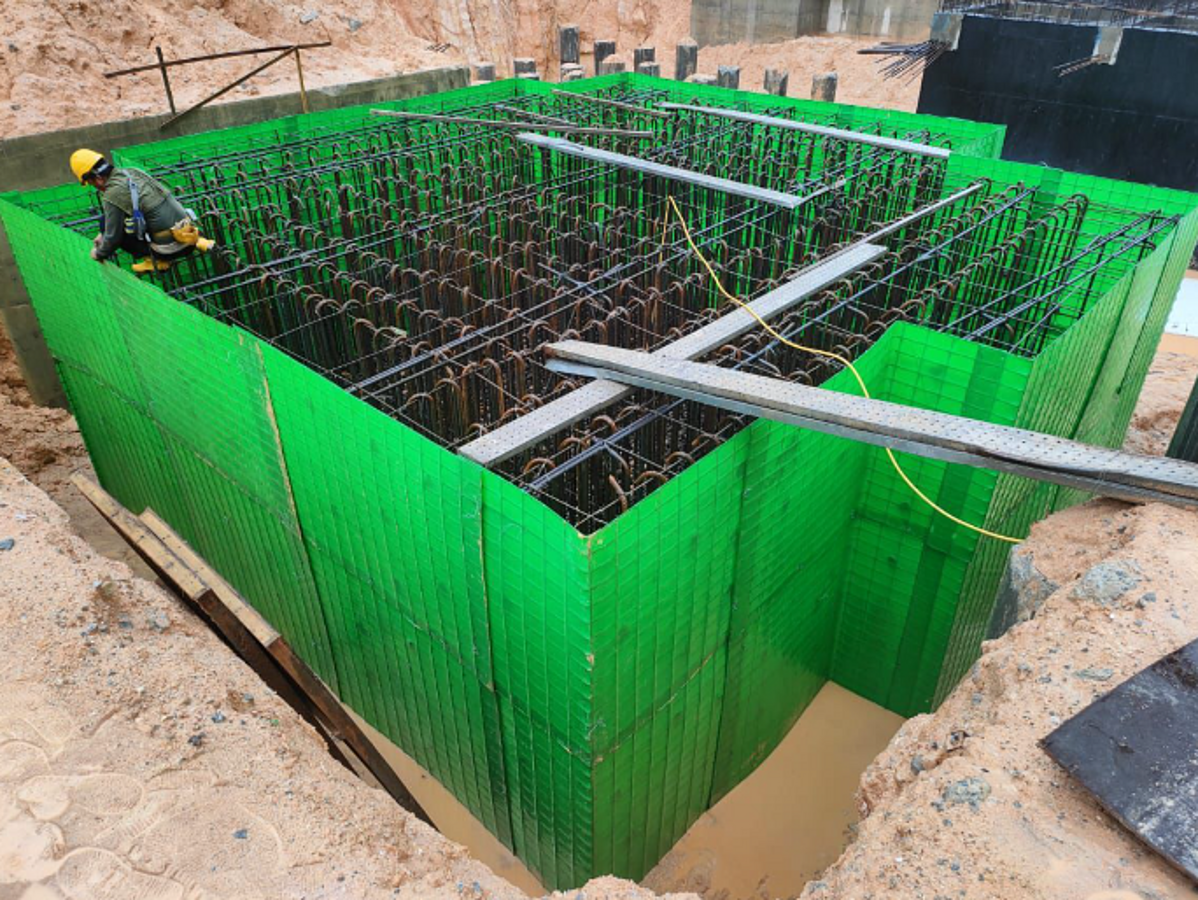
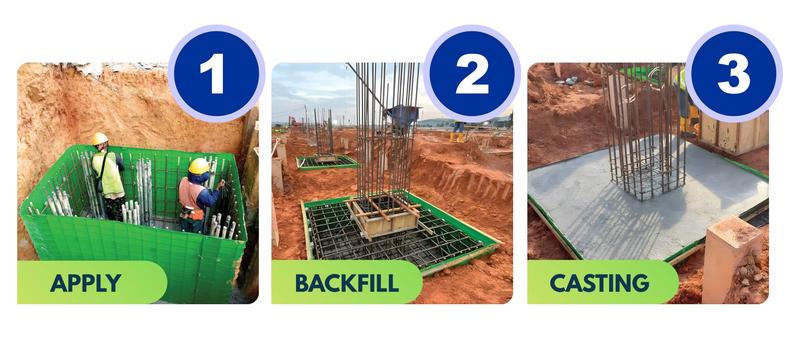
The concept behind PECAFORM is straightforward: let the soil do the work. Traditional formwork relies on timber or steel supports, adding cost, time and labor to every pour. PECAFORM replaces those with a lightweight polymer sheet that holds the concrete in place using compacted soil for support.
Once the soil is backfilled, the form becomes stable enough for pouring. Because the panels don’t absorb water, they produce a smooth finish and last far longer than plywood.
“We’ve all seen how much material gets discarded after just a few uses,” Erum said. “If you can get the same or better result with something that doesn’t rot or warp, it’s worth adopting.”
Each panel weighs about 2.64 kilograms per square meter, light enough for one person to carry and install without machinery. The lighter handling helps reduce labor hours and improve on-site safety.
Designed for the Philippines
The country’s humid climate and frequent rainfall have long been a challenge for construction. Timber formwork tends to absorb moisture, deform and fail after short use cycles — driving up rework costs.
PECAFORM was designed for exactly these conditions. Made from water-resistant engineered material, it can be reused multiple times and withstand the elements without degrading. On-site, it also reduces waste and clutter.
“It doesn’t take long for people to get used to it,” Erum said. “After a short orientation, crews start working faster because there’s less preparation and cleanup involved.”
The system has been successfully used in Malaysia and Singapore, where similar weather conditions test the durability of formwork. At Aspen Vision City in Malaysia, contractors reported completing formwork cycles up to 70 percent faster and cutting costs by as much as 40 percent compared to plywood systems.
.jpg)
Faster Builds, Cleaner Sites
In an industry where time directly affects profitability, shorter construction cycles can have a significant impact. PECAFORM helps reduce setup and removal time since the forms are left in place permanently, eliminating dismantling and disposal.
“You can see the efficiency on-site,” Erum said. “Workers spend more time doing structural work instead of setting up and tearing down temporary forms.”
The result is a more organized work environment and a safer workflow, especially in repetitive casting jobs such as footings and retaining walls.
Sustainability That Makes Business Sense
Erum said the system’s appeal goes beyond convenience. Its long life cycle and recyclable composition align with the growing demand for sustainable construction practices.
“Contractors today are under more pressure to consider sustainability,” he said. “If a material helps reduce waste and lasts longer, it makes both environmental and financial sense.”
Each panel is 100 percent recyclable and microplastic-free, meeting Green Building Index (GBI) and VOC-safe standards. The elimination of timber backing reduces the need for lumber and minimizes landfill waste — increasingly important metrics for developers and project financiers.
“Sustainability shouldn’t come at the expense of practicality,” Erum added. “The key is to find solutions that make everyday work more efficient while lessening impact on the environment.”
Made for Real-World Worksites
PECAFORM is most effective for retaining walls, pile caps, edge forms and ground beams — repetitive concrete structures that often slow down project timelines.
The system’s consistent dimensions and finish quality also minimize rework. In large-scale projects, the cumulative time savings can be substantial.
“Small efficiencies become significant when you apply them across kilometers of formwork,” Erum said. “That’s where systems like this make sense — in the details.”
Bringing Global Technology Home
Erum, a member of the Filipino Inventors Society, has long been known for his contributions to improving construction methods. Over the years, he has registered four patents, including designs for a concrete shuttering system, table formwork and support system, and reusable plastic panel innovations.
“We’ve always tried to look for better ways to build,” he said. “Not necessarily more expensive or complicated — just more efficient.”
Through its partnership with PLYTEC, FASI Forms Inc. brings proven formwork technologies to the Philippine market, adapting them for local contractors through training and technical support (fasiformsystem.com/about-us; plytec.com.my).
“Our goal is to make modern systems accessible,” Erum said. “Technology should work for the people using it, not the other way around.”
Laying the Groundwork for the Future
As infrastructure investment continues under the government’s Build Better More program, Erum sees an opportunity for the local industry to adopt better construction systems.
“We’ve relied on the same materials for decades,” he said. “But conditions and expectations have changed. If we want to stay competitive, we need to do faster construction operations.”
He believes the shift toward smarter systems like PECAFORM will not happen overnight, but sees it as inevitable.
“Change in construction is always gradual,” Erum said. “But once people experience the advantages firsthand — the speed, the cleanliness, the savings — it becomes hard to go back.”
For him, innovation is not about replacing tradition but refining it.
“At the end of the day, the goal is simple,” he said. “Build better, build responsibly, and keep building faster with each project.”