In a recent report by Philippine Nuclear Research Institute of the Department of Science and technology (DOST-PNRI), radiation-processed plastic waste can now be used as construction materials.
Plastic waste accumulation is a global problem and the Philippines is particularly identified as the top source of ocean plastic pollution in the world according to multiple studies and reports released in 2025-2026. One of them is a study published in the Marine Pollution Bulletin in 2024 (and cited throughout 2025) which reported that the Philippines is a top contributor to oceanic plastic pollution by 2025, specifically noting it as first globally for riverine plastic emissions.
Likewise in a report from World Bank that was released on December 26, 2025, the Philippines remains one of the world's leading contributors to marine plastic pollution, with nearly 9% of its mismanaged plastic waste ending up in the ocean.
This is where radiation technology offers an innovative solution to solve this environmental problem. Trash such as plastic packaging and containers can now be modified and processed into durable tiles and bricks that can be used in building homes.
The technology is called Post-radiation Reactive Extrusion of Plastic Wastes (or PREx Plastic), spearheaded by the DOST-PNRI.
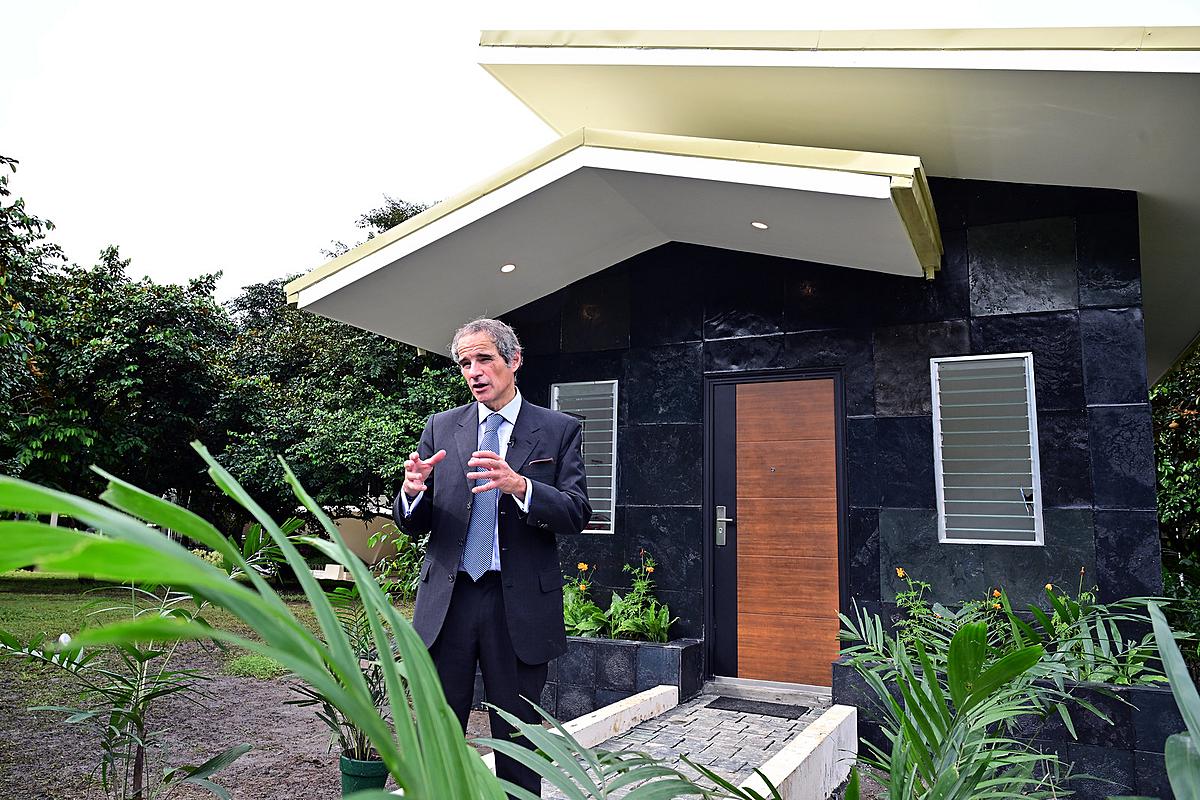
But is the end product reliable for actual house construction? To test the strength and effectiveness of the radiation-processed plastic tiles and bricks, PNRI partnered with Envirotech Waste Recycling Incorporated to build the first "PREx Prototype House".
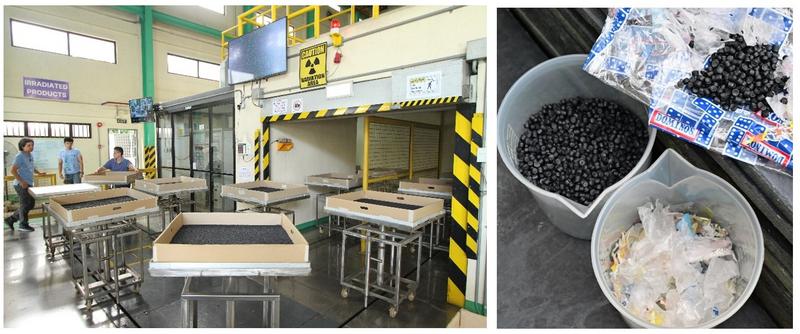
Plastic pellets being irradiated at PNRI's Electron Beam facility as part of the reprocessing and recycling technology
According to the media release of PNRI, "A prototype of a common residential house that uses PREx plastic for tiles and walls, the PREx House will be the testing site of how the said plastics will maintain strength and durability in the daily household grind."
Dr. Jordan Madrid, PREx project leader and head of the PNRI Chemistry Research Section explains the science behind this. "Irradiation manipulates the behavior of polymers in plastic for better practical compatibility and enhancing the mechanical properties of recycled materials.”
The use of radioactive isotopes is often associated with medical applications like diagnostic imaging such as CT scan, PET Scans (in detecting cancer and heart conditions), SPECT Scans (brain image, thyroid, lung, liver, kidney function), bone scan, and heart function scans (or cardiac imaging tests). They are also used for therapeutic applications for cancer treatment, brachytherapy, and bone cancer treatment. Additionally, radioactive isotopes are also used for medical sterilization for biological tissue and pharmaceuticals.
Radioactive isotopes also have agricultural applications like soil and fertilization management of plants, crop improvement (mutation breeding), pest control, and food preservation.
When used properly, radiation has many uses, and now, it is useful in solving the plastic pollution problem in the Philippines, and at the same time, supporting recycling drives, manufacturing and construction industries.
Together with the DOST-Industrial Technology Development Institute, PNRI and Envirotech are making the most of radiation to upcycle plastic wastes. Additionally, DOST-Philippine Council for Industry, Energy, and Emerging Technology Research and Development and the International Atomic Energy Agency (IAEA) also supports the PREx Plastic project. This partnership and advocacy align with the IAEA NUTEC Plastic Project which harness nuclear technologies for environmental and industrial development.
This study on the PREx House performance will be crucial in controlling the growth of plastic pollution in the country.
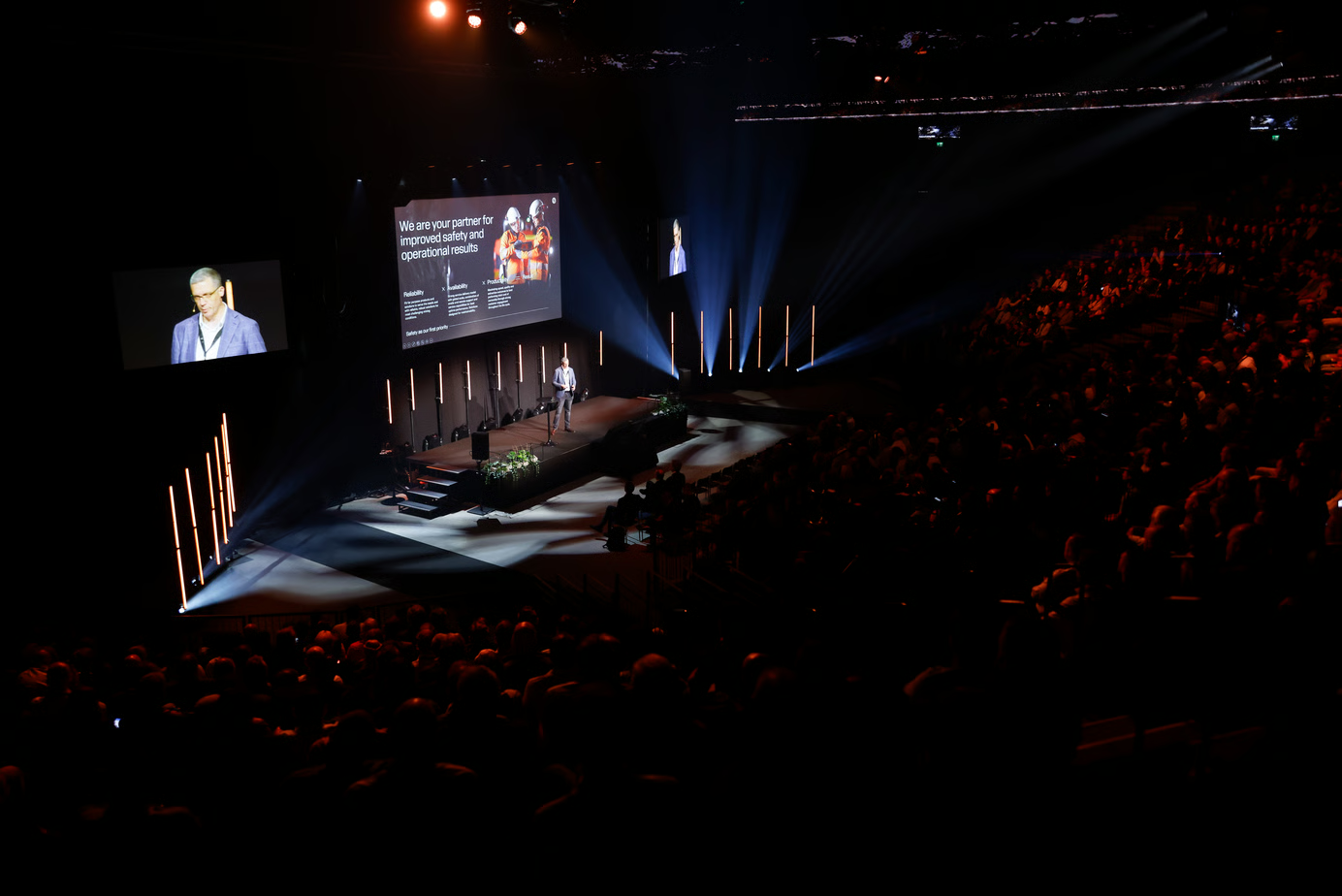
Last November 26, IAEA Director General Rafael Mariano Grossi launched the PREx Prototype House on at the PNRI grounds in Quezon City as part of the International High Level Forum on NUTEC (NUclear TEChnology) for Controlling Plastic Pollution.
The forum was held on Nov. 25-26, 2025 at the Conrad Manila Hotel. Participants from around the world gathered to fight plastic pollution with nuclear science on two fronts:
1) At point of source - by improving plastic recycling and developing new bio-based plastics
2) In the ocean, where the bulk of plastic waste ends up.
-----
Reference:
[1] (Nov. 22, 2025) "From trash to tiles: Radiation-processed plastic waste now used as construction materials". PNRI-Nuclear Information and Documentation Section. PNRI-DOST Website
Photo credit:
- International Atomic Energy Agency
- PNRI-Nuclear Information and Documentation Section.