MAKATI CITY, PHILIPPINES — The Philippine Nickel Industry Association (PNIA) and its member companies laud the recent decision of the Supreme Court in G.R. No. 262969, which dismissed the Petition for a Writ of Kalikasan filed against Hinatuan Mining Corporation (HMC).
This landmark ruling marks a definitive shift in the regulatory landscape, effectively ending the era of “trial by sentiment” in environmental litigation. The Supreme Court has sent a clear, unambiguous message: the future of Philippine industry and environmental stewardship must be built on the bedrock of scientific evidence, not the shifting sands of public conjecture and unfounded speculation. The Court itself emphasized that a writ of kalikasan “is an extraordinary remedy available against unlawful act or omission involving environmental damage of such magnitude,” and that its issuance requires strict compliance with evidentiary standards. It further found that the petitioners “failed to comply with the required contents of a petition,” relying on generalized claims and unsubstantiated allegations, ultimately dismissing the case “for being insufficient in form and substance.”
Ending the "Trial by Sentiment"
For too long, legitimate, permitted, and regulated mining operations have faced significant delays and reputational damage from legal challenges based on “general impressions,” “bare allegations,” and “pure speculation.” By dismissing this petition, the Honorable Court has recognized that such litigation, driven by emotion rather than empirical proof, cannot substitute for evidence and due process.
The Court’s ruling confirms that the Writ of Kalikasan is a special remedy intended for genuine, large-scale environmental harm, not a tool to be wielded against responsible operators based on “mere say-so.” The industry welcomes this as a strong affirmation of the rule of law, reinforcing that the Philippine regulatory system must demand verifiable scientific proof before interfering with lawful and essential economic activities.
Sanctity of Contracts and Stability
Beyond rejecting sentiment-based litigation, the decision reinforces the importance of regulatory stability and institutional integrity. By upholding due process and the proper role of administrative and technical agencies, the Court affirms that environmental concerns must be addressed through established regulatory mechanisms grounded in scientific expertise.
This strengthens investor confidence and sends a clear signal that the Philippines maintains a predictable and rules-based environment. It underscores that lawful operations, undertaken in full compliance with regulatory requirements, will be protected within the bounds of the law.
Fueling the Global Green Transition
As the world accelerates the transition toward cleaner energy systems, the global race for critical minerals continues to intensify. Nickel remains an indispensable component of stainless steel production, urban development, battery technologies, and the clean energy transition.
The Philippines has a historic opportunity to strengthen its position in this global supply chain. By upholding science-based regulation over sentiment-driven obstruction, the Court has reinforced the country’s role as a competitive and reliable partner in the global energy transition. This decision contributes to a more stable environment for investments that support sustainable infrastructure and future-ready industries.
A Commitment to Responsible Development
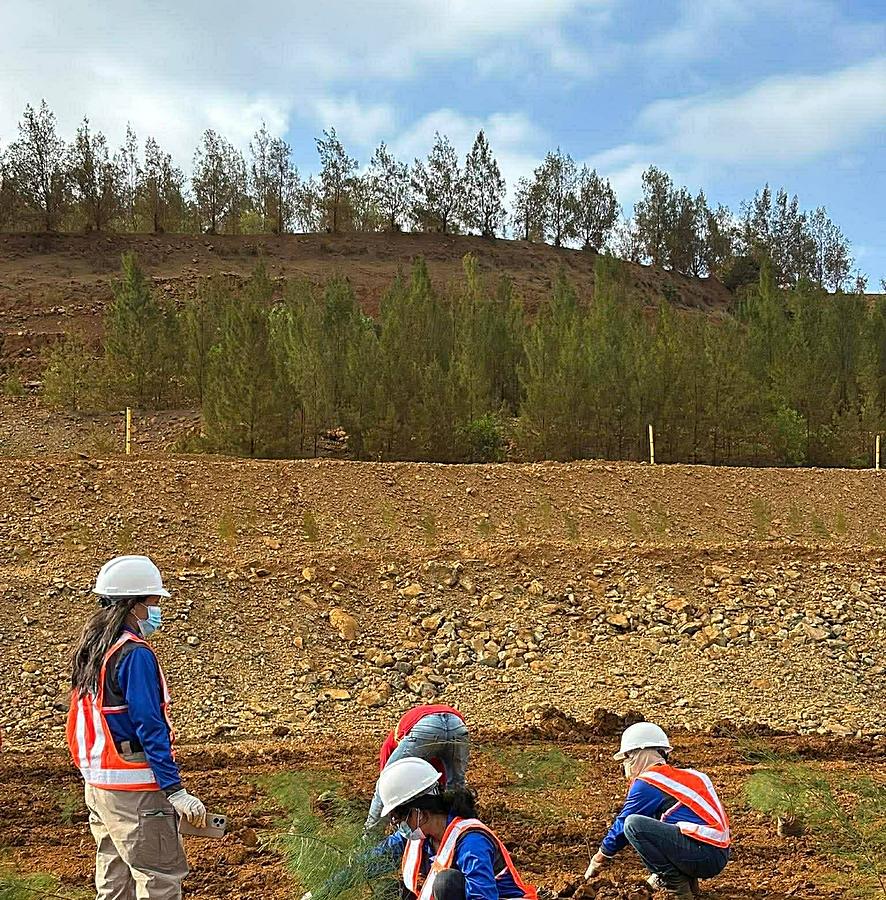
PNIA reiterates that responsible mining and environmental stewardship are inseparable. Our member companies operate within one of the most stringent regulatory frameworks in the region, as mandated by the Philippine Mining Act of 1995, and remain committed to ensuring that mining activities are conducted responsibly, transparently, and with long-term accountability. PNIA supports continuous monitoring, transparent reporting, progressive rehabilitation, and meaningful engagement with host communities to ensure that operations remain compliant, environmentally sound, and responsive to stakeholder concerns.
Beyond compliance, the industry continues to invest in environmental protection, community development, and responsible resource management as integral pillars of sustainable mining. We remain steadfast in our commitment to uphold these standards and to ensure that mining contributes meaningfully to national development while safeguarding and protecting the environment.
The Philippine nickel industry stands ready to build the future, based on facts, guided by science, and committed to inclusive progress.
###
About PNIA. The Philippine Nickel Industry Association is the unified industry voice of the Philippine nickel sector, representing member companies that account for approximately 74 percent of national nickel production. Established in 2012, PNIA plays a central role in shaping industry direction, policy engagement, and stakeholder dialogue on the responsible development of one of the country’s most strategically important resource sectors. The association works closely with government, industry, communities, and international partners to advance a globally competitive, investment ready, and responsibly governed nickel industry. Through its Nickel Initiative platform, PNIA convenes dialogue and supports alignment with sustainability and transparency frameworks relevant to regulators, investors, and global markets. PNIA is a non-stock, non-profit association registered with the Securities and Exchange Commission, and more information is available at www.philippinenickel.org.