Australia-listed Celsius Resources Ltd. has moved to block any potential offtake agreement between India's Kiri Industries Ltd. and Makilala Mining Co. Inc. (MMCI), following Maharlika Investment Corp.'s (MIC) exit from its bridge loan investment in the Maalinao-Caigutan-Biyog (MCB) copper-gold project in Kalinga.
In a June 9 disclosure, Celsius said MIC had completed the assignment of its rights, title and interests under the Omnibus Loan and Security Agreement (OLSA) with MMCI to Equinaire Holdings Ltd., a wholly owned subsidiary of India's Kiri Industries. The transaction transferred MIC's position as lender under the agreement to Equinaire and formally ended the sovereign wealth fund's involvement in the bridge financing arrangement.
The Australian mining company said it was initiating emergency arbitration proceedings to seek an injunction against any offtake agreement between Kiri and MMCI that is executed without Celsius' written approval, pending the resolution of a broader arbitration dispute involving Celsius, Sodor and PMR.
Celsius also disclosed that it had issued written notice to Kiri asserting its intention to rescind any transactions or arrangements involving MMCI that were not approved by Celsius. The company further argued that PDEP Inc., a wholly owned subsidiary of Celsius, rather than MMCI, is the appropriate entity to enter into any future offtake agreement related to the MCB Project.
The dispute emerged after comments by Kiri Chairman and Managing Director Manish Kiri during a June 1 earnings call indicated that the Indian company was already involved in the Philippine project through financing arrangements and was negotiating an offtake agreement.
"So, as we announced earlier, the company has already entered by financing and by making arrangements of taking over certain loans pertaining in Philippines at MMCI. And we are in the process of negotiating offtake agreement right now," Kiri said, according to a transcript cited by Celsius.
Meanwhile, MIC said the transaction marked a successful exit from its bridge loan investment and generated a 12.5-percent net annualized return in U.S. dollar terms. In Philippine peso terms, the divestment produced an estimated net annualized return of approximately 25 percent.
The sovereign wealth fund said the return exceeded its initial projections and demonstrated its ability to actively manage investments, unlock value and recycle capital into new opportunities. MIC said the gains from the transaction would create immediate investment capacity for future projects aligned with its mandate of generating sustainable returns while supporting long-term economic development.
MIC added that the assignment introduces Kiri Industries into the MCB project's financing structure, describing the Indian company as an established international industrial group with a growing interest in strategic investments and critical minerals.
According to MIC, the transaction reflects continued international investor confidence in the Philippine mining sector and highlights the country's ability to attract foreign capital into strategic industries. The fund said the deal was executed in accordance with contractual obligations and standard market practices.
"By attracting strategic global capital, this divestment has created immediate capacity for future investments," MIC President and Chief Executive Officer Rafael D. Consing Jr. said.
"The outcome reflects the disciplined investment approach that MIC seeks to bring to its portfolio in furtherance of its mandate of generating sustainable returns while supporting national economic development," he added.
Consing said the successful exit also reinforces MIC's role in positioning the Philippines as an attractive destination for long-term strategic investment. He said market-driven transactions that attract reputable international investors into the country's mineral sector help catalyze private capital, support priority industries and contribute to economic growth and job creation.
Established under the Maharlika Investment Fund Act, MIC serves as the Philippines' sovereign wealth fund and is tasked with mobilizing government assets for investments that generate returns while supporting national development objectives.
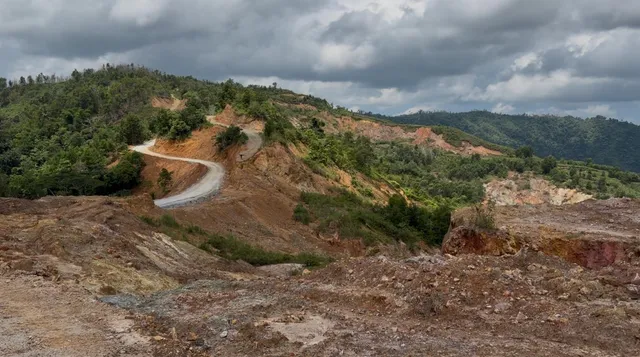
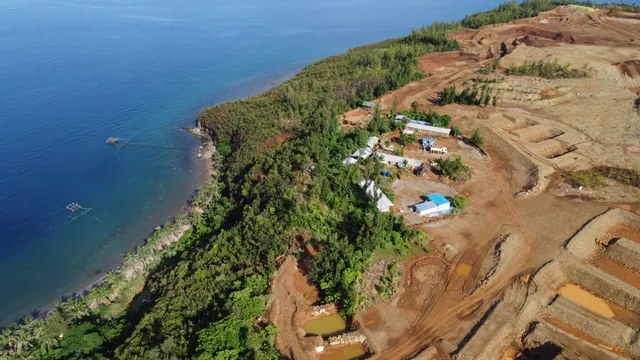
The competing claims surrounding financing and future marketing rights add further complexity to the development of the MCB copper-gold project, one of the Philippines' largest undeveloped mineral assets, as stakeholders pursue separate legal and commercial strategies over the project's future.