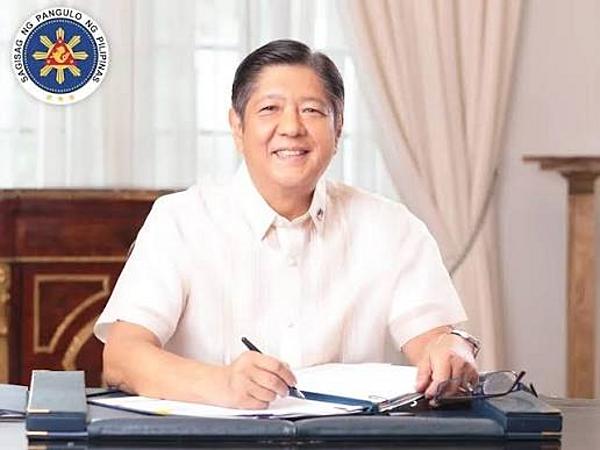
President Ferdinand Marcos Jr. has signed an executive order establishing a unified national policy framework for developing the Philippines' critical minerals industry, as the country seeks to strengthen its role in global supply chains for clean energy and advanced technologies.
Marcos signed Executive Order 122 on Aug. 21, according to the Department of Environment and Natural Resources, which said the order also reorganizes the Mining Industry Coordinating Council to drive strategic growth in the sector.
Mines and Geosciences Bureau Director Larry Heradez said the framework could position the Philippines as a more significant player in the global critical minerals and green technology value chains.
"Worldwide, nations are competing to secure resilient supply chains for essential raw materials like nickel, copper, and processing inputs for renewable energy infrastructure, electric vehicle batteries and defense applications," Heradez said.
The Philippines has identified at least 9 million hectares of highly prospective areas with potential mineral resources, Heradez said.
He said EO 122 shifts the country's strategy beyond exporting raw ore toward developing integrated processing and manufacturing ecosystems.
Under Section 2b of the executive order, the state will promote the responsible development and utilization of critical minerals while supporting value-adding and downstream industries.
The framework recognizes critical minerals as important to national security and economic resilience, with their use extending beyond the global energy transition to digital infrastructure and major public projects.
The Department of Trade and Industry's Board of Investments will provide incentives under the Corporate Recovery and Tax Incentives for Enterprises Act for downstream refining, battery production and side-stream industries, according to the order.
Domestic processing plants will also be given priority access to mineral ores at fair market prices.
Environmental safeguards
EO 122 also establishes environmental, social and cultural safeguards for the development of the industry.
Section 2c requires the government to enforce sustainable mining practices and strengthen the industry's ability to manage environmental impacts.
Mining operations must also prioritize the social, cultural and economic well-being of host and neighboring communities, with community development efforts aligned with the United Nations Sustainable Development Goals.
The order directs the government to enforce a "Use It or Lose It" policy, under which noncompliant or dormant mining tenements may be canceled and the resulting mineral areas reallocated into declared reservations.
The Department of Environment and Natural Resources and the Mines and Geosciences Bureau are directed to streamline permit processing within six months and establish a fully digital Virtual One-Stop Shop platform within one year.
Mining council reorganized
EO 122 also reorganizes the Mining Industry Coordinating Council, which will be co-chaired by the secretaries of the Department of Environment and Natural Resources and the Department of Finance.
The reorganized council will include additional Cabinet officials, local authorities and Indigenous representatives.
Within 90 days, the council is required to submit a comprehensive industry work plan to the Office of the President.
The plan will establish international sourcing standards, environmental safeguards and valuation frameworks intended to ensure that development of the country's mineral resources contributes to long-term national economic development.
Mining industry backs order
The Chamber of Mines of the Philippines, which represents the country's large-scale metallic mining and exploration companies and allied industries, expressed full support for EO 122.
The chamber said the order's emphasis on policy stability, regulatory consistency and transparency would help create a predictable environment for investment in exploration, mine development and mineral processing.
"Securing long-term capital for exploration, mine development, and mineral processing requires a predictable environment that builds investor confidence," the chamber said.
The group also welcomed the order's focus on value-added processing, refining and downstream manufacturing, saying these measures could help the Philippines capture greater value from its mineral resources, attract new investment, create quality jobs and strengthen local supply chains.
The chamber said economic growth must be accompanied by environmental stewardship and social responsibility.
It supported EO 122's emphasis on the rights, welfare and culture of host communities and Indigenous Peoples, adding that industry expansion should remain anchored in environmental, social and governance standards, rigorous environmental management and meaningful community partnerships.
The group also welcomed the focus on interagency coordination and digitalization of regulatory processes.
"Streamlining regulatory requirements eliminates unnecessary delays while preserving vital safeguards, positioning the Philippines as a globally competitive investment hub without compromising environmental or social standards," the chamber said.
The chamber said EO 122 recognizes critical minerals as essential to national industrialization, energy security, economic resilience and the global green transition.
"Unlocking this potential requires active, sustained collaboration among government, industry, host communities, and broader society," it said.
The Chamber of Mines said it was ready to work with stakeholders on implementing EO 122 and developing a competitive, responsible and sustainable critical minerals sector that creates lasting value, protects local ecosystems and supports inclusive national development.