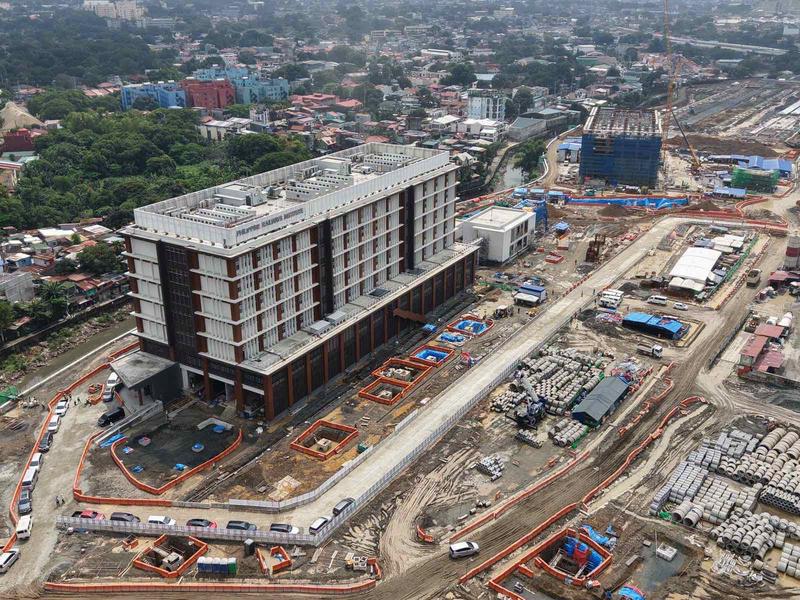
Transportary Secretary Banoy Lopez and Senate Finance Committee Chairman Sen. JV Ejercito on Thursday inspected major railway projects in Metro Manila, a day after President Ferdinand Marcos Jr. broke ground for the Metro Manila Subway Project (MMSP) Ninoy Aquino International Airport (NAIA) Station.
The inspection covered the ongoing construction of the North-South Commuter Railway (NSCR) and the Metro Manila Subway, as the government moves to accelerate rail projects aimed at improving mobility and easing traffic congestion.
Marcos has directed the Department of Transportation (DOTr) to speed up railway construction to ensure timely project completion and improve the daily commute of Filipinos.
Lopez said the DOTr was expediting construction of the two major rail systems to help commuters save travel time and improve productivity.
“Ang maganda dito na ipakita natin kay Sen JV na ang pagpro-protekta niya, kasamahan niya sa Senado at Kongreso, pagprotekta niya ng pondo ng NSCR at subway. Sen., meron po talagang nararating at kinahihinatnan. We have to push more,” Lopez said.
“Now, we really need this kind of project, itong mga railway, itong subway, itong NSCR,” he added.
Ejercito, meanwhile, assured the DOTr of continued Senate funding support for the projects, saying rail systems are critical modes of transportation that will benefit thousands of commuters.
“Sana ngayon tuloy-tuloy under my [Finance Committee chairmanship], that’s why I wanted to see it for myself to make sure that the funding will not be disrupted anymore para no more delays,” Ejercito said.
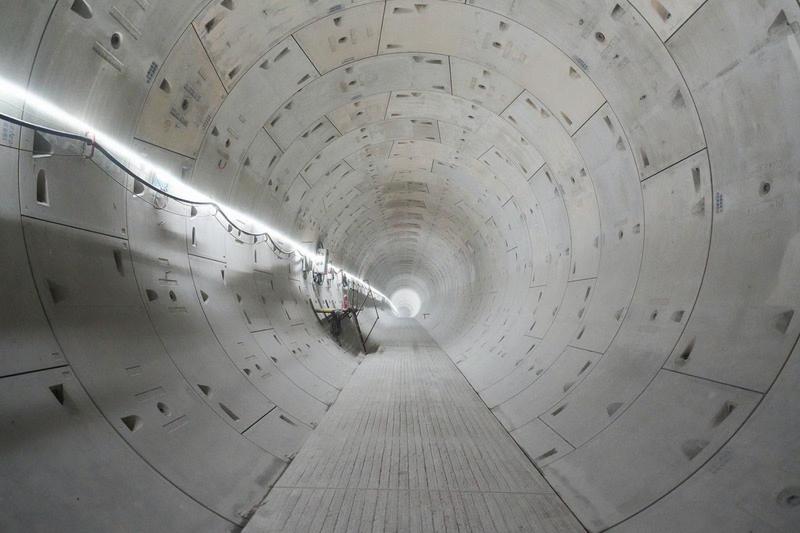
He said the goal was to see the NSCR and MMSP become operational as soon as possible, particularly for commuters in Metro Manila, Laguna and Pampanga.
During the inspection, Lopez and Ejercito visited the NSCR West Valenzuela Station and Operations Control Center, the MMSP depot and Quirino Station, and the Philippine Railway Institute (PRI).
They also inspected an NSCR eight-car train set with a capacity of at least 2,200 passengers per trip.
The NSCR and MMSP, both funded with support from the Japan International Cooperation Agency (JICA), are expected to improve connectivity across Metro Manila and nearby provinces while supporting economic activity beyond the capital.
Once operational, the 147-kilometer NSCR, with 35 stations, is expected to serve at least 800,000 passengers daily across Metro Manila, Central Luzon and Southern Luzon.
The 33-kilometer MMSP, meanwhile, is projected to serve about 519,000 passengers in its opening year.
The subway is expected to cut travel time between Valenzuela City and NAIA Terminal 3 to about 40 minutes, from the current estimate of one hour and 35 minutes.
Lopez and Ejercito were joined by Japanese Embassy Minister for Economic Affairs Yokota Naobumi, JICA Senior Representative Takanori Morishima, Transportation Undersecretary for Railways Timothy John Batan, Transportation Undersecretary for the Philippine Railways Institute Anneli Lontoc, and Assistant Secretaries Eduardo Danilo Macabulos and Paul Anthony Pangilinan.