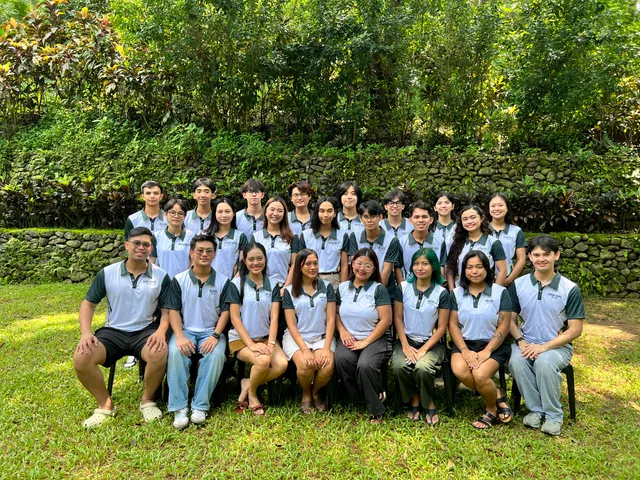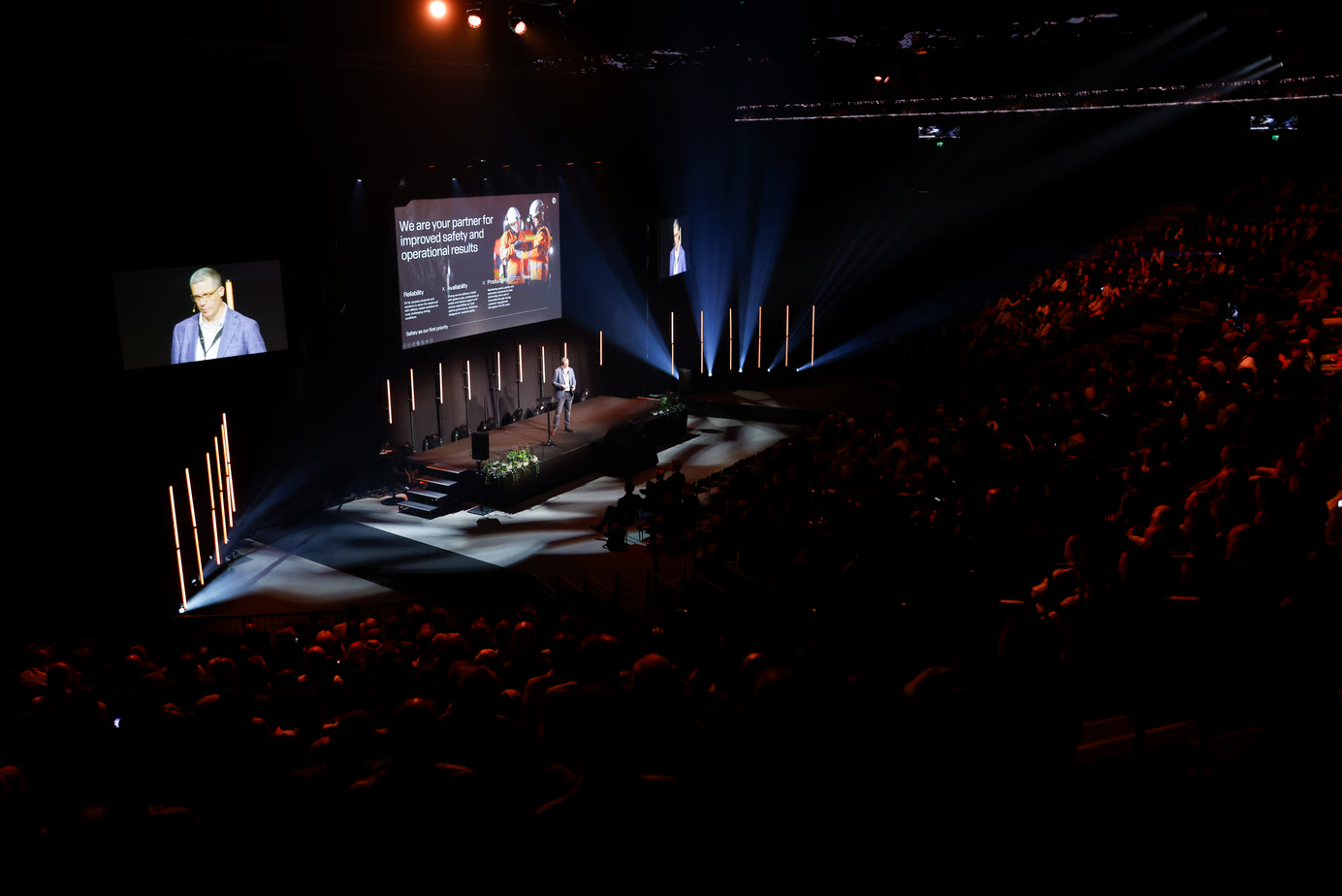
PhilEnergy Expo 2026, a comprehensive 3-day energy trade event, was held from June 24 to 26, 2026 at the World Trade Center, Pasay City. The event focused on advancing clean energy, sustainable power technologies, and national energy security, with the theme “Shaping the Philippine Energy Sector for a Sustainable Future”.
The exhibition featured five key energy profiles that are critical to the country’s transition towards net-zero, namely: Renewable Energy (RE), Energy Efficiency (EE), Electric and Power (E&P), Electric Vehicles (EV), and Energy Storage (ES).
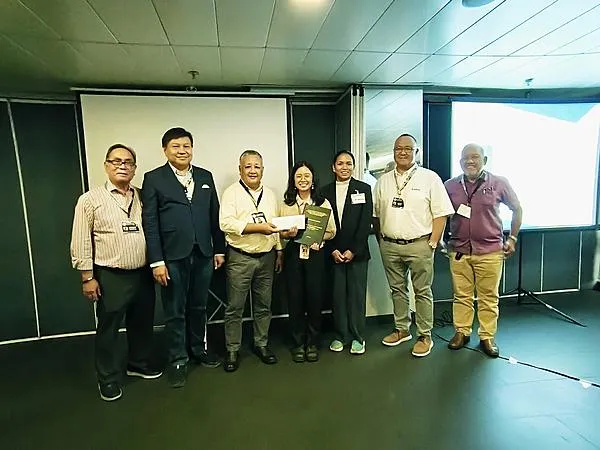
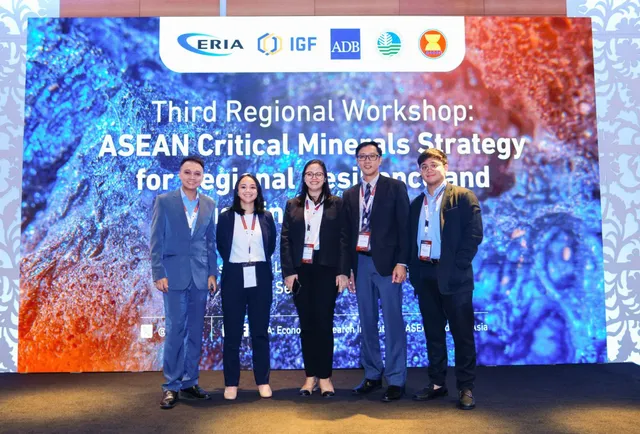
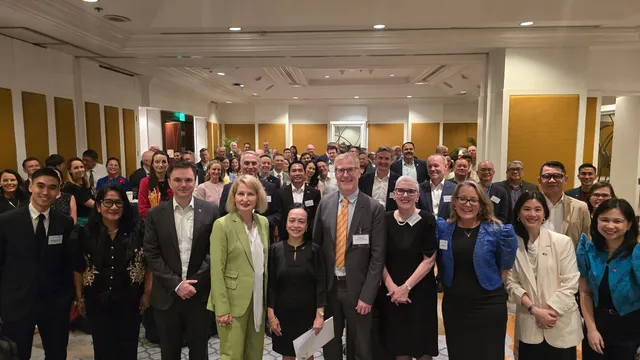
The Philippine Infrastructure & Construction Club (PICC) in partnership with PhilEnergy, presented the PICC Energy Leadership Forum - “Accelerating Green Resilience: Powering the Next Decade of Philippine Energy Security” on June 26, 2026.
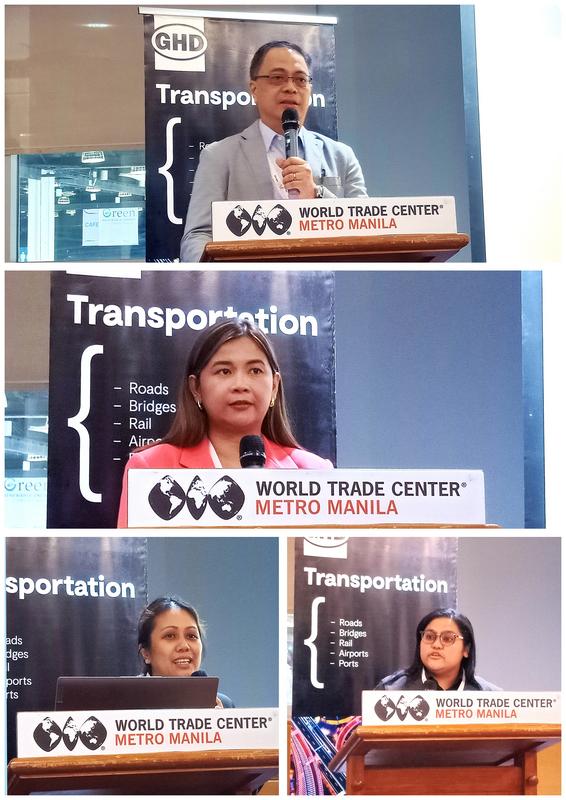
The forum’s emcee was Ms. Nikki Bernardo (Business Development Manager of GHD), with moderator Atty. Dennis A. Quintero (Partner at Quisumbing Torres and Chairman of Philippines Australia Business Council).
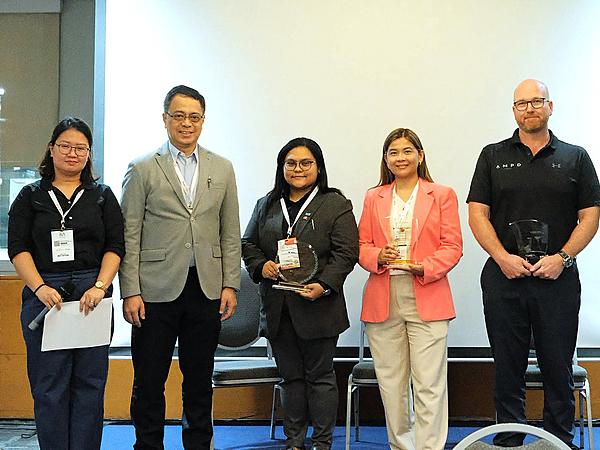
Five top professionals were featured as speakers in the forum, presenting their studies, company profiles, and innovative technologies in the energy sector.
Energy Systems Against Natural Disasters
Ms. Patricia Tirados, Director of Business Development–Energy of GHD, presented the topic “Future-Ready Design: Scaling Resilient Infrastructure.”
Just recently, the Philippines experienced a major earthquake on June 8, 2026 that affected 800,000 homes and exposing infrastructure vulnerabilities. The Philippines ranks first in the World Risk Index for disaster-prone countries, highlighting the need for resilient infrastructure.
Ms. Tirados discussed how building resilient energy systems in the Philippines are necessary to withstand natural disasters. She emphasizes the importance of resilience in infrastructure design, particularly in the energy sector.
The energy sector globally faces three interconnected shocks, namely: security, societal pressure, and climate-related disasters.
She noted that resilience should be integrated from the beginning of infrastructure projects, not as an afterthought.
The speaker also introduces the "six dimensions of resilience" framework: design, diversify, distribute, visualize, deploy, and protect.
Other key takeaways from her presentation are:
- Diversification of fuel sources and energy systems is crucial to prevent single points of failure.
- Distributed energy systems are more resilient, especially for archipelagic countries like the Philippines.
- Real-time monitoring and cybersecurity are essential for protecting energy infrastructure.
- Financing and execution are critical for implementing resilient energy projects at scale.
The speaker shared examples of successful resilient projects in the Philippines, such as solar farms and hybrid energy systems. Although the Philippines is known for its resilience, but the focus should shift from recovery to proactive resilience.
She calls for stress-testing projects against the six dimensions to identify vulnerabilities.
The ultimate goal is to build systems that withstand shocks, thus reducing the need for constant rebuilding.
On a final note, Ms. Tirados concluded by emphasizing the importance of resilience in the energy transition and infrastructure development.
RE Development Through AI
The second speaker, Ms. Michelle Luistro, discussed accelerating renewable energy development through digital connectivity and AI in construction. She is the Sales Lead (Philippines) of Autodesk Forma, focusing on enterprise technology and digital transformation.
Her topic is titled “The Digital Thread: Optimizing Lifecycle Efficiency in Renewable Energy”.
Autodesk has been in the industry for over 40 years, investing 23% of net revenue in research and development. Autodesk was recognized as a top construction software provider last year and remains a leader in construction management software.
Ms. Luistro mentioned that AI can significantly impact environmental problems, either helping or hindering progress.
Renewable energy and AI, powered by clean energy, are crucial for sustainable technology use. Additionally, data centers are forecasted to increase electricity usage significantly in the next 95 years.
With that said, Autodesk's vision encompasses architecture, engineering, construction, and ownership, focusing on AI utilization for improved job performance.
She said that the construction industry faces challenges like skill shortages, labor issues, and complexity in deliverables. There is a gap between field activities and project management visibility, causing delays and cost overruns. Therefore, a unified platform is envisioned to connect planning, design, construction, and operation stages.
Autodesk's digital thread optimizes workflows from planning to operation using a single platform. The platform facilitates model coordination, collaboration, bid management, project management, and operations. Autodesk integrates with existing systems through Application Programming Interface (API), not replacing current Enterprise Resource Planning (ERP) or scheduling platforms. AI helps in lifecycle control, decision-making, and providing insights across systems.
Autodesk has made significant investments in construction software since 2021, with several business partners onboarded.
Transition to RE with Integrated Solutions
Ms. Irene Maxine A. Imperial, Business Development and Regional Proposal Manager of DNV, discussed the topic “Large-Scale Hybridization: Integrating BESS into Multi-Megawatt RE Portfolios”. As an overview, this is about accelerating the Philippines' transition to renewable energy with integrated solutions.
Ms. Imperial discussed the large-scale hybridization integrating solar, wind, and battery systems for energy efficiency. She represents DNV, a global assurance and risk management company with over 15,000 employees in 100+ countries.
DNV provides energy infrastructure assurance across finance, design, build, and operating cycles.
From her lecture, she pointed out that global electricity demand is expected to rise from 20% to 36% by 2050, doubling from 91 to 181 exajoules.
Southeast Asia, including the Philippines, faces challenges in transitioning to renewable energy due to rising electricity demand. The Philippines aims for 35% clean energy by 2030, requiring significant investment in renewables and modernization.
The use of coal remains dominant in the Philippines' energy mix, despite environmental concerns.
For that, Integrated Renewable Energy System (IRIS) solutions are critical for achieving clean energy targets. IRIS supports grid stability, optimizes power flow, and reduces losses, making large-scale renewable integration feasible.
Ms. Imperial also mentioned that the Philippines faces challenges with renewable energy output fluctuations and infrastructure limitations. Energy storage systems are essential for balancing supply and demand as renewable energy penetration increases.
Selecting the right IRIS depends on surplus profile and renewable source pairing.
She mentioned international examples, such as India's competitive auctions, Brazil's hybrid system, and Indonesia's auction challenges.
In conclusion, transitioning to renewable energy in the Philippines is crucial for creating a resilient, sustainable, and future-proof energy system.
Meralco’s MTerra Solar Project
Atty. Christer A. Gaudiano, Head of Sustainability, Coms of Meralco PowerGen Corp. presented the topic “The Terra Solar Blueprint: Scaling Renewable Baseload”.
He stated how Meralco is empowering sustainable energy transition with solar and storage innovations.
Atty. Gaudiano said that sustainability is about creating a reliable, cost-competitive, and renewable energy system for future generations.
The energy transition is complex and requires a diversified portfolio, not just reliance on renewables. He also pointed out that thermal capacity is essential for providing baseload power and supporting energy security and affordability.
MTerra Solar Project in the Philippines is a significant integrated solar and battery energy storage system. It will have 3,500 MW of solar PV capacity and 4,500 MWh of battery storage, supplying energy to 2.4 million households.
The project aims to reduce carbon emissions by 4.3 million tons annually, equivalent to removing 3 million cars from the road.
(More details about Atty. Gaudiano’s report will be featured on a separate article.)
Reliable Battery Storage Solution
The last speaker for the forum was Mr. Tristan Yuswak, Business Development Professional of AMPD Energy. He lectured on the topic “Electrifying the Industrial Worksite: Battery Storage Solutions”.
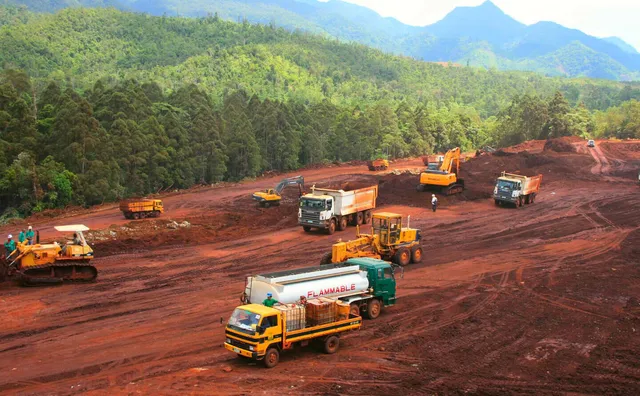
Focus: Replacing diesel generators with high-density Battery Energy Storage System (BESS) to build emission-free, resilient industrial microgrids.
Tristan Yuswak is a Business Development professional with extensive experience in the construction, mining and marine sectors, specializing in power generation and pumping systems.
He brings a practical, hands-on approach to energy and dewatering solutions, with a passion for visiting mine sites and exploring real-world applications. He was previously the Business Development Manager at ATCO and UON. Mr. Yuswak has expertise in delivering reliable power and water management projects in remote and challenging environments.
AMPD Energy’s product is called “Enertainer”, a battery energy storage system.
The AMPD Enertainer is an advanced, compact and connected BESS. It’s designed to replace the dirty, noisy and hazardous diesel generators that provides power in many construction sites today.
The Enertainer provides power to construction projects with a 70-90% lower carbon footprint and noise output 30x less than a fossil fuel generator. The unit also emits zero diesel exhaust fumes, which means it is safe for use in confined areas with poor ventilation.
At the same time, the Enertainer barely requires any operations and maintenance. It is capable of recharging itself, and it requires little maintenance. It also does not need any refueling, making it extremely cost-effective to operate.
The Enertainer’s state of the art battery system has a high-power output that can power even the most demanding loads such as: tower cranes, welders, bar benders, concrete pumps, etc.
The units simple plug and play design means it is also simple to install and ready for operation in 2 hours or less. There are currently over 120 Enertainers powering 80 major construction projects in Hong Kong, Singapore, Australia and the UK.
---
Reference:
[1] The Enertainers - https://netzero.bluedm.com.au/enertainer-walkthrough/
-----