Photo credit: Inkl
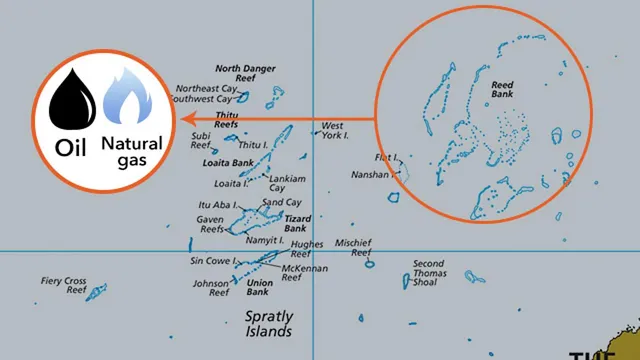
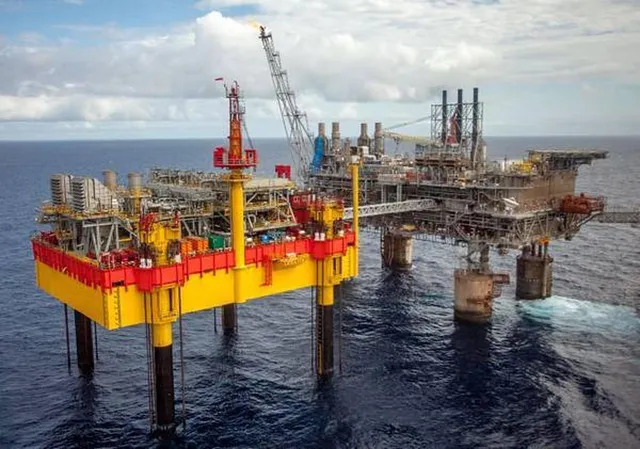
The chair of the House Strategic Intelligence Committee on Tuesday said oil drilling activities in Recto Bank must proceed as scheduled amid rising tensions with China.
Surigao del Sur Rep. Johnny Pimentel said the Sampaguita gas field could yield up to USD18.2 billion, or around PHP910 billion, in future royalties for the government, based on a 60 percent net share.
“We have no choice but to carry on with the drilling activities because the Sampaguita gas discovery in Recto Bank has the potential to energize the entire national grid – not just Luzon – for the next 20 to 30 years,” Pimentel said.
Pimentel said Sampaguita is “an untapped value-changing asset” that would be valuable to the country’s future energy security with up to 4.6 trillion cubic feet of gas, while Malampaya, which has been producing gas for the last 20 years, has only 1.6 trillion cubic feet of residual gas at best.
“There is even one study suggesting that the entire Recto Bank has up to 20 trillion cubic feet of potential gas in place,” Pimentel said.
The Permanent Court of Arbitration in the Hague ruled in July 2016 that Recto Bank is within the Philippines’ exclusive economic zone, as defined under the 1982 United Nations Convention on the Law of Sea.
By virtue of the ruling, Pimentel said the Philippines enjoys absolute rights to exploit all resources in the seamount.
Article courtesy of the Philippine News Agency
The Asian Development Bank (ADB) stated last 3 Nov. 2021 that they plan to buy coal power plants in Indonesia, the Philippines and Vietnam with an objective to shut them early and to replace them with clean and renewable energy options. This will be made possible through Energy Transition Mechanism (ETM), a private-sector-led initiative that will be financed through sources like governments, philanthropy and private investors.
ADB will start the pilot fund of USD2.5 billion to USD3.5 billion for the purchasing of the plants from the three Asian countries. They plan to retire the coal plants early for the next 10 to 15 years, which is ahead of its average lifespan. [1]
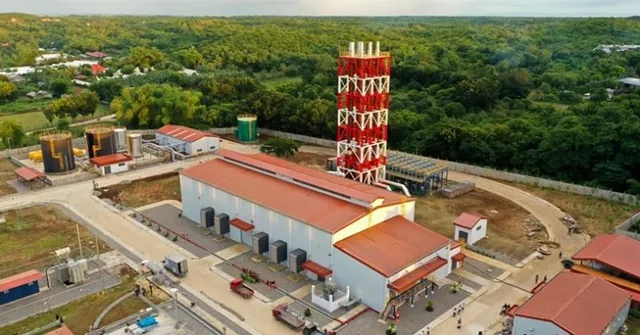
Isla Norte Energy Corporation (INEC) inaugurates its first power plant in Bantayan Island on Nov.10, 2021. The diesel-powered plant has a total capacity of 23.3 megawatts. (Photo courtesy of INEC)
The Isla Norte Energy Corp. (INEC) inaugurated Wednesday the 23.3-megawatt (MW) diesel power plant in Bantayan Island, Cebu, providing additional power supply in the emerging tourist destination.
In a press conference, INEC president and chief executive officer Emil Andre Garcia said the increasing power supply in Bantayan opens greater opportunities for the island, especially for investments in the tourism sector.
“The beaches here are really beautiful. Once tourists come here, aside from the beaches, they want (a) steady supply of power, for the internet, aircon, etc. We’re hoping that with the steady supply, we can see that boom in the economy,” Garcia said.
The Energy Regulatory Commission (ERC) recently issued to INEC a Provisional Authority to Operate its first power plant in Bantayan.
INEC is a joint venture of Vivant Integrated Diesel Corp. and Gigawatt Power Inc.
“We eagerly anticipate the granting of provisional authority by the ERC, and look forward to powering the success of our partners,” Garcia said.
INEC will be supplying its output to Bantayan Electric Cooperative Inc. (BANELCO).
Of the total capacity, the Bantayan power plant guarantees 15 MW dependable capacity, enough to supply the peak demand in the island.
Some 7.27 MW will be reserved supply. Meanwhile, Garcia, who is also an executive at Vivant Corp., said Vivant is supporting the government’s push for renewable energy (RE) as the company eyes to build RE facilities in the future.
“We want to have at least 30 percent of our portfolio on RE. So over the next couple of years, we want to build over 300 megawatts of renewable plants,” he said. By Kris Crismundo
Photo credit: PhilStar
The Philippines' proposed National Renewable Energy Program (NREP) 2020-2040 is setting a target of 35 percent share of renewable energy (RE) in the power generation mix by 2030 and 50 percent share by 2040.
This was bared by Director Mylene C. Capongcol, OIC of the Department of Energy’s (DOE) Renewable Energy Management Bureau, who in a recent online presentation acknowledged that instead of growing, the share of RE in the power generation mix has actually declined.
She noted that in 2008, the year the Renewable Energy Act was passed, the share of RE was about 34 percent. Now it is down to 21 percent, or 21,609 gigawatt-hours (GWh), out of a total 101,756 GWh of power generated.
The government is looking to revert the share of RE to 35 percent by 2030 and 50 percent by 2040 under the updated NREP, Capongcol said.
The NREP sets the roadmap for achieving the country's RE goals as required by the Renewable Energy Act of 2008.
Republic Act No. 9513, or the Renewable Energy Act, provides the framework for the development, utilization, and commercialization of RE sources, defined as resources that can be replenished regularly and are available indefinitely. These include biomass, solar, wind, geothermal, ocean energy, hydropower, and other emerging RE technologies.
The Act affirms the government’s commitment to accelerate the utilization of RE resources in the country to reduce harmful emissions and achieve economic development while protecting the health and environment.
The transition to RE from carbon-intensive energies has become even more urgent in light of the massive destruction being wrought by climate change and uncontrolled greenhouse gas emissions not just in the country but on a global scale.
Capongcol, during the webinar, said the proposed NREP will be released soon. The updated plan seeks to help attain energy security, contribute to sustainable development, counter climate change, provide capability building, and secure inclusive growth for the country.
To achieve the targets under the updated NREP 2020-2040, she said that while there have been a number of policies, initiatives, and programs that were developed and issued since 2011, “this is not enough.”
“There are still a lot of improvements, a lot of new policies, emerging ones, that will support renewable energy development” to enable the country to meet its goals of self-sufficiency and cleaner energy," she said.
She added that the DOE currently has innovative programs that are looking at the potentials of hydrogen, fusion, offshore wind, tidal energy, and other technologies.
The DOE is also working on an expanded solar rooftop program and the improvement of solid waste management, while at the same time drafting a policy on geothermal energy development.
Meanwhile, Jay Layug, president of Developers of Renewable Energy for Advancement, sought further improvements in the sector, citing the need in particular to upgrade the power infrastructure for RE such as building more power plants and improving transmission lines and distribution facilities.
“Demand for power continues to grow and in the meantime supply is a problem,” he said, pointing out that many power plants in the country are at least 15 years old and starting to deteriorate.
To solve these issues, Layug said the national government and local government units must address the challenges to private sector investment, including restrictive government regulations, rigid process for offtake agreements, numerous requirements for permits and licenses, and a lack of integration in government support.
He also pressed for the pursuit of policy reform, particularly by declaring renewables as the preferred energy resource, to reduce the importation of fossil fuel and vulnerability to price volatility.
His other recommendations included strengthening public-private partnerships; creating a one-stop-shop for RE; simplifying the rules for deployment of personnel, vessels, machinery, equipment spare parts and materials; and resolving inter-agency coordination issues.
In the same webinar by the Liveable Cities Challenge Philippines, British Ambassador to the Philippines Laure Beaufils, in her message highlighted the importance of utilizing RE in the country.
“The transition to clean and renewable energy sources, such as geothermal, hydro, wind and solar, which are already abundant in the Philippines, will help end the dependence on expensive imported fuel and lower electricity costs especially for lower-income, climate-vulnerable Filipino families,” Beaufils said.
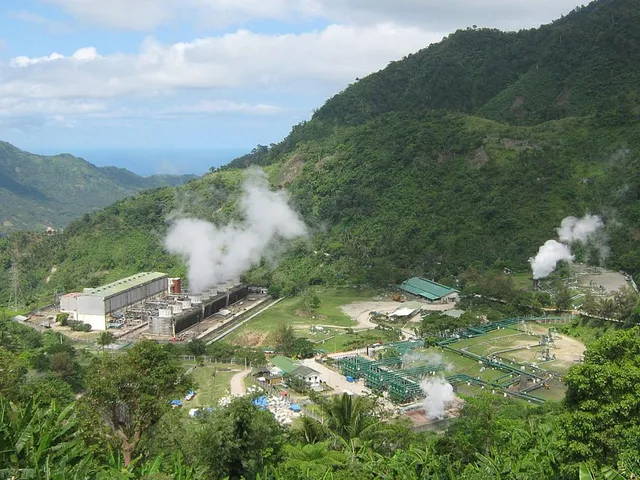
The Philippines and New Zealand will continue to explore cooperation on geothermal energy.
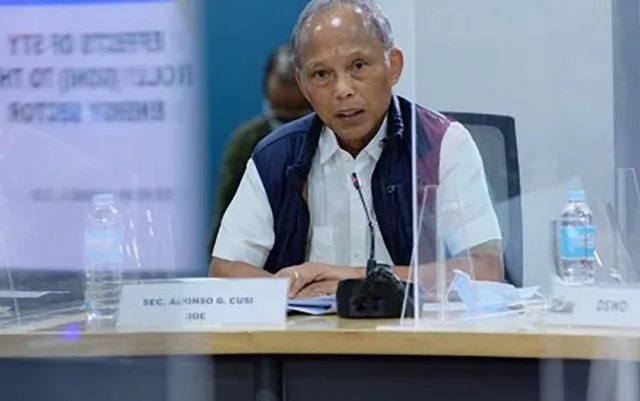
This as Department of Energy (DOE) Secretary Alfonso Cusi and New Zealand Ambassador to the Philippines Peter Kell signed the Second Amendment to the Arrangement on Geothermal Energy Cooperation between the two countries on Friday.
Cusi said this renewed interest for cooperation is aligned with the country’s push for indigenous energy as a power source.
"We welcome the formalization of the Second Amendment to the Arrangement on Geothermal Energy Cooperation which comes at such an opportune time, considering that one of our primary goals is to revitalize the state of geothermal energy development and utilization in the Philippines," he added.
Under the agreement, there will be an exchange of best practices and technical expertise in the sector of geothermal energy.
New Zealand previously provided the country with developing geothermal fields in Tongonan, Leyte, and Southern Negros Geothermal in Negros Oriental, which are still operating.
The DOE has also liberalized the geothermal sector as the government opened it to 100-percent foreign ownership to promote new energy sources. By Kris Crismundo
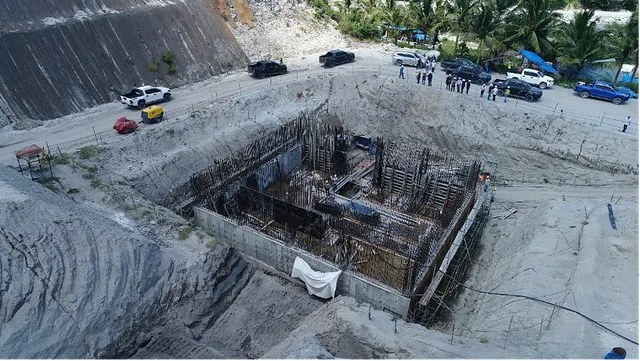
The Alsons Power group’s 14.5 mega-watt (MW) ₱ 4.5 billion run- of- river hydroelectric power plant at the Siguil River basin in Maasim, Sarangani Province is on- track to begin operations in 2022 to provide a source of renewable power to key areas of Mindanao.
The photo shows ongoing work on the plant’s powerhouse that will contain the hydropower turbine and generator set which will produce electricity using water from the Siguil River. It will also house the power facility’s control Room and offices for administration, operations and maintenance.
Alsons Power- Mindanao’s firs private sector power generator plans to develop at least seven more run of river hydro power facilities in different parts of Mindanao and Negros Occidental. The group currently operates four power facilities in Mindanao with a total generating capacity of 468 MW serving over 8 million people in 14 cities and 11 provinces.
As the Malampaya natural gas field is drying up, Mindanao might have the indigenous energy resources to energize the country.
In a webinar of Davao International Conference 2021 Thursday, PNOC Exploration Corp. (PNOC EC) vice president for upstream operation Jaime Bacud said Mindanao is rich in indigenous resources that can support the country’s energy requirement.
Bacud said Mindanao alone has three sedimentary basins waiting for exploration for oil and gas resources.
These basins include Agusan, Cotabato, and the Sulu Sea.
“We still think that there is natural gas potential for these areas, and it could be where we could find the next Malampaya,” Bacud added.
The Malampaya gas field, which supplies around 30 percent of Luzon’s power requirement, is the country’s lone natural gas source.
As the government issued a moratorium on new coal projects, Bacud said oil and gas exploration, particularly in Mindanao, could help in the government’s goal to achieve energy independence.
“We still have a lot of natural or oil and gas resources that are still untapped. And this could be our way forward to get closer to what we call energy independence,” he added. By Kris Crismundo
Article courtesy of Philippine News Agency
Photo credit: SMA Solar Technology - Catalagan Solar Farm
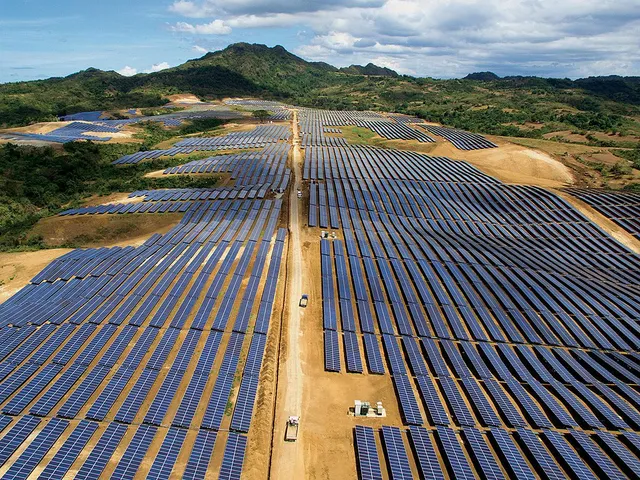
A lawmaker on Monday appealed to the Department of Energy (DOE) to expedite the process of approvals for power plants, especially for renewable energy (RE), as the possibility of “energy crunch” looms due to the impact of oil price hikes.
Albay Rep. Joey Salceda said the possible “energy crunch”, or a rise in power and fuel costs, by mid-2022 can cause major problems for countries like the Philippines that import non-renewables for its energy needs, as it could dampen economic recovery.
“The world is facing what could be a year of price hikes on coal, oil, natural gas, and other non-renewable energy sources. We are facing a confluence of factors. Oil is back where it was pre-pandemic. Natural gas is at all-time highs,” Salceda said.
In response to disruptions and price hikes in fossil fuels, he recommended that the country diversify its energy portfolio quickly.
“RE is just 24 percent of our energy sources, when we are both a net importer of fossil fuels, and an excellent location for all sorts of RE. One problem appears to me to be the approval process,” he said.
He noted that the Renewable Energy Law imposes much more requirements on RE players than on traditional fossil fuel plants, which tend to discourage rather than encourage RE power plants.
“We may need to review the Renewable Energy Law to see how we can expedite approval processes. The pre-development stage also tends to be long, up to three years, so we have to see how we can move quicker with that stage,” Salceda said.
He said the ideal mix should be at least 40 percent renewable energy.
“Our international commitment is to get that up to 35 percent by 2030, but we should do ourselves better by aiming for 40 percent, since almost all of our fossil fuels are imported,” Salceda said.
Salceda also suggested that DOE should be a more regular part of discussions on the country’s economic recovery.
“I’ve seen the national employment recovery strategy (NERS) and it says nothing about new power plants, which we sorely need, and which will definitely create new jobs. It’s not even in the National Employment Recovery task force,” he said.
He said approving the creation of pending power plant applications will create new jobs.
“You also need cheap power to create jobs. Moving forward, I hope the DOE is part of discussions on our economic recovery. Power costs remain an investor concern and a dampener on economic recovery,” he said. By Filane Mikee Cervantes
Photo credit: Mike Gonzalez - Southern Negros geothermal plant, Negros Oriental, Philippines
Racing against time to address the worsening climate change crisis, multi-sectoral representatives have joined a movement initiated by geothermal power leader Energy Development Corporation (EDC) aimed at attaining zero carbon emissions among businesses in the country. EDC, the country’s largest renewable energy producer owned by First-Gen, which operates the 222.5MW Southern Negros Geothermal Plant in Valencia, Negros Oriental, spearheads the movement dubbed Net Zero Carbon Alliance, a media release from the power utility said Tuesday. Launched virtually on Monday, the movement pushes for the country to become carbon neutral, in line with the Department of Energy’s goal to reduce emissions by as much as 75 percent. This is part of the government’s Nationally Determined Contributions to the landmark global United Nations’ Paris climate change agreement or COP 21 (Conference of the Parties). “We are putting into action our revitalized mission in the Lopez Group to ‘forge collaborative pathways for a decarbonized and regenerative future’ by seeking partnerships and synergies with fellow enterprises in the country,” EDC president and chief operating officer Richard B. Tantoco was quoted as saying. The Net Zero Carbon Alliance Program aims to “provide partners with a roadmap to attain carbon neutrality through the sharing of best practices and scaling up of carbon emission offsetting and tracking, as well as assistance in obtaining third-party certification of carbon emissions and offsets, and even access to “green” financing, among many other capacity-building tools,” EDC said in its media release. Partners in the carbon-neutral alliance will be guided by EDC’s experience as a carbon-negative company through its 100 percent renewable energy operations and the protection and restoration of the forests within its geothermal project sites. Partners can also adopt practices from EDC decarbonization mechanisms. The pioneering members of the Net Zero Carbon Alliance include homegrown enterprises ArthaLand property developer, Lopez Group affiliate First Balfour construction company, Drink sustainability communications agency, Silliman University, as well as the local operations of multinational firms Analog Devices, Coca-Cola, Knowles Electronics, and Unilever. “We are extremely excited with the enthusiastic participation of our partners and we are looking forward to working with more and more enterprises in the local business sector as we move toward our common goal of mitigating the global challenge of climate change,” Tantoco said. EDC is the country’s biggest 100-percent renewable energy (RE) company that accounts for over 40 percent of the Philippines’ RE output and serves about 10 percent of the country’s overall electricity demand with its installed capacity of almost 1,500 megawatts (MW). Its 1,181MW geothermal portfolio accounts for 62 percent of the country’s total installed geothermal capacity and has put the Philippines on the map as the world’s third largest geothermal power producer. By Mary Judaline Partlow
Photo Credit: PhilStar
Department of Trade and Industry (DTI) Secretary Ramon Lopez has urged Japanese firms to invest in the Philippines as opportunities for manufacturing, construction, and energy remain high despite the pandemic.
In a virtual Philippine economic briefing for Japanese companies Tuesday, Lopez said Japanese investors may look into opportunities in the production of semiconductor and electronic goods, as well as manufacturing of medical devices.
“(M)edical devices manufacturing is also a growing industry backed by the presence of supply chain for manufacturing such as tool and die, chemicals, semiconductors, plastics, and metal parts necessary in the production of medical devices and its parts,” he said.
Lopez said as the government aims to build its healthcare facilities, demand for medical devices is expected to increase.
“The local medical device market is projected to have a compound annual growth rate of 8.8 percent and would rise to USD884.3 million by (the) end of 2024,” he said.
The DTI chief said Japanese firms likewise have a big market to tap in the domestic construction sector driven by the government’s “Build, Build, Build” infrastructure program, housing backlog, office space requirement, transport sector demand, supply chain industry, power demand, and demand for more healthcare facilities.
Under the “Build, Build, Build” program, the government has a total of 119 infrastructure flagship projects.
Japanese firms were also encouraged to look into opportunities in the residential sector as the housing backlog is expected to reach 12.4 million units by 2030, while the office market needs nearly 370,000 square meters of office spaces between 2021 and 2025.
Lopez further said there is also growing demand in the transport sector, with transport infrastructure requiring investments amounting to USD100 billion for the next decade.
With the growing economy, demand for power is also expected to increase.
The local supply chain industry, on the other hand, requires investment amounting to PHP14.07 billion in the next 10 years, particularly investments for warehouses, cold storage facilities, container yards, and integrated logistics depots.
With the ongoing coronavirus disease 2019 (Covid-19) pandemic, Lopez said there is an urgency to build more healthcare facilities in the country.
“The Philippine health system is limited to cope with the growing number of confirmed and suspected cases. The current hospital bed-to-population ratio is at 1:984,” the top trade official said.
In the first quarter of the year, Japan was the top source of investment pledges in investment promotion agencies amounting to USD215.36 million.
Photo Credit: Panay News
Department of Energy (DOE) Secretary Alfonso Cusi said the country may expect additional 7,712 megawatts of power supply from 2021 to 2027.
During President Rodrigo Duterte’s Talk to the People late Thursday night, Cusi said the construction of new power sources is underway this year and in the coming years to augment the needed power requirements as the Philippine economy continues to expand.
He said between 2016 and 2020, installed capacity grew from 21,424 MW to 26,287, increasing by 4,863 MW.
Cusi added that the energy stakeholders have been preparing for the anticipated depletion of the Malampaya natural gas field through building new liquefied natural gas (LNG) facilities and exploration of indigenous power sources.
By next year, two LNG projects are expected to go online—the LNG project of AG&P and Osaka Gas by the second quarter and the LNG facility of First Gen and Tokyo Gas by third quarter, Cusi said.
“Aside from LNG, we continue to pursue the exploration of our indigenous resources like gas and oil in the West Philippine Sea,” the energy chief said in Filipino.
He added five service contracts were awarded since the government lifted the ban on exploration activities in the West Philippine Sea last year.
“The agency has recommended the awarding of four more service contracts for exploration in the West Philippine Sea,” Cusi added.
He said the DOE continues to partner with the international community to study potential power sources in the future.
The DOE has partnered with Australian and Japanese firms to study hydrogen as the fuel of the future.
Cusi said the Nuclear Energy Program Inter-Agency Committee is also looking into the potential of nuclear energy to be part of the country’s energy mix.
He said the DOE assures there is a sufficient supply of power across the country, additional power capacity to be installed in the coming years amid the growing demand, and lowering power rates.
Article Courtesy of the Philippine News Agency
The government, through the Department of Energy (DOE), has received nearly PHP1.7 billion in royalty payment from integrated energy company Semirara Mining and Power Corp. (SMPC) for the second quarter of the year.
In a statement Tuesday, SMPC said this is the highest quarterly royalty payment to the government after the firm recorded a revenue of PHP14.8 billion from April to June 2021.
SMPC’s revenue in the second quarter of 2021 was supported by all-time high coal sales and higher average selling prices.
Of the PHP1.7 billion turned over to the government, PHP1 billion will go to the national government that can be used to fund programs to fight coronavirus disease 2019 (Covid-19).
Some PHP666 million will go to local government units (LGUs) that host SMPC mine sites --PHP136 million for the province of Antique, PHP300 million for the municipality of Caluya, and PHP230 million for Barangay Semirara.
Under the Local Government Code of 1991, host LGUs of petroleum, coal, geothermal, hydrothermal, and wind facilities shall receive 40 percent of the royalty proceeds.
“The pandemic has taken a significant toll on our country. We hope that our contribution can help boost our government’s response against Covid-19,” SMPC president and chief operating officer Maria Cristina Gotianun said.
SMPC is the country’s lone power producer that mines its own fuel source --integrating its coal mining and power operations to create a local value chain.
Based on its website, SMPC generates 900 megawatts of power with an additional 1,200 MW of coal-fired power in the pipeline.
President Rodrigo Duterte has signed a law establishing the Philippine Energy Research and Policy Institute to enhance the country’s capability for energy research and policy development.
Republic Act 11572, signed by Duterte on July 30, establishes the institute as an independent agency attached to the University of the Philippines (UP) with a separate budget from the premier university.
Under the new law, an executive director to head the institute shall be a recognized expert in energy research and policy development with at least three years experience in the energy sector and shall have a strong organizational management background.
The executive director, appointed by the UP President upon recommendation of the Executive Board, shall serve in full-time capacity for a term of five years which may be renewed.
The institute’s Executive Board shall be composed of seven members comprised of the UP President as the ex-officio chairperson, and at least one representative from the fields of engineering, law, science, statistics, economics, social science, and public health, either from the academe or the private sector.
Four members shall come from the academe, two members shall come from the private sector, while each representative shall come from different fields.
Other members of the Executive Board shall be chosen by the UP President. Each member shall have a term of three years, which can be renewed for two more terms.
The first two appointees from the academe and the first appointee from the private sector shall have a term of two years, which can be renewed for two more terms.
The Executive Board may invite the secretaries of various government agencies as well as legitimate consumer and advocacy groups as resource persons during its meetings and deliberations.
The institute shall support further education and training for its officers and employees to include advanced degree studies, short-term programs, online courses, and participation in conferences.
Research papers, data, and other resources shall be made available to the public through its website.
However, proprietary or confidential data and other resources cannot be posted or disclosed unless prior consent of the source or owner of such data and resources has been obtained by the requesting party.
A Special Account in the General Fund (SAGP) for energy research, which shall be maintained and managed by the Bureau of Treasury, shall be established to support the research undertaken by the institute.
The SAGF for energy research shall recognize and accept grants, contributions, and donations collected for energy research.
A total of PHP200 million will be appropriated out of the General Appropriations Act (GAA) for the initial operating fund of the institute.
Such amounts necessary for the sustainable operations of the institute shall be appropriated from the GAA based on the annual financial plan approved by the Executive Board and submitted to the Department of Budget and Management.
Government agencies concerned are authorized to include in their respective annual budgets such necessary amounts as their contribution to the funding of certain research activities in the institute.
Within 90 calendar days from the effectivity of the act, the UP, in consultation with the members of the academe, and other public and private stakeholders shall promulgate the necessary implementing rules and regulations of the act subject to the approval of the UP Board of Regents.
To support the Philippines’ renewable energy transformation initiatives, a comprehensive training series on biogas technology was launched by a German biogas technology provider -- Lipp GmbH, and the German Biogas Association (GBA), along with German-Philippine Chamber of Commerce and Industry (GPCCI / AHK) [Deutsch-Philippinische Industrie-und Handelskammer]. Their training series covers the functionality, use and maintenance of biogas system in the Philippines.
After two severe weather disturbances that took place in the first half of November 2020 heavily hit eight regions in the Philippines, Pres. Rodrigo Duterte immediately signed Executive Order No. 120 creating the Task Force Build Back Better (TF-BBB) to initiate a comprehensive and integrated recovery.
Cagayan and Marikina valleys suffered the heaviest damage and human casualties as floods and its aftermath landslides placed many parts of the country in a state of calamity for weeks. Typhoon Rolly (international name: Goni) made its landfall on 1 November 2020 and several days after its onslaught and in almost the same path, Typhoon Ulysses (international name: Vamco) carried with it heavy rains as it reached the Philippine shorelines on 11 November 2020.
Tuguegarao and Marikina cities were in deep floods as Ulysses traversed the Philippine area of responsibility. The National Disaster Risk Reduction Management Council reported over 2.3 million people affected across eight regions in the country. Reports indicated that 23,089 individuals displaced were moved to evacuation centres while 46,987 individuals displaced stayed outside evacuation centres. The death toll from Ulysses has reached more than 70. It has severely damaged property and infrastructure in some areas. Videos circulating in social media showed floods reaching the roofs in some parts of Cagayan and Marikina City.
Two agencies, the Department of Environment and Natural Resources (DENR) and the Department of Public Works and Highways (DPWH), were given the lead role in a task force working on an operational mode adopting the “whole-of-society approach”. All government agencies and instrumentalities were mandated by EO 120 to take part.
After eight months of work, the TF-BBB has made significant gains in pursuing rehabilitation and post-recovery initiatives. DENR has realised that problems such as this needs to consider all factors affecting the whole watershed catchment basin where floods occur. Environmental advocates and experts often refer to this approach as the ridge-to-reef initiative.
"In the months since we set out to work in November last year, we have now set into motion significant post-disaster recovery initiatives in three priority geographic areas involving the restoration of Cagayan, Marikina, and Bicol River basins," DENR Secretary and TF-BBB chair Roy A. Cimatu said.
Cagayan River Dredging: Agencies in Action
Cimatu and TF-BBB co-chairperson Secretary Mark A. Villar of the Department of Public Works and Highways (DPWH) led the ceremonial dredging of sandbars along Cagayan River’s constricted midstream and planting of Bamboo seedlings on the riverbank of Barangay Bangag in the town of Lal-lo, Cagayan last 2 February 2021. After removing the sandbar obstacles that impede water from flowing freely, the roots of planted Bamboos should serve as a soil binder to keep the riverbank intact in the future.
There are three priority sandbars to remove near the Magapit bridge, measuring about 235 hectares with an estimated volume of seven million cubic meters, according to TF-BBB statements captured by the media. The first phase of DPWH dredging operations targeted this choke point which a past study identified as the cause of flooding in Tuguegarao City and other settlements near the riverbanks.
TF-BBB in Region 2 is chaired by Regional Executive Director Gwendolyn Bambalan of the DENR and co-chaired by Regional Director Loreta Malaluan of the DPWH. In her message during one of the virtual sessions of the task force, Director Bambalan lauded the different government agencies for their support to the Build Back Better initiatives in the region.
"The regional TF-BBB is not only addressing the protection and conservation of the environment but also the welfare of barangays and families affected by the restoration of the Cagayan River," Director Bambalan said.
In that meeting, the DPWH discussed the dredging operation and riverbank protections works. The Department of Human Settlement and Urban Development gave an update on the status of resettlement projects while the Office of Civil Defence reviewed the improvement of systems and essential services.
The Department of Trade and Industry also presented its accomplishments on livelihood projects. For its part, the Department of the Interior and Local Government presented its agenda for strengthened governance and mainstreaming of disaster-risk reduction and climate change action.
Representatives of the Land Registration Authority also attended the meeting. The LRA will be the partner agency of the DENR for the easement recovery along the Cagayan River.
The Technical Education and Skills Development Authority (TESDA) has trained residents who were eventually hired as laborers and equipment operators to help carry out the dredging operations. TF-BBB has also engaged the Department of Labour and Employment (DOLE) to provide employment assistance to 120 residents for the planting and nurturing of bamboo trees in Tuguegarao City and the towns of Alcala, Enrile, and Gattaran. This will be implemented through DOLE's "Tulong Panghanapbuhay sa Ating Disadvantaged/Displaced Workers" or TUPAD program.
Magat Dam blamed
In many reports published and echoed in mainstream media and social media, the opening of the Magat Dam floodgates was blamed as the cause of flooding. The National Irrigation Administration (NIA) came out with a fact check to clear its liability. Even the Senate initiated moved to investigate the matter. NIA’s acting department manager of Public Affairs and Information Office, Eden Victoria Selva, came up with a comprehensive technical response, explaining that the Magat river is just one of the many river systems draining to the Cagayan River.
“It is noted that the carrying capacity of the Cagayan River is 25,400 m3/s while the maximum volume of water released from the Magat Dam is only 6,706 m3/s indicating that water discharge of Magat Dam due to Typhoon Ulysses is not the main cause of massive flooding in the provinces of Isabela and Cagayan,” Selva said in an article that appeared in INQUIRER.net on 10 June 2021.
The controversial statements blaming the Magat Dam’s release of water also aroused public perception that points responsibility to the occupants of watershed areas in the upstream of Magat River. Those affected by the floods were quick to call for punitive actions against watershed occupants, including calls to ban mining in the province of Nueva Vizcaya, including those issued with legitimate permits to operate.
Sharing the Burden of Watershed Restoration and Protection
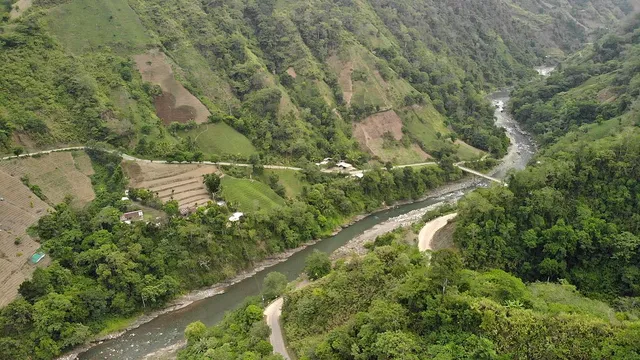
In the watersheds upstream of the Magat River, a 10-year project co-funded by the Republic of the Philippines and the Japan International Cooperation Agency is nearing completion. It is called the Forestland Management Project (FMP), a sequel of the several forestry sector projects implemented by the DENR’s Forest Management Bureau in the last 30 years. FMP is a holistic approach in Community Based Forest Management Agreement (CBFMA) areas in sub-watersheds in the upper areas of the Cagayan River, particular the provinces of Nueva Vizcaya, Ifugao and Quirino. FMP is also present in the Upper Pampanga River in Nueva Ecija and in Jalaur River in Iloilo.
Anselmo Cabrera, an Institutional Development Specialist working at the Central Project Management Office of the FMP at the DENR Central Office, has proposed a cost sharing mechanism that Watershed Management Councils should develop for mainstreaming. He said there must be a system where every citizen or institution using water can pay for environmental services performed by duty-bearers protecting and maintaining watersheds.
Through a cost sharing mechanism, communities living in critical watershed areas will be compensated for their efforts to ensure there is sufficient forest cover. With this scheme, upland farmers could minimize soil erosion by planting permanent crops instead of clearing spots to plant vegetables and other short-term cash crops.
The FMP has so far initiated several hundred of hectares planted with coffee, Guyabano, Rambutan, and other fruit bearing trees. About 35 people’s organizations benefitting over 5,000 households, mostly from Kalanguya, Ibaloi, Isinai, Iwak and Ifugao indigenous cultural communities,
LGUs were also called to take a more active role in watershed protection. Cabrera welcomes the favourable result of the Mandanas Ruling, where local governments won in getting their share in revenues collected outside the Bureau of Internal Revenue. The Supreme Court has ruled that LGUs can now get a share from the collection of the Bureau of Customs and other national revenues. Information available from the Department of Budget Management (DBM) revealed LGUs, which include provinces, municipalities, and barangays, could get as much as 37% increase in their internal revenue allotments from the national government in 2022. A DBM advisory directed LGUs to use these additional money to fund the full devolution of services, of which, integrated social forestry is one.
Nueva Vizcaya Governor Carlos M. Padilla made a friendly overture when nasty comments were posted over social media by angry residents of Tuguegarao City who wallowed in deep floods for several days after Typhoon Ulysses. Some people accused people in Nueva Vizcaya of denuding the watersheds. Relief goods from Nueva Vizcaya were immediately sent in flood-stricken areas, a gesture that Cagayan Governor Manuel Mamba deeply appreciated publicly. He also called for collaboration between people downstream and upstream of the Cagayan River to understand and take actions together.
During the last Watershed Management Council meeting, Gov. Padilla reiterated the importance of collaboration and networking to save watershed commons. He recalled a 2018 agreement with stakeholders which includes big water users such as SN Aboitiz and NIA, the two institutions managing the Magat hydropower and irrigation dam in Ramon, Isabela. Also included in the public pledge of support to the 2018 Nueva Vizcaya Declaration on Water are thousands of farmer’s organizations using water resources for irrigation and water utilities, like Solano Water and other entities providing services to majority of urban households.
Watershed Management Councils were potent avenues for collaboration in watershed protection and maintenance. In Davao, a bulk water project implemented by Apo Agua Infrastructura, Inc. mentioned in a webinar that the Watershed Management Council has played a crucial role in mobilising communities and people.
The TF-BBB in Cagayan Valley experience could be one of the best in the current administration’s whole-of-society approach in big projects. By mobilising both government agencies and communities, it has covered all areas of concern from the top of mountain ridges to the reefs in the sea. It would be exciting to measure if the impacts are indeed better ten years from now.
Photo Credit: DW
In a bid to tighten national policy against ozone depleting substances (ODS), the Department of Environment and Natural Resources (DENR) initiated a big leap towards cleaner technology among industries using cold chain facilities. The environmental agency wants the Philippine government to promote low carbon, energy efficient systems to eliminate the use of hydrochlorofluorocarbons or HCFC in industries requiring heavy use of refrigeration and air-conditioning systems.
Cold chain covers every product that needs cooling from the farmgate to the dining table, including aspects such as transport, storage, transformation, and packaging. So far, sectors dependent on cold chains are the biggest users of ODS.
The Global Partnership for Improving the Food Cold Chain in the Philippines (GPI-FCCP), a project which got a $27.5 million funding from the Global Environmental Facility, shall carry out a strategic positioning of environment-friendly cold chain technology across the country.
“Refrigeration systems for transporting goods in the food industry will no longer use ODS-HCFC. Stringent policies are important in providing a stable investment environment for investors in ‘green’ cooling technologies,” the DENR said in a statement.
The new policies will affect national standards for flammable refrigerants and energy efficiency. GPI-FCCP will also initiate a high-level training for fifty (50) local engineers, system suppliers, and end-users on the use of innovative cold chain technology that are currently used globally.
Stakeholders’ participation
As a project assisted by the international funder Global Environment Facility (GEF), the GPI-FCCP also includes the training of two hundred (200) key stakeholders on energy-efficiency and climate-friendly cold chain technologies. These trained stakeholders shall serve as champions in the advocacy to popularize new technologies replacing ODS-HCFCs.
The major implementers of the GPI-FCCP are the DENR and the United Nations Industrial Development Organization (UNIDO). The German international cooperation agency Deutsche Gesellschaft für Internationale Zusammenarbeit (GIZ) also serves as a co-financer of the project.
Agricultural commodities such as meat, dairy, fish, and a broad range of vegetable crops need cooling and freezing systems while in transit, during storage, and at the display shelves.
Traditional practices using natural cooling could be seen during harvest times in most farms in the Philippines. The lack of access to refrigerated transportation vehicles taught farmers in Northern Luzon that it is best to transport vegetable products to Metro Manila at night, where heat is lesser, and traffic is lighter.
Some known HFC and HCFC alternatives used in Europe include R32 refrigerants tested to have lower global warming potential (GWP), Hydrofluoroolefins (HFOs), and HFC-HFO blends.
A European expert said there is no “cure all” alternative because there are varied safety and thermodynamic properties among refrigerants. Some alternatives do no work well in certain types of products and equipment. Also, geographical locations may affect the efficiency and effectivity of each kind of alternative.
PH compliance to the Montreal Protocol
DENR said the green cold chain project came about as part of the country’s compliance to its commitment to the 1987 Montreal Protocol, a global agreement to protect the stratospheric ozone layer by phasing out the production and consumption of ODS.
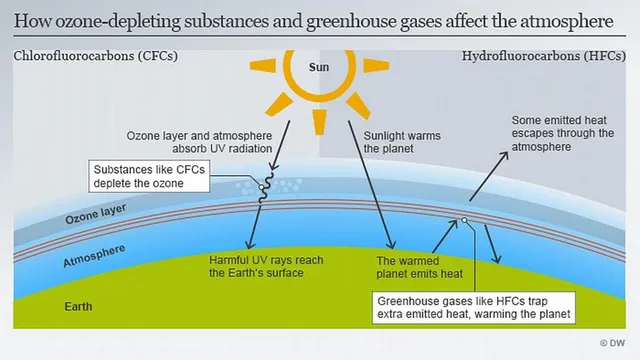
The ozone is the earth’s protective layer, absorbing UV light which reduces human’s exposure to harmful ultraviolet radiation, said to be the leading cause of skin cancer and cataract.
“ODS includes chlorofluorocarbons, halons, carbon tetrachloride, methyl chloroform, hydrobromofluorocarbons, hydrochlorofluorocarbons (HCFCs), methyl bromide, and bromochloromethane,” DENR explained.
Refrigeration technologies have come out as top concern due to low energy efficiency and high global warming potential. Common refrigerants extensively use HCFCs.
The Montreal Protocol compelled signatory countries to freeze consumption and production of the ODS-HCFCs. The treaty also called on developing countries to cut by 100% their HCFC production by 2030.
Private sector engagement will be crucial in the Philippines’ effort in obtaining knowledge transfer of the most innovative, climate friendly, and energy efficient refrigeration technologies, the DENR said.
Follow on LinkedIn:
Philippine Resources Journal
Be the "First" to get our exclusive Digital Magazine & Weekly Newsletter.