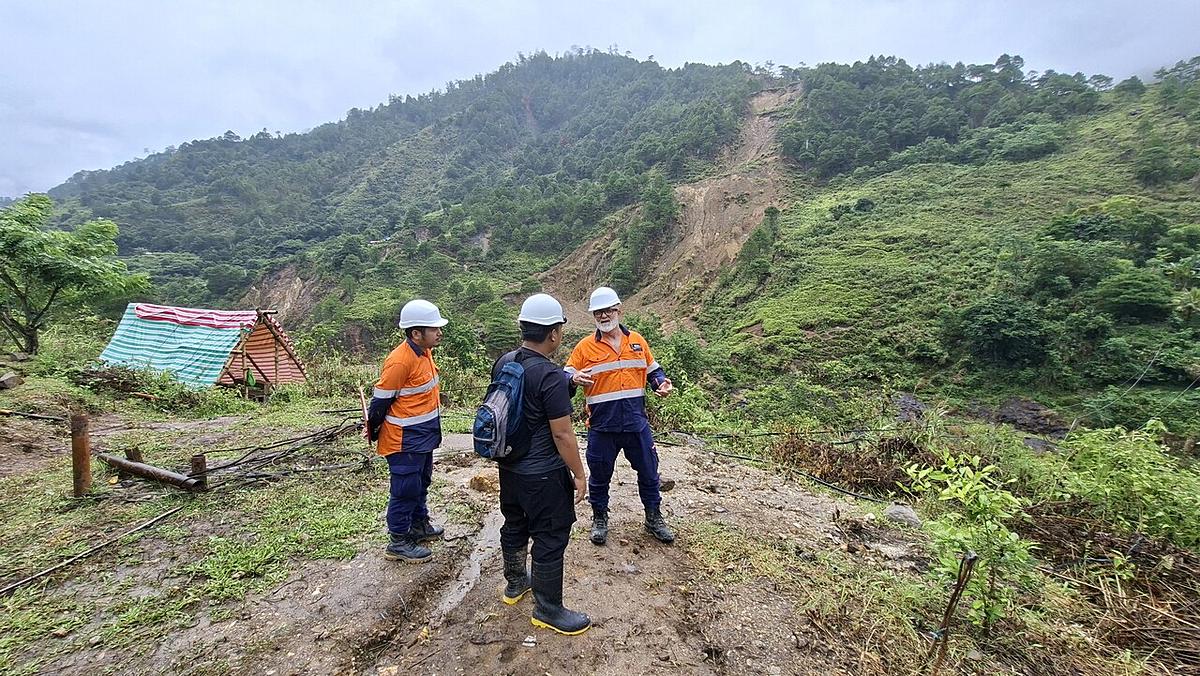
If you are developing or operating a mine in the Philippines, you understand complexity. Geological variability, high rainfall, seismic exposure, through to capital discipline, all shape decisions from the earliest concept stage.
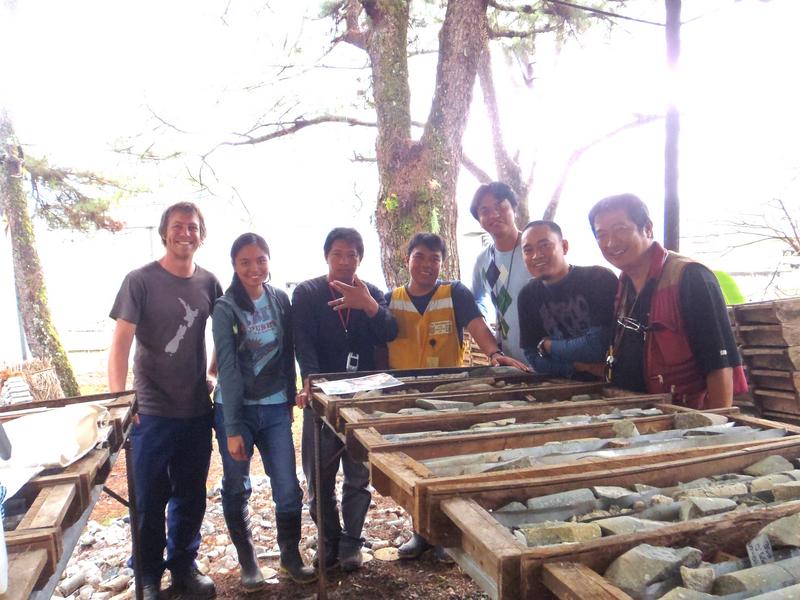
For 30 years, RDCL has worked alongside mining companies across the Philippines — from investigation and feasibility through to detailed design, construction support, and operations. We are a specialist geotechnical consultancy that is committed to continuity and staying involved. We understand what happens when ground risk is underestimated — and how to manage it properly.
From three decades of involvement in Philippine mining, here are five lessons that consistently stand out.
1. Geotechnics Should Enable Your Mine — Not Slow It Down
Your objective is not to get a completed geotechnical report, but to build and operate a commercially viable mine.
Geotechnical engineering sits at the centre of your project — linking geology, mine planning, structural engineering, tailings design, water management, and operations. When that link functions well, it strengthens every part of the system. When it becomes isolated or slowed due to cautious mindsets, it creates delay and friction.
The greatest value comes from seamless integration between geotechnical advice and the wider project team. Slope angles influence stripping ratios. Tailings design affects consenting and long-term liability. Foundation performance impacts construction sequencing. Geotechnical advice cannot sit in a silo — it must reflect the whole mine.
Ground risk must be managed rigorously, but always in alignment with operational and commercial objectives. When geotechnical input enables progress rather than obstructing it, projects move forward with confidence.
2. Decisiveness Is Key
Mining in the Philippines involves uncertainty. Deep weathering, faulting, seismic loading, groundwater interaction, and intense rainfall all introduce complexity.
But complexity should not translate into indecision.
Across feasibility studies, regulatory review, construction, and operations, problems rarely arise because risks were completely unknown. More often, they arise because risks were not clearly structured, prioritised, or acted upon.
You need geotechnical advisors who will:
- Identify potential failure modes early
- Maintain disciplined risk frameworks
- Evaluate realistic design options
- Make confident, defensible recommendations
Experience sharpens judgement. When you have seen projects through construction and into operation, you understand which risks materially affect long-term performance — and which can be proportionately managed.
Clear decisions protect both capital and schedule. Choose partners who can define the best pathway forward with confidence and certainty.
3. Bench Strength Matters
Geotechnical delivery spans multiple interconnected disciplines across the life of mine. It is not a single technical stream — it is a coordinated framework of expertise.
Mining projects typically require capability in:
- Geological interpretation and ground modelling
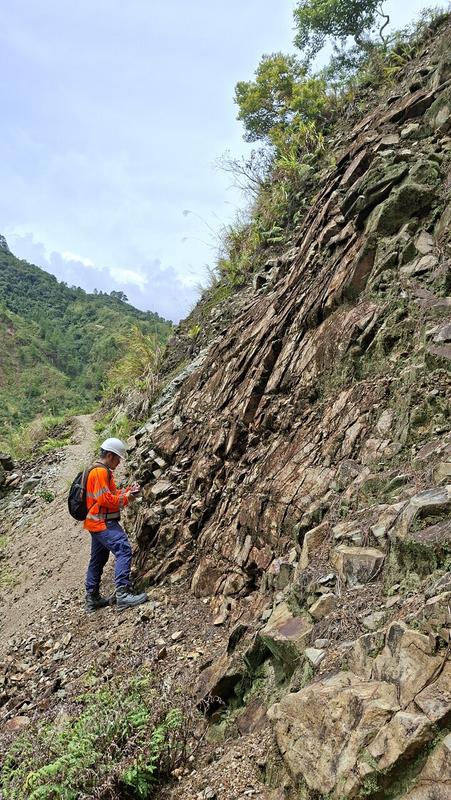
- Open pit slope stability and rock mass characterisation
- Underground excavation behaviour and support design
- Tailings storage facility investigation and embankment design
- Seismic hazard and stability assessment
- Groundwater and high-rainfall performance
- Earthworks and embankment construction
- Plant and critical infrastructure foundations
Each discipline carries its own risks and directly influences the others — from mine economics and long-term liability to stability and infrastructure durability.
Effective geotechnical delivery requires breadth as well as depth. It demands integration across technical streams and continuity from feasibility through construction. In environments such as the Philippines — where geological variability, seismic exposure, and climatic pressures compound risk — that breadth is essential.
True end-to-end expertise means having a supplier who has the breadth of skills in their team to navigate a wide range of scenarios, align assumptions across each stage, and support performance from first investigation through to operation. Choose a supplier who has good bench strength.
4. Make It Simple
Ground conditions in the Philippines can be complex. Communication should not be.
Whether dealing with regulators, financiers, independent reviewers, boards, or operational teams, clarity is critical. You must be able to explain what the ground risks are, how significant they are, how they are being managed, and what residual exposure remains.
Overly complicated explanations erode confidence. Clear, defensible advice strengthens approvals and funding pathways. If a risk cannot be explained clearly, it has not yet been properly resolved. Clarity is not simplification for its own sake — it is disciplined risk management.
5. Ground-Up Delivery Requires an Operational Mindset
Mining projects are delivered under schedule pressure and in demanding environments. Conditions change quickly. Construction windows are tight. Decisions cannot wait for perfect information.
In this context, geotechnical design must be practical as well as technically sound. It must be constructible. Information must be delivered when it is needed. Recommendations must reflect actual site conditions — not assumptions carried forward from a desktop model.
Ground conditions must be verified in the field. Design assumptions must be tested against observation. Technical judgement must align with how work is carried out on site.
The greatest value comes from geotechnical partners who understand construction sequencing, contractor interfaces, and production pressures — and who can deliver timely advice that keeps projects moving.
Technical knowledge is key. Practical judgement converts it into value.
In Summary: End-to-End Expertise in the Philippine Context
Operating continuously in the Philippines for over 30 years has provided more than technical experience. It has provided perspective — an understanding of how mining projects evolve over time.
Across these projects, one principle stands out: the greatest value lies in lifecycle integration.
Mining will always involve uncertainty. Ground conditions can never be fully known before excavation. But uncertainty can be managed confidently when geotechnical expertise is applied early, decisively, and across the entire life of the mine.
That is what three decades in Philippine mining has taught us.
Cam Wylie is a Professional Engineer and Executive Director of RDCL, a geotechnical and geophysical consultancy operating in the Philippines, New Zealand, and the Pacific. He has 30 years’ experience across Philippine mining and infrastructure projects, with a special interest in new development.