There's a common misconception in mining and industrial operations that all pumps are essentially the same: choose one with the right horsepower or suction and discharge size, and you're good to go. Not quite.
Every mining operation presents unique challenges. Water chemistry, flow rates, head pressure, site access, power availability, and operating conditions all vary significantly. A pump that performs perfectly at one site may struggle at another, leading to inefficiency, increased downtime, and higher operating costs.
The difference between a well-matched pump and a poorly selected one often comes down to understanding a single critical tool — the pump curve.
What Is a Pump Curve?
A pump curve is a graphical representation of how a centrifugal pump performs across a range of operating conditions. It illustrates the relationship between flow rate and head pressure, along with other critical performance data such as efficiency, power consumption, and net positive suction head (NPSH) required.
Think of it as the pump’s performance fingerprint. It shows exactly what the pump can deliver under various conditions, based on manufacturer testing and proven performance data.
Here's the critical point: pump selection without a pump curve is essentially guesswork. The curve is the essential tool that integrates all performance variables, allows you to match the pump to your specific system, and predicts real-world pumping behavior.
The System Curve — The Other Half of the Equation
Understanding the pump curve is only part of the story. Equally important is the system curve, which represents the friction losses and static head present within your piping network. In other words, it shows what your system demands from the pump.
Here's where theory meets reality: a pump never operates at an arbitrary point on its performance curve. It operates at the single point where the pump curve intersects the system curve. This intersection is called the operating point.
For example, when the pump operates at a known speed and the system defines the operating head, the pump delivers an output flow matched to those specific operational parameters. Understanding this intersection is critical for predicting how your pumping system will perform in the field.
Why This Matters for Your Operation
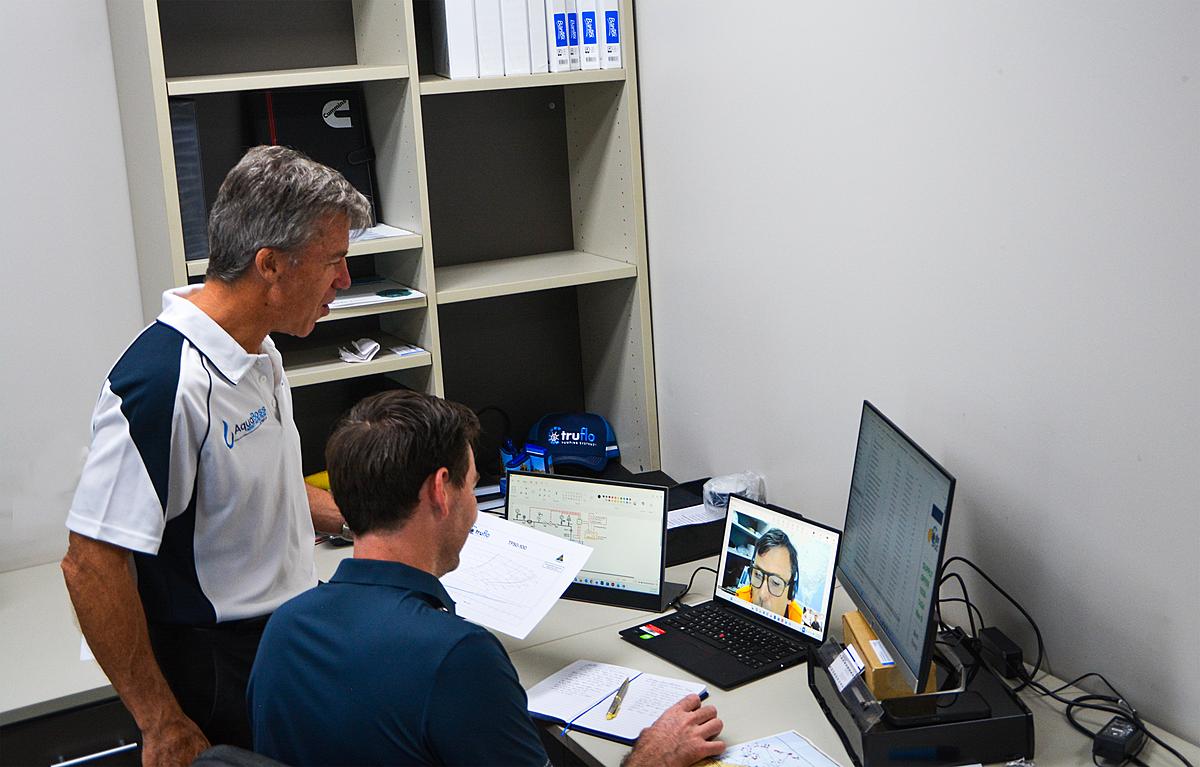
At Truflo Pumps, we've seen firsthand how proper pump selection transforms operational performance. When selecting dewatering solutions, we look beyond simple flow requirements to examine your specific site conditions and challenges. This includes analyzing your system curve, matching it against appropriate pump curves, and selecting equipment that operates efficiently at the required duty point.
The result? Better efficiency, reduced downtime, lower operating costs, and pumps that move water exactly the way you need them to.
Whether you're operating a remote mine site, a quarry, or a major infrastructure project, the principles remain the same. Understanding pump curves and system curves isn't just technical knowledge — it's the foundation of selecting dewatering equipment that will deliver reliable performance over the long term.
Truflo Pumps, along with its Philippines partner, Power Systems Inc., is ready to design and supply the best dewatering systems for your site, whether open-cut or underground.