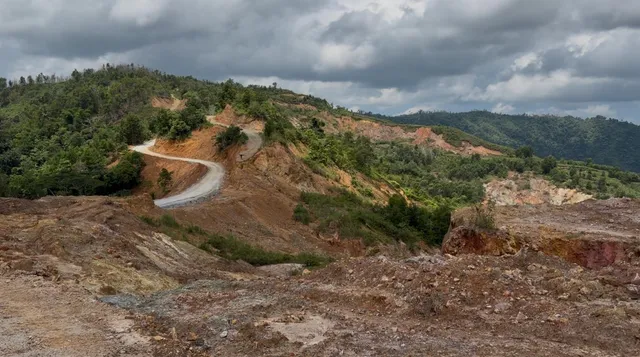
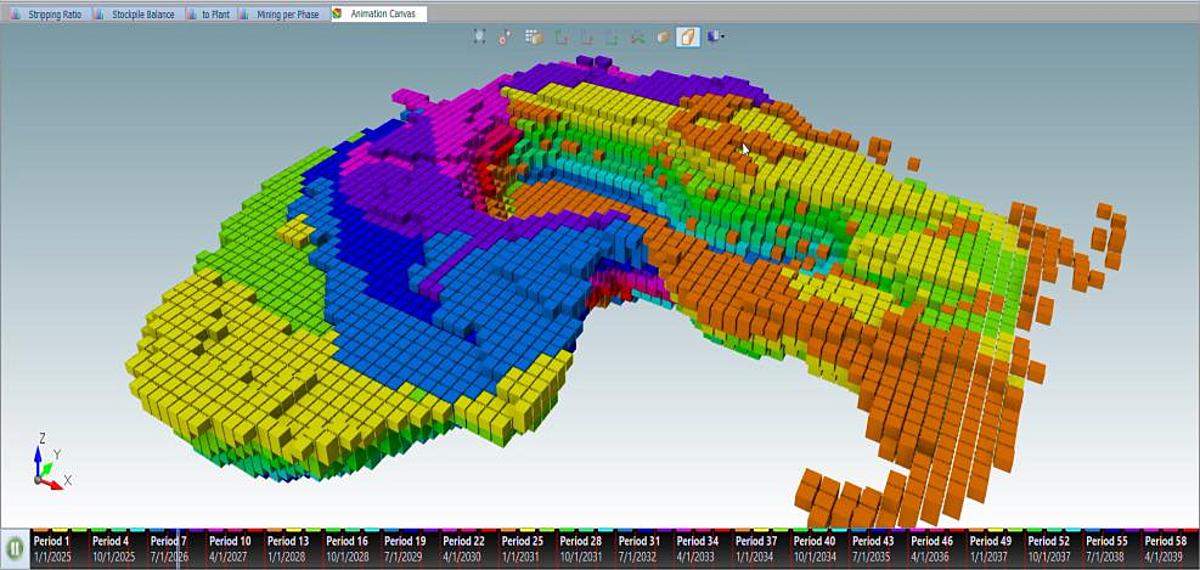
Short-term mine planning operates at the most critical level of execution, from monthly planning down to shift-level implementation. While long-term planning decides on what, where and when to mine, short-term planning focuses on tactics: how the mining will actually be carried out on the ground.
Most mine planners still rely on the traditional mine planning workflow. When geological models get updated, designs are adjusted, production targets shift, or equipment breaks, the schedule has to be revised manually. When that happens, revising spreadsheet schedules can take days or even weeks, slowing down everything and often causes misalignment between planning and what’s really happening in the field.
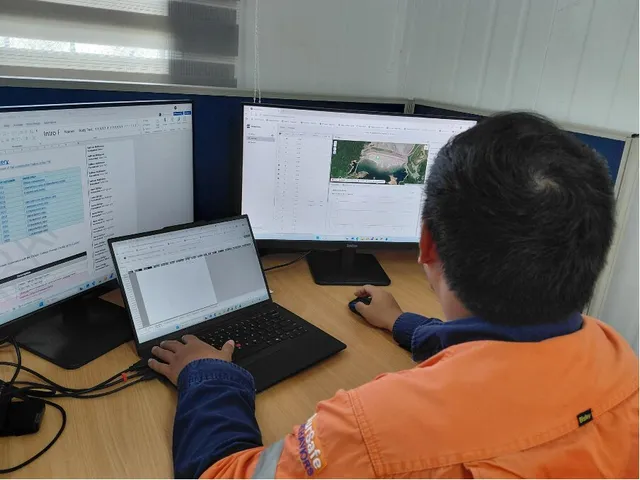
DS GEOVIA MineSched addresses this by introducing a constraint-based scheduling approach. Allowing mine planners to define the mining rules and operational constraints and letting the system generate the schedule.
These constraints include, first, defining how the operation is structured in time, whether monthly, weekly, daily, or even per shift schedule. Mining direction and precedence control the correct mining sequence, defining which areas cannot start unless the previous areas are completed. Material movement is also defined, to determine how ore and waste are transported from the pit to their destinations, such as plant, stockpiles, waste dumps, or other end streams.
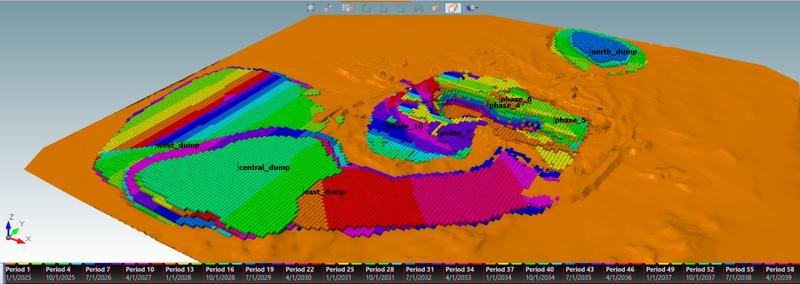
Haulage can also be modeled in detail by defining haul routes, truck capacities, and cycle times, allowing the system to estimate the truck requirements for each period. Production rates are also controlled by assigning the corresponding equipment capacity, to assess how aggressive and realistic the schedule will be.
Other constraints also include controlling how much tailings can be stored, as well as accounting for water loss through evaporation and dewatering rates. Recovery factors can be assigned to different material types at the plant, enabling the system to estimate how much valuable metal can be recovered during processing. Waste handling is also controlled by specifying the process waste tailings percentages, which defines how much processed waste is directed to tailings facilities or solid waste dumps.
Managing stockpile is also an important constraint, allowing mine planners to control how much material is stored, manage grade ranges, and balance materials to keep enough feed going to the plant. In addition, calendar constraints can be added to account for non-working days, maintenance periods, and planned shutdowns.
Aside from operational constraints, MineSched enables mine planners to define mining targets, which serves as measurable goals for the schedule.
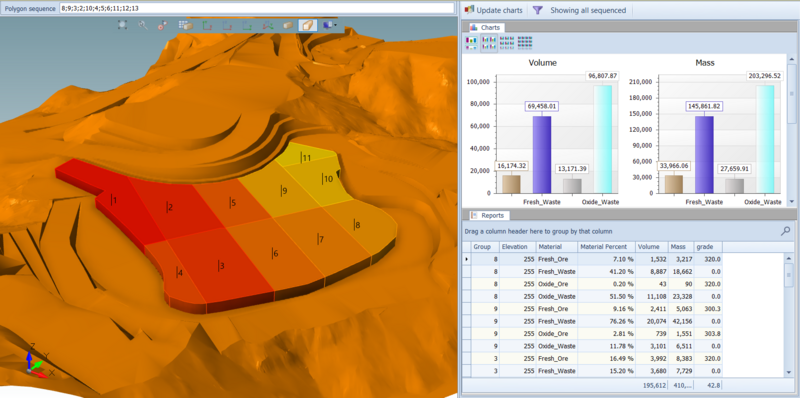
The first target is the optimal feed grade. Mine planners can specify desired grade ranges, along with upper and lower limits, to allow some flexibility while ensuring that the material is still within acceptable quality thresholds. Another key target is choosing between focusing on tonnage or grade priority. Mine planners can choose to keep the plant consistently fed to meet tonnage requirement, even if the grade is lower or choose to supply only high-quality material, even if the plant doesn’t run at full capacity. Material ratio targets are also used to control how much ore is mined compared to waste. For example, in a 1:2 ratio, every ton of ore mined, two tons of waste must also be removed. At this point, the schedule will not just follow the mining rules but will try to meet these targets as well.
MineSched also allows mine planners to test different scenarios and evaluate how flexible and responsive the schedule is under different operational conditions. What happens if the mining rate is increased or reduced? What if the production will be limited in a specific area due to operational priorities? How can excess resource capacity be redirected to other mining areas? Running different scenarios will let the mine planners spot potential problems ahead of time, evaluate trade-offs, and select the most stable and practical schedule. This will ensure fewer surprises and fewer rushed changes before the execution on the ground.
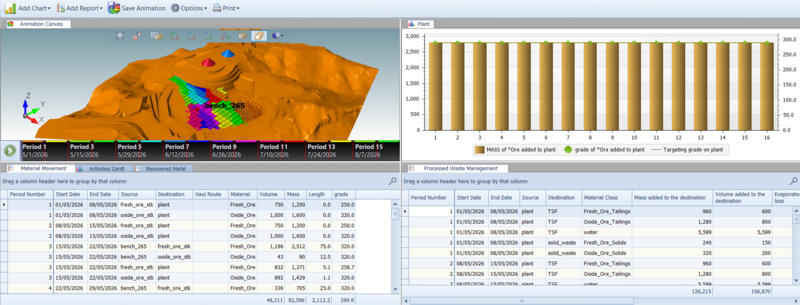
The advantage of using MineSched in short-term planning mainly leads to speed and reliability. When plans change, schedules can now be generated quickly, allowing more frequent updates when needed. Schedules become more stable and accurate, reduce human errors and help consistently hit production and quality targets. By identifying issues early through scenario testing, it becomes possible to understand how one operational condition affect the entire schedule. This helps in making better decision based on solid information, avoiding costly mistakes, using resources more efficiently, and keeping better control over the budget.
Across surface and underground projects and operations, mine planners all share the same goal: creating schedules that are practical and aligned with what the operation needs to achieve. With its simple planning tools, quick scenario generation, and seamless integration with leading geology and mine design tools, DS GEOVIA MineSched empowers engineers to plan smarter every day. It removes the complexity of manual scheduling, giving back what matters most: clarity, control, and time.
For mines looking to plan smarter, Paramina International Inc., as the Philippine partner of Dassault Systèmes, is ready to help you make the powerful DS GEOVIA tools work for your operations.
Contact our team for a free consultation at paramina_solutions@paramina.com Learn more about us at paramina.com