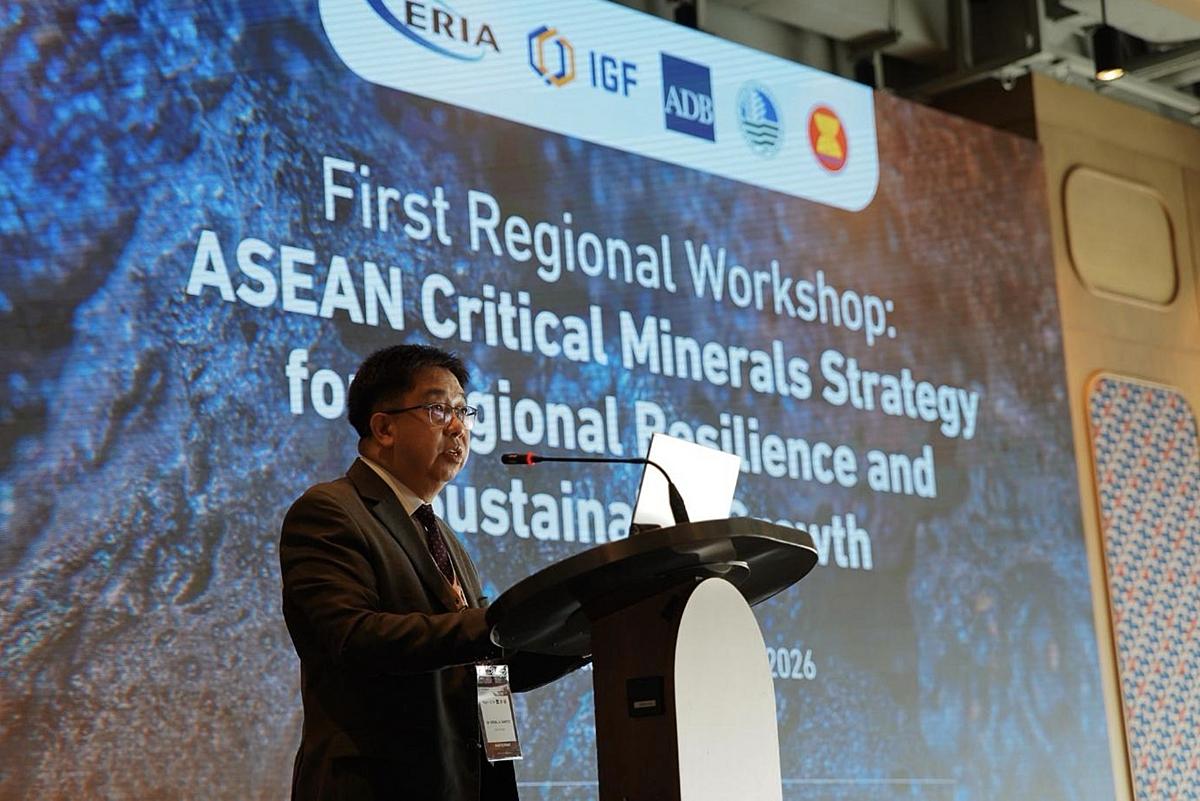
ASEAN member states have taken another step toward developing a regional critical minerals strategy aimed at strengthening supply chain resilience, attracting investment and positioning Southeast Asia as a key player in the global energy transition.
The Second Regional Workshop on the Development of the ASEAN Critical Minerals Strategy for Regional Resilience and Sustainable Growth concluded in Jakarta, bringing together government officials and technical experts to refine the framework that will guide regional cooperation on critical minerals.
The initiative forms part of Priority Economic Deliverable No. 6 under the Philippines' 2026 ASEAN Chairship and is intended to support ASEAN's efforts to build integrated and sustainable mineral value chains across the region.
The workshop was co-organized by the Economic Research Institute for ASEAN and East Asia (ERIA), the ASEAN Secretariat, the Intergovernmental Forum for Mining, Minerals, Metals and Sustainable Development (IGF), and the Asian Development Bank.
Participants included mineral sector focal points and representatives from trade, investment and finance ministries from ASEAN member states, reflecting a whole-of-government approach to critical minerals policy development.
The Philippines was represented by Dr. Karlo L. Queaño, assistant director, along with members of the Priority Economic Deliverable No. 6 Technical Working Group, including Anne Karla M. Navarro of the Mineral Economics, Information and Publication Division, Engr. Cesar Anthony A. Aben of the Marine Geological Survey Division, and Harley A. Lacbawan of the Lands Geological Survey Division.
Building on discussions from the first regional workshop held in March, delegates focused on validating key elements of the emerging strategy.
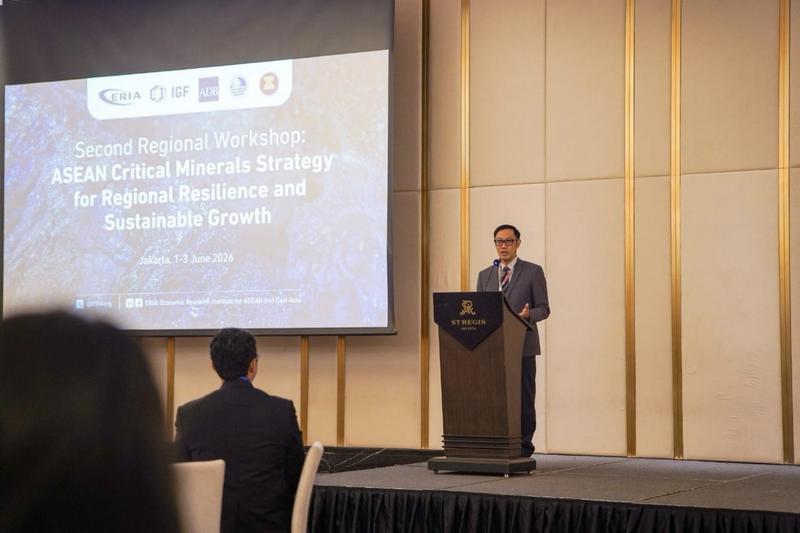
Among the major components discussed was the proposed ASEAN Critical Minerals Taxonomy, which seeks to establish common regional criteria for determining which minerals qualify as critical across ASEAN's diverse economies.
Participants also reviewed a proposed regional definition of critical minerals, assessing its clarity, consistency and applicability across member states and examining how it could be applied to areas such as trade, investment, industrial policy and fiscal frameworks.
The workshop further examined a policy brief identifying opportunities and challenges in regional value-chain integration, investment priorities, financing mechanisms and approaches to mobilizing capital while reducing project risks.
Following the technical discussions, delegates participated in the International Investment Forum on Critical Minerals, which explored investment opportunities across ASEAN mineral value chains and examined issues related to regulatory readiness, international standards and cross-border cooperation.
The forum brought together representatives from ASEAN member states, strategic partners including Australia, Japan and the United States, as well as multilateral development banks, international organizations, academic institutions and private-sector stakeholders.
Organizers said the draft strategy refined during the Jakarta workshop will undergo further stakeholder consultations before being finalized.
The completed ASEAN Critical Minerals Strategy is expected to be presented for ministerial consideration and adoption later this year, providing a regional framework to support sustainable mineral development and strengthen ASEAN's role as a trusted supplier in global critical minerals supply chains.