Southeast Asian nations are seeking to move beyond their traditional role as suppliers of raw minerals and position the region as a global hub for value-added critical minerals industries, following discussions at the International Investment Forum on Critical Minerals held in Jakarta earlier this month.
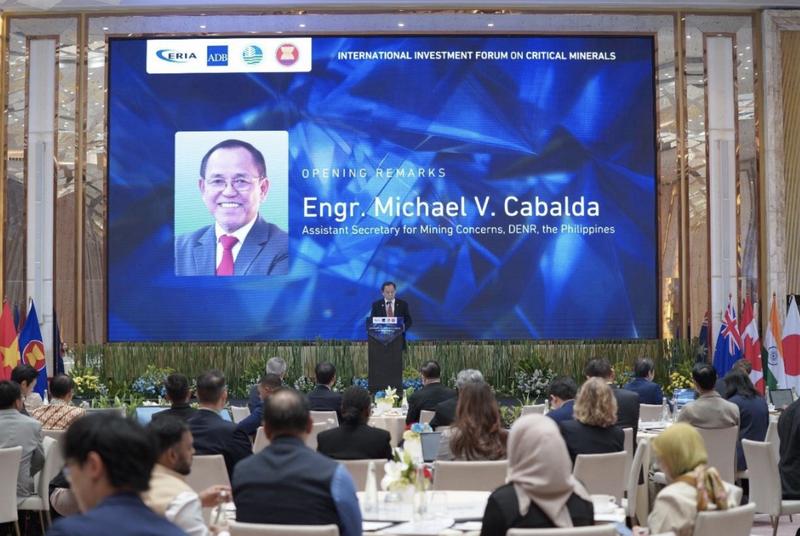
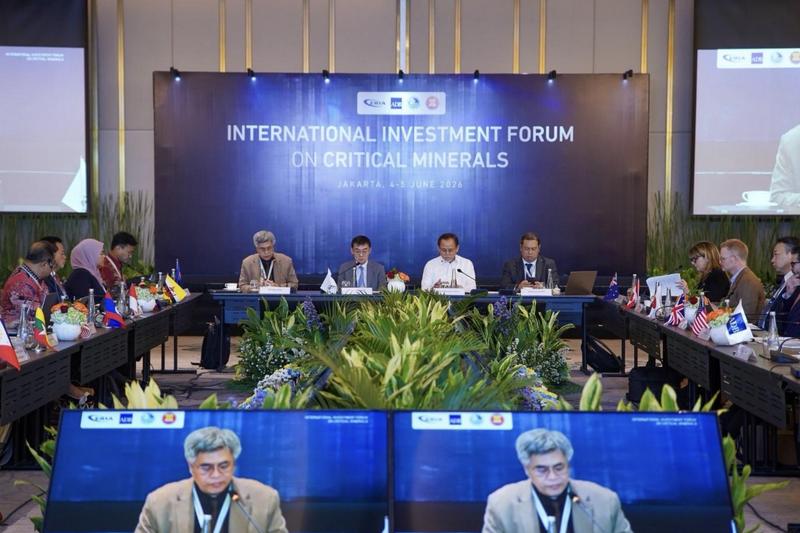
The two-day forum, held June 4 to 5 at the St. Regis Jakarta, brought together senior government officials, multilateral development banks, private sector leaders and international think tanks to discuss ways to build resilient, sustainable and diversified supply chains for critical minerals essential to the global energy transition.
The event was co-hosted by the ASEAN Secretariat, the Economic Research Institute for ASEAN and East Asia (ERIA), the Asian Development Bank (ADB), and the Department of Environment and Natural Resources (DENR) of the Philippines.
The Philippine delegation was led by DENR Assistant Secretary for Mining Concerns Michael V. Cabalda and included Mines and Geosciences Bureau (MGB) Assistant Director Karlo L. Queaño, Anne Karla M. Navarro of the Mineral Economics, Information and Publication Division, Cesar Anthony A. Aben of the Marine Geological Survey Division, and Harley A. Lacbawan of the Lands Geological Survey Division.
Opening the forum were ASEAN Secretary-General Kao Kim Hourn, Cabalda, ADB Director General for Sectors Department 1 (Energy and Transport) Hideaki Iwasaki, and ERIA President Tetsuya Watanabe.
A key message that emerged from the discussions was ASEAN's determination to strengthen its position in the global critical minerals value chain by expanding into mineral processing and downstream manufacturing rather than relying solely on raw material exports.
Delegates said developing midstream and downstream industries would allow member states to retain more of the economic benefits from their mineral resources while supporting regional industrialization.
The forum featured five thematic sessions covering geological opportunities and downstream value chains, regulatory and institutional challenges, responsible mining and traceability, national and regional investment strategies, and financing mechanisms for critical minerals development.
Representatives from Australia, Japan, the United States, the United Kingdom and Canada joined ASEAN officials, multilateral development banks, financial institutions and private companies in exploring opportunities to diversify investments and reduce dependence on single-source mineral supply chains.
Participants also stressed that attracting investment depends on strong regulatory frameworks and compliance with environmental, social and governance standards. Discussions underscored the growing importance of traceability systems that verify minerals are produced responsibly, with safeguards for environmental protection, worker safety and community development.
In his closing remarks, Cabalda said critical minerals may underpin the global energy transition, but long-term success will ultimately depend on sound policies, innovation, partnerships and responsible governance.
He said that with vision and commitment, critical minerals can serve not only as an engine of economic growth but also as a foundation for sustainable development, regional prosperity and shared progress across ASEAN.