From SONA 2026, to Pax Silica, and global nickel market, the Chamber of Mines shared its viewpoint and recommend solutions for the challenges that the Philippine mining industry are currently facing.
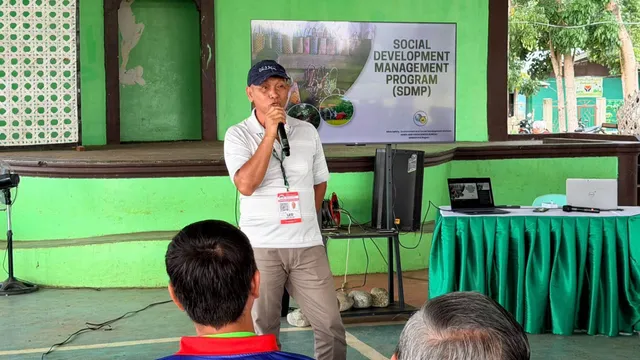
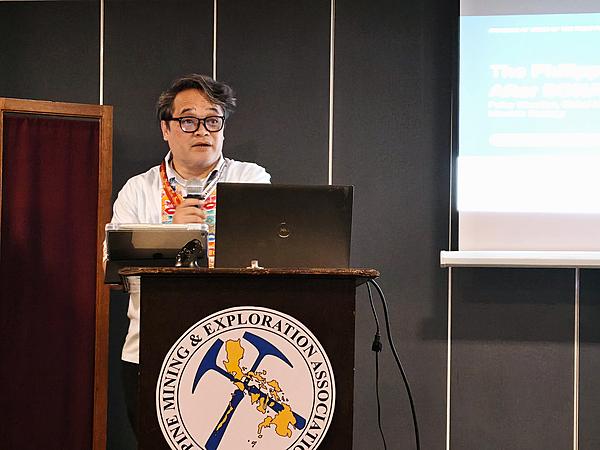
On August 3, 2026, Atty. Ronald Recidoro was the keynote speaker at the Philippine Mining and Exploration Association (PMEA) Monthly Membership Meeting. He is the Executive Director of the Chamber of Mines of the Philippines.
On his presentation titled "The Philippine Mineral Industry After SONA 2026: Policy Direction, Global Market Conditions, and the Case for a National Critical Mineral Strategy", the discussion was divided into four parts, namely:
1. How the President's SONA reads for the mining sector
2. What the Chamber has done this year
3. Where the global nickel market stands
4. What we should be asking now our internal partners particularly in the area of critical minerals and critical minerals development.
Central Proposition of the Chamber
“The Philippines must establish a trusted alternative nickel supply line to a market now over-concentrated in Indonesian production and Chinese processing capital. It is in the interest of every individual economy that supply is not excessively dependent on a single production geography. The Philippines is well positioned to provide that alternative--as the world's second largest producer of mined nickel, with substantial reserve, and on the strength of the environmental and social standards its industry already operates under. “
Here are some key points from his presentation:
1. SONA References Relevant to the Industry
Fifth State of the Nation Address, delivered on July 27, 2026
Mining was not directly mentioned in the President's State of the Nation Address, but critical minerals industries were highlighted.
▪ Critical minerals - Named among industries the administration committed to strengthen--alongside semiconductors and advanced manufacturing
▪ Pax Silica Industrial Hub - Presented as a flagship AI-centered manufacturing and logistics hub on the Luzon Economic Corridor
▪ Ease of doing business - Credited for sustained foreign investment via faster permitting and digital, anti-corruption reform
▪ Mining - Not addressed directly and no specific program, target or policy instrument was announced.
Atty. Recidoro noted, “The absence of a direct reference is material. The sector's contribution to the announced industrial agenda is assumed rather than planned, and no measurable commitment has been made against which government or industry can be held.”
Indirect Implication for Mining and Exploration
Commitments that cannot be delivered without the minerals sector:
▪ Critical minerals industry development - needs a national mineral list, permitting that can deliver new mines, and multi-year exploration
▪ Pax Silica & Economic Security Zone - Cannot be supplied without nickel, copper, cobalt and rare earths
▪ Advanced manufacturing & electronics - Demand for copper and refined metals argues for domestic processing over raw export
▪ Power generation & energy security - Grid expansion, transmission and renewables build-out are copper and nickel-intensive
▪ Ease of doing business & anti-corruption - Directly applicable to mining permits--among government's longest-cycle approvals
“The policy content is present. What is absent is the explicit link between the national industrial agenda and the sector that must supply it.”
2. The Chamber's Work
Building Momentum--January to June 2026
The Chamber of Mines has engaged with multiple governments and institutions to promote the Philippine mining sector.
▪ 1 Philippine Pavilion at PDAC Toronto - Funded and organized by the mining industry thru its NUIECP fund
▪ 15+ national and international platforms addressed - MAP, PCCI, JP Morgan, ARTA, Asia CEO Forum, UP NIGS
The Single Clearest Measure
The Philippines-Canada Mining and Critical Minerals Roundtable in Vancouver was held inside the President's own state visit, as part of the bilateral agenda agreed between President Marcos and Prime Minister Carney.
Pax Silica: Our Largest Opening and Our Loudest Argument
United States engagement
The Pax Silica initiative is seen as a major opportunity for minerals development, despite criticisms.
Where we stand
▪ 13th of 23 signatories, declaration signed April 17, 2026
▪ 4,000-acre Economic Security Zone at New Clark City, Tarlac
▪ Chamber consulted the US Embassy, USTDA and DFC on openings
What is being said against it
▪ Neocolonial arrangement exposing PH to great-power conflict
▪ Data-center power/water demand may fall on farming communities.
▪ Risk of lock-in as a supplier of raw ore only
The Chamber's Position:
The third criticism is not an argument against Pax Silica. It is an argument for a Critical Minerals Policy Framework. If the concern is that the Philippines remains a quarry, the answer is downstream processing, domestic value addition, and community benefit that is enforceable rather than promised, which is precisely what the pending Executive Order is intended to enable. The argument is not answered by avoiding it. We answer it by delivering the alternative.
Four Partners, Four Different Interests
Bilateral and multilateral engagement, January to July 2026
▪ Sweden - Business Sweden and the Embassy of Sweden - Critical minerals partnership and sustainable mining technology. Their interest is technology export; ours is decarbonized, lower-cost operations.
▪ Australia - Austrade and the Australian Embassy - Mining innovation, environmental technology and the METS sector--the closest fit to members' day-to-day operating needs
▪ Canada - PH-Canada Mining and Critical Minerals Roundtable - Held inside the President's state visit and the Marcos-Carney bilateral agenda | Follow-on: CECI's "Project Tulay" on mining community governance
▪ World Bank & OECD - World Bank groundwork on critical minerals and downstream value chains, OECD international study on traceability
▪ Also engaged during the period, the Embassy of India and its mining and steel delegation, and the United Nations Office for Disaster Risk Reduction (UNDRR). The UNDRR leads global efforts to prevent and reduce disaster risks. It coordinates the implementation of the Sendai Framework for Disaster Risk Reduction 2015-2030, which aims to cut disaster losses and protect lives, livelihoods, and health worldwide.
3. Market Conditions
The Philippine Mineral Industry: Baseline Indicators
▪ P316.3B Gross production value, 2024 (MGB)
▪ $7.38B Mineral exports, 2024 - roughly 7-8% of total Philippine exports
▪ 121 Operating mines - 60 metallic, 61 non-metallic
▪ 291,672 Direct employments across the industry
What this means for mining companies:
▪ Exploration becomes more valuable as the payoff for new discovery rises.
▪ ESG performance becomes commercially monetizable, not just a compliance cost.
▪ Processing projects become easier to finance.
▪ Laterite and copper resources become strategic assets, not just ore.
▪ Carbon measurement becomes a competitive advantage, not paperwork.
▪ Foreign partners shift from buyers to long-term investors.
Market Concentration: The Structural Risk
Regarding the share of global mined nickel output, 2024-2025 estimate, Indonesia significantly dominates the mined supply.
The Concentration
Indonesia dominates mined supply. Chinese capital and processing capacity are central to the downstream chain--the Indonesian build-out was financed principally by Chinese foreign direct investment, and the Chinese refining capacity anchors the route from ore to battery-grade product.
Why it matters to our partners:
A single production geography, financed from one capital source, now sets price and availability for a mineral vital to batteries, semiconductors, and grid infrastructure. Partners increasingly treat critical minerals as national-security assets--the logic behind Pax Silica. This exposure is shared, not a Philippine grievance.
Consequences for Domestic Processing (of nickel)
▪ Existing capacity - Two operating HPAL plants: Coral Bay (Palawan) and Taganito (Surigao del Norte)
▪ Pipeline announced (2024) - Three more HPAL projects floated, USD 128 combines - investors undisclosed.
▪ Position today (2026) - No third plant has broken ground. Coral Bay itself may cease by 2027.
▪ A 15-20 year investment horizon cannot be financed on a 2-year policy cycle.
“Announced investment is not committed investment. Two years on, the pipeline remains an expression of interest--and the nearer-term question is retaining the capacity we already have.”
4. The Response
The Strategic Case: An Alternative Supply Line
What a long-view Philippine critical minerals strategy must do
▪ Secure the resource base - Published minerals list, mapped inventory, multi-year exploration policy
▪ Make processing financeable - Fiscal certainty and offtake, now backed by two live instruments: ADB's CMM facility and USTDA grand funding.
▪ Diversity the customer base - Direct relationships with allied processors and end-users
▪ Differentiate on standards - Verified low-carbon, high-standard nickel where Indonesia is weakest
▪ Build institutional continuity - A strategy that survives administrations--priced beyond 2028.
“The objective is not to displace Indonesia. It is to ensure that the market has a second, credible and independently governed source of supply.”
The Critical Minerals Executive Order
Under development--the industry's highest policy priority
What the framework would do:
Critical Minerals Policy Framework:
▪ Encourages value-added mineral processing and downstream industry development
▪ Clarifies and compresses the permitting process--from as long as two years today toward the government's target of under 12 months
▪ Gives the Philippines a coherent answer when partner governments ask what the national critical minerals strategy actually is
▪ Provides the policy horizon against which fifteen-to-twenty-year processing investment can be financed.
1. Philippine Critical Minerals List - Developed with DENR and the MGB--the foundational component of the national strategy, and the reference point for partner-country agreement
2. Strategic Investment Priority Plan - The Chamber participated in the enhancement consultations to keep mining and mineral processing within industrial policy incentives.
3. National Transparency Hub - DENR-MGB's proposed platform, real-time environmental monitoring, an SDMP fund tracker, and a two-hour crisis-response protocol
“Early issuance remains the industry's single highest policy priority.”
As an overview, financing constraints hinder processing development in the Philippines. The Chamber seeks to differentiate the Philippines through high ESG standards and low carbon potential.
Development partners are being asked for project financing, technology transfer, and market access.
The Chamber plans to hold a conference to discuss a critical minerals strategy for the Philippines. The Chamber's priorities include securing an executive order and converting partner interest into tangible agreements.
The Chamber also emphasizes the importance of mining in delivering the president's industrial agenda.
The Chamber aims to leverage higher ESG standards to command premium pricing for Philippine minerals.
Summary:
▪ The SONA did not address mining directly, but Pax Silica, critical mineral and energy commitments cannot be delivered without the sector.
▪ The Chamber enters the second half with a broader base of engagement--six governments, three multilateral institutions, a seat inside a bilateral leader's agenda.
▪ The global nickel market is structurally concentrated. The price recovery reflects Indonesian production policy, not Philippine advantage, and is reversible at Jakarta's discretion.
▪ Philippine exposure is deepening: over 90% of our ore goes to China, and shipments to Indonesia have risen sharply, without a rise in domestic value captured.
▪ No industrial economic benefits from supply concentrated in one geography. The Philippines is positioned to be the alternative--and should say so directly to its partners.
▪ Our differentiator is standards. A low-carbon premium is already observable; earning it for Philippine output requires verified, product-level carbon data.
▪ What is required: a long-view national strategy, immediate issuance of the Executive Order, and conversation of partner interest into binding commercial instruments.