July 07, 2025

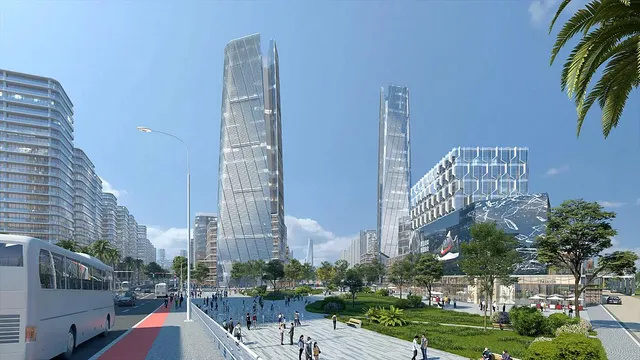
EEI Corporation, the Yuchengco-led engineering and construction giant, has secured a P15.7-billion contract for the design and construction of the Philippine International Exhibition Center (PIEC), which is poised to become the largest exhibition and convention center in Southeast Asia.

The Department of Public Works and Highways (DPWH) issued the Notice of Award to EEI for Phase 1 of the project, which will rise on Pasay Harbor City, a newly reclaimed island in Manila Bay. With a planned gross exhibition area of 269,000 square meters, the PIEC aims to position the country as a leading destination for meetings, incentives, conferences, and exhibitions (MICE) in Asia.

“The Philippine International Exhibition Center is a massive project that is poised to make a meaningful contribution to the economy,” said EEI President and CEO Henry D. Antonio.

“It marks a pivotal milestone for all of us in EEI, and we are honored and excited to support the government in bringing this vision to life. This project reinforces the path our company is taking—one driven by expansive opportunities, greater impact, and a future shaped by shared ambition and bold progress,” Antonio added.

The PIEC is expected to attract global exhibitions and conventions, stimulate trade and tourism, and generate jobs across various industries. The facility also forms part of the Marcos administration’s broader agenda to accelerate infrastructure and promote foreign investment.

“We are indeed excited that such an important building project of the President, His Excellency Ferdinand Marcos Jr., has been awarded to EEI Corporation,” Antonio said.

“This will be an opportunity for us to showcase Filipino creativity and the overall strength of the construction industry in the Philippines. Although we recognize that some materials will inevitably have to be imported, we are committed to maximizing Filipino content in building this iconic landmark,” the executive added.

Phase 1 of the project will cover detailed engineering and design, foundation construction, and architectural and structural works, along with consulting services. This stage is scheduled to run from 2024 to 2025, while civil works will continue under a separate package from 2026 to 2027.

Once operational, the PIEC will serve as the Philippines’ main venue for major local and international events, elevating the country’s global profile in the MICE industry. Its development also highlights EEI’s role as a trusted partner in delivering complex, high-impact infrastructure projects.

The PIEC will rise on Pasay Harbor City, a joint venture between the Pasay City government and Pasay Harbor City Corp., whose shareholders include Udenna Corp. of businessman Dennis Uy and Ulticon Builders, Inc. The area is being envisioned as a world-class commercial and events district similar to waterfront developments in other Southeast Asian countries.

EEI, listed on the Philippine Stock Exchange, is one of the country’s most established construction firms, with expertise in infrastructure, electromechanical systems, industrial facilities, and large-scale building projects. It has also partnered with global companies in delivering key transport and railway systems.

Among its major public sector projects are the South Commuter Railway Project Package 7, the Malolos-Clark Railway Project Package 4 (in partnership with Spain’s Acciona), and Package 2 for the San Fernando Station. It also forms part of the consortium building the Metro Manila Subway Project, alongside Japanese firms Shimizu Corp., Fujita Corp., and Takenaka Civil Engineering & Construction Co. Ltd.

July 04, 2025

In support of President Ferdinand R. Marcos Jr.’s “Bagong Pilipinas” vision for a well-connected, resilient, and inclusive Philippines, the Department of Public Works and Highways (DPWH) continues to fast-track the implementation of the Davao City Bypass Construction Project (DCBCP)—a flagship infrastructure initiative that aims to improve connectivity across key areas of the Davao Region in Mindanao.

On June 27, 2025, DPWH Senior Undersecretary Emil K. Sadain led an extensive inspection of the 45.5-kilometer Davao City Bypass to assess progress and sustain momentum across its five ongoing contract packages.

Joining the inspection were Project Director Benjamin A. Bautista of the Unified Project Management Office–Roads Management Cluster I (Bilateral), which is implementing the DCBCP, together with his assigned project managers and engineers; and Project Director Rodrigo I. Delos Reyes of the UPMO Bridges Management Cluster, which is also undertaking two other major bridge projects in the Davao Region.

The inspection was in response to the directive of DPWH Secretary Manuel M. Bonoan to intensify efforts under the Build Better More program, recognizing the project's transformative impact on regional mobility and national development.

The DCBCP seeks to decongest Davao City’s urban roads and provide a faster alternate route connecting the Davao–Digos section of the Maharlika Highway to the Davao–Agusan National Highway in Panabo City. The bypass is expected to enhance economic activity, promote regional balance, and cut travel time by more than half upon full completion.

“The Davao City Bypass Construction Project is more than just a traffic solution—it is a catalyst for regional development. By easing congestion and significantly cutting travel time, we are not only improving mobility but also laying down vital infrastructure that supports the socio-economic growth of Mindanao,” Sadain said.

The project is funded through a mix of Japanese official development assistance under Japan International Cooperation Agency (JICA) Loan Agreements PH-P261 and PH-P273, along with funding from the Philippine government.

Currently at 60.50 percent accomplishment, Contract Package I-1 (Sta. 12+800 to Sta. 23+500) is one of the most advanced segments. It involves the construction of a 7.9-kilometer four-lane road, including twin two-lane tunnels stretching 2.3 kilometers, three pairs of bridges, two underpasses, and two overpasses.

This segment is notable for its engineering complexity, particularly in tunneling, and has already surpassed the halfway mark in physical progress. Revised completion is targeted for Sept. 13, 2026, following adjustments to address on-ground challenges and technical refinements.

With 3.35 percent accomplishment since work began in December 2024, Contract Package I-2 (Sta. 0+000 to Sta. 12+800) covers 11.9 kilometers of four-lane roadway, seven bridges, and one underpass. Early-stage works, including site clearing, mobilization, and preliminary earthworks, are ongoing. Completion is scheduled for Nov. 24, 2027.

Showing overall progress of 2.8 percent, Contract Package I-3 (Sta. 23+500 to Sta. 29+700), which began in December 2023, features a 5.5-kilometer stretch of four-lane road, one bridge, and two cut-and-cover tunnels. Works are currently focused on access development and excavation.

Despite being in early phases, this package is crucial as it connects directly to the tunnel section of Package I-1, ensuring seamless passage through the mountainous sections of the alignment. Target completion is Dec. 1, 2026.

With a notable 79.70 percent accomplishment, Contract Package II-1 (Sta. 29+600 to Sta. 32+300) leads all segments in physical progress. It includes 1.4 kilometers of four-lane road and seven bridges totaling 1.3 kilometers—one of the highest bridge-to-road ratios in the project. Major civil works are nearing completion, with delivery expected by Jan. 7, 2026.

Posting a 71.92 percent accomplishment, Contract Package II-2 (Sta. 32+300 to Sta. 35+800) continues to make solid progress. This section covers 2.5 kilometers of roadway, seven bridges, three overpasses, and a box culvert. Bridge superstructure works are particularly active. Target completion is set for July 24, 2026. Strategically located between Packages II-1 and II-3, it forms a vital link in the northern end of the bypass.

Currently in the procurement stage, Contract Package II-3 (Sta. 35+800 to Sta. 45+457.91) covers the final 9.3 kilometers of the four-lane alignment, along with six bridges, seven box culverts, and one overpass. Construction is expected to commence soon after awarding, in line with the overall project timeline. This final segment completes the bypass, linking the route to Barangay J.P. Laurel in Panabo City.

DPWH remains committed to accelerating construction across all fronts, ensuring quality standards are upheld while meeting the revised timelines for full project completion.

July 04, 2025

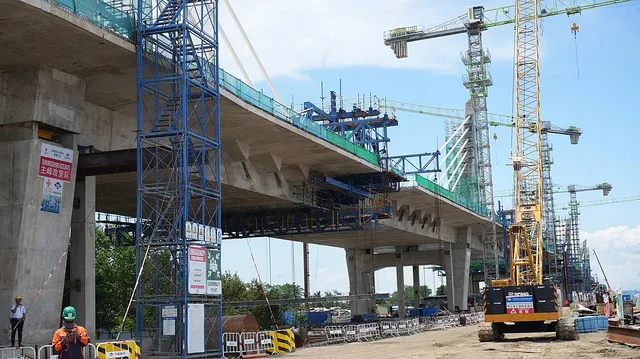
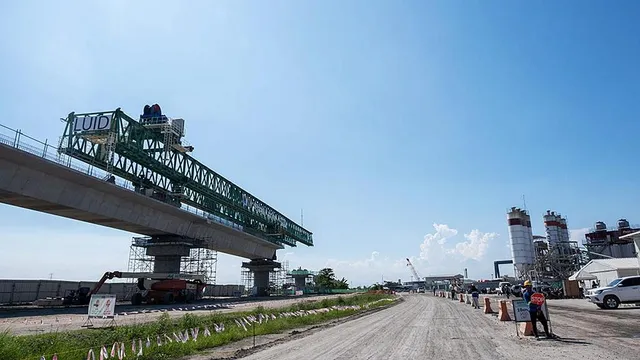
The Department of Public Works and Highways (DPWH) has reported rapid progress in the construction of the Samal Island–Davao City Connector (SIDC) Bridge, with the project reaching a 38 percent accomplishment rate—well ahead of its original schedule.

Senior Undersecretary Emil K. Sadain, who oversees DPWH infrastructure flagship projects, reported to Secretary Manuel M. Bonoan that the SIDC project has already exceeded its target accomplishment rate of 16 percent, reflecting a positive slippage of 22 percent.

Funded through official development assistance (ODA) from the government of the People’s Republic of China, the SIDC Bridge is being implemented by the DPWH Unified Project Management Office–Bridges Management Cluster (UPMO-BMC), with China Road and Bridge Corp. as the contractor.

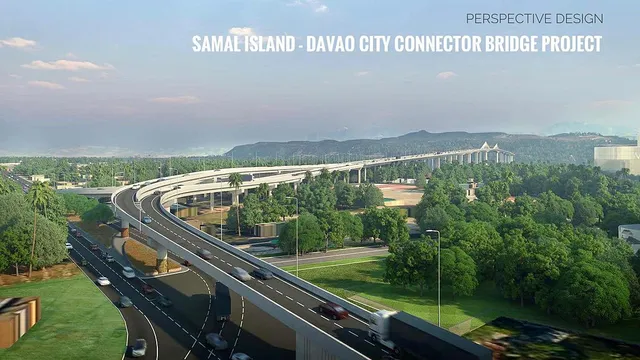
This toll-free, four-lane extradosed bridge will span 4.76 kilometers, linking Davao City at the R. Castillo–Daang Maharlika junction to the Samal Circumferential Road.

As part of the "Bagong Pilipinas" initiative under the administration of President Ferdinand R. Marcos Jr. to enhance national connectivity, the SIDC Bridge is expected to significantly cut travel time between Davao City and Samal Island, improve regional mobility, boost tourism, and stimulate economic activity across the Davao Region.

On June 27, 2025, Senior Undersecretary Sadain conducted an on-site inspection with UPMO-BMC Project Director Rodrigo I. Delos Reyes, UPMO Roads Management Cluster I (Bilateral) Project Director Benjamin A. Bautista, Project Manager Joweto V. Tulaylay, and Project Engineer John Christian T. Gaden.

The bridge will feature a 275-meter main span and a 47-meter vertical clearance to accommodate marine vessels. Its marine crossing section will extend 1.62 kilometers across the water, supported by two pylons, each standing 73 meters above sea level. The full bridge design includes roundabouts, ramps, and approach roads.

The project continues to achieve key engineering and construction milestones. On the Davao side of the land viaduct, 73 out of 110 bored piles have been completed, representing 66.36 percent. All bored piles on the Samal side have already been completed.

Bored piling for the navigation bridge on both the Davao and Samal sides has been completed. Seal concrete installation for the navigation portion is ongoing on the Davao side, while the Samal side has already been finished.

In terms of marine viaduct construction, the Davao side has completed 12 out of 32 bored piles, or 37.5 percent, while the Samal side has completed 11 out of 44, or 25 percent. Ramp construction on the Davao side has also progressed, with 60 out of 133 piles completed, equivalent to 45.11 percent.

For pile cap installations, 11 out of 26 pile caps have been completed on the Davao side of the land viaduct, while five out of 16 pile caps have been finished on the Samal side.

In preparation for road widening along Daang Maharlika, fencing installation and the removal of existing structures and obstructions have been completed. Meanwhile, the Davao Light and Power Co. (DLPC) has finalized the installation of primary and secondary distribution lines and is currently awaiting energization.

Right-of-way (ROW) acquisition is also progressing steadily. A total of 61 out of 69 affected lots in Davao City and Samal Island—88 percent—have already been acquired. In Davao City, 22 out of 51 affected structures—43 percent—have been secured, with the rest undergoing acquisition procedures.

With construction ahead of schedule, the SIDC Bridge is on track to become a vital infrastructure link that will strengthen inter-island connectivity and catalyze long-term development in Mindanao.

July 04, 2025

The Department of Public Works and Highways (DPWH) is making significant progress on the Bucana Bridge Project — a key component of the Davao City Coastal Road — which aims to ease traffic congestion and enhance regional connectivity throughout the Davao Region.

In his inspection report to Secretary Manuel M. Bonoan, Senior Undersecretary Emil K. Sadain — who oversees DPWH flagship infrastructure projects under the “Build Better More” programme — confirmed that the China Aid Localised Project for the Davao River Bridge, commonly known as the Bucana Bridge Project, is on track for full completion by the last quarter of 2025. The project has now reached 92.3 percent construction progress.

“The Bucana Bridge construction is moving steadily with about 3 to 4 percent progress each month and we expect it to be 95 percent complete by July 2025. This bridge is important because it connects to the Davao Coastal Road, making travel in and out of Davao City faster and easier, and strengthening the overall road network in the Davao Region,” said Senior Undersecretary Sadain.

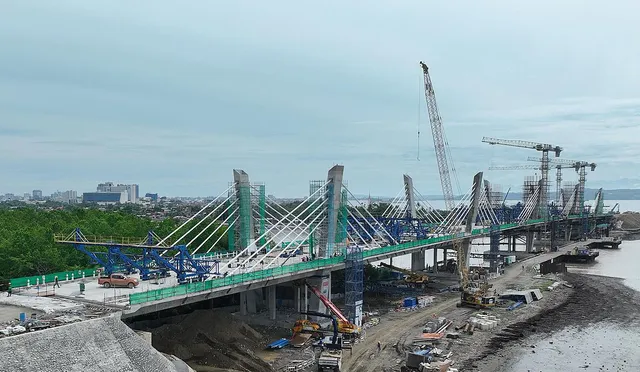
The Bucana Bridge Project features a four-lane, six-span extradosed bridge stretching 480.20 metres across the Davao River. The total project length reaches 1,340 metres when including the approach roads.

Bucana Bridge is more than just an infrastructure project — it stands as a symbol of international cooperation and shared commitment to inclusive and sustainable development under the “Bagong Pilipinas” vision of President Ferdinand R. Marcos Jr.

With a contract cost of ₱3.126 billion, the project is funded through a China Aid Grant under the Official Development Assistance (ODA) programme from the Government of the People’s Republic of China.

Senior Undersecretary Sadain visited the site on 27 June 2025 to assess ongoing construction progress and provide technical insights. He was joined by Project Directors Rodrigo I. Delos Reyes of the Unified Project Management Office – Bridges Management Cluster (UPMO-BMC) and Benjamin B. Bautista of UPMO – Roads Management Cluster I, along with the Bucana Bridge Project Team led by Acting Project Manager Norifel Teddie G. Cadiang and Project Engineer John Christian T. Gaden.

Representatives from the project contractor, China Road and Bridge Corporation, as well as the construction supervision consultant — a consortium comprising CCCC Highways Consultants Co. Ltd. and the Chinese Project Management Company (CPMC) — were also present during the site walkthrough.

A major milestone was achieved on 26 June 2025, with the successful installation of stay cables across all five piers, marking the completion of one of the project’s most complex structural components.

Additional key accomplishments include the completion of structural connections between abutment 0 and pier 1, as well as between pier 1 and pier 2; ongoing sub-base laying and compaction at the approach road; construction of drainage systems and concrete fencing; and slope protection works at the abutment.

The DPWH UPMO-BMC and its contractor are also preparing for the connection between pier 2 and pier 3, scheduled for 2 July 2025, and the connection between pier 5 and abutment 1.

With final deck connections targeted for July and substantial work nearing completion, the Bucana Bridge Project is set to become a transformative infrastructure asset by the end of 2025.

June 09, 2025

Advancing the infrastructure development agenda of President Ferdinand R. Marcos Jr., the Department of Public Works and Highways (DPWH) is set to commence the feasibility study for the Urgent Bridges Construction Project for Rural Development (UBCPRD) Phase II — a major initiative designed to enhance inter-regional connectivity and promote inclusive economic growth across the Philippines.

Led by DPWH Secretary Manuel M. Bonoan, with the oversight of Senior Undersecretary Emil K. Sadain, who is in charge of Official Development Assistance (ODA)-funded infrastructure flagship projects under the Build Better More program, the feasibility study will be funded through Asian Development Bank (ADB) Loan No. 3886 – PHI (Infrastructure Preparation and Innovation Facility – Additional Financing) under a contract valued at ₱694.44 million.

The consulting services, scheduled to officially begin on June 7, 2025, will cover the feasibility study for the construction and/or replacement of 25 priority bridges across 11 regions, with a total estimated combined length of 18.78 kilometers of bridge and approach roads.

“By expanding bridge infrastructure with ten (10) in Luzon, six (6) in Visayas, and nine (9) in Mindanao, the project is expected to enhance transport efficiency, strengthen disaster resilience, and boost local economies —especially in remote and underserved areas. It also directly aligns with President Marcos’ national priorities of balanced regional development and modern infrastructure connectivity”, said Senior Undersecretary Sadain.

A formal kick-off meeting between DPWH Bridges Management Cluster – Unified Project Management Office (BMC-UPMO) under Project Director Rodrigo I. Delos Reyes, ADB, and the consulting consortium, composed of SMEC International Pty Ltd. (lead) in joint venture with Oriental Consultants Global Co., Ltd., COWI A/S, SMEC Philippines Inc., and associated with Pacific Rim Innovation and Management Exponents, Inc. (PRIMEX), was held Tuesday, June 3, 2025 to mark the start of the consulting services, following the approval of the Contract Agreement on May 9, 2025, and the issuance of the Notice to Proceed (NTP) on May 20, 2025, which was accepted by the consultant on May 28, 2025.

Other notable attendees of the kick-off meeting include ADB Transport Sector Group - South East Asia Department Director Dong Kyu Lee, SMEC International Pty, Ltd./OCG/COWI A/S JV Project Manager/Sr. Highway Engineer Gavin Strid, SMEC Philippines President and Country Manager Hilario M. Pastrana, UPMO-BMC Project Managers Nina Y. Maniaul and Judee Ann D.R. Santillan, and representatives of DPWH Planning Service, Bureau of Quality and Safety, Bureau of Design, Stakeholders Relations Service, and UPMO-Roads Management Cluster II (Multilateral).

The consulting consortium will carry out the feasibility study within the period of 24 months and will form the basis for the detailed design and construction phases of the project.

Priority bridges include conventional pre-stressed concrete girder (PSCG) bridges such as the Bacarra Bridge (parallel) in Bacarra, Ilocos Norte; Quirino Bridge (parallel) in Bantay, Ilocos Sur; Kalabaza-Villa Fugu Bridge and Lalog Bridge in Isabela; Alag Malaki Bridge (parallel) in Baco, Oriental Mindoro; Malitubog Bridge in Alamada, Cotabato; Simuay Bridge in Sultan Kudarat, Maguindanao; and the Talacogon Steel Bridge in Agusan del Sur.

The iconic cable-stayed bridge category includes the Buntun and Enrile bridges in Cagayan; the New Mancatian Bridge along the Angeles-Porac-Floridablanca-Dinalupihan Road in Central Luzon; the Daram-Talalora Bridge on Daram Island, Samar; and Wawa Bridge in Bayugan City, Agusan del Sur.

Also included are iconic arch bridges such as the Amnay Bridge in Sablayan, Occidental Mindoro; Araneta Bridge (new) in Bago City, Negros Occidental; Biliran Bridge (parallel) and Baliacao Bridge (parallel) in Eastern Visayas; Layog Bridge (parallel) in Mahaplag, Leyte; Calbiga Bridge in Samar; and Tamontaka Bridge in Cotabato City.

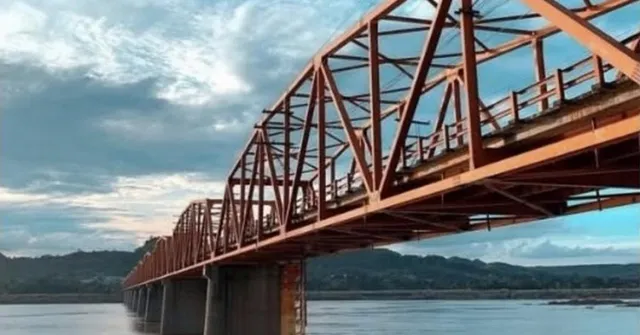
The lone iconic extradosed cable-stayed bridge is the proposed Manguisoc Bridge in Mercedes, Camarines Norte, while the iconic steel truss bridge is the new Butuan Bridge in Butuan City, Agusan del Norte. Rounding out the list are iconic arch truss bridges including Quezon Bridge in Dipolog City; Disakan Bridge 2 (new) in Sindangan; and Ingin Bridge in Manukan, all in Zamboanga del Norte.
June 02, 2025

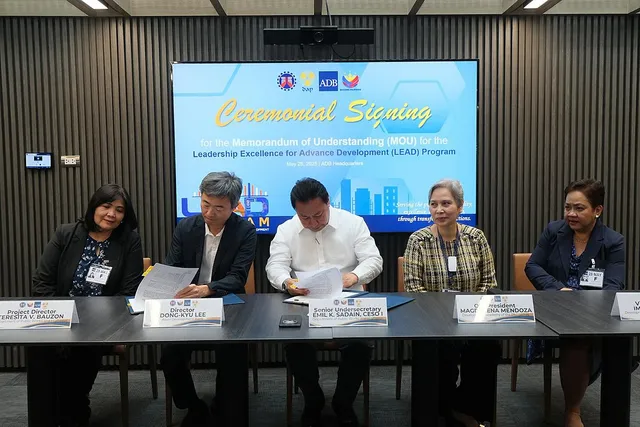
Answering the call of President Ferdinand R. Marcos Jr. for public servants to become stewards of good governance, the Department of Public Works and Highways (DPWH) through the Unified Project Management Office (UPMO) has formalized a strategic partnership with the Asian Development Bank (ADB) and the Development Academy of the Philippines(DAP) to implement the Leadership Excellence for Advanced Development (LEAD) Program.

This initiative aims to cultivate a new generation of values-driven, competent leaders within the DPWH who are equipped with advanced management, leadership, and technical skills necessary to support the national government’s infrastructure thrust.

A ceremonial signing of the Memorandum of Understanding (MOU) and Letter of Agreement (LOA) was held on May 28, 2025, at the ADB Headquarters in Mandaluyong City. The event was led by DPWH Senior Undersecretary Emil K. Sadain, ADB Transport Sector Office Director Dong-Kyu Lee, and DAP Officer-in-Charge and Senior Vice President for Programs Magdalena Mendoza.

The LEAD Program is a strategic initiative aimed at ensuring leadership continuity and institutional sustainability in the implementation of the country’s transformative Infrastructure Flagship Projects (IFPs).

The DPWH IFPs are mostly under the Unified Project Management Office (UPMO) Operations and as designated by DPWH Secretary Manuel M. Bonoan are directly under supervision of Senior Undersecretary Sadain,.

In his message, Senior Undersecretary Sadain underscored the urgent need to train and develop highly capable individuals who can become the future leaders of the Department. He emphasized that these leaders must embody the ideals of a Bagong Pilipinas — committed public servants who are efficient, proactive, innovative, and dedicated to transformative public service.

The DPWH aspires to cultivate a corps of forward-looking leaders committed to public service excellence, innovation, and integrity —ensuring that the department remains a driving force behind inclusive and sustainable national development.

Through the LEAD Program, DPWH is equipping future leaders to sustain the momentum of national infrastructure efforts particularly UPMO-managed IFPs under Official Development Assistance (ODA) financing.

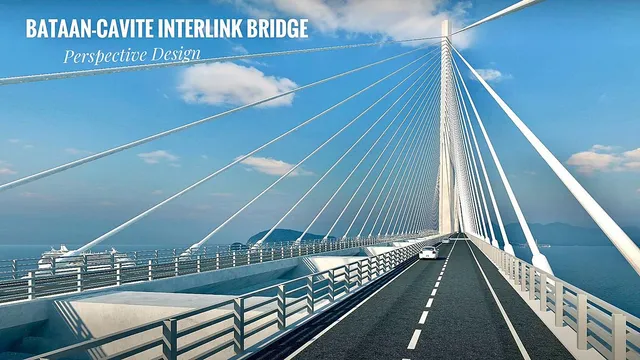
ODA-funded IPFs include: Bataan–Cavite Interlink Bridge linking Central Luzon and CALABARZON across Manila Bay; Panay–Guimaras–Negros Island Bridges improving inter-island connectivity in the Visayas; Davao City Bypass, Samal Island–Davao City Connector Bridge, and Bucana Bridge - enhancing mobility in the Davao Region; Dalton Pass East Alternative Road providing safer access to Cagayan Valley through mountainous terrain; Guicam Bridge (Zamboanga Sibugay) – Advancing connectivity in Mindanao; Second San Juanico Bridge – Strengthening the link between Samar and Leyte; Cebu-Mactan 4th Bridge and Coastal Road – Reducing congestion and improving access in Metro Cebu; Laguna Lakeshore Road Network Project – Promoting sustainable transport around Laguna de Bay; and Integrated Disaster Risk Reduction and Climate Change Adaptation (IDRR-CCA) Project – Addressing flooding and climate resilience in Central Luzon

ADB expressed its commitment by providing grant support for the LEAD Program through Technical Assistance No. 10084-PHI: Strengthening Infrastructure Capacity and Innovation for Inclusive Growth – Phase 2. Meanwhile, DAP will design and deliver the program, leveraging its expertise as the national government’s premier training and development institution.

Also present at the signing event were ADB officers Atty. Ruby Alvarez (Lead Project Officer – Infrastructure), Transport Specialist Juan Gonzales, and Consultant Sharon Baquiran. From the DAP, attendees included Vice President for the Center for Governance Imelda C. Caluen, Director for Operations Management Alvin P. Principe, Project Manager Merriam P. Dy, Project Coordinator Maria Eloisa Beatrice I. Encinas, and Mr. Joebert Sayson.

Representing the DPWH were Unified Project Management Office (UPMO) Project Directors Benjamin A. Bautista, Teresita V. Bauzon, Rodrigo I. Delos Reyes, Ramon A. Arriola III, and Soledad R. Florencio; Project Managers Shirley O. Castro, Zenaida B. Mauhay, Emmanuel M. Supe, Evangeline L. Carabal, and Shirley E. Medina; Program Manager Paula Kristina G. Gawat, Deputy Program Manager Engr. John Mark Guimba, and other key technical personnel.
May 26, 2025

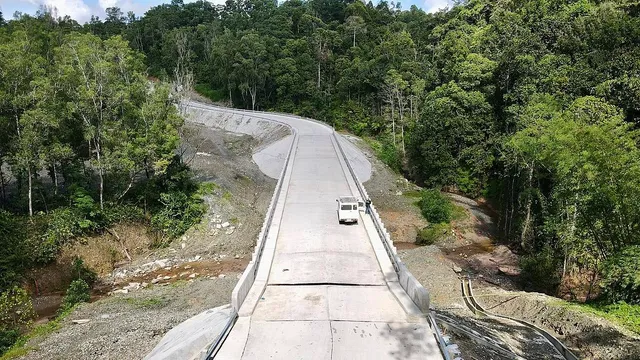
Officials from the Department of Public Works and Highways (DPWH), in collaboration with representatives from the Asian Development Bank (ADB), Department of Finance (DOF), and Department of Economy, Planning, and Development (DEPDev formerly NEDA), conducted a joint site inspection of the R.T. Lim–Siocon Road on Thursday, May 22, 2025. The project is a major subcomponent under the Improving Growth Corridors for Mindanao Road Sector Project (IGCMRSP) spanning the provinces of Zamboanga Sibugay and Zamboanga del Norte.

DPWH Secretary Manuel M. Bonoan, together with ADB Vice-President for East and Southeast Asia and the Pacific Scott Morris, led the inspection and expressed optimism about the project’s nearing completion. The road is part of the President Ferdinand R. Marcos, Jr. administration’s “Bagong Pilipinas” vision and the Build Better More infrastructure program.

Also present during the site visit were DPWH Senior Undersecretary Emil K. Sadain, who oversees Official Development Assistance (ODA)-funded infrastructure flagship projects, and Undersecretaries Eugenio R. Pipo Jr. and Carlos G. Mutuc.

The inspection team included Undersecretary Joseph Capuno, Assistant Secretary Roderick Planta, and Director Aldwin Urbina from the DEPDev; Undersecretary Joven Balbosa and Assistant Secretary Donalyn Minimo from DOF; and DPWH officials including Project Directors Teresita V. Bauzon and Benjamin Bautista, retired Project Director Sharif Madsmo H. Hasim, Stakeholders Relations Service Director Randy R. Del Rosario, Regional Office 9 Director Cayamombao D. Dia, and Assistant Regional Director Soray’yah M. Ibrahim.

From ADB, the delegation included Director General for South East Asia Winfried Wicklein, Country Director Pavit Ramachandran, Transport Director Dong Kyu Lee, Transport Specialists Juan Gonzales and Faela Sufa, Incoming Country Operations Head for the Philippines Joros Van Etten, Advisor for the office of the East Asia Director Genera Kelly Bird, Environmental Specialist Syed Asim Ali Sabzwari, and Lead Project Officer (Infrastructure) Atty. Ruby Alvarez.

The R.T. Lim–Siocon Road Project, is one of eleven key sub-projects under the 152.61-kilometer IGCMRSP. It includes the construction of 24.03 kilometers of portland cement concrete pavement (PCCP) and six (6) bridges totaling 430.11 linear meters, covering an overall road length of 24.46 kilometers.

“We are pleased to announce that the R.T. Lim–Siocon Road project has officially entered its final stage of civil works. Thanks to the dedication of the Unified Project Management Office - Roads Management Cluster II (UPMO-RMC 2) under Project Director Bauzon, along with our contractor China Wuyi Co., Ltd., consultants, and partners, we are confident the project will be fully completed by this third quarter of 2025”, said Senior Undersecretary Sadain during the chi briefing.

To date, the project is 95% complete, with 23.75 kilometers of PCCP finished and only 0.28 kilometers remaining. Of the six (6) bridges, five (5) have been completed—Kuyan, Lituban, Pisawak II, Tabayo, and another Lituban Bridge—while the Mambong Bridge stands at 93.23% completion.

Funded through ADB Loan No. 3631-PHI, the ₱2.396-billion R.T. Lim–Siocon Road project plays a vital role in enhancing regional connectivity, promoting trade and mobility, and supporting peace and development by linking previously isolated communities through improved road infrastructure.

Secretary Bonoan underscored the broader impact of the project, saying that it not only eases access and mobility but also contributes to building climate-resilient and inclusive infrastructure in Mindanao.

The joint inspection highlighted the ongoing collaboration between the Philippine Government and international development partners like the ADB in delivering transformative, high-impact infrastructure investments that support inclusive growth and sustainable development across the region.
May 26, 2025

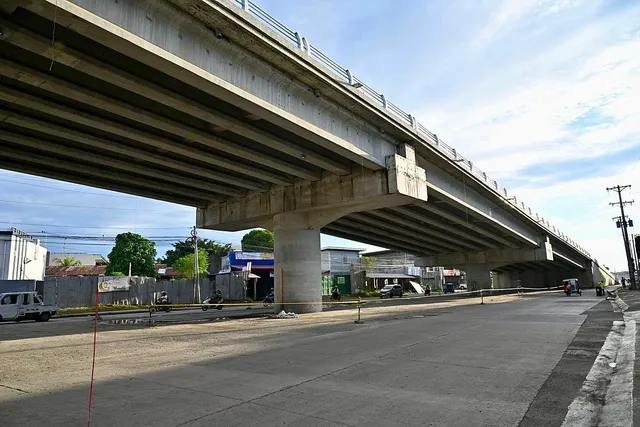
The Department of Public Works and Highways (DPWH) has officially opened the Governor Camins/MCLL Highway and Veterans Avenue Flyover in Zamboanga City—marking a historic milestone as the first-ever flyover constructed in the Zamboanga Peninsula Region.

Opting to forgo the usual ceremonial fanfare, DPWH Secretary Manuel Bonoan, joined by Senior Undersecretary Emil K. Sadain, Undersecretaries Eugenio R. Pipo Jr. and Carlos G. Mutuc, and Regional Office 9 Director Cayamombao D. Dia, led a final inspection of the structure on May 22, 2025. Following the inspection, the flyover was opened to vehicular traffic to ensure the immediate use and benefit of the public.

The inspection was also attended by local government officials, including Zamboanga City Mayor John M. Dalipe and former Mayor Celso L. Lobregat, as well as DPWH Region 9 Assistant Director Soray’yah M. Ibrahim, Stakeholders Relations Service Director Randy R. Del Rosario, Project Directors Benjamin A. Bautista and Teresita B. Bauzon, former Project Director Sharif Madsmo H. Hasim, and district engineers from across Western Mindanao. Representatives from the Asian Development Bank (ADB), Department of Finance (DOF), and the Department of Economy, Planning and Development (formerly NEDA) are also present after coming from a site visit with the DPWH officials to a road network project linking Zamboanga Sibugay and Zamboanga Del Norte.

The ₱450-million infrastructure spans 437.70 linear meters, comprising both the main bridge and its approach roads. Strategically located at the intersection of Governor Camins Road and the Maharlika Highway—one of Zamboanga City’s busiest junctions—the flyover is designed to alleviate severe traffic congestion and streamline vehicular flow in the area.

“This project serves as a vital access road that will not only reduce travel time but also enhance road safety and stimulate economic activity in Zamboanga City and its neighboring provinces,” said Director Dia during the briefing.

Key benefits of the flyover include reduced travel time due to the decongestion of traffic at major intersections; improved road safety by eliminating conflicting traffic movements; enhanced urban expansion through improved road connectivity; and boosted economic productivity by facilitating the smoother movement of goods and services.

The flyover is part of a broader DPWH initiative to upgrade the country’s critical transport infrastructure—including flyovers, underpasses, interchanges, and long-span bridges—to drive regional growth and national development.

May 26, 2025

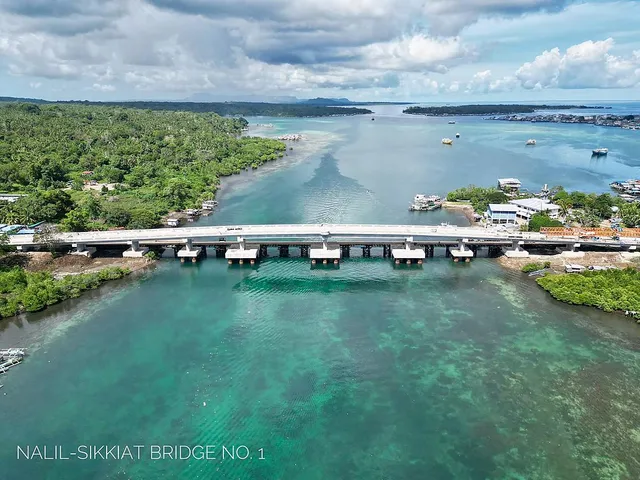
The Department of Public Works and Highways (DPWH) announced that construction of the Nalil-Sikkiat Bridge No. 1 in Tawi-Tawi Province is now 96 percent complete and is scheduled to open by July 2025.

The 541-meter bridge, part of the Asian Development Bank (ADB)-assisted Improving Growth Corridors in Mindanao Road Sector Project (IGCMRSP), aims to connect Bongao Island to Sanga-Sanga Island. It is one (1) of three (3) major bridges in Tawi-Tawi supporting the President Ferdinand R. Marcos Jr. administration’s “Build Better More” program.

“The Nalil-Sikkiat Bridge, along with its sister projects—the Tongsinah-Paniongan Bridge No. 2 and the Malassa-Lupa Pila Bridge No. 3 in Tawi-Tawi—represents one of the most significant infrastructure support initiatives of the national government in the Bangsamoro Autonomous Region in Muslim Mindanao (BARMM). These bridges are more than just structures of physical connectivity; they stand as powerful symbols of the government’s unwavering commitment to fulfilling Mindanao’s long-held promise by unlocking its vast economic potential through modern, inclusive infrastructure,” said Senior Undersecretary Emil K. Sadain who was designated by DPWH Secretary Manuel M. Bonoan to lead the Department’s infrastructure flagship projects under Official Development Assistance (ODA) and BARMM infrastructure initiatives.

DPWH Senior Undersecretary Sadain and ADB Vice President Scott Morris conducted a site inspection at the Nalil-Sikkiat Bridge Project on Friday, May 23, 2025, where they were welcomed by Tawi-Tawi Governor Yshmael "Mang" I. Sali.

The ₱1.08 billion project features a 380.8-meter bridge and a 160-meter approach road. It is being implemented by the Unified Project Management Office – Roads Management Cluster II (UPMO-RMC II), under the leadership of Project Director Teresita V. Bauzon with Project Manager Ernante S. Antonio as project in-charge, and China Wuyi Co., Ltd. as contractor.

Present at the inspection were other ADB executives including Winfried Wicklein, Director General for Southeast Asia; Pavit Ramachandran, Country Director for the Philippines; Dong Kyu Lee, Transport Director; Transport Specialists Juan Gonzales and Faela Sufa; Joros Van Etten, Incoming Country Operations Head for the Philippines; Kelly Bird, Advisor to the East Asia Director General; Syed Asim Ali Sabzwari, Environmental Specialist; and Atty. Ruby Alvarez, Lead Project Officer (Infrastructure).

From the Department of Economy, Planning, and Development (DEPDev, formerly NEDA) were Undersecretary Joseph Capuno, Assistant Secretary Roderick Planta, and Director Aldwin Urbina. Representing the Department of Finance (DOF) were Undersecretary Joven Balbosa and Assistant Secretary Donalyn Minimo.

Also in attendance were other DPWH officials including UPMO-Roads Management Cluster I Project Director Benjamin A. Bautista, former UPMO-RMC II Project Director Sharif Madsmo H. Hasim, Stakeholders Relations Service (SRS) Director Randy R. Del Rosario, BARMM Regional Project Management Office OIC-Director Eileen Diya, and Project Managers Emmanuel M. Supe and Evangeline L. Carabal.

In his report to Secretary Bonoan, Senior Undersecretary Sadain stated that two (2) other bridge components under IGCMRSP are also making steady progress, contributing to the overall momentum of infrastructure development in the Tawi-Tawi.

The Malassa-Lupa Pila Bridge No. 3, which spans 680 meters across the Manalik Channel, is now 72 percent complete. The project connects Sanga-Sanga Island to mainland Tawi-Tawi and has completed deck slab installation up to Pier No. 3, with ongoing bored piling and fabrication works.

The Tongsinah-Paniongan Bridge No. 2, a 570-meter structure connecting Pababag Island to Sanga-Sanga Island, is in the early phase of civil works, including bored piling and equipment mobilization.

According to Senior Undersecretary Sadain, these bridge projects are crucial for strengthening Tawi-Tawi’s transport system and boosting local industries like fishing and seaweed farming. More importantly, they are part of a broader effort to support peace, stability, and inclusive development in the Bangsamoro.
May 12, 2025

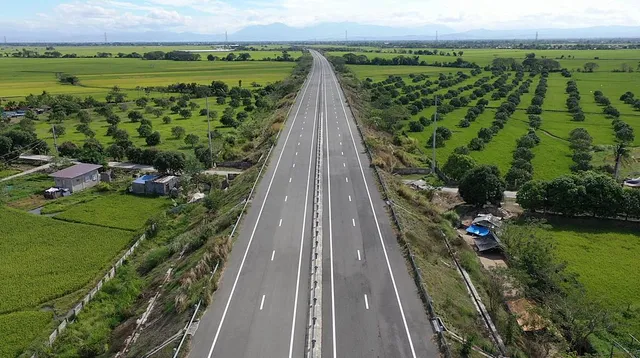
The Department of Public Works and Highways (DPWH) has reported significant progress in the ongoing construction of the Central Luzon Link Expressway (CLLEX) Phase I, aiming for full completion and operational connectivity between the Subic-Clark-Tarlac Expressway (SCTEX) in Tarlac City and Maharlika Highway in Cabanatuan City, Nueva Ecija by July 2025.

CLLEX is a flagship project under the “Build Better More” infrastructure program and forms a key component of President Ferdinand R. Marcos Jr.’s Bagong Pilipinas agenda. The initiative aims to stimulate inclusive growth, strengthen regional connectivity, and promote balanced development beyond Metro Manila.

In an inspection report to DPWH Secretary Manuel M. Bonoan, Senior Undersecretary Emil K. Sadain stated that Contract Package 4 - a 10.30-kilometer segment known as the Cabanatuan Section—is now 98% complete.

Senior Undersecretary Sadain, in-charge of DPWH infrastructure flagship projects funded through Official Development Assistance (ODA), noted that Contract Package 4 - despite facing nearly two (2) years of delay due to road right-of-way issues, is part of the 29.55-kilometer, four-lane expressway expected to reduce travel time between Tarlac City and Cabanatuan City from 70 minutes to just 20 minutes, benefitting over 11,200 motorists daily.

Key components of the Contract Package 4 under contract with Qingdao Municipal Construction Group Co., Ltd., includes one (1) interchange; three (3) bridges; eight (😎 reinforced concrete box culverts (RCBCs); seven (7) farm passages; multiple underpasses; and asphalt pavement works.
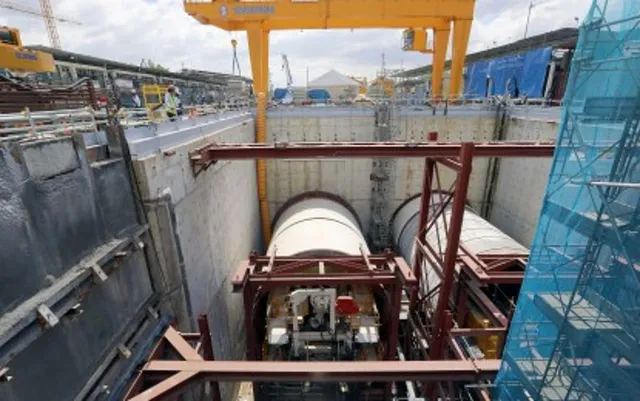
Meanwhile, Contract Package 5 or the Zaragoza Interchange is being constructed by the Pacific Concrete Products, Inc. and China Construction First Group Corporation Limited Consortium, and is currently 73.46% complete.

This segment involves: Zaragoza Interchange Bridge (113.4 linear meters); 4.88-kilometer access road; two (2) bridges (19.4 linear meters); five (5) equalizer reinforced concrete box culverts; two (2) farm passages; and seven (7) irrigation canals.

Completion of Contract Package 5 is expected within the 3rd Quarter of 2025.

Completion of Contract Package 5 is expected within the third quarter of 2025. While most of CLLEX is funded through a loan agreement with the Japan International Cooperation Agency (JICA), this package is fully financed by the Government of the Philippines.

President Ferdinand R. Marcos Jr. continues to highlight infrastructure development as a central pillar of economic recovery and national progress under his administration.

The field inspection on May 7, 2025, was conducted to oversee construction activities, review engineering progress, and ensure adherence to quality and safety standards. Present during the site visit were Unified Project Management Office - Roads Management Cluster I (UPMO-RMC I) Project Director Benjamin A. Bautista; Stakeholders Relations Service Director Randy R. Del Rosario; Project Manager Nelson T. Graza; Project Engineer Albert B. Manuel; Engr. Allen P. Penaojos; and Mr. Philip T. Lopez of Pacific Concrete Products, Inc.

Project Director Bautista reaffirmed the UPMO-RMC I team’s commitment to sustaining construction momentum, especially following the resolution of longstanding right-of-way issues with affected landowners.

Once completed, CLLEX Phase I is expected to provide a fast, safe, and reliable route across Region III, significantly boosting logistics, reducing traffic congestion, and linking urban centers with key agricultural zones.

May 12, 2025

The Philippines has 185 projects worth PHP2.90 trillion currently in the pipeline to be undertaken by the government and the private sector, latest data from the Public-Private Partnership (PPP) Center showed.

Of the total number, 122 projects worth PHP2.74 trillion will be implemented by the national government, while the remaining 63 projects, amounting to PHP159 billion, will be implemented by local government units.

Majority of these projects will be located in the National Capital Region, Region III (Central Luzon), Region IV-A (Calabarzon), Region I (Ilocos Region), and Region II (Cagayan Valley).

PPP Center data showed that some of the biggest projects in the pipeline include the PHP497.27-billion North Long Haul (NCR-Ilocos Norte and Cagayan) Inter-Regional Railway Project; PHP200-billion Maynilad Water Services Inc. Revised Concession Agreement Term Extension; PHP171.78-billion North-South Commuter Railway Operations & Maintenance (O&M) Project; PHP163.94-billion Project KILO; PHP150-billion Manila Water Company Inc. Revised Concession Agreement; PHP130.90-billion MRT-7 Airport Access-North Line Project; PHP122.61-billion C5-MRT 10 Project; the PHP107-billion MRT-7 Katipunan Spur Line Project; and the PHP100.64-billion Mindanao Raiwaly Project Phase 3.

Other big projects in the pipeline include the Cebu Monorail Transit Project; MRT 11 Project; East-West Rail Project; Metro Manila Subway Project Operations and Maintenance; Iloilo-Santa Barbara Bus Rapid Transit; Public-Private Partnership for School Infrastructure Project Phase 3; and the San Mateo Railway Project.

The Marcos administration earlier vowed to accelerate infrastructure development in the country.

President Ferdinand R. Marcos Jr. directed Transportation Secretary Vince Dizon to prioritize key infrastructure projects, including the Metro Manila Subway, the development of regional airports, and the expansion of the port system, and agricultural ports. 

May 05, 2025

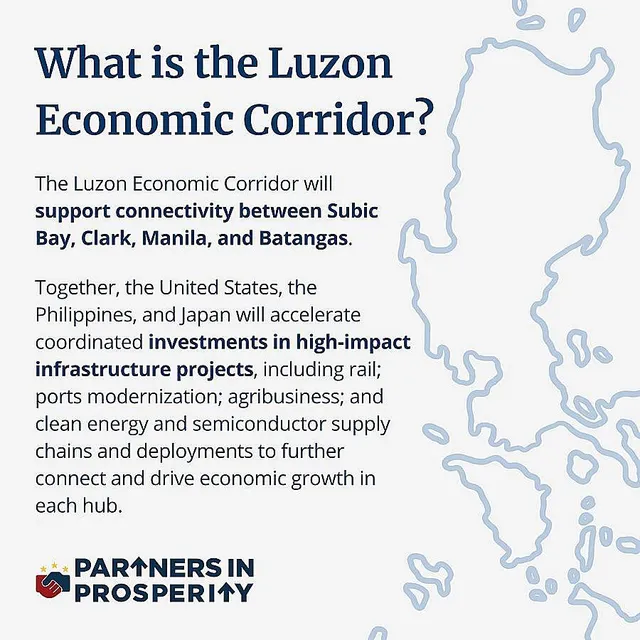
The United States has reinforced its commitment to the Philippines’ infrastructure modernization efforts by continuing the support and raising funding for the Luzon Economic Corridor (LEC) despite the Trump administration halting some US government financing programs in different countries.

Office Special Assistant to the President for Investment and Economic Affairs (OSAPIEA) Secretary Frederick Go said in a statement on Sunday that the US Trade and Development Agency (USTDA) has increased its grant funding for the pre-feasibility study of the Subic-Clark-Manila-Batangas (SCMB) Cargo Railway from USD2.5 million (PHP138.8 million) to USD3.8 million.

Go said the expanded grant was conveyed to the Philippine government on April 28, following a competitive process for the selection of a US consultancy firm.

The OSAPIEA, Department of Transportation, and the US Embassy in Manila are scheduled to meet in the next few days to finalize and sign the Beneficiary Agreement for the SCMB project.

“(This is a) great positive news,” the Palace official said. “This milestone demonstrates that the Philippines-US economic ties are stronger than ever.”

He added that the increased USTDA grant for the SCMB study reflects growing investor confidence and is expected to lead to more employment opportunities along the corridor.

Despite the scaling back of some US foreign aid programs, the recent funding increase underscores Washington’s continued support for the Philippines’ development priorities, particularly in infrastructure and economic connectivity.

Aside from the US funding, discussions are ongoing with Sweden’s development financier Swedfund, which is considering a separate USD1.2-million grant to complement the railway initiative.

The SCMB freight rail is the flagship project of the LEC, which seeks to link key industrial and trade zones in Subic Bay, Clark, Manila and Batangas province.

Once operational, the freight rail system is expected to improve logistics operations, reduce transport costs, and enhance regional competitiveness while creating jobs for thousands of Filipinos.

The LEC is an offshoot of the trilateral meeting of the Philippines, the US and Japan in April 2024.

Go earlier said the United Kingdom, Sweden and Australia signified their intents to join the LEC.

France’s Minister Delegate for Foreign Trade and French Nationals Abroad Laurent Saint-Martin, who visited Manila last month, conveyed to President Ferdinand R. Marcos Jr. the European country’s interest to also join the project.

May 05, 2025

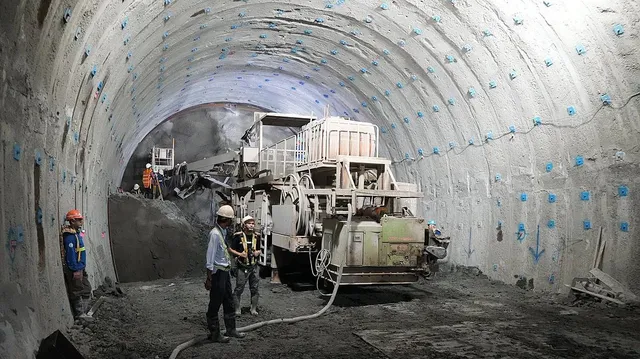
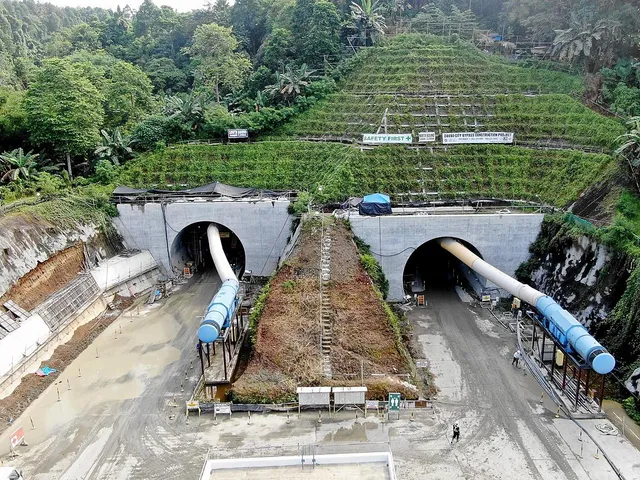
A significant milestone in the Philippine government’s flagship infrastructure program was reached on Monday, April 28, 2025 with the ceremonial breakthrough of the 2.3-kilometer northbound tunnel of the Davao City Bypass Construction Project (DCBCP), held at the North Portal in Barangay Waan, Davao City.

The event, which marks the completion of tunnel excavation works for the two (2) lanes northbound tube, was led by Department of Public Works and Highways (DPWH) Secretary Manuel M. Bonoan alongside Japan’s Minister of Land, Infrastructure, Transport and Tourism Nakano Hiromasa; Japanese Ambassador to the Philippines Endo Kazuya; and Japan International Cooperation Agency (JICA) Chief Representative Takashi Baba.

“This tunnel breakthrough is more than a civil engineering triumph. It represents a bold step in realizing the Build Better More agenda of President Ferdinand R. Marcos Jr., laying the groundwork for a more connected, resilient, and inclusive Bagong Pilipinas”, Secretary Bonoan said.

Secretary Bonoan expressed deep appreciation to the Government of Japan thru JICA for their technical expertise and continued support. He also commended the dedication of the DPWH Unified Project Management Office (UPMO) Operations led by Senior Undersecretary Emil K. Sadain, and contractor Shimizu-Ulticon-Takenaka Joint Venture and consultant Nippon Koei-Nippon Engineering-Katahira Engineers and Philkoei Joint Venture.

The event was also participated by Secretary Leo Tereso A. Magno of Mindanao Development Authority (MinDa) and other high-ranking DPWH officials, including Senior Undersecretary Sadain; Undersecretaries Eugenio R. Pipo, Jr., Eric A. Ayapana, and Anne Sharlyne G. Lapuz; Assistant Secretaries Loreta M. Malaluan and Michael S. Villafranca; and UPMO Project Directors Benjamin A. Bautista, Ramon A. Arriola III, Rodrigo I. Delos Reyes, and Eileen I. Diya; Regional Office XI Director Juby B. Cordon; Directors Randy R. Del Rosario, Juliana D. Vergara, and Reynaldo P. Faustino; and former Project Director Virgilio C. Castillo.

Also in attendance are JICA Senior Representative Fukui Keisuke; First Secretary Ide Masashi and Second Secretary Kinoshita Akito of the Embassy of Japan; and Consulate-General of Japan in Davao Ishikawa Yoshihisa.

The 45.5-kilometer Davao City Bypass is a four-lane, high-capacity highway designed to ease congestion in Davao City and enhance regional connectivity. Once completed, it will reduce travel time between Barangay Sirawan in Toril and Barangay J.P. Laurel in Panabo City from 1 hour and 44 minutes to just 49 minutes—accelerating economic growth across the Davao Region and neighboring provinces.

According to Senior Undersecretary Sadain, the DCBCP is being implemented through six (6) contract packages, five (5) of which are currently under active construction. Procurement for the final package is expected in the third quarter of 2025.

“This tunnel is both a literal and symbolic passage toward a brighter future. It reflects our shared vision of infrastructure that fosters sustainability, economic growth, and strengthened bilateral ties with Japan”, said Senior Undersecretary Sadain.

Showcasing the rich cultural ties between the Philippines and Japan, the ceremony featured a traditional Japanese Kagami Wari (sake barrel breaking) and a ribbon-cutting, symbolizing unity and shared celebration.

Using the New Austrian Tunneling Method (NATM) or the sequential excavation method, the project’s twin tunnels will be the longest mountain road tunnels constructed in the Philippines. The northbound tunnel breakthrough highlights the synergy of Philippine-Japanese collaboration and the integration of cutting-edge tunneling technology with local engineering expertise.

The Davao City Bypass is targeted for full completion and operation by 2028.

May 05, 2025

The Department of Public Works and Highways (DPWH) announced major progress on the Davao River (Bucana) Bridge Project, now entering its final phase of construction.

Slated for completion ahead of its original late-2025 deadline, this 1.34-kilometer, four-lane, six-span bridge is poised to transform mobility and connectivity in Davao City.

During a site inspection on Monday, April 28, 2025, DPWH Secretary Manuel M. Bonoan, together with Senior Undersecretary Emil K. Sadain, confirmed that the project is now 85% complete. The inspection emphasized the urgency placed on the bridge’s early delivery, recognizing its vital role in accommodating the estimated 35,000 vehicles that will use it daily.

Among those who participated in the project inspection were Mindanao Development Authority (MinDA) Secretary Leo Tereso A. Magno, DPWH Undersecretaries Eugenio R. Pipo Jr. and Eric Ayapana, Assistant Secretary Loreta M. Malaluan, Unified Project Management Office (UPMO) Project Directors Rodrigo I. Delos Reyes, Benjamin A. Bautista, and Ramon A. Arriola III, DPWH Regional Office XI Director Juby B. Cordon, Stakeholders Relations Service Director Randy R. Del Rosario, and other staff of UPMO Bridges Management Cluster.

In his project update, Senior Undersecretary Sadain, who oversees infrastructure flagship projects funded through Official Development Assistance (ODA), disclosed that the final bridge deck connection is targeted for completion by June 2025. This schedule allows sufficient time for final works, ensuring the bridge will be ready for vehicular traffic by November 2025.

The ₱3.126-billion Bucana Bridge Project is funded through an Official Development Assistance (ODA) grant from the Government of the People’s Republic of China. It forms a crucial link along the Davao City Coastal Road, which will serve as an alternative corridor to help decongest the city’s heavily trafficked urban routes.

Structurally, the Bucana Bridge features a 480.20-meter extradosed design, with each pier supported by 10 stay cables — a modern engineering solution chosen for its strength, durability, and striking appearance, further enhancing Davao’s skyline.

The Bucana Bridge is identified as a priority under President Ferdinand R. Marcos Jr.’s “Build Better More” program.

Infrastructure projects like Bucana Bridge are key to achieving the vision of high-quality, resilient, and accessible public infrastructure that improves the lives of Filipinos nationwide.

Beyond easing traffic, the new bridge will unlock broader economic opportunities, connecting Davao’s east and west coastal areas, enhancing access to essential services, supporting agricultural and commercial activities, and promoting tourism across Mindanao.

It is set to become a defining landmark of the Bagong Pilipinas campaign for progress and modernity.

April 28, 2025

In strong support of President Ferdinand R. Marcos Jr.’s Build Better More program—a national initiative aimed at transforming the Philippines into a modern, inclusive, and disaster-resilient nation through world-class infrastructure—the Department of Public Works and Highways (DPWH) is intensifying its efforts to strengthen institutional capacity and leadership.

DPWH Senior Undersecretary Emil K. Sadain, who oversees the implementation of key infrastructure flagship projects (IFPs) mostly implemented by the Unified Project Management Office (UPMO) Operations, emphasized that the successful delivery of complex and high-impact infrastructure projects requires a deep bench of skilled and visionary leaders.

Senior Undersecretary Sadain noted in his report to DPWH Secretary Manuel M. Bonoan that the seamless and timely execution of IFP will be sustained through adequate and sustained financing support, continuous innovation, strategic technical partnerships, and the nurturing of future leaders equipped with both technical and managerial excellence.

Currently, the UPMO is implementing a wide array of transformative projects across the country that are at various stages of development. These include the Bataan–Cavite Interlink Bridge, which will connect Central Luzon and CALABARZON via a marine bridge at the Manila Bay; Panay–Guimaras–Negros Island Bridges, to provide seamless inter-island connectivity in the Visayas; Davao City Bypass Construction Project, Samal Island–Davao City Connector Bridge, and Bucana Bridge to enhance traffic flow and improve mobility in the Davao Region; Dalton Pass East Alternative Road, providing a safer and more efficient alternative route to Cagayan Valley Regio. through mountainous terrain; Guicam Bridge in Zamboanga Sibugay, and part of the Mindanao connectivity push; Second San Juanico Bridge, reinforcing inter-island transport between Samar and Leyte; Cebu-Mactan 4th Bridge and Coastal Road Construction, aimed at easing congestion between Cebu City and Mactan Island while supporting the region’s tourism and business centers; Laguna Lakeshore Road Network Project, offering sustainable transport solutions around Laguna de Bay; and Integrated Disaster Risk Reduction and Climate Change Adaptation (IDRR-CCA) Project, addressing flooding and climate vulnerabilities in low-lying areas of Pampanga and Central Luzon.

To ensure long-term sustainability and leadership continuity in the implementation of these ambitious projects, the DPWH formally launched the Leadership Excellence for Advanced Development (LEAD) Program on April 23, 2025. This pioneering leadership development initiative is supported by the Asian Development Bank (ADB) under Technical Assistance Grant No. 10084.

The LEAD Program aims to bridge the leadership gap arising from the anticipated retirement of a significant number of DPWH senior officials in the next three to five years. It is specifically designed to prepare middle-level managers—particularly those holding the rank of Engineer IV and above—for higher leadership roles that will sustain the momentum of infrastructure development.

“These future leaders will play a crucial role in upholding the standards of excellence, integrity, and innovation that have defined DPWH’s role in national development,” Senior Undersecretary Sadain noted in his report to DPWH Secretary Manuel M. Bonoan.

The LEAD Program builds on the Department’s previous capacity-building initiatives such as the Executive Leadership and Management Capability Enhancement Program (ELMCEP) launched in 2012 and the DPWH Cadet Engineering Program (2013–2016), both of which successfully strengthened the Department’s technical and managerial talent pool.

The pilot batch of the LEAD Program was carefully selected through a rigorous screening process conducted at The Bayleaf Hotel, Intramuros, Manila. The panel was composed of Senior Undersecretary Sadain and UPMO Project Directors Benjamin A. Bautista, Teresita V. Bauzon, Rodrigo I. Delos Reyes, Ramon A. Arriola III, as well as former Project Director Virgilio C. Castillo and Project Manager Shirley O. Castro.

Selected participants will undergo an intensive training curriculum that includes ten-day modules under two specialized tracks: Leadership and Technical. The sessions will be delivered by leading training institutions from July to August 2025, focusing on values-driven governance, strategic project management, and advanced engineering competencies.

Through the LEAD Program, the DPWH is laying the foundation for a new generation of competent, ethical, and forward-thinking public infrastructure leaders—poised to guide the Philippines toward a more connected, resilient, and inclusive future.

April 21, 2025

The Philippine government has secured financing from the Asian Development Bank (ADB) worth USD1.45 billion for the Malolos-Clark Railway Project (MCRP), the multilateral institution announced Wednesday.

ADB Philippines Country Director Pavit Ramachandran said the MCRP is one of ADB’s biggest financing projects in the Asia and Pacific region.

“We are proud to partner with the government in making the vision of a world-class mass transportation system in the country a reality. This major transformative project will spur more investments, create jobs, and contribute to sustaining the country’s growth momentum,” Ramachandran said in a statement.

The 53.1-km. MCRP is part of the 163-km. North-South Commuter Railway (NSCR), a major infrastructure project of the government to provide safe, reliable, and eco-friendly transport connecting Luzon provinces to Metro Manila.

The newly approved loan is the second and final tranche of its MCRP financing facility.

In 2019, ADB approved the first tranche of financing for the project amounting to USD1.3 billion.

In a chance interview on April 9, Ramachandran told reporters that ADB is eyeing to finance some USD4 billion for Philippine projects this year, which include the MCRP.

These funds, in a form of loan, would be invested in the sectors of infrastructure, healthcare, food security, and the blue economy.

He said pipeline projects for ADB financing this year include the USD400-million Walang Gutom (Zero Hunger) Program under the Reducing Food Insecurity and Undernutrition with Electronic Vouchers (REFUEL) Project, the USD400-million Marine Ecosystems for Blue Economy Development Program, and the USD300-million Accelerating Expansion and Sustainability of Health Services for Universal Health Care (ACCESS UHC).

“[These are] just some of the items included in this year’s project pipeline, they are among the biggest in loan amount terms in the list of projects for delivery this year,” Ramachandran said.

See Our Latest Issue