July 16, 2021

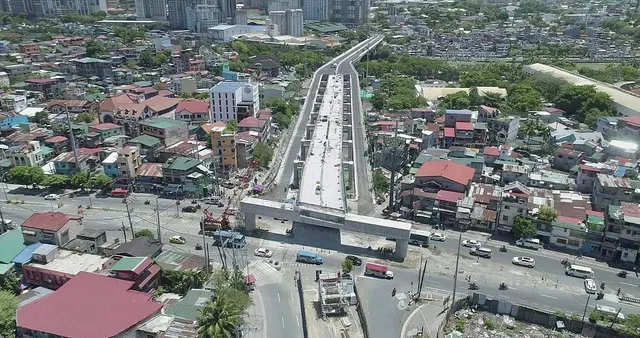
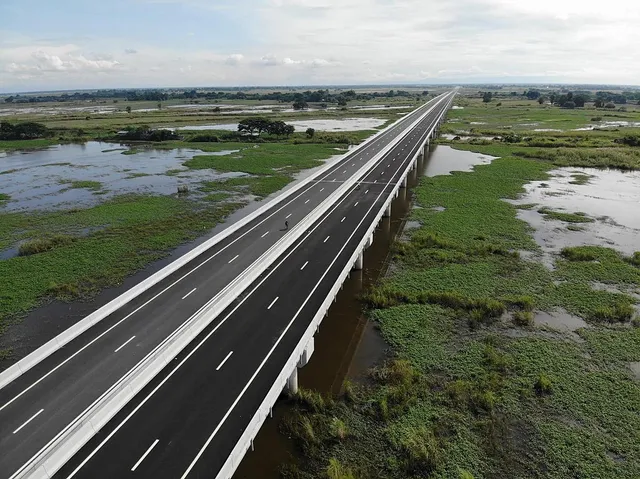
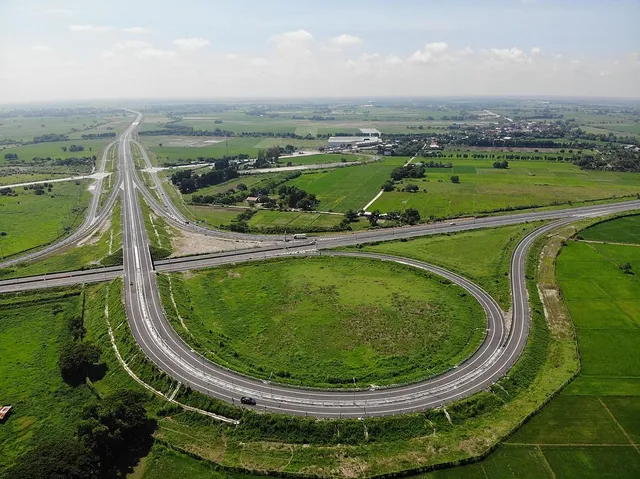
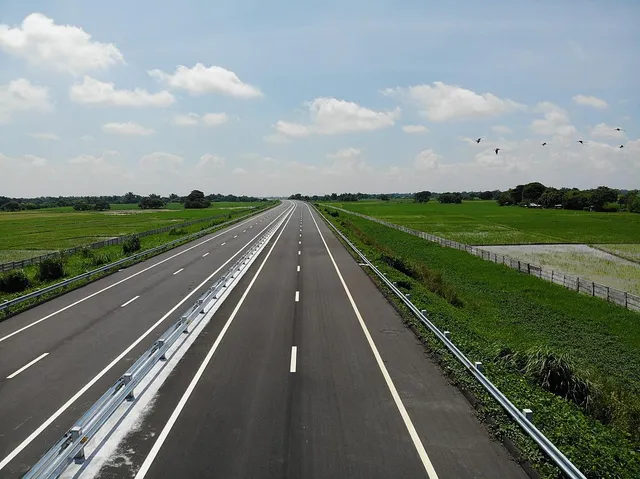
Motorists will now be able to use the first 18-kilometer portion of the Central Luzon Link Expressway (CLLEX) from SCTEX/TPLEX connection in Tarlac City up to the intersection of Aliaga-Guimba Road in Aliaga, Nueva Ecija.

President Rodrigo Duterte, Department of Public Works and Highways (DPWH) Secretary Mark Villar, Senator Bong Go, and Japanese Ambassador to the Philippines Kazuhiko Koshikawa led on Thursday the inauguration ceremony of the four lanes toll-free expressway project connecting the provinces of Tarlac and Nueva Ecija.

The initial part of CLLEX that will be opened are the following sections covered by three contract packages: 4.10 kilometer Tarlac Section, 6.40 kilometer Rio Chico River Bridge Section including the 1.5 kilometer Rio Chico Viaduct, and Aliaga Section with up and down ramps at Guimba-Aliaga Road.

This new highway project was implemented by DPWH Unified Project Management Office (UPMO) led by Undersecretary Emil Sadain and Project Director Benjamin Bautista of UPMO Roads Management Cluster 1 (Bilateral) who have worked double-time to deliver the completion of this project.

CLLEX is among the key infrastructure projects with funding assistance from the Government of Japan thru the Japan International Cooperation Agency (JICA) in support of the Build, Build, Build program.

The entire 30-kilometer expressway project is expected to shorten the usual travel time of 70 minutes between Tarlac City and Cabanatuan City to just 20 minutes.

More than just scenic views experienced while you drive and visit the stunning places in Central Luzon, this new highway will help ensure the Philippines’ sustainability and development by addressing barriers in distance and mobility.

The Build, Build, Build program continues to deliver its promise of creating infrastructure that improves the lives of Filipinos in the face of the Covid-19 pandemic and other challenges.

While Build, Build, Build continued to make progress, it is also setting up the foundation in terms of infrastructure for the next generation.

July 14, 2021

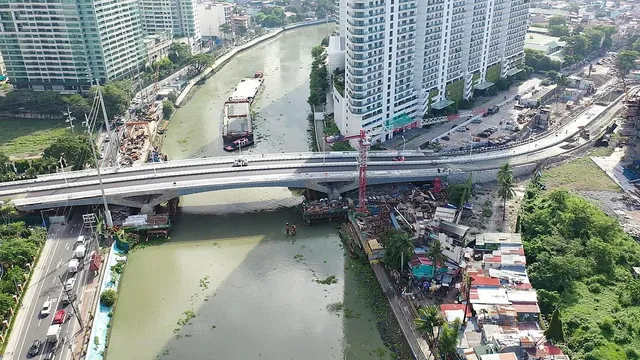
Finishing works of the Department of Public Works and Highways (DPWH) for the Estrella Pantaleon Bridge Project across Pasig River are in full swing and set to be completed towards the end of July.

Public Works and Highways Secretary Mark Villar said that although the Covid-19 pandemic has impacted construction activity of various flagship infrastructure projects like Estrella Pantaleon Bridge, the DPWH-Unified Project Management Office (UPMO) Team geared up to take up this challenge by keeping focus on the importance of delivering completion and opening this bridge project this early month of the third quarter.

In his report to Secretary Villar, Undersecretary for UPMO Operations Emil K. Sadain said that complete layers of asphalt concrete base, binder and wearing course on the 146 meters main bridge and 66 meters Makati approach bridge are almost done.

Installed successively on main and approach bridge using paving and compaction equipment, the wearing course or the uppermost layer will provide an even profile for the comfort of motorists while providing enough texture to ensure minimum and safe skid resistance, explained Undersecretary Sadain.

Having put up the upper layer, bridge expansion joints are now being installed to allow for continuous traffic between the bridge and the interconnecting abutment structures.

This expansion joints is designed to adjust the bridge length accommodating movement or deformation by external loads, shrinkage, or temperature variations

Among the completed ancillary works for the bridge project with V-shape piers includes protective barriers and railings along both sides of the bridge, storm water drainage structure, and lightings.

Meanwhile, Project Director Benjamin A. Bautista and Project Manager Melchor Kabiling of the UPMO Roads Management Cluster are keeping an eye on the on-going paving works for the 50.5 meters approach road on Estrella Street, Makati City and 243.96 meters approach road at Barangka Drive connected to Pantaleon Street in Mandaluyong City which are being accelerated by successively placing complete layer packages.

The layers of approach road are consists of base course or the foundation made of different aggregate rocks to support the top layers of the pavement; cement-treated base or mixture of aggregates with amounts of portland cement that hardens after compaction and curing to form a strong, durable, frost-resistant paving material; asphalt concrete base or asphalt treated base that acts as waterproof barrier to prevent fines infiltration into the subgrade and pavement structure; finally the binder and wearing course.

The P1.46-billion bridge project will have four lanes and will be a 506.46-meter pre-stressed concrete rigid frame bridge with corrugated steel webs, replacing the temporary two-lane box truss bridge made of modular steel components dismantled in 2019.

The bridge project is one of two grant bridges from China — the other one is Binondo-Intramuros Bridge.
July 14, 2021

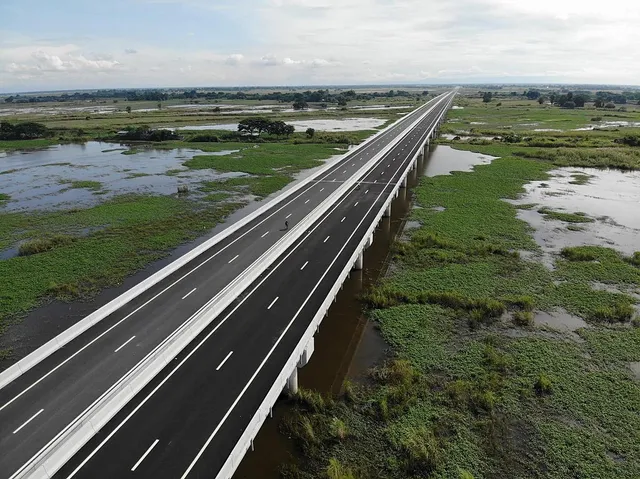
The Central Luzon Link Expressway (CLLEX) will be opened to the motoring public this week.

This was announced by DPWH Secretary Mark Villar in today, July 14, 2021 final inspection of the four (4)-lane expressway project connecting Tarlac and Nueva Ecija.

“As declared a month ago, we will inaugurate on Thursday, July 15, 2021, the first 18-kilometer section of CLLEX from Subic-Clark-Tarlac Expressway (SCTEX)/Tarlac-Pangasinan-La Union Expressway (TPLEX) connection in Tarlac City up to the intersection of Aliaga-Guimba Road in Aliaga, Nueva Ecija”, said Secretary Villar.

Secretary Villar was joined in the conduct of final safety checking before this new road network is opened to vehicular traffic by Undersecretary for Unified Project Management Office (UPMO) Operations Emil K. Sadain, and Project Director Benjamin A. Bautista.

This toll-free expressway project implemented by DPWH UPMO-Roads Management Cluster 1 is one of the key infrastructure projects with funding assistance from the Japan International Cooperation Agency (JICA) under the Build, Build, Build program.

The partial opening of CLLEX up to Aliaga is expected to provide options to motorists and spread out traffic better.

According to Undersecretary Sadain, the CLLEX sections covered by three (3) contract packages that will be opened are the 4.10 kilometer Tarlac Section, 6.40 kilometer Rio Chico River Bridge Section including 1.5 km Rio Chico Viaduct, and the Aliaga Section with up and down ramps at Guimba-Aliaga Road.

DPWH is committed to complete the entire 30-kilometer expressway project within the term of President Rodrigo Roa Duterte with the 10.3 kilometer Cabanatuan Section under Contract Package 4 already at 88.7 percent while the Zaragoza Interchange Section under Contract Package 5 is at 26.9 percent and expected to gain significant progress as site possessions are secured for the project’s right of way (ROW) requirements.

Once fully operational, the ₱11.811-Billion expressway is expected to shorten the usual travel time of 70 minutes between Tarlac City and Cabanatuan City to just 20 minutes.

This new expressway will also form an important east-west link for the expressway network of Central Luzon to ensure a continuous seamless traffic flow for the motoring public from Metro Manila and vice versa passing thru North Luzon Expressway (NLEX), Subic-Clark-Tarlac Expressway (SCTEX), Tarlac-Pangasinan-La Union Expressway (TPLEX).
July 05, 2021

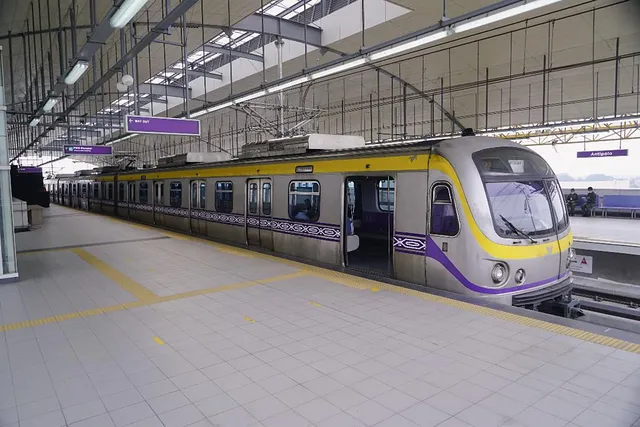
Photo Credit: Jacque Manabat, ABS-CBN News

The two new stations of the Light Rail Transit Line 2 (LRT-2) – dubbed the LRT-2 East Extension -- will begin operations on July 5, the Department of Transportation (DOTr) said.

In a media bulletin, the DOTr said the rail service, which will soon run from the Recto Station in Manila to the Antipolo Station, has also increased the number of its running trains to eight, from the five trains that previously ran from the Recto to the Santolan stations.

“Once operational, the LRT-2 East Extension Project will reduce travel time from Claro M. Recto in Manila to Masinag in Antipolo from three hours via bus or jeepney, to just 30 to 40 minutes,” the DOTr said.

In a Facebook post, Transportation Secretary Arthur Tugade said the project would be inaugurated on Thursday with President Rodrigo Duterte and Light Rail Transit Authority (LRTA) Administrator Reynaldo Berroya as guests.

“The promise of a better commuting experience will now become a reality,” he said.

The LRT-2 East Extension, he said, adds 3.793 km. to the present 13.8 km. of the LRT-2 line with two new stations – the Marikina-Pasig and Antipolo stations.

“The project shall likewise increase the rail line’s average daily passenger capacity from 240,000 to 320,000,” Tugade said.

He said aside from providing another means of transport to commuters, the project is expected to help reduce traffic congestion along the Marcos Highway, “especially in Marikina, Pasig, and Antipolo, given that road transport passengers will be redirected to riding the train.”

During its construction, he said, “at least 1,800” jobs were generated, in addition to the 170 rail personnel employed to work in the two new stations.

The project, which has been part of the “Master Plan for Metro Manila” since 1999, was approved by the National Economic and Development Authority Board on Sept. 4, 2012. The construction of its viaducts began in April 2015.

The “full blast” construction of the two new stations started on Feb. 20, 2017, with a PHP1.1 billion contract, while the contract for the project’s electromechanical systems was awarded on Dec. 14, 2018 for PHP3.4 billion. 


Article Courtesy of Raymond Carl Dela Cruz - Philippine News Agency 

June 30, 2021

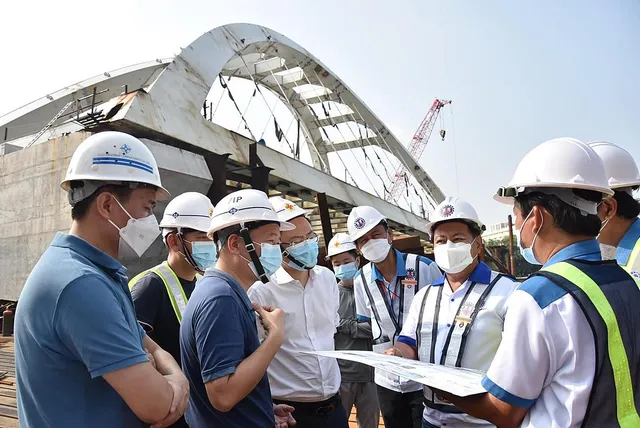
Public Works and Highways Secretary Mark Villar announced that construction of access ramps are underway for the iconic Binondo-Intramuros Bridge Project.

Secretary Villar said that civil work activities for the ramps and viaduct structure are moving forward as it aims for the bridge substantial completion towards December 2021.

In his report to Secretary Villar, Undersecretary for Unified Project Management Office (UPMO) Operations Emil K . Sadain said that the project has already attained 70 percent completion with the 70-meter Main Bridge with steel arch and support steel bowstring over Pasig River permanenly positioned at pier 4 and 5 and installation of pre-fabricated precast slab available on-site will soon start.

The fabricated steel box girders which will be utilized for the viaduct and ramp over Estero de Binondo are expected to arrived from China by August 2021, added Undersecretary Sadain following his occular inspection on Tuesday, June 29, 2021 together with UPMO Roads Management Cluster 1 - Bilateral OIC-Project Director Benjamin A. Bautista, Project Manager Melchor Kabiling, Project Engineer Joey Doria and contractor China Road and Bridge Corporation.

The 3.39 billion peso Binondo-Intramuros Bridge Project will connect the historic districts of Binondo and Intramuros in Manila having a 418 meter viaduct structure and ramp over Estero de Binondo and 298 meter Binondo up-ramp at Muelle Dela Industria Street at Binondo side, and 191 meter up-ramp at Magallanes/Riverside Drive and 164 meter down ramp at Solana Street in Intramuros.

Funded by a grant of People’s Republic of China, the arch bridge design symbolizes the friendly cooperation between Philippines and China and being built in accordance with new seismic design specifications and climate change considerations.

Bored piles for the up/down ramps and abutments at Intramuros side are all completed while works are in full swing for the 98 bored piles at Binondo side, 61 of which are completed.

DPWH and the contractor continues to coordinate with Meralco and Telco for their lines along Dasmariñas Bridge and as strategy are formulated to minimize service disruption with the launching of steel box girders along Estero de Binondo towards Plaza del Conde and Rentas Street and the relocation of affected lines along Muelle de Binondo near San Nicolas Fire Station.

The Binondo-Intramuros Bridge will carry extra traffic of around 30,000 vehicles per day and will also help extend the life of existing Jones, Delpan and MacAthur Bridges by decongesting traffic.

The project is part of the Metro Manila Logistics Improvement Program to address the long-held dilemma of traffic gridlock in major roads by constructing new bridges crossing Pasig and Marikina Rivers, and Manggahan Floodway.

June 21, 2021

Photo Credit: Department of Public Works and Highways

Public Works and Highways Secretary Mark Villar reassured on Friday, June 18, 2021 that remaining civil works are being fast-tracked to open the new and modernized Estrella-Pantaelon Bridge by next month.

“We are here on-site to show you that all substructure and superstructure of the Estrella-Pantaelon Bridge have been constructed and we are confident that we will be able to finish remaining works on approach road and ancillary/miscellaneous works by July 2021,” said Secretary Villar.

Secretary Villar together with BCDA President & CEO and Presidential Adviser for Flagship Programs and Projects Secretary Vince Dizon, Transportation Secretary Arthur Tugade and DPWH Undersecretary for Unified Project Management Office (UPMO) Operations Emil K. Sadain inspected the substantially completed Estrella Pantaleon Bridge following an on-site Press Conference on Progress Update of Build, Build, Build Program.

Citing a report from Undersecretary Sadain, Secretary Villar noted that the ongoing bridge project across Pasig River linking Estrella Street in Makati City and Barangka Drive in Mandaluyong City is now 93 percent complete.

When completed, the new Estrella-Pantaleon Bridge widened from two (2) lanes to four (4) lanes is expected to accommodate as much as 50,000 cars daily, improving traffic situation in the area and decongesting the Epifanio delos Santos Avenue.

The bridge-modernization project is implemented by the DPWH-UPMO Roads Management Cluster 1 (Bilateral) and is funded under a Chinese Grant together with Binondo-Intramuros Bridge.


Article Courtesy of the Department of Public Works and Highways

June 15, 2021

Photo Credit: Department of Public Works and Highways

The Department of Public Works and Highways (DPWH), which has reached a major milestone with the Independence Day opening of 440-meter Kalayaan Bridge connecting Pasig City with Makati City, enters the final stages of fully completing the Bonifacio Global City (BGC)-Ortigas Center Link Road Project.

DPWH Secretary Mark Villar, on the day the new Sta. Monica-Lawton Bridge now dubbed

Kalayaan Bridge across Pasig River was opened to motorists during the 123rd celebration of Philippine Independence, declared that the next goal is to finish the entire BGC-Ortigas Center Link Road Project towards the last quarter of 2021.

Secretary Villar said that once this BGC-Ortigas Center Link Road Project is fully complete and open, about 20 percent of the traffic volume of EDSA and C-5 Road can be accomodated.

The Kalayaan Bridge, the viaduct structure and coupled with our road widening and rehabilitation works will create much better traffic flow to get through BGC and Ortigas business districts quicker, added Secretary Villar.

In his report to Secretary Villar, Undersecretary for Unified Project Management Office (UPMO) Operations Emil K. Sadain said that the construction of 565-meter Lawton Avenue – Global City Viaduct which is another component of the 1.367 kilometer BGC-Ortigas Center Link Road Project has already reached the Kalayaan Avenue intersection.

Simultaneous to the final finishing activities for the Kalayaan Bridge and the up and down ramps to Kalayaan Avenue, construction of the viaduct structure from Lawton Avenue, Makati City moved quickly and will soon be connected to the entrance of Bonifacio Global City’s 8th Avenue, added Undersecretary Sadain.

Assessment of the (4) lane viaduct construction project was conducted by Undersecretary Sadain together with UPMO Roads Management Cluster 1 Project Directors Virgilio C. Castillo and Benjamin A. Bautista, Project Manager Ricarte S. Mañalac, Project Engineer Emmanuel Regodon, and Engr. Reynaldo Perez of Persan Construction Inc.

Now that the viaduct is about to reach the BGC side, the DPWH UPMO team is continuously coordinating with partner stakeholders so that the work that needs to be done is as efficient as possible to finish the viaduct overpass, connect with the roadway and get it open by this last quarter.


Article courtesy of the Department of Public Works and Highways
June 15, 2021

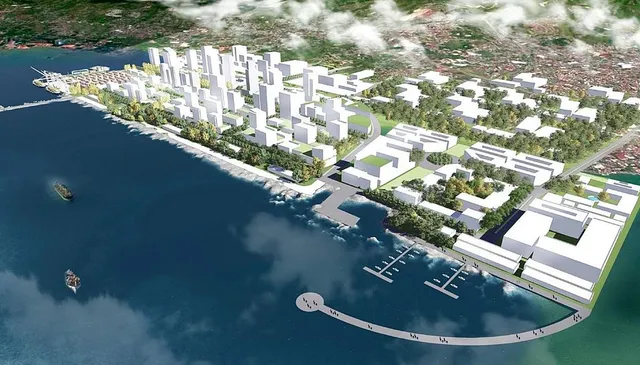
Photo Credit: Cebu Landmasters - An architect’s perfective of the Ming-Mori Techno Business Park, a joint project of the municipality of Minglanilla and joint venture Ming-Mori Development Corporation, an affiliate of Cebu Landmasters. 

The Philippine Reclamation Authority (PRA) has finally approved the PHP20-billion Ming-Mori reclamation project in the southern town of Minglanilla in Cebu. 

The development of the 100-hectare Minglanilla Techno-Business Park marked a strategic milestone on Friday with the signing of a memorandum of agreement between the local government and the PRA.

The town was represented by Mayor Elanito Peña and the PRA by general manager and CEO, lawyer Janilo Rubiato. 

Witness to the signing ceremony in Citadines Cebu City was Cebu Landmasters Inc. (CLI) CEO Jose Soberano III, chairman and president of CLI affiliate Ming-Mori Development Corp. 

CLI will be the developer and manager of the 100-hectare technohub envisioned to be a regional growth center designed to be sustainable and responsive to the environment.

PRA coordinates and administers all reclamation projects nationwide and approval of the development indicates that the government has thoroughly evaluated the undertaking. 

Because many stakeholders are consulted, PRA’s process takes years. 

In 2020, the Ming-Mori project was issued an Environmental Compliance Certificate (ECC) after more than five years of a rigid and comprehensive review.

“The project will take CLI to a brand-new level and widen the range of our customer base to include light-industrial and technology-driven companies,” Soberano said during the press conference at the MOA signing. 

“We aim to achieve a balanced and mutually supporting relationship between urban mixed-use development, light-industrial land use and environmental stewardship. This will be our formula for sustainable growth and development,” he added.

He said this is one of CLI’s biggest projects to date. 

Because of the scale of this project that will take several phases to develop, the company has carefully and meticulously planned it to be “sustainable and supportive of future generations,” he noted. 

The Cebuano businessman said the publicly listed firm is fully equipped to develop and manage this high capital project with the solid support of equity and bank partners. 

Early this year, the Cebu-based company secured PHP3 billion through the issuance of corporate notes at a very competitive rate to fund early works for Ming-Mori beginning in the fourth quarter in 2021. 

CLI has also strengthened its capital base by declaring 123 percent stock dividends to shareholders on record as of June 18, which will be paid on or before July 14. This move prepares the firm for any capital raising in the future.

The estate’s proximity to Cebu City makes it a highly viable location for light manufacturing industries especially now that the province’s main industrial parks are fully occupied. 

Ming-Mori will also have its own port facilities to link it with the global economy.

To further attract locators, Ming-Mori’s first phase will include commercial, residential and institutional zones “to create enough diversity to make it a vibrant community at the outset,” Soberano said.

Jobs from light manufacturing firms will initially draw workers and their families into the area to create a critical mass of residents supported by residential and commercial areas, schools, churches, and other institutions. 

As more areas become available and are developed, CLI envisions a vibrant waterfront community with lifestyle, business and industry woven together.

Peña said the Ming-Mori Techno Business Park is the “long-awaited realization of a dream of many Minglanillahanons that would later become a representation of the progress that all of us will be forever grateful for.” 

The Minglanilla Techno Business Park has been masterplanned by globally acclaimed Singapore-based Surbana Jurong Consultants, one of the most successful urban and infrastructure consulting firms in Asia with projects in over 30 countries. 


Article Courtesy of The Philippine News Agency

June 15, 2021

The construction of the 38-kilometer Philippine National Railways (PNR) Clark Phase I project is on track with overall progress rate of almost 50 percent, Department of Transportation (DOTr) Secretary Arthur Tugade said on Monday.

Tugade, together with Governor Daniel Fernando, visited and inspected the ongoing construction at the Balagtas Station site in Barangay Borol 1st, which is part of the North-South Commuter Railway (NSCR) Project in this town.

He said the 24/7 construction of the railway started in February 2019 and is expected to be completed by the second quarter of 2024.

“It is considered to be one of the first major applications of the span by span method here in the Philippines for infrastructure projects,” Tugade told the Philippine News Agency in an interview.

The package, he said, is a 14-kilometer long viaduct with three stations, namely Balagtas, Guiguinto, and Malolos.

The future PNR railway will sit on top of the elevated concrete section where piers span between 40 to 50-meter distances.

“The viaduct of the piers are to be connected by using the Span by Span and Balanced Cantilever Construction Method. Using precast concrete box girders of 60 to70 tons each which were cast here in our Calumpit Yard,” Tugade said.

Abigail Verzosa, quantity surveyor manager of Sumitomo Mitsui Corp., contractor of the project, said they already completed the launching of the 22 spans which is equivalent to almost one kilometer.

“For the three building stations, namely Balagtas, Guiguinto, and Malolos City, we have already completed the foundation works. In the Balagtas station, we are already at the construction of the platform level. Structural steel roof framing is already in preparation for its launching in the succeeding months,” she said.

Verzosa added that at the Guiguinto station, the foundation works have been completed and that they are now working upward for the structural works of the stations. The two remaining launching gantries with a 50-meter span have also been started.

The PNR Clark North 1 will have its depot at the Valenzuela Station wherein its trains will pass through Meycauayan, Marilao, Bocaue, Balagtas, Guiguinto, until it reaches Malolos City.

The project has total budget of PHP106 billion, of which PHP93 billion came from Official Development Assistance (ODA) of the Japan International Cooperation Agency (JICA) while the Philippine government allotted some PHP13 billion.

The PNR Clark Phase I will have 10 stations that will cut across the cities of Manila, Caloocan, Valenzuela, and the municipalities of Meycauayan, Marilao, Bocaue, Balagtas, Guiguinto, and Malolos City.

Once completed, the train service is expected to serve 300,000 passengers every day and will reduce travel time between Malolos City and Tutuban from one hour and 30 minutes to only 35 minutes.

June 09, 2021

Photo Credit: Department of Public Works and Highways
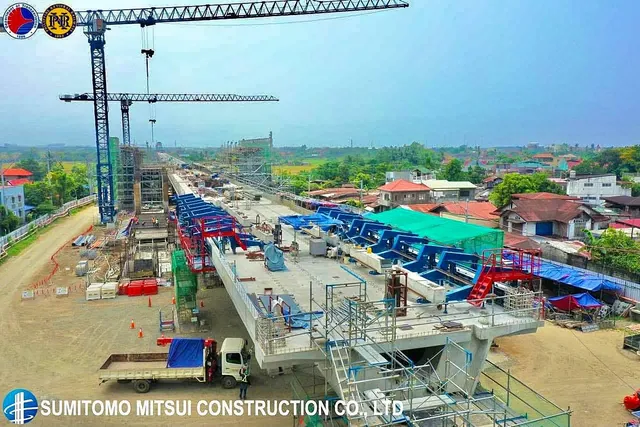
Public Works and Highways Secretary Mark A. Villar expressed confidence that the Central Luzon Link Expressway (CLLEX) will be an efficient alternate route for the motoring public going to Nueva Ecija when it opens next month.

Despite work slowdown due to the pandemic, the first 18-kilometer segment of CLLEX will be of service to motorists from SCTEX/TPLEX connection in Tarlac City up to the intersection of Aliaga-Guimba Road in Aliaga, Nueva Ecija this July 2021, declared Secretary Villar.

Secretary Villar said that contract packages 1 and 2 covering Tarlac Section and Rio Chico River Bridge Section having a combined length of 10.5 kilometers are already completed while construction of 9.2 kilometers contract package 3 - Aliaga Section is 87 percent finished.

Secretary Villar together with Undersecretary for Unified Project Management Office (UPMO) Operations Emil K. Sadain and Region 3 Director Roseller Tolentino personally checked on Tuesday, June 8, 2021 the project’s progress which already has an overall accomplishment of 94 percent, making sure that the road is built with quality construction materials and specifications.

Construction of the ₱11.811 Billion road project funded by loan with Japan International Cooperation Agency is implemented by UPMO-Roads Management Cluster 1 headed by OIC Project Director Benjamin C. Bautista.

In his report to Secretary Villar, Undersecretary Sadain said that the delivery of right of way (ROW) requirements are being fast-tracked, with the assistance of the Office of the Solicitor General (OSG) for expropriation complaints and other ROW-related cases.

“We are hopeful that we will finally secure full site possession of the remaining required ROW to allow our construction activities to go on full throttle”, added Undersecretary Sadain.

Expropriation proceedings with the appropriate court were initiated for properties whose owners were unable to grant the request to donate or accept price offer for negotiated sale within a given timeframe.

More available ROW and favorable weather conditions will enable DPWH to catch up and finish the 10.3-kilometer Contract Package 4 - Cabanatuan Section which is now 88 percent completed.

Meanwhile, the Zaragoza Interchange Section under Contract Package 5 is at 26 percent which involves construction of 113 meters Zaragoza Interchange Bridge, 4.88 kilometers access road, two (2) pre-stressed concrete deck girder bridge with a total length of 19.4 meters, five (5) reinforced concrete box culverts for equalizer and farm passage, and seven (7) irrigation canals.

Once fully completed, the 30-kilometer CLLEX will shorten the usual travel time of 70 minutes between Tarlac City and Cabanatuan City to just 20 minutes.

This new expressway will also form an important east-west link for the expressway network of Central Luzon to ensure a continuous seamless traffic flow for the motoring public from Metro Manila and vice versa passing thru NLEX, SCTEX/TPLEX.


Article Courtesy of the Department of Public Works and Highways
June 09, 2021

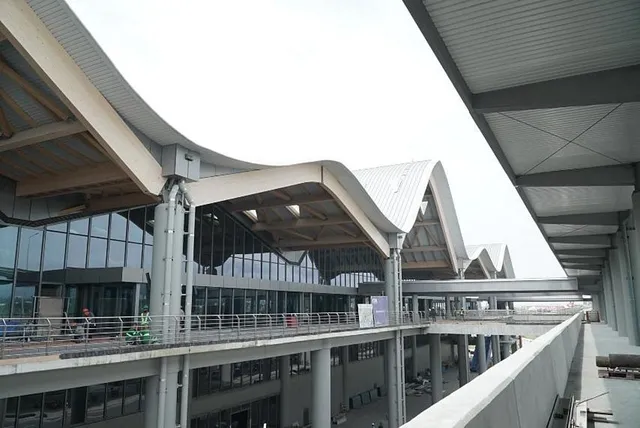
Department of Transportation (DOTr) Secretary Art Tugade led a recent inspection of the New Passenger Terminal Building (PTB) of Clark International Airport (CRK) in Pampanga.

The inspection conducted is part of the preparation for the upcoming opening of the new CRK Terminal. With Luzon International Premiere Airport Development (FLIPAD) Corporation President Bi Yong Chungunco, personally circulated by Sec. Tugade inside the new terminal to see construction progress.

Secretary Tugade is also with DOTr Undersecretary for Railways Timothy John Batan, to discuss the layout of the map route alignment for the North-South Commuter Railway Extension (NSCREx) project that will connect to CRK underground station.

On July 2021, the new airport terminal for domestic operations is set to be launched, which will be followed by the opening of international operations in September 2021.

It's estimated that it will be up to 12.2 million passengers who can service the new terminal will be open and full scale operations, triple the number compared to the current 4.2 million passengers it serves every year (before the pandemic).

This project will help a lot in the long term economic growth of the country, tourism growth, especially in providing employment and other opportunities for our countrymen.

In fact, more than 1,600 workers have also been given the opportunity to be part of the project in the midst of the pandemic and it is expected that the number of jobs will be increased by the time the new terminal of Clark International Airport project is finished.

"You wait and see a real 'world class' terminal. It's coming up, it's coming up in Clark. Thanks to LIPAD, the men and women of Clark International Airport are really very good," galak na pahayag ni Secretary Tugade.

DOTr Assistant Secretary for Aviation and Airports Jim Melo, Civil Aviation Authority of the Philippines (CAAP) Chief of Staff and Airport Projects Team Head Atty. Danjun Lucas, and other representatives from FLIPAD Corp.


Article Courtesy of the Department of Transport

June 04, 2021

The Department of Public Works and Highways (DPWH) will soon open a new road network passing business and industrial hubs of Pasig City, Makati City and Taguig City in a bid to ease decades-old EDSA travel woes.
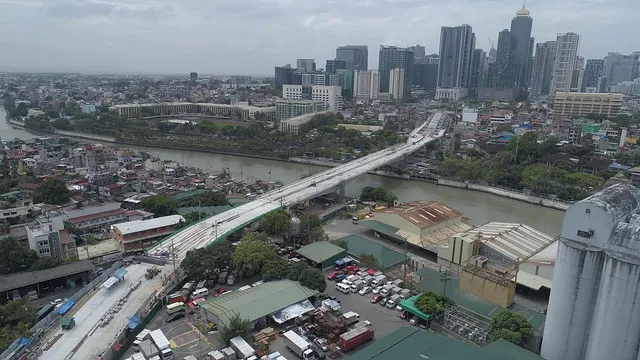
Secretary Mark Villar said that access ramps of the Sta. Monica-Lawton Bridge, a major component of the Bonifacio Global City - Ortigas Center Road Link Project, are already completed.

With the completion of both up-ramp and down-ramp near Kalayaan Avenue, we will be able to achieved the target partial opening by June 12 of the four-lane two-way Sta. Monica-Lawton Bridge, added Secretary Villar.

Secretary Villar together with Undersecretary for Unified Project Management Office (UPMO) Operations Emil K. Sadain inspected on Thursday, May 6, 2021 the BGC - Ortigas Center Road Link Project which will soon be an alternate corridor from EDSA and C-5 along the section of Guadalupe Bridge and Bagong Ilog Bridge, allowing more economic opportunities.

In his report to Secretary Villar, Undersecretary Sadain said that once the punch listing activities are done, the asphalt overlay of bridge deck surface, the up and down ramps, and abutment 1 will commence by last week of May 2021 in time for the Independence Day partial opening of this high-impact infrastructure project which is part of EDSA Decongestion Master Plan.

The asphalt concrete overlays will protect the bridge and road pavement from water permeation, flexural fatigue, rutting and shoving, added Undersecretary Sadain.

Implemented by UPMO Roads Management Cluster 1 (Bilateral) headed by OIC-Project Director Benjamin Bautista and supervised by Project Manager Ricarte Mañalac, the BGC - Ortigas Center Road Link Project is targetted for full completion by September.

The cantilever box girder bridge is already fully completed with sidewalk, parapet, double arms street light and drainage pipe, with some actitivities for the median barrier.

Improvement thru widening of the connecting roads from the start of the project to Pier 5 at Pasig City side particularly the 228 meters Brixton Street and 248 meters Fairlane Street were also undertaken while finishing touches is on-going at the 159 meters abutment 1 particularly on its drainage and manholes, median, sidewalk and parapet.

Meanwhile, all the 76 pieces of pre-stressed concrete girder for the Lawton to Kalayaan or Section 3 viaduct from Pier 9 to 18 are completed and with deck slab laid with steel for portland cement concrete pouring.

Launching of three out of four bored piles for Section 4 - Pier 19 to end of project along 8th Avenue of BGC were completed with continuous fabrication and installation of reinforcements of pre-stressed girder.

June 04, 2021

The Department of Public Works and Highways (DPWH) is about to roll out the construction of two (2) 2.3 kilometer tunnel which corresponds to the central portion of the Davao City Bypass Construction Project in Southern Mindanao financed by Official Development Assistance (ODA) of the Government of Japan thru Japan International Cooperation Agency (JICA).
Secretary Mark Villar said that essential machinery have started to arrive in the Philippines for the road tunnel construction which is expected to develop Filipino skilled workers with new technical know-how.

In his report to Secretary Villar, Undersecretary for Unified Project Management Office (UPMO) Operations Emil K. Sadain said that tunneling works using specialized equipment such as drill jumbo, concrete spraying machine, and articulated dump hauler is targetted to commence by first week of July 2021.

Four (4) units of drill jumbo and four (4) units of concrete spraying machine will simultaneously work at the north and south portal to complete two (2) 2.3 kilometer-long tunnels with a height of 8 meters and a width of 10 meters through the new Austrian tunneling method or sprayed concrete lining method, added Undersecretary Sadain.

The tunnel is part of Contract Package 1-1 covering 10.7 kilometer of four (4) lane highway awarded in the amount of P13.230 Billion to the joint venture companies of Shimizu Corporation, Ulticon Builders Inc., and Takenaka Civil Engineering & Construction Co, Ltd..

The contract package with 37 months duration also covers the construction of bridges in three (3) locations and a 7.9 kilometer long cut and fill road.

During the recent project coordination meeting with Undersecretary Sadain and UPMO Roads Management Cluster 1 (Bilateral) OIC Project Director Benjamin Bautista, Mr. Shinichi Matsumoto representing the joint venture firm said that the construction of access roads are already at 60 percent in preparation for the tunnel excavation.

Secretary Villar said that despite the major challenges encountered relative to the Covid-19 pandemic, Davao City Bypass Construction Project has secured Japan ODA financing with a Special Terms for Economic Partnership (STEP) Loan from JICA under Loan Agreement Nos. PH-P261 and PH-P273 signed in June 2020.

The entire bypass road with a total length of 45.5 kilometer is divided into six (6) packages: package I-1 (10.7 km), package I-2 (12.8 km), package I-3 (6.1 km), package II-1 (2.7 km), package II-2 (3.5 km), and package II-3 (9.7 km).

Starting from Davao-Digos section of the Pan-Philippine Highway in Brgy Sirawan, Davao City going to Davao-Panabo section of the Pan-Philippine Highway in Brgy J.P. Laurel, Panabo City, the bypass road project will mitigate congestions in Davao City with the travel time of 1 hour and 44 minutes via Pan-Philippine Highway Diversion Road to be reduced into 49 minutes.

June 04, 2021

The four (4)-lane 30 kilometer expressway project of the Department of Public Works and Highways (DPWH) connecting Tarlac City, Tarlac to Cabanatuan City, Nueva Ecija is now 94 percent completed.

Secretary Mark A. Villar said that the first 18 kilometer section of the ₱11.811 Billion Central Luzon Link Expressway (CLLEX) Project funded by loan agreement with the Japan International Cooperation Agency (JICA) will soon be accessible to motoring public.

From the connection of SCTEX and TPLEX in Balingcanaway, Tarlac City, the contract packages covering Tarlac Section and Rio Chico River Bridge Section with a total length of 10.5 kilometers were fully completed while construction of 9.2 kilometers Aliaga Section of the expressway is 87 percent finished.

DPWH Undersecretary for Unified Project Management Office (UPMO) Operations Emil K. Sadain, UPMO-Roads Management Cluster 1 OIC-Project Director Benjamin Bautista, and technical staff of Secretary Villar led by Engr. Rodel Racadio inspected on Wednesday, June 2, 2021 the expressway project which will shorten the usual travel time of 70 minutes between Tarlac City and Cabanatuan City to just 20 minutes.

CLLEX up to the intersection of Aliaga-Guimba Road in Aliaga, Nueva Ecija is supposedly finished and partially opened second quarter of 2021 but was hampered by encountering work restrictions.

In his report to Secretary Villar, Undersecretary Sadain said that despite best efforts by the project contractors, partial opening of CLLEX has to moved from May to July after work suspension were issued for the on-going contract packages in compliance to the construction safety guidelines to mitigate and suppress transmission of COVID-19 infection.

For about 40 days from April 7 to May 16, civil work activities were stalled at Contract Package 3 - Aliaga Section and Contract Package 5 - Zaragoza Interchange Section as the pandemic has hit several labor force in the project and workers have to met the requirement by Aliaga Municipal Health Center Management for health clearance based on test, added Undersecretary Sadain.

With load restriction on local roads, embankment materials and aggregates also have to reached the site using the 45 kilometer Tarlac-Quezon and 36 kilometer Cabanatuan-Quezon access routes for hauling in order not to delay the delivery of critical resources.

Meanwhile, the 10.3 kilometers Contract Package 4 - Cabanatuan Section is 88 percent completed with works currently progressing in areas with newly acquired writ of possession issued by branches of Regional Trial Court as renegotiations and legal expropriations with other involved property owners are being done to fully acquire needed road right of way.

Contract Package 5 is at 26 percent which involves construction of 113 meters Zaragoza Interchange Bridge, 4.88 kilometers access road, two (2) pre-stressed concrete deck girder bridge with a total length of 19.4 meters, five (5) reinforced concrete box culverts for equalizer and farm passage, and seven (7) irrigation canals.

This CLLEX Project when completed will facilitate fast, safe, comfortable and reliable means of transport in Central Luzon as it form an important east-west link for the expressway network of Region 3 to ensure a continuous seamless traffic flow for the motoring public from Metro Manila and vice versa passing thru  NLEX, SCTEX/TPLEX.