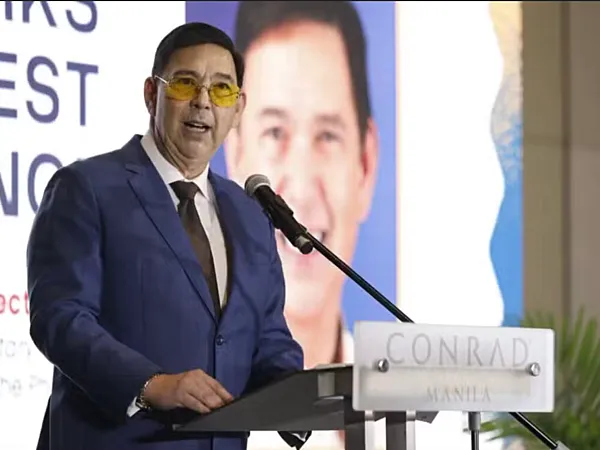
The Philippines is urging US companies to expand investments in semiconductors, electronics and critical minerals as the government seeks to strengthen the country’s role in strategic global supply chains.
Executive Secretary Ralph Recto made the pitch to American business leaders, highlighting opportunities in sectors considered important to the Philippines’ economic and industrial development.
Recto encouraged US companies to expand their presence in the Philippines, particularly in semiconductors and critical minerals, as Manila seeks to attract more investments into higher-value industries.
The semiconductor and electronics sector is already a major component of the Philippine economy and export base. The government is seeking to move further up the value chain by attracting investments that can expand manufacturing capacity, develop more advanced capabilities and create higher-value jobs.
Critical minerals are another area of growing interest as countries seek to diversify supply chains for materials used in electronics, advanced manufacturing, renewable energy and other strategic industries.
The Philippines is seeking to position its mineral resources as an investment opportunity while encouraging greater value creation through processing and other downstream activities.
The investment push comes amid growing efforts by the United States and its partners to build more resilient supply chains for semiconductors and critical minerals and reduce dependence on concentrated sources of supply.
For the Philippines, deeper US investment could provide opportunities for technology transfer, workforce development and stronger participation by local companies in global supply chains.
The government is also seeking to leverage the Philippines’ existing electronics manufacturing base, skilled workforce and mineral resources to attract US companies looking for alternative production and investment locations.
Recto’s pitch underscores Manila’s broader effort to strengthen economic ties with Washington by turning strategic cooperation into concrete investments in Philippine industries.
The government faces the challenge of converting investment interest into actual projects and ensuring that new investments generate broader domestic benefits through employment, local suppliers, technology transfer and downstream processing.
Attracting investment into semiconductors and critical minerals is also expected to intensify competition among countries seeking to secure a greater share of strategic supply chains.
For the Philippines, maintaining a competitive investment environment, improving infrastructure and developing a skilled workforce will be critical to turning its strategic advantages into long-term industrial growth.
Emerging Power Inc. (EPI) has officially rebranded as NAC Energy Inc., a move that aligns the renewable energy business with parent company Nickel Asia Corp.'s strategy to build a diversified natural resources and energy platform by 2030.
The company said the rebranding reflects its evolution from a solar power developer into a multi-technology power generation platform as it expands beyond renewable energy to include flexible power solutions that support grid stability.
NAC Energy President and CEO Martin Antonio G. Zamora said the new brand represents more than a corporate name change.
"This rebranding is far more than a name change—it is a clear statement of who we are today and where we are heading. We are no longer just an emerging player; we have proven our capacity to execute, scale, and deliver reliable power," Zamora said.
As of July 2026, NAC Energy has an operating capacity of 293 megawatt-peak (MWp), supported by the completion and energization of several utility-scale solar projects.
The company is developing an additional 374 MWp of solar capacity, including the 120-MWp second phase of the San Isidro Solar Power project in Leyte, the 145-MWp Subic Solar Project in Zambales, the 50-MWp Nazareno Solar Project in Bataan, and the 59-MWp Botolan Solar Project in Zambales.
Nickel Asia said the expansion of NAC Energy is a key component of its long-term strategy to diversify beyond mining while supporting the country's clean energy transition.
Although solar power remains its core business, the company said it plans to broaden its portfolio to include technologies capable of providing flexible baseload and mid-merit generation, particularly for off-grid and island communities.
"Our non-negotiable standard is simple: to deliver secure and cheaper power to the Filipino people without sacrificing our sustainability imperatives," Zamora said.
"Clean energy must walk hand-in-hand with energy security and accessibility," he added.
MANILA, Philippines – The German-Philippine Chamber of Commerce and Industry, Inc. (GPCCI) welcomed the emphasis placed on regulatory efficiency, energy sector reform — including the proposed amendment to the Electric Power Industry Reform Act (EPIRA) — and an expanding network of free trade agreements in President Ferdinand R. Marcos Jr.'s State of the Nation Address. GPCCI also noted the Address's link between sustained foreign investment and the government's push on ease of doing business and digital transformation, themes that closely track the priorities GPCCI has raised with Philippine government agencies through its ongoing IMPACT Dialogue Series.
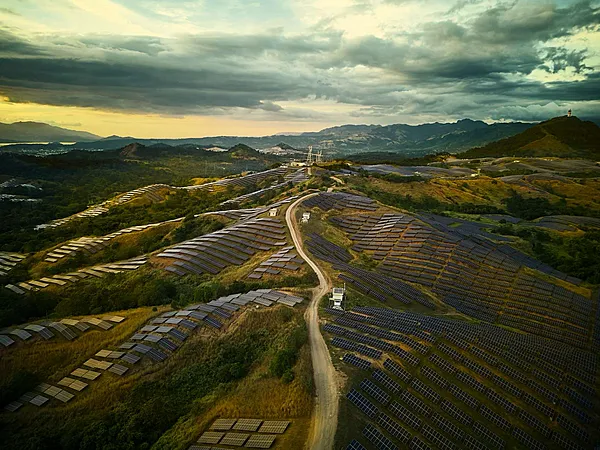
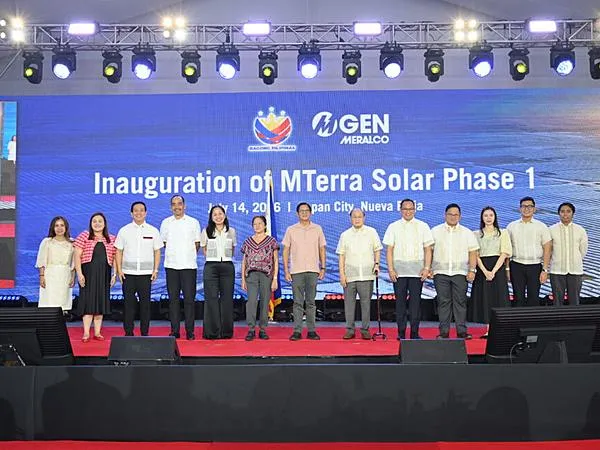
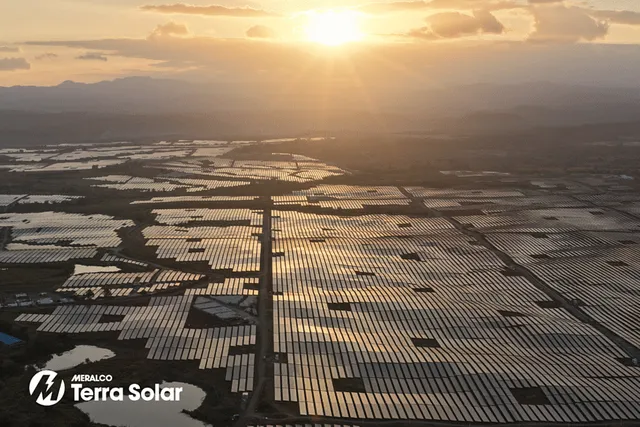
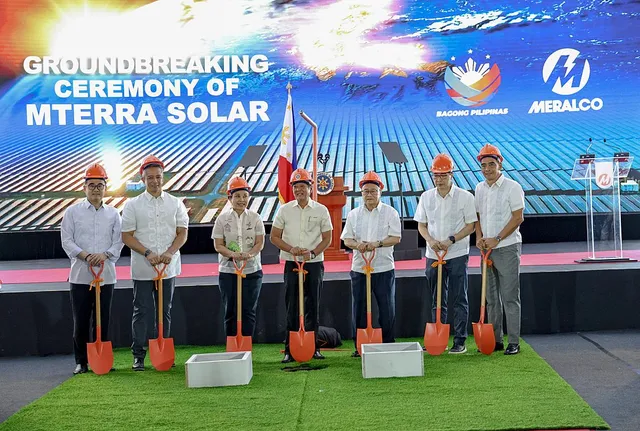
Meralco PowerGen Corp. (MGEN), together with its partners, today inaugurated MTerra Solar Phase 1, marking the completion of the first phase of what is set to become the world's largest integrated solar photovoltaic (PV) and battery energy storage system (BESS).
The milestone underscores the Philippines' growing leadership in large-scale renewable energy development while reinforcing the country's path toward a more secure, affordable, and sustainable energy future.
During the inauguration, President Ferdinand R. Marcos Jr. emphasized the country's ability to execute renewable energy projects on a significant scale.
"The MTerra Solar project is proof that the Philippines is capable not only of envisioning, but also of delivering."
MGEN Chairman Manuel V. Pangilinan shared his vision for a future in which clean, reliable energy is within reach of every Filipino.
"What we inaugurate today will be the world's largest integrated solar and battery storage facility located on a single site. And it rises not in Texas, not in the Gobi Desert, but right here in Gapan, Nueva Ecija. This inauguration was made possible not only by Meralco but by many other hands, minds, and hearts."
MTerra Solar Phase 1 has successfully energized 1,373 MW of solar PV capacity and 825 MW of battery energy storage, equivalent to 3,300 megawatt-hours (MWh), making it the world's largest operational integrated solar and battery facility on a single site. At present, its maximum export capacity to the Luzon grid remains at 750 MW, pending completion of the remaining works being undertaken in coordination with the grid operator. The project has also fully energized all 741 battery units, enabling it to reliably deliver clean electricity to the Luzon grid.
Following the successful completion of required grid tests, the MTerra Solar facility is now ready to fulfill its 600-megawatt mid-merit power supply agreement (PSA) with Meralco, providing customers with a dependable source of clean energy. As of the end of June 2026, more than 2,000 MWdc of solar panels had been installed under Phase 1, while the project had safely logged more than 30 million work hours without a lost-time injury.
"MGEN has always believed that the energy transition must deliver not only cleaner power, but also reliable and affordable electricity for Filipinos. MTerra Solar demonstrates what is possible when vision, innovation, and collaboration come together. Beyond building one of the world's most significant renewable energy facilities, we are helping build a stronger and more resilient Philippine energy system capable of supporting the country's long-term economic growth," said Emmanuel V. Rubio, president and CEO of MGEN.
A Global First, Built by Filipinos for the Philippines
Reflecting the inauguration's theme, "Araw ng Pilipino," MTerra Solar stands as a proud symbol of what the Philippines can achieve through Filipino ingenuity, collaboration, and a shared commitment to nation-building. More than a milestone for MGEN, MTerra Solar is a milestone for the Philippines.
As the world's largest integrated solar photovoltaic and battery energy storage facility developed on a single site, MTerra Solar showcases the country's ability to deliver infrastructure of global significance through the collective efforts of government, the private sector, host communities, and thousands of Filipino workers. Beyond setting a new global benchmark in renewable energy, MTerra Solar reflects the ingenuity, determination, and collaboration of Filipinos in building a more secure, affordable, and sustainable energy future.
Recognizing the project's significance to the Philippines' energy future, Lucy Heintz, partner and head of Energy Infrastructure at Actis, said:
"We are delighted to be working with the high-quality MGEN team to energize 1,373 MW of domestic energy for the Philippines, reducing import dependence, improving resilience, and accelerating energy security, while giving the government and industrial customers greater visibility over future power costs. It's fantastic to see the Philippines leading the world in delivering such a solution."
Powering Energy Sufficiency Through Affordable Renewable Energy
As electricity demand continues to grow, MTerra Solar plays a vital role in strengthening the Philippines' energy sufficiency by adding significant indigenous renewable energy capacity to the Luzon grid. As the lowest-cost mid-merit supply in Meralco's energy portfolio, Phase 1 of the project will deliver 600 MW of dependable renewable energy, helping provide customers with more affordable electricity, diversify the company's power supply portfolio, and reduce the country's reliance on imported fuels.
With its integrated battery energy storage system, MTerra Solar can store solar energy generated during the day and dispatch it during periods of peak demand, providing reliable mid-merit power that enhances grid stability and energy security. The project supports the Philippine Energy Plan as one of the country's largest energy infrastructure investments and advances the government's renewable energy targets of 35% by 2030 and 50% by 2040, while helping ensure sufficient, affordable, and reliable power to sustain the nation's economic growth.
Creating Shared Value for Host Communities
"MTerra Solar is designed to create shared value. Beyond delivering clean and affordable energy, we have invested Php88.6 million in education, livelihood, public safety, and community development to ensure the benefits of this project create lasting opportunities for the people of Nueva Ecija and Bulacan," said Dennis B. Jordan, president and CEO of MGEN Renewables and Terra Solar Philippines Inc.
Beyond generating clean electricity, MTerra Solar continues to invest in the long-term development of its host communities. Since Phase 1 began, the project has benefited more than 973,511 individual beneficiaries and 47 institutional beneficiaries.
Local residents have received technical training in renewable energy construction and operations, with many graduates subsequently joining the project's workforce. Road safety has also been enhanced through the installation of 260 solar-powered streetlights across host communities.
Sustainable livelihood opportunities have been created through the establishment of rent-free marketplace spaces for local entrepreneurs, enabling them to serve thousands of workers during peak construction. Traffic management has also been strengthened by training and equipping 214 community traffic marshals and establishing 17 marshal posts in strategic locations. Emergency preparedness has further improved with the turnover of a fire truck and the construction of a fire substation in Gapan City, enabling faster emergency response for nearby communities.
As construction progresses toward the project's full planned capacity, MTerra Solar will continue to serve as a cornerstone of the country's energy transition, demonstrating that world-class renewable energy infrastructure can simultaneously strengthen energy security, improve affordability, create shared prosperity for communities, and power a better tomorrow for the Philippines.
To demonstrate that renewable energy development can complement rather than compete with agriculture, MTerra Solar recently partnered with Central Luzon State University (CLSU) to conduct pioneering agrivoltaics research. The studies will evaluate how crops can be successfully cultivated around and beneath solar panels, generating science-based recommendations that support farmer livelihoods, strengthen food security, and promote sustainable land use.
Emerging Power Inc. (EPI), the renewable energy arm of natural resources leader Nickel Asia Corporation (NAC), has clinched a major regional accolade for its flagship solar venture at the prestigious Asset Triple A Awards Sustainable Infrastructure Finance Awards 2026.
The company's 145-MWp facility in Subic was named Renewable Energy Deal of the Year – Solar (Highly Commended) for the Philippines. The award recognizes the landmark PHP 5.175 billion project finance senior term loan facility secured by Northern Palawan Power Generation Corporation to support the development and construction of the Cawag Solar Power Project in Subic Freeport, Zambales.
L-R: EPI Funding and Deals Senior Manager Benedict Allan Guinto; EPI Chief Finance Officer Edward De Leon
Once operational, the Cawag plant is expected to power more than 90,000 households and establishments while reducing greenhouse gas emissions by an estimated 132,000 metric tons annually.
"This recognition reflects the collective efforts of our partners and stakeholders in advancing infrastructure projects that create long-term value for communities," said Martin Antonio G. Zamora, President and CEO of NAC and EPI. "It also supports the country's transition toward a future powered by green energy."
Strategic Financing Partnerships
EPI served as the sponsor for the award-winning transaction, backed by major domestic financial and legal institutions:
Sole Arranger: RCBC Capital Corporation
Sole Lender: Rizal Commercial Banking Corporation (RCBC)
Legal Advisers: Romulo Mabanta Buenaventura Sayoc & De Los Angeles, alongside Martinez Vergara & Gonzalez Sociedad
The Asset Triple A Awards, presented by Hong Kong-based financial publication The Asset, use a rigorous, independent methodology to recognize outstanding achievements in banking, finance, and capital markets across Asia.
Moving forward, EPI remains committed to expanding its renewable energy portfolio to strengthen national energy security, support NAC's broader sustainability roadmap, and advance United Nations Sustainable Development Goal 7 (Affordable and Clean Energy).
Emerging Power Inc. (EPI) is the renewable energy subsidiary of Nickel Asia Corporation (NAC). EPI is dedicated to developing transformative clean energy projects—including solar, wind, and geothermal installations—to drive the Philippines' transition toward a sustainable and secure energy future.
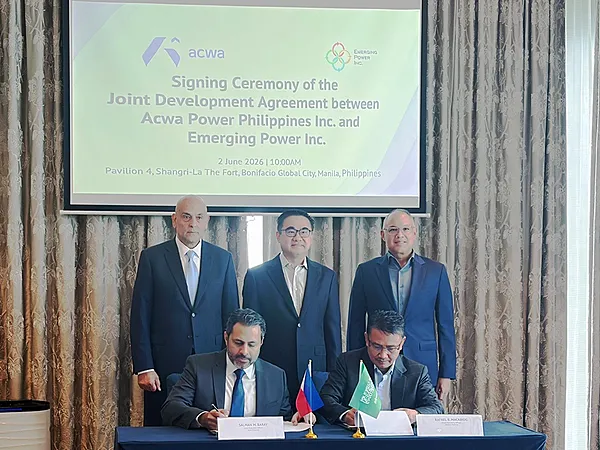
In a ceremony witnessed by Finance Secretary Frederick D. Go, Acwa Power Philippines signed a Joint Development Agreement (JDA) with Emerging Power Inc. (EPI) to explore the development of up to 5,000 megawatts (MW) of renewable and gas-fired power generation capacity across the Philippines.
The JDA aims to provide renewable and gas-fired power generation at a national scale, establish a pathway for joint participation in the Philippine government's Green Energy Auction Program (GEAP), and serve retail electricity suppliers and distribution utilities.
Acwa Power Philippines is a subsidiary of Acwa (Saudi Tadawul: 2082), the world's largest private water desalination company, a leader in the energy transition and a pioneer in green hydrogen development at scale. EPI is the clean energy arm of natural resources developer Nickel Asia Corporation.
Under the JDA, EPI and Acwa seek to identify new power projects nationwide and co-develop projects where their strategic objectives align.
A near-term priority for both companies is participation in the GEAP, where Acwa and EPI intend to submit proposals in response to the government's call for increased investments in renewable energy.
"The Philippines has set one of the most ambitious clean energy trajectories in Southeast Asia, and reaching it requires partners who can move at scale and at pace," said Dr. Samir J. Serhan, Chief Executive Officer of Acwa.
"EPI brings deep local knowledge, an operating renewables base, and a credible growth plan. We bring three decades of experience delivering large-scale power and water assets on time and on budget. Together, 5,000 MW is a starting point, not a limit," he added.
"This joint development with Acwa Power Philippines actively accelerates the nation's transition to a low-carbon economy," said EPI Chairman and CEO Martin Antonio G. Zamora. "Together, we are building scalable, reliable and sustainable power infrastructure that will energize Filipino communities, drive economic growth, and safeguard future generations."
Salman M. Baray, Country General Manager of Acwa Philippines, said: "This is the collaboration we've been building toward since establishing our presence here — a genuine partnership that combines local execution capability with global development expertise. GEAP may be the obvious first test, but the real value lies in the longer-term pipeline we can shape together, including firm capacity where the grid needs it."
This latest cooperation comes at a pivotal moment for the Philippine power sector. Rapid electrification, growing demand from data centers, and the government's target of sourcing 35 percent of electricity from renewables by 2030 are all driving the need for additional capacity, cleaner energy sources and greater system reliability. The combined Acwa-EPI platform is uniquely positioned to respond to these challenges simultaneously.
Acwa (Tadawul: 2082) is a Saudi-listed company and the world's largest private water desalination company, a pioneer in green hydrogen and a leader in the global energy transition. Established in Riyadh, Saudi Arabia, in 2004, Acwa employs more than 4,000 people and operates in 15 countries across the Middle East, Africa, Central Asia and Southeast Asia.
As of March 31, 2026, Acwa's portfolio comprised 109 assets in operation, advanced development or under construction, representing SAR455 billion (USD121.3 billion) in assets under management and the capacity to generate 95.7 GW of power, including 52.3 GW from renewable sources, while managing 9.7 million cubic meters of desalinated water per day.
The energy and water capacity generated by Acwa's assets is delivered on a bulk basis to meet the needs of state utilities and industrial customers through long-term offtake agreements under utility outsourcing and public-private partnership models.
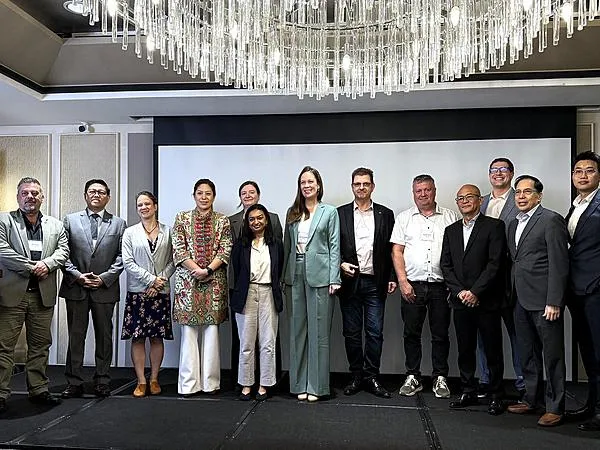
The German-Philippine Chamber of Commerce and Industry (GPCCI) hosted the Conference on German Sustainable Energy Solutions – Industrial Efficiency & Clean Tech at Makati Diamond Residences on 24 March 2026. The conference is part of the business mission focused on German sustainable energy solutions, carried out under the German Energy Solutions Initiative and supported by the Federal Ministry for Economic Affairs and Energy (BMWE).
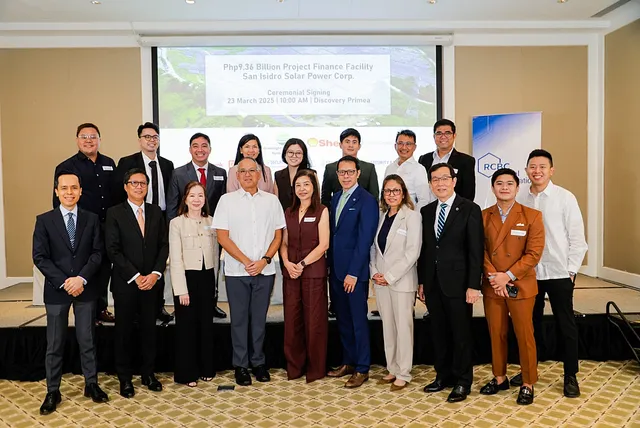
Greenlight Holdings Inc. (GRHI), a joint venture between Emerging Power Inc. (EPI) and Shell Overseas Investments BV (SOIBV), has secured a ₱9.36-billion project finance senior term loan facility for the construction of the 240-megawatt-peak (MWp) San Isidro Leyte Solar Power Project.
The financing was provided by China Banking Corp. (China Bank) and Security Bank Corp. (Security Bank). Located in Barangay Daja Daku, San Isidro, Leyte, the project is being developed in two 120-MWp phases.
Project timeline and impact
GRHI President and CEO Darlene Arguelles said Phase 1 began energization activities in October 2025 and is currently supplying power to its offtaker, Shell Energy Philippines.
Once fully operational, the facility is expected to:
“This 240-megawatt facility represents a landmark development for the GRHI group and our first renewable energy project under our partnership with Shell,” said EPI shareholder representative to GRHI and NAC Vice Chairman Maria Patricia Riingen. “It underscores our shared commitment to advancing the Philippines’ clean energy transition through projects of scale and long-term impact.”
Strengthening energy independence
Security Bank Executive Vice President John Cary Ong highlighted the strategic importance of the project amid global energy volatility.
“For us, financing this project means backing energy independence,” Ong said. “By diversifying away from imported fossil fuels, we insulate the economy from the unpredictability of oil, LNG and coal. In an uncertain world, the sun remains the most reliable supplier we could ask for.”
China Bank Executive Vice President Lilian Yu added that the transaction marks a significant milestone.
“This is our first project finance transaction with Nickel Asia and Shell,” Yu said. “We are optimistic about a long-term partnership as EPI and Shell target 1 gigawatt of renewable energy capacity in the country by 2028.”
Transaction partners
The successful closing of the facility involved several key advisers and partners:
*The computation is based on the estimated average monthly household electricity consumption of 200 kWh, as provided by Meralco.
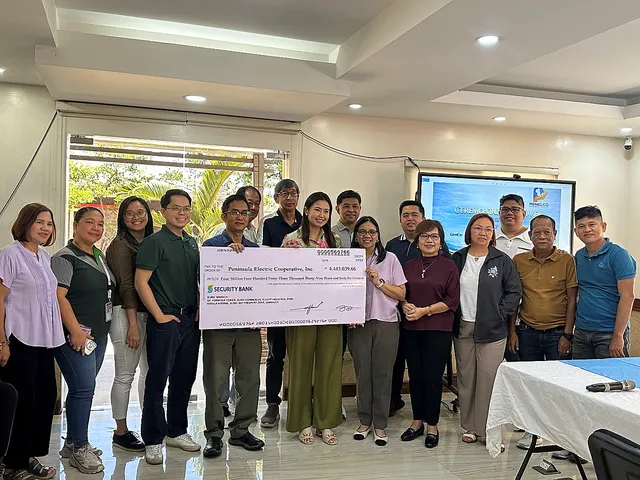
Jobin-SQM Inc. (JSI), a subsidiary of Nickel Asia Corporation’s clean energy arm, Emerging Power Inc. (EPI), recently turned over ₱4.44 million to the Peninsula Electric Cooperative, Inc. (PENELCO) to fund the expansion of critical power infrastructure in Bataan.
The infrastructure project focuses on the extension of distribution lines in selected areas of Limay, Bataan, with primary emphasis on Sitio Duale and Sitio Daang Bangka. By establishing these connections, JSI and PENELCO aim to bridge the energy gap for local residents and improve overall grid stability in rural communities.
In his message, EPI Head of Operations and Maintenance Noel F. Raza emphasized that the turnover is a core part of the company’s responsibility to its host province and highlights JSI’s commitment to ensuring that host communities directly benefit from its operations. He also highlighted PENELCO’s vital role in delivering these benefits on the ground, especially in areas where access to electricity remains a challenge.
EPI Head of Trading and Sales Raymond Joseph A. Marqueses described the line extensions as a catalyst for local progress and an essential component in improving quality of life in the region. He also reaffirmed JSI’s commitment to supporting inclusive and sustainable development through meaningful partnerships such as this.
PENELCO leadership, represented by President Dianna Jeanne Cajucon and General Manager Ellaine De Guzman, expressed deep appreciation for JSI’s commitment to rural electrification. They assured the public that the funds would be used with integrity to ensure the new power lines deliver lasting service to the people of Bataan.
Sourced from the Department of Energy’s ER 1-94 Electrification Fund, the initiative provides the primary and secondary distribution lines needed to deliver reliable electricity to households in previously underserved areas.
This partnership between JSI and PENELCO underscores a shared mission to advance sustainable development. By prioritizing the expansion of the energy network, both organizations continue working toward a future where every community in Bataan has access to dependable and sustainable power.
Meralco PowerGen Corporation (MGEN), through its affiliate Terra Solar Philippines Inc., has energized the first 250 megawatts (MW) of its solar capacity, marking the start of commercial operations and a key step in the country’s transition to cleaner energy.
The milestone represents a critical phase in the project’s staged development and comes amid heightened global fuel market volatility, partly driven by tensions in the Middle East. This context has underscored the urgency of strengthening domestic and renewable energy sources to enhance energy security and reduce dependence on imported fuels.
“Reaching this milestone reflects strong execution, collaboration, and dedication from our teams and partners. More importantly, it highlights the role of projects like MTerra Solar in securing the country’s energy future at a time when reliability and affordability are under increasing pressure,” said Dennis B. Jordan, president and chief executive of MGEN Renewables and MTerra Solar.
Initially authorized to export up to 85 MW during testing and commissioning, the facility is now delivering up to 250 MW to the grid, with support from the Department of Energy and the National Grid Corporation of the Philippines. The additional capacity is expected to help stabilize supply during a period of elevated demand.
Energy Secretary Sharon Garin previously highlighted the project’s importance in expanding the country’s renewable energy pipeline and addressing near-term supply constraints.
“The initial grid synchronization of MTerra Solar—led by MGEN and Actis—represents a meaningful step toward a cleaner and more energy-resilient Philippines,” Garin said.
MGEN President and CEO Emmanuel V. Rubio added that the project’s phased energization allows earlier capacity delivery, helping ease supply pressures and support stable electricity prices amid evolving global conditions.
Alongside solar generation, MTerra Solar has also energized the first tranche of its battery energy storage system (BESS), enabling the plant to deliver up to 450 megawatt-hours (MWh) of energy to the grid at night. This represents the largest operational BESS currently available in the Philippines.
Further integration works are scheduled in the coming weeks to ensure the safe and efficient synchronization of the battery storage system with the solar facility. Once fully operational, the integrated system is expected to enhance grid stability and enable renewable energy dispatch beyond daylight hours.
At full capacity, the project is projected to generate up to 3,500 megawatts-peak (MWp) of solar power, supported by a 4,500 MWh battery storage system—enough to supply clean energy to approximately 2.4 million households.
The project is also expected to avoid around 4.3 million tons of carbon emissions annually, equivalent to removing more than 3 million gasoline-powered vehicles from the road.
With Phase 1 on track for completion this year and Phase 2 already under construction, MTerra Solar is set to play a significant role in helping the Philippines meet its renewable energy targets of 35% by 2030 and 50% by 2040.
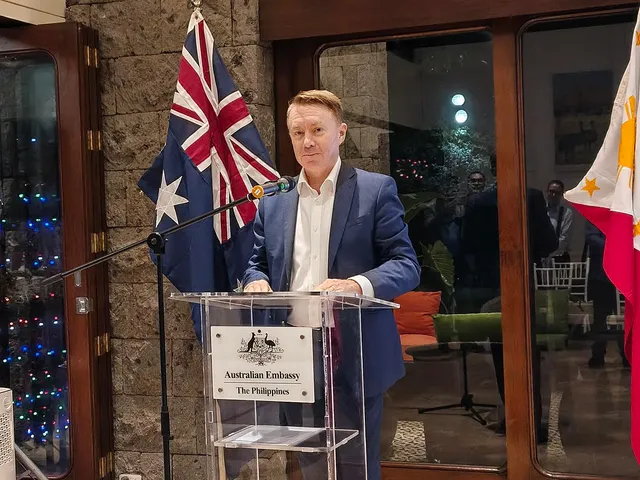
“Speaking to the media at the Australian Embassy’s Annual Journalists’ Reception, Australia’s Ambassador to the Philippines, His Excellency Marc Innes-Brown, honored Filipino journalists for connecting people and illuminating the truth. He emphasized that fearless reporting and quality journalism are essential for upholding democracy and strengthening ties between nations. In a world flooded with disinformation, Philippine journalists play a vital role in safeguarding freedom of speech and sharing the story of the Australia–Philippines partnership.” (Australian Embassy in the Philippine media release)
As the Philippines moves toward smarter and more sustainable transport systems, one company is positioning itself at the heart of that transformation: Geotab, a global leader in connected transportation solutions.
With the launch of Geotab Ace in Southeast Asia, the company introduces an AI-powered digital assistant that brings fleet management to a new level of intelligence and simplicity. By enabling users to access insights through natural language, Geotab Ace transforms complex telematics data into clear, actionable information for fleet operators, utilities, and government agencies.
Founded in 2000, Geotab is a trusted provider of telematics and data-driven fleet management solutions, with more than 4 million connected vehicles worldwide. Its open platform and marketplace offer a broad range of applications that help organizations improve efficiency, safety, and sustainability. The company continues to pioneer innovations in AI and analytics to support smarter mobility ecosystems globally.
To learn more about the company’s regional strategy and its vision for the Philippine market, Philippine Resources Journal (PRJ) sat down with Ezanne Soh, Senior Regional Manager, APAC at Geotab, who shared insights on expansion plans, customer empowerment, and the evolving role of AI in fleet management.
Geotab Ace Launch and Regional Expansion
PRJ: Following the Southeast Asia launch of Geotab Ace, how does Geotab plan to expand its presence and customer base in the Philippines?
Ezanne Soh: The Philippines is a key market for Geotab’s regional growth. With Geotab Ace now available on the MyGeotab platform, we’re scaling through close collaboration with local partners that already support transport, logistics, and utilities fleets.
Our goal is to make fleet intelligence available to every operator — from national agencies maintaining road assets to private logistics providers in various Philippine cities. By bringing intuitive AI into existing telematics systems, we help operators accelerate their digital transformation without adding complexity.
Local Market Opportunities
PRJ: What factors make the Philippines a strategic market for Geotab, and how does the company plan to address the specific challenges faced by local fleet operators?
Ezanne Soh: Fleet operators here face some of the toughest operating conditions in the region — dense urban congestion, high fuel prices, and ageing vehicles. Geotab Ace helps turn these pain points into opportunities for improvement. For instance, a manager can instantly see which trucks lose the most hours to traffic or which delivery routes waste the most fuel.
By transforming raw telematics data into clear, conversational insights, Ace enables faster decisions that improve uptime, safety, and cost control.
Customer Adoption and Use Cases
PRJ: How do you envision fleet operators in the Philippines using Geotab Ace to improve operations in areas such as fuel management, driver behavior, and safety monitoring?
Ezanne Soh: Geotab Ace acts as a digital assistant for fleet managers. Users can simply ask, “Which vehicles used the most fuel this week?” or “Were there any driver safety alerts yesterday?” and get an instant, data-backed answer. This helps managers identify inefficiencies, improve driving habits, and make faster operational decisions without needing to build reports manually.
Beyond simplifying data, Geotab Ace also applies predictive safety and maintenance analytics to enhance fleet performance. It can identify risky driving behavior before incidents occur and analyse vehicle health data to anticipate service needs, reducing downtime and improving reliability. By integrating trip data, zone activity, and exception events, Ace provides a holistic view of fleet health and performance, enabling operators to take proactive action on both driver safety and vehicle upkeep.
PRJ: Are there any early adopters, pilot programs, or success stories from Philippine fleets that you can share?
Ezanne Soh: We’re currently working with regional partners and local fleets exploring how Geotab Ace can be integrated into their operations, particularly in logistics, utilities, and infrastructure management.
Globally, Geotab customers are already seeing measurable impact. We’ve seen reductions in idle time, improved safety compliance, and faster, data-driven decisions using Geotab Ace.
A great example is our recent case study with Métrica Móvil in Mexico — one of Geotab’s long-standing partners, which integrated Geotab Ace directly into its IRIS Fleet™ management platform. The integration was completed rapidly, providing fleet managers with instant, conversational access to insights in both English and Spanish. It showcased how Geotab Ace can be seamlessly embedded into existing systems to deliver real-time, actionable intelligence.
These results demonstrate the scalability of Geotab Ace and reinforce what’s possible as we bring the same technology and expertise to Southeast Asia and the Philippines.
AI, Data, and Localization
PRJ: Given the country’s traffic patterns and logistics infrastructure, how is Geotab Ace designed to interpret and simplify complex fleet data for Philippine users?
Ezanne Soh: Local fleets face diverse and unpredictable conditions — from heavy stop-and-go traffic in Metro Manila to long provincial routes. Geotab Ace interprets this complexity in context. For example, it can distinguish between idling caused by traffic and idling due to driver behavior, giving managers a more accurate understanding of what’s really happening on the road.
Unlike traditional dashboards, Geotab Ace delivers personalized insights based on each fleet’s unique configuration — from vehicle mix to operational zones — and even remembers previous interactions to provide more relevant answers over time.
PRJ: How does Geotab ensure compliance with the Philippines’ Data Privacy Act and maintain customer trust when handling sensitive telematics data?
Ezanne Soh: At Geotab, we understand that our customers’ data is essential to their business operations, which is why protecting it is one of our highest priorities. We embed privacy into every stage of product design and development through our Privacy by Design framework, ensuring responsible innovation and strong data governance from the ground up.
Our approach to data protection is guided by clear principles. We collect only what’s necessary (data minimization), apply rigorous security and access controls, and adhere to data residency requirements by storing and processing information in the appropriate geographical regions. Whenever possible, we also de-identify or anonymize data to further safeguard personal and confidential information.
In practice, this means Geotab complies fully with international standards such as GDPR. We maintain a comprehensive data governance framework, supported by dedicated legal, privacy, and compliance teams, as well as an Enterprise Data & AI Risk Committee that reviews all major AI-related initiatives. Every new innovation, including Geotab Ace, goes through rigorous security testing, ethics assessments, and Privacy Impact Assessments (PIAs).
Our goal is simple: to ensure that customers can trust us with their data. By making privacy and security integral to every part of our business, we deliver technology that is not only powerful but also responsible and transparent.
Sustainability and Electric Mobility
PRJ: With the Philippines gradually moving toward electric vehicle adoption and sustainability, how can Geotab Ace support local operators in transitioning to greener fleet operations?
Ezanne Soh: The shift to electric vehicles is picking up across Southeast Asia, and the Philippines is part of that movement. Many fleets are starting small by electrifying specific routes or vehicle types, and data is essential to making those decisions confidently.
Geotab supports this process through our EV Suitability Assessment (EVSA), which uses real-world telematics data from the world’s largest dataset on EV performance. It helps operators identify which vehicles are best suited for electrification based on factors such as route length, charging availability, weather conditions, and cost efficiency.
Geotab Ace complements this by making sustainability insights easy to access through natural language. A fleet manager can ask, “How much could I reduce emissions if I replaced half my fleet with EVs?” or “Which vehicles are using the most fuel this month?” and get an instant, data-backed answer. By combining EV analytics with conversational AI, Ace helps operators track emissions, understand range performance, and plan their transition to cleaner transport within the same platform they already use to manage daily operations.
Our goal is to make sustainability practical, helping fleets meet their environmental targets while improving efficiency and reducing costs.
Collaboration and Ecosystem Building
PRJ: Is Geotab exploring potential partnerships with local technology providers, government agencies, or logistics associations to strengthen its presence in the Philippines?
Ezanne Soh: Collaboration is a core part of how we operate at Geotab. We’re always looking for opportunities to work with local partners — from technology providers and industry associations to government agencies — to advance shared goals around safety, sustainability, and digital transformation.
As we expand in the Philippines, we’re exploring ways to strengthen this ecosystem and ensure our solutions complement national efforts to modernize transport and logistics. We believe collaboration will play a vital role in helping fleets of all sizes adopt new technologies responsibly and effectively.
User Empowerment and Capability Building
PRJ: Beyond data insights, how does Geotab plan to help Philippine fleet managers and drivers build digital literacy and maximize the use of AI-driven tools like Ace?
Ezanne Soh: We’re investing in on-the-ground enablement such as training sessions, webinars, and partner workshops designed to help users build confidence with AI. Fleet managers quickly see how much time Ace saves by automating daily reporting or compliance checks.
That experience builds trust in data and shifts decision-making from reactive to proactive.
Future Outlook
PRJ: Looking ahead, what are Geotab’s long-term goals for the Philippine market, and how do you see AI shaping the future of the country’s fleet and transport industry over the next five years?
Ezanne Soh: Our long-term goal is to help make every Philippine fleet data-driven, safer, and more sustainable.
Within the next five years, we expect AI to be embedded in every stage of fleet management — from predictive safety alerts to automated maintenance scheduling and sustainability reporting.
By partnering with local stakeholders, Geotab aims to be the trusted data partner supporting this evolution of the nation’s transport ecosystem.
Through Geotab Ace, the company is redefining how fleets in the Philippines harness the power of AI and telematics to drive efficiency, safety, and sustainability. By combining innovation with local collaboration, Geotab is helping pave the way for a more intelligent and connected transport future.
An interview with Austrade Commissioner Luisa Rust
“Trade and investment ties between Australia and the Philippines are robust and steadily growing, underpinned by strong bilateral agreements and shared strategic interests. Two-way trade is at $10.7 billion in 2024, with the Philippines being Australia’s 20th largest two-way goods and services trading partner. There are over 250 Australian companies operating in the Philippines employing more than 40 thousand Filipinos.”
(Austrade Commissioner Luisa Rust)
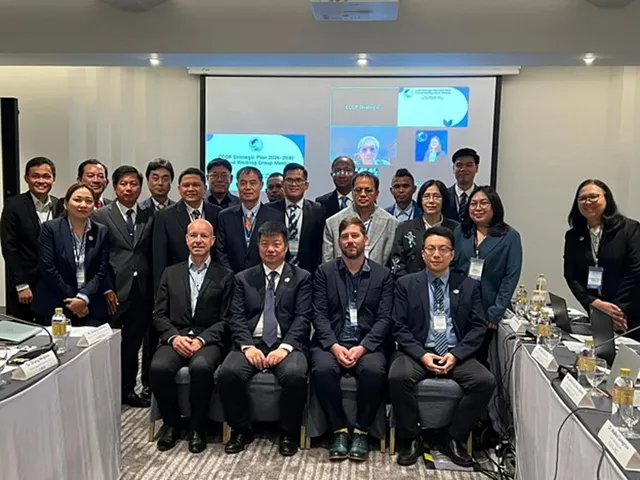
The Department of Environment and Natural Resources–Mines and Geosciences Bureau (DENR-MGB) recently played a key role in shaping the future direction of regional geoscience efforts by participating in the 2nd Coordinating Committee for Geoscience Programmes in East and Southeast Asia (CCOP) Strategic Plan 2026–2030 Working Group Meeting.
The meeting, held in Bangkok, Thailand on September 10-11, 2025, aimed to formulate the next five-year strategic plan for CCOP, aligning it with the United Nations 2030 Agenda for Sustainable Development.
Dr Kevin L. Garas, Senior Geologist of the DENR-MGB Lands Geological Survey Division, served as the official Philippine representative to the Working Group. He was joined by Department of Energy (DOE) delegates—Mr Demujin Antiporda, Assistant Director, and Mr Jose Mari Arcega of the Energy Resource Development Bureau (ERDB)—forming the Philippine delegation.
The two-day session saw the Working Group, composed of representatives from countries including Cambodia, China, Indonesia, Japan, Malaysia, France, Myanmar, the Philippines, Thailand, and Timor-Leste, finalise the Vision and Mission Statements, as well as the Strategic Aims and Objectives for CCOP’s 2026–2030 term.
The meeting’s main focus was to develop a concrete Action Plan and discuss potential regional projects and collaborative activities that CCOP Member and Cooperating Countries can jointly implement over the next five years.
To ensure the Action Plan aligns with national priorities, the Philippine delegation delivered a 15-minute presentation on its priority geoscience programmes for the next five years. These priorities cover critical areas in mineral resources, disaster risk management, environment, and energy transition:
Critical Minerals Development: Enhancing exploration, value addition, processing, and database management. The Philippines was recommended for expanded collaboration, building on the upcoming second phase of the ASEAN–Korea Cooperation Fund (AKCF) Project on Critical Minerals.
Geohazards, Disaster Risk Reduction, and Climate Change: Focusing on innovative early warning systems and efficient information transmission between national and local governments, including the use of Artificial Intelligence for warning advisories. The country can lead a new regional project on effective disaster risk communication and digital transformation.
Geoheritage and Geoparks: Promoting national geological monuments such as the Biri Rocks and supporting new geopark proponents following the declaration of the Bohol Island Geopark as the first UNESCO Global Geopark in the Philippines.
Natural Hydrogen Exploration: Developing the potential of natural hydrogen gas—formed by the interaction of ultramafic rocks and water in ophiolite belts—as an alternative energy source. The DOE can spearhead regional exploration and management strategies for this emerging energy resource.
Progressive Rehabilitation and Coal Mine Decommissioning: Institutionalising strategies, including the establishment of the Coal Mine Contingency and Decommissioning Fund (CMCDF), as part of energy transition initiatives.
The DENR-MGB remains steadfast in its commitment to the Coordinating Committee for Geoscience Programmes in East and Southeast Asia (CCOP). Recognising the significant progress achieved through regional and international geoscience cooperation, the MGB will continue to actively participate in CCOP programmes.
The Bureau fully supports the development and implementation of the CCOP Strategic Plan 2026–2030, ensuring that CCOP activities remain aligned with the Philippines’ priority geoscience and sustainable development goals. Through this strengthened collaboration, the Philippines looks forward to leading regional initiatives in disaster risk reduction and natural hydrogen exploration for the benefit of all member countries.
Meralco PowerGen Corporation (MGEN), through its affiliate Terra Solar Philippines Inc. (MTerra Solar), has reached a significant milestone in the construction of the MTerra Solar plant—with 778 megawatts (MW) of solar photovoltaic (PV) panels now installed on-site.
This achievement exceeds the project’s 750 MW target and positions MTerra Solar as the largest solar PV installation in the Philippines to date. Once complete, it is expected to become the world’s largest integrated solar PV and battery energy storage facility.
“MTerra Solar stands as a clear example of how we can shape the country’s energy future through strong partnerships and a shared vision. With 778 MW of solar PV capacity now installed, we are making real progress toward delivering cleaner and more sustainable power for Filipinos,” said Dennis B. Jordan, MTerra Solar and MGEN Renewable Energy president and CEO.
“This milestone reflects the hard work of our teams on the ground, the support of our government partners, and the trust of the communities we serve,” Jordan said.
Since the project’s groundbreaking in November 2024—led by President Ferdinand “Bongbong” Marcos Jr.—MTerra Solar has reached 54 percent overall completion for Phase 1. The integrated PV and battery energy storage system (BESS), along with a 500‑kilovolt transmission line to the Nagsaag‑San Jose corridor, is supported by a workforce of over 9,500, which has logged more than 7.5 million safe manhours.
The facility is a critical element of the Philippines’ plan to achieve 35 percent renewable energy by 2030 and 50 percent by 2040.
Local officials hailed the project’s community and economic benefits.
“At the heart of our provincial agenda is the vision of sustainable, inclusive and future‑forward development. The provincial government of Nueva Ecija will continue to champion projects like MTerra Solar. It is our duty to pave the way for a future that is not only bright but also clean, green and just,” said Governor Aurelio “Oyie” Umali, represented by Provincial Administrator Atty. Jose Maria San Pedro.
For his part, Gapan City Mayor Emary Joy Pascual added, “Nakakatuwa dahil libo-libong trabaho at negosyo ang naging oportunidad dito sa Lungsod ng Gapan at pakikinabangan ng mga Batang Gapan.”
“[We also express our] deep appreciation that a great number of the workforce is now providing livelihood... The strong partnership that we build today is a commitment to improve lives of our people now and beyond,” said General Tinio Mayor Sherry Bolisay.
Spanning 3,500 hectares—nearly the size of Pasig City—the project stretches across Gapan, Peñaranda, General Tinio, San Leonardo in Nueva Ecija, and San Miguel in Bulacan. Once fully operational, MTerra Solar will deliver 3,500 MWp of solar capacity and 4,500 MWh of energy storage, powering some 2.4 million households and avoiding approximately 4.3 million tons of CO₂ emissions yearly—equivalent to taking over 3 million gasoline-powered vehicles off the road.
Constructed with the support of EPC leaders Energy China, POWERCHINA, MIESCOR, and Huawei, as well as grid interconnection specialists Maxipro Development and Fujian Electric, the project is on schedule to complete Phase 1 by early 2026 and Phase 2 in 2027—three years ahead of MGEN’s 2030 renewable capacity goal.
MGEN’s broader portfolio now boasts nearly 5,000 MW of combined capacity across traditional and renewable sources.
Environment Secretary Raphael P.M. Lotilla recently called on officials at the Department of Environment and Natural Resources to adopt a more assertive and strategic posture in defending the Philippines’ maritime rights in the West Philippine Sea.
During a DENR symposium, Lotilla emphasized the agency’s critical role in reinforcing the landmark 2016 Permanent Court of Arbitration ruling through scientific data, environmental reports, and legal-environmental strategies.
“These are essential to informing both Filipinos and the international community, protecting our marine environment from destruction, and showing that we are actively defending what is rightfully ours,” he said.
He added that while the arbitration invalidated China’s so-called nine-dash line and affirmed Philippine sovereign rights, “This landmark legal victory must not be taken for granted — the work is far from over” .
Senior Supreme Court Justice Antonio Carpio, speaking at the same event, presented historical and legal evidence affirming Philippine ownership of key islands and reefs in the WPS. He urged the government to build a unified narrative to counter disinformation, backed by the legal and environmental research DENR can help provide.
Freddie Ganton, senior state counsel at the Department of Justice, highlighted how the Philippine Maritime Zones Act and Archipelagic Sea Lanes law codify the 2016 ruling into domestic legislation, institutionalizing the term “West Philippine Sea” and solidifying the legal basis for asserting jurisdiction over Philippine waters.
Marine geologist Dr. Fernando P. Siringan, former director of the UP Marine Science Institute, underscored the need for greater investment in habitat mapping, ecological monitoring, and coordinated research to generate data that reinforce the arbitral ruling and support long-term marine protection.
Lotilla pledged to mobilize DENR’s environmental, legal, and scientific capabilities, directing the agency to strengthen interagency coordination, publish marine environmental reports and launch grassroots awareness campaigns.
“The DENR is not just a steward of forests and rivers,” he declared. “We are frontliners in protecting what is ours — from ridge to reef, and across our rightful seas,” the secretary said.
Follow on LinkedIn:
Philippine Resources Journal
Be the "First" to get our exclusive Digital Magazine & Weekly Newsletter.