May 12, 2025

Listed natural resources development company Nickel Asia Corporation (NAC) (PSE: NIKL) reported today its financial and operating results for the three-month period ended March 31, 2025.

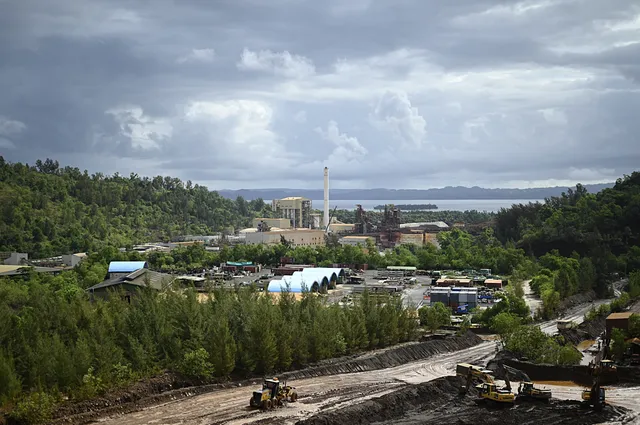
Attributable net income (net of minority interest) reached ₱501.03 million, up 148 percent from ₱202.38 million in the same period last year. This was primarily driven by higher prices for ore exports and a ₱800 million one-time income from the sale of the Company’s 15.625-percent stake in Coral Bay Nickel Corp. (CBNC). However, challenging weather conditions drove up mining costs. Furthermore, Taganito HPAL underwent plant maintenance in March, affecting ore deliveries from the Taganito mine.

Mining Highlights

  • Revenues from saprolite and limonite ore rose 16 percent to ₱2.36 billion from ₱2.03 billion last year due to higher prices, which offset the lower sales volume of 2.48 million wet metric tons (WMT) as compared to last year’s 2.61 million WMT. The lower volumes are due to challenging weather conditions.
  • The weighted average ore sales price increased by 18 percent to $16.40 per WMT versus $13.84 per WMT in 1Q 2024. NAC realized ₱57.85 per US Dollar from ore sales, a 3 percent increase from ₱56.13 last year.
  • Breaking down ore sales, NAC exported 0.66 million WMT of saprolite ore at an average price of US$36.60 per WMT from 0.61 million WMT at US$25.57 per WMT, a 43 percent improvement in export prices year-on-year. Moreover, the Company delivered 1.82 million WMT of limonite ore to the CBNC and Taganito HPAL plants, the price of which is linked to the London Metal Exchange. The realized average price for the period stood at $7.05 per pound of payable nickel equivalent to $9.10 per WMT, a decline of 11 percent from the same period last year. This compares to 2.0 million WMT at $7.53 per pound equivalent to $10.27 per WMT last year.
  • EBITDA amounted to ₱969.63 million from ₱1.05 billion last year. The decline was driven by higher mining costs brought about by the weather conditions.
  • NAC recognized losses from its equity share in the Taganito HPAL project amounting to ₱91.91 million, trimming total losses by 53 percent from last year’s figure of ₱193.90 million following NAC’s sale of its equity stake in CBNC.

Renewable Energy Highlights

For the first quarter of the year, Emerging Power, Inc.’s (EPI) subsidiary, Jobin SQM, Inc. (JSI), increased generation by 30 percent year-on-year to 58,157-megawatt hours resulting from the additional 72 MW capacity added in February last year. Higher generation increased EBITDA by 17 percent to ₱196 million.

EPI is on track to achieving its 1-GW target by 2028:

  • Greenlight Renewables Holdings, Inc. (GRHI) is progressing with Phase 1 (120 MW) of its solar project in Leyte. A Notice to Proceed (NTP) for Phase 2 (120 MW) has been issued, with construction beginning in 1Q 2025.
  • The 145-MW Subic-Cawag solar project is scheduled to commence operations in 2026.
  • Pre-development activities for a 45-MW solar project in Botolan, Zambales under GRHI have been completed with the NTP expected to be issued in 2Q 2025.
  • Likewise, pre-development activities for a 50-MW solar project in Nazareno, Bataan are underway with construction expected to commence in 3Q 2025.

Outlook and Remarks

“With improving weather conditions and the opening of our Surigao, Manicani and Dinapigue mines, we expect mining costs to normalize and revenue growth to continue in the second quarter, supported by the continuing recovery in nickel ore prices and volume growth from our new mining areas. Additionally, ongoing enhancements to the causeway at our Dinapigue mine will boost production and shipping efficiency,” said NAC President and CEO Martin Antonio G. Zamora

“In the area of renewable energy, we look forward to adding 120 MW of capacity in the second half of the year, with the launch of the Leyte Phase 1 solar project.”

He added: “Similarly, we continue to advance the exploration and development of gold and copper prospects under Cordillera Exploration Co., Inc. Through these efforts, we remain focused on scaling responsibly and maintaining strong performance amid evolving global market conditions.”

April 28, 2025

Philex Mining Corporation (the “Company” or “Philex”) generated Php71 million core net income and an EBITDA of Php329 million for 1Q2025 compared with the Php105 million core net income and EBITDA of Php295 million for 1Q2024. Reported net income reached Php131 million in 1Q2025, 14% higher compared with Php115 million in 1Q2024.

Operating revenues increased to Php1.896 billion in 1Q2025 versus Php1.738 billion in 1Q2024 due to continued improvement in the realized Gold and Copper prices. Average gold prices in 1Q2025 were higher at US$2,587 per ounce compared with the US$2,061 per ounce in 1Q2024. Copper for the first quarter was at US$4.32 per pound, higher than the US$4.00 per pound in 1Q2024.

Operating costs increased to Php1.764 billion in 1Q2025 from Php1.643 billion in 1Q2024 which negatively affected the Company’s bottom line.

Tonnage milled for 1Q2025 was at 1.602 million tonnes, higher than the 1.585 million tonnes in 1Q2024. Gold output for 1Q2025 was at 6,083 ounces versus the 7,803 ounces in 1Q2024. On the other hand, Copper output for 1Q2025 was at 4.595 million pounds compared with the 4.669 million pounds in 1Q2024.

Operating an ageing Padcal Mine continues to pose challenges to the Company’s ability to operate efficiently in an environment of high metal prices and we rely heavily on the resiliency of our employees.

The development works at the Silangan Project (“Silangan”) accelerated to a faster pace with the arrival of major long lead equipment packages despite challenging global supply chain environment. Silangan is scheduled to start commercial operations in the first quarter of 2026.

“It is imperative that we usher Silangan into production based on schedule to initially augment the performance of the Padcal Mine while we are relentlessly pursuing other business opportunities,” according to Eulalio Austin Jr., Philex President and CEO. “Copper and gold prices are high, in the face of global trade and supply chain uncertainties, brought about by recent economic policy changes, and we take advantage of this to push forward the Silangan Project and the remaining Padcal potential.”

April 21, 2025

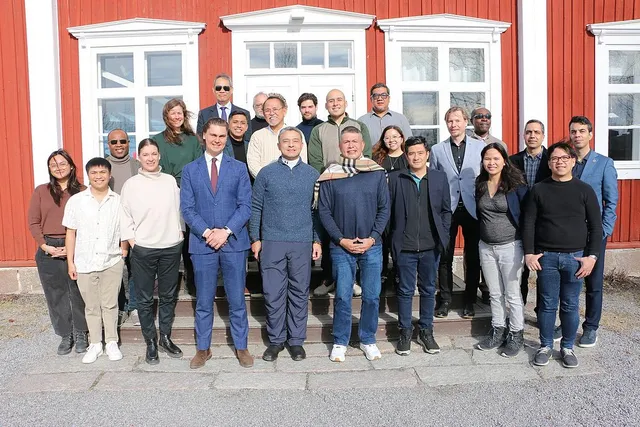
A high-level Philippine delegation recently visited the Luleå University of Technology (LTU) last 2 April 2025 in Sweden as part of efforts to deepen cooperation on sustainable mining practices, critical minerals, and research innovation. The trip underscores the country’s commitment to strengthening global partnerships in support of its growing minerals development agenda.

Representing the Philippine government were Undersecretaries Juan Miguel T. Cuna and Joselin Marcus E. Fragada of the Department of Environment and Natural Resources (DENR), who were accompanied by the Assistant Secretary for Mining Concerns and concurrent OIC Director of the Mines and Geosciences Bureau (MGB), Michael V. Cabalda, and other technical personnel. The delegation was warmly received by researchers and leadership from LTU’s Centre for Advanced Mining and Metallurgy (CAMM), a premier hub for mining innovation in Northern Europe.

During the visit, both parties exchanged insights on responsible mining, mineral processing, and the evolving role of technology in ensuring sustainable extraction. The Philippine officials also gained insights into Sweden’s approaches to maximizing resource efficiency and reducing environmental impacts within the mining sector.

ASec. Cabalda expressed excitement over what he has witnessed and learned in Sweden and at LTU, saying, “We see Sweden as a bastion of sustainable mining. We want to see how they are doing it and how that knowledge and technology can be transferred to the Philippines. At the end of the day, with the support of the government, everything will be done in the context of sustainable and responsible mining, taking care of communities. From what I've seen and the work being done at the university, I can tell that significant progress has been made—progress that can benefit an industry in the Philippines that is now receiving well-deserved attention from the current administration.”

The visit follows the High-Level Swedish Delegation visit in Manila and LTU’s participation in the 70th Annual National Mine Safety and Environment Conference in Baguio City on 19-22 November 2024, where CAMM Director Thomas Aiglsperger mentioned looking forward to fostering future collaborations with the country for a more sustainable mining industry.

The MGB looks forward to sustained dialogue with Swedish institutions and mining stakeholders, paving the way for transformative partnerships that will benefit both countries.

April 08, 2025

Celsius Resources Limited is pleased to announce that its Philippine affiliate, Makilala Mining Company, Inc. (“MMCI” or the “Company”), has received formal confirmation from the Philippine Department of Environment and Natural Resources (“DENR”) that it has satisfied the final financial compliance requirement under its Mineral Production Sharing Agreement for the Maalinao-Caigutan-Biyog Copper-Gold Project (“MCB” or the “Project”).

This follows the DENR’s acceptance of the binding term sheet which outlines the key terms of a bridge loan facility of up to USD76.4 million, executed between MMCI and Maharlika Investment Corporation (“MIC”), a government-owned and controlled corporation, in February 2025 (“Binding Term Sheet”). The Binding Term Sheet was evaluated and endorsed by the Mines and Geosciences Bureau (“MGB”) which noted that:

  • The Binding Term Sheet provides a structured and credible financial mechanism for MMCI’s mining operations; and
  • The involvement of MIC significantly enhances MMCI’s financial standing and credibility, offering strong assurance of continued support.

MMCI is expected to submit all related and forthcoming financial documents to the DENR and MGB and to update its Three-Year Development/Utilisation Work Program accordingly, in line with the terms of the MPSA and DENR Administrative Order No. 2010-21.

Celsius Executive Chairman Atty. Julito R. Sarmiento, said:

“We are extremely pleased to have achieved this important regulatory milestone for the MCB Project. The acceptance of the Binding Term Sheet by the DENR and the MGB is not only a testament to MMCI’s commitment to responsible and well-funded development, but also reflects the strong support and credibility provided by our partnership with Maharlika Investment Corporation.

On behalf of CLA and MMCI’s management and staff, again, I would like to extend my heartfelt gratitude to MIC for their confidence and catalytic funding support to the Project, and to the DENR and MGB for their professionalism and guidance throughout the compliance process.

We remain committed to ensuring that the MCB project delivers lasting and sustainable economic benefits to our host communities, particularly in Balatoc, the Municipality of Pasil, and the Province of Kalinga, as well as meaningful contributions to national development, all while upholding environmental stewardship and shared prosperity.

Now that we have fulfilled our compliance with the conditions of the Mineral Production Sharing Agreement, we are in a strong position to proceed with mine development and construction. We remain steadfast on our commitment to sustainable development by balancing resource efficiency with environmental stewardship and social responsibility.”

MIC and MMCI will now proceed with signing the Omnibus Loan and Security Agreements (“Agreements”) reflecting the terms of the Binding Term Sheet signed with MIC in February 2025.

MCB COPPER-GOLD PROJECT

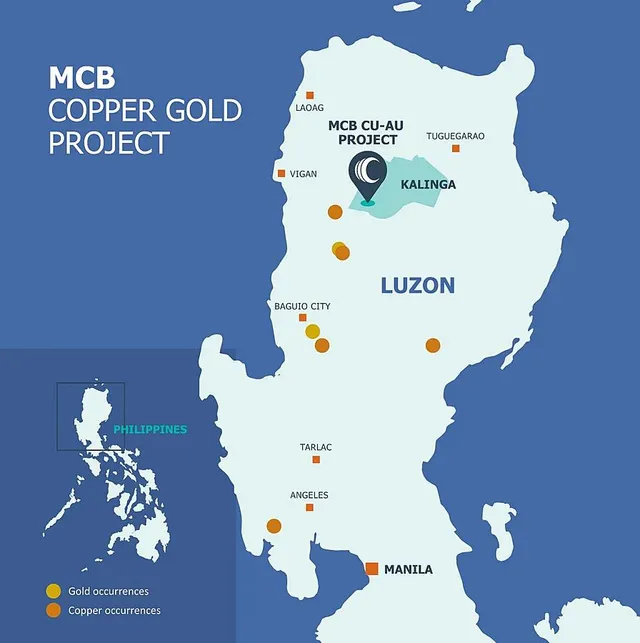
The MCB Copper-Gold Project (MCB) is in the Cordillera Administrative Region in the Philippines, approximately 320km north of Manila (Figure 1). It is the flagship project within the Makilala portfolio which also contains other key prospects in the pipeline for permit renewal/extension.

A maiden JORC Compliant Mineral Resource Estimate was declared for the MCB Project in January 2021, comprising 313.8 million tonnes @ 0.48% copper and 0.15g/t gold, for 1.5 million tonnes of contained copper and 1.47 million ounces of gold, of which 290.3 million tonnes @ 0.48% copper and 0.15 g/t gold is classified as Indicated and 23.5 million tonnes @ 0.48% copper and 0.10 g/t gold is classified as Inferred.

An updated JORC compliant Mineral Resource Estimate was announced for the MCB Project on 12 December 2022, comprising 338 million tonnes @ 0.47% copper and 0.12 g/t gold, for a total of 1.6 million tonnes of contained copper and 1.3 million ounces of gold, of which 249 million tonnes @ 0.44% copper and 0.11 g/t gold is classified as Indicated, 42 million tonnes @ 0.52% copper and 0.11 g/t gold is classified as Inferred, and 47 million tonnes @ 0.59% copper and 0.19 g/t gold is classified as Measured.

A Study for the MCB Project was announced by CLA on 1 December 2021, which identified the potential for the development of a copper-gold operation with a 25-year mine life. The Study was based on an underground mining operation and processing facility to produce a saleable copper-gold concentrate.

Highlights from the Study include a Post tax NPV (8%) of US$464m and IRR of 31%, assuming a copper price of US$4.00/lb and gold price of US$1,695/oz. Initial capital expenditure is estimated to be US$253m with a payback period of approximately 2.7 years. The designed mine production is matched to a 2.28Mtpa processing plant which will treat ore with an estimated average grade of 1.14% copper and 0.54g/t gold for the first 10 years of planned production with a C14 cash costs at just US$0.73/lb copper, net of gold credits.

April 07, 2025

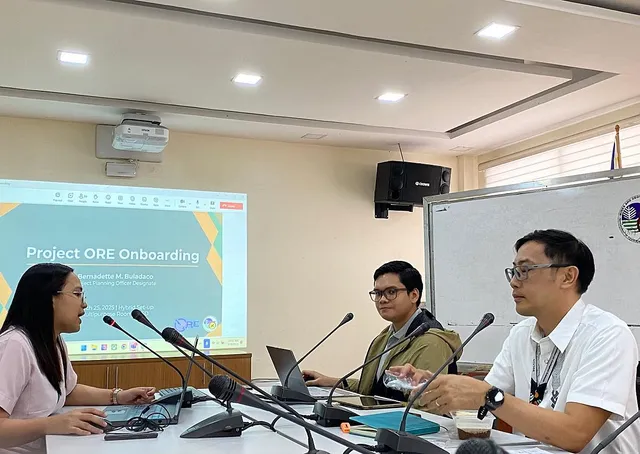
The onboarding of the Research and Development Project titled "Project ORE: Optimizing Resource Exploration – Integrating Spectrometry and Lithogeochemical Tools for the Advanced Characterization of Critical Minerals in Magmatic Hydrothermal Deposits," held on March 25-28, 2025, at the Petrolab Building, serves as a pivotal platform for advancing our understanding of critical minerals. The integration of spectrometry and lithogeochemical tools enhances the Bureau’s current exploration methods, refining the characterization of magmatic hydrothermal deposits. This initiative not only bridges gaps in mineral exploration but also aligns with national goals for sustainable mineral development.

The workshop’s specific objectives emphasize a structured approach to project implementation. Participants from the MGB-Central and Regional Offices, along with consultants from UP-NIGS and UP-DGE, were introduced to project timelines, expected deliverables, and individual responsibilities.

During this activity, Karlo L. Queaño, Ph.D., Chief of the LGSD, emphasized the significance of interdisciplinary collaboration in geological research and exploration. Bernadette M. Buladaco, Senior Geologist and Project Ore Planning Officer Designate, provided updates on project progress and personnel roles, highlighting the necessity of clear tasking and deliverables to meet objectives within the set timeline. By identifying possible setbacks early, the team can proactively devise strategies to mitigate risks in geological studies.

Discussions on the geology and mineralization within the target sites in Basay and Sipalay focused on identifying effective work approaches, with John Esteban Cari presenting initial target delineations by integrating available geological data. Methodologies for the geological mapping, geochemical surveying, and hyperspectral mapping activities were also presented, incorporating input from project personnel to refine data collection processes. Additionally, an overview of MGB’s laboratory services highlighted the development of a structured framework that integrates advanced laboratory techniques, enhancing precision in mineral characterization.

The discussions on Days 3 and 4 underline the importance of strategic planning and inclusivity in geological projects. Ms. Buladaco's presentation on the Work and Financial Plan emphasized the necessity for a comprehensive approach to resource management in accomplishing the target objectives. Furthermore, Ms. April C. Ondona’s focus on gender mainstreaming within Project Ore highlights an essential shift toward inclusivity. By addressing gender disparities, projects can foster diverse perspectives that enhance decision-making processes. Lastly, to ensure that the newly hired personnel are well-oriented in their roles, Ms. Leilanie M. Saunders, the Officer-In-Charge of the Human Resource Management System (HRMS) provided an orientation session to equip them with the necessary knowledge for their responsibilities.

The Project ORE team synthesized the agreements from the workshop and developed strategies for effective implementation. This initiative represents a strategic effort to harmonize diverse expertise towards optimizing resource exploration. By integrating advanced methodologies, the project fosters a more collaborative scientific community dedicated to sustainable mineral resource exploration.

March 31, 2025

Women have started to make a mark in the male-dominated mining industry as they shift from mere administrative jobs to  highly technical positions that used to be exclusively held by men.  

Lawyer Froilan Lawilao, legal officer of Benguet Corporation (BC), said that when he joined the company more than 10 years ago, women employees were performing office administrative functions. 

“Through the years, our company has evolved. More women are being hired and they perform highly technical functions such as geologists, metallurgists, mining engineers. Before, there were no women doing those jobs,” the lawyer said during the “Minera Forum 2025” organized by the Mines and Geosciences Bureau (MGB) on Wednesday at the agency’s regional office here that falls during the celebration of Women's Month this March.

He said “It used to be that no women employees were involved in technical operations but now we have a lot. We have mining engineers who are women. The head of the milling, the mines and the operations are women. Even the metallurgy is led by a woman,” he said. 

Lawilao added that a look into their company’s profile will show that most of the managers and supervisors are women. 

He added that their company’s president, Lina Fernandez who was appointed in 2021, rose from the ranks and not in any way connected to the owners. 

Benigno Cesar Espejo, officer-in-charge and the concurrent head of the geosciences division of the Mines and Geosciences Bureau (MGB)- Cordillera, said that their immediate past regional director was the first woman regional director of the MGB-CAR was the first woman geologist of the office. 

Out of the 7,587 employees in the region's mining industry, 786 are women, whereas there were very few 10 to 15 years ago. 

Scrutinizing eyes

Lawilao shared that women leaders have a more careful way of handling people and are also very scrutinizing, wanting things done properly. 

“Our president has a way of pushing performance or scolding people like a mother to her children careful not to offend the emotion,” he said. 

“Mabusisi din lalo kung expenses yan. Parang nanay din na namimili ng mga pangangailangan pero very decisive sa pagpili at praktikal (She scrutinizes things like a mother especially in expenditures to ensure that there is no wastage in purchasing necessary priority items),” the lawyer said. 

He said “the nature of a woman being strict but compassionate" is visible in Fernandez's management. 

In terms of decision-making, the lawyer said their president is guided by company policies, thus there is not much difference. 

Going up the ladder

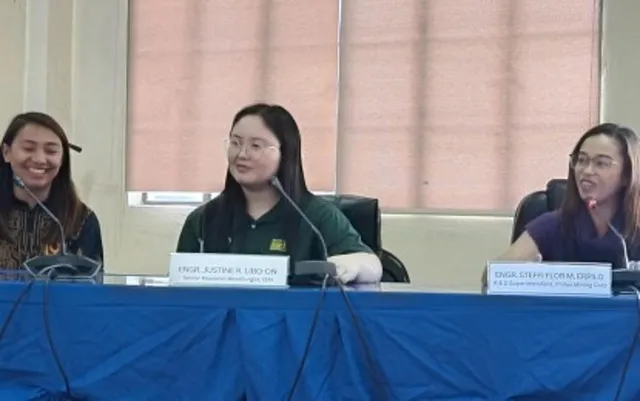
Three young female technical persons - a chemical engineer, a metallurgist and a mining engineer currently hold positions in mining companies classified as middle managers. 

Steffi Flor Erpilo, Research and Development supervisor of Philex Mining Corporation and a chemical engineer by profession, said in the same press conference: “Makikipagsabayan ka sa kanila kasi hindi mo tinitingnan na babae ka kapag nagta-trabaho ka kundi empleyado na kailangan makatapos ng obligasyon ng maayos (You will match up with them and will not look at yourself as a woman but as an employee who needs to perform and finish a task).” 

Justine Libo-on, Senior Metallurgist of the Itogon Suyoc Resources Incorporated (ISRI), also shared that in her job, she has to see to it that risks are minimized in performing their tasks of handling chemicals.

She said that being in the mining industry, she sees a sense of purpose in what she does.

Marywil Espinosa, a mining engineer at Lepanto Consolidated Mining Corporation, said with women being recognized for their talents and skills even in the male-dominated industry, she also dreams of further going up the career ladder.

March 24, 2025

Apex Mining Co., Inc.’s consolidated net income in 2024 amounted to P4.3 B, 28% higher than 2023’s P3.4B.

Meanwhile, the consolidated revenues in 2024 reached P=15.1 billion, P=3.1 billion more than 2023’s P=12.1 billion. The consolidated revenues are from Apex Mining’s Maco Mine and from the Sangilo Mine of Itogon-Suyoc Resources, Inc. (ISRI).

Luis R. Sarmiento, ASEAN Eng., President and CEO of Apex Mining, credits this solid performance to the resilience of the company’s workforce. “We were tested by the landslide that happened in February 2024. But despite being on limited operations for five months to help the landslide victims and their families and to support the province’s disaster management and rehabilitation, our team was able to catch up and meet our targets.”

Following the landslide, Apex Mining has assisted government authorities in restricting access to no build zones and has already completed a number of tenement-wide mitigation measures as part of its commitment to a safer work environment, both for its employees and its host communities. “We also continue with our long-term housing subsidy to our affected employees and select interventions spearheaded by our partner-organizations,” says Sarmiento.

The total production of Maco Mine in 2024 was 899,002 tonnes with an average grade of 3.61 grams per tonne (gpt) compared to 823,427 tonnes with an average grade of 4.11 grams per tonne (gpt) in 2023. The Sangilo mine achieved a total production of 148,021 tonnes with an average grade of 3.10 grams per tonne (gpt) in 2024, compared to 138,361 tonnes with an average grade of 3.32 gpt in 2023.

The record results were also due to the high metal price, an average of US$2,436 per ounce for gold, and the strength of the U.S. dollars, at an average of P57.45 to a dollar in 2024. The investments of the Company in mine rehabilitation and new equipment several years ago has paid-off and the Company is now able to produce more gold than ever before.

Based on the March 2025 notarized reports by Competent Persons, Apex Mining’s estimated ore reserve totals 9.90 million tonnes at a grade of 4.18 gpt for MPSA-225- 2005-XI (MPSA 225 is the company’s area of operation). This is a 72% increase over the 2021 resource report of 5.75 million tonnes. The findings of the latest technical report extend the mine life of Maco Mine by at least a decade at its current level of operation.

Meanwhile, Asia Alliance Mining Resources Corp. (AAMRC) is on track to begin the mining operations at the Amacan project soon, “positioning us for sustained growth and value creation.”

The initial pre-feasibility studies of Amacan indicate a strong potential for reviving its mining operations. AAMRC is also conducting comprehensive environmental baseline studies in preparation for obtaining the ECC. According to Sarmiento, the Free, Prior, and Informed Consent (FPIC) process has already started. “This is critical in ensuring the transparency of the process.”

Paracale Gold Limited (PGL), another subsidiary, has likewise authorized small-scale mining activities within EXPA-000236-V through a Minahang Bayan declaration, with the Mambulao Miner Mining & Quarrying Services (MMMQS) as proponent. With the approval of their Small-Scale Mining Contract and Environmental Compliance Certificate (ECC) in November 2024, MMMQS, with PGL’s assistance, has embarked on the conduct of mining activities.

In 2024, Apex Mining remitted P1.76 billion in taxes to the government. “Aside from our annual spending through the Social Development and Management Program, the taxes we pay also contribute to our commitment to nation-building,” explains Apex Mining Chief Finance Officer, Billy G. Torres.

In 2024, Apex Mining spent P101.3 million on its various community development programs that were co-managed or jointly implemented with the LGUs of its host communities in Davao de Oro.

March 24, 2025

Global Ferronickel Holdings, Inc. a leading nickel ore producer in the Philippines, reported revenues of ₱7.611 billion, net income attributable to shareholders of ₱743.9 million, and earnings per share of ₱0.1451 for the year 2024. Mining revenues were ₱7.592 billion, down 13.4% due to lower nickel ore prices partially offset by strong volumes. By mine site, Surigao revenues decreased 3.1% to ₱4.667 billion (61% of total revenues), and Palawan revenues decreased 25.9% to ₱2.925 billion (39% of total revenues). By geography, shipments to China made up 93% of revenues followed by Indonesia at 7%.

“While market conditions are beyond our control, we are laying a strong foundation for the future by funding growth and unlocking efficiencies,” said FNI President Dante R. Bravo. “In 2024, we sustained double-digit volume growth, reduced our average cash operating cost per volume sold, and reinvested back in the business. Looking ahead, we will build on these achievements as we continue to advance on our strategy to capture new revenue streams and deliver profit growth.”

The average realized nickel ore price declined to US$24.26 per wet metric ton (WMT), down 27.1% from US$33.28 in 2023. Low-grade ores sold for an average of US$19.58 per WMT, down 23.9%, while medium-grade ores were priced at US$33.06 per WMT, down 29.1%. Various factors affected market prices, including but not limited to: demand fluctuations in China and Indonesia, stainless steel and low-grade nickel pig iron production, supply chain disruptions from maintenance shutdowns of some steel mills, and the supply growth in Indonesia which outweighed production cuts and mine closures in the rest of the world.

Total volume shipped rose to 5.448 million WMT, up 15.5%, with growth in both Surigao and Palawan mine sites. This increase was fueled by investments to expand production and improve productivity. Sales of low-grade ores grew 18.1% and comprised 65% of total volume from 64% in 2023, while sales of medium-grade ores grew 11.0%, accounting for 35% of total volume from 36% a year ago.

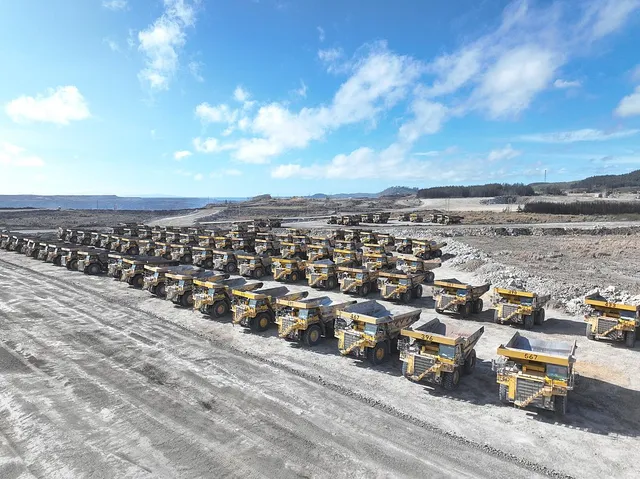
Surigao led the company’s volume growth with 3.991 million WMT, an increase of 21.1%, following the addition of more equipment, including chartered landing craft tanks (LCTs) and dump trucks, along with favorable weather conditions at the beginning of the year, which allowed ore extraction and stockpiling activities to be in place ahead of the mining season.

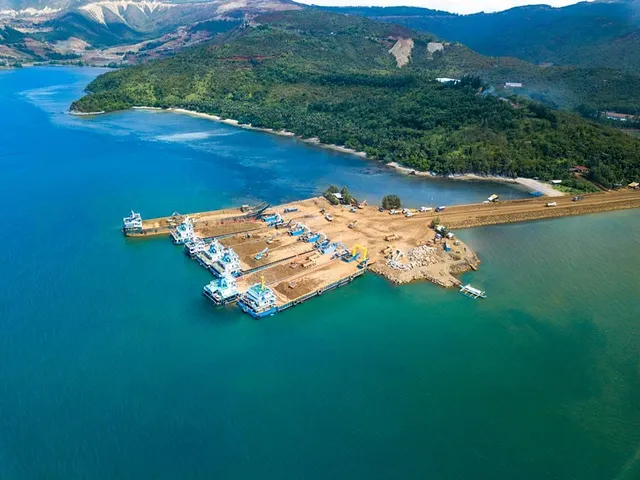
In Palawan, the volume shipped was 1.457 million WMT, up 2.6%, driven by favorable weather conditions, further development of infrastructure such as mine facilities and causeway, increased equipment availability, and beneficial impact from efficiency initiatives mostly in logistics and human resources.

Total costs and expenses were ₱6.658 billion, up 11.2%. Cost of sales was ₱4.070 billion, up 13.3%, reflecting higher costs for: (a) contract hiring needed to handle higher volumes and address a rise in effective rates due to sales mix and hauling distance, (b) labor in light of additional employees and changes in mandatory labor and social security costs, (c) depreciation, depletion, and amortization in relation to equipment acquisitions and higher sales volume, and (d) environmental protection for additional sedimentation ponds in Palawan. Meanwhile, operating expenses totaled ₱2.588 billion, up 8.0%, due mainly to legal costs, which were partially offset by lower marketing and entertainment expenses. Overall, with increased volume and improved efficiency, the average cash operating cost per volume sold dropped to ₱1,094.77 per WMT, a decrease of 4.8% over the prior year.
After accounting for non-controlling interests, net income attributable to FNI shareholders amounted to ₱743.9 million, down 51.8%. On a per-share basis, earnings were ₱0.1451 from ₱0.3021 the previous year.

Continuous investment into the business

The company’s capital expenditure reached ₱1,004.8 million, up 15.6% from ₱869.0 million in 2023, representing 13.2% of revenues. Investments in the Services segment accounted for 56.8% of the total, where three new LCTs were acquired for operational reliability and efficiency. The remainder consisted mostly of additional investments in the Mining segment such as machinery and equipment including excavators, dump trucks, and water trucks, transportation and handling, causeway and land improvements, and other equipment.

FNI also spent ₱26.5 million on mine exploration as part of the strategy to expand its nickel resource. This program is a continuing activity aimed at increasing the company’s resource and reserve inventory and extending the life of existing mines as well as maintaining accuracy in resource reporting and regulatory compliance. As a result, as of 15 October 2024, total measured and indicated mineral resources in Surigao were 99.2 million WMT with 53% in limonite and 47% in saprolite and an estimated average grade of 1.1% nickel and 30.5% iron. Additionally, proven and probable mineral reserves were 49.6 million WMT at 1.13 % nickel and 29.98 % iron. In Palawan, as of 31 December 2024, total measured and indicated mineral resources were 77.4 million WMT with 39% in limonite and 61% in saprolite and an estimated average grade of 1.2% nickel and 25.1% iron. The estimate of ore reserves is expected to be completed within March 2025.

Delivering meaningful programs for the environment and communities

Driving economic impact, FNI distributed the economic value it created to various stakeholders, supporting local businesses and working with more than 290 suppliers. A total of ₱5.6 billion was paid to suppliers for operating costs, ₱63.6 million was used for Social Development and Management Program (SDMP) and ₱280.7 million for Environmental Protection and Enhancement Program (EPEP). Meanwhile, the national and local governments received ₱1.330 billion in the form of income tax, royalties, excise tax on minerals, and other taxes and fees. Indigenous cultural communities were provided ₱75.4 million during the year.

Within SDMP, initiatives remained focused on strengthening local communities, particularly in education and health. Within EPEP, efforts to mitigate environmental impacts were the construction of additional settling ponds and flood control structures in Palawan, progressive rehabilitation and reforestation across mine sites with 63.6 hectares rehabilitated or 93.5% of target, and Adopt-a-River program in partnership with the Department of Environment and Natural Resources in Surigao.

In recognition of its contributions to environmental responsibility and local community engagement, FNI’s subsidiary Platinum Group Metals Corporation (PGMC) was conferred the Platinum Achievement Award–Surface Mining Operation Category at the 70th Annual Mine Safety and Environment Conference. PGMC was also recognized as 1st Runner-Up in the Best Mining Forest – Metallic Category. Established in 1997 by Executive Order No. 399, the Presidential Mineral Industry Environmental Awards are the highest distinction for mining companies in the country. Since 2014, PGMC has received numerous awards in key areas of sustainable development, including safety and health management, environmental stewardship, innovation, social and community engagement, and economic development.

2025 Outlook

FNI is committed to maintaining strong financial stability and operating performance. Through careful planning and execution, FNI expects to increase its revenues with a double-digit growth rate in 2025. The significantly higher production capacity in Palawan (from 1.5 million WMT to 3 million WMT) combined with the increase in productivity in Surigao and improved contribution from port operations in Bataan will be the main drivers of the expected top-line growth. In response to input cost inflation, the company is intensifying its efficiency program through increased production volumes, process and cost optimization, and innovation to firm up profitability.

Aided by funds from operations, capital investments planned for the year amount to ₱711.8 million. Strategic priorities include the development of existing mines and expansion of resources, with ongoing exploration permit applications in North Luzon, Eastern Samar, Camarines, and additional areas in Surigao. It also covers further investments in warehouse and container terminal in Bataan as well as pursuing value-added nickel processing, primarily ferronickel and battery-grade nickel facilities.

March 24, 2025

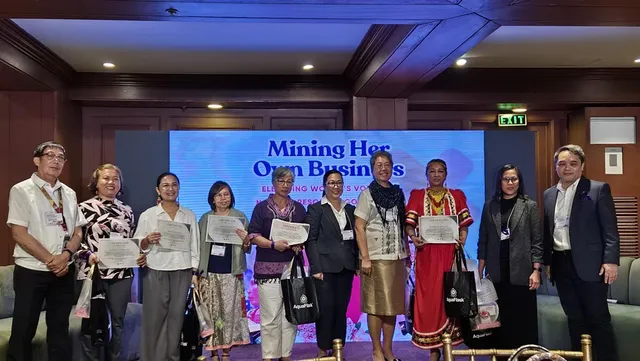
The Philippine Extractive Industries Transparency Initiative (Ph-EITI) in collaboration with the Chamber of Mines of the Philippines and Mines and Geosciences Bureau through the MGB GAD Focal Point System organized a significant forum on March 18, 2025, at the Penthouse Ballroom, Lepanto Building in Makati City, with the theme "Mining Her Own Business: Elevating Women’s Voices in Natural Resource Governance." By highlighting the vital role that women play in the extractive sectors, the event sought to advance gender inclusion and equitable resource management as crucial elements of the governance of natural resources. As part of the celebrations for Women's Month, this initiative highlights the growing acknowledgement of women's contributions to fields that have historically been dominated by males.

The event started by the welcome remarks delivered by Maricor Anne D.G. Cauton, Director of Finance and Administration for the Union of Local Authorities of the Philippines, set an empowering tone for the conference focused on women's roles in the extractives industry. Her address underscored the importance of inclusivity and collaboration among stakeholders in addressing gender disparities within this sector. As she welcomed participants, Cauton highlighted that empowering women is not merely a matter of equity but also essential for sustainable development in mining and related industries.

Following her remarks, Albert A. San Diego, Deputy Coordinator for Communications, Research, and Data Management and Reporting and Concurrent Chief Technical Officer of the PH-EITI, presented an overview of the program, acknowledging key participants and setting expectations for fruitful discussions throughout the sessions. This framework laid a solid foundation for Session No. 1 entitled “Empowering Women in Extractives: Strengthening Voices, Breaking Barriers, and Driving Change.” Moderated by Ms. Beverly “Bon” Besmanos, National Coordinator of Bantay Kita, this session aimed to illuminate critical issues surrounding women’s involvement in mining.

The session featured impactful presentations from various speakers, including Jennifer Pia Sibug-Las, Chairperson of National Commission on Indigenous People, who addressed Indigenous rights within mining contexts. Annie G. Dee shared her journey with Teresa Marble Corporation while Djoan Kate Tungpalan,PhD, Associate Dean for Student Affairs of the College of Engineering of University of the Philippines Diliman, provided insights into challenges faced by students pursuing mining engineering degrees. Additionally, Jeanira Godio-Okubo, Member of the PILIPINA, Inc. Baguio-Benguet Chapter, articulated Indigenous women’s perspectives on their rights concerning mining activities.

The reactors Miriam Buergo, GAD Consultant (Affiliated with the Philippine Commission on Women) and Aracell Bayubay-Mercado, Chairperson of the Save Sierra Madre Network Alliance, Inc. and Board of Trustee, ECOWASTE Coalition Gender Equality and Social Inclusion Consultant and National Gender Resource Pool of the Philippine Commission on Women Association for Development of Teaching, Education and Learning, enriched discussions by providing valuable insights into gender equality initiatives within these frameworks. Their contributions emphasized that collaborative efforts are crucial to fostering an environment where both women’s voices and Indigenous rights are recognized and respected within the mining industry.

The second session of the event, titled “Harnessing Gender-Sensitive Data to Drive Inclusive Extractive Governance,” served as a critical platform for discussing the intersection of gender and mining. Moderated by Atty. Maria Karla L. Espinosa, Director IV at the Department of Finance, this session brought together various experts who underscored the importance of utilizing gender-sensitive data in the extractive industry. The discussions highlighted that inclusive governance is not only a matter of equity but also essential for sustainable development within mining sectors.

Dir. Jeanette T. Damo, Executive Director of the Institute of Labor Studies, Department of Labor and Employment, emphasized that understanding the unique challenges and contributions of women in both large and small-scale mining operations can lead to more effective policies and practices that support gender equity in the industry. She presented the research of the Institute of Labor Studies on women’s roles in both large-scale and small-scale mining operations. Her findings revealed that women often face systemic barriers in accessing opportunities within these sectors, thereby emphasizing the need for targeted policies that promote their participation and advancement.

This was complemented by National Coordinator of the PH-EITI Ms. Mary Ann D. Rodolfo’s insights into the initiatives led by Ph-EITI on data gathering related to women in mining, illustrating how comprehensive data can inform better governance practices.

Atty. Joan D. Adaci-Cattiling, President and General Manager for External Affairs and Social Performance, OceanaGold Philippines, Inc., shared compelling success stories from Oceanagold Philippines, Inc., demonstrating how empowering women can lead to enhanced social performance and community engagement in mining operations. Furthermore, Diory G. Carr, Development Management Officer III and GAD Focal Person of the Mines and Geosciences Bureau discussed efforts by the Mines and Geosciences Bureau (MGB) to establish a unified database focused on gender-sensitive data collection through its Gender and Development (GAD) framework.

The session concluded with thoughtful reflections from regional director of MGB Region VI Regional Director Cecilia Ochavo-Saycon, and Prof. Maria Aurora Teresita Tabada, Head of the Gender Resource Center, Visayas State University and Board of Trustees Member of Bantay Kita – Publish What You Pay, Inc. who emphasized comprehensive policy frameworks that support women’s participation in extractive industries as vital for achieving inclusive governance objectives.

Atty. Odette Javier, the Vice President and Assistant Corporate Secretary, Lepanto Consolidated Mining Co., provided a synthesis of these discussions while Atty. Ronald Rex Recidoro, Executive Director of the Chamber of Mines of the Philippines delivered closing remarks that reinforced the commitment towards integrating gender considerations into extractive governance strategies.

This collaborative approach not only amplified women’s voices but also sought to dismantle barriers that have historically restricted their participation in these sectors. The event provided a platform for sharing best practices and strategies aimed at enhancing women’s roles in decision-making processes related to natural resources.

In conclusion, the forum represents a pivotal step towards integrating gender perspectives into natural resource governance. By elevating women’s voices and fostering collaborative dialogues among stakeholders, such initiatives can significantly contribute to more equitable resource management frameworks. Ultimately, embracing gender inclusivity will not only empower women but also enhance overall sustainability within the extractive industries.

March 24, 2025

The Mines and Geosciences Bureau (MGB), through its Gender and Development Focal Points System, recognizes and supports the Planetgold Philippines Project, which has made significant strides towards gender equality in the artisanal and small-scale gold mining (ASGM) sector, particularly through its recent initiatives. The project published a comprehensive gender study aimed at increasing women's visibility, access to resources, and support within the ASGM sector. Additionally, it is producing a children's storybook to raise awareness about the realities faced by women miners in communities like Sagada and Paracale. These efforts are the result of close collaboration with local women miners, who have actively contributed to shaping these publications.

In celebration of these achievements, Planetgold Philippines co-hosted a panel discussion and media forum entitled "Mina Minera: Celebrating Women in ASGM and the Informal Economy" at Novotel Manila Araneta Hotel, Quezon City last March 7, 2025. This event aligned with International Women’s Month activities organized by the United Nations (UN), focusing on "Women and the Economy," one of the key priorities outlined in the Beijing Platform for Action. The forum featured prominent voices from various sectors including government agencies such as the Philippine Commission on Women and academic institutions like UP Center for Women and Gender Studies.

The objectives of this event were multifaceted: to amplify women's voices in the ASGM sector from Sagada and Paracale; to raise awareness about their challenges in both ASGM and informal economies; and to officially launch Planetgold's gender study alongside its children’s storybook. Attendees included women miners along with representatives from relevant government offices and media personnel.

The event commenced with an inspiring message of support from Diory Carr, the Focal Person for Gender and Development at the Mines and Geosciences Bureau (MGB). This was followed by Elizabeth Ngo, Project Officer at the Artisanal Gold Council (AGC), who introduced the forum's objectives, setting a collaborative tone for discussions centered around artisanal mining practices. Meanwhile, Abigail Ocate, the National Project Manager of AGC, provided a comprehensive overview of ongoing projects aimed at promoting sustainable mining practices that benefit local communities and enhance gender equity in the sector.

Next, Meggy Katigbak, AGC's National Gender and Investment Specialist, delivered a presentation on the Gender Study conducted in the Philippines. This was succeeded by a panel discussion featuring distinguished representatives such as Mines and Geosciences Bureau Cordillera Administrative Region Gender and Development Focal Person Sheila May V. Sanqui, PhD, Hon. Bernadette Asutilla from Paracale's municipal government and Dr. Sarah Marie Pante-Aviado from the Provincial Government of Camarines Norte among others. Their insights emphasized the importance of inclusive policies that empower women miners within their communities.

The event culminated in the launch of a children's book entitled "Mina Minera," which included an interactive storytelling session led by professional storytellers. The distribution of storybooks was accompanied by recitations from women miners performing spoken word poetry about their experiences and challenges in mining. This creative endeavor not only highlighted women's roles in artisanal mining but also fostered community engagement through art and literature

In conclusion, initiatives like those undertaken by Planetgold Philippines exemplify critical progress toward gender equality within traditionally male-dominated industries. By fostering dialogue among stakeholders while highlighting women's experiences through targeted publications and events like "Mina Minera," there is potential not only for increased recognition but also for systemic change that advances women's rights within both local communities and national frameworks.

Mina Minera is part of the three parallel sessions of the Unite for All Women event by the United Nations Industrial Development Organization (UNIDO), in partnership with the Artisanal Gold Council, Ban Toxics, and Clean Air Asia, to highlight women’s pivotal contributions to environmental sustainability and economic development.

These projects funded by the Global Environment Facility (GEF) showcase women's leadership in diverse industry sectors including the artisanal small-scale gold mining, healthcare and mercury waste management, and transport and electric mobility systems. Central to the event are the crucial contributions of women in promoting inclusive practices and developing solutions that positively impact both the economy and the environment.

Drawing from diverse industries, UNIDO’s event served as a platform to celebrate women’s contributions and achievements, share experiences, and identify actionable solutions to systemic challenges, all of which are essential for promoting inclusive and sustainable industrialization and directly support the 2030 Agenda for Sustainable Development.

March 18, 2025

By Thea Samantha C. Go, EM

Paramina Earth Technologies, Inc. is a proudly all-Filipino mining and civil construction contractor that has been making significant strides both domestically and internationally.

With over 29 years of experience, Paramina has pioneered surface and underground contract mining in the Philippines, later expanding into tunneling, ground stabilization, and slope stabilization for civil and mining construction projects.

Today, the company is recognized not only for its contributions to the Philippine mining industry but also for its impactful work on global infrastructure projects.

A Legacy of Excellence

Paramina's journey began with its groundbreaking work in the Philippines, where it has partnered with major underground mines, quarries, and civil construction companies in the country. One of its notable mining projects include the mine development of an epithermal gold project in Davao de Oro.

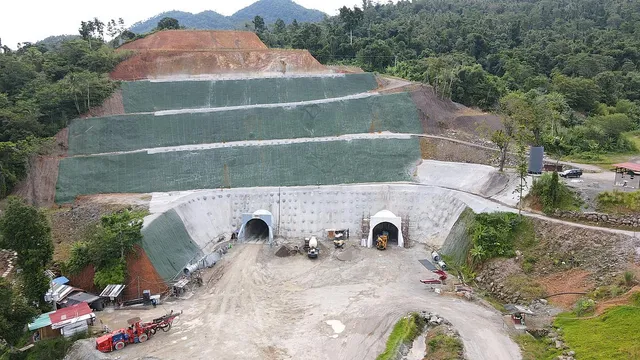
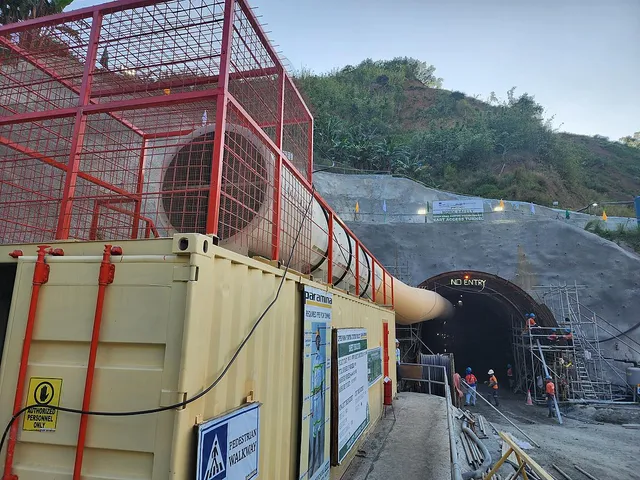
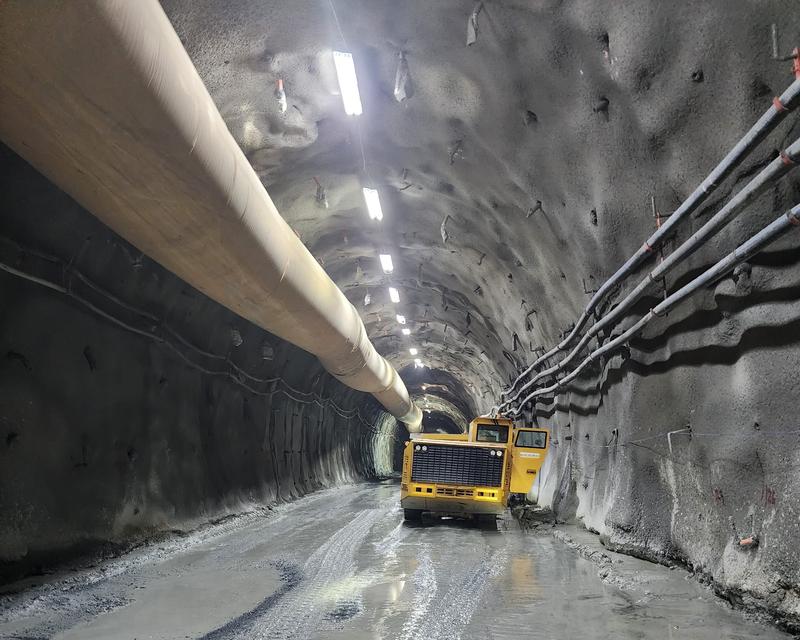
This project showcased Paramina's expertise in delivering efficient and sustainable mining solutions. Moreover, the recently completed Main Access tunnel measuring 7.4m x 8 m x 1.011km of the Upper Wawa Pumping Station project is a testament to Paramina’s expertise in the tunneling business.

Beyond the Philippines, Paramina has also made its mark internationally. The company played key roles in starting new underground gold mines in Papua New Guinea, Vietnam, Mongolia, Fiji, and Burkina Faso in West Africa.
 

Additionally, Paramina has been providing mine technical services to Teknomin Construction Limited, a major contractor for Hindustan Zinc Limited, one of the world's largest producers of zinc.

Paramina's global portfolio-also includes its contribution to the construction of the Hong Kong Chek Lap Kok Airport, as the drill and blast subcontractor.

Paramina's success is a testament to the talent and dedication of Filipino Mining Engineers, Geologists, Civil, Mechanical, and Electrical professionals. The company's ability to adapt to diverse environments and challenges has made it a trusted partner for both domestic and overseas clients.

Whether it's optimizing mining operations or constructing specialized major infrastructure, Paramina's expertise ensures that projects are completed efficiently, safely, and to the highest standards.

Driving Innovation with GEOVIA and the 3DEXPERIENCE Platform

In addition to its contracting services, Paramina is a leading distributor of GEOVIA products, including Surpac, a powerful software solution for mining and geological modeling.

Surpac is widely recognized for its ability to streamline resource estimation, mine design, and planning processes. But the innovation doesn’t stop there; Surpac is now integrated with the 3DEXPERIENCE platform, a collaborative environment that connects individuals, data, and solutions in real-time.

The 3DEXPERIENCE platform enhances Surpac’s capabilities by enabling seamless data integration, improved collaboration, and streamlined workflows. This integration allows mining companies to optimize their operations, make informed decisions, and achieve greater efficiency.

By combining GEOVIA’s advanced tools with the 3DEXPERIENCE platform, Paramina empowers its clients to tackle the challenges of modern mining and construction with confidence.

Paramina’s expertise in GEOVIA products has earned it a strong reputation among top mining companies, quarries, government sectors, and academic institutions in the country. The company provides technical support and advancements in mine planning and design, helping clients achieve their goals with cutting-edge solutions.

Paramina’s journey is a testament to the potential of Filipino expertise and innovation. As the company continues to grow and take on new challenges, it remains committed to delivering exceptional value to its clients and contributing to sustainable development.


To learn more about Paramina’s services, GEOVIA products, and the 3DEXPERIENCE platform, visit www.paramina.com. Whether you’re looking for cutting-edge mining solutions or a reliable partner for your next infrastructure project, Paramina is here to help. Contact us today to discover how we can support your goals.
March 18, 2025

The Philippine Nickel Industry Association (PNIA), the country’s largest group of nickel mining companies, has voiced strong concerns regarding the renewed suggestion to impose an ore export ban as part of the mining fiscal regime reforms, highlighting that such a policy may not address the real challenges faced by the industry in developing value-added processing (VAP) in the Philippines.

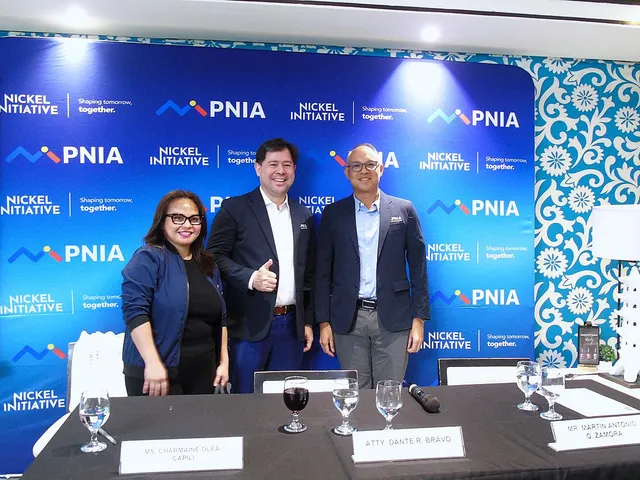
“We support the aspirations of the government for a more developed nickel industry; however, it is our position that an export ban is not a timely policy at the moment,” said Atty. Dante R. Bravo, PNIA president, urging that the focus be on creating the right environment to attract the right investments and enable VAP development.

Atty. Bravo, along with his colleagues at PNIA, expressed their insights during a PNIA Media Roundtable discussion last Feb. 11 at Romulo Café in Quezon City.

He further said, “A proposal like the ore export ban is appealing, however if implemented at this time, it overlooks the regulatory and business challenges that make value-added processing in the Philippines difficult to implement.”

The proposal aims to encourage VAP by banning the export of raw nickel ores, but the difficulties in establishing and sustaining VAP facilities in the Philippines have to be addressed.

“Without holistic government support, addressing inconsistent policies, and regulatory burdens, forcing value-added processing will lead to mine closures and job losses,” said Atty. Bravo. “The government needs to create a more conducive business environment before pushing for policies that might disrupt the industry’s progress.”

Also present in the discussion is Mr. Martin Antonio G. Zamora, PNIA Board Director. and Ms. Charmaine Olea-Capili, Executive Director of PNIA.

Mr. Zamora, PNIA Board Director and President of Nickel Asia Corporation, said, "Whether the ban is imposed in 5 to 10 years, we believe it should not be there at all. There are so many things that the country needs to do to promote value-added processing (VAP) -- we have to work on the fundamentals first such as east of doing business.”

“One part of that is streamlining the policies between national and local governments.”

“We are disagreeing [to the ban] but we are not disagreeable. PNIA fully supports the ambition of the government to promote VAP, but we sincerely believe that implementing the ban will not push forward the goal,” he said.

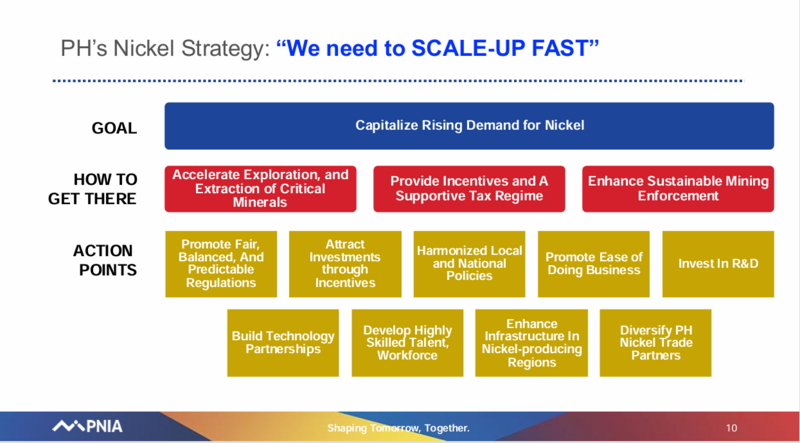
During the media event, PNIA’s presentation report "Driving Growth: PNIA’s 2025 Industry Outlook for the Philippine Nickel Sector" clarified how the ore export ban issue will affect the nickel industry. Here are some key points:

1. PNIA urges reconsideration of ore export ban, stressing that the Philippines must first create a competitive environment to attract investments in value-added processing (VAP) before implementing restrictive policies.

2. Implementing a ban on ore exports will further add to uncertainty from potential investors, along with ease of doing business, long permitting processes, and harmonization of national and local policies.

3. Calls for swift action to seize global nickel opportunities, highlighting that the country risks falling behind as competitors like Indonesia, Brazil, and Australia ramp up production and attract foreign investments.

4. Warns of geopolitical and market risks, cautioning that an export ban could drive buyers to alternative suppliers and undermine the Philippines' competitiveness amid evolving trade policies and shifting demand for nickel.

The Need to Scale Up Quickly to Capture Opportunities from Nickel

Years ago, before Indonesia started implementing an ore export ban, they first prepared a conducive investment climate for value-added processing.

PNIA pointed out that Indonesia has several advantages that the Philippines lacks, including policy implementation, infrastructure, and strong government support. More importantly, the ore ban was only implemented after the country had secured a substantial number of investors committed to its mining industry growth.

“Indonesia has been able to attract foreign investments, build infrastructure, and offer very attractive fiscal incentives that have allowed it to quickly scale up processing capacity driven by strong government support,” said Atty. Bravo.

“From our experience, the Philippines lacks the same environment for investors, for instance, it takes over ten (10) years just to approve mining permits, which could force investors to look for a more attractive regulatory environment in other countries where they can get attractive return on investments.”

“Value-added processing requires more than just government support and building facilities; first and foremost, we need to conduct a strategic and in-depth mapping of resources to identify quality of nickel and quantity of nickel as not all ore is good for value-added processing. Additionally, we have to begin upskilling our mining engineers to prepare them for processing activities. Without addressing these key issues, imposing an ore export ban at this time would slow progress and risk industry failure.”


Geopolitical and Market Shifts

 The complexity of the proposed ore export ban is compounded by evolving geopolitical dynamics and persistent trade tensions.

“The growing uncertainty in global trade, particularly regarding potential trade tariffs, places the competitiveness of Philippine nickel exports at risk,” said Atty. Bravo. “It’s important that we maintain the competitiveness of the industry, particularly as geopolitical factors continue to evolve.”

This highlights the need for a carefully considered approach to ensure the future of the mining sector.

He also mentioned that in comparison to countries like New Caledonia, Brazil, and Australia, these countries are increasing their nickel production, presenting additional competitive challenges. “If the Philippines were to implement an ore export ban, countries like China may turn to other nickel suppliers,” Atty. Bravo explained. “As these markets grow more competitive, we could lose valuable buyers and miss out on key export opportunities.”

Atty. Bravo also emphasized that the timing of the ore export ban should be carefully reconsidered, particularly as global nickel demand continues to evolve rapidly.

“With rapid development in battery technologies, shifts in China’s stainless steel production, and other changes in the global supply chain, now is not the right moment for an ore export ban,” he said. “This policy may undermine our competitiveness and fail to adequately account for the fast-moving dynamics of supply and demand. Instead of imposing restrictions prematurely, the focus should be on strengthening the country’s investment climate to ensure the long- term sustainability of the sector.”

Industry Outlook for 2025

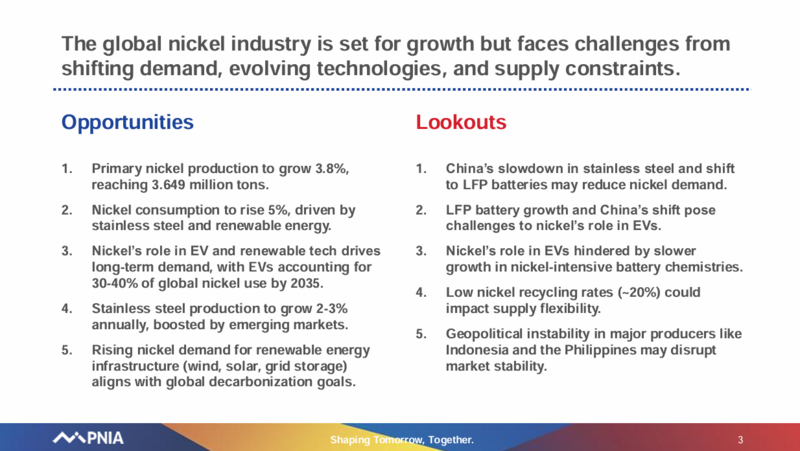
In 2025, the global nickel market is anticipated to be dynamic. According to PNIA Market Analysts, global nickel production is projected to increase by 3.8%. However, consumption is projected to grow at a faster rate of 5%, reaching 3.514 million tons, largely fueled by demand from the stainless steel and renewable energy sectors.

 “While global demand remains strong, the oversupply from Indonesia and shifts in technology will continue to put downward pressure on prices,” said Atty. Bravo.

Nickel prices, recently hitting a four-year low, are forecast to average $16,750 per ton in 2025, with potential spikes to $20,000 early in the year. “Price fluctuations due to oversupply from Indonesia and changing demand patterns, such as the growing preference for lower-nickel batteries, will impact market stability,” said Bravo.

Despite the challenges, the Philippines remains a key player in the global nickel supply. The Department of Trade and Industry reports foreign investments in the mining and quarrying industry at PHP 79.19 billion between July 2022 and December 2024, with key investments from China, Australia, and Japan.

PNIA continues to work with government partners to help the mining sector grow sustainably. Atty. Bravo concluded, “We must work with the government to create policies that encourage investment in both mining and value-added processing, ensuring that the benefits of the nickel industry are fully realized for all stakeholders.”


ABOUT PNIA

The Philippine Nickel Industry Association, Inc. (PNIA) is a non-stock, non-profit association registered with the Securities and Exchange Commission. Established in  2012, PNIA serves as the unified voice of the nickel industry, advocating for its role as a globally competitive and responsible driver of inclusive and sustainable economic growth in the Philippines. Through its Nickel Initiative, PNIA promotes collaboration with the government and various stakeholders to enhance the competitiveness of the nickel industry, anchored in responsible mining and sustainable development.

March 09, 2025

Senate President Francis Escudero on Thursday said the announced joint venture between Nickel Asia Corporation and DMCI Mining Corporation to develop a nickel processing plant in the Philippines is a “monumental stride” in enhancing the country’s mineral value chain.

In a statement, Escudero said the initiative is a significant step in advancing the local mineral processing industry, creating jobs, and strengthening the country’s position as a global player in the sector.

“This partnership is a monumental stride in our journey to add greater value to our mineral resources,” he said.

“Not only does this align perfectly with our vision of reducing raw mineral exports, but it also paves the way for economic growth and job generation for our people,” he added.

The announcement follows last month’s Senate approval of Senate Bill No. 2826, or the Enhanced Fiscal Regime for Large-Scale Metallic Mining bill, which prohibits the export of locally extracted raw minerals five years after its enactment.

Escudero, who introduced key amendments to the bill, said the legislation aims to reshape the regulatory framework of the mining industry and ensure more value is added to locally sourced minerals.

He expressed optimism that the Nickel Asia-DMCI Mining partnership would align with the bill’s objectives, highlighting the industry’s willingness to invest in local mineral processing.

“Initiatives like this will empower us to harness our natural resources responsibly and sustainably while unlocking immense potential for the Filipino people and local economy,” he said.

The two companies signed on March 4 a memorandum of understanding to explore the feasibility of developing a nickel processing plant in the Philippines, aiming to leverage Nickel Asia's expertise in nickel processing and exploration alongside DMCI Mining’s construction and engineering strengths.

Both agreed on selecting the plant’s technology, site location, and securing a stable nickel ore supply through joint exploration over the next two to three years, pending permit approvals.

They also plan to discuss the equity structure for a potential joint entity to develop and operate the facility.

See Our Latest Issue