By Marcelle P. Villegas
Pop culture, movies, novels, literature, comic books and even video games often catch our attention and sometimes become our momentary bliss as we try to escape the real world... to find entertainment or to relax our minds. These modes in media are quite influential in ways that most of us are unaware of. For young minds or lay people who have no background in the field of Geology or Mining Engineering, their perception of the mining might be influenced by movies and books.
Is this helpful in promoting proper information? Is it somehow injecting a negative impression towards mining where lay people believe what is fiction rather than true science?
In the film industry, mining is a popular topic in science fiction movies. In the Star Wars movie trilogy, prequels and sequels (in films and novels), it seems evident that storylines show the importance of mining. There are many parts of Star Wars films or books where pro-mining sentiments are projected.
Without mining in the Star Wars universe, there are no lightsabers, laser blasters, Star Destroyers, Imperial Fleets or Death Stars. For example, the lightsaber (a fictional and signature weapons of the Jedi Order and Sith Lords) are dependent on kyber crystals (a fictional precious gemstone) for its source of power. In the story, young Jedi apprentices are sent to the Crystal Caves of an ice planet to mine crystals. From there, they can build their own lightsaber. [1]
Darth Vader’s success as a leader is marked by the completion of two Death Stars. Mining of minerals made the creation of these battle stations possible.
Moreover, In the 2016 film, “Rogue One: A Star Wars Story”, an ancient Jedi Temple (Temple of the Whills) was looted by the Imperials for their kyber crystals which were used for the first Death Star that they were building.
Story plots of Star Wars films and novels often show the life of miners and how communities are affected by mining. For example, back in 1977, a Star Wars novel was published titled “Splinter of the Mind's Eye” by Alan Dean Foster. In this novel, Luke Skywalker and Princess Leia were stranded in a swamp-like planet. In order to escape from the Imperials, they concealed their identity by pretending to be miners. The story somehow reflected the life in a planetary mine site.
The 1992 novel “Star Wars: Dark Force Rising” by Timothy Zahn also had chapters were mining and its effect on a planet were discussed.
Mine sites also made its mark in significant scenes in Star Wars films. In “Star Wars: Episode III - Revenge of the Sith” in 2005, two fictional mine sites were mentioned.
At the mine site of Planet Utapau, Jedi Knight Obi-wan Kenobi had a fierce duel with the strange cyborg leader of the Separatist Army, General Grievous. With all the noise, sarcastic lines and blinking lights in the scene, perhaps it is hard to notice that the background resembles an open pit mine. Utapau is a planet with many sinkholes wherein alien cities are found and mining is their main occupation. This is also the hideout of the Separatist Army.
Later in the film, we are taken into another mine site. Do you remember how Anakin became Darth Vader? He had a fatal duel with his teacher, Obi-wan while they were at the Mustafarian mining complex in Planet Mustafar. This mining complex is an ore-collection complex in a volcanic planet. The mining facility was also used as a secret hideout of a battle droid factory.
Although Star Wars films and novels seem to project a pro-mining picture, these two fictional mine sites in SW Ep III have a negative connotation. First, mine sites are used as secret hideouts of criminals and their illegal activities like manufacturing weapons and aggressive use of military technology. Second, mine sites are dangerous. A young hero can be badly injured and end up being the villainous Darth Vader.
Aside from Star Wars in 1977, there was also Battlestar Galactica in 1978 by Glen A. Larson.
The movie had a TV series in 1980 and 2009, plus a miniseries in 2003. Mining was rarely mentioned in the film or TV series but the Galactica star fleet does have a Mining Ship designed to gather ores and water from asteroids. Mining became more prominent in Battlestar Galactica on its online gameplay. Therefore the concept of asteroid mining is depicted where mining titanium and water are needed to upgrade spaceships and provide fuel.
If “Star Wars” and “Battlestar Galactica” present pro-mining messages, do you think films like “Avatar” and “Man of Steel” are doing the opposite?
In 2009, James Cameron’s “Avatar” brought us into the world of Pandora, a habitable moon in the Alpha Centauri star system, which is inhabited by a local tribe of Na’vi (blue-skinned humanoid species of Pandora).
The humans inhabited Pandora primarily for the mining of a rare mineral called Unobtanium, a fictional superconductor element not found on Earth. This mineral is needed to save Earth from an energy crisis. Eventually the mining colony expanded and it threatened the existence of the local tribe. The movie presented how mining affects the lives of indigenous people and the environment. Is the problem here mining or is it greed and misuse of technology?
In the 2013 film “Man of Steel” (by David Goyer and Christopher Nolan) anti-mining sentiments were not presented directly. However, there was a scene when a holographic recording of Jor-el (Superman’s father), explained how Planet Krypton exploded. He said, “We exhausted our natural resources. As a result, our planet's core became unstable.
Eventually, our military leader, General Zod, attempted a coup, but by then it was too late.” [2]
Jor-el did not directly say that mining destroyed Planet Krypton, but the concept of “exhausting natural resources” and “planet’s core became unstable” could be hints of irresponsible mining. That part is left for audiences to think about.
Looking at classic literature novels, mining and the life of miners were the main topics in Jules Verne’s “The Underground City” (1877) and “The Call of the Wild” (1903) by Jack London.
The French sci-fi writer, Jules Verne wrote “Les Indes noires” (The Black Indies) which had English titles like “The Child of the Cavern”, or “Strange Doings Underground”. Other English titles for the novel were “Black Diamonds” and “The Underground City”. The novel is about coal miners in the mining community of Aberfoyle near Stirling, Scotland back in the 1800s. The mysterious setting showed how mining can bring a community together or perhaps how it can bring danger to some in an underground mine site.
“The Call of the Wild” is an adventure novel by Jack London that tells a story of a dog named Buck. The story took place in 1890 in Yukon, Canada during the height of the Klondike Gold Rush. In those times, strong and reliable sled dogs were in high demand due to their ability to survive the harsh winter climate. Buck was stolen from his home in Santa Clara Valley and sold as a sled dog in Alaska.
The book is not science fiction but is a fictional novel based on real-life events about gold mining. It tells us about the historic Klondike Gold Rush in 1896 - 1899. Gold was discovered there by local miners on 16 August 1896. When news reached Seattle and San Francisco the following year, around 100,000 prospectors migrated to Klondike region of Yukon (north-western Canada). Some became wealthy while others failed. The Klondike Gold Rush became a part of popular culture at that time.
In summary, no matter how mining is presented by pop culture or media, it brings awareness on how mining plays a vital role in nation-building through infrastructure. Mining also determines the success or failure of a nation at war. The portrayal of miners, engineers and scientists in films or novels gives its audience or readers an awareness of the difficulties of working in a mine site.
The Star Wars Universe for example may be science fiction, but the concept behind mining for minerals, industrialisation, political conflicts, economic issues and wars are reflective of real life struggles.
For professionals in the mining industry, the challenge is to help young people and lay people find the balance between facts and fiction. Let us help them understand the scientific facts versus science fiction with regards to mining.
Was there a good movie or book that inspired you towards a career in mining or infrastructure? Can you think of a good movie or novel where mining was a center of the plot or narrative?
Reference:
[1] https://starwars.fandom.com/wiki/Kyber_crystal
Other reference - https://www.starwars.com/
[2] https://www.quotes.net/movies/man_of_steel_132084
* “The Call of the Wild” by Jake London, book cover by Paul Bransom and Charles Bull (1890)
(Photo courtesy of Mr Jason Magdaong, OceanaGold Phils. Inc. - “Didipio Mine: The Renewal of the Philippines’ First FTAA”)
According to OceanaGold Corporation (Melbourne), the Philippines Court of Appeals in Manila had set last 18 September 2019 as the hearing date for the company's application for a Writ of Preliminary Injunction. This is part of the company's appeal against the Nueva Vizcaya Provincial Court ruling of denying OceanaGold Phils. Inc.’s (OGPI) request to end the unlawful restraint of operations.
The Provincial Local Government Units of Nueva Vizcaya (PLGU) has been impeding access to the mine site since 1 July 2019. This is in response to an unlawful directive from the Governor to 'restrain any operations of the company. OGPI points out that the regulatory authority over the Didipio Mine rests with the National Government. They also clarified that the Local Government Code of 1991 (Republic Act No. 7160) does not grant the power of authority to the Provincial Governor or any local government officer to restrain any aspect of the Didipio operation. [1]
OGPI continues to work with the National Government to finalise the renewal of their Financial or Technical Assistance Agreement (FTAA) and remains open to the opportunity to engage with the Provincial government and work together in the best interest of the local stakeholders. The Company remains strongly committed to operating in accordance with the law and will always comply with its responsibility under its contract with the Philippine Government. [1]
Mr Mick Wilkes, President and CEO of OceanaGold said, "The Company has successfully developed and operated the Didipio Mine in the Philippines with a focus on delivering socio-economic benefits to local communities utilising international best practices and gaining a strong social license to operate. OceanaGold has established sound and collaborative relationships with regulatory authorities and stakeholders based on mutual respect."
"While this process is taking some time, we will always operate in line with our values and commitment to responsible mining, and this means working transparently with the Philippine regulatory authorities to maximise the speed of the renewal. We are encouraged by the engagement with the government to date as we continue to work towards a mutually-acceptable path forward on the FTAA renewal."
"I would like to recognise our world-class Philippine workforce of 1,500 workers who have remained focused on safety and preserving optionality at site during this uncertain time. We are proud to have positively contributed to the Barangay of Didipio, Province of Nueva Vizcaya and Quirino and neighbouring communities since 2012." [1]
The Didipio Mine of OceanaGold Phils. is an underground gold and copper mine located across the provinces of Quirino and Nueva Vizcaya. The mine operation has received numerous awards such as two Presidential Awards for being the most environmentally and socially responsible mining operations in the Philippines. Overseas, the company was awarded the 1st ASEAN Mineral Award for best practices in sustainable development.
OceanaGold's Didipio mine site (Philippines) is considered one of the safest gold mining operations in the world because for the past two years, the company has deployed state-of-the-art automated and digital underground mining technology.
For the past years, OGPI’s Didipio project has been providing significant socio-economic assistance to the province of Nueva Vizcaya and Quirino. Other than providing jobs to 1,500 workers (97% are Filipinos, 59% are from local communities) the company also provides several thousands of additional livelihood opportunities and indirect jobs through partnerships with cooperatives and social development organisations.
As an international company, OceanaGold Corporation is a mid-tier, high-margin, multinational gold producer with assets located in the Philippines, New Zealand and the United States. The Company's assets encompass the Didipio Gold-Copper Mine located on the island of Luzon in the Philippines. In New Zealand, OceanaGold Corporation operates the high-grade Waihi Gold Mine, the Frasers mine, and the largest gold mine in the country at the Macraes Goldfield. [1]
In the United States, the Company operates the Haile Gold Mine in South Carolina. The Haile Gold Mine is a top-tier, long-life, high-margin asset. OceanaGold Corporation also has a significant pipeline of organic growth and exploration opportunities in the Americas and Asia-Pacific regions.
From their media release, the Company states, “OceanaGold has operated sustainably since 1990 with a proven track-record for environmental management and community and social engagement. The Company has a strong social license to operate and works with its valued stakeholders to identify and invest in social programs that are designed to build capacity and not dependency.” [1]
“In 2019, the Company expects to produce between 500,000 to 550,000 ounces of gold and 14,000 to 15,000 tonnes of copper at All-In Sustaining Costs ranging between $850 and $900 per ounce sold.” [1]
#DidipioMine #OceanaGoldPH #ResponsibleMining #Philippines
[1] OceanaGold Corporation Media Release - 13 Sept. 2019, retrieved from - https://www.oceanagold.com/investor-centre/news-releases/
Photos: Courtesy of OceanaGold (Phils.) Inc. - Retrieved from - https://www.oceanagold.com/downloads/images/
By Marcelle Villegas
The Didipio Mine of OceanaGold Philippines Inc. (OGPI) is a gold and copper mine located across the provinces of Quirino and Nueva Vizcaya. It is considered one of the safest gold mining operations in the world.
OGPI received numerous awards such as two Presidential Awards as the most environmentally and socially responsible mining operations in the Philippines. On the international scene, the company was awarded the 1st ASEAN Mineral Award for best practices in sustainable development.
OGPI’s Didipio mine site is considered one of the safest gold mining operations in the world, because for the past two years, the company has deployed state-of-the-art automated and digital underground mining technology. The Didipio Mine also implements International Organization for Standardization (ISO) certified environmental management system (ISO14001:2015), Occupational Health and Safety Management System (OHSAS 18001:2007) and Energy Management System (ISO50001:2011).
It is notable that OGPI has delivered significant socio-economic benefits to the Barangays of Didipio, neighboring communities, the province of Nueva Vizcaya and Quirino. It directly employs 1,500 workers where approximately 97% are Filipinos, with 59% hailing from local communities. The company also provides several thousands of additional livelihood opportunities and indirect jobs through partnerships with cooperatives and social development organisations.
“OceanaGold has given us our three basic needs: School, Roads and Electricity,” Pastor Efren H. Bulawan, Resident and Local Didipio Leader. [1]
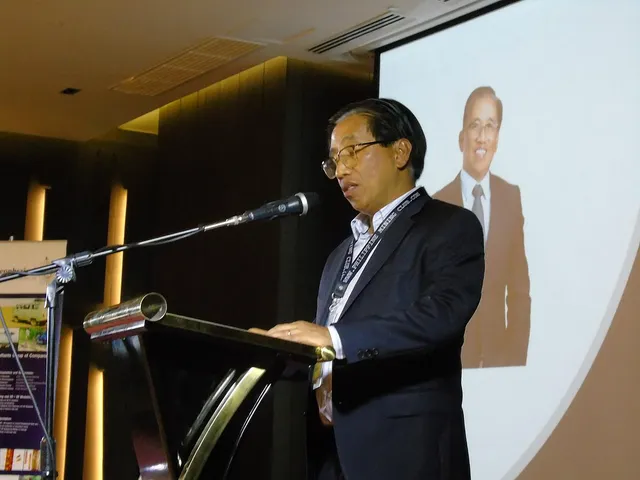
During the September Monthly Membership Meeting of the Philippine Mining and Exploration Association (PMEA), Mr Jason Magdaong, Environmental/MEPEO & Compliance Manager of OceanaGold Philippines, Inc. was a guest speaker. His presentation was titled “Didipio Mine: The Renewal of the Philippines’ First FTAA”. [2]
From his report, he stated that OGPI generated over 3000 jobs as part of its economic contribution to the country. In the development of their host communities, they have the following accomplishments:
a total of 119kms of road improved and developed
201 scholars graduated since 2007, 11 mining engineers produced
trained and produced 114 local residents as globally competitive underground mine workers
established a community-owned corporation that offers a multitude of services of OGPI
financially and technically supporting 13 agricultural cooperatives and establishing local and regional markets
FTAA Renewal Process and Challenges
On March 2018, OGPI submitted its applications for its Financial or Technical Assistance Agreement (FTAA) renewal with the Philippine Government. The company is currently working with the National Government to complete the renewal.
As of 20 June 2019, Mines and Geosciences Bureau (MGB) issued a letter authorising the Didipio Mine to continue its operations while the confirmation of the FTAA renewal by the Government is pending. By 25 June 2019, the Provincial Local Government Unit of Nueva Vizcaya (PLGU NV) ordered the Provincial Environment and Natural Resources Office (PENARO), Philippine National Police (PNP), Municipal Local Government Unit of Kasibu (MLGU) and Barangay Local Government Unit of Didipio (BLGU) to restrain any operations of the company after 20 June 2019.
Then, on 1 July 2019, BLGU Didipio started blockade and hindered access to and from the mine site in response to the PLGU NV Order. By 25 July 2019, the Regional Trial Court (RTC) of Nueva Vizcaya denied the Writ of Preliminary Injunction prayed by OGPI to enjoin the enforcement of the Order pending the determination of the case with the local court. On 29 July 2019, OGPI appealed the decision by the RTC to deny the Injunction of the Court of Appeals
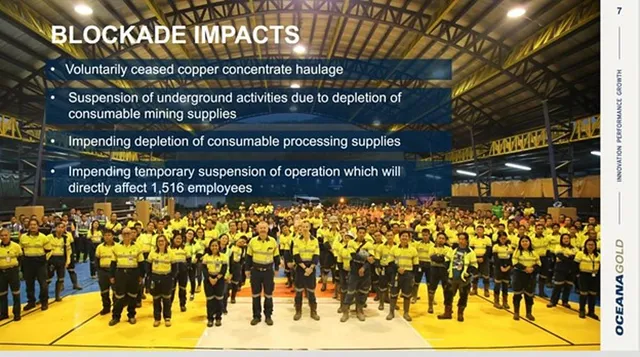
This blockade has the following impact on the Didipio mine operation:
voluntary ceased copper concentrate haulage
suspension of underground activities due to depletion of consumable mining supplies
impending depletion of consumable processing supplies
impending temporary suspension of operation which will directly affect 1,516 employees
The blockade also affects the community through the suspension of the PHP300M+ worth Social Development Management Program and Corporate Social Responsibility Projects of 11 beneficiary barangays with 15,000+ residents, namely:
273 Barangay Health Workers, Security/Utility, Teachers and SDMP Staffs being subsidised
193 scholars currently being supported
3,000+ members/employees of cooperatives being assisted
Additionally, major community development projects are on hold, namely:
Nueva Vizcaya and Quirino Road network
Didipio water system
Kasibu Sanitary Landfill
Didipio Gymnasium
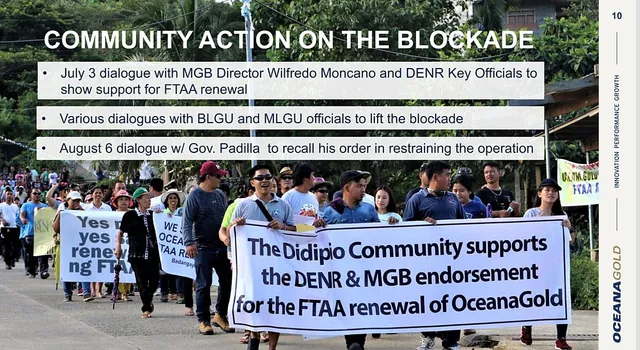
In response to the blockade, the community resorted to the following action:
July 3 dialogue with MGB Director Wilfredo Moncano and DENR Key Officials to show support for FTAA renewal
Various dialogues with BLGU and MLGU
August 6 dialogue with Governor Padilla to recall his order in restraining the operation
In summary, OGPI is actively working with the national government in finalising the renewal to ensure another 25 years of operation. The company is also involved in continuous efforts to try and engage with the Provincial Government, continuous community support for the renewal, and continuous legal process on the Governor’s restraint order. OGPI stated that they remains focused on the safety of workers and the environment.
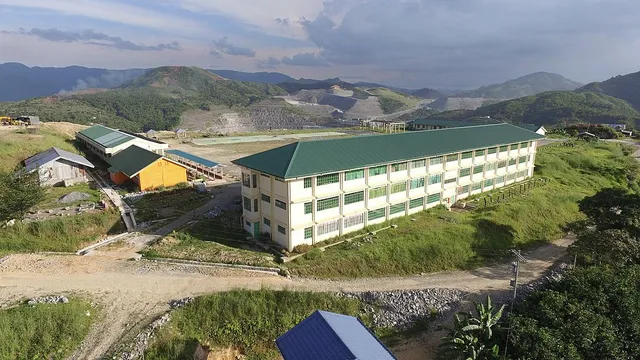
When the Didipio Operation started in 2013, it became a catalyst for an enormous economic transformation and development. OGPI’s major initiative was to contribute to the local economy through the construction of a PhP43-million senior high school building at Eastern Nueva Vizcaya National High School. [1]
OceanaGold Philippines Inc. is a proud member of the UN Global Compact, which means absolute transparency in their commitment to the universal sustainability principles of human rights, labour, the environment and anti-corruption. This commitment is front and center of their corporate governance and at the heart of OGPI’s Didipio operations, because sustainability means earning the right to remain a valuable part of the community for many years to come. [1]
[1] Retrieved from OceanaGold Philippines Inc. Facebook page
[2] Magdaong, Jason. (3 September 2019). “Didipio Mine: The Renewal of the Philippines’ First FTAA”. Presentation during the Monthly Membership Meeting of the Philipping Mining and Exploration Association (Manila Elks Club, Makati City)
About 270-kilometers north of Metro Manila lies the mineral rich barangay of Didipio in Kasibu, Nueva Vizcaya. It is home to some 4,000 people and the Didipio gold-copper mine.
OceanaGold is working with the Philippine government through the country’s first Financial or Technical Assistance Agreement (FTAA)--an agreement that allows the large-scale exploration, development and utilization of gold, copper, nickel, and other metallic minerals in the Philippines.
The mine started its commercial production in 2013 and has since paved the way for a massive economic transformation, which connected the barangay to information, education, jobs, and markets.
“We felt the hardship before OceanaGold came to Didipio. There were no roads, our agricultural products were not able to reach the market. OceanaGold has given us our three basic needs: school, roads, and electricity. The business opportunities boomed and work opportunities increased when the Company started operating,” says Pastor Efren H. Bulawan, resident and one of the local leaders of Didipio.
Single dirt track and fire roads that were once only passable to pedestrians and motorcycles were turned to paved boulevards that facilitated movement of cars, goods, and people; suddenly, there was electricity and better cellular signal; suddenly, people from neighboring communities turned to Didipio for economic opportunities.
Growing opportunities from the land
The barangay’s pivot to mining did not stop OceanaGold from pouring support to community agriculture--after all, the barangay has been producing mountain vegetables and some palay. It is also home to some citrus farms, which have been reporting lower yields because of the citrus tristeza virus.
In 2015, Dr. Pio Javier, an entomologist from the University of the Philippines conducted an onsite investigation and validated the findings. His research included a forum to share methods for preventing further spread of the pest and disease infestation and production and post-harvest techniques.
The company's collaboration with the Department of Agriculture and the local government units paved the way for the empowerment of close to a hundred local Kasibu farmers on coffee production and some 30 farmers for organic vegetable production.
“In Didipio, there are vegetable farms situated very close to our operating mine. We know that they have excellent produce because we buy some of it through the community’s three local agricultural cooperatives. We have interventions in the production and marketing aspects to ensure that our local partners would have a solid capital and operational foundation,” said David Way, General Manager of OceanaGold Philippines Inc.
OceanaGold, recognizing that agriculture is a main economic activity, also supports ten other local agriculture cooperatives in ten communities adjacent to the mine.
Jobs, jobs, jobs
About 97% of OceanaGold’s employees are Filipinos, with more than half of the workforce coming from Nueva Vizcaya and Quirino. In the mine’s first six years of operation, the company disbursed some PhP 2.5-billion in salaries.
To date, OceanaGold directly employs more than 1,500 people and provides additional employment opportunities for thousands more through cooperatives, suppliers and subsidized workers.
The mine requires a steady stream of mining specialists and technical experts. To safeguard this talent pipeline, OceanaGold runs training and scholarship programs which include the Development of Mining Technology and Geosciences program.
Every year, they allot scholarship slots and provide Php 170,000 in tuition fees and allowances to individual students who want to take up Mine Engineering, Geology, Metallurgical Engineering, Materials Engineering, Civil Engineering, as well as Bachelor of Science in Forestry, and Bachelor of Science in Agriculture.
Engineering, geology, and metallurgy are professions that were not in the horizon of most Didipio residents before the mine came in. The continuous investment on capacity building of both employees and community members elevated their dreams, and tremendously increased their employability and likeliness to start their own businesses.
“We are seven in the family. When I was about to enter college, I knew my parents were worried as I had two other siblings who were in college. So, I worked in DiCorp for a time to earn money for my college education. It was there I saw that OceanaGold offered scholarships, so I applied, got in, and now I’m a mining engineer and working for the Company,” says Wilbur Habiling, resident and scholarship program graduate.
The need to provide for the basic needs of many workers--feeding them three times a day, seven days a week--necessitated auxiliary units, one of which is the Didipio Community Development Corporation (DiCorp).
DiCorp is owned and managed by the town’s residents, with 361 local shareholders and 279 local workers. It offers a multitude of services such as housekeeping, catering, camp administration, transport services and construction services. OceanaGold has awarded several contracts to DiCorp from 2011-2018 with total gross revenue amounting to PHP 1.5B (USD 28M). The growing enterprise is now worth PHP 85.5 million and has extended their services beyond the mine.
“DiCorp. is a perfect example of what local community enterprises can achieve if plugged in to value chains,” says David Way, General Manager of OceanaGold Philippines Inc. He adds, “DiCorp has come a long way and I am proud that it remains to be one of the largest taxpayers in Nueva Vizcaya.”
Technology and Infrastructure
No other private firm has contributed to the infrastructure growth of Didipio as OceanaGold – from roads to health centers, to school buildings and community centers.
In 2017 it made the dreams of local students and educators a reality through the construction of a PhP 43-million senior high school building at Eastern Nueva Vizcaya National High School.
The company has provided essential healthcare for students, improvement of school buildings, and construction of day care centers in the past. The high school building, however, is one of the biggest single investments made locally for education, and this was in view of the K-12 implementation, which some high schools in Metro Manila found hard to comply with.
OceanaGold directly supports infrastructure, training and education, health and enterprise development programs not only of Didipio but of ten other communities adjacent to the mine with combined population of about 15,000 residents.
A final anecdote from a resident
“I wasn’t able to take up high-school in Didipio because there was no high school then. Instead, I went to the municipality of Bayombong, which is about five hours away--very far from my family. I’m proud to say that I’m one of the graduates of the OceanaGold scholarship program. There are about 246 of us and I belong to those who took up courses like mining and geology.
For the past years, I worked as a mining engineer in the Didipio mine. I learned about the environment and how responsible OceanaGold is and I’m proud that we are where we are right now. OceanaGold offered a lot of opportunities to my community and to adjacent barangays. “The Company’s operation has been a blessing to us,” concludes Echievery Baguilat, Didipio’s first local mining engineer.
OceanaGold’s mine life is expected to last until 2032, by which time Didipio could reach or even surpass its full economic and social potential as a barangay in the midst of a lush greenery that characterizes most of Nueva Vizcaya and Quirino, with all the necessities for a comfortable life.
On 14 June 2019, The Philippine Mining Club celebrated their 50th Luncheon Anniversary. Their special guest speaker for this luncheon was Mr Eulalio B. Austin, Jr. who is the President and CEO of Philex Mining Corporation. His presentation’s title is "The Future: Padcal and Silangan". With the many hurdles and challenges that the industry is facing today, what can we learn from a 60-year-old mining project like Padcal?
Mr Austin started his discussion with the World Happiness Report 2019 by the United Nations Sustainable Development Solutions Network. It states that the Philippines ranked 69th out of the 156 nations in the World Happiness Index. The Philippines also ranked as the 12th among the countries that showed the highest increase in level of happiness between the periods of 2005-2008 and 2016-2018.
Then, he showed a clipping from a newspaper article dated February 2008 with the statement -- "a Golden Age in Philippine Mining was coming" due to upcoming investments from the world's biggest mining and metals leaders. Generally, things look bright and promising for the Philippines. In the mining sector, we have the Philippine Mining Act of 1995 (RA 7942) which was declared valid and constitutional by the Supreme Court in 2005.
This Republic Act is "An Act Instituting A New System of Mineral Resources Exploration, Development, Utilization and Conservation".
However, he stated that by 2012, Executive Order 79 presented challenges for the industry all the way to 2016. He mentioned that the industry "has been highly injured because it was misunderstood". Mr Austin further noted that perhaps the boom years of mining were in the 1950s when gold and copper became the pillars of large-scale mining. That decade also ushered the introduction of new technologies in mining.
From his report, he expressed that Philex Mining Corporation has been reaching milestones for decades. Their Padcal Mine just turned 60 years old in 2018. "Turning 60 is the age of senior citizenship and the age of retirement or retiring. The once-hectic pace of life is replaced with a 'delicious sense of calm, confidence and clarity of purpose'. Our Padcal Mine is settling into that delicious sense of calm."
For the record, a total of 10 million trees were planted at Philex Padcal and other mining properties in more than 4,000 hectares of disturbed and undisturbed areas. Additionally, even before DENR mandated ISO 14001 certification in 2015, Philex Padcal Mine already secured IMS Certification (ISO 14001:2004, OHSAS 18001:2007) by TUV Rheinland. Philex has also taken the initiatives and introduced to the Chamber of Mines of the Philippines the "Towards Sustainable Mining" (TSM) commitment to promote responsible mining in cooperation with the Mining Association of Canada.
"Initial Padcal mine life was originally up to 2014... All in all, while interim prospects remain subdued, we are determined to maximize the remaining mine life of Padcal." Now, the projected end-of-mine life of Padcal is 2022. "The closure of Padcal will be an opportunity for us to showcase that closing mines can be done properly with dignity."
How did Philex Mining Corporation handle the TSF3 incident in 2012? It was on 1 August 2012 when Philex Mining suspended operations voluntarily as nontoxic tails and water discharge from the TSF3 spilled onto the Balog Creek. This was an effect of the destructive heavy rains brought about by Tropical Depression Ferdie (a.k.a. Typhoon Vicente) and Typhoon Gener which hit Benguet successively. The company resumed production only on 8 March 2013 due to the four-month temporary lifting order issued by the government which was extended indefinitely afterwards. Thus, the operations formally resumed on 27 August 2013. [1]
Philex Mining Corporation was allowed to resume operations after they implemented urgent remediation measures such as providing immediate assistance to the affected residents, cleaning up the Balog Creek, and ensuring the integrity of its TSF3 by building an open spillway. [1]
Regarding the hard lessons learned from the 2012 TSF3 incident, Mr Austin stated that they faced the challenge and "never ran away from our obligations". The first public consultation of its kind was conducted to address the problem. The company paid the government PHP1.34 billion for the tailings leak. This is the highest payment ever done by a single company. The spillway that the company constructed at the TSF3 is the first of its kind in tailings management in the Philippines.
Mr Austin recalled, "It was a humbling experience for us but we have to prove that we are advocates of right and principled mining."
His presentation also include the Silangan Project which is expected to generate 8,000 direct and indirect employment, raise PHP60 billion in investments, contribute PHP31 billion in taxes and will spend PHP6 billion for community development. "The project will proceed with underground sub-level cave mining method. Regulatory developments between 2016 - 2017 necessitated shift to underground mining from open-pit method. Sub-level caving presents itself to be a better method rather than block caving. Well-engineered solutions are now incorporated in our recent studies. Silangan Mindanao Mining is currently working on securing all necessary permits and approvals."
To conclude his presentation, he left the audience with an optimistic message. "We have the opportunity to make Silangan and all other pending mining projects to make it big for the Philippines in the global market. We have the opportunity to make this the Golden Age of Mining now. Believe that best to come for the mining industry."
Update on Silangan Project
Last 1 August 2019, Philex Mining Corporation reported that the definitive feasibility study for the first phase of the Silangan Project is finally complete.
The mine site is a development for high-grade copper and gold and is located at Surigao del Norte in Mindanao. Silangan is coined as one of the three major mining projects expected to push the Philippines as a regional copper producer.
The mine site is composed of three tenements, namely: Boyongan, Bayugo and Kalayaan.
On the first stage of the development of the Silangan Project, the Boyongan deposit is estimated to have a mine life of 22 years. Silangan is expected to produce high grade ores with 0.63% copper and 1.20 grams per tonne of gold. [2] Bayugo deposit is part of the second phase of the development and this is still under initial feasibility study for underground sub-level cave mining within the year.
Philex Mining Corporation will be adopting underground sub-level cave mining for ore extraction. They shall be using state-of-the-art milling facility that uses modern convention technologies for ore processing.
Mr Austin stated, "We are thrilled with the outcome of the study which reaffirms the immense potential and magnitude of the project. Over the next few months, we will be focusing our efforts on raising equity and financing for mine development."
Philex Mining Corporation will allocate USD750 million for the Boyongan ore body development. For fund-raising, Philex has appointed J.P. Morgan for equity investment and Mizuho for project financing. The international law firm White & Case and local law firm Sycip Salazar Hernandez & Gatmaitan will be the legal consultants for this development project. [2]
References:
[1] Philex Mining Corporation website. Retrieved from - http://www.philexmining.com.ph/2017/07/29/mine-firm-assures-integrity-of-storage-facility/
[2] Ison, Lilybeth. (1 Aug. 2019). "Philex completes feasibility study on Silangan project". Philippine News Agency. Retrieved from - https://www.pna.gov.ph/articles/1076750
Since April 2011, the Philippine Mining Club has been a professional networking forum that brings industries together and creating opportunities. The club was established to form better relationships across all areas of the Philippine mining industry. Moreover, the Philippine Mining Club is affiliated with the globally-recognised Melbourne Mining Club.
Their goal is "to uphold a professional networking environment in order to promote the mineral industry for those with an interest in the sector."
In celebration of the club's milestone 50th luncheon event, Philippine Resources Journal has this exclusive interview with Mr Kevin Lewis and Mr Alexander Gilles, two important people behind the Philipine Mining Club.
Creating a mining club in the Philippines that was patterned after the Melbourne Mining Club had its share of challenges and rewards. As a platform for communication among the industry's experts, executives, investors, government officials, media and students, the Philippine Mining Club has an interesting story behind its origin.
Mr Kevin Lewis, General Manager of Philippine Mining Club, hails from Australia and has been living in the Philippines for almost 20 years now. In 2009, Mr Lewis and a partner decided to start a new venture called "World Resources Events and Consultancy Inc." which catered as a consultancy to the resources services industry with business development planning. [1]
Due to many requests from people in the industry, the event side started with the concept of "Philippine Mining Club" which has brought to the lunchtime networking circuit many of the Philippine and international industry leaders as guest speakers, all under the banner of responsible mining. [1]
PRJ: When you first established the Philippine Mining Club, what was your goal or motivation for the events? Could you share with us how it all started?
Mr Lewis: "The motivation was, at that time... I personally was at a loose end with my career at that time. It was also because my previous job included being part of a service area to mining and oil and gas. I identified the mining industry and oil and gas sectors as the ideal customers because they really didn't mince their words. They knew what they wanted. They knew when they wanted it, and they would tell you that. And most of all, the best thing was when it came to being paid, they always paid you. So I identified them as a group of people that we could always rely on as being good, A-class customers."
"Because I've been dealing with the miners and mining groups and the oil and gas for so long, the relationship developed from being client to friends. And when they found out that I was leaving my previous job, they asked me what I was going to do next. At that time, I said I'm not too sure. Then, some of them asked me to see if I wanted to start a club for them -- a mining club."
"And one of those gentlemen was Gavan Collery from Indophil at that time and he was a founding director of the Melbourne Mining Club. When he heard the others saying that they want a 'mining club', he said, 'Well the Melbourne Mining Club could use the Philippines as an affiliate.' So then we developed our relationship with the Melbourne Mining Club. We were lucky because, of course, Melbourne Mining Club is globally recognised and is the largest mining club globally, so we're quite privileged to be part of that."
"So my motivation was the people that developed from clients to friends and with the support of the Melbourne Mining Club."
PRJ: During the early days of the Philippine Mining Club, what were some of the challenges or difficulties that you and your team have encountered?
Mr Lewis: "Some of the difficulties was doing it in the Philippines. At first, the Filipino people really did not understand what it was. They thought a club involved membership fees and all of those things that you would normally associate with a club. However, like the Melbourne Mining Club, the word 'club' is used loosely. It means that becoming a member simply meant that you want to be listed our mailing list. There are no fees to be a member. It is totally free. That was one challenge."
PRJ: Tell us about your first ever mining luncheon event.
Mr Lewis: "For our first mining luncheon ever on 8th of April 2011, we had Fernando Moya who was the Country Manager of Vale Exploration Philippines at that time. He was our first speaker and we had a full house! I think we had 180 to 200 people at the venue. We did have quite a few months lead after that particular event."
"Once that event was finished, we had several companies come up to us who said that they wanted to be our marketing partners and sponsors. Therefore, we started there. We had a little bit more money in the bank to keep developing it and to develop our website. The Mining Club has never made a profit, so it is the support from the industry and the sponsors that make it happen. Without them, we have a short fall because we have students and CSR programs to support. We couldn't support the idea of the club without the help of the sponsors."
PRJ: Could you mention some memorable moments or notable guest from the past luncheon events?
Mr Lewis: "Yes, I can say we've had some speakers who really gripped the audience. One in particular was a gentleman called Mitch Hooke who was at the time the Chairman of the Minerals Council of Australia. He came all the way from Melbourne to speak and he had a clear cut view on the mining industry as it is in Australia. As you might know, Australia is one of the leading mining countries in the world. The mining industry in Australia is pretty much black and white. It is pretty clear."
"When he was introduced to the challenges that we face in the Philippines, he could not believe some of the hurdles facing the industry. So he actually opened up and said his mind about some of these hurdles and how he would have dealt with them. While he was talking, you could have heard a pin drop! The audience was mesmerized by his words."
"I consider all of our speakers notable. Some of the others were Gerry Brimo from Nickel Asia Corporation. He gave his initial rebuttal to Gina Lopez that was prior to Lopez being the DENR Secretary, so that was quite a few years before that. That was an interesting talk."
"Mick Wilkes has always been a good talker from OceanaGold, with the Didipio Project being their blue ribbon mine in there. He is always very happy to be here in the Philippines and he talked about how much he loves the Philippines. But he also talked about how much he thinks the Philippines misses out due to some of the regulations and some of the attitudes toward mining."
"Another one is Mr Walter Brown who has spoken twice here. He is a good man and an intelligent man. Walter doesn't mince his words either. He is very clear cut on how he thinks things should be."
Finally, Mr Lewis shares his special message about Philippine Mining Club and its media partner, Philippine Resources Journal.
"I believe that literally the Philippines is sitting on a gold mine. I also believe that eventually they are going to discover that again. I said 'again' because it has in the past, but there will be a rebirth of the industry. For those people who continually support the Philippine Mining Club, they all know something is going to happen. The ones that will win are the people that believe that things will change in the Philippines and stick with it. Now, with respect to the Philipine Mining Club, I think the more people, the merrier. The more friendships they make, the more business I will be doing in the future."
"We have always supported Philippine Resources Journal since the beginning. I think the journal has been on as long as Philippine Mining Club has been going... The magazine, Philippine Resources Journal, has been able to sustain itself during this period -- very tough time. And it is still the magazine of choice and it is still here."
On our next edition, part 2 of the Philippine Mining Club 50th Luncheon Anniversary series, we shall feature stock market expert, Mr Alexander Gilles.
[1] Retrieved from Philippine Mining Club website - http://www.philippineminingclub.com/
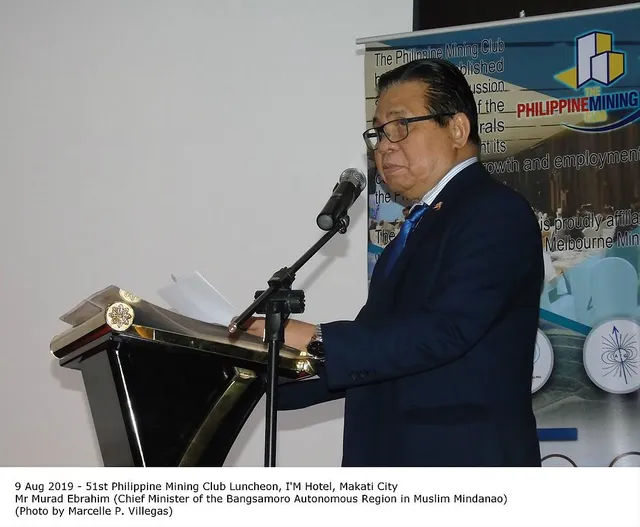
Bangsamoro Interim Chief Minister Murad Ebrahim encouraged mining companies to consider investing in mining operations in the Bangsamoro Autonomous Region in Muslim Mindanao (BARMM).
Speaking at a luncheon in Makati organized by the Philippine Mining Club on Friday, August 9, Murad also emphasized that the Bangsamoro government will only approve mining operations that respect the people and the ecological integrity of the new southern region.
"I invite you to explore opportunities on mining to bolster the economic development of the Bangsamoro," he told mining executives and leaders of mining groups.
"I hope that we do this with the lens of the 4 bottomlines that I have outlined. Profit, yes, but please include also the people, the planet, and the purpose for all this which is change for the good," Murad continued.
Also in the audience were European Union Ambassador Franz Jessen, New Zealand Ambassador David Strachan, and Australian Ambassador Steve Robinson – envoys of countries with mining interests in the Philippines.
The Bangsamoro Transition Authority (BTA), the interim government of the Bangsamoro, is honoring mining contracts entered into by the now-defunct Autonomous Region in Muslim Mindanao (ARMM), said Murad.
Mining audit, mining code
The Bangsamoro Organic Law gives the BTA the power to grant mining permits for operations in the region.
But before it exercises this power, the Bangsamoro government would first conduct an audit of mining operations in the region to ensure compliance to environmental regulations and other laws.
The audit is to be led by BARMM Minister of Environment Abdulraof Macacua.
"In order for the administration to measure the impact of mining industry in the lives of our people, the BARMM Minister of Environment and Natural Resources constituted the mining performance audit team that will look into the compliance of these mining companies to their commitments, both in environmental and social contributions," said Murad.
He told the mining executives that the mining audit shouldn't be seen as an effort to "find holes" in the mining industry but to "provide an avenue for a better, pro-environment, pro-people and responsible mining in the BARMM."
Murad called the mining code the "responsible mining law."
"This mining code shall address robust development, not at the expense of the environment," said the Chief Minister.
Murad expects the audit results to be in by August and to be set for discussion by the Bangsamoro Parliament in September.
The audit results would be among the considerations in crafting a Bangsamoro mining code, also to be led by Macacua.
Macacua had been Murad's military chief, leading the Moro Islamic Liberation Front's Bangsamoro Islamic Armed Forces (BIAF). He is also known by the name Sammy Gambar.
Source: https://www.rappler.com/nation/237422-murad-encourages-pro-people-environment-mining-bangsamoro
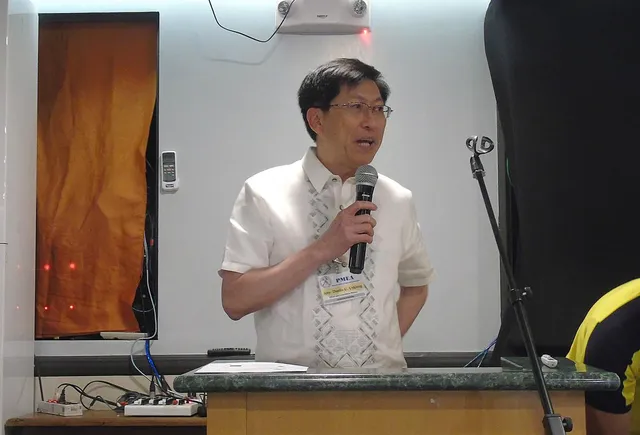
1 April 2019 - Philippine Mining and Exploration Association, for their Monthly Membership Meeting at Manila Elks Club, Makati City, presented the “Mining Updates and Open Forum Discussion on Proposed Revisions of Existing Mining Laws”.
The topic was discussed and reported by Atty. Danilo U. Uykieng, Acting Assistant Director of Mines and Geosciences Bureau (MGB). The meeting started with a review of recent policies that were signed in 2017 onwards. Here is a rundown of policies and its development, plus a summary of events that transpired and affected the Philippine mining operations.
A Review of Recent Policies
Oct. 9, 2017 - Memorandum was issued by MGB Director providing "streamlined" checklists of requirements of various mining applications.
May 25, 2018 - MGB Memorandum Circular No. 2018-01 was issued in re: Guidelines in the Conduct of Apprehension, Seizure, Confiscation and Disposition of Illegally Sourced Minerals/Mineral Products and By-Products, Tools, Conveyances and Equipment Used.
June 18, 2018 - Issued DENR Memorandum Circular No. 2018-05 in re: Non-Coverage of Small-Scale Mining Projects from the Department Memorandum Order No. 2016-01.
July 3, 2018 - DENR Administrative Order No. 2018-13 in re: Lifting of the Moratorium on the Acceptance, Processing and/or Approval of Applications for Exploration Permit Under Department Memorandum Order No. 2016-01.
July 3, 2018 - Issued MGB Memorandum Circular No. 2018-02 in re: Guidance for Compliance Monitoring and Rating/Scorecard of Mining Permits/Contracts.
July 17, 2018 - DENR Administrative Order No. 2018-20 in re: Providing for a New Guidelines in the Evaluation and Approval of the Three-Year Development/Utilization Work Program
Aug. 17, 2018 - Issued DENR Administrative Order No. 2018-19 in re: Guidelines for Additional Environmental Measures for Operating Surface Metallic Mines
March 2019 Policy Issuance
1) MGB Memorandum Circular re: Clarification Guidelines on Industrial Sand and Gravel Permit
~ Providing for clarification on the coverage of ISAGP i.e. permit area
2) MGB Memorandum Circular re: Supplemental Guidelines to MGB MC 2018-01 Otherwise known as Guidelines in the Apprehension, Seizure, Confiscation and Disposition of Illegally Sourced Minerals/Mineral Products and By-Products, Tools, Conveyances and Equipment Used
~ Additional provisions for conveyance, release, posting of bond, establishment of confiscation panel
3) MGB Memorandum Order re: Guidelines for Care and Maintenance Programs for Mining Projects
~ Provides for the mandatory submission of a CMP
~ Assures fund allocation
~ Provides for penalties for certain violations
4) DENR Administrative Order re: Guidelines on the Disposition of Residual Stockpiles Sourced from Small-Scale Mining Operations Previously Covered by Valid Mining Permits Issued Pursuant to PD 1899 and Temporary Small-Scale Mining Contracts under DAO 2012-07.
~ Provides clear guidelines on the disposition procedures and timelines
- - -
Recent Inter-Agency Coordination
Joint Memorandum Circular: Guidelines on the Issuance of Clearance and/or Permit for Dredging within Waterways or other Inland Body or Water.
~ Provides for a standard and uniform procedures in the approval of dredging/mining permit
Policy Directions:
Guiding Principle - Ours is a Responsible Mining that is:
1) People-Oriented as it provides decent jobs and benefit host communities
Upcoming Policy Issuances:
~ Expediting the approval of Minahang Bayan and processing of SSM Contracts
~ Ensuring timely release of the share of LGUs
~ Ensure increasing LGUs' share and granting them direct access similar to existing arrangements with the PEZA
2) It Protects and Enhances the Environment
~ Strict monitoring of the shipments of ores/minerals
~ Strict implementation of Water Code and NWRB policies on the use of water in mining operations
~ Strict enforcing ban on black sand mining in coastal areas
3) Equipped with Strong Monitoring and Enforcement System
~ Strengthening of the Environmental National Task Force to stop illegal mining and environmental violations
~ Use of modern technology in monitoring mine operations
~ Blacklisting of irresponsible mining companies with major violations
~ Cleansing of non-moving mining rights holders and review of existing mineral agreement for renegotiation of the terms and conditions
~ Strengthening of the Multipartite Monitoring Team (MMT)
~ Imposing one-strike policy to DENR officials for inability to monitor and take immediate actions on major violations
4) It Contributes and Promotes fair share to the National Income
~ Amend EO 79 - lifting the moratorium on the grant of Mineral Agreement (MPSA)
~ Declaring high mineral potential areas as mineral reservations including all existing operating mines
~ Promoting establishment of mineral processing plants in the country
~ Mandatory mineral processing of all nickel ore
~ Finalizing the national program and road map for the development of value-adding activities and downstream industries for strategic metallic ores
5) World Class, efficient, effective and competitive
~ Adoption of new technology to maximize mineral ore utilization and environment protection
~ Requiring all operating mines to have ISO certifications
~ Options and alternatives on open pit mining methods
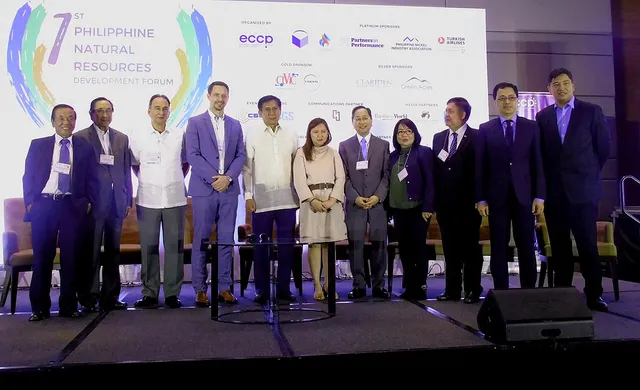
26 April 2019 - The European Chamber of Commerce of the Philippines (ECCP) organized and launched the 1st Philippine Natural Resources Development Forum at the Marriott Hotel Manila. The forum’s theme was “Harnessing Natural Resources for Inclusiveness and Sustainable Development”.
ECCP describes the current status of the Philippine mining industry:
“The mining industry in the Philippines is a major economic activity but remains operating below potential. There is a considerable anti-mining sentiment in the country especially at the subnational levels where environmental impact and displacement of indigenous peoples caused by mining operations have been the focus of much debate. Small-scale mining is also contentious, due to poor regulations and overlapping policies between national and local government. The ECCP believes that the contribution to national development can be further enhanced through better regulatory and enabling policies, best practices in value sharing, environment-friendly technologies and socially responsible investments.” [1]
According to ECCP, the objective of the 1st Philippine Natural Resources Development Forum intends to convene decision makers and other key stakeholders from the Mining (Metallic and Non-metallic subsectors) as well as Upstream Oil & Gas, Coal subsectors, to discuss challenges, opportunities, policy reforms and best practices in harnessing the country’s natural resources and their contribution to sustainable development. [1]
Present during the event were key players in the mineral resources industry from the public and private sectors. There were also participants and attendees from civil society organisations and academic groups. The forum discussed the latest issues and challenges being faced by the mining industry in the Philippines. The forum and its speakers thoroughly enumerated the many ways that the industry has contributed to the Philippine economic and social development. The forum also covered discussions on good governance, environmental management within a mining operation, global standards and sustainable mining practices.
The forum had four sessions namely: Contribution to National, Local and Community Development, Global Standards in Enhancing Inclusion along the Value Chain, Good Practices in Responsible Natural Resource Management and Inclusive Value Chain, and Unlocking Future Growth Opportunities.
The Welcome Address was given by Mr Nabil Francis, President of ECCP who emphasised the great potential and role of mining as an economic development catalyst in the country, for which proper information sharing, such as this forum, is key in solving the industry’s current problems. “While there is much to do in terms of regulation and improving doing business in this sector, it is very encouraging to see you all here today willing to listen, willing to learn, willing to contribute to this common goal,” he stated.
During the first session, Acting Director of the Mines and Geosciences Bureau (MGB), Atty. Wilfredo Moncano, was a speaker and he discussed the current status of the mineral industry in the Philippines, including the approved mining tenements, the sector’s economic contribution, and current and proposed fiscal regime. [2]
On his keynote speech, Secretary Roy A. Cimatu of the Department of Environmental and Natural Resources (DENR), mentioned five aspects of proper management of our mineral resources: (a) social; (b) environmental; (c) technological; (d) industrialization; and (e) exploration aspect.
The Secretary noted the importance of “social acceptability” in the industry, and treating host communities more than just as a legal or regulatory sense. In the environmental aspect of operations, he emphasised the need to pay more attention to waste production since mineral extraction is the largest global waste producer. The secretary expressed his discontent on the weak enforcement of environmental laws and mitigating measures, and implored the mining sector to cooperate and “strictly comply with environmental laws and standards.”[2]
For this, the Secretary recommended the upgrade of monitoring system, standards, and practices in order to have better control on environmental issues. Secretary Cimatu stated that we should ensure availability of mineral resources for the future generation, thus we have to pursue sustainable exploration and extraction methods including but not limited to shifting to renewable energy.
Representatives of Quisumbing Torres, Atty. Gaston Perez de Tagle and Atty. Dennis Quintero were the moderators of the Open Forum. In one interaction with speakers from the public sector, one of the delegates was the international award-winning architect and urban planner, Arch. Felino “Jun” A. Palafox, Jr. He pointed out (through his question) that given that the Philippines is very much rich in natural resources, that the taxes generated from the operations is clearly a solution in alleviating poverty in Philippines.
During the four sessions of the forum, the other speakers were Usec. Bayani Agabin (Undersecretary for Legal Services, Department of Finance), Mr Jerome G. Cipriano (SGS Phils., Inc.), Mr Isidro C. Alcantara, Jr. (Chairman, Philippine Nickel Industry Association), Mr John Reinier Dizon (VP - Strategy and Business Development, Republic Cement Services, Inc.), Mr. Angelo Kris Marcos (Senior Contracting and Procurement Manager, Shell Philippines Exploration B.V.), Mr Michael Spence (Managing Partner of Southeast Asia Partners in Performance), Usec. Analiza Rebuelta-Teh (DENR), Mr Gerard Brimo (Chairman, Chamber of Mines of the Philippines), Mr Renato C. Sunico (Chair and President, Cement Manufacturers’ Asso. of the Phils.), Engr. Rufino Bomasang (Chairman, Petroleum Asso. of the Phils.), and more.
Some facts about the Philippine Mining Industry from ECCP:
~ 30 million hectares of land in the Philippines are possible areas for metallic minerals
~ 9 million hectares of land are identified as having high mineral potential
The Philippines is endowed with bountiful metallic and non-metallic mineral resources. It is the 5th most mineral-rich country in the world for gold, nickel, copper and chromite. The Philippines has the world’s largest copper-gold deposit in the world. It also exports some iron ore, chromium, zinc and silver, and produces oil and gas.
The Mines and Geosciences Bureau (MGB) estimates that the country has $840 billion worth of untapped mineral wealth.
Approximately 30 million hectares of land in the Philippines are possible areas for metallic minerals; nine million hectares of land are identified as having high mineral potential. The Philippines metal deposits is estimated at 21.5 billion metric tons and non-metallic minerals are at 19.3 billion metric tons.
[1] Retrieved from https://www.eccp.com/events/?id=499
[2] Retrieved from http://mgb.gov.ph/en/2015-05-13-02-02-11/mgb-news/860-eccp-conducts-the-1st-philippine-natural-resources-development-forum
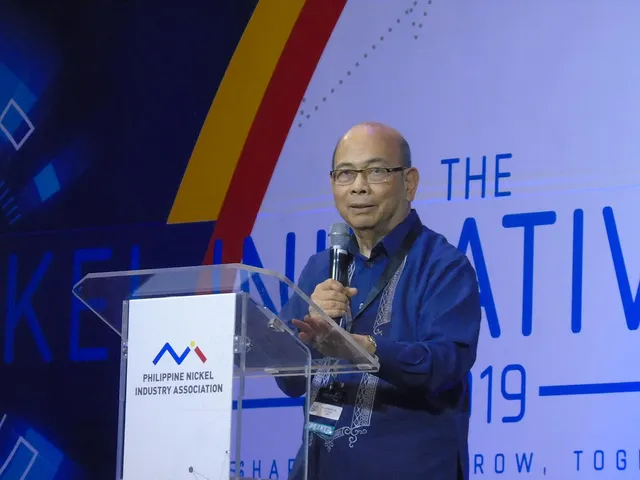
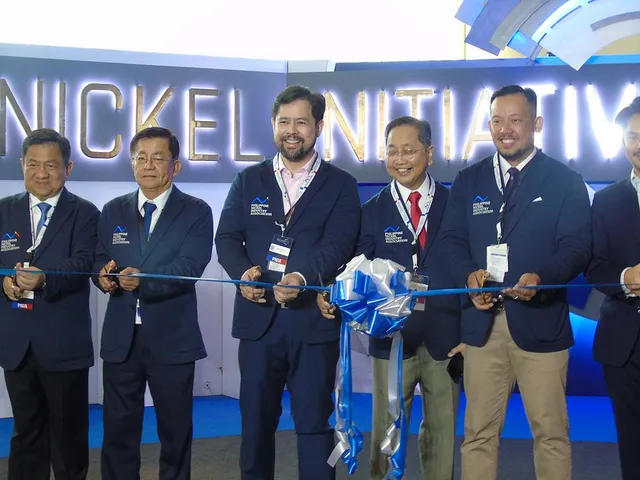
Last 19th of March 2019, Dr. Bernardo Malvar Villegas was one of the special guest speakers during the Nickel Initiative 2019 Conference which was held at Shangri-La at the Fort in Taguig City. He delivered the Closing Keynote Presentation with the title “Nickel Mining Can Be Sustainable”. His speech mentioned the vital role of the Philippine government and its agencies in helping the local mining industry become successful and sustainable. Additionally, he offered proactive solutions on how University of Asia and the Pacific (UA&P), through its Centre for Corporate Responsibility, can help the government and the nickel industry in establishing sustainability, policy and structure, training and communication, stakeholder dialogue and measurement and verification systems.
Dr. Bernardo M. Villegas is a well-known Filipino writer, professor and economist. During the time of President Corazon Aquino, he was a member of the Constitutional Commission that drafted the Philippine Constitution. Through the years, he has always been an advisor to recent Philippine Presidents.
As of 2013, he is the Senior Vice-President at the University of Asia and the Pacific. Dr. Villegas is also the Chairman and Research Director of the Center for Research and Communication, and a member of the Board of Trustees of the Makati Business Club (MBC). The MBC is a forum that addresses economic and social policy issues that affect the country’s development.
Aside from being a professor at UA&P, Dr. Villegas is also a visiting professor of IESE Business School, a graduate business school of the University of Navarra. IESE is one of the world’s leading business schools with campuses in Barcelona, Madrid, Munich, New York and São Paulo.
Dr. Villegas is a Certified Public Accountant in the Philippines. He has a degree in Commerce and the Humanities from De La Salle University, both with Summa Cum Laude honours. Dr. Villegas earned his doctorate degree in Economics at the Harvard University. At age 21, he became a teaching fellow at the College of Arts and Sciences in Harvard University. In 1972, he received the TOYM award (Ten Outstanding Young Men). His other awards include those from Fulbright, Johnson Foundation, Asia Foundation and the Instituto de Cultura Hispanica.
With all his awards and achievements here and abroad, the 80-year-old professor is considered one of the best economists in the country with his excellence and wisdom in his field and in addressing issues concerning national development.
SPEECH OF DR. BERNARDO M. VILLEGAS
AT THE NICKEL INITIATIVE 2019
(19 March 2019, Shangri-la at the Fort, BGC, Taguig City, Philippines)
“Nickel Mining Can Be Sustainable”
by Dr. Bernardo M. Villegas
It would not be an overstatement to say that the Philippine mining industry has gone through a self-inflicted environmental and political crisis over the last two or three years. The environmental crisis can be attributed to real damage caused to the Philippine environment by some mining firms that resulted in either suspension or closure of mining operations.
The political crisis resulted from decisions made during the early years of the Duterte Administration that exaggerated these violations of rules of sustainable development to the complete disregard of the many positive contributions of the mining industry to income growth, poverty eradication and employment generation. Politics is the art of the possible. It always involves balancing different societal objectives. Some of those who formulated mining policies at the beginning of the present Administration were not able to do the necessary balancing act among conflicting objectives. They gave short shrift to the economic benefits of the mining industry.
The Centre for Social Responsibility of the University of Asia and the Pacific (UA&P), led by Dr.
Colin Hubo, is doing its best to help both public officials and private investors attain the appropriate balance among the objectives of income growth, foreign exchange earnings, employment generation, poverty alleviation and environmental protection. This is especially important in the nickel industry because the Philippines has become the world’s second largest supplier of nickel ore which has surpassed the production of the former top contributors such as gold, silver and copper. In 2016 and 2017, the country exported 577,000 metric tons of nickel. In 2017, nickel ore exports totalled 230,000 metric tons—a third less than the 2016 figure—but still raked in $455.21 million (P224.533 billion) for the country. In fact, the Philippines has been the world’s top nickel producer in decades past, but the shifting local political landscape combined with real environmental concerns forced it to lose ground to Indonesia.
Indonesia has capitalised on our country’s uncertain situation as regards mining policies and kicked its production into high gear to feed the mineral-hungry economy of China. It has to be pointed out that as emerging markets like China, India, the Philippines, Indonesia, Vietnam and other countries in the ASEAN grow at an average of 6 or more percent in GDP in the next decades or so, there will be an explosion in demand for the first applications of nickel, such as stainless steel, nonferrous alloys, alloy steels and castings, plating, and batteries. Rapid industrialization and urbanisation in the Asia Pacific region will see an increasing use of nickel-based products in Architecture, building and construction; process engineering, oil, gas, and power; food contact materials; pulp and paper; transport; healthcare; consumer products and water.
Nickel is used in myriad products, especially in the ongoing fourth industrial revolution, because of the following qualities: high-melting point; resistance to corrosion and oxidation; highly ductile; alloys readily and can be fully recycled. The last quality gives nickel very high points in sustainability.
Researchers at the Centre for Social Responsibility of UA&P has identified the following multiple challenges facing Philippine nickel miners in the coming years:
a) First, what was once one of the most liberal mining regimes in Southeast Asia is now subject to a government crackdown that shows no sign of relenting, even with significant changes in leadership. As noted by Amanda Key in an article for Investingnews.com, “For now, one thing is certain: the direction the Philippines goes with its mining policy moving forward will impact the global nickel market.”
b) The second challenge is to produce the right type of nickel ore that end-users, such as Chinese companies, will use to produce anything from stainless steel to batteries to electric vehicles. A recent Standard and Poor’s analysis of the global nickel market indicates that most nickel producers started their operations geared toward producing nickel sulphide ores. When these ores became scarce, the market gravitated toward laterite ores that are costlier to extract.
c) Finally, local nickel miners have to decide what grade of ore to produce that would make the most profit, given the generally falling prices for the metal in the world market. Mining firms are slowly shifting to shipping medium-grade ores amid declining prices of the usual low-grade nickel ores—ninety percent of which goes to China from the Philippines.
Dante Bravo, President of the Philippine Nickel Industry Association (PNIA), remarked in a recent forum: “For the long term, this would mean that some mines might slow down in their production in the coming years depending on the area being mined. The shift would have to make adjustments depending on mineralization.” Despite some of these uncertainties, there is still a mood of optimism among the nickel miners because of the many uses of nickel in such sunrise industries as electronic vehicles, construction, consumer goods, health care and housing.
The more enlightened members of the nickel industry, most of them active in the Philippine Nickel Industry Association, have provided a group of researchers in the Centre for Corporate Responsibility of UA&P concrete evidence that sustainability is very high in their priorities as they truly espouse the triple Ps: People, Planet and Profit. As a group, PNIA members have planted over 4.2 million trees in Caraga and Palawan as part of ongoing progressive rehabilitation and reforestation in several mining sites.
This initiative is part of the efforts of the nickel miners to offset its mining footprint with a green footprint. The reforestation effort includes planting endemic trees and grass species such as agoho, mahogany, giant bamboo, and narra, as well as fruit-bearing trees like calamansi, cashew, jackfruit, and cacao, among others. Tree planting in vast forest areas can employ numerous rural dwellers who are among the poorest of the poor in the country, including members of indigenous tribes. The increased supply of these fruit products can also help in slowing down inflation as middle-income households increasingly turn to fruits and vegetables for healthier diets. Cash crops such as rubber, coffee, vegetables and herbal plants have also been planted in the mine sites’ respective nurseries. Apart from providing employment to the residents, the program also allows the companies to help their respective host communities by donating seedlings in support of various greening initiatives. This has given birth to an emerging downstream industry, agro-forestry which also focuses on the community’s livelihood beyond mining. The reforestation program is part of the nickel industry’s commitment and contribution to the government’s National Greening Program which aims to revegetate some 1.2 million hectares of “unproductive, denuded, and degraded” forest land nationwide from 2017 to 2022.
Thanks to the responsible nickel mining firms who are actively engaging their respective local government units in their operations, there is an ongoing dramatic shift of local government authorities in their attitudes toward mining activities. LGU heads realize that their active participation in the development of the mining industry is essential to sustained mining development. This new position has been reinforced by the fact that there are initiatives to require mining companies to pay directly to local government units (LGUs) in mining areas their 2 percent share of the firms’ gross sales as local business tax. The past practice was for the national government to collect the levy and then distribute this to the LGUs. There is also an increasing participation of local government authorities in getting informed consent of communities prior to the exploration or site investigation and prior to reaching decision on a development, management or concession agreement.
There is also a very healthy trend in which nickel mining companies are participating actively in regional economic development. Whereas in the past, the benefits of mining had been very limited to a relatively few areas, leading nickel mining firms are making significant contributions to building strong local economies which are more balanced and dispersed, with greater social equity. Some of them are experimenting with innovative partnership with LGUs and are pursuing different development models. To expand their multiplier effects on a broader regional level, some of the leading mining companies are collaborating with Regional Development Councils to increase the participation of stakeholders in planning and administration and improving the access of marginal groups in mining-impacted communities to resources and opportunities. It must be pointed out again and again that most mineral ores are found in remote and mountainous areas where there are very few sources of livelihood. The legitimate concern for sustainability of the environment must be tempered with the need to address the serious extreme poverty situation in mineral-rich territories.
There is no substitute to a tripartite cooperation among the Government, the mining companies and civil society. There is increased evidence that nickel mining companies are investing in the upscaling and empowerment of host communities in partnership with various groups in order to pool resources and capabilities. The LGU is expected to give approval to the operations, help in getting access to ODA funding, strategic co-ordination through the Regional Development Plans, exercise its new decentralised powers and allot budgets for long-term provision of public services. In its turn, the mining enterprises are expected to source some of its raw materials from the localities, invest in human resource development, make available supply chain facilities, provide project management, construct operational infrastructure, establish certain ethical standards and provide operating funds. Civil society organisations have the advantage of local knowledge, longevity of local presence, independence of views, relevance to household livelihoods and greater capacity to mobilise communities. Civil society is also in a better position to champion environmental sustainability.
The way forward for the Philippine nickel mining industry is to integrate sustainable and responsible policies and practices in its core business. The current push for voluntary sustainable mechanisms (codes, policies, guidelines), for example, is a positive step towards integrating social responsibility as part of the mining agenda. At present, there are several methods used to incorporate sustainability into the core business of mining enterprises. Among these are:
-Industry-specific codes of conduct such as the Chamber of Mines Code of Corporate Social Responsibility.
-Company-specific (internal) codes of conduct and policies.
-Sustainability guidelines from international institutions such as World Bank disclosure policy, Global Reporting Initiative (GRI), Extractive Industry Transparency Initiative (EITI)
-Pressure from civil society.
The application of these methods will surely have long-term positive benefits as can be gleaned from the experiences of other mineral-rich countries. These include:
-Raising the acceptable threshold for mining industry sustainability performance and standards;
-Providing some leverage upon which mining stakeholders can hold companies accountable if a company fails to implement its own code or policy;
-Raising awareness of external factors affecting the core business activity and financial viability of mining firms.
It is even more important than ever to demonstrate that industry support for sustainability goes beyond mere rhetoric and is translated into concrete action on the ground. The Philippine nickel industry has to counter prevailing perception that supporting sustainability is only a public relations gimmick but really involves a change of priorities. To accomplish this, the industry can come up with an industry sustainability code which is not only transparent but open to independent monitoring and verification by third party experts and the academe.
Some degree of third-party involvement must be in place to ensure transparency and accountability. Furthermore, for sustainability codes to raise the bar of industry performance, it must be based on minimum internationally agreed standards such as the ILO code of human rights among others. The industry needs to put in place “Disciplinary” measures for members who refuse to sign or adhere to the industry code, policies and guidelines.
More than other economic sectors, the mining industry cannot be left to free market forces alone. The role of the government is indispensable. Experience in other countries has shown that it is vital that governments themselves are genuinely committed to needed mining reforms and these reforms command a strong degree of government support and regulation. In the case of sustainability, the government, or more specifically the Mines and Geosciences Bureau (MGB) itself must be strongly committed to the “government case” for pursuing the sustainability agenda. It cannot be achieved by prescription from external agencies.
The “government case” has to be built up by a process of dialogue, which in turn means creating or adapting institutional frameworks for discussion, consolation and negotiation. The process by means of which the MGB eventually builds sustainability policies is as important as the policies themselves. Dialogues must be the core in the development of sustainability policy for the nickel mining industry.
It must also be kept in mind that “voluntary” sustainability mechanisms are not easy solutions to all mining dilemmas. It is imperative that partnership with non-corporate stakeholders is established to achieve the necessary improvements. These partnerships can yield the following advantages: they can confer greater legitimacy to mining activities because of multi-stakeholder involvement; they can encourage companies to work together to raise the bar of performance; they can allow mining firms to share capacity building costs; and they can allow corporations to address external factors beyond their core business activity. In this regard, a strong link between academe, industry and government can help the “business case” for sustainability.
As an example, the University of Asia and the Pacific, through its Centre for Corporate Responsibility, can assist the government and the nickel industry to establish sustainability, policy and structure, training and communication, stakeholder dialogue and measurement and verification systems. The products of such partnership among academe, government and business can come out with the following:
-Nickel Industry Sustainability policy and structure. Clear standards and detailed guidelines are needed to ensure that the industry has a “road map” for incorporating sustainability agenda into its operations. With such details, the industry would be able to measure performance consistently and completely to help meet the stakeholders’ expectations.
-Training and communication. Training internal staff is needed because of the recognition that sustainability-type programs require a unique set of skills and competencies. On the other hand, because leadership starts at the top, it is essential for top management to consistently communicate sustainability guidelines internally in order to generate awareness and on convey management support for the program.
-Stakeholder dialogue. Dialogue and sharing of information with external parties (companies, civil society) is one of the fundamental shifts in recent years in policy making. NGOs, other civil society organisations, and companies often have information otherwise unavailable to companies or governments.
In the case of the nickel mining industry, an academic institution like UA&P with strong links to business may be able to help the industry develop guidelines and policies that are not only effective, but also acceptable and credible to all the stakeholders.
Monitoring and verification. A research wing or think tank of an academic institution like UA&P may be a more credible institution to effectively assess compliance of nickel mining firms to various voluntary sustainability mechanisms. Because of serious violations of environmental regulations in the past, the mining industry in general continues to face a public that is skeptical of its efforts to respect and protect the environment. The industry may choose to scrutinise sustainability practices of nickel firms in a more transparent manner by inviting external parties, and by issuing public reports on the findings of independent academic or research institutions.
There is no question that the Philippine nickel industry is capable of practising responsible and sustainable mining. As discussed above, what is needed is the political will of all the stakeholders concerned to commit themselves to a continuing dialogue on sustainability practices.
For comments, my email address is bernardo.villegas@uap.asia.
Acknowledgement:
Dr. Bernardo Villegas
Ms Cleah Nava, Legislative Officer, Senate of the Philippines
18-19 March 2019 - Philippine Nickel Industry Association (PNIA) organised and launched The Nickel Initiative 2019 Conference at Shangri-la at the Fort in Taguig City. The event's objective is to provide a venue to discuss issues and potential opportunities or collaborations for the various industries that are involved in the nickel supply chain. The event also featured companies involved in the exploration, extraction and processing of nickel. According to PNIA, The Nickel Initiative 2019 Conference aims to open doors for improved networking and collaboration among stakeholders and industry players in the Philippines and abroad.
Price, policy constraints and challenges were among the major issues discussed during the conference. The establishment of a roadmap for the industry was a goal mentioned by PNIA as they aim to leverage on the Philippine's position as the second biggest producer of the key input in stainless steel, mobile phones, transportation and electric vehicle batteries. This roadmap is intended to provide a foundation that would accelerate growth in the local nickel industry and to further contribute to the country's economic expansion. The roadmap will also address the industry's needed infrastructure, incentives, power, as well as peace and security. [1] The PNIA stated that they are hoping to finalize the nickel industry roadmap within a year. [2]
The two-day event had attendees from local and global nickel stakeholders from the private and public sectors.
Mr Clarence J. Pimentel, Jr., Conference Chair of The Nickel Initiative 2019, gave the Welcome Remarks. This was followed by Atty. Dante R. Bravo's message and Q&A portion with ANC's News Anchor, Mr Quintin Pastrana. Mr Pastrana is the President of WEnergy Global Pte Ltd., a graduate of University of Oxford, University of Cambridge and Georgetown University.
The keynote speaker for Day 2 was the former Philippine President and currently the House Speaker, Honourable Gloria Macapagal-Arroyo. From her speech, she mentioned her support for the industry and its endeavours. The House Speaker is hopeful that Congress will be able to pass the new fiscal regime measure for the mining sector before the end of 17th session of Congress in June. [1] This refers to the House Bill No. 8400 which she co-authored.
For large-scale metallic and non-metallic mining operations outside of the mineral reservations, they will be required to pay the government a margin-based royalty on income from mining operation. It was noted that the rate is raised from 1.5% royalty to 5% royalty. This is from a 10% to a 70% margin. [1] On top of this, a royalty tax equivalent to 3% of the gross output of minerals or mineral products extracted or produced by the mining operation will also be imposed on large-scale metallic and non-metallic operations if this is located within mining reservation areas and this is exclusive of all other taxes. This means that they still have to pay corporate income tax.
For small-scale mining, the House Speaker mentioned that the mining contractors within or outside mineral reservations will pay to the government a royalty equivalent to one-tenth of one percent of gross output. [3]
She noted that the measure would generate around PHP22 billion for the government from the current PHP19 billion (or PHP18.71 billion) as well as an additional PHP3 billion from the royalties collection. With regards to mining royalty, she stated that the government will earn PHP2.57 billion instead of the current PHP1.13 billion. [3]
Furthermore, the House Speaker said that HB 8400 was adopted by the Senate committee level with an objective to promote fairness by providing fiscal regime that is applicable to all existing and prospective large metallic and non-metallic, and small-scale mines. It shall be applied to all mines regardless of whether the mine is located outside or inside of mineral reservation. This measure would also "enhance the equitable share of the government in the utilization of natural resources without compromising the mining sector's need for reasonable return on its investment." [3]
Mr Dante Bravo, President of PNIA, said that they welcome the measure. He hopes that the approval of the House Bill would eventually push the lifting of the moratorium on new mining permits.
The House Speaker also noted that the local mining industry flourished under the present administration than it did during her regime despite the current President's stand on mining. "I have said that even under my successor, who was very strict about mining, the sector grew even more than it did in my time," she said. "That's what we want to do now. Even in today's policy and regulatory environment, we want to help the sector grow and contribute to national development." However, she emphasised that there should be a solid framework that will approximate the thinking of President Rodrigo Duterte. [3]
In relation to President Duterte's message during his 2018 SONA, the House Speaker pointed out that raw materials from mining operations in the Philippines should be processed here. She said, "In line with the President's other statements regarding raw materials...your projects would ideally include processing facilities if not today, at least in the realistic future.”
The House Speaker also proposed that the Department of Environment and Natural Resources (DENR) should also transform into a promoter of responsible mining aside from being a regulator.
From her keynote speech, she emphasised as well the importance of educating the public on the aspect of land rehabilitation since there are several remarkable examples such as Berong Nickel, Coral Bay Nickel, and Rio Tuba in Palawan; Agatha Mining and SR Metals in Agusan del Norte, Taganito Mining in Surigao del Norte, Zambales Diversified Metals in Candelaria, Zambales.
Hon. Arroyo also mentioned the old mined pit of Semirara which is now a blue lagoon after the company's marine rehabilitation efforts in the island. This environmental rehabilitation brought international attention and the company was awarded in 2015 as first runner-up in the Corporate Social Responsibility category of the Asean Energy Awards in Kuala Lumpur, Malaysia.
After the speech of Hon. Arroyo, Undersecretary Rafaelita M. Aldaba of the Department of Trade and Industry gave a presentation about "Securing the Future of the Philippine Industries".
On the second part of the morning session, the topic was "Discovering Nickel and Tomorrow's Industries". The presenters were Mr Paul White (Secretary General of International Nickel Study Group), Mr Edmund A. Araga (President of Electric Vehicle Association of the Phils.) and Mr Lawrence Liu (Tsingshan Holding Group Co., Ltd.).
The afternoon session's topic was "The Next Generation of Innovators and R&D Champions" where a Q&A panel was moderated by TV host Mr RJ Ledesma. The panelists were Mr Earl Forlales (CEO and Founder of CUBO Modular) and Dr. Rogel Mari Sese (President of Regulus Space Tech Inc.). Mr Forlales presented an innovative and low-cost housing solution for the urban poor that uses bamboo as building material. It has a practical home design that is easy to assemble but durable for years. Dr. Sese talked about outer space mining and its legal implications on a global scale. He passed around to the audience a sample of a meteorite that landed in Russia which he said is composed mainly of nickel.
The segment's moderator, Mr Ledesma has been popular in Philippine television since the late 1980s for appearances in various commercials and TV shows, representing Generation X with wit, humour and flair. He is a writer, editor and entrepreneur, co-founder of the successful Mercato Centrale food market, and the Honourary Vice Consul of Monaco to the Philippines. He is the first Asian to deliver the graduation speech at the Massachusetts Institute of Technology where he received a degree in Masters of Science in Real Estate Development.
Other presenters for the afternoon session were Mr Cyrille Jouin (Glencore International AG), Mr Ian Hiscock (CRU Consulting Group) and Mr Weixun Huang (Ningbo Lygend Mining Co., Ltd.).
Dr. Bernardo M. Villegas gave an insightful and informative closing keynote presentation titled “Nickel Mining Can Be Sustainable”. Dr. Villegas is an economist and professor at the University of Asia and the Pacific. He is also a book author and a leading expert in economics. Dr. Villegas is one of the best economists of the Philippines due to his unparalleled expertise and wisdom. From his speech, he emphasised the important role of the Philippine government in the survival and success of the local mining industry.
- - - - -
At the end of the day, with all the talks and sharing of ideas, studies and opinions, the success or failure of the Philippine nickel industry in solving its impending problems and challenges is dependent on how well the key players are able to differentiate between the best solutions from false limiting beliefs. After the conference, here are some thoughts, reactions and expert analyses from some of the delegates who attended the Nickel Initiative Conference 2019:
“I am convinced that nickel demand will continue to rise in the future. Profit can be made if we are properly positioned. Trading of nickel in the Philippines is a sustainable project or business. The initiative was good as the problems unique to the industry were identified and discussed and a possible solution was talked about. The event was also a fresh ground for meeting new contacts and renewal or updating with former acquaintances.” (Ms Audi Fabricante, Business Manager at Epitomo Holding Resources Pte Ltd. and Principal at Fahaodi Mining Consultancy)
"The Nickel Initiative conference was very informative. Current regional and world trends were covered by industry experts from various countries. The speakers were able to cover topics from nickel extraction to stainless steel usage and even emphasised the demand for raw materials for electric vehicles. Next time, I hope, in the next conference, there will be discussions on worldwide trends or sharing of best practices that companies adopt to minimize environmental and social impact of the mineral extraction and processing." (Ms Maan Baribar, Community and Public Relations Senior Manager of Sumitomo Metal Mining Philippine Holdings Corporation)
“During the conference, I heard lots of well-intentioned speeches but the challenge is for industry leaders and authorities to create a clear roadmap with practical steps to achieve quickly a shared vision. I hope that this will emerge soon because we need it. It seems that there was no Philippine company mentioned who is willing to put up a nickel processing plant locally to add value to the large laterite nickel resources of this country. Perhaps most companies prefer direct shipping of ore to overseas markets at prices of less than 10% of the contained nickel content.
“Indonesia banned the shipment of laterite nickel ores in 2014 and now has over 25 companies operating or building processing plants, with the production of over 750,000 tpy nickel metal in product by 2023. All the Chinese producers who attended the Nickel Initiative stated they will NOT invest in the Philippines as they already have investments in Indonesia. Interestingly, Indonesian companies cannot export laterite ores unless they are building a processing plant. The same policy should be immediately implemented in the Philippines.
“Nickel Asia/Sumitomo at their Coral Bay and Tanganito has been the only company in Asia processing local laterite nickel ores to produce raw materials for batteries. This company has been the sole producer for the last 15 years but is now at risk of being overtaken by the Indonesian companies as they start work on three planned HPAL plants. From a position of absolute advantage, the Philippines will lose its position in the battery sector. It has already lost the race in producing ferro-nickel or nickel pig iron and will never be able to compete with the Chinese companies in Indonesia.
“Banning the immediate export of laterite nickel ores is the only way to force companies to invest for the future and for the benefit of the Filipino people. Without an immediate ban on exports, the fourth largest resource of laterite nickel and cobalt in the World will become irrelevant as we watch our Asian neighbors grow to lead the world in battery materials production and stainless steel production from laterite ores,” (Mr George Bujtor, 12th April 2019)
Mr Bujtor is a prominent mining executive from Australia with 23 years of experience in various roles such as General Manager and Managing Director in Rio Tinto, Australia. He is an expert in the technical, financial and commercial aspects of mining operations. In the Philippines, he was the CEO of Toledo Mining Corporation in 2005 where he developed in record time, commercialized and operated the Berong Nickel Mine in Palawan. He was also the CEO of Carmen Copper Corporation in 2009 (under Atlas Consolidated Mining and Development Corporation), the largest porphyry gold-copper producer in the Philippines. He has a degree with honours in BASc Geology, Mining and Metallurgy; Master's Degree in Mineral Economics; Master's Degree in Mining Engineering and M.B.A. Mr Bujtor is currently the CEO of Electric Metals Limited.
-----
[1] Rodriguez, Bruce (19 March 2019). "Policy and global metal price constraints tackled at Nickel Initiative 2019" on ANC 24/7. Retrieved from https://www.facebook.com/ANCalerts/videos/607666546327913/
[2] Retrieved from https://www.pna.gov.ph/articles/1065046
[3] Ison, Lilybeth (19 March 2019). "Arroyo optimistic about bill on new fiscal regime for mining". Retrieved from https://www.pna.gov.ph/articles/1065024
September 2018 was a tragic, difficult month for the Philippine mining industry because heavy rains resulted in landslide in the Mountain Province region. Several small-scale miners died during the landslides in Itogon, Benguet. Other than being part of the headlines at that time, it also placed the mining industry under scrutiny or even misjudgment by many. What are the possible causes of the landslides? Is mining responsible for this incident? How can the science experts help in preventing this incident from happening again?
During the GeoCon 2018 last December, a study was presented with the title “Landslides in Itogon, Benguet: The triggers and Causes” with authors M. Madrigal, L. Manzano, R. Agot, et al. From their study and through investigation, this is what happened that day.
It was around 1:00 in the afternoon on 15 September 2018 when a small-scale mining community in Sitio First Gate, Barangay Ucab, Municipality of Itogon was devastated by a massive debris flow. The study reported that the debris materials originated from the northwestern slope of a ridge that was composed of highly weathered, altered and fractured diorite, andesite and pyroclastic rocks. At the western side of the slip, there was a high discharge flow of a creek, a tributary of Liang River. This aggravated the ground failure.
“It pushed the the debris flow materials farther towards the chapel and portal of an old tunnel level 070 of Benguet Corporation,” according to the report. The debris flow affected around 2.0 hectares downslope. There were other areas that also experienced massive landslides like the following barangays: Ampucao, Loacan, Gumatdang, Poblacion, Ucab and Virac.
It was reported that 87 people died and 12 were missing (DILG-CAR) as of 29 September 2018. Based on the rainfall data of PAGASA, the Province of Benguet received 250.2mm and 535.6mm of rainfall within 24 hours that was caused by Typhoon Ompong on September 14 and 15 respectively. Normally, there is a 10mm threshold for ground failure/mass movements to occur.
The study of this incident was conducted by having a methodology that employed anecdotal accounts, geological and geohazard assessment, Ground Penetrating Radar (GPR) Survey and drone mapping. The technical team from Mines and Geosciences Bureau-Central Office and Regional Office - Cordillera Administrative Region (CAR) conducted a delineation of critical areas/danger zone and assessment of small-scale mining communities.
The results revealed that the debris flow in the barangays are natural phenomena that was triggered by abnormally heavy rainfall that affected critical slopes underlain by highly fractured, altered and weathered rocks. GPR images also revealed that the areas are unstable and not suitable for permanent habitation and other developments. Moreover, the landslide incident were enhanced by human activities like removal of forest vegetation, small-scale mining operations, and development along unstable slopes and on ridges.
Findings and observations:
1) Rainfall
2) Geology and Geomorphology
3) Anthropogenic processes
Recommendations:
1)The team strongly recommends for the immediate relocation of small-scale mining communities away from areas delineated in critical zone with active landslides.
2) The concept of Minahang Bayan may be applicable in some areas but permanent habitation or settlement within the area of mining operation should not be allowed. Illegal mining should be stopped.
3) LGU to provide alternative and stable source of living for small-scale miners.
4) Consider expert opinion of geotechnical engineers along with in-depth studies in finding appropriate relocation sites.
5) Fault or lineament map of DOST-PHIVOLCS should be considered in the identification of relocation/settlement sites.
6) Warning signs should be installed along all road sections that were affected by the recent landslide.
7) Abandoned tunnels by small-scale mines should be backfilled immediately.
8) Choked sections of river channels should be declogged soonest to prevent artificial damming.
9) Prohibit slope loading by disposing muck or rock waste as well as heavy infrastructure development.
10) Revegetation of slopes is highly recommended.
Mines and Geosciences Bureau, Department of Environment and Natural Resources
Atty. Fernando Penarroyo, Geological Society of the Philippines
Last November 20-23, 2018 marks the 65th Annual National Mine Safety and Environment Conference (ANMSEC) in CAP-John Hay Trade and Cultural Center. The event was organised by the Philippine Mine Safety and Environment Association (PMSEA). In the Philippines, PMSEA is the leader in promoting occupational safety and health, sound environmental management and social responsibility in the minerals industry.
PMSEA works in partnership with the Department of Environment and Natural Resources-Mines and Geosciences Bureau as well as with the Chamber of Mines of the Philippines, the Philippine Society of Mining Engineers (PSEM), other mining companies, quarries, cement plants, suppliers, service contractors and other professional organizations.
On the Opening Day Ceremony, PMSEA President Dr. Walter W. Brown gave the Welcome Remarks. South African Ambassador to the Philippines, His Excellency Martin Slabber along with officers and directors of PMSEA participated in the Ribbon-Cutting Ceremony.
The Mayor of Baguio City, Honorable Mauricio G. Domogan joined the ANMSEC celebration later that day along with the other PMSEA officers like Atty. Wilfredo Moncano, Mr Ramon Santiago and Engr. Louie Sarmiento who is the Immediate Past President of PMSEA.
“It has been 6 decades of promoting Responsible Mining in the hearts and minds of Filipinos. With the theme ‘65 years of Responsible Mining Industry and Regulator Together in Promoting and Advocating Responsible Mining’, we believe that it is only through the collaborative efforts of both the industry and regulator will we be able to maintain a safe and sound, environmental-compliant and community-supported Mining Industry,“ said Mr Roel A. Colado, Chapter President. “We have been conducting worthwhile projects and upholding values and beliefs of our organisation.”
For the week-long celebration of ANMSEC in Baguio City, the highlight of the event in the mining industry were the following:
● PMSEA Immersion and Excursion Activity with Baguio Students
● Welcome Cocktails at Baguio Country Club
● Sports Fest (Badminton, Golf, Bowling and Lawn Tennis)
● Mining Exhibit by Mining Companies and Suppliers
● 4th National Minerals Industry Student Congress of students taking up BS Mining Engineering, BS Geology, BS Metallurgical Engineering and other related mining and geology courses
● 6th Community Relations Officers Conference in cooperation with National Community Relations Practitioners in the Philippine Mining/Minerals Industry
● Minerals Industry Symposium in cooperation with Philippine Society of Mining Engineers
● Minerals Industry Parade
● Mine Safety Field Demonstration and Field Competition on First Aid, Machine Drilling, Hand Mucking, Tug-of-Peace, Fire Extinguishing and Fire Brigade)
● Testimonial Dinner and Annual Awards Night
On November 21, 2018, the 6th National Community Relations Officers Conference was held with the theme “Sustained partnership of regulators, mining industry & communities as pillars for developing a progressive society”. In this conference, they emphasised the important role of mining companies in educating and communicating with the public about the contribution of their mining company to the environment and to the whole country in general. Deploying smart and effective communication techniques are essential in relaying science-based information to a layperson who has no science background in order for them to understand the operations in a mining project. By consistently promoting correct information using all possible communication tools, mining companies will have a better reputation and better support from the public, rather than being unfairly stereotyped and generalised as destroyers of the environment.
On November 22, 2018 was the schedule for the “Minerals Industry Symposium”. Dr. Walter W. Brown stated, “This symposium discusses and chooses best practices which are consistent with principles of sustainable development. Initially as a geologist and then as a mining executive for 58 years, I am pleased to have witnessed a gradual and broader appreciation of respect for the environment and responsible mining practices.” He concluded, “Rest assured that the PMSEA will support and participate in meaningful industry and government initiatives to bring about positive change for our industry and more importantly for the Filipino people.”
Mr Roger A. De Dios, President of the Philippine Society of Mining Engineers said, “Over the years, the mining industry faced its ups and downs, but it is only in this current decade that it confronted severe anti-mining sentiments and stringent policy directions. Nevertheless, the mining industry has survived for we have shown that the industry and the government, as regulator, have satisfactorily done their share in fostering and carrying out responsible mining.”
“We have to realize that minerals are so important in our life. ‘Without mining, life would be so difficult and uncomfortable.’ It is in this premise that we, as mining professionals, have the responsibility of making life on earth pleasant for all without compromising the environment,” said Mr De Dios.
He further noted, “It is for this reason that the Philippine Society of Mining Engineers (PSME) will always be in the forefront in its advocacy in promoting responsible mining and even espousing beyond compliance. This Minerals Industry Symposium is one venue for presentations of best mining practices and principles reflecting sustainable development in the extractive industry.”
The PSME-Northern Luzon Chapter organised and hosted this year’s Mineral Industry Symposium.
Last October 12, 2018, Diwata-Women in Resource Development, Inc. brought to the Philippine Mining Club Luncheon a panel of 2 eminent speakers to discuss about the possible collaboration of renewable energy (RE) with the mining industry.
The topic for this meeting’s panel is titled “The Mining Industry and Renewable Energy”. The discussion covered the following: (1) Situationer on Renewable Energy; adoption by mining companies; (2) the business case for adopting Renewable Energy; and (3) Environment/Carbon Footprint Reduction.
The first speaker was Ms Claire Lee who is the Vice President of Philippine Solar & Storage Energy Alliance or PSSEA (formerly Philippine Solar Power Alliance). Her career in RE started in 2009, months after the Renewable Energy Law was passed, and she joined Solutions Using Renewable Energy Inc. as its AVP for Operations. Ms Lee was later assigned to rural electrification using solar home systems, and with her leadership, they were able to distribute and install over 10,000 solar home systems in the off-grid areas of the Philippines.
Ms Lee worked with Department of Energy and micro financing institutes and foundations where she helped the Government with their electrification targets. Additionally, she worked with U.S.A.I.D. where she led the group that installed the very first pure RE hybrid planned in Palawan. This hybrid system operated using clean alternative sources of energy such as wind, solar, storage and coconut shells. Ms Lee is also the Director of the Renewable Energy Association of the Philippines.
The second speaker in the panel was Mr Michael Tetsuji Yamazoe who is the Country Manager of Sindicatum Renewable Energy since 2016. Mr Yamazoe has over 15 years of experience in consulting and business development. He graduated with a degree in Biotechnology from the Imperial College London. Mr Yamazoe is also well-verse in Akiva Hebrew and Middle Eastern studies.
Mr Quintin Pastrana was the moderator and a speaker during the panel. Mr Pastrana is the President of WEnergy Power Pilipinas, Inc. He has over 20 years of leadership experience in the energy, natural resources and development sectors. Mr Pastrana studied in University of Oxford and earned a Master's Degree in Literature and Creative Writing, International Management and Public Policy Programme. From University of Cambridge, he has a Master's Degree in International Relations, Political Risk Mitigation and Competitiveness. He earned his MBA in International Management in Georgetown University, Washington D.C. He also studied in Ateneo de Manila University where he earned a degree in B.A. Political Science, minor in French Studies.
In the Philippines, he was a News Anchor and Associate Producer at Bloomberg TV Philippines for their daily broadcast of "Starting Gate" and "In the Loop". Currently, he is the co-host of "On The Money" and "Shop Talk" on ANC.
Mr Pastrana was named by the US-Asean Business Councils as one of its rising stars and also as one of the top Philippine young leaders by the Asia Society as a fellow at the Philippine Consul for Foreign Relations. He is the President of the award-winning Philippine Rowing Team. Additionally, Mr Pastrana is the Founder and Managing Director of the Library Renewal Partnership (LRP), a coalition of local and international partners that aims to empower over 2 million citizens by building at least 200 community education centers by year 2020, creating readers and leaders. (Please visit www.librarypartners.com.)
During the panel discussion and presentation, Ms Lee reported about the Philippine Solar Energy Update by PSSEA. “Since 2010 we have been very active in a lot of government consultations and we have contributed a lot to some of the RE laws that involved solar. Since 2010, we've also produced and organised the Philippine Solar Summit, an annual event,” she said.
She explained why solar energy is good for business. “The Philippines is right in the middle of the sun belt geographically so we are very much blessed with a lot of sun.”
Ms Lee presented the national RE roadmap which will be updated eventually. “As you can see, in RE, hydro and geothermal are the leading RE sources,” she said.
According to Ms Lee, “For the mining group, I think solar, being scalable and versatile, efficient and easeness of its operation and maintenance, makes it an ideal energy source for mining operations. Since most of the mines are located in the remote areas, most of the time, I think some of the mines are using solar hybrid installations which is a hybrid between solar technologies and diesel operated. But soon enough with the development of storage technologies, a lot of these power plants or mini grids can be wholly solar in the future.”
Mr Pastrana added that there is an intersection between mining and the renewables which is full of gap, hoping that this dialogue will bridge this gap, “...and more importantly have collaborations between our sector in the renewables and the mining sector which does need reliable power these days, and really integrating into your operations and your footprint.”
When asked about how the gap can be bridged, Mr Yamazoe answered, “With regards to the mining industry, since the main topic is the bridge between mining and renewables, at the end of the day RE is part of the business. People talk about RE being good because it is green or because it has good CSR. But at the end of the day, my view is it has to have some kind of benefit to whatever corporation or company you are involved in.”
He added, “Now, what the mining industry has to do at this point is to take a good look at the cost and the benefits of RE. Nowadays, people are saying that solar is coming down. I think solar now is actually under the price of coal in a lot of places. So you could effectively say in some ways that solar is now at parity with coal. Coal is a base load, solar is not. it is intermittent and therefore you cannot compare them as two apples.”
Regarding the involvement of the mining industry with RE, Mr Yamazoe stated, “You've got to take a good look as to whether you are thinking of this as a kind of CSR green initiative or a true business, because that is where your raw investment in the industry or in RE would differ.”
Mr Pastrana shared his insights. “Since I wear three hats as a moderator, someone in the RE sector and somebody who belongs to the mining sector, understanding your footprint and your needs and your pain points, let me just talk about a particular case study. It seems to be very typical of the mining industry where you've got generators in your mine, you've got self-sufficient power. Most likely those are fossil-fuel based.”
“Secondly, you likely will be under the open access scheme under the EPIRA (Electric Power Industry Reform Act) where you can buy over 750 kilowatts from a generator and pay the distribution utility where PECO or Meralco [will give] a willing fee. So that's the practicality of it.”
“The third thing is, those power rates are actually discounted because you're buying them wholesale. So going back to Michael's point, the question will be, are you at parity or is there enough of an economic advantage for you to contract solar or renewables or build on your rooftop, avoid the transmission cost and actually generate on your own, partially, as a CSR project or really as something that will transform your business models into making your overheads go down and become a true green company rather than a greenwashing company.”
About Philippine Mining Club:
Running for 8 years now, the Philippine Mining Club is closely affiliated with the Melbourne Mining Club. The group was formed to create better relationships across all areas of the mining industry whose aim is to uphold a professional networking environment in promoting the exploration, extraction and minerals industry of the country.
UK mining Company Bezant has since the beginning of 2018 refocused towards the development of an international copper gold portfolio focused on the Mankayan project in Luzon.
In this period Bezant with its partner and MPSA holder Crescent Mining and Development Corporation ( “Crescent”) has:
Appointed a new Bezant management team led by Colin Bird and Laurence Read
Incoming Chairman of Bezant, Colin Bird, is founder and chairman of the highly successful Jubilee Metals, one of the UK’s most profitable independent metals companies and oversaw the exploration of the Kalumbila copper project in Zambia, which was sold to First Quantum for $260m. Alongside him Laurence Read was appointed as CEO, who has a track regard in a major independent mine development financing and transaction.
With Crescent reassessed the extensive historical project data
This has included site visits with strategic groups undertaking new, independent geological and engineering assessments, extensive relogging of historical drill data, creation of a fly through graded model of the resource and culminated in an economic report published in February 2019. Asked in Manilla recently for the rationale behind the strategic change towards Mankayan and the Philippines Laurence Read, CEO, said “Changing copper market dynamics means Mankayan is ready to be a standalone, underground mine and our focus is on delivering that. Copper is about to see a major upheaval in price due to demand issues and the Mankayan project is a tier 1 asset which you can drive directly to from Manilla airport.“
The Mankayan project has grid power access, infrastructure, a highly skilled work force and as a block cave underground mine with a long life is not affected by the current Philippine restrictions on open pit mining.
Over the last ten years the world copper supply shortage and improvements in mining techniques have meant that sustainable mining grades have fallen from 1% plus copper equivalent to slightly over 0.6% in just a decade. This means Mankayan with a life of mine copper equivalent grade of 0.63% to 0.65% depending on mining strategy is an attractive
proposition with a Snowden resource estimate defining an indicated resource of 1.1 million tonnes of contained copper and 3.7 million ounces of contained gold and an inferred resource of 0.2 million tonnes of contained copper and 0.6 million ounces of contained gold.
Highlights of the new independent economic study by Mining Plus released in February 2019 are
11 different mining strategies modelled
For the first time, a Sub-Level Caving (“SLC”) ‘stepping stone’ scenario, with two main Block Caving (“BC”) routes identified for progression, with life of mine production grade in excess of 0.64% copper equivalent (“CuEq”).
Various sub $19/t cost options
The study focused on delivering the project into production with highly robust copper equivalent production grade, with a high gold content and uniformly sub $19/t costs. The three main representative options summarized below, are taken from the 11 modelled (the option numbers being those used in the study)
Asked what lay ahead in 2019 Laurence Read said; “We have a lot of important strategic decisions to make but what we aren’t worrying about is the copper and the gold in the ground or that this will be major mine for the Philippines. Picking the right path for the mid to long term is key for Crescent and Bezant, but whoever we work with to develop this mine will have access to significant amounts of physical, cost effective, copper and gold from Mankayan production and will be able to command a major strategic advantage in the global metals space for the next forty years.
For the past centuries, the mining industry in the Philippines was greatly affected by the changes of government or colonisers, events around the world and more. It seems that whenever there is war, there is also a rise in the demand in certain mineral resources or a fall in the production rate of some minerals.
August is History Month in the Philippines as promoted by Government and Education sectors. The Philippines is rich in natural resources, cultural heritage and more noticeably, we are rich in history which brought progress or hindrance in economic growth through the years. Last August, during the Philippine Mining and Exploration Association (PMEA) Monthly Membership Meeting, one of the keynote speakers is Mr Hernulfo “Nonoy” Ruelo, Geologist Consultant. The title of his presentation is “Copper-Gold Discoveries and Mine in the Philippines - Understanding the Past, in order to make sense of the Current, and the Future”. It was a well-researched report and analysis on how historical events, like wars or change in leaders, affected the mining sector and the socio-economic status of the country. The presentation takes us back in time with some rare vintage photos from the past.
During the pre-Spanish Period, the earliest use of metal in the Philippines by our Filipino ancestors was the use of copper for ornamentation, not for tools or currency. Other metals used were gold and tumbaga (copper alloyed with gold). “Gold was the major form of ‘currency’ among the early Filipinos and one of the first things they [ancestors] taught their children was the knowledge of gold and the weights with which they measured.” (From the book by Evelyn J. Caballero, 1996. “Gold from the Gods: Traditional small-scale miners in the Philippines”. Giraffe Books, Quezon City.( p 196 and 263) On note, the pre-colonial mining methods had no environmental impact on land, water, air and people.
Pre-Spanish Period Mining in the Philippines started in the 3rd century when gold was traded with China and the Javanese empire where the height of this trade was during 12th to 14th century. The Chinese were the first foreign miners. Gold is both a commodity and a medium of exchange.
When the Spaniards arrived in the 1521, gold was already being mined, traded and used as jewelry or ornamentation by the native Filipinos. In fact, 16th century Filipino noblemen were decked in gold.
Colonial Period Under Spain 1500s - 1898: Paracale and Cordillera were the oldest goldfields. From 1500s - 1700s, gold was one of the tributes collected by the Spanish government and given to the King of Spain. In 1583 and 1595, an expedition was sent to mine in Cordillera but was a failure due to the resistance of the Igorots.
“Gold mining before the coming of the Americans was primarily in the hands of enterprises organized in the Philippines by Spaniards and Chinese mestizos and Filipinos, with a few other companies trying, without success, to produce commercially.” (Ref. - Wirkus 1974)
In 1600 to 1700, about 10,000 ounces of gold per annum were shipped to Spain, and the gold shipments to Spain increased from 1800 to 1895. For copper, the Spaniards opened the first copper mine in the country in 1842, called the Carawisan copper mine in Antique province. From 1864 to 1874, the Contrabro-Filipino Company operated Mankayan Copper Mine. Gold mining made its comeback in commerce in 1892 where concessions to foreigners were first granted. The British explorer, Frank Karuth of Philippine Mineral Syndicate, led the commercial-scale hard-rock and alluvial gold operations in Paracale District until 1895. (Ref. - Chaput 1987)
Philippine Revolution 1896 – 1902: With the rise of the Philippine revolt against Spain, in 1896, mining operations at Paracale dwindled until 1902 when the Filipino-American War ended. The Organic Act of 1902 was created which organized companies, issued patents, and established the Geological & Mining Science Department. By 1927, gold was the third best export commodity and initiated by the Philippine (Manila) Stock Exchange.
In the following years, the Mining Act of 1935 was released (Commonwealth Act 137) which introduced the Regalian Doctrine, the concept of Mining Lease, and the establishment of Bureau of Mines. The Americans invested US$ 34.2M in gold production. Mining for copper was reopened in 1936, the same time when the Japanese savvy for copper was high and led to the ‘discovery’ of the first large porphyry copper deposit in the country.
Commonwealth Period 1937 - 1941: This period in Philippine history was considered a golden era when Manila was highly modernised and was one of the most beautiful cities in Southeast Asia. In fact, in 1937, we had the best and well-equipped airport in the Southeast Asia, the Nielson Airport. (This is now Ayala Triangle Park in Makati City, and the original Nielson Tower is now “Blackbird” Restaurant.) Although this elegant airport was primary used as an aviation school, it also paved the way for trade and commerce for foreign investors. Philippine Airline made its first commercial flight in 1941, from Nielson Airport to Baguio. The Philippines was the largest gold producer in Asia and second only to California in world production. During the American period, 9 million oz of gold was produced from 1906 – 1941.
Japanese Occupation 1942 – 1945: Being a colony of United States of America, the Philippines got itself involved in war against the Japanese who invaded Manila in 1942. The Japanese took over Lepanto and the Hixbar mines (Rapu-rapu) and was able to mine and extract 11,000 tonnes of copper. No gold production was recorded. With the aggressive strategies of conquering their neighboring countries, Japan was unstoppable that time in their collection of natural resources that were needed to fuel their warships and planes and the production of weapons. Battleships Musashi and Yamato where the two giants in naval power that made Japan feared by other nations. The two battleships were defeated though in the Philippines during the Battle in Leyte Gulf in October 1945 which paved the way to the Liberation of Manila and eventually the whole country.
Post-war Reconstruction 1946 – 1954: Those post-war years were hard times for all war-torn countries. However, with the need for repairs infrastructure after WWII, there was an increase in the global demand for copper. Some gold mines in the Philippines were rehabilitated but the problems were lack of capital and low market demand. Copper production re-started in 1947. Since Manila was the ground zero and battlefield of the war that ended WWII in the Pacific (Battle of Manila in 1945), there were serious damages in the country’s economy and on the mining industry.
Korean War 1954 – 1960: For the Filipino soldiers who fought the Japanese during WWII, the Korean War was the first time for them to fight a battle in a foreign land. Although this war affected Southeast Asia directly, the gold prices maintained. However, in mid 1950s, the gold mines collapsed due to a recession period. The copper price rose slight due to high world demand. More Philippine copper mines opened.
Vietnam War 1960-1975: In 1972, U.S. President Nixon took dollar off the gold standard. It was fixed at $35 since 1934, but gold prices are allowed to float free which devalued dollar to $38. In 1973, world gold price jumped from $38 to $120. World copper rate hit high at $0.90 in 1974. World copper mine production was at its peak.
Martial Law 1972 - 1986: During Martial Law in the Philippines, copper price trended upward where the country’s copper production continued and boomed in 1980 where it reached its peak. It was in 1980 when Philippine copper production was recorded the highest at 306 Kt. However, the World Oil Crisis in 1973 - 1980 brought about a decline in copper demand. World Recession in 1982 – 1984 pulled down the copper prices. Philippine inflation devalued the Philippine peso and there was an increase in production costs, materials and equipment. The Global recession resulted in a decline in copper demand. The Philippine gold production was sustained and gold prices surged from 1978 to 1980. The modern Gold Bloom in 1980s brought about the rise of unregulated Small Scale Mining.
In summary, the explanatory variables of growth and decline in PH copper industry in the 1950s-1980s are:
- For Copper resources: risk capital or investments, development in the world’s copper market, technology, human capital in mining, domestic social, legal, and political environment .
- For the gold industry: gold resources, competition, commodity price, production costs, technology (bulk mining, milling, treatment), damages – natural & man-made disasters
(Reference). T.M. Santos 2001 . Growth of Copper Production: Determinants and Empirical Evidence. Social Science Diliman, July-December 2001. 2:2, 1-49.)
There were other historical events in the Philippines that followed like:
EDSA Revolution: 1986-1992 - gold averaged $381, copper $1.02 – There was investment uncertainty and several mines closed. New mining laws were crafted like the 1991 RA 7076 (Small Scale Mining Act). The 1987 Constitution replaced Leasehold into Agreements system.
From 1990s – 2004, there was collapse of the local mining industry. However from 2004 – 2009, there was a revitalization of the mining industry with EO 270 National Policy Agenda – Mineral Action Plan. Gold price surged from $410 to $873. Copper production hit lowest in 2004 at 16 Kt since 1957. The year 2005 brought global gold boom where Philippine gold-copper mines had expansion and reopening.
The Aquino Administration from 2010-2016 was within the Global Mining Boom period (2010 - 2013). It was a successful period for Philippine mine exploration, prospect drill-testing, and resource evaluation drilling.
In conclusion, Mr Ruelo presented a list of challenges that miners will need to face at the present time, namely:
- Fewer outcropping “easy-to-find” deposits are now left except in high-risk and “inaccessible” areas.
- Current mining operations will encounter increasing real costs (labor, materials, energy, environmental, community impact) that will affect production.
- The next generation of lower-grade copper/gold projects require significantly higher metal prices to justify development.
- We need to discover high-quality or better gold/copper resources, even deeper ones that can be economically mined – e.g. in greenfields and brownfields.
Follow on LinkedIn:
Philippine Resources Journal
Be the "First" to get our exclusive Digital Magazine & Weekly Newsletter.