In an industry often scrutinized for its environmental footprint, FCF Minerals Corporation is positioning itself as a case study in how large-scale mining operations can integrate rehabilitation and reforestation into core operations rather than treat them as an afterthought.
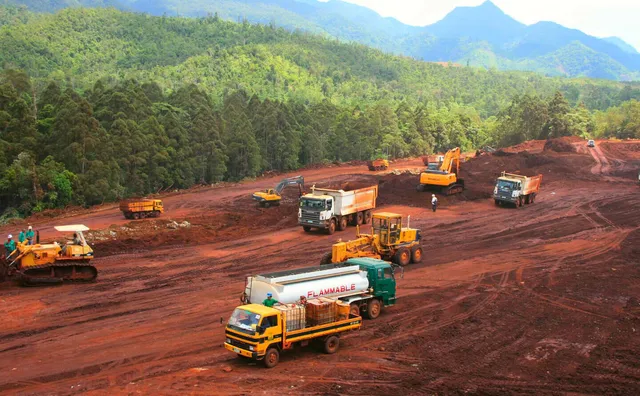
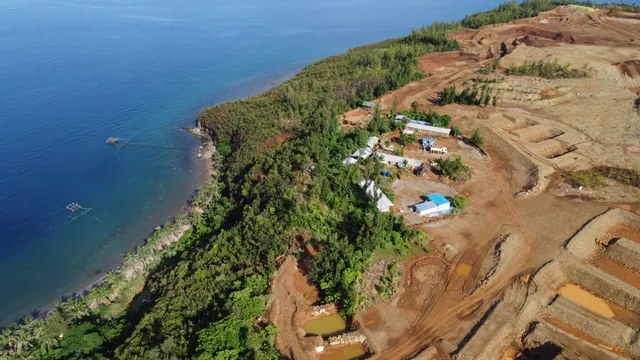
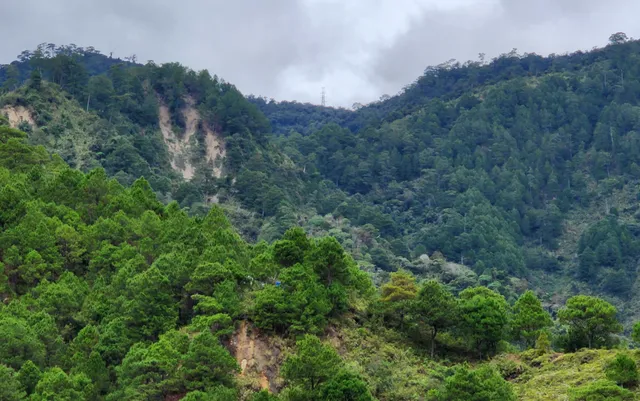
As of the fourth quarter of 2025, the company reported that it had managed and monitored 290.56 hectares of disturbed land within its 3,093.51-hectare Financial and Technical Assistance Agreement (FTAA) area, while progressively restoring affected sites through structured environmental programs.
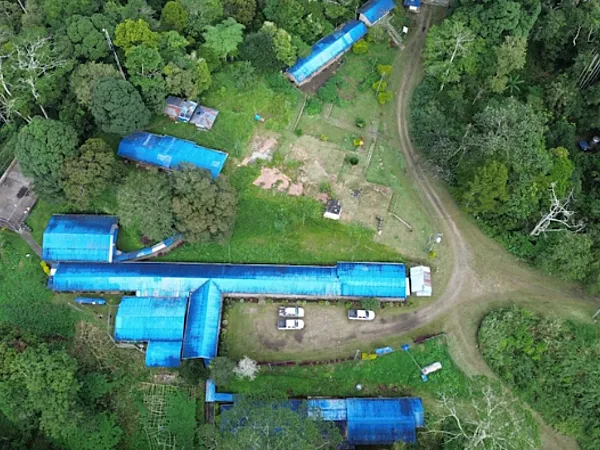
At the center of these efforts is its Mine Environmental Protection and Enhancement Office, which oversees rehabilitation planning, nursery development, and reforestation implementation. The company has established a 1.41-hectare nursery dedicated to producing high-quality seedlings to sustain long-term rehabilitation activities.
That investment is beginning to show scale. By end-2025, FCF had planted and donated a total of 4,109,485 seedlings across various programs, both within and beyond its FTAA area—an approach that extends environmental impact into surrounding communities.
A key driver of these gains is the government-backed Mining Forest Program, under which mining companies are required to reforest disturbed areas at a minimum ratio of one hectare rehabilitated for every hectare affected. FCF has exceeded this requirement, achieving a 1:2 replacement ratio equivalent to 157.24% compliance.
In practical terms, this has translated into 907.173 hectares of forest cover established under the program, signaling not only regulatory compliance but a deliberate effort to accelerate ecological recovery.
Rehabilitation work within the mine site is progressing alongside these broader reforestation initiatives. The company reported that 73.55 hectares of disturbed land had already been rehabilitated as of Q4 2025, with a further 68.25 hectares scheduled for restoration under its Final Mine Rehabilitation and Decommissioning Plan.
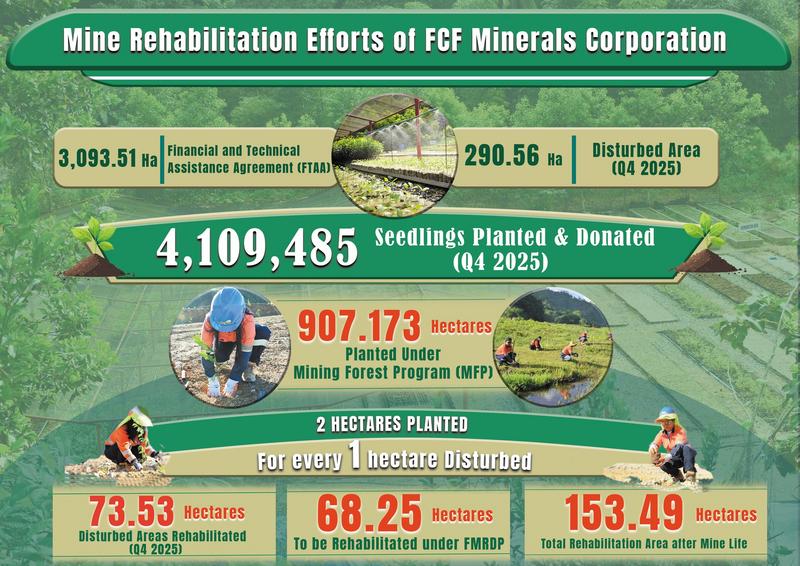
Over the full life of the mine, total rehabilitation coverage is projected to reach 153.49 hectares—underscoring a long-term commitment that extends beyond active extraction phases.
Industry observers note that such figures reflect a shift in how mining firms in the Philippines are responding to tightening environmental standards and increasing stakeholder expectations. Beyond compliance, companies are under growing pressure to demonstrate measurable environmental outcomes and community benefits.
For FCF, the emphasis on nursery development, large-scale seedling production, and progressive rehabilitation suggests a more integrated environmental management model—one that links operational activities with ecosystem restoration.
The company’s approach also highlights the role of reforestation in climate resilience, particularly in regions vulnerable to soil erosion, flooding, and biodiversity loss. By restoring forest cover and stabilizing previously disturbed land, rehabilitation efforts contribute to both environmental protection and community sustainability.
While challenges remain in ensuring long-term survival rates of planted trees and maintaining rehabilitated areas, the scale and pace of FCF’s programs indicate a sustained push toward greener post-mining landscapes.
As mining continues to play a significant role in the Philippine economy, initiatives such as these point to an evolving industry narrative—one where extraction and environmental stewardship are increasingly expected to go hand in hand.