The Writ of Kalikasan is a bell in the storm. But not every noise is a fire, and not every fire is visible from the courthouse steps.
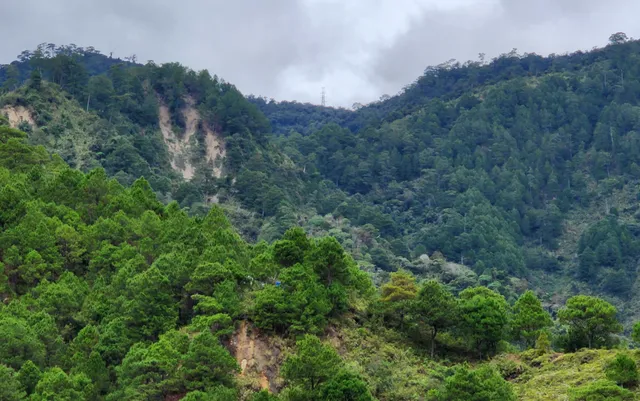
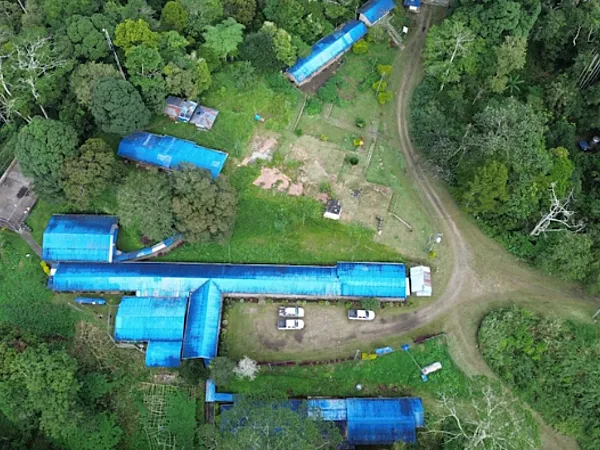
That is the difficult wisdom running through two recent Supreme Court decisions: Batan v. MGB and Altai Philippines Mining Corporation, decided on Nov. 4, 2025; and Protect Manicani Island Society (PROMISI) v. DENR and Hinatuan Mining Corporation, decided on Jan. 28, 2026. One case feared the scarring of forests and seas; the other, the slow drowning of protected island ecology in silt, pollution, and unrehabilitated mines. Both involved island communities. Both invoked the country’s most dramatic environmental remedy. Both petitions failed.
It would be easy to misread the cases as a judicial cold shoulder to environmental protection. They are better understood as an attempt to tune the instrument: to make the bell sensitive enough to detect real danger, but precise enough not to ring at every shadow.
The writ was born from the Supreme Court’s 2010 Rules of Procedure for Environmental Cases. It gave procedural muscle to the constitutional right to a balanced and healthful ecology. It may be invoked when an unlawful act or omission causes or threatens environmental damage of such magnitude as to prejudice life, health, or property in two or more cities or provinces. The petition must be supported by relevant and material evidence, including scientific or expert studies.
That design was both bold and cautious. Bold because it allowed citizens, communities, and public-interest groups to bring large-scale ecological harm directly to the higher courts. Cautious because it did not make every environmental dispute a constitutional emergency.
The need for such a remedy is hardly academic. The Philippines ranked first among 193 states in the 2024 World Risk Index, with a score of 46.9. The World Bank has warned that, without action, climate change could reduce Philippine GDP by as much as 13.6 percent by 2040, with the poorest households hit hardest. These figures are not decorative footnotes. They are the country’s weather forecast in legal form.
But environmental law has always had a timing problem. It is asked to act before harm becomes ruin while still demanding proof before harm becomes obvious. It must hear the crack in the dam before the flood, but not mistake every creak for collapse.
In Batan, the difficulty was geography. The petition involving Sibuyan Island in San Fernando, Romblon, failed to satisfy the rule’s requirement that the harm affect inhabitants in “two or more cities or provinces.” In PROMISI, the Court found the petition lacking in proof. Allegations of ecological harm on Manicani Island in Guiuan, Eastern Samar, could not substitute for substantial evidence showing damage of the required magnitude. Together, the cases expose the writ’s double lock: scale and science.

Both locks serve a purpose. Without scale, courts could be asked to resolve every localized environmental dispute as if it were a national catastrophe. Without science, the writ could become an all-purpose injunction, allowing anxiety to disguise itself as evidence.
Yet locks can also keep out the very people they were built to protect.
The two-city-or-province threshold is sensible on a flat map. The Philippines, however, is not a flat map. It is an archipelago of ecological singularities. A reef, watershed, island forest, or mountain ecosystem may be irreplaceable even if it lies within one province. A wound can be local and still be fatal. A small island can carry a large truth.
This is why Senior Associate Justice Marvic Leonen’s concurrence in both cases matters. He accepted the outcome under the present rules but proposed an “ecosystem approach”: courts should not measure environmental magnitude only by political boundaries, but also by the gravity of harm to a distinct ecosystem. That insight points the writ toward a more mature future — one that looks beyond the map without abandoning the microscope.
That middle ground is where the hard cases live.
The country cannot pretend that development is a dirty word. The clean-energy transition itself is mineral-hungry. The International Energy Agency projects that, under stated policies, lithium demand could grow fivefold by 2040, while graphite and nickel demand could double. Demand for cobalt and rare earth elements is also expected to rise strongly. The Philippines, meanwhile, is a leading producer of nickel and a significant producer of gold and copper, even if mining remains a relatively small share of GDP.
What Batan and PROMISI invite, then, is not a sermon to one side or a victory lap for another. They invite a common grammar.
Communities should not have to translate lived fear into impossible science before they are heard. But courts cannot decide based on fear alone. Regulators should be accorded technical respect. But expertise cannot be treated as a black box with a government seal.
Permitted enterprises need not be crippled by suspicion or slogans. But they must still bear the weight of scrutiny.
The better path is not more litigation or less litigation. It is better environmental truth.
That means petitions supported by baseline data, hydrology, biodiversity inventories, geohazard analysis, reef surveys, water-quality results, and causal pathways. It also means public access to environmental information that often exists but remains buried in agency files: impact assessments, Environmental Compliance Certificate conditions, monitoring reports, compliance audits, and inspection findings. The courthouse should not be the first place where environmental facts see daylight.
The brilliance of the Writ of Kalikasan was that it understood environmental harm as different from ordinary injury. It can be dispersed, delayed, cumulative, and intergenerational. Its victims may not yet be born. Its proof may arrive like rainwater in a jar: drop by drop, until suddenly the measure is full.
The next stage is to make the writ more intelligent. Keep it extraordinary, because ordinary disputes should not summon constitutional thunder. But do not let extraordinariness become blindness to extraordinary ecosystems. Demand science, but do not make science a dialect spoken only by the powerful. Respect boundaries, but remember that rivers, reefs, sediment, wind, and risk do not stop at provincial borders.
That is the challenging work of calibration. If tuned too loosely, the writ becomes noise. If tuned too tightly, it becomes silence.
And silence, in environmental law, is rarely neutral. Sometimes it is only the sound a forest makes after the last tree has fallen, the sound of a reef after the fish have left, the sound of a promise still beautiful in doctrine but disappearing in the tide — writ, finally, in water.
Atty. Noel B. Lazaro is general counsel of Global Ferronickel Holdings, Inc., a three-time Asian Legal Business In-House Counsel of the Year finalist, and a Top Tier In-House Counsel awardee of the In-House Community. He is also a law professor and columnist.