Category:
Top Three Belzona Solutions for Mining Industry Maintenance and Repair
Mining operations in the Philippines operate under some of the most demanding conditions in Southeast Asia. High-abrasion ore, chemically aggressive slurries, heavy vibration, and continuous production schedules place extreme stress on equipment and plant infrastructure. For maintenance teams, the challenge is not only repairing damage but doing so safely, quickly, and cost-effectively.
Among the wide range of composite repair technologies available today, three Belzona solutions stand out for addressing the most common maintenance problems in Philippine mining operations: abrasion in slurry pumps, damage to rubber conveyor belts, and deterioration of concrete equipment foundations.
Abrasion Protection for Slurry Pumps
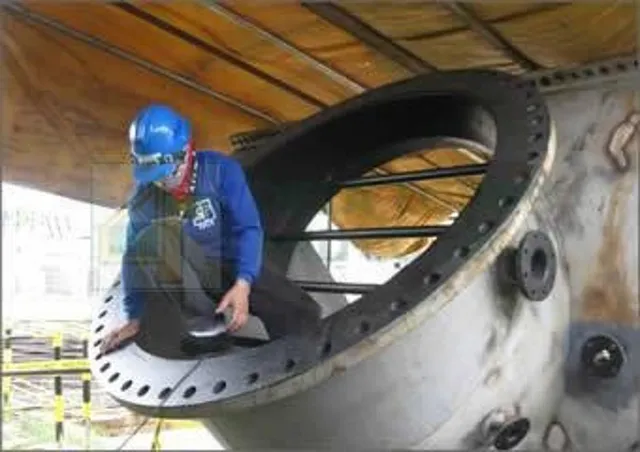
Slurry pumps are critical components in mineral processing plants, transporting abrasive mixtures of ore and water under high pressure. Impellers, casings, and internal wear surfaces are constantly exposed to erosive attack, leading to premature failure and costly downtime.
Belzona’s ceramic-filled composite systems, particularly Belzona 1812 and related abrasion-resistant materials, provide an engineered alternative to repeated part replacement. These systems allow worn components to be rebuilt in situ and lined with a seamless protective barrier that withstands severe particle erosion.
Unlike welding or traditional metal repair, Belzona’s cold-applied systems eliminate the need for hot work permits and reduce safety risks. Fast-curing characteristics also shorten shutdown duration. For mining operators in copper, nickel, and gold processing plants, this translates to extended pump life, reduced spare parts consumption, and lower lifecycle maintenance costs.
Elastomer Repair for Rubber Conveyor Belts
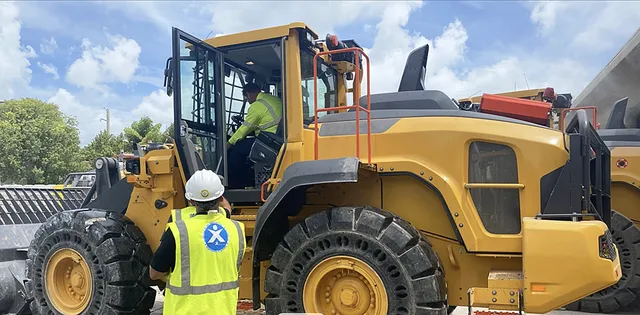
Conveyor systems form the backbone of ore-handling operations. Damage to rubber belts, whether from impact, tears, or localized wear, can disrupt production and result in significant financial losses.
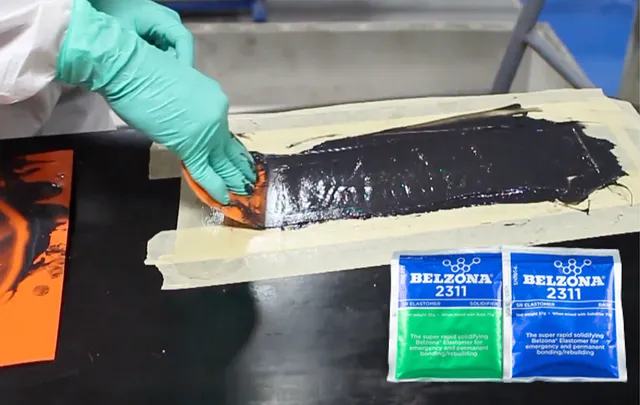
Belzona elastomer repair systems, such as Belzona 2311, are designed for rapid, in situ restoration of damaged rubber components. These high-performance elastomers bond strongly to rubber substrates and maintain flexibility under dynamic loading conditions.
Rather than waiting for belt replacement or vulcanization services, maintenance teams can perform emergency repairs on-site, minimizing operational interruption. This capability is particularly valuable in remote mining areas in Mindanao and Luzon, where logistics and replacement lead times can delay conventional repairs.
By extending the usable life of belts and reducing unplanned stoppages, Belzona elastomer systems provide both operational resilience and measurable cost savings.
Structural Concrete Repair for Equipment Foundations
Heavy rotating equipment such as crushers, mills, and vibrating screens impose continuous mechanical stress on their concrete foundations. Over time, cracking, spalling, and surface deterioration can compromise structural integrity and alignment stability.
Belzona 4111 (Magma-Quartz) offers a high-strength, epoxy-based concrete repair solution specifically engineered for industrial environments. It bonds exceptionally well to existing concrete, restores original profiles, and resists abrasion and chemical exposure.
Unlike conventional cementitious patching materials, Belzona composite systems provide superior adhesion and long-term durability. Repairs can be carried out without major demolition, allowing faster reinstatement of critical equipment.
For mining facilities across the Philippines, this means improved structural reliability, reduced vibration-related failures, and extended foundation service life.
Across slurry handling, material transport, and structural repair, Belzona composite systems offer mining companies a safer, faster, and more durable maintenance alternative. By reducing downtime, eliminating hot work risks, and extending asset life, these technologies support improved operational efficiency in one of the country’s most vital industries.
As Philippine mining continues to modernize and expand, adopting advanced composite repair solutions will remain a key component of a sustainable and cost-effective maintenance strategy.
Wise Industrial Systems, Inc. is the sole authorized distributor of Belzona in the Philippines. Contact: ccaraneta@wise-indl.com or 09178458098.
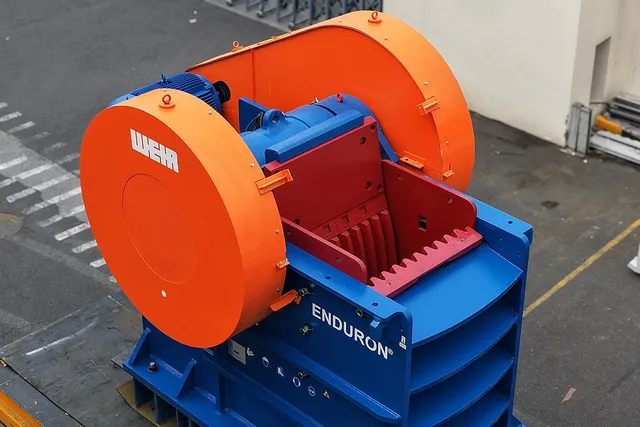
Weir wins order to supply an ENDURON® modular crushing plant
Weir has been awarded a contract to supply a 150 tph crushing and screening plant for Bezant’s Hope and Gorob Copper-Gold Project in Namibia. The value of the agreement has not been disclosed.
The order includes: an ENDURON® ET905 jaw crusher; an ENDURON® ET906 jaw crusher; a Trio® TF4012 vibrating grizzly feeder; a Trio® EF3605 vibrating pan feeder; a Trio® TIOSP6162 scalping screen; conveyor belts; and the supporting steel structure.
Weir recently launched its new range of ENDURON® jaw crushers, which have been developed to enhance safety, boost productivity, simplify maintenance, and support its customers’ sustainability goals.
The updated ENDURON® jaw crushers now feature a redesigned Hydraulic Power Unit (HPU), which allows for true push-button control of CSS adjustments. This new feature eliminates the need for manual intervention, significantly reducing safety risks for operators and maintenance teams.
The new HPU also ensures consistent tensioning of the retraction springs at all times, improving reliability and ease of use across the full wear range of the jaw dies. The optimized motor power and oil tank capacity reduce the HPU’s CO2 footprint and reduce environmental impact.
To further improve performance and reduce downtime, the entire range of ENDURON® jaw crushers now include ESCO® wear parts. These components extend wear life, which means fewer maintenance interventions and increased equipment utilization – translating to lower operating costs and more efficient production.
JD Singleton, Weir Comminution Director for Europe, Middle East and Africa, said: ‘There is obviously a lot of time, effort, and resources that go into designing, developing, and bringing to market new products.
"The range of ENDURON® jaw crushers was developed in close collaboration with our customers, so we’ve been confident throughout the entire process that these crushers will help miners overcome some of their most pressing operational challenges. Nevertheless, it’s rewarding to see this work come to fruition and the crushers performing well in some of the most arduous crushing applications," he said.
‘Today, miners are taking a more holistic view of their operations; rather than looking at pieces of equipment in isolation, they are increasingly considering how what happens upstream impacts what’s happening downstream, and vice versa. In other words, there’s more of a focus on optimizing the entire flowsheet," he added.
As an end-to-end solutions provider, Weir has long understood the value of this approach. Singletons said Weir worked closely with Bezant and its partners to develop a crushing and screening solution for the Hope and Gorob project that optimizes the entire flowsheet and enables them to meet their ambitious production targets.
Martyn Churchouse, Bezant Technical Director, said: ‘We are pleased to collaborate with Weir on this project. Their service center, located less than an hour from the mine site, significantly reduces project risk from a service and support perspective. We recognize that crushing and screening plants require extensive maintenance, and having a hands-on partner who supports and stands behind their own equipment is essential to ensuring our success.’
About the Weir Group PLC
Founded in 1871, The Weir Group PLC is one of the world’s leading engineering businesses with a purpose to make its mining and infrastructure customers’ operations more sustainable and efficient. Weir’s highly engineered technology enables critical resources to be produced using less energy, water, and waste while reducing customers’ total cost of ownership. Weir is ideally positioned to benefit from structural trends that support long-term demand for its technology, including the need for more essential metals to support economic development and the carbon transition.
The Group has12,000 employees operating in over 50 countries, with a presence in every major mining region of the world. Find out more at www.global.weir.com.
Get It Right the First Time: Why Cable and Wireless Validation Matter in the Mining Industry
Mining sites are becoming more connected every year. Fleet management, CCTV, access control, process-plant control systems, weighbridge reporting, safety alarms, VoIP radios, and site-wide Wi-Fi all depend on the cabling and network links behind the scenes.
When those links aren’t installed and tested properly, the impact shows up fast: dropped connectivity to critical cameras, unstable Wi-Fi around workshops and laydown areas, unreliable access control at gates, and “mystery” equipment faults that steal hours from production. On remote sites, those hours can quickly turn into days.
Getting it right the first time promotes safety, uptime, and accountability, especially in conditions where heat, humidity, monsoon rains, and typhoons in the Philippines amplify small weaknesses into major failures.
The Hidden Risk: When Good Systems Meet Weak Links
Even the best devices can only perform as well as the infrastructure supporting them. A modern IP camera, for example, might be perfectly spec’d until a poor termination or marginal cable run causes power instability or data errors. The real-world symptoms are the ones operators don’t want during an incident review:
-
frozen or stuttering video
-
night-mode flicker at key moments
-
missing minutes of footage
-
time-sync drift that makes evidence hard to use
The same pattern applies across mining operations:
Operations networks: Dispatch, fleet telemetry, and production dashboards rely on clean data. Intermittent packet loss or PoE voltage drop can turn into lagging location updates, delayed alerts, and unreliable reporting.
Security and site control: Gate systems and CCTV are only effective if they’re stable. A network that “mostly works” creates gaps that only become visible when something goes wrong.
Plant and maintenance environments: In process plants and workshops, vibration, dust, and constant equipment movement punish weak terminations. Add corrosion risk in coastal or island locations, and marginal cabling becomes a recurring downtime source.
In short, you might not see the problem on day one. You’ll pay for it later in troubleshooting, callouts, and production disruption.
Philippine Site Conditions Raise the Stakes
Remote mining locations already operate with lean teams, long lead times, and limited specialist support. Add local environmental realities and the tolerance for “near enough” shrinks further.
Monsoon rains and flooding can compromise enclosures, conduits, and terminations. Moisture ingress changes performance and accelerates corrosion.
Typhoons and lightning activity increase the need for robust protection, correct grounding practices, and post-event verification.
Heat and humidity push connectors and cable jackets harder, especially in exposed runs between buildings, control rooms, and plant areas.
This is why a test-and-document mindset matters. It creates a defensible baseline before handover and a reliable reference when troubleshooting later.
The Better Way: Fewer Failure Points, Cleaner Installations
One common source of instability is over-reliance on inconsistent field terminations and extra join points. Each additional connection is another opportunity for miswiring, poor strain relief, contamination from dust and moisture, and gradual loosening from vibration.
A smarter approach is to reduce complexity where possible and adopt recognised termination methods designed for direct-to-device links. Done properly, you reduce clutter, speed up installation, and remove “invisible weak points” that trigger intermittent faults later.
Why Testing Matters
A link light isn’t proof of quality. Proper testing confirms the cable can reliably carry the speeds and power your mining applications demand, especially for PoE devices like cameras, access points, and control peripherals. It verifies signal performance and whether the link meets the standard required for the application.
This is where professional test tools and workflows make the difference: structured testing, fast pass/fail validation, and reporting you can hand over internally or to contractors as evidence the job was completed to spec.
For day-to-day verification and rapid troubleshooting, Fluke Networks LinkIQ™ Duo Cable + Network + Wi-Fi Tester provides teams with a practical way to validate what’s happening on-site, checking link performance, identifying connected switches/ports, confirming PoE delivery, and quickly separating cabling issues from network configuration problems.
Smarter Wireless Validation for Harsh, High-Noise Sites
Mining sites are tough on wireless. Metal infrastructure, moving equipment, electrical noise, and constantly changing layouts can produce coverage holes and unstable roaming. And even though the last hop is wireless, the backhaul is still cabled, so weak copper can throttle an access point before you’ve even started tuning radio performance.
Using Wi-Fi analysis alongside cable testing helps teams:
-
confirm expected coverage around workshops, admin blocks, and critical plant areas
-
validate performance after relocations or expansions
-
pinpoint whether the problem is RF conditions, backhaul cabling, or PoE constraints
Bridging the Skills Gap: Make Quality Repeatable
A common reason problems recur is simple: teams don’t know what they don’t know. If installers or maintenance crews haven’t been trained on current standards, modern termination approaches, or what test results really mean, then minor defects get normalised until they become outages.
Building capability can be as practical as:
-
standardising installation methods and acceptable components per environment (plant vs. admin vs. field)
-
training supervisors to interpret certification results and reports
-
making testing and documentation a required step in every new run, repair, or relocation
That’s how “right first time” becomes a system, not a slogan.
Fibre Connectivity is the Go-to Solution in Mining
In large mining environments, remote sites are often spread far apart, making reliable long-distance connectivity essential. Since standard UTP cabling is typically limited to 100 metres, fibre infrastructure becomes the practical solution for linking remote points within the mine back to the main site.
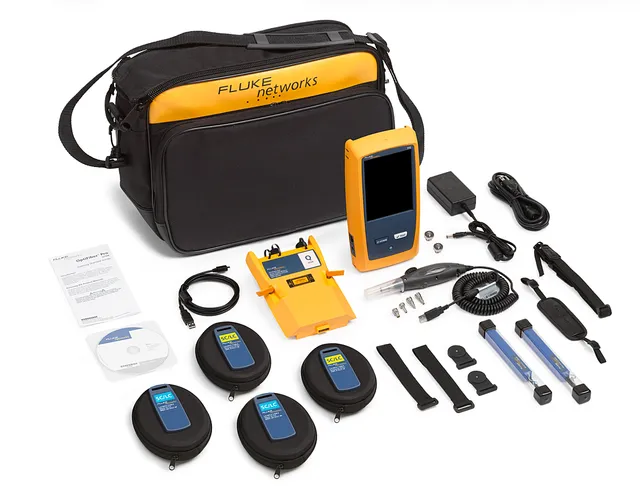
This is where Fluke Networks’ OptiFiber Pro Series OTDRs play an important role. Built to improve efficiency for users at every skill level in demanding mining conditions, OptiFiber Pro makes fibre testing faster and easier. Novice users can quickly set up and run tests using the Auto OTDR function, while the EventMap™ feature interprets traces with expert-level analysis by calculating overall loss and reflectance and identifying events such as splices, splitters, bends, and connectors.
Its advanced touchscreen interface, complete with pinch-and-zoom functionality, also makes reviewing and analysing results far more intuitive in the field.
The Payoff: Safer Operations, Less Downtime, Fewer Callbacks
When mining operators treat cabling and wireless links as critical infrastructure and verify them properly, results compound quickly:
-
faster commissioning and fewer delays during ramp-up
-
fewer intermittent faults that drain maintenance time
-
more reliable security coverage and incident evidence
-
stronger confidence in automation, monitoring, and reporting systems
-
clearer accountability between contractors, IT, operations, and HSE
Getting it right the first time reduces avoidable risk. It stops small installation shortcuts from becoming major operational problems, especially on Philippine sites where weather, remote locations, and harsh conditions make every failure far more costly.
To learn more about solutions for mining from Fluke, contact us at fsea.info@fluke.com or scan the QR code to explore our full range of solutions.