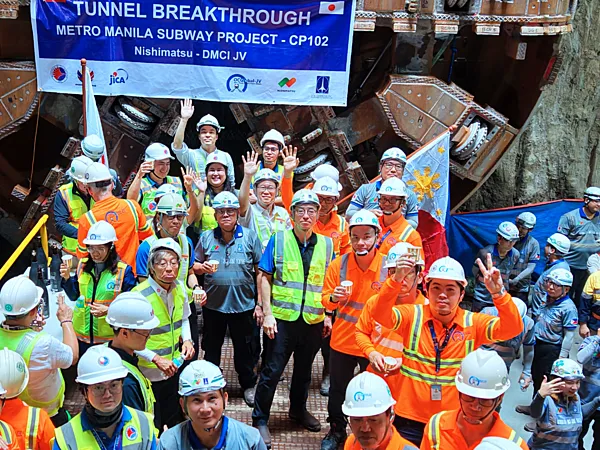
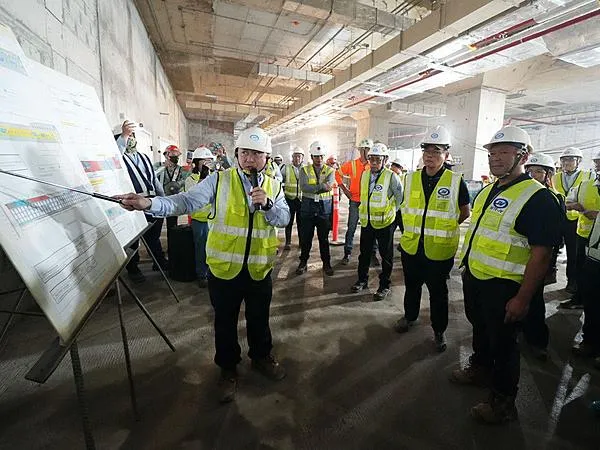
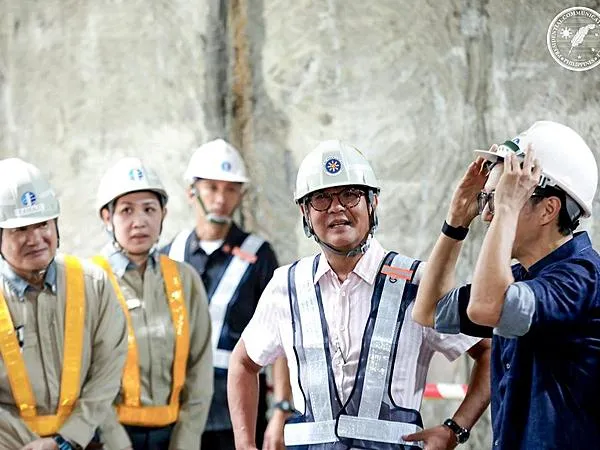
The Metro Manila Subway Project (MMSP) has achieved its first tunnel breakthrough, connecting the North Avenue and Quezon Avenue stations in Quezon City in a key milestone for the country’s first underground railway system.
The breakthrough was completed Sept. 14 under Contract Package 102 (CP 102), when a tunnel boring machine (TBM) broke through the concrete diaphragm wall of the Quezon Avenue Station after excavating a 1.12-kilometer southbound tunnel from the south end of North Avenue Station.
CP 102, undertaken by the Nishimatsu-DMCI Joint Venture (NDJV), covers about 3.1 kilometers of subway tunnels and the construction of the Quezon Avenue and East Avenue stations.
The diaphragm wall at Quezon Avenue Station was constructed using fiberglass rebar instead of conventional steel reinforcement. DMCI said the design was intended to prevent unnecessary damage to the TBM cutterhead during the breakthrough.
President Ferdinand Marcos Jr. later visited the Quezon Avenue Station to inspect the breakthrough and the tunneling works.
The completed southbound tunnel connects North Avenue and Quezon Avenue stations, with tunneling continuing toward East Avenue Station.
NDJV officials present at the milestone included Nishimatsu Construction Co. Philippine Branch Office General Manager Keiji Matsushita, MMSP CP 102 Project Director Osamu Iwata, DMCI Senior Vice President for Project Partnerships Rebecca E. Civil, DMCI Operations Director Dwight A. Ta-ala and MMSP CP 102 Deputy Project Director Reynaldo T. Lazaro.
The breakthrough marks the first such achievement in the MMSP and highlights the joint venture's use of specialized engineering and construction techniques in building the subway.
The 33.1-kilometer MMSP will have 17 stations connecting Valenzuela City to Ninoy Aquino International Airport Terminal 3 in Pasay City. Once fully operational, the subway is expected to reduce travel time along the route from more than 1 hour and 30 minutes to about 41 minutes.
Transportary Secretary Banoy Lopez and Senate Finance Committee Chairman Sen. JV Ejercito on Thursday inspected major railway projects in Metro Manila, a day after President Ferdinand Marcos Jr. broke ground for the Metro Manila Subway Project (MMSP) Ninoy Aquino International Airport (NAIA) Station.
The inspection covered the ongoing construction of the North-South Commuter Railway (NSCR) and the Metro Manila Subway, as the government moves to accelerate rail projects aimed at improving mobility and easing traffic congestion.
Marcos has directed the Department of Transportation (DOTr) to speed up railway construction to ensure timely project completion and improve the daily commute of Filipinos.
Lopez said the DOTr was expediting construction of the two major rail systems to help commuters save travel time and improve productivity.
“Ang maganda dito na ipakita natin kay Sen JV na ang pagpro-protekta niya, kasamahan niya sa Senado at Kongreso, pagprotekta niya ng pondo ng NSCR at subway. Sen., meron po talagang nararating at kinahihinatnan. We have to push more,” Lopez said.
“Now, we really need this kind of project, itong mga railway, itong subway, itong NSCR,” he added.
Ejercito, meanwhile, assured the DOTr of continued Senate funding support for the projects, saying rail systems are critical modes of transportation that will benefit thousands of commuters.
“Sana ngayon tuloy-tuloy under my [Finance Committee chairmanship], that’s why I wanted to see it for myself to make sure that the funding will not be disrupted anymore para no more delays,” Ejercito said.
He said the goal was to see the NSCR and MMSP become operational as soon as possible, particularly for commuters in Metro Manila, Laguna and Pampanga.
During the inspection, Lopez and Ejercito visited the NSCR West Valenzuela Station and Operations Control Center, the MMSP depot and Quirino Station, and the Philippine Railway Institute (PRI).
They also inspected an NSCR eight-car train set with a capacity of at least 2,200 passengers per trip.
The NSCR and MMSP, both funded with support from the Japan International Cooperation Agency (JICA), are expected to improve connectivity across Metro Manila and nearby provinces while supporting economic activity beyond the capital.
Once operational, the 147-kilometer NSCR, with 35 stations, is expected to serve at least 800,000 passengers daily across Metro Manila, Central Luzon and Southern Luzon.
The 33-kilometer MMSP, meanwhile, is projected to serve about 519,000 passengers in its opening year.
The subway is expected to cut travel time between Valenzuela City and NAIA Terminal 3 to about 40 minutes, from the current estimate of one hour and 35 minutes.
Lopez and Ejercito were joined by Japanese Embassy Minister for Economic Affairs Yokota Naobumi, JICA Senior Representative Takanori Morishima, Transportation Undersecretary for Railways Timothy John Batan, Transportation Undersecretary for the Philippine Railways Institute Anneli Lontoc, and Assistant Secretaries Eduardo Danilo Macabulos and Paul Anthony Pangilinan.
Construction of the 33-kilometer Metro Manila Subway Project has reached nearly 60 percent completion, President Ferdinand Marcos Jr. said Wednesday as the government broke ground for the subway station at Ninoy Aquino International Airport (NAIA) Terminal 3.
“The whole Metro Manila Subway project has achieved nearly 60 percent overall progress, with construction activities underway across much of its alignment,” Marcos said during the groundbreaking ceremony.
The NAIA Terminal 3 station is part of Contract Package (CP) 109, which also includes the construction of connecting tunnels between Taguig City and Pasay City.
Once completed, the subway is expected to cut travel time between Valenzuela City and NAIA from about 1 hour and 30 minutes to 40 minutes.
Marcos said the project has reached two key milestones that would support its completion, including securing the right of way for the entire station area.
The project will also use underpinning technology from Japan, allowing construction to proceed beneath existing infrastructure while maintaining structural integrity.
“This progress reflects the cooperation of the government, the private sector, and all our other development partners,” Marcos said.
He called on contractors, engineers and workers to complete the project safely, efficiently and on schedule.
“I ask that you carry out this project safely, efficiently, and on time, with the quality that generations of Filipinos deserve,” Marcos said.
Right on track
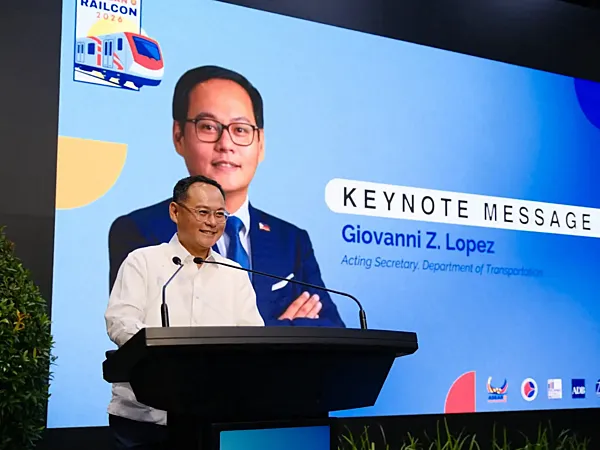
Department of Transportation (DOTr) Acting Secretary Giovanni Z. Lopez said the subway project remains on track for completion by 2031, with operations expected to begin the following year.
Funded by the Japan International Cooperation Agency (JICA), the subway will have about 17 stations and is projected to serve between 400,000 and 800,000 passengers daily once fully operational.
Lopez said only CP 108 remains under procurement. The package will cover the subway section connecting the new Senate building to Lawton in Taguig City.
The subway project was initially targeted for completion in 2027, but the timeline was later moved to 2029 and then to 2032 because of right-of-way issues.
Lopez said one of the most difficult right-of-way issues involved properties inside Corinthian Gardens subdivision in Quezon City.
He said the issue was resolved following the enactment of Republic Act 12289, or the Accelerated and Reformed Right-of-Way (ARROW) Act, last year.
“We no longer have a problem with that; the private owners have indeed agreed to a negotiated sale of their property,” Lopez told reporters in Filipino on the sidelines of the groundbreaking ceremony.
The Metro Manila Subway is intended to provide a high-capacity rail connection across Metro Manila and reduce travel times along one of the country's most congested corridors.
About 30 local and international companies have expressed interest in railway development projects of the Department of Transportation (DOTr), signaling private-sector interest in the government's pipeline of mass transport investments.
The companies participated in the DOTr's two-in-one Market Engagement Conference on Monday at the Asian Development Bank headquarters in Mandaluyong City.
The conference covered two projects: the Institutional Capacity Strengthening: Project Delivery Support for Railway Projects (CDC-1) and the North-South Commuter Railway New Clark City Extension (NSCR-NCC-Ex) Project's detailed engineering design and international checking engineer.
The initiative supports President Ferdinand Marcos Jr.'s directive to accelerate the completion of mass transportation projects.
Acting Transportation Secretary Giovanni Lopez said expanding the country's railway network would improve regional connectivity and the movement of people and goods.
"We thank the companies showing interest in helping us further improve the rail sector for more comfortable and faster travel for passengers," Lopez said.
"We need to add more trains and improve the capabilities of the people behind the projects so we can complete them sooner," he added.
DOTr Assistant Secretary for Railways Infrastructure and Public-Private Partnerships Eduardo Danilo Macabulos said the strong participation demonstrated private-sector confidence in the agency's procurement processes.
"This shows two things. First, many companies and consultants in the Philippines and abroad are ready to help us implement the projects," Macabulos said.
"Second, there is still trust from the private sector to participate in our projects because they believe we can conduct procurement transparently and fairly, and that the DOTr has the capacity to continue our railway pipeline next year," he added.
Macabulos said railway projects would help ease traffic congestion while providing more comfortable transportation between Metro Manila and nearby provinces.
"At the Department of Transportation, we believe that the real answer to traffic is mass transportation," he said. "Our railways will ease the commute not only in Metro Manila but also in nearby provinces such as Pampanga and Laguna, extending to Tarlac."
Under the CDC-1 project, the consultant will help strengthen the institutional capacity of the DOTr's railway-sector project management offices in project delivery, performance management and capability development, according to the DOTr Rail Unified Project Management Office.
Meanwhile, the NSCR-NCC-Ex is an 18.1-kilometer railway extension that will include the construction of an additional station in New Clark City, Tarlac.
The proposed extension is intended to strengthen the transportation network and help ease traffic congestion in the Greater Capital Region by extending the North-South Commuter Railway farther north.
India’s state-owned railway consultancy Rail India Technical and Economic Service Ltd. (RITES) is exploring participation in at least three major Philippine rail projects, including the Mindanao Railway, a mass rail system in Cebu and the extension of the Philippine National Railways (PNR) from Tutuban, as the government seeks to accelerate infrastructure development.
President Ferdinand Marcos Jr. met with RITES officials in New Delhi on September 12 to discuss potential cooperation on the projects, according to the Presidential Communications Office (PCO).
Presidential Communications Office Acting Secretary Dave Gomez said RITES could participate either as a consultant or through a public-private partnership (PPP), while also helping the Philippines explore possible official development assistance (ODA).
“The first priority is the Mindanao Rail System. So they will look at it and study it. Next is the mass rail system in Cebu,” Gomez said in Filipino after the meeting.
“And the third that they will enter is the extension of the PNR from Tutuban,” he added.
The discussions come as the Philippines advances several large-scale railway projects intended to expand intercity connectivity, improve urban transportation and strengthen links between major economic centers.
SCMB railway targets 2027-2028
The potential involvement of RITES comes as the government prepares the next stages of the proposed Subic-Clark-Manila-Batangas (SCMB) Railway, a 250-kilometer rail line being positioned as a cornerstone of the Luzon Economic Corridor (LEC).
Finance Undersecretary Maria Angela Ignacio said last week that construction could begin by the end of 2027 or in 2028, depending on the outcome of ongoing feasibility studies.
The feasibility work is being supported by international partners. The US Trade and Development Agency provided $3.8 million in assistance in 2025 for transport modeling, port-rail integration and legal and institutional frameworks, while Sweden provided P74 million for a study covering signaling systems and operational models.
The Asian Development Bank has also committed $8 million in technical assistance for the SCMB Railway.
The government has pitched the railway to international investors as one of the major projects under the Luzon Economic Corridor, which is intended to strengthen infrastructure and economic links across Luzon.
India offers space technology cooperation
Marcos also met with officials of the Indian Space Research Organisation (ISRO) to discuss potential cooperation with the Philippine Space Agency (PhilSA).
Gomez said India could provide technical expertise and share its experience as the Philippines works toward its long-term goal of launching its own satellite.
A Philippine satellite capability would support applications including communications, weather forecasting, climate monitoring, and defense and security, according to Gomez.
The meetings were held during Marcos’ visit to India to attend the BRICS Summit at the invitation of Indian Prime Minister Narendra Modi. Marcos is participating in the summit in his capacity as chair of the Association of Southeast Asian Nations (ASEAN) for 2026.
Marcos was accompanied during the meetings by Foreign Affairs Secretary Ma. Theresa Lazaro, Finance Acting Secretary Frederick Go, Transportation Secretary Giovanni Lopez, PhilSA Director General Gay Jane Perez, and Philippine Ambassador to India Josel F. Ignacio.
Before the RITES and ISRO meetings, Marcos met officials of the Coalition for Disaster Resilient Infrastructure (CDRI) following the Philippines’ entry into the coalition. Discussions focused on strengthening Philippine infrastructure against disasters and climate-related risks.
The Philippine government is also seeking private investment for other major infrastructure projects. At the inaugural Luzon Economic Corridor Investment Forum, officials presented at least 38 projects worth more than $20 billion to investors and business executives, including the SCMB Railway and a proposed $4.1 billion Sangley Point International Airport package.
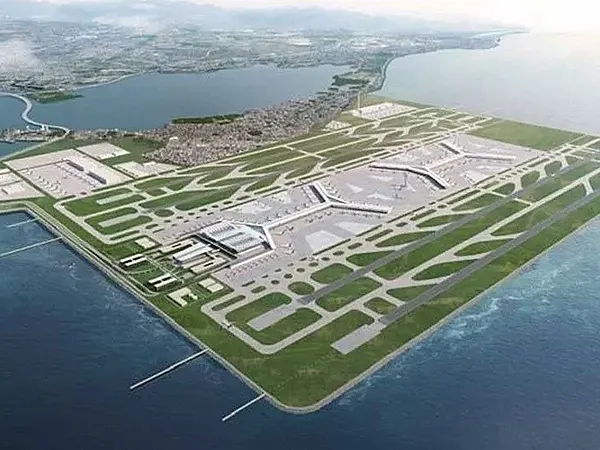
Construction of the Sangley Point International Airport (SPIA) in Cavite is targeted to begin in the third quarter of 2027, with financing arrangements now being finalized as the project moves into its initial pre-construction phase, a project adviser said.
Construction is expected to take about 17 quarters, or roughly four years and three months, putting the target for the airport’s initial commercial operations in 2031, according to Sol Castro, managing director and senior adviser at CFP Transaction Advisors. He made the disclosure during last week’s Luzon Economic Corridor Investors Forum.
CFP is part of the project development management and advisory group appointed by the Cavite provincial government for SPIA.
Castro said the project has secured the necessary consents, including the agreement with the provincial government of Cavite and clearance from the Philippine Competition Commission.
Several key approvals and arrangements remain pending, however, including the Philippine Reclamation Authority’s approval of the final reclamation configuration, land-access arrangements with the Department of National Defense, and airspace clearance from the Civil Aviation Authority of the Philippines (CAAP).
The government has moved to expedite those processes. President Ferdinand Marcos Jr. issued Administrative Order No. 44 on June 3 directing concerned national government agencies and encouraging Cavite local government units to prioritize and accelerate permits, clearances, licenses, certifications and other authorizations required for SPIA.
The order also created a joint technical working group co-chaired by the Department of Transportation and the Philippine Reclamation Authority, with representatives from the Department of Environment and Natural Resources, Department of National Defense, Department of the Interior and Local Government, Department of Justice, CAAP and the Cavite provincial government.
The group is tasked with addressing issues that could delay the project and ensuring that reclamation complies with environmental and technical requirements. It is also required to submit quarterly progress reports to the Office of the Executive Secretary.
$2 billion first phase
The first phase of SPIA is estimated to cost about $2 billion and will involve a 251-hectare reclamation development adjoining existing government-owned land.
The phase includes extending the existing runway from 2.1 kilometers to 3.2 kilometers, building a new passenger terminal, apron and cargo facilities, and developing the necessary landside estates.
Castro said the project will rely largely on an enabling reclamation platform and existing government-owned land, reducing land assembly and consolidation requirements.
“There’s going to be minimal displacement except for the Philippine Navy facilities that are there, and that there are no right-of-way risks,” Castro said.
SPIA will be developed around the existing Sangley aerodrome and is planned to accommodate wide-body aircraft and freighters.
The second phase will be incorporated into the airport’s design from the outset and will allow expansion of the development to the full 544-hectare landform as passenger and cargo demand increases.
Boulevard, Cargo City
The broader SPIA development also includes the 4.4-kilometer Sangley Boulevard, a high-speed access expressway and causeway intended to connect the airport directly to the Manila-Cavite Expressway (CAVITEX) and onward to the Cavite-Laguna Expressway (CALAX).
Construction of the boulevard is targeted to start in the first quarter of 2027, ahead of the airport's planned construction start, with completion targeted for the first quarter of 2029.
The project also includes a 190-hectare Cargo City designed for aviation support services, logistics, warehousing and e-commerce fulfillment.
SPIA is envisioned as a modern international hub airport and part of the Greater Capital Region’s multi-airport gateway system, alongside Ninoy Aquino International Airport, Clark International Airport and New Manila International Airport.
Public-private partnership
The Cavite provincial government and SPIA Development Consortium (SDC) signed a joint venture and development agreement for the project in 2023.
The consortium comprises House of Investments Inc., Cavitex Holdings Inc., Samsung C&T Corp., MacroAsia Corp., Munich Airport International GmbH, and Ove Arup & Partners Hongkong Ltd.
SDC was formally awarded the project in September 2022 after no competing firm challenged its unsolicited proposal. The consortium had submitted the proposal in 2021 after the Cavite provincial government declared its second bidding for the airport project unsuccessful.
SPIA is being developed as a public-private partnership intended to expand the Greater Capital Region’s aviation capacity while creating an international passenger and cargo gateway in Cavite.
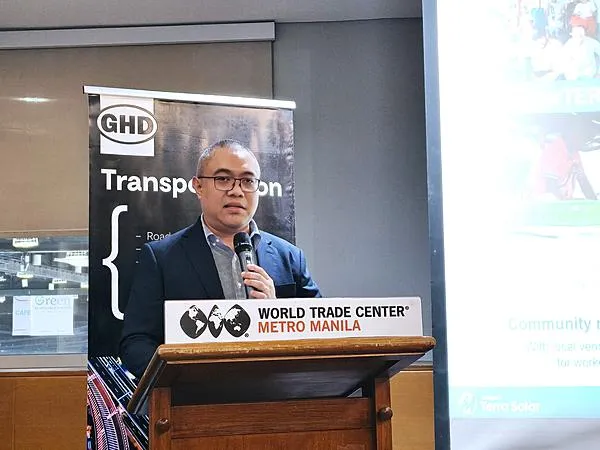
During the PhilEnergy Expo 2026, Meralco’s Head of Sustainability and Coms, Atty. Christer A. Gaudiano, introduced Meralco PowerGen Corporation (MGEN)’s Terra Solar and discussed the milestones of the project.
He was one of the five guest speakers at The PICC Energy Leadership Forum on June 26, 2026, held at World Trade Center, Pasay City. The forum was hosted by Philippine Infrastructure & Construction Club (PICC) in partnership with PhilEnergy. The forum’s theme is “Accelerating Green Resilience: Powering the Next Decade of Philippine Energy Security”.
The PICC Energy Leadership Forum was held on the final day of the PhilEnergy Expo 2026--a comprehensive 3-day energy trade event that centers on advancing clean energy, sustainable power technologies, and national energy security.
President Ferdinand Marcos Jr. delivered his fifth State of the Nation Address (SONA) on July 27, 2026, at the House of Representatives in Quezon City.
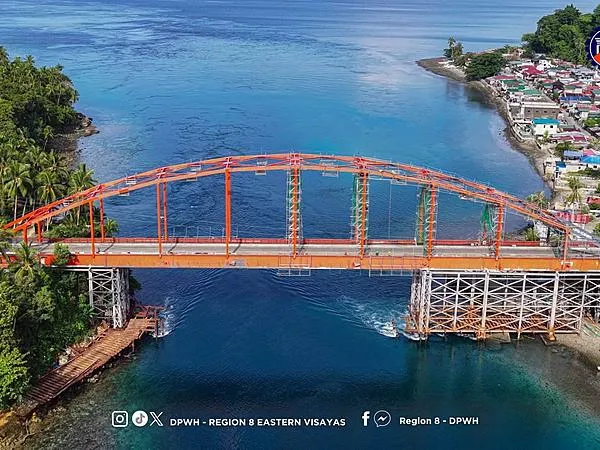
During his 2026 SONA, President Marcos Jr. emphasized the administration's aggressive infrastructure initiatives, focusing on the rehabilitation and reopening of vital bridges, namely: the San Juanico Bridge, Liloan Bridge, and Calbiga Bridge. The three bridges are part of the Maharlika Highway (Pan-Philippine Highway) which is the country’s principal land transportation pathway that connects Luzon to Mindanao.
Since the rebranding of Antrak Philippines to FLS Group Philippines, Inc. in December 2024, the company has been involved in major projects for the country and is geared to accomplish more in the months ahead. This year, The FLS Group partnered with partnered with Miescor (Meralco Industrial Engineering Corporation) who was the EPC for the Meralco PowerGen Corporation (MGEN), MTerra Solar Project to transport 20 heavy-duty power transformers for the massive MTerra Solar project--the world's largest integrated solar power and battery storage facility.
Engineering the impossible, FLS Group navigated NLEX and reinforced 27 bridges for world’s largest solar project. Planning and executing the successful crossing of a 260 MVA power transformer weighing 136.48 tons in NLEX San Fernando is a historic transport operation, as it was the first time such a heavy and oversized load was granted passage on the North Luzon Expressway.
Among other things, FLS Group also won the “Sustainable Excellence in Logistics” award on June 16, 2026, for 'Drive the Change' at the Breakbulk Green World 2026 Awards. This was held at Rotterdam, Netherlands. Breakbulk Green World Awards is an international award that celebrates leading companies, innovative projects, and individuals in the project cargo and breakbulk logistics industry who drive sustainable solutions and a greener future.
Looking back in February 2024, the Company's current local principals successfully acquired full ownership by purchasing all shares previously held by Antrak Logistics (Australia), a former foreign stakeholder and subsidiary of a French Logistics Company. This landmark transaction marked a significant step toward local governance, strengthening the Company's operational independence and positioning it for greater agility and growth in the Philippine market.
Motorists in General Santos City can now use the long-delayed General Santos Underpass after it officially opened to traffic on July 29, two days ahead of the July 31 deadline set by Public Works Secretary Vince Dizon.
Located at the intersection of Mabuhay-Bulaong Road and Digos-Makar Road in Barangay Mabuhay, the underpass is expected to ease congestion along one of the city's busiest transport corridors, improving the movement of commuters, cargo trucks and agricultural products entering and leaving the city.
The project, which began construction in June 2022, was originally scheduled for completion in September 2024. However, it encountered multiple delays, pushing its target completion first to the end of 2025 before finally opening in July 2026.
According to the Department of Public Works and Highways (DPWH), the delays were largely due to a major redesign after engineers encountered sandy volcanic soil and a high groundwater table during excavation. Officials warned that the original design could have caused the underpass to flood during heavy rains.
To address the issue, the DPWH redesigned the drainage system by incorporating a large underground reservoir, perforated drainage pipes and a gravity-fed drainage system that channels water toward the nearby Silway River. The revised design is intended to reduce reliance on mechanical pumps, lower long-term maintenance costs and minimize the risk of flooding.
The project also faced right-of-way constraints and delays in relocating water and power utilities, which slowed construction of the access roads.
The underpass project carries an estimated construction cost of P681 million, although the national government released more than P814 million in funding between 2021 and 2024 to accommodate project requirements and contingencies.
The opening follows President Ferdinand Marcos Jr.'s directive for the DPWH to accelerate the completion of long-delayed infrastructure projects nationwide.
Dizon inspected the underpass on June 9, 2026, where he ordered contractors and DPWH officials to ensure the facility would be operational before the end of July. The project was opened to motorists two days ahead of that deadline.
The General Santos Underpass forms part of the administration's Build Better More infrastructure program, which seeks to improve mobility, reduce travel times and strengthen logistics networks across the country.
General Santos City serves as the economic center of the Soccsksargen region and hosts one of the Philippines' busiest fish ports. The improved road infrastructure is expected to facilitate the movement of goods, support regional trade and reduce daily travel delays for thousands of motorists using the corridor.
In a crucial turn of events in February, the Makati City Government has settled its dispute with Philippine Infradev Holdings Inc. This, in turn, now gives Makati City control and ownership of the discontinued underground rail line.
Philippine Infradev Holdings Inc. is a private proponent of the $3.5-billion Makati Intra-city Subway project (MkTr). The company partnered with Chinese firms for constructions; however, the project was terminated on March 11, 2025 following a Supreme Court ruling in 2023 that granted territorial jurisdiction to Taguig City and transferred 10 Makati City barangays to Taguig City.
San Miguel Corporation has designated the ₱740-billion New Manila International Airport as its primary infrastructure priority, establishing a firm operational completion target for November 2028.
Company chairman Ramon Ang confirmed the development timeline following a series of construction delays that pushed the project past its original 2027 opening target.
The revisions stemmed from severe fill sand shortages and global supply chain disruptions following the national government's suspension of Manila Bay reclamation projects.
Construction on the 350,000-square-meter Passenger Terminal Building officially commenced in early 2026 after land development and soil stabilization reached substantial completion along the shoreline.
Spanning 2,500 hectares, the mega-gateway is designed to resolve chronic congestion at Manila's Ninoy Aquino International Airport.
Upon completion of its first phase, the facility will feature four parallel runways and 240 boarding gates, allowing it to process 35 million passengers annually. Subsequent development phases aim to scale total capacity to 100 million passengers per year.
To support local communities, San Miguel Corporation is implementing a strict employment policy enforcing local labor hiring quotas that mandate the preferential hiring of qualified Bulacan residents for construction and aviation-related roles.
Under this framework, external labor will not be utilized until local workforce pools are fully evaluated, the company said.
Concurrently, the development of critical transport links is underway.
The construction schedule dictates that the eight-kilometer, six-lane elevated airport expressway will link the hub directly to the North Luzon Expressway in Marilao, running alongside the 19-kilometer Northern Access Link Expressway and a planned MRT-7 rail extension.
Roadway infrastructure development is progressing in tandem with the vertical terminal construction to ensure synchronized accessibility by 2028.
Addressing long-term sustainability, the project enforces stringent environmental mitigation rules for the Bulacan coastline to counter risks of flooding and land subsidence.
The corporation has aligned operations with international environmental and social performance standards. Active safeguards include the privately funded dredging and rehabilitation of Bulacan's tributary river systems to prevent inland water backup.
Additionally, the developer has established the 40-hectare Saribuhay sa Dampalit Biodiversity Offset Program in Malolos, creating a dedicated ecological sink-area and migratory bird stopover to compensate for coastal mangrove displacement.
San Miguel, which also oversees the rehabilitation and management of the Ninoy Aquino International Airport through the New NAIA Infra Corp., intends to run both facilities under a unified dual-gateway aviation strategy.
The Metro Manila Subway Project (MMSP) is moving closer to a direct rail link to Ninoy Aquino International Airport (NAIA) after the government awarded the contract for the airport spur line.
The award adds to D.M. Consunji Inc.’s (DMCI) growing role in the country’s flagship subway program, with the company securing another major package tied to the future airport connection.
The Department of Transportation (DOTr) awarded Contract Package (CP) 109 to the joint venture of DMCI and Taisei Corp. for the NAIA spur line.
Under the contract, the DMCI-Taisei joint venture will receive P16.06 billion, excluding 12 percent value-added tax, plus foreign-denominated payments of $20.17 million and 7.03 billion Japanese yen (about P2.736 billion).
The award reflects an upward adjustment from the original P16-billion bid, with an added P66.18 million to account for inflation over the two-year delay in the procurement process.
DOTr first invited bids for CP 109 in May 2023, but right-of-way challenges across the MMSP slowed the award of several packages.
CP 109 includes tunnel works and a station serving NAIA, positioning the project to deliver the airport’s first rail connection once the line is completed.
The package also aligns with ongoing efforts to modernize airport operations, supporting broader plans to improve how passengers move to and from the country’s main gateway.
Once delivered, CP 109 is expected to become a key link in the MMSP by connecting NAIA to the wider urban rail network and improving access for air travelers, workers and commuters.
The airport connection is expected to strengthen transport integration in Metro Manila, where access to NAIA has long depended on road-based travel.
For DMCI, CP 109 is its third subway package under the MMSP, following CP 102 for the Quezon Avenue and East Avenue stations and tunnel works, and CP 105 for the Kalayaan and Bonifacio Global City stations and a tunnel segment in Taguig.
With CP 109 awarded, attention now turns to CP 108, the remaining subway package covering the Lawton and Senate-DepEd segment in Taguig City.
Overall, the MMSP continues to advance, reaching 27.08 percent completion as of February.
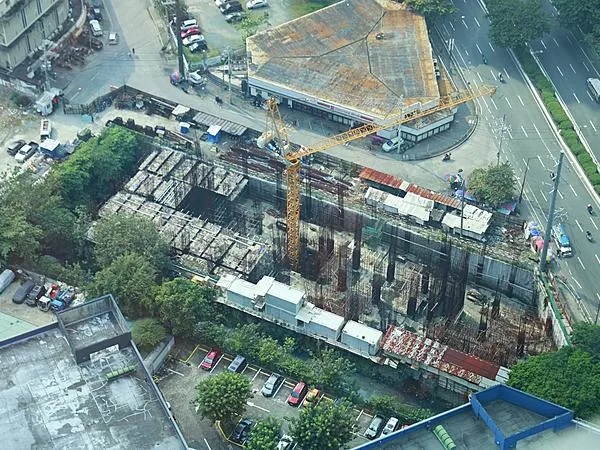
Tunnel boring machines have excavated at least 5.37 kilometers so far, while construction is ongoing at the Valenzuela depot and at 10 stations along the alignment.
DOTr is also aiming to complete right-of-way acquisition this year after securing 82.37 percent of required property and resolving some of the project’s most challenging segments, including Ortigas and White Plains.
With a project cost of P488.5 billion, the MMSP is set to become the country’s first underground railway, spanning 33 kilometers across six cities in Metro Manila.
Once operational, the subway is expected to cut travel time between Valenzuela City and NAIA to 41 minutes from about 1.5 hours and serve up to 520,000 passengers daily.
While the project timeline has shifted, the latest award moves the subway closer to full network delivery and to a long-awaited rail connection to the country’s main airport.
On March 30, 2026, President Ferdinand Marcos Jr. formally opened the Cavitex C-5 Link Segment 3B, a key infrastructure development expected to significantly improve mobility across southern Metro Manila and nearby Cavite provinces.
The newly completed six-lane, 2-kilometer connector forms part of the broader 7.7-kilometer Cavitex C-5 Link corridor, designed to streamline travel between Parañaque and Taguig while strengthening access to Makati, Pasay, Las Piñas, Bacoor, and Kawit.
With the new segment operational, travel time between Parañaque and Taguig is projected to drop dramatically—from approximately 1.5 hours to just 15 minutes—offering immediate relief to motorists navigating one of the capital’s most congested corridors.
In a move aimed at supporting peak-season travel, the government announced that toll fees for Segment 3B will be waived from March 30, 2026 to April 30, 2026. The temporary toll holiday is intended to assist motorists during the Holy Week travel period, when traffic volumes typically surge.
“This is a big help because it will decongest the area and reduce traffic on smaller roads, as vehicles will pass through here instead,” Marcos said during the opening ceremony.
Once toll collection begins on May 1, 2026, rates will be set at P38 for Class 1 vehicles, P76 for Class 2, and P114 for Class 3.
The Cavitex C-5 Link is expected to accommodate approximately 36,000 vehicles per day, improving the flow of goods and commuters while delivering measurable reductions in fuel consumption and transport costs—an increasingly important consideration amid global energy volatility.
Public Works Secretary Vince Dizon said the project aligns with the administration’s broader push to accelerate infrastructure delivery, particularly ahead of major travel periods. He noted that additional road openings are expected, including the Central Luzon Link Expressway extension connecting Tarlac City and Cabanatuan City.
Authorities are likewise working to ensure the smooth flow of traffic along the 3,380-kilometer Maharlika Highway, the country’s principal land transport backbone linking Luzon, Visayas, and Mindanao.
The accelerated rollout of Segment 3B comes despite earlier construction delays caused by right-of-way constraints. Initially budgeted at P3.3 billion, the project cost rose to P4.98 billion before completion. Cavitex Infrastructure Corp., the expressway’s concessionaire, engaged D.M. Consunji Inc. for the project, with construction commencing in the second half of 2024.
The project also forms part of the government’s broader economic response under Executive Order No. 110, which declared a one-year state of energy emergency. Infrastructure investments such as the Cavitex C-5 Link are seen as critical to reducing logistics costs, improving supply chain efficiency, and supporting long-term economic resilience.
As new road networks come online, the focus now shifts to maximizing their operational impact—ensuring that reduced travel times translate into sustained productivity gains for businesses and commuters alike.
The Department of Budget and Management has released around PHP16.5 billion to the Department of Public Works and Highways to accelerate infrastructure spending and support economic growth, following a directive from Ferdinand Marcos Jr..
The funds, issued through a Notice of Cash Allocation to the DPWH Central Office, will be distributed to implementing units across 17 regions nationwide to settle due and demandable accounts payable.
In a statement, the DBM said the release is intended to ensure the timely payment of completed and ongoing infrastructure projects, prevent delays, and maintain uninterrupted public service delivery.
Acting Budget Secretary Rolando Toledo said the move forms part of the administration’s strategy to keep infrastructure projects on track while stimulating economic activity.
He emphasized that timely disbursement of infrastructure funds has a strong multiplier effect, supporting employment, strengthening businesses, and accelerating project completion.
“Government spending, especially in infrastructure, has a strong multiplier effect. When we release funds on time, we support jobs, strengthen businesses, and accelerate project completion — creating immediate and tangible benefits for our people,” Toledo said.
The DBM added that the release underwent strict validation to ensure compliance with budgeting, accounting, and auditing requirements.
Toledo said that while the government is expediting the release of funds, it continues to uphold transparency and accountability by ensuring that all disbursements are supported by complete documentation and aligned with existing laws.
“Upon the President’s directive, we are accelerating infrastructure spending to keep projects moving and the economy growing. This PHP16.5 billion release ensures that obligations are paid on time so work continues and services to the public are sustained,” he said.
“We ensure that every peso is backed by complete documentation and aligned with the law. That is how we balance speed with accountability,” he added.
The DBM reaffirmed its commitment to efficient and responsible budget execution to ensure that government spending delivers tangible benefits to the public.
Ferdinand Marcos Jr. has ordered the release of PHP44.17 billion to accelerate the implementation of the Metro Manila Subway Project Phase I and the North-South Commuter Railway system.
The funds were released to the Department of Transportation after the Department of Budget and Management, led by Acting Secretary Rolando Toledo, approved two Special Allotment Release Orders on March 23.
In a statement, the DBM said the allocation will cover critical loan proceeds requirements to ensure construction timelines remain on track and project momentum is sustained.
The funding will be sourced from the Unprogrammed Appropriations under the 2026 General Appropriations Act, specifically allocated for Support to Foreign-Assisted Projects. The DBM said this mechanism enables the continued implementation of infrastructure projects once financing conditions are met.
Of the total amount, approximately PHP21.28 billion will fund portions of the subway and commuter railway projects financed through the Japan International Cooperation Agency, while the remaining PHP22.88 billion will support the railway system under its loan agreement with the Asian Development Bank.
Once completed, the Metro Manila Subway Project and the North-South Commuter Railway are expected to reduce travel time, ease congestion along major corridors, and improve mobility for millions of daily commuters.
Toledo said the fund release reflects the administration’s commitment to ensuring infrastructure investments translate into immediate public benefits.
“These are projects that Filipinos have waited decades for,” he said. “We are making sure that funding is not the bottleneck so these projects can move faster and deliver real relief to commuters.”
Follow on LinkedIn:
Philippine Resources Journal
Be the "First" to get our exclusive Digital Magazine & Weekly Newsletter.