March 01, 2023

Photo credit: Bilyonaryo - Philex Mining Corporation 

Philex Mining Corporation, one of the oldest and largest gold and copper producers in Southeast Asia, and an advocate of right and principled mining, announced the completion of its financial results for Y2022.

The Company added Php190 million Core Net Income in 4Q2022 to the Php1.543 billion core net income for the first nine months ended September 30, 2022, which resulted to a full year core net income at Php1.733 billion as realized Gold and Copper prices recovered from its decline during 3Q2022, while the Peso to US$ exchange rate appreciated by 3%.

Favorable metal prices and foreign exchange rate kept operating revenues and core net income within safe levels. Operating revenues slightly declined by 5.4% to Php9.262 billion in 2022 from Php9.797 billion in 2021. Operating revenues in 4Q2022 at Php2.203 billion was lower compared to Php2.576 billion in 4Q2021. Revenues during the first half of the year cushioned the impact of the lower revenues in 4Q2022 to the total revenues for the year 2022. Realized Gold prices were also in the highest levels during 1H2022 reaching $1,897 per ounce in 1Q2022, while Copper reached $4.58 per pound.

PRODUCTION

Tonnage milled for 4Q2022 was at 1.878 million tonnes, slightly higher than the 1.873 million tonnes in 3Q2022, but lower than the 1.972 million tonnes of 4Q2021. The total tonnage milled in 2022 reached 7.432 million tonnes, 6.5% lower than the 7.946 million tonnes for 2021. Gold ore grades declined by 5.6% while Copper ore grades improved by 2.1%. Gold output in 4Q2022 reached 11,211 ounces adding to the 37,356 ounces for the three quarters ended September 2022, ending the year with 48,567 ounces, lower by 12% than the 55,149 ounces gold output for 2021. Copper output for 4Q2022 was 6.061 million pounds adding to the 19.025 million pounds produced for the first three quarters of 2022 and ending the full year Copper output at 25.086 million pounds, slightly lower than the 26.200 million pounds 2021 output.

OPERATING COSTS AND EXPENSES AND EBITDA

Operating cost and expenses were slightly up by almost 8% at Php7.120 billion for 2022 compared to the Php6.598 billion for 2021.This was largely attributable to the increases in operating costs that started during 3Q2022 due to the increase in the cost of materials and supplies and logistics expenses influenced by inflationary pressures and depreciation of the Peso against US$ during 2022.The increasing trend in coal prices in the global market directly impacted and increased the operating costs of the Company’s power provider that resulted to higher power costs charged to the Company beginning 4Q2022. The 4Q2022 operating costs and expenses increased by 11% to Php2.002 billion compared to Php1.800 billion in 3Q2022 and higher by 14% when compared to the same period in 2021 at Php1.755 billion.

The higher operating cost and expenses in 2022 negatively impacted EBITDA level for 2022 reaching to only Php3.524 billion compared to Php4.317 billion in 2021.This is the combined effect of 5.4% lower revenues and 8% increase in operating cost and expenses.

With our performance in 2022, the Board declared a cash dividend of 2 centavos (Php0.02) per common share aggregating to Php116 million, to shareholders on record as of March 13, 2023, which will be paid on March 24, 2023, as Philex preserves cash surplus as part of the initial capital for the development of Silangan Project.

OUTLOOK

The change in administration brought about by the 2022 national and local elections and, with it, government pronouncement on support for the mining industry somehow tempered the impact of the continued threat of COVID-19, the disruption to global supply chain with the unprovoked Russian invasion of Ukraine, and the spectre of a global recession.

The volatility of the copper and gold prices and the fluctuation in the foreign exchange rate likewise alleviated the situation. This was also the year that the company continuously implemented maintenance and repairs of its ageing mill equipment, thus, allowing the company to prepare for any eventuality. Resilience was really the name of the game.

Towards the end of the year, the results of confirmatory drilling and technical studies identified additional mineable reserves that can be mined up to December 31, 2027, thus extending the life of mine of Padcal up to 2027.

For 2023, the Company will continue to pursue relentless improvements to sustain this possible mine life extension and will also look for other business opportunities particularly near Padcal mine. The Company will likewise explore more participation in the “green metals space” particularly with nickel and its importance to global energy transition.

At the start of this year, a term sheet was signed between the Company and Macawiwili Gold Mining and Development Co., Inc. (“MGMDCI”) that outlined the parties’ clear intentions to explore commercial, financial, and technical avenues in preparation for possible shares acquisition by the 4 Company in MGMDCI primarily focusing on MGMDCI’s properties adjacent to the existing Padcal mine.

MGMDCI has over 800 hectares of contract area under its Mineral Production Sharing Agreement (“MPSA”) located adjacent to the Company’s existing Padcal mine.

In 3Q2022, the Company completed the stock rights offering as part of the funding plan for the financing of the Silangan project. On the other hand, wholly owned subsidiary, Silangan Mindanao Mining Co. Inc. (“SMMCI”) is in the final stages of the debt syndication process to raise additional funding to complete the funding requirement of the Silangan project. Further, the development works in the Silangan project is in full swing and the decline portal will be completed by the end of March and its completion will pave the way for the start of the ground woks on the access decline to the ore body. The tunnel driving will commence in the beginning of 2Q2023 and will trigger the start of the mine development.

“We went into 2022 knowing fully well what we were up against,” says Eulalio B. Austin, Jr., Philex president and CEO. “We did not expect the global uncertainty to wane, but we were cautiously optimistic that 2022 would be another good year for Philex. There had been operational challenges, coupled with the high levels of global inflation, the volatility of currencies and of metal prices, but with careful planning and adaptation to the changes in business conditions, we were able to achieve our targets.”

Austin adds that “the untiring efforts and cooperation of the women and men of Philex were greatly appreciated, and we expect the same coming into 2023. The lines were drawn and our agility to adapt to the changing situations will spell the difference. We can change our directions, but never our destination.”

“As I keep telling our employees,” Austin emphasized, “the best is yet to come for Philex Mining.”

“The consensus is that global growth would slow down in 2023,” according to Philex chairman, Manuel V. Pangilinan. “This is undoubtedly an impact still of the war in Ukraine and the collateral adverse inflationary effect on food, power, and fuel. Our country will not be spared from this deceleration, but perhaps lesser than other economies. The main hurdles would be inflation and interest rates.”

“That being said, we still expect Philex Mining to grow in 2023. The recent signing of the term sheet with MGMDCI coupled with the completed confirmatory drillings that successfully identified additional mineable reserves that extended the Padcal mine life from 2024 to 2027 are both good starts to what looks like a promising year. Add to this the expected developmental milestones in our ongoing Silangan project and the continued government support and it will be an exciting year for all of us.”

“We continue to pool our efforts together, do things the right way to the best of our abilities, and keep believing in ourselves and in the Almighty.”


Article courtesy of the Philippine Stock Exchange

February 28, 2023

Photo credit: OceanaGold

OceanaGold Corporation reported its financial and operational results for the three months and full year ended December 31, 2022. 

Gerard Bond, President and CEO of OceanaGold said, "2022 was a successful year on multiple fronts for OceanaGold. We achieved record low safety outcomes, outperformed at Haile, returned Didipio to full production ahead of schedule, delivered on group guidance and generated strong free cash flow, which allowed us to reduce net debt by nearly $70 million. We also successfully progressed our organic growth projects, notably the completion of the permitting process for the Haile underground expansion and delivered some exciting exploration results."

"Looking ahead to 2023 and beyond, our focus is to deliver on our near-mine, lower risk, organic growth profile, notably the Haile expansion project. Our three-year outlook is for production growth to over 600,000 ounces of gold by 2025, with a projected improvement in margins and declining capital spending leading to a significant increase in projected free cash flow in that period. Additionally, we will continue to invest in the exciting exploration opportunities across the business, with a focus on near-mine high return targets at Didipio, Haile and Wharekirauponga."

"This strong operational and financial performance in 2022, strengthened balance sheet and the confidence we have in our outlook has resulted in the Board determining to reinstate the Company's dividend policy and pay a  $0.01 per share semi-annual dividend payable in April 2023." 

Full-Year 2022 Highlights

  • Achieved a record low full year recordable injury frequency rate of 2.3 per million hours worked.
  • Achieved consolidated full year guidance with gold production of 472,201 ounces at All-In Sustaining Costs ("AISC") of $1,407 per ounce on gold sales of 469,045 ounces.
  • Fourth quarter consolidated gold production of 120,918 ounces at AISC of $1,602 per ounce on gold sales of 118,667 ounces.
  • Full year revenue of $967.4 million, EBITDA of $382.1 million and Net Profit of $132.6 million.
  • Fourth quarter revenue of $238.4 million, EBITDA of $109.3 million and Net Profit of $41.0 million.
  • Full year adjusted earnings of $0.21 per share and operating cash flow of $0.54 per share, including $0.04 and $0.12 cents per share respectively in the fourth quarter.
  • Generated full year free cash flow of $57.7 million, including $2.7 million in the fourth quarter.
  • Repaid $100 million of the Company's revolving credit facility, reducing drawn bank debt to $150 million.
  • Net debt of $170.2 million as at December 31, 2022, at a leverage ratio of 0.45 times.
  • Haile SEIS Record of Decision and Mine Operating Permit received, completing the permitting process for the expansion.
  • Dividends reinstated, with a semi-annual dividend of $0.01 approved and payable in April 2023.

2023 Guidance and Multi-Year Outlook

  • Consolidated 2023 gold production guidance of 460,000 to 510,000 ounces and 12,000 to 14,000 tonnes of copper.
  • Consolidated 2023 AISC guidance of $1,425 to $1,525 per ounce sold including cash costs of $800 to $900 per ounce sold, both on a by-product basis.
  • Multi-year consolidated gold production and AISC outlook of:
    • 550,000 to 600,000 ounces of gold and 12,000 to 14,000 tonnes of copper at an AISC of $1,300 to $1,450 per ounce sold in 2024; and
    • 580,000 to 630,000 ounces of gold and 12,000 to 14,000 tonnes of copper at an AISC of $1,100 to $1,250 per ounce sold in 2025.
  • Three-year gold production growth rate of approximately 9% per year from 2022 at a decreasing AISC.


Article courtesy of Oceangold. The full press release can be found HERE

February 27, 2023

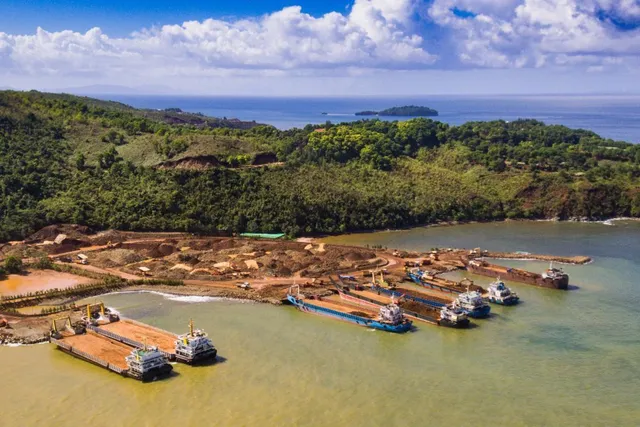
Photo credit: TVI-Agata's nickel DSO process

To paraphrase a popular mining saying, “They are making a ton of money and the Philippines is not getting a nickel.” The Philippines needs to maximize revenue from its nickel mining operations. Further up, the mining value chain presents more opportunities for the country to realize the contribution of mining. The US Geological Survey (USGS) lists nickel, cobalt, lithium, and rare earth metals as critical minerals. Stainless steel production, super alloys, and rechargeable batteries all use nickel. It is one of the world’s most important metal markets at $20 billion in size. The World Economic Forum reports that the world’s battery capacity must grow 40 times larger than it is today, and electric vehicles will require 80% of that future capacity. A Tesla car battery would require up to 50 kilograms of nickel.

In addition, many major countries vowing to stop gas and diesel vehicles are driving further the global boom in electric vehicles (EVs). As the world’s second top nickel ore producer, it is time for the Philippines to advance further up the nickel mining value chain. But is the country ready or is it too late?

Photo credit: Tesla 

The Mining Value Chain

The mining value chain starts with the first stage of the mine life cycle, exploration and analysis. Value steadily rises with new information that is favorable to the project. Each bit of knowledge brings it closer to the project construction and commissioning stage, known as the development stage. The value of a mine rises sharply in this stage as it closes to the production stage. Value remains steady in the production stage and declines as it approaches closure and rehabilitation. If we magnify into the production stage and look further into the sale and marketing of metals, we will realize that the most significant value added is in the final product. While this might be as simple as it looks in precious metals such as gold, the process is complex in critical minerals like nickel.

Current Position in the Value Chain

According to the Observatory of Economic Complexity (OEC), nickel is the 9th most exported product in the Philippines. The product comes from 32 operating nickel mines and 2 processing facilities. It is classified as direct-shipping ore (DSO), as most nickel operations in the Philippines directly ship nickel laterites to China without further processing to increase its value. However, this is suitable for high-pressure acid leach (HPAL) ores. The Philippines, Indonesia, Cuba, and New Caledonia contribute nickel laterites to the world market.

In 2022, the Philippines was the world’s largest nickel producer, producing 370,000 metric tonnes or 10% of the global mined nickel output. S&P reports that the Philippines' nickel ore exports to China amounted to $2.67 billion in 2022, according to data from China's General Administration of Customs. That is 96.5% of the Philippines' nickel ore exports according to the Philippine Statistics Authority.[1]

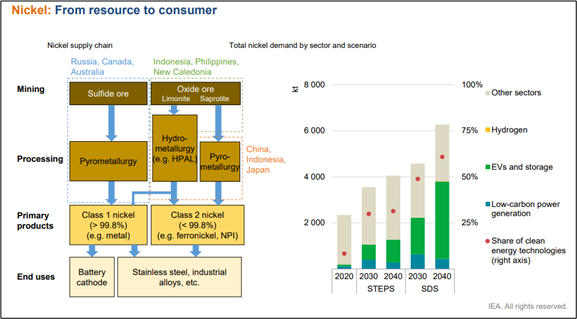
Nickel laterites or nickel oxides are low-grade, high-tonnage ore that accounts for 62.4% of the global supply. Chinese steel uses the typical products of nickel laterites such as nickel pig iron and ferronickel. The remaining 37.5% nickel supply is nickel sulfide, which is high-grade but rare nickel found in countries like Canada, Australia, China, Russia, and Greenland. Their products are typically nickel metal and sulfate, primarily used in electroplating and lithium-ion cathode material. Less than 10% of that supply is in sulfate form; not all are battery grade. [2]

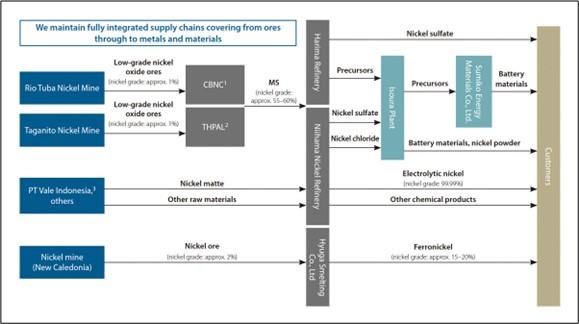
Of the nickel mines operating in the country, only Nickel Asia Corporation (NAC), the country’s top producer of nickel, processes its nickel laterite ores. Coral Bay Nickel Corporation and Taganito HPAL operate a hydrometallurgical processing plant that uses the High-Pressure Acid Leach (HPAL) process. HPAL can effectively and efficiently convert low-grade nickel lateritic ores from 1.14%-1.44% nickel to 55 to 60% nickel, also known as mixed sulfides (MS).

Mixed sulfides, a mixture of cobalt and nickel sulfides and an intermediate product, are refined further in Japan at the Niihama Nickel Refinery and Harima Refinery. They produce electrolytic nickel and cobalt, nickel chloride, and nickel sulfate. These are further processed at the Isoura Plant to produce either battery-grade nickel or ferronickel. Battery grade nickel or Class 1 nickel is typically >99.8% Ni. Nickel pig iron (NPI) or ferronickel used for stainless steel and alloy is class 2 nickel or <99.7% Ni.

 Source: Sumitomo Metal Mining. HPAL Technology for Nickel Recovery. [3]

Value increases as the products are refined up to their final form in the supply chain. More value is added to battery production, and eventually electric vehicle production. Thus, the Philippines needs to get added value and opportunities along the production line, at least for the primary products. Countries like China, Indonesia, and Japan get this added value in the processed product stream.

The Philippines, from its current standing, needs to move further up the value stream at least to the primary products. Additionally, it might be best if it can go to battery cathode or stainless-steel production, as most nickel ore is suitable for this.

Source: International Energy Agency (IEA). The Role of Critical Minerals in Clean Energy Transitions. [4]

Recharging the Philippine Nickel Mining Industry

The Philippines, through the Department of Trade and Industry (DTI) participated in the Indo-Pacific Economic Framework for Prosperity (IPEF) Ministerial Meeting in Los Angeles, U.S.A last September 2022. The meeting highlighted that the U.S. Government will extend a grant for the Philippines’ nickel ore processing for the manufacture of batteries through a partnership with an American firm. [5]

In December 2022, a study grant was awarded to Eramen Minerals Inc. (EMI) to evaluate the technical and economic viability of developing a nickel processing facility at the site of EMI’s mine in Zambales province. The plant is expected to use EMI’s nickel ore to produce refined nickel and cobalt products for sale as battery precursor materials. The study will help define the technical specifications for the facility and promote alignment with high environmental, social, and governance standards. [6]

Last January, Chinese investors pledged to invest US$7.32 billion in the electric vehicle and mineral processing sectors in the Philippines during President Ferdinand Marcos Jr.'s first state visit to China on January 05, 2023. [7] Last February, Global Ferronickel Holdings Inc. coordinated with a potential technology partner for its plan to build a $100-million steel plant in Bataan. The plant aims to capture around 10% of the market for imported steel. [8]

These are exciting opportunities for the nickel mining space, but policy changes especially on taxes must be balanced as the country needs to maintain a healthy business environment favorable to foreign investors, the government, and its citizens.

Balancing Interests

The government is planning to impose up to 10% tax on nickel ore exports in what the Department of Environment and Natural Resources (DENR) Secretary Antonia Yulo Loyzaga describes as moving out of the supply chain to the value chain. Inspired by the success of nickel’s high-value production in Indonesia, DTI is initiating the government’s industrial policy study to determine whether it will impose an export tax or nickel ban. Another statement from Trade Secretary Alfredo E. Pascual encourages investment in local processing to produce higher-value export products and not resource-based exports. However, following the footsteps of Indonesia is not as easy as it seems for several reasons.

  1. Depleting Reserves. The Philippines' class A nickel reserves dropped by 4.8% to 474.49 million tonnes in 2021, according to The Philippine Statistics Authority. [9] While the Philippines remains among the top countries with nickel ore reserves, there is a huge difference compared to the ore reserves of Australia, Brazil, and Indonesia. Favorable circumstances could quickly shift investors into moving into these countries in the long term. By the time nickel peaks, the Philippines might no longer have that impact on global production. In addition, a future tax on nickel would be meaningless and only discourage smaller mining projects. Dante Bravo, president of the Philippine Nickel Industry Association (PNIA), said the comparison to Indonesia is flawed because it has more reserves to support investments in local mineral processing.
  2. Capital Requirement. A processing facility is a capital-intensive infrastructure, and many small nickel mining operations need to satisfy processing capacities to operate. A more attractive investment solution would be a centralized nickel processing facility for mining operations near each other.
  3. Energy Requirement and Environmental Concerns. Lateritic nickel ores of the Philippines are amendable to high-pressure acid leach (HPAL) requiring substantial energy input. Processing low-grade nickel ores require high volumes of water, resulting in expensive water treatment and disposal. Lateritic ore mining also warrants high tonnage, thus, a larger environmental footprint.
  4. Policy Shifts. The Philippines has an unstable political climate where policies, especially in mining, change every time a new administration takes over. The industry is always at risk. The deposit is not the only focus of mining investment. It also means investment in the national and local government, the community, and the environment. Thus, changing policies is a significant concern for foreign investors.

Overall, the environmental and social costs are the most significant reason for the Philippines to maximize value from mining. Processing facilities abroad do not assume that cost because they just buy into the product after mining, while we struggle to defend the industry and what is left after mining. The Philippines’ nickel mines will not be here forever and not for a very long time. Decisions need to be guided by facts and science for the interest of the common good.


Reference:

[1] Chen. A. (2023, February 02). Philippines seeks to follow in Indonesia’s footsteps with Nickel Export Ban. S&P Global Market Intelligence. https://www.spglobal.com/marketintelligence/en/news-insights/latest-news-headlines/philippines-seeks-to-follow-in-indonesia-s-footsteps-with-nickel-export-ban-74109353

[2] Desjardins, J. (2017, October 30). Nickel: The Secret Driver of the Battery Revolution. Visual Capitalist. https://www.visualcapitalist.com/nickel-secret-driver-battery-revolution/

[3] Sumitomo Metal Mining. (n.d). HPAL Technology for Nickel Recovery. https://www.smm.co.jp/en/sustainability/activity_highlights/article_12/

[4] International Energy Association. (2022, March). The Role of Critical Minerals in Clean Energy Transitions. https://iea.blob.core.windows.net/assets/ffd2a83b-8c30-4e9d-980a-52b6d9a86fdc/TheRoleofCriticalMineralsinCleanEnergyTransitions.pdf

[5] Magkilat, B. (2022, September 15). US vows grant for PH nickel ore processing — DTI. Manila Bulletin. https://mb.com.ph/2022/09/15/us-vows-grant-for-ph-nickel-ore-processing-dti/

[6] Eramen Minerals gets US trade grant. (2022, December 14). Philstar Global

[7] Magkilat, B. (2023, February 06). Chinese firms to invest $7.32 B in nickel, EV, steel, electronics ventures in PH. Manila Bulletin. https://mb.com.ph/2023/01/06/chinese-firms-to-invest-7-32-b-in-nickel-ev-steel-electronics-ventures-in-ph/

[8] Philippine Nickel Industry Associations (PNIA). (2023, February 09). Global Ferronickel in Talks With Potential Partner For $100m Steel Plant. https://www.philippinenickel.org/news-and-updates/mining-news/philippines-proposed-tax-on-nickel-ore-exports-could-kill-industry-group-head/

[9] Philippine Statistics Authority. (2022, June 02). Philippines’ Class A Nickel, Gold, Copper, and Chromite Resources Valued at Php378.04 Billion in 2021 (Press Release). https://psa.gov.ph/content/philippines%E2%80%99-class-nickel-gold-copper-and-chromite-resources-valued-php-37804-billion-2021

February 27, 2023

Photo credit: Global Ferronickel Holdings

The Mines and Geosciences Bureau (MGB) has clarified that the Mineral Production Sharing Agreement (MPSA No. 017-93-IV) between the Philippine government and Ipilan Nickel Corporation (INC) remains in force and valid until 10 April 2025. This allows INC, a subsidiary of diversified conglomerate Global Ferronickel Holdings, Inc., to maintain its exclusive right to conduct responsible mining operations in the Municipality of Brooke's Point, Palawan, covering 2,835 hectares, with 260 hectares already partially declared as a mining area.

Engr. Glen Marcelo C. Noble, Regional Director for MGB-MIMAROPA Region, issued the clarification in a letter dated 21 February 2023 to Brooke’s Point Vice Mayor Mary Jean D. Feliciano in response to a resolution by the Sangguniang Bayan of Brooke’s Point. The resolution sought to investigate the operations of INC following claims that the alleged renewal of its MPSA in 2018 was without the endorsement of the Municipality of Brooke’s Point and that it is operating without a Certificate Precondition (CP) from the National Commission of Indigenous Peoples (NCIP) and a Protected Area Management Board (PAMB) clearance. Director Noble explains that the MPSA did not expire on 05 August 2018 as MPSA No. 017-93-IV was amended on 10 April 2000 to conform to RA 7942, otherwise known as the Philippine Mining Act of 1995. To resolve the issue on the effective date of the MPSA, the DENR has issued the Order dated 21 December 2021 confirming that the effective date of the same MPSA shall be reckoned from the date of the execution of the amended MPSA

Director Noble further clarifies that INC does not need to secure a CP as this requirement only applies to applications filed after RA 8371, or the Indigenous Peoples Rights Act of 1997, was enacted. He cites a letter by the NCIP dated 31 March 2006 stating that INC is no longer covered as it was already awarded an MPSA four years prior on 05 August 1993. INC, on the other hand, has concluded the process of securing a CP in preparation for the renewal of its MPSA in 2025. During a series of community consultations last June 2022 to August 2022 under the guidance of the NCIP, an overwhelming number of indigenous peoples (IPs) voted for the continued operations of INC. In total, 3,739 IPs from Barangays Aribungos and Calasaguen voted in favor of INC versus only 614 dissenters from Barangay Aribungos. In Barangay Calasaguen, 100 percent of the eligible voters were in favor of responsible mining. This led the IPs from Barangay’s Barong-Barong, Ipilan, Mambalot and Maasin to concede in favor of INC.

There is also no need to secure a PAMB Clearance as the MPSA predates the proposed Final Boundary of the Mt. Mantalingahan Protected Landscape (MMPL). It is protected under the pertinent provision of Presidential Proclamation No. 1815, creating the MMPL while recognizing prior or vested rights.

“We are awaiting the renewal of our Mayor’s Permit as we have already submitted the necessary documents and complied with all laws and regulations,” said Alex Arabis, Resident Mine Manager of Ipilan Nickel Corporation.

INC employs over 1,500 people, wherein 90% are residents of Brooke’s Point. The IPs are also well-represented as they make up 28% of the total workforce. To date, INC has spent close to P53.3 million to fund various projects to improve the quality of life in Brooke’s Point and nearby areas.


Article courtesy of the Philippine Stock Exchange

February 27, 2023

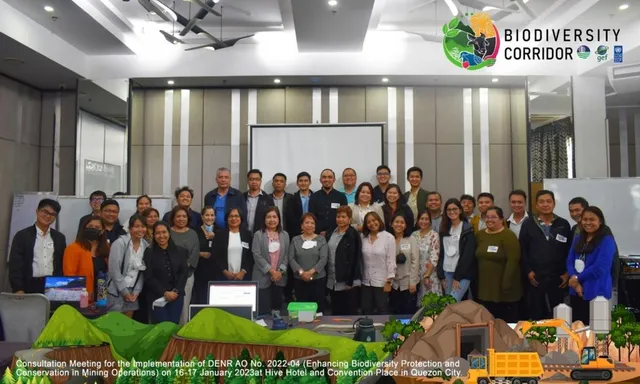
Photo: Participants of the Consultation Meeting for the Implementation of DAO No. 2022-04

The Mines and Geosciences Bureau (MGB) and the Biodiversity Management Bureau (BMB) of the Department of Environment and Natural Resources (DENR), together with the DENR Global Environment Facility / United Nations Development Program Biodiversity (UNDP-BD) Corridor Project, conducted a Consultation Meeting for the implementation of DENR Administrative Order (DAO) No. 2022-04 re: “Enhancing Biodiversity Protection and Conservation in Mining Operations” on January 16-17, 2023 in Hive Hotel, Quezon City.

This consultation, which is part of the agreements made during the December 22, 2022 meeting with MGB, BMB, and the BD Corridor Project, aims to provide a venue for more in-depth discussion on the issues and concerns that needs to be addressed for the implementation of the DAO on the basis of the recommendations gathered from the previous roll-out of the said policy, and to develop an initial draft DAO 2022-04 Implementation Plan.

A total of 48 participants from the BMB, MGB Central Office and Regional Office Nos. XI and XIII, Forest Management Bureau, Environmental Management Bureau, Ecosystems Research and Development Bureau, Foreign-Assisted and

Special Projects Service, Policy and Planning Service, and the National Project Management Unit and Country Program Management Unit of the UNDP-BD Corridor Project attended the said consultation meeting.

The participants were welcomed by Engr. Teodorico A. Sandoval, OIC, Assistant Director of MGB, and the opening message was delivered by Dir. Natividad Y. Bernardino, OIC Director of BMB. After which, a series of presentations and lectures on best mining rehabilitation and biodiversity conservation practices were delivered by various personnel of MGB, BMB, and ERDB. An open forum was then conducted to clarify all concerns and questions related to the delivered presentations.

On the second day of the learning event, a lecture on the proposed guidelines for the valuation of biodiversity and ecosystem services was conducted for the development of the DAO 2022-04 Implementation Plan. The participants also reviewed and enhanced the DENR Special Order on the Creation of Technical Working Group.

The results of the conducted two-day consultation meeting will then be presented during the remaining leg of orientations on DAO No. 2022-04 for DENR Luzon Cluster (Regions CAR, I, II, III, IV-A) and Visayas Cluster (Regions IV-B, V, VI, VII, VIII) which  will be held this CY 2023.

January 30, 2023

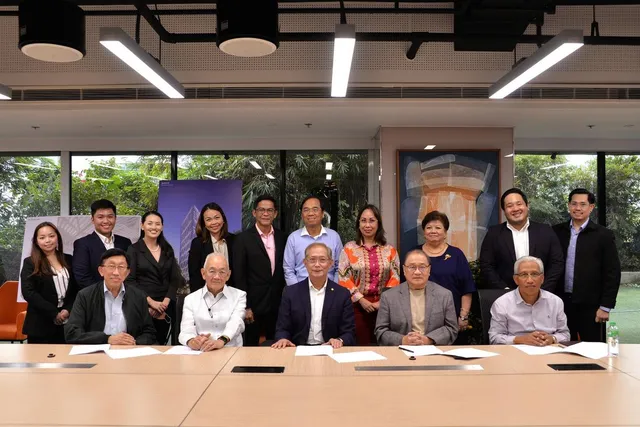
In photo at the signing of the term sheet between PMC and MGMDCI were: (seated, left to right) Felicisimo A. Feria, Jose Ma. S. Lopez, and Michael L. Escaler, all representing MGMDCI; Manuel V. Pangilinan, Philex Chairman; and Eulalio B. Austin Jr., Philex President and CEO; (standing, left to right) Atty. Katrina Janine Sta. Ana, Associate, Migallos & Luna Law Offices; Atty. Bryan George Manzano, Associate, Migallos & Luna Law Offices; Atty. Michelle Carisse Balois, Partner, Feria Tantoco Daos Law Offices; Atty. Daneia Isabelle Palad, Partner, Migallos & Luna Law Offices; Atty. Winston Cruz, Vice-President and General Counsel, Philex Mining Corporation; Romeo B. Bachoco, Senior Vice-President and Chief Finance Officer, Philex Mining Corporation; Atty. Marilyn A. Victorio-Aquino, Director, Philex Mining Corporation; Atty. Barbara Anne C. Migallos, Director and Corporate Secretary, Philex Mining Corporation and Partner, Migallos & Luna Law Offices; Atty. Raymond Francis Jamora, Associate, Feria Tantoco Daos Law Offices; and Atty. Michael John Tantoco, Jr., Associate, Feria Tantoco Daos Law Offices. (PMC photo)

Philex Mining Corporation, one of the oldest and largest copper and gold producers in Southeast Asia, recently set into motion its plans for expansion with the signing of a Term Sheet with Macawiwili Gold Mining and Development Co., Inc. (“MGMDCI”) in simple ceremonies in Makati City.

Macawiwili Gold Mining and Development Co., Inc. is a 90-year old company engaged in mineral exploration and production in Itogon, Benguet. With over 800 hectares of contract area under its Mineral Production Sharing Agreement, the Company has been exploring various mineral deposits, including gold and copper, for several decades.

The Term Sheet outlines the parties’ clear intentions to explore commercial, financial, and technical avenues in preparation for possible shares acquisition by the Company in MGMDCI. Activities to kick off this partnership will include conduct of due diligence and scout drilling activities on the property of MGMDCI covered by Mineral Production Sharing Agreement (MPSA) in Itogon, Benguet Province., located adjacent to the existing Padcal Mine of the Company.

Signing the Term Sheet on behalf of the Company were Manuel V. Pangilinan, Chairman, and Eulalio B. Austin Jr., President and CEO; while representing the shareholders of MGMDCI were Michael G. Escaler, Jose Ma. S. Lopez, and Felicisimo A. Feria. The signing was also witnessed by directors and officers of the Company as well as counsel for both parties.

“Our interest to pursue investments in the Macawiwili property” according to Eulalio B. Austin, Jr., President and CEO, “is part of our business direction for this year to broaden interest in ‘green metals’ through mergers and acquisitions.”

“We need to hit the ground with this at the soonest possible time,” Austin adds, “considering that this property is adjacent to our Padcal mine and would go a long way in fulfilling company plans for expansion and extension of the life-of-mine of Padcal.

“This is a good addition or extension to the Padcal Mine,” according to Manuel V. Pangilinan, Philex Chairman. “I hope that this is the start of something good and that it would ride the wave of higher metal prices in gold and copper.”

Pangilinan emphasized that “any addition, expansion, or extension to the Padcal Mine would greatly benefit not just our employees and their families, but also our host and neighboring communities, and our nation as a whole.”


Article courtesy of the Philippine Stock Exchange

January 30, 2023

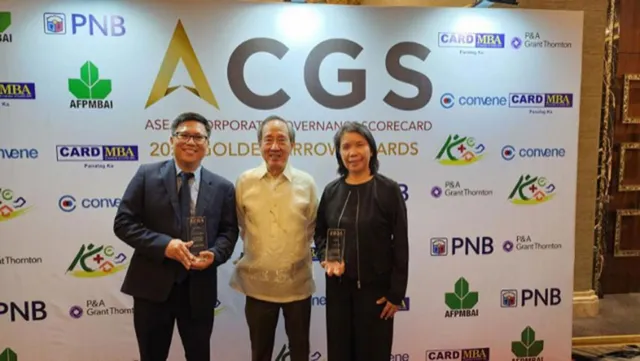
Photo caption (left to right): SMPC Corporate Governance and Compliance Manager Joseph D. Susa, DMCI Holdings Board Advisor and SMPC Independent Director Honorio O. Reyes-Lao and SMPC SVP, Chief Risk, Compliance and Performance Officer Junalina S. Tabor.

Diversified engineering conglomerate DMCI Holdings and its energy subsidiary Semirara Mining and Power Corporation (SMPC) were among the Philippine listed companies recognized for their corporate governance performance by the Institute of Corporate Directors (ICD).

DMCI Holdings received the 2 Golden Arrow recognition while SMPC was awarded the 3 Golden Arrow recognition.

Both have been ASEAN Corporate Governance Scorecard (ACGS) Golden Arrow awardees since 2019.

The awards were conferred after the two companies exhibited observable conformance with the Philippine Code of Corporate Governance and internationally recommended corporate governance practices as espoused by the ACGS.

The ACGS measures the performance of the companies in the areas of facilitating the rights and the equitable treatment of shareholders, how they relate to their different stakeholders, ensuring transparency and accountability through timely disclosure of material information, and how the board guides the company strategically, monitors the management, and ensures the board’s accountability to the company and the shareholders.

Over 80 Philippine listed companies were feted during the in-person awarding ceremony in Sheraton Manila Hotel last January 20.


Article courtesy of the Philippine Stock Exchange

January 19, 2023

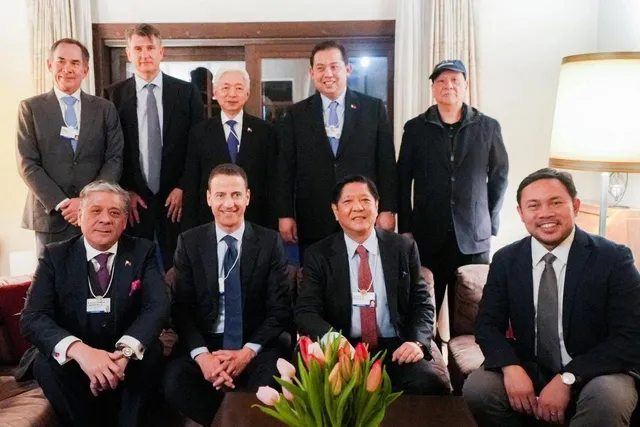
Photo: President Ferdinand ‘Bongbong’ Marcos Jr. meets officials of Glencore. Credit: Office of the President Facebook Page

President Ferdinand R. Marcos Jr. on Wednesday met with the international chief executive officers (CEOs) to discuss potential business opportunities in the Philippines.

A breakfast meeting was held between Marcos and the world's top CEOs in Davos, Switzerland to enable the President to present the investment climate in the Philippines, Presidential Communications Office (PCO) Secretary Cheloy Garafil said in a statement.

Marcos, Garafil said, was accompanied by the official Philippine delegation which include his Cabinet and top Philippine business leaders.

"Top international CEOs gathered for a breakfast meeting with President Ferdinand R. Marcos Jr., his Cabinet, official delegation and the 7 top Philippine CEOs to discuss the investment climate in the Philippines and to find ways to facilitate their business operations in the country," she said.

Marcos also had the chance to meet with Gokul Laroia, chairperson of investment banking powerhouse Morgan Stanley for Asia Pacific, on the sidelines of his participation in the World Economic Forum (WEF), Garafil said.

Garafil said Laroia, during the meeting with Marcos, discussed Morgan Stanley's plan to have an office in Manila.

"Mr. Laroia informed President Marcos that the top global investment bank will set up office in Manila," she said.

Marcos is currently in Davos to present the current state of the Philippine economy and woo more investors.

On Tuesday (Zurich time), Marcos also had a series of business meetings on the WEF sidelines, including a meeting with officials of mining and commodities training giant Glencore.

Marcos and Glencore officials led by its CEO, Gary Nagle, discussed the Swiss multinational firm's intent to expand its business operations in the Philippines, Garafil said.

"On the sidelines of the World Economic Forum (WEF) organized sessions, President Ferdinand R. Marcos Jr. and Trade Secretary Alfredo Pascual met with Mr. Gary Nagle, Chief Executive Officer of Glencore, on Tuesday to discuss the company’s interest to expand mining and processing operations in the Philippines," she said.

Garafil said Glencore, one of the largest and globally diversified natural resource companies in the world, sees the Philippines as a "potential partner to process nickel and copper resources responsibly and sustainably for use in electric vehicle batteries and energy storage units."

Glencore is engaged in a wide range of commodity production, sourcing, processing, refining, transporting, storage, financing and supply. With 60 mining, metallurgical and oil production assets worldwide, Glencore is dedicated to responsibly sourcing the commodities that drive progress in everyday life.

Marcos also received a "warm welcome" from WEF founder and chairperson Klaus Schwab on Tuesday, the Office of the President (OP) said in a Facebook post.

Marcos' investment pitch for the Philippines also earned "a very positive response" from some of the world's top chief executive officers and investment experts attending WEF.

Oath-taking

Meantime, the PCO also shared several photos of the oath-taking of newly-appointed officials.

Based on the photos, Executive Secretary Lucas Bersamin administered the oath of office to Roderico Bioco as acting National Food Authority (NFA) administrator and NFA Council member; Rita Riddle as acting member of the Government Service Insurance System's (GSIS) Board of Trustees; and Joan Padilla as an administrator of the Intramuros Administration.

The appointment of Bioco and Padilla was first announced on Jan. 11 and 18, respectively.


Article courtesy of the Philippine News Agency

January 19, 2023

Photo: Benguet Vice Governor Ericson Felipe on Tuesday said they are appealing to the Department of Environment and Natural Resources (DENR) to streamline the permitting process for 'Minahang Bayan' that delays the declaration of an area for community mining. The declaration is a requirement before mining associations can be issued a mining contract. (PNA photo by Liza T. Agoot)

The provincial government is hopeful that small-scale mining activities in the province would be allowed again pending the approval of Minahang Bayan applications.

"Our constituents are living through mining, many relying on it for survival which makes it impossible to stop them from operating while the Minahang Bayan applications are pending and being processed," Vice Governor Ericson Felipe said in an interview on Tuesday.

Felipe stressed the dilemma of the mining associations in obtaining a Minahang Bayan declaration, which he said is tedious and complicated.

He added that the provincial government, in several resolutions, already requested the Department of Environment and Natural Resources (DENR) to streamline the requirements that was identified as the reason for the delay in obtaining a Minahang Bayan declaration.

Following the issuance of the declaration, a small-scale mining contract that will allow the association to afford the Minahang Bayan the authority to utilize the same to extract minerals is also required.

In 2018, the DENR issued a cease and desist order (CDO) for all small-scale mining operations in Benguet and the whole of Cordillera following the massive landslide in a mining community in the town of Itogon that claimed the lives of about a hundred persons.

"Our people engaged in small-scale mining are in a sad plight with their operation being simply tolerated because of the absence of legal status in operation and have to survive thru mining as a livelihood. We hope that the DENR will reconsider soon," he added.

Felipe said aside from agriculture, small-scale mining is also a top source of income and job generator in Benguet.


Article courtesy of the Philippine News Agency

January 09, 2023

Photo credit: Celsius Resources

Makilala Mining Company, Inc. (MMCI), a subsidiary of Celsius Resources Limited, has received interim Certificates of Approval from the Regional Mines and Geosciences Bureau (MGB) for two vital program documents: the Five-Year Social Development and Management Program (SDMP) and the Care and Maintenance Program (CMP) for the Maalinao-Caigutan-Biyog Copper-Gold Project (MCB). These documents are part of MMCI's application for the Declaration of a Mining Project Feasibility and the subsequent issuance of a Mineral Production and Sharing Agreement (MPSA). The interim nature of the Certificates of Approval indicates that MMCI is not yet required to act on its commitments under these programs until the MPSA has been issued.

Under the Philippine Mining Act of 1995, all mining permit holders are required to develop and implement an SDMP in consultation with and in partnership with host and neighboring communities. The goal of the SDMP is to create self-reliant, responsible, and resource-based communities that are capable of developing, implementing, and managing community development programs, projects, and activities in a manner consistent with sustainable development principles. The SDMP covers the following primary areas:

  • Human resource development and institution building
  • Enterprise development and networking
  • Assistance to infrastructure development and support services
  • Access to education and educational support programs
  • Access to health services, health facilities, and health professionals
  • Protection and respect of socio-cultural values

The CMP is a prerequisite document that outlines MMCI's safety and health, social, and environmental commitments as integral components of the MCB project in the event of operational constraints (e.g., voluntary or involuntary stoppage).

Celsius Executive Director and MMCI Country Operations Director, Peter Hume, commented on the approval of the SDMP and CMP: "This not only demonstrates the national government's strong commitment to the mining industry and the MCB project as a key economic driver post-pandemic, but also shows our determination to advance the project and create value for shareholders and stakeholders through purposeful and ethical projects. These programs will also provide us with opportunities to demonstrate our adherence to environmental, social, and governance (ESG) standards in partnership with the Balatoc community and local and national government units."

January 09, 2023

Photo credit: Celsius Resources

Makilala Mining Company, Inc. (MMCI) and PDEP, Inc., two wholly owned Philippine subsidiaries, have entered into a partnership with Sodor Inc. and PMR Holding Corp. to develop the MCB Project. The partnership will be formalized through the signing of a binding agreement. The two companies have also signed a Non-Binding Term Sheet outlining their common goal of obtaining a Mineral Production Sharing Agreement (MPSA) from the Philippine government.

Under the Philippine Mining Act of 1995, companies applying for the exploration, development, and utilization of natural resources under an MPSA must be at least 60% Filipino-owned. MMCI will hold the MPSA as a 60:40 joint venture, with 40% ownership by CLA and 60% by Sodor, Inc. MMCI will also be the owner and holder of the mining rights, interests, and licenses.

Celsius Chairman and MMCI Chairman and President Atty. Julito R. Sarmiento expressed excitement about the partnership and the potential for the MCB Project. He said, "We are very pleased to have Sodor Inc. and PMR Holding Corp. as our local partners for the development of the MCB Project. Their combined investment, which is based on a proven track record of profitability, operational efficiency, and a commitment to Environmental, Social and Governance (ESG) principles, will be invaluable in the success of the MCB Project and the revival of the Philippine mining industry."

December 02, 2022

Photo credit: Bilyonaryo 

Mr. Felipe U. Yap, Chairman and CEO of Manila Mining Corporation (“MMC”), is pleased to announce the exciting and economically significant gold and copper exploration drilling results from four well-controlled, deep diamond core holes completed below MMC’s historical Ntina open pit gold mine.

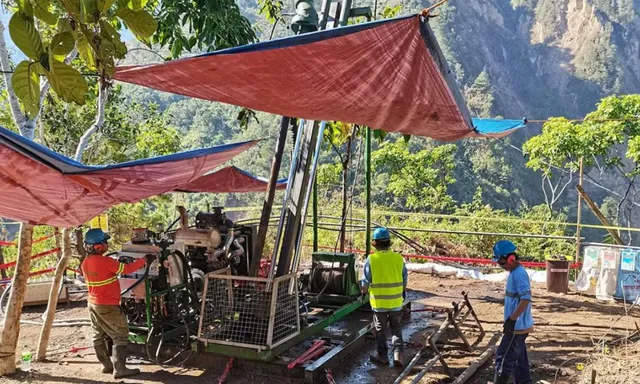
The drilling programme has been designed to (i) refine the shape and dimensions of the previously intercepted copper-gold mineralized zones; (ii improve the understanding of mineralization controls, and (iii) allow the formulation of an efficiently targeted, definitive resource definition drilling programme.

The completed four drill holes have an aggregate depth of 6,061.7 meters and identified a large, highly gold-copper mineralized porphyry system that has been named Ntina Deeps. Drilling of the fifth and sixth holes is ongoing.

As the inevitable global copper demand-supply gap widens exponentially in the coming decades, the Philippines is perfectly positioned to become a major world copper producer. The Philippines has several large deposits that can be brought online within five years and a very long pipeline for new mines within the next 20 years. Deposits such as the Ntina Deeps have high gold credits and there exists the potential for low capex and selective underground mining methods. The timing for MMC to explore and develop gold-copper porphyries within its Placer tenements could not be better.


Article courtesy of the Philippine Stock Exchange

November 27, 2022

Photo credit: Global Ferronickel Holdings

Global Ferronickel Holdings, Inc. (FNI), a diversified Filipino company with interests in ferronickel ore mining and processing, logistics and port operations, and cement and steel production, recorded a net income of P2.13 billion in the nine-month period that ended September compared to the P1.86 billion it posted during the same period last year. The results are driven by the Group’s flagship mining project in Surigao del Norte operated by Platinum Group Metals Corporation (PGMC).

FNI's revenues on the sale of medium-grade nickel increased on the back of favorable forex rates and higher average realized price, while shipment volumes reel from inclement weather and a lower price for low-grade ore. The sale of nickel ore for the nine-month ended September 30, 2022 slides to 3.150 million wet metric tons (WMT), lower by 1.078 million WMT or 25.5%, compared to 4.228 million WMT of nickel ore in the same period last year. The Group only completed 58 nickel ore shipments against 78 shipments during the same period last year due to erratic weather conditions registering 161 rainy days to 137 last year.

The resulting sales mix was 78% low-grade ore and 22% medium-grade ore in 2022 versus the previous period’s blend of 81% low-grade ore and 19% medium-grade ore. Shipments consisted of 2.450 million WMT low-grade nickel ore and 0.700 million WMT medium-grade nickel ore compared to 3.424 million WMT low-grade nickel ore and 0.804 WMT medium-grade nickel ore in the same period in 2021.

The average realized nickel ore price for the period ended September 30, 2022 is USD28.89/WMT lower by USD1.89/WMT or 6.1% compared to last year’s USD30.78/WMT. Low-grade ore is USD25.49/WMT lower by USD4.30/WMT or 14.4% against last year’s USD29.79/WMT. On the other hand, medium-grade ore stands at USD40.79/WMT higher by USD5.80/WMT or 16.6% versus last year’s USD34.99/WMT. The average realized Peso over USD exchange rate for the Group’s export revenues is P54.87 compared to P49.22 in the same period last year, higher by P5.65 or 11.5%.

“Overall outlook for FNI looks reassuring. With the opening of our Palawan mineral project, we expect healthier returns for our stakeholders. Although weather conditions have not been permissive, we have continued to improve our operations and pursue our expansion plans,” said FNI President Dante R. Bravo.

FNI recently disclosed its 20% stake in China's Guangdong Century Tsingshan Nickel Industry Co. Ltd (GCTN) to enhance synergies between FNI with its nickel ore mines and GCTN as an ore processor and provide a steady value-adding enterprise for the Group.

As a testament to its growth and core policy to strengthen systems and processes, PGMC has received ISO certifications for its Quality Management System (ISO 9001:2015), Occupational Health and Safety Management System (ISO 45001:2018), and Environmental Management System (ISO 14001:2015) as an Integrated Management System (IMS). The certification applies to all activities in the mining operations of nickeliferous laterite ore and other associated minerals from planning to ore production, hauling, loading and port operations.

November 27, 2022

Photo Credit: dmcihouse.net

DMCI Mining Corporation saw its net income decline by 17 percent from P1.41 billion to P1.17 billion during the first nine months of the year owing to lower nickel ore shipments and average nickel grade sold.

“We expected a severe profit decline because of the depletion of our Berong mine late last year. Fortunately, the bullish nickel market allowed us to ship even the low-grade inventory of Berong,” said DMCI Mining president Tulsi Das C. Reyes.

“Strong nickel prices and local currency weakness also moderated the impact of lower shipments on our bottom line,” he added.

For the third quarter alone, net income tumbled by 56 percent from P181 million to P80 million due to the combined effect of lower shipment (-50%), flattish nickel grade sold (-1%), higher selling prices (+31%) and favorable average foreign exchange rates (+10%).

Total shipments declined at a slower pace from January to September as the Berong mine did better than expected in the first half. Consequently, nickel ore shipments only fell by 25 percent from 1.45 million wet metric tons (WMT) to 1.09 million WMT.

Despite a 4-percent decrease in average nickel grade sold from 1.38% to 1.33%, DMCI Mining posted a 16- percent improvement in nine-month average selling price from US$43 to US$50.

Magnifying the impact of higher selling prices was a 10-percent increase in foreign exchange rates from US$ 1:Php 49 to US$ 1:Php 53.

At the end of September, total inventory plummeted by 76 percent from 450,000 WMT to 109,000 WMT, mostly (81%) coming from Zambales.


Article courtesy of the Philippine Stock Exchange

November 27, 2022

Developing the electric vehicle (EV) industry is opening new opportunities for the Philippine mining sector, a company executive said Wednesday. 

In a media roundtable, DMCI Mining president Tulsi Das Reyes said the e-vehicle sector has provided new opportunities for the mining industry and his company is keen to take part in this development.

He described that mining became a "sunset business" before the growth of the e-vehicle industry.

"Prior to the EV boom, stainless steel was going nuts, and they don't have capacity already for the stainless steel market. And China is the only growth for stainless steel, all other countries in the world (are) slowing down," Reyes said.

He said the growing demand for e-vehicles globally has offered a "fresh light" for the mining business.

Nickel is a component for e-vehicle batteries.

"Without EVs (e-vehicles), we would (have) ended so many other niche market(s). So it was a huge impact," Reyes added.

In the recent foreign business missions of the Department of Trade and Industry (DTI) in the United States, South Korea and Japan, companies from these countries expressed their interest in the Philippine e-vehicle industry, including manufacturing batteries for electric cars.

Part of the DTI's Make It Happen in the Philippines campaign is to attract investments for integrated mineral processing to have value-added activities in the mining industry instead of exporting minerals as raw materials.

Reyes said DMCI Mining is in talks with possible foreign partners to explore opportunities for integrated mineral processing here, including Indonesian and Chinese partners, but this will require adequate infrastructure in place and support from the government.

Meanwhile, DMCI Mining net income in January to September this year declined by 17 percent to PHP1.17 billion from PHP1.41 billion in the same period last year.

The lower profit for the first nine months of 2022 was mainly due to decline in shipment.

"Strong nickel prices and local currency weakness also moderated the impact of lower shipments on our bottom line," Reyes said. 


Article courtesy of the Philippine News Agency

November 27, 2022

Two Surigao del Norte-based affiliates of Nickel Asia Corp. (NAC) have been awardees of the prestigious Presidential Mineral Industry Environmental Award (PMIEA) for this year.

In a statement Tuesday, NAC said Hinatuan Mining Corporation (HMC) in Taganaan town and Taganito Mining Corporation (TMC) in Claver town received the PMIEA at the 68th Annual National Mine Safety and Environment Conference (MSEC) in Baguio City over the weekend.

Awarded in the name of the country's chief executive, the PMIEA is considered as the pinnacle of all industry awards in the field of environment and safety.

“At NAC, we align profit with purpose amidst the challenges of climate change and these honors only demonstrate that caring for the environment goes hand in hand with good business performance,” said Jose Bayani Baylon, NAC chief sustainability officer and senior vice president for public affairs and communications.

TMC also won this year’s Best Mining Forest Award and the Most Improved Safety Performance under the Safest Mines Award.

Artemio Valeroso, TMC resident mine manager, said the company has persevered and worked hard to clinch the presidential award.

Meanwhile, Francis Arañes, HMC resident mine manager, said the award will continue to remind the company to remain steadfast and focus on the goals of good business and responsible mining.

Two more NAC subsidiaries, the Cagdianao Mining Corp. (CMC) and Rio Tuba Nickel (RTN), also received recognitions.

CMC, which operates in Dinagat Islands, bagged the Platinum Achievement Awardee for Surface Mining Operation Category, while the RTN, which operates in Palawan, was named Platinum Awardee for its nickel operations and Titanium Awardee for its limestone project.

NAC also reported gaining more than PHP21 billion in gross revenues and PHP6.9 billion in attributable net income from January to September this year.

The MSEC is an annual event led by the Philippine Mine Safety and Environment Association in coordination with the Department of Environment and Natural Resources-Mines and Geosciences Bureau, the Chamber of Mines of the Philippines, and the Philippine Society of Mining Engineers.


Article courtesy of the Philippine News Agency