November 27, 2022

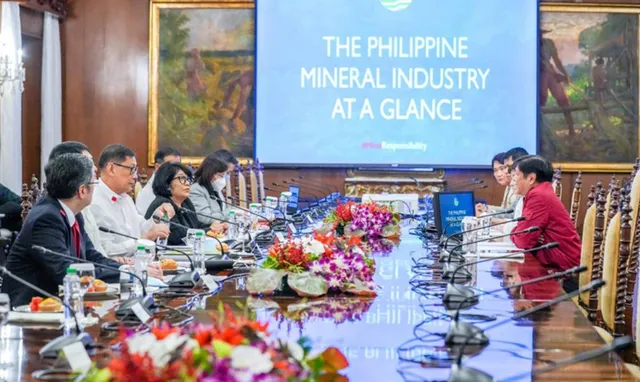
Photo: President Ferdinand R. Marcos Jr. meets with Department of Environment and Natural Resources officials at Malacañan Palace on Tuesday (Nov. 22, 2022). Marcos directed the department to require small and large-scale mining firms to comply with policies that ensure safe working conditions for miners. (Photo courtesy of Malacañang)

President Ferdinand R. Marcos Jr. on Tuesday directed the Department of Environment and Natural Resources (DENR) to require small and large-scale mining firms to comply with policies that ensure safe working conditions for mining workers.

In a meeting with DENR officials at Malacañan Palace on Tuesday, Marcos lamented the failure of mining firms, particularly those involved in illegal activities, to provide adequate safety measures inside the mines.

"Ang kawawa diyan ‘yung mga miners. They have no safety. Ang daming namamatay (The miners are victims here. They have no safety. A lot of them die)," he said.

Marcos said there is a need to enhance social protection and security for workers in the mining industry.

"We might be able to access financing, they might be able to access social protection," he added.

He also urged the DENR to address bottlenecks to regulate the small-scale mining industry.

“Gusto natin ma-legalize ang mga small-scale mining firms kasi marami sa kanila illegal, kaya walang protection ang mga minero (We want to legalize the small-scale mining firms because many of them are illegal, so the miners have no protection),” Marcos said.

“Gusto nating palakasin ang regulatory framework para maka-operate sila ng legal, upang mabigyan ang ating minero ng assistance at protection para sa ligtas nilang pagtatrabaho (We want to strengthen the regulatory framework so they can operate legally, to give our miners assistance and protection for their safe work),” he added.

Reducing carbon emissions

Meanwhile, Marcos also underscored the need for the seafaring industry to create habits to help with carbon emission reduction.

He raised the need to “upskill and reskill” the seafaring workforce to address the scheduled shift of ocean-going vessels to green hydrogen as a fuel source from 2030 to 2040.

He said seafarers would need “additional training” to be able to handle alternative fuels to meet global decarbonization objectives.

During the recently-concluded 27th Conference of the Parties of the United Nations Framework Convention on Climate Change (COP27) in Egypt, leading organizations across the shipping value chain and producers of green hydrogen signed a joint statement committing to the rapid production and use of low-carbon fuels based on green hydrogen to accelerate decarbonization of global shipping.

The shipping sector currently accounts for 3 percent of global greenhouse gas emissions but is expected to grow to 50 percent by 2050 without intervention.

Marcos has repeatedly pushed for the development of renewable energy sources to address the problem of high power costs in the country.

In his attendance at the 29th Asia-Pacific Economic Cooperation (APEC) Summit in Bangkok last week, he said the Philippines is currently focused on using renewable energy sources such as hydropower, geothermal power, solar and other low-emission energy sources.

He said his administration is particularly setting a target of a 35 percent share of renewable energy in the power generation mix by 2030 and 50 percent by 2040.

Marcos earlier called for the amendment of the Republic Act (RA) 7076 or the People's Small-Scale Mining Act of 1991 to incentivize small-scale mining and provide social assistance and labor protection for all small-scale miners.

Under the law, small-scale mining refers to a mining activity that relies heavily on manual labor using simple implementations and methods.

RA 7076 also pertains to small-scale mining as an activity that "does not use explosives or heavy mining equipment."

The DENR expressed commitment to review mining laws, including small-scale mining, to ensure that standards are updated and that the provision of the implementing rules and regulations takes full advantage of remote sensing and innovation in artificial intelligence.

Mining accounts for less than 1 percent of the country’s gross domestic product (GDP), although the Marcos administration is eyeing the industry to be one of the major contributors to the country’s economic development.

It has been estimated that 70 to 80 percent of small-scale miners in the Philippines operate illegally. 

November 27, 2022

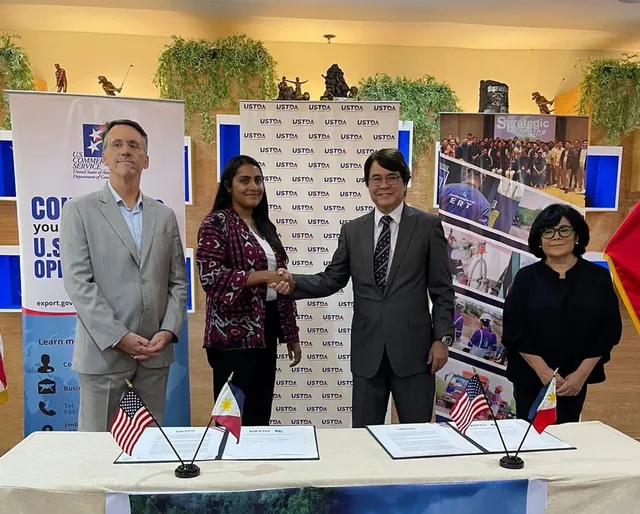
Photo credit: The US Trade and Development Agency

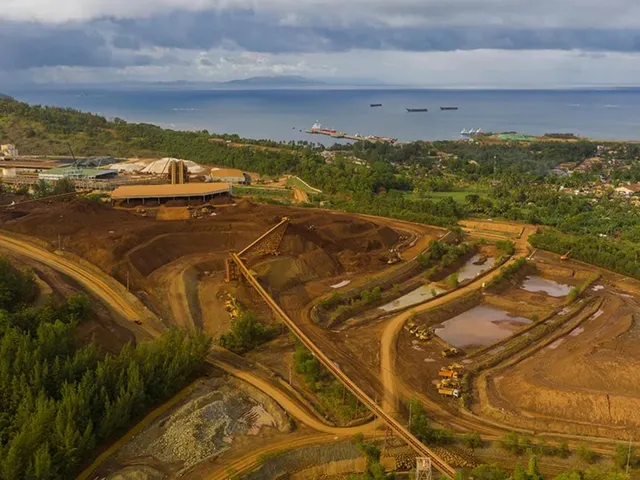
During her recent travel to Manila, U.S. Vice President Kamala Harris launched a U.S. Trade and Development Agency grant to Eramen Minerals, Inc. (EMI), a Filipino mining company, for a feasibility study to advance the development of an environmentally sustainable nickel processing facility in the Philippines. This project will advance the clean energy transition by producing critical minerals that are key elements in the supply chain for batteries and energy storage systems.

“This partnership is important to the shared clean energy and national security goals of the Philippines and the United States,” said Enoh T. Ebong, USTDA’s Director. “Through this grant, we are supporting high-quality technical and environmental standards for mineral processing in the Philippines, while also creating valuable commercial opportunities for U.S. companies.”

USTDA’s study will evaluate the technical and economic viability of developing a nickel processing facility at the site of EMI’s mine in Zambales Province. The plant is expected to use EMI’s nickel ore to produce refined nickel and cobalt products for sale as battery precursor materials. The study will help define the technical specifications for the facility and promote alignment with high environmental, social, and governance standards.

“EMI seeks to contribute to the green energy transition and energy security through the supply of critical materials from our nickel mining operations for energy storage systems. The company likewise supports the encouragement of the Philippine government for mineral value-adding. The USTDA grant contributes to the accomplishment of such objectives through the determination of the optimal process for our ore to produce battery-grade precursor materials,” said Enrique C. Fernandez, EMI President/CEO.

This project advances the goals of the Biden-Harris Administration’s Partnership for Global Infrastructure and Investment and the Indo-Pacific Economic Framework, through the development of clean energy supply chains including the responsible mining of metals and critical minerals.


Article courtesy of The US Trade and Development Agency
November 15, 2022

Photo credit: Celsius Resources Limited

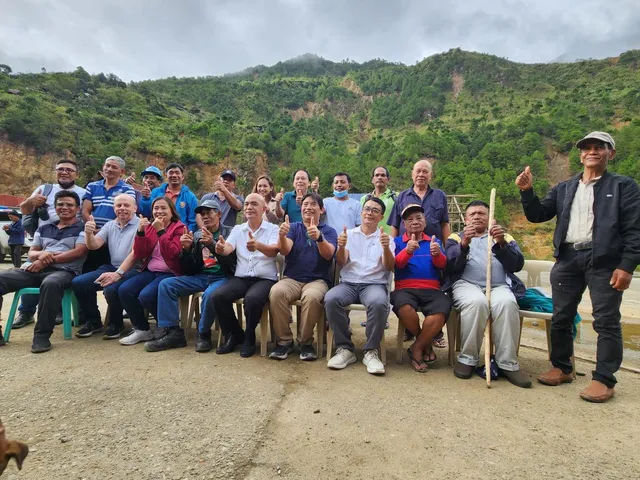
Celsius Resources Limited is pleased to announce that one of its Philippine subsidiaries, Makilala Mining Company, Inc. (“MMCI”) has obtained the consent of the Balatoc Indigenous Cultural Community (ICC) for the development of the Company’s MaalinaoCaigutan-Biyog (MCB) Copper-Gold Project (“MCB” or “the Project”).

After a series of consultations and negotiations, a Memorandum of Agreement (MOA) between MMCI, the Balatoc ICC, and the National Commission on Indigenous Peoples (NCIP) was officially signed on 14 November 2022. The MOA represents the collective decision of the Balatoc ICC for MMCI to carry out exploration, development, production, and operation activities at the MCB Project area. It also outlines the commitments and obligations of all parties to the agreement as well as the economic, social, environmental, and cultural benefits of the Project to the Balatoc ICC during the life of the mine.

Pasil Municipal Mayor Alfredo B. Malannag, Jr. was elated with the outcome and expressed: “This is a historical moment as it reflects the aspirations of the community for the future of the Balatoc Tribe. With MMCI at the forefront of development, our dreams of harnessing our natural resources without sacrificing our future and the environment will soon be realised. We have partnered with MMCI since their first exploration in the area in 2006 and the community has established a very good relationship with them.”

Kalinga Provincial Governor James S. Edduba shared the same sentiment: “This is a happy occasion, and I am excited with the many possibilities that will happen to this community with the signing of the MOA. Growing up in the place, I can personally attest to life with and without a mining company. I was the Mayor of Pasil when Makilala Mining started their exploration. We have gone a long way and MMCI has been instrumental in the development of the community. I believe that this partnership will help develop the community further as this is such a big investment in terms of business and employment opportunities, overall progress and other benefits.”

The Company considers obtaining the consent of the Balatoc ICC to be a crucial aspect for the development of the MCB Project, as it represents a social license to operate which is anchored on legitimacy, credibility, and trust.

MMCI President Atty. Julito R. Sarmiento expressed: “The signing of the agreement signifies the commitment of the Company to do right by the Balatoc ICC. We have always ensured that we abide and respect the customary laws and traditions of the community in all aspects of our engagements, to demonstrate our strict adherence to Environmental, Social and Governance (ESG) principles and best practices consistent with our firm commitment to Transformative Mining.”


Article courtesy of Celsius Resources

November 15, 2022

Photo credit: Apex Mining

Apex Mining Co., Inc. is enjoying the fruits of its continuous expansion program with both the 3Q2022 and 9mo2022 results at an all-time high.

Production for the 3Q2022 stood at 26,962 oz for gold and 100,899 oz for silver. The volume was 35% and 15% higher, respectively, than previous year’s production. The Maco mine milled 209,585 tonnes, 14% higher YoY with daily mill throughput of 2,334 tpd with mill grades of 4.02 gpt for gold and 18.72 gpt for silver. In the 3 rd quarter, the foreign exchange rate averaged P56.62 vs P50.30 from 3Q2021 or an increase of 13%. The resulting gross revenues for the third quarter was P2.743 billion, an increase of 43.8% YoY. Consolidated net income for 3Q2022 amounted to P897.95 million vs net loss of P624.35 million for 3Q2021, a 244% increase YoY. During the 3Q2021, the Company recognized P1.1 Billion provision for impairment of property and equipment and deferred exploration costs of non-operational local and foreign subsidiaries of Monte Oro Resources & Energy, Inc, a wholly owned subsidiary of Apex.

For the 9mo2022, total production was 73,219 oz gold and 291,333 oz silver or an increase of 36% and 12% respectively. Realized prices were $1,817/oz for gold and $21.62/oz for silver, a change of +2% and -13% respectively. Milling throughput for the Maco Mine Site was 601,730 tonnes or 2, 299 tpd for the 9mo2022, as compared to 514,008 tonnes or 2,017 tpd for the same period in 2021. The weighted average foreign exchange rate during the comparative period was P53.85 and P49.03 to one USD, a gap of 10%. The resulting gross revenues for the three quarters of 2022 was higher at P7.51 billion compared to the same period in 2021 at P4.99 billion. The net income (loss) for the three quarters of 2022 and 2021 was P2.46 billion and (P135.73) million. Net income grew 1,913% YoY.

Disaster relief is among the cornerstones of Apex Mining’s corporate citizenship initiatives. As the third quarter was drawing to a close in September, typhoon Karding battered Luzon. In tandem with the Philippine Mine Safety and Environment Association (PMSEA), though Pusong Minero, Apex Mining’s president and CEO, Luis R. Sarmiento, ASEAN Eng., who is also the president of PMSEA, condoled with the families of the five Bulacan PDRRMO rescuers who perished while conducting rescue activities during the said tropical depression. At the Luksang Parangal of the Bulacan Provincial Advisory Group for Police Transformation and Development, the families of the late rescuers received cash assistance. Earlier, in August, the four classrooms built by the GMA Kapuso Foundation, in part through a P2M donation by the company, was turned over to the students and teachers of the Baybay Elementary School in the island of Siargao (Siargao, including Baybay Elementary School, was badly hit by typhoon Odette in December 2021).

Apex Mining found itself displaying its unique brand of malaskit yet again as the final quarter of 2022 opened with typhoon Paeng wreaking havoc in regions 5, 6, 8, 12 and the Bangsamoro Autonomous Region in Muslim Mindanao (BARMM). Still under the Pusong Minero program of the PMSEA, the company, together with concerned local governments, immediately deployed much needed supplies like drinking water, sleeping mats and sacks of rice to select areas badly hit by Paeng. The distribution of sleeping mats is a joint effort with the province of Davao de Oro, where Apex Mining’s Maco Mine is located.


Article courtesy of Apex Mining

November 11, 2022

Photo credit: DENR

The Department of Environment and Natural Resources (DENR) said it shall boost the potential of the mining sector to support the country’s economic growth and development under the Marcos administration. 

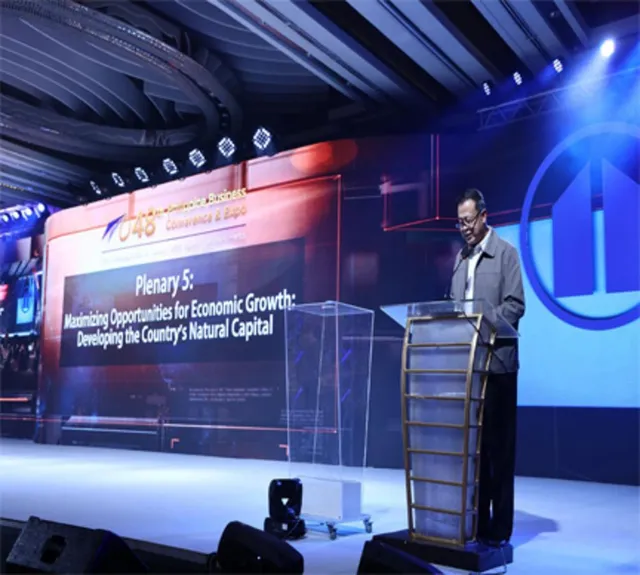
In the 48th Philippine Business Conference and Expo hosted by the Philippine Chamber of Commerce and Industry held on October 19 in Manila, DENR Undersecretary for Policy, Planning and International Affairs Atty. Jonas R. Leones, in a speech delivered on behalf of Secretary Maria Antonia Yulo Loyzaga, bared the Department’s plans for the mining industry. 

Leones said the DENR’s Mines and Geosciences Bureau (MGB) has initially identified approximately 9 (nine) million hectares as potential mineral areas, although he said “it will not just be a business-as-usual scenario as it was in the pre-moratorium times but rather, it will be better business.”

He highlighted that out of the nine million hectares of potential mineral areas, only less than 3% are awarded as mining contracts.

“Since we are among the most highly mineralized country in the world, our priority is to build both a strategic and responsible industry,” Leones pointed out. “The MGB will vigorously promote the development of mineral processing and value-adding enterprises while at the same time intensifying the enforcement of environmental safeguards and targeting social development components in mining operations to address vulnerabilities.”

He said the DENR will be reviewing mining laws, including small scale mining, to ensure that standards are updated and that the provision of the implementing rules and regulations take full advantage of remote sensing and innovation in artificial intelligence.

Under the Mineral Investment Promotion Program, Leones said the DENR will address illegal mining, particularly small scale mining operations through the assessment and declaration of the “Minahang Bayan” areas where small-scale mining will be confined and regulated. 

He said the DENR will also undertake geological survey and mapping to populate the geoscientific and mineral information database, as well as rehabilitation and remediation of the remaining 11 abandoned mines to address the persistent misinformation that has stigmatized the mining industry.

Leones said the other policy directions in the mining sector include the design of mineral extraction models with minimal environmental footprints; identification of new mineral reserves and the use of technological support for decision making; bidding out of national government mining assets such as those under the Philippine Mining Development Corporation; development and expansion of roads, power and other infrastructure support to mineralized areas through the Department of Public Works and Highways; construction of modular mineral processing plants such as those for steel and nickel; conduct of studies of mine rehabilitation; reuse of mining waste and tailings and acid mine grain management; and integration of small scale mining sector into the industry.

He said the agency will also ensure that mining firms will strictly implement their respective Safety and Health program, Environmental Protection and Enhancement program, Final Mine Rehabilitation and Decommissioning Plan, and Social Development Management. 

“We plan to adopt a strong system base on the established mitigation hierarchy of avoidance, mitigation, rehabilitation and compensatory actions,” he added. 

Leones said that the Department intends to pursue its strategic plans and programs by strengthening partnership with the different government offices, civil society organizations and advocates, industries, and the academe to develop acceptable, science-based and risk-informed strategies to conserve and protect the environment and natural resources.


Article courtesy of the DENR

November 11, 2022

Nickel Asia Corporation recently announced its unaudited financial and operating results for the nine-month period ended September 30, 2022, with an attributable net income (net of minority interest) of P6.90 billion, up 12 percent from the P6.17 billion reported during the same period last year. Earnings before interest, tax, depreciation, and amortization (EBITDA) amounted to P11.10 billion against P11.01 billion in the prior year.

Despite the lower ore sales volume sold during the period, revenues rose by 2 percent to P21.51 billion from P21.03 billion last year, owed largely to higher nickel ore prices and favorable exchange rates.

The Company’s five operating mines sold a combined 12.44 million wet metric tons (WMT) of nickel ore during the first nine months of the year, a decrease of 14 percent from 14.44 million WMT in the same period last year.

The drop in sales volume was almost in direct proportion to unrealized workable days caused by unfavorable weather that adversely affected the Company’s mining operations during the period.

The weighted average nickel ore sales price during the period increased by 5 percent to $29.46 per WMT against $28.05 per WMT in the same period last year. The company realized P54.22 per US dollar from these nickel ore sales, a 10-percent increase from P49.17 last year.

Breaking down the ore sales, the Company exported 6.68 million WMT of saprolite and limonite ore at the average price of $38.87 per WMT during the nine-month period from 8.72 million WMT at $38.88 per WMT in the same period last year.

Likewise, the Company delivered 5.76 million WMT of limonite ore to the Coral Bay and Taganito highpressure acid leach (HPAL) plants, the prices of which are linked to the London Metal Exchange (LME) and realized an average price of $11.66 per pound of payable nickel.

This compares to 5.72 million WMT at $8.20 per pound of payable nickel in 2021. Expressed in US dollar per WMT, the average price for the deliveries to the HPAL plants were $18.55 and $11.54 in the first three quarters of 2022 and 2021, respectively.

“Despite the challenges in our mining operations due to adverse weather conditions at our mine sites, the favorable LME nickel price and strong US dollar helped drive revenues up by 2 percent from the prior year,” said Martin Antonio G. Zamora, President and CEO.

Owing to the higher LME nickel price during the period, NAC also recognized gains from its equity share in investments in the two HPAL plants in the combined amount of P1.02 billion against P340.4 million the prior year.

The strong US dollar further enabled NAC to log a 162-percent hike in net foreign exchange gains from its foreign currency denominated net financial assets to P1.54 billion from P587.2 million the year prior.

Total operating cash costs increased by 8 percent year-on-year to P9.54 billion from P8.86 billion last year. On a per WMT sold basis, total operating cash costs increased to P767 compared to P614 in 2021.

Renewable Energy

NAC’s renewable energy arm, Emerging Power Inc. (EPI), on a consolidated basis, registered a 60-percent increase in revenues to P393.67 million and a 51-percent increase in EBITDA of P239.50 million.

This was primarily due to a 56-percent year-on-year increase in the generation capacity of its operating arm Jobin-SQM Inc. (JSI) to 79,022-megawatt hours after the completion of its 38-MW expansion last June, bringing its total capacity to 100 MW.

Between January and September of this year, 70 percent of the power from JSI’s Sta. Rita plant were sold to retail electricity suppliers through power supply agreements while the remaining 30 percent were sold to the Wholesale Electricity Spot Market (WESM). Overall, power sales were done at an average realized tariff of P4.98 per kilowatt-hour.

JSI logged a net income of P72.83 million, allowing EPI to trim its losses to P133 million from the same period last year, a 53-percent reduction thanks to higher economies of scale and improved market conditions.

EPI also began the development and construction of an additional 68 MW in the Subic site last September, set to go online by the fourth quarter of 2023.

In terms of the Forecast Accuracy Standards for variable renewable energy sources in the WESM, the Sta. Rita solar power plant also ranked first out of 29 solar plants in Luzon and third out of 41 solar plants across the country in terms of performance, based on the latest report of the Philippine Electricity Market Corporation in May.

Forging ahead, EPI also recently entered into a joint venture agreement with Shell Overseas Investments B.V. for the establishment of a platform to develop, own, operate, and maintain utility-scale onshore solar and wind power generations projects as well as battery energy storage systems in the Philippines.

The venture, with an equity ownership of 60-percent EPI and 40-percent Shell under a newly formed company Greenlight Renewables Holdings, Inc., aims to have an aggregate operating capacity of 1,000 MW by 2028.

“The joint venture has the full support of EPI’s parent company, NAC. This partnership would allow both companies to boost the supply of renewable energy in the Philippines and is in line with NAC’s vision to become the premier ESG investment in the country,” said Zamora.

Lorelie Q. Osial, country chair of the Shell Companies in the Philippines, also echoed the same sentiment: “Working with partners and developing new collaborations is key to accelerate the energy transition. This Shell-EPI partnership will leverage on Shell’s technical expertise and integrated solutions as a global energy company and EPI’s strong presence in the Philippines. Together, we can power progress for the Philippines through sustainable energy for industries and homes.”

Ultimately, the joint venture is an opportunity to provide integrated value to customers through exploring synergies with retail electricity supplier Shell Energy Philippines, Inc.

Special Cash Dividend

The Company’s Board of Directors approved the declaration of a special cash dividend of P0.23 per share of common stock, payable on Dec. 9, 2022, to shareholders of record on Nov. 24, 2022.


Article courtesy of the Philippine Stock Exchange

November 11, 2022

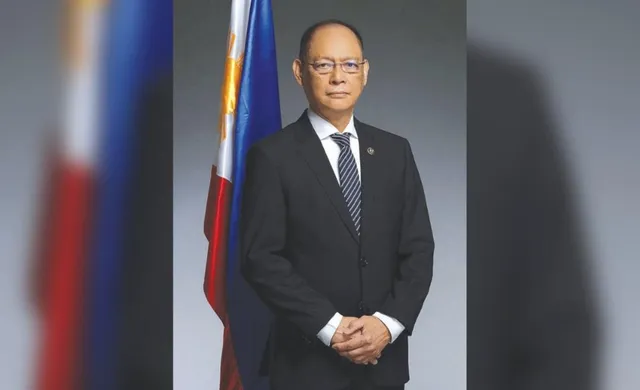
Finance Secretary Benjamin Diokno has cited the importance of improving the inclusive and data-informed management of the extractive industries in driving long-term economic expansion as he cited its PHP363-billion contribution to government revenues from 2012 to 2019.

“With the Marcos administration banking on the potential of the extractive sector to drive long-term economic expansion, the inclusive and data-informed governance of the extractive industries becomes more critical than ever,” said Finance Secretary Diokno at the FORGE PH: Philippine Extractive Industries Transparency Initiative (PH-EITI) National Conference on Tuesday.

FORGE PH is the annual assembly of the extractive sector that updates stakeholders on progress in achieving greater transparency and accountability in the extractive industries.

This year, the national conference focused on how the PH-EITI can respond to concerns on climate change and energy transition, which is in line with the initiative to incorporate sustainability concerns in the global reporting standard.

“We call on our participants to actively and constructively engage one another and develop concrete actions to improve the management of this very important sector,” Diokno said, as he advocated the PH-EITI as a platform for data transparency and multi-stakeholder participation in extractives governance.

The government will take necessary steps to strengthen and broaden the space for inclusive multi-sectoral engagement.

As such, local government capacity to govern extractive activities, specifically small-scale mining sectors, will be improved through the subnational implementation of EITI.

Moreover, the EITI platform will be used to ensure equitable government revenue share from resource utilization, which is demonstrated in PH-EITI’s contribution to the crafting of a new fiscal regime for mining.

EITI data will be utilized to inform the public and stakeholders of initiatives towards climate change mitigation and adaptation, and the transition to low-carbon energy.

With this, Diokno urged stakeholders to continue using PH-EITI data in their research work and policy advocacy.

“As we close in on our first decade of being an EITI-implementing country, we commit to making implementation more inclusive, more meaningful, and responsive to the needs of our stakeholders,” he said.

The EITI International, led by its chair, former New Zealand Prime Minister Helen Clark, has been supporting the Philippines in maintaining a high level of transparency and stakeholder engagement in its extractive industries.

The PH-EITI is a government-led, multi-stakeholder initiative implementing EITI, the global standard that promotes the open, accountable management, and good governance of oil, gas, and mineral resources. It was created on Nov. 26, 2013 through EO No. 147, series of 2013.

November 07, 2022

Photo credit: Celsius Resources

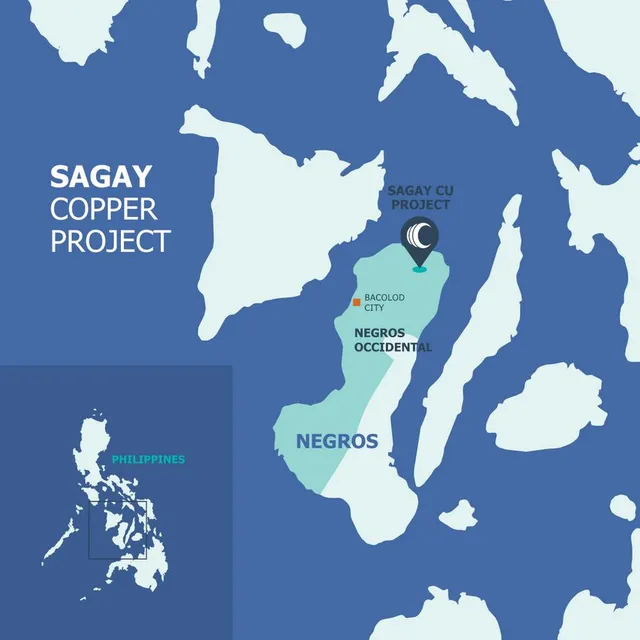
Celsius Resources Limited is pleased to declare a maiden JORC compliant Mineral Resource for the Sagay (SGY) Copper-Gold Project (“Project”), held under its Philippine Subsidiary Company, Tambuli Mining Co., Inc (TMCI) and located at the Island of Negros in the Philippines. The latest results suggest that the SGY Project hosts a large-scale porphyry copper-gold mineralisation.

The Global Mineral Resource estimate comprises 302 million tonnes of 0.41% copper, and 0.11g/t gold, at a lower cutoff grade of 0.2% copper.

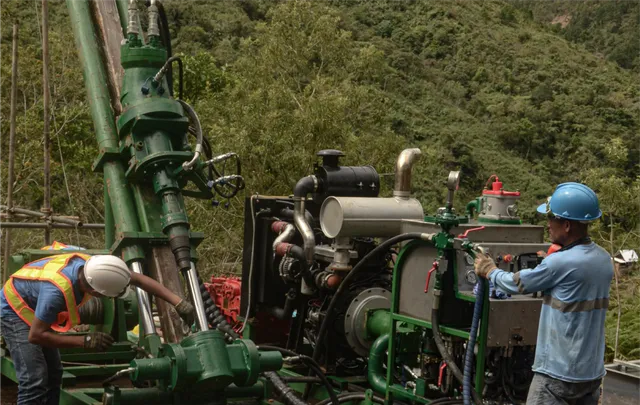
The maiden Mineral Resource Estimate (MRE) is located at Nabiga-a Hill, within the broader SGY Project area. At Nabiga-a, the MRE has been defined by a total of 32 diamond drill holes which are very broadly spaced and have shown copper mineralisation over an extensive area from the surface down to 1.2km in depth.

Celsius Resources Executive Director Peter Hume said:

“The copper mineralisation at Sagay is truly large scale, with potential to develop into another significant copper deposit in the Philippines.”

“We have only drilled a modest number of holes into this deposit but the large intersections have already defined 1.2Mt of copper. With open intersection at multiple positions and in multiple directions, we anticipate that further drilling will lead to substantial growth in the known copper mineralisation.”

“We also have some evidence that higher-grade zones could exist within the huge lower-grade copper envelop. We look forward to the next phase of exploration which will also focus on investigating the possible extensions of these higher-grade positions closer to the surface.”

Celsius Resources is still in the process of finding a suitable partner to develop the Sagay Project.


Article courtesy of Celsius Resources

November 07, 2022

Photo credit: Celsius Resources

Celsius Resources is pleased to announce they have received further shallow and high-grade copper assay results from the ongoing drilling program at their flagship MCB copper-gold project, owned by its Philippine subsidiary Makilala Mining Company, Inc. (“MMCI”).

The results continue to extend the envelope of the near surface mineralisation which complement previous drilling results from holes completed at MCB from 2021 to 2022 and validate the historical drilling information completed by Freeport-McMoRan.

The results from MCB-041 are particularly significant as they have allowed the near surface higher-grade copper mineralisation envelope to extend further to the east. This location in general was previously only supported by one drill hole (MCB-010A – see Figure 1). MCB-041 has significantly expanded the footprint of the near surface, higher-grade copper mineralisation at MCB.

Country Operations Director Mr. Peter Hume said:

“Our drilling strategy was modified in 2022 to shift the focus from deep targets to the recently identified near surface higher-grade targets and it is starting to significantly pay off with better-than-expected results.”

“We had previously interpreted that the high-grade targets were mostly at depth, but an analysis of the recent results, particularly from MCB-036* which intersected 59m @ 1.29% copper and 0.27g/t gold, MCB-037** which intersected 28.95m @ 1.12% copper and 0.06g/t gold, and now MCB-041, have confirmed the presence of a more extensive shallow copper mineralisation than previously understood.”

“We expect these combined results will make a solid positive enhancement to the feasibility study which will commence in early 2023.”


Article courtesy of Celsius Resources

November 02, 2022

Photo credit: Bilyonaryo

Integrated energy company Semirara Mining and Power Corporation (SMPC) set a new profit record during the first nine months of the year, as its consolidated net income surged 250 percent from P10.3 billion to P36 billion—more than double (122%) its 2021 net income of P16.2 billion.

Its exceptional performance was mainly due to the combined effect of elevated market prices, all-time high coal production and higher spot electricity sales volume.

“Historically, the third quarter is our slowest because of the rainy season and sluggish demand. But because of improved market prices, we did much better than expected,” said SMPC president and COO Maria Cristina C. Gotianun.

For the third quarter alone, SMPC netted P10.2 billion, a 153-percent upswing from P4 billion during the same period last year.

From January to September, average selling prices of Semirara coal rallied by 122 percent from P2,351/metric ton (MT) to P5,224/MT due to the surge in global index prices following Russia's invasion of Ukraine.

Average Newcastle prices surged by 191 percent from US$121.70 to US$353.80 while average Indonesian Coal Index 4 expanded by 50 percent from US$56.10 to US$84.30.

Nine-month coal production grew by 27 percent from 10.8 million metric tons (MMT) to a record 13.7 MMT due to controlled water seepage levels in Molave mine and better coal access in East Block 4 and South Block 5.

Meanwhile, its power business posted a 216-percent increase in spot market sales from 489 gigawatt hours (GWh) to 1,546 GWh owing to a 5-percent uptick in plant availability, 7-percent improvement in gross generation and pivot away from bilateral contracts.

Its average spot selling price rose by 38 percent from P5.30 to P7.33 on recovering demand, higher fuel costs and thin power supply margins.


Article courtesy of the Philippine Stock Exchange 

October 31, 2022

Photo credit: Abogado

The Board of Directors of Philex Mining Corporation recently announced that the Company generated a quarter of lower but positive results. Philex recorded a Core Net Income of Php210 million for the quarter, from P716 million of same period in 3Q2021, mainly due to lower copper prices, ameliorated with favorable foreign exchange rates and managed operating expenses. The 3Q2022 Core Net Income of Php210 million tapers off from the Php676 million achieved in 1Q2022 and the Php657 million posted in 2Q2022. This brings the 9M2022 core net income to Php1.543 billion, lower by 17% over the same period of 9M2021, attributable to lower copper price, decreased metal output, and higher power rates―despite the efficient deployment of operating costs and expenses.

3Q2022 EBITDA at Php611 million is lower than the P1.182 billion of 1Q2022 and P1.171 billion of 2Q2022, maintaining the positive trend during the first two quarters, topping up 9M2022 EBITDA to Php2.964 billion, a slight 7% decrease from the same period in 9M2021.

Reported net income for 3Q2022 is Php240 million, a 67% decrease over the same period 3Q2021, while 9M2022 reported net income reached Php1.639 billion, a 13% decrease from 9M2021.

Production and Revenues

The Company showed consistent production output in the third quarter of the year. For 3Q2022, total tonnage milled was at 1.873 million tonnes, lower compared to the 2.006 million tonnes in 3Q2021 but slightly higher than the 1.859 million tonnes of 2Q2022.

Gold output at 12,144 ounces in 3Q2022 was lower when compared to the 14,270 ounces of 3Q2021 on account of lower tonnage milled and slightly lower gold grade. On the other hand, copper ore grades remained higher and improved in 3Q2022 when compared with 3Q2021. The improvement in the copper ore grades mitigated the impact of lower tonnage milled to total copper output in 3Q2022 when compared with 3Q2021.

The Company was able to maintain a sustained trend in metal output since 1Q2022 for both gold and copper mainly due to the resilient execution of mining plans.

Revenues for 3Q2022 stood at Php2.245 billion and was 15% lower than revenues of the same period of 3Q2021 on account of lower gold and copper prices. However, the favorable exchange rate effect reduced the negative impact to the revenues in 3Q2022 when compared with previous periods. For the 9M2022 period, revenues at Php7.677 billion was slightly lower from revenues of 9M2021 at Php7.742 billion. Net revenues, after smelting charges were P2.044 billion for 3Q2022 and P7.058 billion for the 9M2022.

Operating Costs and Expenses

The Company’s operating cost and expenses for 3Q2022 stood at Php1.8 billion, higher than 3Q2021 of Php1.603 billion largely attributable to higher power rates and elevated cost of materials and supplies. In spite of the slight increase in purchase prices of materials and supplies, the Company continues to manage operating costs efficiently.

For the 9M2022, operating cost inched up by 6% to Php5.118 billion from Php4.843 billion in 9M2021, mainly on account of higher power costs, higher procurement costs of materials and supplies as a result of the higher inflationary global environment brought about by the pandemic, and the Russian invasion of Ukraine.

Silangan Project

Ground works have already commenced at the Silangan Copper and Gold Project (“Silangan”) in Surigao del Norte, in accordance with its In-Phase mine plan, following the completion of the Stock Rights Offer (SRO) in August 3, 2022. To complete the funding requirement for the development of Phase 1 of Silangan, the Company has commenced the debt syndication process led by BDO Capital and Investment Corporation, the lead arranger.

The Company is currently completing the Front End Engineering Design works. To date, the Company continues with the earthmoving works for the construction of the ventilation pad and the boxcut portal necessary for the commencement of the underground tunneling works. In addition, advance de-watering works are also being undertaken in preparation for the driving of the decline tunnel.

Industry Outlook

The mining industry in general continues to enjoy a healthy outlook in the country despite the current global concerns of high inflation, and industrial production and supply issues in countries such as China. The higher Peso to US$ exchange rate will however be a positive factor to the Company’s revenue which is denominated in US$.

The Government under President Ferdinand Marcos Jr. has not waned from its resolve for mining to be one of the major contributors to accelerate economic recovery. In the recent Multi-stakeholder Forum organized by the Department of Environment and Natural Resources (DENR), the President emphasized the importance of utilizing and developing the country’s natural wealth and resources.

“It is on the strength of Government support that we soldier on in the industry,” according to Eulalio B. Austin Jr., Philex President and CEO. “In spite of the current concerns worldwide, particularly on the high levels of global inflation, the volatility of currencies and of metal prices, we maintain a positive outlook, considering that copper, one of our major products, has been identified as a green metal necessary for the global fight against climate change. Philex will continue to raise the bar to promote right and principled mining, particularly where ESG, sustainability and, most especially, resiliency are concerned.”

“Time is, indeed, of the essence, and we cannot afford to let our guard down,” according to Manuel V. Pangilinan, Philex Chairman. “Though the impact of COVID-19 has tapered off, we are still in the midst of a pandemic. Thus, we continue to tread cautiously. That said, I continue to have faith in the resilience of Philex and of the Filipino nation. I trust that on the basis of our sustained performance, 2022 will still be a relatively good year for the Company and for the industry. The recent pronouncements of the Government towards the mining industry has given us hope, as we strive even harder to contribute to the development of the mining industry in general, and uplift the lives of our host communities in particular”.


Article courtesy of the Philippine Stock Exchange

October 26, 2022

Photo credit: DENR


The Department of Environment and Natural Resources (DENR) has partnered with the Department of Labor and Employment (DOLE) to create new job opportunities in the country, particularly in the environment sector.

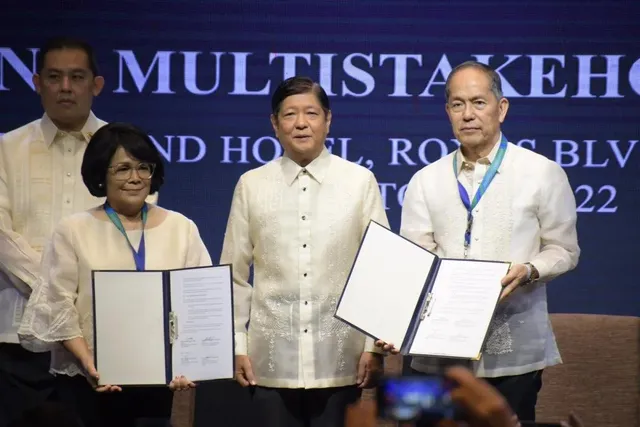
The partnership was formalized with the signing of a memorandum of agreement (MOA) between Environment Secretary Maria Antonia Yulo Loyzaga and Labor Secretary Bienvenido Laguesma during the DENR Multistakeholder Forum held in Manila last October 5.

Under the MOA, both agencies agreed to promote employment opportunities aligned with the protection and conservation of the country’s natural resources and ecosystems.

Loyzaga said the DENR is now working closely with the DOLE in calculating how many jobs to cover by identifying all the regions, both land and coastal areas, which are in need of support in terms of forestation and implementation of the government’s greening programs.

According to Loyzaga, the DENR’s Forest Management Bureau (FMB) is looking at the country’s geography and is in charge of mapping out possible areas where the so-called “green jobs” would be available.

“There is a full range of opportunities available, and we hope that this may begin to serve as a strategic way of looking at how our environment and our economics might actually intersect, especially in the case of the most socially vulnerable, and most environmentally vulnerable geographies,” Loyzaga told a press conference after the MOA signing.

The environment chief explained that understanding the country’s geography would help national government agencies in identifying unemployment rate, poverty incidence, and high value areas that would benefit the most from environmental employment opportunities.

Unemployment rate worsened in August this year where a survey of 10,810 families nationwide showed that 2.68 million families were either unemployed or out of business, according to the Philippine Statistics Authority (PSA) report.

On the other hand, PSA reported that the 2021 poverty incidence, which is the proportion of Filipinos whose per capita incomes are not sufficient to meet their basic needs, was at 18.1 percent or 19.99 million Filipinos which is higher than the 17.67 percent in 2018.

Loyzaga said the green jobs – ranging from planting, forestation, monitoring, and upkeep of areas of concern – would alleviate unemployment in the country.

The partnership is in line with DOLE’s Tulong Panghanapbuhay sa Ating Disadvantaged/Displaced Workers or TUPAD project that provides emergency employment for displaced, underemployed, and seasonal workers.

October 21, 2022

Photo credit: Atlas Consolidated Mining and Development Corporation

Atlas Consolidated Mining and Development Corporation (“Atlas Mining”) completed the third quarter of the year 2022 with a reported net income of Php3.069 billion compared to the net income of Php3.477 billion for same period in 2021. Stable production in the three quarters sustained the improvement in net income.

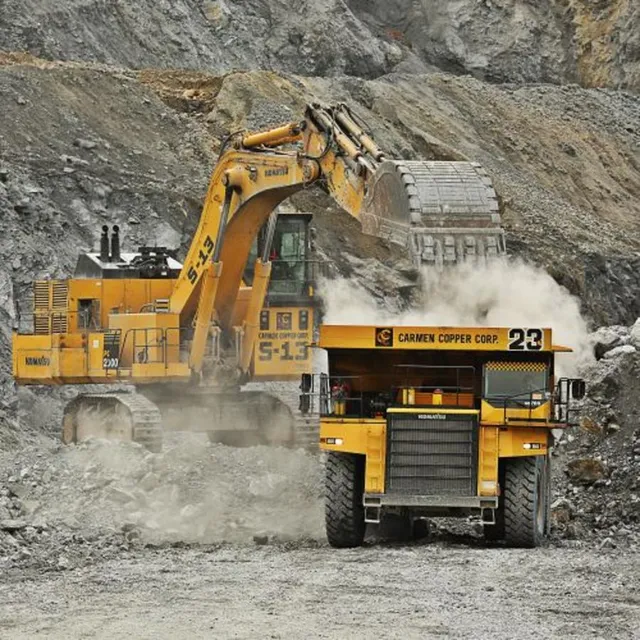
Atlas Mining’s wholly-owned subsidiary, Carmen Copper Corporation, reported copper metal production from 64.09 million pounds in 2021 to 54.82 million pounds in 2022 resulted from lower tonnage milled. In the third quarter of 2022, milling tonnage decreased by 11% from 14.22 million tonnes to 12.60 million tonnes. The reduction in copper metal production was mainly due to inclement weather experienced during the first four months of the year and this quarter. Copper grades decreased by 3% from 0.246% to 0.238%. Gold production decreased year-on-year by 13% from 19,562 ounces to 16,923 ounces due also to lower gold grades from 5.38 grams/dmt to 5.36 grams/dmt. Copper metal content of concentrate shipped decreased by 12% to 56.90 million pounds and gold content decreased by 11% to 16,377 ounces from 18,415 ounces.

Metal prices remained low in the third quarter of this year where copper price decreased by 2% from $4.22/lb to $4.15/lb but gold price increased by 1% from USD1,803/ounce to USD1,827/ounce compared to the same period last year.

Earnings before interest, tax, depreciation and amortization (EBITDA) was Php4.37 billion for the three quarters of 2022 compared to Php8 billion in 2021. Operating cost was adversely affected by higher energy and fuel prices, and higher waste charged to operations.

Accordingly, cash generated from operations improved which enabled the additional loan payment of $74.6 million of Atlas Mining’s loans on the three quarters of 2022. With the partial repayment of loan, an accounting gain of Php1.45 billion was recognized in the third quarter of 2022.


Article courtesy of the Philippine Stock Exchange

October 21, 2022

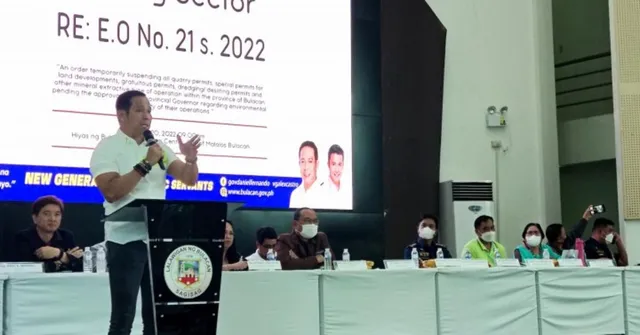
Bulacan Governor Daniel Fernando announces the temporary lifting of the suspension of mining and quarry operations in the province, during his meeting with the truckers association and those involved in the mining sector on Thursday (Oct. 20, 2022). He lifted the suspension as he released the new Implementing Rules and Regulations based on the environmental code that the concerned sectors must comply with. (Photo by Manny Balbin)

Governor Daniel Fernando on Thursday announced the temporary lifting of the suspension of mining and quarry operations in the province.

Fernando announced this during his meeting with about 350 operators of trucking/ hauling companies, processing plants such as crushing/ pulverizing/ cement/ blasting companies, and bentonite/ boulders operators throughout the province, at the Hiyas ng Bulacan Convention Center here.

The governor announced the temporary lifting of Executive Order (EO) 21 series of 2022 as he released the new Implementing Rules and Regulations (IRR) based on the environmental code that the concerned sectors must comply with.

"I temporarily lift the suspension of EO 21 for you to resume your operations starting October 26 this year," he said.

Fernando issued EO 21, which states the temporary suspension of all permits for mining, quarrying, dredging, desilting, and other types of mineral extractive operations within the province, on August 24 to address the issue of dilapidated roads and over-mining in the province.

He earlier said the implementation of EO 21 would also give way to the pending evaluation of the provincial government to determine and come up with an updated matrix and policies for mining stakeholders and trucking companies.

During the meeting that was led by the Bulacan Environmental and Natural Resources Office (BENRO), Fernando discussed the content of the executive order and IRR in response to the destruction of roads caused by the overloading of transport trucks, as well as the excessive volume of minerals and other commodities loaded in modified truck loaders.

Lawyer Juvic Degala, chief of BENRO, said the IRR includes the prohibition of modified trucks and the excess volume of loaded minerals.

Strict compliance in permit applications to operate regarding proper tax payment is also indicated in the guidelines.

Also prohibited is the "Kabit System" or the umbrella operation of operators where they must pay a permit to the provincial government individually.

Degala added that the IRR has a "one-strike policy" for those who already have a permit, either subjected to the cancellation or perpetual disqualification, and a "three-strike policy", which is the resumption or re-implementation of EO 21. 


Article courtesy of the Philippine News Agency

October 13, 2022

Photo credit: Darren M Green / Shutterstock

The Department of Environment and Natural Resources (DENR) is looking at the mining sector as one of the sources of the country's economic recovery as per the directive of President Ferdinand Marcos Jr.

During a budget hearing of the Senate Committee on Finance on Tuesday, Secretary Toni Loyzaga said DENR is working with the Department of Finance and other government agencies to identify different financial dimensions of mining activities in the country.

"We're also looking at building up the capacity of DENR to perform its duty on assessing the applications, observing and monitoring the mining activities, and analyzing the impact on communities and ecosystems," she told the committee.

Loyzaga said the primary concerns of mining companies and investors are the constant changes in policies and the need to develop local processing of raw mining products.

"Karamihan po ngayon na ini-export po natin is raw ore. So, kailangan po ng (Most of what we export now is raw ore. So, we need an) investment in the value-added processing para (so) we can actually realize the full value of what we are able to export," Loyzaga said.

“The mining industry holds the greatest potential to be a key driver in our economic recovery and long-term growth, especially now that world metal prices are high,” Finance Secretary Benjamin Diokno said in a previous statement, but cautioned the government expects the mining industry to adhere to responsible and sustainable mining practices.

The country has been pitching investments in green metals such as nickel, cobalt, and copper, to American investors as part of the Department of Trade and Industry's "Make It Happen in the Philippines" investment campaign.

Senator Cynthia Villar said 9.8 million out of about 30 million hectares of land were identified by the DENR with high mining potentials

Villar said these areas can be explored for mining as it is not viable for agriculture.

"Hindi rin natin magagamit sa agriculture ‘yan kasi hindi tutubo ang mga halaman kapag may mga metal sa ilalim (We cannot use that for agriculture because plants will not grow if there are metals underneath). That's how I understood it. So dapat i-mine mo and then i-rehabilitate nung (So, you can mine it and then it should be rehabilitated by the) mining company to become an agricultural land," the lawmaker said.

"Kung kailangan niyo 'yung budget para mag-function well ‘yung Mines and Geosciences Bureau, humingi kayo ng (If you need budget for the Mines and Geosciences Bureau to function well, ask for an) additional budget but let's develop the mining industry now that they have allowed the open-pit mining," Villar added.

She dismissed assumptions that mining is not good for the environment as long as it is legal.

"Depende, kasi ‘yung mga legitimate miner, okay sila. Ang mga nagde-destroy ng environment (It depends, because the legitimate miners are okay. The one who destroys the environment) are the illegal miners. Huwag nating i-allow ang illegal miners at mag-encourage tayo ng (We should not allow the illegal miners and encourage the) legitimate miners," Villar said.

The lawmaker divulged that most of the small-scale miners are just being used as fronts for illegal miners, according to local chief executives in the provinces that she visited.

"Lahat sila legal dapat. Hindi nila gagamitin ‘yung small-scale miners para front ng (All of them should be legal. They should not use small-scale miners as the front of) illegal miners," Villar said.

Senator Robinhood Padilla said it’s about time to review the Philippine Mining Act of 1995.

Section 108 states that "any person who willfully violates or grossly neglects to abide by the terms and conditions of the environmental compliance certificate issued to said person and which causes environmental damage through pollution shall suffer the penalty of imprisonment of six months to six years or a fine of PHP50,000 to PHP200,000, or both, at the discretion of the court."

"Yes, we feel it’s time to review the mining law, Loyzaga agreed, citing the need for stability of the business environment.

DENR reported that the Philippines has an estimated PHP1.4 trillion in gold reserves and an additional PHP7 trillion worth of non-metallic reserves.

The DENR requested PHP23.41 billion for its budget next year under the National Expenditure Program, PHP2.4 billion or 9.4 percent lower than its 2022 budget of PHP25.45 billion. By Wilnard Bacelonia


Article courtesy of the Philippine News Agency (With a report from Leonel Abasola/PNA)