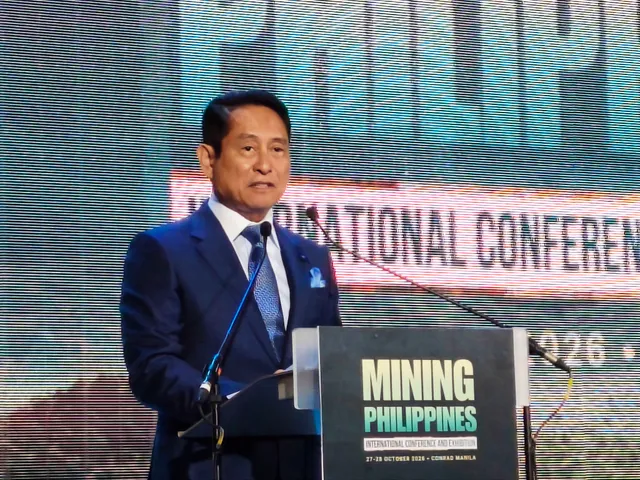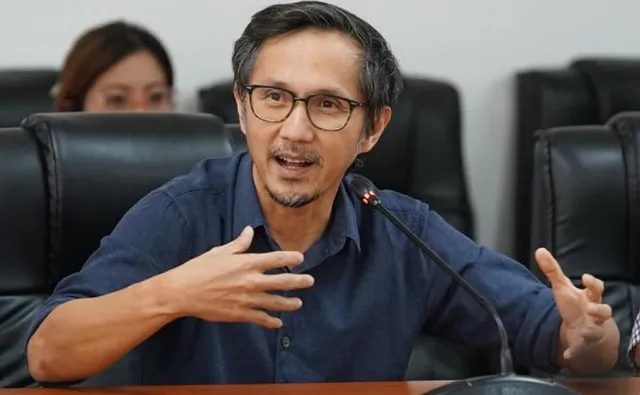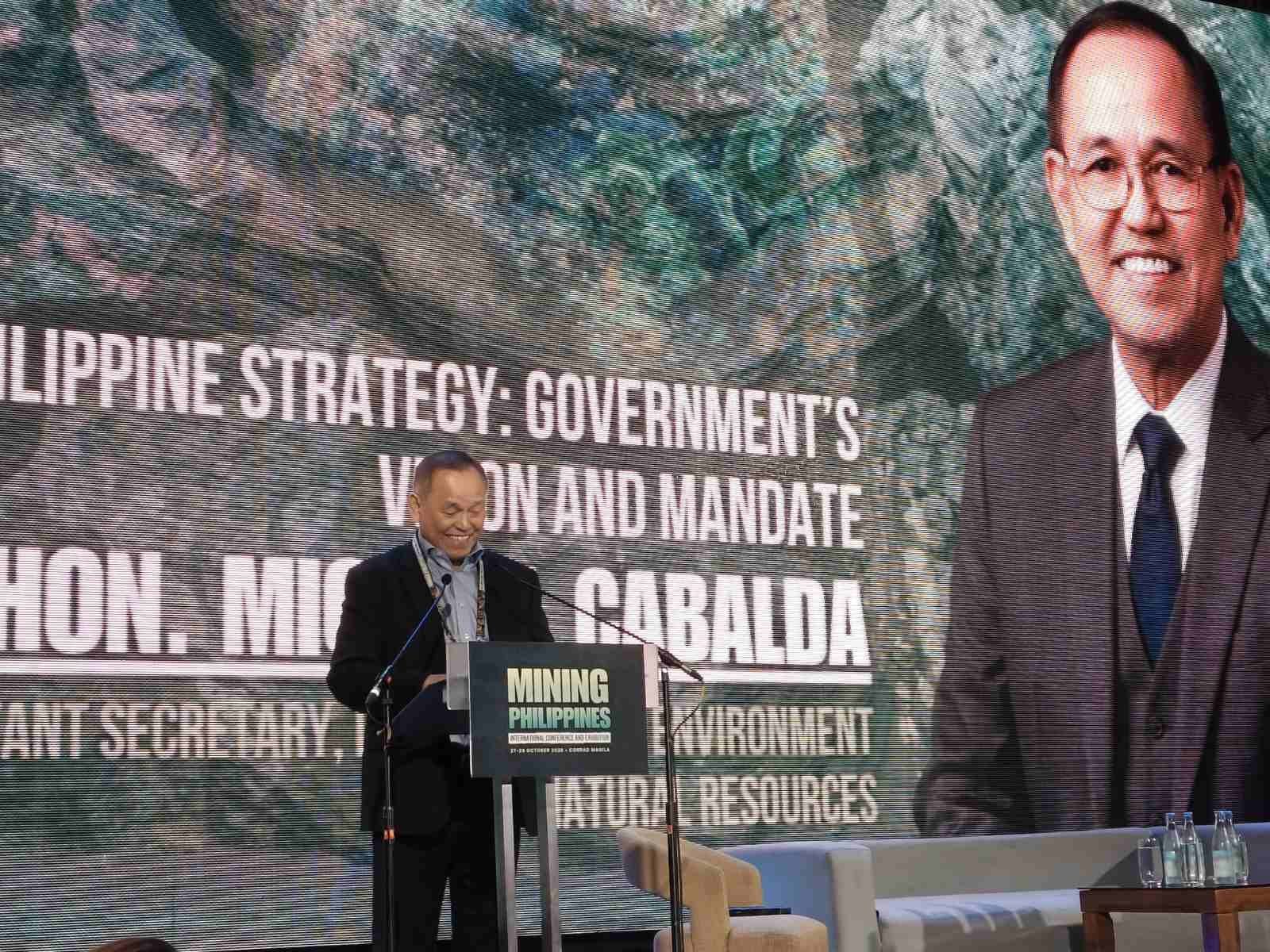
Department of Environment and Natural Resources (DENR) Assistant Secretary for Mining Concerns and former OIC MGB Director Engr. Michael V. Cabalda reported that the Philippines looks at opportunities to become a key player in the global critical minerals supply chain, with particular focus on critical minerals.
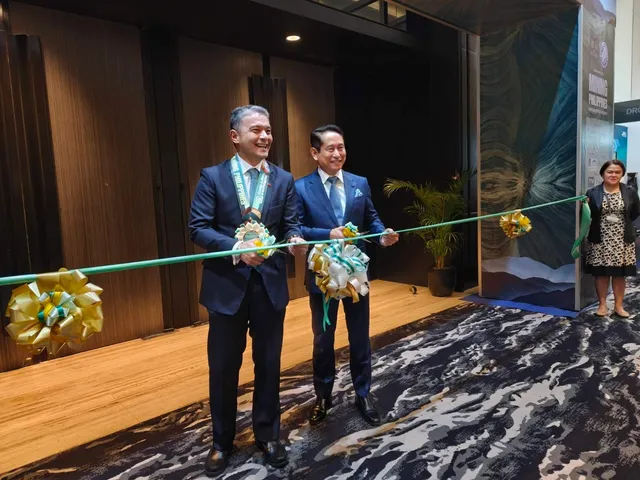
He was one of the honored guest speakers on Day 1 of Mining Philippines - International Conference and Exhibition 2026, held on October 27-28, 2026 at Conrad Manila Hotel, Pasay City.
In his speech, Cabalda underscored the opportunity for the Philippines to shift from being an exporter of raw or unrefined minerals to becoming a vital value-adding player in the critical minerals global supply chain.
Critical minerals are best known for their value as raw materials for the energy transition and advanced technologies. “As the demand for these resources increases, the need to address the supply vulnerability has also become a global concern.”
“Production, processing, and refining are concentrated in very few jurisdictions, making trade restrictions and supply shocks a constant risk,” he said.
Cabalda mentioned that the world is urgently seeking diversified, reliable, and responsible supply partners over the long term. Now, recognizing the possible impact of supply disruption, national strategies and regional and international cooperation are being established to secure responsible and resilient supply chains of critical minerals.
“Now, the Philippines is recognized as one of the potential key players in the critical mineral supply chain,” he said, citing the geological endowment to answer that call.
However, Cabalda stressed that endowment alone does not equate to a greater economic strategy, underscoring the need to leverage the global demand for critical minerals and the country’s policies.
Executive Order No. 122 (E.O. 122) establishes a national policy framework to accelerate the development of the Philippines’ critical minerals sector. This was signed into law on August 21, 2026.
E.O. 122 establishes a unified national policy framework for developing the Philippines' critical minerals industry and reorganizes the Mining Industry Coordinating Council (MICC).
This law shifts the country's strategy from merely exporting raw mineral ores toward domestic refining, value-adding processing, and manufacturing (such as batteries, electronics, and renewable energy components).
Cabalda said the policy is important in paving the transition from raw mineral exports towards domestic processing, value addition, industrialization, and integration into global green energy and technology supply chains.
“This is not merely another policy document sitting on the shelf. EO 122 formally shifts our national posture from raw mineral extraction and export toward domestic processing, value addition, industrialization, and high-value integration.”
He enumerated a five-stage pathway from mineral resources in the ground to a high-value strategic supply chain.
“Friends, in the remaining two and a half years of this administration, the government's focus is on building the bridge between Step 1 and Step 3. We cannot jump straight to the end of the product manufacturing overnight. That is a realization that we know. But we can and will de-risk and establish the domestic processing capacity that makes Step 4 and 5 inevitable,” he said.
Cabalda stated that E.O. 122 rests on four fundamental pillars.
“First, mineral remains owned by the state. But critical minerals are now officially designated as national priority projects. That means a whole-of-government urgency.”
“Second, economic development through real value-adding, not just raw-volume extraction.”
“Third, mineral utilization must be balanced with strict environmental, social, and cultural benchmarks aligned with the UN SDGs.”
“And fourth, the commitment industry has long asked for - policy stability.”
“That the state shall maintain a stable, predictable, transparent, and internationally competitive investment environment,” he said.
Cabalda said the DENR is committed to honoring executed contracts, eliminating regulatory flip-flops, and coordinating across agencies to boost capital investment with confidence.
“To implement this executive order, one of the key initiatives is to define the Philippines' critical minerals list,” he said, adding that the DENR-MGB developed a methodology in consultation with other government agencies, as well as relevant stakeholders, including the academe and private sector representatives, to determine which minerals are critical to us as a producing country to guide prioritization for value addition and value chain integration.”
Cabalda also announced that the DENR-EMB has already identified 11 critical minerals, namely: gold, silver, copper, molybdenum, nickel, cobalt, stadium, iron, chromium, limestone, and silica.
He noted that the identification of the priority minerals is expected to help define where facilitation, fiscal alignment, and investment promotion will be concentrated.
Lastly, he said, “If you are investing in processing and value-adding for minerals for these minerals, you have the full focus of the government behind.”