As the Philippines continues to pursue economic growth through the development of its natural resources, the relevance of laws, policies, and regulatory institutions has never been more critical.
The 2025 Geological Convention (GeoCon 2025), held in celebration of the Geological Society of the Philippines’ 80th Oak Jubilee, brought together geoscientists, policymakers, and industry practitioners to reflect on this challenge under the theme “Forged by Time, Strengthened by Integrity, Driven by Professionalism.”
The convention underscored a pressing national question: how well do existing legal and policy frameworks respond to evolving industry practices, societal expectations, and sustainability goals?
This article draws from the context of GeoCon 2025 and my plenary discourse on 02 December 2025 focusing on the continuing relevance of laws and policies in natural resource development, examining the need for stronger governance, updated regulatory frameworks, and deeper stakeholder collaboration to ensure responsible and equitable resource management in the Philippines.
Collectively, these policy instruments serve as the foundation for a resilient, low-carbon, and technologically adaptive economy aligned with international sustainability commitments.
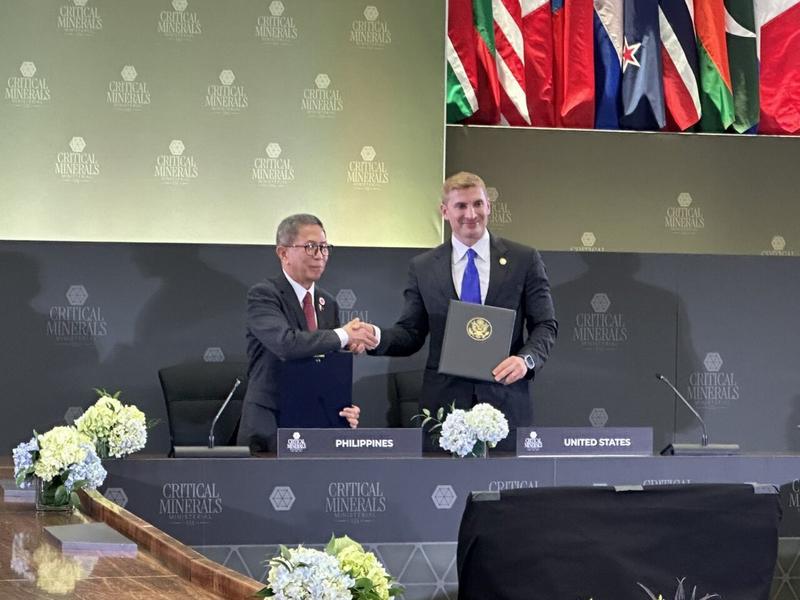
Critical Minerals
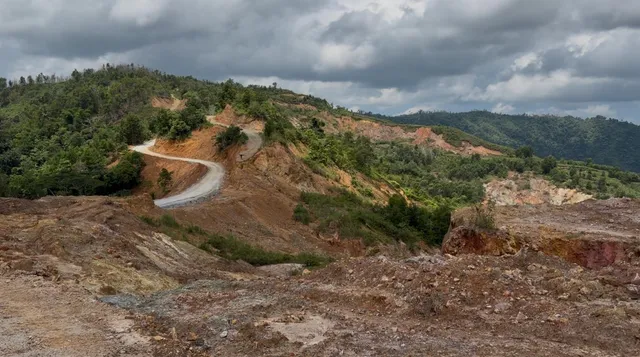
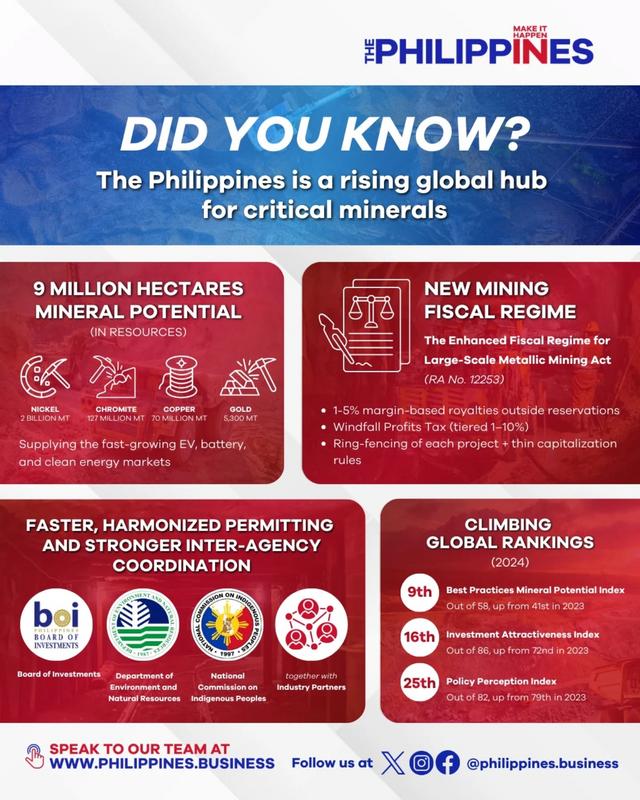
The Philippines is positioned to play a major role in the global clean energy transition due to its large deposits of nickel, copper, cobalt, and other strategic minerals. These materials are essential for manufacturing electric vehicle batteries, wind turbines, solar technologies, and energy storage systems.
However, the country currently captures only a small portion of the value chain, as most minerals are exported in low-value form. To shift toward value-added processing, the government must establish stable fiscal terms, investor certainty, and a clear industrial strategy that supports mineral processing, refining, and associated manufacturing.
This strategy also depends on energy affordability and infrastructure readiness. Processing plants require continuous, cost-effective, and preferably low-carbon electricity, which aligns mineral development with national decarbonization goals. In parallel, mining operations must uphold strict environmental safeguards, including responsible tailings management, watershed protection, progressive rehabilitation, and transparent monitoring systems.
Market rules should strike a balance between allowing mineral exports and encouraging domestic processing. A milestones-based export policy can help—letting new mines export early to recover costs and generate cashflow, while gradually shifting toward local value-added processing as capabilities develop.
At the same time, requiring transparent and fair off-take agreements ensures that pricing and supply arrangements are clear, competitive, and aligned with national development goals.

Petroleum Exploration (Natural Gas)
Natural gas remains a critical element of the Philippines’ power generation mix, providing stability, flexibility, and reliability as the share of intermittent renewable energy increases.
However, the Malampaya field is entering maturity, and without new discoveries or efficient management, the country may face supply shortages and volatility in electricity prices. To avoid this, policies must encourage exploration in frontier basins, provide predictable contract terms, and reduce regulatory risks that slow project development.
At the same time, the Philippines is expanding LNG import capability to supplement domestic gas. To manage this dual-source system effectively, government must clearly define quality standards, interconnection rules, tariff structures, and coordination mechanisms among gas suppliers, pipelines, power plants, and storage facilities. This prevents operational bottlenecks and ensures that both domestic and imported gas can be dispatched efficiently and competitively.
Strengthening midstream access rules—particularly for pipeline connections and terminal capacity—will reduce commercialization risk for new gas discoveries. Combined with transparent market operations and coherent energy planning, these reforms preserve reliability while supporting the gradual transition toward a cleaner power generation mix.
Renewable Energy
The Philippines has high potential for solar, wind, hydropower, and geothermal, but slow permitting, unclear land access, and transmission bottlenecks continue to delay project development. A one-stop, time-bound permitting system can greatly reduce administrative burden while maintaining environmental and social safeguards. Clear land acquisition and zoning rules are critical, especially for large-scale solar and onshore/offshore wind developments.
Geothermal energy offers continuous, baseload renewable power, which is especially valuable in balancing variable solar and wind generation. However, exploration and drilling are expensive and risky. Government-backed risk mitigation measures—such as drilling insurance, cost-sharing funds, or exploration guarantees—would encourage increased private participation and accelerate geothermal expansion.
Renewable energy growth also presents opportunities to build domestic industries, including manufacturing components, assembly of battery systems, and clean-energy-powered mineral processing. Tying renewable deployment to local supply-chain development ensures that job creation and economic value remain in the Philippines, not solely in imported equipment or foreign-operated generation assets.
Nuclear Energy
As the Philippines seeks long-term grid stability and low-carbon baseload power, nuclear energy is being considered as part of the future energy mix. However, this requires careful and comprehensive regulatory preparation. The Philippine nuclear regulatory authority must finalize licensing standards for both large reactors and Small Modular Reactors (SMRs), define inspection and safety protocols, and adopt international best practices on operational transparency and personnel qualification.
Nuclear development also requires public trust and robust emergency planning. This includes transparent siting studies, seismic and coastal safety assessments, evacuation and medical response planning, and ongoing community engagement. Additionally, clear long-term strategies for spent fuel storage, eventual decommissioning, and financial liability are crucial to ensure intergenerational safety and accountability.
To make early nuclear projects economically viable, government may need to establish long-term power purchase frameworks, capacity market recognition, and risk-sharing mechanisms with the private sector. Simultaneously, the national grid must be reinforced to integrate nuclear facilities and ensure system reliability.
Hydrogen
Hydrogen has the potential to support industrial decarbonization, long-duration storage, and clean transport, but the market is still emerging and requires policy support. To move from feasibility studies to pilot projects, the government should implement targeted incentives such as tax credits, preferential financing, and demand-side programs in refineries, industrial facilities, and bus or truck fleets.
A national Hydrogen Code must define standards for safety, blending with natural gas, pipeline transport, storage, fueling stations, and worker training. Establishing a Guarantee of Origin (GO) certification ensures hydrogen can enter international supply chains, especially where buyers require proof of low carbon emissions.
Native hydrogen development requires a clear resource governance framework that defines legal ownership, tenure terms, exploration work obligations, data reporting, and environmental safeguards.
Building on the early awards in Zambales and Pangasinan, regulations should ensure transparent exploration results and responsible operational practices. At the same time, a structured pilot-to-commercial pathway is needed—establishing safety protocols, community engagement requirements, and decommissioning plans for pilot sites, with a streamlined process for scaling up to commercial production if technical and environmental performance thresholds are met.
Artificial Intelligence, Data Privacy & Digital Governance
Open and standardized geoscience data can significantly reduce exploration risk and accelerate the identification of new mineral and energy prospects. By adopting an open-file data-sharing system, the government can ensure that geological maps, drill results, and resource assessments become accessible after reasonable confidentiality periods.
However, this openness must be paired with clear privacy and sovereignty safeguards, ensuring that sensitive information is handled responsibly and used to support—not undermine—local and national interests.
A modern exploration data governance framework should require companies to submit exploration results in structured, digital formats that can be quickly integrated into national geoscience databases. This allows new information to immediately improve the understanding of an area’s resource potential, supporting transparent decision-making for future exploration licenses and contract awards.
Such a system helps attract credible investors, reduces duplication of effort, and promotes more efficient, evidence-based resource development.
Data governance for digitalized operations should ensure that information generated from sensors, monitoring systems, and predictive maintenance tools is handled in line with national privacy regulations and emerging AI oversight frameworks. This means energy and resource companies must adopt secure data-handling practices, maintain clear audit trails, safeguard operational and customer information, and ensure that automated systems support—not replace—responsible human decision-making.
Grid Connection and Transmission
Many planned renewable and clean energy projects cannot proceed because transmission lines are insufficient or delayed. To unlock investment, grid expansion must be planned ahead of energy development, not after. This includes new transmission corridors, substation upgrades, and inter-island connectivity.
The grid must also be modernized to handle more variable renewable power, energy storage systems, hydrogen-to-power facilities, and eventually nuclear plants. Updating grid codes, reserve market rules, and system flexibility arrangements will enable a stable, resilient, and future-ready power system.
Geoscience Profession Action Points
The geoscience profession plays a pivotal role in the Philippines’ modernized energy and resources framework by ensuring that exploration, extraction, and resource management are grounded in scientific integrity and sustainability.
Geoscientists lead in mapping, evaluating, and managing critical minerals such as nickel, copper, and rare earth elements under the Enhanced Fiscal Regime for Mining, while also advancing subsurface studies for renewable, geothermal, and hydrogen energy development. Their technical expertise supports environmentally responsible extraction and provides a foundation for data-driven investment and policy decisions.
Beyond exploration, geoscientists are increasingly involved in advisory and regulatory roles—helping shape standards for environmental protection, carbon accounting, and geological safety.
By combining technical capability with governance and ethical responsibility, the geoscience profession strengthens national energy transition efforts, ensuring resource development that is sustainable, transparent, and beneficial for communities and investors alike.
Conclusion
The Philippines’ evolving energy and resources landscape demonstrates a powerful convergence of policy modernization, technological innovation, and sustainability-driven governance.
With forward-looking reforms spanning critical minerals, renewable energy, nuclear development, hydrogen, and digital transformation, the nation is laying a solid foundation for long-term energy security and economic competitiveness.
These efforts are not merely reactive responses to global trends—they represent a proactive commitment to reimagining national development through cleaner, more resilient, and inclusive systems of energy and resource management.
Ultimately, success will hinge on effective implementation, consistent regulatory clarity, and the meaningful integration of science, policy, and industry expertise.
By fostering collaboration among geoscientists, engineers, policymakers, and investors, the Philippines can ensure that each reform translates into real progress—empowering communities, preserving ecosystems, and reinforcing the country’s position as a regional model for sustainable energy governance.
Fernando “Ronnie” S. Penarroyo specializes in Energy and Resources Law, Project Finance and Business Development. He is also currently the Chair of the Professional Regulatory Board of Geology, the government agency mandated under law to regulate and develop the geology profession. For any matters or inquiries in relation to the Philippine resources industry and suggested topics for commentaries, he may be contacted at fspenarroyo@penpalaw.com. Atty. Penarroyo’s commentaries are also archived at his professional blogsite at www.penarroyo.com