As we celebrate International Women’s Month this March, I am reflecting on how our organization, Diwata – Women in Resource Development, Inc. (“Diwata”) has presented itself as a platform for enabling women's leadership through mentoring and presenting examples of strong women leaders in the mining industry.
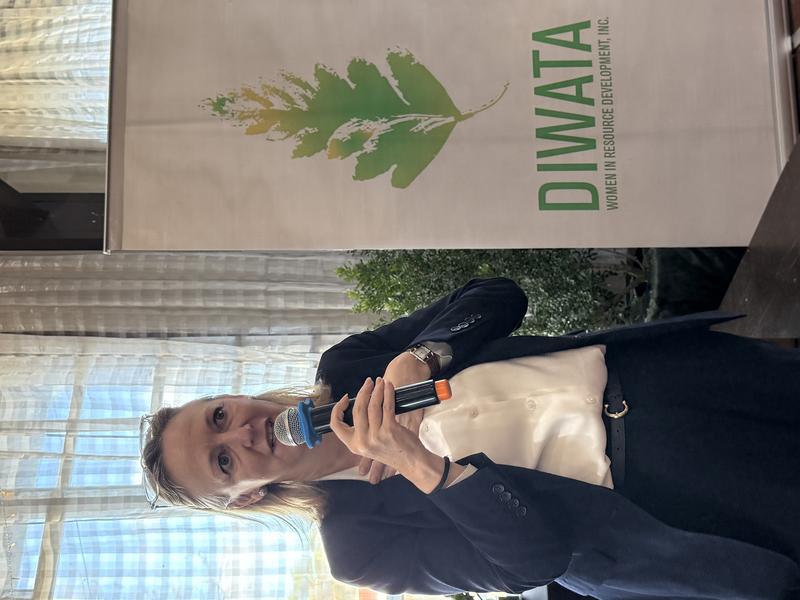
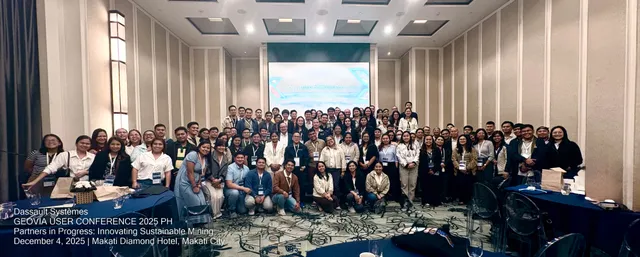
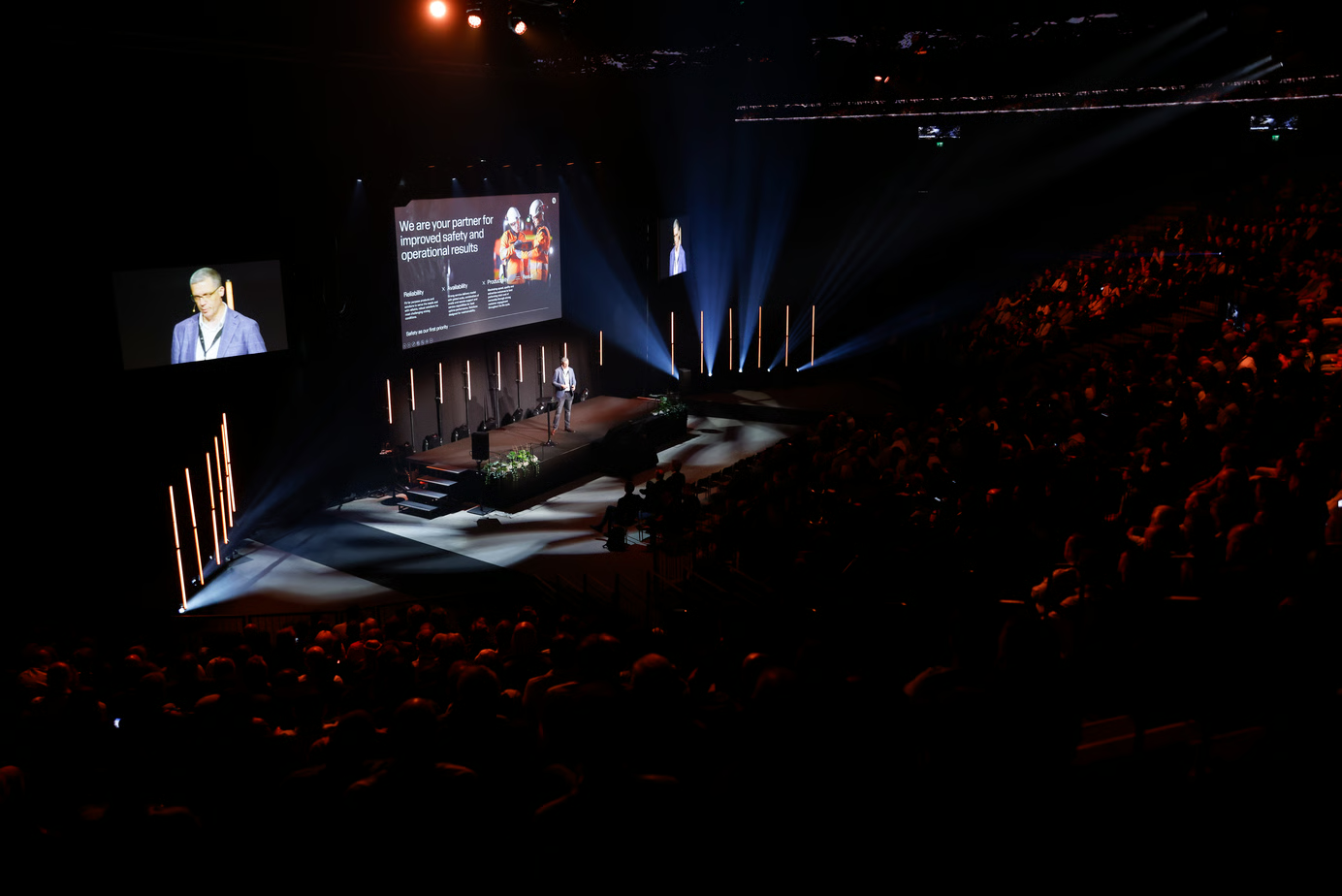
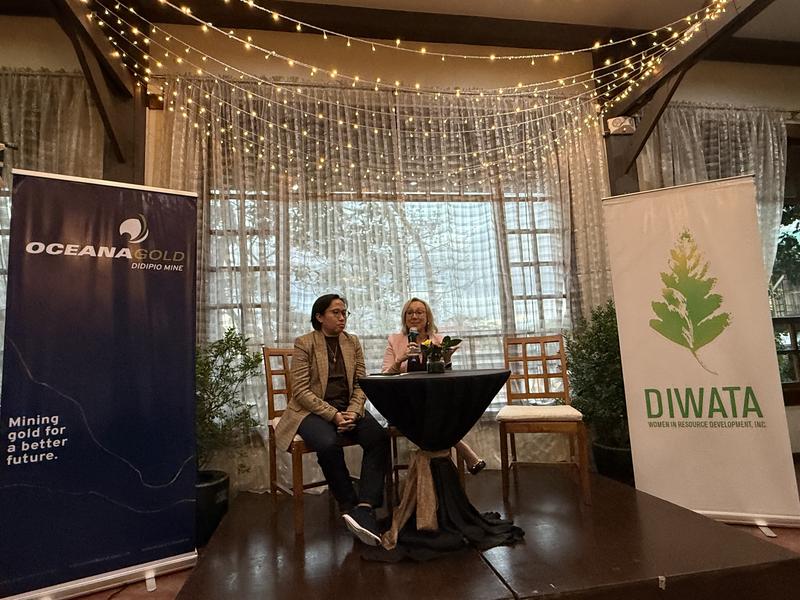
On 18 November 2025, on the sidelines of the Philippine Mine Safety and Environment Association’s Annual National Mine Safety and Environment Conference in Baguio, Diwata hosted "Network to the Next Level", an informal discussion featuring Tanya Cambetis, Business Optimization Manager of Didipio Mine and Engr. Rodalee Ofiaza, Diwata’s incumbent President.
Both speakers had fascinating stories to tell about how they navigated and thrived in a male-dominated industry. Among our special guests were Sweden’s Ambassador to the Philippines, H.E. Anna Ferry, and Eleonore Rupprecht, Counsellor and Trade Commissioner of the Embassy of Canada to the Philippines.
For many women in mining, the greatest challenge is often not technical competence or work ethic. It is confidence: finding the courage to speak, to lead, and to believe that leadership is attainable even when the path is unclear. In telling the story of her career journey, Cambetis offered valuable lessons for women navigating these realities across the mining sector, including here in the Philippines.
Cambetis did not enter mining through a conventional route. Her early career was far removed from heavy industry, and she did not begin with an engineering degree or a clearly defined leadership trajectory. Instead, her entry point was operational, hands-on, and deeply human. What followed was a career shaped by persistence, self-doubt, mentorship, both its presence and its absence, and an unwavering commitment to inclusion.
Her role as Manager for Business Improvement and Optimization at the Didipio Mine places her squarely within leadership, yet her perspective remains grounded in the experiences that nearly pushed her out of the industry.
Leadership Without a Map
One of the defining features of women’s careers in mining is the lack of a visible leadership pathway. While technical roles may be clearly structured, progression into leadership often depends on informal networks, sponsorship, and confidence: areas where women are frequently disadvantaged.
Cambetis’ experience reflects this reality. Despite capability and ambition, there were moments when she questioned whether she belonged. These doubts did not stem from an inability to perform, but from the absence of guidance and representation. Like many women, she struggled with the sense that leadership was something to be “invited into,” rather than claimed.
When Mentorship Misses the Mark
Mentorship is widely promoted as a solution to gender disparity in mining, yet Cambetis’ early experience with a women’s organization revealed a critical gap. While the initiative was intended to support women, it failed to make space for difference: difference in role, background, age, and life stage.
At the time, she internalized this exclusion as a personal failure. In hindsight, it became clear that the issue was not a lack of fit, but a lack of inclusion. Representation alone is insufficient. Mentorship must be intentional, empathetic, and accessible to women across the full spectrum of mining roles, from operators to engineers to administrators.
This lesson later shaped Cambetis’ own leadership approach. When she assumed mentoring and leadership roles, her guiding principle was simple but powerful: no woman should ever feel that she does not belong in a space created to support women.
The Hidden Impact of Everyday Interactions
One of the most compelling lessons from Cambetis’ journey is the long-lasting impact of small moments. A passing comment, a dismissive tone, or an unspoken exclusion can shape someone’s confidence for years. Conversely, a brief word of encouragement can re-direct an entire career.
In mining environments, often hierarchical and high-pressure, this awareness is particularly important. Leadership is not confined to formal authority. It is exercised daily through behavior, language, and attentiveness to others.
For women already in senior or influential positions, Cambetis’ experience serves as a reminder: someone is always watching, learning what leadership looks like by observing how it is practiced.
Balancing Leadership and Life
Cambetis’ career progression was accompanied by profound personal sacrifice. Leaving children to work remotely and overseas remains one of the most emotionally challenging aspects of mining careers for women. These decisions are rarely visible in performance metrics, yet they shape leadership resilience in profound ways.
In the Philippine mining context, where family and community ties are deeply rooted, these experiences resonate strongly. Cambetis’ story reflects the reality that leadership does not require choosing between ambition and care, but demands honesty, support, and flexibility.
Completing a mining engineering degree later in life became a defining milestone for Cambetis, not simply as a professional achievement, but as a demonstration of perseverance. It reinforced an essential message for women in mining: growth is not limited by age or timing.
Letting Go of the Myth of Readiness
A recurring barrier for women entering leadership is the belief that they must be fully prepared before stepping forward. Cambetis’ career illustrates how damaging this belief can be.
Leadership does not require having all the answers. It requires curiosity, accountability, and willingness to learn. The expectation of perfection disproportionately affects women, often causing them to hesitate while opportunities pass.
The turning point in Cambetis’ leadership journey came when she stopped allowing doubt to dominate her decisions. Saying “yes” before feeling ready did not diminish her effectiveness but accelerated her growth.
For women developing leadership skills, this also means learning to claim space. Speaking up in meetings, sharing ideas, and encouraging quieter voices are all acts of leadership, particularly in environments where women remain underrepresented.
A Call to Action for Women Seeking Mentorship and Leadership
Cambetis’ journey offers a clear message to women in mining: do not wait for permission to lead. Leadership is built through action, persistence, and support networks intentionally cultivated over time.
“If I could give one piece of advice about how my career has gone, it would be: don’t let that voice be the one that tells you that you don’t belong. When that voice says you can’t, or won’t, or shouldn’t, stand up and say I can, I will, and I absolutely should. Surround yourself with people who support and believe in you. Build your network, seek mentors, and be a mentor. The mining industry needs more women, and each one of us can make a difference”, says Cambetis.
The Philippine mining industry needs women who are willing to step forward, support one another, and redefine leadership through inclusion.
As Tanya Cambetis exhorted the attendees of our forum, “Stand up, speak out, and never let that voice of doubt define your path.”