



November 27, 2023

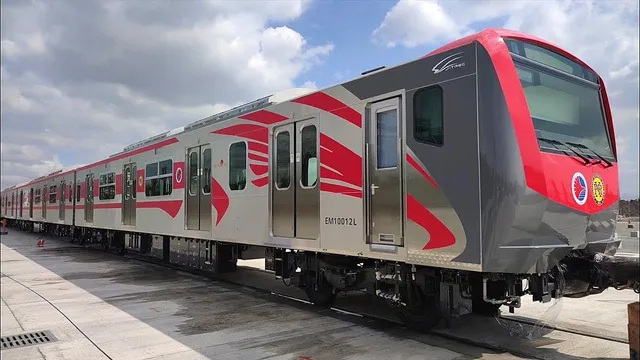
The country’s railway industry will be “revived” once the North-South Commuter Railway (NSCR) and the South Long Haul (SLH) flagship projects are completed, Transportation Secretary Jaime Bautista said Friday.

During the 131st anniversary of the Philippine National Railways (PNR), Bautista said the two projects would elevate the country’s railway industry to global standards.

“Tayo ay gagawa ng isang railroad network na world-class – maipagmamalaki hindi lamang sa Asya, kundi pati na sa buong mundo. Mga bago, moderno, at mabilis na tren na tatakbo mula Clark hanggang Calamba patuloy hanggang Bicol (We will build a railroad network that is world-class – one we’ll be proud of not only in Asia but the whole world. There will be new, modern, and fast trains running from Clark to Calamba, and all the way to Bicol),” he said.

The NSCR and SLH, he said, would usher in a “renaissance” of the country’s rail industry and would provide connectivity, as the two rail projects will link Metro Manila to regions in northern and southern Luzon.

The projects will generate jobs, boost economic growth, and help ease traffic congestion.

“Trabaho, maunlad na ekonomiya, at maaasahang transportasyong pampubliko. Ito ang pangako ng NSCR at South Long Haul Project para sa Pilipino (Jobs, a vibrant economy, and reliable public transport. These are what the NSCR and SLH projects promise to the Filipino people),” he said.

The NSCR – a 147-km. railway system – will have 35 stations, 51 commuter train sets, and seven express train sets that will serve up to 600,000 passengers daily.

Once completed, it is expected to cut travel time from Calamba, Laguna to Clark, Pampanga from the present 4.5 hours by road to less than two hours by train.

On the other hand, the SLH is a 577-km., 33-station railway from Metro Manila, passing through Batangas, all the way to Bicol.

The SLH will reduce travel time from Manila to Legazpi in Albay from the present 14 hours to 18 hours by road to a six-hour ride by regular commuter trains or a 4.5-hour commute by express trains.

During the event, Bautista also commended the PNR for its continued service as the country’s first mass transport system.

The Manila-Dagupan Ferrocarril Line served as the primary entry and exit point in Manila in 1892 and was later renamed the Manila Railroad Company by American colonists.

In 1938, the railroad network was extended to Bicol – from San Fernando, La Union to Legazpi, Albay – and is the longest railroad network that ever existed in the country’s history.

It was renamed into the PNR on June 20, 1964, under Republic Act 4156. By Raymond Carl Dela Cruz

November 10, 2023

The Department of Public Works (DPWH) has entered a contract agreement with China Road and Bridge Corporation (CRBC) for the construction of Davao River Bridge also known as Bucana Bridge in Davao City.

DPWH Secretary Manuel M. Bonoan has officially approved the ₱3.126 Billion civil works contract signed by DPWH Senior Undersecretary Emil K. Sadain and CRBC General Manager Ren Xiaopeng for the construction of a four (4)-lane bridge and approaches with a total length of 1,340-lineal meter funded under China-Aid Grant.

The DPWH-CRBC contract signing held on November 3, 2023 was also participated by Counsellor Yang Guoliang of the Embassy of China in the Philippines, CRBC Assistant General Manager Zhang Lei, Project Director Rodrigo I. Delos Reyes of DPWH Unified Project Management Office - Bridges Management Cluster (UPMO-BMC), and DPWH OIC-Chief Accountant June E. Balisi.

In his report to Secretary Bonoan, Senior Undersecretary Sadain said that the Chinese Project Management Company has also gave on November 8, 2023 its confirmation for the civil works contract agreement of the soon to be a modern bridge set to have a profound impact on transportation network, as it is a critical component and will complement to Davao City Coastal Road presently serving as an alternate route to the existing urban road network of Davao City.

According to Senior Undersecretary Sadain, the signing of the contract document mark the formalization of agreements with the selected construction firm procured through competitive bidding among the shortlisted contractors of the Government of the People’s Republic of China (GPRC) and the beginning of the construction phase of Bucana Bridge.

GPRC extends a grant to the Philippines on the basis of the Exchange of Letters signed on November 20, 2018 concerning the construction of the China-Aid Localized Project for Davao River Bridge (Bucana Bridge). The implementation agreement between GPRC and the Government of the Philippines was signed on October 20, 2023.

Senior Undersecretary Sadain shared to Counsellor Yang deepest appreciation to the Government of the People’s Republic of China for working together with the Philippines on various projects that have not only improved infrastructure but also fostered economic growth.

The Binondo-Intramuros Bridge in Manila and the Estrella-Pantaleon Bridge in Makati and Mandaluyong, both across Pasig River, were the first DPWH UPMO-implemented infrastructure project in partnership with the Government of the Republic of China under the Agreement on Economic and Technical Cooperation in 2017.

Over the next 24 months or until November 2025, DPWH UPMO-BMC and CRBC will work for the quality completion of the China-Aid Localized Project for Davao River Bridge located in the estuary of Davao River.

Bucana Bridge Project involves the construction of a 4-lane 6-span extradosed bridge, connection road, traffic engineering, lighting, and other ancillary facilities.

The Detailed Engineering Design (DED) plans is already approved by the DPWH Central Office.

November 10, 2023

A study team composed of bridge construction experts from the Infrastructure Development Institute (IDI) Japan and the Department of Public Works and Highways (DPWH) is set to commence early stage assessment on the proposed long-span bridge projects that will connect the islands of Luzon, Visayas, and Mindanao.

To discuss the study team’s itinerary, IDI Japan consultants met with DPWH Senior Undersecretary Emil K. Sadain on November 8, 2023 at the DPWH Central Office in Port Area, Manila.

Also present during the meeting were DPWH Undersecretary Maria Catalina E. Cabral, Project Director Rodrigo I. Delos Reyes of DPWH Unified Project Management Office - Bridge Management Cluster; Planning Service - Environmental and Social Safeguards Division Chief Rosemarie B. Del Rosario; and representatives of Regional Offices 5, 8, and 13, who were informed of the assessment coverage and requirements from the DPWH.

According to DPWH Senior Undersecretary Sadain, the pre-feasibility study will cover the Luzon-Samar-Leyte-Mindanao Linkage Project which will not just establish a better link between Luzon to other parts of Visayas and Mindanao but it will provide a permanent solution to the perennial problem of stranding during weather disturbances and port congestion during peak season.

“The realization of Luzon-Samar-Leyte-Mindanao Linkage would significantly improve mobility across the country. On behalf of DPWH Secretary Manuel M. Bonoan, we are thankful for this assistance from IDI Japan, as the previous initiatives on the proposed project did not push through,” said Senior Undersecretary Sadain.

The construction of Luzon-Samar Bridge and Leyte-Mindanao Bridge will cut travel time between major islands and fill in the missing gaps of the country’s main trunk line Maharlika Highway, currently spanning more than 3,500 kilometers from Luzon to Mindanao.

Study Team Leader Masahiko Yasuda of the Dia Nippon Engineering Consultant said that they are looking into the use of maximum single-span length and deep-water foundation as engineering solutions, which were used in the Messina Strait Bridge in Italy and Rion-Antirion Bridge in Greece respectively.

After the meeting, the study team will be heading to Bicol and Eastern Visayas Region to conduct on-site visits, including bathymetric surveys in Matnog, Sorsogon, and Allen, Samar.

Succeeding technical meetings and workshops will then be conducted at the JICA-Philippines Office, DPWH Office, and Japanese Embassy in Manila, before the IDI consultants head back to Japan on November 17, 2023.

October 30, 2023

Tokyo will continue investing in the Philippines’ big-ticket projects, Japanese Ambassador Kazuhiko Koshikawa reaffirmed Thursday.

Speaking at the 49th Philippine Business Conference and Expo in Manila, the envoy said Japan “has always been and continues to be” the largest official development assistance (ODA) donor of the Philippines but there is still room for the partnership to grow further.

“Japan and the Philippines have very strong, solid economic ties,” he said.

“As we forge commitments in our priority industries, we want to assure you that Japan will continue to invest in big-ticket projects to help shape a thriving future for our fellow Filipinos and for our investors,” the envoy added.

A big chunk of Japanese investments in the country goes into infrastructure projects, among which are the North-South Commuter Railway (NSCR), Metro Manila Subway Project (MMSP), LRT-1 Cavite Extension, LRT-2 East Extension and MRT-3 rehabilitation.

The Japanese envoy said there had been “renewed and growing interest” among Japanese investors in the Philippines, especially as both countries gradually recover from the impacts of the coronavirus disease 2019 pandemic.

Koshikawa also pointed out that need to develop more disaster prevention-related infrastructure in the Philippines and provide a unique opportunity for Japanese companies to leverage their experience, know-how and technology.

‘Amend CREATE’

Just as the Philippines doubles efforts in attracting investors, Koshikawa said the country should also “create a level-playing field for its business environment” that is as attractive or more attractive than its Southeast Asian neighbors.

Koshikawa said the CREATE Act of 2021, with all its good intentions, “has been cited as having made the business environment less competitive”.

“Fortunately, legislators are currently deliberating the CREATE MORE bill in the lower house which has the potential to resolve the taxation challenges being faced by export-oriented companies,” he said.

“We strongly hope that the proposed amendments will soon be realized,” he added.

Koshikawa warned that if the VAT-related provisions are not appropriately amended, “many companies, including that of the Japanese, may pull-out their businesses in the Philippines”.

The envoy said Japan has always been a top investor in the Philippines over the last decade, but compared to investments made through Singapore and the Netherlands, “Japanese companies have invested more than what is represented in the statistics”.

October 30, 2023

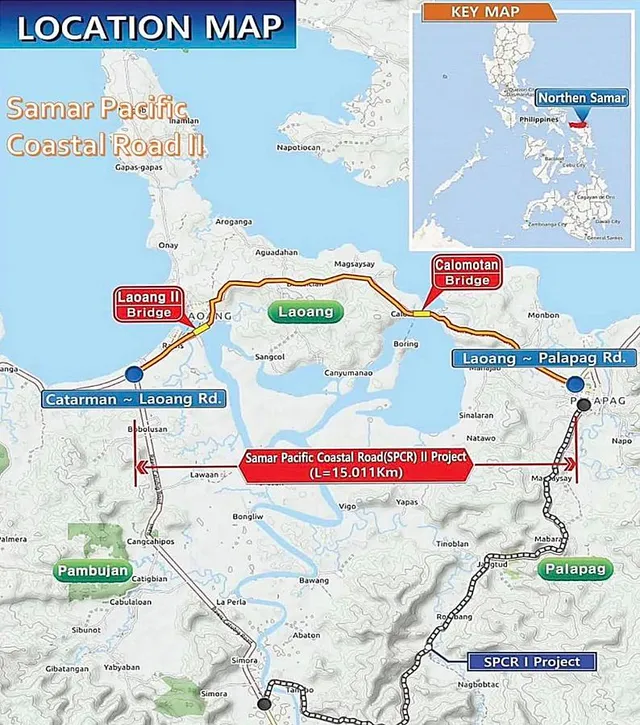
The Department of Public Works and Highways (DPWH) and the Export-Import Bank of Korea (KEXIM), the agency for Economic Development Cooperation Fund (EDCF) of the Government of Korea (GOK), has taken a pivotal move towards construction of Samar Pacific Coastal Road II (SPCR 2) Project in Northern Samar by officially signing the Minutes of Discussion for potential financing for this flagship road project.

Senior Undersecretary Emil K. Sadain, in-charge of DPWH infrastructure flagship projects, and EDCF Director Tae-Bum Kim signed on Friday, October 27, 2023 the Minutes of Discussion which is a crucial milestone in the planning and financing of the SPCR 2 Project.

The ceremonial signing was also attended by KEXIM-EDCF Manila Representative Office Country Director Jae-Jeong Moon and Deputy Country Director Yun-Hak Lee; EDCF Senior Project Officer SoongHo Kim and Project Officer Yoo-Hwan Song; Project Director Sharif Madsmo H. Hasim and Project Manager Teresita V. Bauzon of DPWH Unified Project Management Office - Roads Management Cluster II (Multilateral); DPWH Stakeholders Relations Service Director Randy R. Del Rosario, and Project Manager Shirley Castro of the Office of the DPWH Senior Undersecretary.

Senior Undersecretary Sadain said that the signing of the Minutes of Discussion after the four (4)-day KEXIM appraisal mission to undertake fact-findings and complete review and analysis is a key moment in the efforts to secure loan for the 15-kilometer project that will facilitate direct connectivity and efficient mobility of vehicles between Laoang island and mainland Samar by constructing two (2) bridges namely 800-meter Laoang 2 Bridge and 605-meter Calomotan Bridge and improving the existing roads from the Catarman-Laoang Road Junction to the Laoang-Palapag Road Junction.

According to DPWH Secretary Manuel M. Bonoan, the SPCR 2 Project holds the promise of improving the Filipinos quality of life and boosting economic opportunities within Eastern Visayas Region.

“The development of SPCR 2 Project which forms part of the circumferential road loop of Samar Island and complements the recently completed Samar Pacific Coastal Road 1 Project underscores the administration of President Ferdinand R. Marcos Jr. dedication to provide a more reliable and economical means of transportation”, said Secretary Bonoan.

The team and representatives from the Korea Export-Import Bank, DPWH and other relevant government agencies commence the appraisal mission with a kick-off meeting at the DPWH Central Office in Port Area, Manila on October 24, 2023.

The kick-off meeting marks another chapter in the long-standing partnership of the Government of the Philippines and the Republic of Korea in rolling out projects that will turn the Filipino aspiration of national development into reality.

The proposed SPCR 2 Project is one (1) of the 197 infrastructure flagship projects under President Marcos administration’s “Build, Better, More” program.

President Marcos gave the go-signal for SPCR 2 Project during the 7th National Economic Development Authority (NEDA) Board Meeting on July 19 in Malacañang, five (5) days after he together with South Korean Ambassador to the Philippines Lee Sang-Hwa and DPWH Secretary Manuel M. Bonoan led the inauguration of the 11.6-kilometer SPCR Phase 1 Project in Palapag, Northern Samar funded by Government of the Philippines with assistance from the Export-Import Bank of Korea.

The kick-off meeting focused on technical discussion on the project cost and financing, environment and social impact assessment, road right of way, procurement plans, project implementation and components.

On October 25 and 26, the KEXIM team conducted site visits along the proposed road alignment in the towns of Laoang and Palapag, Northern Samar.

When completed, SPCR 2 Project will not only reduce travel time but will also significantly improve accessibility to goods and services. This will contribute to the economic growth of Northern Samar and enhance the overall quality of life for the people of Laoang and nearby communities.

October 23, 2023

The Department of Public Works and Highways (DPWH), led by Undersecretary for Planning and Public-Private Partnership Services Maria Catalina E. Cabral, inspected on Tuesday, October 17, 2023, the ongoing construction of the 2.55-kilometer NLEX-SLEX Connector Road Section 2 spanning from España Boulevard to the Polytechnic University of the Philippines (PUP) in Sta. Mesa, Manila.

“We want to ensure that right-of-way and construction activities are right on schedule in order to provide seamless travel for motorists, most especially trucks coming from the ports at North Harbor as well as to improve the connectivity and traffic flow between the Southern and Northern part of Luzon and its surrounding areas,” said Undersecretary Cabral.

Presently at 66.64 percent completed, a total of 1.84 kilometer of 4-lane road have already been finished, including the on and off ramp at España Boulevard, while civil works for the entry and exit ramps at Magsaysay Boulevard are being fast-tracked for opening within the last quarter of the year.

When completed, NLEX-SLEX Connector Road Section 2 will link the España Boulevard interchange to the end of Manila Skyway Stage 3 at PUP Sta. Mesa, Manila.

The entire NLEX-SLEX Connector Road, which spans a total of 7.70 kilometers from the end of NLEX Segment 10 at Circumferential Road 3 (C-3) at Caloocan to the end of Manila Skyway Stage 3 at PUP Sta. Mesa, Manila, is a joint project between the Philippine Government thru DPWH and Manila North Tollways Corporation (MNTC) under the Public-Private Partnership (PPP) Program.

“With construction activities on track for the final section, around 35,000 mixed vehicular traffic including heavy vehicles traveling per day from SLEX to NLEX will soon enjoy reduced logistical costs brought by shorter travel time from the current two (2) hours to just 20 minutes,” added Undersecretary Cabral.

Also present during the inspection were DPWH PPP Service OIC Director Pelita V. Galvez, DPWH Planning Service Director Alex G. Bote, NLEX Vice President for Tollway and Development Engineering Nemesio G. Castillo, PPP Service Division Chief David C. Galang, Construction Manager Engineer Ryan Mallari, NLEX Independent Consultant Alex Alcazar, and other officials and representatives from MPTC and NLEX Corporation.


Article courtesy of the Department of Public Works and Highways

October 23, 2023

Department of Public Works and Highways (DPWH) Senior Undersecretary Emil K. Sadain was the plenary session speaker at the Korean Society of Civil Engineers (KSCE) 2023 Convention, Conference and Civil Expo on October 19, 2023 at the Yeosu Expo Convention Center, Yeosu, Korea.

Senior Undersecretary Sadain, in-charge of DPWH infrastructure flagship projects under “Build Better More”, discussed the Philippines infrastructure landscape particularly the DPWH flagship projects on roads, bridges and flood control structures including several big-ticket projects supported by Korea Official Development Assistance (ODA).

“This convention is an opportune occasion to share with the world some of our flagship projects that are underway and in the pipeline, some of which are made possible through ODA and are testaments of growing bilateral relations with the Republic of Korea”, said Senior Undersecretary Sadain.

Senior Undersecretary Sadain was warmly received by 2023 KSCE President Jun-Haeng Heo and 2024 KSCE incoming President Choong-Ki Chung and other officers of KSCE.

In this year's convention, KSCE invited all civil engineers in different fields and countries to unite, to participate from October 18 to 20, 2023 and to create a new chapter of discussion under the slogan, “KSCE for the Future”.

The 2023 Convention, Conference and Civil Expo is one (1) of the largest civil engineering event in Korea with about 1,000 papers presented and 100 booths exhibited.

As a high-ranking DPWH official, Senior Undersecretary Sadain heads the specialized infrastructure clusters of the Unified Project Management Office (UPMO) that oversees the implementation of most infrastructure flagship projects being implemented by the Department.

Attendees as part of Philippine delegation at the KSCE 2023 Convention in the Southern part of Korea include UPMO Project Directors Benjamin A. Bautista and Ramon A. Arriola III, former Project Director Virgilio C. Castillo, and Philippine Institute of Civil Engineers (PICE) - Korea Chapter President Engr. Jebie Balagosa.

Senior Undersecretary Sadain, the elected incoming 2024 National President of Philippine Institute of Civil Engineers, Inc. - long been recognized as premier civil engineering professional organization with over a hundred chapters in the Philippines and 13 international chapter, is constantly sharing his wide experience and knowledge in the field in various national and international conferences and forums.

He is a key thought leader when it comes to infrastructure development, and in engaging and collaborating with various high-level stakeholders including international development partners.

A proposal by Senior Undersecretary Sadain for KSCE and PICE international cooperation and technical collaboration in 2024 was optimistically accepted by 2023 KSCE President Heo and President Elect Chung.

KSCE is expected to participate in future PICE-organized civil engineering event for opportunity to exchange information and ideas, networking, and sharing knowledge and technology advancement through wide range of activities including workshops, meetings, and conferences to better serve the public in each country and advance the civil engineering profession globally.

A Career Executive Service Officer (CESO), he is also a model of exemplary performance due to his significant contributions and strategic innovations in Project Management and in the delivery of major and high-impact projects of national significance.

Among the flagship projects of DPWH assisted by Korean government are the Samar Pacific Coastal Road Project (SPCR) in Northern Samar which was inaugurated by President Ferdinand R. Marcos Jr. and DPWH Secretary Manuel M. Bonoan last July 13, 2023; the 3.17-kilometer Panguil Bay Bridge Project (PBBP) that will connect the City of Tangub in Misamis Occidental to the Municipality of Tubod in Lanao del Norte targetted to open to vehicular traffic by first half of 2024; and the Pampanga Integrated Disaster Risk and Reduction and Climate Change Adaptation (IDRR CCA).

The engineering services for the construction of two (2)-sea-crossing bridges connecting Panay Island, Guimaras Island and Negros Island with a total length of 32.47-kilometer located in Western Visayas Region, is also covered by a loan from the Government of the Republic of Korea.

A fact-finding mission from the national headquarters of Export–Import Bank of Korea (KEXIM) also visited Manila last May 2023 for possible enhance cooperation under Economic Development Promotion Facility (EDPF) which is a new ODA loan program of the Korean Government to cover financial gap for large-scale infrastructure.


Article courtesy of the Department of Public Works and Highways
October 23, 2023

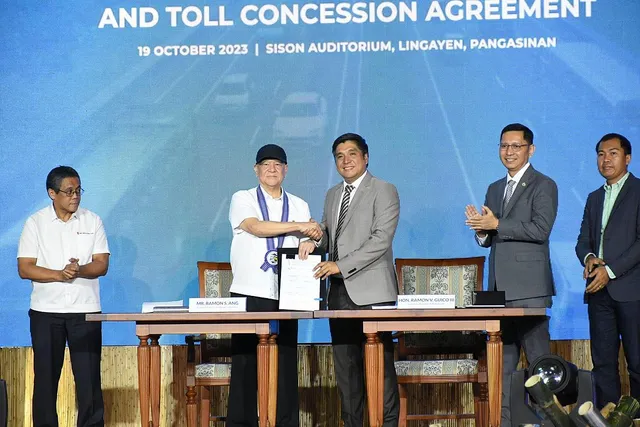
San Miguel Holdings Corporation (SMHC) and the Pangasinan provincial government signed Thursday the joint venture and tollway concession agreements for the Pangasinan Link Expressway project phase one costing PHP34 billion.

In his speech, Pangasinan Governor Ramon Guico III said the 42.76-kilometer expressway project, which will connect the province’s eastern and western parts, is a “game changer”.

“It will reinvent the transportation and enrich tourism landscape, prioritize accessibility of citizens to major towns and cities, magnify business and livelihood opportunities, multiply economic activities, build more infrastructures, facilitate province-wide travel, and protect our environmental resources in Pangasinan,” he said.

Once completed within the targeted four-year construction period, the first phase of the expressway is expected to shorten travel time from Tarlac-Pangasinan-La Union Expressway exit in Binalonan town to Lingayen from 90 minutes to just half an hour or less, he said.

The first phase covers 6.9 kms from Binalonan to Manaoag, 11.30 kms from Manaoag to Calasiao and 22.17 kms from Calasiao to Lingayen, with a 2.39-km spur road in Calasiao.

Under the agreement, the province will be entitled to a 5 percent share in the toll revenue and commercial development revenues from the start of the concession period.

The provincial government is also entitled to the 30 percent of the earnings before taxes after the proponent has exceeded a project internal rate of return (PIRR) of 10 percent.

If the PIRR exceeds 12 percent, the province will have a 70 percent share in earnings before tax.

The SMHC submitted its unsolicited proposal to the joint venture selection committee in May this year.

In a press conference, San Miguel Corporation president and chief executive officer Ramon Ang said the design and plan for the expressway’s construction will begin once they have secured the right of way with the help of the provincial government.

“(The) project is worth PHP34 billion at no cost to the government, no government subsidy or guarantee,” he said.

“Kung ano pa pwedeng gawin dito sa Pangasinan, you have my word (na) gagawin ko lahat to support Pangasinan (Whatever needs to be done here in Pangasinan, you have my word that I will do everything to support Pangasinan),” he added.

Meanwhile, Department of Tourism Ilocos regional director Joseph Francisco Ortega said the road project is expected to attract more tourists to visit Pangasinan.

“The tourism industry in the province is ready for the influx of tourists,” he added.

October 23, 2023

Engineers and researchers from both public and private sectors showcased on Friday, October 20, 2023 the latest technologies in the construction industry in an annual symposium organized by the Department of Public Works and Highways (DPWH).

DPWH Undersecretary for Legal Services Anne Sharlyne G. Lapuz, representing Secretary Manuel M. Bonoan, led the 9th DPWH Research Symposium at the Ang Bahay ng Alumni, University of the Philippines – Diliman, Quezon City.

In her message, Usec. Lapuz highlighted the importance of research and maintaining high standards in realizing the Philippines' nation-building efforts and the need for safer and structurally reliable infrastructure in the country as emphasized by no less than President Ferdinand R. Marcos, Jr. in his message during the DPWH 125th anniversary last June 23, 2023.

Also present at the annual research symposium are Assistant Secretary for Planning Services Constante A. Llanes, Jr.; Bureau of Research and Standards (BRS) Director Reynaldo P. Faustino; Bureau of Quality and Safety (BQS) Director Jonathan L. Araullo; BRS Assistant Director Juliana D. Vergara; BRS Research and Development Division Chief Teodoro D. Viyar, Jr.; and past DPWH officials providing mentorship and leadership support namely former Undersecretary for Technical Services Raul C. Asis and former BRS Director Judy M. Sese.

According to BRS Director Faustino and Assistant Director Vergara, more than 200 guests and attendees from the DPWH, the academe, private organizations, other government agencies, and industry partners actively joined this year’s event.

On its 9th year, the DPWH Research Symposium with theme: “Innovative and Resilient Infrastructure” featured nine (9) selected studies on new methodologies and researches, focusing on road safety, as well as innovations for sustainable, resilient, and cost-effective construction materials.

A total of seven (7) research papers were presented by: Maccaferri Philippines Inc.; University of Santo Tomas/PGA-Earth Structure Solutions, Inc.; TIPCO Asphalt Group/Phoenix Asphalt Philippines, Inc.; Geobrugg Philippines Inc./Rebtrade International Corporation; BAS Infrastructure, Inc.; Omya International; and, University of the Philippines – Diliman.

The DPWH, on the other hand, through the BRS and Regional Office 10, showcased two (2) studies on the use of broken pavement as replacement in stone masonry for riverbanks and slope protection projects, and use of mortar sensor for the environmental monitoring of concrete structures.

October 15, 2023

The Bataan-Cavite Interlink Bridge (BCIB) and Panay-Guimaras-Negros Inter-Island Bridges (PGNIB) are expected to start their construction within the next two years, Department of Public Works and Highways (DPWH) Secretary Manuel Bonoan told senators on Tuesday.

For the BCIB, Bonoan said the detailed engineering design is almost complete and already set to be presented to the National Economic Development Authority (NEDA) within the week.

Meanwhile, he said the PGNIB's engineering design will undergo a rebidding process by next year.

"For Panay-Guimaras, the detailed engineering design is for, unfortunately, it's going to be rebid --the consultancy services for the detailed engineering design. But we are confident that we will be able to award by December this year and so that the detailed engineering design will probably commence by next year," Bonoan said during the Senate deliberation of next year’s proposed budget of the DPWH, assuring that by 2025, the BCIB's civil works can start.

"For Bataan-Cavite interlink bridge, we will be presenting this bridge project to the NEDA Board by Friday for their confirmation on the adjustment of the schedules. This is going to be financed by the Asian Development Bank. I think after the NEDA Board, then we will start to negotiate for the loan agreements for the financing of this bridge project. We hope that we can start bidding on the first quarter of next year," he added.

Bonoan was responding to Senator Mark Villar who was asking for an update on both projects.

Villar, a former DPWH Secretary, gave his full backing to the proposed 2024 budget of the DPWH amounting to PHP822.2 billion and praised the agency's performance, particularly in improving its disbursement rate and continuation of big-ticket infrastructure projects.

"I'd like to commend the DPWH for their efforts. [It's] not always recognized, but it's amazing... the accomplishments of this department," Villar said.

The BCIB project, which the Asian Development Bank (ADB) has estimated the cost at PHP175.66 billion, is expected to reduce travel time between the provinces of Bataan and Cavite to 45 minutes from the current five and a half hours.

On the other hand, the PGNIB is expected to cut travel time from Panay to Negros Islands through ferries from three to four hours to just less than one hour.

October 15, 2023

The National Economic and Development Authority (NEDA) Board, headed by President Ferdinand R. Marcos Jr., approved on Friday several high-impact programs and projects amounting to approximately PHP269.7 billion.

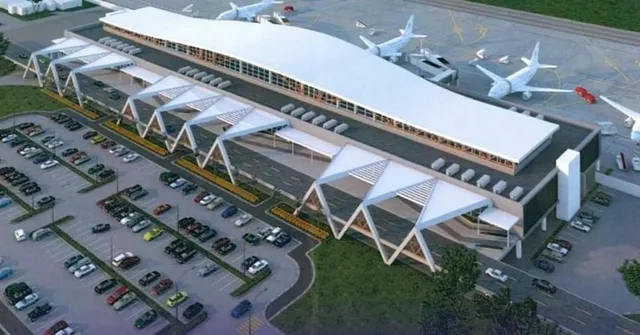
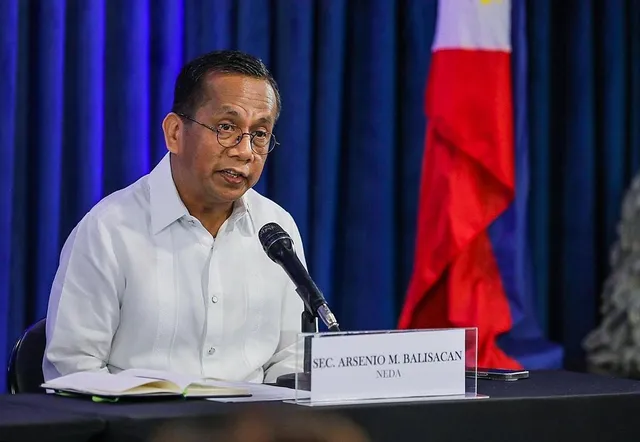
In a televised briefing from Malacañan Palace in Manila, Balisacan said the approved projects include the PHP4.5-billion upgrade, expansion, operations and maintenance of the Bohol-Panglao International Airport.

"This unsolicited PPP (public-private partnership) project aims to increase the passenger capacity and improve the passenger experience at the Bohol-Panglao International Airport," said Balisacan.

The expansion project will increase the airport's capacity to 2.5 million passengers per year at the start of the project from the current two million passengers.

After the upgrade, the capacity will further increase to 3.9 million passengers per year.

"We expect this project to boost tourism and, as a result, generate more high-quality jobs," said Balisacan.

Balisacan said the NEDA Board likewise approved the PHP392-million Dialysis Center PPP Project for the Renal Center Facility of the Baguio General Hospital and Medical Center.

The project aims to increase the number of active hemodialysis machines from the current 30 to 108 by 2029.

"This will enable the Baguio General Hospital to provide more affordable dialysis treatment to a greater number of chronic kidney disease patients," said Balisacan.

Aside from these, Balisacan said the NEDA Board confirmed the approval of the Infrastructure Preparation and Innovation Facility’s second additional financing to improve and accelerate the delivery of infrastructure flagship projects (IFPs).

The Infrastructure Preparation and Innovation Facility provides the Department of Public Works and Highways and the Department of Transportation with a better mode for financing and conducting project preparation activities.
"The second additional financing will include more Infrastructure Flagship Projects or IFPs to its scope, allowing more IFPs to be implemented sooner," said Balisacan.

The total project cost is PHP13.08 billion, with PHP11.38 billion to be financed through Official Development Assistance from the Asian Development Bank.

The NEDA Board likewise confirmed the approval of the Green Economy Program which aims to build the capacity of both the national and local government units, and the private sector to mainstream and sustain green economy activities, enhance circular economy, reduce waste and plastic, and increase energy efficiency and renewable energy deployment.

The program will be financed through a PHP3.62-billion grant from the European Union.

To ensure the sustainability and maximize the economic benefits of previously approved infrastructure projects, Balisacan said the NEDA Board approved certain changes to the Bataan-Cavite Interlink Bridge and the Cebu Bus Rapid Transit (BRT) project.

"The cost of the Bataan-Cavite Interlink Bridge (BCIB) project will be increased to PHP219.3 billion from PHP175.6 billion, and the implementation period will be extended to December 2029," said Balisacan.

The project involves the construction of a 32.15-kilometer bridge over Manila Bay that will significantly reduce travel time between Bataan and Cavite from four to five hours to just 30 to 45 minutes.

Balisacan said the project is also expected to decongest traffic in Metro Manila since travelers going to and from either Bataan or Cavite passing through Manila could use the BCIB instead.

For the Cebu BRT project, the updated project plan will now include mixed traffic sections from Bulacao-Talisay, SRP-Talisay, and IT Park-Talamban.

Balisacan said there will be an increase in the number of stations and terminals, optimization of routes, and an overall increase in the number of buses.

The project cost will be increased to PHP28.78 billion from PHP16.3 billion, while the implementation period will be extended until the end of December 2027.

The loan validity from the Agence Française de Développement (French Development Agency) and the World Bank will also be extended until September 2027.

"With these approved projects, the Marcos Administration reaffirms its commitment to aggressively advance infrastructure development to attain our medium-term development goals of more high-quality jobs and better lives for all Filipinos," Balisacan said. 

October 15, 2023

A high ranking official of the Department of Public Works and Highways (DPWH) attended the Korea-Philippine Infrastructure and Plant Forum and the Korea-Asean Project Plaza in Taguig City on October 12, 2023 organized by Korean Embassy (Embassy of the Republic of Korea in the Philippines) in Manila with the Korea Trade-Investment Promotion Agency (KOTRA).

DPWH Senior Undersecretary Emil K. Sadain represented Secretary Manuel M. Bonoan at the gathering intended to be a sharing experience between the governments of the Republic of Korea and the Philippines on infrastructure development with Filipino and Korean construction and engineering companies participating to explore the opportunity to find business partners.

The forum was also attended by Department of Transportation Secretary Jaime Bautista, Korean Ambassador to the Philippines Lee Sang-Hwa, and KOTRA Manila Director General Lee Sujung.

Senior Undersecretary Sadain said that the fora along with the representatives of other neighboring countries is a great opportunity to forge new business alliances and to showcase projects in the pipeline which will soon benefit Filipino people.

Over the 70 years of the establishment of Korea-Philippines diplomatic relations, Korea has emerged as an active ally, providing the much-needed support to bolster our infrastructure.

The alliance between Korea and the Philippines extends far beyond economic cooperation but also technology transfer, educational exchange, and disaster relief efforts.

This has been evident with the infrastructure project that was successfully built under Official Development Assistance through the Export-Import Bank of Korea such as the recently completed Samar Pacific Coastal Road Project in Northern Samar.

In his message, Senior Undersecretary mentioned some of the infrastructure development plans under the “Build Better More” infrastructure program of the administration of Philippine President Ferdinand R. Marcos Jr.

According to Senior Undersecretary Sadain, collaborations between the Republic of Korea and the Philippines continue to thrive, with a focus on future-oriented projects such as the Panguil Bay Bridge Project in Northern Mindanao, Pampanga Integrated Disaster Risk and Reduction and Climate Change Adaptation in Central Luzon and detailed engineering design (DED) activities for the Panay-Guimaras-Negros Island Bridges, a long-time dream project for the people of Western Visayas.

The Republic of Korea's unwavering support for the Philippines in infrastructure development exemplifies the power of international partnerships and as time goes on, this enduring friendship continues to shine as a beacon of cooperation and goodwill on the world stage.
October 09, 2023

The Department of Transportation (DOTr) is tapping multilateral lender Asian Development Bank (ADB) to fund more transport infrastructure projects.

In a news release Friday, Transportation Secretary Jaime Bautista said the agency would continue to tap the ADB to open “opportunities for equitable progress and growth for business, investment, tourism and employment.”

“To achieve this program, we [must] undertake initiatives that address connectivity and efficient mobility,” Bautista said at the 3rd DOTr-ADB Coordination Meeting.

Data shows that there are nine agreements between the DOTr and the ADB amounting to PHP1.2 trillion that will fund transport infrastructure projects from aviation, railways and road sectors.

Among the ADB-funded projects are the North-South Commuter Railway (NSCR), the MRT-4, the Davao Public Transport Modernization Project, the EDSA Greenways Project, as well as the multi-sectoral Infrastructure Preparation and Innovation Facility - Output 3.

The South Commuter Railway Project, which is part of the NSCR network, is ADB’s largest infrastructure financing in the Asia and Pacific region.

Meanwhile, the ADB has a total of 17 upcoming and ongoing contract packages with at least PHP187 billion in cost estimate.

Apart from funding, the DOTr also seeks the ADB’s technical assistance in terms of developing an all sectors lifecycle monitoring and evaluation framework, local tax experts and development of right-of-way acquisition manual for ADB-financed projects.

Bautista said the ADB-funded projects would help position the Philippines as a dynamic investment hub and an emerging gateway country to Asia.

“We are optimistic that the ADB would appreciate the investment prospects in the Philippines towards boosting the country’s economic growth and addressing the social needs of Filipinos,” Bautista said. 

October 09, 2023

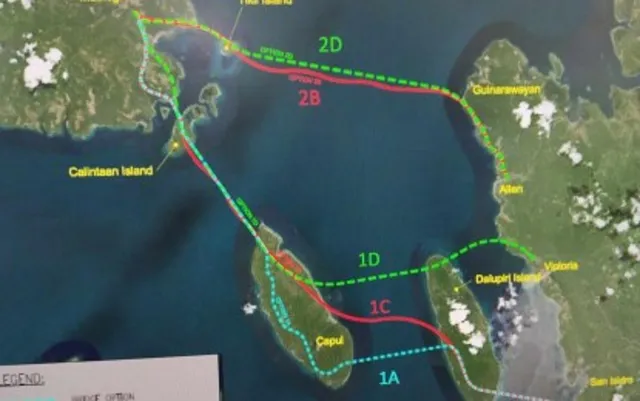
The Eastern Visayas Regional Development Council (RDC) is pushing for the second feasibility study of the Sorsogon-Samar bridge after the initial study in 2019 found the project “not economically viable.”

National Economic and Development Authority (NEDA) 8 (Eastern Visayas) Director Meylene Rosales, the RDC vice chairperson, said Thursday the region’s highest policy-making body passed a resolution urging the Department of Public Works and Highways (DPWH) to include in its 2024 budget the conduct of another study.

The resolution signed on Sept. 18, 2023, also asked the NEDA central office to include the project in the infrastructure flagship projects list.

“It has been five years since the pre-feasibility study was undertaken and new technologies have emerged, while the continuing issue on congestion in the port of Matnog with adverse social and economic impact in Visayas and Mindanao persists and requires long-term solution,” Rosales said in an interview.

In 2019, the study found that the best alignment option was not economically viable at only 4.77 percent economic internal rate of return, which was 10 percent less than what is required by NEDA.

The study also concluded that the project is not technically feasible at an average water depth of 300 meters.

The Sorsogon-Samar project, with an estimated budget of PHP257 billion to PHP  PHP 766-billion, consists of three long-span bridges – Allen to San Antonio in Northern Samar, San Antonio to Capul in Northern Samar, and Capul, Northern Samar to Matnog, Sorsogon.

Other options include the construction of a submerged floating tunnel and a deep-sea tunnel.

For decades, roll-on roll-off (RoRo) ferries have crossed the San Bernardino Strait, carrying passengers and vehicles to and from Allen Port and Matnog Port in Sorsogon. With a distance of 28 km., the average travel time is one hour and 30 minutes.

Officials pushed for the long-span bridge link construction after members of the Philippine Chamber of Commerce and Industry raised the lingering issues of long queuing and congestion in Matnog port, delaying the transport of supplies from Luzon to Visayas and Mindanao.

October 02, 2023

The Civil Aviation Authority of the Philippines (CAAP) has approved the catch-up plan to fast-track the PHP759 million Tacloban Airport passenger terminal building construction to ensure its completion by next year, an official of the Eastern Visayas Regional Development Council (RDC) said.

Meylene Rosales, regional director of the National Economic Development Authority (NEDA) and vice chairperson of the E. Visayas RDC, said the negative slippage has been reduced to only negative one percent as of September and they are upbeat to see the project completion by March 2024.

“There is already an approved catch-up plan by CAAP main office. The negative slippage went down since there are deducted scope of work. There are activities under Phase 1 that are not needed. They would be better be part of phase 2,” Rosales said in a press briefing on Thursday.

Earlier, the RDC project monitoring committee received reports of 38 percent negative slippage of the airport, prompting the body to make the project a top priority for monitoring.

In a July 2023 report obtained by the Philippine News Agency (PNA), the CAAP said the delay was caused by an insufficient quantity of construction materials prompting the contractor to reduce its manpower.

The increase in daily planned accomplishments has also contributed to the delay, according to CAAP, an attached agency of the Department of Transportation (DOTr).

CAAP proposed solutions that include maximizing the utilization of available materials to expedite concrete pourings and asking the contractor to deploy more workers.

The project which began on Dec. 5, 2020, was supposed to be completed on May 29, 2022.

Also attributing to the delay are the revisions in the passenger terminal building’s roofing, arch finishes and access ramp plans, which were only approved on September 19.

As of September 25, the terminal building is 57.13 percent complete, according to DOTr.

Meanwhile, RDC private sector representative for multimedia communication Buenaventura Go-Soco, expressed doubt that the project will be completed by March 2024.

“Now, the contractor must be wondering how he can meet the March 31 deadline. Based on his catch-up plan, he must do much more than he has done in the past. Maybe even triple. That's very difficult for him to do."

The government awarded the project to MAC Builders based in Ormoc City in a joint venture with ML Builders.

The Daniel Z. Romualdez Airport in Tacloban is one of the country’s busiest with 36 daily flights between Manila and Cebu.

The airport in the regional capital was ranked as the country’s 7th busiest in 2022 with 1,489,803 inbound and outbound passengers.

Named after Daniel Z. Romualdez, former speaker of the House of Representatives, the airport serves as the main gateway from Manila and Cebu to Eastern Visayas.

September 25, 2023

The National Economic and Development Authority (NEDA) on Thursday approved several high-impact initiatives, which include expediting the processing of infrastructure flagship projects (IFPs) and the reconstitution of the NEDA Board.

In a briefing, NEDA Secretary Arsenio Balisacan said the NEDA Board chaired by President Ferdinand R. Marcos Jr. confirmed the proposed Executive Order that will expedite the processing of licenses, clearances, permits, certifications and authorizations for the IFPs.

"The primary goal of this proposed EO is to minimize, if not eliminate, delays in the implementation of IFPs. This EO will require all government offices, agencies, and instrumentalities, including LGUs (local government units), to streamline the standard procedure and requirements for the IFPs," he said.

Balisacan said the simplified requirements will be applicable to both pending and new applications within the NEDA Board-approved list of IFPs, as well as any additions to the IFP list.

The EO will also facilitate the electronic application submissions to the concerned agencies and LGUs, including the payments and issuance of receipts.

It also directs national government agencies to automate and computerize their databases, and mandates LGUs to establish business one-stop shops and to coordinate with the Department of Information and Communications Technology to adopt interoperable information and communications technology platforms.

"In line with this, the Anti-Red Tape Authority, or ARTA, in coordination with NEDA, shall establish a reporting framework to track agencies’ compliance," Balisacan said.

Balisacan further said the NEDA Board also approved the reconstitution of the NEDA Board Committee on Infrastructure (INFRACOM) to include the Department of Environment and Natural Resources and the DICT as members of the committee.

The NEDA Board also confirmed the overall principles and general recommendations for the proposed national government-LGU cost-sharing schemes for financing infrastructure projects.

"This aims to delineate the roles of the national government and the LGUs, particularly in resource-poor areas, or where resources may be needed to carry out the devolved functions and shared between the national government and LGUs," Balisacan said.

He said the NEDA Board also endorsed the proposal to reduce tariffs on gypsum and anhydrite from 3 to zero percent.

These raw materials which are not produced locally are used in the production of plasterboard and cement.

"With the reduction in tariffs, we anticipate a decrease in production costs and an improvement in the industry’s competitiveness as we ramp up our infrastructure drive," Balisacan said.

Common Legislative Agenda (CLA)

In a separate statement late Thursday, the NEDA announced that the Legislative-Executive Development Advisory Council (LEDAC) included 11 additional bills to the CLA of the 19th Congress to further advance the attainment of the social and economic transformation agenda.

The LEDAC, chaired by President Marcos, met on Wednesday and adopted the 11 priority bills to help achieve the development targets for government efficiency, national defense and infrastructure development.

These include the amendments to Government Procurement Reform Act; Excise Tax on Single-Use Plastics; Amendments to the Cooperative Code; Amendments to the Fisheries Code; New Government Auditing Code; VAT (value-added tax) on Digital Services; Rationalization of the Mining Fiscal Regime; Philippine Defense Industry Development Act; Philippine Maritime Zones Act; Open Access in Data Transmission Act; and Amendments to the Right-of-Way Act.

“The timely passage of these priority bills will bring us closer to building a prosperous, inclusive, and resilient society for Filipinos,” Balisacan said. By Anna Leah Gonzales


Article courtesy of the Philippine News Agency