Celsius Resources Limited. is pleased to announce the extension of the exploration permit for the Sagay Copper Project, held under its Philippine subsidiary, Tambuli Mining Company, Inc (“TMCI”) located on the Island of Negros in the Philippines.
The extension of EP-000003-VI was issued on 1 April 2024 and was based on Section 30 of the Department Administrative Order No. 2010-211 , which states that “the exploration permit shall be deemed automatically extended in case it expires prior to the approval of the Declaration of Mining Project Feasibility (“DMPF”) and until such time that a mineral agreement is approved”.
The Sagay Project’s DMPF application submitted to the Philippine Mines and Geosciences Bureau (“MGB”) has been accepted and is currently under review. The approval of said application will consequently allow TMCI to apply for a mineral agreement with the Philippine Government (see CLA Announcement dated 8 January 2024).
Celsius Resources Executive Chairman, Atty. Julito “Sarge” Sarmiento said:
“We are in the process of completing the Environmental Impact Assessment for the Sagay Project as the basis for the issuance of an Environmental Compliance Certificate which is one of the key requirements for the approval of the DMPF. We are taking every step to ensure that we have comprehensively covered all potential environmental impacts of the proposed Project with avoidance, protection and prevention as top of mind approaches, and that any residual impacts are minimised and managed. Environmental stewardship will always be at the forefront of our business operations.
As with our Maalinao-Caigutan-Biyog project (“MCB Project”), we will continue to adhere with the Philippine Government’s regulatory permitting requirements to ensure the safe development and operations of the Sagay Project.”
The extended term of the exploration permit for Sagay is limited to comply with the requirements of the DMPF and further updates will be provided to shareholders as TMCI moves through the approval process.
THE SAGAY COPPER-GOLD PROJECT
Location
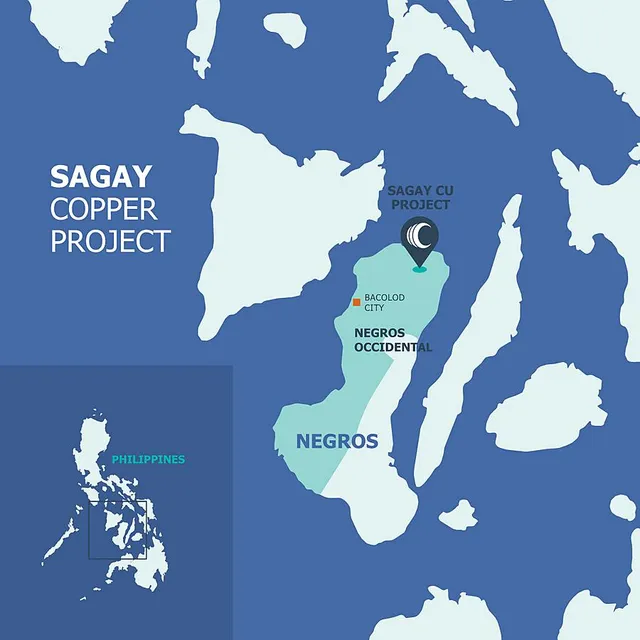
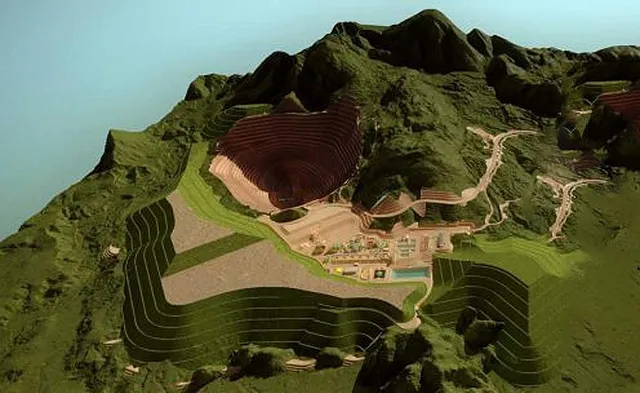
The Sagay Copper Project is located in the north-eastern part of Negros Island, within the cities of Sagay and Escalante in the Province of Negros Occidental, Philippines (Figure 1). Negros Island is part of the central group of Islands in the Philippines commonly referred to as “the Visayas”.
Drilling at Sagay has broadly defined a large-scale copper mineralisation which is interpreted to be a typical porphyry copper style of mineralisation, common throughout the Philippine archipelago.
An updated Mineral Resource Estimate (“MRE”) was announced to ASX on 6 February 2024 comprising of a combined measured, indicated, and inferred Mineral Resource of 312 million tonnes @ 0.39% copper and 0.11 g/t gold.
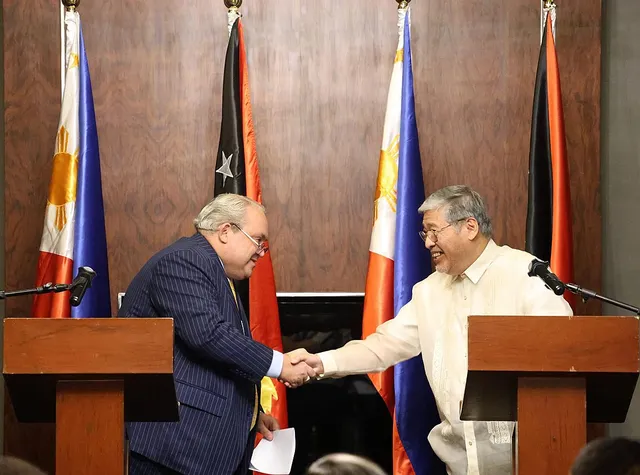
The Philippines and Papua New Guinea (PNG) are eyeing possible cooperation on critical minerals and fisheries sectors, Foreign Affairs Secretary Enrique Manalo said Thursday.
After his bilateral meeting with PNG Foreign Minister Justin Tkatchenko, Manalo said the Philippines is eager to explore opportunities and “new forms” of partnership with the Pacific nation.
“On the economic front, we discussed greater cooperation on agriculture and fisheries, also in terms of downstream processing, (and) in critical minerals, such as copper or gold,” he said during a press conference at the Makati Diamond Residences.
Both the Philippines and PNG have vast amounts of gold, copper, and nickel deposits – critical minerals vital to producing clean energy technologies.
The Philippines has been increasing interactions with foreign governments and stepping up support for local mining industries to position itself as a key player in the global value chains.
“The two ministers have identified this (critical minerals) as a potential priority sector during their meeting earlier and discussions are in an exploratory stage,” the Department of Foreign Affairs said.
Manalo said Manila and Port Moresby are also working to renew and enhance an existing memorandum of understanding on fisheries.
“I can only see a very broad and expansive relationship developing from our discussions today. And I think the focus will be a lot in the areas of food security, agriculture, and also other ways of promoting food resilience,” he said.
‘Defense, security’
On top of these, the ministers saw the need to enhance cooperation on defense and security matters, but Manalo said this would still have to be discussed in more detail.
He said he “updated” Tkatchenko on the challenges faced by Manila in the South China Sea, where several coastal states have overlapping territorial claims.
“We are concerned with the situation in the West Philippine Sea,” Manalo said. “We do have a very common commitment on the importance of international law, adherence to international maritime law. And we both felt that it's only through this adherence to international law, on which nations can cooperate fruitfully and peacefully.”
Tkatchenko is also in the Philippines for the two states’ inaugural policy consultations, which aim to facilitate enhanced communication and coordination on bilateral, regional, and international issues of mutual interest.
Currently, Papua New Guinea hosts more than 35,000 Filipinos, mostly working as managers and supervisors, contributing to both the Philippine and Papua New Guinean economies and societies.
In 1975, the Philippines was among the first countries to establish formal diplomatic ties with the Independent State of Papua New Guinea after it was declared and recognized as a sovereign nation on Sept. 16, 1975. By Joyce Ann L. Rocamora
“The Philippine Mineral Reporting Code (PMRC) sets out the minimum standards, recommendations, and guidelines for public reporting in the Philippines of Exploration Results, Exploration Targets, Mineral Resources, and Mineral Reserves,” [1] as explained by Mr. Ciceron Angeles, Jr., PMRC Committee Chairman and Consulting Geologist.
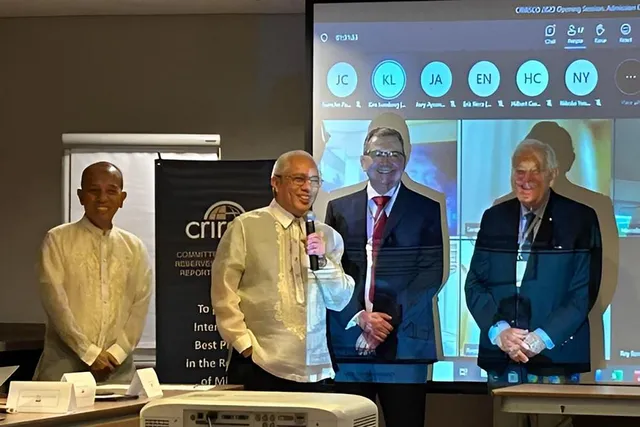
In November 2021, the PMRC Committee (PMRCC) applied for membership in the highly regarded Committee for Mineral Resources International Reporting Standards (CRIRSCO).
CRIRSCO is a grouping of international representatives of organizations that are responsible for developing mineral reporting codes and guidelines. The other member countries are Australasia (JORC), Brazil (CBRR), Canada (CIM), Chile (National Committee), Colombia (CCRR), Europe (PERC), India (NACRI), Indonesia (KOMBERS/KCMI), Kazakhstan (KAZRC), Mongolia (MPIGM), Russia (OERN), South Africa (SAMREC), Turkey (UMREK) and the USA (SME). CRIRSCO was founded in 1994. The group is responsible for developing best practices for reporting mineral resources.
The main objective of CRIRSCO is to contribute to earnings and maintaining that trust by promoting high standards of reporting of mineral deposit estimates (Mineral Resources and Mineral Reserves) and of exploration.
When the Philippines’ PMRCC applied for membership in CRIRSCO in Nov. 2021, they are hoping to be approved before GEOCON 2023 in December. Fortunately, they received the approval they applied for in the timeframe they hoped for.
On Oct. 17, 2023, a ceremony was held in Rio de Janeiro, Brazil that formally welcomes the Philippines as a new member of CRIRSCO, thus making the PMRCC its 15th Member. This recognition also promotes the PMRC 2020 as one of CRIRSCO’s “family of codes”.
Representing the Philippines under PMRCC are Mr. Rolando Cruz (VP of Nickel Asia Corp.) and Mr. Ciceron Angeles, Jr. (PMRCC Chair and Consulting Geologist).
PMRCC is the Philippine’s reporting organization that is responsible for maintaining guidelines that ensure transparency, materiality, and competency, as a means to protect the investors, the public and other stakeholders.
With this milestone for PMRCC, they believe that the Philippines will now have a better chance of attracting more mining investments, because PMRCC is now at par with the standards of the other members of CRIRSCO.
Mr. Angeles said, “Joining CRIRSCO is a testament to our commitment to upholding the highest standards of reporting and ensuring the protection of investors. By aligning with internationally recognized reporting standards, we are strengthening the credibility and integrity of the Philippine minerals industry.” [2]
In following the CRIRSCO framework, the PMRC abides by the key principles of transparency, materiality, and competence.
Transparency will guarantee that all pertinent information is reported.
Materiality pertains to the disclosure of all factors that will affect the company’s share price and profitability.
Competence requires that the person who will be tasked to prepare the public disclosure reports is qualified and trustworthy.
The PMRC 2020 Edition (PMRC 2020) was approved by the Securities and Exchange Commission (SEC) in September 2021.
“The PMRCC in collaboration of the Philippine Stock Exchange (PSE) is in the final stages of the drafting of the Implementing Rules and Regulations (IRR) of the PMRC 2020. It will still undergo a public hearing and a PSE comment period before PSE submits it to SEC for approval before the end of this year.” [1] (From “The Philippine Mineral Reporting Code (PMRC) Updates and Its Future for the Philippines” by Ciceron A. Angeles, Jr. – GEOCON 2023)
According to his report, PMRCC is still in discussion with the Department of Energy for the adoption of PMRC 2020. Coal is the last solid mineral commodity that is regulated by PSE among its listed companies but not yet by the corresponding national regulatory agency.[1]
Reference:
[1] Angeles Jr., Ciceron A. (Dec. 2023). “The Philippine Mineral Reporting Code (PMRC) Updates and Its Future for the Philippines”. Presentation at the GEOCON 2023: Our Natural Resources: Fueling the Energy Transition Journey
[2] Talavera, Catherine (Nov. 2023). "Philippine accepted as 15th member of CRIRSCO". PhilStar Global.
Photo credits:
Group photo in Rio de Janeiro, Brazil - https://www.manilatimes.net/2023/12/04/public-square/ph-joins-crirsco-as-15th-member-through-pmrcc/1922646
All other photos – from CRIRSCO website - https://crirsco.com/
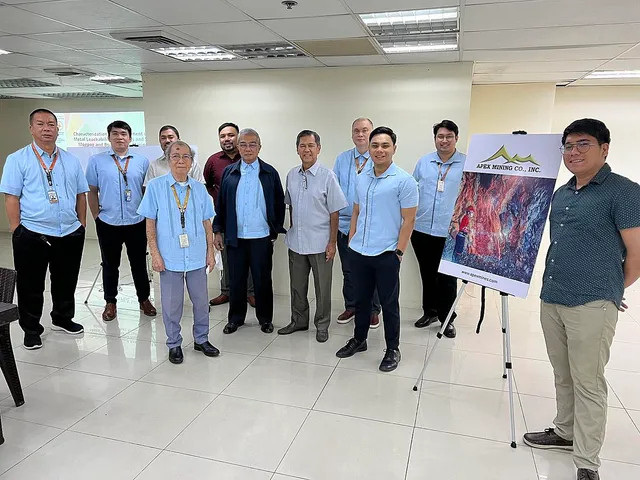
The research studies under the Apex Mining Professorial Chairs in Mining and Metallurgical Engineering have shown that mining tailings and silt are potential substitutes for cementitious materials in concrete mixes while using non-noble metals as reduction catalysts can reduce the cost of producing fuel cells.
The Apex Mining Professorial Chairs, signed in 2023, is administered through the UP Engineering Research and Development Foundation, Inc. (UPERDFI). This collaboration between UPDERDFI and Apex Mining aims to help improve mining and mineral processing technologies and practices thru research.
Luis R. Sarmiento, ASEAN Eng., Apex Mining’s president and CEO, lauded the awardees for their outstanding research work in their respective fields. “We are pleased with the initial outcome of the Apex Mining Professorial Chairs. The output that we can generate from the studies supported by our program will hopefully have significant impact, not only in the local mining industry, but globally as well.”
Assistant Professor Karlo Leandro Baladad, awardee from the Department of Mining Engineering, submitted his group’s study on utilizing mining tailings and silt as possible substitute cementitious materials for concrete mixes which can be used for construction material or for additive manufacturing applications.
Tailings, which are by-products of the extraction of valuable metals from an ore, can
generate acid or trace metals that could leach and pollute water sources if not properly handled.
While Apex Mining’s tailings storage facility is state of the art, it is good to find relevant uses of these tails, Sarmiento said.
On the other hand, Associate Professor Dr. Richard Espiritu, grantee from the Department of Metallurgical Engineering, presented his group’s research on using non-noble metals as oxygen reduction reaction catalysts for alkaline anion exchange membrane fuel cell.
Fuel cells require catalysts for its optimum operation, but the use of platinum-based catalyst, while exhibiting excellent performance, comes at a high cost. Lowering the assembly cost through the use of alternative catalysts can scale up the production of fuel cells — a promising technology that can help solve environmental and energy crises.
Securing clean energy sources is another priority of the company, said Sarmiento.
Recently, Apex Mining inked a contract with First Gen to sourcing energy from First Gen’s Mt. Apo Geothermal Power Plant in Kidapawan, Cotabato. Thus, Apex Mining is First Gen’s first Directly-Connected Customer (DCC) in region 11.
For the first time in 15 years, the Philippine government granted permit to the copper mining project of Perth-based Celsius Resources with initial investments of USD253 million, or around PHP14 billion.
In a statement over the weekend, the Department of Trade and Industry (DTI) said Celsius Resources’ local unit Makilala Mining Company, Inc. (MMCI) was granted a Mineral Production Sharing Agreement (MPSA) by the Department of Environment and Natural Resources (DENR) on March 15.
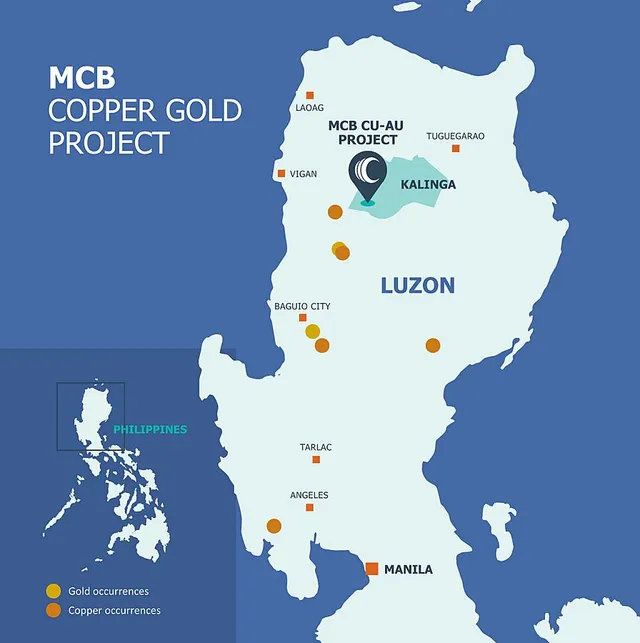
The 25-year MPSA, which could be extended for another 25 years, is for the company’s Maalinao-Caigutan-Biyog (MCB) Mining Project in the Cordillera Administrative Region.
The MPSA gives the company the exclusive rights to explore, develop, and commercially produce copper and associated minerals within the 2,500-hectare contract area.
DTI said the MCB mining project is part of the USD1.53-billion investment pledges that President Ferdinand R. Marcos Jr. received during his visit to Melbourne, Australia early this month.
“During his visit to Melbourne, President Marcos Jr. addressed the Australian business community, highlighting the Philippines’ vision to become a regional hub for smart and sustainable manufacturing. He emphasized the country’s focus on attracting sustainable-driven strategic investments, particularly in critical mineral processing, while ensuring adherence to strict labor and environmental standards,” DTI said.
According to Celsius Resources, the company has earmarked USD253 million as initial capital expenditure for the MCB project “with a payback period of approximately 2.7 years”.
It added that upon operation, the national government’s share of production includes excise tax on mineral products on top of a royalty of at least 4 percent of the gross output, as well as other taxes, duties, and fees levied by existing laws.
MMCI will also pay an annual occupation fee to the municipality where the project is located.
“As at the date of this announcement, the annual occupation fee which would apply to the Contract Area would be approximately A$5,000 (PHP183,000) per year,” Celsius said.
Moreover, the Australian company said it will proceed with the process to obtain the Certificate of Pre-condition from the National Commission on Indigenous Peoples (NCIP) as part of the Free, Prior and Informed Consent (FPIC) Process.
On Nov. 15, 2022, MMCI already signed an agreement with the Balatoc Tribe community setting out the terms and conditions for utilizing their land for the purpose of mining.
The company is also allocating "an annual royalty payment of not less than 1 percent of the value of the gross output of minerals sold" to the Balotoc Tribe community and "a minimum of 1.5 percent of the operating costs necessary for the development of the host and neighboring communities".
It added that it will hire qualified Filipino citizens during mining operations, wherein the company will provide training and recruitment programs.
“Now is our chance to deliver on our firm commitment to work with the government and the local communities to develop the MCB Project in a sustainable manner that creates value not only for our shareholders but also for our communities,” Celsius executive chairperson Julito Sarmiento said. By Kris Crismundo
Article courtesy of the Philippine News Agency
Global Ferronickel Holdings, Inc. (PSE: FNI), a leading nickel ore producer in the Philippines, reported revenues of ₱8.8 billion in 2023, operating income of ₱2.8 billion, net income attributable to shareholders of ₱1.5 billion, and earnings per share (EPS) of ₱0.3022.
The 30.5% year-over-year increase in revenues to ₱8.8 billion was largely driven by the higher volume from full-year operations and medium-grade ores from the Palawan mine, which started commercial shipments in September 2022 and became a subsidiary in December 2022. This strong performance offset the lower volumes at the Surigao mine, weighed down by weather, as well as the weaker prices for low-grade ores amid expanded output from mines in Indonesia.
FNI President Dante R. Bravo said: “Our revenues highlight our success in operating the Palawan mine reliably in its first full year of production. This diversification helps improve our cash flows and better positions us to take advantage of opportunities for short- and long-term growth.”
Total sold volume was 4.717 million wet metric tons (WMT), of which 3.297 million WMT were from Surigao and 1.420 million WMT were from Palawan. As a result, the sales mix was 64% low-grade ore and 36% medium-grade ore compared to 76% low-grade and 24% medium-grade in 2022. The average realized nickel ore price was US$33.28/WMT, rising 5.1% on a favorable mix combined with stronger prices for medium-grade ores, which were 11.6% higher than last year.
Cost of sales were up 52.5% to ₱3.6 billion mainly due to greater contract hire and personnel costs following the increase in sales volume from the opening of the Palawan mine. Operating costs remained under control and were relatively flat at ₱2.4 billion, or 27.3% of revenues, as the increase in general and administrative expenses were brought down in part by lower shipping and distribution costs in relation to the softer volumes and reduced freight costs at Surigao. Finance costs rose 73.2% to ₱275.6 million, in line with the recognition of interest expenses resulting from the acquisition of an associate company in 2022.
Consolidated net income decreased 15.9% to ₱1.8 billion due to the high base from last year that included a one-off gain of ₱680 million from a settlement received by a subsidiary in 2022. Excluding this one-time transaction, consolidated net income would have accelerated 22.9%.
After deducting the net income attributable to non-controlling interests, net income to FNI shareholders was down 19.6% to ₱1.5 billion while EPS declined 18.2% to ₱0.3022. Without the one-off impact in 2022, net income attributable to shareholders grew 3.9% and EPS rose 5.8%.
The company’s balance sheet remains robust with net cash of ₱1.3 billion, based on the sum of short-term interest-bearing borrowings of ₱347.3 million and lease liabilities of ₱823.3 million, less cash and cash equivalents of ₱2.4 billion.
FNI also delivered for shareholders through increased returns and capital investment. Dividends distributed amounted to ₱524.2 million and share buyback totaled ₱295.4 million for the year. Capital expenditures reached ₱871.4 million, 42.5% over the previous year. Recent investments have been directed towards expansion in mine facilities, causeway, and land acquisition for future projects.
Celsius Resources Limited (“CLA”, “Celsius” or the “Company”) is pleased to announce that its Philippine subsidiary, Makilala Mining Company, Inc. (“MMCI or the “Contractor”), has obtained a Mineral Production Sharing Agreement (“MPSA” or the “Agreement”) with the Philippine Government for its flagship Maalinao-Caigutan-Biyog Mining Project (“MCB” or the “Project”).
The issuance of the MPSA, which is the first copper project to be approved in the Philippines in the last fifteen years, grants MMCI the exclusive right to undertake rational exploration, development, and commercial production of copper and associated minerals within the Contract Area covering approximately 2,500 hectares for a period of 25 years and is renewable for another 25 years.
Celsius Executive Chairman Atty. Julito R. Sarmiento, said:
“The issuance of the mining permit has been much awaited by Celsius and the Balatoc Community. Now is our chance to deliver on our firm commitment to work with the Government and the local communities to develop the MCB Project in a sustainable manner that creates value not only for our shareholders but also for our communities.
We are grateful to the Philippine Government under the bold leadership of His Excellency President Ferdinand R. Marcos, Jr. and to the Department of Environment and Natural Resources under the visionary stewardship of Secretary Maria Antonia Yulo-Loyzaga for supporting the MCB Project. We are seriously taking the Government’s call for the Project to go beyond compliance by striking a balance between keeping the business viable, protecting and rehabilitating the environment, uplifting local communities, and supporting the Government’s socio-economic agenda. With strong Government support, we are confident that we can make this happen.”
Celsius Managing Director Peter Hume, said:
“The grant of the MCB mining permit marks the progression of Celsius from being known as an exploration company to a mineral resource developer, and eventually a mine operator. Credit goes out to our hard working in-country team who strived to get the Project up to this stage in such a short timeframe amidst all the challenges.
Over the last eighteen months, the Company has been interfacing with potential investors who have shown resounding interest in the MCB Project but have been also waiting for the issuance of the mining permit. With this now in hand, the Company will proceed with finalising funding options for the Project.
The in-country team has commenced planning for the next exciting phase in the development of the Project. We wish to thank shareholders for their patience, trust, and continued support.”
Mineral Production Sharing Agreement
The Republic Act No. 7942, otherwise known as "The Philippine Mining Act of 1995," (the “Mining Act”) which took effect on 09 April 1995, provides that the Secretary of the Department of Environment and Natural Resources is authorised to enter into Mineral Production Sharing Agreements in furtherance of the objectives of the Government and the Philippine Constitution to bolster the national economy through sustainable and systematic development and utilisation of mineral lands.
Specifically, the Government has granted MMCI a permit via an MPSA to undertake mining operations of the MCB Project under the key following provisions:
Scope
Pursuant to the provisions of the Mining Act and its implementing rules and regulations, the primary purpose of the Agreement is to provide for the sustainable development and commercial utilisation of associated mineral deposits existing within the Contract Area, with all necessary services, technology, and financing to be furnished or arranged by the Contractor in accordance with the provisions of the Agreement.
The Contractor shall undertake and execute, for and on behalf of the Government, responsible mining operations in accordance with the provisions of the Agreement.
During the term of the Agreement, the total value of production and sale of minerals derived from the mining operations shall be accounted for and divided between the Government and the Contractor in accordance with fiscal regime provisions summarised below.
Term of Agreement
The Agreement shall have an initial term of six (6) months from the date of grant. During this initial term, MMCI is required to submit the following:
Subject to compliance with the above requirements, the Agreement shall have a term of twenty-five (25) years from the date of grant and may be renewed thereafter for another term not exceeding twenty-five (25) years.
Celsius and MMCI are progressing with the satisfaction of the above conditions by re-engaging with potential investors both in the Philippines and internationally who have shown strong interest in supporting and funding the development of the Project but have been waiting for the mining permit to be issued.
MMCI is proceeding through the process of obtaining the Certificate of Pre-condition as part of the Free, Prior and Informed Consent (“FPIC”) Process which is governed by the National Commission on Indigenous Peoples (“NCIP”). As announced to ASX on 15 November 2022, MMCI signed an agreement with the Balatoc Tribe community setting out the terms and conditions for the use of their land for the purpose of mining. Now that the mining permit has been issued, MMCI can request the Certificate of Pre-condition to be issued by the NCIP.
Fiscal Regime
General Principle – The fiscal regime is governed by the general principle according to which the Government expects a reasonable return in economic value for the utilisation of non-renewable mineral resources under its national sovereignty while the Contractor expects a reasonable return on its investment with special account to be taken for the high risk of exploration, the terms and conditions prevailing elsewhere in the industry and any special efficiency to be gained by a particularly good performance of the Contractor.
Occupation Fees – Prior to registration of the Agreement and at the same date every year thereafter, the Contractor must pay to the Municipal/City Treasurer concerned an occupation fee over the Contract Area at the annual rate provided in the existing rules and regulations. As at the date of this announcement, the annual occupation fee which would apply to the Contract Area would be approximately A$5,000 per year.
Share of the Government – The Government share of production shall be the excise tax on mineral products at the time of removal and at the rate provided for in Republic Act No. 7729 amending Section 151 (a) of the National Internal Revenue Code, as amended, in addition to a royalty of not less than four percent (4%) of the gross output, as well as other taxes, duties and fees levied by existing laws.
Rights and Obligations of the Parties
Main Obligations of the Contractor:
Environmental Protection and Mine Safety and Health
Community Development
Rights of the Contractor:
Obligations of the Government:
Listed natural resources development firm Nickel Asia Corp. (NAC) (PSE: NIKL) recorded an attributable net income (net of minority interest) of P3.7 billion, down 53 percent from P7.9 billion year-on-year based on its audited financial and operating results for the twelve-month period ended December 31, 2023.
This is on the back of lower nickel ore prices due to the increase in Indonesian nickel production. NAC also registered a loss of P1.0 billion from its equity interests in the Coral Bay and Taganito HPAL plants against a profit of P0.9 billion the year prior due to lower nickel and cobalt prices.
Likewise, revenues from the sale of ore declined by 16 percent to P21.4 billion from P25.5 billion in the same period last year. In terms of volume, operating mines sold a combined 16.5 million wet metric tons (WMT) of nickel ore, an improvement of 3 percent compared to the same period the year prior.
The Company exported 8.9 million WMT of saprolite and limonite ore at the average price of $30.59 per WMT during the period against 8.1 million WMT at $39.39 per WMT in the previous year. It also delivered 7.6 million WMT of limonite ore to the Coral Bay and Taganito HPAL plants, realizing an average price of $14.66 per WMT, in contrast to 7.8 million WMT delivered at $18.72 per WMT in the same period of the previous year.
As a result, the weighted average nickel ore sales price during the period decreased by 20 percent to $23.30 per WMT from $29.17 per WMT last year. The Company realized P55.78 per US dollar from nickel ore sales, a 2 percent increase from P54.90 year-on-year.
Earnings before interest, taxes, depreciation, and amortization (EBITDA) from mining operations amounted to P10.9 billion, a 24 percent decline from the same period last year due to lower nickel ore revenues.
Renewable Energy
Emerging Power, Inc. (EPI) subsidiary, Jobin-SQM Inc. (JSI), increased its electricity generation rose by 25 percent to 143,770-megawatt hours following the increase in capacity to 100-MWp from 62-MWp year-on-year. JSI’s EBITDA rose 14 percent year-on-year to P594 million. Last February 2024, JSI further ramped up capacity by 72-MWp, resulting in the present capacity of 172-MWp. JSI’s operating assets are in Mt. Sta. Rita, Subic Bay Freeport Zone (Subic).
EPI is focused on expanding its business portfolio
Pre-development activities on Northern Palawan Power Generation Corporation’s solar project in Subic-Cawag are almost complete with construction of the proposed 145-MWp plant expected to begin by the second quarter of this year. In addition, Greenlight Renewables Holdings, Inc., EPI’s joint venture with Shell Overseas Investments B.V., is on schedule in implementing its solar power project in Leyte, with an initial 120-MWp slated to be completed by the first quarter of 2025.
As to the modular-type geothermal project of EPI’s affiliate, Biliran Geothermal, Inc., the initial 2-MW turbines have been installed and energization activities are ongoing. This paves the way for the next phase of the 10-MW capacity expansion, with the goal of attaining full capacity of 50-MW in the medium term
On track to achieving twin goals
“Despite the challenges in the global nickel industry, we remain on track to achieve our ambition of becoming a premiere ESG investment and a Top 25 company in the PSE (Philippine Stock Exchange) by 2025,” said NAC President and CEO Martin Antonio G. Zamora.
“We are enthusiastic about three promising nickel projects, namely Dinapigue, Bulanjao, and Manicani, scheduled to either ramp up or kick off this year. Together, they are poised to significantly bolster our nickel ore sales volumes in the coming years. Furthermore, our diversification into renewable energy is proceeding according to plan. With EPI solar capacity now at 172-MWp and almost 400-MWp in the immediate pipeline, our role as stewards of our country’s natural resources takes on even greater significance,” he added.
Regular and Special Dividend
The Company’s Board of Directors approved the declaration of a cash dividend of P0.13 per share of common stock, of which P0.05 per share is special, payable on April 12, 2024, to shareholders of record on March 27, 2024
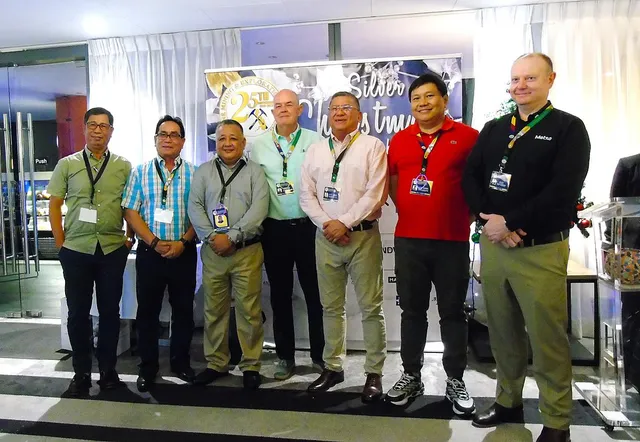
On Dec. 4, 2023, Philippine Mining & Exploration Association Inc. (PMEA) celebrated its 25th year anniversary and Silver Christmas Party at Misto 2 and Straight UP Bar at Seda Residences Makati. This is a milestone event for a mining group that, for more than two decades, has been fostering camaraderie and professional development among its members. This is one of their key imperatives. Through the years, PMEA has been encouraging, facilitating, and coordinating activities related to the exploration, development, and utilization of mineral resources; and providing a unified voice and becoming a respected advocate for the sustained and responsible development of mineral resources.
As a tribute to PMEA’s Silver Anniversary, we interviewed Mr. Joey Nelson Ayson, PMEA President.
Mr. Ayson is a graduate of BS Geology from the University of the Philippines, Diliman, and trained under the MGB - UNDP for 4 years. He worked in Indonesia for 8 years, worked for Oxiana Limited, and Royalco Philippines until 2015. He is currently involved in the pre-feasibility study of a copper-gold prospect in the north.
As a Competent Person for Geology, Mr. Ayson does consulting work for many companies with regard to mining exploration management, tenement management, government liaison, and more. He is the President of the Philippine Mining & Exploration Association (PMEA), a regular emcee in Philippine Mining Club Luncheon and Webinars, President of the Geological Society of the Philippines, and Chair of the UP-Geology Alumni Association.
PRJ: Please give us a short background on the origins and early beginnings of PMEA. Who are the key people behind it? What was the objective(s) of creating the group?
JNA: The Philippine Mining & Exploration Association Inc. (“PMEA”) is a non-stock, non-profit entity organized and managed by its membership for the express purpose of providing effective and responsible representation of the mineral exploration and mineral resources development sector. PMEA is an Affiliate member of the Chamber of Mines of the Philippines. PMEA’s representative also sits as a Member of the Awards Committee for the Presidential Mineral Industry Environmental Awards (“PMIEA”).
PMEA was originally registered with the Securities and Exchange Commission in September 1998 as the Philippine Mineral Exploration Association, Inc. Its formation was initiated by the International Mining and Exploration Committee (IMEC), a sub-committee of the Joint Foreign Chambers of Commerce of the Philippines. IMEC had been in existence since the early 1990’s and its membership and focus had been to represent and monitor the interests of foreign mining and exploration companies which were either directly, or indirectly, investing in the Philippines.
With the passage of time and new minerals sector developments it became clear that a broader organization was necessary to more effectively represent the mineral exploration industry, including local companies and investors.
This led to the formation and incorporation of PMEA and the institution of regular monthly meetings. More recently, growth in the local minerals industry and the growing membership of the Association, prompted PMEA Members to amend the Association’s Articles of Incorporation and By-Laws and to adopt the revised name Philippine Mining & Exploration Association, Inc. to better reflect the evolving profile of the Association’s membership. The Securities and Exchange Commission issued its approval for said amendments in December 2011.
The original incorporators of PMEA are Malcolm Norris, Joel D. Muyco, Robert D. Guest, Rufino B. Bomasang and Alfredo F. San Miguel Jr. (+).
The PMEA is managed by a Board of Trustees composed of: Joey Nelson R. Ayson, Fernando S. Peñarroyo, Cecilio C. Bautista, Manuel S. Ancheta, Roderick R.C. Salazar III, Johannes M. Raadsma, and George Yap III.
PRJ: In your opinion, what are some of the memorable moments or milestones or achievements of PMEA through the years?
JNA:
PRJ: What are the difficulties or challenges that you and the other officers of PMEA experienced in the past that affected the activities of PMEA?
PRJ: Are there any future plans or major projects of PMEA for this year or in the near future?
JNA: We plan to organize mine tours for professionals and students either independently or as part of a conference, and to Involve students in the meetings to present research. For upcoming events in 2024, please support the 11th PMEA Golf at Ayala Greenfield, Calamba, Laguna on April 22, 2024.
PRJ: Is there a message you wish to convey to our readers to encourage them to be a member of PMEA and to support our Monthly Membership Meetings?
JNA: When you attend our Monthly Membership Meetings, you will benefit in two ways:
In summary, “PMEA seeks to stimulate interest and participation in the Philippine mineral exploration and mine development sectors by providing appropriate meetings and networking fora where its members can discuss current issues and agree on a sensible course of action. The primary forum is a regular monthly meeting for members and guests, which is usually held on the first business Monday of every month. It endeavors to feature a key speaker addressing issues of interest to the Mine Development and/or Mineral Exploration sectors.” (taken from PMEA’s website)
For questions or enquiries, you may send an email to: pmea.secretariat@pmea.ph or visit their Facebook page at https://www.facebook.com/pmandea.
About the 11th Annual PMEA Invitational Golf Tournament:
The Board of Trustees of the Philippine Mining & Exploration Association (PMEA) cordially invites you and your friends to the 11th Annual PMEA Invitational Golf Tournament on April 22, 2024, Monday, at Ayala Greenfield Golf & Leisure Club, Brgy. Maunong and Putinglupa 4027 Calamba City Laguna. Registration will commence at 6:00 a.m. followed by shotgun tee off at 8:00 a.m.
Proceeds from the tournament, net of costs, shall go to support PMEA's various activities in promoting Responsible Exploration and Mining.
Should you need any further information, please feel free to communicate with us via e-mail at pmea.secretariat@pmea.ph or c/o Mr. George Yap III, our Golf Committee Chair at +63 9175449402.
You may also contact Girlie Yu at +63 920 9522084 or +632 8569577.
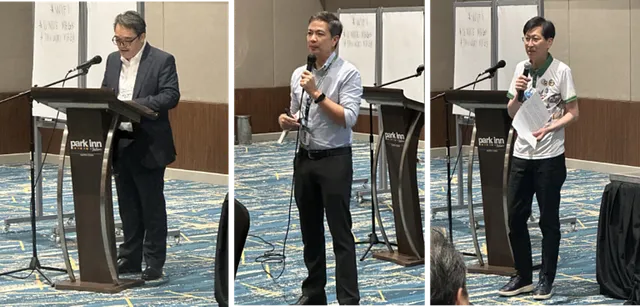
The technical personnel of the Mine Safety, Environment, and Social Development Division (MSESDD) of the Mines and Geosciences Bureau (MGB) organized the Social Development and Management Program (SDMP) Consultation Workshop on February 14-17, 2024 at Park Inn by Radisson North Avenue in Quezon City.
The said workshop, under the guidance of DENR Undersecretary for Integrated Science, Dr. Carlos Primo C. David and Atty. Ronald S. Recidoro, Chairperson of the National Unified Information, Education, and Communication Plan (NUIECP) Steering Committee, solicited comments and opinions from various stakeholders on the proposed Department of Environment and Natural Resources Administrative Order on the additional guidelines for formulating and implementing SDMP and evaluating the SDG metrics.
The workshop officially started with the welcome remarks of Engr. Teodorico A. Sandoval, OIC Assistant Director, MGB, in a concurrent capacity. Atty. Ronald S. Recidoro, the NUIEC Steering Committee Chair, delivered his inspirational message. In addition, Atty. Danilo U. Uykieng, OIC Director, MGB, delivered his message.
Ms. Vikki Luta, Business Unit Head of EON Manila, presented the updates of the NUIEC Plan for the last six months of implementation. It was followed by Mr. Peter S. Benaires, President of National Community Relations Practitioners of the Philippines, who presented the group's position paper on the proposed DAO.
On the other hand, Dr. Carlos Primo C. David, DENR Undersecretary for Integrated Environmental Science, briefly discussed the proposed DAO regarding the additional guidelines for formulating and implementing the SDMP. He also provided a background of the Department’s initiative to add value to the implementation of the programs/projects/activities of the SDMP by incorporating the Sustainable Development Goals (SDGs) relative to the mining industry.
Dr. Antonia Corinthia C. Naz, an economic expert of the Mining Industry Coordinating Council, facilitated the workshop. She first presented a briefing on the United Nations SDGs for the mining industry. The four pre-determined groups were then instructed to review and provide inputs on the draft DAO and the SDG matrices. The breakout session concluded with the highlights of the consolidated comments and inputs on the proposed DAO and the SDG matrices.
Engr. Marcial H. Mateo, MSESDD Chief, delivered his closing remarks after the workshop. He acknowledged the participants who devoted time and effort to scrutinizing the working documents thoroughly and contributed to its vast improvement.
Social Development Chiefs from the MGB Regional Offices, around 120 selected community relations and development practitioners, three workshop guests, and speakers graced the event. Another round of consultation workshops shall then be scheduled for the final evaluation of the draft DAO and the SDG matrices.
The Department of Finance (DOF) said it is pushing for a simplified mining fiscal regime.
In a statement on Wednesday, the DOF said the revised proposal for the Rationalization of the Mining Fiscal Regime proposes to impose a four-tier, margin-based royalty ranging from 1.5 percent to 5 percent on income from mining operations outside of mineral reservations.
Under the current regime, mining obligations vary depending on the mining agreement, which can be undertaken via the Mineral Production Sharing Agreement and Financial or Technical Assistance Agreement.
"These mining agreements can be undertaken in several ways, resulting in a complex tax system and investor uncertainty," the DOF said.
It added that the proposal is an improved version of House Bill 8937.
It noted that compared to the eight-tier structure from HB 8937, a four-tier structure makes it simpler for investors and the Bureau of Internal Revenue (BIR) to compute the corresponding tax rates.
"Furthermore, the simplified DOF version will lessen incentives for the private sector to pursue aggressive accounting to avoid taxes," the DOF said.
The current mining fiscal regime only taxes mines operating within a mineral reservation.
A margin-based windfall profits tax rate ranging from 1.5 percent to 10 percent on income from mining operations is proposed in light of the sudden increases in the world prices of metal.
The DOF said Fiscal Policy and Monitoring Group Officer-in-Charge Undersecretary Karlo Fermin Adriano already discussed the proposal to various mining and civil society stakeholders from the Chamber of Mines of the Philippines (COMP), Bantay Kita, Philippine Nickel Industry Association, Philippine Extractive Industries Transparency Initiative, BIR, and National Tax Research Center last Feb. 29.
“This is just the first step. We can be a major player in this global economy in terms of mineral production. We just have to realize it with the right policies,” Adriano said.
Sought for comment, COMP Chairman Michael Toledo, however, expressed concern on the DOF proposal.
"We are consoled by the fact that the DOF has seen our viewpoint that the mining fiscal regime should be one that will encourage investments and promote competitiveness," Toledo said.
He said HB 8937 already addresses this need, adding that the bill features an eight-tier, margins-based royalty applied to income for those operating outside mineral reservations with increasing royalty rates at higher operating margins.
"However, the DOF compromise proposal that seeks to impose instead a 4-tier royalty rate ranging from 1.5% to 5% will result in an increase in Annual Effective Tax Rate (AETR) from 59.6% under House Bill 8937 to 60.6%," Toledo said.
Toledo said the AETR in HB 8937 is already higher than that of Indonesia, Chile, Peru, South Africa, and marginally higher than Canada.
"The DOF proposal, therefore, will make the mining tax structure even more uncompetitive," he said.
"We in the Chamber also propose a 4-bracket regime, but one that starts at 1%, which we submit would be relatively easy for BIR to implement without drastically affecting the competitiveness of the Philippines as a mining investment destination," Toledo added. By Anna Leah Gonzales
Philex Mining Corporation, one of the oldest and largest gold and copper producers in Southeast Asia, announced the completion of its financial results for FY2023.
The Company added Php98 million core net income in 4Q2023 to the Php865 million core net income for the first nine months ended September 30, 2023, which registered the full year core net income at Php963 million. Tonnage milled for 4Q2023 declined by 4% from its 3Q2023 levels resulted to lower core net income contribution of 4Q2023. Sustained realized Gold prices in 4Q2023 cushioned the negative impact to core net income of the lower tonnage milled as foreign exchange rate depreciated by about 2% from its 3Q2023 levels.
Operating revenues decreased to Php7.726 billion in 2023 from Php9.262 billion in 2022. Operating revenues in 4Q2023 at Php1.768 billion was lower compared to Php2.203 billion in 4Q2022, but this was offset by the higher operating revenues in the first nine months of FY2023. Total tonnage milled for 2023 declined by 7.8% resulting to lower operating revenues for the year.
Realized Gold prices were also at their highest levels in FY2023 reaching $1,964 per ounce in the fourth quarter, while Copper peaked at $4.00 per pound in the first quarter before it settled at an average $3.76 per pound for the remainder of the year.
PRODUCTION
Tonnage milled for 4Q2023 was at 1.628 million tonnes, slightly lower than the 1.693 million tonnes in 3Q2023, but much lower than the 1.878 million tonnes of 4Q2022. The total tonnage milled in 2023 reached 6.853 million tonnes, lower than the 7.432 million tonnes for 2022. Gold ore grades declined by 9% and Copper ore grades declined by 6%. Gold output in 4Q2023 reached 8,647 ounces adding to the 29,137 ounces for the three quarters ended September 2023, ending the year with 37,784 ounces, lower by 22% than the 48,567 ounces’ gold output for 2022. Copper output for 4Q2023 was 4.903 million pounds adding to the 16.396 million pounds produced for the first three quarters of 2023 and ending the full year Copper output at 21.298 million pounds, lower than the 25.086 million pounds 2022 output.
OPERATING COSTS AND EXPENSES AND EBITDA
Operating cost and expenses decreased by 6% at Php6.673 billion for 2023 compared to the Php7.120 billion for 2022. This is mainly on account of the 7.8% decline in tonnage milled, offset by the impact of the elevated cost of materials and supplies. 4Q2023 operating costs and expenses were at Php1.701 billion compared to Php2.002 billion of the same period in 2022.
The EBITDA level for 2023 was at Php1.784 billion compared to Php3.524 billion in 2022.
The performance in 2023 allowed the Board to declare a cash dividend of 2 centavos (Php0.02) per common share aggregating to Php116 million, to shareholders on record as of March 15, 2024, which will be paid on March 27, 2024.
SILANGAN PROJECT DEVELOPMENT
The Silangan Mindanao Mining Co. Inc. (“SMMCI”, a wholly owned subsidiary) and the Company recently signed the Deed of Accession for additional US$70 million with the additional member banks who syndicated the credit facility to complete the total loan facility of US$170 million needed to bring the Silangan Project into commercial operation by first quarter of 2025.
The underground tunneling works has reached the 354 meters out of the 552 meters where the production levels of the Boyongan ore body will be located. The initial works at the tailings storage facilities has started while the tendering process for the various packages of the process plant is on-going with the packages for the long lead items needed for the process plant already awarded to various global suppliers.
OUTLOOK
For 2024, the Company will continue to strongly support mining as one of the country’s economic growth catalysts. It has, thus, set out to “leave no stone unturned” at the Padcal mine while accelerating the development of the Silangan Project as well as pursuing business activities related to the trending green metals technology. The Company would also continue to enhance ESG practices and the unceasing promotion of its brand of right and principled mining, as well as drum up awareness and interest in Silangan.
“Our Padcal mine still has the potential,” says Eulalio B. Austin, Jr., Philex president and CEO. “Thus, for this year, we will pursue our re-fleeting of critical equipment, continue optimizing the current ore body, as well as engage in relentless power optimization improvements and aggressive training of our employees. These are aside from further exploring the vicinity of Padcal Mine.”
According to Austin Jr., “For Silangan, since our initial capex funding is already in place, we will complete the main decline to the ore body as well as start the driving of production lines that would serve as sources for initial ore production. The construction of the processing plant and tailings storage facility, as well as other surface infrastructures, will commence this year.”
“Silangan will be the next big thing in the mining industry,” according to Philex Chairman Manuel V. Pangilinan. “There is excitement both in the public and private sector as to its much anticipated opening, but we will continue to build up awareness and interest on this project to attract new investors and lenders so we can accelerate its ramp-up. The conditions for this right now are favorable and we hope that this can be sustained throughout the year.”
“Moreover,” Pangilinan adds,” we shall continue pursuing our other business development activities to ride on the current trend towards green metals technology. We hope to complete the evaluation of our nickel tenement in Zambales, and pursue other possible M&A prospects.”
Aritcle courtesy of the Philippine Stock Exchange
Silangan Mindanao Mining Co., Inc., a wholly owned subsidiary of Philex Mining Corporation, one of the oldest and largest gold and copper producers in Southeast Asia, signed a Deed of Accession for additional US$70 million with Additional Lenders who syndicated the credit facility, in simple ceremonies in Makati City.
Present during the signing of the Deed of Accession were the executives of the Company, led by its Chairman Manuel V. Pangilinan and its President and CEO Eulalio B. Austin, Jr., other executives of Silangan Mindanao Mining Co. Inc. as well as executives of the Lenders, namely Philippine National Bank (PNB), Philippine Bank of Communications (PBCOM), and Security Bank Corporation, with SB Capital Investment Corporation as Mandated Lead Arranger, and PNB and PBCOM as Joint Lead Arrangers.
The signing of the agreement completes the total loan facility of US$170 million needed to bring the Silangan Project into commercial operation by the first quarter of 2025. Last year, the Company signed the Omnibus Loan and Security Agreement for a US$100 million syndicated debt facility with Lenders, namely Union Bank of the Philippines (UBP), Security Bank Corporation and Bank of the Philippine Islands, with BDO Capital and Investment Corporation as Mandated Lead Arranger and UBP as Co-Lead Arranger.
Development works continue in the Silangan Project with the ongoing underground decline development now midway to the Boyongan ore body. Initial works at the tailing storage facilities have started, while the tendering process for the various packages of the process plant is ongoing. Packages for some of the long lead items needed for the process plant have already been awarded to various global suppliers.
The Silangan Copper and Gold Project is touted as one of the Big Three mining projects in the country and is targeted to commence commercial operations by first quarter of 2025.
Integrated energy company Semirara Mining and Power Corporation (SMPC) posted P27.9 billion in consolidated net income in 2023, a 30-percent drop from P39.9 billion the previous year but still the second highest in its history.
All-time high coal shipments and record electricity sales softened the impact of weaker selling prices for both coal and electricity.
“Last year, we expected energy prices to stabilize so we focused on boosting our mine and plant outputs. Our people played a crucial role in helping us manage the challenges of a fluctuating energy market,” said SMPC President and COO Maria Cristina C. Gotianun.
Coal sales volume increased by 7 percent, from 14.8 million metric tons (MMT) to 15.8 MMT, driven by a 14-percent rise in exports from 7.1 MMT to 8.1 MMT, which compensated for the stagnant domestic sales at 7.7 MMT.
Average selling price (ASP) of Semirara coal fell by 26 percent from P5,136 to P3,796, as index prices retreated due to an oversupply from Indonesia, a warm winter and subdued global economic growth
Meanwhile, combined electricity sales from SMPC subsidiaries SEM-Calaca Power Corporation (SCPC) and Southwest Luzon Power Generation Corporation expanded by 26 percent from 3,596 gigawatt hours (GWh) to 4,515 GWh, driven by 86-percent upturn in SCPC gross generation from 1,713 GWh to 3,192 GWh.
Electricity ASP narrowed by 5 percent from P5.67 to P5.40 on the combined impact of higher demand, entry of new capacity and interconnection of the Visayas and Mindanao grids.
For the fourth quarter alone, SMPC recorded a 36-percent jump in consolidated net income from P3.9 billion to P5.3 billion primarily due to higher coal shipments.
Coal sales from October to December surged by 77 percent from 3.0 MMT to 5.3 MMT, as exports more than tripled (218%) from 1.1 MMT to 3.5 MMT.
During the same period, ASP of Semirara coal declined by 32 percent from P4,861 to P3,305 due to correcting market prices.
The power segment reported a 32-percent increase in electricity sales as spot sales more than doubled (118%) from 335 GWh to 731 GWh on higher gross generation and reduced bilateral contracts.
Electricity ASP contracted by 27 percent from P5.84/KWh to P4.29/KWh on ample supply margins and receding fuel costs.
The Chamber of Mines of the Philippines (COMP) said its 19 member-companies will fully implement the Towards Sustainable Mining (TSM) initiative, a global environmental, social, and corporate governance performance measurement standard.
In a statement over the weekend, COMP said TSM is a set of tools and indicators to ensure that key mining risks are managed responsibly and best practices are used at members' mining facilities.
At present, the Philippines through COMP is the only country in Asia to subscribe to TSM.
COMP said member-companies will submit their self-assessment reports on eight TSM protocols for their 2023 performance.
These TSM protocols include safety and health; community and Indigenous Peoples outreach and social development; crisis management and communications; tailings management; water management; biodiversity conservation management; and climate change.
The report will be submitted via an online app called Mine Site Sustainability Audit (MSSA).
The mines will conduct internal audits and should be able to support their self-ratings with proofs and evidence.
COMP said 10 of the 19 mines will be subjected to independent external verification by highly qualified Verification Service Providers (VSPs) to validate the reports while the other nine will be validated next year.
The results of all self-assessment and externally verified reports will be made public.
“After we adopted TSM in December 2017, we embarked on a six-year preparation period that saw our members actively participate in the Filipinization of the TSM Protocols,” COMP chairperson Michael Toledo said.
“That period also saw the formation of our multi-sector Community of Interest Advisory Panel, the training and accreditation of our VSPs, the development and cascading of the MSSA, a self-assessment dry run, and the mock external verification of three volunteer mines: Rio Tuba Nickel, OceanaGold Didipio, and Philex Padcal,” he added.
Other COMP member-firms with operating mines include Benguet Corp., Cagdianao Mining Corp., Carmen Copper Corp., Carrascal Nickel Corp., CTP Construction and Mining Corp., Dinapigue Mining Corp., Eramen Minerals, Inc., FCF Minerals, Inc., Filminera Resources Corp., Hinatuan Mining Corp., Lepanto Consolidated Mining Co., LNL Archipelago Minerals, Inc., Platinum Group Metals Corp. and Taganito Mining Corp. By Anna Leah Gonzales
As part of the Memorandum of Understanding between the Japan Organization for Metals and Energy Security, formerly Japan Oil, Gas and Metals National Corporation (JOGMEC), and the Mines and Geosciences Bureau (MGB), an On-the-Job Training Course on Environmental Protection and Rehabilitation was conducted at the abandoned mine site of Barlo Mine located in Mabini, Pangasinan on January 31 to February 2, 2024.
The training aims to capacitate the selected MGB personnel regarding hands-on experience in water system surveys, computation of water flow rate, and preparation of water flow and metal load balance sheet. Likewise, the said training is essential for MGB personnel to understand the current condition of the abandoned mine area, identify the sources of mine pollution and other concerns, formulate efficient countermeasures to address the mine pollution, and prioritize the measures to be implemented, especially with a limited budget.
The following were the topics discussed by JOGMEC during the said training at the abandoned mine: (1) Water System Survey for Mine Pollution Control; and (2) Field survey and Analysis of Mine Drainage from Abandoned Mines.
The said training was participated by six (6) technical personnel from MGB Central Office and selected MGB Regional Offices such as CAR, I, III, MIMAROPA, and V.
Article courtesy of the MGB
Follow on LinkedIn:
Philippine Resources Journal
Be the "First" to get our exclusive Digital Magazine & Weekly Newsletter.