February 07, 2024

Celsius Resources Limited is pleased to announce an updated JORC compliant Mineral Resource estimate (“MRE”) for the Sagay Copper Project (“Sagay” or “Project”), held under its Philippine Subsidiary, Tambuli Mining Company, Inc (“TMCI”) and located at the Island of Negros in the Philippines.

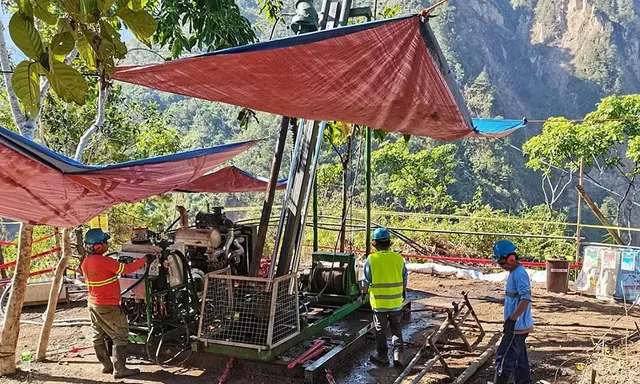
The update to the MRE at Sagay is largely based on the results from the 2023 drilling program at a shallow copper position located ~500m to the west of the main body of mineralisation discovered to date, as announced on 17th October 2023. This shallow copper zone offers Celsius the opportunity to investigate a low cost start up opportunity via a feasibility study which has been submitted to the Philippine Government. 

Celsius Resources Managing Director, Peter Hume said:

“The greater definition of the shallow supergene copper at Sagay has increased both the Resource category and our own confidence in the ability to look at a new shallow sustainable friendly development option. The previous Mineral Resource1. only placed this area in the Inferred Category, and with this new update to the Mineral Resource, this area is now largely in the Measured and Indicated category, which allowed us to complete and submit a feasibility study to the Philippine Government2.

1 Refer to ASX/AIM announcement dated 7 November 2021 “Maiden Mineral Resource estimate (MRE) for the Sagay Project”

2 Refer to ASX/AIM announcement dated 8 January 2024 “Celsius’ Sagay Project applies for DMPF”


The Company has taken a sustainable approach to the proposed development of the Sagay Mineral Resource, similar to its flagship MCB project. Eliminating the use of a conventional tailings dam and using the tailings for environmental rehabilitation, along with processing the ore through gravity separation, therefore eliminates the use of chemicals. We are in the process of finalising the Project’s environmental impact assessment which will clearly demonstrate the Company’s commitment to environmental protection and preservation through advanced mining technologies.”

CLA Chairman, Atty. Julito R. Sarmiento added:

“The development of the Sagay Project can assist with meeting the global demand for green metals in an effort to transition to clean energy sources and achieve the global goal of net zero emissions by 2050 to stave off climate change calamity. CLA constantly takes serious efforts to develop genuinely responsible projects by tightening up our environmental managements systems and stepping up our social and environmental performance.”

THE SAGAY COPPER-GOLD PROJECT

Location

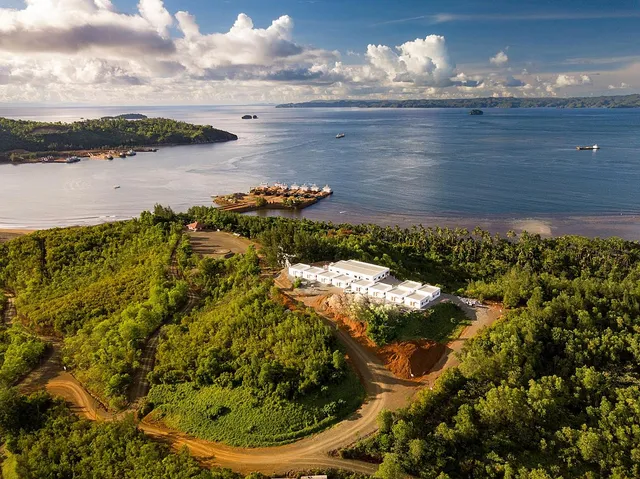
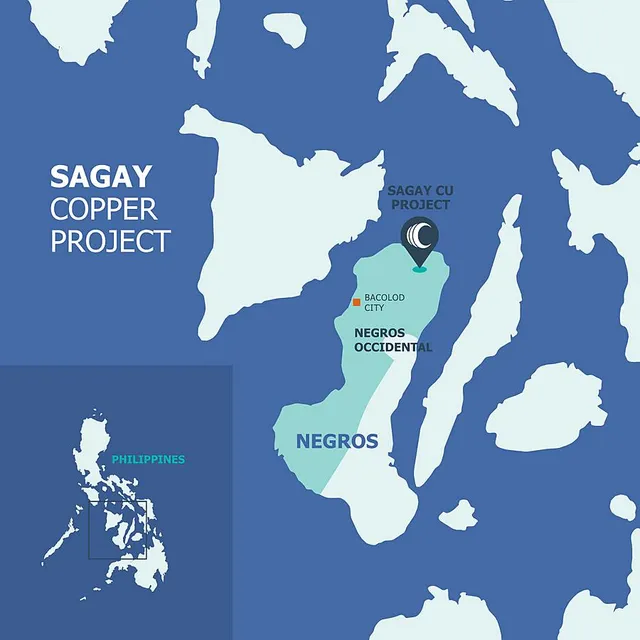
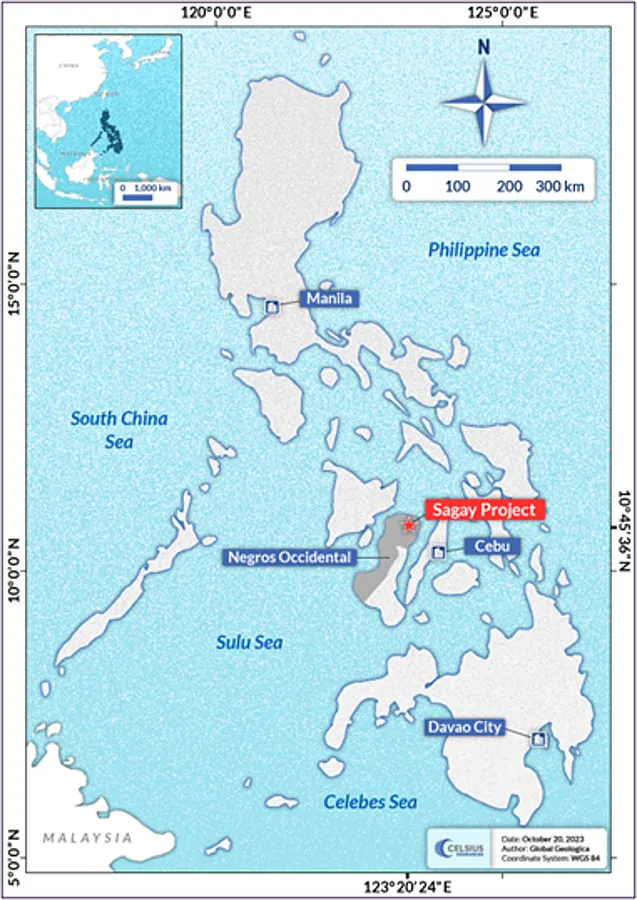
The Sagay Copper Project is in the north-eastern part of Negros Island, within the cities of Sagay and Escalante in the Province of Negros Occidental, Philippines (Figure 1).  Negros Island is part of the central group of Islands in the Philippines commonly referred to as “the Visayas”.

The MRE for the Sagay Property is located at Purok Tan-ao, Barangay Lopez Jaena (see Figure 2).
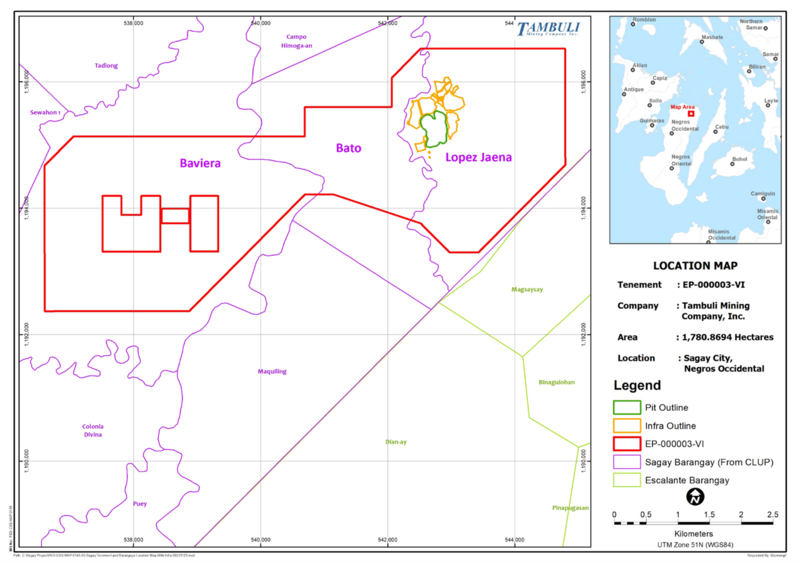
Figure 2. Location of the tenement area of the Sagay Project.


Mineral Resource Estimate

Drilling at Sagay has broadly defined a large-scale copper mineralisation which is interpreted to be a typical porphyry copper style of mineralisation, common throughout the Philippine archipelago.

The copper mineralisation for the MRE at Sagay is defined by three defined mineralised domains, two of which (namely 100LG and 100HG) relate to a main body of copper mineralisation which exists underneath a local topographic high. 

This topographic high relates to Purok Tan-ao with resistive siliceous rocks interpreted to be an eroded lithocap associated with the porphyry mineralisation.

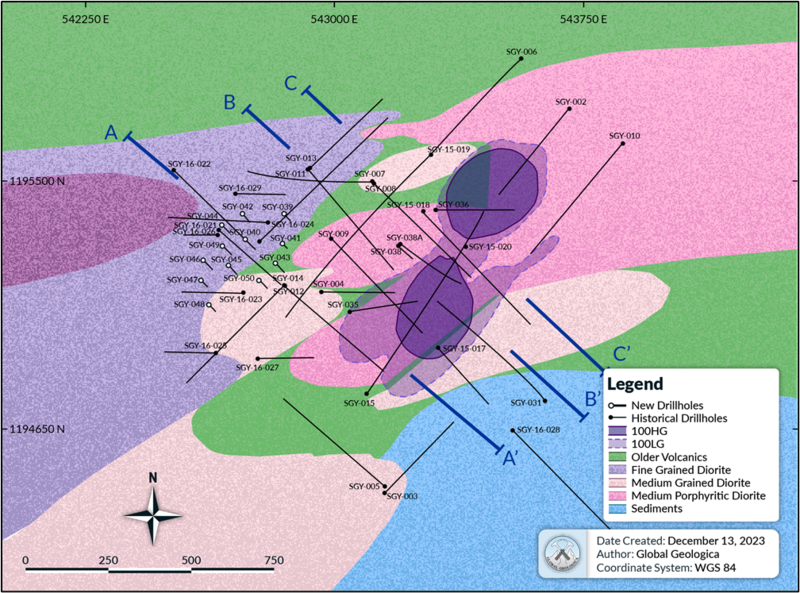
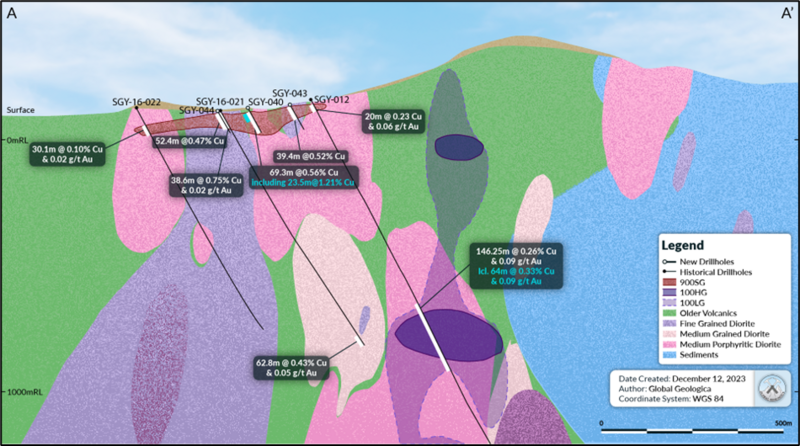
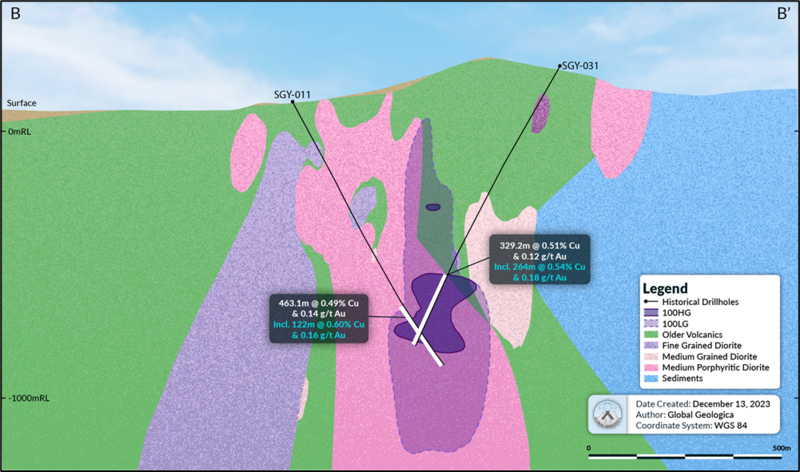
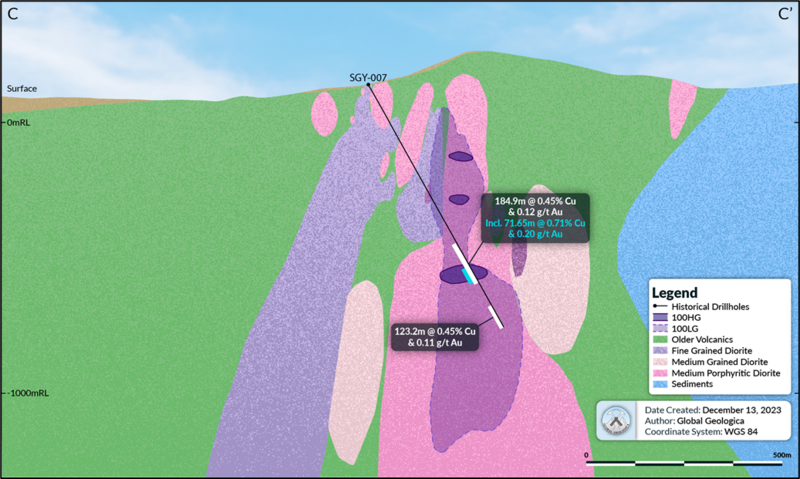
A third mineralised domain (900SG) hosts a shallow flat lying supergene copper mineralisation towards the west of the main mineralisation underneath Purok Tan-ao and is possibly related to a satellite porphyry mineralisation. Figures 3 to 7 show a plan view and cross sections of the mineralised domains relative to the host rock geology.

The copper mineralisation at Purok Tan-ao is broadly constrained by a zone of mineralisation which exceeds 0.2% copper and is trending parallel to the main alteration and related intrusive host rocks.

A lower cut-off grade of 0.2% copper was applied in the reported MRE (summarised in Table 1) which aligns broadly with the expected economic limits of the likely mining and processing options considered at Purok Tan-ao.
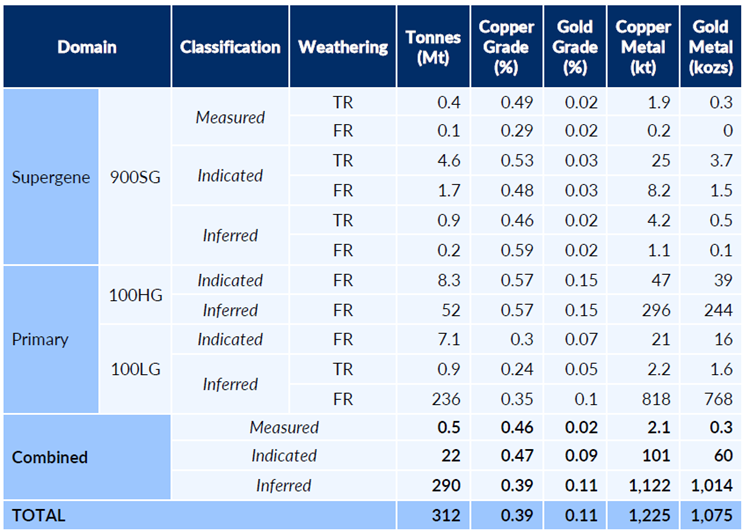
Table 1: Summary results for the Mineral Resource estimate at Purok Tan-ao at a cut-off grade of 0.20% copper.
Note for table of results: Calculations have been rounded to the nearest Mt of ore (to the nearest 100,000t where <10Mt), two significant figures for Cu and Au grade and to the nearest kt of Cu metal and kozs of Au metal (to the nearest 100t where <10kt). Some apparent errors may occur due to rounding. TR – Transition or partially oxidised Rock, FR – Fresh Rock.
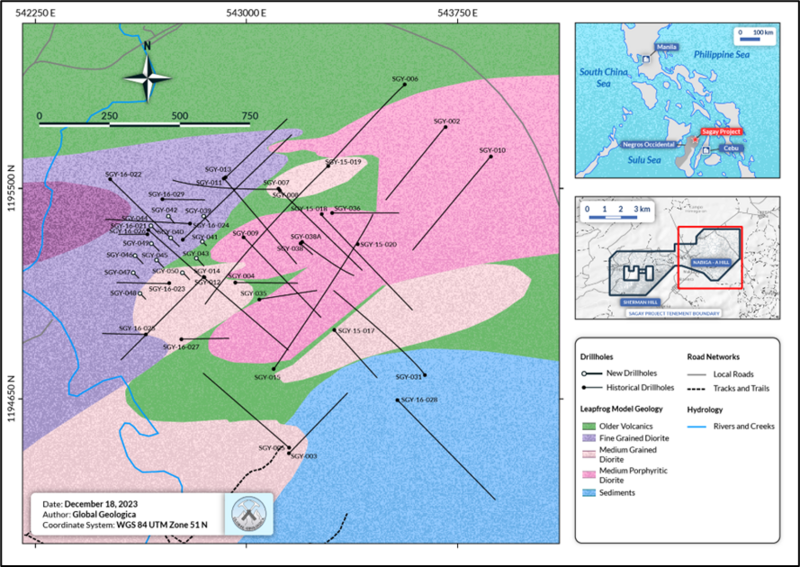
Figure 3. Drill hole locations and interpreted surface geological plan view diagram.
Figure 4. Drill hole locations and interpreted surface geological plan view diagram.
Figure 5. Oblique Cross Section A-A’ , showing the location of mineralised domain 900SG (Supergene mineralisation) and the western section of the 100LG and 100HG mineralised domains.
Figure 6. Oblique Cross Section B-B’ showing the location of the 100LG and 100HG mineralised domains.
Figure 7. Oblique Cross Section C-C’ showing the location of the 100LG and 100HG mineralised domains.

Geology and Geological Interpretation

Sagay is located at the northernmost tip of the NNE trending volcanic arc related to the eastward subduction beneath the Negros Trench in the southwest offshore of Negros Island. Several porphyry and epithermal mineralisation targets belong in this underexplored mineralisation trend along the eastern side of the island.

The major rocks identified at Purok Tan-ao are a series of intermediate igneous rocks intruding into older host rocks composed of basalts overlain by metamorphosed sedimentary rocks and felsic volcanics. These rocks are in turn overlain by Quaternary pyroclastic rocks that consist of tuff and tuff breccias. The intermediate intrusions include several diorites and andesite porphyry.

Three distinct Diorite intrusives were identified. Following the local nomenclature in Sagay Project, these are (from oldest to youngest) the (1) Equigranular Diorite (MEQ), (2) Medium-grained Porphyritic Diorite (MPOC), and the (3) Fine-grained Equigranular Diorite (FEQ). These intrusive rocks have distinct textures and visible cross cutting relationships. Widespread strong silica - clay and outer chlorite alteration is notable in the deposit. This 8km by 4km alteration zone is indicative of a large magmatic hydrothermal system.

There are multiple types of porphyry mineralisation observed within the Purok Tan-ao Deposit. The dominant type is related to early-stage porphyry quartz stockwork veins with associated potassic alteration and chalcopyrite as the dominant copper sulphide. A later-stage porphyry Cu-Mo type mineralisation has been identified and is hosted in silica – sericite – chlorite alteration.  In addition, evidence exists for a later-stage epithermal vein deposit type which exist within close proximity to the large-scale porphyry copper-gold mineralisation. 

At this stage, only the porphyry copper-gold type of deposit was defined in the MRE.

Drilling Techniques

All of the drilling data used for the Sagay MRE is based on diamond drilling information from a total of 45 diamond drill holes—with a cumulative meterage of 25,782.1m.

Initial diamond drilling was conducted between December 2012 and 2016 by Freeport-McMoRan, who completed a total of 28 drill holes at Purok Tan-ao, with an aggregate core depth of 22,516.70 metres.

From November 2021 to April 2022, Celsius has completed a total of 4 drill holes and 1 offset, for a total to 2,440 metres[1].  More recently in late 2023, Celsius completed a further 12 shallow drill holes which are the focus for this Mineral Resource update.  These shallow drill holes relate to the 900SG mineralised domain with a total meterage of 824.7m[2].

Sampling and Sub-sampling Techniques

The following sub sampling and sample preparations were followed for all the diamond drilling at Sagay.

Half core samples were collected from diamond holes drilled from the surface. All drill cores were generally sampled at 2m intervals. In cases where geological and mineralogical characteristics change, the sample length is reduced to best fit the geological contact, with a minimum observed sample size of one metre. Sampling typically commenced after the overburden horizon depth was exceeded.

Cut samples were bagged on site prior to delivery to the laboratory (Intertek) in Manila for sample preparation and analysis.

Sample Analysis Method

All samples were analysed at the Intertek, an internationally recognised and ISO/IEC 17025:2005 & ISO/IEC 17020:2004 certified independent laboratory in Manila.

Copper (Cu) values were analysed by means of multi-acid (4-acid) digest. Elements were determined by ICP-OES/MS with AAS finish. Samples were fire assayed for gold (Au) using a 50-gram charge, with a detection limit of 0.005 ppm.

Estimation Methodology

A parent cell block size of 10m x 10m x 10m was chosen based on the general dimensions of the interpreted ore domains, and the likely mining method.

Ordinary Kriging was chosen as the interpolation method for the block model which defines the MRE. 

The parameters for Ordinary Kriging were based on an analysis of the variograms for each domain in addition to some broad assumptions with regards to the direction and continuity of the copper and gold mineralisation associated with each defined mineralised domain. The variograms were located along the plane of the interpreted controlling geological trend which is striking at approximately 50 degrees at a near vertical dip.

A broad review of the statistics for each domain did not identify significant high value outliers that are considered likely to result in an overestimated either locally or globally to the grade distribution within the block model. Therefore, no top cut was applied to the MRE.

Classification Criteria

The mineralisation is constrained within boundaries which are also considered to define the limits for each domain as supported by the current drill hole information. Within these domain constraints, minimum search distances and composited drill hole information parameters determined which locations were defined as Measured, Indicated, Inferred or as further Exploration Targets.

A small portion of the 900SG was classified in the Measured category where there is tighter drill spacing (less than 50m), multiple drill holes which show continuity of mineralisation and the variogram analysis is also supporting of the relationship of the assay data between drill holes.

The Indicated category was classified based on maximum distance of 150m to the major position, 85m to the semi-major axis and 25m in the minor direction for the limits, with a minimum number of samples at 8 and maximum number of samples at 16.  A minimum of two drill holes was also applied for the Indicated category.

The Inferred Mineral Resource represents over 90% of the total MRE due to the thick and broadly spaced copper intersections as deeper levels which contain the most copper mineralisation identified to date at Purok Tan-ao.  This category was extended for twice the distances applied to the Indicated Resource pushing the limits search ellipse to 300m x 150m x 50m, with a minimum of four samples and maximum of 20 samples defined for each block. 

No restriction on the number of drill holes was applied for the Inferred Mineral Resource category.

Cut-off Grade

A preferred lower cut-off grade of 0.2% copper has been used in the reported MRE. This is considered appropriate based on the geological continuity associated with copper mineralisation above 0.2% copper in addition to a broad economic cut-off point based on a ~US$10,000/t copper price.

Dimensions

The mineralisation at Purok Tan-ao is classified as a porphyry copper-gold deposit which, at deeper levels (below 400m depth), has a broad geometry of up to 1km along strike towards the north-east (with a main trend of ~45o azimuth) and true widths of up to 280m.  At shallower levels, the copper mineralisation is broken up into multiple domains which are individually up to 600m along strike and with true widths of up to 150m.

The 900SG domain is a shallow, flat lying zone of mineralisation which has formed along the current and ancient water table at a broadly horizontal orientation.  This domain is elongated in the direction of some interpreted controlling faults and/or source porphyry copper mineralisation.  These trends appear to be both north-east and north-west in orientation.

Metallurgical and Mining Parameters
 
For the 900SG domain which is the basis of the Feasibility Study, utilised a potential surface mine approach with an interpreted costs of US$3.30/t for mining and US$4.8/t for processing.

Possible later mining development costs of US$10/t to US$7/t and processing costs of US$7/t to US$4/t respectively for a medium sized (5Mt to 10Mt per annum) underground block caving mining method and processing using floatation (to produce a copper-gold concentrate) have been assumed where applicable for the MRE. 

This cost range estimate matches closely with a broad geological cut-off grade of between 0.15% copper and 0.25% copper (at a forward-looking Copper Price of ~US$10,000/t).

Study Results

Based on the resource model, mining parameters, and metallurgical test works, a Mining Project Feasibility Study was submitted to the Philippine Mines and Geosciences Bureau on 20 December 2023 confirming the presence of minerals in the area which are recoverable by processing the ore through gravity separation which was determined to be economically sound, ensuring environmental protection and preservation methods would be implemented through the advanced mining technologies.

The study focused on the shallow supergene chalcocite deposit which is suitable for a medium-scale surface mining operation. The copper concentrate produced will have no deleterious elements which makes it highly marketable.

Technical, environmental, and social considerations were incorporated in the mine design to reduce the mine footprint to approximately 20 hectares. The process plant is engineered to enhance the ore through a gravity concentration method which is effective in extracting valuable components form the ore, thus contributing to the overall success of the ore beneficiation process.

Metallurgical test works indicated that the tails produced is non-acid generating. All tailings will be managed through dry stacking method which eliminates the need for a tailings dam, thus removing the possibility of environmental impacts (tailings spill). Other alternative disposal methods are currently being studied, including the potential use of tailings for hollow block manufacturing as a community livelihood program, road base, and landfill among others.

Next Steps

Following the submission of the DMPF, the key technical, environmental, and social plans and programs are under review by the Philippine Government. Once approved, the Company will apply for a mineral agreement with the government.
 

the full press release can be download HERE

February 05, 2024

The United States (US) government has offered its support to the Philippines in developing the country’s mineral processing and renewable energy (RE) sectors.

US Under Secretary for Economic Growth, Energy, and the Environment Jose Fernandez said in an interview here Tuesday that the US government can help the Marcos administration to engage with countries under the Mineral Security Partnership (MSP), a collaboration of 13 countries and the European Union to catalyze investments in responsible critical supply chains across the world.

Fernandez said the US government can organize video conferences with companies in MSP countries where the Philippine government can present to potential investors the kind of investments it needs for the industry.

“It’s a way for us to facilitate engagement by the Philippine government and the mining companies, mining investors out there,” the visiting US official said.

He shared that the MSP currently has “over half a dozen projects,” not only in mining but on the processing side, as well.

Fernandez said with the interest of US companies that are already here, the US government will continue working with the concerned agencies in the country to facilitate their investments here.

“We are working with the Philippines and helping them to create an enabling environment for these types of investments. A regulatory environment that is modern, and that includes the best practices out there,” he added.

Aside from processing critical minerals, Fernandez said the US government is keen to support the Philippines in increasing its RE capacity.

Fernandez had a meeting with the Department of Energy during his visit here. He conveyed that the Development Financing Corp. can be a source of funding for RE projects and infrastructure in the Philippines.

PH role in clean energy goals

The US official highlighted that the Philippines has a critical role to play in achieving clean energy goals globally, being a country with rich natural resources.

“For us to reach our clean energy goals by 2050, we’re going to need exponentially more critical minerals that we use today,” Fernandez said.

Citing data from the International Energy Agency, Fernandez said to shift to clean energy by 2050, the global market needs 42 times the amount of lithium, 20 times the amount of manganese, and 20 times the amount of cobalt.

“Those kinds of numbers mean that unless we’re able to find them, our clean energy transition will be at risk,” Fernandez added.

The Philippines is host to 5 percent of global nickel reserves and 4 percent of global cobalt reserves, the mineral resources used for producing batteries. Batteries are needed to store power from RE sources such as solar, wind, and hydro among others.

“Right now, most of these critical minerals are produced by or mined or processed by one or two countries, one of them is China… And it’s not a question of China. Something that Covid taught us is that we cannot depend on one supplier for anything,” Fernandez said.

Fernandez also discussed these sectors with the Department of Trade and Industry (DTI).

Mineral processing is one of the five priority sectors of the DTI under its Make It Happen in the Philippines campaign. By Kris Crismundo


Article courtesy of the Philippine News Agency

January 30, 2024

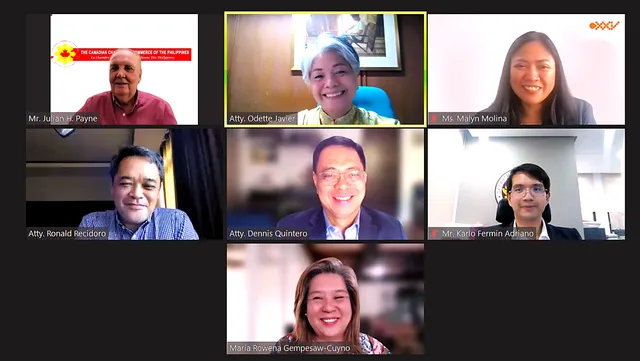
The Canadian Chamber of Commerce of the Philippines hosted an online Business Briefing on Jan. 25, 2024, Thursday. This is the first of their series for the year with the title "Mining: Update on Major Issues".

CanCham President, Julian H. Payne hosted the online event along with CanCham's Assistant Corporate Secretary, Maria Rowena Gempesaw-Cuyno, with Atty. Odette Javier of Lepanto Mining as moderator.

Speakers include Atty. Ronald Recidoro (Executive Director of the Chamber of Mines of the Philippines - COMP), Karlo Fermin Adriano (OIC-Undersecretary, Department of Finance), Malyn Molina (President, EON Group), and Atty. Dennis Quintero (Partner, Quisumbing Torres).

As an overview of the briefing, "There have been significant changes in mining practices, government regulation, and public understanding about large-scale mining in the Philippines in recent years. The economic benefits and risks have become clearer. The proposed new fiscal regime for mining will have a major impact on the interest of international mining companies and their foreign investors in mining in the Philippines. The future of mining in the country is at a critical juncture."

The objective of the discussion is primarily to inform and clarify the impact of the proposed new fiscal in additional costs and benefits of mining for the national government, local governments and their communities, and mining companies. Secondly, the discussion covered the current attitudes of Filipinos in both mining and non-mining communities about large-scale mining as reported by a survey done by EON Group. Lastly, the briefing mentioned to what extent international mining companies and their foreign investors are now viewing the Philippines as an attractive country to launch new mining operations as reported by Department of Finance.

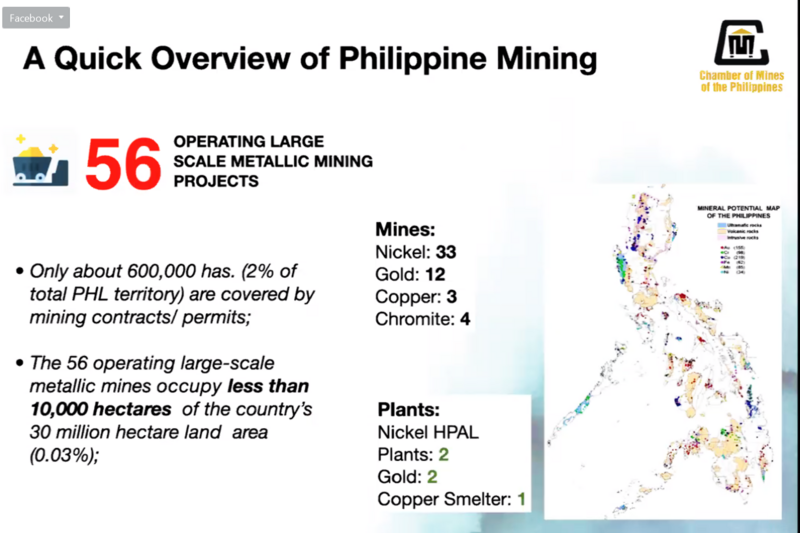
On the presentation “Philippine Mining: Legal and Policy Updates”, Atty. Recidoro discussed the opportunities, regulations, and taxation. He gave a quick overview of Philippine Mining. There are 56 operating large-scale metallic mining projects where only about 600,000 hectares (2% of total PH territory) are covered by mining contracts and permits. The 56 operating large-scale metallic mines occupy less than 10,000 hectares of the country's 30 million hectares of land area (0.03%).

To mention some metallic mining industry facts and figures, the total Philippine exports are worth $7.23 billion (9.17% of total PH Exports), Php44.8 billion or 1.17% of total taxes comes from mining, mining generates Php153.1 billion Gross Value Added (GVA) or 0.7% of total GDP. There are approximately 208,778 people working in mining companies. This is 0.46% of the total Philippine workforce.

“For such a highly mineralized country, the large-scale metallic mining sector does not substantially contribute to the national economy. The industry has been stymied by policy problems, resulting in no new investments and therefore no growth.”

Atty. Recidoro pointed out some policy shifts in the last decade that affected the industry. There was EO79 by President Aquino in 2012 that placed a moratorium on new mining projects. In 2016, President Duterte appointed the late Gina Lopez, an anti-mining activist as DENR Secretary. On the following year, Sec. Lopez ordered an audit of all mining operations and initiated the abrupt closure/suspension of 28 mines. On the same year, Sec. Lopez placed a ban on new open pit mining. In 2018, Congress passed the TRAIN Law that increased the excise tax on minerals to 4% of gross output.

President Duterte issues EO130 in 2021 lifting the moratorium on new mining projects. On the same year, DENR Sec. Cimatu issues DAO 2021-40 which lifts the ban on open pit mining.

In 2022, President Marcos bats for mining and orders DENR to strictly implement environmental laws. Finance Sec. Ben Diokno banks on mining for post-COVID recovery.

Regarding the amendment of the Philippine EIA system, Atty. Recidoro mentioned some key features of the bill include re-orienting the nature and purpose of the EIA System as a planning tool and renaming the ECC as Certificate of Proponent's Environmental Commitment (CPEC). Another key feature is the introduction of a Strategic Environmental Assessment (SEA) for proposed policies, plans, or programs.

He also mentioned the approval of the new fiscal regime for large-scale metallic mines (HBN 8937) with key features such as: a lowered royalty for those operating in MRs--from 5% down to 4%; a royalty for LSMs operating outside of mineral reservations, but which is conditioned on income; windfall profits tax that operates in the same way but which only kicks when the company achieves a "windfall" which starts at a profit margin of 35%; and provisions for thin capitalization, transfer pricing, ring-fencing, and fiscal transparency.

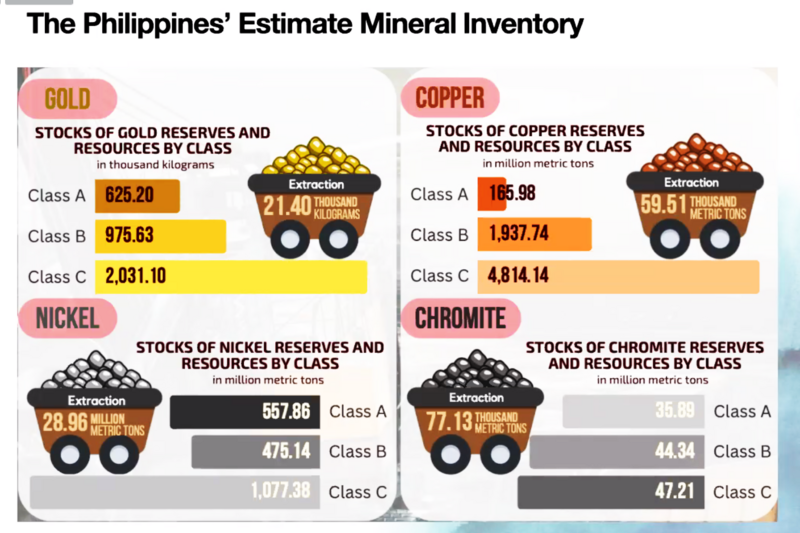
On Usec. Karlo Adriano's report titled "Rationalization of Mining Fiscal Regime", he provided an overview of the mining industry. He said the Philippines is geographically endowed with abundant mineral resources as copper, gold, nickel, and chromite. He said that 9 million hectares are identified as having high mineral potential but only 779,446.41 hectares or 2.60% are covered by mining tenements as of June 2023. For the estimated value produced in 2022, he gave the following figures: gold = Php91.05 billion, nickel and nickel products = Php117.64 billion, and copper = Php25.67 billion.

Usec. Adriano also reported that according to the Fraser Institute, the Philippines has one of the best mineral potentials, but the current policies do not encourage investments in the sector.


He also reported that the discussion of a new mining fiscal regime has been ongoing since 2021, which is one of the challenges surrounding it. Other challenges include factors like having several mining fiscal regimes, resulting in complex tax system, and the Average Effective Tax Rate (AETR) or government’s take on mining is relatively high compared to peers.

On the presentation titled “Unearthing Opinions: Exploring Filipinos' View on Mining through Data Insights” by Malyn Molina, she reported the results of a public survey about the reputation of the industry and how well lay people understand what mining does for the Philippines. Molina is the President and CEO of EON Group. Molina is a highly accomplished communications expert.

"In a local landscape where responsible mining has yet to be acknowledged as a reality, and data on the topic is limited and low in visibility, how did we discover the starting point in building the trust narrative for the country's mining industry?"

"Through our survey, we affirmed that many people still associate mining to the same disturbing outcomes caused by climate change."

“The positive contributions of the industry and the benefits it provides fall behind in terms of awareness. However, the data also shows clear opportunities to shift public perception.”

“Many people have yet to see the care and integrity that goes into the process. Mining has yet to be established as a value chain rather than just plain extraction. There are already human-centric processes in place that address what they are looking for. We just have to show them the bigger picture.”

Covering online news and social media, their study shows that there are approximately 4.4K mentions of the Philippine mining industry and related topics.  Among these articles, 75.7% are positive stories, 8.1% are negative stories, and 16.2% are neutral.

The last speaker for the business briefing was Atty. Dennis A. Quintero, Head of Energy, Mining, and Infrastructure Industry Group at Quisumbing Torres Law Offices. He heads the PMRCC Membership Committee and member of the Legal Committee of the Chamber of Mining of the Philippines.

Atty. Dennis Quintero provided an in-depth rundown of the history of the Philippine mining industry, supplementing on the timelines provided by Atty. Recidoro.

His discussion started in 1995, during the time of President Fidel V. Ramos when the country has the current Mining Act. It was an era when the government extensively promoted exploration and mining to foreign investors, which resulted in major and junior mining companies investing here. There were some major foreign companies that came to the Philippines to undertake exploration works.

The government's attitude back then changed to a policy of mere tolerance of mining which later shifted to active promotion during the time of President Gloria Macapagal-Arroyo in 2002.

Atty. Quintero said, "This also coincided with the decade of the mining boom globally from 2002 to around 2011 to 2012."

"The Philippine mining sector experienced a slowdown starting in 2012, which was the tail end of the global mining boom of the 2000s. And this was also coupled by the issuance of Executive Order No. 79 which instituted a moratorium or a stop on new mineral agreements until a new Mining Fiscal Regime Law was passed by Congress."

"The reality during that particular period up until 2016 was that the government afforded very little opportunity for dialogue with the private sectors as the Philippine mining industry stagnated."

Moving forward, in 2020 until the present time, there is now a focus on downstream nickel processing to take advantage of the country's position as top producers of critical minerals, namely: nickel, copper and cobalt. These minerals are used for battery storage systems that are employed in electric vehicles and renewable energy system. In 2022, the new government under President Bongbong Marcos recognized the Philippines in its unique position to be an important player in the clean energy transition and a critical partner in realizing development goals.

“The government has stated that a resilient and sustainable mining industry can support the country's economic and social development. DENR also stated that developing the country's mineral resources is not only beneficial to the country, but should be regarded as essential in transitioning to a decarbonized society.”

As an effect, by 2022, the doors are now open for a direct dialogue and consultation between the government and private sector. “This is offered with the aim of realizing the shared goals of the state and the mining industry, for the development of the upstream and downstream sectors of the industry.”

January 15, 2024

Integrated energy company Semirara Mining and Power Corporation (SMPC) achieved a record-breaking coal sales volume of 15.8 million metric tons (MT) in 2023, marking a 6-percent increase from the previous year.

The growth was largely fueled by a 13 percent rise in export sales, which surged from 7.1 million MT to 8.1 million MT. In contrast, domestic sales stayed flat at 7.7 million MT.

“Our sales performance aligns with our 2023 target of 15 to 16 million metric tons. It also reflects our team's relentless effort and commitment to deliver stable fuel supply amidst the challenging dynamics of the global market,” said SMPC president and COO Maria Cristina C. Gotianun.

In 2023, majority of Semirara coal exports went to China (65%), followed by South Korea (27%) and Brunei (4%). Shipments to Japan, India, and Vietnam made up the remainder.

China shipments recovered by 31 percent from 4 million MT to 5.2 million MT on heavy stockpiling, consumption recovery and lower hydropower generation.

Demand from South Korea was steady year-on-year at 2.2 million MT while Brunei sales nearly tripled from 102,967 MT to 306,800 MT.

Looking ahead to 2024, Gotianun added, “Our goal is to ship at least 15 million metric tons of Semirara coal, focusing on the domestic market. This aligns with our commitment to national energy security.”

Additionally, as of December 27, 2023, SMPC (PSE: SCC) underwent a reclassification in its market sector. Previously part of the Mining subsector of the Mining & Oil sector, SCC is now listed under the Electricity, Energy, Power & Water subsector of the Industrial sector.

The sector reclassification is the result of the Philippine Stock Exchange’s careful review of SCC’s revenue sources and business operations.

January 15, 2024

Global Ferronickel Holdings, Inc. announced recently that its subsidiaries, Platinum Group Metals Corporation (PGMC) and Ipilan Nickel Corporation (Ipilan), have signed an annual sale and purchase agreement with Baosteel Resources International Co., Ltd. (Baosteel).

Under the agreement, Baosteel would purchase up to 1.5 million wet metric tons (WMT) of nickel ore for the year 2024 at a price that is determined monthly based on the prevailing market price at the time of sale. About two-thirds of the nickel ore to be sold is expected to be low grade with 0.90% nickel and 48% iron, and between 1.30% and 1.40% nickel with 15% to 25% iron. The remaining one-third will be medium grade with 1.40% and above nickel and 12% to 23% iron. It will be sourced from FNI’s operating mines in Surigao del Norte and Palawan.

“We are proud to work with Baosteel and continue our long-term relationship,” said FNI President Dante R. Bravo. “This agreement and our long history together demonstrate our customer’s confidence in our business and provide further recognition of our efforts in maintaining a reliable supply chain to meet the demands for Baosteel products throughout the Asia-Pacific region and internationally. With almost 10 years relationship, we believe our collaboration aligns with FNI’s mission of providing metals and minerals that are essential for greener, more sustainable products required in everyday life.”

FNI ended 2023 with 4.763 million WMT shipped volume, with 3.297 million WMT from PGMC and 1.466 million WMT from Ipilan. A total of 0.379 million WMT were sold to Baosteel.

Baosteel Resources International Co., Ltd. is a wholly owned subsidiary of China Baowu Steel Group. It is engaged in mineral resource investment, trading, and logistics services. In 2023, China Baowu Steel Group ranked as the largest company in the Materials sector and 44th largest company worldwide by total revenues on the Fortune Global 500, which it has been recognized for 14 years.

January 15, 2024

Celsius Resources is pleased to announce that its Philippine subsidiary, Tambuli Mining Company, Inc. (TMCI), has applied for a Declaration of Mining Project Feasibility (“DMPF”) for its Sagay Copper-Gold Project in the island of Negros.

The said application proclaims the presence of minerals in the area applied for, which are recoverable by socially acceptable, environmentally safe and economically sound methods as further manifested in the following key documents comprising the application:

  • Mining Project Feasibility Study Report
  • Final Exploration Report
  • Environmental Impact Statement Report
  • Environmental Protection and Enhancement Program
  • Final Mine Rehabilitation/Decommissioning Plan
  • Social Development and Management Program
  • Care and Maintenance Program

These plans and programs were developed following an extensive stakeholder consultation process to ensure the integration of social and environmental safeguards and local context. Endorsements from host local government units were also secured in the form of resolutions interposing no objection to the project.

Celsius Executive Chairman, Atty. Julito “Sarge” Sarmiento, said:

“This is another achievement for Celsius’ portfolio of assets in the Philippines. As with the Maalinao-Caigutan-Biyog Copper-Gold (“MCB”) Project, we aim to develop the Sagay Project into a productive mine that would not only bring value to our stakeholders and shareholders, but also showcase our commitment to sustainable and responsible mining practices.

We are at such a critical and pivotal point in human history where the ongoing climate change emergency demands an accelerated transition away from fossil fuels to renewable energy, and a green economy would necessitate the extraction of more so-called green metals like copper.

The Company believes that mineral extraction must be done through innovative solutions which optimise benefits and avoid adverse social and environmental impacts. We will work closely with the national and local government units as development partners to pursue shared goals.”

January 15, 2024

From a PHP100,000 seed capital, a group of village residents in the mining town of Claver, Surigao del Norte, managed to grow their community-based venture into a multimillion business that now operates a pharmacy, microlending, hardware and grocery store.

PRIME (Panaghiusa, Reporma, Inisyatibo Magpalambo sa Ekonomiya) is one of the 24 "success stories" presented by the Taganito Mining Corporation (TMC) during the two-day the People’s Organizations Conference held on Jan. 9 to 10 in Claver – Surigao del Norte's mining capital

"Our businesses grew bigger and bigger, until it branched out and developed as it is today," Marlyn Cañon, the group leader, said in a local dialect during an interview Thursday.

Asked about the group's earnings, Cañon said PRIME's 11-strong members generate enough monthly income that they no longer have to work.

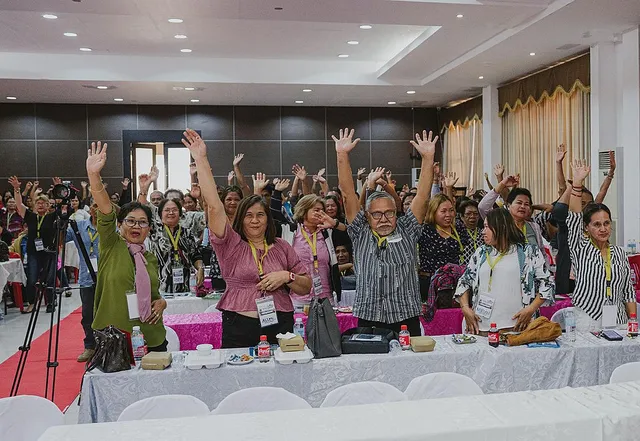
During the conference, Cañon and 215 other members and officers of people's organizations (POs) consisting of cooperatives and livelihood groups supported by nickel miner TMC learned about product development, market access and expansion, and better networking and collaboration to improve their business.

 “The 24 POs are recipients of the livelihood program of the TMC. Most of these groups were organized and supported by the company in 2001,” Melith Matabaran, TMC head of Information, Education, and Communications, DMTG, and MonitoringSection, said in an interview.

Matabaran said the POs are engaged in community-based merchandising, agriculture and veterinary business, agriculture, aquaculture, integrated farming involving goat raising and pineapple production.

She said the livelihood organizations benefited from the expertise and insights of the resource speakers during the conference, which included a representative of the Surigao City Chamber of Commerce and Industry (SCCCI).

The conference will also help the POs link their businesses online through a session on digital empowerment and digitalization of their marketing through online collaborations with other stakeholders, she added.

Moreover, Claver Mayor Georgia D. Gokiangkee assured the local government's support for the POs.

"I salute the people's organizations that became successful. Your hard work really paid off. Rest assured that the local government, along with the national government agencies, will ensure that your business ventures continue to be sustainable," Gokiangkee told the people's organizations.

The mayor also encouraged them to prioritize the education of their children, saying it is the best investment they can make in their lifetime.

January 10, 2024

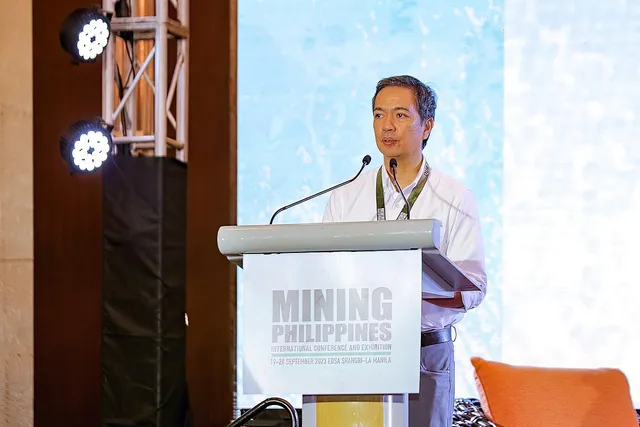
QES Technology Philippines, Inc. actively participated at this year’s industry events, which exemplifies their dedication to the advancement of the mining sector. The company took part in the Mining Philippines International Conference and Exhibit, a prestigious gathering organized by the Chamber of Mines of the Philippines, Inc., last September 19-20 at the EDSA Shangri-la Hotel Manila. QES also actively engaged in the Annual National Mine Safety and Environment Conference, arranged by the Philippine Mine Safety and Environment Association (PMSEA) at CAP-Camp John Hay, Baguio City.

This year marks a significant milestone for the company in the landscape of mineral analysis and mining solutions. Here are the range of sales and services they offer, that redefine modern mining:

SciAps Handheld XRF: Redefining On-Site Mineral Analysis

One of the standout achievements of 2023 is the successful installation of the SciAps Handheld XRF Model X200 in Regions 5 (Bicol Region) and 12 (Koronadal City) by QES Technology Philippines, Inc. The training has empowered geologists with the ability to perform real-time mineral analysis, transforming their decision-making process on the field. SciAps Handheld XRF and LIBS applications in the mining industry leads to a more informed and efficient geological research.
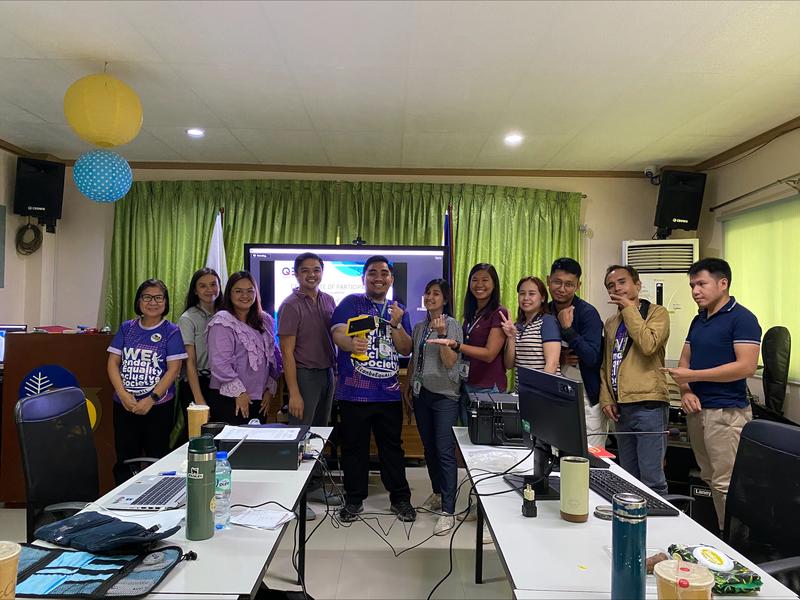
MGB Region XII Installation and Training for SciAps X200 Handheld XRF


Herzog Size Reduction and Katanax Fusion Machine: Elevating the Standards of Sample Preparation

QES offers a range of fusion machines (3-6 placers) for sample preparation, as well as Herzog equipment for size reduction such as crushers, pulverizers, presses, grinding machines, milling machines; fusion machine and drying ovens. The commitment to providing high quality and branded machinery ensures maximum use and optimized efficiency.

Spectro Ametek Xepos and Cube Benchtop ED-XRF: Exemplary Laboratory Solution

The cornerstone of QES Technology's laboratory solutions is the renowned Spectro XEPOS 5 benchtop XRF analyzer. This model is trusted by more than 95% of nickel ore mining laboratories in the Philippines for its unmatched sensitivity, accuracy, and precision, especially for light elements. The Spectro XEPOS 5 employs polarized and direct excitation technology, resulting in lower detection limits for a wide array of elements. With the addition of the Turboquant II software tool, the horizon expands to enable the analysis of unknown samples, both solids and liquids, setting a new standard for analytical excellence. The new model Spectro ED-XRF, Spectro Cube, is also the best in its class – midrange model. It offers cost-effectiveness without compromising on the quality – accuracy and precision. This year marks the first installation for Spectro Cube on Ni Ore mining application, which proved its quality and capacity in the industry.

SpectroScientific Onsite Oil Analyzer: Advanced Equipment Maintenance

In the realm of heavy equipment maintenance especially in the Mining Industry, the portable Spectro Scientific On-Site Fluid Analysis system empowers proactive machine condition monitoring based on oil analysis, a critical practice for maintaining the Mining Equipment Fleet. This will be very effective in cost-cutting and preventing downtime caused by damaged heavy equipment. QES was given an opportunity to share knowledge on machine and lubricant condition monitoring to extend equipment lifetimes and introduce predictive maintenance at power plants and mining industry using modern lubricant analyzers on the APM LEADCon 2023 held last October 7, 2023, at Citadines Bay City, Manila. This is an event for discussion of best practices for managing crucial assets.

QES Service Team

With a strategic service presence across prime locations including Pampanga, Manila, Cebu, and Surigao, QES service offices provide immediate and efficient support to their valued clients. The importance of fast and responsive service is their commitment by maintaining service offices in these key areas. This will ensure that clients receive prompt and reliable assistance whenever and wherever they need it.

To experience their solutions firsthand, visit their demo room at the head office located at Unit 507, Page 1 Building, Acacia Avenue, Madrigal Business Park, Ayala Alabang, Muntinlupa, 1780 Metro Manila, Philippines. For inquiries and consultations, feel free to reach out via email to qtpmarketing@qesnet.com or explore their website at www.qesnet.com and scan QR code below for their LinkedIn Page.
January 10, 2024

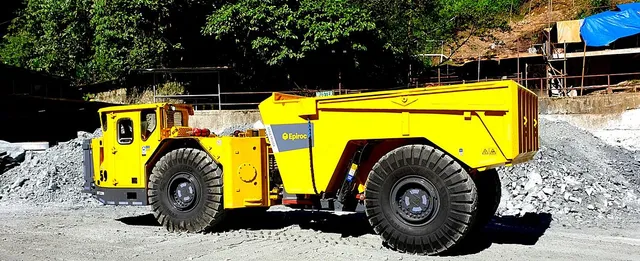
Underground mining operations demand robust and efficient machinery to ensure smooth and productive haulage. Epiroc’s Minetruck MT2200, a high-capacity truck designed to take on the toughest challenges from the depths of the earth, is revolutionizing the mining industry. Building upon the success of its predecessor, the Minetruck MT2010, this powerful workhorse from Epiroc is raising the bar by expertly managing even heavier loads of up to 22 tonnes.

We delve into valuable insights from Apex Mining Co., Inc. as it joins other global mining companies using the MT2200 in their Maco Gold Mine in Southern Philippines.

Epiroc's Commitment to Safety and Reliability:

The safety of mine workers is paramount, and the Minetruck MT2200 leaves no stone unturned in ensuring their well-being. Equipped with a rear-view camera, SAHR brakes, automatic locks, and alert lights, this truck sets the standard for safety in underground haulage. Epiroc emphasized the strategic placement of emergency shutdown controls and the activation of the automatic brake function when the cabin door opens, further highlighting their commitment to safety and reliability. Josel Retardo, Assistant Mine Division Manager, Technical at Apex Mining Co., Inc., was full of praise for Epiroc's safety measures, stating, "The Minetruck MT2200's safety features have been crucial in helping us achieve our production and backfilling targets while prioritizing the well-being of our workers." He further adds that the reduced hauling time has streamlined their mining cycle. Apex Mining Co., Inc. is fully satisfied with the performance of the Minetruck MT2200 and looks forward to expanding their fleet with more units in the future.
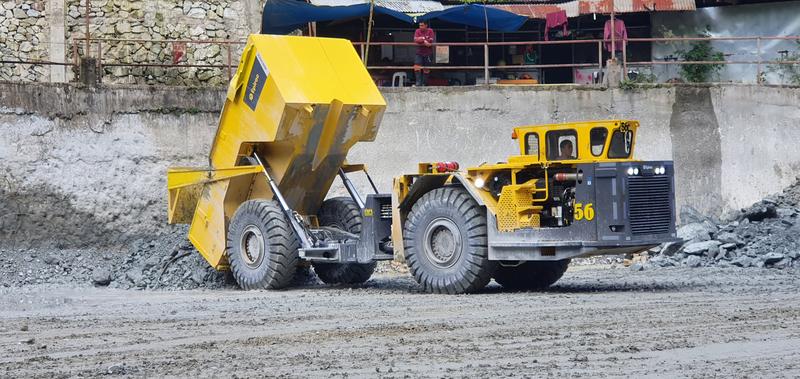
MT2200 has a 22-tonne capacity used in both underground production and backfilling operations.

Built on a Foundation of Experience and Reliability:

Naser Silongan, Area Manager at Apex Mining Co., Inc., highlights the value of Epiroc's swift and high-quality on-site maintenance services. This unparalleled support has solidified their partnership with Epiroc, ensuring reliable and uninterrupted mining operations. Effective communication between the two companies has been instrumental in their successful collaboration. Epiroc's experience in the mining industry shines through the design of the Minetruck MT2200. Sharing many features with its predecessor, the Minetruck MT2010, the MT2200's design has been perfected through years of work experience and customer feedback. "Epiroc's hands-on experience makes all the difference in the performance and reliability of the Minetruck MT2200. We trust Epiroc to deliver equipment we can depend on,” added Naser.

Meeting Operational Demands with Ease:

Johary Unggel, another Area Manager at Apex Mining Co., Inc., expresses delight in the Minetruck MT2200's impressive load capacity, perfectly aligning with their underground mining method and existing infrastructure. The seamless integration of this high-capacity truck has enhanced the overall efficiency of its mining operations. With the ability to transport heavy 22-tonne loads, the Minetruck MT2200 not only boosts productivity but also maximizes production capacity with its ease of going up ramps with its powerful and dependable powertrain. This efficiency has resulted in significant time and fuel savings, optimizing the entire mining process. Johary Unggel expressed satisfaction with the truck's productivity capabilities, saying, "The Minetruck MT2200's ability to reach high speeds on inclines has significantly optimized our production capacity, allowing us to reach our targets."
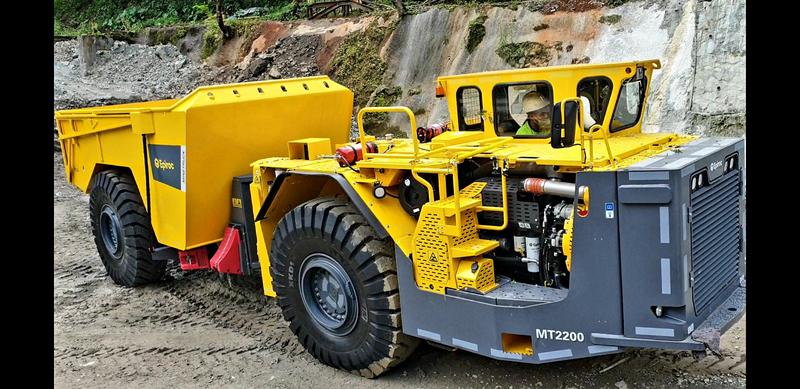
Epiroc’s on-site maintenance team provides Apex Mining with quality and swift services.

Operator Comfort: A Key to Enhanced Performance:

Recognizing the importance of operator comfort, Epiroc has ensured that the Minetruck MT2200's cabin provides a comfortable and ergonomic environment for the operator. Raymond Icalina, an experienced operator who has been operating several mine trucks in his career, praised the cabin's ergonomic design and thoughtful features, stating, "The cabin with low noise levels, air conditioning, and easy-to-reach controls has significantly improved my comfort and visibility during long shifts. This directly translates into improved productivity and job satisfaction." The reduction in noise levels, optimal air quality, and controlled temperature minimize operator fatigue, enhancing productivity and job satisfaction. Raymond appreciates the user-friendly touch-screen color panel and illuminated buttons that make supervision and safe operation a breeze.
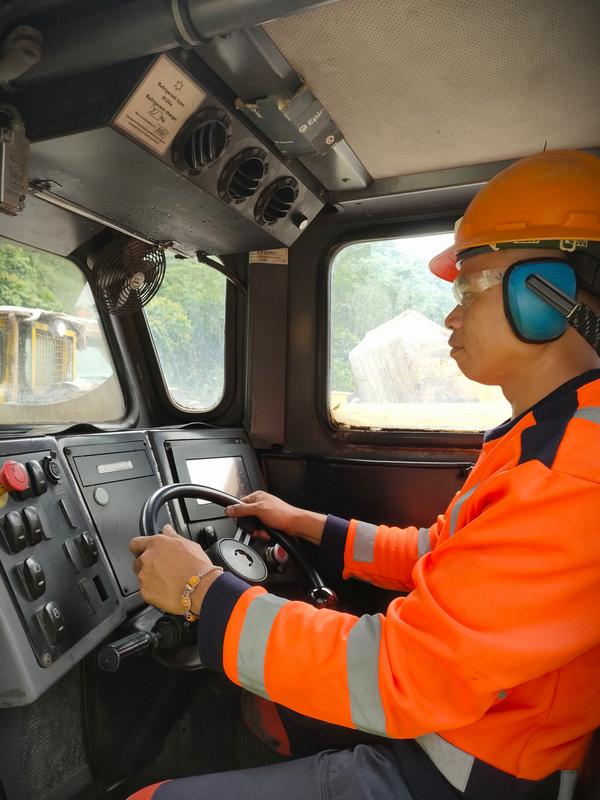
Epiroc’s ergonomically designed cabin built from customer feedback and years of experience for operator comfort and productivity.

Conclusion:

The Epiroc Minetruck MT2200 has revolutionized underground haulage with its emphasis on safety, productivity, and operator comfort. Apex Mining Co., Inc.’s testimony of increased efficiency, seamless integration into their mining methods, and Epiroc's dedicated service and partnership further solidify the Minetruck MT2200's position as the go-to choice for underground haulage. As Epiroc continues to innovate and evolve, it remains a pillar of support for the Philippine mining industry's progress.

Epiroc offers a comprehensive portfolio of mining equipment, including both diesel-driven and battery-powered drill rigs, loaders, ground support machinery, and underground vehicles. Their close collaboration with mining companies, such as Apex Mining Co., Inc., ensures that the equipment meets the specific needs and demands of the industry. Epiroc's dedication to customer satisfaction and hands-on approach has solidified its position as a trusted partner for mining operations worldwide.


References:

Epiroc. Minetruck MT2200. Retrieved 30 July 2023, from https://www.epiroc.com/en-ba/products/loaders-and-trucks/diesel-trucks/minetruck-mt2200.

Apex Mining Co. Inc. Maco Gold Mine. Retrieved 30 July 2023, from https://www.apexmines.com/home/our-business/maco-gold-mine/

Josel Retardo, personal communication, 21 July 2023

Eunice Cuntig, personal communication, 21 July 2023

Naser Silongan, personal communication, 21 July 2023

Johary Unggel, personal communication, 21 July 2023

Raymond Icalina, personal communication, 21 July 2023
December 18, 2023

The mining industry has long been a significant contributor to various economies globally, and the need for minerals continues to grow. However, the industry is facing various challenges that are slowing down its growth, with finance and environmental sustainability topping the list. Mineral mining companies require significant capital investment, and the lingering uncertainty in the markets has hit them hard. Additionally, the environmental impact of mining activities has forced governments to impose strict regulations on mining companies, making their operations costly. These challenges have constrained financing options for mining companies, coupled with tighter lending standards.

To remain competitive, mining companies must adopt strategies that balance financial resilience and environmental sustainability. These approaches offer competitive advantages, enabling companies to attract funding, reduce operational inefficiencies, and improve their overall performance. By incorporating responsible environmental practices, companies can optimize operational efficiencies while reducing environmental damage.

Moreover, mining companies that prioritize safety measures and put in place sustainable social practices attract more investments. Investors and banks are increasingly prioritizing the Environmental, Social, and Governance (ESG) factors when evaluating investment opportunities. Mining companies that demonstrate responsibility for the employees and communities and adhere to safety measures attract ethical and sustainable financial institutions, who are willing to provide long-term funding solutions.  

Incorporating sustainable environmental practices and safety measures in mining operations is crucial to maintaining a positive environmental footprint while promoting the health and safety of employees and surrounding communities. Importantly, environmentally responsible mining practices mitigate risks that could lead to substantial financial setbacks.

Mining companies must demonstrate their commitment to sustainability through transparent reporting and adherence to environmental regulations, and through initiatives targeting climate change adaptation, renewable energy sourcing, zero waste and zero emissions. These companies must also prioritize their social responsibilities, making significant investments in community development programs. In doing so, mineral mining companies improve their social license to operate, thereby creating spaces for bonding and partnering with surrounding communities while retaining their social credibility.

Attracting funding for the mining industry requires a multi-dimensional approach that includes leveraging innovation, effectively managing risks, and building strong relationships with stakeholders. Minimizing costs attributed to reclamation and remediation efforts while reducing externalities associated with environmental degradation leads to financial savings, increased economic viability, and hence, more extensive potential for attracting investors.

Sustainability practices offer unparalleled competitive gains. Responsible metals production of a country is on the agenda of both governments and communities who expect business to create and equally distribute shared value when taking care of its precious and fragile nature.

DMT offers a wide range of ESG services and innovation projects in the areas of raw material extraction, electromobility, smart mining, water management and energy. DMT can help elaborate strategy, management approach and business model for new development projects which can address all stakeholders needs, including local communities, governments, clients and investors.

DMT is now proudly working in Chile and other countries of Latin America within the mining industry, creating sustainable value for its clients. Together with DMT, mining companies can become compliant with highest international standards.

December 18, 2023

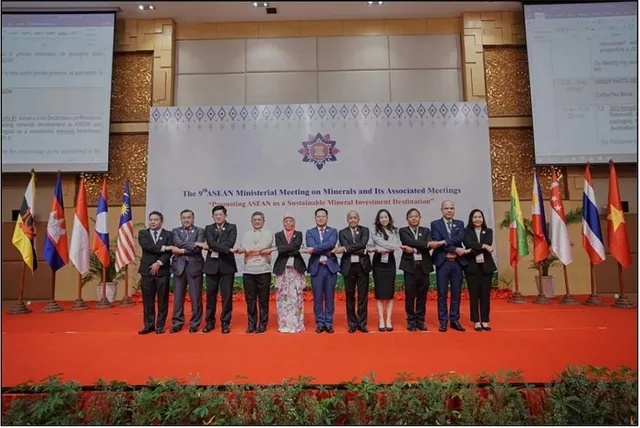
As the Philippines’ leading government agency for mining and geosciences, the Mines and Geosciences Bureau (MGB) joined in the 9th ASEAN Ministerial Meeting on Minerals (AMMin) and 23rd ASEAN Senior Officials on Minerals Meeting (ASOMM) that took place in Phnom Penh, Cambodia from November 21 to 23 under the theme "Advancing ASEAN as a Sustainable Minerals Investment Destination."

The AMMin, consisting of ASEAN Ministers responsible for minerals, is the highest policy-making body for ASEAN cooperation in the sector.  AMMin sets the policy directions and meets on a biennial basis. The Ministerial Understanding established the future basis of cooperation which aimed to:

  1. develop the minerals sector to be an engine for greater economic growth and social progress in the ASEAN region;
  2. enhance trade and investment in the ASEAN minerals sector; and 
  3. promote environmentally sound and socially responsible mineral development practices. 

The ASOMM is the main operating arm of the AMMin and oversees the working groups that assist the Senior Officials in the development and implementation of sectoral policies as well as the work programs/plans under the four (4) ASEAN Minerals Cooperation Action Plan strategic areas. 

Four (4) Working Groups focus on implementing the sector’s four strategic areas of cooperation.  These are:

  • Working Group on Trade and Investments in Minerals (WGTIM);
  • Working Group on Sustainable Minerals Development (WGSMD); 
  • Working Group on Capacity Building on Minerals (WGCBM); and
  • Working Group on Minerals Information and Database (WGMID).

The 23rd ASOMM started with the ASEAN Secretariat (ASEC) presenting the highlights of the decisions and follow-up requirements from the ASEAN Summit, ASEAN Economic Community (AEC) Council, Committee of the Whole of the AEC (CoW), and other council affiliates. On the other hand, the Chairs of the WGTIM (Thailand); the WGSMD (Myanmar), the  WGCBM (Philippines represented by Dr. Karlo L. Queaño, OIC of the Lands Geological Survey Division-MGB); and the WGMID (Brunei Darussalam) reported key accomplishments for the 4th quarter of 2022 and 3rd quarter of 2023, following the action lines set for each program.

The Board of Judges (BOJ) Meeting for the 3rd ASEAN Mineral Awards (AMA) was also conducted in parallel to the 23rd ASOMM. T

he AMA aims to: promote environmentally and socially sustainable mineral development; improve the general perception image of the mineral industry; disseminate best practices in the mineral sector (mining, transportation, processing); increase public awareness on best practices in environmentally and socially sustainable mineral development; strengthen regional cooperation and encourage sharing of expertise; and encourage private sector perception for community development. The said meeting discussed the rules and procedures of the scoring scheme of the presentations from the shortlisted companies; the presentation of shortlisted companies in front of BOJ; and the discussion on the outcomes of the tabulation of the scoring sheets.

During the high-level ministerial meeting (AMMin) last November 23, 2023, the country representatives agreed to jointly promote the ASEAN region to become a sustainable mining investment destination and to continue cooperation on improving mining development with governance. During the country report presentation, the Philippines, represented by Ms. Emma R. Sarne, Minister, and Consul General of the Embassy of the Philippines in Cambodia, highlighted the immense potential of the mining industry to become a major economic driver for the Philippines and Southeast Asia and the country’s efforts and plans aimed to ease doing mine-related business as it also transitions to adopting green technology.

With the Plus Three Countries (China, Japan and the Republic of Korea), the Meeting also welcomed the adoption of the ASEAN+3 Minerals Cooperation Work Plan 2022-2025, which serves as a blueprint to intensify cooperation between ASEAN and the Plus Three Countries in sustainable minerals development and in supporting the development of new strategies and effective tools for collecting and processing data for the ASEAN Mineral Information System.

Finally, the event was concluded with the awarding of the winners of the 3rd AMA during the AMMin Gala Dinner. The awardees include one (1) from Brunei Darussalam, one (1) from Cambodia, four (4) from Indonesia, three (3) from Lao PDR, two (2) from Malaysia, and three (3) from the Philippines.

November 27, 2023

The Department of Environment and Natural Resources (DENR) is set to revise guidelines for the Social Development and Management Programs (SDMP) of mining firms in the Philippines to align these with Sustainable Development Goals (SDGs) and guarantee enduring benefits for host communities, extending beyond the life of the mining operations.

According to DENR Undersecretary for Integrated Environmental Science Carlos Primo David, consultations with the mining sector are ongoing to incorporate provisions in the SDMP that promote responsible business actions to achieve the SDGs. He underscored the need to make existing SDMP initiatives more strategic in alignment with the SDGs, which are integrated into the Philippine Development Plan for 2023-2028.

David clarified that the SDMP guidelines would not be revised entirely, but will include additional provisions based on stakeholder consultations. Consultation with the community relations officers of mining companies was held on Nov. 16, 2023.

“The whole world has agreed to adopt the SDG in 2015. Therefore, the SDMP—its whole framework, should be aligned with the SDG. Hopefully, the revised SDMP for next year would align its programs towards achieving SDG goals, given the newly proposed guidelines” David said.

SDGs are 17 interlinked goals adopted by all United Nations Member States in 2015 as a global call to address poverty, inequality, climate change, environmental protection, peace, and justice. Comprised of 169 specific targets, the SDG serves as a global blueprint to end extreme poverty, reduce inequality, and protect the planet by 2030.

On the other hand, the SDMP is defined as a comprehensive five-year plan aimed at improving the living standards of host and neighboring communities. It is mandated under Republic Act No. 7942, or the Philippine Mining Act of 1995, which is implemented through DENR Administrative Order (DAO) No. 2010-21, or the Revised Implementing Rules and Regulations of the Philippine Mining Act of 1995.

SDMPs outline objectives to boost the economic contributions of mineral resources while safeguarding the environment, supporting affected communities, and developing local scientific and technical resources. The goal of SDMPs is to create responsible, self-reliant, and resource-based communities capable of managing community development programs independently.

“The SDMP is a program that is unique to the Philippine mining industry, and we should be very proud of it. In all mining activities that we should be doing, this is something that we should be proud of,” David said, noting that although there are SDMP-accredited activities that align with certain SDGs, there are several additional SDGs that the SDMP does not currently fulfill. For instance, improvements in living standards should be sustained even after mining operations cease, and communities should transition to alternative livelihoods, reducing dependence on mining income.

By law, mining contractors and permit holders are required to allocate 1.5% of operating expenses to the SDMP. Of the amount, 75% must be spent on community-development programs; 15% on mining technology and geosciences advancement programs; and 10% on information, education and communication program.

From 2002 to 2027, the total approved SDMP commitment reached P28 billion, with P17.7 billion allotted for 2002-2022. So far, the reported SDMP expenditure for 2002-2022 is P13.2 billion, with potential for increased disbursement in the future. SDMP activities include livelihood programs, educational support, health and medical assistance, public infrastructure, and socio-cultural and religious support.

David emphasized the importance of maximizing the impact of SDMP initiatives, ensuring they have a lasting effect. For SDG Goals 1 (No Poverty) and 2 (Zero Hunger), companies should focus on reducing maternal and neonatal mortality by providing healthcare access, education, and resources for pregnant women. SDMP projects could also include neonatal facilities and transportation for complicated pregnancies.

The DENR is also looking into inclusion of small-scale miners into the SDMP, to capacitate small miners and enhance resilience in mining communities.


Article courtesy of the DENR

November 23, 2023

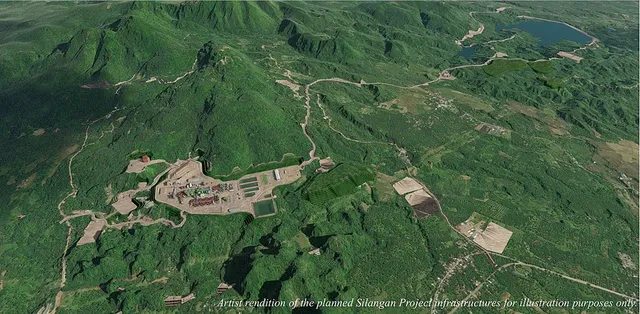
Silangan Mindanao Mining Co., Inc., a wholly owned subsidiary of Philex Mining Corporation, signed a syndicated debt facility, led by BDO Capital and Investment Corporation, in simple ceremonies in Pasig City.

Present during the signing of the Omnibus Loan and Security Agreement (OLSA) were the executives of the Company, led by its Chairman Manuel V. Pangilinan and its President and CEO Eulalio B. Austin, Jr., other executives of Silangan Mindanao Mining Co. Inc. as well as executives of the Lenders, namely Union Bank of the Philippines, Security Bank Corporation and Bank of the Philippine Islands, and BDO Capital and Investment Corporation as lead arranger.

According to Philex President and CEO, Eulalio B. Austin Jr., the signing of the OLSA for the US$100 million debt facility is another positive milestone to support the ongoing development of the Silangan Project.

“All these would not have been made possible,” Austin added, “without the favorable climate for mining that the administration of President Ferdinand “Bongbong” Marcos Jr. had created.”

“Our Stock Rights Offer (SRO) last year raised net proceeds of Php2.6 Billion,” according to Romeo B. Bachoco, Philex Senior Vice-president and CFO. “We used the proceeds to commence the development of Phase 1 of the Project. Phase 1 of the Silangan Project, which covers the Boyongan Ore Deposit, has an estimated mine life of 28 years based on our declared Mineable Reserves of 81 Million tonnes at 0.67% Copper and 1.13 grams/tonne Gold, containing an estimated recoverable Copper of 993 Million Pounds and 2.8 Million Ounces of Gold.”

Development works continue in the Silangan Project with the ongoing underground tunneling works, passing the 210 meters mark or about 35% of the distance towards the ore body. Clearing works and access road to the Tailings Storage Facility (“TSF”) area are nearing completion with the issuance of the permit by the Municipality of Sison, Surigao del Norte for the construction of the TSF. Management is in the final stages of evaluating the proposals and is set to award the contract for the Tailings Storage Facility as well as for the process plant under an EPcm arrangement.

The Silangan Copper and Gold Project touted as one of the Big Three mining projects in the country is targeted to commence commercial operations by first quarter of 2025.

November 20, 2023

Listed natural resources development firm Nickel Asia Corp. (NAC) (PSE: NIKL) announced its unaudited financial and operating results for the nine-month period ended September 30, 2023.

During the period, the Company recorded an attributable net income (net of minority interest) of P3.6 billion, down 47 percent from P6.9 billion year-on-year. This is on the back of lower nickel ore prices due to the increase in Indonesian nickel production. Further, NAC registered a loss of P379.8 million from its combined equity interests in the two HPAL plants against a profit of P1 billion the year prior due to lower nickel and cobalt prices year-on-year.

Likewise, revenues from sale of ore declined by 15 percent to P16.8 billion from P19.9 billion in the same period last year. Operating mines sold a combined 13 million wet metric tons (WMT) of nickel ore, an improvement of 5 percent compared to the same period the year prior.

The Company exported 7.3 million WMT of saprolite and limonite ore at the average price of $29.15 per WMT during the period against 6.7 million WMT at $38.87 per WMT in the previous year.

Additionally, the Company delivered 5.7 million WMT of limonite ore to the Coral Bay and Taganito HPAL plants, realizing an average price of $10.53 per pound of payable nickel for the nine-month period. This compares to 5.8 million WMT at $11.66 per pound of payable nickel in the same period of the previous year.

As a result, the weighted average nickel ore sales price during the period decreased by 21 percent to $23.24 per WMT from $29.46 per WMT last year. The Company realized P55.64 per US dollar from nickel ore sales, a 3-percent increase from P54.22 year-on-year.

The group’s consolidated earnings before interest, taxes, depreciation, and amortization (EBITDA) amounted to P8.5 billion, a 31-percent decline from the same period last year. This decline was due to the lower revenues and losses incurred from the company’s combined equity interests in the two HPAL plants. It was also due to the higher production volume, which was tempered by a 7 percent reduction in cost per WMT resulting from productivity measures.

“We are seeing a recovery in nickel ore prices since bottoming out in the second quarter due to the recent tightening in Indonesian nickel ore supply. Meanwhile, China’s economy continues to recover with third quarter GDP growth at 4.9 percent, exceeding consensus estimates and indicating that recent policy measures are aiding its recovery. We believe that nickel ore prices will further recover until the end of the year due to the circumstances surrounding Indonesia’s nickel ore supply and China’s economy,” said Martin Antonio G. Zamora, President and CEO.

Renewable Energy

Emerging Power, Inc.’s (EPI) subsidiary, Jobin-SQM Inc. (JSI), increased its electricity generation by 36 percent to 106,032-megawatt hours and revenues by 34 percent to P529 million during the nine-month period, operating at 100-MWp compared to the same period from last year of 62-MWp. JSI is currently constructing an additional 72-MWp solar farm in its existing Sta. Rita site and is on track to go online by the end of 2023.

JSI’s EBITDA margin remains strong at 84 percent, with EBITDA rising by 34 percent to P442 million compared to the same period last year.

Furthermore, the pre-development activities for EPI’s second long-term lease agreement with Subic Bay Metropolitan Authority is expected to be completed by year-end while the construction of a 145-MWp solar plant is expected to begin thereafter.

Furthermore, Greenlight Renewables Holdings, Inc., EPI’s joint venture with Shell Overseas Investments B.V., has started the construction of its first project located in Leyte for the first phase of a 120-MWp solar plant in the third quarter of 2023.

Special Cash Dividend

The Company’s Board of Directors approved the declaration of a special cash dividend of P0.07 per share of common stock, payable on Dec. 7, 2023, to shareholders of record on Nov. 24, 2023.