

September 30, 2026

Australian-listed Celsius Resources Ltd. reported a net loss of A$23.38 million for the year ended June 30, 2026, as the company continued to advance its Maalinao-Caigutan-Biyog (MCB) Copper-Gold Project in the Philippines amid financing and legal challenges.

The loss attributable to the consolidated entity widened from A$7.57 million in the previous year, while total comprehensive loss increased to A$24.4 million from A$7.17 million, according to the company's 2026 annual report. 
Celsius said its principal activity during the year remained mineral exploration and project development in the Philippines, with the MCB project continuing to be its primary focus.

Key developments included the completion of an approximately A$9.3 million equity raising, an updated mineral resource estimate and maiden ore reserve estimate for MCB, completion of a definitive feasibility study, and continued work on the project's development. 

The company said it issued 465 million shares at A$0.02 each as part of the equity raising, along with 232.5 million free-attaching options. The proceeds are being used for corporate working capital, project compliance activities, exploration at the Botilao project and legal and other costs associated with its dispute involving Makilala Mining Company Inc. (MMCI). 

MCB project advances

Celsius reported a 2012 JORC Code-compliant mineral resource estimate for MCB of 343 million metric tons grading 0.46 percent copper and 0.12 grams per metric ton of gold, containing 1.6 million metric tons of copper and 1.4 million ounces of gold.

A maiden ore reserve estimate released in December 2025 comprised 130.2 million metric tons grading 0.66 percent copper and 0.21 grams per metric ton of gold, containing 856,000 metric tons of copper and 891,000 ounces of gold. 

The definitive feasibility study released in January 2026 outlined a 35.3-year mine life, with an initial capital requirement of US$276 million.

For the life of the mine, the study estimated average annual copper concentrate production of 66,000 metric tons, total copper recovery of 1.234 billion pounds and total gold recovery of 507,000 ounces.
The study estimated a post-tax net present value of US$771 million at an 8-percent discount rate and a post-tax internal rate of return of 24.1 percent. 

Celsius said work continued on underground mine development, the proposed main access road, procurement for an engineering, procurement and construction contract for the processing plant, and evaluation of power supply options. 

Ownership dispute clouds project

The company is also dealing with an unresolved ownership dispute involving MMCI, which holds the mineral production sharing agreement for the MCB project.
Under agreements reached in 2023, Sodor Inc. was to acquire a 60-percent legal interest in MMCI for about US$5 million, while PMR Holding Corp. was to subscribe for shares in PDEP Inc., the proposed processing company, for about US$38 million.

The combined US$43 million payment was due by Feb. 16, 2026. Celsius said the payment was not made by the deadline and subsequently notified Sodor that its MMCI shares should be relinquished under the agreement. The dispute has since been referred to arbitration.

The situation escalated after Equinaire Holdings Ltd., a wholly owned subsidiary of India's Kiri Industries Ltd., issued notices seeking foreclosure over Celsius' 40-percent interest in MMCI.

A Philippine court denied Celsius' petition for interim protection, while emphasizing that the denial did not determine whether an event of default had occurred or whether Equinaire was entitled to foreclose.

On Sept. 8, Equinaire proceeded with a public auction and submitted a US$5.01 million credit bid. With no other registered bidders or bids, Equinaire was declared the winning bidder. Celsius continues to dispute the foreclosure and intends to pursue appeals and arbitration. 

Focus shifts to other Philippine projects

Celsius also signed a binding agreement in June to sell its 95-percent interest in the Opuwo Cobalt-Copper Project in Namibia to Chinalco (Xiong'an) Mining Corp. Ltd. for total consideration of US$15 million.
The transaction remains subject to conditions precedent and is targeted for completion before Dec. 29, 2026. Celsius said the sale would allow it to increase its focus on its Philippine copper-gold portfolio and provide a source of near-term funding. 

The company has also renewed its focus on the Sagay Copper Project in Negros Occidental. The project covers about 1,780 hectares and has a mineral resource estimate of 312 million metric tons grading 0.39 percent copper and 0.11 grams per metric ton of gold.

Celsius said it intends to develop Sagay in two phases, beginning with a shallow supergene copper deposit and potentially followed by development of a deeper copper-gold porphyry deposit, subject to community support and further technical studies. 

The company also renewed the exploration permit for its Botilao Copper-Gold Project in the Cordillera Administrative Region in February 2026.

September 29, 2026

Australian electrical infrastructure partner CE Group is expanding its regional focus into the Indo-Pacific, building on its established operations and project delivery experience across the Pacific.

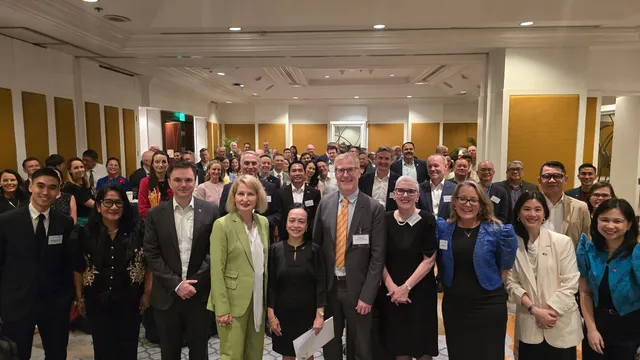
CE Group has taken another step in its regional growth strategy, joining the Australian delegation at the Asian Development Bank Business Opportunities Fair 2026 in Manila and contributing to discussions around the future of sustainable infrastructure across Asia and the Pacific.

The move reflects a broader direction for the Australian electrical engineering and infrastructure business: taking the experience developed across Australia, Papua New Guinea, Solomon Islands and Fiji into the wider Indo-Pacific market.

For CE Group, that expansion is closely connected to the infrastructure challenges already familiar across the Pacific-energy security, resilient infrastructure, remote delivery, local capability and the need for stronger partnerships between government, development institutions, industry and communities.

Infrastructure investment is moving

The scale of planned investment across the Pacific demonstrates the opportunity ahead.
At the Manila forum, ADB outlined a US$3.652 billion active Pacific portfolio, a further US$3.686 billion program for 2026–2029, and a US$469 million procurement pipeline for 2026–2027.     

Transport, energy, water and urban infrastructure represent some of the largest areas of current ADB investment in the Pacific. But the regional conversation is increasingly extending beyond the infrastructure asset itself.

Climate resilience, local participation, workforce capability, supply chains and long-term economic value are becoming central considerations in how infrastructure is planned and delivered.

These are areas where CE Group sees a direct connection between its Pacific experience and the wider Indo-Pacific market.

Pacific experience provides the foundation

Delivering infrastructure in the Pacific requires a different operating model.
Distance, logistics, workforce availability, local supply chains and the capacity to operate in remote environments can influence every stage of delivery.

For CE Group, regional growth has therefore been built around developing capability on the ground rather than approaching the Pacific as an extension of the Australian market.

Its regional footprint now includes operations across Papua New Guinea, Solomon Islands and Fiji, supported by its Australian engineering, design, manufacturing and construction capability.

That experience is shaping the company's approach to the Indo-Pacific.

CE Group's focus is not simply entering new countries. It is building the relationships, local capability and delivery networks required to operate responsibly and effectively within them.

Joining the infrastructure conversation earlier

Participation in the ADB Business Opportunities Fair also placed CE Group within a much broader conversation about where regional infrastructure investment is heading and how industry participates.

ADB's Pacific program specifically examined development priorities for the next three to five years, emerging investment areas and where greater industry capability and innovation will be required.    

For CE Group, engagement at this level represents an important evolution.

The business is moving beyond responding to individual project opportunities and engaging earlier with the governments, development institutions, delivery partners and industry networks influencing the region's infrastructure pipeline.

That includes understanding where investment is being directed, the infrastructure priorities of individual countries and the role Australian capability can play alongside local and regional partners.

Beyond Borders

CE Group's Indo-Pacific direction builds on a straightforward principle: infrastructure should create value beyond the asset being constructed.

Local employment, skills development, stronger supply chains and enduring in-country capability are increasingly important measures of successful regional delivery.

As investment in energy and critical infrastructure continues across the Indo-Pacific, CE Group intends to bring its electrical infrastructure capability and practical Pacific delivery experience into those conversations.

The geography may be expanding, but the approach remains consistent-work with local people, understand the operating environment and build partnerships capable of delivering infrastructure that lasts.

Beyond Borders. Progress Through Partnership.

September 25, 2026

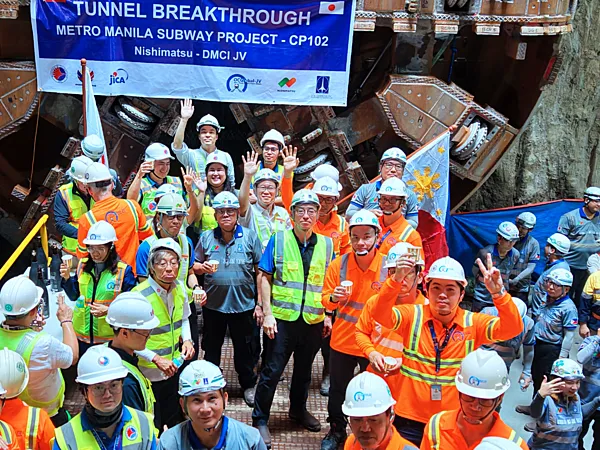
The Metro Manila Subway Project (MMSP) has achieved its first tunnel breakthrough, connecting the North Avenue and Quezon Avenue stations in Quezon City in a key milestone for the country’s first underground railway system.

The breakthrough was completed Sept. 14 under Contract Package 102 (CP 102), when a tunnel boring machine (TBM) broke through the concrete diaphragm wall of the Quezon Avenue Station after excavating a 1.12-kilometer southbound tunnel from the south end of North Avenue Station.

CP 102, undertaken by the Nishimatsu-DMCI Joint Venture (NDJV), covers about 3.1 kilometers of subway tunnels and the construction of the Quezon Avenue and East Avenue stations.

The diaphragm wall at Quezon Avenue Station was constructed using fiberglass rebar instead of conventional steel reinforcement. DMCI said the design was intended to prevent unnecessary damage to the TBM cutterhead during the breakthrough.

President Ferdinand Marcos Jr. later visited the Quezon Avenue Station to inspect the breakthrough and the tunneling works.

The completed southbound tunnel connects North Avenue and Quezon Avenue stations, with tunneling continuing toward East Avenue Station.

NDJV officials present at the milestone included Nishimatsu Construction Co. Philippine Branch Office General Manager Keiji Matsushita, MMSP CP 102 Project Director Osamu Iwata, DMCI Senior Vice President for Project Partnerships Rebecca E. Civil, DMCI Operations Director Dwight A. Ta-ala and MMSP CP 102 Deputy Project Director Reynaldo T. Lazaro.

The breakthrough marks the first such achievement in the MMSP and highlights the joint venture's use of specialized engineering and construction techniques in building the subway.

The 33.1-kilometer MMSP will have 17 stations connecting Valenzuela City to Ninoy Aquino International Airport Terminal 3 in Pasay City. Once fully operational, the subway is expected to reduce travel time along the route from more than 1 hour and 30 minutes to about 41 minutes.

September 24, 2026

The Chamber of Mines of the Philippines (COMP) has condemned killings, intimidation and other forms of violence against individuals and groups opposed to mining operations, as the country remains the deadliest in Asia for land and environmental defenders.

“We do not support or endorse any acts of intimidation or direct harm to individuals or groups who disagree with mining operations,” COMP said in a statement.

The mining industry group said respect for human rights, health, safety and security of stakeholders is part of its advocacy for responsible and sustainable mining.

COMP said its members are expected to comply with laws requiring free, prior and informed consent (FPIC) and regular consultations with host communities and government authorities throughout the mining process.

The group said engagement with community leaders and advocates is intended to help ensure mining activities are conducted responsibly and that the benefits of mining are recognised by host communities and the country.

“We guarantee our full support and cooperation with proper authorities on any inquiry related to alleged acts of crime against persons or property,” COMP said.

The statement came after Global Witness reported that the Philippines recorded 12 killings of land and environmental defenders in 2025, the highest number in Asia. The figure also placed the Philippines and Honduras third globally, behind Colombia with 39 cases and Brazil with 26. 

Global Witness said six of the 12 victims in the Philippines were Indigenous people, three were small-scale farmers, one was a journalist and two were classified as other environmental defenders. Five of the killings were linked to the suspected involvement of members of the Philippine military, according to the watchdog. 

The 2025 figures mark the 13th consecutive year that the Philippines has been identified by Global Witness as the deadliest country in Asia for land and environmental defenders. 

Globally, Global Witness documented at least 124 killings of land and environmental defenders in 2025. It said mining and extractive industries were linked to 11 of the recorded killings worldwide, including four in the Philippines. 

COMP said it will cooperate with authorities in any investigation involving alleged crimes against persons or property.

September 24, 2026

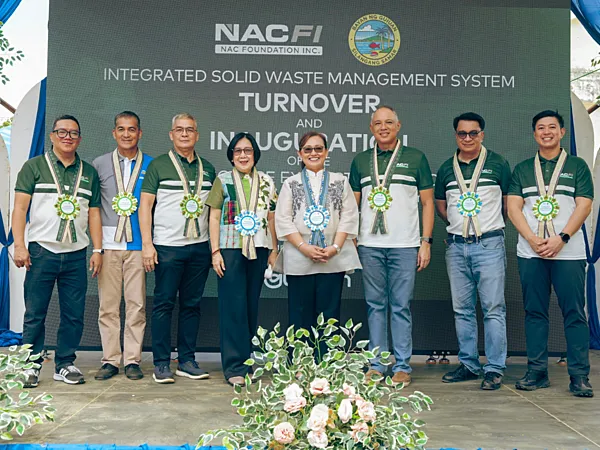
The NAC Foundation Inc. has donated a P25-million solid waste management facility to the Municipality of Guiuan as the local government seeks to reduce landfill waste and address limited options for waste disposal.

The Guiuan Resources Ecocycling, Extraction, and Neutralization (GREEN) Facility, located within the Guiuan Eco-Waste Management Center and Park, is now operational and equipped to recover recyclable materials, process organic waste and convert discarded materials into usable products.

The facility, donated through the NAC Foundation and Hinatuan Mining Corp.-Manicani, includes a conveyor system for waste segregation, a multipurpose shredder, glass crusher and pulverizer, concrete mixer and eco-brick maker.

“Through the NAC Foundation and Hinatuan Mining Corporation-Manicani, we hope that this new waste management infrastructure would help Guiuan turn waste into useful resources: rich compost for farm soils and sturdy eco-bricks and pavers that can help build local projects,” Nickel Asia Corp. President and CEO Martin Antonio G. Zamora said.

NAC Foundation also provided the electrical line required to operate the machinery after the existing capacity of the Guiuan Eco-Waste Management Center and Park was found insufficient to support the equipment.

Guiuan generates an estimated 15,824 kilograms of waste daily, based on the Department of Environment and Natural Resources’ waste generation rate of 0.3 kilograms per person per day.

Mayor Analiz Kwan-Gonzales said the municipality faces not only growing waste volumes but also limited options for final disposal.

“Guiuan has transformed significantly. We have become one of the emerging business and economic centers of the province, and we have been recognized among the top 10 fastest-growing economies in the region. More progress, more people, more businesses, more industries, more tourists, all equal to more waste,” Gonzales-Kwan said.

She said the municipality’s geology presents an additional challenge because much of Guiuan is characterized by sinkhole-prone areas.

As a result, the DENR’s Environmental Management Bureau has not recommended establishing a conventional sanitary landfill in the municipality, she said.

“This integrated solid waste management system is designed to address solid waste management at a larger scale,” Gonzales-Kwan said.

The facility is also intended to help Guiuan implement Republic Act No. 9003, or the Ecological Solid Waste Management Act of 2000, which requires local governments to establish systems for waste reduction, segregation, collection, recycling and disposal.

The municipal government is urging households, businesses, institutions and barangay local government units to comply with waste segregation requirements and its “no segregation, no collection” policy to ensure the facility operates effectively.

The waste management initiative comes as Guiuan also strengthens community clean-up and dengue prevention efforts.

Gonzales-Kwan issued Executive Order No. 07-94-2026 directing the municipality’s 60 barangays to intensify clean-up activities and dengue prevention measures following reported dengue cases in July.

“Real, lasting change happens at the LGU level, but to sustain it requires a village. That is all of us,” Zamora said.

“Through this partnership, we hope to empower Guiuan to not only envision a resilient future, but to take decisive, actionable steps toward building a truly sustainable community,” he said.

September 22, 2026

Professional services company GHD has appointed Patricia Tirados as Director, Energy & Resources, expanding its leadership capability in response to growing demand across key infrastructure sectors in the Philippines.

In her expanded role, Tirados will lead multidisciplinary teams supporting clients throughout the project lifecycle, from planning and design through project delivery. Her appointment reflects the increasing need for integrated approaches to energy and resources projects as clients navigate changing infrastructure investment and sustainability priorities.

Tirados brings almost two decades of experience spanning resource development, power generation and electricity supply, working with leading local and international organizations. Her multidisciplinary background includes client leadership, regulatory, project management, technical, commercial and digital disciplines, enabling her to help clients solve complex challenges and create lasting value for communities.

Tirados also serves as Energy Co-Chair of the American Chamber of Commerce of the Philippines and as a Board Trustee of the PhilHydro Association. In these roles, she helps shape the industry, support policy development, and forge cross-sector and regional partnerships that advance economic growth and industry progress.

“The energy and resources sector stands at a defining moment that will shape the future for decades to come. Asia is at the heart of this transformation, accounting for more than half of the world’s energy consumption and leading the clean energy manufacturing and critical minerals supply chain. Within this dynamic region, the Philippines plays a pivotal role, home to some of the world’s largest critical mineral reserves, rising energy demand, and growing appetite for energy investments. I look forward to working with our clients and partners to deliver practical and sustainable outcomes across energy, resources and infrastructure projects,” Tirados said.

Simon Terry, General Manager – Philippines, said: “Patricia’s appointment strengthens our leadership capability in the energy and resources sector at a time of rapid transformation and significant investment. Her strategic leadership, proven growth track record, client success focus and broad industry experience will enable us to deliver greater value to clients as they navigate emerging opportunities and evolving challenges in a rapidly changing market.”

About GHD

GHD is a leading professional services company operating in transportation, water, energy and resources, environment, property and buildings. Committed to making water, energy and communities sustainable for generations to come, GHD delivers advisory, digital, engineering, design, environmental and construction solutions to public and private sector clients.

Established in 1928 and privately owned by its people, GHD’s network of more than 12,000 professionals spans 160 offices across five continents.

September 22, 2026

Bangkok – RX BITEC (Thailand) Co., Ltd. continues its long-standing commitment to the metalworking industry, marking more than four decades of supporting industrial development and driving Thai businesses toward a new era of manufacturing with “METALEX 2026,” the No. 1 Machine Tool and Metalworking Exhibition Serving ASEAN. Celebrating its 40th anniversary under the theme of “Infinite Possibilities,” METALEX 2026 will bring together world-class machinery, technologies, and innovations to help shape the future of Thailand’s manufacturing industry and drive sustainable growth.

METALEX 2026 will take place from 18–21 November 2026, from 10:00–18:00 hrs, at BITEC, Bangkok. The exhibition will occupy 55,000 sq.m. of all exhibition halls from Halls 98–104, showcasing advanced manufacturing technologies and innovations from more than 3,000 brands from 50 countries, alongside international pavilions from leading industrial nations and regions including China, Germany, Italy, Japan, Korea, Malaysia, Singapore, Switzerland, and Taiwan.

Exploring End-to-End Manufacturing Innovations and Future Technologies

METALEX 2026 will bring together a comprehensive range of Machine Tools, Metrology, Tools and Tooling, Sheet Metal working technologies, Wire & Tube, Welding, Sensor, Robots, Factory Automation, Pumps & Valves, as well as AI.

A key highlight of this year’s event is “FUTURE TECH @ METALEX,” a dedicated zone showcasing future-ready innovations across eight technology categories. The technologies have been rigorously selected and screened by researchers and experts from King Mongkut’s Institute of Technology Ladkrabang (KMITL) and the Thai - German Institute (TGI), with the aim of broadening perspectives and enhancing manufacturing capabilities. The eight categories include:

  1. Smart, AI-Driven & Connected Precision Engineering
  2. Advanced Machining, Process Capability & Manufacturing Enablement
  3. Human-Machine Collaboration, Workforce & Skills
  4. Productivity & Cost Optimization
  5. Automation, Robotics & Autonomous Operations
  6. Intelligent Resource, Energy & Sustainability Management
  7. Safety, Reliability & Operational Resilience
  8. Future Materials & Tooling Innovation

Expanding Knowledge and Business Networks Without Limits

Beyond showcasing the latest machinery and manufacturing technologies, METALEX 2026 will offer a comprehensive program of activities designed to enhance knowledge and capabilities among industrial professionals.

The event will feature “METALEX TOMORROW,” an academic and industry-focused conference platform bringing together a diverse range of topics and forward-looking perspectives from thought leaders, policymakers, senior executives, and experts from Thailand and around the world.

Conference topics will cover key issues shaping the future of manufacturing, including smart technologies, AI, and sustainability. The event will also offer Business Matching Service, connecting metalworking professionals from ASEAN and around the world. These platforms will help entrepreneurs identify potential trade partners, explore new business opportunities, and build sustainable business collaborations.

Free Admission and Advance Registration Benefits

METALEX 2026 is open to all interested visitors free of charge. Visitors can conveniently pre-register via www.metalex.co.th to enjoy the following benefits:

  • General Visitors:
    Enjoy access to the exhibition throughout all four days and receive their visitor badge immediately at the venue without waiting in line, along with a free electronic industry newsletter.
  • Group Visitors (3 or more people from the same organization):
    Receive visitor badges immediately at the venue, access free industry news and updates, and enjoy an exclusive group photo opportunity for organizational publicity through the event’s media channels.

RX BITEC (Thailand) Co., Ltd. invites metalworking professionals, entrepreneurs, and interested visitors to be part of shaping the future of manufacturing, discover new ways to enhance business capabilities, and transform every challenge into “Infinite Possibilities” through cutting-edge machinery and future manufacturing technologies at METALEX 2026.

For more information and advance registration, visit www.metalex.co.th and join METALEX 2026, taking place from 18–21 November 2026 at BITEC, Bangkok.
September 18, 2026

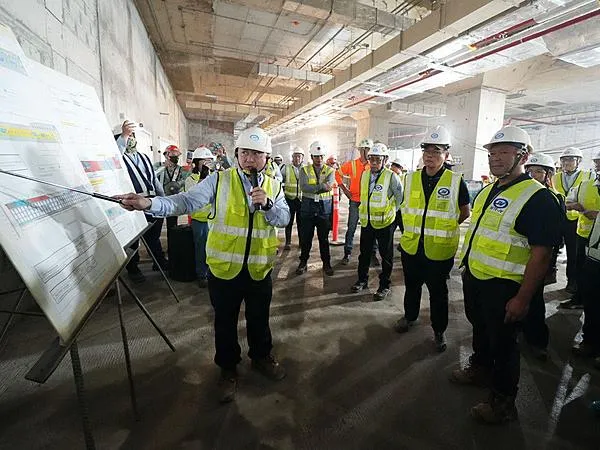
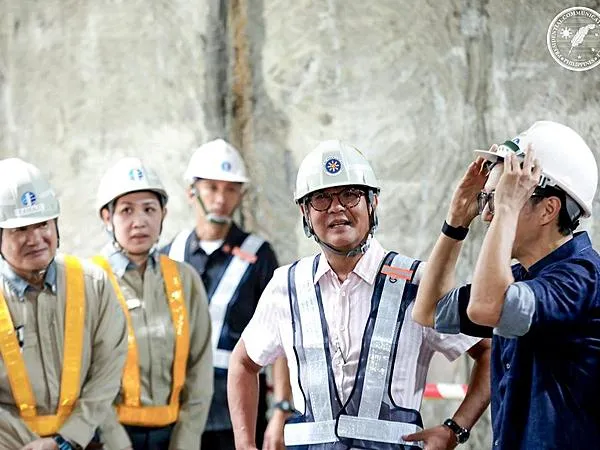
Transportary Secretary Banoy Lopez and Senate Finance Committee Chairman Sen. JV Ejercito on Thursday inspected major railway projects in Metro Manila, a day after President Ferdinand Marcos Jr. broke ground for the Metro Manila Subway Project (MMSP) Ninoy Aquino International Airport (NAIA) Station.

The inspection covered the ongoing construction of the North-South Commuter Railway (NSCR) and the Metro Manila Subway, as the government moves to accelerate rail projects aimed at improving mobility and easing traffic congestion.

Marcos has directed the Department of Transportation (DOTr) to speed up railway construction to ensure timely project completion and improve the daily commute of Filipinos.

Lopez said the DOTr was expediting construction of the two major rail systems to help commuters save travel time and improve productivity.

“Ang maganda dito na ipakita natin kay Sen JV na ang pagpro-protekta niya, kasamahan niya sa Senado at Kongreso, pagprotekta niya ng pondo ng NSCR at subway. Sen., meron po talagang nararating at kinahihinatnan. We have to push more,” Lopez said.

“Now, we really need this kind of project, itong mga railway, itong subway, itong NSCR,” he added.

Ejercito, meanwhile, assured the DOTr of continued Senate funding support for the projects, saying rail systems are critical modes of transportation that will benefit thousands of commuters.

“Sana ngayon tuloy-tuloy under my [Finance Committee chairmanship], that’s why I wanted to see it for myself to make sure that the funding will not be disrupted anymore para no more delays,” Ejercito said.

He said the goal was to see the NSCR and MMSP become operational as soon as possible, particularly for commuters in Metro Manila, Laguna and Pampanga.

During the inspection, Lopez and Ejercito visited the NSCR West Valenzuela Station and Operations Control Center, the MMSP depot and Quirino Station, and the Philippine Railway Institute (PRI).

They also inspected an NSCR eight-car train set with a capacity of at least 2,200 passengers per trip.

The NSCR and MMSP, both funded with support from the Japan International Cooperation Agency (JICA), are expected to improve connectivity across Metro Manila and nearby provinces while supporting economic activity beyond the capital.

Once operational, the 147-kilometer NSCR, with 35 stations, is expected to serve at least 800,000 passengers daily across Metro Manila, Central Luzon and Southern Luzon.

The 33-kilometer MMSP, meanwhile, is projected to serve about 519,000 passengers in its opening year.

The subway is expected to cut travel time between Valenzuela City and NAIA Terminal 3 to about 40 minutes, from the current estimate of one hour and 35 minutes.

Lopez and Ejercito were joined by Japanese Embassy Minister for Economic Affairs Yokota Naobumi, JICA Senior Representative Takanori Morishima, Transportation Undersecretary for Railways Timothy John Batan, Transportation Undersecretary for the Philippine Railways Institute Anneli Lontoc, and Assistant Secretaries Eduardo Danilo Macabulos and Paul Anthony Pangilinan.

September 17, 2026

Construction of the 33-kilometer Metro Manila Subway Project has reached nearly 60 percent completion, President Ferdinand Marcos Jr. said Wednesday as the government broke ground for the subway station at Ninoy Aquino International Airport (NAIA) Terminal 3.

“The whole Metro Manila Subway project has achieved nearly 60 percent overall progress, with construction activities underway across much of its alignment,” Marcos said during the groundbreaking ceremony.

The NAIA Terminal 3 station is part of Contract Package (CP) 109, which also includes the construction of connecting tunnels between Taguig City and Pasay City.

Once completed, the subway is expected to cut travel time between Valenzuela City and NAIA from about 1 hour and 30 minutes to 40 minutes.

Marcos said the project has reached two key milestones that would support its completion, including securing the right of way for the entire station area.

The project will also use underpinning technology from Japan, allowing construction to proceed beneath existing infrastructure while maintaining structural integrity.

“This progress reflects the cooperation of the government, the private sector, and all our other development partners,” Marcos said.

He called on contractors, engineers and workers to complete the project safely, efficiently and on schedule.

“I ask that you carry out this project safely, efficiently, and on time, with the quality that generations of Filipinos deserve,” Marcos said.

Right on track

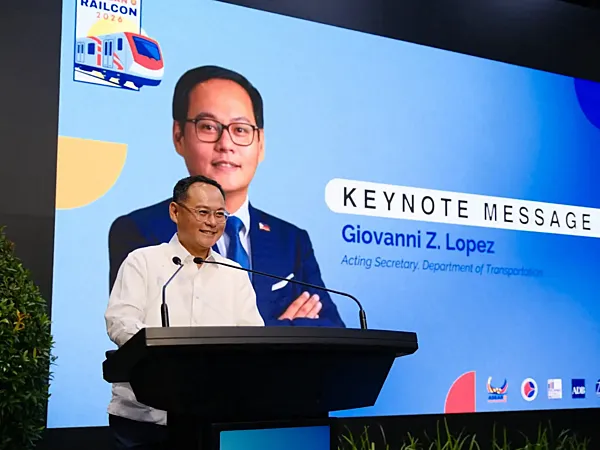
Department of Transportation (DOTr) Acting Secretary Giovanni Z. Lopez said the subway project remains on track for completion by 2031, with operations expected to begin the following year.

Funded by the Japan International Cooperation Agency (JICA), the subway will have about 17 stations and is projected to serve between 400,000 and 800,000 passengers daily once fully operational.

Lopez said only CP 108 remains under procurement. The package will cover the subway section connecting the new Senate building to Lawton in Taguig City.

The subway project was initially targeted for completion in 2027, but the timeline was later moved to 2029 and then to 2032 because of right-of-way issues.

Lopez said one of the most difficult right-of-way issues involved properties inside Corinthian Gardens subdivision in Quezon City.

He said the issue was resolved following the enactment of Republic Act 12289, or the Accelerated and Reformed Right-of-Way (ARROW) Act, last year.

“We no longer have a problem with that; the private owners have indeed agreed to a negotiated sale of their property,” Lopez told reporters in Filipino on the sidelines of the groundbreaking ceremony.

The Metro Manila Subway is intended to provide a high-capacity rail connection across Metro Manila and reduce travel times along one of the country's most congested corridors.

September 17, 2026

About 30 local and international companies have expressed interest in railway development projects of the Department of Transportation (DOTr), signaling private-sector interest in the government's pipeline of mass transport investments.

The companies participated in the DOTr's two-in-one Market Engagement Conference on Monday at the Asian Development Bank headquarters in Mandaluyong City.

The conference covered two projects: the Institutional Capacity Strengthening: Project Delivery Support for Railway Projects (CDC-1) and the North-South Commuter Railway New Clark City Extension (NSCR-NCC-Ex) Project's detailed engineering design and international checking engineer.

The initiative supports President Ferdinand Marcos Jr.'s directive to accelerate the completion of mass transportation projects.

Acting Transportation Secretary Giovanni Lopez said expanding the country's railway network would improve regional connectivity and the movement of people and goods.

"We thank the companies showing interest in helping us further improve the rail sector for more comfortable and faster travel for passengers," Lopez said.

"We need to add more trains and improve the capabilities of the people behind the projects so we can complete them sooner," he added.

DOTr Assistant Secretary for Railways Infrastructure and Public-Private Partnerships Eduardo Danilo Macabulos said the strong participation demonstrated private-sector confidence in the agency's procurement processes.

"This shows two things. First, many companies and consultants in the Philippines and abroad are ready to help us implement the projects," Macabulos said.

"Second, there is still trust from the private sector to participate in our projects because they believe we can conduct procurement transparently and fairly, and that the DOTr has the capacity to continue our railway pipeline next year," he added.

Macabulos said railway projects would help ease traffic congestion while providing more comfortable transportation between Metro Manila and nearby provinces.

"At the Department of Transportation, we believe that the real answer to traffic is mass transportation," he said. "Our railways will ease the commute not only in Metro Manila but also in nearby provinces such as Pampanga and Laguna, extending to Tarlac."

Under the CDC-1 project, the consultant will help strengthen the institutional capacity of the DOTr's railway-sector project management offices in project delivery, performance management and capability development, according to the DOTr Rail Unified Project Management Office.

Meanwhile, the NSCR-NCC-Ex is an 18.1-kilometer railway extension that will include the construction of an additional station in New Clark City, Tarlac.

The proposed extension is intended to strengthen the transportation network and help ease traffic congestion in the Greater Capital Region by extending the North-South Commuter Railway farther north.

September 16, 2026

Shareholders of Dominion Holdings Inc. have approved the company's proposed merger with Indophil Resources Philippines Inc. and Sonar Holdings Inc., advancing a transaction that will bring control of the Tampakan Copper-Gold Project in South Cotabato into the listed company.

Dominion said the merger was approved during its annual shareholders' meeting on Sept. 14, along with a waiver of the rights or public offer by the majority of minority shareholders for the new Dominion shares to be issued to Indophil and Sonar shareholders.

Indophil and Sonar together hold 100 percent of the voting rights in Sagittarius Mines Inc. (SMI), the holder of the financial and technical assistance agreement covering the Tampakan project.

Under the approved transaction, Dominion will be the surviving entity. Following the merger, it will hold 100 percent of the voting rights and acquire controlling ownership in SMI. The assets, rights and liabilities of Indophil and Sonar will be transferred to Dominion in exchange for newly issued Dominion common shares.

Dominion said the merger is aligned with its previously disclosed strategy of becoming a holding company primarily invested in mining companies.

The company also said the exchange ratio has been fixed at book-to-book value, based on the audited interim financial statements of Dominion, Indophil and Sonar as of Aug. 31, 2026. The number of Dominion shares to be issued to the shareholders of the two companies will be disclosed in due course.

Capital increase

As part of the transaction, Dominion shareholders approved an increase in the company's authorized capital stock to P30 billion from P3.42 billion.

The enlarged capital will consist of 29.75 billion common shares with a par value of P1 each and 2.5 million preferred shares with a par value of P100 each. Shareholders also approved the denial of the pre-emptive right of existing stockholders.

The merger remains subject to approval by the Securities and Exchange Commission (SEC) and other applicable regulatory clearances.

Dominion said the parties will submit the relevant documents to the appropriate government agencies after the shareholder approval, with full implementation of the merger expected in the fourth quarter of 2026.

Tampakan transaction

The development follows the Philippine Stock Exchange's classification of the proposed merger as a backdoor listing because of the substantial change it would bring to Dominion's business.

The PSE has kept Dominion shares suspended while the company completes requirements under the Exchange's revised backdoor-listing rules. 

The Tampakan project is one of the Philippines' major undeveloped copper-gold projects. The transaction, however, concerns the corporate ownership and listing structure surrounding SMI and does not by itself constitute approval to begin mining operations at Tampakan.

Dominion had previously disclosed that the merger would support its transition toward a mining-focused investment portfolio.

The company is also separately building its mining portfolio. In August, Dominion disclosed plans involving a 20.43-percent stake in Atlas Consolidated Mining & Development Corp., while SM Investments Corp. has said it plans to transfer its roughly 34-percent Atlas stake to Dominion in 2027. 

The immediate next steps for the Tampakan-linked transaction are regulatory approvals and completion of the merger, rather than the commencement of mining operations.

September 16, 2026

Mining projects face numerous challenges, including difficult terrain, strict safety requirements, environmental monitoring, and the need for accurate operational reporting. To address these challenges, mining companies are increasingly adopting advanced geospatial technologies that enable them to collect high-quality data faster and more safely than ever before.

As the Philippine mining industry continues to evolve, companies are increasingly seeking technologies that can improve productivity, enhance safety, and provide accurate data for critical decision-making. Modern mining operations require more than traditional survey methods. They demand intelligent solutions that can capture, process, and deliver reliable information quickly and efficiently.

Recognizing these industry needs, QES Technology Philippines Inc. has strengthened its position as a trusted provider of geospatial and mining solutions through its partnership with CHCNAV, one of the world's leading manufacturers of surveying, mapping, positioning, and monitoring technologies. As an authorized distributor of CHCNAV products in the Philippines, QES provides mining companies with access to world-class solutions designed to support every stage of mining operations.

Founded in 2003, CHC Navigation (CHCNAV) is a global leader in geospatial, positioning, and navigation technologies. Headquartered in Shanghai, China, CHCNAV develops innovative solutions for surveying, mapping, mining, construction, marine, and agriculture industries. With operations in more than 140 countries and a reputation for delivering high-precision and cost-effective technologies, CHCNAV continues to support organizations worldwide in improving efficiency, safety, and data-driven decision-making.

As an authorized CHCNAV distributor in the Philippines, QES Technology Philippines Inc. provides local industries with access to CHCNAV's advanced portfolio of GNSS, LiDAR, UAV, laser scanning, hydrographic, and monitoring solutions, backed by professional technical support and after-sales service.

Through QES Technology Philippines, mining organizations can leverage CHCNAV's comprehensive portfolio of innovative solutions, ranging from drone-based LiDAR mapping systems and GNSS receivers to laser scanners, hydrographic survey equipment, and ground monitoring technologies. These solutions help improve operational efficiency while reducing time spent in the field.


CHCNAV X500 AND ALPHAAIR 9: REDEFINING AERIAL MINING SURVEYS

One of the most powerful technologies available for mining applications today is drone-based LiDAR mapping.

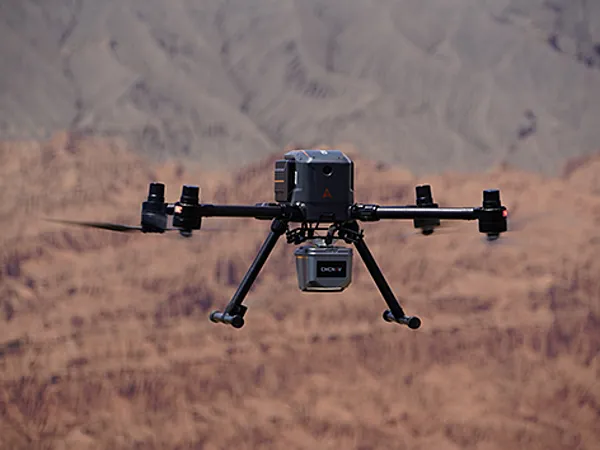
The CHCNAV X500 UAV combined with the AlphaAir 9 LiDAR system enables rapid collection of highly accurate terrain data over large mining sites.

The system captures dense three-dimensional point clouds, allowing surveyors to generate detailed topographic maps, monitor excavation progress, calculate stockpile volumes, and support mine planning activities with greater efficiency. Even in heavily vegetated or rugged terrain, LiDAR technology provides accurate terrain information that supports better operational decisions.

CHCNAV RS10: ACCELERATING 3D REALITY CAPTURE

As mining facilities become larger and more complex, the need for accurate digital documentation continues to grow.

The CHCNAV RS10 Mobile Laser Scanner combines SLAM technology with GNSS RTK positioning to deliver seamless indoor and outdoor 3D mapping.

Whether documenting stockpiles, processing plants, tunnels, or infrastructure, the RS10 allows users to rapidly capture georeferenced point cloud data with minimal setup requirements. The result is faster data collection, reduced field time, and enhanced operational planning capabilities.

CHCNAV I85: PRECISION POSITIONING FOR MINING PROFESSIONALS

Accurate positioning remains essential in mining operations.

The CHCNAV i85 GNSS RTK receiver delivers centimeter-level accuracy while incorporating advanced IMU technology and laser measurement capabilities.

For mining surveyors, this means faster data collection and the ability to safely measure difficult or inaccessible points without compromising accuracy. From mine planning and volumetric surveys to engineering layout and ground control establishment, the i85 provides the precision required by modern mining operations.


CHCNAV APACHE 3 PRO: SMART HYDROGRAPHIC SURVEYING

Effective water management is critical in mining. Tailings ponds, settling basins, and reservoirs require regular monitoring to support environmental compliance and operational efficiency.

The CHCNAV Apache 3 Pro Unmanned Surface Vessel (USV) enables autonomous hydrographic surveys while minimizing personnel exposure to water-related risks.

Equipped with GNSS RTK positioning and bathymetric survey capabilities, the system provides accurate underwater terrain and depth data for a wide range of mining applications.

CHCNAV PS2000: STRENGTHENING MINE SAFETY

Slope monitoring has become one of the most important aspects of modern mining safety programs.

The CHCNAV PS2000 Ground-Based Radar is designed to continuously monitor slopes, highwalls, and critical mining infrastructure for signs of ground movement.

By providing real-time deformation monitoring and early warning capabilities, the PS2000 helps mining operators proactively identify potential hazards before they become critical safety issues. This contributes to safer mining operations and improved risk management strategies.

QES TECHNOLOGY PHILIPPINES, INC.: YOUR TRUSTED CHCNAV PARTNER

Technology is most effective when supported by expertise and reliable service. Beyond supplying industry-leading CHCNAV products, QES Technology Philippines provides technical consultation, product demonstrations, training, and after-sales support to ensure clients maximize their investment.

With a commitment to delivering innovative geospatial solutions for the mining industry, QES continues to help organizations improve productivity, increase operational efficiency, and strengthen workplace safety through advanced CHCNAV technologies.

As mining companies embrace digital transformation, QES Technology Philippines remains dedicated to serving as a trusted partner in providing the tools, knowledge, and support necessary to achieve long-term success. Through CHCNAV's world-class solutions and QES' customer-focused approach, mining organizations are empowered to make smarter decisions and build a more efficient and sustainable future.

CHCNAV products are readily available through QES Technology Philippines, Inc. Customers may contact us by phone or email for product inquiries, demonstrations, technical consultation, and purchasing assistance. Our team is committed to providing reliable support and fast access to CHCNAV solutions.

September 16, 2026

As underground mines continue to push deeper, ground stresses rise, and so do the safety challenges that come with them. Operators are increasingly looking for monitoring solutions that are not only accurate and dependable but also simple to deploy and safe to operate in demanding environments.

At Agnico Eagle's Fosterville Gold Mine in Victoria, Australia, this need is particularly acute. The mine is known for its challenging geological conditions, where the rock mass can experience significant shear deformation, often leading to buckling or bulking of the excavation.

To stay ahead of these deformation trends, Fosterville Gold Mine trialed Sandvik's xCell Cyclops — a compact, laser-based monitoring system that provides automated and continuous convergence measurements. The solution replaces manual and episodic monitoring with real-time insights streamed wirelessly to the surface, giving engineers immediate visibility into changing ground conditions.

Seamlessly integrated into underground operations

Three xCell Cyclops sensors were installed in an area known for elevated convergence activity. Mounted directly to existing MD bolts, the sensors were straightforward to install and were set up within minutes without disrupting production or requiring specialist equipment. Configured to take measurements at one-hour intervals, the sensors automatically transferred their data to the cloud via the xCell Professor vehicle-mounted gateway, eliminating the need for manual downloads or cable access in the drive.

Within the first month, the mine team was already seeing value. The sensors captured a consistent convergence trend and later detected a sharp deformation spike following a stope blast just 20 metres away. This post-blast movement was immediately visible on the dashboard, helping engineers understand how the ground was reacting in near real time. After several days, the convergence rate stabilized — a clear indication that the excavation had reached a new state of equilibrium, confirming the effectiveness of the installed ground support.

Complementing LiDAR with continuous early warning

To validate the trial, Fosterville Gold Mine compared xCell Cyclops data with LiDAR scans taken over the same period. The results aligned closely: both methods recorded deformation in the range of 10–30 mm. However, while LiDAR remains the gold standard for detailed spatial analysis, it is resource-intensive and typically performed only once a month. By contrast, xCell Cyclops provided a live data feed, acting as a real-time trigger for when detailed scanning should be prioritized.

A step toward safer, data-driven operations

The trial at Fosterville Gold Mine proved how continuous convergence monitoring can enhance both safety and decision-making underground. With xCell Cyclops, engineers gain round-the-clock context without sending personnel repeatedly into high-risk areas.

By closing the gap between observation and action, xCell Cyclops is helping mining teams work smarter, respond sooner and operate more safely — even in the most challenging geological conditions.

September 16, 2026

Over three decades, Paramina International, Inc. has built its capabilities in underground mine development and production, delivering mining services in the Philippines and overseas. Through projects in Papua New Guinea, Vietnam, India, Burkina Faso, Tanzania, Hong Kong, and other mining jurisdictions, the company has demonstrated the capability of Filipino mining professionals to operate in diverse and technically demanding environments. 

This year, Paramina reached another major milestone after securing the underground development and production contract for the Vang Tat Gold Mine in Attapeu Province, Lao PDR. Awarded by Vang Tat Gold Mine Sole Company, Ltd. under the Vang Tat Mining Group (VMG), the project represents one of Paramina’s most significant international underground mining engagements to date and another important step in the company’s continuing regional growth. 

Building the Partnership 

The relationship was established in September 2025, when members of the VMG Board of Directors visited the Philippines. The delegation toured Paramina’s Equipment Rebuild Workshop in Silang, Cavite, as well as underground gold mining operations in Davao de Oro, providing VMG with an opportunity to directly assess Paramina’s underground mine development, equipment and operating capabilities. 

Paramina’s previous underground mining experience in Vietnam also provided an important connection with VMG. VMG’s Underground Mining Director was familiar with Paramina’s earlier work in the country, including its involvement at the Ban Phuc Nickel Mine and the Bong Mieu and Phuoc Son gold operations. This established track record contributed to Vang Tat Gold Mine’s interest in evaluating Paramina’s capabilities for the underground mine development project. 

Following the VMG Board’s visit to the Philippines, Paramina was invited to visit the Vang Tat Gold Mine in Lao PDR. The Paramina delegation comprised senior management and technical personnel, allowing the team to gain a first-hand appreciation of the proposed underground mining works. 

After the Vang Tat Gold Mine visit, Paramina was invited to tender for the development and production of VMG’s underground gold mine. Paramina’s engineering team prepared a proposal supported by technical evaluations, production planning, equipment requirements and cost estimates, applying recognised mining-industry practices together with mine-planning and engineering tools.  

Post-several site visits and rounds of technical and commercial discussions, Paramina submitted its final bid in early January 2026 and was subsequently selected as VMG’s preferred underground mining contractor. The contract was signed on 4 February 2026. 

The Contractor Selection Process 

Paramina’s proposal was developed around the client’s stated requirements and demonstrated the company’s understanding of the technical, operational, equipment, and manpower demands associated with establishing an underground mining operation. 

According to Paramina’s President and Chief Executive Officer, the company believes its proposal clearly addressed the project requirements and demonstrated the depth of its underground mining experience.

More than three decades of mine development and production contracting gave Paramina a strong foundation for taking on a project of this scale. 

Backed by experience from several international mining projects, Paramina continues to demonstrate its ability to mobilize experienced personnel and operate across diverse mining environments. Its Filipino engineers, supervisors, miners, equipment operators, mechanics and technical specialists bring together practical underground experience, adaptability and the ability to work effectively within multinational project teams. 

Transitioning from Open Pit to Underground 

The Vang Tat Gold Mine has historically been developed through open-pit mining. As mining progresses to deeper areas, the project is transitioning toward underground development to provide access to mineral reserves below the practical limits of the existing open-pit operation. 

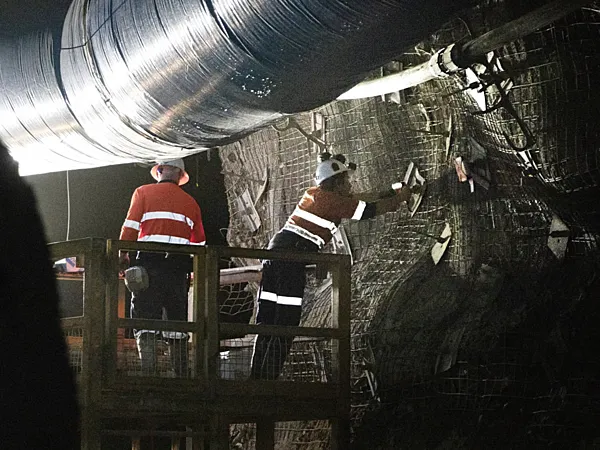
Paramina’s contracted scope covers underground mine development and production activities, including drilling and blasting, mucking and hauling, ground-support installation, long-hole production drilling, backfilling, and the provision and maintenance of specified underground mining equipment. 

Engineering Challenges and Early Progress 

Like many underground mining projects, Vang Tat has presented conditions that have required continuing geological, geotechnical and operational assessment as development has progressed. Ground conditions encountered underground have reinforced the importance of maintaining responsive ground-control systems and ensuring that support requirements are reviewed against actual conditions observed at each development heading. 

Paramina has been working with Vang Tat’s technical team to respond to the conditions encountered underground and to strengthen the systems supporting safe mine development. This has included continuing review of ground-support requirements, geological and geotechnical observations, operating procedures, quality controls and formal technical interfaces between the owner and contractor. 

Groundbreaking activities for the two main portals of the underground development commenced on 15 April 2026, only a few months after contract signing. As the project advances, the joint focus remains on establishing the underground infrastructure, operating systems and technical controls required to support safe, consistent and sustainable mine development and, ultimately, production. 

Building a Team for the Future 

The project is led and supported by a management and technical team with more than 100 years of combined experience in underground mining project start-ups, mine development and the transition to production, applying recognised global mining practices and standards. Paramina’s presence in Lao PDR is supported through its locally registered operating entity, Paramina Lao Sole Company, Ltd. 

At peak operations, the project is expected to employ a substantial multidisciplinary workforce, with Filipino mining professionals working alongside Lao, Vietnamese and other project personnel while supporting their development through training and knowledge transfer.  

The project provides an opportunity to demonstrate not only Filipino underground mining capability, but also the ability of Philippine mining professionals to transfer knowledge, develop local capability and work effectively within a multicultural operating environment. 

In support of its establishment and operations in Lao PDR, Paramina has also engaged with relevant Lao and Philippine government and diplomatic representatives, including the Philippine Embassy in Lao PDR 

and appropriate Lao government agencies in Vientiane. Worthy of note, the Lao Embassy in the Philippines has also provided valuable assistance to Paramina. 

Looking Ahead 

For Paramina, the Vang Tat Gold Mine project represents more than a significant commercial achievement. It is an important milestone in the company’s development as an international underground mining contractor and an opportunity to demonstrate how more than three decades of Philippine underground mining experience can be applied in an increasingly competitive regional mining industry. 

As underground development progresses, Paramina remains focused on delivering safe, technically disciplined and high-quality mining services.  

Having been awarded the contract was an important achievement, but the company’s success will ultimately be measured by its ability to deliver on its commitments, work constructively with Vang Tat and contribute to the safe and sustainable development of the Vang Tat Gold Mine. 

September 16, 2026

Strength. Performance. Uptime. 

In mining and heavy construction, downtime is more than an inconvenience — it’s a cost. Productivity, efficiency, and safety all depend on the performance of the ground engaging tools working at the front line of every machine. From extreme abrasion to high-impact loading conditions, equipment components must perform under constant pressure. 

That’s where Valley Blades Limited delivers. 

For decades, Valley Blades has been engineering and manufacturing high-performance wear parts designed specifically for demanding environments. With advanced heat treatment capabilities, precision manufacturing processes, and strict quality control standards, every component is built with durability and longevity in mind. 

Our mining teeth are designed to withstand the harshest digging conditions. In high-impact, high-abrasion applications, consistent penetration and extended wear life are critical. By combining premium alloy materials with controlled heat treatment processes, we deliver superior strength and structural integrity — maximizing uptime and reducing changeout frequency. 

Grader blades and links require a balance of toughness and edge retention. Precision cutting performance is essential for maintaining grade accuracy while minimizing wear. Our blades are engineered for consistent hardness throughout the working surface, ensuring reliable performance even in challenging terrain. 

Construction teeth demand versatility. Whether in infrastructure development, site preparation, or heavy civil work, dependable wear parts keep machines productive. Our construction tooth systems are designed to optimize penetration, reduce fuel consumption, and maintain structural strength in daily applications. 

Dozer edges must handle continuous pushing forces and abrasive materials. Built from high-strength steel and manufactured to exacting tolerances, our dozer edges provide exceptional wear resistance and impact durability — delivering performance operators can rely on shift after shift. 

At Valley Blades, manufacturing is not just about producing parts — it’s about producing confidence. Every product is designed to help contractors and mining operators extend service life, lower cost per hour, and improve overall equipment efficiency. 

We understand that performance on paper means nothing without performance in the field. That’s why our products are trusted across North America and international markets where operating conditions are among the toughest in the world. 

Now, through our exclusive partnership with Uptime in the Philippines, mining and construction companies throughout the region have direct access to premium wear parts backed by responsive local support. Uptime brings industry knowledge, service expertise, and a commitment to helping customers maintain productivity in even the most demanding projects. 

Together, Valley Blades and Uptime are committed to delivering strength, precision, and reliability where it matters most — at the cutting edge. 

Because in mining and construction, durability drives productivity. And productivity drives success. 

September 16, 2026

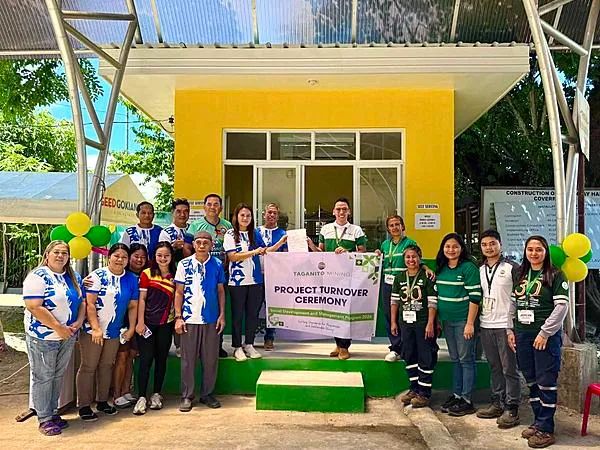
Residents of Bagakay now have greater access to safe and affordable drinking water following the turnover of a newly installed Water Distillation Facility by Taganito Mining Corporation (TMC) to the Barangay Local Government Unit (BLGU) of Bagakay. 

Funded through TMC’s Social Development and Management Program (SDMP), the ₱600,000 facility was established to address one of the community’s needs for a reliable source of potable water without the added cost of regularly purchasing water from commercial refilling stations. 

The facility is expected to benefit households across the seven puroks of Barangay Bagakay. At the time of turnover, the water was being provided free of charge to residents, while the barangay was also considering measures to support the facility’s long-term maintenance and sustainability. 

The turnover ceremony was led by TMC Community Relations Manager Mark Vincent Junel Felias. The facility was received by the BLGU of Bagakay, led by Punong Barangay Sarlyn Roble, which will oversee its management and operation. 

For Bagakay families, the project is expected to help reduce household expenses associated with buying drinking water while providing a more accessible source of safe water for their daily needs. 

“Salamat sa makadaghan sa TMC. This is another flagship project nan barangay Bagakay. Salamat sa tinooray na serbisyo nan barangay councils, labi na sa tanan Bagakaynon, diin tubag namo kini sa hugot ninyo na supporta sa tanang kalihukan niining Barangay,” said Roble. 

(Many thanks to TMC. This is another flagship project for Barangay Bagakay. We also thank the barangay councils for their sincere service, especially all Bagakaynon residents. This project is our response to your strong support for the various activities and initiatives in our barangay.)  

The project reflects the joint efforts of TMC and the BLGU to address practical community needs and improve access to essential services. 

By bringing potable water closer to households, the facility is expected to support the well-being of residents while helping ease the cost of securing drinking water for their families. 

The project is also aligned with Sustainable Development Goal 6, which promotes access to clean water and sanitation for all. 

September 16, 2026

For more than three decades, Dela Torre & Co., Inc. has been helping Philippine industries keep their operations moving through dependable rubber products, FRP (Fiberglass-Reinforced Plastic) solutions, and specialized rubber lining services. 

In industrial environments, reliability is rarely determined by one major piece of equipment alone. Often, it is the smaller components—hoses, seals, expansion joints, linings, marine fenders, gaskets, and other engineered products—that help keep an entire operation running safely and efficiently. 

When these components fail, the consequences can extend far beyond a single replacement. Production may be interrupted, maintenance costs can increase, and equipment may be exposed to unnecessary wear or damage. 

This is where Dela Torre & Co., Inc. (DCI) has established its role as a trusted industrial solutions provider. 

Established in 1992, DCI began as a rubber manufacturing company and has steadily developed its capabilities to meet the evolving requirements of industries across the Philippines. Today, the company provides a wide range of industrial rubber and fiberglass-reinforced plastic (FRP) products and rubber lining services, combining manufacturing expertise with application-focused solutions. 

Makers of Quality Rubber and FRP Products: Quality Built into Every Solution 

Industrial components are expected to perform under demanding conditions. Depending on the application, they may be exposed to pressure, vibration, abrasion, chemicals, temperature variations, moisture, and continuous mechanical stress. 

DCI approaches these challenges by focusing not only on the product itself but also on how and where the product will be used. 

Its range of industrial rubber products includes hoses, expansion joints, flexible connectors, gaskets, seals, vibration isolators, molded rubber components, and specialized fabricated products. These solutions are designed to support a variety of industrial applications where durability and dependable performance are essential. 

The company's rubber lining and fabrication services further strengthen its capabilities. Rubber lining can provide a protective barrier for equipment exposed to abrasive materials, corrosive substances, and demanding operating environments, helping protect surfaces and contribute to longer equipment service life. 

Solutions Designed Around the Application 

One of DCI's key strengths is its ability to accommodate customized requirements. 

Industrial facilities do not always operate with standard conditions, and a component that works for one application may not necessarily be suitable for another. Dimensions, materials, pressure, temperature, chemical exposure, and operating environment can all influence the appropriate solution. 

DCI works with customer requirements to develop products suited to specific applications and equipment. 

This customized approach allows the company to go beyond simply supplying a standard component. Instead, it focuses on understanding the requirements behind the request and providing a practical solution for the operating environment. 

Expanding Through FRP Technology 

While rubber remains at the heart of DCI's expertise, the company has expanded its capabilities through FRP technology. 

Through its FRP operations, DCI provides solutions such as FRP pipes and spools, floater assemblies, tank repairs, and rehabilitation of FRP-coated systems. 

FRP is valued across numerous industrial applications for its combination of strength, durability, and resistance to challenging environments. By offering both rubber and FRP solutions, DCI can address a broader range of requirements and provide customers with alternative material solutions based on their specific applications. 

This expanded capability reflects an important principle behind DCI's approach: effective industrial engineering is not simply about supplying a product, it is about selecting the right solution for the job. 

Serving Industries That Keep the Philippines Moving 

DCI's products and services support a diverse range of industries, including mining, cement, power and energy, marine and shipping, construction, manufacturing, agriculture, and water and wastewater. 

These industries share a common requirement: equipment must perform reliably, often under some of the most demanding operating conditions. 

Whether protecting equipment with rubber lining, supplying industrial hoses and molded components, supporting marine applications with fenders, or providing FRP solutions for specialized systems, DCI's goal remains centered on helping customers maintain reliable operations. 

Built on Experience, Driven by Quality 

More than 30 years after its establishment, DCI continues to build on the manufacturing experience and technical capabilities that have shaped the company since 1992. 

Its evolution from a rubber manufacturer into a broader industrial solutions provider demonstrates its commitment to adapting to customer needs and changing industry requirements. 

From customized rubber products to specialized lining and fabrication work and FRP solutions, DCI brings together experience, material expertise, manufacturing capability, and application knowledge to serve industries throughout the Philippines. 

In industrial operations, quality is more than a specification on a product sheet. It is the confidence that a component is built for its intended application and the assurance that equipment can continue to perform when conditions become demanding. 

September 15, 2026

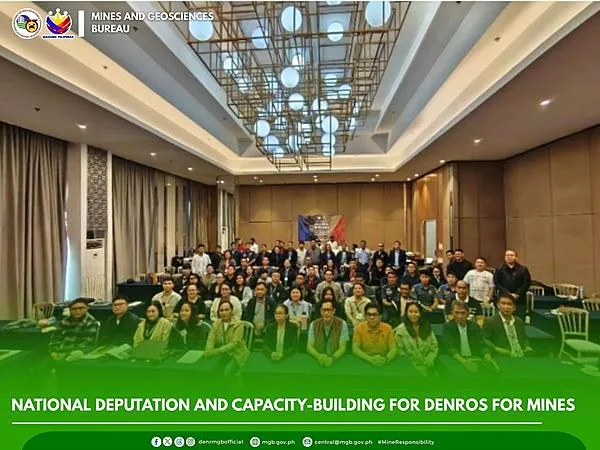
The Mines and Geosciences Bureau (MGB) has completed a three-day national deputation and capacity-building program for 62 candidates for Deputy Environment and Natural Resources Officers (DENROs) for Mines, strengthening the government’s enforcement network against mining-related violations.

The activity concluded on August 27, 2026, at The Hive Hotel in Quezon City after beginning August 25. It brought together personnel from the MGB Central and Regional Offices, selected Department of Environment and Natural Resources (DENR) field offices, the Environmental Law Enforcement and Protection Service (ELEPS), and partner law enforcement agencies.

MGB Director Larry M. Heradez said during the opening that deputation involves not only the granting of authority but also responsibility and accountability.

He stressed that deputized personnel must understand the scope and limitations of their authority and exercise their functions responsibly, while stronger coordination among MGB, DENR field offices and law enforcement agencies is needed to address mining-related violations.

Participants underwent lectures, discussions, open forums and practical exercises covering the legal framework for DENRO for Mines deputation, mining operations and the mineral value chain, mineral and rock identification, mineral processing, mining laws and permitting, small-scale mining, and mining law enforcement procedures.

Training also covered evidence handling, case documentation and interagency coordination, with particular emphasis on the DENR Environmental Law Enforcement Manual of Operations (ELEMO).

Participants conducted practical exercises involving the preparation of seizure receipts and enforcement reports, evidence handling and documentation, and the custody and safekeeping of seized items.

62 candidates evaluated 

The activity resulted in 62 candidates undergoing the prescribed training and evaluation in preparation for the issuance of Deputation Orders and Identification Cards.

MGB Assistant Director Karlo L. Queaño said coordinated and consistent enforcement is essential to responsible and sustainable mineral resource development.

Queaño also emphasized accountability in implementing mining laws and the need to help communities pursue formalization where appropriate, while ensuring that individuals remain accountable under the law.

The MGB said the training also allowed participants from different government offices and agencies to exchange operational experiences and improve coordination in mining law enforcement.

The bureau plans to continue strengthening the DENRO for Mines program through further deputation and capacity-building activities at both the MGB Central Office and regional offices.

The efforts will also include closer coordination with DENR field offices and partner law enforcement agencies to expand and sustain a competent, coordinated and accountable mining law enforcement network.

September 15, 2026

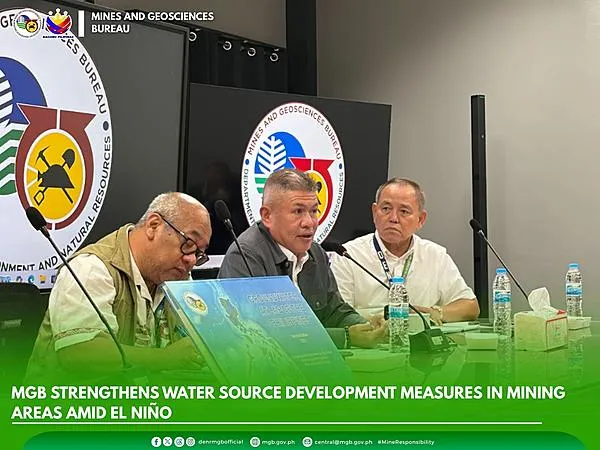
The Mines and Geosciences Bureau (MGB) has directed its regional offices to implement appropriate water source development measures in mining areas as the Philippines prepares for potential water-related impacts from the continuing El Niño phenomenon.

The directive was issued through an MGB memorandum dated September 3, 2026, which provides guidance to regional offices on identifying and implementing water source development measures based on local hydrogeological conditions, groundwater potential and other site-specific characteristics.

The measures are intended to promote sustainable water resource management and strengthen the capacity of mining areas and nearby communities to address potential water shortages and other water-related challenges associated with El Niño.

The Department of Science and Technology-Philippine Atmospheric, Geophysical and Astronomical Services Administration (DOST-PAGASA) has reported that moderate to strong El Niño conditions are prevailing in the Tropical Pacific and are expected to continue through the first half of 2027.

PAGASA has also warned that conditions could reach a very strong state before the end of 2026.

The MGB said regional offices should consider appropriate water source development options according to the hydrological conditions and groundwater potential of each area.

The bureau also advised its regional offices to use spatial information from the National Groundwater Resource and Vulnerability Assessment Program (NGRVAP) and the MGB Mining and Geology Information Portal to support science-based assessments of groundwater resources and determine suitable sites for water source development.

SDMP, CDP funds may be realigned 

The MGB has authorized regional offices to allow the realignment of unutilized or unspent Social Development and Management Program (SDMP) and Community Development Program (CDP) funds for appropriate water source development measures in mining areas.

Such realignment must be undertaken in consultation with and with the agreement of affected host and neighboring communities, and must comply with applicable laws, regulations and policies.

The MGB also said voluntary corporate social responsibility (CSR) contributions may be considered to complement the water source development initiatives.

The directive followed a Stakeholders' Forum on the Mining Industry's Contribution to Addressing the Anticipated Water Crisis due to the El Niño Phenomenon held on July 30, 2026.

The forum brought together stakeholders to discuss groundwater resources and the potential role of the mining industry in addressing anticipated water-related challenges.

The MGB said the initiative reflects an industry-led effort to develop sustainable responses to the potential water crisis associated with El Niño.

The memorandum was issued by the MGB's Mine Safety, Environment and Social Development Division.

September 15, 2026

India’s state-owned railway consultancy Rail India Technical and Economic Service Ltd. (RITES) is exploring participation in at least three major Philippine rail projects, including the Mindanao Railway, a mass rail system in Cebu and the extension of the Philippine National Railways (PNR) from Tutuban, as the government seeks to accelerate infrastructure development.

President Ferdinand Marcos Jr. met with RITES officials in New Delhi on September 12 to discuss potential cooperation on the projects, according to the Presidential Communications Office (PCO).

Presidential Communications Office Acting Secretary Dave Gomez said RITES could participate either as a consultant or through a public-private partnership (PPP), while also helping the Philippines explore possible official development assistance (ODA).

“The first priority is the Mindanao Rail System. So they will look at it and study it. Next is the mass rail system in Cebu,” Gomez said in Filipino after the meeting.

“And the third that they will enter is the extension of the PNR from Tutuban,” he added.

The discussions come as the Philippines advances several large-scale railway projects intended to expand intercity connectivity, improve urban transportation and strengthen links between major economic centers.

SCMB railway targets 2027-2028 

The potential involvement of RITES comes as the government prepares the next stages of the proposed Subic-Clark-Manila-Batangas (SCMB) Railway, a 250-kilometer rail line being positioned as a cornerstone of the Luzon Economic Corridor (LEC).

Finance Undersecretary Maria Angela Ignacio said last week that construction could begin by the end of 2027 or in 2028, depending on the outcome of ongoing feasibility studies.

The feasibility work is being supported by international partners. The US Trade and Development Agency provided $3.8 million in assistance in 2025 for transport modeling, port-rail integration and legal and institutional frameworks, while Sweden provided P74 million for a study covering signaling systems and operational models.

The Asian Development Bank has also committed $8 million in technical assistance for the SCMB Railway.

The government has pitched the railway to international investors as one of the major projects under the Luzon Economic Corridor, which is intended to strengthen infrastructure and economic links across Luzon.

India offers space technology cooperation 

Marcos also met with officials of the Indian Space Research Organisation (ISRO) to discuss potential cooperation with the Philippine Space Agency (PhilSA).

Gomez said India could provide technical expertise and share its experience as the Philippines works toward its long-term goal of launching its own satellite.

A Philippine satellite capability would support applications including communications, weather forecasting, climate monitoring, and defense and security, according to Gomez.

The meetings were held during Marcos’ visit to India to attend the BRICS Summit at the invitation of Indian Prime Minister Narendra Modi. Marcos is participating in the summit in his capacity as chair of the Association of Southeast Asian Nations (ASEAN) for 2026.

Marcos was accompanied during the meetings by Foreign Affairs Secretary Ma. Theresa Lazaro, Finance Acting Secretary Frederick Go, Transportation Secretary Giovanni Lopez, PhilSA Director General Gay Jane Perez, and Philippine Ambassador to India Josel F. Ignacio.

Before the RITES and ISRO meetings, Marcos met officials of the Coalition for Disaster Resilient Infrastructure (CDRI) following the Philippines’ entry into the coalition. Discussions focused on strengthening Philippine infrastructure against disasters and climate-related risks.

The Philippine government is also seeking private investment for other major infrastructure projects. At the inaugural Luzon Economic Corridor Investment Forum, officials presented at least 38 projects worth more than $20 billion to investors and business executives, including the SCMB Railway and a proposed $4.1 billion Sangley Point International Airport package.

September 15, 2026

Construction of the Sangley Point International Airport (SPIA) in Cavite is targeted to begin in the third quarter of 2027, with financing arrangements now being finalized as the project moves into its initial pre-construction phase, a project adviser said.

Construction is expected to take about 17 quarters, or roughly four years and three months, putting the target for the airport’s initial commercial operations in 2031, according to Sol Castro, managing director and senior adviser at CFP Transaction Advisors. He made the disclosure during last week’s Luzon Economic Corridor Investors Forum.

CFP is part of the project development management and advisory group appointed by the Cavite provincial government for SPIA.

Castro said the project has secured the necessary consents, including the agreement with the provincial government of Cavite and clearance from the Philippine Competition Commission.

Several key approvals and arrangements remain pending, however, including the Philippine Reclamation Authority’s approval of the final reclamation configuration, land-access arrangements with the Department of National Defense, and airspace clearance from the Civil Aviation Authority of the Philippines (CAAP).

The government has moved to expedite those processes. President Ferdinand Marcos Jr. issued Administrative Order No. 44 on June 3 directing concerned national government agencies and encouraging Cavite local government units to prioritize and accelerate permits, clearances, licenses, certifications and other authorizations required for SPIA.

The order also created a joint technical working group co-chaired by the Department of Transportation and the Philippine Reclamation Authority, with representatives from the Department of Environment and Natural Resources, Department of National Defense, Department of the Interior and Local Government, Department of Justice, CAAP and the Cavite provincial government.

The group is tasked with addressing issues that could delay the project and ensuring that reclamation complies with environmental and technical requirements. It is also required to submit quarterly progress reports to the Office of the Executive Secretary.

$2 billion first phase 

The first phase of SPIA is estimated to cost about $2 billion and will involve a 251-hectare reclamation development adjoining existing government-owned land.

The phase includes extending the existing runway from 2.1 kilometers to 3.2 kilometers, building a new passenger terminal, apron and cargo facilities, and developing the necessary landside estates.

Castro said the project will rely largely on an enabling reclamation platform and existing government-owned land, reducing land assembly and consolidation requirements.

“There’s going to be minimal displacement except for the Philippine Navy facilities that are there, and that there are no right-of-way risks,” Castro said.

SPIA will be developed around the existing Sangley aerodrome and is planned to accommodate wide-body aircraft and freighters.

The second phase will be incorporated into the airport’s design from the outset and will allow expansion of the development to the full 544-hectare landform as passenger and cargo demand increases.

Boulevard, Cargo City 

The broader SPIA development also includes the 4.4-kilometer Sangley Boulevard, a high-speed access expressway and causeway intended to connect the airport directly to the Manila-Cavite Expressway (CAVITEX) and onward to the Cavite-Laguna Expressway (CALAX).

Construction of the boulevard is targeted to start in the first quarter of 2027, ahead of the airport's planned construction start, with completion targeted for the first quarter of 2029.

The project also includes a 190-hectare Cargo City designed for aviation support services, logistics, warehousing and e-commerce fulfillment.

SPIA is envisioned as a modern international hub airport and part of the Greater Capital Region’s multi-airport gateway system, alongside Ninoy Aquino International Airport, Clark International Airport and New Manila International Airport.

Public-private partnership 

The Cavite provincial government and SPIA Development Consortium (SDC) signed a joint venture and development agreement for the project in 2023.

The consortium comprises House of Investments Inc., Cavitex Holdings Inc., Samsung C&T Corp., MacroAsia Corp., Munich Airport International GmbH, and Ove Arup & Partners Hongkong Ltd.

SDC was formally awarded the project in September 2022 after no competing firm challenged its unsolicited proposal. The consortium had submitted the proposal in 2021 after the Cavite provincial government declared its second bidding for the airport project unsuccessful.

SPIA is being developed as a public-private partnership intended to expand the Greater Capital Region’s aviation capacity while creating an international passenger and cargo gateway in Cavite.

September 14, 2026

Philippine Resources Journal invites our readers to Kuala Lumpur because the Philippines should be part of ASEAN’s steel conversation not only as a buyer of steel, but as a resource market with upstream iron-ore potential and a growing need for resilient domestic steelmaking.

REGISTER NOW

https://smm-asean-ferrous.metal.com/tickets?fromId=636c2e05fa&from=59

PROMO CODE

PRJ2026SMM  |  USD 650 Early Bird until 30 September; save USD 220 now

Worldsteel records Philippine crude-steel output at about 1.8 Mt in 2025, compared with 8.7 Mt of steel imports. That makes the country highly exposed to regional trade flows and prices - while creating a clear strategic case for stronger domestic capacity and diversified feedstock.

The summit’s iron ore, scrap and EAF discussions are especially relevant for Philippine mining and resources companies. They connect upstream geology and supply with the mills, traders and technology providers deciding where ASEAN’s next steelmaking investments will land.

What makes this summit useful is the mix: market intelligence, operating technology, raw-material strategy and face-to-face access to companies that are actually buying, producing, financing, transporting and transforming steel across the region.

Meet announced industry leaders

  • Adam Fan, Chairman, Shanghai Metals Market (SMM)
  • Afzal Mohsin, Chief of Corporate Affairs and Sustainability, APAC, Vale
  • Anurag Pandey, President & CEO, Tata Steel Thailand
  • M Akbar Djohan, Chairman / President Director, Indonesian Iron and Steel Industry Association (IISIA) / PT Krakatau Steel (Persero) Tbk
  • Sanjay Mehta, President / Director, Material Recycling Association of India (Philippine Resources Journal) / MTC Group
  • Jason Ang, Director of Sustainability, Meranti Green Steel
  • Osma Nadeem, Executive Director, Better Deals
  • Görkem Bolaca, Managing Director, Galex Steel International
  • Logan Lu, CEO, Shanghai Metals Market (SMM)
  • Mohammad Imtiaz Uddin Chowdhury, Head of Sales and Marketing, BSRM

 Attending Companies, exhibitors and sponsors (PART)

  • Tata Steel Thailand (Public) Co Ltd
  • Thyssenkrupp Materials Trading GmbH
  • MTC Group Pvt Ltd
  • Vale
  • Ispat Exports Pvt Ltd
  • Galex Steel International
  • Meranti Green Steel
  • NEXTGEN METALS CORP
  • Pebsteel(PEB Steel Buildings)
  • Primetals
  • PT Krakatau Steel (Persero) Tbk
  • Better Deals
  • FERRIS METAL RECYCLERS PTY LTD
  • Fu group
  • Qiansen Machinery
  • Ricova
  • Sanbao Group Co.,Ltd
  • SteelGiant Commodity DMCC
  • Synergy Recycling
  • VALIN STEEL (SINGAPORE) PTE LTD
  • Welcome Trading Co Pte Ltd
  • Jiangsu South Technology Co., Ltd.
  • KERUN
  • PSI
  • Guangxi Shenglong Metallurgy Co., Ltd.
  • Guangzhou Jiefeng New Materials Technology Co., Ltd.

Delegate Benefits:

Philippine Resources Journal Delegates enjoy benefits including both conference days, exhibition access, Q&A, the one-to-one meeting platform and meeting lounge, event materials, networking coffee and lunch.

REGISTER NOW

https://smm-asean-ferrous.metal.com/tickets?fromId=636c2e05fa&from=59

PROMO CODE

PRJ2026SMM  |  USD 650 Early Bird until 30 September; save USD 220 now

September 14, 2026

Mining and agriculture rarely share the same conversation. One follows the geology beneath the ground; the other follows the seasons above it. One works with extraction, while the other depends on cultivation. Yet at TVI Resource Development Philippines Inc. (TVIRD), these seemingly separate worlds meet where rehabilitated land is being put to productive use.

At the company’s Agata and Balabag sites, areas dedicated to rehabilitation and agricultural development are producing fruits, vegetables, root crops, and spices alongside mining operations. This August, as harvest season takes center stage, these crops offer a glimpse into how environmental rehabilitation can create opportunities for another kind of productivity. They also serve as proof that mining and agriculture can go hand in hand, complementing and supporting one another.

At Agata’s Mabakas Techno Demo Farm in Agusan del Norte, the company has recorded a total harvest of 1,236 kilograms of fruits, vegetables, root crops, and spices. Bananas account for 572 kilograms of the harvest, while dragon fruit contributes another 349 kilograms. Other high-value crops, including apples, grapes, cacao, coffee, and avocados, are also being cultivated as the farm continues to develop.

From harvest to table

Beyond the volume produced, the agricultural initiatives demonstrate how harvests can become part of everyday operations. Trial lettuce production at Agata was served as a vegetable salad in the mess hall, while mulberries were also harvested and shared with guests.

“Currently, the company produces mulberries, some of which are made into wine and others into fruit shakes for our visitors,” said Mabakas Administrator Sheilah Mae Arcala.

The initial harvest has also opened opportunities for further production. “Lettuce production will be expanded soon,” she added.

Behind this output is the Final Mine Rehabilitation and Decommissioning Phase (FMRDP) team, led by Agata General Manager Jesalyn Guingguing, EnP., and supported by agriculturists, environmental aides, and the Mabakas People’s Organization—the company’s livelihood partner. Soil amelioration and microbial inoculation are carried out before planting, followed by brushing, weeding, pruning, and integrated pest management to maintain crop health.

A land of many yields

At the Balabag Gold-Silver Project in Zamboanga del Sur, the convergence of mining and agriculture can be seen in an area that once served an entirely different purpose.

Established in 2024, the Thubig Dleyagen Berries Farm and Permaculture Area was developed within the company’s former Waste Rock Dump 2 as part of Balabag’s progressive rehabilitation efforts. Initially focused on berry production, the site has since evolved into a productive agricultural area, with various crops cultivated alongside ongoing rehabilitation activities. Strawberry harvesting began in August, marking another milestone in the area’s transformation from a former mine waste rock area into a productive and sustainable agricultural space.

The produce also finds its way beyond the farm. Through the Pick-and-Pay Program, employees, contractors, and visitors can purchase freshly harvested strawberries for personal consumption. A portion of the harvest is also supplied to the Clubhouse, where the strawberries are transformed into refreshing fruit shakes, allowing the farm’s produce to be enjoyed by the community.

For Mines Environmental Protection and Enhancement Manager Jjam Cutillas, EnP., the transformation of the former Balabag waste rock dump into a productive agricultural area demonstrates how rehabilitation can go beyond restoring the land. It can also create opportunities for sustainable food production, employee engagement, and community value, turning a once-disturbed area into a space where both the environment and people can benefit.

“From its original purpose of rehabilitating a disturbed area, the initiative has developed the area into a productive and environmentally managed site that demonstrates the potential for sustainable agricultural use,” Cutillas said.

Growing beyond the seasons

The strawberry farm is only one part of the agricultural landscape at Balabag. Mulberries and vegetables such as pechay, sitaw, cucumber, and radish are also being cultivated at the farm and Permaculture Area.

Sustaining the site requires work well beyond harvest season. The Land Resource Management team oversees land preparation, planting and replanting, watering, weeding, pruning, harvesting, and pest and disease monitoring. Mulberry pruning, for instance, encourages continuous fruit production while generating cuttings for propagation and expansion.

The farm also uses company-produced organic fertilizers and soil amendments, including Bokashi, vermicast, Mycovam, and Bio-N, to improve soil fertility and promote healthy crop growth.

These activities form part of Balabag’s broader agroforestry and environmental rehabilitation program under the FMRDP. Fruit-bearing crops are grown alongside native and forest species to support soil stability, vegetation recovery, and biodiversity. The initiative also creates opportunities for employees to participate in planting and site maintenance and complements community programs through seedling donations, planting materials, and the sharing of practical knowledge on sustainable livelihood development.

Mining and agriculture may begin with different purposes, but at Agata and Balabag, they share something fundamental: the land.

One draws mineral resources from beneath it; the other draws nourishment from its soil. In the spaces where the two meet, TVIRD is demonstrating that rehabilitation can do more than restore a landscape—it can give it another way to grow.

September 11, 2026

NICKEL Asia Corp. (NAC) has completed the acquisition of a 20-percent stake in Kazakhstan's Karchiga copper mine, giving the Philippine natural resources company immediate exposure to copper production in Central Asia.

NAC said Thursday that its wholly owned Singapore subsidiary, NAC Global Investments Pte. Ltd., completed the acquisition of a 20-percent membership interest in East Copper Production LLP (East Copper) from Silk Road Resources Ltd.

East Copper owns 100 percent of GRK MLD LLP, the Kazakhstan-based entity that holds the subsoil use rights for the Karchiga copper mine. The transaction closed after completion of due diligence and satisfaction of all conditions under the membership interest sale and purchase agreement.

The total consideration was $30 million, with NAC having paid an initial $10 million earlier this year following completion of due diligence. NAC Global paid the remaining $20 million after all closing conditions were satisfied.

The acquisition agreement was signed on April 22, 2026. On August 6, NAC's board approved the transfer of the company's rights and obligations under the agreement to NAC Global, which was established to hold NAC's international investments.

Copper exposure

Karchiga is located within the Central Asian Orogenic Belt, part of the broader Central Asian Copper Belt, a region known for its concentration of copper resources, according to NAC.

GRK MLD generated approximately $70 million in revenue and $40 million in EBITDA during the first half of 2026, based on its unaudited financial results. Copper production reached 5.24 kilotons during the same period.

NAC said the acquisition comes as global copper prices approach record levels, supported by demand from artificial intelligence data centers, electric vehicles and power-grid modernization.

The company said the transaction gives NAC indirect exposure to higher copper prices without the development risks associated with a greenfield project. Management expects the investment to strengthen NAC's earnings base and align the company with the long-term outlook for copper demand.

The acquisition also expands NAC's international footprint beyond its Philippine mining and energy operations. NAC said its Singapore-based NAC Global serves as its offshore investment vehicle for pursuing critical minerals opportunities across the region.

NAC operates six mines in the Philippines and has investments in mineral processing and power generation. The company supplies saprolite and limonite nickel ore for domestic refining and regional export and is also expanding its renewable and flexible power assets through NAC Energy Inc.

See Our Latest Issue