




July 29, 2026

Motorists in General Santos City can now use the long-delayed General Santos Underpass after it officially opened to traffic on July 29, two days ahead of the July 31 deadline set by Public Works Secretary Vince Dizon.

Located at the intersection of Mabuhay-Bulaong Road and Digos-Makar Road in Barangay Mabuhay, the underpass is expected to ease congestion along one of the city's busiest transport corridors, improving the movement of commuters, cargo trucks and agricultural products entering and leaving the city.

The project, which began construction in June 2022, was originally scheduled for completion in September 2024. However, it encountered multiple delays, pushing its target completion first to the end of 2025 before finally opening in July 2026.

According to the Department of Public Works and Highways (DPWH), the delays were largely due to a major redesign after engineers encountered sandy volcanic soil and a high groundwater table during excavation. Officials warned that the original design could have caused the underpass to flood during heavy rains.

To address the issue, the DPWH redesigned the drainage system by incorporating a large underground reservoir, perforated drainage pipes and a gravity-fed drainage system that channels water toward the nearby Silway River. The revised design is intended to reduce reliance on mechanical pumps, lower long-term maintenance costs and minimize the risk of flooding.

The project also faced right-of-way constraints and delays in relocating water and power utilities, which slowed construction of the access roads.

The underpass project carries an estimated construction cost of P681 million, although the national government released more than P814 million in funding between 2021 and 2024 to accommodate project requirements and contingencies.

The opening follows President Ferdinand Marcos Jr.'s directive for the DPWH to accelerate the completion of long-delayed infrastructure projects nationwide.

Dizon inspected the underpass on June 9, 2026, where he ordered contractors and DPWH officials to ensure the facility would be operational before the end of July. The project was opened to motorists two days ahead of that deadline.

The General Santos Underpass forms part of the administration's Build Better More infrastructure program, which seeks to improve mobility, reduce travel times and strengthen logistics networks across the country.

General Santos City serves as the economic center of the Soccsksargen region and hosts one of the Philippines' busiest fish ports. The improved road infrastructure is expected to facilitate the movement of goods, support regional trade and reduce daily travel delays for thousands of motorists using the corridor.

July 29, 2026

Lepanto Consolidated Mining Co. (LCMC) and the Lepanto Local Staff Union (LLSU) have signed their 15th Collective Bargaining Agreement (CBA), concluding negotiations in less than a month after only two meetings.

The agreement was signed at the Baguio Country Club in Baguio City, with the company saying the negotiations demonstrated that labor and management can reach consensus quickly through good faith, transparency and mutual respect.

Lepanto Vice President for Human Resources and Administration Knestor Jose Y. Godino said the swift negotiations reflected the strong relationship between management and the union.

He described the process as moving at the "speed of trust," noting that both parties were able to find common ground that supports the company's long-term stability while ensuring fair treatment, dignity and improved welfare for employees and their families.

President and Chief Operating Officer Bryan Spencer U. Yap emphasized that management and labor share a common goal of securing the company's future.

Quoting the company's slogan, "Es-esa Tako," Yap thanked union leaders for representing employees throughout the negotiations and said the new agreement reflects the company's continued commitment to workplace safety, job security and employee well-being.

The signing ceremony was witnessed by officials from the Department of Labor and Employment–Cordillera Administrative Region (DOLE-CAR), the National Conciliation and Mediation Board–Cordillera Administrative Region (NCMB-CAR), company executives and union representatives.

Among those present were DOLE-CAR Regional Director Jesus Elpidio B. Atal Jr., NCMB-CAR Regional Branch Director Atty. Ronda T. Doctor-Malimban, LLSU President Ariel F. Candelario, LLSU legal counsel Atty. Frenzel Ayong, General Manager and Administrative Group Manager Rolando D. Ursua, Finance Services Group Manager Charisma Pascua, Human Resources Head Nelson L. Baguya II and Legal Officer Atty. Philip Ray Ameling.

Founded in 1936, Lepanto Consolidated Mining is one of the Philippines' longest-operating mining companies and is listed on the Philippine Stock Exchange. The company operates the Lepanto Mine in Mankayan, Benguet, where it produces gold, silver and copper concentrates through underground mining. Over the years, Lepanto has been recognized as one of the country's major gold producers while maintaining environmental management, community development and worker welfare programs in its host communities.

With the 15th CBA now in effect, LCMC and the LLSU said they remain committed to implementing the agreement and maintaining industrial peace, operational excellence and shared prosperity for the company's workforce and their families.

July 29, 2026

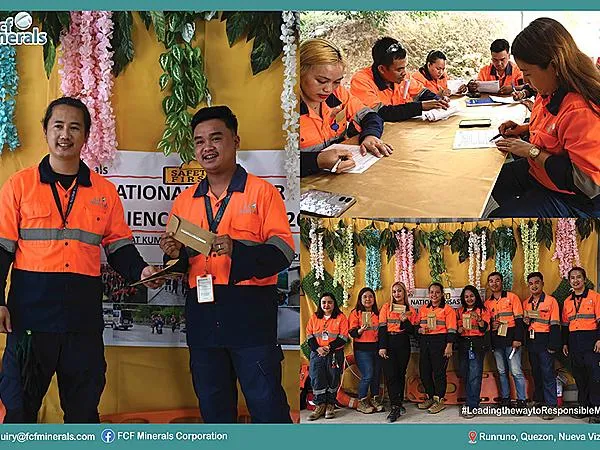
FCF Minerals Corp. reinforced its commitment to workplace safety and emergency preparedness by conducting a Disaster Preparedness Program for employees as part of the observance of National Disaster Resilience Month 2026.

Organized by the company's Occupational Safety and Health (OSH) Department, the program was held on July 27 under the national theme, "Naghahanda at Kumikilos Tungo sa Panatag na Bagong Pilipinas." The initiative aimed to strengthen employee awareness, preparedness and resilience in responding to emergencies.

FCF Minerals, a subsidiary of Canada's B2Gold Corp., operates the Runruno Gold Project in Quezon, Nueva Vizcaya. The mine is one of the Philippines' major gold producers and maintains occupational safety, environmental management and community development programs aligned with national regulations and international mining standards.

The event opened with team-based activities designed to promote safety awareness and collaboration, including a video challenge showcasing emergency response skills and a safety scavenger hunt that assessed workplace safety compliance.

Employees also attended a lecture on disaster risk management and emergency preparedness led by Senior Safety Officer Ronald Wayan, who discussed practical emergency response measures and the importance of preparedness in the workplace.

Representatives from each department completed a written assessment to evaluate their understanding of emergency preparedness concepts.

The program concluded with the presentation of cash prizes to competition winners and tokens of appreciation for participants.

FCF Minerals said the initiative reflects its ongoing commitment to strengthening a culture of safety and ensuring employees are equipped with the knowledge and skills needed to respond effectively during emergencies, while supporting safe and responsible mining operations at the Runruno Gold Project.

July 28, 2026

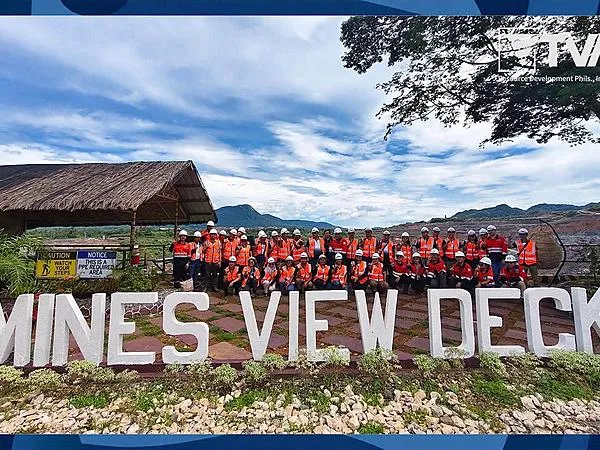
TVI Resource Development (Phils.) Inc.'s Balabag Gold and Silver Project (TVIRD-BGSP) conducted its 2026 Lakbay Aral educational tour for members of the Multi-Partite Monitoring Team (MMT) and the Mine Rehabilitation Fund Committee (MRFC), providing participants with firsthand exposure to responsible mining practices at Greenstone Resources Corp. (GRC) in Surigao del Norte.

TVIRD-BGSP, a subsidiary of Canadian mining company TVI Pacific Inc., operates the Balabag Gold and Silver Project in Zamboanga del Sur. The project is one of the Philippines' newest producing gold and silver mines and implements environmental monitoring and rehabilitation programs in partnership with regulators, local governments, and host communities.

During the educational visit, participants observed Greenstone Resources' practices in responsible mining, environmental management, mine rehabilitation, and community development. GRC operates the Siana Gold Project in Surigao del Norte and has been advancing mine rehabilitation and sustainability initiatives alongside efforts to redevelop its mining assets.

TVIRD-BGSP said the activity also served as a platform for knowledge sharing, enabling MMT and MRFC members to strengthen their understanding of environmental monitoring, stakeholder participation, and sustainable mining practices.

Participants expressed appreciation to the company for organizing the study tour, saying the experience enhanced their understanding of responsible mining operations and reinforced the importance of collaboration in balancing environmental protection with mineral development.

TVIRD-BGSP said initiatives such as Lakbay Aral 2026 demonstrate its commitment to transparency, capacity building, and meaningful stakeholder engagement by equipping partners with practical knowledge and experience to help promote responsible and sustainable mining development across the industry.

July 21, 2026

Atlas Consolidated Mining and Development Corp. returned to profitability in the first half of 2026, posting a net income of P4.6 billion as higher gold and copper prices more than offset weaker production.

The listed mining company reversed a P653 million net loss recorded in the same period last year, buoyed by a sharp rise in metal prices and stronger operating performance. 

Atlas said gold prices averaged $4,622 per ounce during the six-month period, up 49% from a year earlier, while copper prices rose 38% to an average of $5.57 per pound, significantly boosting revenues despite lower output. 

Consolidated revenues climbed 46% year on year to P24.7 billion, driven primarily by favorable commodity prices and improved earnings from its mining operations. 

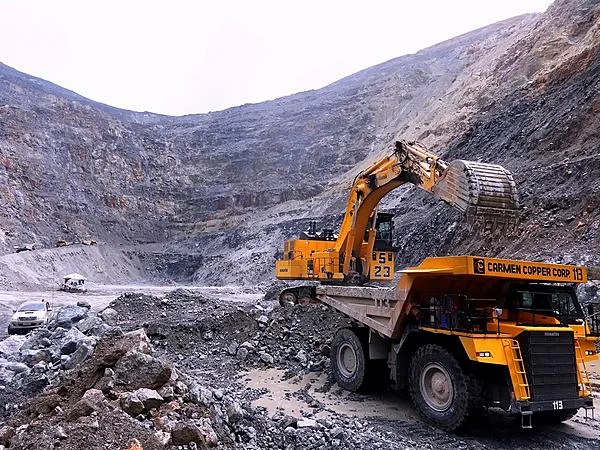
The company's flagship Carmen Copper Corp. operation in Cebu produced 37.2 million pounds of copper and 17,795 ounces of gold during the first half, both lower than the corresponding period last year due to declining ore grades as mining progresses deeper into the pit. However, higher realized metal prices more than compensated for the reduced production volumes. 

Atlas has been undertaking a mine redevelopment program aimed at accessing higher-grade ore and extending the life of the Carmen mine. The company said operational improvements and favorable market conditions contributed to the turnaround in earnings. 

The first-half performance builds on Atlas' return to profitability in the first quarter, when it posted a P645 million net income after benefiting from stronger copper and gold prices and improved milling operations. 

Mining companies have benefited from elevated precious and base metal prices this year, supported by geopolitical uncertainty, resilient demand and supply constraints, although analysts expect commodity markets to remain volatile in the second half of 2026. 

July 20, 2026

Responsible mining is possible in the Philippines under stricter government oversight and improved monitoring, Environment Secretary Juan Miguel Cuna said as he urged small-scale miners to legalize their operations through a simplified permitting system.

Speaking at the Kapihan sa Manila Hotel forum on July 15, Cuna said advances in technology, including the use of drones, and increased public scrutiny through social media have strengthened the government's ability to monitor mining operations and enforce environmental regulations.

"Responsible mining does exist," Cuna said, noting that environmental violations at mine sites can now be detected and reported more quickly than in the past.

He said the Department of Environment and Natural Resources (DENR), through the Mines and Geosciences Bureau (MGB), has enhanced its monitoring capabilities, making it more difficult for mining companies to disregard environmental standards.

Cuna also pointed out that many of the country's large-scale mining firms are publicly listed Filipino companies with reputations to protect, making compliance with environmental regulations a business imperative.

However, he said illegal small-scale mining remains a major concern because many operators continue to work outside government-designated "minahang bayan" areas due to the complexity of securing permits.

Established under Republic Act 7076, or the People's Small-Scale Mining Act of 1991, minahang bayan refers to government-designated areas where small-scale mining activities may be legally conducted.

To encourage compliance, the DENR has launched Permitting on Wheels, a mobile one-stop shop that brings government services directly to mining communities to help miners secure permits and comply with regulatory requirements.

Cuna said many small-scale miners resort to illegal operations because they find the permitting process difficult to understand or complete.

The mobile permitting initiative also involves other government agencies, including the Department of Labor and Employment and the Bangko Sentral ng Pilipinas (BSP), to educate miners on legal gold trading, occupational safety and other regulatory requirements.

He encouraged small-scale miners to sell their gold through the BSP or its accredited traders, saying legal channels ensure fair compensation while protecting miners from legal sanctions.

The program also promotes environmentally responsible mining practices, including compliance with the country's ban on the use of mercury in small-scale gold mining.

Cuna cited Executive Order 79, issued in 2012, which institutionalized reforms in the mining sector and prohibited mining activities in environmentally critical areas.

Addressing criticism from environmental group Alyansa Tigil Mina, Cuna said the DENR remains open to engaging with organizations opposed to mining and invited them to participate in Multi-Partite Monitoring Teams (MMTs), which oversee environmental compliance at mining operations.

He said allowing civil society groups to join monitoring activities would strengthen transparency and enable them to assess firsthand whether mining companies are operating responsibly.

The DENR has been promoting responsible mining as part of its broader strategy to balance mineral development with environmental protection, while formalizing the country's small-scale mining sector to improve safety, regulatory compliance and government oversight.

July 20, 2026

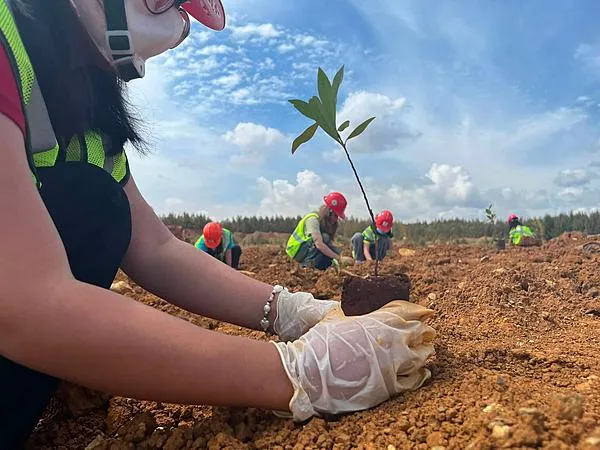
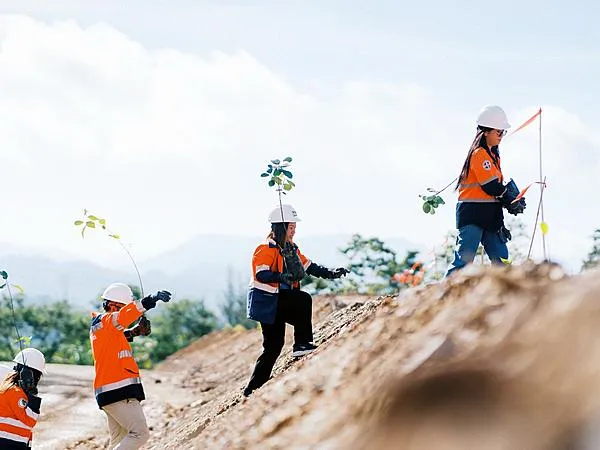
Students and faculty members of the Caraga Regional Science High School planted 1,700 indigenous tree seedlings at the rehabilitation area of Taganito Mining Corp. (TMC) as part of the Department of Education's (DepEd) One Million Trees Program for 2026.

The tree-planting activity aims to promote environmental conservation and climate action while supporting the restoration of mined-out areas through the use of native tree species.

Following the activity, the students toured TMC's rehabilitation and ecotourism sites, where they learned about the company's environmental restoration efforts, biodiversity conservation initiatives and responsible mining practices.

The visit also showcased how rehabilitated mine areas have been transformed into thriving ecosystems, providing students with firsthand knowledge of sustainable environmental management and the importance of partnerships among schools, communities and the mining industry in protecting natural resources.

TMC said the activity encouraged young people to become active stewards of the environment while reinforcing the value of ecological restoration.

Taganito Mining, a subsidiary of Nickel Asia Corp., operates a nickel mine in Claver, Surigao del Norte. The company implements progressive mine rehabilitation alongside its mining operations, restoring disturbed areas with native vegetation and developing biodiversity conservation programs as part of its environmental management commitments.

Apart from mine rehabilitation, TMC supports education, livelihood, health and environmental protection programs in its host and neighboring communities through its Social Development and Management Program (SDMP), in line with the Philippine Mining Act and responsible mining standards.

The tree-planting activity forms part of DepEd's nationwide One Million Trees Program, which seeks to instill environmental awareness among students while contributing to forest restoration and climate resilience efforts across the country.

July 20, 2026

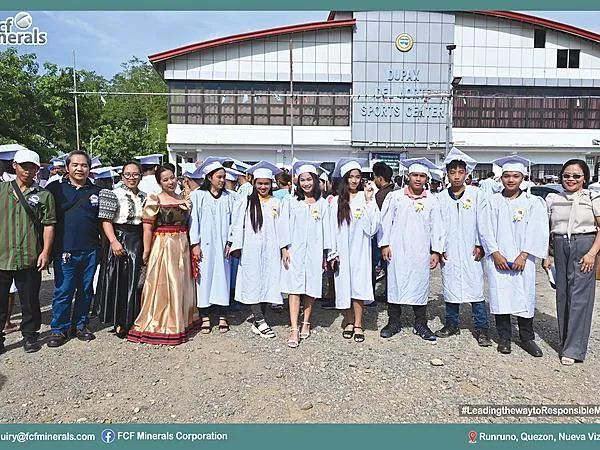
Seven learners supported by FCF Minerals Corp. graduated from the Alternative Learning System (ALS) Accreditation and Equivalency (A&E) Program during the Nueva Vizcaya Mass Graduation, Moving Up and Completion Ceremony held on July 17 at the Dupax del Norte Municipal Gymnasium.

The graduates were Marilyn L. Baglao and Dylan U. Catalac of Sitio Busat, Pamela M. Oras of Sitio Tayab, Glenford A. Obille of Sitio Dipilipig, Jemie Rose B. Realiza and Hazelyn O. Sioco of Sitio Dumaliguia, and Sherwin H. Lawa of Sitio Cabinuangan.

They attended the ceremony with their parents, ALS teachers Lailanie Rafael and Raquel Mallare, and FCF Minerals Social Development Supervisor Engr. Joanne N. Padua.

The event was attended by Nueva Vizcaya Rep. Timothy Joseph E. Cayton, Dupax del Norte Mayor Juan Paolo E. Cayton, Public Schools District Supervisors, 85 ALS teachers, Education Program Specialist Macrino A. Raymundo, officials from the Department of Education (DepEd) Division Office, and Schools Division Superintendent Orlando E. Manuel.

In his message, Manuel acknowledged FCF Minerals' continuing support for education through its partnership with DepEd in implementing the ALS program in Runruno.

DepEd Nueva Vizcaya Chief Education Supervisor Romulo S. Ancheta also cited the achievements of the Runruno ALS program, saying the partnership between DepEd and FCF Minerals helped the community secure consecutive National Literacy Awards from 2016 to 2019.

The ceremony recognized the achievements of ALS graduates and completers while highlighting the collaboration among DepEd, local government units, private sector partners, parents and other stakeholders in promoting inclusive and lifelong learning.

FCF Minerals has supported the ALS program in Runruno since 2007 under its Community Development Program and Social Development and Management Program, providing educational opportunities for out-of-school youth and adult learners in host communities.

July 19, 2026

Celsius Resources Ltd. said it is contesting attempts by Equinaire Holdings Ltd. to foreclose on its 40-percent interest in Makilala Mining Company Inc. (MMCI), rejecting claims that it had defaulted under an Omnibus Loan and Security Agreement (OLSA).

In a disclosure to the Australian Securities Exchange and the London Stock Exchange's AIM market, the Australia-listed miner said Equinaire issued three notices on Friday, July 17: a Notice of Event of Default, a Notice of Commencement of Foreclosure Proceedings, and a Notice of Disposition seeking a public auction of Celsius' stake in MMCI.

Equinaire claimed that a Notice of Relinquishment issued to Sodor Inc. constituted an event of default under the OLSA, providing grounds to enforce the security agreement and foreclose on Celsius' equity interest in MMCI.

Celsius rejected the allegation, saying no event of default had occurred and questioning Equinaire's authority to initiate foreclosure proceedings or dispose of its interest in the Philippine mining company.

"The company refutes the occurrence of an Event of Default and the capacity of Equinaire to initiate a foreclosure process and sell its interest in MMCI," Celsius said, adding that it would "protect its interests to the fullest extent of the law."

The dispute follows the June 9 assignment of the OLSA by the Maharlika Investment Corp. (MIC), the Philippines' sovereign wealth fund, to Equinaire, a wholly owned subsidiary of India's Kiri Industries Ltd.

At the time, Kiri said the acquisition of the loan was a strategic step toward securing preferential copper ore and concentrate supply from MMCI for the copper processing facility being developed by Indo Asia Copper Ltd.

"The acquisition of the loan represents a precursor transaction that is expected to enable the Group to benefit from off-take arrangements, ensuring preferential supply of copper ore/concentrate from Makilala Mining Company Inc. for its upcoming copper facility," Kiri said.

MMCI is developing the Maalinao-Caigutan-Biyog Copper-Gold Project in Kalinga province, one of the country's largest undeveloped copper-gold deposits.

Celsius said it would provide further updates as developments warrant, in line with its continuous disclosure obligations.

July 17, 2026

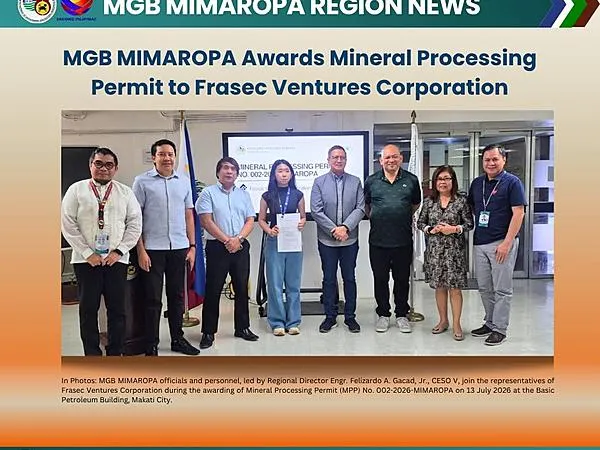
The Mines and Geosciences Bureau (MGB) MIMAROPA has awarded a Mineral Processing Permit (MPP) to Frasec Ventures Corp., authorizing the company to process sand and gravel materials in Occidental Mindoro.

The permit, MPP No. 002-2026-MIMAROPA, was formally signed and awarded during a ceremony held on July 13 at the Basic Petroleum Building in Makati City.

The permit allows Frasec Ventures to process sand and gravel extracted from its operation in Barangay Santa Lucia, Sablayan, Occidental Mindoro, with an approved annual processing capacity of 600,000 metric tons.

MGB MIMAROPA said the project is expected to help meet the region's growing demand for construction materials while generating employment opportunities and supporting local economic development.

The permit was signed by MGB MIMAROPA Regional Director Felizardo A. Gacad Jr. and Frasec Ventures President Francis Gerard S. Cañedo.

During the ceremony, Gacad reminded the company that the permit carries responsibilities beyond operational authority.

"You are not simply receiving a permit today," Gacad said. "You are accepting the responsibility to protect the environment, prioritize the safety of your workers, and ensure that the benefits of your operations are shared with your host communities."

He urged the company to uphold high standards of environmental protection, regulatory compliance and social responsibility, saying sustainable mineral development requires balancing economic growth with environmental stewardship and community welfare.

Mine Management Division Chief Ellengrace R. Galiste reminded the company to comply with all permit conditions to ensure responsible and lawful operations.

Meanwhile, Mine Safety, Environment and Social Development Division Chief Alvin S. Requimin emphasized the importance of meeting environmental commitments and social development obligations, including meaningful engagement with host communities.

Also present during the signing ceremony were Geosciences Division Chief Edwin M. Mojares, Finance and Administrative Division Chief Bon Kristoffer G. Gabay, and technical personnel from the Mine Management Division and the Mine Safety, Environment and Social Development Division.

MGB MIMAROPA said the issuance of MPP No. 002-2026-MIMAROPA reflects its continuing efforts to promote a transparent, responsible and sustainable minerals industry that supports economic growth while protecting the environment and advancing community development.

July 16, 2026

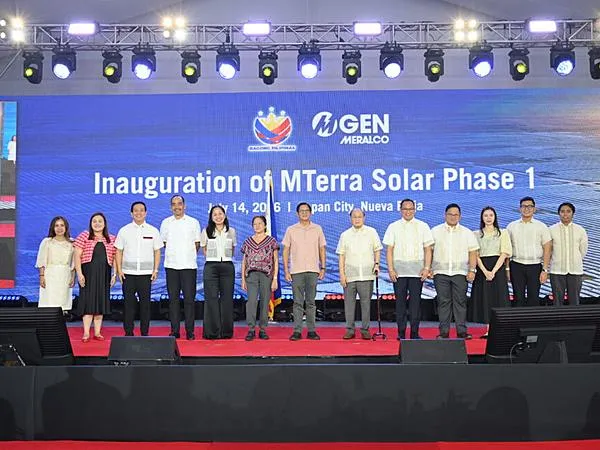
Meralco PowerGen Corp. (MGEN), together with its partners, today inaugurated MTerra Solar Phase 1, marking the completion of the first phase of what is set to become the world's largest integrated solar photovoltaic (PV) and battery energy storage system (BESS).

The milestone underscores the Philippines' growing leadership in large-scale renewable energy development while reinforcing the country's path toward a more secure, affordable, and sustainable energy future.

During the inauguration, President Ferdinand R. Marcos Jr. emphasized the country's ability to execute renewable energy projects on a significant scale.

"The MTerra Solar project is proof that the Philippines is capable not only of envisioning, but also of delivering."

MGEN Chairman Manuel V. Pangilinan shared his vision for a future in which clean, reliable energy is within reach of every Filipino.

"What we inaugurate today will be the world's largest integrated solar and battery storage facility located on a single site. And it rises not in Texas, not in the Gobi Desert, but right here in Gapan, Nueva Ecija. This inauguration was made possible not only by Meralco but by many other hands, minds, and hearts."

MTerra Solar Phase 1 has successfully energized 1,373 MW of solar PV capacity and 825 MW of battery energy storage, equivalent to 3,300 megawatt-hours (MWh), making it the world's largest operational integrated solar and battery facility on a single site. At present, its maximum export capacity to the Luzon grid remains at 750 MW, pending completion of the remaining works being undertaken in coordination with the grid operator. The project has also fully energized all 741 battery units, enabling it to reliably deliver clean electricity to the Luzon grid.

Following the successful completion of required grid tests, the MTerra Solar facility is now ready to fulfill its 600-megawatt mid-merit power supply agreement (PSA) with Meralco, providing customers with a dependable source of clean energy. As of the end of June 2026, more than 2,000 MWdc of solar panels had been installed under Phase 1, while the project had safely logged more than 30 million work hours without a lost-time injury.

"MGEN has always believed that the energy transition must deliver not only cleaner power, but also reliable and affordable electricity for Filipinos. MTerra Solar demonstrates what is possible when vision, innovation, and collaboration come together. Beyond building one of the world's most significant renewable energy facilities, we are helping build a stronger and more resilient Philippine energy system capable of supporting the country's long-term economic growth," said Emmanuel V. Rubio, president and CEO of MGEN.

A Global First, Built by Filipinos for the Philippines

Reflecting the inauguration's theme, "Araw ng Pilipino," MTerra Solar stands as a proud symbol of what the Philippines can achieve through Filipino ingenuity, collaboration, and a shared commitment to nation-building. More than a milestone for MGEN, MTerra Solar is a milestone for the Philippines.

As the world's largest integrated solar photovoltaic and battery energy storage facility developed on a single site, MTerra Solar showcases the country's ability to deliver infrastructure of global significance through the collective efforts of government, the private sector, host communities, and thousands of Filipino workers. Beyond setting a new global benchmark in renewable energy, MTerra Solar reflects the ingenuity, determination, and collaboration of Filipinos in building a more secure, affordable, and sustainable energy future.

Recognizing the project's significance to the Philippines' energy future, Lucy Heintz, partner and head of Energy Infrastructure at Actis, said:

"We are delighted to be working with the high-quality MGEN team to energize 1,373 MW of domestic energy for the Philippines, reducing import dependence, improving resilience, and accelerating energy security, while giving the government and industrial customers greater visibility over future power costs. It's fantastic to see the Philippines leading the world in delivering such a solution."

Powering Energy Sufficiency Through Affordable Renewable Energy

As electricity demand continues to grow, MTerra Solar plays a vital role in strengthening the Philippines' energy sufficiency by adding significant indigenous renewable energy capacity to the Luzon grid. As the lowest-cost mid-merit supply in Meralco's energy portfolio, Phase 1 of the project will deliver 600 MW of dependable renewable energy, helping provide customers with more affordable electricity, diversify the company's power supply portfolio, and reduce the country's reliance on imported fuels.

With its integrated battery energy storage system, MTerra Solar can store solar energy generated during the day and dispatch it during periods of peak demand, providing reliable mid-merit power that enhances grid stability and energy security. The project supports the Philippine Energy Plan as one of the country's largest energy infrastructure investments and advances the government's renewable energy targets of 35% by 2030 and 50% by 2040, while helping ensure sufficient, affordable, and reliable power to sustain the nation's economic growth.

Creating Shared Value for Host Communities

"MTerra Solar is designed to create shared value. Beyond delivering clean and affordable energy, we have invested Php88.6 million in education, livelihood, public safety, and community development to ensure the benefits of this project create lasting opportunities for the people of Nueva Ecija and Bulacan," said Dennis B. Jordan, president and CEO of MGEN Renewables and Terra Solar Philippines Inc.

Beyond generating clean electricity, MTerra Solar continues to invest in the long-term development of its host communities. Since Phase 1 began, the project has benefited more than 973,511 individual beneficiaries and 47 institutional beneficiaries.

Local residents have received technical training in renewable energy construction and operations, with many graduates subsequently joining the project's workforce. Road safety has also been enhanced through the installation of 260 solar-powered streetlights across host communities.

Sustainable livelihood opportunities have been created through the establishment of rent-free marketplace spaces for local entrepreneurs, enabling them to serve thousands of workers during peak construction. Traffic management has also been strengthened by training and equipping 214 community traffic marshals and establishing 17 marshal posts in strategic locations. Emergency preparedness has further improved with the turnover of a fire truck and the construction of a fire substation in Gapan City, enabling faster emergency response for nearby communities.

As construction progresses toward the project's full planned capacity, MTerra Solar will continue to serve as a cornerstone of the country's energy transition, demonstrating that world-class renewable energy infrastructure can simultaneously strengthen energy security, improve affordability, create shared prosperity for communities, and power a better tomorrow for the Philippines.

To demonstrate that renewable energy development can complement rather than compete with agriculture, MTerra Solar recently partnered with Central Luzon State University (CLSU) to conduct pioneering agrivoltaics research. The studies will evaluate how crops can be successfully cultivated around and beneath solar panels, generating science-based recommendations that support farmer livelihoods, strengthen food security, and promote sustainable land use.

July 14, 2026

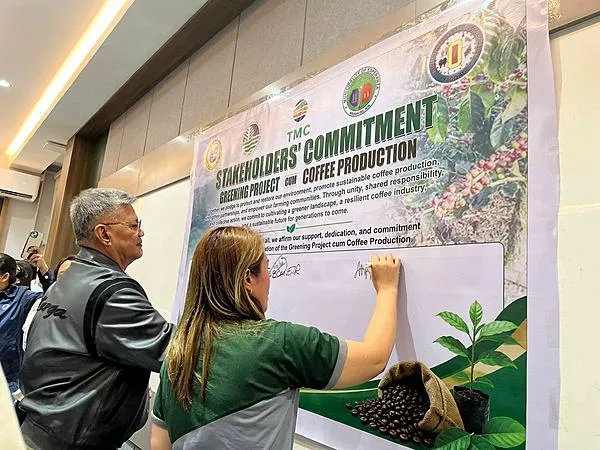
Taganito Mining Corp. (TMC) has committed to fund a P9.85-million provincial greening project in Agusan del Sur, supporting forest restoration and sustainable coffee production as part of a broader effort to expand environmental conservation and livelihood opportunities.

The company joined the Provincial Government of Agusan del Sur, the Department of Environment and Natural Resources (DENR) and local government units during the Provincial Greening Project and Coffee Production Stakeholders' Meeting held in Patin-ay, Prosperidad.

As one of the project's key private sector partners, TMC will finance the development of 50 hectares under the initiative.

The project complements the government's National Greening Program by restoring forest areas while promoting coffee farming as a sustainable source of income for local communities.

Governor Santiago B. Cane Jr. welcomed the partnership, saying collaboration between government agencies and the mining industry is essential to achieving the province's environmental objectives.

"There is the National Greening Program of the DENR, and there are mining companies willing to come into the picture by providing funds. We are very pleased because this will complement all our efforts in the project," Cane said.

He also reaffirmed the provincial government's commitment to ensuring the project's successful implementation.

"I hope you have already seen the seriousness of this province with regard to the National Greening Project and Coffee Production initiative in Agusan del Sur. Rest assured, this project will not go to waste," he said.

The meeting included presentations on the project's framework, approved memorandum of agreement, work and financial plan, and implementation strategy before participating agencies and stakeholders signed a pledge of commitment.

Cheryl Taganahan, Enhanced National Greening Program regional coordinator, expressed confidence in the province's commitment to the initiative.

"Looking into the eyes of the people of Agusan del Sur, I see the passion and the burning desire to make this project succeed," Taganahan said.

TMC said the project reflects its continuing commitment to collaborative environmental initiatives by supporting forest rehabilitation, promoting sustainable livelihoods and strengthening partnerships with government and local communities.

July 13, 2026

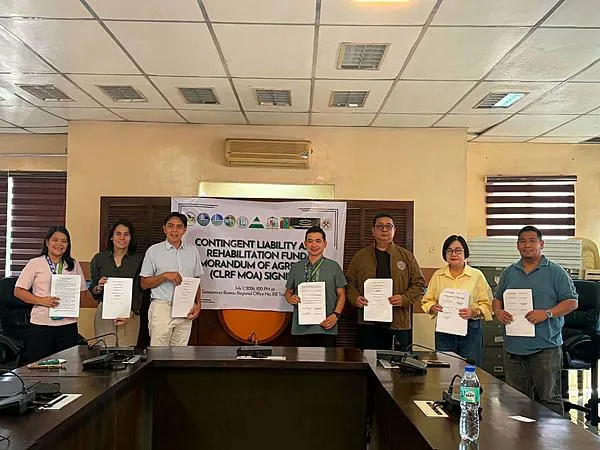
The Philippine Mining Development Corp. (PMDC) and government agencies, local governments, and community stakeholders have signed a memorandum of agreement establishing the Contingent Liability and Rehabilitation Fund (CLRF) for the proposed Dinagat Nickel Ore and Associated Minerals Mining Project in the Province of Dinagat Islands.

The ceremonial signing was held on July 7 in Surigao City and covers the 2,700-hectare mining project in the municipality of Cagdianao.

The CLRF serves as a financial assurance mechanism to ensure that sufficient funds are set aside for environmental protection and mine rehabilitation throughout the life of the project.

Under the agreement, the fund will be used to support measures for preventing and mitigating environmental impacts, rehabilitating mining-affected areas, and providing compensation for damages in accordance with existing laws and regulations.

PMDC said the agreement reflects the commitment of participating agencies and stakeholders to responsible mining practices, environmental stewardship, and the protection of host communities.

Signatories to the memorandum include the Mines and Geosciences Bureau Regional Office XIII, the Department of Environment and Natural Resources Caraga Regional Office, the Environmental Management Bureau Caraga Regional Office, the Provincial Government of Dinagat Islands, the Municipal Government of Cagdianao, the Rural Enterprise Assistance Center Foundation Inc., the Roman Catholic Diocese of Surigao, and PMDC together with Napnapan Mineral Resources Inc. and EV Mining and Development Corp.

The Dinagat Nickel Ore and Associated Minerals Mining Project is one of PMDC's key mining developments and is intended to support the responsible exploration and development of the country's mineral resources while ensuring compliance with environmental regulations and rehabilitation requirements.

The CLRF is mandated under Philippine mining regulations as a safeguard to ensure that mining operators remain financially capable of addressing environmental impacts and restoring affected areas during and after mining operations.

July 10, 2026

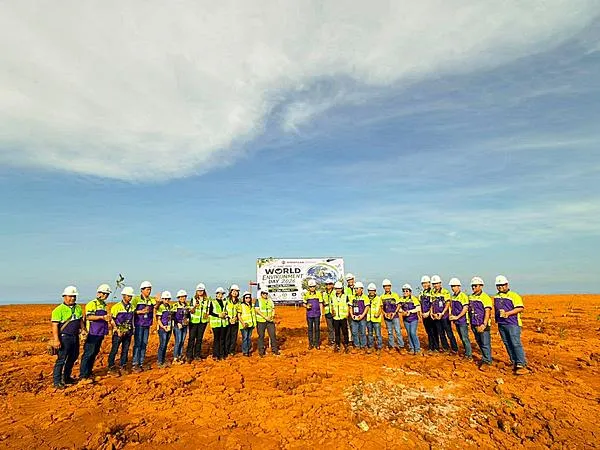
Hinatuan Mining Corp.'s Tagana-an Nickel Project (HMC-TNP) planted 1,100 native tree seedlings on a rehabilitated mined-out site as part of its World Environment Day 2026 observance, reinforcing its commitment to biodiversity conservation and climate resilience.

The tree-planting activity was conducted in partnership with validators from the Presidential Mineral Industry Environmental Award (PMIEA) and the Mining Forest Program (MFP).

The seedlings were planted across a 0.76-hectare mined-out area to help restore forest cover, rebuild wildlife habitats and support the company's mine rehabilitation efforts.

HMC said the use of indigenous tree species will help protect watersheds, maintain ecological balance, enrich biodiversity and create healthier ecosystems for surrounding communities.

The company added that the initiative demonstrates how responsible mining can be integrated with environmental stewardship through sustained rehabilitation and ecosystem restoration.

The activity formed part of this year's World Environment Day celebration, which carried the theme, "Inspired by Nature. For Climate. For Our Future."

HMC said every tree planted contributes to carbon sequestration, land restoration and stronger ecosystem resilience, supporting its broader commitment to sustainable mining practices and long-term environmental protection.

Hinatuan Mining Corp. operates the Tagana-an Nickel Project in Surigao del Norte and is one of the nickel producers in the Caraga region. The company is a subsidiary of Nickel Asia Corp., the Philippines' largest producer of lateritic nickel ore, which operates several mines nationwide and supplies ore to domestic processing plants and export markets.

July 10, 2026

TVI Resource Development Philippines Inc. (TVIRD) marked World Environment Month with a series of environmental initiatives across its mining operations, highlighting employee participation, community partnerships and progressive mine rehabilitation.

The company said the activities reinforce its commitment to environmental stewardship amid growing concerns over climate change and the need for sustainable resource management.

At TVIRD's Greenstone Resources Corp. (GRC), which operates the Siana Gold Project in Surigao del Norte, employees commemorated Philippine Arbor Day by planting 400 native Sagimsim seedlings and Manila palms at rehabilitation sites within Tailings Storage Facilities 3 and 4.

The tree-planting activity formed part of the company's progressive mine rehabilitation program aimed at restoring ecosystems, enhancing biodiversity and improving climate resilience.

"Environmental stewardship is reflected in the everyday choices we make," said Engr. Alexis Jareol, chief pollution control officer of GRC.

He said environmental protection is embedded in the company's operations through rehabilitation, pollution control and responsible resource management, with employees across different departments sharing responsibility for environmental conservation.

Beyond tree planting, TVIRD organized environmental awareness campaigns, community clean-up drives and the Ginoo at Binibining Kalikasan competition to promote environmental leadership and sustainability.

At the company's Balabag Gold-Silver Project in Zamboanga del Sur, employees partnered with local government units, schools, indigenous communities and government agencies on environmental protection programs.

These included clean-up drives in the barangays of Dipili, Depore, Pulangbato and Dimalinao, as well as the Adopt-a-River Program, which supports the maintenance and protection of the Depore and Dipili rivers.

TVIRD also continued its Seed Exchange Program, encouraging households, schools and indigenous communities to plant fruit trees, vegetables and other crops to support environmental restoration, food security and sustainable livelihoods.

"Environmental protection is a shared responsibility," said Jjam Cutillas, environmental protection and enhancement manager at the Balabag Gold-Silver Project.

He said collaboration between the company and host communities has strengthened environmental awareness while encouraging residents to take a more active role in conserving natural resources.

TVIRD said World Environment Month serves not only as an annual observance but also as an opportunity to strengthen a culture of environmental responsibility through everyday practices, including mine rehabilitation, biodiversity conservation, pollution control and responsible water management.

The company said it continues to promote environmental stewardship beyond the month-long celebration through sustained employee engagement and partnerships with host communities.

July 08, 2026

Two technical personnel from the Mines and Geosciences Bureau (MGB) have completed an international training program in South Korea aimed at strengthening the Philippines' capabilities in sustainable mineral resource development and recycling technologies.

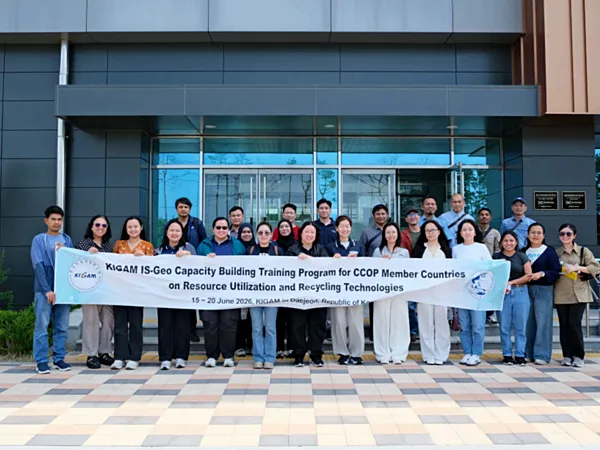
Armani Estanislao of the MGB's Lands Geological Survey Division and Engr. Albertini Buca of the Metallurgical Technology Division represented the Philippines at the KIGAM IS-Geo Capacity Building Training Program on Resource Utilization and Recycling Technologies, held from June 15 to 20 in Daejeon, Republic of Korea.

The program was jointly organized by the Coordinating Committee for Geoscience Programmes in East and Southeast Asia (CCOP) and the International School for Geoscience Resources (IS-Geo) of the Korea Institute of Geoscience and Mineral Resources (KIGAM). It brought together 26 geoscience professionals from 11 CCOP member countries.

The weeklong training featured lectures and technical field visits focusing on sustainable mineral processing, critical minerals and circular economy practices.

Participants discussed mineralogical characterization techniques to improve the extraction and beneficiation of critical minerals, including lithium, titanium, graphite and rare earth elements.

The program also highlighted resource recirculation strategies through waste-to-resource systems. Participants visited facilities using artificial intelligence and robotics to automate waste sorting and recover valuable materials from end-of-life products.

The Philippine delegates also toured an industrial-scale battery recycling plant that uses environmentally friendly technologies to recover critical metals from spent electric vehicle batteries, reducing environmental impacts while helping secure supplies of strategic raw materials.

According to the MGB, the training will support the bureau's efforts to strengthen mineral exploration and develop more efficient processing methods for the country's critical mineral resources, including low-grade and unconventional deposits.

The bureau said the program also reinforced the integration of geology and metallurgy to promote science-based resource management and support the Philippines' goal of sustainable mineral development.

July 08, 2026

Nickel Asia Corp. (NAC) has earned multiple honors at the Philippines Leadership Awards 2026, reinforcing its commitment to fostering a people-centered workplace and strengthening its human resource practices.

The awards, organized by the World HRD Congress, recognized NAC with the Philippines' Best Employer Brand Award, the Happy Employer Brand Award for the second consecutive year, and the Top Most Organizations with Innovative HR Practices Award.

The recognitions highlight the company's efforts to build a workplace that supports employee growth, professional development, innovation, and well-being.

NAC Vice President for People Transformation & Workplace Ma. Fatima C. Mijares also received the HR Iconic Leader Award in recognition of her leadership in advancing people-focused initiatives that have enhanced employee experience across the organization.

Mijares accepted the awards together with members of the company's Human Resources team, underscoring the collaborative effort behind NAC's people and workplace programs.

The company said the awards reflect its belief that business success begins with its workforce. Through continuous learning and development, meaningful employee engagement, innovation, and a culture anchored on its "People First" values, NAC aims to create an environment where employees are empowered to contribute, develop their potential, and build long-term careers.

Nickel Asia, one of the Philippines' largest nickel ore producers, said it remains committed to strengthening its workplace culture as part of its broader strategy for sustainable business growth and organizational excellence.

July 06, 2026

The Mines and Geosciences Bureau (MGB) has strengthened the technical capabilities of its geologists through a comprehensive training program on two-dimensional (2D) georesistivity survey techniques, enhancing the agency's capacity for subsurface characterization and mineral exploration.

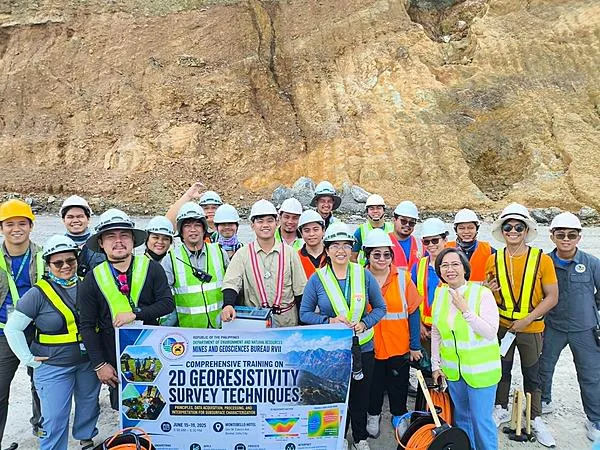
Held from June 15 to 19 in Cebu City, the Comprehensive Training on 2D Georesistivity Survey Techniques: Principles, Data Acquisition, Processing, and Interpretation for Subsurface Characterization brought together geologists from MGB Regional Offices VI, VII, VIII, and the Negros Island Region (NIR).

The training forms part of the Bureau's capacity-building initiatives under the National Mineral Reservation Program (NMRP), which aims to strengthen geophysical investigation capabilities in support of mineral resource assessment and geoscientific research.

Organized by MGB Regional Office VII under the leadership of NMRP Focal Person and Senior Geologist John Christopher Santos, the program focused on enhancing technical competencies in subsurface characterization through the application of electrical georesistivity survey techniques.

The initiative also sought to strengthen collaboration among MGB regional offices in the Visayas by promoting knowledge sharing and providing participants with practical field experience.

Training sessions were facilitated by Dr. Mel Anthony A. Casulla of MGB Regional Office XII, who discussed the principles and applications of electrical resistivity surveys, including survey design, data acquisition procedures, quality assurance, and interpretation of geophysical data.

A key component of the program was a field exercise conducted on June 17 at the Carmen Copper Corp. mine site, where participants carried out an actual 2D georesistivity survey under field conditions.

The practical exercise included survey line establishment, electrode deployment, equipment setup, and field data acquisition, allowing participants to gain firsthand experience in conducting geophysical investigations.

Following the fieldwork, participants processed the collected datasets using specialized geophysical software to generate two-dimensional subsurface resistivity models and interpret underground geological features.

The five-day program concluded with a synthesis session in which participants presented their survey methodologies, processed resistivity sections, geological interpretations, and technical recommendations.

According to the MGB, the training significantly enhanced participants' competencies in georesistivity surveying and strengthened the Bureau's ability to undertake subsurface characterization and mineral exploration activities in support of the National Mineral Reservation Program and other geoscientific initiatives.

The bureau said continued investments in technical training and modern geophysical methods will help improve the quality of geological investigations, support evidence-based mineral resource management, and reinforce the country's capacity to identify and evaluate mineral potential through advanced exploration techniques.

July 06, 2026

Building lasting relationships with host communities requires more than delivering projects—it demands trust, patience, and genuine partnership, according to the community relations manager of TVI Resource Development Philippines Inc. (TVIRD).

Kahlil Pope Tabernero, who oversees community relations for TVIRD's Agata, Balabag, and Siana mining projects, said successful community development depends on working alongside local residents rather than imposing solutions.

"Development only works when it is done in partnership with the communities, and not for them," Tabernero said.

He said community engagement often begins in areas where mining companies are viewed with skepticism because of previous experiences.

"Trust is built through actions and respect for people's life experiences and culture," he said, adding that communities need to see consistent actions over time before they gain confidence in development initiatives.

Tabernero said his approach has been shaped by years of working with communities that have different experiences with development, including Indigenous Peoples, where cultural traditions and customary practices play a central role in decision-making.

He said meaningful engagement requires listening to community concerns and involving residents in decisions that affect their livelihoods and the environment.

"There were moments when decisions had to be made under great uncertainty, and not everyone could be satisfied despite the company's best efforts," he said. "You cannot simply impose solutions. You have to work through them together."

Tabernero said his interest in community development was influenced by his upbringing in a family involved in public service and community work.

He said the experience taught him that development initiatives become more sustainable when communities actively participate in shaping them.

The work, however, often requires personal sacrifice.

Tabernero said field assignments have meant missing birthdays, holidays, and other family occasions to respond to community needs.

In April, a motorcycle accident temporarily halted his fieldwork, giving him a different perspective after becoming a recipient of support from colleagues and the company's management during his recovery.

"They treated me like family," he said.

For Tabernero, the success of community programs is measured not only by project completion but by their long-term impact.

He cited scholarship recipients who complete their education, livelihood initiatives that grow into sustainable businesses, and communities that eventually become less dependent on company assistance as indicators of successful development.

"These are signs that programs have gained the proper momentum," he said.

He added that community development requires patience and long-term commitment, noting that projects may eventually conclude, but the relationships established with host communities endure.

"Projects eventually end, but relationships remain," Tabernero said.

TVIRD said it continues to implement community development programs across its mining operations as part of its commitment to promoting sustainable development and improving the quality of life in its host communities.

July 06, 2026

The Philippines and Canada have strengthened their cooperation on critical minerals and responsible mining through a new bilateral agreement, while President Ferdinand R. Marcos Jr.'s official visit to Canada also secured new investment commitments that could extend the life of two of the country's largest gold mining operations.

Environment Secretary Juan Miguel Cuna and Canadian Minister of Foreign Affairs Anita Anand signed a Joint Declaration of Intent (JDI) on Energy and Natural Resources in Vancouver, witnessed by President Marcos and Canadian Prime Minister Mark Carney.

The declaration establishes a framework for cooperation on critical minerals development, responsible mining, clean energy, and environmental stewardship as global demand for minerals essential to the energy transition continues to rise.

Cuna said the Philippines possesses significant untapped mineral potential, with an estimated 9 million hectares of the country's 30 million hectares believed to contain mineral deposits that have yet to be explored.

He said Canada has long been recognized as a global leader in responsible mining and advanced mining technologies, making it an important partner as the Philippines seeks to modernize its mining industry.

Building on discussions held during this year's Prospectors and Developers Association of Canada conference in Toronto, the two countries have identified several priority areas for collaboration. These include developing a digital mining governance platform to improve permitting and compliance monitoring, strengthening mine waste and tailings management through Canadian technical expertise, and advancing critical mineral mapping using geoscience and artificial intelligence to accelerate exploration.

According to Cuna, the Joint Declaration of Intent provides the formal framework for implementing these initiatives and expanding long-term cooperation between the two countries.

OceanaGold extends Didipio mine

On the sidelines of his official visit, Marcos also met with executives of Canadian mining companies to discuss new investments in the Philippines.

OceanaGold Corp. committed approximately USD1.9 billion to extend the operational life of the Didipio Gold-Copper Mine through 2037.

The investment is expected to support continued employment, strengthen local economic activity, and sustain responsible mining operations in Nueva Vizcaya and Quirino.

According to the government, the project will leverage the Enhanced Fiscal Regime for Large-Scale Metallic Mining Act and the CREATE MORE Act to improve capital efficiency while minimizing its environmental footprint.

B2Gold expands Masbate operations

Marcos also met with executives of B2Gold Corp. and Filminera Resources Corp., who announced plans to invest approximately USD14 million to expand the Masbate Gold Project through additional exploration activities and a larger solar power facility.

According to the Presidential Communications Office, the investment will support the expansion of the mine's renewable energy capacity while funding ongoing exploration programs.

B2Gold also briefed the President on plans, subject to further agreement between the parties, to provide technical and exploration expertise to evaluate opportunities for extending the operational life of the Masbate Gold Project.

The company likewise presented new exploration initiatives through the B2Gold Philippines Exploration Office, which it established following its positive operating experience in the country.

The investment commitment reflects the Canadian miner's continued confidence in the Philippine mining industry.

The Masbate Gold Project, jointly operated by B2Gold subsidiary Philippine Gold Processing and Refining Corp. and Philippine company Filminera Resources Corp., is one of the country's largest open-pit gold mining operations.

In 2025, the project generated more than PHP10 billion in taxes for local and national governments.

According to the Presidential Communications Office, these tax revenues helped transform the host municipality of Aroroy in Masbate from a fourth-class municipality into a first-class municipality, supporting investments in public infrastructure, educational assistance, and scholarship and skills training programs.

In a social media post following the meeting, Marcos said the Masbate Gold Project has already generated billions of pesos in taxes that have improved infrastructure, expanded educational opportunities, and strengthened local livelihoods.

He said the government would continue pursuing investments that place Filipino communities at the center of resource development.

The Canada partnership and the new investment commitments underscore the Marcos administration's strategy of positioning the Philippines as a reliable supplier of critical minerals while promoting responsible mining practices, stronger environmental governance, and sustainable investments to support the global energy transition.

July 02, 2026

Nickel Asia Corporation (NAC), the Philippines' largest producer of lateritic nickel ore and a growing player in renewable energy, has become the first mining company in the country to receive validation from the Science Based Targets initiative (SBTi) for its greenhouse gas (GHG) emissions reduction targets.

The validation confirms that NAC's GHG emissions reduction targets are aligned with climate science, with targets to reduce absolute Scope 1 and Scope 2 emissions by 42% by 2030, and Scope 3 emissions by 37.5% by 2035, from a 2024 base year.

"This is a significant achievement for all of us at NAC, as we join thousands of global companies that have received SBTi validation for climate commitments aligned with the United Nations' Paris Agreement to combat climate change," said NAC Senior Vice President for Sustainability, Risk, External Affairs, and Communications and Chief Sustainability Officer Jose Bayani Baylon.

SBTi's independent assessment recognizes NAC's commitment to setting meaningful and measurable emissions reduction targets that support climate action across the organization.

Developed through the collaboration of Mine Operations, the Mining Center of Excellence and Technical Operations, Mining Compliance, the Procurement Center, Corporate Finance, and the Sustainability Center, these targets are supported by NAC's ongoing development of its second-cycle Sustainability Roadmap, which outlines actions to reduce emissions across its operations using data provided by process leads from all business units.

NAC aims to achieve net-zero emissions by 2050, with interim targets for 2030 as defined in its Sustainability Roadmap. These commitments include engaging value chain partners to advance climate action and support the transition to a low-carbon future.

According to NAC Assistant Vice President for Sustainability Edwin P. Nerva, "We've worked long and hard to reach this milestone."

"Each one of us at NAC plays an important role in this collective effort—embedding sustainability in our operations, engaging our communities, collaborating with suppliers and business partners, and creating long-term value for all our stakeholders. This is just the beginning," Nerva said.

The SBTi is a corporate climate action organization that enables companies worldwide to set emissions reduction targets in line with the latest climate science and the goals of the Paris Agreement.

NAC is a diversified natural resources development company in the Philippines with a portfolio that includes six operating nickel mines, a 10% stake in the Taganito HPAL project, and a rapidly growing renewable energy subsidiary.

Learn more at www.nickelasia.com and follow us on X (formerly Twitter), Facebook, and LinkedIn.
July 01, 2026

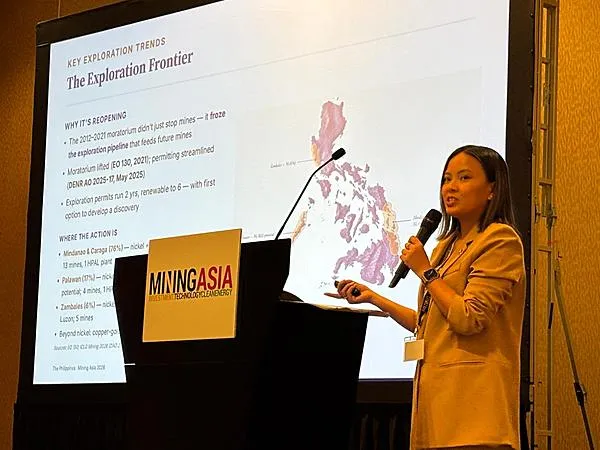
The Philippines showcased its critical minerals investment opportunities, flagship mining projects and fiscal incentives to international investors during the two-day Mining Asia Conference in Singapore, highlighting the country's ambition to move beyond raw mineral exports and develop a value-added processing industry.

The Department of Trade and Industry, through the Philippine Trade and Investment Center in Singapore and the Board of Investments (BOI), led the country's participation in the June 23-24 conference, where government officials promoted the Philippines as a strategic destination for critical minerals investment.

Speaking during the conference, PTIC-Singapore Commercial Counsellor Carla Grepo said the Philippines was well positioned to benefit from growing global demand for critical minerals, citing its abundant resource base, renewed mining investment climate and recently implemented fiscal reforms.

Grepo said the country's greatest opportunity lies in expanding domestic mineral processing, noting that while the Philippines is the world's second-largest nickel producer, about 95% of its nickel ore is still exported in raw form.

She said rising demand for critical minerals, coupled with efforts by governments and manufacturers to diversify supply chains, creates an opportunity for the Philippines to attract investment, technology and long-term industry partners.

Grepo highlighted several large-scale copper-gold projects nearing development, including the Silangan project in Surigao del Norte, which is expected to begin commercial operations in early 2026; the King-king project in Davao de Oro, which has advanced to the definitive feasibility study stage; and the Tampakan project in South Cotabato, one of the world's largest undeveloped copper-gold deposits.

During a panel discussion on strategic mining investments, Grepo said geopolitical tensions have shifted investor priorities from securing the lowest-cost mineral supplies to ensuring reliable and diversified sources.

She said investors are increasingly seeking jurisdictions that offer regulatory certainty, supply chain traceability and stable long-term partnerships, presenting an opportunity for the Philippines to strengthen its position in the global critical minerals market.

The Philippine delegation also mounted an exhibition booth that attracted steady investor inquiries throughout the conference, reflecting growing interest in the country's mining sector.

BOI Acting Director for the Resource-Based Industries Service Francis M. Peñaflor said green metals, including critical minerals, have been identified as a national priority sector under the government's industrial development strategy.

He said the BOI's "4Ps" framework — policy, permitting, partnership and projects — aims to develop the country's entire minerals value chain while supporting strategic industries such as renewable energy, electric vehicle batteries, semiconductors, electronics, digital infrastructure and advanced manufacturing.

Peñaflor also highlighted the government's Green Lane for Strategic Investments, which expedites permits and regulatory approvals for priority projects.

He said qualified critical minerals projects may avail themselves of incentives such as income tax holidays, enhanced tax deductions, and duty and value-added tax exemptions on imported capital equipment. Strategic investments worth at least PHP50 billion or generating at least 10,000 direct jobs may qualify for income tax-based incentives for up to 40 years.

The Philippines ranks among the world's top five countries in nickel, copper and cobalt reserves. It was the world's second-largest producer of mined nickel in 2024, accounting for an estimated 9% to 10% of global supply, behind Indonesia. The country's metallic mineral production increased by about 22% year on year in the first half of 2025, driven largely by higher gold prices.

Mining Asia brings together mining executives, government officials, investors and industry experts from more than 30 countries to discuss trends, investment opportunities and challenges facing the regional mining industry.

See Our Latest Issue