Listed natural resources development company Nickel Asia Corporation (NAC) (PSE: NIKL) reported today its financial and operating results for the three-month period ended March 31, 2025.
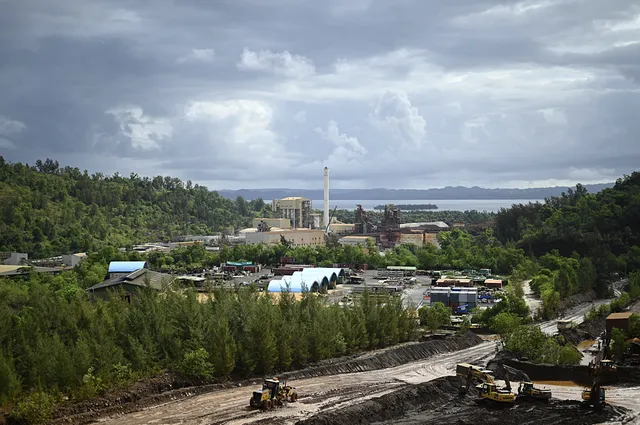
Attributable net income (net of minority interest) reached ₱501.03 million, up 148 percent from ₱202.38 million in the same period last year. This was primarily driven by higher prices for ore exports and a ₱800 million one-time income from the sale of the Company’s 15.625-percent stake in Coral Bay Nickel Corp. (CBNC). However, challenging weather conditions drove up mining costs. Furthermore, Taganito HPAL underwent plant maintenance in March, affecting ore deliveries from the Taganito mine.
Mining Highlights
Renewable Energy Highlights
For the first quarter of the year, Emerging Power, Inc.’s (EPI) subsidiary, Jobin SQM, Inc. (JSI), increased generation by 30 percent year-on-year to 58,157-megawatt hours resulting from the additional 72 MW capacity added in February last year. Higher generation increased EBITDA by 17 percent to ₱196 million.
EPI is on track to achieving its 1-GW target by 2028:
Outlook and Remarks
“With improving weather conditions and the opening of our Surigao, Manicani and Dinapigue mines, we expect mining costs to normalize and revenue growth to continue in the second quarter, supported by the continuing recovery in nickel ore prices and volume growth from our new mining areas. Additionally, ongoing enhancements to the causeway at our Dinapigue mine will boost production and shipping efficiency,” said NAC President and CEO Martin Antonio G. Zamora
“In the area of renewable energy, we look forward to adding 120 MW of capacity in the second half of the year, with the launch of the Leyte Phase 1 solar project.”
He added: “Similarly, we continue to advance the exploration and development of gold and copper prospects under Cordillera Exploration Co., Inc. Through these efforts, we remain focused on scaling responsibly and maintaining strong performance amid evolving global market conditions.”
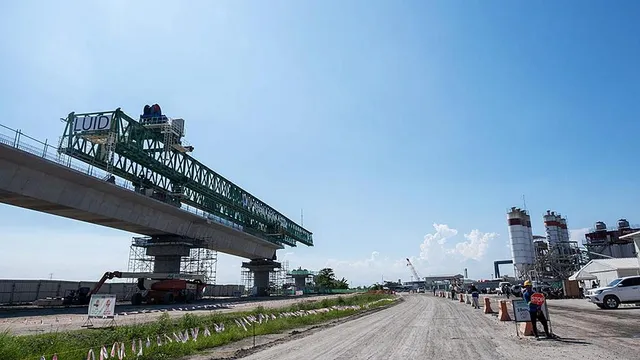
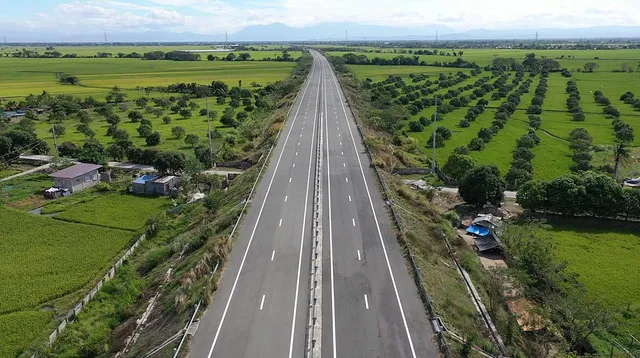
The Department of Public Works and Highways (DPWH) has reported significant progress in the ongoing construction of the Central Luzon Link Expressway (CLLEX) Phase I, aiming for full completion and operational connectivity between the Subic-Clark-Tarlac Expressway (SCTEX) in Tarlac City and Maharlika Highway in Cabanatuan City, Nueva Ecija by July 2025.
CLLEX is a flagship project under the “Build Better More” infrastructure program and forms a key component of President Ferdinand R. Marcos Jr.’s Bagong Pilipinas agenda. The initiative aims to stimulate inclusive growth, strengthen regional connectivity, and promote balanced development beyond Metro Manila.
In an inspection report to DPWH Secretary Manuel M. Bonoan, Senior Undersecretary Emil K. Sadain stated that Contract Package 4 - a 10.30-kilometer segment known as the Cabanatuan Section—is now 98% complete.
Senior Undersecretary Sadain, in-charge of DPWH infrastructure flagship projects funded through Official Development Assistance (ODA), noted that Contract Package 4 - despite facing nearly two (2) years of delay due to road right-of-way issues, is part of the 29.55-kilometer, four-lane expressway expected to reduce travel time between Tarlac City and Cabanatuan City from 70 minutes to just 20 minutes, benefitting over 11,200 motorists daily.
Key components of the Contract Package 4 under contract with Qingdao Municipal Construction Group Co., Ltd., includes one (1) interchange; three (3) bridges; eight ( reinforced concrete box culverts (RCBCs); seven (7) farm passages; multiple underpasses; and asphalt pavement works.
Meanwhile, Contract Package 5 or the Zaragoza Interchange is being constructed by the Pacific Concrete Products, Inc. and China Construction First Group Corporation Limited Consortium, and is currently 73.46% complete.
This segment involves: Zaragoza Interchange Bridge (113.4 linear meters); 4.88-kilometer access road; two (2) bridges (19.4 linear meters); five (5) equalizer reinforced concrete box culverts; two (2) farm passages; and seven (7) irrigation canals.
Completion of Contract Package 5 is expected within the 3rd Quarter of 2025.
Completion of Contract Package 5 is expected within the third quarter of 2025. While most of CLLEX is funded through a loan agreement with the Japan International Cooperation Agency (JICA), this package is fully financed by the Government of the Philippines.
President Ferdinand R. Marcos Jr. continues to highlight infrastructure development as a central pillar of economic recovery and national progress under his administration.
The field inspection on May 7, 2025, was conducted to oversee construction activities, review engineering progress, and ensure adherence to quality and safety standards. Present during the site visit were Unified Project Management Office - Roads Management Cluster I (UPMO-RMC I) Project Director Benjamin A. Bautista; Stakeholders Relations Service Director Randy R. Del Rosario; Project Manager Nelson T. Graza; Project Engineer Albert B. Manuel; Engr. Allen P. Penaojos; and Mr. Philip T. Lopez of Pacific Concrete Products, Inc.
Project Director Bautista reaffirmed the UPMO-RMC I team’s commitment to sustaining construction momentum, especially following the resolution of longstanding right-of-way issues with affected landowners.
Once completed, CLLEX Phase I is expected to provide a fast, safe, and reliable route across Region III, significantly boosting logistics, reducing traffic congestion, and linking urban centers with key agricultural zones.
The Philippines has 185 projects worth PHP2.90 trillion currently in the pipeline to be undertaken by the government and the private sector, latest data from the Public-Private Partnership (PPP) Center showed.
Of the total number, 122 projects worth PHP2.74 trillion will be implemented by the national government, while the remaining 63 projects, amounting to PHP159 billion, will be implemented by local government units.
Majority of these projects will be located in the National Capital Region, Region III (Central Luzon), Region IV-A (Calabarzon), Region I (Ilocos Region), and Region II (Cagayan Valley).
PPP Center data showed that some of the biggest projects in the pipeline include the PHP497.27-billion North Long Haul (NCR-Ilocos Norte and Cagayan) Inter-Regional Railway Project; PHP200-billion Maynilad Water Services Inc. Revised Concession Agreement Term Extension; PHP171.78-billion North-South Commuter Railway Operations & Maintenance (O&M) Project; PHP163.94-billion Project KILO; PHP150-billion Manila Water Company Inc. Revised Concession Agreement; PHP130.90-billion MRT-7 Airport Access-North Line Project; PHP122.61-billion C5-MRT 10 Project; the PHP107-billion MRT-7 Katipunan Spur Line Project; and the PHP100.64-billion Mindanao Raiwaly Project Phase 3.
Other big projects in the pipeline include the Cebu Monorail Transit Project; MRT 11 Project; East-West Rail Project; Metro Manila Subway Project Operations and Maintenance; Iloilo-Santa Barbara Bus Rapid Transit; Public-Private Partnership for School Infrastructure Project Phase 3; and the San Mateo Railway Project.
The Marcos administration earlier vowed to accelerate infrastructure development in the country.
President Ferdinand R. Marcos Jr. directed Transportation Secretary Vince Dizon to prioritize key infrastructure projects, including the Metro Manila Subway, the development of regional airports, and the expansion of the port system, and agricultural ports.
Consunji-led Semirara Mining and Power Corp. (SMPC) said it expects to secure within the second of this year the clearance from the Department of Environment and Natural Resources (DENR) for its coal mine expansion project in Antique.
"We expect to receive the ECC (environmental compliance certificate) for the Acacia mine from the DENR within the second half of 2025," SMPC president, chief operating officer and chief sustainability officer Maria Cristina Gotianun said during the company's virtual annual stockholders meeting on Monday.
Data from the SMPC showed that Acacia holds around 80 million metric tons (MMT) of coal reserves.
"Exploration and pre-stripping activities are currently underway, with production targeted to begin within 2026," Gotianun said.
The opening of the Acacia mine is part of the company's PHP291-billion coal mine expansion project in Antique.
The company earlier disclosed that the amount would be used to expand its existing Molave and Narra pits and the operations of Acacia.
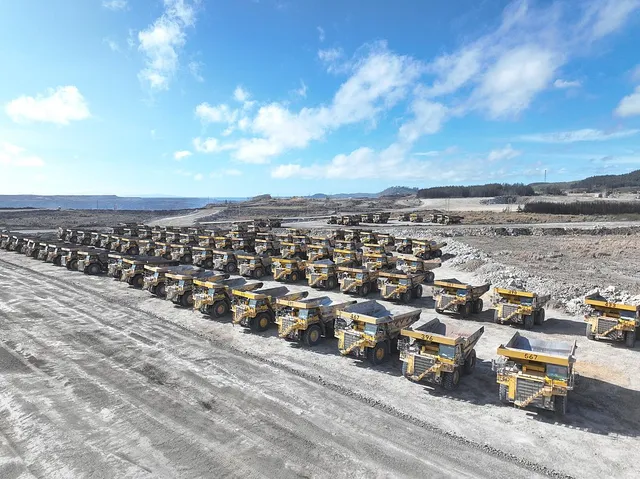
SMPC, the largest coal producer, earlier reported a net income of PHP4.4 billion for the first quarter of 2025.
Total coal production rose by 16 percent from 4.9 million metric tons (MMT) to 5.7 MMT, driven by improved access to seams in the Narra mine, following continuous pre-stripping activities in 2024. By Anna Leah Gonzales
Article courtesy of the Philippine News Agency
Without comprehensive geotechnical ground investigations, even the most advanced mining projects can face devastating delays, increased costs, and safety risks.
Geotechnical ground conditions are the single biggest risk to establishing a mine, its infrastructure including tailings storage facilities, large earthworks and tunnelling related projects. You must invest in geotechnical investigations sufficient to understand ground risk and develop credible mitigation plans.
There are three components to effectively ensure the value of your investment:
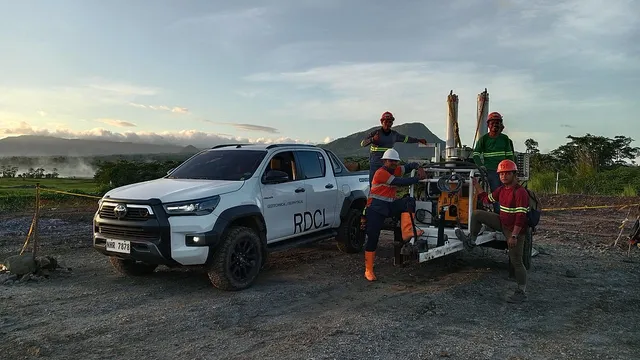
RDCL Specialist geotechnical testing contractors provide high quality ground investigation and in situ measurements using surface and downhole geophysics and Cone Penetrometer Testing (CPT).
The company has the longest track record in the Philippines in the delivery of these tools, being involved in the establishment of many leading mines in the country since the early 2000’s. Our leading engineers acquire high quality data, passed to specialist technicians and reviewed by Lead Discipline experts.
RDCL Philippines is not yet ISO registered so cannot issue under that marque; all work undertaken by RDCL Philippines is to RDCL (NZ) standards and processes which are ISO 9001:2015 certified.
The Value of the Investment
Investing in detailed geotechnical investigations upfront not only reduces operational and safety risks but also minimizes the potential for costly delays and redesigns.
As the mining industry also faces increasing pressure to meet sustainability goals, RDCL's ability to provide precise ground data helps ensure compliance with environmental regulations, builds a knowledge base of data and helps ultimately to prove stability and surety to close the operation.
Scoping with a Bonafide Specialist
RDCL have 25 years’ experience handling complex geotechnical investigations for large scale mines and infrastructure. We hold world records for deep testing and have worked on we would say are all the leading mines in the Philippines.
Our seasoned engineers work intimately with the unique challenges posed by the Philippines' geology and operating environment. Their expertise has consistently delivered results that ensure safety and efficiency in even the most challenging conditions.
We are the most experienced and the best to have on your project.
How Does the Process Work?
You benefit by using us to oversee the technical aspects of your ground investigation program, conduct specialist tests and provide factual completion documentation. RDCL’s mission is to stay on task, manage uncertainty and execute to schedule and budget to avoid delays and overruns.
Our team works closely with yours to develop a detailed investigation plan that aligns with the project’s timeline, budget, and risk profile, ensuring all necessary tests are completed on time and within budget. We can further help you scope and specify and evaluate technical capability of contractors to produce data that accurately reflects the site conditions.
Our approach is to work in productive partnership with you and your team, and we are very adept at problem solving in real-time under difficult conditions. Specialist Tools
Specialist Tests
RDCL has an ongoing track record of specialist ground investigation techniques and making them available in the Philippines to greatly improve project outcomes.
These techniques help us identify geological features such as fault lines, water tables, and rock properties that can impact the stability of mining operations, infrastructure projects, and tailings management.
For example, seismic refraction methods can reveal variations in bedrock depth or provide insights into rock strength, which are crucial for mine design and construction of safe, stable structures. Similarly, electrical resistivity surveys can detect areas of weakness or potential groundwater flow, which is essential for assessing risks to tailings dams or other earthworks.
By integrating surface geophysics with other testing methods like Cone Penetrometer Testing (CPT) or downhole televiewers, we create a comprehensive understanding of the ground conditions, enabling you to make better-informed decisions, mitigate risks, and improve the overall project outcome.
Make RDCL Your First Phone Call
RDCL’s combination of cutting-edge tools, unmatched experience in the Philippine market, and our collaborative approach sets us apart as the preferred partner for mining projects.
We have the people and equipment on the ground in the Philippines to execute high quality ground investigations, and our teams and tools are suited to your projects.
Together we combine our expertise with your design teams to execute any project. Contact us today to discuss how RDCL can enhance your mining project’s success with tailored, high-quality geotechnical services. Let’s set up a meeting to identify how we can support your objectives and deliver results.
In 2024, Johnson Screens® celebrated its 120th anniversary. The company that became synonymous with well screens with the invention of its original Vee-Wire® has diversified its portfolio over the years to provide complete solutions for the water wells industry. This is the story of how it happened.
The story of Johnson Screens began as Edward E. Johnson waited at the train station one cold February morning in Minnesota, USA. There, he received word that a well screen he had been waiting for wouldn't be arriving on the next train. He had ordered the screen over a month before, and now his crew would be held up longer. Johnson's impatience was obvious when the railroad station master suggested he make the same screen himself.
Johnson's reply was, "Nope! If I ever make one, it will be something different and better. Any fool can copy somebody else's idea. I'm going to develop a well screen with a lot more open space for the water to come through."
This conversation prompted Johnson to think about building a better well screen. During the train ride home that very day, Johnson started drawing and making calculations on how to do just that. In March 1904, Johnson completed his first well screen, forever changing the water well industry. After modifying his machine, he made the first Johnson brass strip well screen.
Johnson also envisioned the continuous slot well screen in the early 1900s. He reasoned that it would provide more open area per square foot of screen, allowing more water into the well.
However, he ultimately had to wait until the 1630s for welding technology to catch up.
The widespread use of electric welding and its rapid development in the late 1920s led Edward Johnson to complete his dream of a continuous slot-welded screen using the Vee-Wire concept.
In July 1930, he applied for a patent for this method of manufacturing screens. Later, another patent was obtained for the Electric-Master-Weld screen machine using resistance welding without a switch. The quality of this manufacturing process ensured consistent slot spacing and screen integrity, which ensured the longevity of well completion.
The first continuous slot well screen made with Vee-Wire used for an irrigation well in St. Paul, Minnesota, is a testament to the quality of this manufacturing process.
This screen, installed in 1932 and removed from the well in 1961, was in nearly perfect condition after 30 years, clearly demonstrating the signature durability of a Johnson Screen.
A Global Leader Is Born
The 1960s were a time of rapid growth and global expansion for the company. This trend would continue as the new decade dawned, pushing Johnson Screens ever closer to becoming the organization we recognize worldwide today.
The first Johson Screens international facility was established in Naintré, France, initially to support the company's flagship water well family of solutions.
As the company's workforce continued to expand and new applications for their screening solutions appeared in previously untapped markets, Johnson Screens established additional factories in India (1964), Australia (1967), Japan (1966) and Brazil (2005), all of which contribute to the company's ongoing success.
Johnson Screens also expanded to form its Industrial Screens department, supporting other markets, such mining, pulp and paper, and food and beverage.
In 1966, Johnson Screens published the first edition of the globally recognized Groundwater and Wells book series. That book, known throughout the global water well industry as the "Green Bible" because of its unmistakable green binding, represents a comprehensive guide for designing, installing, and maintaining water wells.
It firmly established Johnson Screens as a technical expert within the water well industry, a role the company has proudly played ever since. In support of the book's teachings, Johnson Screens started to offer Groundwater and Wells Design classes domestically and internationally.
The company was family-owned for the first 60+ years of Johnson Screens' history. That changed in 1966 when the company (then known as "E.E. Johnson Inc.”) was purchased by UOP.
A series of mergers and acquisitions followed that initial purchase. Currently part of the Aqseptence Group, GmbH, Johnson Screens is a sister brand with other historic leader organizations in the water business.
In 2020, a company-wide realignment called ONE Johnson brought all the regional branches together as one global company with one objective: supporting customers and fulfilling their needs.
The company now leverages its global capabilities and expertise under a unified brand identity that resonates with its long-standing history and traditions and aligns with its operational strengths.
Ultimately, the move has consolidated Johnson Screens' mindset as a "solutions provider" rather than a "product manufacturer."
Water Wells Solutions with Tradition in Innovation
That drive is clearly demonstrated in Johnson Screens’ Water Wells portfolio of solutions. Beyond the well screens that initiated its impeccable reputation, the company offers various screening solutions and products with a mission to support our customers on their journey to environmental sustainability with innovative screening solutions
Those complete solutions have been used in high-capacity wells and in challenging environments, such as Managed Aquifer Recharge (MAR) and Aquifer Storage Recovery (ASR) projects, as well as Geothermal and Direct Lithium Extraction (DLE) wells.
Today, after 120 years, Johnson Screens continues to follow Edward E. Johnson's spirit of innovation by creating better solutions with the aim of serving the industry for another 120 years and beyond.
Through this tradition of innovation, the company commits to providing complete solutions for the mining water well industry.
Integrated energy company Semirara Mining and Power Corporation (SMPC) reported a net income of P4.4 billion for the first quarter of 2025, a 33-percent decline from P6.5 billion last year, on improved power segment performance amid continued normalization of coal selling prices.
“We navigated the softer energy market through improved power generation and coal production, strengthened contracting strategies, and disciplined cost management. These fundamentals will continue to guide us in an increasingly dynamic energy landscape,” said Maria Cristina C. Gotianun, SMPC President, Chief Operating Officer and Chief Sustainability Officer.
Quarter-over-quarter, group earnings rose by 11%, from P3.92 billion, driven by stronger contributions from the power segment.
Coal Operating Results
Total production rose by 16%, from 4.9 million metric tons (MMT) to 5.7 MMT, driven by improved access to seams in the Narra mine, following continuous pre-stripping activities in 2024.
Total shipments dipped by 2%, from 4.8 MMT to 4.7 MMT, on lower domestic sales, while foreign shipments remained steady at 2.7 MMT, supported by additional shipments to China, Brunei and Vietnam.
Semirara coal ASP receded by 17%, from P2,978 per metric ton (MT) to P2,481 per MT, reflecting stabilizing market prices and a higher proportion of lower-grade coal shipments.
Global benchmark prices further corrected during the period, with the Newcastle Index (NEWC) declining by 16%, from US$126.0 to US$105.4, while the Indonesian Coal Index 4 (ICI4) fell by 14%, from US$57.2 to US$49.3.
Power Operating Results
Total gross generation increased by 9%, from 1,408 gigawatt hours (GWh) to 1,535 GWh, on expanded average capacity of SEM-Calaca Power Corporation (SCPC) following restoration of SCPC Unit 2’s dependable capacity to 300 MW on May 27, 2024.
In turn, total power sales grew by 11%, from 1,281 GWh to 1,427 GWh, with the majority (64%) of generated electricity sold to the spot market.
The overall average selling price (ASP) remained stable, slipping marginally by 1%, from P4.47/kWh to P4.42/kWh, as improved bilateral contract quantity (BCQ) ASP offset lower spot ASP. Average spot prices in the Luzon-Visayas grid softened by 21%, from P4.61/KWh to P3.63/kWh, on increased supply capacity.
At the end of the period, 40% of the 840MW dependable capacity of the power segment is contracted, in line with Management’s target to contract approximately half of its net selling capacity. Net of station service, which fluctuates periodically, SMPC has 421.60 MW available for sale to the spot market.
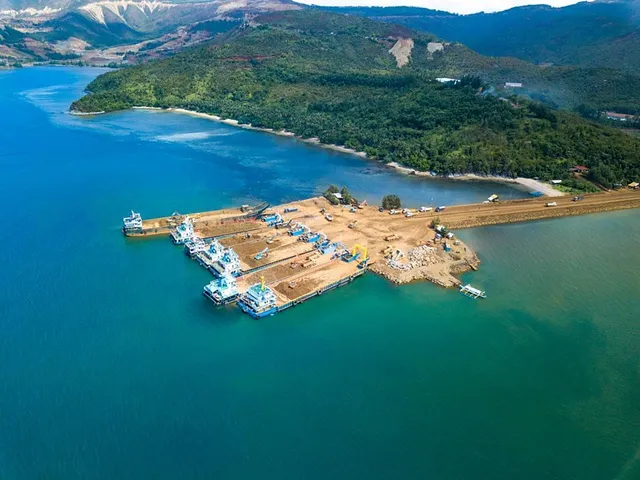
Platinum Group Metals Corporation (PGMC), the operating arm in Surigao del Norte of diversified conglomerate Global Ferronickel Holdings, Inc. (FNI), announces the successful dispatch of its first nickel ore shipment for the year and it is heading to Indonesia. The first shipment, aboard M/V YUE DIAN 59, left the PGMC anchorage area last April 30, 2025 carrying a total of 56,625 wet metric tons (WMT) of nickel ore. The cargo consists of low-grade ore with 1.25% Ni and iron content below 20%, marking the beginning of what is set to be a strong operational year for PGMC.
“This first shipment to Indonesia represents a key strategic move for FNI as we continue to strengthen our international market presence and diversify our client base. China remains our biggest market but the demand from Indonesia has been growing significantly since the past year,” said FNI President Dante R. Bravo.
PGMC targets to complete 91 shipments for the year, totaling five million WMT, weather permitting. The projected sales mix will consist of 47% medium-grade nickel ore and 53% low-grade nickel ore.
FNI is committed to maintaining its position as one of the country's leading nickel ore producers and contributing to the growth of the Philippine mining industry.
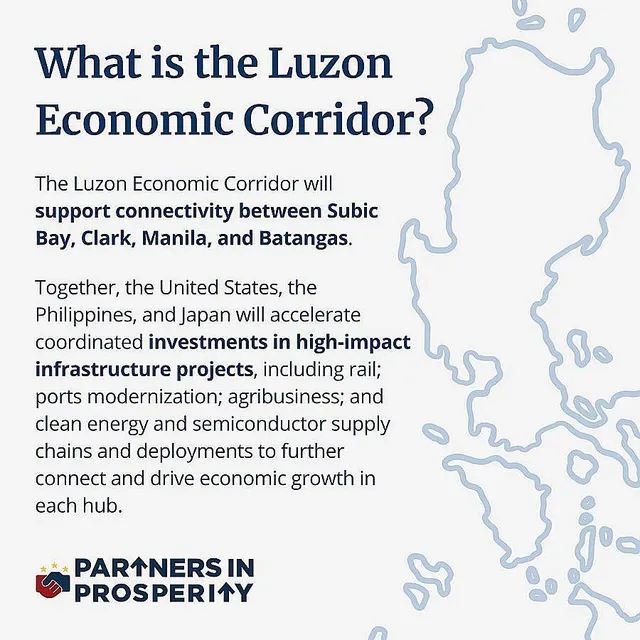
The United States has reinforced its commitment to the Philippines’ infrastructure modernization efforts by continuing the support and raising funding for the Luzon Economic Corridor (LEC) despite the Trump administration halting some US government financing programs in different countries.
Office Special Assistant to the President for Investment and Economic Affairs (OSAPIEA) Secretary Frederick Go said in a statement on Sunday that the US Trade and Development Agency (USTDA) has increased its grant funding for the pre-feasibility study of the Subic-Clark-Manila-Batangas (SCMB) Cargo Railway from USD2.5 million (PHP138.8 million) to USD3.8 million.
Go said the expanded grant was conveyed to the Philippine government on April 28, following a competitive process for the selection of a US consultancy firm.
The OSAPIEA, Department of Transportation, and the US Embassy in Manila are scheduled to meet in the next few days to finalize and sign the Beneficiary Agreement for the SCMB project.
“(This is a) great positive news,” the Palace official said. “This milestone demonstrates that the Philippines-US economic ties are stronger than ever.”
He added that the increased USTDA grant for the SCMB study reflects growing investor confidence and is expected to lead to more employment opportunities along the corridor.
Despite the scaling back of some US foreign aid programs, the recent funding increase underscores Washington’s continued support for the Philippines’ development priorities, particularly in infrastructure and economic connectivity.
Aside from the US funding, discussions are ongoing with Sweden’s development financier Swedfund, which is considering a separate USD1.2-million grant to complement the railway initiative.
The SCMB freight rail is the flagship project of the LEC, which seeks to link key industrial and trade zones in Subic Bay, Clark, Manila and Batangas province.
Once operational, the freight rail system is expected to improve logistics operations, reduce transport costs, and enhance regional competitiveness while creating jobs for thousands of Filipinos.
The LEC is an offshoot of the trilateral meeting of the Philippines, the US and Japan in April 2024.
Go earlier said the United Kingdom, Sweden and Australia signified their intents to join the LEC.
France’s Minister Delegate for Foreign Trade and French Nationals Abroad Laurent Saint-Martin, who visited Manila last month, conveyed to President Ferdinand R. Marcos Jr. the European country’s interest to also join the project.
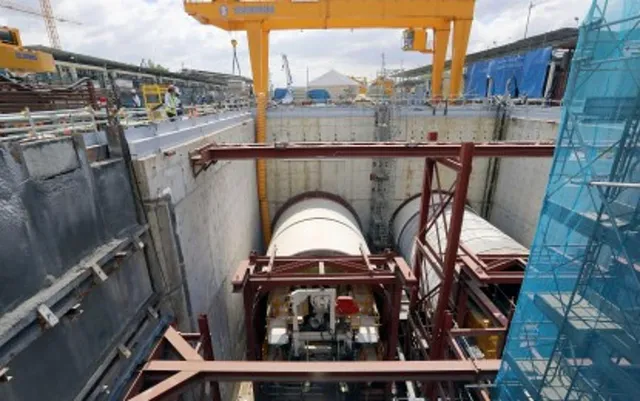
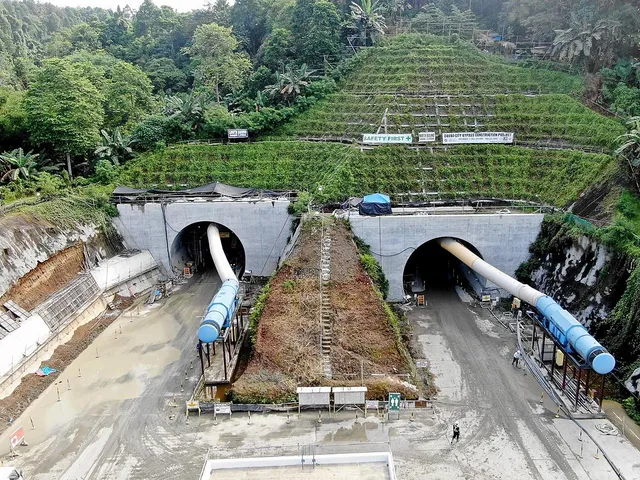
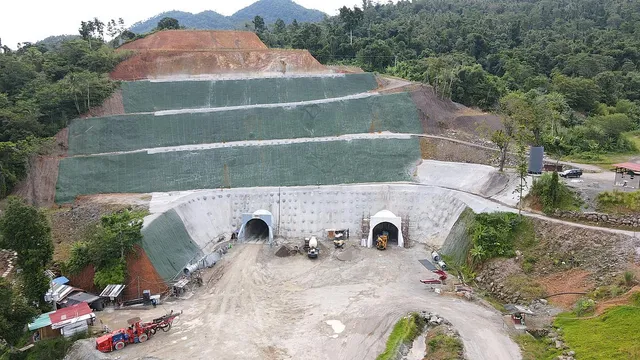
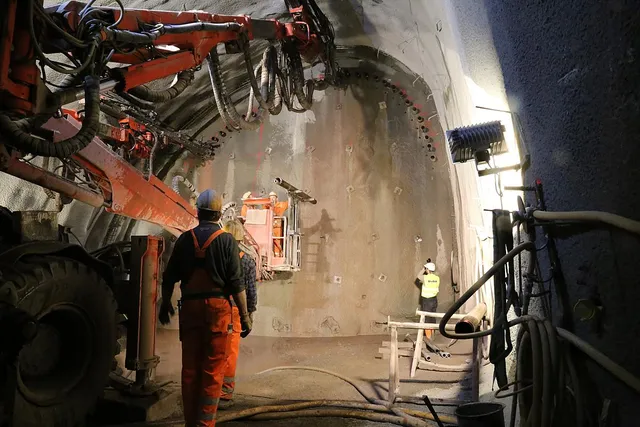
A significant milestone in the Philippine government’s flagship infrastructure program was reached on Monday, April 28, 2025 with the ceremonial breakthrough of the 2.3-kilometer northbound tunnel of the Davao City Bypass Construction Project (DCBCP), held at the North Portal in Barangay Waan, Davao City.
The event, which marks the completion of tunnel excavation works for the two (2) lanes northbound tube, was led by Department of Public Works and Highways (DPWH) Secretary Manuel M. Bonoan alongside Japan’s Minister of Land, Infrastructure, Transport and Tourism Nakano Hiromasa; Japanese Ambassador to the Philippines Endo Kazuya; and Japan International Cooperation Agency (JICA) Chief Representative Takashi Baba.
“This tunnel breakthrough is more than a civil engineering triumph. It represents a bold step in realizing the Build Better More agenda of President Ferdinand R. Marcos Jr., laying the groundwork for a more connected, resilient, and inclusive Bagong Pilipinas”, Secretary Bonoan said.
Secretary Bonoan expressed deep appreciation to the Government of Japan thru JICA for their technical expertise and continued support. He also commended the dedication of the DPWH Unified Project Management Office (UPMO) Operations led by Senior Undersecretary Emil K. Sadain, and contractor Shimizu-Ulticon-Takenaka Joint Venture and consultant Nippon Koei-Nippon Engineering-Katahira Engineers and Philkoei Joint Venture.
The event was also participated by Secretary Leo Tereso A. Magno of Mindanao Development Authority (MinDa) and other high-ranking DPWH officials, including Senior Undersecretary Sadain; Undersecretaries Eugenio R. Pipo, Jr., Eric A. Ayapana, and Anne Sharlyne G. Lapuz; Assistant Secretaries Loreta M. Malaluan and Michael S. Villafranca; and UPMO Project Directors Benjamin A. Bautista, Ramon A. Arriola III, Rodrigo I. Delos Reyes, and Eileen I. Diya; Regional Office XI Director Juby B. Cordon; Directors Randy R. Del Rosario, Juliana D. Vergara, and Reynaldo P. Faustino; and former Project Director Virgilio C. Castillo.
Also in attendance are JICA Senior Representative Fukui Keisuke; First Secretary Ide Masashi and Second Secretary Kinoshita Akito of the Embassy of Japan; and Consulate-General of Japan in Davao Ishikawa Yoshihisa.
The 45.5-kilometer Davao City Bypass is a four-lane, high-capacity highway designed to ease congestion in Davao City and enhance regional connectivity. Once completed, it will reduce travel time between Barangay Sirawan in Toril and Barangay J.P. Laurel in Panabo City from 1 hour and 44 minutes to just 49 minutes—accelerating economic growth across the Davao Region and neighboring provinces.
According to Senior Undersecretary Sadain, the DCBCP is being implemented through six (6) contract packages, five (5) of which are currently under active construction. Procurement for the final package is expected in the third quarter of 2025.
“This tunnel is both a literal and symbolic passage toward a brighter future. It reflects our shared vision of infrastructure that fosters sustainability, economic growth, and strengthened bilateral ties with Japan”, said Senior Undersecretary Sadain.
Showcasing the rich cultural ties between the Philippines and Japan, the ceremony featured a traditional Japanese Kagami Wari (sake barrel breaking) and a ribbon-cutting, symbolizing unity and shared celebration.
Using the New Austrian Tunneling Method (NATM) or the sequential excavation method, the project’s twin tunnels will be the longest mountain road tunnels constructed in the Philippines. The northbound tunnel breakthrough highlights the synergy of Philippine-Japanese collaboration and the integration of cutting-edge tunneling technology with local engineering expertise.
The Davao City Bypass is targeted for full completion and operation by 2028.
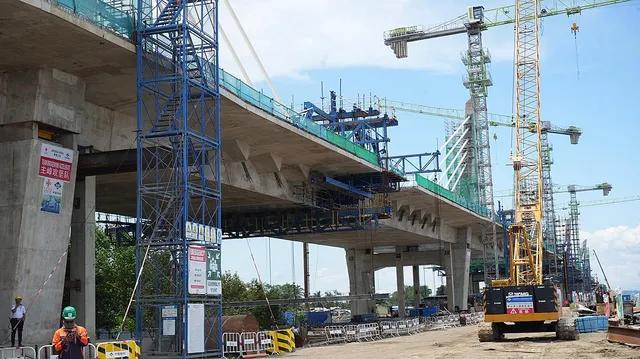
The Department of Public Works and Highways (DPWH) announced major progress on the Davao River (Bucana) Bridge Project, now entering its final phase of construction.
Slated for completion ahead of its original late-2025 deadline, this 1.34-kilometer, four-lane, six-span bridge is poised to transform mobility and connectivity in Davao City.
During a site inspection on Monday, April 28, 2025, DPWH Secretary Manuel M. Bonoan, together with Senior Undersecretary Emil K. Sadain, confirmed that the project is now 85% complete. The inspection emphasized the urgency placed on the bridge’s early delivery, recognizing its vital role in accommodating the estimated 35,000 vehicles that will use it daily.
Among those who participated in the project inspection were Mindanao Development Authority (MinDA) Secretary Leo Tereso A. Magno, DPWH Undersecretaries Eugenio R. Pipo Jr. and Eric Ayapana, Assistant Secretary Loreta M. Malaluan, Unified Project Management Office (UPMO) Project Directors Rodrigo I. Delos Reyes, Benjamin A. Bautista, and Ramon A. Arriola III, DPWH Regional Office XI Director Juby B. Cordon, Stakeholders Relations Service Director Randy R. Del Rosario, and other staff of UPMO Bridges Management Cluster.
In his project update, Senior Undersecretary Sadain, who oversees infrastructure flagship projects funded through Official Development Assistance (ODA), disclosed that the final bridge deck connection is targeted for completion by June 2025. This schedule allows sufficient time for final works, ensuring the bridge will be ready for vehicular traffic by November 2025.
The ₱3.126-billion Bucana Bridge Project is funded through an Official Development Assistance (ODA) grant from the Government of the People’s Republic of China. It forms a crucial link along the Davao City Coastal Road, which will serve as an alternative corridor to help decongest the city’s heavily trafficked urban routes.
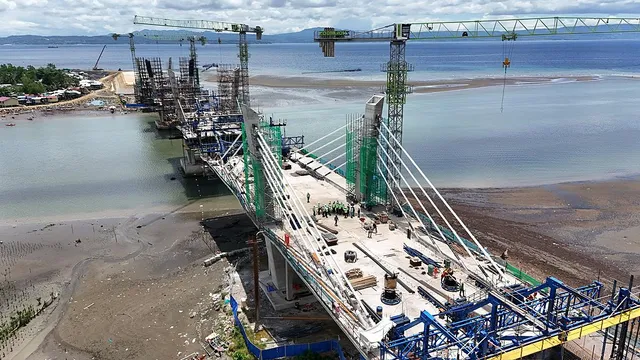
Structurally, the Bucana Bridge features a 480.20-meter extradosed design, with each pier supported by 10 stay cables — a modern engineering solution chosen for its strength, durability, and striking appearance, further enhancing Davao’s skyline.
The Bucana Bridge is identified as a priority under President Ferdinand R. Marcos Jr.’s “Build Better More” program.
Infrastructure projects like Bucana Bridge are key to achieving the vision of high-quality, resilient, and accessible public infrastructure that improves the lives of Filipinos nationwide.
Beyond easing traffic, the new bridge will unlock broader economic opportunities, connecting Davao’s east and west coastal areas, enhancing access to essential services, supporting agricultural and commercial activities, and promoting tourism across Mindanao.
It is set to become a defining landmark of the Bagong Pilipinas campaign for progress and modernity.
OceanaGold (Philippines), Inc. (OGP), is pleased to announce its remittance of PHP 466.86 million in Additional Government Share (AGS) to the National Government covering the fiscal year 2024 pursuant to the terms of its Financial or Technical Assistance Agreement (FTAA). This remittance brings OGP’s total AGS payment over the last two years to almost PHP 1.6 billion, underscoring its commitment to supporting the Philippine economy and fulfilling its obligations.
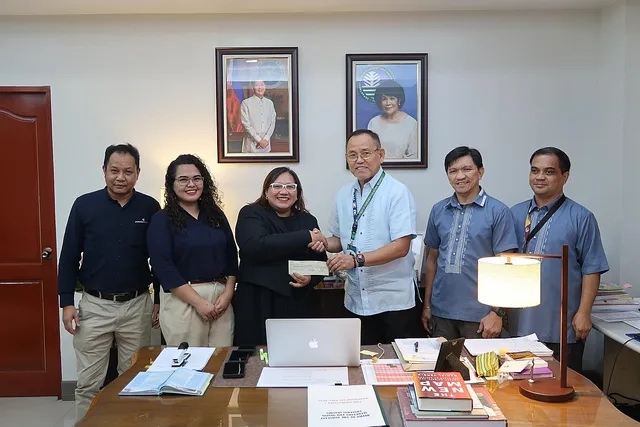
The second AGS payment was formally received by Michael V. Cabalda, DENR Assistant Secretary and MGB Director in a turnover ceremony held on April 30, 2025, at the Mines and Geosciences Bureau (MGB) Central Office.
“OceanaGold’s significant contribution to the national treasury, demonstrated by this AGS payment, underscores that mining, when done responsibly, becomes a powerful engine for nation-building and ensures that our people benefit meaningfully from the country’s mineral wealth, while creating an environment where responsible investors can thrive. The consistent remittances from OceanaGold Philippines, even amid shifts in global markets and production cycles, reaffirm its role as a reliable partner of the Philippine government under the FTAA,” said Asec.Michael V. Cabalda.
“We extend our sincere gratitude to OGP for their commitment to compliance and their focus on safe and responsible mining operations.,” he added.
“We are proud to continue contributing to the Philippine Government and support nation-building with our mining operations,” said Atty. Joan Adaci-Cattiling, OGP President and General Manager for External Affairs and Social Performance.
“This significant contribution of almost PHP 1.6 billion in cumulative AGS payments exemplifies the substantial economic benefits that responsible mining can bring,” she added.
This year’s AGS payment is on top of PHP870 million in excise taxes and PHP512 million local taxes and fees that were paid in 2024.
Under its FTAA, the Government and OGP share the net revenue from the Didipio gold-copper Mine in Luzon on a 60-40 basis, where the government receives 60% of the net revenue and OGP takes 40%. This arrangement is based on the principle that the government should receive a fair economic return for its mineral natural resources, while OGP is entitled to a reasonable return on its investments. In accordance with the terms of the FTAA, all taxes and fees paid to the government are deducted from the government’s 60% share of net revenue to arrive at any additional government share payable.
The Company expects to continue its remittance of additional government share, subject to metal prices, production, and financial performance.
As a model of responsible mining, significant investments were also made in OGP’s host and neighbouring communities through its Social Development and Management Program (SDMP) and other development funds. In 2024 alone, OGP spent PHP220 million under its SDMP to support initiatives in education, healthcare, livelihood enhancement, and infrastructure improvement in host and neighbouring barangays. Additionally, through the Community Development Fund and Provincial Development Fund, OGP invested PHP203 million and PHPP102 million respectively in broader development initiatives in the provinces of Nueva Vizcaya and Quirino.
Philex Mining Corporation (the “Company” or “Philex”) generated Php71 million core net income and an EBITDA of Php329 million for 1Q2025 compared with the Php105 million core net income and EBITDA of Php295 million for 1Q2024. Reported net income reached Php131 million in 1Q2025, 14% higher compared with Php115 million in 1Q2024.
Operating revenues increased to Php1.896 billion in 1Q2025 versus Php1.738 billion in 1Q2024 due to continued improvement in the realized Gold and Copper prices. Average gold prices in 1Q2025 were higher at US$2,587 per ounce compared with the US$2,061 per ounce in 1Q2024. Copper for the first quarter was at US$4.32 per pound, higher than the US$4.00 per pound in 1Q2024.
Operating costs increased to Php1.764 billion in 1Q2025 from Php1.643 billion in 1Q2024 which negatively affected the Company’s bottom line.
Tonnage milled for 1Q2025 was at 1.602 million tonnes, higher than the 1.585 million tonnes in 1Q2024. Gold output for 1Q2025 was at 6,083 ounces versus the 7,803 ounces in 1Q2024. On the other hand, Copper output for 1Q2025 was at 4.595 million pounds compared with the 4.669 million pounds in 1Q2024.
Operating an ageing Padcal Mine continues to pose challenges to the Company’s ability to operate efficiently in an environment of high metal prices and we rely heavily on the resiliency of our employees.
The development works at the Silangan Project (“Silangan”) accelerated to a faster pace with the arrival of major long lead equipment packages despite challenging global supply chain environment. Silangan is scheduled to start commercial operations in the first quarter of 2026.
“It is imperative that we usher Silangan into production based on schedule to initially augment the performance of the Padcal Mine while we are relentlessly pursuing other business opportunities,” according to Eulalio Austin Jr., Philex President and CEO. “Copper and gold prices are high, in the face of global trade and supply chain uncertainties, brought about by recent economic policy changes, and we take advantage of this to push forward the Silangan Project and the remaining Padcal potential.”
In strong support of President Ferdinand R. Marcos Jr.’s Build Better More program—a national initiative aimed at transforming the Philippines into a modern, inclusive, and disaster-resilient nation through world-class infrastructure—the Department of Public Works and Highways (DPWH) is intensifying its efforts to strengthen institutional capacity and leadership.
DPWH Senior Undersecretary Emil K. Sadain, who oversees the implementation of key infrastructure flagship projects (IFPs) mostly implemented by the Unified Project Management Office (UPMO) Operations, emphasized that the successful delivery of complex and high-impact infrastructure projects requires a deep bench of skilled and visionary leaders.
Senior Undersecretary Sadain noted in his report to DPWH Secretary Manuel M. Bonoan that the seamless and timely execution of IFP will be sustained through adequate and sustained financing support, continuous innovation, strategic technical partnerships, and the nurturing of future leaders equipped with both technical and managerial excellence.
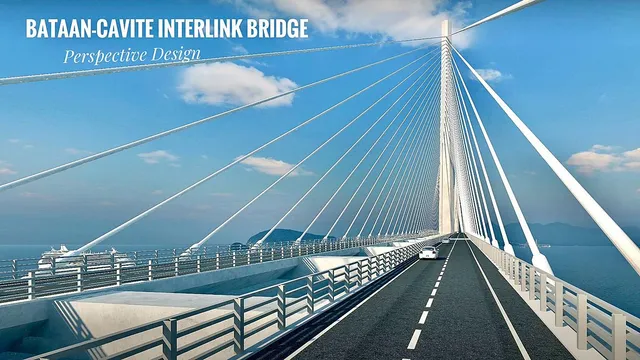
Currently, the UPMO is implementing a wide array of transformative projects across the country that are at various stages of development. These include the Bataan–Cavite Interlink Bridge, which will connect Central Luzon and CALABARZON via a marine bridge at the Manila Bay; Panay–Guimaras–Negros Island Bridges, to provide seamless inter-island connectivity in the Visayas; Davao City Bypass Construction Project, Samal Island–Davao City Connector Bridge, and Bucana Bridge to enhance traffic flow and improve mobility in the Davao Region; Dalton Pass East Alternative Road, providing a safer and more efficient alternative route to Cagayan Valley Regio. through mountainous terrain; Guicam Bridge in Zamboanga Sibugay, and part of the Mindanao connectivity push; Second San Juanico Bridge, reinforcing inter-island transport between Samar and Leyte; Cebu-Mactan 4th Bridge and Coastal Road Construction, aimed at easing congestion between Cebu City and Mactan Island while supporting the region’s tourism and business centers; Laguna Lakeshore Road Network Project, offering sustainable transport solutions around Laguna de Bay; and Integrated Disaster Risk Reduction and Climate Change Adaptation (IDRR-CCA) Project, addressing flooding and climate vulnerabilities in low-lying areas of Pampanga and Central Luzon.
To ensure long-term sustainability and leadership continuity in the implementation of these ambitious projects, the DPWH formally launched the Leadership Excellence for Advanced Development (LEAD) Program on April 23, 2025. This pioneering leadership development initiative is supported by the Asian Development Bank (ADB) under Technical Assistance Grant No. 10084.
The LEAD Program aims to bridge the leadership gap arising from the anticipated retirement of a significant number of DPWH senior officials in the next three to five years. It is specifically designed to prepare middle-level managers—particularly those holding the rank of Engineer IV and above—for higher leadership roles that will sustain the momentum of infrastructure development.
“These future leaders will play a crucial role in upholding the standards of excellence, integrity, and innovation that have defined DPWH’s role in national development,” Senior Undersecretary Sadain noted in his report to DPWH Secretary Manuel M. Bonoan.
The LEAD Program builds on the Department’s previous capacity-building initiatives such as the Executive Leadership and Management Capability Enhancement Program (ELMCEP) launched in 2012 and the DPWH Cadet Engineering Program (2013–2016), both of which successfully strengthened the Department’s technical and managerial talent pool.
The pilot batch of the LEAD Program was carefully selected through a rigorous screening process conducted at The Bayleaf Hotel, Intramuros, Manila. The panel was composed of Senior Undersecretary Sadain and UPMO Project Directors Benjamin A. Bautista, Teresita V. Bauzon, Rodrigo I. Delos Reyes, Ramon A. Arriola III, as well as former Project Director Virgilio C. Castillo and Project Manager Shirley O. Castro.
Selected participants will undergo an intensive training curriculum that includes ten-day modules under two specialized tracks: Leadership and Technical. The sessions will be delivered by leading training institutions from July to August 2025, focusing on values-driven governance, strategic project management, and advanced engineering competencies.
Through the LEAD Program, the DPWH is laying the foundation for a new generation of competent, ethical, and forward-thinking public infrastructure leaders—poised to guide the Philippines toward a more connected, resilient, and inclusive future.
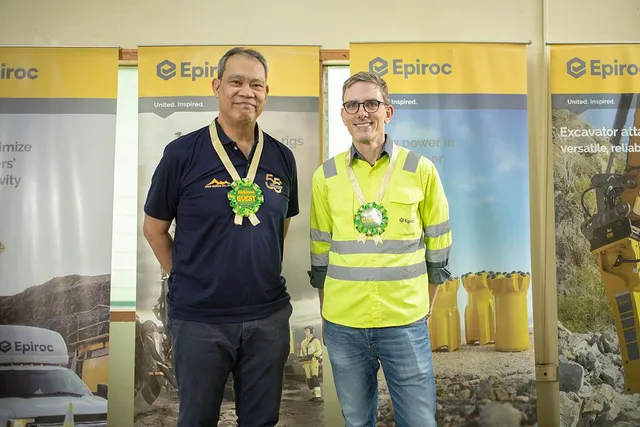
In the mining, infrastructure, and natural resources industries, Epiroc is a leading name in developing and providing innovative and safe equipment, such as drill rigs, rock excavation and construction equipment, and tools for surface and underground applications.
On February 26, 2025, they turned over Epiroc Simulator machines (Jumbo Drill, LPT Machine, and LHD Machine) to Apex Mining Co., Inc. (AMCI) during the mine company’s 55th Anniversary in Maco, Davao de Oro.
Apex Mining recently acquired simulators to make training of mine machine operators safer and more efficient. Says Sarmiento, “These simulators ensure the safety of our trainees as they master how to operate our equipment.”
Commitment to innovation. Product development. Market insights. Unmatched experience. These are just some of the things that give Valley Blades Limited—and our customers—the leading edge.
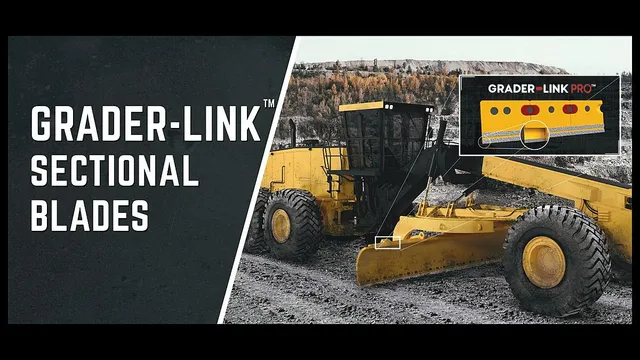
The Grader-Link Pro™ mining grader blade by Valley Blades delivers longer wear life compared to standard OEM blades.
Uniquely designed in locking segments of 46lbs each for the regular straight blade or 41lbs each for the serrated blade, these forged and heat-treated blades are safe and easy for one operator or maintenance person to handle, right on site, reducing both downtime and maintenance required. The bottom line is increased safety and performance and decreased costs.
One case study showed the Grader-Link Pro™ to be the best cutting edge ever used by an American gold mine. After nearly 2,000 hours of use over 184 days, wear was minimal, consistently averaging ½” across the mouldboard and 1 inch at either end.
Carbide inserts were still intact, and while the blade showed some minor chips, overall product performance was not impacted.
Home of the exclusive VALLITE heat-treating process, Valley Blades is your go-to for blades, cutting edges, ground-engaging tools (G.E.T.), wear parts and accessories for construction and mining equipment.
VBL’s through-hardened blades are also available with replaceable carbide tips to offer the best performance for scarifying hard surfaces. A variety of rotating and fixed (non-rotating) tips are available to tailor the blade to your application. The CARBITTM system is available in different sizes to suit all sizes of OEM machines.
Keeping up with global competition means providing customers with trusted solutions that work and last. The team at Valley Blades cares about what they do, and it shows up in the quality of the product.
Valley Blades Limited® is exclusively distributed by Uptime Earthmoving Solutions, Inc. in the Philippines.
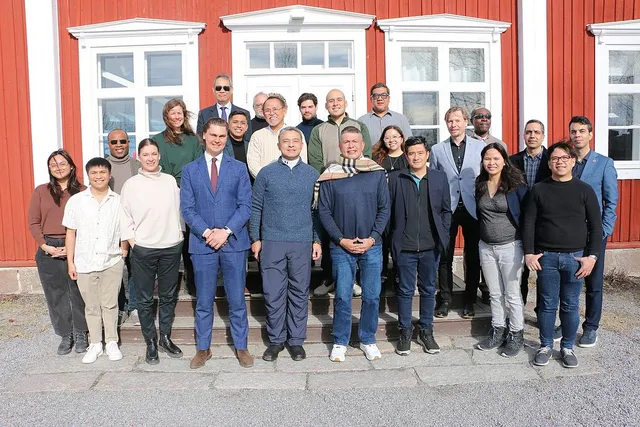
A high-level Philippine delegation recently visited the Luleå University of Technology (LTU) last 2 April 2025 in Sweden as part of efforts to deepen cooperation on sustainable mining practices, critical minerals, and research innovation. The trip underscores the country’s commitment to strengthening global partnerships in support of its growing minerals development agenda.
Representing the Philippine government were Undersecretaries Juan Miguel T. Cuna and Joselin Marcus E. Fragada of the Department of Environment and Natural Resources (DENR), who were accompanied by the Assistant Secretary for Mining Concerns and concurrent OIC Director of the Mines and Geosciences Bureau (MGB), Michael V. Cabalda, and other technical personnel. The delegation was warmly received by researchers and leadership from LTU’s Centre for Advanced Mining and Metallurgy (CAMM), a premier hub for mining innovation in Northern Europe.
During the visit, both parties exchanged insights on responsible mining, mineral processing, and the evolving role of technology in ensuring sustainable extraction. The Philippine officials also gained insights into Sweden’s approaches to maximizing resource efficiency and reducing environmental impacts within the mining sector.
ASec. Cabalda expressed excitement over what he has witnessed and learned in Sweden and at LTU, saying, “We see Sweden as a bastion of sustainable mining. We want to see how they are doing it and how that knowledge and technology can be transferred to the Philippines. At the end of the day, with the support of the government, everything will be done in the context of sustainable and responsible mining, taking care of communities. From what I've seen and the work being done at the university, I can tell that significant progress has been made—progress that can benefit an industry in the Philippines that is now receiving well-deserved attention from the current administration.”
The visit follows the High-Level Swedish Delegation visit in Manila and LTU’s participation in the 70th Annual National Mine Safety and Environment Conference in Baguio City on 19-22 November 2024, where CAMM Director Thomas Aiglsperger mentioned looking forward to fostering future collaborations with the country for a more sustainable mining industry.
The MGB looks forward to sustained dialogue with Swedish institutions and mining stakeholders, paving the way for transformative partnerships that will benefit both countries.
The Philippine government has secured financing from the Asian Development Bank (ADB) worth USD1.45 billion for the Malolos-Clark Railway Project (MCRP), the multilateral institution announced Wednesday.
ADB Philippines Country Director Pavit Ramachandran said the MCRP is one of ADB’s biggest financing projects in the Asia and Pacific region.
“We are proud to partner with the government in making the vision of a world-class mass transportation system in the country a reality. This major transformative project will spur more investments, create jobs, and contribute to sustaining the country’s growth momentum,” Ramachandran said in a statement.
The 53.1-km. MCRP is part of the 163-km. North-South Commuter Railway (NSCR), a major infrastructure project of the government to provide safe, reliable, and eco-friendly transport connecting Luzon provinces to Metro Manila.
The newly approved loan is the second and final tranche of its MCRP financing facility.
In 2019, ADB approved the first tranche of financing for the project amounting to USD1.3 billion.
In a chance interview on April 9, Ramachandran told reporters that ADB is eyeing to finance some USD4 billion for Philippine projects this year, which include the MCRP.
These funds, in a form of loan, would be invested in the sectors of infrastructure, healthcare, food security, and the blue economy.
He said pipeline projects for ADB financing this year include the USD400-million Walang Gutom (Zero Hunger) Program under the Reducing Food Insecurity and Undernutrition with Electronic Vouchers (REFUEL) Project, the USD400-million Marine Ecosystems for Blue Economy Development Program, and the USD300-million Accelerating Expansion and Sustainability of Health Services for Universal Health Care (ACCESS UHC).
“[These are] just some of the items included in this year’s project pipeline, they are among the biggest in loan amount terms in the list of projects for delivery this year,” Ramachandran said.
Forepoling is a method of supporting a weak roof of a mine or a tunnel, used traditionally in soft, loose, or carving ground. To make use of this method, poles, timber, steel tube, or slabs are driven into the ground before or during excavation. The method has been used for centuries, both in smalle...
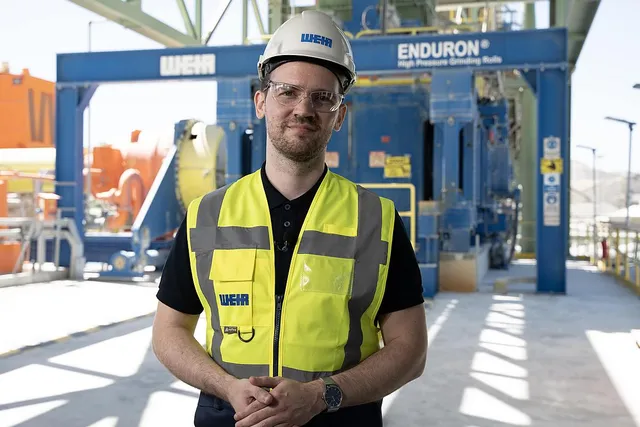
The International Copper Association (ICA) proudly welcomes its newest member, The Weir Group (Weir)—a global leader in mining technology and innovation. This strategic partnership reinforces ICA’s commitment to connecting the entire copper value chain.
Weir provides world-class engineering solutions, combining materials science expertise with intelligent automation to create end-to-end mining technologies. These innovations accelerate the path to smart, efficient and sustainable mining.
Jon Stanton, CEO of Weir said: “We are delighted to join the International Copper Association. Copper has such a critical role to play in the energy transition and a full value chain approach is required to accelerate the productivity and sustainability improvements needed to support future demand. Delivering the energy transition is a team game, and we are looking forward to working together with other ICA partners to enable a more sustainable future.”
By joining the ICA, Weir underscores its commitment to advancing copper’s role in enabling the energy transition and addressing the world’s most pressing challenges—from decarbonization to digitalization.
"We are thrilled to welcome Weir to the International Copper Association,” said ICA President Juan Ignacio Díaz and Chairman of the Board Stephen Rowland of Glencore in a joint statement. “The company’s proven leadership in mining technology and deep commitment to innovation will strengthen ICA’s efforts to promote responsibly produced copper and defending its critical role in building a more sustainable future. Together, we can amplify our impact as the voice of copper and drive meaningful progress across the value chain."
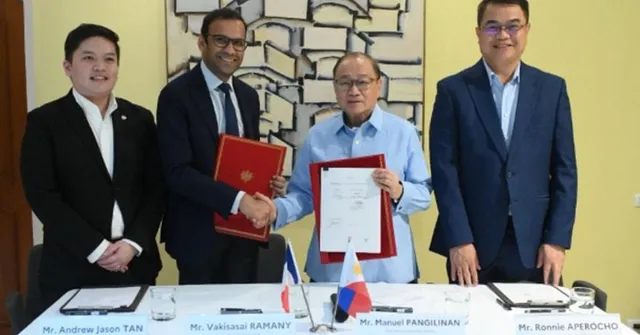
Power utility giant Manila Electric Company (Meralco) has signed a strategic cooperation agreement with France’s state-owned Électricité de France SA (EDF) to explore the deployment of nuclear energy in the Philippines, an initiative aimed at bolstering long-term energy security.
EDF will provide Meralco with technical support and strategic guidance in conducting feasibility studies under the two-year memorandum of cooperation, according to a news release over the weekend.
Meralco revealed in November 2024 that it is in talks with the French government on research collaborations.
The studies will focus on evaluating site readiness, grid integration and the economic viability of nuclear energy in the Philippines.
“One of Philippine government’s key objectives is to achieve greater energy security for our country and nuclear power is one viable path toward that goal,” Meralco chair and chief executive officer Manuel V. Pangilinan said.
“We see this cooperation as a significant first step for Meralco, and we are committed to taking a leadership role in advancing nuclear energy in the Philippines,” he added.
EDF, one of the world’s largest nuclear power operators, will also offer tailored training on nuclear reactor technologies and project management.
It will support Meralco in preparing for potential deployment and in seeking financing options, including those from the French government.
“Through this important first step -- and the opportunity to engage in meaningful discussions with you -- we hope to make real progress at your site as well. This is the beginning of what we envision as a remarkable, long-term journey, one that could span the next hundred years,” EDF senior vice president for International Nuclear Development Vakisasai Ramany told Meralco officials.
The collaboration builds on Meralco’s nuclear energy strategic transition initiative and its ongoing engagements with France’s top research institutions.
Through its Meralco Power Academy, the company has partnered with Université Paris-Saclay under the Filipino Scholars and Interns on Nuclear Engineering program to develop future Filipino experts in the nuclear field.
Meralco has also engaged French agencies, including the Nuclear Safety and Radiation Protection Authority and the French Alternative Energies and Atomic Energy Commission, for potential collaborations on nuclear safety and knowledge-sharing.
As the Philippines' largest electric distribution utility, Meralco said the partnership reflects its commitment to exploring innovative, sustainable, and secure energy solutions in response to the country’s growing power needs.
The Department of Public Works and Highways (DPWH) continues to fast-track the construction of the 4.76-kilometer Samal Island–Davao City Connector (SIDC) Project - a four (4)-lane bridge designed to provide a vital transportation link between Davao City and the Island Garden City of Samal (IGaCoS).
In an inspection report to DPWH Secretary Manuel M. Bonoan, Senior Undersecretary Emil K. Sadain highlighted that the project currently stands at more than 12 percent overall physical accomplishment with construction efforts primarily focused on the bridge’s foundation or substructure. He underscored the importance of strict quality control measures to ensure the structural integrity and long-term safety of this inter-island bridge.
A key milestone was reached during the inspection of Senior Undersecretary Sadain on April 11, 2025, when the first bi-directional static load test for an offshore pile on the IGaCoS side was conducted for this flagship infrastructure project under the Build Better More program of President Ferdinand R. Marcos Jr. administration.
This critical procedure, which uses a load cell installed within a reinforced cage, is essential for verifying the strength and safety of deep foundation elements.
Also present during the inspection were Project Director Rodrigo I. Delos Reyes of Bridges Management Cluster-Unified Project Management Office (UPMO), Project Director Benjamin A. Bautista of Roads Management Cluster 1-UPMO, Director Randy R. Del Rosario of Stakeholders Relations Service, and the DPWH SIDC Project Team headed by Project Manager Joweto V. Tulaylay, Project Manager Najar S. Imbin, Project Engineer John Christian T. Gaden, and Materials Engineer Avylmar M. Manio.
Significant progress has been made in structural works with all 74 bored piles for the east land viaduct on the Samal side completed; 73 out of 110 bored piles are poured on the west land viaduct (Davao City side), along with four (4) out of 26 columns cast at 10 meters high; and 48 bored piles for the navigation bridge (Samal and Davao sides) completed.
To ensure maritime safety, four (4) registered navigational buoys have been installed offshore in coordination with the Philippine Coast Guard. With pile works on the main navigation bridge now completed, construction has advanced to the pile cap stage.
Work on the bridge ramps is also underway, with 40 out of 133 bored piles poured. Additionally, preparatory activities for road widening along Daang Maharlika have commenced, including the relocation of electric poles, fencing installation, and clearing of existing structures and obstructions.
Land acquisition is moving steadily, with 83% completion and only few remaining properties under processing.
Once completed, the SIDC will include a four-lane extradosed bridge with a 530-meter main span, 570-meter land viaduct on the Davao side and a 395-meter viaduct on the Samal side, marine viaducts measuring 350 meters (west) and 510 meters (east), and ramps connecting to the R. Castillo–Daang Maharlika junction in Davao City and a 24-meter-wide at-grade road with a roundabout at Barangay Limao in IGaCoS.
“In line with President Marcos’ directive to accelerate critical infrastructure, DPWH is pushing forward with the SIDC to ensure timely and transparent delivery, while staying within budget,” said Senior Undersecretary Sadain.
Funded through an Official Development Assistance (ODA) loan from China and under contract with the China Road and Bridge Corporation, the P20.84-billion design and build of SIDC is targeted for completion by 2028.
Once completed, it is expected to enhance regional connectivity, stimulate economic growth, and boost tourism in the Davao Region— serving as a hallmark of progress under the Bagong Pilipinas vision.
The Department of Public Works and Highways (DPWH) is accelerating the construction of the Bucana Bridge Project, a 1.34-kilometer, four (4)-lane, six (6)-span structure expected to significantly ease traffic congestion in Davao City.
DPWH Senior Undersecretary Emil K. Sadain reported to Secretary Manuel M. Bonoan that the project, also known as the Davao River Bridge Project, is now nearly 80% complete.
Implemented by the Unified Project Management Office – Bridges Management Cluster (UPMO-BMC), the P3.126-billion bridge project is designed to accommodate around 35,000 vehicles daily once operational.
On April 11, 2025, Senior Undersecretary Sadain inspected the project alongside UPMO-BMC Project Director Rodrigo I. Delos Reyes, UPMO Roads Management Cluster I Project Director Benjamin A. Bautista, and Stakeholders Relations Service Director Randy R. Del Rosario.
Funded by an Official Development Assistance (ODA) grant from the Government of the People’s Republic of China, the Bucana Bridge is part of the Davao City Coastal Road network.
This new route is expected to divert traffic from congested urban roads and provide an efficient east-west connection across the city.
Now gearing its preparations to the full connection of the entire superstructure of its 480.20 meters extradosed bridge, the installation of 10 stay cables at Pier 2 which will essentially support the bridge deck was recently completed while concrete pouring of segmental box girders, and stressing of cables in other piers are progressing.
These milestones have been achieved just 16 months since the project began in November 2023.
“The recent developments of the project demonstrate the unparalleled hard work and commitment of DPWH Bucana project team through the supervision DPWH UPMO Acting Project Manager Norifel Teddie G. Cadiang and Project Engineer John Christian T. Gaden and the contractor China Road and Bridge Corporation (CRBC) to ensure swift and timely completion of the project before the end of this year 2025,” said Senior Undersecretary Sadain.
Nonetheless, the DPWH official reminded the construction team of the importance of maintaining high standards throughout the remaining phases of construction to ensure structural integrity.
The Bucana Bridge is a flagship project under the Build Better More program of President Ferdinand R. Marcos Jr.’s administration. It aims to boost infrastructure development across the country while improving the quality of life through safe, resilient, and efficient public works.
“Expected to be fully operational by November 2025, the bridge will enhance connectivity across Davao City’s coastal areas. It is poised to become a vital infrastructure landmark in Mindanao, driving regional economic growth, improving agricultural logistics, and supporting tourism and access to essential services”, Senior Undersecretary Sadain added.
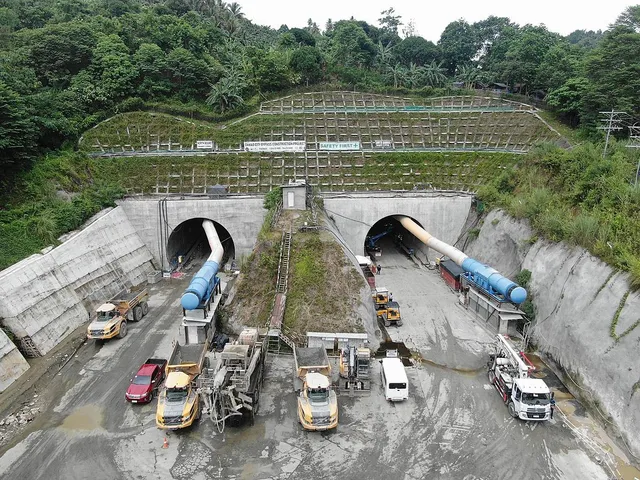
The Department of Public Works and Highways (DPWH) has entered a significant stage in the construction of the 2.3-kilometer twin-tube tunnel—soon to be the longest road mountain tunnel in the Philippines—serving as a key feature of the 45.5 kilometer, four-lane Davao City Bypass Construction Project (DCBCP).
This flagship infrastructure is being undertaken in line with President Ferdinand R. Marcos Jr.’s Build Better More program, which aims to modernize the country’s transport network and support inclusive development, under the broader vision of Bagong Pilipinas - a new and better Philippines.
According to DPWH Senior Undersecretary Emil K. Sadain, the DCBCP has recently completed a major milestone, as the north and south portal ends of the northbound tunnel were finally connected.
Located at the challenging mountainous terrain, DCBCP will offer motorists a safer and more efficient alternative route, effectively decongesting traffic within Davao City and enhancing regional connectivity.
In his report to DPWH Secretary Manuel M. Bonoan, Undersecretary Sadain noted that the construction breakthrough of the northbound tunnel, along with the ongoing excavation works for the remaining 202 meters of the southbound tunnel—which is now 91 percent completed—marks significant progress in this strategic infrastructure project.
Financed through a combination of a loan agreement with the Japan International Cooperation Agency (JICA) and local government funds, the DCBCP spans from Barangay Sirawan in Toril, Davao City to Barangay J.P. Laurel in Panabo City. Once completed, it is expected to drive economic growth, improve logistics, and connect communities - key goals under Bagong Pilipinas.
On April 11, 2025, Senior Undersecretary Sadain led an inspection of the road mountain tunnel under Contract Package (CP) I-1, covering 10.7 kilometers and now 58.7 percent completed by the Shimizu-Ulticon-Takenaka joint venture. He was joined by UPMO-Roads Management Cluster 1 Project Director Benjamin A. Bautista, UPMO-Bridges Management Cluster Project Director Rodrigo I. Delos Reyes, and Stakeholders Relations Service Director Randy R. Del Rosario.
The team also evaluated the progress of CP II-1, which includes several bridges being constructed by the CavDeal/WECI/Coastland Joint Venture, with support from UPMO Project Managers Joselito B. Reyes, Ricarte Mañalac and Emmanuel Regodon, Project Engineers Juan M. Diña Jr. and Oliver Angeles, and Engrs. Earl Nicholas F. Rada and Divina B. Bulan.
The locally funded portions of the bypass road under CP II-1 and CP II-2 are now 72.83 percent and 63.89 percent completed, respectively. CP II-1, spanning 2.54 kilometers and valued at P4.33 billion, features a 1.3-kilometer four-lane road and seven bridges, with completion targeted in the first quarter of 2026. Meanwhile, CP II-2—a 3.52-kilometer road section worth P4.60 billion—is slated for completion in the third quarter of 2026.
Other segments under CP I-2 and CP I-3 are also progressing steadily while Package II-3 will soon start its procurement activities.
Once completed, the Davao City Bypass will reduce travel time between Toril and Panabo City from 1 hour and 44 minutes to just 49 minutes, stimulating economic activity, expanding business opportunities, and boosting tourism across Davao Region and Mindanao—concrete steps toward building a Bagong Pilipinas.
Follow on LinkedIn:
Philippine Resources Journal
Be the "First" to get our exclusive Digital Magazine & Weekly Newsletter.

 reinforced concrete box culverts (RCBCs); seven (7) farm passages; multiple underpasses; and asphalt pavement works.