Category:


A Tale of Two Cities: Navigating the Eco-Battlegrounds Rule Under the Writ of Kalikasan
By Noel B. Lazaro and Mary Louisse S. Inguillo
Elizabeth Fisher, a renowned legal scholar at the University of Oxford, reminds us that environmental law isn’t a “magic wand.” Laws alone do not guarantee “happy ever after” endings. On July 8 and 9, the Malcolm Theater at the UP College of Law became a hub for the BIICL Global Toolbox on Corporate Climate Litigation, stirring discussions on legal responses to environmental issues and the judiciary's vital role. However, the effectiveness of legal remedies, particularly the groundbreaking Writ of Kalikasan, received limited spotlight.
This article examines recent court actions on the territorial scope of ecological damage to justify the writ and its potential to redefine environmental justice.
Understanding the Writ of Kalikasan: Criteria and Implications
Introduced by the Supreme Court in 2010, the writ is a beacon in Philippine law, addressing major environmental concerns such as oil pipeline leaks, open dump sites, hazardous plastic use, and GMO experimentation. The foundational case of Paje v. Casiño (G.R. No. 207257, February 3, 2015) highlights its role in offering judicial relief where legislative and administrative actions have fallen short.
Under the Rules of Procedure on Environmental Cases, the writ can be sought by individuals, entities, or groups on behalf of those whose constitutional right to a balanced and healthful ecology is violated or threatened. It requires evidence of environmental harm to life, health, or property in "two or more cities or provinces."
Despite its significance, many remain perplexed about the writ's impact and why certain activities persist even after its issuance. This confusion stems from the two types of writ: The first is a preliminary or peremptory writ, issued immediately after filing a petition, which requires a respondent to answer under oath within ten days but does not halt perceived violations. To this category belong the successive writs issued by the Supreme Court in 2023 to mining companies in Romblon (Batan v. Mines and Geosciences Bureau, G.R. No. 265146) and Palawan (Indigenous Cultural Communities of BICAMM Ancestral Domain, Brooke’s Point, Palawan v. Office of the Secretary of the DENR, G.R. No. 268140) without stopping their operations. The second is a judgment on the privilege of writ, issued after pleadings or affidavits and a trial. If granted, this writ can mandate actions such as permanently stopping certain acts or directing government or private entities, or individuals, to preserve, rehabilitate, or restore the environment. Only the Supreme Court or the Court of Appeals issues the writs.
Territorial Environmental Damage: An Iron-clad Requirement?
On May 14, 2024, the Court of Appeals addressed a petition for a writ of kalikasan in Batan v. Mines and Geosciences Bureau (CA-G.R. SP No. 00037-WK) after the Supreme Court referred the case to it to hear evidence and render a decision. Following a widely reported clash between police and protesters, the Bantay Kalikasan ng Sibuyan sought to stop Altai Philippines Mining Corporation (APMC) from operating in San Fernando, Sibuyan Island, Romblon because of APMC's lack of environmental compliance certificate and community acceptance. However, the Office of the Solicitor General and APMC questioned whether the allegations met the required scale of damage.
After proceedings, the court deemed the privilege of the writ inappropriate because the harm if true was limited to a single municipality within an island province. The conclusion reflects the Supreme Court’s tendency to deny this type of writ without proof of widespread ecological damage.
Consider LNL Archipelago Minerals, Inc. v. Agham Party List (G.R. No. 209165, April 12, 2016), where the evidence failed to show how constructing an access road on a low ridge impacts the communities of Zambales and Pangasinan; Braga v. Abaya (G.R. No. 223076, September 13, 2016), where the bidding process for expanding Sasa Wharf in Davao City was not considered a threat to residents of multiple cities; Dela Cruz v. Meralco (G.R. No. 197878, November 10, 2020), where the installation of transmission lines at NAIA III in Pasay City involved only a narrow strip across two barangays; and Citizens for a Green and Peaceful Camiguin, Sulog Inc. v. King Energy, Inc. (G.R. No. 213426, June 29, 2021), where concerns over a diesel plant were confined to Camiguin island comprising municipalities.
The Reluctant Protector
In contrast, the Court of Appeals recently granted the privilege of writ to halt the propagation and sale of Golden Rice and Bt Eggplant (Magsasaka at Siyentipiko Para Sa Pag-unlad ng Agrikultura v. Secretary of Department of Agriculture, CA-G.R. SP No. 00038-Kalikasan, April 17, 2024), and to order the listing of non-environmentally friendly plastic products (Oceana Philippines International v. National Solid Waste Management, CA-G.R. SP No. 00035-WK, July 9, 2024), citing potential “national impact” in both petitions.
And there lies the rub. What about “localized” damage following the Sibuyan template? Much like solutions for the Anthropocene, the answer can be elusive or inadequate. Fortunately, legal innovation thrives. The absence of a writ should encourage exploring alternative avenues, recognizing that appellate courts may lack the time and expertise to resolve technical disputes thoroughly and that administrative agencies or lower courts with specialized training are better suited for such assessments.
In other words, reliance on the role of appellate courts in environmental protection assumes what environmental law experts like Fisher, Lange, and Scotford describe as “an almost paradoxical” exercise of simultaneously seeking the “importance and limits” of judicial involvement in environmental law. Thus, it is imperative to develop “specialist environmental tribunals” (Environmental Law: Text, Cases and Materials, 2nd Ed. [2019]) or revitalize “green benches” created under SC Administrative Circular No. 23-2008 to customize the writ for lower courts and bring it closer to the communities.
For example, marginalized groups and witnesses traveling from Luzon’s isolated areas to Manila for watershed destruction hearings face high costs, logistical hurdles, or personal risks, often discouraging the pursuit of the writ. Another troubling illustration is seen in Abogado v. DENR (G.R. No. 246209, September 3, 2019), where fisherfolk of Kalayaan Islands and Zambales either withdrew their petition or became unreachable after filing it at the Supreme Court.
Revisiting the writ’s stringent requirements, establishing evidentiary presumptions, reconsidering the burden of proof, and limiting appeals could address critical gaps. None of this is easy. But the lesson of the tragedy of the commons also demands collective disruptions of the rules. As Justice Marvic M.V.F Leonen admits, “[W]e cannot presume that only the Supreme Court can conscientiously fulfill the ecological duties required of the entire state.”
Meanwhile, advocates will continue pushing for single political subdivisions, like the treasure islands of Bohol and Palawan, to be included within the writ’s ambit. After all, environmental issues transcend boundaries. But until the eco-battlegrounds change, petitioners must navigate the un-fairy tale requirement of two or more cities or provinces.
Noel B. Lazaro is a director and general counsel at Global Ferronickel Holdings, Inc. His extensive practice spans diverse fields, including environmental litigation. He was an associate at SyCip Salazar Hernandez & Gatmaitan and a partner at Siguion Reyna, Montecillo & Ongsiako. A UP College of Law graduate, he teaches evidence, special proceedings, and special writs at law schools.
Mary Louisse S. Inguillo is a senior legal officer at Platinum Group Metals Corporation, specializing in corporate law and litigation. She acts as corporate secretary for various companies. A DLSU-Tañada-Diokno School of Law graduate, she lectures on special proceedings and criminal procedure at law schools.
Regulating the Geology Profession
I applied for the position of Chairperson of the Professional Regulatory Board of Geology (the “Board”) in 2019. My ordeal started with the submission of my personal data sheets filed under oath, curriculum vitae outlining my academic and career history, and clearances from various government agencies to affirm the fact that I have had no past or existing criminal and administrative cases. I went through an interview process before two Members of the Professional Regulations Commission together with other aspirants for the position.
In 2022, I was asked to resubmit all the documents and I thought that since the pandemic was still ongoing, the documents just got misplaced along the bureaucratic lane. One fateful day, I received a call from the Office of the President and I was told to go to Malacanan Palace and was instructed to wear a Barong Tagalog for the occasion. Other than that, the person on the other end of the phone was curt and offered no further information when asked for the reason. So off I went to the Palace on a Sunday afternoon. My entry to the palace, however, met some hitch because security officers required a current COVID-19 swab test before I was allowed access. The person who I spoke to over the phone made no mention that I should get a test beforehand. Fortunately, the Palace has a testing facility. So after the swab sample taken from the far back of my nasal cavity turned out negative, I was finally allowed ingress. I was seated with other people wearing their finest Filipinianas when suddenly, out of the chamber came out two high-ranking government officials. Lo and behold, we were informed that our appointments for the government posts we applied for have been signed by then President Duterte. After the usual congratulatory speeches, pep talks, handshakes, and fist bumps, we were then instructed to go to our respective agencies for the mandatory oaths of office so we can commence our engagements.
Thus began my second career in government as I worked as a geologist before at the then Ministry of Energy before I became a lawyer. It has been more than two years now since I headed the Board that supervise and regulate the practice of the geology profession. There is no denying the importance of Geology, the science that deals with the earth, its structure, composition and history. Few fields of study can play such a profound role in protecting people's lives. Geology is so central to the lives of many Filipinos who are often threatened by natural hazards associated with earthquakes, volcanic eruptions, as well as landslides. Geology is also essential to the understanding, conservation and management of our environment. Moreover, geologists are essential in the search for and development of energy and mineral resources whose products are important to all aspects of modern life. Thus, Republic Act No. 10166, also known as the “Geology Profession Act of 2012”, describes the practice of geology as “vital to national development”.
Professional regulation is particularly essential for the practice of geology. A geologist who meets the regulatory requirements is given a certification by the Professional Regulations Commission (PRC) to earn the title “Registered Geologist”. Once a geologist is registered and certified, only then can the individual legally provide professional geological services. Data from the PRC indicate that as of July 2024, there are 3,669 registered geologists and 2,082 with valid PRC Identification Cards.
The regulation of the geology profession is necessary to protect the public and maintain confidence in the profession. The Professional Regulatory Board of Geology, mandated by legislation as the regulatory authority, is tasked to ensure that all registered geologists are effectively regulated to strict professional standards. As part of most professional regulatory requirements, individuals applying to be professional geologists must be able to meet the educational, experience, and fitness required by law and administrative regulations. Violations of the provisions of the Geology Profession Law entail the imposition of penalties.
There are numerous levels of regulating the geology profession: licensure examinations; registration and certification; continuing professional development; and career progression and specialization. The Board also provides a defined roadmap for the practice of geology.
In addition to these responsibilities, the Board must also establish and maintain professional and occupational standards, enforce rules and regulations relative thereto, investigate violations of ethical standards, and adjudicate administrative cases against erring professionals. Professional regulation protects the public by providing assurance that regulated professionals are competent and by providing means for imposing discipline and sanctions when necessary. In 2014, the Board adopted and promulgated the Code of Ethics for Geologists for the enhancement and maintenance of high professional, ethical, and technical standards for registered geologists. Through this code, the Board shall ensure that it recognizes its responsibility to the public that actions of registered geologists promote safety, integrity, and fairness, thereby encouraging public confidence in the profession.
Computer-based Licensure Examinations
A critical component of professional regulation involves the development, administration, and maintenance of the licensure examinations. The Board has the responsibility of ensuring the quality of the examinations, which cover the knowledge and skills necessary for competence in the profession. Test questions must meet established standards and are meticulously prepared in accordance with an approved Table of Specifications covering vital geoscience subjects. Questions are also peer reviewed and vetted by professional test consultants.
The Board was one of the first to implement the computer-based licensure examinations (CBLE) in the PRC-regulated professions having successfully conducted the first pilot testing of the CBLE for Geologists in December 2021. This was followed by a second and third CBLE in November 2022 and 2023.
The number of examinees has been increasing since the COVID-19 pandemic (Figure 1). In 2020, there were no licensure examinations but two examinations were given in 2021. The number of examinees since 2021 has been consistently increasing but it has not yet reached the over 400 examinees taking the exam during the three-year period before the pandemic.
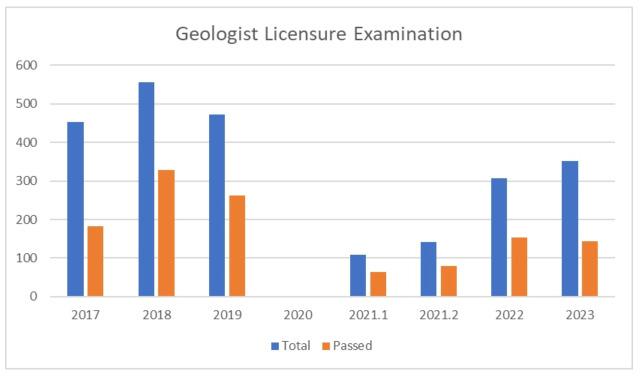
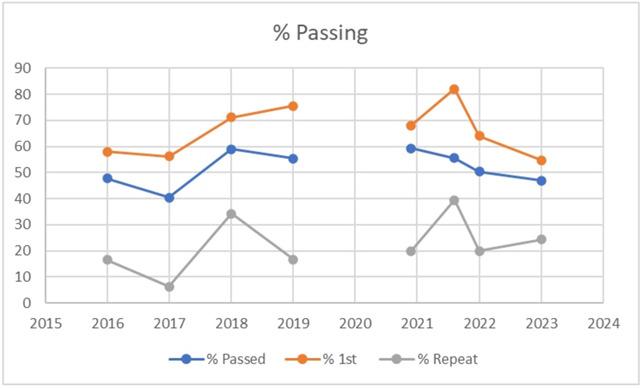
The 47% passing rate for the 2023 CBLE is close to the middle of the band of passing rates, which has been between 40% and 60% in the last few years (Figure 2). Also, first timers have had a passing rate of between 54% and 82%. Repeaters have a passing rate of less than 40%.
Continuing Professional Development and Career Progression and Specialization Program
In addition to responsibilities related to the licensure examinations, the Board’s additional mandate includes assuring continued professional competence. Registered geologists need to undertake continuing training and development to ensure that they remain qualified, competent, and updated with the latest technological, environmental, and social responsibility developments.
Republic Act No. 10912 or the “Continuing Professional Development (CPD) Act of 2016” states that CPD Programs shall be formulated and implemented in the geology profession in order to enhance and upgrade the competencies and qualifications of registered geologists pursuant to the Philippine Qualifications Framework, the ASEAN Qualifications Reference Framework and the ASEAN Mutual Recognition Arrangements. The renewal of PRC professional license requires the registered geologist to earn CPD units or points through learning activities like training or learning seminars to develop and enhance their abilities, personal skills, and proficiency. The CPD points should be validated by the CPD Accreditation System.
Further, the CPD Law also mandates the PRC and the Board to formulate and implement a Career Progression and Specialization Program (CPSP) for the geology profession. The Board is mandated to issue guidelines for the formulation of the CPSP for inclusion in the Philippine Qualifications Register (PQR). The PQR is the national database of quality assured qualifications authorized under the Philippine Qualifications Framework (PQF). It provides information to employers, education and training providers and students. The information includes the Qualification Title, Qualification Descriptors, the PQF Level, the Authority-granting Agency, the Qualification Code, the Instrument and Date of Authorization.
The Board shall also formulate the CPSP for the profession to address the Pathways and Equivalencies of the PQF. Republic Act No. 10968 or the “Philippine Qualifications Framework Act” states that it is the policy of the State to institutionalize the PQF to encourage lifelong learning of individuals, provide employee specific training standards, and qualifications aligned with industry standards. A PQF shall be established which shall describe the levels of educational qualifications and set the standards for qualification outcomes. It is a quality-assured national system for development, recognition and award of qualifications based on standards of knowledge, skills and values acquired in different ways and methods by learners and workers of the country.
The Implementing Rules and Regulations (IRR) of the PQF Act provides for the aligning of domestic qualification standards with international qualifications framework. The IRRs aims to enhance recognition of the value and comparability of Philippine qualifications with global standards and support the mobility of Filipino students, workers and professionals. The PQF describes the levels of educational qualifications and official recognition of a person's learning achievements. It also sets the standards for the knowledge or skills gained by individuals after undergoing a certain learning or educational program.
Inspection and Monitoring
The Board is tasked under the Geology Profession Law to upgrade geology education and the quality of geologists whose standards of professional practice shall be excellent, world-class and globally competitive. Among the tasks in the Board’s regulatory and development functions are:
- Visit/inspect facilities, faculty, and equipment of schools offering geology courses and establishments employing professional geologists; and
- Recommend measures necessary for advancement of the geology profession through the preparation and implementation of professional competitiveness roadmap.
The inspection and monitoring of educational institutions and establishments are aimed to determine the compliance of educational institutions and establishments with the professional, ethical, and technical standards of practice set by the Board. Mandatory ocular inspection and monitoring activities are also conducted to keep track of the conditions affecting the practice of the geology profession. The Board conducts face-to-face and on-site inspection and monitoring to visit and observe the different physical facilities, laboratory, and equipment of educational institutions, government agencies, and private establishments employing geologists.
In the Board’s inspection and monitoring activities, it was noted that a substantial number of geologists employed in government agencies are engaged under contracts of services because of the lack of permanent plantilla positions. This has been attributed to difficulties in getting approval of proposed positions at the agency and Department of Budget and Management levels. Thus training of employees under contracts of service often times doesn't benefit the agency since these geologists ultimately leave government service to look for jobs with permanent tenures.
The Board also observed the lack of training and foreign scholarship opportunities for geologists employed in government regional offices due to the perceived unequal distribution and allocation of scholarships and trainings between the Central Office and the Regional Offices. In some instances, geologists from regional government offices lament the high costs associated with the renewal of PRC licenses, maintenance of active membership in the Geological Society of the Philippines (GSP), and participation in the Geological Convention (GeoCon), which is usually held in Manila especially if such activities are not subsidized by their agencies. The GSP is mandated under the Geology Profession Law to integrate all registered geologists into one national organization and where membership therein is automatic and mandatory.
Problems faced by geologists from regional government agencies also include working in limited office spaces, non-working geological equipment, and limited storage for rocks and minerals samples. However, government offices cannot request for assistance directly from private companies in procuring equipment and training programs because it may be violative of existing laws unless expressly allowed as assistance stipulated in government contracts like mining agreements and energy service contracts.
On the private sector side, the Board needs to strictly monitor expatriate geologists working in Philippine operations of foreign companies to make sure that they have all the mandatory requirements before being employed by their companies. Under the Geology Profession Law, only Filipino citizens can practice the geology profession in the Philippines. Foreigners are however, allowed if their country has official parity agreements with the Philippines. Under the “PRC Modernization Act of 2000”, the PRC shall upon recommendation of the Board, approve the registration of and authorize the issuance of a certificate of registration and license to a foreigner who is registered under the laws of his state or country. The foreign geologist shall secure a temporary/special permit from the Board prior to arrival in the country before he is allowed to practice in the Philippines.
Geologists employed in private companies have notably less foreign scholarship opportunities unlike those working in government. The Board recommends that private companies must provide scholarship opportunities to their employees similar to those offered in government agencies. This companies were also advised to subsidize their employees’ membership in the GSP and participation in the GeoCon where they can earn CPD points. Private companies should also apply as accredited CPD Providers since they often provide in-house trainings and seminars to their employees and the participants can then earn CPD points.

The Board also conducted inspection and monitoring of educational institutions offering geology courses to evaluate their compliance with regulations and standards. The inspection and monitoring usually cover a review of school facilities, curriculum, practicum programs, licensure passing rates as well as faculty qualifications. In most instances, the Board observed the alarming lack of instructors and limited number of full-time faculty in regional educational institutions. Some of the faculty members were not licensed geologists but were teaching geology subjects. In one particular institution, even the Department Head is not a degree holder of Geology. Some faculty members were not updated with their PRC licenses despite the fact that teaching geology courses falls under the definition of the “practice of geology”.
The Board also noticed the absence of laboratory courses for earth resources subjects. Mineralogy, Petrology, Paleontology and Economic Geology/Metalliferous & Non-metalliferous Deposits lectures need laboratory counterparts to deepen the understanding of these subjects by the students. urther, the rock and mineral collections need to be upgraded adequately to support these laboratory courses. One institution has no laboratory and inadequate rock and mineral samples. A substantial number of regional educational institutions need to upgrade microscopy, mineral, rock & fossil collections, science journals, and library facilities. Their graduates are only able to have exposures to a wide variety of mineral, rock, and fossil samples in Manila when they are already reviewing for the licensure examinations.
Regional institutions need to exert more effort to request assistance from mining and energy companies to augment their laboratory equipment and samples. Because of inadequate or limited graduate studies opportunities of their faculty, these institutions must formulate a comprehensive development plan for their department. They should encourage and support student and faculty participation in local and international trainings, internships, and conventions, through collaborations with foreign universities, government agencies, private companies, and development agencies. Also, they need to exert more effort to request assistance from government agencies such as the Department of Energy and Department of Environment and Natural Resources to augment their libraries and equipment. These agencies can channel training funds from petroleum service contracts and mining agreements to fund faculty development and scholarship programs. Geologists employed by government agencies and resources companies should also be encouraged and incentivized to serve as part-time lecturers for educational institutions to augment the need for qualified faculty members.
Based on the performance of the regional universities in the recent years’ licensure examinations, there is an urgent need to review and revise the geology curriculum and course descriptions. The Board in its inspection and monitoring realized that these institutions still adhere to the old curriculum thus leaving out important subjects covered in the licensure examinations. This puts their graduates at a disadvantage as shown by their low passing rates in the geology licensure exams. The Commission on Higher Education Technical Panel for Geology is tasked to revise the existing geology curriculum and address the lack of qualifications of some faculty members in these institutions.
Conclusion
The management of natural resources, protection of the environment, and mitigation of geohazard risks require skilled and experienced geologists. Population growth, energy and raw materials policy, de-carbonization, technological advances, and climate change have created more challenging responsibilities for geologists for the protection of the public. The regulation of geologists facilitate the codification of ethical practice, international mobility and comparisons of qualifications, and interchange of ideas and knowledge. The responsibility of the Professional Regulatory Board of Geology is to make certain of competent practice within the geology profession which starts at ensuring that educational institutions are able to produce world class and globally-competitive graduates. At the same time, licensure examinations remain critical as an entry to the profession and undoubtedly important for the Board since they must be maintained under high professional standards and transparency. The Board knows and understands its responsibilities and is well aware that it may suffer public censure and criticism if problems arise from the wrongful, negligent, and lax administration of its regulatory functions.
Fernando “Ronnie” S. Penarroyo specializes in Energy and Resources Law, Project Finance and Business Development. He is also currently the Chair of the Professional Regulatory Board of Geology, the government agency mandated under law to regulate and develop the geology profession. He may be contacted at fspenarroyo@penpalaw.com for any matters or inquiries in relation to the Philippine resources industry and suggested topics for commentaries. Atty. Penarroyo’s commentaries are also archived at his professional blogsite at www.penarroyo.com
Challenges and Outlook for the Construction Industry
The construction industry, a key contributor to the Philippine economy, generated about seven percent (7%) of the country’s gross domestic product in 2022. The recent COVID-19 pandemic affected the real estate and construction industry and caused financial burden due to additional health and safety requirements, project suspension and delays, and reduced productivity resulting from massive supply chain disruption, and material and equipment procurement difficulties. The construction sector is expected to see growth in the following years as the country’s economy recovers. However, raging inflation, high-interest rates, and global geopolitical instabilities are seen to challenge growth forecasts.
The industry has been characterized by declining efficiency and performance over the years. As the industry continues to evolve, it is likely that additional steps will be taken to address new and emerging issues. With economic activity in the country picking up, the Philippine construction sector is bound to face more challenges. This article discusses some of the major challenges faced by the industry and how they can be overcome.
Labor Shortage
The lack of skilled workers and professionals, ranging from architects and engineers to construction workers and equipment operators, create difficulties for contractors in hiring and retaining talent. The growing skills gap contributes to this labor shortage as the construction sector urgently needs skilled labor with the need to recruit over two million workers by 2025 to meet demand. This gap is attributed to limited training and educational opportunities, coupled with an aging workforce and Filipinos looking for better opportunities abroad. Incorporating construction technology may help in fixing the issue of labor shortage in the construction firms but the industry is also slow when it comes to adapting to new technology. By investing in training and modern recruitment strategies, construction firms can bridge the labor gap, bringing in fresh talent and new perspectives.
Cost Overruns and Construction Delays
Cost overrun occurs when a project exceeds its original budget due to unexpected expenses, delays, and other unforeseen factors impacting project management, construction firms, and the industry at large. The fluctuating cost of construction materials, including raw materials, challenges firms to forecast future expenses affecting project profitability. Poor productivity and lagging technological advancements lead to delays and increased costs.
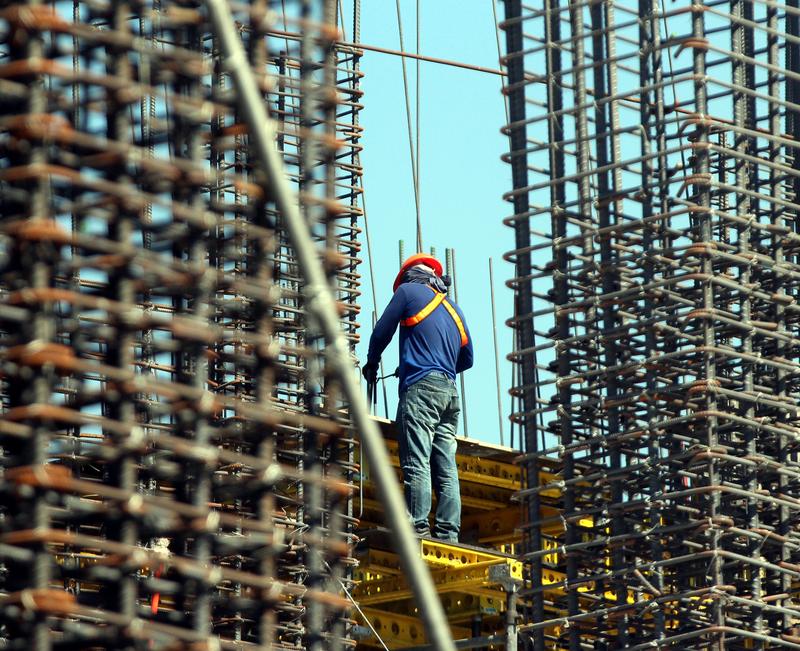
Delays also pose a major challenge in the industry, significantly affecting construction firms and the entire supply chain, given the complex nature of construction projects, which involve numerous stakeholders like subcontractors, suppliers, and project managers. Supply chain disruptions are a leading cause of these delays. The construction sector depends on the prompt delivery of materials and equipment, and any interruption in the supply chain can lead to significant project setbacks. Factors such as natural disasters, transportation difficulties, or sudden regulatory changes can also disrupt material delivery.
Corruption
A report citing confidential interviews with industry players indicated that construction companies allot up to thirty percent (35%) of their budgets for infrastructure projects to pay off government officials and employees preventing them from causing any further delays. This causes companies to compromise other parts of the construction such as the quality of raw material, in order to accommodate the additional cost and to keep the projects moving.
Fifteen to thirty-five percent (15-35%) of the expenses were spent on “other costs of doing business” while construction companies have to maintain a net income margin of eight to fifteen percent (8-15%) no matter the costs. Since the budget for a project was already fixed, other parts of the project sometimes suffered for those “other costs”. Additionally, the poor quality of buildings, partly linked to corruption, makes the country vulnerable to natural hazards such as earthquakes and typhoons.
Other Emerging Issues and Challenges
Other risks and challenges include barriers to the implementation of green building practices, declining efficiency and performance of the industry, and occupational health and safety concerns. Occupational health and safety in construction projects is a critical concern, with a need for risk management and mitigation strategies. The rapid growth of construction projects has also led to the generation of high amounts of construction waste and excessive resource consumption, resulting in adverse environmental impacts. The industry's efficiency and performance have been declining, which has a significant impact on pollution. Moreover, there is a lack of infrastructure and connectivity that hinders inclusive growth and requires substantial investments.
The Future Outlook of the Construction Industry
Despite the challenges, the industry faces exciting prospects with key trends and potential opportunities that will ultimately determine its fate. While daunting, each of these hurdles presents an opportunity for growth and innovation. In a nation poised for significant transformation, the industry holds the key to economic progress, infrastructural advancement, and the adoption of sustainable practices.
Affordable housing. The government is ramping up efforts to address the shortage of affordable housing units in the country, particularly for the low-income sector. The government has launched several initiatives to address the shortage of affordable housing including the establishment of the Housing and Urban Development Coordinating Council, creation of a housing finance company, and implementation of various socialized housing programs. Additionally, the government has implemented tax incentives for developers engaged in building low-cost housing units and has also established a fund for housing financing.
Development of new urban centers. The government is pushing for the development of new urban centers outside Metro Manila to decongest the capital and spur economic growth in other regions. This includes investment in infrastructure and the creation of economic zones to attract investment and create jobs. Urban planning, in particular, is a critical aspect that will shape the industry’s future. However, the country is known for its unique set of laws and permits that can sometimes lead to delays and bureaucratic hurdles. Balancing this need for effective urban planning with environmental concerns, historical preservation, and infrastructure demands will require careful coordination.
Further, the industry faces challenges related to land use, zoning, and local government policies, which can vary from one region to another. These diverse regulatory frameworks demand a high degree of adaptability from construction firms, while they work effectively within this multifaceted regulatory environment. If the construction sector including the way the government handles business permits, were modernized and made digital, the value of the industry could reach up to P130 trillion from P2.3 trillion in 2018, which would increase the number of jobs in the industry. Without modernization, the industry’s value could go up to only P43 trillion in 2030.
Infrastructure development. The government aims to embark on a multi-billion dollar infrastructure development initiative that will upgrade the country's infrastructure, including airports, seaports, highways, and bridges by working with the private sector to finance, build, and operate these projects. With a rapidly growing population and the need for modernization, the government is setting aside substantial funds for ambitious development initiatives in infrastructure projects, which include road networks, public transportation, and utilities. These investments not only promise economic growth but also open doors for construction firms to secure major projects. Again, this rosy outlook is met with the real-world challenge of efficient project management and strict compliance with regulations.
Environment-friendly construction practices. The construction industry lags behind other sectors in its response to the problems of the environment. Construction companies should be encouraged to continuously search for inputs and ways of working which will minimize the negative impact of construction activity on the environment. There is a growing interest in green building and sustainable construction practices, as developers look to create projects that are more environmentally friendly and energy efficient. On its part, the government is promoting green building and sustainable construction practices through various initiatives, including the establishment of a green building council, the creation of a green building rating system, and the implementation of tax incentives for developers who build environmentally friendly projects. However, green building implementation is hindered by barriers related to social and economic aspects of sustainability. Additionally, the government is encouraging the use of renewable energy sources, such as solar and wind power, in construction projects.
Advancements in Construction Technology. The future of the construction industry is intricately tied to technological advancements. As the world embraces innovative construction methods and materials, the Philippines is poised to follow suit. Additionally, adopting these emerging technologies can enhance workers' and contractors' safety on construction sites. However, even when construction firms recognize the advantages of these technological solutions from design to execution, securing the necessary funding often presents a significant obstacle.
Integrating modern technology promises efficiency, cost-effectiveness, and safety improvements in the country. This includes the adoption of Building Information Modeling, drones for site inspection, 3D printing, and automation in construction processes. However, these advancements are met with the practical need for training the workforce and addressing infrastructure challenges, such as reliable internet access and a lack of funding. With some exceptions, the sector remains a technology laggard and is struggling to get to grips with data and analytics. Major technology players are already eyeing up the sector, seeking to use their data mastery and fast innovation to steal market share.
A Growing Focus on Safety and Compliance. The next few years in the Philippines would focus on safety and adherence to codes and standards in construction. The reason for this is a heightened awareness of improving employee welfare in the industry. Safety policies, conducting safety training and regulation at a high level, will be further implemented by both workers and investors. Moreover, as the industry expands, meeting these standards is critical not only for the well-being of workers but also for securing contracts and maintaining a positive reputation for the Philippines construction industry.
Skilled Labor and Workforce Development. As the demands of construction projects become more complex and diverse, the need for well-trained professionals also becomes more evident. From architects to tradespeople, the Philippine construction industry requires individuals with expertise in cutting-edge construction methods and technology. One solution is investing in training and education programs to bridge the skills gap, particularly focusing on younger, tech-savvy generations. Modernizing recruitment methods and offering competitive benefits can make the construction industry attractive to potential employees. Further, embracing technological advancements, such as automation and digital tools, can compensate for the workforce deficit and enhance productivity. In order to meet these demands, workforce development programs and educational initiatives have to emerge. A forward-looking approach recognizes that a skilled labor force is central to the industry’s success and the realization of its future potential.
Environmental, social, and governance (ESG): On the one hand, engineering and construction (E&C) companies aim to be at the frontline of delivering sustainable infrastructure, energy production, as well as carbon capture, biodiversity and other sustainability projects. On the other hand, the industry is a massive emitter of carbon, with concrete alone responsible for approximately eight percent of global CO2 annually. Hence, business leaders in the E&C sector must commit to their ESG goals through data-driven digital innovations, performance evaluation and risk management.
Throughout the 2020s the construction industry was responsible for building the next generation of sustainable infrastructure, including renewable energy facilities, and energy-efficient buildings with low lifetime carbon footprints and low water usage. The construction value chain has become equally sustainable, with a circular design, sensitivity to biodiversity, and strong support of local communities. Consultations with those impacted by projects will also result to sustainability.
Conclusion
The Philippine construction industry faces a pivotal juncture with both opportunities and challenges from labor shortages and technological adaptation to cost overruns, delays, and communication barriers. Factors like increased infrastructure investment and skilled workforce development will shape its future. However, the road ahead is not without its share of intricacies, particularly concerning the government’s complex regulatory landscape and the nuances of urban planning. This is why the Philippine construction industry must respond with resilience, adaptability, and a multi-sectoral vision to ensure a flourishing tomorrow for the country. The industry must navigate this path, balancing the allure of opportunities with the practicalities of execution to truly shape the future.
Fernando “Ronnie” S. Penarroyo specializes in Energy and Resources Law, Project Finance and Business Development. He is also currently the Chair of the Professional Regulatory Board of Geology, the government agency mandated under law to regulate and develop the geology profession. He may be contacted at fspenarroyo@penpalaw.com for any matters or inquiries in relation to the Philippine resources industry and suggested topics for commentaries. Atty. Penarroyo’s commentaries are also archived at his professional blogsite at www.penarroyo.com
References
“Corruption eats up 15-35% of construction firms’ budget”, Philippine Daily Inquirer, 09 January 2020, https://business.inquirer.net/286779/corruption-eats-up-15-35-%E2%80%8Dof-construction-firms-budget
Miyazaki, Emilou, “Hard Hats, Harder Challenges: The Hurdles Faced by Construction Consultancy Firms in the Philippines”, 05 February 2024, https://www.jcvassociates.ph/post/hard-hats-harder-challenges-the-hurdles-faced-by-construction-consultancy-firms-in-the-philippines
“What could the world of construction look like in 2030?”, KPMG Perspectives, 01 May 2023, https://kpmg.com/ph/en/home/insights/2023/05/construction-in-2030.html
“What does the future of the construction industry in the Philippines look like?”, https://metalexponents.com/blog/future-of-construction-industry-philippines/
Finding a Way Forward for PH Mining
It has been a busy time for earnest discussions on the way forward for the Philippine mining industry with mining being identified as one of five priority areas for investment and clear signals from the national government that it is recognized as a key driver for economic growth.
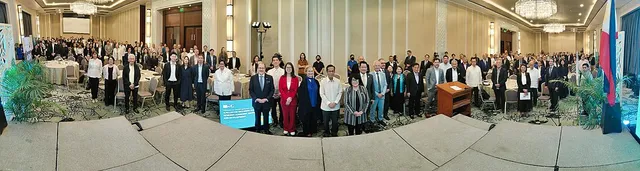
On 10 May 2024, the Department of Environment and Natural Resources (DENR) and The Stratbase Group held a forum entitled "Revitalizing the Philippine Mining Industry: A Pillar for Inclusive and Resilient Economic Growth and Development". In light of the powerhouse roster of speakers and panelists from the government, diplomatic corps, mining industry, and the private sector, as well as the breadth of the topics covered, it was fittingly dubbed a “mining summit”.
In the panel I moderated on “Addressing Philippine Mineral Agenda Bottlenecks”, we looked at the regulatory hurdles and bottlenecks hindering the advancement of the mining industry. Former Division Chief of the Mining Environment and Safety Division of the Mines and Geosciences Bureau (MGB), Engr. Michael Cabalda, reminded us that there is no need to reinvent the wheel as there is an existing and comprehensive Minerals Action Plan prepared by the Minerals Development Council back in 2005, with specific and detailed items to address the identified challenges. Even 19 years later, it is replete with implementable action items.
One concrete outcome of the event was the signing of the DENR-Mining Industry Joint Declaration [with the mining industry being represented by the Chamber of Mines of the Philippines, Philippine Nickel Industry Association, Philippine Mine Safety and Environment Association, and Philippine Mining and Exploration Association], which has the following objectives to push mining companies to go beyond mere compliance with the applicable laws and rules:
- Enhance regulatory frameworks to ensure the protection of biodiversity and the rights of local communities
- Promote the use of environmentally friendly technologies and rehabilitation of mining sites
- Encourage transparency and accountability in all mining operations
- Strengthen the enforcement of environmental laws and regulations
- Create a conducive and stable policy environment
Among the initiatives under the Joint Declaration are that: (1) the DENR shall station personnel in each active mine site for more efficient coordination and resolution of any concerns related to mine operation; and (2) mining organizations shall establish an Ethics Committee to oversee the environmental, social and governance (ESG) performance of their members to uphold and promote the highest standards of practice.
On 18 June 2024, I emceed the Sweden-Philippines High-Level Sustainable Mining Forum, with the theme “Pioneering the Green Transition: Advancing Sustainable Mining”. The Embassy of Sweden [led by Her Excellency Ambassador Annika Thunborg] and Business Sweden (also known as Team Sweden) have been working with the Philippine government in promoting the development of various industries. Having observed the renewed importance and emphasis that the Philippine government has placed on priority areas for advancement, including mining, Team Sweden hopes to build a stronger partnership around the mining industry, particularly revolving around sustainable mining.

We took away from the forum information and insights from Sweden in developing a Philippine mining industry that leverages technological innovations and promotes sustainability.
Sweden has long been a global leader and we are fortunate that it is adding its voice to the rejuvenated Philippine mining industry. It is the leading producer in the EU of 90% of iron ore and over 1/3 of zinc and lead. The mining ecosystem in Sweden [mines, mining equipment, services, steel and metal production], among others, supports 3% of Sweden’s national GDP, represents 8% of its exports, and accounts for 1.2% of total tax payments.
Most significantly, Sweden has a dedicated Ambassador for Sustainable Business, Cecilia Eckholm (one of the esteemed speakers at the event), who has been in the role since 15 January 2021 and is responsible for promoting the Swedish Government’s Sustainable Business agenda. She brings to the role a unique perspective, having previously served as Sweden’s Ambassador to Peru, another global leader in mining.
At the forum, several Swedish manufacturers and service providers, including Sandvik and Ericsson, presented a wide range of solutions for electrification, digitalization and automation that actively contribute to the green transition and to more efficient and safer mining operations.
We were also introduced by eminent speakers from Luleå University of Technology and the University of the Philippines to the “triple helix model” as it applies to the mining industry, where there is dynamic interaction among academia, industry and government, to encourage innovation and find research-based solutions to our local challenges.
With the many best practices shared by the resource persons from Sweden, I certainly look forward to closer collaboration between Sweden and the Philippines towards further developing a responsible, resilient and sustainable Philippine mining industry.
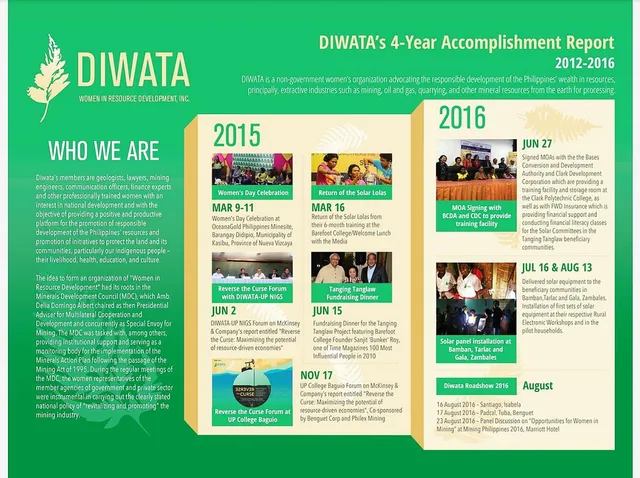
Patricia A. O. Bunye is a Senior Partner at Cruz Marcelo & Tenefrancia where she heads its Mining & Natural Resources Department and Energy practice group. She is also the Founding President of Diwata-Women in Resource Development, Inc., a non-government organization advocating the responsible development of the Philippines’ wealth in resources, principally through industries such as mining, oil and gas, quarrying, and other mineral resources from the earth for processing.
The Role of Filipino Geologists in National Development
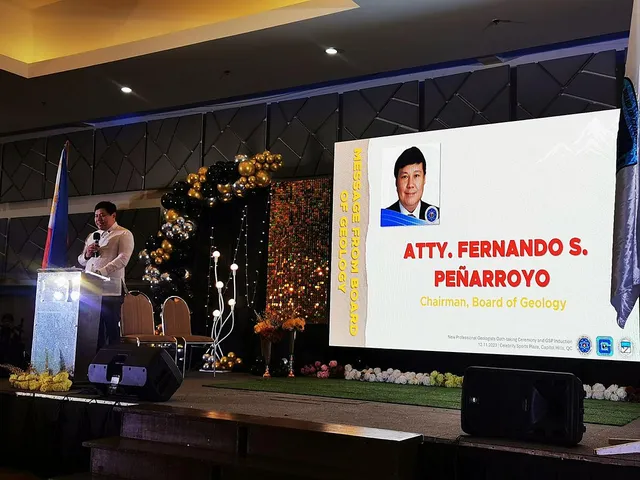
As Chairperson of the Professional Regulatory Board of Geology, December of last year was quite a busy month. I was given the honor to present the keynote speech during the opening of the Geological Convention (GeoCon) 2023 last 05 December 2023 and the Oath Taking Ceremonies for New Geologists on 11 December 2023. In my speeches, I emphasized the important relationship between geology and national development as geoscientific data and knowledge are essential for informed decision-making and policy-setting in various areas of the economy. The profession is important in the primary production of mineral and energy resources, infrastructure building, advancement of science and technology, and prediction and cost-damage avoidance through better understanding and mitigation of natural hazards.
During GeoCon 2023, I started my speech with a reflection on the recent onslaught of different calamities and super typhoons that ravaged our country in the last few years. These devastating disasters have had far-reaching impacts, hindering the development and growth of our nation. These highlighted the urgent need to address climate change, not just on a local scale, but as a global concern that affects every aspect of our society.
While the Philippines is a minor contributor to global greenhouse gas emissions, we are undeniably one of the most impacted nations, facing the imminent threat of rising sea levels due to increasing global temperature. Hence, we must recognize that climate change is not an isolated issue. It is an integral factor in our national policy. It is our collective responsibility to tackle this challenge head-on and without hesitation.
To address these challenges, the geology profession must embark on a journey of energy transition, building the capacity for resilient communities and a resilient nation. It is imperative that we develop our green economy, as it holds the key to unlocking numerous job opportunities, livelihoods, and the sustainable future we envision for our people. However, this transition will require a collaborative effort between the government and the various industries that strive to achieve the same goal, and thus, we must work hand in hand to achieve this ambitious goal.
Renewable energy technologies, such as wind turbines, solar photovoltaic panels and batteries, are essential for transition to climate neutrality. Deployment, maintenance and replacement of this infrastructure requires significant resources, including many substances in the list of critical raw materials.
Addressing Wastes
However, waste arising from end-of-life clean energy infrastructure is projected to grow up to 30-fold over the next 10 years. This presents significant opportunities to reduce consumption of scarce raw materials by recycling metals and other valuable resources back into the production systems. Waste arising from the development and use of renewable energy infrastructure includes rare earth elements as well as other valuable materials such as steel, copper and glass.
The fast pace of technological development means that equipment can be subject to relatively rapid obsolescence and can generate complex waste streams. These present technical and logistical challenges for managing this infrastructure at the end-of-life stage. Recovering materials and reintroducing them into the production cycle faces challenges. Policy makers and industry can address the waste and resource challenges associated with the shift to renewable energy technologies through circular economy approaches.
Critical Minerals
The Philippines has grand ambitions to take on the global electric vehicle boom with its nine million hectares of land with high mineral potential. Government estimates suggest less than five percent (5%) of our country's mineral reserves have been extracted so far.

The country is already, after Indonesia, the world's second-largest producer of nickel and the fourth-biggest producer of cobalt. Nickel and cobalt are among the critical minerals crucial to the modern technological world and the clean energy transition. Both are essential elements for electric vehicles batteries, consumer electronics and advanced defense technologies.
However, the Philippines also faces competition from other nations in seeking new investments in critical mineral exploration, development, and processing. At the same time, mining regulatory policies are complicated as the industry has long been synonymous with environmental destruction and social dislocation.
The End of Fossil Fuels?
Developments in clean energy transition have led to an assumption that the world economy is “done” with fossil fuels. There is no need for further development of new non-renewable energy resources, and we have to stop using them as soon as possible. This assumption has also led to a perception of “good” renewables-based technologies, on the one hand, and “bad” fossil fuels-based technologies, on the other.
The reality is that this debate requires a more thorough analysis. Carbon capture and storage technology and managing methane emissions throughout the fossil energy value chain can help meet ambitious CO2 emission reduction targets while fossil fuels remain part of the energy system. This will allow fossil fuels to become "part of the solution", rather than remain "part of the problem". All technologies have a role to play in an energy system as long as they are guided by rational economics.
Addressing the issue of sustainable energy requires the engagement of all possible groups of stakeholders. Ignoring the role of fossil fuels will have a negative effect. Many developing countries, like the Philippines, have large untapped fossil fuel resources that they intend to use to develop their economies. Insisting that they forego the use of these resources in favor of renewables is likely to create repercussions in their economies. Let us be reminded that the developed countries built their existing economies on fossil fuels and are still heavily relying on them. The Philippines, with untapped natural gas reserves in offshore Palawan, can use its resources to develop its economy.
Rather than a “non-fossil fuel” agenda, a more pragmatic approach should be used to create a more-balanced strategy. Our government regulators should encourage the use of a broad range of resources available - energy efficiency, renewables, and fossil fuels in a sustainable manner. I see no need to join the bandwagon of banning the exploration, development, and utilization of our fossil-based resources. Energy security must be the primordial objective of the Philippine government. Let me say it again. The Philippines is a minor contributor to global greenhouse gas emissions.
The other stakeholder group that is often vilified in the energy transition agenda is the private sector in the fossil fuel industry. In fact, the private sector holds the expertise and often the financial resources to support the needed change to an inclusive green economy. For example, experience in petroleum drilling can be applied to the geothermal industry. Using the financial resources of the big companies along with their knowledge and experience, can facilitate the energy transition. Governments should instead encourage them to diversify to green energy and use environment, social, and government or ESG standards in sustainability reporting. Treating them like outcasts will make the energy transition harder and more expensive.
The Role of Filipino Geologists
Filipino geologists are in the forefront of fueling the energy transition journey. Geoscientists are employed in a wide variety of jobs, from traditional mining and petroleum to many new areas such as water quality and supply, land-use management and geologic hazards. In a global study, employment of geoscientists is expected to grow 5% in the next 10 years, which is faster than the average for other professions.
Science, policy, public health, engineering, education, law, business— all of these fields overlap with the understanding of the earth that comes with a degree in geosciences. The continued need for energy, materials, including the critical minerals for energy transition is projected to increase demand for geoscientists in the future. Responsible stewardship of land and resources are also regularly being deployed in fields that focus on renewables such as hydrothermal power, geothermal, and sites for solar and wind.
It’s also important to note that automation and artificial intelligence don’t necessarily mean there’s no future for geologists. What it means is that geologists, like many other professionals, need to learn new skill sets. Robots may be taking over areas such as field mapping and routine jobs like soil and rock sampling but ultimately humans make the final decisions about what to do with the data and information. It’s also human geologists who have to explain to higher management what all the data and information mean! Automation and AI is an opportunity to learn and apply new skills. Let us all embrace change and become digital-savvy geoscientists!
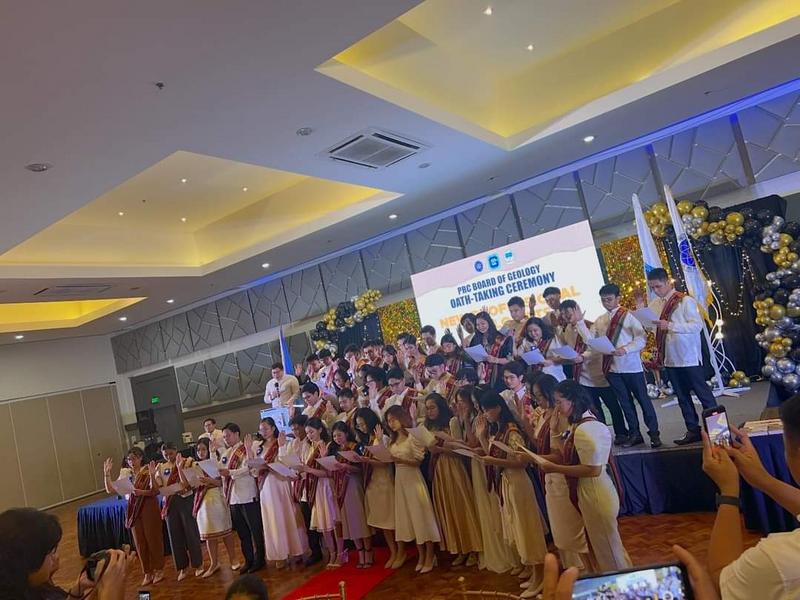
In my speech during the oath taking of new geologists, I emphasized that the Professional Regulation Commission (PRC) will spare no effort to provide the support necessary to address the pressing concerns that hinder the professional development of our geoscientists. And even as the PRC invests in infrastructure and institute reforms to improve the geology profession, it will continue to channel the hard-earned money of our taxpayers to empower our geologists—making them productive contributors to the continuing cycle of opportunity and progress.
The PRC bear witness to the oaths of exemplary and honorable geologists who have been, and who will continue to be assets to our country. These individuals became leaders and trailblazers in our profession — exemplars of patriotism, of excellence, and wholehearted service throughout their careers and endeavors.
For geologists who will join government, public service is no easy task. Serving in an office with such a significant and influential role in the nation’s affairs will be difficult. Life in government will always be hard and challenging, but every service delivered brings purpose, it brings fulfillment. They will be assured of PRC’s unshakable commitment to their protection and welfare, to ensure that they are provided with the necessary tools to perform their tasks and duties in the fulfillment of their service to the nation and the people.
The persistent critical challenge presented is to ensure an improved quality of life and economic growth, while reducing the environmental footprint of the resources sector. The transition to a sustainable energy system is an opportunity to improve energy efficiency from exploration to consumption, minimize environmental impacts, reduce energy use and carbon footprints, and correct energy market failures and leakages.
Taking advantage of the opportunity will require a coordinated policy review and reforms across many sectors, most especially from the ranks of Filipino geologists. The idea of green mining and the presence of stringent environmental compliance measures may not be enough to make mining widely acceptable to the public. It is their responsibility then to explain the importance of resource development to the general public.
I ended my speech by thanking our Filipino geologists, for their dedication, expertise, and unwavering commitment to our beloved nation. The Filipino geologists can make a real difference in climate change mitigation, digital transformation, and clean energy transition, and most especially in the pursuit of a sustainable and prosperous future for the Philippines.
Fernando “Ronnie” S. Penarroyo specializes in Energy and Resources Law, Project Finance and Business Development. He is also currently the Chair of the Professional Regulatory Board of Geology; the government agency mandated under law to regulate and develop the geology profession. He may be contacted at fspenarroyo@penpalaw.com for any matters or inquiries in relation to the Philippine resources industry and suggested topics for commentaries. Atty. Penarroyo’s commentaries are also archived at his professional blogsite at www.penarroyo.com
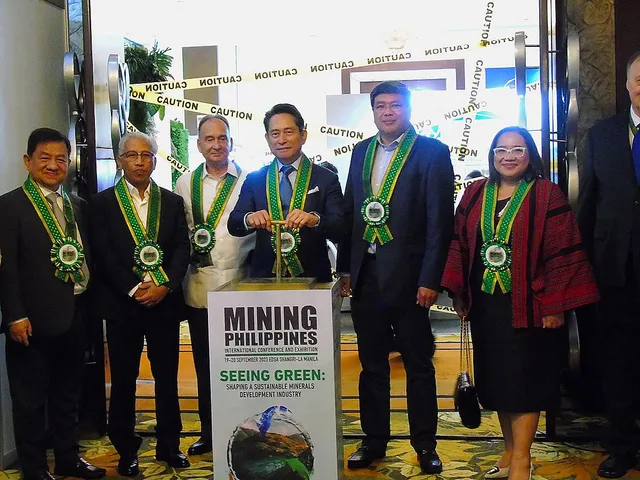
Mining Philippines 2023: Navigating Profitability and Sustainability
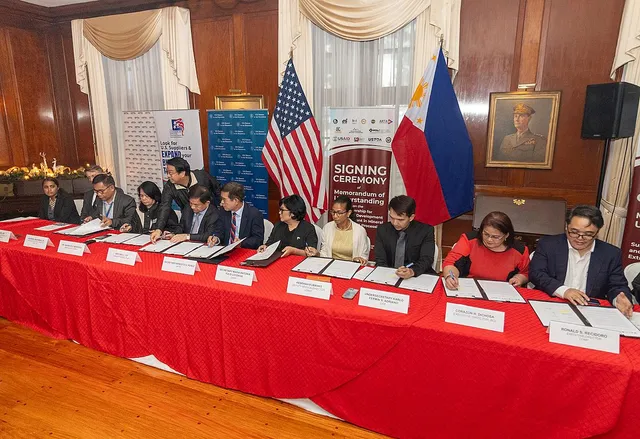
Amidst inflation, supply chain interruptions, geopolitical upheaval, the devastating effects of the COVID-19 pandemic, and their subsequent effects on the energy and industrial commodities markets, mining companies are facing enormous challenges in achieving their profitability and sustainability goals. Environmental, social, and governance (ESG) considerations are more critical than ever, with issues on sustainability gaining prominence and requiring implementation of decarbonization strategic planning. One key aspect of this strategy involves significant investments in renewable energy sources and comprehensive planning to bolster global supply stability in volatile times. Against this backdrop the Chamber of Mines of the Philippines (“COMP”) played host once again to the Mining Philippines Conference 2023 with the theme, “Seeing Green”.
COMP Chair Michael Toledo articulated that the Philippines can only take advantage of opportunities in the energy transition if two conditions were met. First, the country must be able to address the divided public opinion on mining. The second condition involves resolving other issues affecting the investment climate in the industry. These issues include conflicting local and national laws, high costs of power, a protracted permitting process, and a fiscal regime that will not only enhance our country’s competitiveness as a mining investment destination, but equally important, reflective of the government’s designation of mining from being merely a “beneficial” industry to one that is “essential” and “critical”.
Assessing the Philippines' Potential in the Global Green Metals Revolution
According to the S&P Global Commodity Insights Report, the Philippines is more involved in the upstream industry. A few projects are currently in development, but potential additional value of ores is lost due to lack of local processing capacity. Only fourteen percent (14%) of current Mineral Production Sharing Agreements (“MPSA’) are nickel and copper projects under development.
Philippine exploration budgets dwindled in the recent decade and have not recovered since the imposition of the moratorium on new mining agreements and the ban on open pit mining. In 2022, exploration budget was only US$35 million, representing ten percent (10%) of exploration in the Pacific valued at US$330 million. There was more intensive exploration for green metals in 2022 but most allocations were still directed to exploration activities at mine sites. Local exploration remains gold-focused while advanced exploration for copper and nickel dominates.
The Philippines holds huge untapped and underdeveloped deposits of copper and nickel. The country, which hosts the world’s fourth largest nickel reserves, remains competitive while lagging in copper reserves compared to other countries. It also has the third longest average lead time from discovery to production - 19 years. It maintained its rank in nickel production but lag other countries in copper production.
Nickel and copper production is expected to increase in the medium term with the Philippines maintaining its second spot in 2022 next to Indonesia despite seven percent (7%) year-per-year decrease. The Philippines contributes less than one percent (1%) of global mined copper production in 2022 but there is strong projected growth for copper production when the Tampakan project goes on-stream.
Meanwhile, the Department of Environment and Natural Resources (“DENR”) reported that it is currently undertaking advanced exploration of proposed mineral reservation areas to look for possible local sources of rare earth elements and other critical minerals through its National Mineral Reservation Program. The DENR’s critical mineral policy aspires to provide a sustainable supply of critical minerals and establish value-adding downstream mineral processing industries. No discussion was made, however, as to the source of funding and technical expertise-building in the exploration of critical minerals.
If commodity demand and prices stand their ground, alongside a conducive policy environment and the elimination of physical infrastructure bottlenecks, a significant comeback might be on the horizon. More initiatives from the exploration side to the processing sector are needed to revitalize the Philippines’ position in the nickel and copper value chain. The mining industry’s objectives in expanding the mining and processing involvement of the Philippines must be balanced with the country’s decarbonization goals.
The DENR Continues to Focus on Sustainability and Climate Change Resilience
Globally, climate change has placed the net-zero agenda on top of the objectives of mining companies. At the mining conference, the DENR found it apt to remind the industry to tackle the tangible threats posed by climate change.
In DENR Secretary Maria Antonia Yulo-Loyzaga keynote speech, she mentioned that her department has pilot-tested a new process called Negotiated Sustainability and Resilience Agreement for implementation in 2024. This process involves a dialogue between the DENR and the mining companies to identify and negotiate shared goals such as reduced environmental impacts, renewable energy adoption, and community resilience for the overall improvement of their quality of life.
The DENR also revised the Social Development Management Program under the Philippine Mining Act of 1995 to link it to the Sustainable Development Goals adopted by United Nations member states, to build in the assurance that mining operations respond to host community and ecosystems needs. Secondly, the DENR hopes to formalize small scale miners through step-wise, alternative arrangements to regard them as partners and members of the mining sector. One of these is a proposal to register small scale miners individually, followed by the establishment of a loose organization as the foundation for a more formal association or cooperative towards Minahang Bayan registration. Thirdly, the DENR has adopted the Mitigation Hierarchy in evaluating proposed and ongoing developments in the mining sector. Finally, the DENR reported that it is investing in the digitization of all mining-related information and the processing of applications and permits. Digitization should address making DENR’s procedures more efficient, leading to shorter and more transparent processing permits and applications.
Rationalization of the Mining Fiscal Regime and Developing a Mining Roadmap
With inflation creeping upward, mining companies are pushed to keep cost fluctuation at bay and maximize profits. While investors are pursuing their capital allocation strategies, they are on the lookout not only for mineral prospectivity but on the host country’s tax regime as well. The conference was a venue for the Philippine government to present its new package of fiscal regimes vis a vis other mining jurisdiction.
The Department of Finance (“DOF”) presented that the current mining fiscal regime is heavily geared towards taxation based on gross revenue but does not have a component to capture windfall profits. In contrast, taxes of other countries are skewed towards profitability. The DOF enumerated key reforms under its proposed mining fiscal regime:
- Simplification of the mining fiscal regime from the current five to two;
- Imposition of three percent (3%) royalty tax outside mineral reservation to address the constitutional issue;
- Introduction of a windfall profit tax mechanism to ensure government’s fair share when mineral prices are high; and
- Provisions on thin-capitalization, ring-fencing, transparency, and accountability.
The proposed special mining tax will be based on “margin”, ranging from zero percent (0%) to fifteen percent (15%). The windfall profit tax is proposed to be not deductible from corporate income tax.
Meanwhile Department of Trade and Industry (“DTI”) Secretary Alfredo E. Pascual in his keynote speech, said the DTI is firmly pushing for the development of the green metals sector by advocating for value-added downstream mineral activities in the segment of battery precursor production used for electric vehicles batteries and battery energy storage system. This initiative is anchored on the global transition to clean energy technologies, which calls for the promotion and development of green metals.
The DTI-Board of Investments also leads the Working Group on Mineral Processing and Battery Manufacturing/Green Metals, which seeks to address concerns and issues vital for developing and promoting the sector to create a strategy that will attract mineral processors and battery manufacturers into the country. As the Philippines aims to strategically position itself in the regional and global value chains of electric vehicles and batteries, it is essential for the government to recognize the suitability of local nickel ores for battery applications particularly battery-grade materials for cathodes. Moreover, Secretary Pascual believes that the abundance of other mineral resources like copper plays a pivotal role in providing essential components of electric vehicles.
Secretary Pascual added that government policy must focus on advancing value-added activities and increasing participation in the regional and global value chains of electric vehicles, batteries, and renewable energy equipment. He mentioned that there is a tremendous opportunity to use the extractive industry's potential to propel long-term economic growth. He identified several opportunities in mining and mineral processing which include:
- Green metals processing (cobalt, copper, nickel) and other value-added downstream mineral activities;
- Copper wire rod facility (to address the value chain gap in the local copper industry);
- Battery technologies; and
- End-user industries like renewable energy equipment.
As an added attraction in doing business in the Philippines, Secretary Pascual also mentioned that Section 300 of the Corporate Recovery and Tax Incentives for Enterprises (“CREATE”) Act, provides for the formulation of the Strategic Investment Priority Plan (“SIPP”). Signed on 24 May 2022, the SIPP is the country's investment plan containing the list of priority activities for investment promotion and facilitation supported through fiscal and non-fiscal incentives as provided in the CREATE Act.
The exploration of metallic resources is listed under Tier 1 (Special Laws) which is limited only to capital equipment incentives. On the other hand, green metals processing is listed under Tier 2, where activities cover environment, health, food security, industrial value-chain, and defense-related activities. The SIPP guarantees higher incentives, Tier 2, for registered business enterprises located farther from metropolitan areas and the highest incentives under Tier 3, where projects or activities involve research and development applications, and highly advanced technologies.
Mining Fiscal Regimes and Benchmarking
To realize the revenue potential of the local mining industry and strengthen its international competitiveness, the United States Department of Interior and Department of State provided policy support and technical assistance to the DENR in designing and implementing an upstream fiscal regime. The Technical Assistance on Mining Sector Governance for the Government of the Philippines came out with a report prepared by Deloitte outlining its Key Observations on Philippine mining income taxation. The report presented during the conference stated that income tax rate is comparable to that in benchmarked nations as well as accelerated depreciation. However, the period to carry forward a loss is more restrictive in the Philippines than in the benchmarked nations. Also, special deductions and credits to encourage mining are not offered or are discretionary unlike some benchmarked nations where they are generally automatic and not subject to discretionary approval.
It was recommended in the report that the Philippine government continue to apply the same income tax rates to mines that apply to other taxpayers. In addition, the report recommended not to provide a depletion allowance, like other nations with state-owned minerals, and amend Section 34(G) of National Internal Revenue Code of 1997 (“NIRC”) accordingly and consider not granting income tax holidays to mining taxpayers. This recommendation also calls for an update of Section 83 of the Mining Act, and Sections 39, 217, and 227 of its implementing rules and regulations.
On royalty and excise taxes, the Philippines, unlike most nations, imposes both royalty and excise taxes which total to twelve percent (12%), broken down as follows:
- 5% Royalty Tax - only levied in a mineral reserve area;
- 4% Excise Tax - no benchmarked nation charged excise tax on mineral sale;
- 2% Local Government Tax (maximum); and
- 1% Royalty Tax to Indigenous People (minimum).
The report mentioned that royalty rates exceed those in benchmarked nations and the combined rate is one of the highest in the world. The current approach imposes a high combined ad-valorem royalty. It recommended that the Philippine government consider imposing a single royalty and subjecting all mines to a five to fourteen percent (5-14%) sliding scale royalty based on net operating ratio applied to net income, like the royalty system in Chile.
To summarize, the key recommendations for reform in the report called for the Philippine government to consider discontinuing royalty imposed on mines within a mineral reservation and zero-rate mineral sales for excise tax. Instead, a new tax based on the Chilean approach of an operating margin-based royalty can be imposed.
A new royalty approach could include the existing one percent (1%) royalty on mines in ancestral lands, existing two percent (2%) local business tax, and a new sliding scale operating margin-based royalty. The benefits of a sliding scale operating-margin (annual profitability) royalty are as follows:
- Progressive (higher profit mines are taxed more heavily than lower profit mines);
- More marginal operations can be built, enhancing tax base potential;
- Automatic adjustments for price cycles (allows the government to capture additional revenue when commodity prices are high without placing a large economic burden on mining companies when prices are low); and
- Well-tested in major mining nations like Chile and Peru.
It was also recommended that the Philippine government consider adopting non-discretionary exemptions, deductions, and discontinuing the current system where investors must still apply for various fiscal incentives. The discretionary SIPP approach doesn’t suit mining based on the following reasons:
- Deductions/exemptions/incentives are unstable, unpredictable, ad hoc, and discretionary;
- The SIPP is revised every 3 years;
- The tax approach can be standardized in the NIRC, eliminating the need for SIPP; and
- Investors consider predictability and consistency in fiscal regimes to be of high importance when evaluating where to invest.
Finally, it was recommended that the Philippine government consider making the fiscal systems for Financial or Technical Assistance Agreements (“FTAA”) and Mineral Production Sharing Agreement (“MPSA”) identical. The current approach imposes different fiscal systems on FTAAs and MPSAs. The FTAA approach includes an Additional Government Share that is not conducive to attracting investors. A single system would be administratively easier to regulate and monitor. The unified system can also facilitate the standardization of tax matters set out in the NIRC, negating the need to include these provisions in the MPSA and FTAA contracts, resulting in simpler agreements.
A fiscal regime combining a royalty and tax targeted explicitly on rents (along with the standard corporate income tax) has appeal for many developing countries including the Philippines. Such a regime ensures that some revenue arises from the start of production, and that the government’s revenue rises as rents increase with higher commodity prices or lower costs. In so doing, it can also enhance the stability and credibility of the fiscal regime (though processes to allow renegotiation may also be needed). It can also balance the challenges that each instrument poses for administration. Transparent rules and contracts tend to improve stability and credibility. Poorly designed international tax arrangements, however, can seriously undermine revenue potential.
Continuing the Engagement Between the Government and the Industry
ESG considerations are the driving force for enhanced transparencies in mining operations with calls for urgent compliance by mining companies for greater diversity, equity, and inclusion, as well as responsible mine closure strategies. This has resulted in stronger ties and coordination with host governments and fostering more stakeholder collaboration.
In his Keynote Speech, Manuel V. Pangilinan, Philex Mining Corporation Chair, suggested that the private sector should help government raise its supervisory capabilities through funding of scholarships and training, procurement of equipment, and hiring of requisite personnel. He also called for the separation of the functions of regulation and the promotion of the mining industry. The Mines and Geosciences Bureau (“MGB”) is charged with the promotion, development, and supervision of mining. The Environmental Management Bureau’s (“EMB”) mandate on the other hand, is to enforce environmental laws on mining. Both fall under the supervision of the DENR. These apparently conflicting goals can, at times, place the DENR in a policy dilemma. He suggested spinning off the EMB into a separate and independent body, like the Environmental Protection Agency in the US.
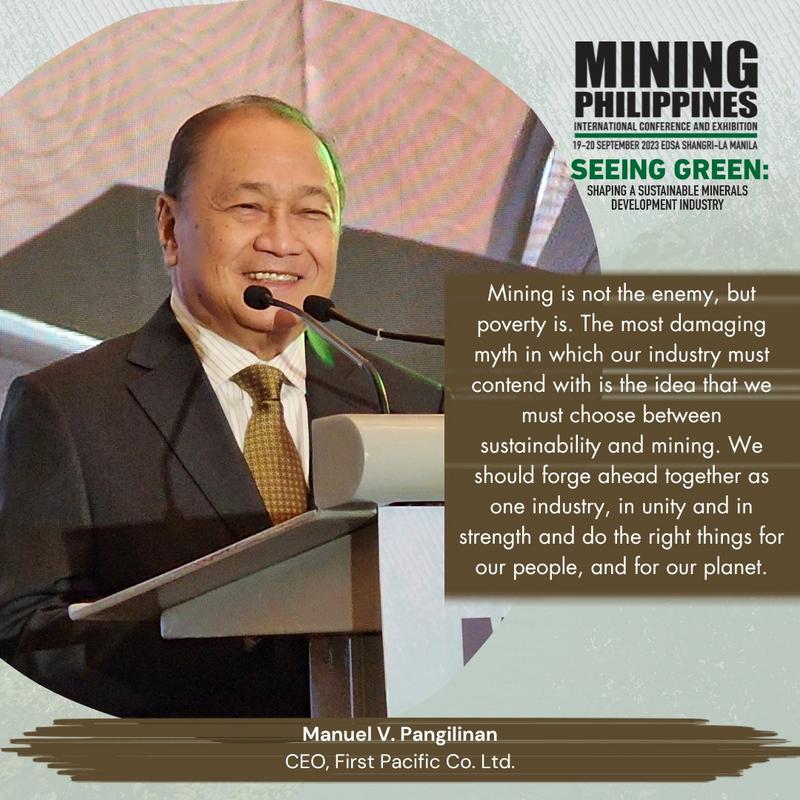
Mr. Pangilinan said that Philex is open to a profit-based fiscal regime to assure the government that an appropriate share of the benefits derived from the resources the state owns. It welcomes the recent congressional approval on second reading of House Bill No. 8937, which proposed a royalty rate calculated against margins realized by mining companies, as well as a windfall profits tax.
Finally, Mr. Pangilinan believes that the mining benefits between the host local government units (“LGU”) and the national government should be shared more equitably. The national government must ensure the timely remittance of taxes due LGUs. As mining is location specific, Philex sympathizes with the LGUs’ desire to realize the fruits of the resources situated in their communities.
Philex is optimistic because the Marcos administration has been clear, predictable, and transparent with respect to mining and applauds the President’s desire to expand the industry, spread the benefits of mining to the countryside, and incentivize the processing of ores into higher value-added export products.
I share Mr. Pangilinan’s sentiments in providing technical assistance to monitoring agencies to build capacity in government regulatory offices. In my capacity as Chair of the Professional Regulatory Board of Geology, I have been recommending mining and energy companies to sponsor scholarships for government employees and local academics in my inspection and monitoring of these establishments. Also, just like Mr. Pangilinan, I have been critical of the administrative set-up of the DENR, having both the MGB and EMB under its wings. However, I have advocated in my previous commentaries that the MGB be removed from the administrative control of the DENR.
With a sold-out attendance, the conference was indeed a success in whetting the appetite of the business community craving a positive outlook for the local mining industry. But quoting Johann Wolfgang Goethe: “The greatest thing in this world is not so much where we stand as in what direction we are moving.” I hope that this level of engagement is soon translated to real action. I see the outcome of the conference as an opportunity for the industry to enhance its reputation, gain greater recognition for the economic benefits mining has bestowed, and pledge commitment to deliver its objective of promoting sustainability.
Fernando “Ronnie” S. Penarroyo specializes in Energy and Resources Law, Project Finance and Business Development. He is also currently the Chair of the Professional Regulatory Board of Geology; the government agency mandated under law to regulate and develop the geology profession. He may be contacted at fspenarroyo@penpalaw.com for any matters or inquiries in relation to the Philippine resources industry and suggested topics for commentaries. Atty. Penarroyo’s commentaries are also archived at his professional blogsite at www.penarroyo.com
Copies of the Mining Philippines 2023 conference presentations are available for reference at: https://app.glueup.com/event/mining-philippines-international-conference-and-exhibition-81637/
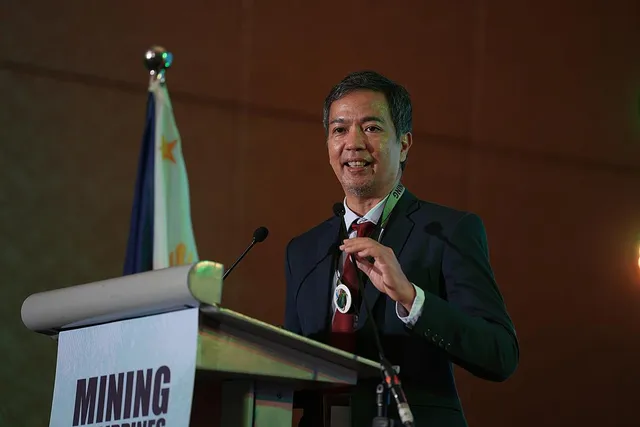
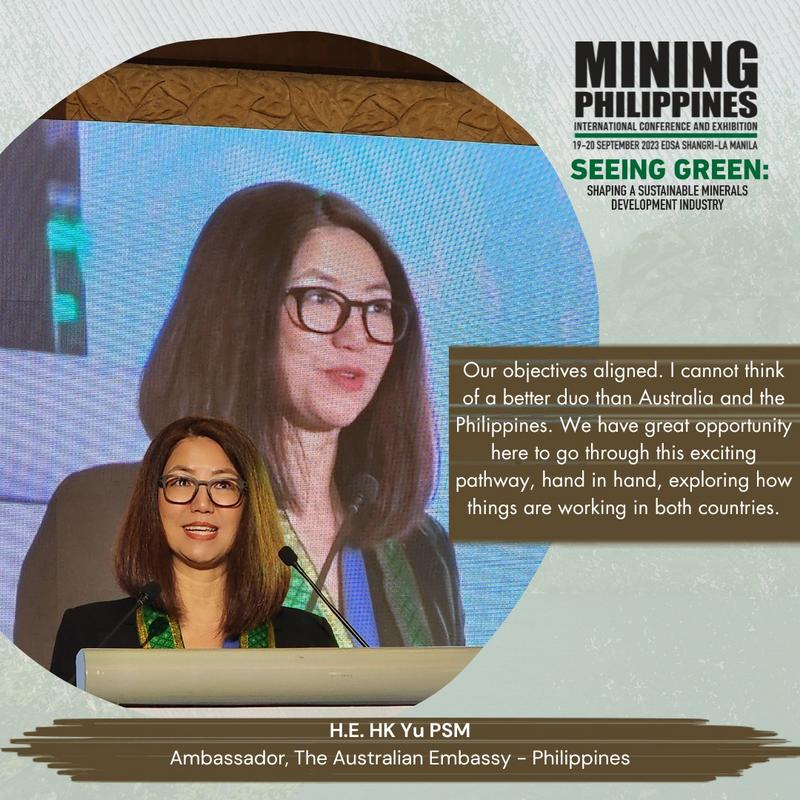
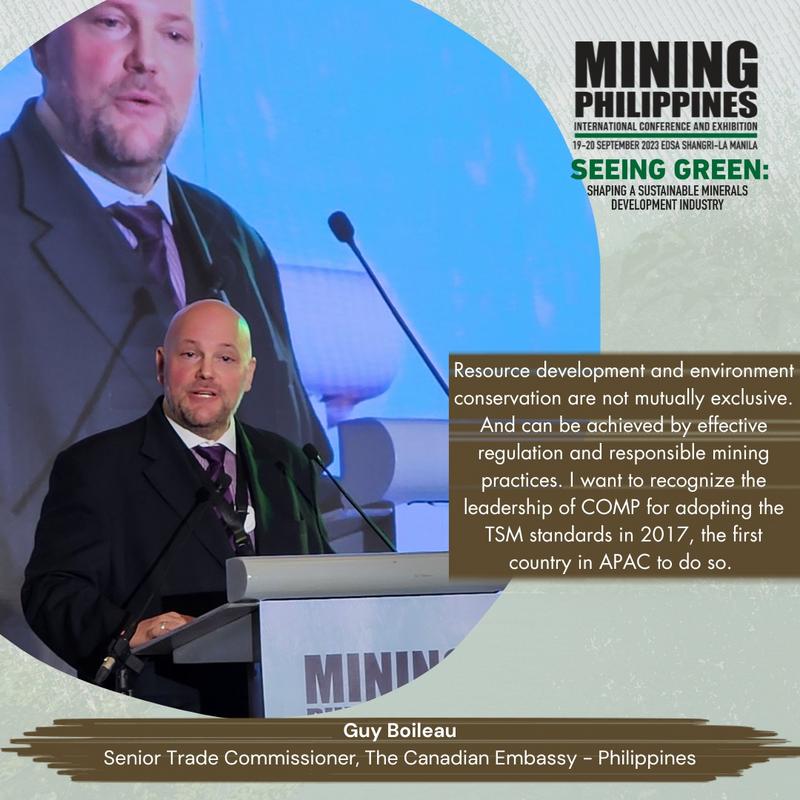
The DENR Should Get Down to Business
The regulatory oversight of the mining sector is complex with multiple government administrative agencies and legislative bodies involved in the implementation and drafting of laws in relation to environmental, social, and governance matters. Through active monitoring and close coordination with the mine developer, government regulators can promote environmentally-safe, socially-acceptable operations and more transparent revenue collection. The Department of Environment and Natural Resources (“DENR”) plays a major role in the regulatory oversight of the mining industry but with the way the agency is structured it is also concerned with the other environment and natural resources sectors.
In mining alone, the DENR through the Mines and Geosciences Bureau (“MGB”) basically has its hand full in administering safety and environmental policies, enforcing compliance with its mineral license requirements, and tracking mine operators’ production and financial reporting. Little has been done to promote the mining industry to investors. This is one of the reasons why the country ranks so low in the Investment Attractiveness Index of the Fraser Institute’s Annual Survey of Mining Companies.
How can we expect the DENR to actively promote and regulate mining when it is busy fighting bush fires on many fronts? Generating headline news lately, the DENR has been doing damage control in numerous situations such as the Mindoro oil spill, Sibuyan mineral exploration operations, and lately the Manila Bay reclamation projects. The DENR also has suspended the acceptance, processing and approval of environmental compliance certificates (“ECC”) for offshore wind energy and floating solar energy projects pending the approval of new guidelines for these renewable energy projects.
What really caught the mining industry by surprise was the issuance of DENR Administrative Order (“DAO”) No. 2023-006, which mandates an ECC submission for Exploration Permits which clearly runs against Section 70 of the Mining Act of 1995. The said section states that: “Except during the exploration period of a mineral agreement or financial or technical assistance agreement or an exploration permit, an environmental clearance certificate shall be required.” The industry set forth position papers/comments to the DENR with the Chamber of Mines of the Philippines requesting to put the DAO on hold while a meeting with the DENR Secretary Antonia Yulo-Loyzaga, is being arranged.
Meanwhile, the Offshore Mining Chamber of the Philippines is urging the DENR to grant a certification of non-objection to the Memorandum of Cooperation between the Department of Trade and Industry and Japan’s Ministry of Economy, Trade and Industry. Despite being requested to sign off on the memo since February of the previous year, the DENR has not taken any action on the matter.
According to Sec. Loyzaga, the DENR will have a “reorganizational transformation”, moving away from its previous mandate of being a “regulatory” body towards an agency that is science-led and focusing more on the “protection, enhancement, preservation, rehabilitation and regeneration of the environment.” Under her administration, the DENR would be more “science-based with more emphasis on what we need to do to actually maintain from ridge to reef our ecosystems so that they can support community life, business, and all the other activities that are really dependent on the use of natural resources.”
Clearly, those are inspiring words from the former executive director of the Manila Observatory from 2007 to 2016, even if Sec. Loyzaga’s educational background is in political science with a graduate degree in government. Her management of institutions staffed by scientists in the past surely have given her the experience in administering a research institution but running a highly-technical, regulatory body like the MGB and promoting mining investments are altogether a different ballgame.
Also, many industry players lament the phase in which Exploration Permits (“EP”) are being granted by the DENR since the assumption of the new administration. The Philippine Mining and Exploration Association reported that so far, the DENR only managed to give clearances for the approval of five (5) EPs and one Operating Agreement in late July 2023 resulting in the issuance of three (3) EPs and one Operating Agreement. Greenfield exploration is the backbone of the industry since new mineralized areas are needed to be discovered to replace dwindling and depleting production from existing mine sites. At the same time, regional directors of the MGB are being moved and reshuffled to different regional offices with alarming regularity. While this movement may be administratively justifiable, it nevertheless creates the impression that there is no stability in the agency.
Negative news doesn’t help either as this only confirms the perception of the uninformed public that mining is a destructive activity whose environmental and social track record far outweighs its financial benefits. While there are tensions between the objectives of attracting investment into mining and protecting the environment and the local community, evidence shows that it is possible to have both strong environmental and social regulations and a favorable investment environment in mining. Fiscal revenues are one of the major reasons why the Philippine government seek to promote the growth of this industry, but the government is now obliged to make its strategies for managing its mineral resources consistent with its commitments to sustainable development.
No matter how much effort our government financial bureaucrats are harping about the role mining will play in national economic recovery, the ambiguous nature and function of the DENR prevent them from convincing investors to put in the needed risk capital to new exploration and mining ventures. Regulation of the mining sector requires highly technical professionals with skills that span the range of oversight subject matter e.g., environmental, social, occupational safety and revenue collection.
The present setup of the DENR, which mandates it to promote investments in the minerals industry through the MGB and at the same time, enforce national environmental laws through the Environmental Management Bureau, makes it difficult for the department to actively work for a robust industry. The DENR, with the way it is structured, has too much on its plate and the promotion of the mining industry is in many instances not on top of the list of the department’s priorities.
Establishing a National Geological Survey
We have seen how DENR regulators are often bogged down by the sheer volume of monitoring, inspections, and extension work required resulting in less time spent on assessing the mineral resource potential of the country, arguably the primary mandate of a department handling the mineral industry.
One method to attract investment is by providing modern geological information to investors and this can be adequately fulfilled by a national geological survey where our government can maximize the country’s mineral wealth by providing high quality and actionable mineral data to potential investors. The success of this undertaking will of course depend on how the government collects, analyzes, and shares the information. Usually, the practice followed by most major mining economies is to establish a geological survey either an independent agency or vest its functions in a bureau within a larger agency or department.

A national geological survey is a government institution that focuses on publishing geoscience research to make them accessible to public and private sector stakeholders. Historically, governments have established geological survey agencies to understand their natural resource potential and mitigate disaster risks arising from geologic hazards. These eventually evolved into the identification of resource potential and calculation of mineral and energy reserves. The agencies then became providers of information to promote prospecting and exploration activities. These helped to accelerate investment in all stages of the resource life cycle—from resource management through project development to production. In performing their geological record keeping function, geological surveys often draw on information submitted by developers, who sometimes provide these data pursuant to their obligations in the rights acquired from the government.
Database and information management is crucial in the collection, review, maintenance, and promotion of data from geological surveys and submissions by resource companies. The management system commences with a sound baseline geological information which includes results from systematic surface and subsurface geologic mapping and surveying particularly of basins and rock formations that have mineral and hydrocarbon potential. Data and information management also defines how, and in what format, data are created, collected, stored, and shared. Data taxonomy defines standards including national and international policies, to sort and organize data. Finally, data archival and disposal address the integrated data environment, which encompasses the physical and/or digital locations for data storage, usage, and disposal.
Mineral resource assessments identify specific mineral prospects and are used as tools to help quantify the potential of mineral deposits. Geological survey is a public resource that provides feedback to private investors on mineral data and resource potential. The data and information from the survey can be used to conduct resource assessments of the mineral potential of an area especially during the initial exploration stages. Down the line, it also helps in locating and estimating the size of a mineral deposit during early mine production.
The geological survey also advises the government on economic and environmental issues using expertise in areas such as resources and geo-hazards data and information. On the academic side, it helps advance education by working in conjunction with university geoscience departments to advance research, and may award grants, scholarships, and fellowships to conduct research or aid survey activities.
As I have emphatically written in my previous commentary, it is now high time for Philippine legislators to remove the mining regulation function from the DENR and attach it to a super regulatory body called the Department of Mines and Energy. This set-up is the norm in many jurisdictions where the administrative body regulating extractive industries is detached and totally independent from the environmental protection agency.
By having a unitized department solely focusing on the administration of extractive resources and backed by a national geological survey, the government can effectively regulate the mineral and energy industries and prudently manage fiscal revenues in a way that addresses the volatility of these revenues. This merged department can also advise the government on how to invest these revenues in long-term development – social, infrastructure investments, financial savings and economic diversification. The government can then invest the resource revenues in a way that increases or does not deplete the national wealth, into infrastructure, education, social services, diversified financial instruments and other alternative sources of growth. Tools such as Strategic Environmental and Social Assessments and Cost-Benefit Analyses can assist in assessing the overall impacts of mining – not just financial.
The opportunities for growth around the green energy transition and digital transformation multiply and mineral-rich developing countries like the Philippines can play a crucial role in realizing a low-carbon, inclusive, and resilient future. To attract investors, the Philippines must embrace environmental, social, and governance standards that protect communities and the environment. The government must also have to plan and invest strategically to decarbonize resources production and ensure competitiveness in a low-carbon economy. Despite pressures to produce more minerals, the government can then decide to use the land and natural resources for alternative purposes that preserve the environment and promote sustainable economic activities using renewable resources.
Fernando “Ronnie” S. Penarroyo specializes in Energy and Resources Law, Project Finance and Business Development. He is also currently the Chair of the Professional Regulatory Board of Geology, the government agency mandated under law to regulate and develop the geology profession. He may be contacted at fspenarroyo@penpalaw.com for any matters or inquiries in relation to the Philippine resources industry and suggested topics for commentaries. Atty. Penarroyo’s commentaries are also archived at his professional blogsite at www.penarroyo.com
References
“Energy Resource Governance Initiative Toolkit”, https://ergi.tools
“Enhancing Well-being in Mining Regions: Key Issues and Lessons for Developing Indicators”, https://www.oecd.org/cfe/regionaldevelopment/Wellbeing_MiningRegions_3rdOECDMeeting_PreConference.pdf
Go, Marianne, “Science-led DENR”, The Philippine Star, 23 June 2023, https://www.philstar.com/business/2023/06/23/2275812/science-led-denr