April 08, 2024

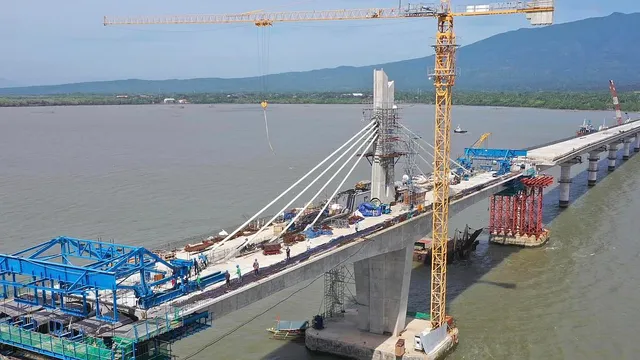
The Department of Public Works and Highways (DPWH) continues to make significant strides in the implementation of its Davao River Bridge Project also known as the Bucana Bridge which is an integral part of the Davao City Coastal Bypass Road.

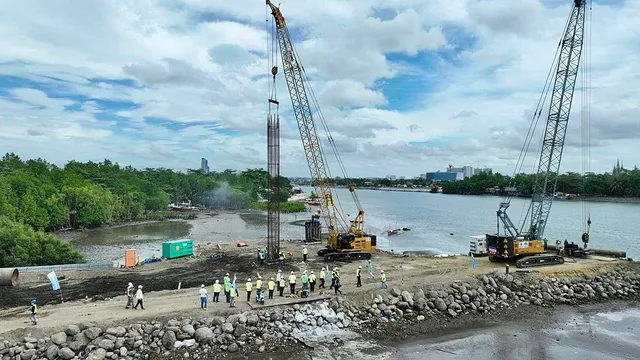
In his inspection report to DPWH Secretary Manuel M. Bonoan, Senior Undersecretary Emil K. Sadain said that the Unified Project Management Office - Bridges Management Cluster (UPMO-BMC) is working closely in the implementation of the 1.34-kilometer Bucana Bridge Project with its contractor China Road and Bridge Corporation (CRBC) pushing forward with its construction activities beginning last November 2023 and currently focused on the bored piling works.

According to Senior Undersecretary Sadain, in-charge of DPWH infrastructure flagship projects, construction of this modern bridge will be finished in 24 months and is expected to be open to traffic in the first quarter of 2026 which can approximately hold about 35,000 vehicles every day, alleviating the east-west traffic congestion in the coastal areas of Davao City.

Senior Undersecretary Sadain together with UPMO-BMC Project Director Rodrigo I. Delos Reyes inspected on Friday, April 5, 2024 the on-going construction of a four (4) lane six (6) span extradosed bridge and approach roads located at the estuary of the Davao River.

Also joining in the inspection are UPMO - Roads Management Cluster 1 (Bilateral) Project Director Benjamin A. Bautista, Stakeholders Relations Service Director Randy R. Del Rosario, and UPMO Project Manager Joweto V. Tulaylay.

The Bucana Bridge will be one of the pioneering infrastructure landmarks for the Build Better More agenda of President Ferdinand R. Marcos Jr. administration under the Bagong Pilipinas brand of governance and leadership.

The total length of the bridge is 480 meters with embankment roads of 420 meters and 440 meters and width of the bridge deck is 22.24 meters, designed for a bidirectional four (4)-lane setup.

The main bridge foundation consists of 1.5-meter diameter bored piles, with pier caps and portal piers while the height of the bridge towers is 19.5 meters, with a total of five (5) towers. The main beams are a double-hole cast-in-place hollow beam structure, with a 10-centimeter thick asphalt concrete pavement on the bridge deck and steel structure guardrails on both sides.

From the onset of its mobilization during the last quarter of 2023, the project has been underway for several months with DPWH government engineers headed by Project Manager Norifel Teddie G. Cadiang and Project Engineer John Christian T. Gaden and the contractor’s construction crews working tirelessly in attaining the present accomplishment status at 8.23%.

With a total project cost of P4.304 Billion, the project is funded by the assistance of the Government of the People’s Republic of China (GPRC) under the China Aid-Grant.

The ongoing construction project is providing local employment opportunities with about 83% of the workers involved in the project being Filipinos.

The detailed engineering design for the project was completed on April 28, 2023 by the consortium of CCCC Highway Consultant Co., Ltd. and Beijing Zhongjiao Road and Bridge Supervision Co., Ltd who are likewise providing consulting services on the construction supervision of the Bucana Bridge.

Although challenges affecting the project implementation are inevitable, DPWH has always guaranteed to provide the utmost transparency and accountability in delivering top-notch infrastructure facilities all centered on improving the lives of every Filipino.

Furthermore, the Bucana Bridge is anticipated to complement the Davao City Coastal Road serving as an alternative route to the existing urban road network in Davao that will aid in decongesting the traffic in the old route.

Once finished, the project will become an added gateway towards faster movement of economic activities, more livelihood opportunities, and the promotion of tourism across Davao City.
April 01, 2024

The Department of Public Works and Highways (DPWH) is committed to address infrastructure challenges in the Philippines and build a more resilient and prosperous future under Bagong Pilipinas by further strengthening partnership with the Japan’s Ministry of Land, Infrastructure, Transport, and Tourism (MLIT) and the Japan International Cooperation Agency (JICA).

DPWH Senior Undersecretary Emil K. Sadain, in separate meetings with MLIT and JICA officials led by MLIT Vice Minister for Engineering Affairs Mikio Yoshioka and JICA Deputy Director General for Southeast Asia and Pacific Department Ms. Tanaka Yuko underscored the steadfast dedication of the Government of Japan to assist the Philippines in enhancing infrastructure landscape thru on-going bilateral cooperation.

The meetings held in Tokyo, Japan on March 22, 2024 were also participated by DPWH Unified Project Management Office (UPMO) Project Directors Benjamin A. Bautista and Ramon A. Arriola III.

Among the Philippines key projects mentioned in the meetings are the 45.5-kilometer Davao City Bypass Construction Project and the proposed 60-kilometer Dalton Pass East Alternative Road Project in Cagayan Valley including consideration of Japan’s Public - Private Partnership model with emphasis on equitable financial and risk allocation for government and concessionaire in the future operation and maintenance of the two (2) infrastructure flagship projects under the President Ferdinand R. Marcos Jr. administration’s “Build Better More” agenda.

The meetings also highlighted concerns about ageing bridges, especially the San Juanico Bridge connecting Samar and Leyte Provinces, First Magsaysay Bridge in Butuan City, and the Serging Veloso Osmena Jr. Bridge formerly known as the 1st Cebu-Mactan Bridge in Cebu City; the rehabilitation of Efipanio Delos Santos Avenue (EDSA); and flood management system in the Philippines including Pasig-Marikina River Channel Improvement Project and Paranaque Spillway Construction Project.

In the continuous strides to achieve and maintain sustainability and resiliency, DPWH also supported a hybrid seminar in Japan on infrastructure maintenance organized by MLIT which was participated by more than 300 representatives from the DPWH and identified local and foreign construction and engineering groups from Japan and the Philippines.

The seminar was spearheaded by Senior Undersecretary Sadain and MLIT Deputy Minister Seiichi Onodera alongside the presence of various leading Japanese companies introducing highly advanced and upscale technologies specially designed for infrastructure maintenance, particularly on roads and bridges.

In his opening message, Senior Undersecretary Sadain expressed his gratitude to the Government of Japan for its long-standing partnership with the Philippines on numerous infrastructure projects through JICA, the implementing agency for technical cooperation of Japan’s official development assistance (ODA).

DPWH under the leadership of Secretary Manuel M. Bonoan has always remained persistent and committed to improving its policies and mechanisms, adapting to new and innovative technologies supplemental to fostering safe, resilient, and sustainable Philippine Infrastructures also rallying towards the DPWH INFRAgenda 2028.

MLIT Deputy Minister Seiichi Onodera expressed gratitude to the Philippine Government for the continued trust and recognition of Japan’s infrastructure developments and the interest in conforming to their country’s methods and practices, particularly in the maintenance of roads and bridges.

“We, at MLIT, take infrastructure maintenance very seriously, not only does it guarantee a safe and reliable foundation, but most importantly promotes economic growth, productivity, and resilience.”

DPWH UPMO Roads Management Cluster 1 (Bilateral) Project Director Bautista presented the current status as well as the challenges encountered in addressing the needs for preventive and extensive maintenance in infrastructures including the ageing bridges in the Philippines and the proposed new structure such as Second San Juanico Bridge under upcoming new JICA Loan Agreement.

Among the new technologies presented by EJ Innovation Technology Center under Eight-Japan Engineering Consultants Inc. include the utilization of underwater investigation tools, for instance, the autonomous unmanned survey and the autonomous underwater vehicle, an underwater mapping tool and facility survey that acquires various data on topography, like water depth, fixed height, passing point, and penetration angle.

Also included in the discussion was the report on the Japanese Infrastructure Maintenance Technologies Transfer Preliminary Study for the Republic of the Philippines administered by the JFE Engineering Corporation requested by the DPWH aiming to implement ageing bridge renewal engineering and technologies in the Philippines. The study encompasses the site survey of the deteriorated bridges, business matching with the NLEX Corporation to Japanese companies, and the Japan tour and exhibits on proposed technologies and technical institutes.

Other Japanese companies that presented their infrastructure maintenance technologies were IHI Infrastructure Systems Co., Ltd, Taiheiyo Cement Corporation, DataLabs, Inc., TOA Road Corporation, and Central Nippon Highway Engineering Tokyo Company Limited.

Moreover, it can be expected that more coordination meetings and seminars will happen this year between DPWH and the Japanese companies through MLIT-Japan regarding the infrastructure maintenance structure and technologies needed in the Philippines.

April 01, 2024

The Department of Public Works and Highways (DPWH), together with the Asian Development Bank (ADB) and Asian Infrastructure Investment Bank (AIIB) hosted on Tuesday, March 26, 2024, another Contractor’s Outreach Program for the Bataan - Cavite Interlink Bridge (BCIB) Project.

The event held at the Philippine International Convention Center (PICC) in Pasay City was led by DPWH Senior Undersecretary Emil K. Sadain, which is also a pilot of the Department’s series of Bagong Pilipinas Townhall Meetings in line with the instruction of President Ferdinand R. Marcos Jr. to Secretary Manuel M. Bonoan and other Cabinet members to conduct series of Townhall Meetings to champion the administration's brand of governance and leadership under the “Bagong Pilipinas".

“Through this outreach initiative, we hope to further connect and promote information sharing with prospective local and foreign contractors of the upcoming BCIB Project which will be one of the world’s longest marine bridges, and strengthen partnerships in the construction industry,” said Senior Undersecretary Sadain.

Participants of the Bagong Pilipinas Townhall Meeting include major contractors from the country and around the world who are interested in joining the open competitive bidding for various stages of implementation of the inter-island bridge project that would connect Bataan and Cavite over Manila Bay.

Also present at the event are Danish Ambassador to the Philippines Franz-Michael Skjold Mellbin and Malaysian Ambassador to the Philippines Dato’ Abdul Malik Melvin Castelino; ADB Country Director Pavit Ramachadran and Country Specialist Alain Morel; DPWH Undersecretaries Eric A. Ayapana and Ador G. Canlas; Project Director Sharif Madsmo H. Hasim and Project Manager Teresita V. Bauzon of DPWH Unified Project Management Office - Roads Management Cluster 2 (Multilateral); Commercial Specialist Bebe Montesines of Embassy of the United States of America in the Philippines; Office of the President - Presidential Communications Office (PCO) Director Sheryl Mundo; and other DPWH officials.

Highlighted during the program are the detailed discussions by the experts from T.Y. Lin International working on the project’s final detailed engineering design led by its Project Manager/Team Leader and company Senior Vice President Mr. Marwan Nader on the qualification requirements from contractors for the BCIB, potential issues and concerns, as well as procurement terms and conditions.

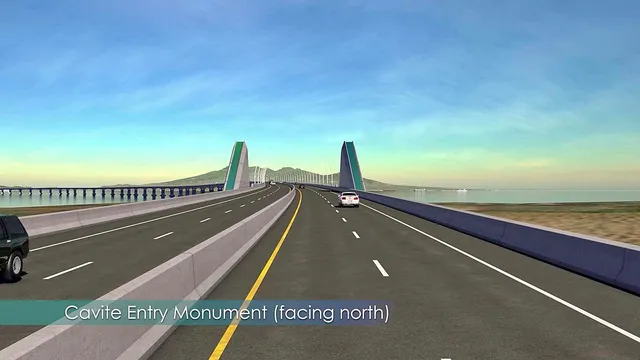
The BCIB is envisioned as a 32.15-kilometer bridge that cuts travel time between Bataan and Cavite from the current five (5) hours to just 45 minutes.

The construction of the project will be divided into seven (7) contract packages with the DPWH identifying initial on-land packages advertised for procurement on March 25, 2024 and target for award by third quarter of 2024 as the: five (5)-kilometer Bataan Land Approach under Package 1 and the 1.35-kilometer Cavite Land Approach under Package 2.

Other packages are the 20.65-kilometer Marine Viaducts in the North and South under Packages 3 and 4; and 2.15-kilometer North Channel Bridge for Package 5 and 3.15-kilometer South Channel Bridge for Package 6. The 7th package involves project-wide ancillary works with an eventual separate package 8 for the Operations and Maintenance.

The project, which is part of the Infrastructure Flagship Projects (IFPs) under the President Marcos Jr. administration’s "Build Better More" program, is estimated to cost USD 3.91 billion (about PHP 219.31 billion).

Of this amount, USD 2.11 billion (about PHP 118.32 billion) will be financed by the ADB while USD 1.14 billion (about PHP 63.71 billion) is proposed to be co-financed by the AIIB. The remaining USD 664.23 million (about PHP 37.28 billion) will be funded by the Philippine government.

The BCIB project will be financed under a multi-tranche financing facility with the first tranche of the loan amounting to USD 650 million (around PHP 36.22 billion).

Succeeding tranches will be availed of in the duration of the project, subject to securing relevant government approvals for each subsequent loan tranche.
April 01, 2024

A remarkable step forward in the infrastructure development under Bagong Pilipinas following a successful loan signing agreement between the Government of the Philippines and the Japan International Cooperation Agency (JICA) for the procurement and civil works of the 23-kilometer Dalton Pass East Alignment Road Project in Cagayan Valley Region.

In a ceremony on March 26, 2024 at the JICA Philippines Office in Makati City, Department of Finance (DOF) Secretary Ralph G. Recto and the JICA-Philippines Chief Representative Takema Sakamoto signed the first of two (2) tranches of the loan agreement amounting to 100 billion Japanese yen (approximately PHP37 billion) for the consulting services and civil works of the Dalton Pass East Alignment Road Project.

The official ceremonial signing of the loan agreement was attended by DPWH Secretary Manuel M. Bonoan, Embassy of Japan Economic Affairs Minister Nihei Daisuke, JICA Senior Representative Fukui Keisuke, DPWH Senior Undersecretary Emil K. Sadain, and DPWH Unified Project Management Office (UPMO) Road Management Cluster I (Bilateral) Project Director Benjamin A. Bautista. Department of Transportation (DOTr) Secretary Jaime J. Bautista was also present for a separate loan agreement for Metro Manila Subway Project Phase 1.

DPWH Secretary Manuel M. Bonoan thanked the Government of Japan for its enduring interest and commitment in helping the Philippine Government to plan, design, build, and maintain the infrastructure developments in the country following the “Bagong Pilipinas” brand of governance and leadership through the “Build Better More” agenda of the administration of President Ferdinand R. Marcos Jr.

The continued bilateral cooperation between the Government of the Philippines and Japan through JICA, the implementing agency for technical cooperation of Japan’s official development assistance (ODA), has developed strengthened partnership and collaboration demonstrated in the Philippine infrastructure flagship projects over the years.

According to Senior Undersecretary Sadain, in-charge of DPWH infrastructure flagship projects, the Dalton Pass East Alignment Road Project is envisioned to provide fast, continuous, and safe connectivity of people, goods, and services from Cagayan Valley Region and Central Luzon, bolster economic activities as well as stimulate the agricultural, commercial, industrial, and tourism development in the entirety of Luzon.

The construction of Dalton Pass East Alignment Road Project will promote and elevate the economic and transport activities in Nueva Ecija, Nueva Vizcaya, and the rest of Cagayan Valley Region known for its rich and vast lands, thus the major producers of rice and corn in the entire country, said Senior Undersecretary Sadain.

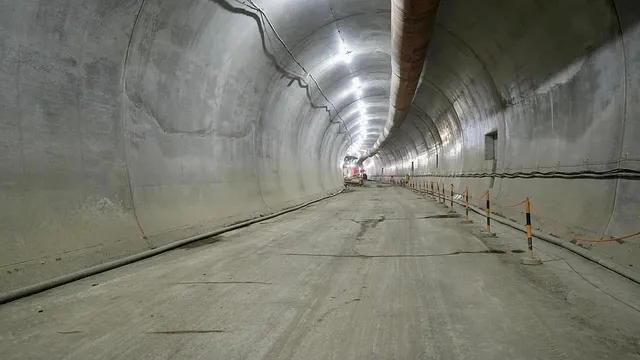
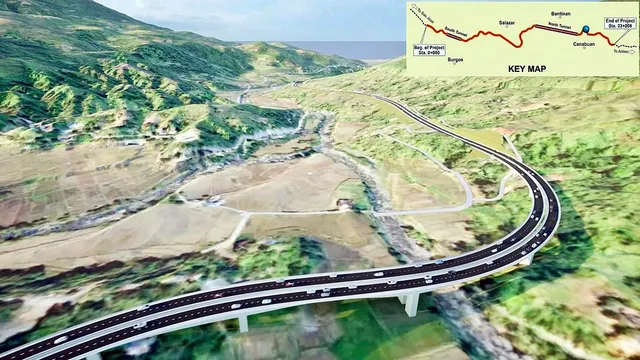
This alternative road, which outlines four (4)-lane roads or two (2) lanes per direction, will bypass the existing Dalton Pass, especially during road closures due to calamities and accidents, and to decongest the heavy traffic in the old route. The project involves the construction of 6.121-kilometer twin tube sections, with the longer sections of the northern and southern tunnels approximately measuring 4.516-kilometer and 1.605-kilometer in total length, respectively. It likewise involves the construction of 10 bridges with a total length of 5.828 kilometers and slope protection works.

Meanwhile, the four (4) components of the project include the road highway accessible to all municipalities and barangays in Nueva Vizcaya and Nueva Ecija, the north and south tunnel that will be situated in the Municipality of Santa Fe and Carrangalan, and the bridge that will traverse from the Municipality of Aritao, Santa Fe, and Carrangalan.

The project is divided into four (4) packages, namely: package 1 with a total length of 13.62-kilometer 4-lane road, a 1.6-kilometer twin-tube south tunnel, and seven (7) out of 10 bridges expanding to 1.840 kilometers; package 2 encompasses the 4.78-kilometer north tunnel, and package 3 will develop the remaining 4.61-kilometer of the four (4)-lane road and the construction of bridges 8, 9, and 10 with a length of 1.17-kilometer. Finally, package 4 will focus on the construction of a tunnel facility, operation and maintenance facility, and power line works.

In December 2023, the National Economic and Development Authority (NEDA) approved the PHP67.4-billion estimated cost of this project, which accelerated all the preparatory efforts and hard work of the DPWH Unified Project Management Office (UPMO) - Roads Management Cluster 1 (Bilateral) in realizing this breakthrough project positioned to become the economic and transportation gateway between Regions II and III.

March 25, 2024

Investment and job opportunities in the province are seen to get a boost as the construction of the Pangasinan Link Expressway (PLEX) begins after the groundbreaking ceremony here Thursday.

“It will serve as a backbone of the province in terms of ease of travel and accessibility. If we are able to construct it, it will open many doors to other towns and cities. There will be growth in investment, jobs created, the ease of travel in and out of the province,” Pangasinan Governor Ramon Guico III said after the groundbreaking and unveiling of the marker.

The ceremony was done five months after officials of Pangasinan’s provincial government and San Miguel Holdings Corp. (SMHC) signed the joint venture and tollway concession agreements for the construction of the PHP34 billion 42.76-km. expressway project phase one. Funded by SMHC, it will connect the province’s eastern and western parts.

Guico said other major infrastructure projects like the Bolinao airport and upcoming seaport projects are anchored on the construction of the PLEX.

San Miguel Corp. president and chief executive officer Ramon Ang, in his speech during the program, said the road construction would bring economic growth along its way, citing as an example the impact of the Tarlac-Pangasinan Expressway (TPLEX) on the economy of the towns and cities it passes through.

He said the value of land in Binalonan, Pangasinan cost about PHP200 per square meter before the construction of the expressway but has increased to about PHP2,500 per square meter a couple of years after TPLEX was built.

He said PLEX would also connect to TPLEX and provide access to the planned New Manila International Airport in Bulacan.

The PLEX phase one has three main sections – the 7-km. stretch from Binalonan to Manaoag, the 11.3-km. stretch from Manaoag to Calasiao, and the 22.1-km. stretch from Calasiao to Lingayen, which will also have a 2.4-km. spur road in Calasiao town.

Ang said the project’s phase 2 would extend to Alaminos City as demand increases.

Once completed within the targeted four- to five-year construction period, the first phase of the expressway is expected to shorten travel time from the TPLEX exit in Binalonan town to Lingayen from 90 minutes to just half an hour or less.

March 20, 2024

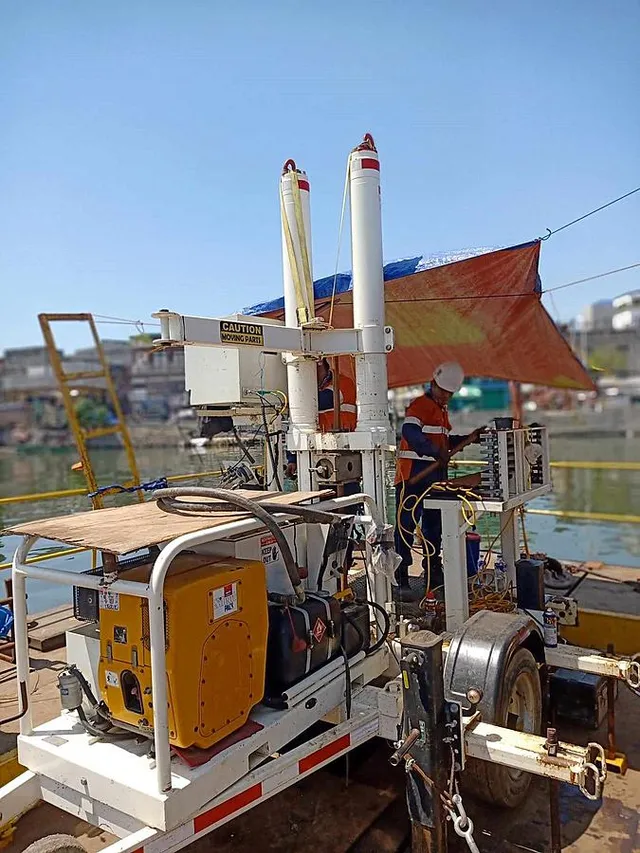
Site investigation holds an undeniable significance in the construction process. Cam Wylie from RDCL explores the value of a thorough site investigation and its potential to save money and create value in the long run, even with the initial investment.

Can we put a dollar figure on understanding the ground beneath what we build?

It is widely recognized that site investigation plays a pivotal role in successfully undertaking any construction venture. Countless articles, essays, and reports emphasize its criticality and the need for careful consideration. In short, conducting a comprehensive site investigation can create cost reduction for a project.

At RDCL, we regularly see construction problems stem from unforeseen ground conditions that could be pre-empted through a proper site investigation. In the Philippines we see this manifesting in large infrastructure projects like tunnels, dams, transport corridors and flood protection being a major part of nationwide growth.

The implications of these oversights can be extremely costly both short and long term. Considering the monetary cost impact is one piece of the picture. As well as this, we are also talking more broadly about the very real costs to the resilience of the people, whenua (land), and infrastructure in future risk scenarios.

Alarming, isn’t it? Despite the proven cost-effectiveness and overwhelming evidence supporting thorough site investigations, industry / geotechnical specialists we talk to in various associations across the country regularly express concerns about the insufficient quality of site investigation data they often receive.

What is site investigation?

Put simply, site investigation involves gathering essential information and data below the ground to conduct an accurate assessment of the risk. Through this, potential hazards lurking beneath the ground can be identified, allowing engineers to design foundations based on reliable data regarding the physical properties and arrangement of sub-surface materials.

The scope and design of each investigation depend on factors like anticipated geology, previous site usage, and construction proposals.

Our specialist team of Geotechnicians use a variety of solutions and tools for each project. Generally, site investigations encompass four to six stages, each serving a specific purpose.

On-site testing = better precision, better decision-making

While it's true that on-site testing during investigations is more cost-effective than laboratory testing, the latter yields significantly more precise data. Unfortunately, what we often see is the choice of techniques being driven by financial considerations, rather than aligning with the actual ground conditions. This inevitably leads to complications.

In the Philippines, where RDCL operates, recognizing the value of a thorough site investigation can make all the difference. By investing in this critical process, the construction industry can ensure efficient project execution, minimize unforeseen challenges, and achieve long-term cost savings and value.

If we want to contribute to a thriving future, we must be taking a long-term view to our projects.

The foundation of successful projects

In the realm of construction, a thorough site investigation serves as a crucial step to address uncertainties related to contamination and ground conditions. Neglecting to adequately mitigate ground risks during the initial planning stages could have substantial ramifications on the project's cost and timeline. Timely identification and mitigation of ground risks is imperative for project success.

It is often underestimated how site investigation can lead to cost savings. By investing dedicated efforts in this crucial aspect, construction projects can maximize financial efficiency.

Regardless of the approach chosen, site investigation is a pivotal step in the construction process, and a non-negotiable task that should never be skipped, hurried, or disregarded under any circumstances.

A wise investment

What is often underestimated is how site investigation can be a total game-changer when it comes to saving money. By accurately matching subsequent ground engineering work to the actual ground conditions, costly guesswork and "over-engineering" can be avoided, safeguarding projects from future unknowns.

For projects in the Philippines, every dollar counts. It is crucial for our project decision-makers to recognize the value and significance of site investigation.

So, let’s change how we look at things and see this is a prudent investment that ensures smoother construction, reduces financial burdens, and brings projects to completion on time.

Digging deeper: what is a Detailed Site Examination?

Sometimes, a preliminary site investigation doesn't paint the full picture when it comes to designing and building foundations. That's where a detailed site investigation becomes indispensable. It's like going the extra mile to make sure we've got all the facts straight.

During this phase, we uncover any potential contamination, material complexities, or conceivable risks that might have revealed themselves during the initial phase. It's all about conducting a thorough examination to ensure a solid foundation for your project.

A comprehensive site investigation involves a meticulous process that includes conducting multiple test borings to gather disturbed and undisturbed soil samples from various depths. These samples are then subjected to visual observation and laboratory tests.

The number and depth of borings will vary based on the project requirements. Typically, for most construction projects, starting with at least one boring at each corner of the planned infrastructure, and one at the centre, would be ideal.

Additional test borings may be necessary, guided by soil uniformity. It is vital to ensure that the test borings reach through unsuitable foundation materials and penetrate into the firm soil layers.

In the context of your project, this thorough site investigation approach will lay a strong foundation for successful construction, ensuring your project's integrity and longevity.

Cam Wylie, Director, RDCL

Cam Wylie is the Managing Director, CEO & Principal Engineer at RDCL Limited. With 30 years in the industry, Cam is a Chartered Professional Engineer with extensive overseas experience, working on major projects in the Philippines, Indonesia, Africa, Australia, and New Zealand. His expertise includes Project Management, Geotechnical/Dam Engineering, Mining, Roading, Infrastructure, large subdivisions, and Residential Dwellings, and he is a contributor to the Hawke’s Bay Cyclone Gabrielle Engineering Leadership Group.
March 18, 2024

By Zeevik Halber

Editor’s note: Zeevik Halber is the CEO of AnyWay Solutions, a company with a longstanding presence in Papua New Guinea and after a few years of exploring is now looking to bring its climate resilient designs and solutions to the Philippines.

Papua New Guinea (PNG) is a land of mystery and splendor. Its untouched wilderness, breathtaking landscapes, diverse cultures, tropical jungles, and majestic high-altitude mountains make it one of the most unique countries in the world.

One of the main roads in the country, The Highland Highways, forms the central backbone of the nation’s road network. It begins at the main port city of Lae in Morobe Province, which runs north-easterly towards Madang Province, branches off to the east well before Madang and heads far inland to the Southern Highlands. Even though it serves as the main access road, most of the highway's length is no more than a two-lane single carriageway, connecting a large portion of the country's population and leading to some of its most vital mining projects.

The road was initially constructed in the 1950s and has since undergone several rehabilitation and maintenance upgrades. Due to the progressive increase in traffic, especially heavy vehicles, the Government of PNG initiated an ambitious upgrade and rehabilitation program with the support of the Asian Development Bank (ADB) called the Sustainable Highlands Highway Investment Program (SHHIP). Through the SHHIP, significant portions of the Highlands Highway were rehabilitated, including drainage and water management elements, as well as the road pavement itself.

Through the Department of Works and Highways (DOWH), the Government of PNG set a goal to enhance the climate resiliency of its road network by implementing an advanced engineering approach, including in-place recycling through stabilization. By implementing this approach, the sub-standard materials of the existing roads’ pavement structures would be recycled, processed, and stabilized. The superior strength of pavements achieved through implementing this approach significantly enhances climate resiliency.

In addition to strengthening the pavement structures, drainage and water management elements would be upgraded and rebuilt to withstand the climatic events that have become more frequent in the region. In recent years, the DOWH has also embarked upon extensive rehabilitation work on existing roads in the country's main cities, including the ones connecting them. This is over and above the many new roads being designed and constructed to support the rapid growth in the country.

Of the few alternative rehabilitation solutions that were considered, the approach AnyWay Solutions (AnyWay) offered was to enhance climate resiliency using cold in-place recycling through stabilization. Given the lack of suitable natural pavement materials near many of the roads throughout the country, the solution was preferred and selected with thorough research conducted by the DOWH.

Rehabilitation of the Highlands Highway started in late 2010 with the upgrading of the 60-km branch road linking Wabag town and the Western Highlands province's capital, Hagen. The mountainous environment and associated extreme climatic and topographical conditions pose challenges to getting to and from the relevant project sites and overcoming operational difficulties related to the terrain in which these project areas are located.

AnyWay has specialized in providing climate resiliency engineering designs and solutions for transport infrastructure for more than two decades, and has worked with the DOWH in developing specific engineering designs and solutions that fit the special conditions of PNG. AnyWay was consulted and has provided an innovative approach to rehabilitating and upgrading many other road projects in PNG, including the Highlands Highway.

To assist the DOWH in achieving its ambitious climate resiliency goal, AnyWay’s main approach has been to address pressing issues, such as the lengthy time it takes to construct roads in this region, the lack of readily available quality road-building materials, and the country's unique natural environment.

AnyWay’s approach to enhancing the climate resiliency of transport infrastructure projects has always been based on localizing the solutions. Thus, AnyWay sent its team of experts to work with the DOWH engineers to evaluate the problem areas, perform geotechnical investigations, provide appropriate pavement designs, and oversee local contractors' rehabilitation and upgrading works.

Through the joint work, AnyWay’s experts shared the wealth of experience they have gained over many years of working on such projects with the various stakeholders, engineers, contractors, supervisors, and local communities. Like in many roads in PNG, the existing pavement structure of the highway has, in most cases, been constructed mainly with locally available alluvial materials that have been identified as being of substandard quality and one of the principal causes of the observed premature distress, leading to the disintegration of the road pavement.

Modifying the rounded aggregate used in the initial construction of the road’s pavement layers was essential to obtain the desired angularity and resultant interlock of the coarse fraction to enhance the strength of the base layer of the road pavement. This element is critical for improving the climate resiliency of roads.

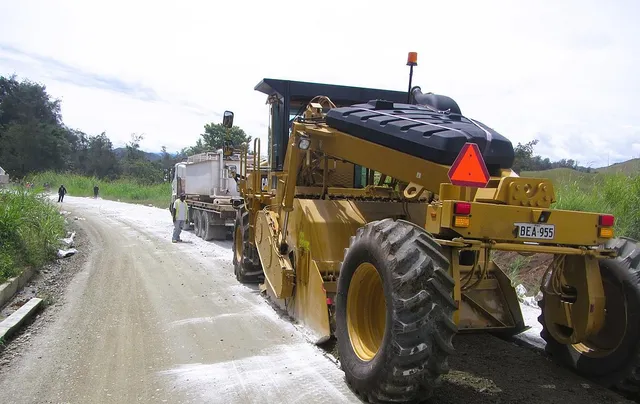
For this to be achieved economically, a recycling approach was taken with a road recycler employed in the construction process. This machine can mill the upper pavement layers, incorporating the bituminous wearing course in areas where the road has been paved and breaking down the rounded coarse aggregate fraction to more angular particles to ensure better resistance to repetitive loading. An added benefit of the recycler is that its penetration depth can be readily adjusted and accurately controlled to produce a new uniform, well-mixed base course material. The fact that this process is performed in-situ reduces traffic congestion and major earthworks along the rehabilitated stretches.

As specialists in climate resilience for transport infrastructure, AnyWay have developed various technologies and solutions that enable the use of such techniques in scenarios that were previously not possible. These solutions are designed to expand the scope of climate resiliency and make it accessible in a wider range of circumstances.

One of these technologies and solutions is a cementitious binder called AnyWay’s Natural Soil Stabilizer. Subsequent stabilization of the processed layers with an ANSS, also using the recycler, has been repeatedly proven to be an effective solution for rehabilitation with a very successful result. The sections of this highway and many roads being rehabilitated since that have been completed using this method are performing to the required standard and, in some cases, exceed expectations. The resiliency of these roads is undoubted, as they withstand the extreme climate events imposed on the region over more than a decade.

Many roads throughout PNG have since been rehabilitated utilizing the rehabilitation and upgrading approach presented by AnyWay. Through this process, the DOWH engineers and many of the site supervisors, laboratory technicians, equipment operators, and contractors have not only gained a wealth of experience but also increased their knowledge and became well acquainted with the application of this approach.

March 11, 2024

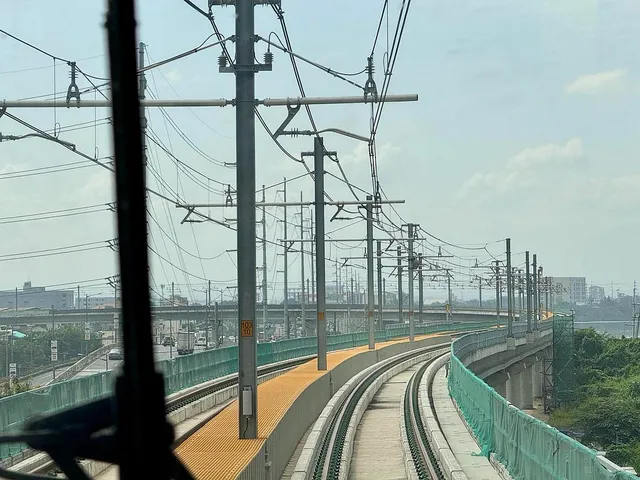
The first phase of the Light Rail Transit Line 1 (LRT-1) Cavite Extension is now 97 percent complete and is on track to begin operations in the fourth quarter of this year.

In a statement on Wednesday, president and CEO of the Light Rail Manila Corp. (LRMC), the private operator of the LRT-1, Juan Alfonso said the completion rate was reached in January, with both civil and system works “progressing rapidly.”

“We are optimistic about the progress achieved in the LRT-1 Cavite Extension Phase 1 project. This significant milestone is a testament to the perseverance and dedication of our team and our contractors,” Alfonso said.

To date, he said, the five new stations are also nearing completion – the Redemptorist Station at 93.3 percent, MIA Station at 93.5 percent, Asia World Station at 83 percent, Ninoy Aquino Station at 88 percent, and Dr. Santos Station at 94.1 percent.

“Notably, (the) Dr. Santos Station has completed staircase and louver installation. (The) MIA Station has finalized its ceiling, and the station is currently undertaking secondary steelwork. Additionally, drainage works have commenced at (the) Redemptorist Station,” he said.

READ: LRT-1 completes 1st test run of Cavite Extension Phase 1

In addition, the installation of telecommunications equipment at the Dr. Santos and Redemptorist stations has been completed, and similar work has begun at the MIA and Asia World stations.

“Beyond construction progress, LRMC is actively conducting test runs of various generations of LRT-1 trains, ensuring their compatibility and readiness for operations,” Alfonso said.

Once completed, he said the LRT-1 Cavite Extension is “poised to significantly contribute to the nation’s economic growth and development by fostering improved connectivity between individuals and communities.”

The Cavite Extension project will extend the existing LRT-1 by 6.2 km., with the first phase connecting the Baclaran Station in Pasay City to the Dr. Santos Station in Parañaque City.

It is capable of serving 600,000 passengers daily.
March 11, 2024

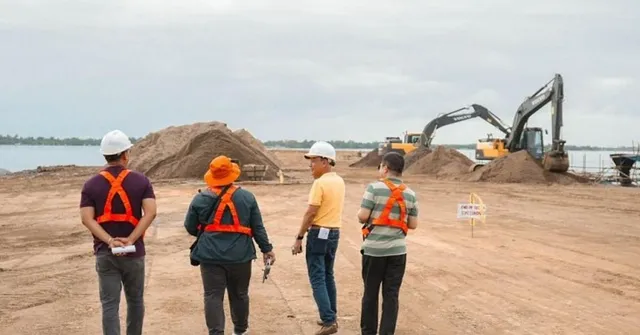
The construction of the PHP4.58 billion Tacloban causeway project that will provide a shorter route from the city’s downtown to the airport has begun with bigger funding this year, the Department of Public Works and Highways (DPWH) 8 (Eastern Visayas) here reported Thursday.

DPWH-8 Director Edgar Tabacon said the project has an accomplishment rate of 4.28 percent using the PHP880 million under the 2022 appropriations.

For this year, the project has an outlay of PHP1.9 billion.

“The project is now ongoing after we addressed several issues related to its implementation. The work is now focused on stabilizing the embankment before concreting,” Tabacon told reporters.

While civil works have only begun this year, there were preparatory activities made last year, according to the official.

The PHP4.58 billion budget is estimated to cover the construction of the 2.57-km. causeway, including a four-lane road embankment that is designed to serve as a storm surge protection structure.

To ensure the continuous flow of seawater, the DPWH will install five reinforced concrete box culverts and a bridge that spans 360 meters in length.

This follows a consideration of the suggestion from the city council to extend the initially planned 180-meter bridge design.

The DPWH needs PHP785.58 million for 2025 and PHP1 billion for 2026 to fully complete the project.

The causeway will cross Cancabato Bay, starting at the City Hall complex on Magsaysay Boulevard, up to the Kataisan point of the Tacloban Airport in the city’s San Jose District.

Travel time will be reduced to only 10 minutes from the current 45 minutes.

The structure will complement the future new airport terminal building designed to accommodate international flights.

Aside from being an alternative highway, the causeway will also shield communities from destructive waves.

The original plan was to build a tide embankment structure but it was discontinued due to strong opposition from several property owners in the city’s populated coastal communities. By Sarwell Meniano


Article courtesy of the Philippine News Agency

March 03, 2024

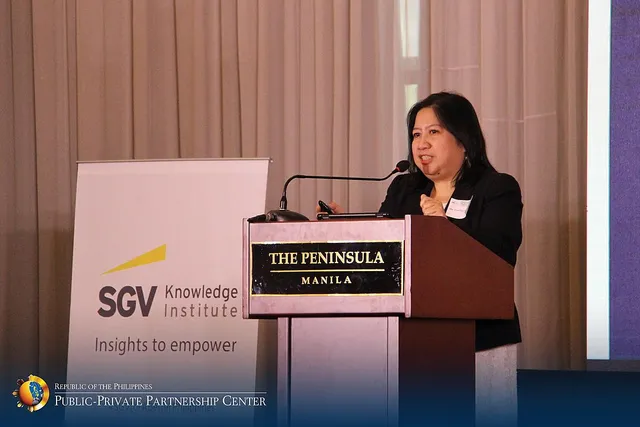
The Public-Private Partnership (PPP) Center currently has 117 projects worth PHP2.5 trillion in the pipeline for undertaking between the government and private sector.

"This is as of February 2. Particularly, we have a bulk of the projects still in the transportation sector because we are doing a lot of catching up," PPP Center Executive Director Cynthia Hernandez said in a forum in Makati City.

Hernandez said that aside from transportation, other priority sectors include solid waste management, health and water.

"Out of the 117 projects, there are 15 that are expected to be approved in 2024," she said.

Some of these projects include the operations and maintenance (O&M) of the Metro Manila Subway, North-South Commuter Rail O&M, San Ramon Newport, University of the Philippines Philippine General Hospital in Diliman, Cagayan Valley Medical Center-Hemodialysis Center, and the National Capital Region EDSA Busway Project.

Other projects include the O&M of the following projects: Cebu Bus Rapid Transit, Davao City Bypass, Metro Rail Transit-3, and Light Rail Transit-2.

Unsolicited PPP projects for approval this year also include the rehabilitation, operation, maintenance and expansion of both the Puerto Princesa International Airport and the Iloilo International Airport; upgrade, expansion and O&M of New Bohol International Airport; the Long-Term Water Resource Development for Metro Manila Project; and the operation and maintenance of the Philippine Identification System.

"For 2025, we have these projects that are currently in the early stages of development. And the preliminary studies are expected to be completed. Once completed, they can be submitted by the implementing agencies for approval by 2025," Hernandez said.

These projects include the New Cebu International Container Port, Air Navigation Services-Air Traffic Services Project, Philippine Automatic Fare Collection System, San Mateo Railway Project, Manila Bay-Pasig River-Laguna Lake Ferry Project, North Integrated Transport System, Mindanao Railway Project Phase 3, North Long Haul Inter-Regional Railway Project, and Davao City Bypass Construction Project O&M.

The Laguna Lake Road Network O&M PPP project, Department of Public Works and Highways (DPWH) Central Office Building Project, Iloilo-Capiz Aklan Expressway, and Bases Conversion and Development Authority (BCDA) Solid Waste-to-Energy project are also expected to be submitted for approval next year.

March 03, 2024

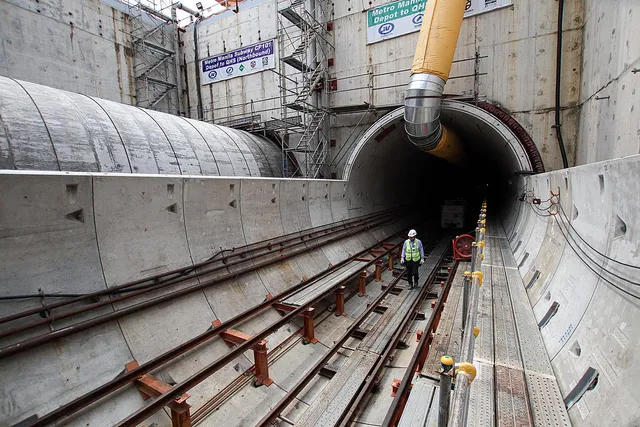
Filipinos, especially in the National Capital Region, can look forward to using a modern underground train system in five years’ time, as construction of the Metro Manila Subway Project (MMSP) Phase 1 has hit 40 percent completion and is proceeding apace.

The Department of Transportation (DOTr) shared the news during the site inspection of the MMSP in late February, led by Transportation Secretary Jaime Bautista, Finance Secretary Ralph Recto, and Japan International Cooperation Agency (JICA) Chief Representative to the Philippines Takema Sakamoto.

"We have shown to Secretary Ralph Recto the ongoing development and briefing on what the project is all about, and with the support of JICA we are implementing this project on time for completion in 2029," said Bautista.

With a budget of P488.5 billion, the underground mass transport system is expected to cut travel time from Valenzuela City in northern Metro Manila to Ninoy Aquino International Airport (NAIA) in the south from 1.5 hours to just 35 minutes, the DOF stated.

The Metro Manila subway, considered the third largest project under the Marcos administration’s Build Better More program, can accommodate 519,000 passengers each day once fully operational, the DOF added.

Recto said the subway will not only improve convenience and speed but also generate approximately P2.5 billion in daily economic benefits.

The subway's direct economic benefits, totaling P930.26 billion annually, will be a result of reduced vehicle costs, shorter travel times, and decreased carbon emissions.

Stretching across 33 kilometers, the Metro Manila subway will feature 17 stations connecting Valenzuela to Parañaque City, with a designated stop at NAIA Terminal 3.

The interest rates for both the first and second tranches of the loan are set at 0.10 percent per year for non-consulting services and 0.01 percent per year for consulting services, the DOF statement read.

Each of the loan has a maturity period of 40 years, which includes a 12-year grace period for the first tranche and a 13-year grace period for the second tranche.

The 17-station subway, running from Valenzuela to NAIA, is expected to cost about P355.6 billion and will cut travel time from one hour to 30 minutes.

Based on a JICA study, the travel congestion in Metro Manila cost the economy over P3.5 billion per day or P1.27 trillion every year.


Operations and maintenance

Bautista meanwhile told reporters they are currently working on the operations and maintenance of the Metro Manila subway.

“We are now on the process of procuring O&M for MRT-3, North-South Commuter Railway, and Metro Manila subway,” Bautista said.

“We’re working with a transaction adviser so that they can advise us on the parameters, terms and conditions that will be followed by the possible concessionaire,” he added.

The DOTr chief did not say what entities will acquire the O&M of the project but said he hopes “to have something” before the end of the year.

The MMSP is currently being financed by two active loan agreements and is expected to enter into a third tranche of loan worth ¥150 billion by March 2024.

The project includes the construction of a deport and a 33-kilometer railway line made up of 17 stations that will connect Valenzuela City to Pasay City with a spur line to Terminal 3 of Ninoy Aquino International Airport (NAIA) in Parañaque City.


Completion by 2029

Bautista said that the DOTr is currently in discussion with the National Economic and Development Authority (NEDA) and the Department of Finance (DOF) for review of draft documents pertaining to the loan deal provided by JICA and the government of Japan.

"With the support of JICA, we are implementing this project on time for completion in 2029," Bautista said.

Recto has also expressed support to ensure the project is completed on time, while the DOTr addresses the right-of-way issues.

The MMSP only resumed its actual construction in January 2023 following the right-of-way issues after some property owners refused to surrender their land to the state.

"The Department of Finance is fully committed to securing the funding for this project," said Recto. "We aim to finalize the loan agreement for the 3rd tranche of financing by March 2024."

March 03, 2024

Stronger bilateral relations between the Government of the Philippines and the Republic of Korea will be instrumental in turning the infrastructure vision for “Bagong Pilipinas” into reality.

By supporting infrastructure development, from roads and bridges to flood control structures, the Republic of Korea thru the Korea Export-Import Bank (KEXIM) contributed to the journey together towards building a brighter Philippines with vital arteries that connect communities, facilitate trade, and spur economic activity across the country.

Top officials of the Department of Public Works and Highways (DPWH) led by Senior Undersecretary Emil K. Sadain held a meeting on February 26, 2024 with Vice-President Hong Soon-young of KEXIM, an official export credit agency in South Korea which provides financing for several infrastructure flagship projects in the Philippines.

On behalf of DPWH Secretary Manuel M. Bonoan, Senior Undersecretary Sadain expressed profound gratitude for the KEXIM’s steadfast support not only with the necessary financing capital but also the invaluable expertise, innovation, and best practices to infrastructure development initiatives which will undoubtedly make a leap forward to the “Build Better More” program of President Ferdinand R. Marcos Jr. administration.

Among the KEXIM-financed infrastructure flagship projects are the completed Samar Pacific Coastal Road Project (SPCR) Phase I in Northern Samar; soon to be completed Panguil Bay Bridge in Northern Mindanao and Integrated Disaster Risk Reduction and Climate Change Adaption Measures (IDRR-CCA) in the low-lying areas of Pampanga in Central Luzon; and the on-going detailed engineering design of Panay-Guimaras-Negros (PGN) Island Bridges in Western Visayas.

The engineering services of PGN Island Bridges are covered by a $56.6 Million loan agreement signed by the Department of Finance and KEXIM in 2022.

Yooshin Engineering Corporation in Joint Venture (JV) with Kyong-Ho Engineering & Architects Co., Ltd., Dohwa Engineering Co., Ltd., Soosung Engineering Co., Ltd. and Dasan Consultants Co., Ltd. are presently undertaking the engineering services for the 32.47-kilometer PGN Bridges connecting Panay Island, Guimaras Island and Negros Island.

The project has two (2) components: 13 kilometers Panay-Guimaras or Section A that will have a sea-crossing bridge length of 4.97 kilometers; and Guimaras-Negros or Section B with a total length of 19.47 kilometers including a sea-crossing bridge with length of 13.11 kilometers.

The meeting at KEXIM headquarters in Seoul was also attended by Ambassador Maria Theresa B. Dizon-De Vega and Vice Consul Reisha L. Olavario of the Embassy of the Philippines to the Republic of Korea, and the following DPWH officials who are on observation tour with Senior Undersecretary Sadain for the detailed engineering design of PGN Island Bridges Project: Undersecretaries Carlos G. Mutuc, Eugenio R. Pipo Jr., Roberto R. Bernardo, Ador G. Canlas, and Eric D. Ayapana; OIC-Undersectary Marichu A. Palafox; Assistant Secretary Joy Manginsay; Project Directors Benjamin A. Bautista, Ramon A. Arriola III, and Director Randy R. Del Rosario.

Other KEXIM Executives who participated in the meeting include Director Kim Yu-shin; Senior Loan Officers Shin Yu-Jin and Hwang Eun-ghil; and Loan Officers Song Yoo-Hwan and Kim Haeju.
March 03, 2024

The Department of Public Works and Highways (DPWH) launched a pioneering technology transfer program in South Korea to revolutionize the construction of bridges connecting land and sea such as the proposed 32.47-kilometer Panay-Guimaras-Negros Island Bridges (PGN) Project, an Infrastructure Flagship Project (IFP) under the “Build Better More” Program with funding assistance from the Export-Import Bank of Korea (KEXIM).

According to Senior Undersecretary Emil K. Sadain, in-charge of DPWH infrastructure flagship projects, the construction of inter-island connectivity like the PGN bridges now under detailed engineering design stage signals a paradigm shift in the “Bagong Pilipinas” approach to infrastructure development of President Ferdinand R. Marcos Jr. administration with the expected integration of advanced materials, digital design technologies, and streamlined construction techniques and methodologies which were applied by South Korea in its land-to-sea bridge construction.

As authorized by DPWH Secretary Manuel M. Bonoan, Senior Undersecretary Sadain together with Undersecretaries Eugenio R. Pipo Jr., Roberto R. Bernardo, Carlos G. Mutuc, Ador G. Canlas, and Eric D. Ayapana; OIC-Undersectary Marichu A. Palafox; Assistant Secretary Joy Manginsay; Project Directors Benjamin A. Bautista and Ramon A. Arriola III; and Director Randy R. Del Rosario participated at the technology exchange initiative to gain a comprehensive understanding of South Korea’s visionary approach in the development of infrastructure projects including its systematic operation and management.

The DPWH leadership believes that by embracing innovative engineering methods, collaboration and harnessing the power of smart infrastructure solutions, the Philippines will soon be at the forefront of bridge construction excellence.

Other than PGN, DPWH thru the Unified Project Management Office (UPMO) Operations will soon commence the civil works of Bataan-Cavite Interlink Bridge, a 32-kilometer-long marine bridge comprising two (2) cable-stayed bridges for the navigation channels with 24 kilometers of marine viaducts and eight (kilometers of approach roads connecting the provinces of Bataan and Cavite over Manila Bay.

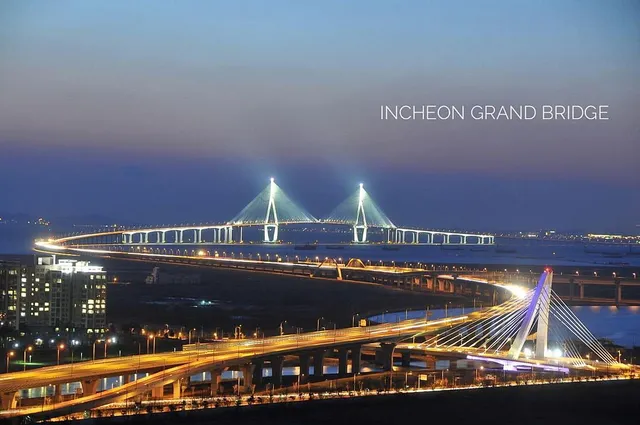
In coordination with Yooshin Engineering Corporation, a South Korean company known for its expertise in infrastructure projects and together with its joint venture partners undertaking the detailed engineering design for the PGN Project namely Kyong-Ho Engineering & Architects Co., Ltd., Dohwa Engineering Co., Ltd., Soosung Engineering Co., Ltd. and Dasan Consultants Co., Ltd., the DPWH group observed three (3) landmark bridges on February 27 to 29, 2024 in South Korea namely Gwangan Grand Bridge in Busan, and Incheon Grand Bridge and Yeongjong Bridge in Incheon City.

An iconic bridge in the vibrant coastal city of Busan, the 7,420-meter long Gwangan Grand Bridge also known as Diamond Bridge spanning the Gwanganri Coast was completed in 2002 by Yooshin Engineering Corporation.

Gwangan Grand Bridge, a state-of-the-art suspension bridge that has expanded the urban functions, is the largest double-layer bridge in South Korea that is known for its impressive architecture and stunning nighttime illumination making it no longer just a bridge but a major tourist attraction adding to the beauty of Busan's skyline.

Meanwhile, the Incheon Grand Bridge is a crucial transportation link that facilitates travel between Incheon International Airport and the mainland, as well as providing access to the island.

Completed in 2009, the Incheon Grand Bridge symbolizes South Korea's commitment to modern infrastructure and transportation excellence.

Lastly, the Yeongjong Bridge spanning the water between Incheon International Airport and Yeongjong Island contributes to the economic development and accessibility by facilitating the flow of passengers and goods to and from the airport and the island. It is regarded a marvel of South Korean engineering excellence symbolizing their resilience, creativity, and determination to overcome challenges.

March 03, 2024

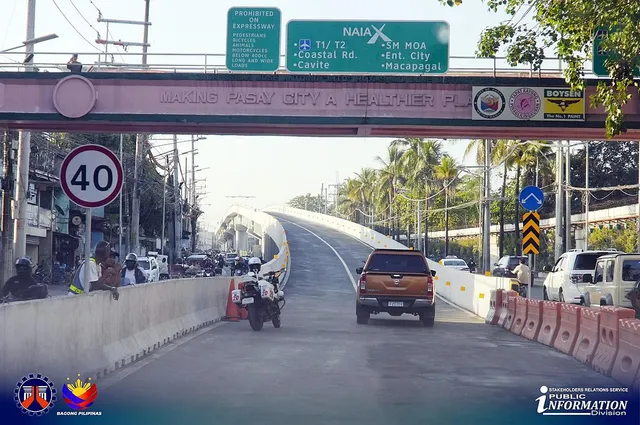
San Miguel Corporation’s (SMC) infrastructure arm officially opened the new access ramp of the NAIA Expressway (NAIAx) at Tramo in Pasay City which is expected to ease traffic in the area and provide seamless access to the country’s main international gateway and other areas.

Speaking at its ceremonial opening on Friday, SMC president and chief executive officer Ramon S. Ang underscored the importance of the 800-meter access ramp for motorists, particularly for those using EDSA southbound coming from Makati, or northbound, coming from the Entertainment City.

“This Tramo access ramp provides another option for motorists heading to the airport, and other areas in Paranaque City and Cavite province. We believe it can help relieve overall traffic congestion in the area, and improve traffic flow within the vicinity of the airport,” Ang said in a statement.

Public Works Secretary Manuel Bonoan led the inauguration of the new access ramp and credited the company for supporting the government’s efforts to build vital infrastructure to sustain the country's economic growth.

“The Tramo access ramp has been in San Miguel’s drawing board for a long, long time because they knew it would enhance the efficiency of NAIA expressway, and improve the mobility of motorists going to the airport,” Bonoan said.

Bonoan said further improvements on NAIAx are being studied by their agency, as the grantor of the concession, in partnership with SMC, to improve the flow of traffic to airport terminals, given growing demand.

“The Department of Public Works and Highways will always be there to support and implement these projects to improve traffic flow especially here in Metro Manila,” he added.

For his part, Ang remained firm in the company’s commitment to work closely with the government, as it pursues infrastructure projects that benefit Filipinos.

“San Miguel will continue to pursue these vital infrastructure projects, in close coordination with our government, because of their benefits to our people and economy. Through these projects, we also create jobs, improve the mobility of goods and services, and make our cities and regions more primed for growth. All these serve to support and sustain our growing economy,” he said.

The NAIA expressway is an 11-kilometer elevated toll road that connects the Skyway System to the three passenger terminals of NAIA, the country's main international gateway, as well as to Pasay’s Entertainment City, Macapagal Boulevard, Sucat Road in Paranaque City, and the road network to Cavite province.

March 03, 2024

Professional organizations dedicated to advancing the field of civil engineering in the Philippines and South Korea have engaged in international collaboration to promote knowledge sharing and technical perspectives in civil engineering.

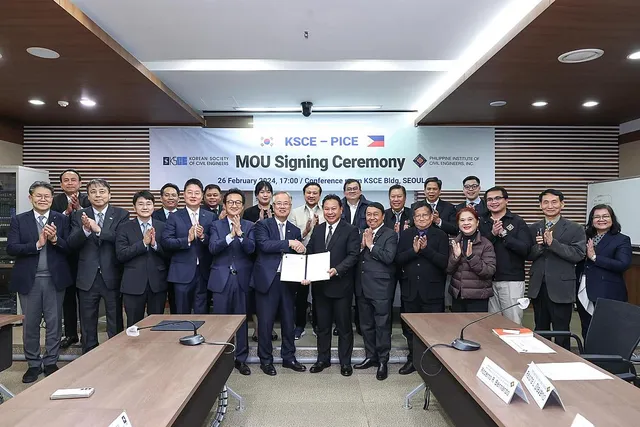
Department of Public Works and Highways (DPWH) Senior Undersecretary and Philippine Institute of Civil Engineers (PICE) National President Emil K. Sadain and Korean Society of Civil Engineers (KSCE) President Choong-Ki Chung signed on February 26, 2024 a Memorandum of Understanding (MOU) to practically trigger the collaboration between the two (2) organization in both industry and academy of civil engineering.

Under the administration of President Ferdinand R. Marcos Jr., the Philippines has lots of demand for infrastructure development and the Korean construction industries are very interested in projects, adding to the fact that they have the leading edge technology, said Senior Undersecretary Sadain after signing the MOU in the presence of KSCE Vice President for International Affairs Jae-Yeol Cho, PICE National Board Director Florencio A. Padernal, KSCE International Affairs Committee Chair Tae Sup Yun, and PICE Conventions Committee Member Benjamin A. Bautista.

The signing ceremony held at KSCE Headquarters in Seoul was also participated by Asian Civil Engineering Coordinating Council (ACECC) Chair Jae-Woo Park, KSCE Secretary General Dae-Jin Hwang, and KSCE Vice Chair of International Construction Project Committee Jeong-Hwan Kim.

DPWH officials on a technology transfer program also attended the meeting and MOU signing namely: Undersecretaries and PICE Past National Presidents Eugenio R. Pipo Jr. and Ador G. Canlas; Undersecretaries Roberto R. Bernardo, Carlos G. Mutuc, and Eric D. Ayapana; OIC-Undersectary Marichu A. Palafox; Assistant Secretary Joy Manginsay; and Project Director and PICE Convention Committee member Ramon A. Arriola III.

With the authority given by DPWH Secretary Manuel M. Bonoan, the group led by Senior Undersecretary Sadain visited South Korea’s landmark infrastructure projects specifically the Incheon Grand and Yeongjong Suspension Bridges in Incheon and Gwangan Grand Bridge in Busan to gain a comprehensive understanding of technology and best practices.

Collaboration between KSCE and PICE to bring a conference would not only strengthen ties between civil engineering professionals in South Korea and the Philippines but also foster mutual learning, innovation, and collaboration to address common challenges and opportunities in the field.

The MOU is a practical commitment and expansion of collaboration in research and education to uphold the standards and quality of works to be provided to respective countries for further improvement of the civil engineering profession.

In line with the 2024 PICE Theme “Building Global Partnerships, Bridging Boundaries and Fostering New Technologies Towards A Resilient and Sustainable Development”, the organization opens the door to partnerships with other civil engineering organizations in the upcoming Mid-Year National Convention in Manila to share expertise, foster innovation, and address global challenges in the field.

Senior Undersecretary Sadain said that the convention would provide participants with opportunities to learn about the latest developments, trends, and challenges in the field, as well as to engage in interactive discussions and knowledge sharing.

The conference program would feature a mix of technical sessions, international exhibits, workshops, and panel discussions covering a wide range of topics in civil engineering.

February 19, 2024

The much-awaited inter-island bridge project of the Department of Public Works and Highways (DPWH) in Northern Mindanao is on the verge of completion this year, with funding poised to play a pivotal role.

Senior Undersecretary Emil K. Sadain, in-charge of DPWH infrastructure flagship projects, said that civil works for the 3.17-kilometer Panguil Bay Bridge Project connecting Tangub City, Misamis Occidental, and Tubod, Lanao del Norte is targeted to finish this 2024 with the necessary funding remains paramount to ensure the project's full completion.

In the recent inspection of Senior Undersecretary Sadain, he noted that despite progress made in construction which is at 89 percent completion, funding challenges in the DPWH 2023 and 2024 national budget for this infrastructure flagship project threatens to prolong the project timeline.

Nonetheless, we are optimistic that the implementing office Unified Project Management Office-Roads Management Cluster II (Multilateral) together with the contractors and consultants will be able make up for the unprecedented delays brought by absence of sufficient funding and bad weather conditions in Mindanao the last several days to finish the Panguil Bay Bridge Project in a few months from now, Senior Undersecretary Sadain reported to DPWH Secretary Manuel M. Bonoan.

Also present in the project inspection are UPMO Project Directors Sharif Madsmo H. Hasim and Benjamin A. Bautista, and Project Managers Teresita V. Bauzon and Marlon V. Galerio.

DPWH is enthusiastic on its continuous efforts to deliver the Panguil Bay Bridge Project’s completion further promoting the “Build Better More” agenda under the “Bagong Pilipinas” brand of governance and leadership of the administration of President Ferdinand R. Marcos Jr.

The design and build contractor Namkwang Engineering & Construction Corporation

in joint venture with Kukdong Engineering & Construction Co., Ltd. and Gumgwang Construction Co., Ltd together with project consultant Yooshin Engineering Corporation in joint venture with Pyunghwa Engineering Consultants Ltd. and Kyong-Ho Engineering & Architects Co., Ltd. are in an all-out effort in its resource management and are maintaining a cohesive working environment.

The Panguil Bay Bridge Project consists of the main bridge (extra-dosed type) 320 meters long, a 1,920-meter-long approach bridge made of pre-stressed concrete girders, and an approach road.

With the segment closure of the main bridge at pylons 1 and 2 and the corresponding approach road underway, the people of Lanao Del Norte and Misamis Occidental including the tourists alike can look forward to easier access and enhanced connectivity with the dawn of a new era in interisland transportation.

The completion of Panguil Bay Bridge Project will mark a significant milestone in Mindanao's infrastructure development. This engineering marvel will significantly reduce travel time, boost economic growth, and enhance transportation links between provinces of Northern and Central Mindanao, and Zamboanga Peninsula.

In line with the DPWH INFRAgenda 2028 Strategic Plan, the design and build of the Panguil Bay Bridge Project is targeted to establish a seven (7)-minute inter-island connectivity with Tangub City, Misamis Occidental, and Tubod, Lanao del Norte as opposed to the current access connectivity through Roll-On, Roll-Off (RoRo) vessel which has a travel time of about two (2) hours to two and a half (2.5) hours including loading and unloading time.