July 08, 2024

A top official of the Department of Public Works and Highways (DPWH) has issued a stern reminder to all government engineers, consultants and contractors involved in the on-going projects under the Improving Growth Corridors in Mindanao Road Sector Project (IGCMRSP).

In a recent coordination meeting at Ipil, Zamboanga Sibugay, Senior Undersecretary Emil K. Sadain stressed the importance of executing projects efficiently and effectively, adhering to the highest standards of quality and safety.

“It is imperative that we approach our work with a strong sense of responsibility and dedication. Delays and substandard work are unacceptable and will not be tolerated,” Senior Undersecretary Sadain said.

He emphasized Secretary Manuel M. Bonoan’s marching order for a heightened sense of urgency, unwavering commitment, and full accountability in the execution of projects. These efforts will play a significant role in the economic development and connectivity of Mindanao under Bagong Pilipinas.

The ₱14.5 Billion IGCMRSP is funded through an Official Development Assistance (ODA) loan from the Asian Development Bank (ADB) and is being implemented by the DPWH Unified Project Management Office - Roads Management Cluster II-Multilateral (UPMO - RMC II).

IGCMRSP supports the goal of improved physical connectivity, which is vital to the country’s development efforts as outlined in the President Ferdinand R. Marcos, Jr. administration’s Philippine Development Plan 2023-2028 and the 8-Point Socioeconomic Agenda.

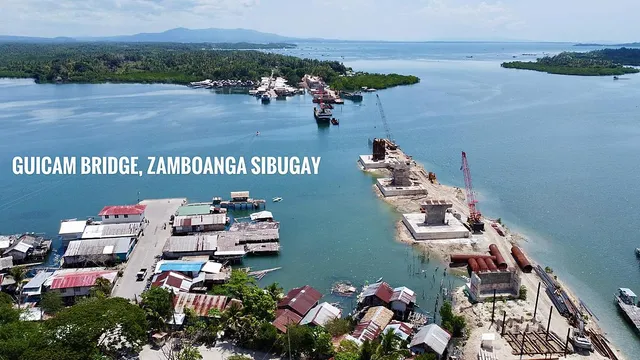
The project encompasses the construction or improvement of seven (7) road subprojects with a total length of 151.97 kilometers, including 28 bridges and one (1) sea-crossing bridge sub-project, the Guicam Bridge, which spans 1.21 kilometers, all located in the Zamboanga Peninsula. Additionally, the project includes the construction of three (3) bridges with a total length of 1,790.66 lineal meters, including approaches, located in the Province of Tawi-Tawi.

To date, DPWH UPMO - RMC II has achieved an overall accomplishment of more than 71 percent for IGCMRSP. This includes 140 kilometers of concrete cement paved road and the completion of 14 bridges.

During the meeting, Senior Undersecretary Sadain conducted an in-depth review of the accomplishments against the timeline of each sub-projects and directed field engineers, contractors, and consultants to adopt adaptive planning to mitigate further delays.

Efforts to expedite work include deploying additional machinery and manpower and implementing round-the-clock work shifts to compensate for lost time on delayed sub-projects. The delays have been attributed to logistical challenges, weather conditions, and unforeseen technical issues.

A site inspection was conducted by Senior Undersecretary Sadain at the Guicam Bridge sub-project in Zamboanga Sibugay. He was accompanied by UPMO Project Directors Teresita V. Bauzon, Soledad R. Florencio, Benjamin A. Bautista, and Rodrigo I. Delos Reyes; Project Managers Emmanuel M. Supe and Evangeline L. Carabal; and Engrs. Barley H. Sali and Nancy C. Mari.

Senior Undersecretary reminded the contractor, Grace Construction Corporation of the strict timelines and performance benchmarks set for the project. To date, the Guicam Bridge has completed abutments A and B, and piers 1, 2, 3, 9, 10 and 11 and is targeted for full completion by mid-2025.

The realization of this inter-island bridge project complementing the 29.70-kilometer Lutiman-Guicam-Olutanga Road, a completed sub-project of IGCMRSP, is poised to enhance the economic activities and logistics in the municipalities of Alicia and Olutanga Island towards other towns of Zamboanga Sibugay.

Meanwhile, the construction of the 541-meter Nalil-Sikkiat Bridge in Tawi-Tawi Province by China Wuyi Co., Ltd. and under the supervision of UPMO Project Manager Ernante S. Antonio is progressing rapidly.

At more than 60% completed, the fast-paced construction reflects the commitment to delivering crucial infrastructure that benefits local communities and stimulates growth in the area.

This project is part of the national government’s efforts to enhance infrastructure in the Bangsamoro Autonomous Region for Muslim Mindanao, improving connectivity and supporting economic development.

Other on-going sub-projects are the 33.05-kilometer Curuan-Sibuco Road connecting Zamboanga City to Zamboanga Del Norte with accomplishment of 87% by the joint venture contract of M. Abubakar Construction and Engineering Inc. and Sino Road and Bridge Group; 24.52-kilometer R.T. Lim - Siocon Road connecting Zamboanga Sibugay and Zamboanga Del Norte at 88% and 7.38-kilometer Gutalac-Baliguian Alternative Road in Zamboanga Del Norte at 52% under China Wuyi Co. Ltd.; 17.93-kilometer Siay-Gapol Road in Zamboanga Sibugay under ESR Construction & Development Corporation in venture with Qingdao Municipal Construction Group Co. Ltd at 71%; and Malassa-Lupa Pula Bridge in Tawi-Tawi at 31% under Vicente T. Lao Construction and China Wuyi Co. Ltd.

June 24, 2024

President Ferdinand R. Marcos on Friday, June 21, 2024 led three (3) groundbreaking and inauguaration ceremonies along sections of of the Manila-Cavite Expressway (Cavitex) C5 Link and the Cavitex - Cavite-Laguna Expressway (CALAX) Link Project.

President Marcos was joined by Department of Public Works and Highways (DPWH) Secretary Manuel M. Bonoan and project concessionaire Metro Pacific Tollways Corporation (MPTC) Chairman Manuel V. Pangilinan. Also present were Senator Mark Villar, Department of Transportion Secretary Jaime Bautista, Philippine Reclamation Authority General Manager Cesar Siador, MPTC President and CEO Rogelio L. Singson, and DPWH Undersecretary Maria Catalina E. Cabral.

Inaugurated was the 1.9 kilometer Segment 2 or the Sucat Interchange of Cavitex C5 Link which now connects Cavitex Interchange to the Sucat Interchange of the project. The newly-opened segment will be toll-free for a month.

Two (2) other segments of the project are already operational namely: the 2.20-kilometer Segment 3A-1 which starts from Merville to C5/SLEX, and the 1.6-kilometer Segment 3A-2 from E. Rodriguez to Merville.

President Marcos, also led the groundbreaking of the remaining 2-kilometer Segment 3B of the Cavitex C5 Link, which will complete the project as it will connect the Sucat Interchange to E. Rodriguez. The last segment is aimed for completion in 2025.

When completed, the P12.65 Billion Cavitex C5 Link will be a 7.7-kilometer, 6-lane toll road that will decongest traffic in major business districts in Makati/Taguig area, to Cavite/Paranaque/Las Pinas, reducing travel time from South Luzon Expressway/C5 and Cavitex from the current 40 minutes to just 10 minutes.

Another high-impact project that broke ground today is the 1.2-kilometer Cavitex-CALAX Link Project which is seen to decongest traffic in Cavite, specifically along Centennial Road from Gahak to Tirona Highway.

The project will directly link the coastal expressway and CALAX, with alignment crossing Tirona Highway at Barangay Binakayan and Daang Bangkal Road at Barangay Marulas in Kawit, and Centennial Road at Barangay Pag-asa III in Imus.

June 24, 2024

Government officials from the Philippines and Korea convened in a coordination meeting aimed at advancing the Laguna Lakeshore Road Network (LLRN) Project – Phase I and other Infrastructure Flagship Projects (IFPs) under President Ferdinand R. Marcos Jr. administration’s “Build Better More” program.

The meeting held on June 20, 2024 at Bayleaf Hotel, Intramuros, Manila saw the participation of Senior Undersecretary Emil K. Sadain of the Department of Public Works and Highways (DPWH) and Director Jiyoung Choi from Republic of Korea’s Ministry of Economy and Finance.

Organized as part of a pre-policy dialogue, the meeting is a significant step forward in the bilateral efforts between Philippines and Korea and pivotal in in securing strategic cooperation and funding support from Export–Import Bank of Korea (KEXIM) for LLRN Project – Phase I particularly at the 7.94-kilometer contract package I between Lower Bicutan to Alabang.

The LLRN Project–Phase 1 covering Laguna Lake’s western side alignment covers the construction of a 37.6 kilometers mainline road, 6.1 kilometers local connecting roads, and 7.3 kilometers interchanges and slip roads that stretches from Lower Bicutan all the way to Calamba City.

The project which is a new expressway that will connect the southern province of Laguna to Metro Manila via Laguna Lake, consists of viaduct and embankment and will have eight (😎 interchanges, namely: Sucat, Alabang, Tunasan, San Pedro/Biñan, Santa Rosa, Cabuyao, and Calamba.

Also present at the meeting are Ministry of Economy and Finance Deputy Director Seojeong Kim; KEXIM Director Yushin Kim; Senior Loan Officer Yu-Jin Shin; KEXIM Manila Country Director Jung Won Seo; KEXIM Manila Deputy Directors Yunhak Lee and Minjeong Kwon; Department of Finance OIC-Director John Narag; DPWH Directors Ramon A. Arriola III, Benjamin A. Bautista, Teresita V. Bauzon, and Randy R. Del Rosario; and Project Managers Zenaida Mauhay and Jerry C. Fano.

Other component of the LLRN particularly for the 7.63-kilometer Contract Package 2 between Alabang to San Pedro/Biñan and 9.70-kilometer Contract Package 4 between Cabuyao to Calamba will be financed by Asian Development Bank (ADB).

Meanwhile, the 12.23-kilometer Contract Package 3 between San Pedro/Biñan to Cabuyao will be co-financed by ADB and Asian Infrastructure Investment Bank (AIIB)

To date, detailed engineering design of LLRN Project Phase – I is about 97.0% completed with the remaining 3% for assistance of the Consultant to the procurement of civil works.

In his report to DPWH Secretary Manuel M. Bonoan, Senior Undersecretary Sadain said that the coordination meeting also highlighted discussions on other ongoing and prospective initiatives supported by Korean financing and under the implementation of DPWH Unified Project Management Office (UPMO) Operations.

These include the imminent inauguration this August 2024 of the Panguil Bay Bridge in Northern Mindanao; completed Samar Pacific Coastal Road (SPCR) Phase I in Eastern Visayas and Integrated Disaster Risk Reduction and Climate Change Adaptation (IDRR –CCA) Measures in the Low-Lying Areas of Pampanga Bay in Central Luzon; and on-going detailed engineering design of Panay-Guimaras-Negros Island Bridges.

Other projects under Feasibility Studies or project proposal stage supported by Korean financing are the Samar Pacific Coastal Road – Phase II (SPCR-II); Consolacion-Liloan Bypass Road; Philippines-Korea Project Preparation Facility (Roads & Bridges Output); Lapu-Lapu Coastal Road; New Liloan Bridge; Maasin City Coastal Bypass Bridge; Iconic Bohol-Leyte Bridge; Philippines-Korea Project Preparation Facility (Flood Control Output); and Integrated Disaster Risk Reduction and Climate Change Adaptation (IDRR-CCA) Measures in Low Lying Areas of Pampanga Bay, Stage II.

“Further discussions with Korean counterparts are vital as we strive for infrastructure cooperation to enhance transport links and foster regional development", added Senior Undersecretary Sadain.

On other hand, Director Choi reaffirmed the Republic of Korea’s steadfast support, emphasizing practical infrastructure cooperation as a cornerstone of bilateral relations.

The meeting concluded with a shared commitment to continue dialogue and accelerate progress on these transformative projects, demonstrating Korea’s enduring partnership in the Philippines' infrastructure development journey.

June 17, 2024

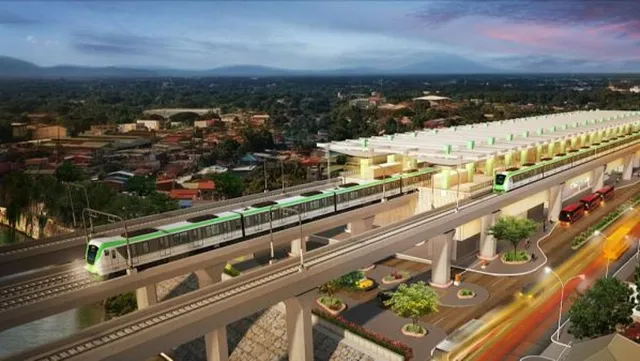
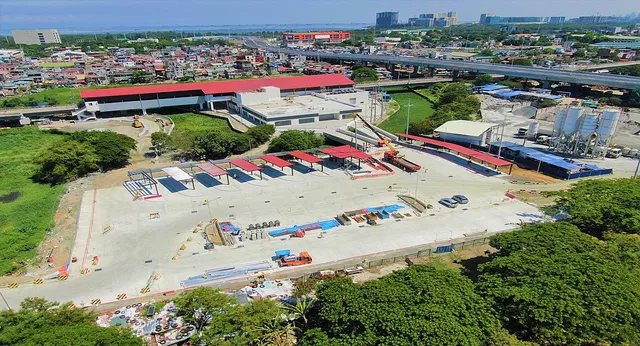
The Department of Transportation (DOTr) on Thursday broke ground for the North-South Commuter Railway (NSCR) System’s Banlic Depot in Calamba, Laguna.

During the groundbreaking ceremony, DOTr Secretary Jaime Bautista said the Banlic Depot signals the “rapid progress” of the project after its land development and other preparatory works began in 2023.

“We mark the significant progress since June last year in land development and other preparatory works such as geotechnical investigation, fencing, clearing, erecting temporary project site offices and access roads,” he said.

The depot, part of Contract Package (CP) S-07 of the NSCR, covers an area of 24.5 hectares and consists of a control center, stabling yard, maintenance shop, and other ancillary buildings.

CP S-07 is worth PHP16.9 billion and is scheduled to be completed in 2028.

“For residents of Banlic and adjacent communities, the NSCR will not only enhance connectivity but also transform their socio-economic status by providing rapid mobility for people and goods,” Bautista said.

Meanwhile, he also called on project contractors of the NSCR to give special consideration to the safety of their workers.

“I therefore urge our contractors – the joint venture of Hyundai Engineering and Dong-Ah Geological Engineering – as well as other contractors building the various segments of the NSCR, to always focus on safety throughout the construction sites,” he said.

He said a delay with no record of an accident at the workplace is more acceptable than having workplace casualties.

“Of course, on-time completion with no accident is better,” he said.

Co-financed by the Asian Development Bank and the Japan International Cooperation Agency, the 147-kilometer NSCR system will connect Pampanga, Bulacan, Metro Manila and Laguna via railway.

Once operational, the NSCR is seen to reduce travel time from Clark, Pampanga to Calamba, Laguna to less than two hours and accommodate 800,000 passengers daily.

June 10, 2024

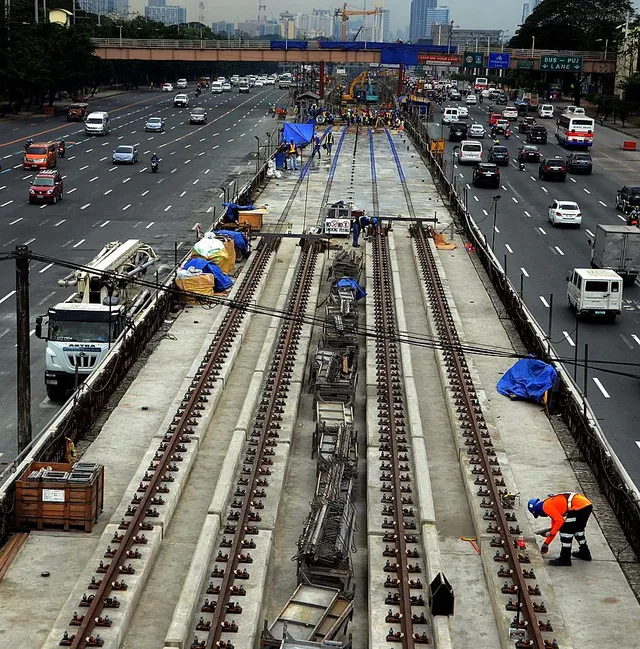
The Light Rail Transit Line 1 (LRT-1) Cavite Extension is expected to be completed by 2031, an official of the Light Rail Manila Corporation (LRMC) said on Friday.

"[For] Phase 2 and 3, [we are] meeting with the DOTr (Department of Transportation) to be able to commence the construction. We have to clarify a few points before we proceed," LRMC General Manager Enrico Benipayo said in a briefing during the LRT-1 Cavite Extension Phase 1 site visit at the Dr. Santos Station in Parañaque City.

"In terms of length of construction and pre-activities prior to construction such as financial closure, all the other pre-requisites for the construction, we hope that by 2031, ROWs 2 and 3 would be completed. There are preliminary works already started as far as right of way acquisition is concerned," he said.

With a project cost of PHP64.915 billion, the LRT-1 Cavite Extension is being financed through a hybrid model consisting of PHP17.80 billion in official development assistance (ODA) from the Japan International Cooperation Agency (JICA); PHP39.57 billion from the private sector operator LRMC; and PHP7.55 billion from the government of the Philippines.

The project consists of three packages and is expected to add about 300,000 passengers to the daily LRT-1 ridership, bringing the total to 800,000, during the first year of full operations in 2031.

It will connect Manila to Cavite, reducing travel time from Baclaran, Pasay City to Niog, Cavite from 1 hour and 10 minutes via local roads to only 25 minutes via train.

The construction of the Phase 1 is progressing as scheduled with its 98.2 percent completion rate as of end April 2024.

The project will add 6.2 kilometers to the existing LRT-1 line from Baclaran Station in Pasay City to Dr. Santos Station in Parañaque City.

Phase 1 which is expected to be operational before the end of the year, is capable of serving 600,000 passengers daily.

The five new stations under Phase 1 are currently at various stages of completion with Redemptorist Station registering 97.4 percent; Manila International Airport Station at 97.2 percent; Asia World Station at 90.4 percent; Ninoy Aquino Station at 93.5 percent; and Dr. Santos Station at 97.7 percent.

LRT-1 Dr. Santos Station, the end terminal for Phase 1, will serve as a major transit hub. Passengers will have seamless access to various modes of transportation through the intermodal facility.

The intermodal facility is located with access to and from Dr. A. Santos Avenue and C5 Road Extension and will have designated bays for public buses, jeepneys, taxis, private cars, motorcycles, as well as dedicated parking slots for PWDs.

“The nearing completion of the LRT-1 Cavite Extension Phase 1 is a testament to the government and private sector’s commitment to improving public transportation in the country. An excellent showcase of how public private partnership (PPP) works, this project underscores LRMC’s commitment to providing a safe, convenient, and passenger-centric commuting experience for everyone,” Benipayo said.

DOTr Secretary Jaime Bautista said the intermodal transport hub would give a variety of choices to passengers.

“Magkakaroon rito ng jeepney, possible buses, UV express, and even motorcycle taxis. Maraming options ang mga passengers (There will be jeepneys, possibly buses, UV Express, and even motorcycle taxis. There will be a lot of options for passengers),” he said.

“The LRT-1 Cavite project will contribute to easing the traffic. With the operations of the project, maraming makaka-connect sa (many will be able to connect to) PITX, I think, will help many passengers, as well as to the airport. With this, it will improve accessibility and comfort to the riding public,” he said.

Once operational, Bautista said fewer persons would use their private cars, helping to ease traffic in the area.

“That will contribute to solving the traffic problem. Not necessarily eliminate traffic, but it will contribute to easing the traffic in this area,” he said.

Transportation Assistant Secretary for Rails Jorjette Aquino said the fare matrix for the LRT-1 extension would be the same as the existing Line 1.

“Regarding the fare, currently we will be applying the same fare, which is PHP13.29 boarding fare and for distance fare, we're going to allow PHP1.21 so that's the same as the existing line for LRT1 and LRT2,” Aquino said.

LRMC officials welcomed various government partners during the high-level site inspection by the DOTr led by Bautista.

Joining the inspection activity were Finance Secretary Ralph Recto; Department of Public Works and Highways Undersecretary Maria Catalina Cabral; Metropolitan Manila Development Authority Chairman Romando Artes; Parañaque City District 1 Rep. Edwin Olivarez; Parañaque City Mayor Eric Olivarez; Japan International Cooperation Agency Philippines Chief Representative Takema Sakamoto; Light Rail Transit Authority Administrator Hernando Cabrera; and Embassy of Japan Representative Masahi Ide.

“The project represents a dramatic shift in transit-oriented development here in the Philippines. It will not only connect Manila to Cavite but also act as a catalyst for economic activity, creating new opportunities for more jobs and businesses to flourish in Region 4-A or the Calabarzon,” Finance Secretary Ralph Recto said. 

June 03, 2024

The Public-Private Partnership (PPP) Center said 134 projects worth PHP3.03 trillion are in the pipeline for undertaking between the government and private sector.

Data released by the PPP Center over the weekend showed that 13 unsolicited proposals were recently added to the list of 121 approved projects revealed two weeks ago.

These include the Sta. Rosa City Digitalized Traffic Enforcement, Municipality of Cainta Digitalized Enforcement, Caloocan City Digitalized Traffic Enforcement, Cauayan City Digitalized Traffic Enforcement, Digital Infrastructure for the Philippine National Cancer Registry and Next-Gen Clinical Research, Establishment of Hemodialysis Centers in Iloilo Provincial and District Hospitals, and the Pampanga Bulk Water Supply Project.

Other projects recently added in the pipeline include the Biñan City Digitalized Traffic Enforcement, Civil Aviation and Immigration Security Services, Establishment of Bulk Water Facility in La Union, La Union Integrated Terminal Exchange, Establishment of Dialysis Center in all Provincial Government of La Union District Hospitals and La Union Medical Center, and the Cavite Bus Rapid Transit System.

PPP Center deputy executive director Jeffrey Manalo earlier said that of the 134 projects, those that are in more advanced stages include the PHP23.40 billion Tarlac-Pangasinan-La Union Expressway extension project; PHP12.75 billion upgrade, expansion, operations and maintenance of the Laguindingan Airport in Northern Mindanao; PHP4.53 billion New Bohol International Airport; PHP9.49 billion University of the Philippines-Philippine General Hospital Cancer Center; and PHP400 million Dialysis Center for the Renal Center Facility of the Baguio General Hospital and Medical Center.

"Those are the five projects we expect to be awarded by the end 2024," said Manalo.

Manalo said projects that would likely be awarded by the end of 2024 or next year include the Bislig City Bulk Water, Bislig City Septage Project, and the Negros Occidental Bulk Water Supply Project.


Article courtesy of the Philippine News Agency

June 03, 2024

The Department of Public Works and Highways (DPWH) has urged the private sector to invest in government projects.

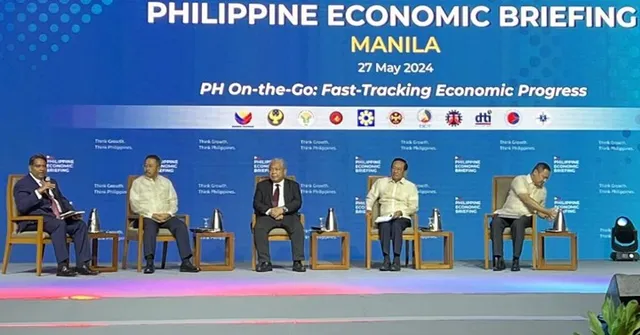
“I firmly believe to be able to implement efficiently the projects of the government, we also encourage the participation of the private sector,” DPWH Secretary Manuel Bonoan said at the Philippine Economic Briefing held at the Philippine International Convention Center (PICC) in Pasay City on Monday.

Bonoan shared several projects of the government under the high-standard highway development master plan, which involve the construction of highways and expressways in three islands of the country.

“This will involve the implementation of about 1,800 km. of high-standard highways and expressways. There’s a lot of room for private sector to avail the implementation of these programs,” he said.

“The expressway system or network in the Philippines right now is just about over 500 km., mostly in Luzon for now, around Metro Manila. Now, under this master plan, the plan to implement another more than 350 km. expressways not only in Luzon but in other parts of the country,” he added.

Bonoan said these projects aim to enhance mobility and address traffic congestion in many areas.

“This is where the private sector will come in and help us in the implementation of these programs either through participation on what you call solicited proposals projects that they have identified or the unsolicited proposals, the private sector can commit,” he said.

Aside from investments, the DPWH chief said the private sector can also provide technical services, consultancy services and other forms of assistance to the implementation of the government's infrastructure projects.

On the other hand, the Department of Information and Communications Technology (DICT) said the potential of the Philippines for hyperscalers is big.

Hyperscalers are large-scale data centers that offer massive computing resources, typically in the form of an elastic cloud platform.

DICT Undersecretary Paul Joseph Mercado said the country should start looking at this sector and take advantage of the situation.

“Let me state the facts, first, Singapore has already put a cap on the number of hyperscalers that they can deal with in their country, which put it at the back burner of new hyperscalers. Now, let’s talk about the other targets, Taiwan and Hong Kong as hyperscaler centers due to geo-political issues. Most western countries cannot connect directly to them,” he said.

“So, here is the potential for the Philippines --the country has 11 submarine cables, we are the number one destination for BPOs (business process outsourcing). There are 11 submarine cables currently, but there will be 14 in the next two to three years,” he added.

Mercado, meanwhile, underscored the need to utilize the country's renewable energy potential for this industry.

“The most important factor for data centers… is power most specifically renewable energy… we need to factor these in build more of the energy requirements because according to the study of DICT, for the next three years, the data center for the Philippines would be approximately 400 to 600 megawatts and we need to produce this green energy for that many data centers,” he said.

June 03, 2024

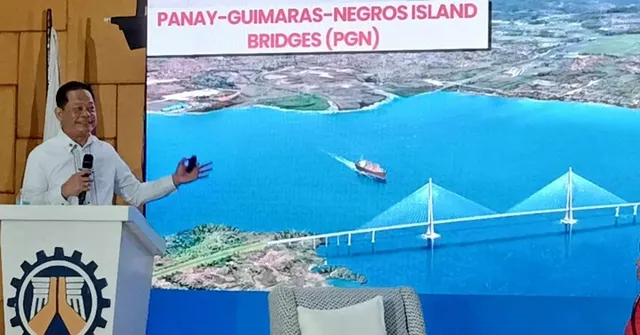
The anticipated PHP187.54-billion mega Panay-Guimaras-Negros (PGN) bridges project is set to transform regional connectivity in Western Visayas, the top official of the Department of Public Works and Highways (DPWH) in the region said on Monday.

In a public briefing Tuesday, DPWH regional director engineer Sanny Boy Oropel said the feasibility study for the design and the detailed engineering has already started.

Spanning 32.47 kilometers, the project has two sections consisting of Section A or the Panay to Guimaras section, with a length of 13 kilometers; and Section B from Guimaras to Negros, with a length of 19.47 kilometers.

Oropel said President Ferdinand R. Marcos Jr. has instructed that the detailed engineering design of Section A be completed by December 2024, instead of the end of 2025.

“The detailed engineering design of Section A will be completed within 2024 for the civil work to start in the second semester of 2025. Segment one will be completely delivered by the end of President Marcos’ term on June 30, 2028,” he said during the Bagong Pilipinas town hall meeting at the DPWH regional office here.

The study is being undertaken by a consortium of six consulting firms.

“All adjustments will be made by the consultants in order to deliver this commitment,” he added.

In addition to the ongoing study, Oropel said they are also in the process of identifying the vital connectivity of the PGN, as they started development around the access areas of the bridges.

“The PGN Island Bridges will emerge as architectural marvels, featuring state-of-the-art construction, complete with intricate road networks and interchanges that will have a common intersection in the Panay side, Guimaras side, and Negros side,” he said.

Aside from unhampered transportation, the completion of the project will also ensure safer travel.

Section B of the project is eyed for completion in 2030.

June 03, 2024

The PHP23-billion Samal Island-Davao City Connector (SIDC) project is in full swing and is expected to be completed by 2027, the Department of Public Works and Highway in Davao Region (DPWH-11) said Tuesday.

During the pilot episode of the Kapihan sa Bagong Pilipinas here, DPWH-11 Director Juby Cordon said the design and build of the SIDC project already accounted for an overall actual weighted physical accomplishment of 3.487 percent.

“They are finished with the design and at 3 percent,” Cordon said of the project, which started in September 2022 and is expected to be completed in August 2027.

Meanwhile, DPWH-11 spokesperson Dean Ortiz said the project is proceeding "smoothly" amid the ongoing expropriation cases on the Davao City side of the project.

“As for right of way, we are going smoothly. For the road right of way, around 25 percent or 14 of 55 affected lots in Davao City under negotiated sale were acquired while under expropriation cases, four out of six lots on the Davao side and 100 percent on the Samal side were expropriated,” Ortiz said.

At least 78 percent of the coconut trees affected in Davao City and 100 percent in Samal Island have already been acquired, he added.

“We do not have problems on the Samal side. In Davao, we can continue despite those problems,” Ortiz said.

The scenic bridge project crossing Pakiputan Strait will have landing points at the Samal Circumferential Road in Barangay Limao, Island Garden City of Samal (IGACOS), and Davao City along the R. Castillo-Daang Maharlika junction.

The SIDC bridge has a length of 3.9 kilometers, including ramps in Davao City and a 24-meter wide grade road and roundabout at the Samal circumferential road.

Once completed, the bridge will be a four-lane, cable-stayed iconic conduit with a vertical navigational clearance of up to 47 meters.

The SIDC is expected to accommodate up to 25,000 vehicles daily, and reduce travel time between Samal and Davao City to five minutes compared to the existing 30-minute ferry boat ride.

May 13, 2024

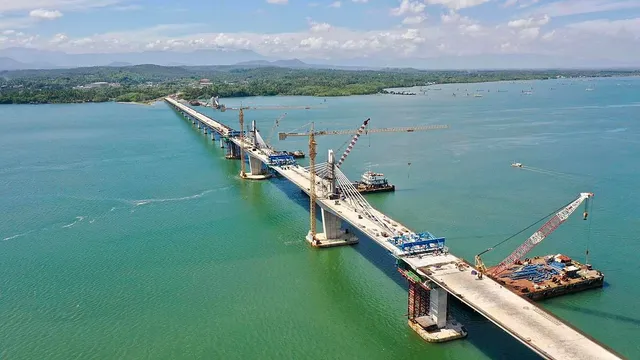
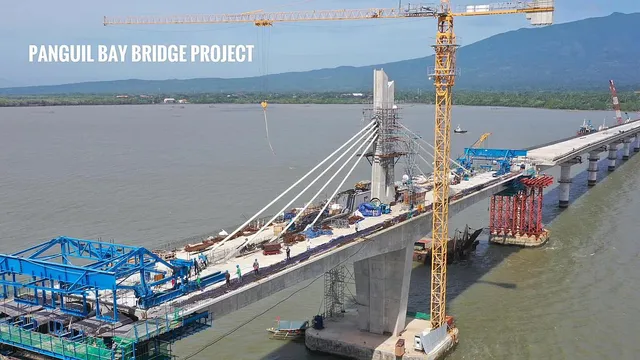
The Department of Public Works and Highways (DPWH) is now working on closing the gaps to complete the 3.17-kilometer Panguil Bay Bridge Project which will soon become the longest sea-crossing bridge in Mindanao.

In his report to DPWH Secretary Manuel M. Bonoan, DPWH Senior Undersecretary Emil K. Sadain said that the inter-island bridge project in Northern Mindanao is currently 90 percent completed, with only 38.75-meter gap to link the superstructure from Tangub City, Misamis Occidental to Tubod, Lanao del Norte.

“We are currently rushing works on both side of the Tangub and Tubod approaches as well as the remaining three (3) gaps to fully connect the whole Panguil Bay Bridge,” said Senior Undersecretary Sadain who led an inspection of the project on Thursday, May 9, 2024, together with DPWH OIC-Project Director Teresita V. Bauzon of Unified Project Management Office - Roads Management Cluster 2 (Multilateral), and representatives from the design and build contractor Namkwang Engineering & Construction Corporation in joint venture with Kukdong Engineering & Construction Co., Ltd. and Gumgwang Construction Co., Ltd.

According to Senior Undersecretary Sadain, the Panguil Bay Bridge is among the infrastructure flagship projects of the Department, having been initiated in the previous administration and continued under the term of President Ferdinand R. Marcos Jr., as it is seen as a landmark infrastructure that would boost economic growth of Mindanao.

When completed, this will be able to reduce travel time between Tangub City, Misamis Occidental and Tubod, Lanao del Norte to only seven (7) minutes, from the current travel time of one (1) and a half hour to two (2) and a half hour via Roll-On, Roll Off (RoRo) or land travel with over a distance of 100 kilometers.

The project is funded through a loan agreement between Government of the Philippines (GOP) and Korean Export-Import Bank (Korea Eximbank).

The Panguil Bay Bridge Project commenced civil works in 2020 amidst the challenges posed by the pandemic, navigating through unprecedented circumstances to fulfill its objectives.

However, it faced additional hurdles due to insufficient fund allocation, further complicating its progress and implementation.

“Despite these setbacks, the project persevered, demonstrating DPWH resilience and underscores the commitment of President Marcos administration to advancing vital infrastructure projects that will contribute to the nation's progress and prosperity under Bagong Pilipinas,” added Senior Undersecretary Sadain.


Article courtesy of The Department of Public Works and Highways

May 05, 2024

Several countries are investing in the Luzon Economic Corridor project, which can elevate the global status of the Philippines, according to President Ferdinand R. Marcos Jr.

In an interview with Chang Dae-hwan, chair of South Korea's Maekyung Media Group, in Malacañang, Manila on Thursday, Marcos said the project will intensively focus on key infrastructure such as ports, railways, clean energy, and semiconductor supply chain connecting Subic Bay in Zambales, Clark in Pampanga, Manila, and Batangas.

He particularly noted that the ongoing development in Clark City, which is a vital part of the Luzon Economic Corridor, has become an attractive destination for foreign investments due to the establishment of the Clark Freeport and Special Economic Zone.

“I expect it to be mostly American companies,” President Marcos said. “They have come in, and I like to think that the reason for that is because we have set up the system that’s attractive for their investment. And so, we’ll continue to [do] that and will be able to do even better if the [Luzon Economic] corridor is completed, and the travel times and the cost of travel of transport will be brought down."

He pointed out that the ecozones offer one common tax code and incentive scheme and locator companies do not have to deal with every local government unit.

The President said the ecozones are open to all investors looking for special incentives and special tax breaks.

"We have right now economic zones where anyone can participate,” Marcos said. “It’s not specifically only for Korea, only for one industry… but it’s open for everyone and what it provides. It provides a place where there are special incentives, special tax breaks specially tariffs on importation, sales tax because they don’t sell into the country."

President Marcos noted that Philippine special zones have been successful, adding that the government is counting on them to bring more success in the country.

The Bases Conversion and Development Authority earlier said the Subic-Clark Railway Project, expansion of the Clark International Airport, and the Clark National Food Hub are pitched to American and Japanese investors under the USD600-billion Partnership for Global Infrastructure and Investment of the G7 countries.

BCDA said the three projects are being endorsed for the proposed Luzon Economic Corridor. By Filane Mikee Cervantes


Article courtesy of the Philippine News Agency

May 05, 2024

President Ferdinand R. Marcos Jr. has ordered the streamlining of the permitting process for the Infrastructure Flagship Projects (IFPs) to hasten the construction and implementation of the administration’s infrastructure program.

In a four-page Executive Order No. 59 signed by Executive Secretary Lucas P. Bersamin on April 30, Marcos emphasized the need to expand and update the country’s infrastructure to achieve meaningful economic transformation.

There are currently 185 IFPs approved by the National Economic and Development Authority (NEDA).

“There is a need to further streamline the process for issuance of required licenses, clearances, permits, certifications or authorizations to expedite the implementation of IFPs, consistent with RA (Republic Act) 9485, as amended,” Marcos said.

EO 59 covers to all national government agencies, including government-owned or -controlled corporations and other government instrumentalities, local government units (LGUs) involved in the issuance of licenses, clearances, permits, certifications or authorizations required for approved list of IFPs.

According to the President, no other national or local permit or clearance may be required for the construction, installation, repair, operation, and/or maintenance of IFPs except for Environmental Compliance Certificate/Certificate of Non-Coverage issued by the Department of Environment and Natural Resources; Building permit/Occupational Permit/Certificate of Occupancy issued by the City/Municipal Building Official; Excavation Permit issued by the concerned LGU, National Commission for Culture and Arts, Metropolitan Manila Development Authority, Department of Public Works and Highways, and /or the Bases Conversion and Development Authority; and other requirements as mandated by the Constitution and existing laws.

The streamlined requirements apply to all pending and new applications submitted by the NGAs and LGUs for projects included in the NEDA Board-approved list of IFPs.

EO 59 takes effect immediately upon publication in the Official Gazette, or in a newspaper of general circulation. By Darryl John Esguerra


Article courtesy of the Philippine News Agency

April 29, 2024

The on-going construction of Davao River (Bucana) Bridge in Davao City by the Department of Public Works and Highways (DPWH) is rapidly taking shape, with significant milestones achieved just five (5) months since the project start.
In his inspection report to DPWH Secretary Manuel M. Bonoan, Senior Undersecretary Emil K. Sadain said that the assigned engineers from the Unified Project Management Office - Bridges Management Cluster (UPMO-BMC) and contractor China Road and Bridge Corporation (CRBC) have shown impressive display of efficiency and dedication in overcoming challenges and pushing forward the physical accomplishment to 15.7 percent since the civil works activities started on November 2023.

Senior Undersecretary Sadain, in-charge of DPWH infrastructure flagship projects joined Minister Counselor Yang Guoliang of Embassy of the People's Republic of China in the Republic of the Philippines at the project visit in Davao City on Friday, April 26, 2024, where both officials personally observed the progress for the construction of a four-lane, six-span extradosed bridge spanning 480.20 meters across the Davao River.

Also present at the project visit are Consul Jin Jun of the Consulate General of People’s Republic of China in Davao, UPMO-BMC Project Director Rodrigo I. Delos Reyes, Project Director Benjamin A. Bautista of UPMO Roads Management Cluster I, Director Randy R. Del Rosario of Stakeholders Relations Service (SRS), DPWH Bucana Bridge Project Team headed by Acting Project Manager Norifel Teddie G. Cadiang and Project Engineer John Christian T. Gaden, and CRBC officials headed by Mr. Ren Xiaopeng.

The activities witnessed on-site are the completed bored piles for abutment 0, bored piling activities for piers 1 and 2 which are about to complete, continuous embankment works including the installation of geotubes for approach 0, and construction of batching plant and temporary steel craneway.

Earlier, Secretary Bonoan and Minister Counselor Guoliang signed on April 24, 2024 the Supplementary Implementation Agreement to finally confirmed the general construction cost, survey & design and consultant cost, and project management cost that shall be charged against the grant to the Philippines on the basis of the Exchange of Letters signed on November 2018 concerning the construction of the China-Aid Localized Project for Davao River Bridge (Bucana Bridge).

With a contract cost of ₱3.126 Billion to be funded by the Government of the Philippines and China Aid Grant, the 1.34-kilometer project including the approach roads is an integral part of the Davao City Coastal Bypass Road traversing from Roxas Avenue to Bago Aplaya.

Scheduled for completion by November 2025, Bucana Bridge holds immense importance for Davao City in promising enhanced connectivity, improved transportation networks, and bolstered economic development opportunities in Southern Mindanao.


Article courtesy of The Department of Public Works and Highways

April 29, 2024

The Department of Public Works and Highways (DPWH) has started the civil works construction of deep foundations for the land and marine viaducts of the 4.07-kilometer Samal Island - Davao City Connector (SIDC) Project.
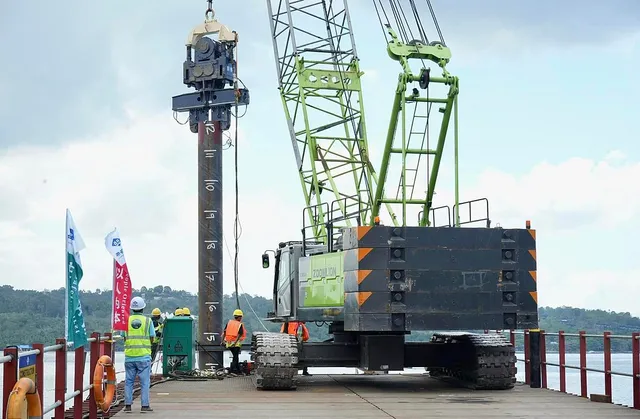
DPWH Senior Undersecretary Emil K. Sadain, in his report to Secretary Manuel M. Bonoan, said that the project is proceeding the construction phase both in Davao and Samal side with the commencement of bored piling activities crucial for ensuring the stability and integrity of the bridge structure.

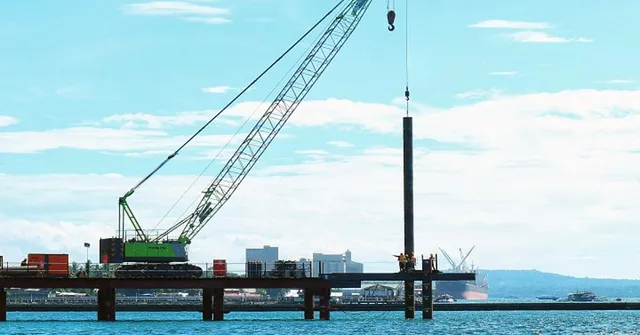
With the approval of the detailed engineering design (DED) plans for land and marine viaducts and navigation bridge, the DPWH Unified Project Management Office - Bridges Management Cluster (UPMO-BMC) with its design-and-build contractor China Road and Bridge Corporation (CRBC) has also started to work on the steel bridge craneway that shall provide access for the construction activities, added Senior Undersecretary Sadain following a site inspection with Minister Counselor Yang Guoliang of Embassy of the People's Republic of China in the Republic of the Philippines.

Also present at the inspection on April 26, 2024 are UPMO-BMC Project Director Rodrigo I. Delos Reyes, UPMO Roads Management Cluster 1 Project Director Benjamin A. Bautista, Stakeholders Relations Service Director Randy R. Del Rosario together with DPWH SIDC Project Team headed by Acting Project Manager Najar Imbin and Project Engineer John Christian T. Gaden.

As of April 26, 2024, the project’s overall actual weighted physical accomplishment is at 3.5%, with its DED Phase progress at 93%

Targetted for completion within the term of President Ferdinand R. Marcos Jr., the ₱19-Billion SIDC project aims to provide a resilient and reliable transportation link between Davao City in the west and the Island Garden City of Samal (IGaCoS) in the east, enhancing internal mobility and external linkage to support the growth potential of Davao Region.

The SIDC Project is a 4-lane extradosed bridge with a 530-meter main bridge; land viaduct of 570-meter on Davao City side and 395-meter on Samal Island side; and western and eastern marine viaducts of 350-meter and 510-meter, respectively. It has ramps tapping into the R. Castillo-Daang Maharlika junction, Davao City and a 24-meter wide at-grade road and roundabout at Brgy. Limao along Samal Circumferential Road, IGaCoS.

The bridge will be built with a 275-meter main span and a vertical navigation clearance of 47 meter over the southern corridor of the Pakiputan Strait. The marine crossing is approximately 1.62-kilometer with seabed up to 40-meter deep and its navigation bridge supported by two (2) pylons 73-meter above sea level.

The bridge will serve as a catalyst for progress and development, and drive economic growth in the southern Philippines by offering a strategic solution to the existing transportation challenges and providing a much-needed alternative to ferry services with a seamless link between Davao City and Samal Island.

April 14, 2024

The Department of Public Works and Highways (DPWH) on Wednesday bared several big-ticket projects being constructed by the government in a bid to decongest traffic in Metro Manila.

Speaking at the Bagong Pilipinas Town Hall Meeting on Traffic Concerns convened by President Ferdinand R. Marcos Jr. in San Juan City, DPWH Secretary Manuel Bonoan discussed some of the infrastructure projects to alleviate bottlenecks and provide alternative routes to ease traffic congestion in the National Capital Region.

He said the traffic decongestion program is one of the key strategic infrastructure programs of the department aligned with the 2023-2028 Philippine Development Plan and consistent with the President’s 8-point socioeconomic agenda to reduce transport and logistics costs.

The program focuses on the improvement and expansion of the national road network by building more by-passes, diversion roads, expressways, flyovers, interchanges, and underpasses.

Among them is the completion of the mainline of the 18-kilometer Metro Manila Skyway Stage 3 which has reduced travel time from Buendia to Balintawak from 2 hours to 15 to 20 minutes.

Meanwhile, the construction of the Tomas Claudio – Polytechnic University of the Philippines Sta. Mesa Section is ongoing with 22 out of a target of 28 ramps already completed.

Three ramps are undergoing construction while another three are under the planning stage, Bonoan added.

Another project that will decongest and bypass EDSA is the 7.7-kilometer North Luzon ExpressWay-South Luzon Expressway (NLEX-SLEX) Connector Road, an elevated expressway mostly traversing along the Philippine National Railways (PNR) rail track from Caloocan to Plaza Dilao in Manila which will reduce travel time from SLEX to NLEX from 2 hours to 20 minutes.

He reported that the project is already 95 percent substantially completed and has three interchanges located in C3 Road/5th Avenue in Caloocan, and España and Magsaysay Boulevard in Manila.

The NLEX-SLEX Connector Road Project, targeted to be completed this year, will bring great comfort to motorists once fully operational to its connection with Metro Manila Skyway Stage 3 in Sta. Mesa, Manila.

The 32-kilometer Southeast Metro Manila Expressway (C6 Expressway, Phase I) will reduce travel time from Bicutan to Batasan from 2 hours to 30 minutes, with right-of-way acquisition ongoing.

The C5 South Link Expressway will reduce travel time from R-1 Expressway to SLEX/C5 from 40 minutes to 10 minutes. The Merville to C5/SLEX and E. Rodriguez to Merville Sections are already operational.

Bonoan added that the Laguna Lakeshore Road Network Project – Phase I, involving the construction of a 51-km. road network along Laguna Lakeshore from Calamba to Bicutan will cater to the increasing traffic volume in the southern corridor of Metro Manila.

The detailed engineering design for the Laguna Lakeshore Road Network Project – Phase I is 97 percent complete. The processing of the loan for the construction of the project is underway with the Asian Development Bank.

The 44-kilometer Cavite-Laguna Expressway is expected to reduce travel time from Cavite Expressway (CAVITEX) in Kawit to SLEX Mamplasan in Laguna from 2 hours to 35 minutes.

The 17.4 km.-road from SLEX Mamplasan to Silang-Aguinaldo Interchange is already operational, while the remaining sections will be completed next year.

Bridges

Bonoan added that they are also prioritizing the construction of new bridges crossing Pasig River and Manggahan Floodway that will provide alternative linkages between major thoroughfares and increase the number of usable roadways that would decongest traffic major roads in Metro Manila.

So far, three of the six bridges have been completed, namely the Binondo-Intramuros Bridge; Bonifacio Global City-Ortigas Center Link Road Project; and Estrella-Pantaleon Bridge.

The design and build contracts for the other three bridges are ongoing, with civil works set to start this year.

Civil works for the North & South Harbor Bridge and Palanca-Villegas Bridge crossing Pasig River are targeted to start by the end of this year or early part of 2025 while construction of Eastbank-Westbank Bridge 2 crossing Manggahan Floodway is set to commence in September 2024, he added.

Also, the rehabilitation and replacement of the Guadalupe and Lambingan bridges, under the Japan International Cooperation Agency (JICA)-funded Metro Manila Priority Bridges Seismic Improvement Project, is set to begin this year.

This will ensure the safety of about 365,000 motorists who traverse the Epifanio de los Santos Avenue (EDSA) through the Guadalupe Bridge, and about 30,257 motorists that pass by Lambingan Bridge daily.

At the same time, Bonoan said one of the landmark projects included in the Inter-Island Linkage Bridge Program is the 32-kilometer Bataan-Cavite Interlink Bridge across Manila Bay, which is set to be the country’s longest bridge once constructed.

It is the biggest and the single most expensive project of DPWH which aims to reduce the travel time between Bataan and Cavite from 5 hours to 45 minutes bypassing Metro Manila.

The detailed engineering design of the PHP219 billion mega bridge project in Luzon has an accomplishment of 97 percent, with final approval of design plans currently ongoing.

Decongesting EDSA

Bonoan added that the transport road and bridge rehabilitation project along EDSA aims to mitigate the large economic losses due to traffic congestion in Metro Manila.

The project is currently proposed for inclusion in the JICA technical cooperation project for large-scale road and bridge replacement and rehabilitation including the total rehabilitation of EDSA.

The agency will also continue assisting the Metropolitan Manila Development Authority in road clearing and removal of obstructions as well as promote active transport by building more bike lanes and pedestrian infrastructure in coordination with the Department of Transportation.

Bonoan noted the collaborative efforts between government agencies, private sector stakeholders, and the community to implement the decongestion plan successfully. By Ferdinand Patinio


Article courtesy of the Philippine News Agency