
July 03, 2023

The Project Team of the Department of Public Works and Highways (DPWH) and Pre-Appraisal Mission from the Japan International Cooperation Agency (JICA) convened for a kick-off discussion on the proposed Dalton Pass East Alternative Road Project.

According to DPWH Senior Undersecretary Emil K. Sadain, the kick-off meeting aims to evaluate the feasibility of the project and its benefits, putting prime the best interest and betterment of the Filipino stakeholders.

The meeting spearheaded by Senior Undersecretary Sadain, in-charge of the implementation of the DPWH infrastructure flagship projects, and JICA South East Asia Division 5 Senior Deputy Director Yosuke Nishii on Tuesday, June 27, 2023 was an opportunity to assess every facet of the project to ensure its quality and safety and to discuss anticipated issues and concerns, with the end in mind of preventing problems and delays during implementation.

The proposed project is a testament to the stronger bilateral cooperative relationships between Philippines and Japan as we continue to pursue infrastructure development through the “build, better, more” program of President Ferdinand Marcos Jr. administration, said Senior Undersecretary Sadain.

Over the years, the Government of Japan through the Japan International Cooperation Agency, has provided DPWH with assistance in planning, construction, and maintenance of crucial infrastructure.

On behalf of DPWH Secretary Manuel M. Bonoan, allow me to take this opportunity to express our sincerest gratitude for JICA’s unwavering dedication to help achieve robust infrastructure development that is safe, resilient, and responsive to the needs of the people, added Senior Undersecretary Sadain.

A constant dilemma faced by travellers in Nueva Ecija and Nueva Vizcaya to the Cagayan Valley Region including those going to Banaue and Ifugao in the Cordilleras is the frequent closure of the existing Dalton Pass due to natural disasters.

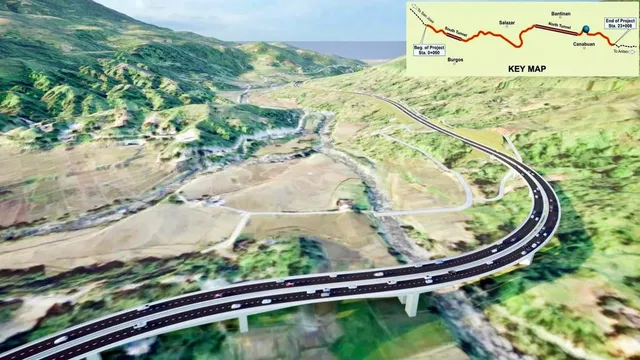
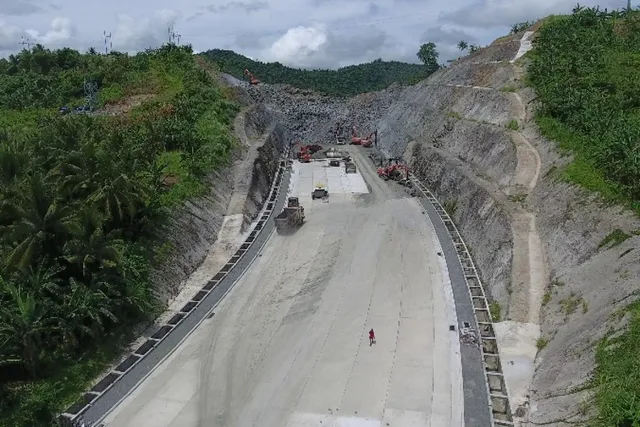
The proposed Dalton Pass East Alternative Road Project under the DPWH Unified Project Managemeng Office - Roads Management Cluster I (Bilateral) headed by Project Director Benjamin A. Bautista is a four (4)-lane high standard highway connecting Nueva Ecija and Nueva Vizcaya that will approximately spans 23.5 kilometers comprising of 4-lane roads with 10 bridges; 6.1-kilometer 4-lane tunnels with lighting, ventilation, and emergency facilities; and slope protection works which will serve as an alternate route bypassing the existing Dalton Pass Section along Pan-Philippine Highway (PPH) more popularly known as Daang Maharlika and considered one of the early landmark projects of the Department also built thru the Japanese assistance that changed the lives of the Filipinos and benefit us even up to this day.

By offering an alternative road, DPWH will not only prevent further isolation of the mountainous provinces of Cagayan Valley Region but also ensure support for farmers who serve as the main drivers of local economy.

June 27, 2023

Photo credit: Department of Public Works and Highways

President Ferdinand R. Marcos attended on Friday, June 23, 2023 the 125th founding anniversary of the Department of Public Works and Highways (DPWH) at the DPWH Head Office in Port Area, Manila.

Bearing the anniversary theme, "Makasaysayang Daan tungo sa Maunlad na Kinabukasan", this year's milestone celebration highlights the historic accomplishments of the Department and its contributions toward nation building in the last 125 years.

In his speech, the President acknowledged how the DPWH has been at the "front and center" of planning and constructing the country's majestic buildings and flagship projects.

He said the employees and workers of DPWH should be proud of what they have done over the past 125 years.

"You should be proud for each of you has contributed to the building of the nation as a whole. It is an example for all of us that, through your dedication and industry, we now have structures that produce opportunities, facilitate commerce, increase mobility, and protect the lives of our people," President Marcos added.

“As we look forward to the future, it is my hope that the Department of Public Works and Highways will remain true and responsive to the needs of the Filipino people for the past 125 years,” President Marcos expressed as he urged DPWH to remain steadfast in its mandate of providing a more robust infrastructure development for the country anchored in the administration’s 8-point socioeconomic agenda by committing to construct and finish critical infrastructure projects on time, on schedule, and under budget.

"We are grateful to be joined by the President in this milestone 125th anniversary of our Department. His presence serves as a morale boost to the men and women employees and officials who strive for the success of the "Build, Better, More" infrastructure development agenda of the government," said Secretary Manuel M. Bonoan.

Secretary Bonoan also thanked the President for choosing to appoint to executive and managerial positions those who rose from the DPWH ranks like himself.

In the program, it was highlighted that DPWH has been responsible for delivering numerous flagship projects that demonstrate the agency's capacity not only as builders, but also the Filipino culture, identity and aspirations.

DPWH was among the first functioning government offices under the executive branch more than a century since the establishment of the Philippine Revolutionary Government on June 23, 1898.

With a fresh strategy map and new vision to look forward to, DPWH aims to ramp up infrastructure development under the President Marcos’ administration to redound greater benefits to the Filipino people.

Under the President Marcos' administration, DPWH aims to continue to provide the Filipino people with much-needed infrastructure facilities.

During the event, President Marcos together with DPWH Secretary Bonoan and Senior Undersecretary Emil K. Sadain handed an award to Regional Office I as Most Outstanding Regional Office and the District Engineering Offices (DEOs) of Pangasinan Fourth, Pangasinan Second, and Batangas Second as Most Outstanding DEOs for CY 2022 among the total 16 DPWH Regional Offices and 193 DEOs nationwide.

“So, to the awardees and to all of the members of the Department of Public Works and Highways, I hope your example will inspire your colleagues and the new generation of public workers to follow your lead, build on your legacy, and work for the benefit of the Filipino people”, President Marcos said.

Other activities during the anniversary program include: thanksgiving mass; recognition of retiring officials and employees and those who have rendered 40 years of service; and awarding of winners for diorama contest showcasing major/flagship infrastructure projects, Performance Governance System branding logo design making contest, basketball/volleyball/e-sports tournament and DPWH Idol Singing Contest.

May 22, 2023

A focus group meeting of the technical working group of House Committee on Ecology was organized in connection with proposed project within the Laguna Lake area.

Representing Department of Public Works and Highways (DPWH) Secretary Manuel M. Bonoan, Senior Undersecretary Emil K. Sadain expressed strong support to the proposal of Congress to push the Laguna Lake rehabilitation to maximize its environmental and economic potential.

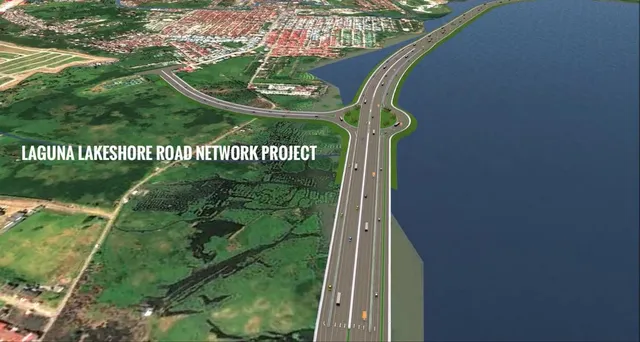
Senior Undersecretary Sadain, however explained in a meeting at Alabang, Muntinlupa City on May 17, 2023 that the proposed Laguna Lakeshore Road Network (LLRN), with the DPWH as proponent, will be an outer ring high standard highway for the Laguna de Bay that will provide a faster and safer alternative for motorists traveling north or south.

The focus group meeting was spearheaded by Santa Rosa City Representative and House Committee on Ecology Vice Chairperson Danilo S. Fernandez with Committee Secretary Atty. Dilbert N. Quetulio, and participated by Laguna Lake Development Authority (LLDA) Acting General Manager Senando A. Santiago; LLDA Director Virgillio Esguerra, Project Director Sharif Madsmo H. Hasim of DPWH Unified Project Management Office (UPMO) Roads Management Cluster II (Multilateral); UPMO Project Manager Zenaida B. Mauhay; and Director Hazel Iris S. Baliatan of the National Economic and Development Authority (NEDA).

Others who attended are DPWH Stakeholders Relations Service Director Randy R. Del Rosario; Project Manager Olivia M. Baguio; LLRN Project Consultant Acting Team Leader Dr. Takayuki Tsuchida; and representatives from the Department of Environment and Natural Resources and other government agencies and stakeholders.

Phase I of the proposed project covering 37.4 kilometers of viaduct and embankment at western side from Lower Bicutan, Taguig City to Calamba, Laguna is already at 90 percent advanced stage of detailed engineering design funded by Asian Development Bank (ADB) Infrastructure Preparation and Innovation Facility and road construction is expected to commence by the end of the year.

It will also cover the construction of eight (interchanges proposed to connect municipal boundaries to the nearest public road along Lower Bicutan, Sucat, Alabang, Tunasan, San Pedro/Biñan, Santa Rosa, Cabuyao, and Calamba).

The extensive environmental survey activities fully considered the project’s impact on the ecosystem of Laguna Lake.

LLRN Phase I costing ₱175 Billion will be funded through a loan from ADB which is now under review by NEDA.

The feasibility study for Phase II in the northern to southern coastline via an eastern route is already ongoing and involves consultation with the concerned national government agencies and local stakeholders. Funding for the detailed engineering design of Phase II will be included in the civil works loan for LLRN phase I.

The proposed third highway going south is expected to ease the traffic congestion, especially during rush hour at the Manila South Road and South Luzon Expressway to support the economic development and growth potential of the provinces of Laguna, Batangas, Quezon, and Rizal in the Southern Tagalog Region.

Meanwhile, Senior Undersecretary Sadain expressed confidence that another proposed DPWH project - the Parañaque Spillway Project, will effectively mitigate flooding.

The underground drainage channel connecting Laguna Lake to Manila Bay will avoid spilling of lake water into low-lying communities. The project to catch overflowing flood water from Laguna Lake before it is pumped out to Manila Bay will about 50 meters below underground traversing the cities of Muntinlupa, Parañaque, Las Piñas, and Bacoor City in Cavite.

May 18, 2023

Photo credit: Department of Public Works and Highways

At least PHP10.48 billion more is needed to fully complete the extension of the multi-year Tacloban Bypass Road project, the Department of Public Works and Highways (DPWH) said on Wednesday.

Of the funding requirement, PHP1.56 billion is needed in 2024 and PHP8.92 billion for 2025 onwards, DPWH 8 (Eastern Visayas) Director Edgar Tabacon said in an interview.

“As of end of February 2023, the project was 11.62 percent complete. We need more funds to finish the project within the term of President Ferdinand Marcos Jr.,” Tabacon told the Philippine News Agency (PNA).

From 2018 to 2023, the central government has spent PHP2.32 billion to build the 33-km. road that provides an alternative highway from this city to the proposed international port in nearby Babatngon town.

The allotment until 2023 allowed the opening and concreting of 1.64 km. of road.

The proposed funds starting in 2024, to be sourced from the national government for inclusion in the DPWH annual budget, will cover works for the remaining 31.34 km. of the highway.

The six-lane road is expected to decongest traffic along the Tacloban-Babatngon Road going to the city’s downtown, reducing travel time from 1.5 hours to only 45 minutes once completed.

It involves the construction of a concrete road, a drainage system, road slope protection, and three bridges.

The road is an extension of the PHP1.12 billion Tacloban Bypass Road completed in early 2022 after seven years of construction.

The 6.405-km. bypass road involved the opening of the road, including a four-lane and a six-lane roadway; construction of drainage; and slope protection structures. It starts in Nula-Tula village and ends in Caibaan village in this city. By Sarwell Meniano


Article courtesy of the Philippine News Agency

May 15, 2023

Photo credit: the Department of Public Works and Highways

Korean construction and engineering companies are interested to participate in the procurement of the design and build of a mega inter-island bridge project in Luzon.

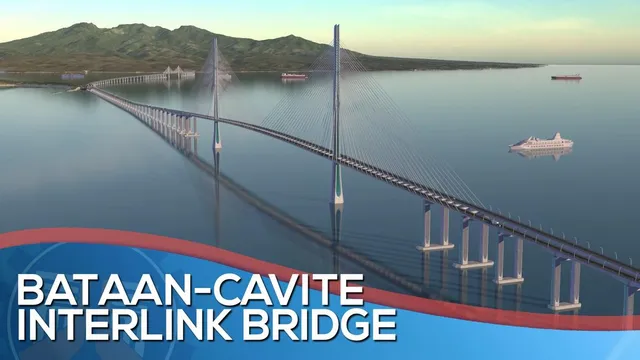
Upon the invitation of the Korea Trade-Investment Promotion Agency (KOTRA) which organizes the Global Project Plaza 2023 to bring together foreign government organizations, contractors and financial institutions, the Department of Public Works and Highways (DPWH) represented by Senior Undersecretary Emil K. Sadain, provided a detailed briefing about the 32.15-kilometer four (4)-lane Bataan-Cavite Interlink Bridge Project that can be joined by Korean and other international companies when the procurement for the civil works roll out in the coming months.

The Global Project Plaza 2023 was held in conjunction with the Asian Development Bank (ADB) annual meeting in Incheon, South Korea and mostly focused on ADB related projects.

In his discussion, Senior Undersecretary Sadain said that the on-going detailed engineering design (DED) of Bataan-Cavite Interlink Bridge Project is at 85 percent and target for completion by this June 2023.

The Bataan-Cavite Interlink Bridge Project is being developed by the DPWH Unified Project Management Office – Roads Management Cluster 2 (Multilateral) with technical assistance funding from the ADB to advance the detailed engineering design with the DED contract awarded to the joint venture of TY Lin International and the Republic of Korea’s Pyunghwa Engineering Consultants, working with Switzerland-based Renardet and the Philippines’ DCCD Engineering Corporation.

Feasibility study for the Bataan-Cavite Interlink Bridge Project that was started in March 2018 was funded under ADB’s Infrastructure Preparation and Innovation Facility Loan. Together with Asian Infrastructure Investment Bank (AIIB), ADB has also committed to co-finance the civil works construction.

As one of the promising projects featured in the ADB project seminar on the sidelines of 56th Annual Meeting of the ADB Board of Governors, Senior Undersecretary Sadain also had an opportunity for one-on-one engagement with ADB executives and Korean engineering and construction companies.

The alignment of the proposed bridge will cross over the Manila Bay – a natural harbor that is bounded by Cavite and Metro Manila on the east, Bulacan and Pampanga on the north, and Bataan on the northwest.

No less than President Ferdinand R. Marcos Jr. with DPWH Secretary Manuel M. Bonoan led on March 31, 2023 the ceremonial switching of the button signaling the start of the geotechnical investigation in evaluating underground conditions – the last of missing pieces to complete the foundation design and deliver the final DED bridging to the new project milestone of civil works implementation.

Due to the scale of the project, seven (7) design packages have been identified reflecting a convenient division of future construction packages. The construction will first begin in the two on-land packages, 5-kilometer Bataan Land Approach under Package 1 and 1.3-kilometer Cavite Land Approach under Package 2 .

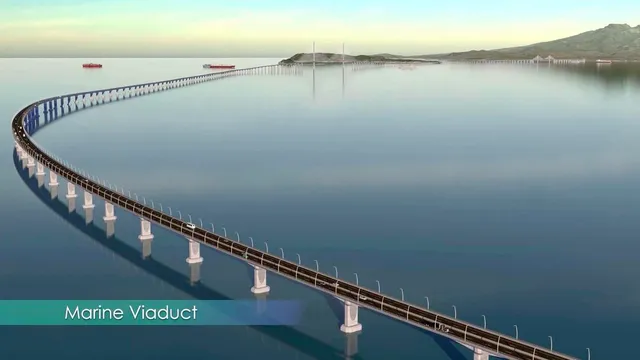
Packages 3 and 4 are North and South Marine Viaducts with a total length of 20.6-kilometer.

The Bataan-Cavite Interlink Bridge Project includes the construction of two cable-stayed navigation bridges on either side of historic Corregidor Island.

Called the north channel bridge and south channel bridge, the structures that will stand in water as deep as 50 meters will have main spans of 400 meters and 900 meters, respectively.

The North Channel Bridge with high level approaches of 2.1 kilometer in length will constitute Package 5, while the South Channel Bridge with high level approaches at 3.1-kilometer length will be the Package 6. The 7th Package involves a project-wide ancillary works.

New opportunities will be created by the Bataan-Cavite Interlink Bridge Project, including the development of seaports in the two (2) provinces of Bataan and Cavite, making them potential international shipping gateways of the country.

Once completed, the inter-island bridge which will be one of the longest bridges in the Philippines and the world will cut travel time between Bataan and Cavite from the current five (5) hours to 45 minutes.


Article courtesy of the Department of Public Works and Highways

May 15, 2023

Photo: Transportation Sec. Jaime Bautista speaks before businessmen at the Makati Business Club forum on Wednesday (May 10, 2023). He said that with limited public funds to bankroll such projects, the government could tap the assistance of the private sector. (Photo courtesy of DOTr)

The Department of Transportation (DOTr) is seeking the financing support of the private sector for the construction and implementation of transport projects and programs.

DOTr Secretary Jaime Bautista said that with limited public funds to bankroll such projects, the government could tap the assistance of the private sector.

"There are many government projects that need private sector's support because the government has limited funds," Bautista said at the Makati Business Club (MBC) forum titled "F2F with Cab Secs session" on Wednesday.

He identified big-ticket transport projects in the rail, aviation and road sectors where Public-Private Partnership (PPP) can be implemented.

He cited the proposed EDSA Busway privatization as one possible PPP effort, as well as the construction of Bus Rapid Transit (BRT) in Cebu and Davao.

"We ask the private sector to support the privatization of the EDSA Busway," Bautista said.
Bautista said the DOTr aviation projects in the pipeline include the improvement of the Ninoy Aquino International Airport, adding other airports in the greater capital for possible PPP proponents such as in Clark, Bulacan and Sangley in Cavite.

"We need additional airports to serve aviation requirements in Luzon," he said.

The transport chief said that the PPP will also be a huge lift for ongoing railway projects such as the North-South Commuter Railway, Metro Manila Subway Project, MRT-7, LRT-1 Cavite Extension Project and South Long Haul Project.

During the session, Bautista also shared his insights and experience working as a public servant.

"When you work with government you have to work not only 20 hours but almost 24 hours. There will always be supporters and detractors but at the end of the day what is important is you did your best, you work professionally with honesty and integrity, and with that, you should be proud of yourself,” Bautista said.

The session is part of MBC’s ongoing efforts to further strengthen public and private dialogue through connecting its members with the country’s key economic managers from the national government.


Article courtesy of the Philippine News Agency

May 12, 2023

Photo credit: Department of Public Works and Highways
A new loan program of the Korean Government may be tap to finance at least four (4) pipeline projects of the Department of Public Works and Highways (DPWH) in Central Luzon and Central Visayas Regions.
Senior Undersecretary Emil K. Sadain, in-charge of DPWH infrastructure flagship projects under “Build, Better, More” program of President Ferdinand R. Marcos Jr. met on Wednesday, May 10, 2023 a fact-finding mission from the national headquarters of Export–Import Bank of Korea (KEXIM) comprised of Director General Chung-Hwa Cho, Director Eunjin Cho, and Senior Loan Officer Jiwon Shin for discussion on pipeline projects for possible enhance cooperation under Korean Government’s Economic Development Promotion Facility (EDPF).

The meeting with the Korean fact-finding mission was also attended by DPWH Project Directors Benjamin A. Bautista and Ramon A. Arriola III; KEXIM Manila Office Country Director Jaejeong Moon, and Deputy Directors Yunhak Lee and Minjeong Kwon; and DPWH Project Managers Jerry A. Fano and Antonio Erwin R. Aranaz.

In his report to DPWH Secretary Manuel M. Bonoan, Senior Undersecretary Sadain said that EDPF is a new Official Development Assistance (ODA) loan program of the Korean Government to cover financial gap for large-scale infrastructure.

The Korea Eximbank as an independent ODA agency has the mandate to operate and manage the EDPF including identifying pipeline projects, loan approval and signing loan agreements.

Pipeline projects initially selected for possible loan co-financing under EDPF and Economic Development Cooperation Fund (EDCF) or Export Credit of the Korean Government are the civil works of 28.82-kilometer Lubao-Guagua-Sasmuan-Minanlin-Santo Tomas Bypass Road in Pampanga; civil works for Pampanga Integrated Disaster Risk and Reduction and Climate Change Adaptation (IDRR CCA) – Stage II covering theThird River and Eastern Branch that traverses municipalities of Macabebe, Minalin, and Sto. Tomas; detailed engineering design and civil works of 10.6-kilometer Consolacion-Liloan Bypass Road with two (2) bridges and feasibility study of Lapu-Lapu Coastal Road in the Province of Cebu.

In keeping with the government’s goal of “Build, Better, More” to modernize the country’s infrastructure backbone, the rolling out of new infrastructure flagship projects will sustain rapid development and attract investments to achieve inclusive growth for all Filipinos.

Meanwhile, DPWH is targeting to commence by June 2023 the detailed engineering design (DED) activities for the Panay-Guimaras-Negros Island Bridges.

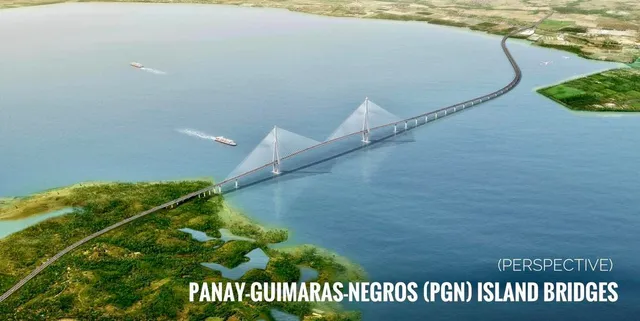
The engineering services of the 32.47-kilometer Panay-Guimaras-Negros Island Bridges is covered by $56.6 Million in loans from the Government of the Republic of Korea .

The scope of engineering services are preliminary design covering review of the feasibility study and preliminary and basic design; detailed engineering design including estimation of detailed construction cost; and procurement assistance.

Composed of two (2)-sea-crossing bridges connecting Panay Island, Guimaras Island and Negros Island in Western Visayas Region, Panay-Guimaras-Negros Island Bridges Project will shortened travel time of commuters and motorist and transport of goods from Panay to Negros Islands through ferries/RORO of 3-4 hours to just less than 1 hour.


Article courtesy of the Department of Public Works and Highways
May 02, 2023

Photo credit: Department of Transportation

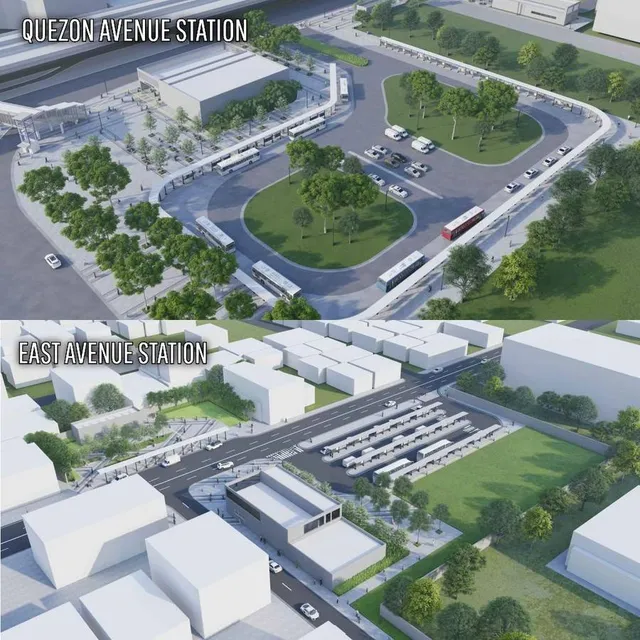
Two more stations for the Metro Manila Subway Project (MMSP) are now officially under construction following a groundbreaking ceremony led by the Department of Transportation (DOTr) on Friday.

The two stations -- Quezon and East Avenues -- are under contract package (CP) 102 of the MMSP and was awarded to a joint venture between Nishimatsu Construction Company Limited and D. M. Consunji Inc.

Digging and construction for the tunnel and underground stations are slated to begin on April 30 while the drilling of the tunnel boring machine (TBM) will happen sometime in the fourth quarter of 2024.

The “build-only” contract consists of a 3.1-kilometer tunnel railway construction and two underground stations that aim to connect commuters to Quezon City’s central business district, government offices and private institutions.

During the ceremony, DOTr Secretary Jaime Bautista said the MMSP will not only provide comfortable transportation but also generate jobs.

“It will definitely be comfortable, affordable, safe, sustainable, and accessible,” Bautista said.

He also thanked the Japanese government for funding the country’s first subway system.

“We would like to reiterate our gratitude to the Government of Japan through the Japan International Cooperation Agency (JICA) for the loan package that makes possible the very first subway train system of the Philippines,” he said.

In January, the DOTr officially began the construction of the MMSP through tunneling works for CP 101 which includes the construction of a depot in Valenzuela City, and three stations.

The MMSP will stretch for 33.1 kilometers and have 17 stations connecting Valenzuela City to Parañaque City, with a spur line to the Ninoy Aquino International Airport Terminal 3 in Pasay City.

Once completed, the subway is expected to reduce travel time between Valenzuela City and Pasay City from 1 hour and 38 minutes to only 45 minutes and is capable of serving up to 519,000 passengers daily. By Raymond Carl Dela Cruz


Article courtesy of the Philippine News Agency

May 02, 2023

Photo credit: Philippine News Agency

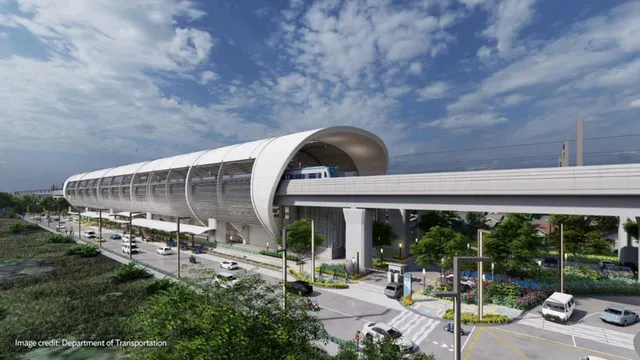
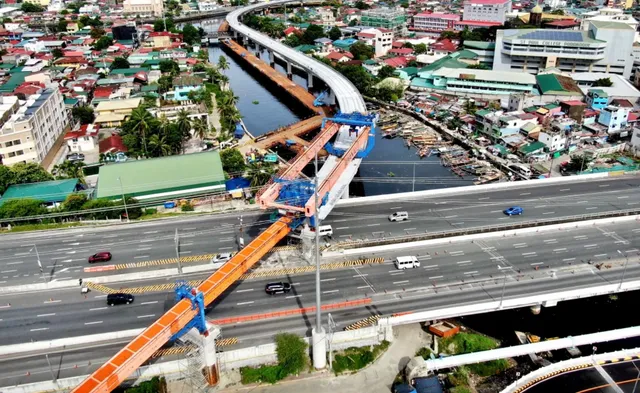
The North-South Commuter Railway (NSCR) system is expected to provide speedier transactions, create more quality time, and improve the quality of life for all, President Ferdinand R. Marcos Jr. said on Thursday.

Marcos made the remark during the ceremonial contract signing for the NSCR Project - South Commuter Section CPs S-02 and S-03b at the President’s Hall in Malacañang, putting all phases of the NSCR system in full swing.

"The completion of the full NSCR line will bring greater convenience for our commuters. It will offer an efficient and comfortable transport alternative that spans the great distance, connecting Pampanga to Manila and then to Laguna,” Marcos said.

Aside from decongesting Metro Manila’s main thoroughfares, he said, the railway system would also spur economic activities in the interconnected regions, and the areas in between, as well as promote environmental sustainability and public health.

He said more jobs shall also be generated by these rail projects.

“As the civil works for these contract packages commence, we expect not only the generation of more than 2,000 jobs but also the creation of other opportunities and livelihood during its construction,” the President said.

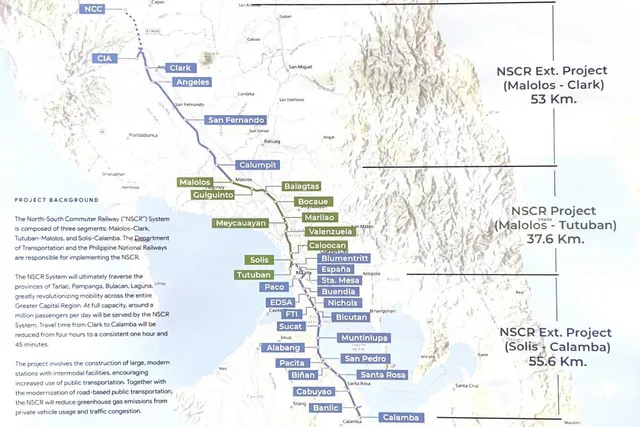
Under the administration's "Build Better More" program, the NSCR System, with a total project cost of PHP873.62 billion, is a 147.26-km. railway project that will connect Clark, Pampanga and Calamba City, Laguna.

The whole system will have 35 stations and three depots composed of the original NSCR Project: Malolos-Clark Railway Project (MCRP), and the South Commuter Railway Project (SCRP). CPs S-02 and S-03b are part of the SCRP.

Once completed in 2029, the entire NSCR system could reduce the travel time between Clark International Airport and Calamba City, Laguna from four hours to two hours.

It is projected to accommodate 800,000 passengers a day.

The NSCR System will be co-financed by the Asian Development Bank (ADB) and Japan International Cooperation Agency (JICA).

Marcos thanked the ADB and JICA for supporting the Philippine government's infrastructure priorities, as their support has been instrumental to provide safe, sustainable, and efficient public transportation for the people.

He also acknowledged the contributions of the Acciona-DMCI Joint Venture, the Leighton-First Balfour Joint Venture, and the efforts of local government units involved. By Filane Mikee Cervantes


Article courtesy of the Philippine News Agency

April 27, 2023

The Department of Public Works and Highways (DPWH) has formalized its collaboration with the Department of Information and Communications Technology (DICT) to ensure faster, more streamlined, and convenient delivery of services to its stakeholders nationwide.

DPWH Secretary Manuel M. Bonoan and DICT Secretary Ivan John E. Uy signed on Tuesday, April 25, 2023 a Memorandum of Understanding for E-Governance, the cornerstone of the digitalization thrust of the administration of President Ferdinand “Bongbong” Marcos Jr.

The MOU was witnessed by DPWH Undersecretary for Information Management and Technical Services Maximo L. Carvajal and DICT Undersecretary for E-Government David L. Almirol Jr. The signing event organized by DICT at Manila Marriott Hotel was also attended by DPWH Information Management Service (IMS) Director Rhalf B. Cawaling, Stakeholders Relations Service (SRS) Director Randy R. Del Rosario, and IMS Business Innovation Division Chief Mary Jane N. Pantoja.

In his message, Secretary Bonoan said that this initiative of DICT in improving government efficiency through e-governance is a welcome development as DPWH will be able to among others, accept online payments for various services, such as purchase of bidding documents, testing fees, accreditation fees, permit application fees, and other fees.

“By embracing digital transformation, we will be able to enhance the efficiency and effectiveness of our operations, while also making our services more accessible to the public” added Secretary Bonoan.

According to Secretary Bonoan, the COVID-19 pandemic was an eye-opener as we realized the significance and benefits of harnessing digital technology to continue business operations without disrupting important government services that the general public depends on.

Under the MOU, the existing applications and systems of the DPWH will be integrated with the DICT. DPWH will guide DICT on the Department’s processes to ensure the interoperability of their respective systems and application.

In coordination with DPWH, the DICT will also study, evaluate and facilitate the development of additional applications and systems, if needed.

With an integrated approach in terms of ICT systems development and implementation, the time has indeed come for the Philippine government to transition to E-governance and rest assured that DPWH will keep our commitments under this Memorandum of Understanding, Secretary Bonoan said.

Other than DPWH, DICT has also signed separate MOU for a digitally connected government with the Department of Social Welfare and Development, Department of Transportation - Philippines, Anti-Red Tape Authority, Bureau of Internal Revenue, Bureau of Treasury, Home Development Mutual Fund (PAG-IBIG), National Printing Office, Council for the Welfare of Children, Maritime Industry Authority, Philippine Commission on Women, Credit Information Corporation, and National Commission for Senior Citizens.
April 19, 2023

Photo credit: Department of Transport

The Asian Development Bank (ADB) will fund 12 projects worth around USD19 billion in the country next year.

In the presentation of ADB Philippines Country Director Kelly Bird during the mapping the investment ecosystem forum in Taguig City Wednesday, eight of these projects are in Mega Manila and five projects are in Mindanao.

Bird cited that among these ADB-funded projects in the National Capital Region and nearby provinces include the USD123-million EDSA Greenways Project, the USD125-million Angat Dam Water Transmission Improvement Project, the USD175-million Metro Manila Bridges Project, the USD2.75-billion Malolos-Clark Railway Project, and the USD4.25-billion South Commuter Railway, which are all ongoing projects.

Three projects are pending for approval, which include the USD1 billion to USD2-billion Metro Rail Transit Ortigas to Rizal Line (MRT-4), the USD3.3-billion Laguna Lakeshore Road Transport Project and the USD4-billion Bataan-Cavite Bridge Project.

“So you can imagine all the other infrastructure projects that the government has in Metro Manila and surrounding areas will be very different from what it is today,” he said.

In Mindanao, ADB-backed projects that are ongoing include the USD100-million Emergency Assistance for Reconstruction and Recovery of Marawi and the USD180-million Improving Growth Corridor in Mindanao Road Sector Project.

There are also three projects in Mindanao that are expected to be approved this year. These are the USD380-million Agus River Basin Integrated Flood Resilience and Adaptation Project, the USD380-million Tagum River Basin Integrated Flood Resilience and Adaptation Project, and the USD924-million Davao Public Transport Modernization Project. By Kris Crismundo


Article courtesy of the Philippine News Agency

April 17, 2023

Photo credit: Light Rail Manila Corporation

The first phase of the 11.7-kilometer (km) Light Rail Transit Line 1 (LRT-1) Cavite Extension Project is nearing completion, according to the Light Rail Manila Corporation (LRMC), the private operator of LRT-1.

In a statement on Friday, the LRMC said the progress rate for the project has reached 82.7 percent as of March 2023, for both civil and rail system works since it started the construction in September 2019.

“The viaduct was completed in February 2022, while the ongoing station construction includes architectural, mechanical, electrical, plumbing, fire protection, and safety works. In terms of the rail system, trackwork, and overhead catenary system installation are almost complete,” it said.

The first phase covers 7 km of the 11-km extension, including five new stations: Redemptorist Station (56 percent complete), MIA Station (61 percent complete), Asia World (51 percent complete), Ninoy Aquino Station (55 percent complete), and Dr. Santos Station (60 percent complete).

LRMC president and CEO Juan Alfonso said all civil and equipment installation works for the project are slated to be completed this year, with a focus on commissioning the entire project’s rail line by next year.

“We are optimistic that we can start commercial operations of Phase 1 by the fourth quarter of 2024 as we continue to achieve milestones with our team,” Alfonso said.

To date, the LRMC has invested over PHP30 billion in capital improvement projects to upgrade the existing systems of the LRT-1 and for the construction of the Cavite extension since the operator took over the rail line in 2015.

The LRT-1 Cavite Extension project, a public-private partnership venture that aims to add an 11.7-kilometer Baclaran-Bacoor, Cavite segment to the current 18.1-kilometer train line, will have eight stations.

The new stretch is expected to service up to 800,000 passengers per day and cut down travel time from Pasay City to Cavite from an hour and a half to just 25 to 30 minutes.

The remaining stations between Las Piñas and Niog are scheduled to become fully operational by 2027. By Raymond Carl Dela Cruz


Article courtesy of the Philippine News Agency

April 03, 2023

Photo credit: The Department of Public Works and Highways

The Department of Public Works and Highways (DPWH) is looking to start the construction of the Bataan-Cavite Interlink Bridge (BCIB) within the first quarter of 2024.

The 32.15-kilometer, four-lane BCIB will connect Barangay Alas-asin in Mariveles, Bataan to Barangay Timalan Concepcion in Naic, Cavite, reducing travel time from five hours to an estimated 45 minutes.

“Hopefully, we can start packages 1 and 2 this year and we could procure the other packages of this project until next year,” said Teresita Bauzon, DPWH project manager, during the Saturday News Forum in Quezon City.

The entire construction may last until mid-2028, she added.

The project will be financed by loans from the Asian Development Bank (ADB) and Asian Infrastructure Investment Bank.

“Right now, all the negotiations of the National Economic Development Authority and the ADB for funding of the construction are ongoing,” Bauzon said.

On Friday, President Ferdinand R. Marcos Jr. led the milestone ceremony for the detailed engineering design of the project at the Maritime Academy of Asia and the Pacific in Mariveles, Bataan.

Marcos asked DPWH officials, employees, and consultants to remain committed to finishing the BCIB on schedule.

"Do your best always to ensure that civil works for this bridge will commence by October this year," he said. "Do your best also to deliver what we have proposed so that our people and their localities may live out the picture we have painted as our goal as soon as possible."

The feasibility study for the project started in March 2018, funded by the ADB Infrastructure Preparation and Innovation Facility loan. By Ferdinand Patinio


Article courtesy of the Philippine News Agency

April 03, 2023

Photo credit: The Department of Public Works and Highways

President Ferdinand R. Marcos Jr. said Friday the PHP175.6 billion Bataan-Cavite Interlink Bridge (BCIB) project is seen to boost the regional economies of the two provinces through improved connectivity.

During the bridge's milestone ceremony in Mariveles, Bataan, Marcos said new economic opportunities would open to Bataan and Cavite and their surrounding provinces because of the easier access that will be made available through the bridge project.

The President noted that the BCIB is projected to reduce the Central Luzon - Calabarzon travel time from 5 hours to just 45 minutes, cutting as much as 86 percent.

“That will be an incredible feat when it happens and would significantly help in decongesting Metro Manila as motorists will be able to travel without passing through the metropolis," he said.

He said the bridge, once completed, would also help bring prices down for goods and services as the transport and logistics costs would decrease, thus generating immense savings all around.

The project will also support the development of seaports in the two provinces, making them potential international shipping gateways of the country, he added.

"As such, I assure you, we will remain committed to developing a highly interconnected network of transport (infrastructure) that will serve as the backbone and strong driving force of our rapid, inclusive, and sustainable (economic) growth," he said.

Marcos called on the officials and employees of the Department of Public Works and Highways, as well as all the consultants to remain committed to finishing this project on schedule.

"Do your best always to ensure that civil works for this bridge will commence by October this year," he said. "Do your best also to deliver what we have proposed so that our people and their localities may live out the picture we have painted as our goal as soon as possible."

The 32.15-km., four-lane, inter-island bridge will connect Barangay Alas-asin in Mariveles, Bataan and Barangay Timalan Concepcion in Naic, Cavite and once completed, it will be the longest bridge in the Philippines.

The BCIB will have two navigational bridges: the 400-meter North Channel Bridge and the 900-meter South Channel Bridge, which will traverse Corregidor Island. About 80 percent of the structure will be over the sea.

Primarily funded through Official Development Assistance loans from the Asian Development Bank (ADB), with co-financing from the Asian Infrastructure Investment Bank, BCIB’s construction is expected to last for 60 months and is scheduled to be completed by the end of the third quarter of 2028.


Article courtesy of the Philippine News Agency 

April 03, 2023

The Department of Public Works and Highways (DPWH) longest road mountain tunnel project in Mindanao is on full steam of implementation.

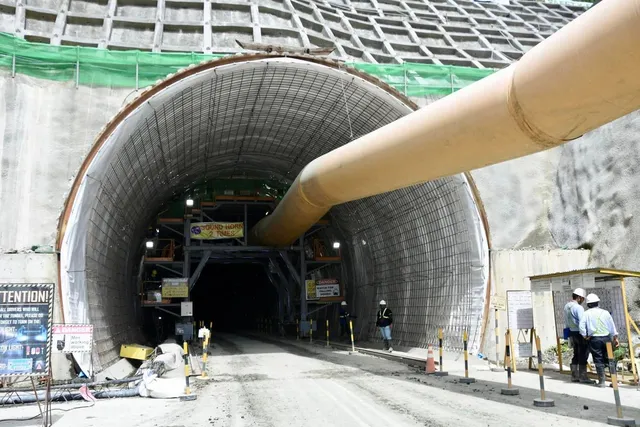
In his report to Secretary Manuel M. Bonoan, Senior Undersecretary Emil K. Sadain, in-charge of the implementation of DPWH infrastructure flagship projects said that tunneling activities for the 2.3-kilometer twin tube bi-lane road mountain tunnel is on the verge of reaching halfway with total length excavated for southbound and northbound direction on both ends of north and south portal at a cumulative distance of about 1-kilometer.

According to Senior Undersecretary Sadain, the tunnel is an important component of the 45.5-kilometer Davao City Bypass Construction Project which is among the infrastructure flagship projects started under the previous administration’s “Build Build Build” program and continue under the administration of President Ferdinand R. Marcos Jr. “Build Better More” development agenda to decongest traffic and reduce travel time.

Senior Undersecretary Sadain, the President Elect of the Philippine Institute of Civil Engineers (PICE) for 2024, allowed the PICE National Officers and Board of Directors headed by President April Frances Agatha Flores and Davao City Chapter President Arnel Bernardino to get an exclusive view of the on-going activities for the construction of the road mountain tunnel adopting Japanese technology with a site visit on Saturday, April 1, 2023.

During the inspection, Senior Undersecretary Sadain reviewed the progress of works and commended the project team from DPWH Unified Project Management Office (UPMO) - Roads Management Cluster 1 (Bilateral) and contractor Shimizu-Ulticon-Takenaka for their hard work and contribution towards fast-track construction.

This is the first project site visit by PICE national leaders to this flagship project of the Philippine government after over three (3) years since the unprecedented challenges of COVID-19 greatly affected everyone.

In his briefing, DPWH UPMO Roads Management Cluster 1 (Bilateral) Project Director Benjamin A. Bautista said that the tunnel construction is part of contract package I-1, the first out of six (6) contract packages, which commenced on December 2020.

This on-going contract package I-1 costing ₱13.23 Billion is financed by Special Terms for Economic Partnership (STEP) Loan between Philippines and Japan International Cooperation Agency under loan agreement numbers PH-P261 and PH-P273.

The tunnel will incorporate facilities to ensure the safety of riding public and will be closely monitored by an operation and control center located in the north portal area.

Targetted for completion by December 2024, contract package I-1 also involves the construction of four (4) lanes 3.35 meters width concrete paved road with the total length of 7.90 kilometers, three (3) pairs of bridge with the total length of 500 linear meters, two (2) underpasses, two (2) overpasses, twelve (12) box culvert (waterway), and four (4) at grade road crossings.

The Davao City Bypass Construction Project begins at Brgy. Sirawan, Toril, Davao City and will end at Brgy. J.P. Laurel in Panabo City.

It will improve the transport logistics and mitigate congestions in Davao City with travel time of just 49 minutes from the current 1 hour and 45 minutes via Maharlika Highway, thereby contributing to the economic and sound urban development of the City and the Davao Region.

For the other packages, procurement activities for packages I-2 and I-3 are currently on-going. Package II-1 started last January 2023 while procurement for package II-2 is also on-going and package II-3 is scheduled on the fourth quarter of this year.

March 31, 2023

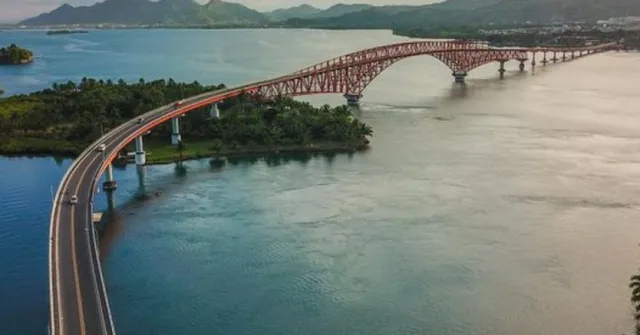
Photo: The aerial view of the San Juanico Bridge that connects the islands of Leyte and Samar. The Japan International Cooperation Agency is considering the construction of the second San Juanico Bridge as one of the top priority projects in the country, a regional public works official said Wednesday (March 29, 2023). (Photo courtesy of Lyle Arañas)

The Japan International Cooperation Agency (JICA) is considering the construction of the second San Juanico Bridge as one of the top priority projects in the country, the Department of Public Works and Highways (DPWH) 8 (Eastern Visayas) said.

DPWH-8 Regional Director Edgar Tabacon said JICA would soon start gathering information to prepare the terms of reference for the project’s feasibility study, which will start before the year ends.

Tabacon said JICA Southeast Asia Division Senior Deputy Director Yosuke Nishii and four other JICA officials recently met with DPWH and Regional Development Council officials to understand the rationale and eventual socioeconomic role of the bridge project in the region.

“This project is very timely, now that our existing San Juanico Bridge is on its 50-year term. And we are very much grateful if this will soon materialize,” he said in an interview Wednesday.

While the proposed 1.24-km. second San Juanico Bridge only involves two lanes, Tabacon suggested that a four-lane bridge would be more effective, considering the increasing traffic.

A wider bridge will also complement the ongoing road expansion activities.

The JICA team assured the DPWH that adding more lanes would be considered and that the design of the project would be based on the results of the feasibility study, which will start in the third quarter of 2023.

Civil works for the second San Juanico Bridge are targeted to start in 2025.

In 2022, the DPWH announced that the national government would need PHP9.17 billion to build the second San Juanico Bridge connecting the islands of Leyte and Samar.

The proposed bridge will connect the towns of Babatngon, Leyte and Sta. Rita, Samar.

It will cross the Janbatas Channel, a portion of the San Juanico Strait that separates the region’s two major islands.

The proposed bridge will start in Guintigui-an village in Babatngon, Leyte, and will end in San Pascual village in Sta. Rita, Samar.

In 2019, traffic volume on the San Juanico Bridge stood at 7,200 vehicles daily, close to its 10,000 daily capacity.

In 2030, it is expected to increase to 10,900 daily, more than its limit, and 15,900 by 2040.

Built in 1973, the existing 2.16-km. San Juanico Bridge faces many issues, such as aging and high maintenance costs. By Sarwell Meniano


Article courtesy of the Philippine News Agency

See Our Latest Issue