

February 21, 2023

The Department of Public Works and Highways in Central Luzon (DPWH-3) said on Monday it will implement a total of 2,452 infrastructure projects this year.

DPWH-3 Regional Director Roseller A. Tolentino said some PHP98.47 billion was allocated for the implementation of various projects in the region.

Tolentino said Central Luzon received a 35.24 percent increase in this year's budget compared to the PHP72.3 billion released last year.

“Our big-ticket connectivity projects have been given appropriate funding to ensure that these access and bypass roads are fully operational at the earliest,” he said in a statement.

He particularly cited the construction of the Lubao-Guagua-Minalin-Sto. Tomas (LGMST) Road and the Palihan-Mabiga-SBMA Access Road which is now in full swing.

Other big-ticket connectivity projects, he said are the San Ildefonso-San Rafael-San Miguel Bypass Road and Capas-Botolan Road which are set for completion by 2025 and the 68.04-kilometer Dingalan-Doña Remedios Trinidad Road which already started construction.

“We are bent on improving connectivity within the industrial areas of the region so, we have proposed to the Regional Development Council the construction of a four-lane road that will link via an east-west lateral alignment the towns of Lubao and Arayat in Pampanga,” Tolentino said.

Likewise, he said the proposed Sto. Tomas-Arayat Bypass Road will start from the planned Sto. Tomas Interchange of the North Luzon Expressway (NLEX) which is part of the LGMST Road.

Meanwhile, Tolentino also said that of their total budget, some PHP1.3 billion will be spent for the development of important public structures under their jurisdiction.

“Aside from the implementation of projects under our mandate such as the replacement of weak bridges along national roads, and the construction of bypass roads, multipurpose facilities and flood mitigation structures, we are also set to begin the rehabilitation of existing traffic signals at major intersections along Manila North Road (MNR) and Jose Abad Santos Avenue (JASA),” he added. 


Article courtesy of the Philippine News Agency

February 16, 2023

Photo credit: The Department of Public Works and Highways

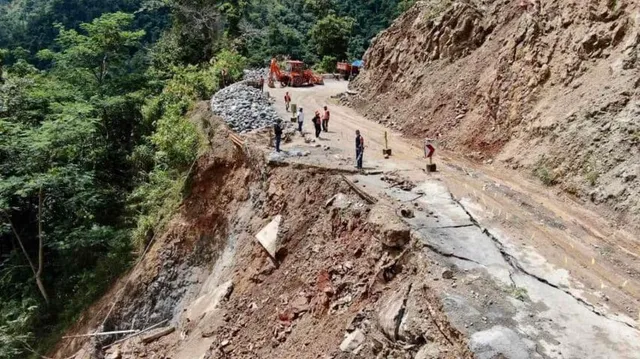
The Department of Public Works and Highways (DPWH) once again met with Japan International Cooperation Agency (JICA) on the implementation of the JICA-grant – Technical Cooperation Project (TCP) on Road Disaster Preventions and Other Countermeasures on Mountainous Roads in the Philippines.

Held on Tuesday, February 14, 2023 at the DPWH Head Office in Port Area, Manila, the meeting was headed by DPWH Senior Undersecretary and JICA-TCP Chairman Emil K. Sadain; Mr. Kuronoma Kenji, Senior Representative of JICA Philippines; DPWH Assistant Secretary and JICA-TCP Project Manager Constante A. Llanes, Jr.; Japan Embassy Representative Matsubra Tomohiro, as well as the representatives and officials of implementing offices.

“This is a timely assembly of experts as the country further strengthens measures that will ensure public safety in case of the “Big One”, and learning from the recent earthquake devastation in Turkey and Syria,” said Senior Undersecretary Sadain.

According to Senior Undersecretary Sadain, the second joint coordinating meeting is a progress assessment of the ongoing implementation of the project in pilot areas of Cordillera Administrative Region (CAR), Regions 7 and 11.

Pilot regions are expected to accomplish the following outputs in the span of two (2) years or until 2025: Output No. 1: Countermeasure Works, Output No. 2: Emergency Response; and Output No. 3: Hazard Mapping while the JICA counterpart shall have Output No. 4: Road Disaster Information Management.

In all pilot regions, topographic survey and geographical survey under Output 1 or Countermeasure Works were either carried out, or is expected to begin within the first quarter. All regions also implemented various slope protection works and currently formulating an emergency response manual, and conducting various workshops and trainings for Emergency Response or Output 2. Pilot road sections were also identified for making hazard maps under Output 3.


Article courtesy of The Department of Public Works and Highways

February 14, 2023

Photo credit: Department of Public Works and Highways
The Japan International Cooperation Agency (JICA), the agency in charge of administering Government of Japan's Official Development Assistance (ODA), is committed to support the Philippines wide ranging infrastructure program focused on socio-economic development.

President Ferdinand R. Marcos Jr. met with JICA President Dr. Tanaka Akihiko wherein the bilateral agency leader reaffirmed commitment to facilitate the steady implementation of ongoing and future economic cooperation projects in the Philippines as one of the top beneficiaries of ODA from Japan.

On his five-day official visit in Tokyo, Japan upon the invitation of Japanese Prime Minister Fumio Kishida, President Marcos was joined in the February 10, 2023 meeting with the JICA Head by members of his official party including former President Gloria Macapagal Arroyo; Senate President Juan Miguel F. Zubiri; House Speaker Ferdinand Martin G. Romualdez; Senator Mark A. Villar; and Secretary Manuel M. Bonoan and Senior Undersecretary Emil K. Sadain of the Department of Public Works and Highways (DPWH).

In light of the “Build Better More” program, the administration of President Marcos intends to maintain strong ties with Japan to provide game changing infrastructure projects designed to better the lives of the Filipino people.

Meanwhile, President Marcos reported at the Philippine Business Opportunities Forum at the Palace Hotel Tokyo a promising Philippine economic performance and wooed top Japanese business leaders to seize emerging investment opportunities in the country.

The Philippine economic team of Department of Finance Secretary Benjamin E. Diokno; Bangko Sentral ng Pilipinas Governor Felipe M. Medalla; Department of Budget and Management Secretary Amenah F. Pangandaman; National Economic and Development Authority Secretary Arsenio M. Balisacan earlier discussed the Philippine economic performance and outlook at the Philippine Business Opportunities Forum.

In a panel discussion on the topic infrastructure and industry at the forum, DPWH Secretary Bonoan together with Department of Trade and Industry (DTI) Secretary Alfredo E. Pascual, Department of Tourism (DOT) Secretary Maria Esperanza Christina Garcia Frasco, and Department of Transportation Secretary Jaime J. Bautista explained some of Philippines massive infrastructure development initiatives taking off from “Build Build Build” program efforts of the previous administration and continued and expanded into “Build Better More” agenda under the President Marcos administration.

President Marcos and Prime Minister Kishida in their meeting concurred on working toward early loan provision for the construction of the Dalton Pass East Alignment Alternative Road, the Central Mindanao High-Standard Highway, and the Second San Juanico Bridge which have available completed feasibility studies under JICA grant.

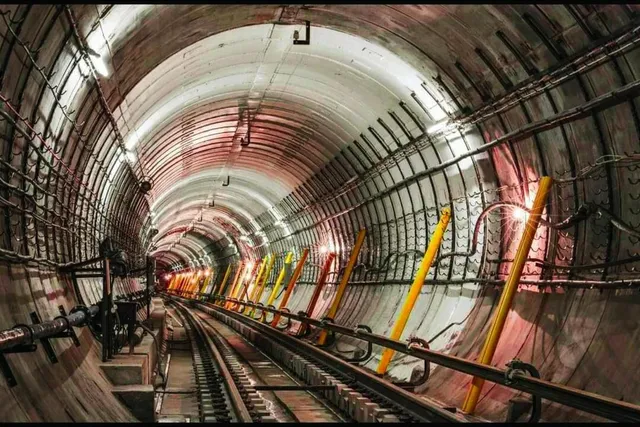
The leaders also affirmed the viability of utilizing the private-public partnership (PPP) scheme in future cooperation for the construction or operation and maintenance of roads; and long-span tunnels & bridges in the Philippines, given the opportunities to leverage the technical expertise of Japanese companies. Both President Marcos and Prime Minister Kishida expressed hope for further implementation of the Memorandum of Cooperation (MOC) of October 2022 for the construction and operation and maintenance of tunnels and related facilities.

On resilience-building against natural disasters and adaptation to climate change, Japan is committed to further support works for the Pasig–Marikina River, preparation of the Parañaque Spillway, and formulation of new projects based on a prospective Davao Flood Control Master Plan to address the issue of frequent floods.

At present, some of the Philippines' biggest infrastructure projects supported by JICA under DPWH portfolio and implemented by the Unified Project Management Office (UPMO) operations headed by Senior Undersecretary Sadain are the widening of 23-kilometer Arterial Road (Plaridel) Bypass Project Phase 3 in the Province of Bulacan; improvement and maintenance of about 1,184-kilometer of arterial national roads under Road Upgrading and Preservation Project (RUPP); 30-kilometer Central Luzon Link Expressway (CLLEX) Project from the connection of Subic-Clark-Tarlac Expressway (SCTEX) and Tarlac-Pangasinan-La Union Expressway (TPLEX) in Balingcanaway, Tarlac City and ends at the Daang Maharlika Highway in Cabanatuan City; construction of a four lane – 45.5-kilometer Davao City Bypass Construction Project including twin tube road mountain tunnel project that will be the longest in the Philippines at 2.3 kilometers.

The Islamic City of Marawi has benefited from a 2-billion yen grant for the design and build of 18.97-kilometer Marawi Transcentral Road Phase 1 under the Programme for the Support to Rehabilitation and Reconstruction of Marawi City.

In support of the government's peace-building initiatives, JICA is also financing the Road Network Development Project in Conflict-Affected Areas in Mindanao (RNDP-CAAM) involving the development, construction, and improvement of about 174.50-kilometer access roads connecting Bangsamoro Autonomous Region in Muslim Mindanao (BARMM) and other regions in Mindanao including another 18.78-kilometer Marawi Transcentral Road Phase 3.

Japan thru JICA has also committed to support the construction of Cebu-Mactan Bridge and Coastal Road Construction Project, which is now under detailed engineering design stage.

To protect flood-prone areas and strengthen the resilience to climate change, four sub-projects were completed under the Flood Risk Management Project for Cagayan River, Tagoloan River, and Imus River.

On-going flood control projects are the channel improvement works for Middle Marikina River including the construction of Manggahan Control Gate Structure and construction of Cainta Floodgate and Taytay Sluicegate at the joining sections of Cainta and Taytay rivers to Mangahan Floodway under the Pasig-Marikina River Channel Improvement Project Phase IV; Flood Risk Management Project for Cagayan De Oro River; and Cavite Industrial Area Flood Management Project.

The Japanese government is also extending financial support for the construction of interchanges on major intersection in Quezon City under the Metro Manila Interchange Construction Project, Phase VI (MMICP-VI) and the Metro Manila Priority Bridges Seismic Improvement Project to strengthen the resiliency of transport network in Metro Manila by improving the durability and safety of Guadalupe and Lambingan Bridges against large scale earthquake.

The proposal to conduct feasibility studies for Liloan Bridge and Butuan Bridge to comprise the Phase II of Urgent Bridges Construction Program for Rural Development (UBCPRD II) has also been submitted for JICA’s consideration.


Article courtesy of the Department of Public Works and Highways
February 14, 2023

Photo credit: South East Asia Infra

The Metro Manila Subway Project (MMSP) is expected to improve living standards, including the riding public, and propel the country’s economic rebound, Transportation Secretary Bautista said Monday.

At the groundbreaking ceremony for the MMSP’s Contract Package 103, Bautista said the big-ticket railway project has far-reaching benefits such as comfort and convenience for commuters, creation of employment opportunities and the Philippines’ economic development.

“Today is another critical step towards that aspiration towards the convenience and comfort of Filipino commuters towards a transport infrastructure that catalyzes economic rebound,” Bautista said.

“The socio-economic benefits of the MMSP even exceeds our expectations." The project is part of President Ferdinand R. Marcos Jr.’s Build, Better, More infrastructure development program.

Bautista vowed an elevated and global standard public transportation for Filipinos.

“We promised President Bongbong Marcos a global-standard transport system,” he said.

Bautista also expressed his gratitude to the Japanese government and the Department of National Defense for supporting the country’s first-ever underground railway. 

“This groundbreaking inside a military camp depicts the overlapping multi-sectoral support for the MMSP. The Secretary of Defense is accompanied by the AFP Chief of Staff and the local chief executive of Quezon City to express their support,” he added.

The Contract Package 103 involves two underground stations and tunnels, including the Anonas and Camp Aguinaldo stations.

Support

Meanwhile, Armed Forces of the Philippines (AFP) chief of staff Gen. Andres Centino said the military strongly supports the project that would greatly boost government efforts to minimize traffic congestion and carbon emissions.

"It is without a doubt that our soldiers, together with the rest of our fellow Filipinos, look forward to the opportunities and the possibilities that come with the completion of this project," he said in a statement Monday.

Meanwhile, Department of National Defense (DND) officer in charge Undersecretary Carlito Galvez Jr. lauded the DOTr for the progress of the MMSP.

"It is a significant milestone for our country that brings the Filipino people closer towards realizing our longtime collective dream and aspiration of having an accessible, affordable, comfortable, and safe mass public transport system," he added.

Billed as the Philippines’ “crown jewel” of mass transit system, the Japan-funded Metro Manila Subway will cut across eight cities that will stretch from Valenzuela City in the northern part of Metro Manila to FTI-Bicutan in Parañaque City in the south with a spur line to NAIA Terminal 3 in Pasay City.

With a total of 33-kilometer route length and 17 stations, the country’s first underground railway system aims to cut travel time between Quezon City and Ninoy Aquino International Airport in Pasay City to just 45 minutes.

Once operational, the railway system can service up to 519,000 passengers daily. (with report from Priam Nepomuceno/PNA)


Article courtesy of the Philippine News Agency

February 05, 2023

Ormoc City Mayor Lucy Torres-Gomez, the chairperson of Eastern Visayas Regional Development Council. (Photo by Ormoc city government)

The Regional Development Council (RDC) will form a task force to prepare a concept note for the Eastern Visayas railway system eyed more than 20 years ago.

RDC chair and Ormoc City Mayor Lucy Torres-Gomez said the region’s highest policy-making body agreed in its special meeting on Jan. 31 to form the task force composed of various national government agencies and local government units.

The proposed body will include members from the Department of Transportation, legislative district offices, the Department of Public Works and Highways, Land Transportation Franchising Regulatory Board, Department of Environment and Natural Resources, National Economic and Development Authority, six provincial government, seven cities, and private sector representatives.

“We need a concept note to get funding for the feasibility study. It is a brief outline of the project we have in mind. This is a requirement to get funding for the feasibility study,” Gomez said.

The official admitted that coming up with a master plan will take years. She, however, expressed optimism that the planning stage will be completed during the first three years of the Marcos administration.

“Nobody can even say where the routes are since the direction depends on the output of the feasibility study. In terms of the station and which phase will be developed first, that is for the study to say,” Gomez added.

A simple version of the concept note will include an introduction, a background, proposed objectives and results and a budget overview.

“The project is ambitious and very expensive, but it will ease transport and experience better mobility. The social and economic impact will be very good. The project has been on the bucket list since 1999 and we hope its time has come,” she told reporters.

Currently, the country has three operational commuter lines operated by the Philippine National Railways (PNR). These are the PNR Metro Commuter Line, located in Metro Manila, the PNR Inter-Provincial Commuter between Laguna and Quezon and the PNR Bicol Commuter Line located in the Bicol Region.


Article courtesy of the Philippine News Agency

February 05, 2023

Photo credit: The Department of Public Works and Highways

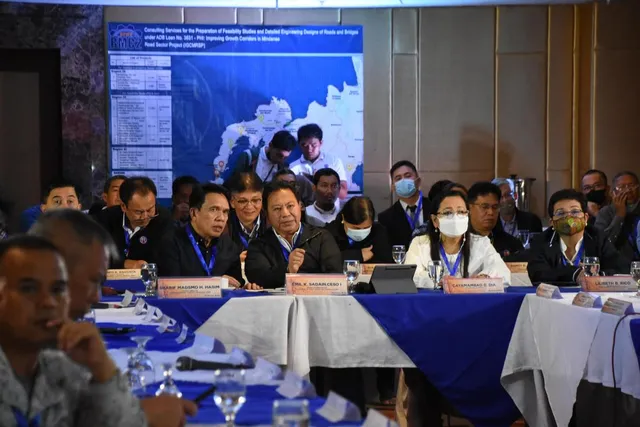
The Department of Public Works and Highways (DPWH) convened a public forum as it continue to engage project stakeholders in the efforts of intensifying infrastructure development in Mindanao towards better economic productivity and boost the sectors of tourism, agriculture and trade to achieve high, inclusive and sustainable growth.

DPWH Senior Undersecretary Emil K. Sadain spearheaded the meeting on February 3, 2023 in Zamboanga City with concerned stakeholders for proper coordination of the proposed 300-kilometer new road development project under Improving Growth Corridors in Mindanao Road Sector Project - Phase 2 funded by Asian Development Bank (ADB) in Zamboanga Peninsula including provinces of Basilan, Sulu and Tawi-Tawi, and Davao City.

According to Senior Undersecretary Sadain, the forum was an opportunity for relevant interested parties to include representatives of government agencies like DBM, NEDA, DENR, NCIP, DAR, DA, DoTR, BFAR, AFP, and PNP; utility service providers; and local government units to learn more about the upcoming road network projects to improve travel and connectivity in Western Mindanao and in Davao City.

Phase 1 of Improving Growth Corridors in Mindanao Road Sector Project, a flagship project of the national government in partnership with ADB covering 151.9-kilometer in Zamboanga Peninsula, was started under President Rodrigo R. Duterte administration and continued and expanded to Phase 2 to support the economic growth through resilient road infrastructure development under the “Build Better More” infrastructure agenda of President Ferdinand R. Marcos Jr.

The meeting has encouraged discussion and exchange of ideas and allowed the public to express any concerns about the proposed scope and component while the project is under feasibility study and detailed engineering design (DED) stage.

Organized by DPWH Unified Project Management Office (UPMO) - Roads Management Cluster 2 (Multilateral) under the auspieces of Project Director Sharif Madsmo H. Hasim and Project Manager Lilibeth B. Rico, the stakeholders meeting was also attended by DPWH Region 9 Director Cayamombao D. Dia; UPMO Project Directors Benjamin A. Bautista, Rodrigo I. Delos Reyes, and Soledad R. Florencio; Stakeholders Relations Service Director Randy R. Del Rosario; OIC-Project Director Najib D. Dilangalen of DPWH BARMM Regional Project Management Office; and Project Managers Emmanuel M. Supe, Olivia M. Baguio, and Evangeline L. Carabal.

Senior Undersecretary Sadain, in behalf of Secretary Manuel M. Bonoan, used the opportunity to thank ADBs consistent assistance in the realization of major infrastructure projects in Mindanao and the stakeholders for their assurance of support in any way possible.

Project consulting firm Oriental Consultants Global presented the overview of project coverage for the Improving Growth Corridors in Mindanao Road Sector Project - Phase 2.

Under DED stage are the 13.6-kilometer Zamboanga City East Diversion Road (with viaduct structure) in Zamboanga City and 2.9-kilometer Isabela City-Malamawi Island Bridge (with approach road) in Basilan Province.

A site visit of the initial alignment identified by the project management team of UPMO Roads Management Cluster 2 and consultants was conducted on February 4, 2023 by Senior Undersecretary Sadain at the Zamboanga City East Diversion Road and viaduct structure.

Meanwhile, projects under feasibility study and detailed engineering design includes 32.6-kilometer rehabilitation/improvement of Zamboanga City – Ipil National Road, Zamboanga City Boundary Section (with exceptions) in Zamboanga City; 90.1-kilometer construction of bypass and diversion road at Jct. Sindangan-Siayan-Dumingag-Mahayag Road to Jct. Liloy-Ipil Road (Molave-Midsalip-Siayan-Tampilisan Section) in Zamboanga Del Norte and Zamboanga Del Sur; construction of 5.7-kilometer Boulevard along Ipil Coastline in Ipil, Zamboanga Sibugay Province; 20-kilometer construction of Mauboh, Patikul-Tanjung, Indanan Diversion Road in Jolo, Sulu; and construction/rehabilitation/improvement of 100-kilometer Sulu Circumferential Road (with exceptions) in Sulu Province.

The feasibility study and DED also covers the 44-kilometer Jct Davao-Bukidnon Road (Calinan Section) – Wangan- Subasta-Tagakpan-Tungkalan-Tagurano-Bayabas-Catigan-Baracatan-Sibulan-Tibolo-Kapatagan Road (viaduct) in Davao City.


Article courtesy of The Department of Public Works and Highways
February 05, 2023

Photo credit: Department of Public Works and Highways
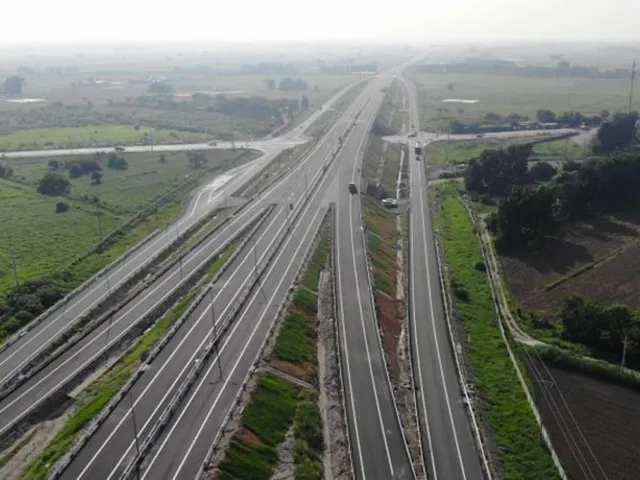
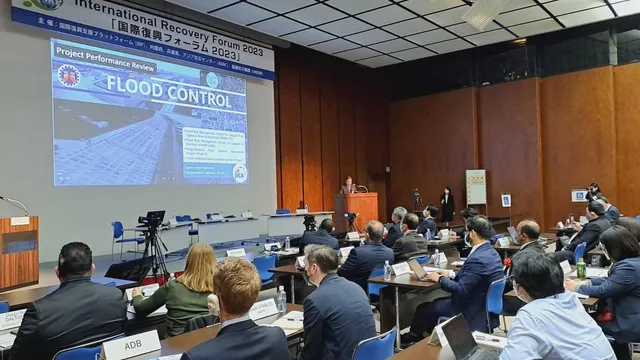
A top official from the Department of Public Works and Highways (DPWH) discussed Philippines’ experiences and learnings and build back better approach from the impact of natural disasters and calamities at an international forum intended to promote collaboration and cooperation among global and regional partners in recovery, rehabilitation and reconstruction.
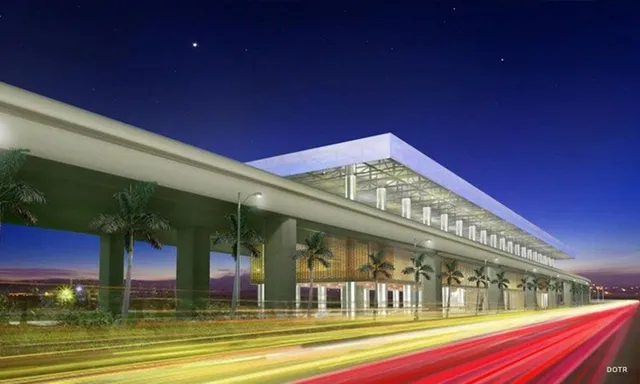
Addressing attendees at the International Recovery Forum (IRF) 2023 held in Kobe, Hyogo, Japan as keynote speaker and panelist, DPWH Senior Undersecretary Emil K. Sadain said that holistic preparedness is needed in building back better and increase the resilience as we emerge from the pandemic crises by integrating disaster risk reduction measures in the restoration of physical infrastructure, and into the revitalization of livelihoods, economies and the environment.

According to Senior Undersecretary Sadain, the Philippine national government together with the local government units instituted a ‘whole-of-government-approach’ of its plans and programs in the implementation of the Build Better More infrastructure development agenda including projects to enhanced capability for disaster preparedness.

The Philippines is a steady partner of the Government of Japan in adopting the Sendai Framework of ‘Building Back Better’ for reducing human and economic loss as a direct result of disasters.

It can be recalled that during the pandemic years of 2020-2021, at least three (3) major flood disaster occurred in the Philippines brought by extremely powerful tropical cyclone that made landfall as a category 5 equivalent Super Typhoon Typhoon Rolly in November 2020 affecting Bicol Region; a powerful and deadly category 4 Typhoon Ulysses also in November 2020 that hardly hit the heart of Central Luzon and triggers massive flooding in the areas of National Capital Region; and Super Typhoon Odette in December 2021 ravaging islands and coastal communities in the Visayas and Mindanao and flooding towns and cities across the country.

The disastrous impact caused by these typhoons to an estimated total of 16 million people in seven regions in the country highlighted the need to continue building resilient infrastructures in the country, added Senior Undersecretary Sadain.

As session panelist on topic “Learning from Experience: Long-Run Recovery from Large Scale Disasters”, the DPWH Senior Undersecretary who formerly served as Chief Implementer of the Build Build Build Program of the President Rodrigo Roa Duterte administration reported that infrastructure development has been a priority of the past two (2) administrations to increase the productive capacity of the economy, create jobs, increase incomes and strengthen the investment climate leading to sustained exclusive growth.

He enumerated some of the pre-disaster investment projects for risk reduction such as the Japan International Cooperation Agency (JICA)-assisted Pasig Marikina River Channel Improvement Project, now on its fourth phase of implementation and with the Mangahan Floodway and the river channel improvement for a length of 31 kilometers that significantly reduced the inundation and economic damage of Typhoon Ulysses in the Metro Manila Area.

At present, a total of 13 DPWH-implemented Infrastructure Flagship Projects are under Official Development Assistance (ODA) financed by the Government of Japan thru JICA namely Flood Risk Management Project for Cagayan River, Tagoloan River and Imus River (FRIMP-CTI); Flood Risk Management Project for Cagayan de Oro River (FRIMP-CDOR), Pasig Marikina River Channel Improvement Project, Phase 4; Cavite Industrial Area Flood Management Project (FRIMP-CIA); Arterial Road Bypass Project, Phase III (Plaridel Bypass); Road Upgrading and Preservation Project (RUPP); Central Luzon Link Expressway (CLLEX) Project, Phase I; Road Network Development Project in Conflict-Affected Areas in Mindanao; Davao City Bypass Construction Project; Program for the Support to Rehabilitation and Reconstruction of Marawi City and its Surrounding Areas; Cebu-Mactan 4th Bridge and Coastal Construction Project; Metro Manila Interchange Construction Project, Phase 6 (MMICP-VI); and Metro Manila Priority Bridges Seismic Improvement Project (Guadalupe Bridge and Lambingan Bridge).

The annual International Recovery Forum event with this year theme: ‘Building Back Better and Long-Term Recovery Outcomes: Aspirations for a Resilient and Sustainable Future’ was also participated by Project Director Ramon A. Arriola III and Project Manager Jerry A. Fano of the DPWH Unified Project Management Office – Flood Control Management Cluster.

Meanwhile, the DPWH officials efficiently maximize time in Japan with knowledge exchange, and exposure on the utilization of technology by visiting the following projects in Osaka: Osaka Prefecture where retarding basin similar to the Imus Retarding Basin in Cavite and river channel improvement projects are implemented as countermeasures against flooding; and the underground river flow channels and comprehensive flood control measures for the Neya River Basin known as Neyagawa Underground River Project which is similar to the proposed underground structure of Parañaque Spillway to connect Laguna Lake to Manila Bay and avoid spilling of lake water into low-lying communities;

The official Philippine delegation to Japan also gained know-how on water resources management, dam operation, facilities and safety management system with an assessment visit at Amagase Dam in Kyoto which was the very first dam built in 1964 on biggest rivers of Yamatogawa and Yodogawa in west Japan primarily for flood control, water supply and hydroelectric generating power.

This is particularly important as the DPWH will be planning complimentary flood control retarding basin in the upper Marikina gorges that will regulate the storing inflow water of the ongoing Upper Wawa Dam reservoir, said Senior Undersecretary Sadain.


Article courtesy of the Philippine News Agency

February 01, 2023

Photo credit: The Department of Public Works and Highways
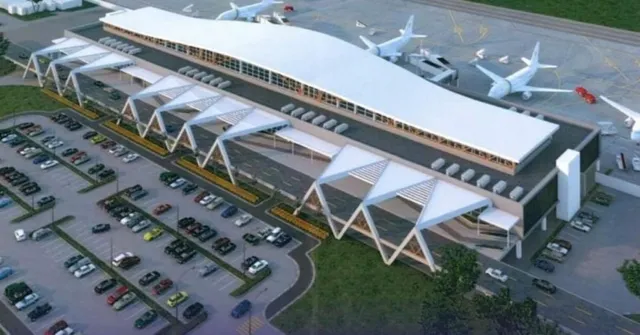
The Department of Public Works and Highways (DPWH) on Monday said three major projects under the Luzon Spine Expressway Network (LSEN) Program are set to be completed this year.

During the Philippine Development Plan (PDP) 2023 - 2028 Forum held at the Philippine International Convention Center (PICC) in Pasay City, DPWH Secretary Manuel Bonoan said these are the NLEX-SLEX Connector Road, Cavite-Laguna Expressway and Central Luzon Link Expressway, Phase I.

Of the soon-to-be-completed undertakings, the PHP14.94-billion Central Luzon Link Expressway Phase I is set to be finished in March as the project is 97 percent complete.

Once the 30-kilometer, four-lane expressway from Tarlac City to Cabanatuan City, Nueva Ecija is completed, the travel time between Tarlac City and Cabanatuan City will be reduced from 70 minutes to 20 minutes and is projected to benefit around 11,200 motorists per day.

The whole project was funded under the Japan International Cooperation Agency (JICA) amounting to PHP249 billion. The construction started in March 2016.

On the other hand, the NLEX-SLEX Connector Road worth PHP12.20 billion funded under Public-Private Partnership (PPP) Program target completion is December 2023.

He said civil works is 69 percent complete, the right of way (ROW) acquisition is 94 percent complete while Section 1 (Caloocan – Espana) is targeted to be completed in April 2023.

The project is an eight-kilometer, four-lane elevated expressway extending the NLEX southward from the end of Segment 10 in C3 Road, Caloocan City to PUP Sta. Mesa, Manila and connecting to the Skyway Stage 3, and mostly traversing along the PNR rail track.

Upon completion, the travel time from SLEX to NLEX will be reduced from 2 hours to just 20 minutes. It is projected to benefit 35,000 motorists per day.

The construction of the project began in May 2019.

Another project that is set to be finished before the end of the year is the Cavite-Laguna Expressway, a 44.58-kilometer expressway connecting the CAVITEX in Kawit, Cavite province and SLEX- Mamplasan interchange in Biñan City, Laguna province.

The project’s civil works is 59 percent complete while the ROW acquisition for the Laguna and Cavite side are at 99.8 percent and 65.07 percent completed, respectively. It started construction in July 2017.

Bonoan added that the PHP35.74-billion project is also funded via the PPP.

Upon its completion, it will reduce travel time between CAVITEX and SLEX from 1 hour and 30 minutes to just 45 minutes, and spur economic growth in the provinces of Cavite and Laguna.

The LSEN program involves the construction of 1,213 kilometers of expressways/high standard highways in Luzon.

Once these projects are completed, the travel time between Ilocos region and Bicol region will be reduced from 20 hours to just nine hours.


Article courtesy of the Philippine News Agency

January 30, 2023

Photo credit: DOTr

The Department of Transportation (DOTr) will work closely with the contractor of the Philippine National Railways (PNR) Clark Phase 2 project to ensure that issues are addressed after its projected completion date was delayed by eight months.

In a statement on Monday, the DOTr said the project, initially slated for completion in June 2024, has been delayed until June 2025 due to the delay in the turnover of the land to project contractor POSCO Engineering & Construction.

“Before the 36-hectare site was turned over by the government to POSCO, several fruit-bearing trees were cut down, causing the delay,” it said.

About 48 buildings and facilities are expected to be built by POSCO at the project site, meant to be the Clark Depot of the North-South Commuter Railway (NSCR).

“As of December 31, 2022, more than 33% of the planned construction has been completed,” it said.

In addition to buildings and facilities, the Clark Depot will have 33 stabling tracks to serve as the parking areas for the trains and 12 other tracks to access maintenance facilities.

During a site visit at the project site, DOTr Secretary Jaime Bautista said the Clark Depot is where the operations control center will be located which will serve as the “heart of operations” of the rail service.

“It is important that we complete this as planned and on time. I know that there are issues that need to be resolved. The DOTr will work closely with [the contractor], so we can fix problems and address issues,” Bautista said.

The 53-kilometer PNR Clark Phase 2 is the second leg of the NSCR and will link multiple cities and municipalities in Central Luzon with Metro Manila.

Funded by the Asian Development Bank, the project is seen to cut travel time between Malolos City in Bulacan province and Clark, Pampanga province from 1.5 hours to 30 minutes.

This part of the NSCR also includes the Airport Railway Express Service that will connect Makati to the Clark International Airport through a 55-minute train ride.


Article courtesy of the Philippine News Agency

January 30, 2023

Photo: The design of the new passenger terminal building of the Daniel Z. Romualdez Airport in Tacloban City. The airport will be an international airport by 2025 with ongoing and future projects lined up to improve the facility, an official of the Civil Aviation Authority of the Philippines (CAAP) here said. (Photo from FB page of Martin Romualdez)

The Daniel Z. Romualdez (DZR) Airport here will become an international airport by 2025 with ongoing and future projects lined up to improve the facility, according to an official of the Civil Aviation Authority of the Philippines (CAAP) here.

With available funds for development this year and commitment from the national government to pour in more budget in the future, the facility will elevate its status from a major domestic airport to an international airport by 2025, said CAAP Eastern Visayas Area Manager Danilo Abarreta in an interview on Tuesday.

The construction of new passenger terminal building Phase 1 with a budget of PHP731.6 million is now 47.41 percent complete. The second phase of the project will start early this year with a budget of PHP700 million, according to CAAP.

“The total cost to develop the terminal building is PHP1.96 billion. It will have a total area of 36,298.98 square meters and can accommodate 1,670 passengers. The building design is inspired by San Juanico Bridge and city’s coastal mountain landscape merged with Taklub fishcage,” Abarreta said.

The existing passenger terminal building refurbished after Super Typhoon Yolanda (Haiyan) has a 600-seating capacity.

Funding to fully complete the building is already available, to include the PHP1.42 billion release for 2023 earlier announced by the Department of Budget and Management.

Abarreta said the first phase in the PHP49.9 million construction of control tower structure is now complete. Up for implementation is the second phase which involves the PHP17.73 million installation of communication equipment.

The budget to acquire 131,539 square meters of lot is already available this year, according to the official. This will allow the expansion of the runway length from 2.1 kilometers to 2.5 kilometers. The runway extension project will be implemented in 2024.

“The medium-term goal is to meet the international runway length standards to accommodate international flights come 2025,” Abarreta told the Philippine News Agency.

The Department of Public Works and Highways recently completed the PHP46 million new access road leading to the airport.
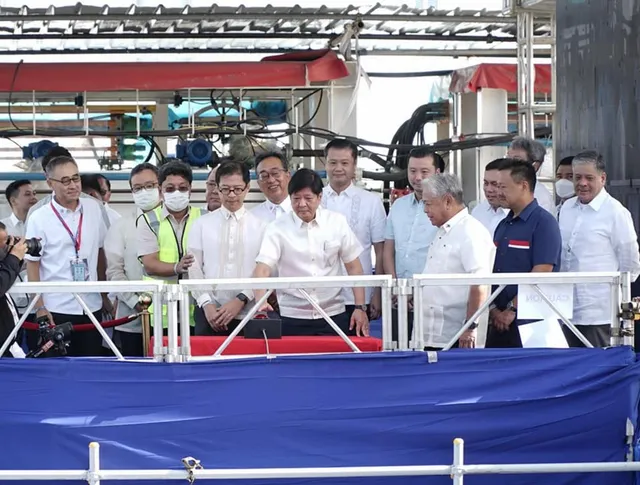
Between 2023 to 2027, the Department of Transportation aims to complete and operationalize the new terminal building and control tower, lengthen the existing runway, provide runway end safety area of 200 meters on both ends, complete the construction of the new taxiway leading to the new apron, among others.

The DZR Airport is one of the country’s busiest with 36 daily flights between Manila and Cebu.

The airport in the regional capital was ranked as the country’s 7th busiest as of September 2022 with 975,127 million inbound and outbound passengers. The airport is busier than the other eight international airports in the country.

Named after Daniel Z, Romualdez, a former speaker of the House of Representatives, the airport serves as the main gateway from Manila and Cebu to Eastern Visayas. It is located in the city’s San Jose district.


Article courtesy of the Philippine News Agency

January 30, 2023

Finance Secretary Benjamin Diokno (File photo courtesy of DOF)

The proposed sovereign wealth fund of the Philippines is another option to help finance the government’s infrastructure requirements, Finance Secretary Benjamin Diokno said Thursday.

During the Philippine economic briefing attended by economic managers, officials of financial institutions, and foreign investors, among others, in London, United Kingdom, Diokno said the wealth fund is “designed to fund initially, or largely our infrastructure needs for generation.”

He said the government wants to take advantage of the availability of funds onshore, which is on top of the financing that the government can borrow from such multilaterals as the World Bank (WB) and the Asian Infrastructure Investment Bank (AIIB).

“But we have a lot of money within the country. For example, had we used the Malampaya Fund to fund this wealth fund, that’s about USD20 billion. We could have used that,” he said.

The Malampaya Fund consists of what the government gets from the profits of the Malampaya Deep Water Gas-to-Power project in Palawan. It is used for energy resource development and exploration program of the estate, among others.

Other possible funding sources for the proposed wealth fund are dividends from government-owned and -controlled corporations (GOCCs), as well as gains from the privatization of state assets, Diokno said.

The government, he said, could also tap revenues collected from the mining sector, given its recent opening after being closed for about a decade.

“So it’s another funding source for our big infrastructure needs. That’s basically it,” he said.

Budget Secretary Amenah Pangandaman has said the Philippines is considering a wealth fund similar to the Indonesia Investment Authority.

“So it’s more of funding our development, big-ticket infrastructure projects,” she said.

January 11, 2023

President Ferdinand R. Marcos Jr. (center) presses the button to launch the Metro Manila Subway Project's tunnel boring machine in Barangay Ugong, Valenzuela City on Monday (Jan. 9, 2023). It marks the start of the construction of the tunnels for the PHP488-billion Metro Manila subway, which will span 33 kilometers across seven cities from Valenzuela City to Pasay City. (PNA photo by Alfred Frias)

President Ferdinand R. Marcos Jr. on Monday reiterated his vow to continue upgrading the country’s transport system to relieve commuters of their daily ordeals due to traffic congestion.

“We will continue to invest and improve our transportation system as well as pursue more projects in the years to come so that Filipinos can gain greater access to places of work, commerce, recreation, and other vital areas,” Marcos said in his speech during the launch of the Metro Manila Subway Project’s (MMSP) tunnel boring machine (TBM) at its depot in Barangay Ugong, Valenzuela City.

“Having an effective and efficient transportation system will have multiplier effects on employment, the economy, our society, it will bring comfort, convenience, an easier life for all,” he added.

Marcos said developments on the country’s first subway system allow Filipinos to look forward to “better days” as it would also spur economic development and job creation.

He thanked both the public and private sectors for working to ensure the realization of what he described as an “ambitious” endeavor.

In particular, he expressed gratitude to the Japanese government and the Japan International Cooperation Agency (JICA) for being active partners in the fulfillment of the Philippine infrastructure program.

According to Marcos, the Philippines would not have fulfilled its many infrastructure projects without the assistance of JICA.

“This tunnel boring machine highlights Japan’s expertise and technology and trailblazing contributions in the modern world and thus I am confident that they will help us shape our railway infrastructure and keep them at par with the highest international standards,” he said.

He expressed hope the subway would be completed on time.

“I hope that both of you and the DOTr (Department of Transportation) will not waver on your commitment to finish the contract package by the end of 2027 to ensure that Filipinos will get to enjoy the project at the soonest possible time,” he said.

Marcos likewise sought the public's continued patience, trust and support as big-ticket projects take years to complete.

“Let the launching of this tunnel boring machine become a testament to this administration’s commitment to continue to projects of the previous administration and more importantly build better more,” he added.

He described the launch of the TBM as “a very apt beginning” for a year with renewed vigor and commitment to his administration’s mission to improve the lives of Filipinos.

“We also gain inspiration from the selfless individuals who constantly strive to turn our vision for the transportation sector into a grand reality,” he said.

The PHP488.48-billion Metro Manila subway will stretch for about 33 kilometers across seven cities, from Valenzuela City to the Food Terminal Inc. in Bicutan, Parañaque City, with a “spur line” to Ninoy Aquino International Airport (NAIA) Terminal 3 in Pasay City.

It will be able to serve over 519,000 passengers daily once completed.

The project is also expected to generate 18,000 jobs and boost the economic activities of communities in Metro Manila.

‘New dawn of PH transport’

Matsuda Kenichi, minister and deputy chief of mission of the Embassy of Japan in the Philippines, believes that a “new dawn” is now “on the horizon” following developments on the Metro Manila subway project.

The idea was first proposed in 1973 under the then Urban Transport Study in the Manila Metropolitan Area.

“The plan was first initiated during the time of the late President Marcos Sr. Decades later, it can be considered a legacy that is now in the hands of His Excellency President Marcos Jr. to fulfill,” Kenichi said.

He congratulated Marcos and DOTr Secretary Jaime Bautista for their dedicated efforts and leadership despite the coronavirus pandemic.

Kenichi assured that the Japanese government will continue to work with the Philippines so that Filipinos can enjoy the benefits of a subway system.

“Please let me assure you that we, the Government of Japan, will continue to cooperate in this flagship project in a full-speed ahead manner until such time that Filipinos can finally enjoy the convenience of a subway,” he added.

‘Point of no return’

Bautista said the beginning of tunnel boring activities marks a “point of no return” for the project.

“We are going full speed ahead to complete the country’s first subway,” Bautista said.

He noted that there is an “urgent need” for improved railway transportation in the country, particularly to serve passengers at NAIA.

“During the recent holiday rush when I inspected NAIA Terminal 3, I discovered the urgent need of providing a railway station as one of the multi-modal land-based transport options for arriving passengers,” he said.

He cited President Marcos’ support for the project and the efforts of the Duterte administration.

“The launching of this tunnel boring machine become a testament to this administration's commitment, to continue the project of the previous administration, and more importantly, to build better more," he said.

He thanked the Japanese government and JICA for helping fund the project through its official development assistance loans.

The launch marks the start of construction for the MMSP’s Contract Package 101 (CP101), one of the project’s seven civil work contracts.

CP101 involves the construction of three underground stations in Quezon City and an additional semi-underground station in the northernmost part of the Valenzuela City depot.

In a press bulletin, the DOTr said a total of six TBMs would be used during the tunnel-boring phase of CP101, while stations will be completed using the “top-down” construction method.

Around 1.2 million cubic meters of soil are expected to be dug by the TBMs for the partial operability section of CP101, equivalent to 500 Olympic-size swimming pools.

“For the tunnels alone, the excavation will be around 711,000 cubic meters or an equivalent of 285 Olympic-size swimming pools,” it said.

A total of 7,419,940 cubic meters of soil, equivalent to 2,500 Olympic-sized swimming pools, will be excavated for the entire alignment of the MMSP.

Bridging the gap

In a statement, Senator JV Ejercito said the Philippines is years behind its neighbors in terms of infrastructure development and transportation modernization but the subway project will soon reduce the gap. 

He said improving the country’s transportation system, especially railways, will boost efforts to revive the economy after being battered by the Covid-19 pandemic.

“With transportation, with railway systems, more than airports, movement of people, movement of goods will be easier. That will attract, of course, foreign investments. That will make doing business easy and more convenient,” said Ejercito, who also graced the event. “Transportation modernization and infrastructure development will cost a lot but the returns are enormous.” (with reports from Raymond Carl Dela Cruz, Leonel Abasola/PNA)

January 09, 2023

The infrastructure program of the administration of President Ferdinand R. Marcos Jr. got a boost following the signing of six bilateral agreements and one project implementation between the Philippines and China on Wednesday.

Finance Secretary Benjamin Diokno, who signed the agreements and completion documents on behalf of the Philippine government, said they welcome China’s support to the government’s "Build Better More" infrastructure agenda.

“The signing of these agreements demonstrates the strong commitment between China and the Philippines to deepen bilateral cooperation through infrastructure development,” he said in a statement on Thursday.

The signing event, held at the Great Hall of the People in Beijing, was witnessed by President Ferdinand R. Marcos Jr. and Chinese President Xi Jinping  as part of Marcos’ three-day state visit to the world’s second-largest economy.

The Department of Finance (DOF), on Thursday, said four of the loan agreements have an aggregate amount of USD201.8 million (around PHP11.3 billion) and were co-signed by Export-Import Bank of China (China Eximbank) Chairman Wu Fulin.

These agreements will fund the Priority Bridges Crossing Pasig-Marikina River and Manggahan Floodway, it said.

The latest financing from China brought to USD1.06 billion its total loan commitments for ongoing projects in the Philippines, it said.

Relatively, DOF said the Framework Agreement for the implementation of the Priority Bridges Crossing Pasig-Marikina River and Manggahan Floodway under Chinese Government Financing, which was co-signed by China International Development Cooperation Agency (CIDCA) Chairman Luo Zhaohui, is a precursor agreement that gives the Philippines access to the Renminbi (RMB)-denominated government concessional loan (GCL) facility portion of the loan.

The Finance Department said Diokno and Luo also inked the agreement on economic and technical cooperation between the two governments, worth 1.5 billion renminbi (around PHP12.2 billion) for projects to be determined by both countries “based on the development plan and specific needs of the Philippine government.”

Also, Diokno signed along with Chinese Minister of Commerce Wang Wentao the handover certificate for the Binondo-Intramuros and Estrella-Pantaleon Bridge – both of which were financed by the Chinese government and were completed on April 13, 2022 and Sept. 17, 2021, respectively.

“The two bridges, spanning Manila, Makati, and Mandaluyong, seek to improve the capacity and efficiency of the road transport network in Metro Manila,” the DOF said. 

January 09, 2023

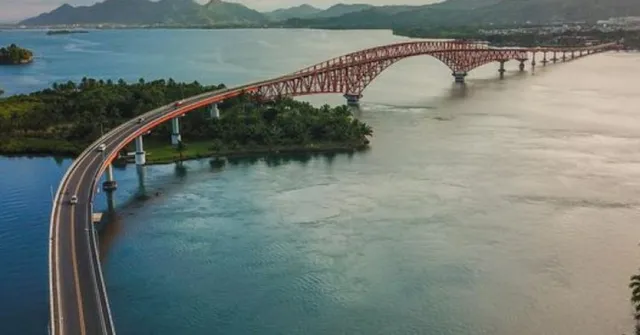
The aerial view of the San Juanico Bridge that connects the islands of Leyte and Samar. The proposed second San Juanico Bridge has gained support from the Japan International Cooperation Agency (JICA) as one of the priority projects in the region, an official of the National Economic Development Authority said on Tuesday (Jan. 3, 2023). (Photo courtesy of Lyle Arañas)

The proposed second San Juanico Bridge has gained support from the Japan International Cooperation Agency (JICA) as one of the priority projects in the region, an official of the National Economic Development Authority (NEDA) said on Tuesday.

NEDA Eastern Visayas Regional Director Meylene Rosales said that during the visit of JICA team to the region last month, its key officials led by Senior Representative Kuronoma Kenji have expressed intention to provide technical and financial support to the project.

“Although JICA has yet to commit to funding the construction of the proposed Second San Juanico Bridge, they are already involved in preparatory activities for the program, such as the conduct of the pre-feasibility study for the bridge, which found that construction will have a favorable impact to the region,” Rosales said in a statement.

In 2022, the Department of Public Works and Highways (DPWH) announced that the national government will need PHP9.17 billion to build the second San Juanico Bridge connecting the islands of Leyte and Samar.
The government is still looking for sources to finance the proposed bridge.

The project was tagged as a priority after it passed the 10 percent economic internal rate of return set by NEDA.

The proposed budget will primarily be used for the construction of the bridge superstructure, substructure, embankment, concrete girders, and relocation of power transmission lines, according to a study by DPWH and JICA.

The proposed bridge will connect the towns of Babatngon, Leyte, and Sta. Rita, Samar.

It will cross Janbatas Channel, a portion of the San Juanico Strait that separates the region’s two major islands.

The proposed bridge will have a length of 1.24 kilometers that starts in Guintigui-an village in Babatngon, Leyte, and will end in San Pascual village in Sta. Rita, Samar.

“It is very critical that we have an alternative to the San Juanico Bridge. You cannot travel by land from Luzon to Mindanao without passing through us. That’s why it is not only people that pass through the bridge, just as importantly, cargo also passes through,” Rosales added.

In 2019, traffic volume on San Juanico Bridge is 7,200 vehicles daily, close to its 10,000 daily capacity.

In 2030, the figure is expected to increase to 10,900 daily, more than its limit. The number is expected to reach 15,900 in 2040.

Built in 1973, the existing 2.16-kilometer San Juanico Bridge has been encountering issues, such as aging and high maintenance costs.


Article courtesy of the Philippine News Agency

December 30, 2022

Photo credit: Department of Public Works and Highways
The expressway project in Central Luzon at the connection of Subic-Clark-Tarlac Expressway (SCTEX)/Tarlac-Pangasinan-La Union Expressway (TPLEX) in Tarlac City, Tarlac is targetted by the Department of Public Works and Highways (DPWH) to be operational up to San Juan, Aliaga, Nueva Ecija toward the first half of 2023.
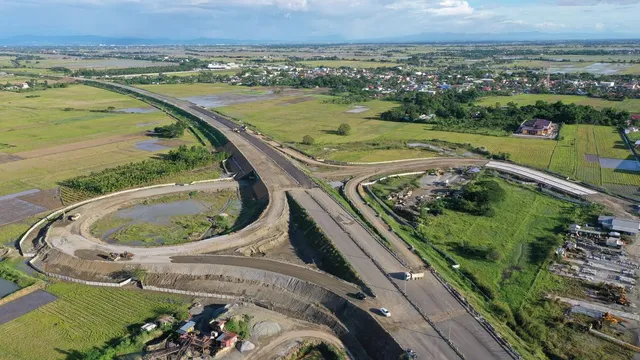
In his report to DPWH Secretary Manuel M. Bonoan, Senior Undersecretary Emil K. Sadain said that the DPWH Unified Project Management Office - Roads Management Cluster 1 (DPWH-UPMO RMC1) is currently working on the completion of additional seven (7) kilometer segment from Guimba-Aliaga Road intersection to San Juan Interchange that will extend to 25 kilometers the already accessible 18-kilometer section of the Central Luzon Link Expressway (CLLEX).

The DPWH UPMO RMC 1 team with the contractors and consultants have worked hard to overcome challenges along the way, such as bad weather, right of way issues, difficulty in the transport of construction materials, and Covid-19 impact that caused some delays, added Senior Undersecretary Sadain.

Other than the four (4)-lane two (2)-way expressway with design speed of 100 kilometers per hour, DPWH is also undertaking the construction of three (3) interchanges namely Zaragoza, Aliaga and San Juan that will allow motorists from the secondary and provincial roads to access CLLEX.

When fully completed, this 30-kilometer CLLEX Project will facilitate fast, safe, comfortable and reliable means of transport in Central Luzon as it form an important east-west link for the expressway network of Region 3 to ensure a continuous seamless traffic flow for the motoring public from Metro Manila and vice versa passing thru NLEX, SCTEX/TPLEX.

This project is part of the government’s vision of easing traffic congestion and will shorten the usual travel time of 70 minutes between Tarlac City and Cabanatuan City to just 20 minutes.

The project is one of the key infrastructures with funding assistance from the Government of Japan thru Japan International Cooperation Agency (JICA) and is included in the Luzon Spine Expressway Network projects aimed at reducing travel time from the northernmost part of Luzon, Ilocos, to the southern most part, Bicol, by over 50 percent via the construction of high standard highway network.

In his inspection on December 19, 2022 together with Project Director Benjamin A. Bautista, Senior Undersecretary Sadain has instructed the DPWH UPMO RMC 1 project supervision team of Project Engineers Manuel R. Monfort, Juancho Hernandez, and Albert Manuel and the contractors to put more resources in the project and accelerate their work.

The DPWH-UPMO together with Nueva Ecjia First and Second District Engineering Offices are also continuously working on the processing of right of way claims.

Delayed reimbursement or payment of affected property is due to difficulty of right of way claimants to comply with all the documentary requirements or problems on submitted papers establishing proof of ownership and others, most common of which are cancellations of encumbrance/s on the land titles and payment of corresponding estate taxes for the registered deceased landowners and the change of creditor’s name.

December 07, 2022

Photo credit: Department of Public Works and Highways
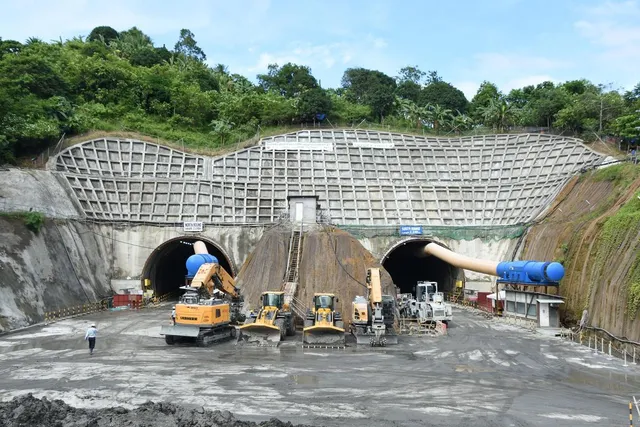
The Department of Public Works and Highways (DPWH) maintains a keen focus in partially opening by 2024 the first 10.7-kilometer central portion of the 45.5-kilometer Davao City Bypass Construction Project by accelerating on-going excavation activities in the construction of twin tube road mountain tunnel.

In an inspection on Thursday, December 1, 2022, DPWH Senior Undersecretary Emil K. Sadain expressed optimism that excavation works for the 2.3-kilometer soon to be first-ever long-distance mountain tunnel in the Philippines will be completed by December 2023.

The Davao City tunnel, with a north portal in Barangay Waan and south portal at the other end in Barangay Matina Biao, is a major component of the 10.7-kilometer contract package 1-1.

DPWH Senior Undersecretary Sadain in his report to Secretary Manuel M. Bonoan said that the joint venture contractor Shimizu-Ulticon-Takenaka led by Project Director Akira Mito have so far excavated, sprayed concrete or “shotcrete”, and installed steel ribs support reinforcement and rockbolts on the tunnel distance of 332 meters on northbound and 247 meters on southbound for south portal while progress for north portal is at 292 meters on southbound and 232 meters on northbound directions.

“We are fast-tracking the simultaneous construction of the road mountain tunnel in four (4) areas of its north and south portals”, added Senior Undersecretary Sadain.

The tunnel construction works for the Davao City Bypass Construction Project started at north portal on November 19, 2021 for southbound direction, and on December 10, 2021 for the northbound direction.

Meanwhile, excavation activities from opposite end at south portal commenced on May 12, 2022 for northbound direction and on June 9, 2022 for southbound direction.

After the activities at north portal was temporarily halted by water seepage on the tunnel roof, the use of Japanese waterproofing technology and materials has helped the DPWH and its contractor addressed this problem.

Other than the tunnel, contract package 1-1 involves the construction of four-lane road with a length of 7.9 kilometers; three (3) pairs of bridges with a total length of 500 meters including the Davao River Bridge; two (2) underpasses and two (2) overpasses; 12 waterways culverts; and four (4) at-grade intersection.

This on-going contract package 1-1 costing ₱13.23 Billion is financed by Special Terms for Economic Partnership (STEP) Loan between Philippines and Japan International Cooperation Agency (JICA) under loan agreement numbers PH-P261 and PH-P273.

The Davao City ByPass Road Construction Project is being implemented by DPWH Unified Project Management Office - Roads Management Cluster 1 (Bilateral) headed by Project Director Benjamin A. Bautista and under the on-site supervision and monitoring by Project Manager Joselito B. Reyes and Project Engr. Juan M. Diña Jr. with Nippon Koei – Katahira - Nippon Engineering - Philkoei as engineering consultants.

Once completed, the entire bypass road will slash travel time between Toril, Davao City and the northern Panabo City, Davao Del Norte to under 49 minutes from the usual more or less two (2) hours via Maharlika Highway.


Article courtesy of the Department of Public Works and Highways