

March 28, 2023

Photo credit: Department of Public Works and Highways

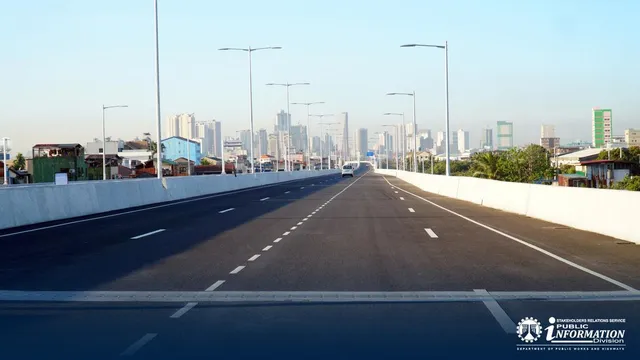
President Ferdinand R. Marcos Jr. on Monday, March 27, 2023 led the ceremonial inauguration of the first section of the NLEX-SLEX Connector Road Project from C-3 Road in Caloocan City to España Boulevard, Manila.

Joining the President were Department of Public Works and Highways (DPWH) Secretary Manuel M. Bonoan, Department of Transportation Secretary Jaime Bautista, Metro Pacific Tollways Corporation (MPTC) Chairman Manuel Pangilinan, MNTC President Rodrigo Franco, NLEX Corporation President J. Luigi Bautista, and various local government unit officials.

According to DPWH Secretary Bonoan, the opening of the initial section stretching 5.15 kilometers is expected to decongest traffic along busy Manila roads, most specifically along España Boulevard, Abad Santos Avenue, Rizal Avenue, and Lacson, Avenue.

“The newly-opened section will significantly cut travel time between Caloocan and Manila to just five (5) minutes, and will cater to cars, buses, trucks, and motorcycles with displacement of 400cc and above,” said Secretary Bonoan.

Citing a report from MNTC, Secretary Bonoan added that civil works for NLEX-SLEX Connector’s second and final section is currently at 42 percent. The second section starts from España Boulevard to PUP Sta. Mesa, Manila and is 2.75 kilometers in length.

When completed, the approximately 8-kilometer, 4-lane toll road will serve around 35,000 motorists daily, connecting NLEX and SLEX through C3 Road in Caloocan and Skyway Stage 3 in Sta. Mesa, Manila.


Article courtesy of the Department of Public Works and Highways

March 22, 2023

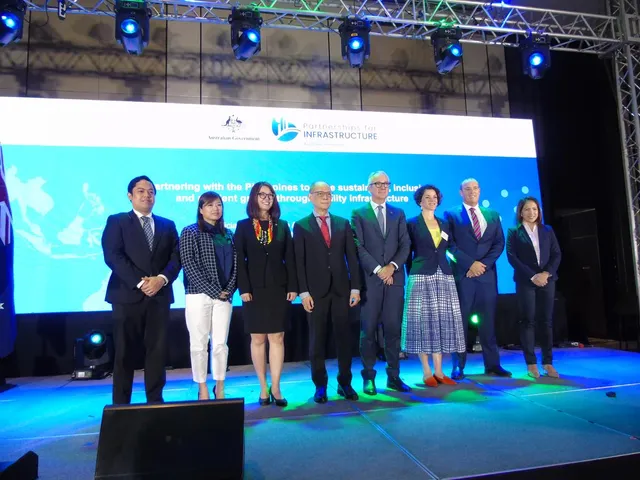
As the Marcos administration becomes bullish in utilizing a public-private partnership (PPP) model in infrastructure projects, the Australian government will be providing its technical expertise in rolling out infrastructure projects under the PPP.

Australian Ambassador to the Philippines Hae Kyong Yu PSM told the Philippine News Agency in an interview at her residence Wednesday that the embassy will be launching the Partnerships for Infrastructure (P4I) on March 24.

“Infrastructure is a big area that the Philippines is focusing on, and I know President (Ferdinand R.) Marcos (Jr.) has announced that he wants to utilize PPP more where it’s possible. So we are working closely with the Philippine government to share with them how Australia has done it,” Yu said.

P4I is an Australian government initiative that brings together experts from the public and private sectors as well as the academe to help Philippine government agencies involved in infrastructure development in the preparation stage of projects that would be under a PPP model.

“We can help them with all the project preparation stage. How you do actual cost-benefit analysis of potential projects, and then how you prepare documents for possible procurement, tender processes, and things like that,” the envoy cited.

She said that aside from the PPP Center, the P4I also aims to closely work with other agencies including the Department of Transportation, the Department of Energy, the Department of Finance, and the National Economic and Development Authority (NEDA), among others.

Yu added that the Australian government will be closely working with the administration through the P4I in meeting its diverse infrastructure requirements, including roads, transport, energy, and public investment management.

The Australian envoy said a number of Australian companies have been involved in infrastructure projects in the country.

Early this month, NEDA Secretary Arsenio Balisacan announced that the NEDA Board approved PHP9 trillion worth of flagship infrastructure projects, with 45 of these projects possibly being funded through PPPs.

“The government shall harness the financial and technical resources of the private sector, which allows the public sector to allocate its funds for greater investment in human capital development, especially to address the scarring in health and education due to the pandemic, and provided targeted assistance that protects vulnerable sectors from economic shocks,” Balisacan had said. By Kris Crismundo


Article courtesy of the Philippine News Agency

March 21, 2023

Photo credit: Department of Transportation

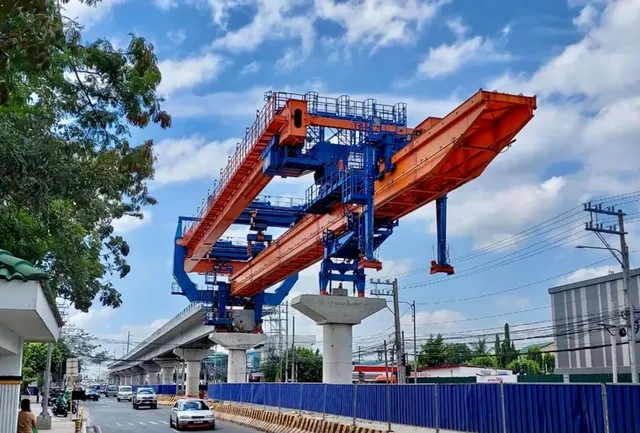
Several big-ticket infrastructure projects in the transportation sector have been approved or are already being implemented by the administration of President Ferdinand R. Marcos Jr., the Department of Transportation (DOTr) reported Monday.

In a statement, the DOTr said the Cebu Bus Rapid Transit Project, Davao Public Transport Modernization Project, EDSA Greenways, the Light Rail Transit Line 2 (LRT-2) West Extension, and the Light Rail Transit Line 1 (LRT-1) Cavite Extension are all ongoing as of March 9 according to the National Economic and Development Authority (NEDA).

These projects are among the 67 infrastructure flagship projects (IFP) that have been greenlit or are already underway out of the 194 high-impact projects under Marcos’ "Build Better More" program.

In the rail sector, these approved and ongoing projects include the Metro Manila Subway Phase 1, Mindanao Rail Phase 1, Metro Rail Transit Line 3 (MRT-3) rehabilitation, Metro Rail Transit Line 4 (MRT-4), Metro Rail Transit Line 7 (MRT-7), New Cebu International Container Port, New Manila International Airport (Bulacan International Airport), North-South Commuter Railway (NSCR), Philippine National Railways (PNR) South Long Haul, and the Subic Clark Railway.

The New Dumaguete Airport Development Project (Bacong International Airport) and the Integrated Flood Resilience and Adaptation (InFRA) Phase 1 have also both been approved by NEDA, with six projects awaiting approval.

Last week, the NEDA Board, led by Marcos, approved 194 high-impact priority projects with a total cost of around PHP9 trillion.

The board also approved amendments to the 2013 Joint Venture guidelines to support the government’s push for more investments in the country’s infrastructure.

PNR suspension

Meanwhile, Senate President Pro Tempore Loren Legarda has expressed alarm over an impending suspension of select PNR routes due to the NSCR, saying it will affect thousands of commuters, mostly students and workers.

“The welfare of the riding public should always be prioritized yet it remains to be seen whether such proposed solutions would effectively and sufficiently address the riding public's urgent demands in time for the imminent suspension of the operations of the PNR,“ Legarda said in her explanatory note on Senate Resolution No. 546.

The PNR plans to suspend operations of certain routes for up to five years to facilitate the faster construction of the 55-kilometer NSCR.

The construction will start in May and PNR may suspend the routes between Governor Pascual in Malabon City and Calamba City in Laguna, and well as Alabang, Muntinlupa City to Calamba.

The Tutuban, Manila-Alabang route will be suspended in October and will affect between 20,000 and 25-000 passengers daily.

Legarda urged the Committee on Public Order, chaired by Senator Grace Poe, to look into the impending suspension and come up with alternative solutions.


Article courtesy of the Philippine News Agency

March 16, 2023

Photo credit: The Department of Public Works and Highways

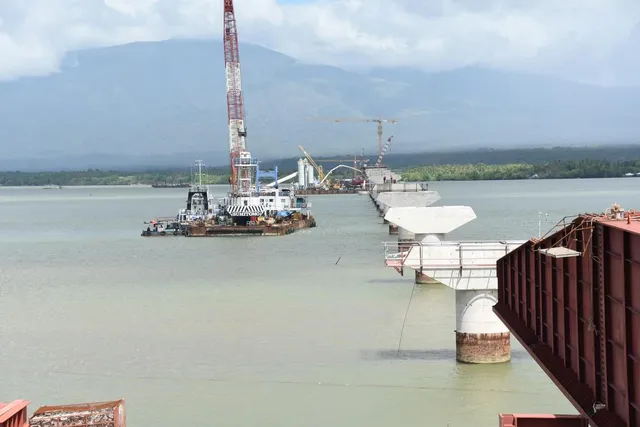
Progress of the Panguil Bay Bridge Project, the longest water-spanning bridge in Northern Mindanao, is now more visible at 63 percent complete as the Department of Public Works and Highways (DPWH) has started constructing the bridge top slab on both ends in Tangub, Misamis Occidental and Tubod, Lanao del Norte.

DPWH Senior Undersecretary Emil K. Sadain in his report to Secretary Manuel M. Bonoan said that bored piling works on the seabed for the 32 pylon, a structure that provides support for the 3.17-kilometer bridge across Panguil Bay, are all completed and a lot of machinery for bridge construction are in full gear working forward to the main bridge pylons 1 and 2.

“By working round-the-clock and further improve the formulated measures to catch up the delays brought by previous suspension of activities due to COVID-19 pandemic from March 16 - July 2020, we will be able to finish the project toward the goal of having first traffic cross the bridge by first half of 2024”, said Senior Undersecretary Sadain.

Senior Undersecretary Sadain in his inspection on Thursday, March 9, 2023 has instructed anew the contractor Namkwang Engineering & Construction Corporation in Joint Venture with Kukdong Engineering & Construction Co., Ltd. and Gumgwang Construction Co., Ltd. as well as engineering consultant Yooshin Engineering Corporation in joint venture with Pyunghwa Engineering Consultants Ltd. and Kyong-Ho Engineering & Architects Co., Ltd to complete the work at an accelerated pace.

A flagship infrastructure project, the two-way two-lane Panguil Bay Bridge will connect Tangub, Misamis Occidental and Tubod, Lanao del Norte to just 7 minutes.

Present connectivity between Ozamis City/Tangub City and Tubod through Roll-On, Roll Off (RoRo) vessel is about one (1) and a half hour to two (2) and a half hour including loading and unloading time while land travel over a distance of 100 kilometer is at two (2) to two (2) and a half hour.

Senior Undersecretary Sadain was joined in the project visit by DPWH Unified Project Management Office (UPMO) Roads Management Cluster 2 (Multilateral) Project Director Sharif Madsmo H. Hasim; Project Managers Teresita V. Bauzon, Marlon B. Galerio, and Norman I. Puy; and District Engineer Maria B. David.

Costing ₱7.37 Billion and funded by a loan agreement between Government of the Philippines (GOP) and Korean Export-Import Bank (Korea Eximbank), the project will enhance transportation capacity and efficiency in contributing to Mindanao socio-economic development.

The design and build of Panguil Bay Bridge, being implemented by the DPWH UPMO Operations is included in the DPWH program for integrated and seamless transport system to enhance inter-island connectivity through the construction of short and long-span bridges.

The program also involves the improvement of the logistics infrastructure network in Mindanao and develop a transport system that have significant impact on plan of action to boost tourism, agriculture and industrial sectors by the administration of President Ferdinand R. Marcos Jr.

Other DPWH UPMO Operation’s long-span bridge projects are the 3.9 kilometer Samal Island - Davao Bridge, the 32 kilometer Bataan-Cavite Interlink Bridge, construction of 32 kilometer bridges that will connect Panay, Guimaras and Negros, and 3.3 kilometer Cebu-Mactan 4th Bridge.


Article courtesy of The Department of Public Works and Highways
March 16, 2023

Photo credit: DPWH

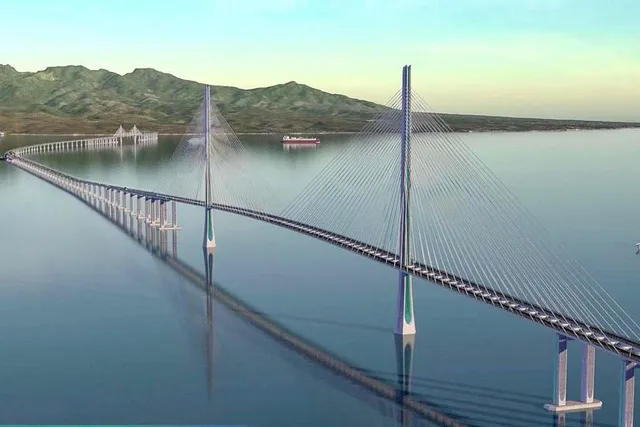
The construction of the PHP175.7-billion Bataan-Cavite Interlink Bridge Project will start towards the latter part of the year, the Department of Public Works and Highways (DPWH) said Tuesday.
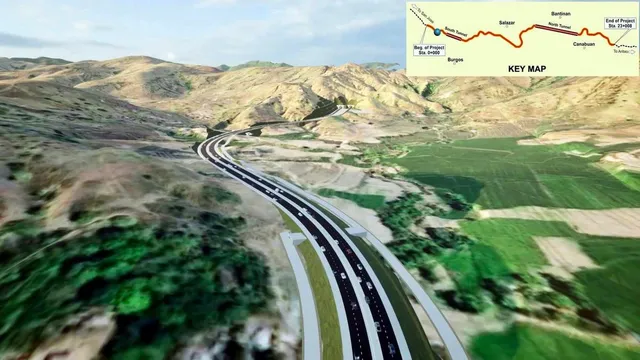
In a Palace press briefing, DPWH Secretary Manuel Bonoan said the 32-kilometer project, which was initially expected to begin construction in the first quarter of 2024, will break ground earlier than expected.

“Detailed engineering [design] is now ongoing—it’s about 70 percent complete and we told the President it will be ready within the year to ground break the implementation of this very significant bridge,” he told reporters following his meeting with President Ferdinand R. Marcos Jr. at Malacañan Palace.

He said the DPWH aims to finish the project before the end of the President’s term.

“We intend to start construction towards the latter part of this year 'siguro' (perhaps). If we are able to procure the civil works then it will take maybe about anywhere between five years…We’ll try to have this completed before the term of the President,” he added.

Bonoan said the project is expected to significantly improve economic development not only in Luzon but the entire country.

“No less than the Asian Development Bank (ADB) has indicated that the economic rate of return of this bridge is more than 25 percent and that’s big,” he said.

The Bataan-Cavite Interlink Bridge Project is a cable-stayed bridge to be built over Manila Bay to reduce the travel time between the provinces of Bataan and Cavite from five hours to 20 to 30 minutes.

Its starting point will be in Barangay Alas-asin in Mariveles town, Bataan, crossing Manila Bay, and ending in Naic town, Cavite.

It is being developed with funding from the ADB.

More projects

Meanwhile, Bonoan also bared that the DPWH is going to implement more than 70,000 major and local projects all over the country with a budget allocation of about PHP890 billion.

He said the agency will also prioritize the construction of more classrooms, farm-to-market roads, roads leading to tourist destinations and production areas, among others.

Bonoan likewise expressed hope that there would be minimal delays to the construction of the projects.

“We cannot discount the fact that the Philippines is vulnerable to calamities. The Philippines is visited by about 20 typhoons a year, so we just hope that it will not significantly affect the implementation period of these projects,” he said.

“Some of these projects will require acquisition of right of way and actually inuunahan na namin yung pag acquire ng right of way so that hindi tayo maantala doon sa pag-iimplement (we prioritized the acquisition of right of way so that there would be no delays in the implementation) when civil works start,” he added.

He is also hopeful the DPWH will get “good contractors” that could speed up the implementation of projects.

From July to December last year, the DPWH implemented, maintained, constructed and improved about 1,500 kms of national roads and local roads all over the country.

The DPWH has also undertaken the construction of 161 bridges along national and local roads as well as 851 flood control projects during the past six months.

In a Facebook post, Marcos welcomed the DPWH report that more roads and bridges are being constructed across the country.

“Ipinagmamalaki nating ibahagi ang magandang simula ng ating pamahalaan sa pagpapabuti ng mga daan at tulay sa iba’t ibang parte ng Pilipinas! Layunin nating siguruhin na konektado at sama-samang umuunlad ang ating mga lalawigan (We are proud to share the good start of our government in improving roads and bridges in different parts of the Philippines! Our goal is to ensure that our provinces are connected and develop together)!” he said.


Article courtesy of the Philippine News Agency

March 15, 2023

Photo credit: The Department of Public Works and Highways

The Department of Public Works and Highways (DPWH) announced that preparatory survey of the proposed Dalton Pass East Alternative Road Project is on-going and target for completion by third quarter of 2023.

A kick-off meeting between DPWH Secretary Manuel M. Bonoan with Senior Undersecretary Emil K. Sadain and the Fact Finding Mission of the Japan International Cooperation Agency (JICA) led by JICA Headquarters South East Asia Division Senior Deputy Director Yosuke Nishii and JICA Philippines Senior Representative Kenji Kuronoma was held Monday, March 13, 2023 at the DPWH Head Office in Port Area, Manila.

The purpose of the Fact Finding Mission is to obtain information on the relevance, efficiency, effectiveness and sustainability of the project, which will facilitate JICA's review of the proposed Official Development Assistance (ODA) loan financing and will serve as the basis or preparation for the upcoming Appraisal Mission.

The Japanese government through JICA has provided the Philippines over the years, with assistance in planning, construction, and maintenance of crucial infrastructure.

“On behalf of the Filipino nation, allow me take this opportunity to express our sincerest gratitude for JICA’s unwavering dedication to help the Government of the Philippines achieve robust infrastructure development”, Secretary Bonoan said.

According to Senior Undersecretary Sadain, the Department will closely-coordinate and provide necessary assistance to the JICA team until the preparatory phase is complete.

“This is among the flagship projects of the Department under the administration of President Ferdinand R. Marcos Jr. which will not only address safety and connectivity concerns of the existing Dalton Pass, but will also boost economic activity along its route,” added Senior Undersecretary Sadain.

The Dalton Pass East Alternative Road Project is a proposed 23-kilometer road that will decongest the existing Dalton Pass by providing an alternative road connecting Tayabo, San Jose, Nueva Ecija to Aritao, Nueva Vizcaya and vice versa.

Dalton Pass East Alternative Road Project will address the constant dilemma of frequent closure of the existing Dalton Pass due to natural disasters faced by travellers between Nueva Ecija and Nueva Vizcaya to the Cagayan Valley Region

The proposed project as an alternative road will not only prevent isolation of the provinces of Region 2 but will also improve transport and mobility and ensure support for farmers with the Cagayan Valley Region largely an agricultural economy with vast land dedicated to agriculture production for rice and corn.

During the meeting which was also attended by DPWH Unified Project Management Office Roads Management Cluster I Director Benjamin A. Bautista and other DPWH officials, the JICA Study Team presented the scope of the Preparatory Survey as well as target timeline or project implementation schedule.

Upon completion of the 12-month Preparatory Survey, the 15-month Detailed Design and Procurement will be conducted by the DPWH and its 5-year civil works is targeted to commence by 2025.


Article courtesy of The Department of Public Works and Highways
March 06, 2023

Photo credit: The Department of Public Works and Highways

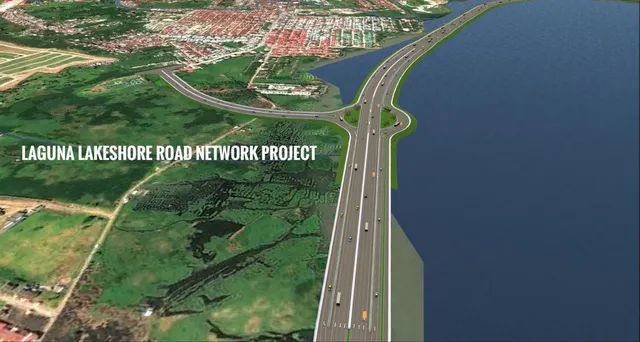
The Department of Public Works and Highways (DPWH) met anew with the Asian Development Bank (ADB) mission to plan and assess the way forward for the realization of Laguna Lakeshore Road Network (LLRN) Project – Phase 1 after the detailed engineering design.

DPWH Secretary Manuel M. Bonoan, Senior Undersecretary and LLRN Team Head Emil K. Sadain, Asian Development Bank (ADB) Country Director Kelly Bird, Asian Infrastructure Investment Bank (AIIB) Transport Sector Leader Andres Pizarro, DPWH Project Director Sharif Madsmo H. Hasim of the Unified Project Management Office (UPMO) Roads Management Cluster 2 (Multilateral), and Project Manager Zenaida B. Mauhay headed the three (3)-day reconnaissance mission workshop held on February 27 to March 1, 2023 to present strategic plans and financial assessment for the 37.4-kilometer road network and viaduct south of Metro Manila.

“With 85.1% of the detailed engineering design (DED) for LLRN already complete, DPWH has started negotiations to gather support from possible financing institutions crucial in the realization of this flagship infrastructure project,” said Secretary Bonoan.

According to Senior Undersecretary Sadain, the construction of LLRN Project Phase 1 to connect the southern province of Laguna to Metro Manila via Laguna Lake along the western coastline will provide a safer, faster alternative, and reliable transportation link.

The proposed third highway going south will ease the traffic congestion especially during rush hour at the Manila South Road and South Luzon Expressway to support economic development and growth potential of the provinces of Laguna, Batangas, Quezon and Rizal in the Southern Tagalog Region, said Senior Undersecretary Sadain.

The Laguna Lakeshore Road Network-Phase 1 involves construction of 21.5-kilometer viaduct and 15.9-kilometer embankment along the west shoreline of Laguna Lake, starting from Barangay Lower Bicutan in Taguig to Calamba City in Laguna.

It will also cover construction of eight (😎 interchanges proposed to connect municipal boundaries to the nearest public road along Lower Bicutan, Sucat, Alabang, Tunasan, San Pedro/Biñan, Santa Rosa, Cabuyao, and Calamba, for a total project cost of P175.3-billion.

The reconnaissance mission was the right venue to layout the groundworks in preparation to the fact-finding mission which is an important milestone in the processing and approval of the proposed financing for LLRN.

Discussions focused on funding schemes and loan application process, construction method, preparation of resettlement plan, gender action plan, and environmental impact assessment towards support economic development of the areas in the vicinity of Laguna de Bay.

With the assistance of the experts from ADB and in collaboration with the consultants, we will be able to analyze possible construction and implementation issues, possible project concerns, and plan way ahead the solutions and mitigation measures, added Senior Undersecretary Sadain.

Meanwhile, Feasibility Study for LLRN Phase 2 in the northern to southern coastline via an eastern route is almost complete and the detailed engineering design will be included in the civil works loan for LLRN Phase 1.

DPWH has already submitted the proposed LLRN Project to National Economic and Development Authority (NEDA) for project approval and endorsement to Department of Finance (DOF) for loan application.

The DPWH is proposing a Multi-Tranche Financing Facility for LLRN Phase 1 civil works in which the budget program for the whole project will be made in three (3) tranches.


Article courtesy of The Department of Public Works and Highways
March 01, 2023

Photo credit: The Department of Public Works and Highways

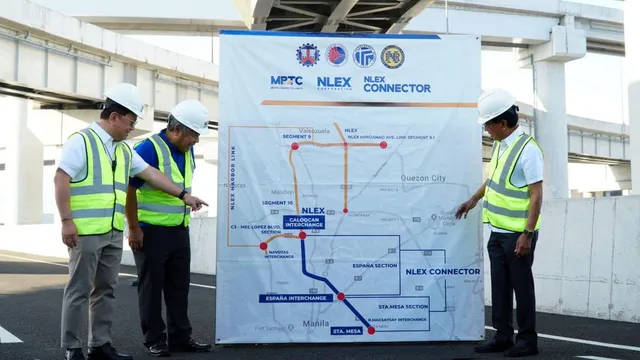
Motorists may soon enjoy seamless access from North Luzon Expressway (NLEX) to España Boulevard in Manila City with the completion of the Section 1 of NLEX-SLEX Connector Road.

Department of Public Works and Highways (DPWH) Secretary Manuel M. Bonoan and Department of Transportation (DOTr) Secretary Jaime J. Bautista, together with NLEX Corporation President and General Manager Jose Luigi L. Bautista and Metro Pacific Tollways Corporation President Rodrigo Franco, inspected on Wednesday, March 1, 2023 the first 5.15-kilometer section of the four (4) lane NLEX-SLEX Connector Road extending from the end of NLEX Segment 10 in C3 Road, Caloocan City to the España Interchange along España Boulevard in Manila City.

“We are targeting to open the España Section before Holy Week to help decongest vehicular traffic in Metro Manila especially to and from the Caloocan, Malabon, Navotas, and Valenzuela (Camanava) area,” said Secretary Bonoan.

When completed, the four (4) lane NLEX-SLEX Connector Road will connect NLEX Segment 10 to the end of Metro Manila Skyway Stage 3 at the Polytechnic University of the Philippines (PUP) in Sta. Mesa, greatly reducing travel time from SLEX-Alabang to NLEX-Balintawak from two (2) hours to just 20 minutes.

The P23.2-billion NLEX-SLEX Connector Road is a joint implementation project by the Philippine Government thru DPWH and Manila North Tollways Corporation (MNTC) under the Public-Private Partnership (PPP) Program.

The project alignment has mostly utilized portions of the Philippine National Railways (PNR) road right-of-way.

“Construction of the second section stretching from España Boulevard to Polytechnic University of the Philippines - Sta Mesa is being fast-track to provide trucks with an alternative route from the ports to the south and improve connectivity between Ninoy Aquino International Airport (NAIA) and Clark International Airport,” added Secretary Bonoan.

Also present during the inspection were DPWH Undersecretary Maria Catalina Cabral, DOTr Undersecretary for Legal Affairs Reinier Paul Yebra, DPWH PPP Service OIC Director Pelita V. Galvez, DPWH Planning Service Director Alex G. Bote, Toll Regulatory Board Executive Director Alvin Carullo, DMCI President and CEO Jorge A. Consunji, and officials and representatives of MPTC and NLEX Corporation.


Article courtesy of The Department of Public Works and Highways

March 01, 2023

Photo: NLEX-SLEX Connector Road Project

The Department of Public Works and Highways (DPWH) will receive over PHP495 million for the acquisition of right-of-way for the NLEX-SLEX Connector Road Project (NSCRP), the Department of Budget and Management (DBM) announced Tuesday.

This, after DBM Secretary Amenah Pangandaman approved the Special Allotment Release Order (SARO) amounting to PHP495,129,744 to the DPWH.

“This (SARO) is to cover the payment of right-of-way for properties affected by the NLEX-SLEX Connector Road Project,” the DBM said in a statement.

Pangandaman acknowledged that acquiring ROW is crucial in implementing the NSCRP.

“That’s why securing the payment for all affected properties is very important. And we also thank our kababayan (countrymen) for their solidarity and cooperation. Importante po ‘yun para umusad ang proyekto (That’s important for the project to push through),” she said.

The DBM said the fund would be charged against the program, activity, or project under the DPWH’s 2023 budget approved for release by Pangandaman on Feb. 22.

Pangandaman said the fund release would further boost the Marcos administration’s “Build, Better, More” infrastructure development program.

“As we continue the timely release of funds under the 2023 General Appropriations Act, the DBM also ensures that priority projects and programs of the Marcos Jr. administration will be provided with the needed budget at the soonest possible time,” she said.

“The budget for the right-of-way payments for the NSCRP will definitely boost our Build, Better, More program,” Pangandaman added.

In January, DPWH Secretary Manuel Bonoan said civil works for the NSCRP is 69 percent complete, while the ROW acquisition is 94 percent complete.

The construction of the PHP12.20-billion NSCRP began in May 2019.

Targeted to be completed in December 2023, the NSCRP is approximately an eight-kilometer, four-lane elevated toll expressway extending the NLEX southward from the end of Segment 10 in C3 Road, Caloocan City to PUP Sta. Mesa, Manila and connecting to the Skyway Stage 3, and mostly traversing along the PNR rail track.

Upon completion, the travel time from SLEX to NLEX will be reduced from two hours to just 20 minutes. It is projected to benefit 35,000 motorists per day.

The project seeks to help decongest traffic in Metro Manila, as well as stimulate development in Manila, Caloocan, Malabon, Navotas and other surrounding areas.


Article courtesy of the Philippine News Agency

March 01, 2023

Delfin Lorenzana, chairperson of the Bases Conversion and Development Authority delivers his message during the BCDA Fellowship for Central Luzon Media at Hilton Clark Sun Valley Resort in Clark, Pampanga province on Tuesday (Feb. 28, 2023). Lorenzana calls on all sectors to unite for the progress and development of New Clark City as well as nearby areas in Central Luzon. (Photo by Marna Del Rosario)

The Bases Conversion and Development Authority (BCDA) is seeking to harness the potential of the New Clark City into a smart, sustainable and inclusive one that could help in accelerating growth in Central Luzon.

This is anchored on the economic agenda and the Build Better More program of the Marcos administration.

BCDA president and chief executive officer Aileen R. Zosa said on Tuesday the new BCDA leadership fully supports the administration’s eight-point socio-economic agenda as reflected in the Philippine Development Plan 2023-2028 and its mission to propel economic and social transformation in the country in order to provide more jobs and lift more Filipinos from poverty

“New Clark City is BCDA’s answer to reach this goal. Through the development of New Clark City, we not only strive to decongest Metro Manila, but we will also provide a catalyst to spread growth in Central Luzon and other provinces,” Zosa said in a statement.

To realize this goal, the BCDA has lined up several high-impact projects and programs in New Clark City, particularly in the fields of sustainable development, renewable energy, information and communication technology (ICT), estate management, transportation, tourism and smart city technologies, among others.

Once fully developed, New Clark City is projected to become the home of about one million residents, and provide job opportunities to around 600,000 Filipinos.

Zosa cited the importance of building strong partnerships with other government agencies, the private sector, and foreign allies to accelerate the development of New Clark City.

“New Clark City is a massive undertaking that the BCDA cannot do alone. We need the support of our partners in the public and private sectors to implement our programs and projects and ensure that Filipinos will really get the world-class metropolis they deserve,” she said.

Meanwhile, BCDA Chairman Delfin Lorenzana underscored the importance of synergy to attain sustainable development goals.

“Synergy means to unite all the areas here such as Bulacan, Tarlac, Pampanga, Subic and Bataan. Hindi tayo magkakakompetensya (We are not competitors). Let us join forces together to develop these areas. This is the natural expansion of Metro Manila. So, expect more developers to come here not only here in Clark but also in other nearby areas,” Lorenza said in his message during the BCDA Fellowship for Central Luzon Media at Hilton Clark Sun Valley Resort on Tuesday.

As of end-2022, investments committed by private and government locators in New Clark City have reached PHP95.51 billion while actual investments infused have already hit PHP14.59 billion.


Article courtesy of the Philippine News Agency

February 21, 2023

The Department of Public Works and Highways in Central Luzon (DPWH-3) said on Monday it will implement a total of 2,452 infrastructure projects this year.

DPWH-3 Regional Director Roseller A. Tolentino said some PHP98.47 billion was allocated for the implementation of various projects in the region.

Tolentino said Central Luzon received a 35.24 percent increase in this year's budget compared to the PHP72.3 billion released last year.

“Our big-ticket connectivity projects have been given appropriate funding to ensure that these access and bypass roads are fully operational at the earliest,” he said in a statement.

He particularly cited the construction of the Lubao-Guagua-Minalin-Sto. Tomas (LGMST) Road and the Palihan-Mabiga-SBMA Access Road which is now in full swing.

Other big-ticket connectivity projects, he said are the San Ildefonso-San Rafael-San Miguel Bypass Road and Capas-Botolan Road which are set for completion by 2025 and the 68.04-kilometer Dingalan-Doña Remedios Trinidad Road which already started construction.

“We are bent on improving connectivity within the industrial areas of the region so, we have proposed to the Regional Development Council the construction of a four-lane road that will link via an east-west lateral alignment the towns of Lubao and Arayat in Pampanga,” Tolentino said.

Likewise, he said the proposed Sto. Tomas-Arayat Bypass Road will start from the planned Sto. Tomas Interchange of the North Luzon Expressway (NLEX) which is part of the LGMST Road.

Meanwhile, Tolentino also said that of their total budget, some PHP1.3 billion will be spent for the development of important public structures under their jurisdiction.

“Aside from the implementation of projects under our mandate such as the replacement of weak bridges along national roads, and the construction of bypass roads, multipurpose facilities and flood mitigation structures, we are also set to begin the rehabilitation of existing traffic signals at major intersections along Manila North Road (MNR) and Jose Abad Santos Avenue (JASA),” he added. 


Article courtesy of the Philippine News Agency

February 16, 2023

Photo credit: The Department of Public Works and Highways
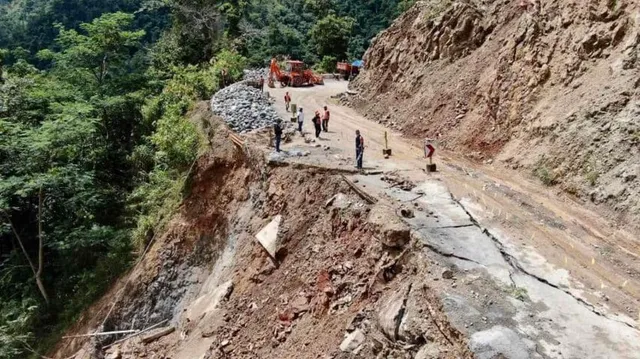
The Department of Public Works and Highways (DPWH) once again met with Japan International Cooperation Agency (JICA) on the implementation of the JICA-grant – Technical Cooperation Project (TCP) on Road Disaster Preventions and Other Countermeasures on Mountainous Roads in the Philippines.

Held on Tuesday, February 14, 2023 at the DPWH Head Office in Port Area, Manila, the meeting was headed by DPWH Senior Undersecretary and JICA-TCP Chairman Emil K. Sadain; Mr. Kuronoma Kenji, Senior Representative of JICA Philippines; DPWH Assistant Secretary and JICA-TCP Project Manager Constante A. Llanes, Jr.; Japan Embassy Representative Matsubra Tomohiro, as well as the representatives and officials of implementing offices.

“This is a timely assembly of experts as the country further strengthens measures that will ensure public safety in case of the “Big One”, and learning from the recent earthquake devastation in Turkey and Syria,” said Senior Undersecretary Sadain.

According to Senior Undersecretary Sadain, the second joint coordinating meeting is a progress assessment of the ongoing implementation of the project in pilot areas of Cordillera Administrative Region (CAR), Regions 7 and 11.

Pilot regions are expected to accomplish the following outputs in the span of two (2) years or until 2025: Output No. 1: Countermeasure Works, Output No. 2: Emergency Response; and Output No. 3: Hazard Mapping while the JICA counterpart shall have Output No. 4: Road Disaster Information Management.

In all pilot regions, topographic survey and geographical survey under Output 1 or Countermeasure Works were either carried out, or is expected to begin within the first quarter. All regions also implemented various slope protection works and currently formulating an emergency response manual, and conducting various workshops and trainings for Emergency Response or Output 2. Pilot road sections were also identified for making hazard maps under Output 3.


Article courtesy of The Department of Public Works and Highways

February 14, 2023

Photo credit: Department of Public Works and Highways
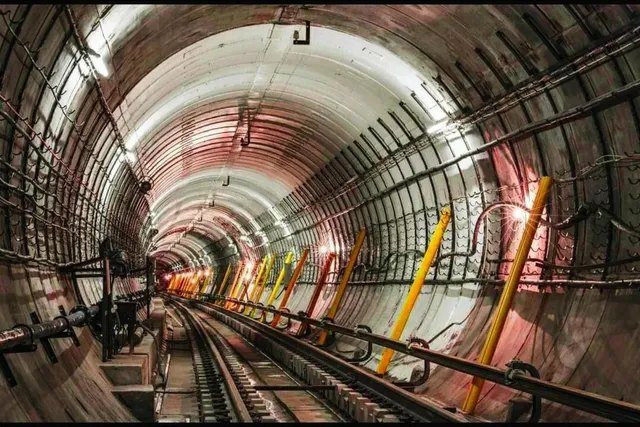
The Japan International Cooperation Agency (JICA), the agency in charge of administering Government of Japan's Official Development Assistance (ODA), is committed to support the Philippines wide ranging infrastructure program focused on socio-economic development.

President Ferdinand R. Marcos Jr. met with JICA President Dr. Tanaka Akihiko wherein the bilateral agency leader reaffirmed commitment to facilitate the steady implementation of ongoing and future economic cooperation projects in the Philippines as one of the top beneficiaries of ODA from Japan.

On his five-day official visit in Tokyo, Japan upon the invitation of Japanese Prime Minister Fumio Kishida, President Marcos was joined in the February 10, 2023 meeting with the JICA Head by members of his official party including former President Gloria Macapagal Arroyo; Senate President Juan Miguel F. Zubiri; House Speaker Ferdinand Martin G. Romualdez; Senator Mark A. Villar; and Secretary Manuel M. Bonoan and Senior Undersecretary Emil K. Sadain of the Department of Public Works and Highways (DPWH).

In light of the “Build Better More” program, the administration of President Marcos intends to maintain strong ties with Japan to provide game changing infrastructure projects designed to better the lives of the Filipino people.

Meanwhile, President Marcos reported at the Philippine Business Opportunities Forum at the Palace Hotel Tokyo a promising Philippine economic performance and wooed top Japanese business leaders to seize emerging investment opportunities in the country.

The Philippine economic team of Department of Finance Secretary Benjamin E. Diokno; Bangko Sentral ng Pilipinas Governor Felipe M. Medalla; Department of Budget and Management Secretary Amenah F. Pangandaman; National Economic and Development Authority Secretary Arsenio M. Balisacan earlier discussed the Philippine economic performance and outlook at the Philippine Business Opportunities Forum.

In a panel discussion on the topic infrastructure and industry at the forum, DPWH Secretary Bonoan together with Department of Trade and Industry (DTI) Secretary Alfredo E. Pascual, Department of Tourism (DOT) Secretary Maria Esperanza Christina Garcia Frasco, and Department of Transportation Secretary Jaime J. Bautista explained some of Philippines massive infrastructure development initiatives taking off from “Build Build Build” program efforts of the previous administration and continued and expanded into “Build Better More” agenda under the President Marcos administration.

President Marcos and Prime Minister Kishida in their meeting concurred on working toward early loan provision for the construction of the Dalton Pass East Alignment Alternative Road, the Central Mindanao High-Standard Highway, and the Second San Juanico Bridge which have available completed feasibility studies under JICA grant.

The leaders also affirmed the viability of utilizing the private-public partnership (PPP) scheme in future cooperation for the construction or operation and maintenance of roads; and long-span tunnels & bridges in the Philippines, given the opportunities to leverage the technical expertise of Japanese companies. Both President Marcos and Prime Minister Kishida expressed hope for further implementation of the Memorandum of Cooperation (MOC) of October 2022 for the construction and operation and maintenance of tunnels and related facilities.

On resilience-building against natural disasters and adaptation to climate change, Japan is committed to further support works for the Pasig–Marikina River, preparation of the Parañaque Spillway, and formulation of new projects based on a prospective Davao Flood Control Master Plan to address the issue of frequent floods.

At present, some of the Philippines' biggest infrastructure projects supported by JICA under DPWH portfolio and implemented by the Unified Project Management Office (UPMO) operations headed by Senior Undersecretary Sadain are the widening of 23-kilometer Arterial Road (Plaridel) Bypass Project Phase 3 in the Province of Bulacan; improvement and maintenance of about 1,184-kilometer of arterial national roads under Road Upgrading and Preservation Project (RUPP); 30-kilometer Central Luzon Link Expressway (CLLEX) Project from the connection of Subic-Clark-Tarlac Expressway (SCTEX) and Tarlac-Pangasinan-La Union Expressway (TPLEX) in Balingcanaway, Tarlac City and ends at the Daang Maharlika Highway in Cabanatuan City; construction of a four lane – 45.5-kilometer Davao City Bypass Construction Project including twin tube road mountain tunnel project that will be the longest in the Philippines at 2.3 kilometers.

The Islamic City of Marawi has benefited from a 2-billion yen grant for the design and build of 18.97-kilometer Marawi Transcentral Road Phase 1 under the Programme for the Support to Rehabilitation and Reconstruction of Marawi City.

In support of the government's peace-building initiatives, JICA is also financing the Road Network Development Project in Conflict-Affected Areas in Mindanao (RNDP-CAAM) involving the development, construction, and improvement of about 174.50-kilometer access roads connecting Bangsamoro Autonomous Region in Muslim Mindanao (BARMM) and other regions in Mindanao including another 18.78-kilometer Marawi Transcentral Road Phase 3.

Japan thru JICA has also committed to support the construction of Cebu-Mactan Bridge and Coastal Road Construction Project, which is now under detailed engineering design stage.

To protect flood-prone areas and strengthen the resilience to climate change, four sub-projects were completed under the Flood Risk Management Project for Cagayan River, Tagoloan River, and Imus River.

On-going flood control projects are the channel improvement works for Middle Marikina River including the construction of Manggahan Control Gate Structure and construction of Cainta Floodgate and Taytay Sluicegate at the joining sections of Cainta and Taytay rivers to Mangahan Floodway under the Pasig-Marikina River Channel Improvement Project Phase IV; Flood Risk Management Project for Cagayan De Oro River; and Cavite Industrial Area Flood Management Project.

The Japanese government is also extending financial support for the construction of interchanges on major intersection in Quezon City under the Metro Manila Interchange Construction Project, Phase VI (MMICP-VI) and the Metro Manila Priority Bridges Seismic Improvement Project to strengthen the resiliency of transport network in Metro Manila by improving the durability and safety of Guadalupe and Lambingan Bridges against large scale earthquake.

The proposal to conduct feasibility studies for Liloan Bridge and Butuan Bridge to comprise the Phase II of Urgent Bridges Construction Program for Rural Development (UBCPRD II) has also been submitted for JICA’s consideration.


Article courtesy of the Department of Public Works and Highways

February 14, 2023

Photo credit: South East Asia Infra

The Metro Manila Subway Project (MMSP) is expected to improve living standards, including the riding public, and propel the country’s economic rebound, Transportation Secretary Bautista said Monday.

At the groundbreaking ceremony for the MMSP’s Contract Package 103, Bautista said the big-ticket railway project has far-reaching benefits such as comfort and convenience for commuters, creation of employment opportunities and the Philippines’ economic development.

“Today is another critical step towards that aspiration towards the convenience and comfort of Filipino commuters towards a transport infrastructure that catalyzes economic rebound,” Bautista said.

“The socio-economic benefits of the MMSP even exceeds our expectations." The project is part of President Ferdinand R. Marcos Jr.’s Build, Better, More infrastructure development program.

Bautista vowed an elevated and global standard public transportation for Filipinos.

“We promised President Bongbong Marcos a global-standard transport system,” he said.

Bautista also expressed his gratitude to the Japanese government and the Department of National Defense for supporting the country’s first-ever underground railway. 

“This groundbreaking inside a military camp depicts the overlapping multi-sectoral support for the MMSP. The Secretary of Defense is accompanied by the AFP Chief of Staff and the local chief executive of Quezon City to express their support,” he added.

The Contract Package 103 involves two underground stations and tunnels, including the Anonas and Camp Aguinaldo stations.

Support

Meanwhile, Armed Forces of the Philippines (AFP) chief of staff Gen. Andres Centino said the military strongly supports the project that would greatly boost government efforts to minimize traffic congestion and carbon emissions.

"It is without a doubt that our soldiers, together with the rest of our fellow Filipinos, look forward to the opportunities and the possibilities that come with the completion of this project," he said in a statement Monday.

Meanwhile, Department of National Defense (DND) officer in charge Undersecretary Carlito Galvez Jr. lauded the DOTr for the progress of the MMSP.

"It is a significant milestone for our country that brings the Filipino people closer towards realizing our longtime collective dream and aspiration of having an accessible, affordable, comfortable, and safe mass public transport system," he added.

Billed as the Philippines’ “crown jewel” of mass transit system, the Japan-funded Metro Manila Subway will cut across eight cities that will stretch from Valenzuela City in the northern part of Metro Manila to FTI-Bicutan in Parañaque City in the south with a spur line to NAIA Terminal 3 in Pasay City.

With a total of 33-kilometer route length and 17 stations, the country’s first underground railway system aims to cut travel time between Quezon City and Ninoy Aquino International Airport in Pasay City to just 45 minutes.

Once operational, the railway system can service up to 519,000 passengers daily. (with report from Priam Nepomuceno/PNA)


Article courtesy of the Philippine News Agency

February 05, 2023

Ormoc City Mayor Lucy Torres-Gomez, the chairperson of Eastern Visayas Regional Development Council. (Photo by Ormoc city government)

The Regional Development Council (RDC) will form a task force to prepare a concept note for the Eastern Visayas railway system eyed more than 20 years ago.

RDC chair and Ormoc City Mayor Lucy Torres-Gomez said the region’s highest policy-making body agreed in its special meeting on Jan. 31 to form the task force composed of various national government agencies and local government units.

The proposed body will include members from the Department of Transportation, legislative district offices, the Department of Public Works and Highways, Land Transportation Franchising Regulatory Board, Department of Environment and Natural Resources, National Economic and Development Authority, six provincial government, seven cities, and private sector representatives.

“We need a concept note to get funding for the feasibility study. It is a brief outline of the project we have in mind. This is a requirement to get funding for the feasibility study,” Gomez said.

The official admitted that coming up with a master plan will take years. She, however, expressed optimism that the planning stage will be completed during the first three years of the Marcos administration.

“Nobody can even say where the routes are since the direction depends on the output of the feasibility study. In terms of the station and which phase will be developed first, that is for the study to say,” Gomez added.

A simple version of the concept note will include an introduction, a background, proposed objectives and results and a budget overview.

“The project is ambitious and very expensive, but it will ease transport and experience better mobility. The social and economic impact will be very good. The project has been on the bucket list since 1999 and we hope its time has come,” she told reporters.

Currently, the country has three operational commuter lines operated by the Philippine National Railways (PNR). These are the PNR Metro Commuter Line, located in Metro Manila, the PNR Inter-Provincial Commuter between Laguna and Quezon and the PNR Bicol Commuter Line located in the Bicol Region.


Article courtesy of the Philippine News Agency

See Our Latest Issue