







October 03, 2022

Photo: The Tacloban causeway project. (DPWH photo)

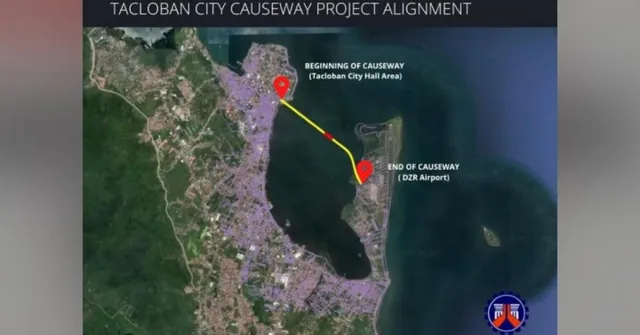
The causeway project that will connect the city hall to the airport here will start before the end of the year with an initial PHP1 billion funding.

The first phase of the project is currently advertised, and bidding will go in early October.

Civil works will begin within the fourth quarter of the year, according to Noel Nadera, senior engineer of the Department of Public Works and Highways (DPWH) regional planning and design division, on Tuesday.

“Our target is to finish the project within three years since there are no issues on right of way acquisitions. We will still come up with work schedule in the next years since our focus was on the scope of work for the PHP1 billion allocation,” Nadera said in an interview.

The 2022 allotment will finance the construction of 586 meters stretch of the causeway.

Funding for the entire PHP3.46 billion project will be included in future appropriations.

The first of its kind in Eastern Visayas, the causeway will serve as an alternate route for motorists from the city’s commercial district going to the airport, reducing distance, travel time, and vehicle operation costs.

This project involves the construction of a four-lane road embankment that spans approximately up to 2.55 kilometers with a bridge that stretches to 180 meters. It will also feature separate bike lanes, concrete canals, sidewalks, as well as wave deflectors on both sides.

Environmental group Save Kankabatok Advocacy has expressed opposition to the project saying the causeway would block the passage of seawater from and to Cancabato Bay affecting the ecosystem.

The group refuted the claims of DPWH and other officials that Cancabato Bay is no longer a rich fishing ground due to massive pollution.

“We have been raising awareness to the public on the effects of the causeway project to the Cancabato bay ecosystem and to the communities around it. The bay is not dead (as opposed to the claim in the Comprehensive Land Use Plans) and that it is much alive and is giving various ecosystem services direct or indirectly to the communities around it or far from it,” the advocacy group said.

Nadera said the180-meter bridge and five box culverts with three meters in width and height each would allow free water flow.

“There are no more hindrances since the project has been endorsed by the local government and concerned national government agencies,” the DPWH officials added.

The DPWH assured that the project was designed to withstand strong typhoons and high humidity and protect nearby communities from big waves.

The main core of the structure is common borrow (filling materials) reinforced with high strength geotextile laid at every two-meter fill.

The hydraulic geotextile tubes will be placed on both sides to contain the embankment and to add stability to the structure.

The toe and side slopes of the embankment are protected by layers of armored rocks.

Aside from being an alternative highway, the causeway will also shield communities from destructive waves.

The original plan was to build a tide embankment structure, but it was discontinued due to strong opposition by several property owners in the city’s populated coastal communities. By Sarwell Meniano


Article courtesy of the Philippine News Agency

October 03, 2022

Photo credit: Where in Bacolod

The construction of another airport in Kabankalan City, Negros Occidental is underway soon with additional national government funding to complete the more than PHP1-billion project.

Sixth District Provincial Board Member Jeffrey Tubola, a former city councilor, said on Tuesday the Department of Transportation (DOTr) has proposed the inclusion of PHP855 million in the 2023 national budget for the completion of the project, including the passenger terminal.

“Light planes can now land there with the construction of the 1.32-kilometer runway,” Tubola said over the Provincial Capitol’s Radyo Negrense.

The development of the airport, situated on a 104-hectare lot in Barangay Hilamonan, began in 2007.

Previously, the DOTr allocated PHP90 million for the airport project aside from the PHP120 million budget by the city government and the PHP30 million financial assistance from the provincial government.

“Kabankalan is a progressive city, it's in the center of Negros Island which is a strategic location,” Tubola said.

It is a border city of Negros Occidental in the south alongside Mabinay town in Negros Oriental.

“The Dumaguete City airport is a bit far while the Bacolod airport has already transferred to Silay City,” Tubola said.

He said Kabankalan would also become one of the regional centers in the proposed creation of the Negros Island Region.

Last March, the DOTr and the Civil Aviation Authority of the Philippines listed the Kabankalan Airport as among those with completed projects under the “Build, Build, Build” program. 


Article courtesy of the Philippine News Agency

October 03, 2022

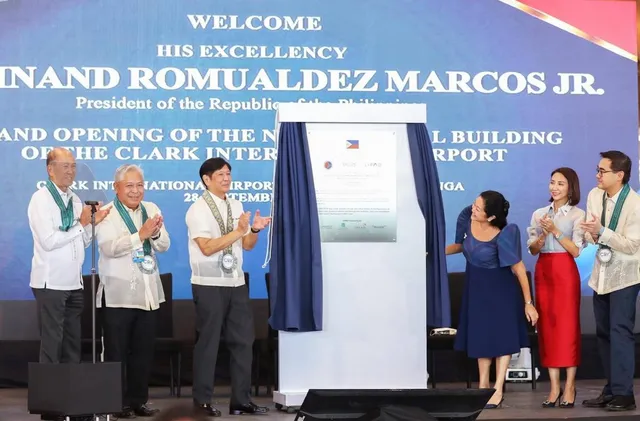
Photo: President Ferdinand R. Marcos Jr. graces the grand opening of the new terminal building of Clark International Airport in Mabalacat, Pampanga, Sept. 28, 2022. (Photo courtesy of President Marcos Jr./Facebook)

The Clark International Airport’s (CRK) new passenger terminal building is a “strong signal” to the world that the Philippines is open for business, President Ferdinand “Bongbong” Marcos Jr. said Wednesday.

Marcos made this remark during the grand opening of the CRK’s new passenger terminal building where he led the unveiling of the building marker and toured around what has been described as a state-of-the-art facility envisioned to be Asia's next premier gateway.

“...This facility is essentially a very strong signal that yes, indeed, we are open for business. We just opened a new terminal. It is state-of-the-art and this is one of the things that we will continue to do in the future to bring you all to come and be partners with the Philippines to help the lives of our people to help the Philippine economy and para pagandahin ang buhay ng Pilipino, para pagandahin naman natin ang Pilipinas (and to improve the lives of Filipinos, make the country more beautiful),” he said in his speech.

He expressed confidence that the CRK’s new passenger terminal building and other public-private partnership (PPP) projects encourage investors to do business in the Philippines.

He also renewed his commitment to ensuring that the government would do everything so that partnerships are to the advantage of both the public sector, the private sector, and the people.

“...This is a perfect example of what government and the private sector can do. And makikita mo kung private sector lang ang gumawa nito, hindi nila kinaya. Kung gobyerno lang ang gumawa, hindi rin kinaya ito (And you can see that if it’s only the private sector, they wouldn’t be able to accomplish this. If it’s only the government, they wouldn’t be able to do it either). And that is why this is a perfect example of that. And I think it will serve to encourage other people to enter into this kind of arrangements,” he added.

Citing his working visit to the US last week, Marcos recalled how he invited American investors to take part in the Philippines’ economic resurgence.

“This is also the kind of activity that we were actively endorsing when we were in New York and talking to possible investors, in companies who are already in the Philippines but would like to increase their investment. And this is exactly the kind of partnership that we need to encourage,” he said.

He also acknowledged how some businesses and investments had to be put on hold due to the Covid-19 health crisis, but noted that the country is now slowly recovering from the impact of the pandemic.

“Ngayon na mukha naman na gumagaan ang problema ng pandemya ay siguro naman panahon na na balikan natin ang ating mga pinaplano tungkol nga sa ganitong klaseng mga project na PPP (Now that the problem of the pandemic seems to be easing, maybe it's time to go back to our plans regarding this kind of PPP projects),” he said.

Logistics center of Asia

Marcos is optimistic about the new facility serving as a “building block” to the government’s goal of turning the Philippines into the “logistics center of Asia.”

“The general idea that [Tourism] Secretary Christina [Garcia-Frasco] and the Cabinet and I have come to is that habang hindi pa natin naaayos ang airport sa Maynila, habang hindi pa naitatayo at nag-operate ‘yung airport sa Bulacan, hindi pa nag-operate ‘yung airport sa Sangley — ito ‘yung mga proposal ngayon eh — ay kailangan natin buksan ang mga airports sa regional (while we have not yet improved our airport in Manila, while we have not yet started operations in our airport in Bulacan and Sangley, our proposal is to open our regional airports),” he said.

He also emphasized the importance of terminal building operations in providing opportunities in the areas of employment, investment, and tourism.

“We need this, we need more, we have many plans for the airport in Manila, we have many plans for the airport surrounding Manila para naman dumami at mas madali ang pagpasok ng ating mga magiging bisita (so that more tourists would find it easier to enter the country),” he added.

Meanwhile, Marcos lauded both concerned national and local government agencies for spearheading the new facility’s construction.

“We have to give credit to the government agencies, the local government, BCDA [Bases Conversion and Development Authority], the Department of Transport (DOTr), of course, for all that they had done,” he said.

He clarified that he was not “taking credit” for the project, but recognizing the importance of its contribution to the Philippine economy.

“This is a good day and let us keep going. We know that this is a good direction for us to take. Let us continue to go down that road and we will see. Dahan-dahan, makikita natin na paganda nang paganda (Slowly, we will start seeing improvements),” he added.

Joining the President during the event were First Lady Liza Araneta-Marcos, Garcia-Frasco, Transport Secretary Jaime Bautista, BCDA chairperson Delfin Lorenzana, Luzon International Premier Airport Development (LIPAD) chairperson Frederick Go, and other LIPAD officials.

The CRK’s 10,000 square-meter passenger terminal building, which can accommodate around eight million passengers, aims to decongest the Ninoy Aquino International Airport in Metro Manila.

It is the first hybrid PPP project under the “Build, Build, Build” infrastructure program of the Duterte administration.

In January 2021, the DOTr and the BCDA turned over the new airport terminal to LIPAD Corporation, its operations, and maintenance partner. By Azer Parrocha


Article courtesy of the Philippine News Agency

September 26, 2022

Artist rendering of the Metro Manila Subway (Photo courtesy of DOTr)

The Metro Manila Subway Project (MMSP) has been named as one of the finalists at the 2022 Going Digital Awards in Infrastructure for the best use of infrastructure software to save both time and money.

The Department of Transportation (DOTr) said the general consultant for the MMSP Phase 1, the Japanese consortium Oriental Consultants Global (OC Global), developed a common digital engineering system and a “single source of truth” using ProjectWise and ComplyPro -- both programs by Bentley Software Inc.

The MMSP, the DOTr said, presented communication and coordination challenges that other software programs failed to address.

“The project team at OC Global realized that the implementation of collaborative BIM workflows, proactive risk management, and cost monitoring would require a connected data environment to be established,” it said.

The system developed by OC Global for the MMSP enabled real-time data sharing that optimized collaboration -- saving an estimated 5,000 resource hours within the project’s first six months.

“Combined with SYNCHRO for construction simulation, Bentley’s integrated technology solution identified and resolved 50 clashes, eliminating rework, shortening the project schedule, and saving costs. The successful BIM (Building Information Modeling) implementation has already achieved a return of investment of over USD600,000,” it said.

The Going Digital Awards in Infrastructure is an annual event meant to honor Bentley software users for advancing infrastructure design, construction, and operations worldwide.

The event’s finalists are deemed to demonstrate “excellence and digital advancements” in their respective award categories.

The award winners will be announced during the program’s main event in London on Nov. 15. By Raymond Carl Dela Cruz


Article courtesy of the Philippine News Agency

September 26, 2022

Photo: Bataan-Cavite Interlink Bridge project (Courtesy of DPWH)

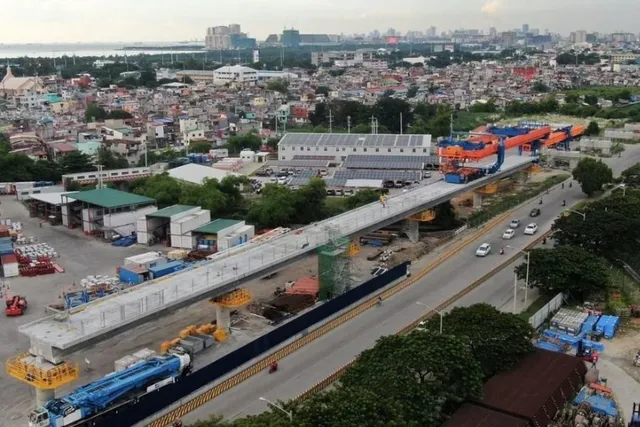
The Department of Public Works and Highways (DPWH) is finalizing the detailed engineering design works for the Bataan-Cavite Interlink Bridge that will connect the provinces by the first quarter of 2023.

Senior Undersecretary Emil Sadain said in a news release on Saturday that the marine geophysical surveys and geotechnical investigations in evaluating underground conditions and site characterization over the waters of Manila Bay are ongoing with an overall accomplishment of 55 percent to date.

The inspection report to Secretary Manuel Bonoan said the geological aspects of the site, surface and subsurface, have to be studied in detail before the start of construction activities.

The feasibility studies of the 32-kilometer project were started and completed under the Duterte administration.

Sadain, Bataan Governor Jose Enrique Garcia III, Bataan 3rd District Rep. Maria Angela Garcia, Mariveles Mayor Ace Jello Concepcion, and other DPWH officials, aboard deepwater vessel Trinity Surveyor, witnessed the actual operations of geotechnical investigation survey on the waters of Bataan on Friday.

Upon completion, the four-lane permanent linkage between Bataan and Cavite will cut travel time from five hours to just 20 to 30 minutes, according to DPWH.

The project includes the construction of two cable-stayed navigation bridges on either side of historic Corregidor Island.

Called the North Channel Bridge and South Channel Bridge, the structures will have main spans of 400 meters and 900 meters, respectively.

Alignment in Bataan is between Roman Highway and traverses the barren land area in Barangay Alas-Asin, and then skirts to the shoreline of Barangay Mountain View in Mariveles.

In Cavite, the alignment will start from the shoreline of Barangay Timalan Balsahan in Naic, traverses through the agricultural and residential area, and terminating on Antero Soriano Highway, which is in a relative flat terrain in Barangay Timalan Balsahan and Barangay Timalan in Concepcion.


Article courtesy of the Philippine News Agency

September 21, 2022

Photo credit: Department of Public Works and Highways

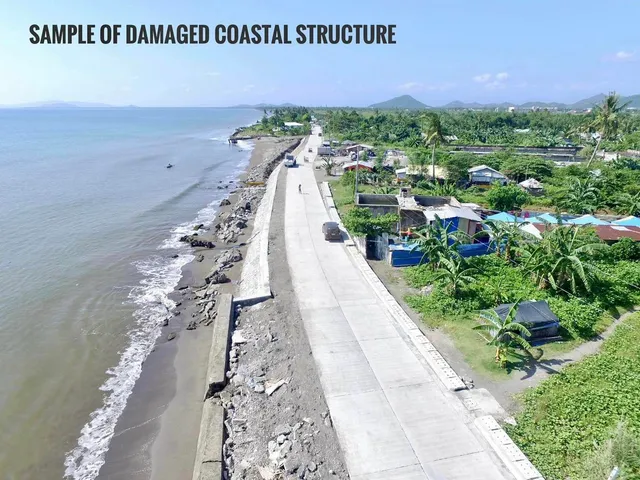
The Department of Public Works and Highways (DPWH) has teamed up with Japanese experts in a move to improve the Philippines disaster risk reduction countermeasures through coastal engineering.

DPWH Senior Undersecretary Emil K. Sadain spearheaded the first joint coordinating committee meeting for the Japan International Cooperation Agency (JICA)-assisted Technical Cooperation Project for Capacity Development in Coastal Engineering for Disaster Resiliency.

The first joint coordinating committee meeting held September 20, 2022 at DPWH Head Office was participated by DPWH Assistant Secretary Constante A. Llanes Jr.; UPMO Flood Control Management Cluster (UPMO-FCMC) Project Director Ramon A. Arriola III; JICA Philippines Senior Representative Masanari Yanagiuchi and other JICA Philippines officials; First Secretary Hiroyuki Kudo and Second Secretary Tomohiro Matsubara of the Embassy of Japan in the Philippines; Senior Deputy Director Masahiro Yamaguchi of Ministry of Land, Infrastructure, Transport and Tourism (MLIT); Mr. Tomoo Iba, Dr. Daiki Tsujio and other members of the JICA Project Team; Bureau of Design OIC-Director Edwin Matanguihan, Bureau of Construction Assistant Director Edgardo Garces, Bureau of Maintenance Assistant Director Teofila Borlongan; and UPMO Project Manager Dolores Hipolito.

The project work plan was presented by the JICA Project Team to the Joint Coordinating Committee (JCC) and Technical Working Group (TWG) for the Project for Capacity Development in Coastal Engineering for Disaster Resiliency which was created thru Special Order 152 issued on August 3, 2022 by DPWH Secretary Manuel M. Bonoan in order to establish effective coordination and collaboration with concerned agencies/officials and ensure the smooth conduct of the project with Senior Undersecretary Sadain as Chairperson and Project Director Arriola as Vice-Chairperson.

The five-year technical cooperation project will come up with a human resource development plan to strengthen the DPWH's capacity and know-how in building disaster-proof structures along coastal areas in the Philippines.

Japanese experts on coastal engineering will share their experiences and train DPWH personnel on planning and designing structures in coastal areas and studying how existing laws and policies can be improved to bridge the gap in disaster management, said Senior Undersecretary Sadain.

On behalf of DPWH Secretary Bonoan, our sincerest appreciation to the Government of Japan thru JICA for the relentless support to the Philippines in developing not just transport infrastructure but also in making communities more safe, resilient, and sustainable, added Senior Undersecretary Sadain.

Also invited at the meeting as official members of the joint coordinating committee for the Philippine side are representatives from the Department of the Interior and Local Government; Department of Tourism; Department of Agriculture - Bureau of Fisheries and Aquatic Resources; Philippine Institute of Volcanology and Seismology; National Mapping and Resource Information Authority; Philippine Atmospheric, Geophysical and Astronomical Services Administration; Office of Civil Defense; Philippine Ports Authority; Philippine Reclamation Authority; Philippine Space Agency; and the University of the Philippines.

The joint committee meeting has been an effective platform for exchange of information, ideas, opinions and experiences among key actors in coastal management as well as in reaching consensus on the considerations and planned approach towards achievement of the objectives of the project.

As natural phenomenon keeps on changing, the Project Team also discussed some coastal issues such as erosion, flooding and damaged coastal infrastructures in selected sites within the Luzon and Visayas region based on their recent surveys and site visits.

In his closing message, Project Director Arriola expressed hope that respective offices/agencies will continue to support this project through active participation in future seminars and meetings, as well as through sharing of coastal-related data and information.


Article courtesy of the Department of Public Works and Highways

September 19, 2022

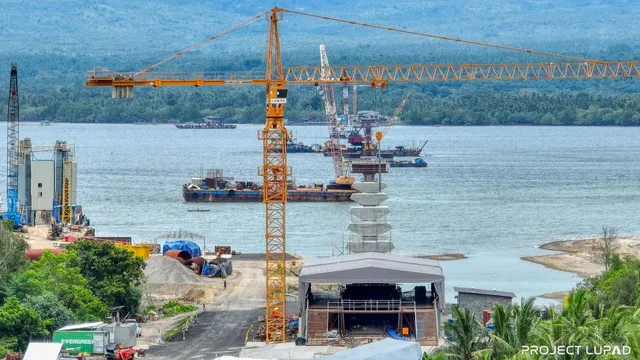
Photo: The Panguil Bay Bridge Project is 58 percent complete as of September 2022. It will connect Tangub town, Misamis Occidental and Tubod town in Lanao Del Norte province and reduce travel time from 2.5 hours to just 7 minutes. (Courtesy of Project Lupad Facebook)

President Ferdinand "Bongbong Marcos Jr. wants all bridges already under construction to be completed as soon as possible, according to the Department of Public Works and Highways (DPWH) on Friday.

DPWH Secretary Manual Bonoan allayed lawmakers’ concerns over the unfinished bridges in their respective districts during the House Appropriations Committee budget hearing.

Bonoan said one of the specific instructions of the President was to complete all started bridges “at the earliest possible time because we recognize actually the importance of the bridges that will cross the major rivers, which will provide efficient transport network.”

The bridge program is part of PBBM’s “Build Better More Program” to sustain the administration’s continued push for infrastructure development for “efficient transport and logistics system for goods and services.”

Among those in line to be completed is the 3.77-kilometer Panguil Bay Bridge which will connect Tangub City in Misamis Occidental and Tubod town, Lanao del Norte.

The bridge, currently at nearly 60-percent completion, is expected to cut travel time between Tangub City and Tubod from two and a half hours to just seven minutes.

Bonoan said the DPWH is committed to complete the project by December 2023, including an assurance that President Marcos himself will be present to inaugurate the said bridge.

“I will personally convey to the President about this project, and certainly, I will make a representation for the President to actually come to the site. This is going to be the first big project that probably the President will inaugurate,” Bonoan said.

Another bridge being eyed for completion is the PHP1.5-billion, 548-meter Las Nieves Bridge in Agusan del Norte that will connect the residents of 11 villages situated on the other side of the Agusan River to the town center.

“I can assure that we will attend to the requirements (of the bridge). We will review all the allocations,” Bonoan said.

Flood control projects

Bonoan also assured that flood control projects will be prioritized under the Marcos administration.

The 2023 National Expenditure Program has earmarked PHP168.9 billion for flood control.

The DPWH has already completed some of the master plans to “specifically address” major flooding in the country’s 18 major river basins, according to Bonoan.

“Some of them are being implemented through official development assistance and through local funds. I think these are some of the big-ticket projects under flood control. But we are also trying to help and address the flooding problems in specific municipalities and cities,” he said.

One of the major problems being encountered by the DPWH in flood control is the “outdated and antiquated drainage systems”.

“One of the things we have found out is that because of population growth and urban development, most of the urban cities, including Metro Manila for that matter, the absorption capacity for runoff water is no longer there because everything is being paved. So, the water runoff has to go through a drainage system. So, it’s no longer able to convey the runoff water to be discharged to the major rivers,” he said.

Nevertheless, Bonoan assured that the DPWH will continue to seek specific solutions to address perennial flooding. 


Article courtesy of the Philippine News Agency

September 15, 2022

Photo credit: Department of Public Works and Highways

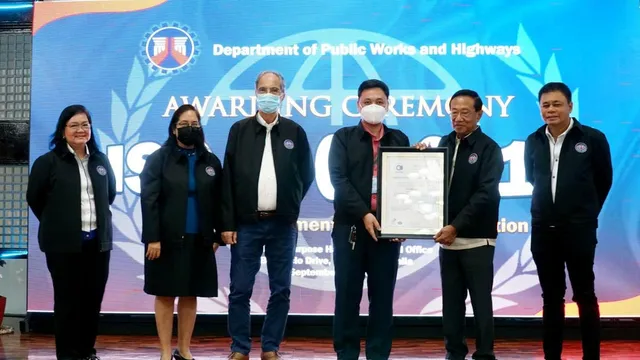
The Department of Public Works and Highways (DPWH) has retained its International Organization for Standardization (ISO) 9001:2015 Quality Management System Certification after SOCOTEC Certification International conferred the agency's official accreditation on Wednesday, September 14, 2022 at the DPWH Central Office in Port Area, Manila.

"This certification attests that the management systems of all six (6) Bureaus, nine (9) Services, five (5) Unified Project Management Office (UPMO) Clusters, 16 Regional Offices, and 183 District Engineering Offices of the Department nationwide adequately complies with international standards," said Secretary Manuel M. Bonoan during the awarding ceremony.

"Imagine an organization with over 200 sub-offices having all its processes - technical and support, certified against international standards. This is a major milestone in the continual improvement of our service delivery and better customer satisfaction for our stakeholders", added Secretary Bonoan.

DPWH was one of the first national government agencies that obtained ISO Certification. The agency has been ISO-certified since 2015, having met the ISO 9001:2008 standards for Ouality Management System.

All Department offices were awarded with the latest version of ISO 9001:2015 Quality Management System Certification in October 2017, which incorporated risk management to enable organizations to identify and provide a systematic approach to risk for more efficient quality management system.

The ISO Certification resulted into improved service delivery brought about by the streamlined and improved processes of the Department.

Present during the awarding ceremony were members of the DPWH Management Committee headed by Senior Undersecretary Emil K. Sadain including Assistant Secretaries Ador G. Canlas and Marichu A. Palafox, Overall Quality Management System (QMS) Overall Head and Deputy Head, respectively; SOCOTEC Certification International Operations Manager Erwin F. Quinto, Program Director Maria Rosario A. Ablan for the Inter-Agency Task Force on the Harmonization of National Government Performance Monitoring, Information and Reporting Systems (AO 25) Secretariat; former DPWH Undersecretary Raul C. Asis who spearheaded the DPWH ISO journey seven (7) years ago; as well as heads of the DPWH Regions, Bureaus, Services, and Project Management Offices.


Article courtesy of Department of Public Works and Highways

September 12, 2022

Photo credit: Department of Public Works and Highways

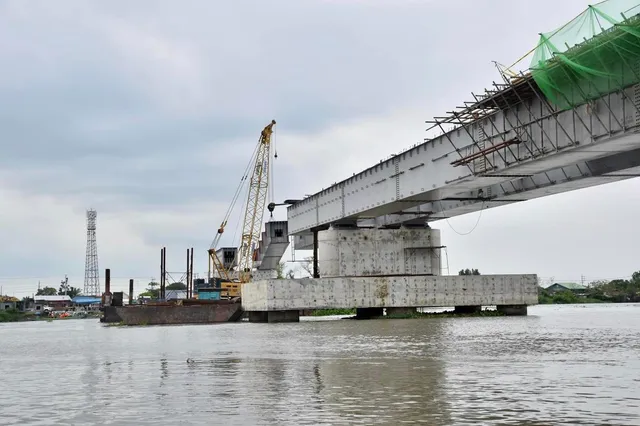
Construction work on the Pampanga Delta Bridge Project of the Department of Public Works and Highways (DPWH) in Masantol, Pampanga is now making a steady pace of progress.

DPWH Senior Undersecretary Emil K. Sadain, in his report to Secretary Manuel M. Bonoan, said that the bridge is 88% complete despite disruptions on the advancement of work brought about by the impact of COVID-19 pandemic.

The construction of the 270-meter bridge under the DPWH Bridges Construction Replacement Program (BCRP) 2 implemented by DPWH Unified Project Managent Office - Bridges Management Cluster (UPMO-BMC) is being carried out by contractor Eddmari Construction & Trading in joint venture partnership with J.H. Pajara Construction Company.

According to Senior Undersecretary Sadain, the Pampanga Delta Bridge is a crucial component of infrastructure development that will promote economic growth in the Municipalities of Masantol and Macabebe in Pampanga and Calumpit, Hagonoy, and Malolos City in Bulacan.

At present, these municipalities are exchanging trades through long routes passing Apalit, Pampanga, added Senior Undersecretary Sadain who together with UPMO-BMC Project Director Rodrigo I. Delos Reyes inspected the on-going bridge construction on Friday, September 9, 2022.

The bridge project costing ₱566.6 million will stimulate investment and growth with better connectivity for Masantol and Macabebe which are known to be Pampanga’s center of aquaculture development, the fastest growing food-producing activity on the northern coast of Manila Bay having hectares of fishponds for shrimps, bangus, tilapia and crabs.

The project involves the construction of concrete deck bridge made of five (5) spans of steel box girders supported by four (4) piers and two (2) abutments resting on bored piles of two (2) – 1.50-meter diameter at both abutments and six (6) – 1.80-meter diameter at piers.

During the inspection, Senior Undersecretary Sadain witnessed the launching of one (1) segment of girder at span pier 3 to pier 4 using specialized construction equipment like floating crane.

On behalf of Secretary Bonoan, I commend the team of UPMO-BMC headed by Project Director Delos Reyes with Project Manager Dina Lane O. Sagun, Project Engineer Joseph Ramoel B. Lofamia, and Materials Engineer John Christian T. Gaden for an immense project transformation despite work suspensions in the past at the height of COVID-19 pandemic with the sub-structures of the bridge, which represent piers and abutments fully completed and two (2) spans of steel box girders and half of span 3 which is part of the superstructure completed as well, said Senior Undersecretary Sadain.

The estimated completion date for the project has been scheduled for September 2023.


Article courtesy of the Department of Public Works and Highways

September 08, 2022

Photo credit: Rappler 

Around PHP2.5 billion have been allocated to modernize various airports nationwide and help generate more job opportunities in the country, according to the Department of Budget and Management (DBM) on Thursday.

Budget Secretary Amenah Pangandaman said giving the Department of Transportation (DOTr) a total of PHP2.5 billion for its Aviation Infrastructure Program in the proposed 2023 national budget is in line with President Ferdinand “Bongbong” Marcos Jr.’s goal of improving transportation infrastructure in the country.

“We fully support the directive of the President to give high priority to infrastructure development in our drive for growth and employment. Kasama po dito ang airports o mga paliparan sa bansa (These include airports in the country),” Pangandaman said in a press statement.

Under the proposed 2023 National Expenditure Program (NEP), the DBM has increased the DOTr’s budget to PHP167.1 billion, higher by 120.4 percent from the PHP75.8 billion the agency received in 2022.

The DOTr’s big-ticket railway and road transport projects will get the largest share of the proposed PHP167.1-billion budget for 2023, while its aviation modernization projects will also receive a significant amount of budget.

The PHP2.48 billion allocated for the implementation of the Aviation Infrastructure Program will be used for the construction, rehabilitation, and improvement of various airports across the country.

The airport projects include the modernization of Ninoy Aquino International Airport in Pasay City, Laoag International Airport, Tacloban City Airport, Antique Airport, and Bukidnon Airport.

Pangandaman said the proposed budget will also be used to finance the rehabilitation and improvement of other transport infrastructure projects in the aviation sector.

“With pouring much-needed budget to improve and modernize our airports, we help fulfill President Marcos’ directive to Build, Better, More,” Pangandaman said.

Tacloban City Airport would receive PHP1.42 billion, or bulk of the proposed budget for DOTr’s Aviation Infrastructure Program, Makati City Rep. Luis Campos Jr., vice chairperson of House Appropriations Committee, earlier said.

Antique Airport, otherwise known as Evelio Javier Airport, would get PHP500 million, while Laoag International Airport would receive PHP445 million, Campos said.

Campos said Bukidnon Airport and NAIA would get PHP80 million and PHP40 million, respectively.

In the President’s Budget Message, Marcos emphasized the importance of infrastructure development in economic transformation, especially to propel the growth of the agriculture, trade, and tourism sectors. By Ruth Abbey Gita-Carlos


Article courtesy of the Philippine News Agency

September 08, 2022

Photo credit: Department of Public Works and Highways

Key individuals from the Department of Public Works and Highways (DPWH) and National Economic and Development Authority (NEDA) attended the special briefing requested by the Committee on Flagship Programs and Projects of the House of Representatives.

Upon instruction of DPWH Secretary Manuel M. Bonoan, Senior Undersecretary Emil K. Sadain on Wednesday, September 7, 2022 provided a briefing to the committee members on the status of the country’s flagship programs and projects.

This came after this new regular committee in the 19th Congress convened for its organizational meeting and adoption of internal rules of procedure physically presided by Senior Vice Chairperson Maria Carmen S. Zamora at Conference Rooms 3 & 4 of RV Mitra Building of Congress in the absence of Chairperson Congressman Claude P. Bautista.

The Committee on Flagship Programs and Projects has jurisdiction over matters directly and principally relating to the identification, prioritization, implementation, monitoring, evaluation and review of highly-strategic infrastructure programs and projects.

Senior Undersecretary Sadain, Chief Implementer of Flagship Projects under the Build Build Build Program in the last eight (8 ) months of President Rodrigo Duterte administration, provided members of the committee present at the physical meeting and virtually thru zoom videoconference comprehensive information and status of the country’s flagship programs and projects.

Recognizing that the backbone of an economy is its infrastructure, President Ferdinand Romualdez Marcos Jr. has earlier declared in his first State of the Nation Address on July 2022 that the infrastructure program of the Duterte administration must not only continue but, wherever possible, be expanded to keep the momentum.

Under the administration of President Marcos, the government aims to ‘Build Better More’ infrastructure as it intend to prioritize the construction of better farm-to-market roads and supporting irrigation development programs that will enhance agricultural production for food security; development of more roads leading to tourism destinations to facilitate revival, recovery, and resiliency of the tourism industry from the devastating effects of the Covid-19 pandemic; and building of resilient schoolbuildings with comfortable and spacious classrooms towards the delivery of quality education, said Senior Undersecretary Sadain.

Senior Undersecretary Sadain reported that there are about 119 infrastructure flagship projects (IFPs) prioritized as game-changing urgently needed projects of national significance and considered subset of the Build Build Build program, the banner program for accelerating infrastructure development.

Of the 119 IFPs implemented by 17 agencies, 76 are transport and mobility sector, 15 urban development sector, 11 water resources sector, three (3) power and energy sector, 10 information communication technology sector, and four (4) health sector.

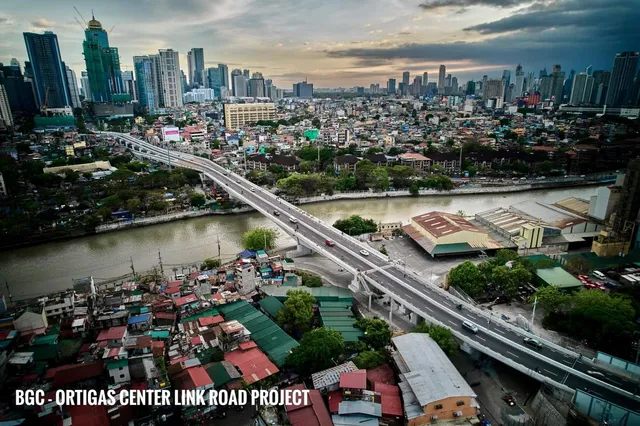
Five (5) of the 15 infrastructure flagship projects completed IFPs are under DPWH portfolio namely Bonifacio Global City-Ortigas Center Link Road Project; Binondo-Intramuros Bridge and Estrella-Pantaleon Bridge under China grant bridges; improvement of remaining sections along Pasig River from Delpan Bridge to Napindan Channel; programme for the support to rehabilitation and reconstruction of Marawi City and its surrounding areas; and flood risk management project (FRIMP) in Cagayan, Tagoloan, and Imus Rivers.

In addition to completed IFPs are two (2) projects partially open or turnover for operation at the end of June 2022 with people now reaping the project benefits including the Samar Pacific Coastal Road Project in Eastern Visayas and Malitubog - Maridagao Irrigation Project - Stage 2 in municipalities in Province of Cotabato and Maguindanao while 10 more projects will be completed towards end of the year 2022.

The meeting livestreamed on the official facebook page of the House of Representatives was attended physically by Congressman Nelson L. Dayanghirang, Congressman Joseph S. Tan, and Committee Secretary Ms. Cristina S. Sulaik.

Other attendees are NEDA Assistant Secretary Roderick M. Planta; DPWH Assistant Secretary Constante A. Llanes Jr.; DPWH Project Directors Ramon A. Arriola III, Benjamin A. Bautista, Sharif Madsmo H. Hasim, and Rodrigo I. Delos Reyes, DPWH Director Randy R. Del Rosario, and NEDA OIC-Director Aldwin U. Urbina.


Article courtesy of the Department of Public Works and Highways

September 05, 2022

President Ferdinand "Bongbong" Marcos Jr. on Thursday met with the Private Sector Advisory Council (PSAC) to explore possible cooperation for the development of infrastructure, water, and energy sectors.

The Office of the President (OP), on its official Facebook page, shared several photos taken during Marcos' meeting with PSAC at Malacañan Palace in Manila.

"President Ferdinand Romualdez Marcos Jr. meets with members of the Private Sector Advisory Council (PSAC) to discuss how Public-Private Partnerships (PPP) can help the Philippines improve its infrastructure, water, and energy services," the OP said.

Malacañang has yet to provide additional details about the meeting.

Marcos, in his first State of the Nation Address, vowed to put a premium on various fields, including infrastructure, health and energy.

Marcos held a series of meetings with the PSAC since he assumed the presidency on June 30.

The PSAC, in its meeting with Marcos in August, sought the expansion of the micro, small, and medium enterprises (MSMEs) in the country to create more job opportunities for Filipinos.

Following his meeting with the private sector, Marcos ensured that the revival of MSMEs is one of the administration's priorities.

MSMEs comprise 99.51 percent of business establishments in the Philippines and employ around 63 percent of the country's workforce.

Also in August, Marcos met with the PSAC to express his support for the plan to offer a "ladderized" program for nurses to strengthen the health sector and address the supposed "brain drain," or the departure of professionals from the country for better pay or living conditions.

The proposed ladderized program that will be adopted by the national government is already implemented by the University of the Philippines (UP)-Manila and select local government units (LGUs).

Under the program, UP Manila offers a two-year scholarship for midwives who come back to the community to serve upon course completion. Once they gain experience, they return to UP Manila to study nursing for another two years.

In July, Marcos, who concurrently serves as head of the Department of Agriculture, also expressed excitement over the possible partnership with the private sector to improve the agricultural sector.

The PSAC intends to regularly report to the President to provide feedback on what is happening on the ground and make recommendations on modern policy development. By Ruth Abbey Gita-Carlos

September 05, 2022

The Private Sector Advisory Council (PSAC) -- a group composed of leaders of private companies involved in the infrastructure sector -- has expressed its support for the completion of ongoing and upcoming infrastructure programs of the Marcos administration.

In a meeting with President Ferdinand “Bongbong” Marcos Jr. in Malacañang on Friday, PSAC convenor and Aboitiz Group chief executive officer (CEO) Sabin Aboitiz agreed with Marcos to provide solutions to problems related to infrastructure, water, and energy through public-private partnerships (PPP).

“I am encouraged by the focused and aligned collaboration taking place among the various participants in these meetings with the President. We are all keenly aware and in agreement to the issues that demand attention, and are equally determined to support the administration in finding the right solutions,” Aboitiz said.

During the meeting, PSAC representatives recommended revisions to the implementing rules and regulations of the Build-Operate-Transfer Law to encourage investor confidence and strengthen the PPP governing board.

Related to the water sector, it supported the creation of a new department and regulatory commission and implement a “vertical industry structure.”

For the energy sector, it called for the expansion of coverage and full implementation of the “Energy Virtual One-Stop Shop” and supported the efforts of the National Grid Corporation of the Philippines.

In the coming weeks, the group is set to meet again with Marcos to discuss the Tourism sector’s road map and recommendations.

The President was joined in the meeting by Executive Secretary Victor Rodriguez, Finance Secretary Benjamin Diokno, Public Works and Highways Secretary Manuel Bonoan, Transportation Secretary Jaime Bautista, Energy Secretary Raphael Lotilla, Socio-economic Planning Secretary Arsenio Balisacan, and other government officials.

Other PSAC members present during the meeting were Metro Pacific Investments Corporation chairperson and president Manuel Pangilinan, International Container Terminal Services, Inc. chair and president Enrique Razon, and San Miguel Corporation president and CEO Ramon Ang, among others. By Raymond Carl Dela Cruz


Article courtesy of the Philippine News Agency

September 05, 2022

Photo credit: Department of Public Works and Highways

Officials of the Department of Public Works and Highways (DPWH) and Department of Finance (DOF) met on Friday, September 2, 2022 for the review of flagship infrastructure projects funded by Official Development Assistance (ODA).

DPWH Senior Undersecretary Emil K. Sadain said that the review meeting with the DOF International Finance Group headed by Undersecretary Mark Dennis Y.C. Joven is in line with the DPWH goal of stepping up implementation of key infrastructure projects to support the government’s economic recovery and create the country’s foundation for stronger and more inclusive growth.

Secretary Manuel M. Bonoan has earlier declared that the administration of President Ferdinand Romualdez Marcos Jr. will ‘build better more’ as it continues to build and complete flagship infrastructure projects that have been started and approved by the previous administration to boost the Philippine economy.

According to Senior Undersecretary Sadain, several roads, bridges, and flood control projects handled by the DPWH Unified Project Management Office (UPMO) Operations are financed by foreign grants and loans and passed on to the new administration in the advanced stage of implementation.

Senior Undersecretary Sadain said that external sources of funds such as Japan International Cooperation Agency (JICA), Asian Development Bank (ADB), Korean Government’s Economic Development Cooperation Fund (EDCF), China ODA, World Bank and Asian Infrastructure Investment Bank (AIIB), and the United Kingdom affirmed commitment to sustain infrastructure partnership with the Philippine government by providing support investments to bankroll numerous big-ticket infrastructure projects.

The Japanese government thru JICA Philippines currently supports the Arterial Road Bypass Project, Phase Ill (Plaridel Bypass); Davao City Bypass Construction Project; Road Network Development Project in Conflict Affected Areas in Mindanao; Programme for the Support to Rehabilitation and Reconstruction of Marawi City and its Surrounding Areas; Cebu-Mactan Bridge (4th Bridge) and Coastal Road Construction Project; Metro Manila Priority Bridges for Seismic Improvement Project (Guadalupe and Lambingan Bridges); Pasig-Marikina River Channel Improvement Project, Phase IIl (improvement of remaining sections along Pasig River, Delpan Bridge to Napindan Channel); Pasig-Marikina River Channel Improvement Project, Phase IV; Flood Risk Management Project for Cagayan River, Tagoloan River and Imus River; Flood Risk Management Project for Cagayan De Oro River; and Cavite Industrial Area Flood Management Project.

Projects covered by financing partnership arrangements with ADB, a multilateral financial institutions, are the Improving Growth Corridors in Mindanao Road Sector Project; Emergency Assistance for Reconstruction & Recovery of Marawi (Output 2: Reconstruction and Development Plan for a Greater Marawi, Stage 2; Metro Manila Bridges Project (3 Bridges connecting Marikina City and Quezon City: Kabayani-Katipunan Avenue Extension Bridge formerly Marikina-Vista Real Bridge, Homeowners Drive-A. Bonifacio Avenue Bridge formerly J.P. Rizal-Lopez Jaena Bridge, and Marcos Highway-St. Mary Bridge formerly J.P. Rizal-St. Mary Bridge); Bataan-Cavite Interlink Bridge; and Laguna Lakeshore Road Network Project, Phase I.

Meanwhile, the Chinese government through a bilateral loan agreement and/or grant financing facility are involved in the following projects: Metro Manila Logistics Network - China-Grant Bridges: Binondo-Intramuros and Estrella-Pantaleon Bridges; Samal Island-Davao City Connector Bridge; Priority Bridges crossing Pasig-Marikina River and Manggahan Floodway Bridges Construction Project (3 Bridges: North & South Harbor Bridge, Palanca-Villegas Bridge, and Eastbank-Westbank Bridge); Panglao-Tagbilaran City Offshore Bridge Connector; Davao City Expressway; and Ambal-Simuay River and Rio Grande de Mindanao River Flood Control and Riverbank Protection Project.

Under Korea ODA are the design and build for the construction of Panguil Bay Bridge; Samar Pacific Coastal Road Project; Integrated Disaster Risk Reduction and Climate Change Adaptation Measures in the Low-Lying Areas of Pampanga Bay; and Panay-Guimaras-Negros Link Bridge.

Projects under Wold Bank and AIIB are the Metro Manila Flood Management Project - Phase I and Philippine Seismic Risk Reduction and Resilience Project while the United Kingdom is interested in financing the construction of three (3) long span bridges in the Province of Cagayan namely Alcala, Pinacanauan, and Solana-Bagay under Iconic Bridge Project for Socio-Economic Development, Phase I.

The investments on these public infrastructure on various parts of the country will be the cornerstones way forward to recovery from the pandemic for sustainable development, added Senior Undersecretary Sadain.

At the conclusion of the meeting, both DPWH and DOF strongly supports the holding of regular joint meeting on infrastructure development and economic cooperation to conduct implementation of ODA projects more efficiently and effectively.

The meeting held at DOF Head Office was also participated by DOF Executive Director Helena B. Habulan; UPMO Project Directors Benjamin A. Bautista, Sharif Madsmo H. Hasim, Ramon A. Arriola III, Rodrigo I. Delos Reyes, and Soledad R. Florencio; and Project Manager Shirley O. Castro.


Article courtesy of Department of Public Works and Highways
August 30, 2022

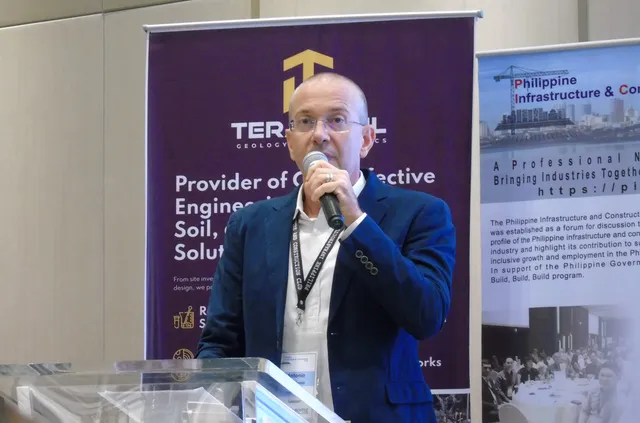
Photo: 24 June 2022 - Mr. Antonio Peñalver (Executive Director, Aboitiz Construction, Inc.) at the Philippine Infrastructure and Construction Club, Seda Hotel BGC [Photo by Marcelle P. Villegas]

Last 24 June 2022 in Seda Hotel BGC, Philippine Infrastructure and Construction Club hosted their first face-to-face luncheon of the year with executives from Aboitiz InfraCapital and Aboitiz Construction, Inc. as their guest speakers. Mr. Jolan Formalejo, Vice President for Inventory Generation Group of Aboitiz InfraCapital (AIC) and Mr. Antonio Peñalver - Executive Director of Aboitiz Construction, Inc. graced the event with their presentations and talks on their company’s achievements, ongoing and upcoming infrastructure projects, and best practices in the industry.

Mr. Jolan Formalejo’s presentation is titled "Aboitiz InfraCapital: Industrialization and Investments in South Luzon".

He began his presentation by reporting that 2021 is a banner year for AIC Economic Estates. AIC received a total of 9 honors, including the International Finance Real Estate Awards and Property Guru Property Awards for Best Industrial Developer in Asia. LIMA Estate was recognised as the Country Winner for Best Industrial Development.

Mr Formalejo enumerated the significant numbers concerning Region IV-A – CALABARZON in terms of economic growth and number of investors, namely:

  • 7.6% annual economic growth rate in 2021—the fastest growing region of the country
  • 2.51% economic growth from CALABARZON-based industries
  • P4.87B amount of foreign investment pledges for projects in CALABARZON for Q1 2022
  • 1700 estimate number of foreign companies currently operating in the region
  • 6.8 M estimated labor force in CALABARZON as of Dec 2021
  • 1314 new infrastructure projects completed in 2021 alone with a total cost of P7.17B

From his report, the CALABARZON Industrial Belt is host to several industries such as Manufacturing (Automotive, Electronics, Garments, Agricultural Products, etc.), Logistics, Healthcare, Construction, Energy and Tourism.

Focusing on Batangas, the province is boosting its infrastructure projects with the help of the PPP Center. “This partnership will help decentralize Metro Manila by opening up more employment opportunities through the construction of additional infrastructure and development facilities in the region.”

These projects include the Batangas International Airport, Batangas Port Development Phase IV, Batangas City Access Zone, Calamba-Batangas Railway Spur Line, and Batangas Regional Food Terminal.

The Batangas Industrial Belt has a total land area of 316,581 hectares or 3,165.81 km². This is considered as CALABARZON’s industrial powerhouse. Batangas is the second richest province in the Philippines in 2020 in terms of net assets. “PEZA bats for the creation of more ecozones particularly in land-rich Batangas.” 

The most prevalent industries here are the oil refinery, natural gas, processed food, gifts, housewares and wearables.

24 June 2022 – (Left) Atty Patricia A.O. Bunye is Senior Partner and the Deputy Managing Partner for Administration of Cruz Marcelo & Tenefrancia. She was the emcee of the event.  (Right) Mr. Jolan Formalejo, Vice President for Inventory Generation Group of Aboitiz InfraCapital [Photos by PICC]

Mr Formalejo also talked about the Aboitiz InfraCapital Economic Estates, namely the MEZ2 Estate, LIMA Estate, and West Cebu Estate. These are “Industrial-anchored Estates complemented by Commercial, Residential and Institutional components.”

LIMA Estate is in Lipa, Malvar, Batangas is 794 hectares. This is a PEZA-registered economic zone. The LIMA Central Business District is the first fully integrated CBD development in Batangas. LIMA Tower One is the first of 6 towers to be built in the LIMA Office Park Campus in 2022.

On the sustainability at LIMA Estate, “Aboitiz InfraCapital is gearing up for the transformation of the LIMA Estate into a smart, next-generation economic center in the thriving investment hub of Batangas.”

More on its infrastructure features, “fully complemented by a reliable infrastructure system, LIMA is supported by affiliates of the Aboitiz Group to ensure ease of doing business for our locators.”

Another feature is having being a “PEZA and BOC One-stop Shop”. There is the convenience of PEZA and BOC offices located inside the park provides 24/7 service to LIMA Technology Center locators. This feature will enhance ecozone linkages with the local government, communities, businesses and other stakeholders.

Aside from LIMA Estate, AIC’s other Economic Estates include the West Cebu Estate is in Balamban, Cebu and the MEZ2 Estate in Lapu-Lapu City, Cebu. West Cebu Estate covers 540 hectares, while MEZ2 Estate has a span of 63 hectares.

In summary, Aboitiz InfraCapital Economic Estates today has 1,100 hectares of industrial business parks currently being operated; 60,000 sqm GLA for office buildings in Cebu, Makati and Ortigas; with a total of 90,000 jobs generated across Central Visayas and Southern Luzon; 200,000 sqm PEZA-accredited office spaces under planning; 100,000 sqm GLA (gross leasable area) of commercial retail spaces in Cebu and Batangas.

“We continue to deliver innovative concepts translated to thriving fully-integrated industrial estates and commercial communities for 30 years, known for its deliberately planned, and purposely designed developments.”

On the second part of the PICC Luncheon, Mr. Antonio Peñalver, Executive Director of Aboitiz Construction, Inc. gave a presentation about “ACI’s Best Practices in the Construction Industry”.

Aside from AIC’s best practices in the construction industry, he discussed “how ACI is proactively transforming towards becoming a well-known and most trusted contractor in the country”.

"We strongly affirm that as we drive towards expanding our operations and setting a national footprint, we have started to implement innovation programs that will continue this momentum throughout the rest of 2022".

It is noteworthy to mention that last May 2022, Aboitiz Construction successfully finished the construction of another 69kV overhead transmission line project that consists of 37 electric poles of Lima Enerzone (LEZ) in Lipa City, Batangas. This project is part of a bigger move to strengthen the power delivery in Lima Estate. This is possible through a partnership between Aboitiz Construction and Lima Enerzone. Another objective of the project is to improve power reliability in the area.

Another milestone for Aboitiz Construction took place on March 2021. The company completed the design and construction of Berth for one of the most modern container ports in the country, the Davao International Container Terminal (DICT) in Panabo City, Davao del Norte.

“The construction of Berth has increased the turnaround time of loading of vessels. This means more vessels can now dock at the terminal to bring more produce and agricultural products in and out of the region, potentially creating demand. A total of 121 employees were hired for the said project and out of this number, around 72% were hired locally.”