
Category:
WIDENING OF LAWTON AVENUE IN TAGUIG CITY FINISHED BY Q2 OF 2022
Photo credit: Department of Public Works and Highways
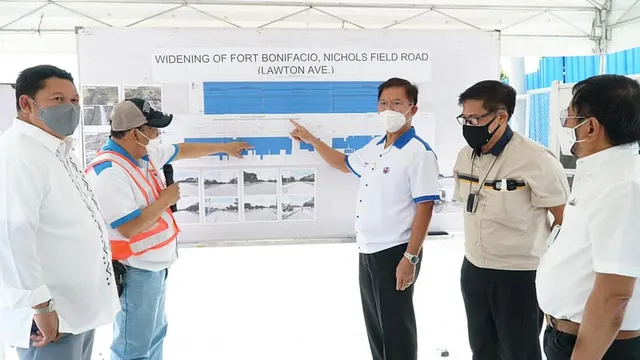
The Department of Public Works and Highways (DPWH) has fast-tracked the widening works at Fort Bonifacio-Nichols Field Road or Lawton Avenue in Taguig City to meet its target completion by the second quarter of 2022.
“As the government increases mobility in Metro Manila amid the pandemic, this project is vital in addressing traffic woes experienced by motorists,” said DPWH Secretary Roger G. Mercado during project inspection on Thursday, January 20, 2022, along with Senior Undersecretary Rafael C. Yabut, Assistant Secretary Wilfredo S. Mallari and National Capital Region (NCR) Director Nomer Abel P. Canlas.
The road widening has three phases with the 1.34-meter Phase 1 traversing from 5th Avenue to Bayani Road completed and opened to the public on November 17, 2020.
“We are keen in expediting the completion of the remaining two phases of the project with Phase 2 covering 1,100 lineal meters from Bayani Road to Philippine Navy and Phase 3 covering 240 lineal meters from Philippine Navy to Pasong Tamo Extension,” said Secretary Mercado.
Once fully completed, the 3.1-kilometer, four (4)-lane Lawton Avenue will be converted into a six (6)-lane thoroughfare that can accommodate influx of vehicles traversing the area and will help decongest traffic in nearby Epifanio delos Santos Avenue (EDSA), South Superhighway and C-5 Road.
It will also complement the 961.427-lineal meter Bonifacio Global City-Ortigas Center Link Road Project which has improved access to and from the cities of Taguig, Pasig, Makati and Mandaluyong.
The widening of the Lawton Avenue is part of the EDSA Decongestion Program, one of the flagship projects of the Duterte administration under the Build Build Build Program.
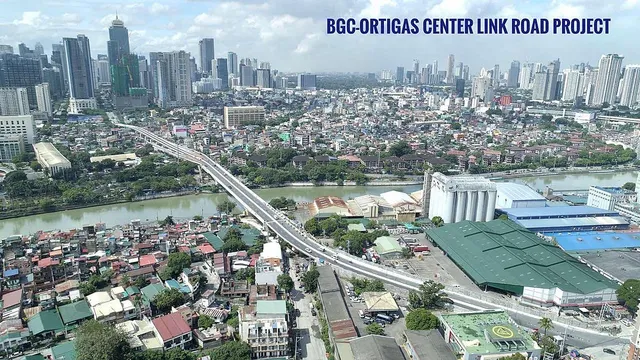
BBB CHIEF IMPLEMENTER REPORTS DEVELOPMENT OF FLAGSHIP PROJECTS
Department of Public Works and Highways (DPWH) Undersecretary Emil K. Sadain, President Rodrigo Roa Duterte’s designated Chief Implementer of flagship projects under the Build Build Build (BBB) Program, has promoted collaborative engagements among oversight and implementing agencies to accelerate the preparation, implementation, and completion of various infrastructure flagship projects (IFPs) under the Build Build Build (BBB) Program.
Undersecretary Sadain said that the project teams of DPWH under the leadership of Secretary Roger G. Mercado and the Department of Budget and Management, National Economic and Development Authority, Department of Finance, Department of Transportation, Department of Health, National Irrigation Administration, Metropolitan Waterworks Sewerage System, Local Water Utilities Administration, Department of the Interior and Local Govt., Department of Information Communication Technology, Toll Regulatory Board, and Philippine Statistics Authority are working across sectoral boundaries to achieve overarching goals of completing their respective marquee projects by overcoming bottlenecks and delays.
The BBB Chief Implementer organized the successful holding of the 1st Inter-Agency Forum on December 14-15 which provided the opportunity to thresh out and recommend solutions on actual issues on the ground which most of the time are not reported on usual accomplishment reports of agencies in the past.
In his 4th quarter report to the Office of the President thru Executive Secretary Salvador C. Medialdea, Undersecretary Sadain disclosed the completion of eight projects worth ₱94.64 Billion in 2021 despite being affected by the pandemic crisis.
Moving forward, we are hoping that the next administration will continue President Duterte’s legacy of infrastructure development thru the BBB Program for recovery, growth and sustainability as highlighted by the President during the recent signing of 2022 General Appropriations Act or national budget to increase the Philippines growth potential and give the Filipinos a better life, added Undersecretary Sadain.
Both DPWH and the Department of Transportation (DOTr) have completed four (4) flagship projects each in 2021.
Completed under DPWH fortfolio are projects mostly implemented by DPWH Unified Project Management Office (UPMO) Operarions headed by Undersecretary Sadain to include the BGC-Ortigas Center Link Road Project, Estrella Pantaleon Bridge, and Marawi Transcentral Road Phase 1.
BGC-Ortigas Center Link Road Project and Estrella Pantaleon Bridge are new alternative linkages between major thoroughfares constructed to increase the number of usable roadways that would decongest traffic in EDSA and other major roads in Metro Manila.
The BGC-Ortigas Center Link Road Project shortened to 12 minutes the travel time between Bonifacio Global City and Ortigas Central Business District while Estrella Pantaleon Bridge is a modern bridge connecting cities of Mandaluyong and Makati within five (5) minutes that has not only improved mobility but also enhanced the resilience against natural disasters.
The 18.97-kilometer Marawi Transcentral Road Phase 1 funded by a grant from Japan fulfilled the government’s promise to build back better Marawi City with a peaceful road to recovery from the suffering due to the siege four (4) years ago.
A fourth project completed and inaugurated by President Duterte funded under the Public-Private Partnership Program is the 18-kilometer Metro Manila Skyway Stage 3 from Buendia, Makati City to Balintawak, Quezon City that connected North Luzon Expressway (NLEX) and South Luzon Expressway (SLEX).
DOTr implemented and completed projects in 2021 are the LTO Central Command Center, LRT-2 East Extension, GenSan Airport Development Project, and Bicol International Airport.
A total of 77 IFPs projects worth ₱3.51 trillion are on-going while 27 projects are currently in the pipeline worth ₱1.09 trillion.
Considered pipeline projects are those that may start construction within the present administration but will be part of the continuity pipeline of the succeeding administrations.
In terms of completion, 18 projects will be completed within the administration’s term while eight projects will be delivered to completion in the second semester of 2022 and 86 projects in 2023 onwards.
Other than providing the much-needed infrastructure for Filipinos, investment in the IFPs under BBB Program has the biggest multiplier in terms of created jobs.
Based on preliminary estimates of the National Economic and Development Authority, it is projected that about 580,000 employment in 2021 and about 620,000 employment in 2022 will be generated from the implementation of the IFPs.
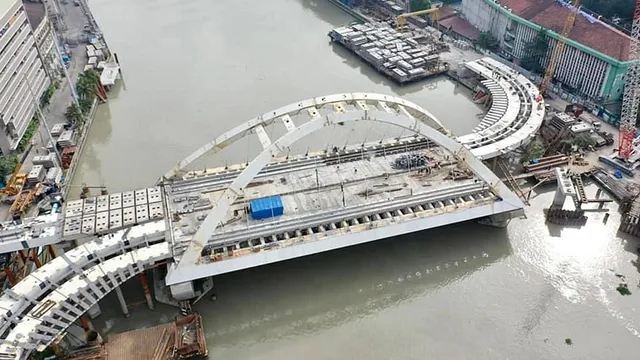
CONSTRUCTION OF NEW ICONIC BRIDGE IN MANILA NOW 88% COMPLETE
Photo credit: Department of Public Works and Highways
The Department of Public Works and Highways (DPWH) has started with the massive installation of prefabricated girders for abutments and ramps of the iconic Binondo - Intramuros Bridge Project in Manila.
In his report to DPWH Acting Secretary Roger "Oging" Mercado, Undersecretary and Build Build Build(BBB) Chief Implementer Emil K. Sadain said that already lifted on piers were steel box girder components for the up-ramp at Intramuros side with a total length of 191 meters and between pier 5 to near pier 8 for the viaduct structure over Estero de Binondo and corresponding ramp at Binondo side.
Undersecretary Sadain, in-charge of DPWH Unified Project Management Office (UPMO) Operations, said that the overall progress of the bridge project implemented by UPMO - Roads Management Cluster 1 (UPMO-RMC 1) is now at 88.63 percent.
Simultaneously, manpower and equipment resources are also doing the lifting of pre-fab girders for the 298 meters up-ramp at Muelle dela Industria side.
“We are expecting a lot of dramatic changes for this project, with all the needed materials and high-performance launching equipment available on the construction site”, Undersecretary Sadain told contractor China Road and Bridge Corporation following his inspection with UPMO RMC 1 Project Director Benjamin A. Bautista, Project Manager Melchor Kabiling, and Project Engineer Joey Doria.
The Binondo-Intramuros Bridge Project involves the construction of 680 linear meter bridge connecting historic district of Intramuros at Solana Street and Riverside Drive with the bustling district of Binondo at Rentas Street/Plaza del Conde Street and Muelle dela Industria.
With an already completed basket-handle tied steel arch main bridge over Pasig River, DPWH is targetting to finish the project by the first half of 2022.
Initially, the new bridge would be completed by end of 2021.
However, DPWH had to push back the project timeframe to relocate public and private services and utilities in the area as well as to wait on the pre-fabricated steel materials to come in from China. The project was also affected by work suspension at the height of COVID-19 pandemic.
The ₱3.39-Billion bridge project is financed by a grant aid rom the People’s Republic of China.
Considered one (1) of the flagship infrastructure projects of DPWH under the Build, Build, Build Program, the bridge project is expected to not only cut travel time between the two busy districts of Intramuros and Binondo in Manila but also benefit approximately 30,000 vehicles daily.
Article courtesy of The Department of Public Works and Highways
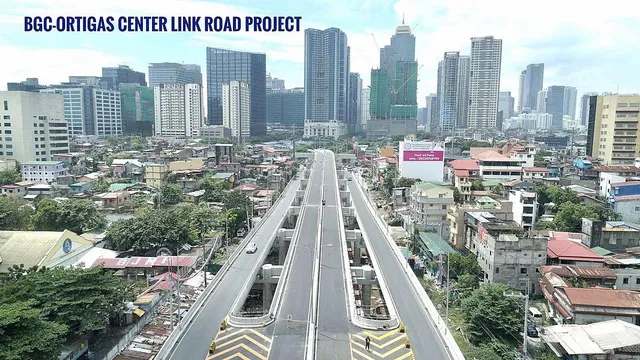
DPWH, BBB AGENCIES HOLD FIRST FORUM ON INFRASTRUCTURE FLAGSHIP PROJECTS
Photo credit: Department of Public Works and Highways
Government agencies under the Build Build Build (BBB) program commit to push forward the implementation of high-impact infrastructure flagship projects (IFPs) that will bring long-term benefits to the Filipino people.
Department of Public Works and Highways (DPWH) Acting Secretary Roger "Oging" Mercado, in his message during the 1st BBB Inter Agency Forum organized by Undersecretary Emil K. Sadain, expressed confidence towards sustainability and continuity of priority flagship projects which will be the foundation of economic recovery from COVID-19 pandemic.
As the designated Chief Implementer of Flagship Projects under BBB Program by President Rodrigo Duterte, Undersecretary Sadain spearheaded the review on the progress of various IFPs in order to ensure the expeditious execution and timely completion of flagship projects implemented by the Department of Transportation, Department of Health, National Irrigation Administration, Metropolitan Waterworks Sewerage System, Local Water Utilities Administration, Department of the Interior and Local Govt., Department of Information Communication Technology, Toll Regulatory Board, and Philippine Statistics Authority.
As we gear up for a better approach in sustaining the implementation of infrastructure flagship projects, we seek to identify and address implementation and capacity gaps particularly in challenging environments as these holds the key to realizing the great vision of President Duterte for the BBB Program, said Undersecretary Sadain.
In order to establish proper coordination and practical collaboration among agencies, the forum held on December 14-15, 2021 was also participated by Department of Budget and Management (DBM) Undersecretary Rolando U. Toledo; National Economic and Development Authority (NEDA) Assistant Secretary Roderick M. Planta with his staff; DPWH Undersecretary Emerson L. Benitez; and DPWH Project Directors Benjamin A. Bautista, Sharif Masdmo H. Hasim, Rodrigo Delos Reyes, Ramon P. Arriola III and Johnson Domingo.
The forum was a significant step for the designated BBB Chief Implementer to come up with a comprehensive report of the accomplishments for IFPs under BBB as well as the scale-up plans on infrastructure development for the remainder of the term of President Duterte and forward looking in 2022 to the upcoming change of administration.
The event is also a very fitting opportunity for every agency to share its best practices and implementation journey, key issues/concerns and challenges, and provide plans and resolutions that can be applied to pipeline projects.
Other than the COVID-19 pandemic and adverse weather condition as among the drawbacks in project implementation, other bumps identified/mentioned/discussed at the forum include regulatory environment issues, delayed procurement, difficulty in acquiring right of way, insufficient funds, and delayed financing approval.
Article courtesy of Department of Public Works and Highways
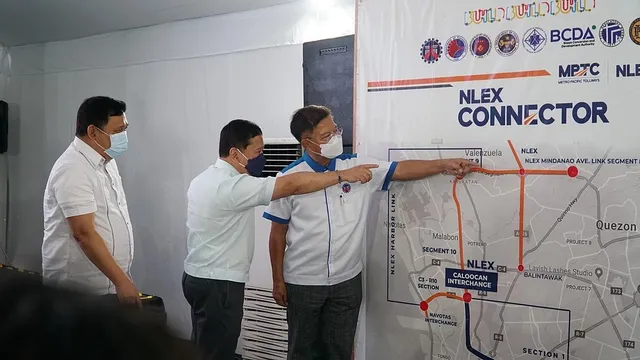
DPWH, NLEX BREAKS GROUND FOR STA. MESA SECTION OF NLEX-SLEX CONNECTOR ROAD
It’s all systems go for the Sta. Mesa Section of the North Luzon Expressway (NLEX) - South Luzon Expressway (SLEX) Connector Road Project seen to cut to just 20 minutes the two (2) hours travel time between the two (2) expressways.
Public Works Secretary Roger "Oging" Mercado, together with Metro Pacific Tollways Corporation President and CEO Rodrigo Franco, NLEX Corporation President and General Manager Luigi Bautista, China Road and Bridges Corporation (CRBC) Branch General Manager Ren Xiaopeng led on Tuesday, December 14, 2021 the ceremonial groundbreaking of the 2.75km Section 2 of the elevated expressway spanning España, Manila to the Polytechnic University of the Philippines (PUP) in Sta. Mesa, Manila.
“This section will pave the way to connect NLEX and SLEX through the Metro Manila Skyway Stage 3, benefitting at least 35,000 motorists per day and boosting economic activities in Manila, Caloocan, Malabon, Navotas, and the surrounding areas in the North and South”, announced Secretary Mercado.
Secretary Mercado added that the 5-km Manila Section of the NLEX-SLEX Connector, which started in May 2019, is now 54.27% complete and is expected to be completed by the second half of 2022 while the Sta. Mesa Section will open by early 2023.
NLEX Corporation, which operates NLEx and Subic Clark Tarlac Expressway, earlier signed an agreement with CRBC for the civil works contract of the elevated road that traverses portions of the Philippine National Railways right-of-way to provide a viable 24/7 route for truckers and an alternate route between NAIA and Clark airports.
For its part, NLEX Corp President Luigi Bautista maintained their commitment to participate in the infrastructure development that supports jobs and business opportunities as well as pave the way for better services through the ‘Build, Build, Build’ Program.
The groundbreaking and contract signing ceremony was also participated by DPWH Senior Undersecretary Rafael C. Yabut; DPWH Undersecretary for Planning, PPP and Information Management Service Maria Catalina E. Cabral; DPWH Public-Private Partnership Service Director Alex Bote; PNR General Manager Junn Magno and Assistant General Manager Celeste Lauta; Toll Regulatory Board Executive Director Alvin Caraullo; CRBC Marketing Manager Haiyan Mo; and NLEX Corp Vice President for Tollway Development and Engineering Nemesio Castillo and Chief Finance Officer Maria Theresa Wells.
CONSTRUCTION OF STRATEGIC TUNNEL PROJECT IN DAVAO CITY MOVES
Photo credit: Department of Public Works and Highways
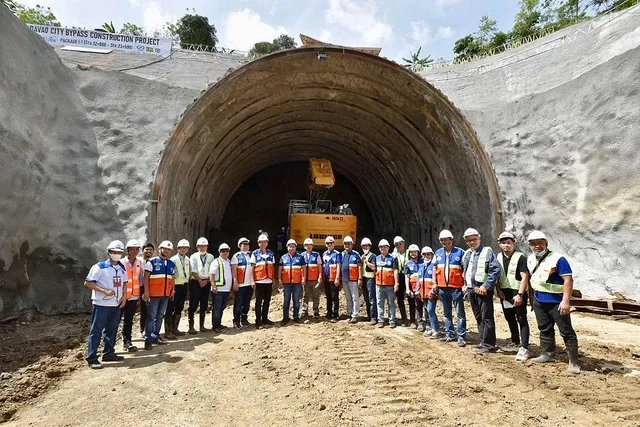
One year into the 37-month schedule, the on-going 10.7 kilometer Contract Package (CP) 1-1 of the Davao City Bypass Road Construction Project is heating up making significant progress.
In his report to Department of Public Works and Highways (DPWH) Secretary Roger "Oging" Mercado, Undersecretary and Build Build Build (BBB) Chief Implementer Emil K. Sadain said that recent project site visit showed a workable area of about eight ( kilometers including the tunnel segment.
The tunnel is an important construction component of the 45.5 kilometer Davao City Bypass Road Project.
It is undeniable that implementation of most flagship infrastructure projects has been enormously interrupted by the Covid-19 pandemic restrictions, adverse weather condition, and among others.
“I am glad that since the tunnelling works was launched and witnessed by no less than Secretary Mercado and Japanese Ambassador to the Philippines Kazuhiko Koshikawa last third week of November 2021, the excavated length for the north portal is already at 10 meters, complete with efficient and safe ground control elements of steel ribs support, rock bolts, wire mesh and pneumatically applied large-aggregate concrete or shotcrete”, added Undersecretary Sadain, in-charge of the DPWH Unified Project Management Office (UPMO) Operations.
Others who joined the project visit includes UPMO Projects Director Benjamin A. Bautista, Roads Management Cluster 1; Sharif Madsmo H. Hasim, Roads Management Cluster 2; Ramon A. Arriola III, Flood Control Management Cluster; Rodrigo I. Delos Reyes, Bridges Management Cluster; and Johnson V. Domingo, Buildings and Special Projects Management Cluster; and Bureau of Construction OIC-Director Aristarco M. Doroy.
The construction of two (2)-tube mountain tunnel will be the longest road tunnel in the Philippines at 2.3 kilometer.
Expected to provide considerable employment opportunities, Davao City Bypass Road Project will apply modern construction technique using some of the biggest pieces of construction machinery to build the twin mountain tunnels.
Other than the tunnel, CP 1-1 awarded to Shimizu – Ulticon - Takenaka joint venture involves the construction of 4-lane road with a length of 7.9 km; 3 bridges including the 200 meters Davao River Bridge with on-going foundation works; 2 underpasses and overpasses; 12 waterways culverts; and 4 at-grade intersection.
This contract package costing ₱13.230 Billion has an estimated completion date of January 2024.
Davao City Bypass Road Project is divided into six (6) CPs namely the on-going CP 1-1, and CP 1-2 and CP 1-3 under procurement stage being financed by loan agreement with the Japan International Cooperation Agency (JICA) while CP 2-1, CP 2-2 and CP 2-3 are to be funded by Government of the Philippines.
The bypass road will slash travel time between Toril, Davao City and the northern Panabo City, Davao Del Norte to under 49 minutes from the usual travel time of 1 hour and 44 minutes via Maharlika Highway.
Overall on-site construction supervision of the Davao City Bypass Project is under DPWH Project Manager Joselito B. Reyes and Engrs. Juan M. Diña Jr. and Earl Nicholas F. Rada with Nippon Koei – Katahira - Nippon Engineering - Philkoei as engineering consultants.
Article courtesy of the Department of Public Works and Highways

Two companies in ASEAN forge ahead in digital transformation
The construction industry is today the second least digitised industry in the world. This lack of digitisation costs the industry as much as US$500 billion a year, in rework alone. Companies in the ASEAN region are starting to realise the benefits of going digital and those who are succeeding understand how imperative it is.
In an increasingly competitive and challenging industry, leveraging technology and the data it gleans makes the difference between those who win and those who lose. Two companies that have embarked on such a digital transformation are Makati Development Corporation (MDC) in the Philippines and Precise Development Pte Ltd in Singapore.
Makati Development Corporation sees improved productivity and huge savings
Ms Ginaflor C. Oris, Chief Financial Officer of MDC, defined the company’s digitisation goals as to “build a data-driven culture to ensure that digitisation becomes an important component of our bigger strategy of industrialising construction. And we wanted to reap significant and quantifiable improvements in our safety, quality, timely delivery, cost efficiency and sustainability operating metrics.”
Before adopting Procore, MDC already had some digital platforms and was using various software. But the company faced difficulties in gathering data directly from the field and in generating reports real time or close to real time. This did not allow management to have better insights, leading to agile decision making – data was residing in separate silos. Procore’s integrated platform changed all that. The results for MDC were clear.
“By implementing Procore in our construction projects, we saved over 2,500 man-hours from faster turnaround times. We significantly reduced some costs, and more importantly, improved visibility of information on the status of our projects for all stakeholders,” said Oris.
“Last year we were able to successfully shift our budgeting process using digital collaboration – and we saved over 26,500 man-hours. I can't imagine our project teams going back to our manual way of doing things.”
Precise Development drives better cost control and collaboration with technology
In Singapore, Precise Development turned to automated construction technology to streamline their workflow and quality assurance outcomes. This was a goal made more urgent by the global health crisis. Ongoing site lockdowns meant Precise had to counter increasing costs in materials and labour with significant workforce and administration time savings.
Precise Development was an early adopter of Procore Project Management and Quality and Safety. The goal was to improve the flow within design and build projects initially. However, Procore's ability to generate time and resource savings for Precise Development paid off as the company faced the challenges and disruptions brought upon by COVID-19.
The transparent collaboration and multiple-party communication process significantly improved project management tasks for all stakeholders.
“As we specialise in design and build projects, we are often still finalising a lot of design while building. Tracking and managing these elements, plus material and labour costs – and Singapore is very expensive in both – in this environment via Procore is key,” said Mr. Kelvin Lim, Architectural Manager of Precise Development.
“Everyone can rely on the data to help us replace site visits and face-to-face discussions with a safe way to communicate. With Procore, we have a transparent quality process. This places more emphasis on building right the first time and creating an accountability roadmap. It helps us track defects if we need to and remediate those with the right parties.”
In addition, as Singapore’s Building and Construction Authority (BCA) is pushing for an industry-wide digital transformation, Precise Development is able to position itself as a construction technology innovator and compliance leader.
Lim said: “The BCA’s implementation of the ISO19650 standard is a crucial part of planning, designing and managing building projects more efficiently. Our smart Procore construction technology ensures we meet the requirement to have a digital platform in place to streamline our workflow.”
Procore improves collaboration throughout the construction lifecycle
More companies within ASEAN are selecting Procore as their construction management platform of choice.
“ASEAN is a high-growth market, and we are looking forward to partnering with the industry to uplift its digital capability and provide value to all stakeholders in construction. We are here to enable the construction leaders to better manage the construction lifecycle with a construction management platform” said Tom Karemacher, Vice President, APAC of Procore.
Learn how MDC has successfully kickstarted their digital transformation journey in this on-demand webinar on www.procore.com.
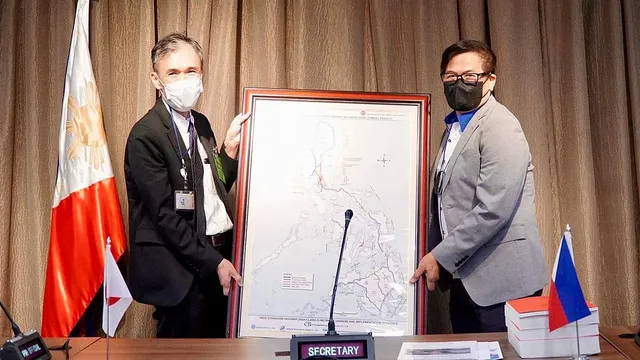
DPWH RECEIVES NEW HIGHWAY MASTER PLAN FROM JICA
Photo credit: Department of Public Works and Highways
The Department of Public Works and Highways (DPWH) has received from the JICA - Japan International Cooperation Agency latest masterplan for the development of High Standard Highway (HSH) in the Philippines.
This is in support of the country’s effort to invest in high-quality infrastructure for improved national connectivity and accessibility.
DPWH Acting Secretary Roger "Oging" Mercado, in his opening speech delivered by Senior Undersecretary Rafael C. Yabut, thanked the Government of Japan thru Emabassy of Japan to the Philippines Ambassador Koshikawa Kazuhiko, and JICA Philippines Representative Eigo Azukizawa for the staunch support it has extended for the completion of the HSH Network Development Master Plan - Phase 2.
The turnover ceremony of the masterplan at the DPWH Central held November 29, 2021 was participated by Undersecretary for Information Management, Planning and PPP Services Maria Catalina E. Cabral; Undersecretary for Unified Project Management Office (UPMO) Operations and Build Build Build Chief Implementer Emil K. Sadain; Undersecretary for Regional Operations in Luzon Roberto R. Bernardo; Undersecretary for Regional Operations in NCR, Region IV-B and the Visayas Maximo L. Carvajal; Assistant Secretary Ador G. Canlas for Regional Operations in Mindanao; and Planning Service Director Constante A. Llanes Jr. Economic Minister Masahiro Nakata of the Embassy of Japan in the Philippines virtually joined the turnover ceremony of the masterplan.
“We are grateful for JICA’s technical capacity and expertise in world class infrastructure for it is crucial not just in decongesting highly urbanized areas but also in achieving the 2040 National Development Plan of making the Philippines a prosperous country by investing in high quality infrastructure,” Secretary Mercado said in his read speech.
Mr. Ryuichi Ueno, JICA Study Team Leader, presented the findings on the masterplan HSH Network Development Phase 2 aimed at expanding and updating the 2010 HSH masterplan conducted within the 200-km radius of Metro Manila, Metro Cebu, and Metro Davao.
The masterplan proposes the construction of 4,400 kilometers of HSH Class 1 composed of 406 km existing, 265 km under construction, and 3,279 km new highways to be implemented along major transport corridors across the archipelago; while about 4,600-km of HSH Class-2 (regional high standard highway) will branch off from the HSH Class-1 to provide connection to sub-regional centers, important ports and airports not covered by HSH Class-1.
These projects were categorized into long-term, medium-term and short-term projects based on its implementation importance.
Aside from the masterplan, JICA’s development assistance also covers the pre-feasibility study of four (4) important road and bridge namely Agusan Del Norte - Butuan City Logistical Highway in Region 13; Cebu Circumferential Road in Region 7; Central Mindanao Highway, Cagayan de Oro-Malaybalay Section in Region 10; and 2nd San Juanico Bridge in Region 8.
With the completion of the master plan and feasibility studies, the Philippines is one step closer to building faster, safer, resilient, and environmentally friendly road transport network which support national goals of rapid, inclusive and sustained economic growth.
Article courtesy of The Department of Public Works and Highways

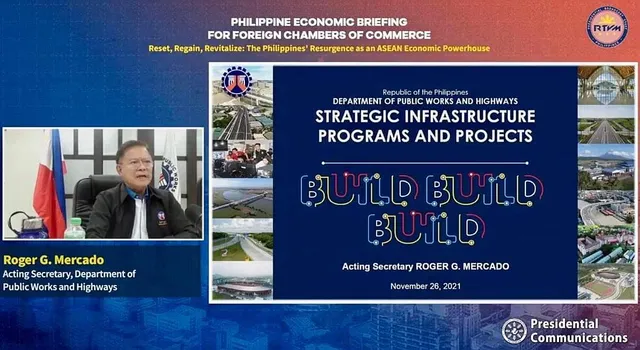
DPWH BBB INFRA PROJECTS, CORNERSTONE OF POST-PANDEMIC ECONOMY
The infrastructure program anchored on the Build Build Build (BBB) initiative still remain among the top economic priorities of the government.
With the Department of Public Works and Highways (DPWH) as one of lead implementing agencies of the BBB Program, Acting Secretary Roger "Oging" Mercado highlighted at the 2021 Philippine Economic Briefing with Foreign Chambers of Commerce held on November 26, 2021 that investments on infrastructure will be the key drivers in bolstering economic development to build a better post-pandemic economy.
Under the leadership of Secretary Mercado, DPWH is committed to further accelerate the implementation of more projects to immediately create jobs, encourage business opportunities for local suppliers and contractors, and increase economic activity.
“We will pursue equitable regional development by pouring investments for better connectivity roads and bridges in the rural areas”, said Secretary Mercado.
During the virtual briefing, Undersecretary and Chief Implementer of the Build Build Build Program Emil K. Sadain provided greater insight of the DPWH flagship projects that are currently moving on the ground or in the pipeline of implementation nationwide, stressing the importance of these game-changing projects to steer and drive economic recovery and key facilitators to balanced development nationwide.
Considering the multiplier effects of infrastructure to primarily fuel and be the cornerstone for growth recovery, local budget appropriations and foreign direct investments in the form of Official Development Assistance from multilateral financial institutions like Asian Development Bank, JICA - Japan International Cooperation Agency, World Bank, and Export-Import Bank of Korea and China aggressively provided support to the priority big-ticket projects with Investment Coordination Committee - Cabinet Committee and National Economic and Development Authority (NEDA) Board approval, said Undersecretary Sadain.
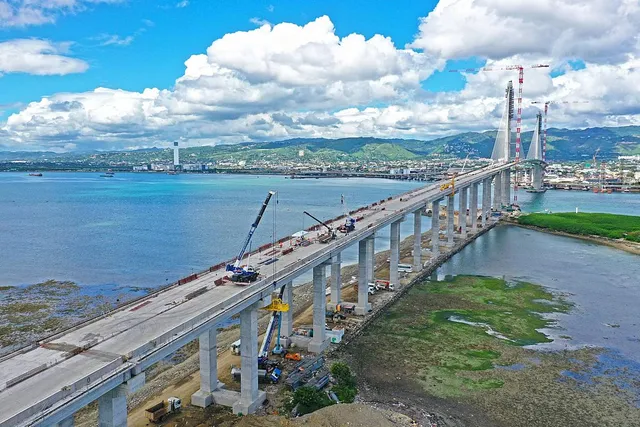
Among the flagship projects are the 30 kilometer (km) Central Luzon Link Expressway (CLLEX) Project - Phase I; widening of 24.61 km Arterial (Plaridel) Bypass Road; improvement and maintenance of 1,088.23 km of arterial national roads under the Road Upgrading and Preservation Project; 45.5 km Davao City Bypass Construction Project including a 2.3 km 2-tube mountain tunnel; Marawi Transcentral Road with completed 18.78 km and on-going 18.97 km; 3.3 km Cebu-Mactan 4th Bridge with 4.9 km Mandaue Coastal Road; 37.60 km Laguna Lakeshore Road Network Project; Improving Growth Corridors in Mindanao Road Sector Project with a total length of 230.22 km including the 540 meter Guicam Bridge in Zamboanga Peninsula and three (3) other bridges with a total length of 1.790 km in the Island Province of Tawi-Tawi; Emergency Assistance for Reconstruction and Recovery of Marawi covering 21.87 km of road including 1.6 km Malabang Viaduct, construction of three (3) bridges along Rorogagus Road, and five (5) other projects; 18.65 km Samar Pacific Coastal Road Project; 1.481 km BGC-Ortigas Center Link Road Project; 21 km Boracay Circumferential Road; 17.35 km Davao City Coastal Road; 2 bridges under Metro Manila Priority Bridges Seismic Improvement Project; 32 km Bataan - Cavite Interlink Bridge; 3 priority bridges with a total length of 2.99 km crossing Marikina River; 3.17 km Panguil Bay Bridge that will reduce travel time between Tubod in Lanao Del Norte and Tangub City in Misamis Occidental from 2.5 hours to just 7 minutes; 32.47 km Panay-Guimaras-Negros Island Bridges Project; 3.98 km Samal Island to Davao City Connector (SIDC) Project; 506 meter Estrella Pantaleon Bridge connecting Makati and Mandaluyong; and Pasig-Marikina River Channel Improvement Project Phase 4.
Flagship infrastructure projects that are vital and have huge impact will see their continued implementation towards the next administration with advanced feasibility studies and other pre-investment activities, detailed engineering designs, government-to-government financing arrangement, and bidding process preparation, added Undersecretary Sadain.
As the country’s engineering and construction arm and despite the challenging circumstance faced with the Covid-19 pandemic, DPWH kept its commitment in the development and implementation of projects with a July 2016 to September 2021 accomplishments all over the country of 31,977 km of roads constructed, maintained, widened, upgraded, and rehabilitated; 6,333 bridges widened, upgraded, rehabilitated, and strengthened; and 12,394 flood mitigation structures.
The Philippine Economic Briefing with the theme, "Reset, Regain, Revitalize: The Philippines' Resurgence as an ASEAN Economic Powerhouse,” aims to update members of foreign chambers on the government’s initiatives to navigate the recovery.
Other speakers who discussed the Philippine economic highlights and their respective agency programs and priorities are Department of Finance (DOF) Secretary Carlos S. Dominguez, Bangko Sentral ng Pilipinas (BSP) Governor Banjamin Diokno, NEDA Secretary Karl Kendrick T. Chua, DTI Philippines Secretary Ramon Lopez, Department of Agriculture - Philippines (DA) Secretary William Dar, and Department of Transportation - Philippines Secretary Arthur Tugade.