November 23, 2021

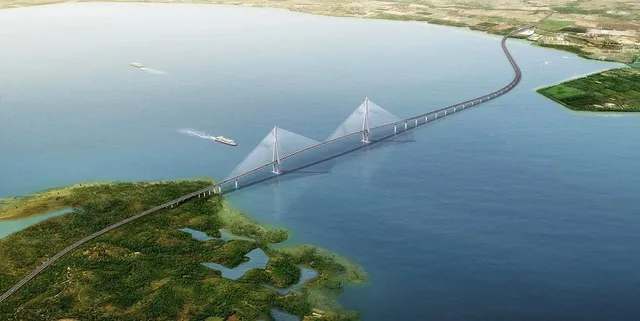
The Department of Public Works and Highways (DPWH) announced the start this December 2021 of the detailed engineering design (D.E.D.) for the proposed Laguna Lakeshore Road Network Project (LLRN).

This after DPWH Acting Secretary Roger "Oging" Mercado with Undersecretary for Unified Project Management Office (UPMO) Operations Emil K. Sadain; UPMO Roads Management Cluster 2 Project Director Sharif Madsmo H. Hasim; and Department Chief Accountant Mary Antoinette Z. Puno signed on November 22, 2021 the Consultant’s Services Contract for the D.E.D. of LLRN Project - Phase 1, a new road network at the western side of the Laguna Lake connecting Lower Bicutan, Taguig City and Calamba City, Laguna with a main alignment of 37.60 kilometers.

This early, the millions of Filipinos are excited to witness and see how this new road project will change lives, said Secretary Mercado.

The parties to the contract agreement to conduct the D.E.D. are Dr. Jovito Santos of Lead Consultant CTI Engineering International (CTII) Co., Ltd.; Junichiro Minobe of Chodai Co., Ltd.; Takashi Sato of Oriental Consultants Global Co., Ltd.; and Tenkoh Yoshida of Nippon Engineering Consultants Co., Ltd with CTII President & CEO Takahiro Mishina and DPWH UPMO Overall Project Manager for Asian Development Bank (ADB) Projects Soledad R. Florencio as witnesses. These companies are first ranked joint venture firm in the procurement on August 25, 2021 of Consultancy Services for the D.E.D..

The ceremonial signing of Consultancy Contract was also attended by Country Director for the Philippines Mr. Kelly Bird and Southeast Asia Project Officer Mr. Shuji Kimura of ADB; LLRN Team Leader Project Manager Zenaida B. Mauhay; Project Manager Sol Abasa; and other officer of Associate Firms Angel Lazaro and Associates International, DCCD Engineering Corporation, TCGI Engineers, and KRC Environmental Services.

According to Undersecretary Sadain - President Rodrigo Roa Duterte’s designated Chief Implementer of Build Build Build (BBB) Program, the start of LLRN D.E.D. is another significant development in one (1) of the Department’s flagship infrastructure projects.

The LLRN Project will strengthen road transport efficiency towards Metro Manila and neighboring regions and will provide added opportunities to stakeholders - more jobs will be created; traffic will be decongested; movement of goods and services will be a lot easier; and so much more benefits, said Undersecretary Sadain.

Under the contract agreement amounting ₱135.485 Million, the D.E.D. will be carried out for 15 months between December 2021 to February 2023.

The D.E.D. will be funded by an additional financing of the ADB’s Infrastructure Preparation and Innovation Facility (IPIF) under loan number 3886-PHI.

Upon strong representation of DPWH-UPMO, LLRN Project was approved by the NEDA ICC - Technical Board on March 17, 2021, and by the NEDA ICC - Cabinet Committee on September 27, 2021. The project was approved by the NEDA Board through an Ad Referendum on October 18, 2021.

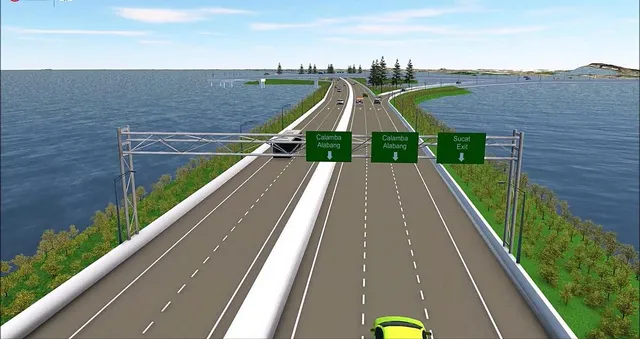
The Laguna Lakeshore Road Network Project - Phase I with a main alignment of 37.60 kilometer includes eight (😎 interchanges in Sucat, Alabang, Tunasan, San Pedro/Binan, Santa Rosa, Cabuyao, and Calamba.

This two-lane primary road consists of 11.80 km viaduct from Lower Bicutan to Muntinlupa, and 25.80 km combination of onshore viaduct and embankment from Muntinlupa to Calamba.

The project will also consider the

planned developments introduced by various local government units along its proposed alignment.

It will feature an additional one (1) lane in each direction from Sucat, Muntinlupa to Sta. Rosa, Laguna; a cycling track and promenade from Tunasan, Muntinlupa to San Pedro, Laguna.
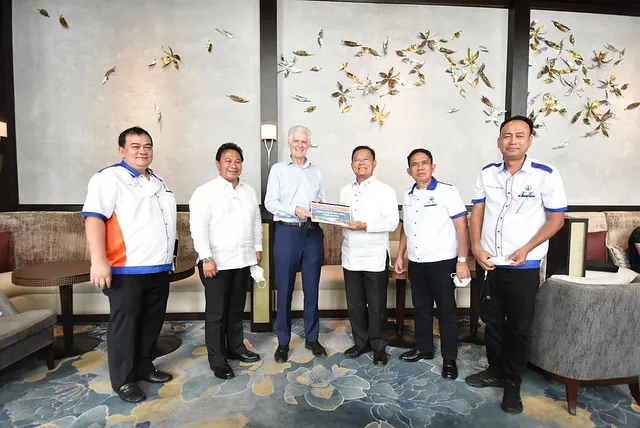
November 22, 2021

Photo credit: Department of Public Works and Highways 

The Department of Public Works and Highways (DPWH) is working with the Asian Development Bank (ADB) on a goal of achieving sustainable infrastructure development in the Philippines.

DPWH Acting Secretary Roger "Oging" Mercado said that talks with ADB Country Director for the Philippines Mr. Kelly Bird has confirmed the bank’s commitment to provide continuing support to infrastructure development program and help facilitate the economy rebounds from the pandemic by accelerating job generation.

The various on-going and proposals with high-impact potential for possible Official Development Assistance (ODA) in the Philippines were also discussed with the ADB executive by DPWH Undersecretary for Unified Project Management Office (UPMO) Operations Emil K. Sadain also joined at the recent meeting by UPMO Project Directors Sharif Madsmo H. Hasim, Benjamin A. Bautista, and Ramon A. Arriola III.

According to Undersecretary Sadain, President Rodrigo R. Duterte’s designated Chief Implementer of Flagship Projects under Build Build Build (BBB) Program, ADB has been a partner for the BBB initiative including the climate change and disaster risk reduction efforts.

As a host country of its headquarters since it was set up in 1966, ADB remains committed to support the Philippines return to high economic growth this pandemic by ramping up investments in public infrastructure.

On-going projects funded by ADB include the civil works for the P25.26 Billion Improving Growth Corridors in Mindanao Road Sector Project that covers the construction of seven (7) road sub-projects with a total length of 230.22 kilometers including the 540-meter Guicam Bridge in Zamboanga Peninsula and three (3) other bridges with a total length of 1.790 km in the Island Province of Tawi-Tawi.

Under detailed engineering design (D.E.D.) and procurement stages is the ₱6.835 Billion Emergency Assistance for Reconstruction and Recovery of Marawi geared towards inclusive economic growth for Marawi City and its peripheral areas.

The project components are the rehabilitation of existing 5.53 km Transcentral Roads and 4.71 km Mindanao State University Roads; construction of 6.86 km new Transcentral Roads with drainage; construction of 2.4 km Malabang Viaduct and 300 meter Rorogagus Bridge; replacement of three (3) bridges with a total length of 657 meters; three (3) main drainage channels with a total length of 3.49 km; and rehabilitation and slope protection on Marawi Bito Road.

Under D.E.D. stage is the ₱12.028 Billion construction of three (3) priority bridges crossing Marikina River in Metro Manila.

These are the Marcos Highway-St. Mary Bridge (formerly J.P Rizal-St. Mary Bridge), a new 2-lane pre-stressed concrete box girder bridge with a total length of 1,582.6 meters including the main bridge length of 325 meters; Homeowners Drive-A. Bonifacio Ave. Bridge (formerly J.P, Rizal-Lopez Jaena Bridge), a new 2-lane pre-stressed concrete box girder bridge with a total length of 691 meters including the main bridge length of 461,5 meters; and Kabayani-Matandang Balara Bridge (formerly Marikina-Vista Real Bridge), a new 4-lane pre-stressed concrete extradosed bridge with a total length of 723.2 meters including the main bridge length of 364 meters.

ADB has also provided technical assistance for the Infrastructure Preparation and Innovation Facility (IPIF) to deliver more effective and more innovative infrastructure projects. With a completed Feasibility Study under IPIF, D.E.D. is on-going for the proposed ₱175.656 Billion Bataan-Cavite Interlink Bridge connecting Mariveles, Bataan to Naic, Cavite with a total length of 32.15 km.

Other pipeline projects with completed Feasibility Studies financed by ADB include the proposed ₱175.696 Billion Laguna Lakeshore Road Network Project, a 51 km road network along Laguna Lakeshore connecting Lower Bicutan, Taguig City and Calamba City, Laguna; and ₱54 Billion flood risk management for the six (6) major river basins of Apayao-Abulug, Abra, Jalaur, Tagum-Libuganon, Buayan-Malungon, and Agus.


Article courtesy of the Department of Public Works and Highways 
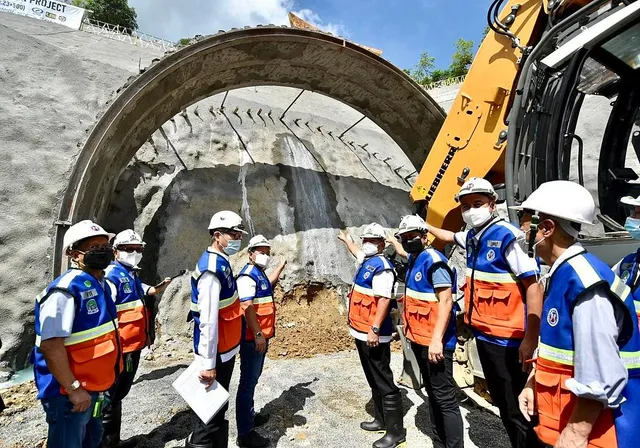
November 22, 2021

Photo credit: Department of Public Works and Highways
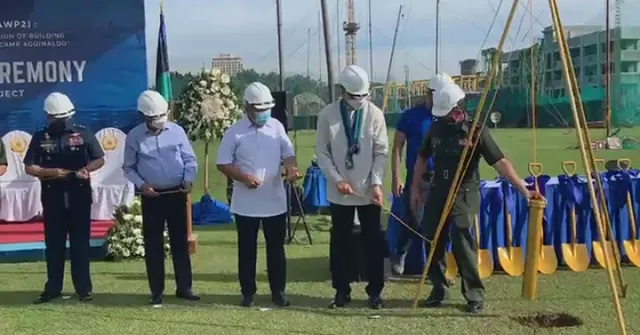
The Department of Public Works and Highways (DPWH) is ramping up efforts to improve the transport logistics and mitigate vehicular traffic congestion in Davao City with the construction of a 2.3 kilometer two (2)-tube mountain tunnel.

A symbolic blast on Friday, November 19, 2021 officially started work on the road tunnel which is part of the 10.7 kilometers Contract Package I-1 of the Davao City Bypass Construction Project (DCBCP) implemented by DPWH Unified Project Management Office (UPMO) Operations.

The actual commencement of tunnel excavation works was witnessed by DPWH Acting Secretary Roger "Oging" Mercado, Japanese Ambassador to the Philippines Kazuhiko Koshikawa, DPWH Undersecretary for UPMO Operations and Chief Implementer of Flagship Projects under Build Build Build(BBB) Program Emil K. Sadain, and Japan International Cooperation Agency (JICA) Chief Representative Eigo Azukizawa.

The short program, carried out under strict compliance to health policies, was also attended by Undersecretary Eugenio R. Pipo Jr. and Assistant Secretary Ador G. Canlas of DPWH Regional Operations in Mindanao, Embassy of Japan in the Philippines Second Secretary Matsubara Tomohiro, DPWH Region 11 Director Rey Peter Gille, Project Director Benjamin A. Bautista of UPMO Roads Management Cluster 1, former Project Director Virgilio C. Castillo, Mr. Fidel Arcenas of the Office of DPWH Secretary, and other Japan Embassy and JICA officials.

According to Undersecretary Sadain, the tunnel project which will soon be the first-ever long-distance mountain tunnel in the Philippines was designed by Japanese experts to have better seismic resiliency.

To support the underground development, equipment that includes horizontal boring machine for geotechnical investigation, twin header tunnel excavator and drill jumbo are deployed to work at the north and south portal. Additional equipment on the ground also includes erecter with shotcrete machine, tunnel ventilation and dust collector, side dump payloader, and articulated dump truck.

The civil work contract for the construction of the tunnel was awarded to Shimizu – Ulticon - Takenaka joint venture with Nippon Koei – Katahira - Nippon Engineering - Philkoei as engineering consultant under the overall project construction supervision of UPMO-RMC 1 Project Manager Joselito B. Reyes and Engr. Earl Nicholas F. Rada.

This contract package costing ₱13.230 Billion has an estimated completion date of January 2024.

While construction of the tunnel is the centerpiece of this project contract package, there are other significant portions of the work as well. The contract includes the construction of a 7.9 km 4-lane road, 3 pairs of Bridges with a total length of 500 meters, 2 underpasses, 2 overpasses, 12 box culverts (waterways), and 4 at-grade Intersection.

The 45.5 kilometer bypass road that will begin in Barangay Sirawan, Toril, Davao City and will end at Barangay J.P. Laurel, Panabo City will cut the usual travel time of 1 hour and 44 minutes via Maharlika Highway to just 49 minutes.

Together with rapid population growth and economic development in recent years, DCBCP will provide job creation during construction, and economic benefits through reduced travel time savings across the city, said Undersecretary Sadain.

The entire DCBCP is divided into six (6) contract packages with packages I-1, I-2 and I-3 being financed by JICA Loan Agreement Nos. PH-P261 and PH-P273 while packages II-1, II-2 and II-3 are funded by the Government of the Philippines.


Article courtesy of DPWH

November 15, 2021

The pre-construction works for the Metro Manila Subway Project (MMSP) at Camp Aguinaldo have officially begun on Thursday through a groundbreaking ceremony.

During the event, Department of Transportation Assistant Secretary Fidel Igmedio Cruz Jr. said the ceremony marked the beginning of the construction of 192 housing units, repair and rehabilitation of Warehouse No. 1 and supply unit, general headquarters and headquarters service command, and construction of the medical gas and manifold vacuum plant housing at Camp Aguinaldo.

These structures and facilities are part of the MMSP’s Advanced Works Package 2 and are meant to replace or improve those affected by Metro Manila Subway in Camp Aguinaldo—where the MMSP’s Katipunan Station will be located.

“This advanced works package will replicate and improve affected DND-AFP structures and facilities with similar specific purposes and functions employing modern design, technology, and materials,” Cruz said.

The project package, he said, was awarded to and will be built by a local contractor, Specified Contractor and Development Incorporated.

“'Yung packages MMSP 102 and 103 are about to complete procurement. That's why ito po 'yung advanced package para ma-clear 'yung right-of-way nung madadaanan ng train (MMSP packages 102 and 103 are about to complete procurement. That’s why this advanced package has commenced so that we can clear the right-of-way for the train service),” Cruz said.

To date, he said the detailed designs for the MMSP are at 60 percent complete while the replication and improvement of affected facilities at the Veterans Memorial Golf Club—where the MMSP’s North Avenue Station will be located—is at 45 percent complete.

In total, he said five DND-AFP properties would be developed to create “convenient access points and multi-modal transport plazas” for five subway stations.

Some stations of the Metro Manila Subway System will rise on government properties, such as Camp Aguinaldo, to ensure that it is accessible to the riding public.

In December last year, DOTr Secretary Arthur Tugade and Defense Secretary Delfin Lorenzana signed a right-of-way usage agreement for the MMSP.

The MMSP is a 33.103-kilometer underground rail system traversing Ugong Valenzuela to the Ninoy Aquino International Airport Terminal 3 and aims to accommodate up to 370,000 passengers per day by its first year of operation. 

November 05, 2021

Photo credit: Department of Public Works and Highways

Construction of the 3.169 kilometer Panguil Bay Bridge Project in Northern Mindanao is moving ahead, with bored piles for the piers and abutments halfway done.

In his report to the Department of Public Works and Highways (DPWH) Acting Secretary Roger "Oging" Mercado, Undersecretary for Unified Project Management Office (UPMO) Operations Emil K. Sadain said that a total of 29 bored piles are already completed off-shore.

The inter-island bridge project will require 54 bored piles for the 32 piers, two (2) abutments at Tangub City, Misamis Occidental and Tubod, Lanao Del Norte, and two (2) pylons of the main bridge.

The ₱7.38 Billion Panguil Bay Bridge Project is one of the flagship infrastructure projects implemented by the DPWH - UPMO Roads Management Cluster 2 (RMC 2).

The off-shore construction activities by Korean joint venture contractor Namkwang-Kukdong-Gumwang across Panguil Bay was inspected on Wednesday, November 3, 2021, by Undersecretary Sadain together with Undersecretary Eugenio Pipo Jr. and Assistant Secretary Ador Canlas of DPWH Regional Operations in Mindanao, UPMO RMC 2 Project Director Sharif Madsmo Hasim, DPWH Region 10 Director Zenaida Tan, and Project Manager Teresita Bauzon.

According to Undersecretary Sadain, each of the completed bored piles are subjected to cross hole sonic logging test after 7 to 14 days of concrete pouring in order to ensure quality by assessing the integrity of materials used in the cast-in-site pile as well as load test to determine the safety factor.

A three (3) meter diameter bored piles is made by producing bore holes with the use of reverse circulation drilling machines on barges followed by the launching of 23 millimeter thick permanent steel casing using revolving crane barges and vibro pile hammers, and until final concrete pouring.

There are two (2) land and sea-based batching plants available for the project, each with supply capacity of 120 cubic meter of ready-mixed concrete per hour.

To move the construction of bridge substructure as quickly as possible, one (1) bored pile is completed within an average period of seven (7) days with all the total requirements aimed for completion by first quarter of 2021, said Undersecretary Sadain.

The bridge project that will provide convenient inter-island travel in the archipelagic topography of Northern Mindanao is funded by a loan agreement between the Philippine government and Korean Export Import Bank.

Through the Panguil Bay Bridge, land travel between Tangub City, Misamis Occidental and Tubod, Lanao del Norte is expected to be reduced from two and a half hours to just seven minutes.

The Panguil Bay Bridge will also shorten land travel from Cagayan De Oro and Iligan to Tangub and the northern Zamboanga Region.

To date, the project has provided employment to some 200 individuals that despite the challenges of pandemic, are safely working at full speed. The manpower requirement is expected to reach 500 when the bridge superstructure activities begin in 2022.


Article Courtesy of the Department of Public Works and Highways

October 31, 2021

Photo credit: Cebu Cordova Link Expressway Corp

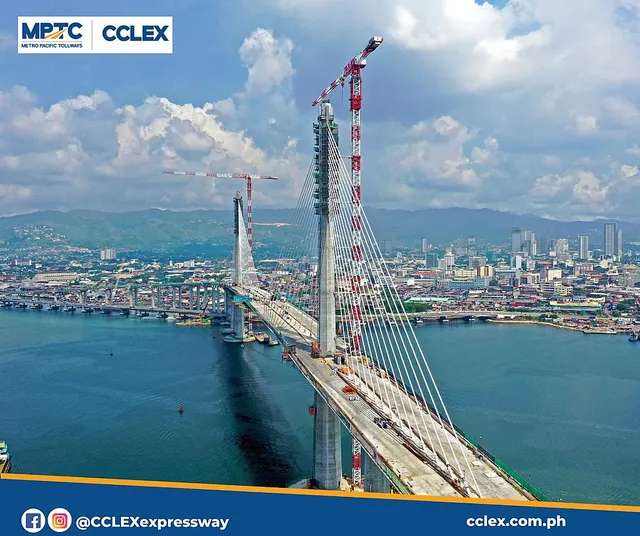
The Cebu-Cordova Link Expressway (CCLEX) is the island’s new pride as it changes the landscape of the country’s main economic powerhouse in the south, Governor Gwendolyn Garcia said on Friday.

“Thank you for believing in Cebu and continuing to believe despite the challenges of the pandemic,” Garcia told business tycoon Manuel Pangilinan, chairman of Metro Pacific Tollways Corp. (MPTC), present during the CCLEX’s main bridge connection ceremony.

Garcia said the bridge would ease Metro Cebu’s traffic congestion and bring more opportunities for trade, commerce, and employment to other parts of both the mainland and Mactan Island.

“This link gives hundreds of thousands of Cebuanos in the southern part of the mainland, who otherwise would have to venture further north to use the first two bridges, greater access to Mactan island and vice versa,” she added. “The possibilities are exciting and limitless.”

The governor represented the province of Cebu during the ceremonial walk with the leaders of the local governments of Cebu City and Cordova Municipality to commemorate the connection of the two sides of the CCLEX.

The CCLEX has reached a major construction milestone with the final main bridge piece now cast, after more than three years in the making.

After years of construction, the deck of Tower 2 is now connected to Tower 1, a symbolic achievement of linking the town of Cordova in Mactan Island to the highly urbanized Cebu City on the mainland.

Cebu City officials headed by Acting Mayor Mike Rama and Cordova town officials led by Mayor Mary Therese Cho met in the middle of CCLEX after a ceremonial walk.

It has been 1,300 days since the PHP30-billion project broke ground. By Carlo Lorenciana


Article courtesy of the Philippine News Agency

October 29, 2021

The government of Republic of Korea is ready to extend financial support in the conduct of engineering services for the much-awaited inter-island bridges project of the Department of Public Works and Highways (DPWH) in Western Visayas.

DPWH Acting Secretary Roger G. Mercado said that moving forward soon following the completion of supplemental feasibility studies by the Koreans is the detailed engineering design (DED) of the Panay-Guimaras-Negros (PGN) Bridge Project.

The soon to be longest bridge in Region 6 will be the fastest way by land where people can leisurely cross Iloilo, Guimaras, and Bacolod for commerce, tourism, and other essential travels, added Secretary Mercado.

The minutes of discussion for the financial support on engineering services including preliminary and detailed engineering design and procurement assistance required prior to the construction of the bridge was signed on Thursday, October 28, 2021 by DPWH Undersecretary for Unified Management Office Operations (UPMO) Emil K. Sadain and Country Director Jae-jeong Moon from Manila Representative Office of the Korea Export-Import (KEXIM) Bank.

The signing ceremony was also attended by Deputy Director Soohhyung Han and Ana Labella of KEXIM Bank, and Project Director Benjamin A. Bautista of DPWH UPMO Roads Management Cluster 1 (Bilateral).

Undersecretary Sadain said that the Koreans has committed official development assistance (ODA) loan to the Philippines through the KEXIM Bank - Economic Development Cooperation Fund (EDCF) to financed the DED of this immense flagship bridge project. The loan will be formalize with the signing ceremony scheduled in December 2021.

The proposed island bridges connecting Panay Island, Guimaras Island and Negros Island has two (2) components.

These are the 13 kilometers Panay-Guimaras or Section A that will have a sea-crossing bridge length of 4.97 kilometers; and Guimaras-Negros or Section B or with a total length of 19.47 kilometers including sea-crossing bridge length of 13.11 kilometers.

The supplementary feasibility study report and engineering service provision for the project was approved by the NEDA Board’s Investment Coordination Committee-Cabinet Committee in August 2021.

The 32-kilometer bridge is a large and complex project which requires comprehensive and high-standard engineering works that service by consultants who have extensive experience in long-span bridge will help DPWH prepare the construction in an efficient and timely manner, Undersecretary Sadain added.

Despite the challenges posed by the Covid-19 pandemic, the DPWH Korean government-funded flagship infrastructure projects are steadily moving forward.

KEXIM Bank-EDCF is presently supporting civil works on the Integrated Disaster Risk Reduction and Climate Change Adaptation Measures (IDRR-CCA) in Low-Lying Areas of Pampanga to boost disaster resilience; Samar Pacific Coastal Road Project connecting the Pacific towns in Northern and Eastern Samar and bolster the agricultural and fishing industry in Eastern Visayas; and Panguil Bay Bridge connecting Tangub, Misamis Occidental and Tubod, Lanao Del Norte.

October 29, 2021

Photo credit: Blazinfiremax

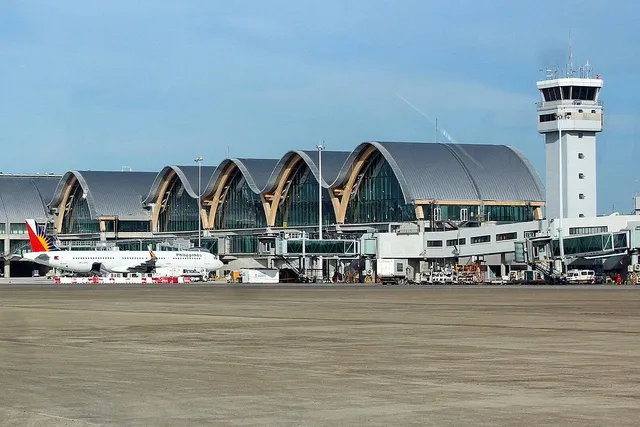
Department of Transportation (DOTr) Secretary Arthur Tugade on Thursday said improvements in Cebu’s premier airport will play a big role in boosting the tourism economy in the province.

Tugade, who led the inauguration of the six-story Mactan-Cebu International Airport’s (MCIA) new corporate building, said the completion of such a project came in time with the approval of the request to increase the airport capacity amid the effort to recover the economy.

He noted that Cebu is recognized as a tourism hub in Central Visayas.

Tugade noted that Mactan-Cebu International Airport Authority General Manager Julius Neri requested to increase the airport’s capacity to 2,000 from the existing 1,000.

“As you request to increase the capacity. You have to commit and assure me that there will be no congestion. Ibig sabihin ang mga passenger ay madaling makalabas ng (That means passengers can go out fast from the) airport,” the secretary said in his speech.

The passengers coming from different places in the country or abroad should not be inconvenienced by spending so much time in queuing either for quarantine processing or taking of the swab specimen for the reverse transcription-polymerase chain reaction (RT-PCR) test, he said.

The DOTr chief also prodded Neri and other airport officials to make the second runway project by April or a month ahead of the revised target date of completion next year.

The second runway worth PHP2 billion was originally contracted to finish in 730 days.

However, Neri said during the succeeding press conference that because of the Covid-19 pandemic, the contractor was confronted with the shortage of personnel as well as some hitches in the delivery of aggregates used in building the runway.

The delay forced airport officials to revise its target completion date from February to May in 2022.

Record showed that the second runway is at 53.11 percent complete.

“As we put this office building, the airport terminal and the second runway, we are telling to the whole world: come to Cebu and make this as your place of business. Here, you can be conveniently attended to. As you do business, you can be a tourist. We are creating a platform of tourism booster,” Tugade said.

Meanwhile, the newly inaugurated corporate building will house MCIAA employees in a single edifice that is complete with modern equipment and facilities and is featured with a command center.

Neri said the new corporate building is standing in a 16,000 square meter lot inside the airport complex and is worth PHP744 million.

The building is set to have elevated passageways that are connected to the terminal buildings for the convenience, safety, and protection of workers and staff.

Community airports

Tugade also highlighted the effort of the DOTr to develop existing community airports like the Bantayan Airport in the town of Santa Fe in Bantayan Island and the Medellin Airport in northern Cebu province.

Tugade said the Bantayan Airport will officially be operational by April 2022 as President Rodrigo Duterte pledged PHP150-million funding for the completion of the airport's runway expansion project.

“This project will allow others to experience the beauty of Bantayan Island and easier access to this beautiful destination,” the DOTr chief said in Tagalog.

The project will also pave the way for more commercial aircraft to land on the island, known for its white sand beaches, to boost tourism and other economic opportunities in the northern part of the province.

The project involves the widening of the existing narrow runway and the construction of taxiway and apron areas.

The expansion effort will ensure compliance with established safety standards and will make the Bantayan Airport equipped for night-time flight operations and commercial aviation activities.

The DOTr chief also said he will inspect the Island of Camotes in Cebu province’s western seaboard to check the viability in the opening of another airport in the area. By John Rey Saavedra and Carlo Lorenciana

October 27, 2021

Photo credit: Department of Public Works and Highways

Officials of the Department of Public Works and Highways (DPWH), Embassy of Japan in the Philippines, and Japan International Cooperation Agency (JICA) Philippine Office held talks on Tuesday, October 26, 2021, where both parties tackled efforts to strengthen bilateral relations on building quality infrastructure for sustainable development.

In a courtesy visit to DPWH Secretary Roger G. Mercado, Economic Minister Masahiro Nakata of the Embassy of Japan in the Philippines and JICA Philippines Chief Representative Eigo Azukizawa has assured their full support to the new DPWH Chief by providing technical cooperation for on-going and new pipeline infrastructure projects.

Secretary Mercado lauded Japan’s continued support to the Philippines with trusted partnership between DPWH and JICA as he noted that the Department under his leadership will keep up the ties in pursuing more development projects aimed at improving transport infrastructure in both urban and rural areas and in mitigating disasters.

The DPWH Secretary was assisted by Undersecretary Emil K. Sadain in welcoming the Japanese delegation at DPWH that also have Embassy of Japan Second Secretary Tomohiro Matsubara; and JICA Philippines Senior Representatives Kenji Kuronuma, Ayumu Ohshima, and Yo Ebisawa.

I wish to once again express my heartfelt gratitude for Embassy of Japan and JICA-Philippines officers for taking the time to visit DPWH despite busy schedule, Secretary Mercado added.

According to Undersecretary Sadain, in-charge of DPWH Unified Project Management Office (UPMO) Operations that handles large-scale infrastructure programs of the Department under Official Development Assistance (ODA) financing, JICA has over the years been constantly beside the Philippines in the efforts to pursue much-needed physical infrastructures for the improvement of lives of the Filipinos.

The Government of Japan thru JICA has been one of Philippines closest partners as the largest source of ODA to finance several flagship infrastructure projects in the Build, Build, Build program of the President Rodrigo Duterte administration under DPWH implementation.

Numerous development projects in the countryside demonstrates how Japan and the Philippines enjoy a deep and warm relationship akin to that of a family or siblings, said Undersecretary Sadain.

Among the DPWH UPMO flagship infrastructure projects in Luzon financed by the Japanese government are the widening from 2 lanes to 4 lanes the 24.61 kilometer (km) including ten (10) bridges of Arterial Road (Plaridel) Bypass Project between Brgy. Burol, Balagtas to Brgy. Maasim, San Rafael in the Province of Bulacan under JICA Loan Agreement No. PH-P266; 30 km 4 lane Central Luzon Link Expressway (CLLEX) Project from the connection of Subic - Clark - Tarlac Expressway (SCTEX) and Tarlac - Pangasinan - La Union Expressway (TPLEX) in Balingcanaway, Tarlac City and ends at the Pan-Philippine Highway or Daang Maharlika in Caalibangbangan, Cabanatuan City under JICA Loan Agreement No. PH-P249; Metro Manila Priority Bridge Seismic Improvement Project for two (2) major bridges in Metro Manila, namely the Lambingan Bridge and Guadalupe Bridge, under JICA Loan Agreement Nos. PH-P260 and PH-P272; channel improvement works for Middle Marikina River including the construction of Manggahan Control Gate Structure and construction of Cainta Floodgate and Taytay Sluicegate at the joining sections of Cainta and Taytay rivers to Mangahan Floodway under the Pasig-Marikina River Channel Improvement Project Phase IV funded by JICA Loan Agreement No. PH-P271; Flood Risk Management Project for Cagayan River in Region 2 and Imus River in Region 4A under JICA Loan Agreement No. PH-P253; and Cavite Industrial Area Flood Risk Management Project under JICA Loan Agreement No. PH-P265.

In Visayas, detailed engineering design study under JICA Grant is on-going for the Cebu-Mactan Bridge (4th Bridge) and Coastal Road Construction Project to be funded by JICA Loan Agreement No. PH-P274.

DPWH and JICA are also working together towards peace and development in Mindanao. JICA provided a 2 Billion Japanese yen or approximately ₱970 Million donation/grant for the design and build of 18.97 km Marawi Transcentral Road Phase 1 under the Programme for the Support to Rehabilitation and Reconstruction of Marawi City and Its surrounding Areas.

In addition to this grant assistance, JICA is also financing the construction of another 18.78 km Marawi Transcentral Road Phase 3 together with other projects to support peace building included in the Road Network Development Project in Conflict Affected Areas is Mindanao (RNDP-CAAM) under JICA Loan Agreement No. PH-F-P1.

Construction of the 4 lane 45.50 km Davao City Bypass Construction Project is also on-going funded by Special Terms for Economic Partnership (STEP) Loan from JICA under Loan Agreement Nos. PH-P261 and PH-P273. Under the STEP loan that will promote transfer of outstanding Japanese engineering technology and expertise, the main contract is Japan tied but allows a joint venture in addition to the Japanese company.

To protect flood prone areas and strengthen the resiliency to climate change, the Flood Risk Management Project in Cagayan De Oro River funded under JICA Loan Agreement PH-P259 is also on-going that features innovative technology and design approach based on a 25-year flood return period for resilient flood management.

These UPMO projects are under the supervision of Project Director Benjamin A. Bautista of Roads Management Cluster 1 (Bilateral), Project Director Ramon Arriola III of Flood Control Management Cluster, and Project Director Rodrigo Delos Reyes of Bridge Management Cluster who were all present during the courtesy visit of Japanese officials as well as DPWH Region 8 Director Nerrie Bueno.

The flagship infrastructure projects are in keeping with the Philippine government’s goal to sustain rapid growth, attract investments and attain economic inclusion for all Filipinos.


Article courtesy of the Department of Public Works and Highways
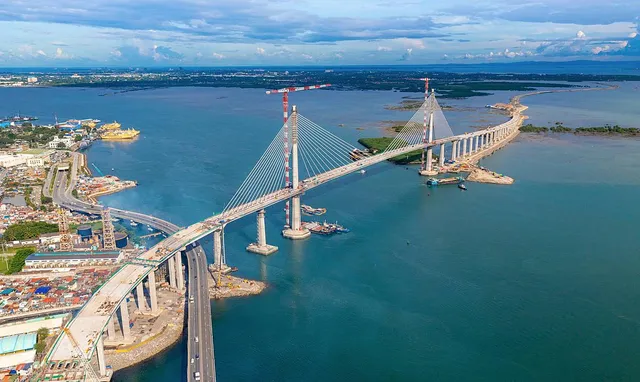
October 22, 2021

As of September 30, 2021, construction progress of the 8.9-kilometer Cebu-Cordova Link Expressway (CCLEX) project was at 85.38 percent.

The P30-billion toll bridge, which will be substantially completed by the end of 2021, will use an all-electronic toll collection system when it opens in the first quarter of 2022 to provide motorists safe and seamless travel.

The project recently achieved a major milestone with the construction completion of the CCLEX main bridge. On October 5, 2021, the final segment of the 390-meter deck was concreted, covering the remaining two-meter gap. This meant that the expressway finally connected Cebu City and the Municipality of Cordova.

With construction on the main bridge now winding up, all form travelers used to build its pier table and deck were already lowered.

All 56 stay cables holding the deck were installed last month.

Also, all 434 NU (Nebraska University) girders for the entire project were already put in place and the mobile launching gantry used to install these was dismantled.


Work on the other segments of the CCLEX project continues to progress.

The substructures of the Cebu South Coastal Road (CSCR) on ramp and off ramp sections of CCLEX, are now complete. Ongoing works are on the installation of precast planks and the concreting of deck slab.

Also finished is the 200-meter pedestrian footbridge beside the CSCR with all six prefabricated steel walkways already installed. The footbridge starts near the U-turn slot of the South Road Properties’ welcome tower and will connect to the on-ramp sidewalk of CCLEX.

At the Cebu viaduct, the construction of deck slab is ongoing. The Cordova viaduct, on the other hand, is now structurally complete with its substructure already done. Installation of handrails and ducting are underway.

At the causeway, works continue with the construction of concrete safety barriers and installation of sidewalk handrails. The placing of 20 vent pipes, which equalize the flow of seawater along the Cordova Channel, is finished.

Also structurally complete are the four low-level bridges along the causeway, which will provide fishermen continued access to their fishing grounds.

Aside from these, works are ongoing for the toll plaza and the CCLEX Operations and Maintenance Center.

CCLEX, highlighted by its iconic crosses on top of the twin pylons of the cable-stayed main bridge over the Mactan Channel, is Metro Pacific Tollways Corporation’s (MPTC) first toll road project outside Luzon.

CCLEX, which will be the third link to Mactan Island from Cordova Municipality to mainland Cebu through Cebu City’s South Road Properties, has a design speed of 80 kilometers per hour (kph) and a navigational clearance or height of 51 meters to allow large vessels to pass underneath the bridge.

Not only is CCLEX seen to reduce traffic and make traveling more convenient but also spur trade activities and open greater economic opportunities for Cebu and the rest of the Visayas region.

CCLEX is a project of Cebu Cordova Link Expressway Corporation (CCLEC), in partnership with the local government units of Cebu City and Municipality of Cordova.

CCLEC is a wholly owned subsidiary of MPTC, the toll road arm of Metro Pacific Investments Corporation (MPIC), a publicly listed infrastructure holding company and a member of the MVP Group of Companies.

MPTC is the largest toll road concessionaire and operator in the Philippines, which expansion goals include establishing toll operations in the Visayas, other parts of the Philippines, and in neighboring countries notably Vietnam, and Indonesia.

October 19, 2021

A portion of the Calbayog City Coastal Road project in Calbayog City. The project, which is up for completion in 2025, is now 83 percent complete, the Regional Development Council’s regional project monitoring committee reported on Monday (Oct. 18, 2021). (Photo courtesy of Mel Senen Sarmiento)

About 83 percent of the Calbayog City Coastal Road Project is now completed after four years of implementation, the Regional Development Council’s regional project monitoring committee (RPMC) reported on Monday.

Construction of the PHP1.16-billion project meant to curb traffic jams in Calbayog’s commercial district has been implemented since 2018. 

It involves the construction of a road, embankment, and bridge. 

The government is eyeing to complete the project in 2025.

“The construction of the Calbayog City Coastal Road aims to create alternative routes in the city to decongest traffic in Calbayog City proper. However, certain segments of the already funded network have yet to break ground,” the RPMC reported.

It will start with the construction of a bridge across the Calbayog River since the work will affect the docking of motor boats carrying passengers and products to island communities.

The Department of Public Works and Highways (DPWH) and Philippine Ports Authority will find a spot as a temporary dock for the motor boats.  
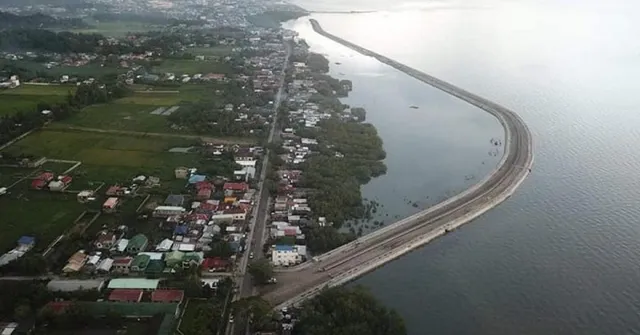
“Calbayog City is a fast-growing commercial hub. With its flourishing economy comes the need for bigger and better thoroughfares to accommodate the increasing traffic volume and weight,” the DPWH Samar first district engineering office said in a separate statement. 

From 2018 to 2021, the project’s work is centered on the construction of embankment and road with a total allotment of PHP1.14 billion.

Of the total, PHP333.71 million was released in 2018, PHP281.07 in 2019, PHP268.52 million in 2020, and PHP265.76 million in 2021. 

The multi-year project that will build a 4.67-kilometer road and bridge will connect the villages of Rawis, San Policarpo, Aguit-itan, allowing vehicles to by-pass the busy road of Calbayog City’s commercial district. By Sarwell Meniano


Article courtesy of the Philippine News Agency

October 18, 2021

Photo credit: Department of Public Works and Highways
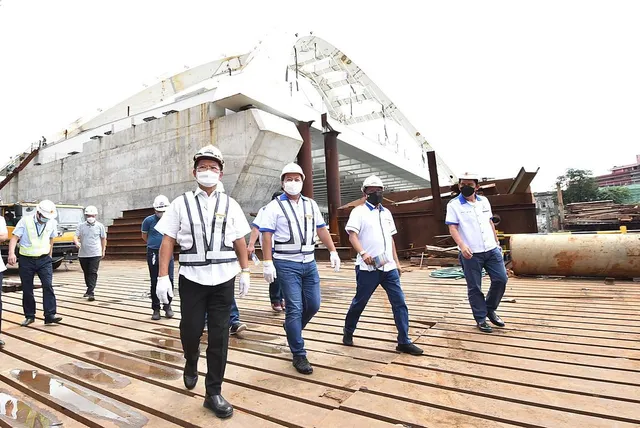
The newly installed Acting Secretary of the Department of Public Works and Highways (DPWH) immediately made his presence felt on the ground, inspecting the on-going Binondo Intramuros Bridge Project.
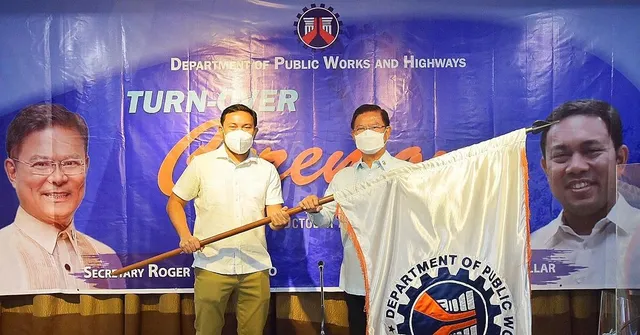
Secretary Roger G. Mercado said that although reports can be read inside airconditioned office or while seated on vehicle, best decisions are made if you really get to know and feel the situation in the field.

DPWH Undersecretary Emil K. Sadain, in-charge of Unified Project Management Office (UPMO) Operations assisted Secretary Mercado in his first project visit as the newly installed DPWH Chief was also the first Cabinet official to step onto the completed deck slab of the two-way four-lane basket-handle tied steel arch main bridge.

Secretary Mercado says with pride that the team of Undersecretary Sadain has done an excellent job in coming with solutions to project implementation challenges as well as mitigated the impact of Covid-19 pandemic to construction activities.

DPWH-UPMO Roads Management Cluster 1 together with the contractor China Road and Bridge Corporation has already accomplished about 82.75 percent of work for the Binondo Intramuros Bridge Project.

We are almost there and the project is scheduled to be finished early next year, Secretary Mercado added.

Others who were present in the inspection are Undersecretary Eugenio R. Pipo Jr.; Assistant Secretary Ador G. Canlas; and the Project Directors of five (5) specialized UPMO clusters namely Benjamin A. Bautista of Roads Management Cluster 1, Sharif Madsmo Hasim of Roads Management Cluster 2, Rodrigo Delos Reyes of Bridges Management Cluster, Ramon A. Ariola III of Flood Management Cluster, and Johnson Domingo of Buildings Management Cluster.

According to Undersecretary Sadain, the ₱3.39-Billion bridge project across Pasig River is part of the two (2) bridges financed by a government aid grant from the People’s Republic of China. Another China-granted Estrella-Pantaleon Bridge linking Makati and Mandaluyong was earlier completed and inaugurated by President Duterte.

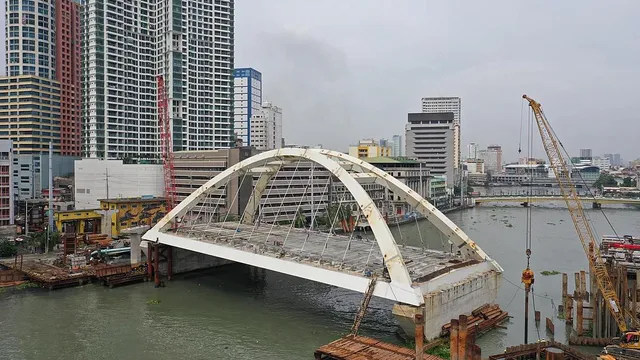
The new Binondo-Intramuros Bridge is a 680-meter, basket-handle tied steel arch bridge that will soon connect districts of Intramuros (at Solana Street and Riverside Drive) and Binondo (at San Fernando Bridge) in Manila with a viaduct structure over Estero de Binondo.

This new bridge under the Build, Build, Build program funded by Official Development Assistance is expected to not only cut travel time between Intramuros and Binondo but also benefit approximately 30,000 vehicles daily.


Article courtesy of The Department of Public Works and Highways
October 11, 2021

The ongoing construction of the Binondo-Intramuros Bridge project could possibly open to motorists in the first quarter of the year 2022.

In a media release on Saturday, Department of Public Works and Highways (DPWH) Undersecretary for Unified Project Management Office (UPMO) operations Emil K. Sadain said the PHP3.39-billion bridge project across Pasig River was financed by a government aid grant from the People’s Republic of China is about 81 percent in work progress.
Under the leadership of Sadain, the DPWH UPMO – the office that handles large-scale infrastructure programs of the Department under foreign grants – has, over the years, delivered flagship projects that redefined travel experience across the country’s scattered archipelago.

The new Binondo-Intramuros Bridge is a 680-meter, basket-handle tied steel arch bridge that will soon connect Intramuros (on Solana Street and Riverside Drive) and Binondo (on San Fernando Bridge) areas with a viaduct structure over Estero de Binondo.

Sadain personally met and discussed on-site at Binondo on Sept. 8, 2021 with Project Manager Jose Vitorio Arataqiuo of Meralco the DPWH request for immediate reorientation of 37 KV and 115 KV high tension cables alongside Estero de Binondo near San Fernando Bridge affected by the construction of north down ramp at Binondo side and the electrical posts for down ramp at Intramuros side.

Activities are also ongoing for the massive foundation of up-ramp on Magallanes-Riverside Drive and down-ramp on Solana Street at Intramuros side and up-ramp on San Fernando Street.

Sadain said the progress of work will hasten with the expected arrival by this 3rd week of October of the steel box girder component for the ramps fabricated in Shanghai, China.

He added that once the supply of fabricated girders arrived, immediate launching will be done on our completed piers and the already available precast slab will be installed to complete the ramps.

Considered one of the flagship infrastructure projects of DPWH under the “Build, Build, Build” program funded by Official Development Assistance, the project is expected to not only cut travel time between the two busy districts of Intramuros and Binondo in Manila but also benefit approximately 30,000 vehicles daily.

The project is implemented by DPWH UPMO Roads Management Cluster 1 headed by Project Director Benjamin A. Bautista with direct construction supervision of Project Manager Melchor Kabiling. 

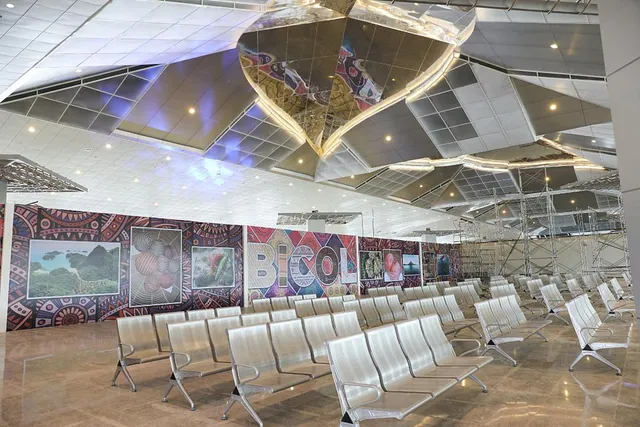
October 11, 2021

Photo: Bicol International Airport (Presidential photo)

President Rodrigo Duterte on Thursday afternoon inaugurated commercial domestic operations at the Bicol International Airport (BIA) after 11 years of delay.

The PHP5 billion international airport facility in Daraga, Albay, will start receiving commercial domestic flights on Thursday and will be ready for international flights a month later.

Duterte, in his speech, said the completion of the world-class airport facility will provide better transportation for people who are traveling to and from the Bicol Region.

“Indeed, today’s inauguration is another milestone in the administration’s ‘Build, Build, Build’ program. We are fulfilling our mission of improving the lives of Filipinos by providing quality infrastructure projects that allow greater connectivity and mobility, create more jobs, and boost economic activity in other regions,” he said.

The construction of the airport created 755 jobs with 1,100 more indirect jobs expected to become available once the airport begins commercial operations, according to the Department of Transportation (DOTr).

Duterte expressed optimism that the BIA, touted as “most scenic gateway” with the iconic Mayon Volcano for its backdrop, would also treat visitors to an “unforgettable travel experience.”

“I am confident that once fully operational, this airport will be able to serve the needs of an expected 2 million passengers annually and provide efficiency, reliability, and safety standards to ensure modern airport,” he added.

He congratulated the DOTr, local officials, and project partners including the Civil Aviation Authority of the Philippines for turning BIA into a reality after an 11-year delay.

Duterte urged the management and staff of the BIA to ensure that passengers will get “the best quality of service they deserve.”

“Let us look forward to a stronger and more vibrant future of the entire Bicol Region and its surrounding provinces,” he said.

Meanwhile, Duterte also took pride in recalling what he told his economic managers to make Davao, his home region, the last priority for infrastructure projects.

“In hindsight, one of the things disappointed ang taga Davao, di ba sinabi ko sa lahat sa Cabinet, the funds, walang political alignments, walang political color (In hindsight, one of the things the people of Davao are disappointed in is that I told my Cabinet members that there should be no political alignments, no political color). It will be distributed equally. But there was one caveat na sinabi ko kay [Transport Secretary] Art [Tugade], unahin niyo ang ibang lugar huwag ang Davao (I told Art, prioritize other regions, not Davao),” he said.

The feasibility study of the BIA originally started in 1996 and the notice to proceed was issued in July 2009. It was supposed to have been finished in 2016.

Construction works for the runway, taxiway, apron, and fences were mostly left uncompleted in 2012, and budget was reverted to the national treasury.

It was only when the Duterte administration came in 2016 that the construction of Landside Facilities (Project 2A) began. Runway extension and the construction of the Passenger Terminal Building (Project 2B) began in 2017. By Azer Parrocha

October 06, 2021

Photo credit: Cebu-Cordova Link Expressway

The Cebu-Cordova Link Expressway (CCLEX) reached a major construction milestone on Tuesday with the final main bridge piece now cast, cementing a feat that is more than three years in the making.

The Metro Pacific Tollways Corp. (MPTC) and its subsidiary, Cebu Cordova Link Expressway Corp. (CCLEC), wrapped up the construction on the main bridge deck with a special joint concreting rites covering the remaining two-meter gap.

“We are finally at the tail end of the construction of our CCLEX project and I, together with my colleagues, share the incredible pride in this milestone achievement,” said MPTC president Rodrigo Franco, who is in Cebu to witness the activity.

Stitching the remaining gap unites the deck of Tower 2 with that of Tower 1, a symbolic achievement of finally linking the quaint town of Cordova in Mactan Island to the highly urbanized Cebu City in the mainland. The main bridge deck hovers 51 meters above the Mactan Channel.

“After today’s main bridge deck connection, we look forward to another milestone and that is opening CCLEX to the public in the first quarter of 2022. We can’t wait to see Cebuanos enjoy the ultimate expressway experience afforded by using this bridge,” said Allan Alfon, CCLEC president and general manager.

The 8.5-kilometer CCLEX will be using a fully electronic toll collection system once opened to motorists.

MPTC and CCLEC thanked the hundreds of skilled foreign and local workers behind the construction of the main bridge who defied some work challenges. Among these are working at heights in the middle of the Mactan Channel with live marine traffic and following stringent health and safety protocols because of the coronavirus disease (Covid-19) pandemic.

CCLEX’s main contractor is Cebu Link Joint Venture composed of Spanish-based firm, Acciona Construccion S.A., and Filipino companies First Balfour and DM Consunji Inc.

CCLEC also engaged COWI A/S of Denmark with the Philippines’ DCCD Engineering Corp. as its technical advisor and Norconsult, a Norweigan consultancy firm, as the project’s independent consultant.

As of August 2021, there was a total of 1,936 workers fielded for the entire CCLEX project rendering 15,199,178 total man-hours.

CCLEX, which will be the third link to Mactan Island from Cordova to mainland Cebu through Cebu City’s South Road Properties, has a design speed of 80 kilometers per hour and a navigational clearance or height of 51 meters to allow large vessels to pass underneath the bridge.

Not only is CCLEX seen to reduce traffic and make traveling more convenient but also spur trade activities and open greater economic opportunities for Cebu and the rest of the Visayas region. By Carlo Lorenciana - (With a report from John Rey Saavedra/PNA)


Article courtesy of the Philippine News Agency