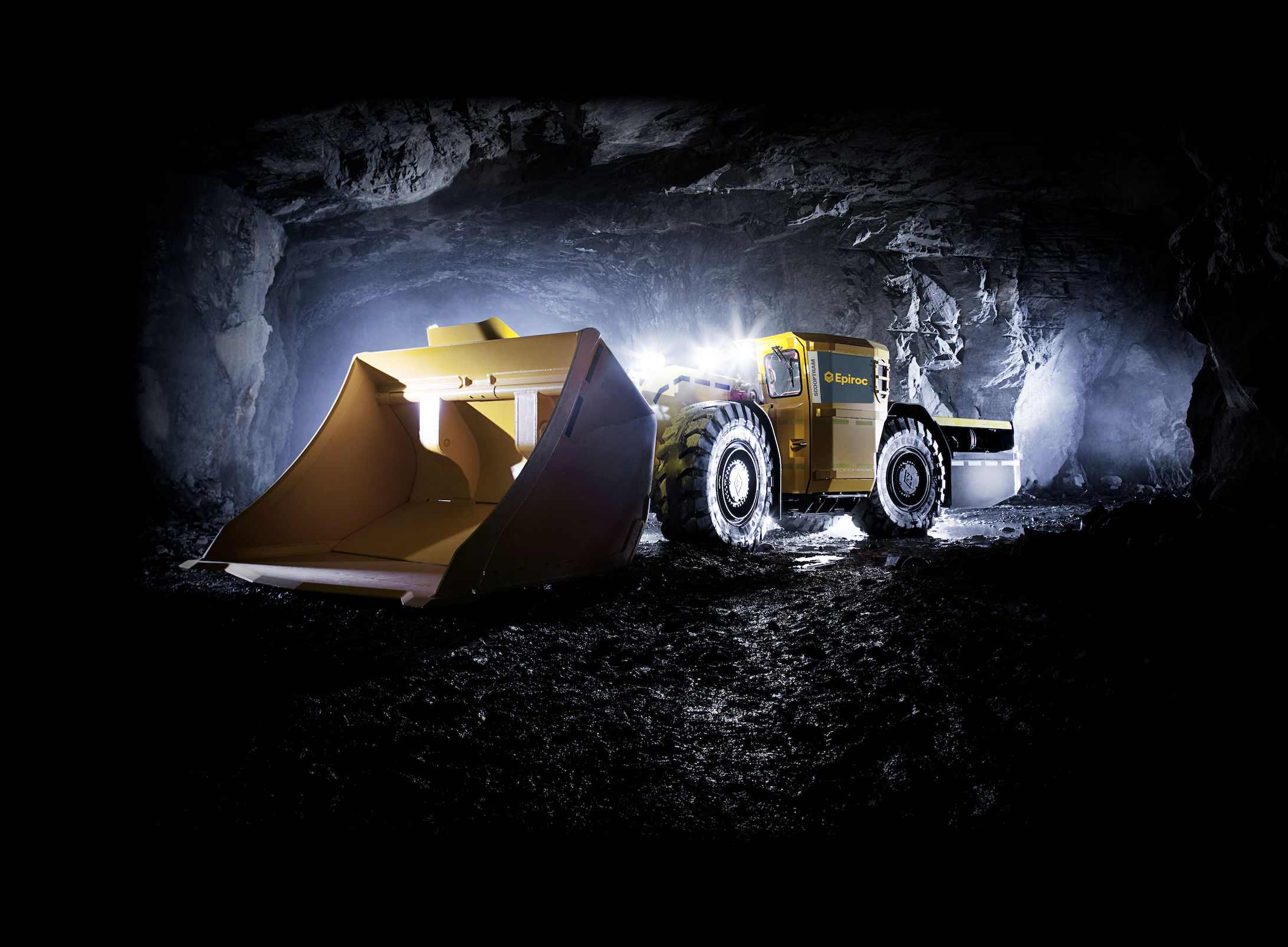
An updated front end, improved bucket geometry and locally adapted features give the 10-tonne-class loader a configuration suited to the demands of Philippine underground operations.
In underground mining, loading performance depends on more than bucket capacity. The ability to penetrate broken rock, lift and discharge material efficiently, and withstand demanding working conditions all influence how a loader performs over repeated cycles.
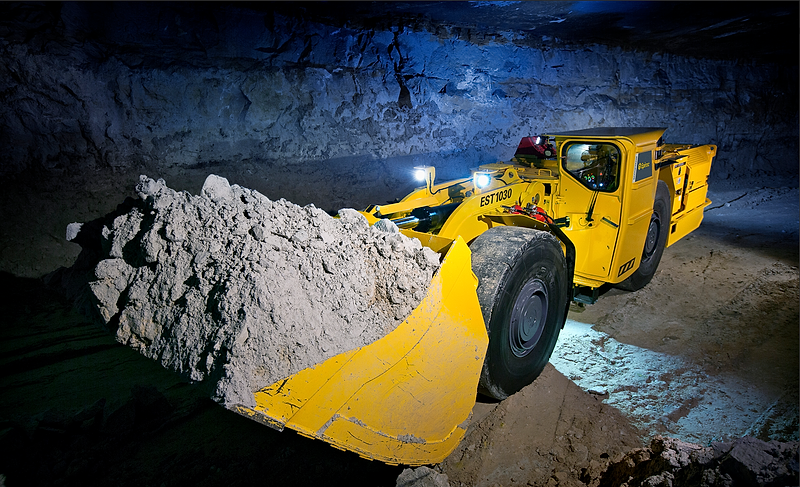
Epiroc’s Scooptram ST1030 combines an updated front-end design with improvements to bucket movement, digging geometry and material release. A range of additional modifications addresses the practical demands of underground work, from handling wet material to protecting components against damage from falling rocks.
The loader has a tramming capacity of 10,000 kilograms and is designed for drift dimensions of 3.5 by 3.5 meters. Its updated configuration also incorporates customer-requested features developed for Philippine mining operations, bringing together equipment changes intended to suit local working conditions.
Improved bucket geometry and loading performance
The ST1030’s updated front end features an optimized Z-bar linkage designed to improve bucket positioning and movement throughout the lifting cycle.
Bucket pin height has increased by 12%, from 3,415 millimeters to 3,816 millimeters. Bucket-tip height is listed at 2,175 millimeters, compared with 1,765 millimeters previously.
The updated design is associated with a 5% increase in bucket breakout force and a 43% improvement in material yield strength. The revised linkage is intended to improve bucket rollback and maintain more parallel movement throughout the lifting range.
Changes to the hoist-cylinder pin installation form part of the front-end update, while the presentation identifies hoist cylinders with a higher safety factor and carrying capacity.
These changes focus on the loader’s ability to engage material, lift the bucket and position it for discharge. Bucket reach and movement are important considerations in underground workings, where confined spaces can limit the machine’s approach to a muck pile and the position available for loading haul trucks.
Epiroc has also revised the bucket’s digging and dumping geometry. The low-dump angle has increased from 30 degrees to 60 degrees, while the low-dig angle has risen from 27.3 degrees to 36 degrees.
Low-reach depth has increased from 863 millimeters to 1,018 millimeters, an improvement of 18%. The changes are intended to extend the bucket’s working range at lower positions and allow material to be released at a steeper dumping angle.
The practical benefits will depend on the material being handled, the bucket configuration and the conditions at each mine.
Wear resistance for demanding ground conditions
Bucket edges and other ground-engaging components are exposed to repeated contact with abrasive rock, making wear resistance an important consideration in underground loading.
Epiroc offers Wearpact ground-engaging tools (GET) for selected customer applications. The system features a low-profile, self-sharpening edge designed to penetrate material and maintain engagement during loading.
Wearpact is designed to provide up to 40% longer wear life while reducing bucket repair costs. Longer component life can reduce replacement frequency, although actual results depend on rock characteristics, operating practices and maintenance.
For mine operators, wear management forms part of the broader cost of running a loader. Component replacement and bucket repairs can affect maintenance expenditure and equipment availability, particularly in operations where machines work repeated shifts under demanding conditions.
A Philippine package built around local requirements
Beyond its front-end improvements, the ST1030 incorporates modifications developed in response to the requirements of Philippine underground mining customers.
Epiroc has grouped selected changes into what it calls the “Philippine package.” The approach brings together features requested by different customers so they can be incorporated into a more consistent configuration when machines are ordered.
The modifications address specific operating needs. One customer requested openings along the sides and bottom of the bucket to suit its material-handling requirements, while an underground mining customer operating in the Philippines requested a wiper for the window in front of the operator.
Rather than treating the loader as a modular machine, Epiroc describes the approach as tailoring its configuration to the requirements of local mining operations.
There are also several modifications developed for a major Philippine mining operations, including a specially designed drainage outlet for handling wet material and a shorter wiper on the door window intended to reduce the risk of damage from falling rocks.
A protective plate beneath the steering cylinder helps shield the cylinder rod without changing ground clearance. The machine also has a larger opening for access to the transmission’s central valve, making the component more accessible for service work.
Electrical protection has been modified to make it more robust. The presentation identifies an IP67-rated plastic connector for the electrical harness, designed to resist water, dust and corrosion, along with an additional carbon-steel box outside the electrical box.
These changes cover different aspects of underground operation, from bucket performance and visibility to component protection and maintenance access. Their availability depends on the machine configuration ordered, and not every ST1030 necessarily carries all the modifications shown in the presentation.
Power, capacity and operating options
The machine’s overview also identifies Fleet+ as a digital solution, alongside a high-lift front end and line-of-sight radio remote control among the available optimization features.
These options allow operators to consider different configurations according to their operating requirements. The appropriate specification depends on the application and the equipment selected for the mine.
Combined with the revised front end and customer-specific modifications, the available configurations give mining operators several factors to consider when matching the loader to their underground workings.
What underground operators look for
Equipment selection involves more than headline specifications. Mines must consider how a loader fits their working dimensions, handles the material encountered underground and holds up under repeated operating cycles.
The ST1030’s revised bucket geometry addresses loading and material release, while Wearpact GET targets component wear. The Philippine package adds modifications requested by local customers, including features for wet material handling, operator visibility, machine maintenance and equipment protection.
Epiroc’s growing ST1030 fleet in the Philippines reflects demand for underground loading equipment configured for local operating conditions. A total of 10 units were purchased in 2026, underscoring the importance of matching equipment specifications to the requirements of underground mining operations.
Mt. Rock Powder Corp.
“[The ST1030 offers a combination of loading capacity and configuration options that we are looking for in equipment intended for underground mining applications. We are assessing how the machine can meet the requirements of our fleet and the operations it will support. Its suitability for our working conditions will be an important consideration.]”
— Virgilio Jose Guevara, President, Mt. Rock Powder Corp.
Matching equipment to the mine
The Scooptram ST1030 combines an updated front end, revised bucket geometry and options for managing wear with modifications developed around the requirements of Philippine mining operations.
The Philippine package reflects an approach in which customer requests inform the configuration of equipment supplied to local mines. Rather than relying solely on standard specifications, Epiroc has incorporated selected changes addressing the practical demands of underground work.
For operators, the value of these features ultimately rests on how they perform at the mine site. Loading efficiency, component life, maintenance requirements and the suitability of the machine for a particular working environment remain important considerations when assessing underground equipment.
The ST1030’s updated design and locally adapted features provide a range of options for mines evaluating their loading requirements, with the final configuration determined by the conditions and demands of each operation.