
Critical minerals offer the Philippines an opportunity to connect its geological resources with industrial development, energy security and technological change. Realizing that opportunity requires more than identifying deposits or increasing ore exports. It requires reliable resource information, commercially viable processing, dependable infrastructure and institutions that protect the environment and affected communities. The country’s emerging policy framework should therefore be judged by its ability to turn mineral potential into lasting domestic capabilities.
Understanding what makes a mineral critical
Criticality depends on the needs and vulnerabilities of a particular economy. A mineral may be important because it supports strategic industries, because its supply is exposed to disruption, or because its production creates significant opportunities for national development. Geological abundance alone does not establish criticality. Neither does inclusion in another country’s list. A producing country such as the Philippines must consider both the value of its resources and the risks that may prevent it from benefiting from them.
Executive Order No. 122, signed on 18 August 2026, defines critical minerals by their importance to clean energy technologies, advanced manufacturing, digital infrastructure, national defense and other strategic industries. This definition places mining within a broader development agenda. Copper can support electrical infrastructure; nickel and associated cobalt can contribute to selected battery supply chains; other mineral products serve manufacturing and construction. The relevant question is how each resource can support Philippine priorities at an economically and environmentally acceptable cost.
A national list grounded in Philippine conditions
The proposed DENR administrative order dated 10 September 2026 would designate gold, nickel and associated cobalt and scandium, copper and associated molybdenum, iron, chromium, limestone and silica as critical minerals. This is a proposed list in the supplied draft, rather than an adopted list established by that document. Its inclusion of industrial minerals reflects a development approach extending beyond batteries and the minerals most often associated with the energy transition.
The draft assessment combines economic importance and opportunities, producer and supply-chain risks, and strategic importance and demand. It also proposes comprehensive review every three years, with interim reviews when circumstances materially change. This flexibility is useful because technologies, markets and national industrial needs evolve. To make the system credible, the government should publish the evidence, assumptions and reasoning supporting inclusion or removal. Assessment should also recognize emerging opportunities that may be undervalued when scoring relies heavily on existing production and exports.
Implementing Executive Order No 122
EO No. 122 establishes a national policy framework and reorganizes the Mining Industry Coordinating Council. It directs national exploration and mineral reservation initiatives, stricter enforcement of development obligations, accelerated disposition of government-owned critical mineral mining assets, digitalized permitting and investment promotion across the mineral value chain. Its guiding principles combine State ownership and economic development with environmental protection, community development and a stable investment environment. These commitments need to operate together.
The order considers critical mineral projects national priority projects. That policy status should be implemented through clear administrative procedures consistent with governing laws. A mineral’s strategic importance does not resolve questions about land rights, environmental impacts, indigenous rights or technical feasibility. The proposed DAO would introduce project certification and endorsement procedures tied to valid permits or rights and compliance with pertinent laws. Final guidelines should clearly distinguish mineral designation, project certification, permit approval and eligibility for investment incentives.
The order’s “use it or lose it” policy targets material non-compliance with approved timelines, work programs or development commitments, while recognizing valid justification involving force majeure or causes beyond a contractor’s control. Effective implementation requires objective criteria and fair procedures. Authorities should distinguish speculative retention of tenements from genuine delays caused by unresolved approvals, access constraints or other documented circumstances. Predictable enforcement can encourage development while reducing avoidable disputes.
The virtual one-stop shop is another important reform. EO No. 122 directs simultaneous processing, clear timelines and performance accountability, followed by an integrated digital platform linking national and local permitting systems. Digitalization will be useful only if agencies also reconcile information requirements, responsibilities and conflicting records. A portal that merely receives applications while unresolved coordination problems persist would have limited practical value.
Making domestic processing commercially viable
Value addition is central to the order. It calls for refining, advanced material processing and downstream manufacturing, supported by energy, water, logistics, recovery and recycling activities. It also provides for priority access by domestic processing plants to ores at fair, market-based prices using transparent benchmarks and allowable adjustments. Implementing rules should explain how this priority will work alongside existing supply arrangements and the requirements of different processing technologies.
Processing investments depend on ore characteristics, reliable feedstock, energy costs, water availability, transport, waste management and market access. Government support should follow project-specific feasibility analysis and measurable development benefits. Shared infrastructure, technology partnerships and predictable administration may be as important as fiscal incentives. Policies affecting ore exports should be carefully sequenced with actual processing capacity, so that the transition supports viable investment and the livelihoods dependent on existing operations.
However, processing is a stage of production; domestic value capture is an economic outcome. A plant can increase the value of exports while relying heavily on imported technology, equipment, inputs and services. The national gain must be assessed after accounting for those costs and public assistance.
This distinction should shape incentives. Before supporting a project, government should ask what additional benefit the assistance purchases, how long support will be needed and what happens if promised outcomes fail to materialize. Conditions could cover workforce training, competitive local procurement, environmental performance and knowledge transfer. Support should have review dates and proportionate remedies. Otherwise, the country risks replacing dependence on ore exports with dependence on permanently assisted processing facilities.
Nickel as a test of responsible value addition
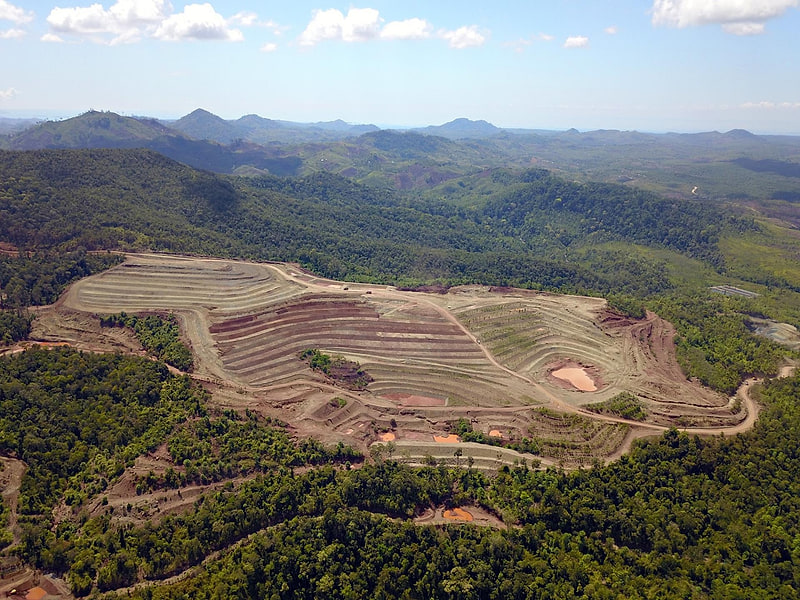
The Responsible Nickel Roadmap for the Philippines provides a practical framework for connecting industrial ambition with responsible resource management. Organized around the United Nations Resource Management System principles, it addresses governance, integrated resource management, value addition, comprehensive recovery, circularity, innovation, environmental responsibility, social engagement, transparency, health and safety, and institutional capability. Its recommendations should be understood as a roadmap for action, rather than evidence that the proposed measures have already been implemented.
For nickel laterites, processing choices must reflect mineralogy and ore variability. High-pressure acid leaching, other leaching methods and ferronickel production serve different feedstocks and markets, with different infrastructure needs and environmental implications. The roadmap recommends comparing processing routes against Philippine conditions, including power costs, logistics and environmental performance. This approach supports investment decisions based on actual deposit characteristics and operating conditions.
Comprehensive recovery offers another opportunity. Nickel deposits may contain cobalt, scandium, chromium and other potentially valuable components. Their presence does not establish that recovery is technically or commercially feasible. Mineralogical characterization, laboratory testing, pilot work and market analysis are needed to establish recoverability and product quality. The whole-deposit approach should also examine residues and potential liabilities, so that higher recovery does not create unmanaged waste or misleading expectations about resource value.
Research that reaches industrial application
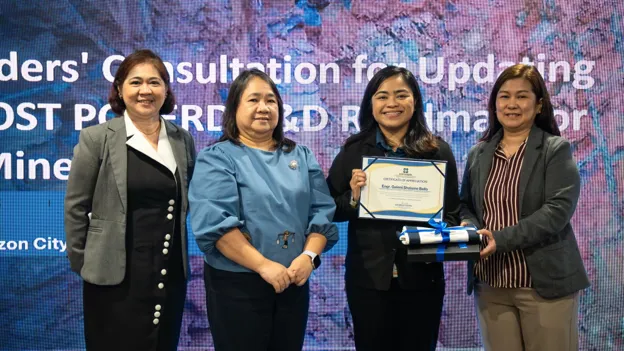
The Mining and Minerals Sector R&D Roadmap for Critical Minerals for 2022–2028 identifies research pathways covering mineral extraction, characterization, refining and recovery from secondary materials. It includes work on metallic and non-metallic resources, mine tailings and wastes, spent batteries and other novel sources. Laboratory facilities and trained personnel are integral to the roadmap. These activities can broaden the country’s options beyond the export of unprocessed materials.
Research milestones, however, should be distinguished from demonstrated commercial performance. A laboratory extraction result does not by itself establish a bankable processing plant. Public support should help promising technologies move through independent validation, pilot operation, product qualification and commercial assessment. Evaluation should include reagent and energy consumption, water use, residue stability, production cost and buyer acceptance. Industry participation can help define realistic specifications and identify practical barriers early.
Circularity also deserves a place in mineral policy. Recovery from spent batteries, scrap, tailings and other residues may improve resource efficiency and reduce some waste burdens. Its contribution depends on collection systems, material volumes, safe handling and suitable technology. A circular economy strategy should connect research with standards, logistics and responsible end-of-life management. It should complement carefully managed primary production while avoiding assumptions that every waste stream is a recoverable resource.
Safeguards as conditions for durable investment
EO No. 122 directs simultaneous permitting, clearer timelines and an integrated digital platform. These reforms can remove avoidable delay. Their value, however, depends on the quality of decisions made through them. A faster permit issued on conflicting land records or incomplete environmental information may lead to disputes, financing problems and costly redesign. Timeliness should be measured alongside the reliability of approvals and the resolution of material issues.
The “use it or lose it” policy raises a related question of accountability. The order targets material non-compliance with development obligations while recognizing specified valid justifications. Fair implementation requires evidence of the contractor’s obligations and the reasons for delay. Government should also disclose delays attributable to its own processes. Enforcement gains legitimacy when private proponents and public agencies are both held to clear responsibilities. Supplemental procedures should preserve applicable legal protections while making decisions predictable.
Responsible development requires attention to cumulative impacts, water systems, biodiversity, climate hazards and mine closure. The nickel roadmap recommends reconciling land-use information, integrating relevant boundaries and geological data, and incorporating disaster and climate risk across the mining lifecycle. These proposals can improve early screening and reduce uncertainty. Shared information must be accurate and developed with appropriate participation by communities and rights holders.
For projects affecting ancestral domains, indigenous rights and applicable free, prior and informed consent requirements must be addressed within the relevant legal framework. Participation should enable communities to understand proposed activities, benefits, risks and long-term obligations. Clear commitments, accessible grievance mechanisms and transparent monitoring help sustain trust after approvals are secured. Community development and rehabilitation costs should be reflected in project economics from the outset.
The nickel roadmap’s emphasis on integrated land information, climate hazards, social engagement and environmental performance is therefore central to the investment proposition. These concerns affect whether a project can operate reliably over decades, rather than merely obtain initial approval.
Turning the framework into measurable results
The next step is an implementation program with named agencies, realistic funding and measurable outcomes. Progress should be assessed through reliable resource information, timely and legally sound permit decisions, viable processing investments, domestic supplier participation, workforce development and verified environmental and social performance. Public reporting should explain delays and corrective action. Mineral criticality should guide policy attention while project decisions remain grounded in evidence and applicable requirements.
The Philippines has a policy opportunity to align mining, industrial development and responsible resource management. Its success will depend on coordinated implementation and commercially sound choices. A critical minerals strategy should leave the country with stronger technical institutions, greater industrial capability and tangible benefits for host communities. Those outcomes will provide a more meaningful measure of progress than the length of a minerals list or the volume of ore exported. The most revealing question is what a host region can sustain when extraction ends.
Critical minerals provide the Philippines with choices, not a guaranteed development path. EO No. 122 and the accompanying roadmaps can support industrial progress if implementation remains evidence-based and accountable. The country should demand more than additional tons, facilities or diplomatic announcements. It should demand an economy that learns, enterprises that become competitive and communities that gain durable security. Mineral wealth is depleted through extraction; the policy succeeds when the capabilities created in return continue to grow.
Fernando “Ronnie” S. Penarroyo specializes in Energy and Resources Law, Project Finance and Business Development. He is also currently the Chair of the Professional Regulatory Board of Geology, the government agency mandated under law to regulate and develop the geology profession. For any matters or inquiries in relation to the Philippine resources industry and suggested topics for commentaries, he may be contacted at fspenarroyo@penpalaw.com. Atty. Penarroyo’s commentaries are also archived at his professional blogsite at www.penarroyo.com
References
DENR–MGB. Proposed DAO on the Philippine Critical Minerals List, 10 September 2026, sections 5–10 and Annex A.
Department of Science and Technology–Philippine Council for Industry, Energy and Emerging Technology Research and Development (DOST–PCIEERD). (n.d.). Mining and minerals sector R&D roadmap for critical minerals (2022–2028) [Roadmap infographic].
Halkes, R. T., Delina-Agillon, R. E., Mills, E., Shaw, I. R., de Jongh, M., Lacinska, A., Winson, A., & Goodenough, K. M. (2026). Responsible nickel roadmap for the Philippines. British Geological Survey.
Republic of the Philippines. Executive Order No. 122, 18 August 2026.