Category:
New study by Weir highlights big energy saving opportunity in mining
The Weir Group PLC, a global mining technology leader, has completed a comprehensive study that highlights a significant opportunity to reduce energy use and emissions in comminution, the rock crushing process that is key to minerals extraction, and that consumes around 3% of the world’s electrical power each year1. The study shows that replacing conventional technology with innovative new solutions can cut energy use by 40% while also avoiding 50% of CO2e emissions.
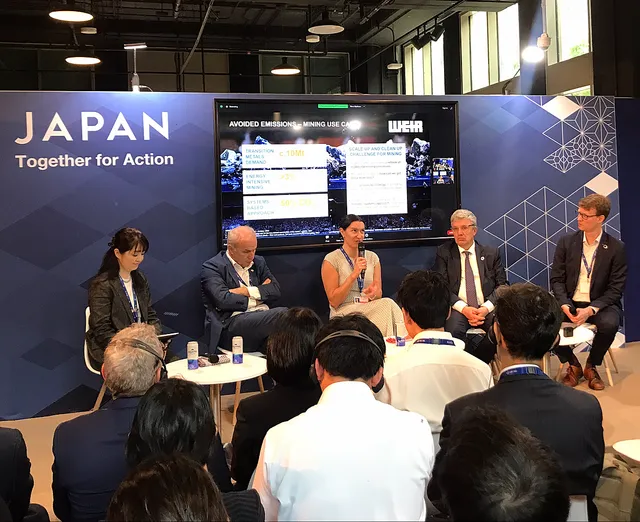
Speaking at a COP28 panel discussion hosted by the Ministry of Economy, Trade and Industry of Japan and moderated by the World Business Council for Sustainable Development (WBCSD), Paula Cousins, Chief Strategy and Sustainability Officer at Weir revealed the details of the study that demonstrates how using innovative technologies to crush rocks can yield significant sustainability benefits at lower operating cost.
The findings of the study come at an important time. Metals, such as copper, nickel and lithium, are critical elements of the technologies that will power a low carbon future and it is widely accepted that a substantial increase in the production of these metals is needed for the transition to net zero. In response, the mining industry is actively seeking to adopt new technologies which extract and process those metals in more energy efficient and sustainable ways, alongside increasing the use of renewable power.
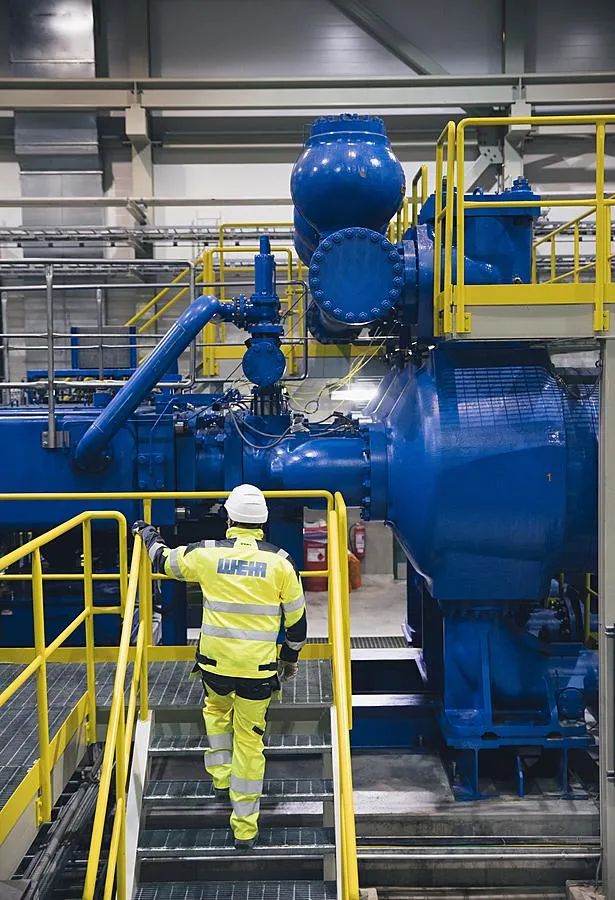
Weir’s study focuses on comminution – the crushing process that turns big rocks into tiny particles to expose the entrapped mineral so that it can be extracted later in the mining process. Comminution is the most energy intensive stage of a typical mine site process. It is already electrified and is responsible for at least one-third of an average mine’s energy use and CO2e emissions1 and globally consumes around 3% of the world’s electrical power1.
Given its energy intensity, the decarbonisation opportunities in comminution are huge, with the basic comminution process not having changed significantly for many decades. Weir is collaborating with customers and other partners to redefine the process, developing innovative combinations of proven technologies to make significant improvements to efficiency and environmental performance.
Unveiling the study during the panel discussion at COP28, Paula Cousins, Chief Strategy and Sustainability Officer at Weir said:
“The need for technology solutions in mining is compelling – the world needs more transition metals to achieve net zero, but the mining industry needs to extract these using significantly less energy and water. Our new, externally assured study highlights the potential for energy savings of 40% and for 50% of CO2e emissions to be avoided in comminution, the most energy intensive stage of mining processes. By adopting a systems-based approach to technology collaborations, we can help the mining industry scale up and clean up at the same time”.
The full video of the panel discussion will be made available to view by the Ministry of Economy, Trade and Industry of Japan shortly.
About the avoided emissions study
The study is the first to utilise WBCSD’s Avoided Emissions Guidance to study mining processes and the avoided emissions results have been independently assured by SLR Consulting Limited. Three of Weir’s technology combinations were evaluated against a conventional comminution circuit design for an archetypal mine processing 15 million tonnes of copper ore per year in Chile.
All three of the technology combinations are shown to yield sizeable benefits versus the traditional circuit. In the optimal combination, the comminution process consumes around 40% less energy and can avoid up to 50% of CO2e emissions. Importantly, there is no trade off elsewhere, as the redefined process uses less water too.
Further details of the avoided emissions study are available here.
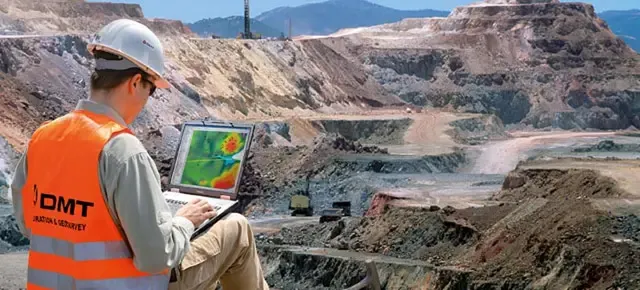
DMT Study Shows Where Mining Companies are on Digital Transformation
The modern mining industry faces a multitude of challenges, such as low productivity, price volatility, disrupted supply chains, increasingly remote, deeper, and lower-grade deposits, and rising social, legislative, and financial pressures on global players to show commitment to environmental, social, and governance.
Digital transformation offers new pathways for operational improvement across the mining sector, providing businesses with opportunities for value creation, capturing and maintaining resilience amidst existing challenges, and securing future competitiveness amidst new ones. Digital tools challenge traditional models from exploration to distribution, improving productivity, safety, decision-making, environmental impact, and social performance.
Despite all this glitter, several studies have shown that adopting digital technologies in the mining industry has not been widespread or consistently successful due to essential barriers present throughout their life cycle, particularly the gap between mining strategy and execution (BCG, 2021).
According to an internal DMT study, the challenges extend beyond technological complexity. Leadership, organizational structure, and company culture emerge as the primary barriers, suggesting that a successful transformation hinges on these factors.
Effective leadership, understanding of available technologies, and a forward-thinking vision are essential to overcoming these barriers. Leadership’s role in providing direction, mobilizing resources, and fostering an innovative culture cannot be overstated, the study adds.
DMT’s survey findings illuminate that organizational culture is pivotal in digital transformation. Therefore, successful digital transformation is not solely reliant on technology; it is deeply influenced by the culture that permeates mining companies.
As stated by Hanifa Indradjaya, the president director of PT Petrosea: “The main contributor to our success has been our ability to change people’s mindsets—effective change management and a solid focus on what needs to be achieved” (McKinsey, 2020).
DMT’s survey showed that a significant 70% percentage of respondents view culture as a barrier to achieving digital goals. Indeed, a culture resistant to change, lacking innovation, or hindered by siloed mindsets can create resistance to implementing digital transformation initiatives.
However, another 25% of respondents view culture as an enabler of digital goals. This indicates that some mining companies have developed a culture that promotes innovation, encourages collaboration, and embraces change. Such a culture empowers employees to participate in digital initiatives actively and drives the achievement of digital goals.
The survey analysis reinforces the idea that organizational culture can act as a barrier or an enabler of digital transformation. Recognizing the importance of cultural factors and actively shaping the organizational culture can significantly enhance the chances of successful digital transformation.
DMT’s approach acknowledges that digital transformation is not just about technology; it is about reshaping processes, fostering a culture of innovation, and creating a foundation for growth.
DMT supports mining companies throughout their digital transformation journey, including current state assessment, strategy, technology valuation, and change management, emphasizing process reshaping, innovation culture, and sustainability.
References:
BCG (2021). Racing Toward A Digital Future in Metals and Mining, https://www.bcg.com/publications/2021/adopting-a-digital-strategy-in-the-metals-and-mining-industry
EY (2023). Top mining sector trends and challenges in 2023, https://www.ey.com/en_gl/mining-metals/top-mining-sector-trends-and-challenges-in-2023
McKinsey (2020). Buckets of innovation: How digital has transformed a mining company in Indonesia. https://www.mckinsey.com/industries/metals-and-mining/our-insights/buckets-of-innovation-how-digital-has-transformed-a-mining-company-in-indonesia