
September 07, 2021

Transport infrastructure is expected as the key driver for the Philippine construction sector growth, Fitch Solutions said Thursday.

In a commentary, the research unit of the Fitch Group said the Philippine construction industry is expected to grow by 24.2 percent year-on-year this year, and by 16.1 percent in 2022.

“We expect transport infrastructure, particularly rail and road development, to be the key driver of infrastructure and construction growth in the Philippines over the coming years,” it said. 

Fitch Solutions added transport projects dominate pipeline construction projects.

Of the total value of ongoing projects, 33 percent are rail projects and 22 percent are airport development, while roads and bridges share 18 percent.

“(President Rodrigo) Duterte’s ‘Build, Build, Build’ program will remain a key policy driving investments in the construction sector, while the progress on the execution of projects will have a heavy influence on growth of the sector over the short term,” Fitch Solutions said.

It added that strong fiscal support is also evident in the government’s national budget.

Proposed budget for the Department of Transportation (DOTr) next year rose to PHP151.3 billion from PHP87.9 billion this year.

Of the said budget, PHP110.9 billion will go to rail projects, PHP13.9 billion for land public transportation, PHP1.7 billion for aviation infrastructure, and PHP720 million for maritime infrastructure.

“The Philippines construction sector grew by 25.7 percent year-on-year in real terms in (the) second quarter of 2021, marking one of the highest construction growth rates in its history. This is despite localised lockdowns across the market in recent months. We do stress that this is in large part due to low base effects from (the) second quarter of 2020 when the pandemic first hit, but signals a very strong recovery in the market in line with our initial expectations,” Fitch Solutions said.

However, the rising Delta variant cases in the country pose downside risk to the sector.

Fitch Solutions forecasted that the construction sector’s growth will weaken during the second half of the year. - By Kris Crismundo


Article Courtesy of the Philippine News Agency

September 02, 2021

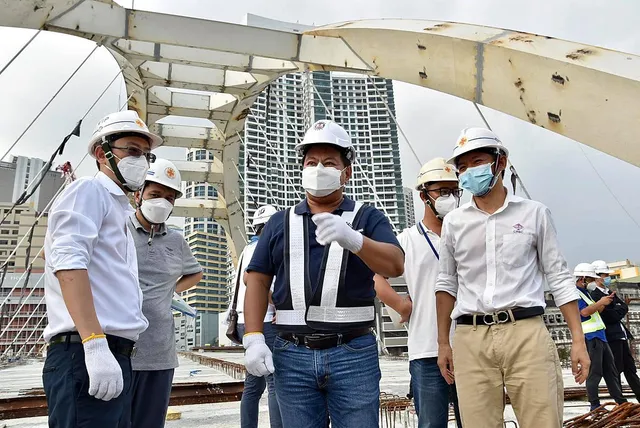
A new iconic bridge in Manila is set to open to motorists in the first quarter of 2022.

Department of Public Works and Highways (DPWH) Secretary Mark Villar said that installation of fabricated precast concrete slab panels that will serve as main bridge carriageway of the P3.39 Billion Binondo-Intramuros Bridge Project are now nearing completion.

As of to date, the workers observing safe workplace protocols have performed controlled precast slab installation process on the assembled steel beams of the steel arch bridge which has an already completed sling cable tensioning components, Secretary Villar added.

In his report to Secretary Villar, Undersecretary for Unified Project Management Office (UPMO) Operations Emil K Sadain said that the project is about 77 percent complete and DPWH UPMO Roads Management Cluster 1 is vigorously following up request with Meralco to move or relocate distribution poles and overhead high tension lines that pose serious safety concerns in the on-going construction of ramps in Binondo and Intramuros area.

Undersecretary Sadain together with Project Manager Melchor Kabiling conducted actual field assessment on problem regarding the existing Meralco and Telco lines which will be affected by the launching of steel box girders for the down-ramp along Estero De Binondo towards Plaza del Conde and Rentas Street and the relocation of affected lines along Muelle de Binondo (near San Nicolas Fire Station) and Rentas Street where the down-ramp of the bridge project will be connected.

Of the 135 bored piles for abutments, piers and ramps, 114 were already completed with the remaining 21 mostly at the Estero De Binondo area.

The presence of powerlines and other utilities along Estero de Binondo at the north approach bridge posed serious challenges in the tight schedule to complete the new bridge.

Construction of the 680 lineal meter basket-handle tied steel arch bridge connecting Intramuros (at Solana Street and Riverside Drive) and Binondo (at San Fernando Bridge) with a viaduct structure over Estero de Binondo is financed by a China Aid Grant.

The steel arch main bridge 70 meters in length and a width of 21.65 meters has the following components at Binondo side: two (2) north approach bridges made of composite steel box girder 330 meters right on-ramp and 200 meters left off-ramp; one (1) 88 meters right on-ramp north approach bridge with reinforced concrete slab; and one (1) 98 meters left off-ramp north approach road with mechanically stabilized earth (MSE) retaining wall.

At the southern part in Intramuros are 111 meters right on-ramp and 81 meters left off-ramp south approach road with MSE retaining wall; and 80 meters right on-ramp and 83 meters left off-ramp bridges.

Although the coronavirus pandemic disrupted the jobsite activity, the DPWH and contractor China Road and Bridge Corporation is taking pro-active and preventive measures for workers in accordance with the construction health and safety guidelines issued by Secretary Villar especially with the heightened restriction because of so much transmission of the COVID19 viruses and the Delta variant, added Undersecretary Sadain.

September 02, 2021

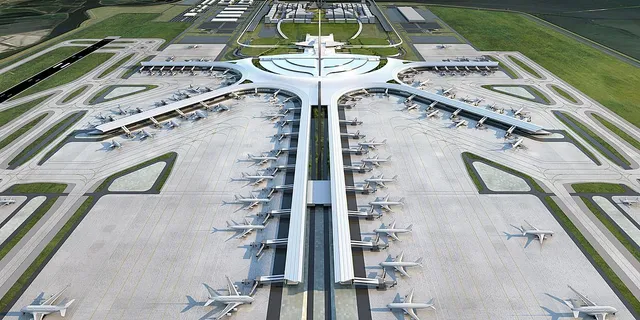
San Miguel Corporation’s (SMC) airport and aerocity project in Bulakan, Bulacan will be a pacesetter for green cities that are both sustainable and equitable, one that aims to address social and environmental concerns that affect even the country’s major financial districts today.

This, according to the country’s top urban planner and green architect Felino “Jun” Palafox Jr. who outlined some of the major features that he and SMC president Ramon S. Ang envision for the much-anticipated development in Bulacan.

Palafox Associates has been tapped by SMC to help masterplan its airport plus city concept or “aerocity” development--where its massive, P740-billion airport project, the New Manila International Airport will be located.

Comparing the Bulacan project to environment-enhancing developments in Dubai and other parts of the world, Palafox said the development will integrate the best practices in green, sustainable, and disaster-resilient architecture that he has advocated and implemented in some 1,700 projects in about 45 countries worldwide.

Palafox said the new development will take advantage of SMC president Ramon S. Ang’s forward-thinking and bias for taking action to undertake projects without cost to the government.

“I’m aligned with the mission, vision and goal of Ramon Ang. He invited me to partner with him in this new undertaking: a green aerotropolis. At Palafox, we’ve analyzed that we need at least 100 new cities all over the Philippinex by 2050. If we don’t do it, our cities will become as bad, if not worse than Metro Manila. We envision the Bulacan Aerocity development as the first model and pacesetter for future green and sustainable cities in the country” Palafox said.

(L-R) Urban planner and Architect Felino “Jun” A. Palafox, Jr., Mr Joey Nelson R. Ayson (President, Philippine Mining and Exploration Association), Marcelle P. Villegas (Journalist, Philippine Resources Journal)

For his part, SMC president and chief operating officer Ramon S. Ang said that the project will be a legacy project, not just of him and Palafox, but of the present generation to future generations of Filipinos.

“I want to emphasize to our countrymen that what we are building is more than just an international gateway with four runways, with an infrastructure network to connect it directly to Metro Manila and many other points in Luzon. The airport is just one component-- what we’re building is the Philippines’ first truly green city of the future,” Ang said.

“We see this project as a silver lining amid all the difficulties we face today because of the pandemic. All Filipinos are looking forward to a future where COVID-19 is less of a threat to our lives and our economy. We want to see the positive developments that lie ahead for our country. I believe this is one of the best things we can look forward to with much hope and optimism,” he added.

Ang also touted the significant economic impact the project will have on the country and the Filipino people.

“Airport cities around the world generate a significant amount of jobs, and that is ultimately what we want to do. We need jobs and opportunities for our countrymen today, but more importantly, for the next generation in the coming years, especially since we are trying to recover from a pandemic,” Ang said.

He added that “The jobs we will generate will not be limited to the airport city, or Bulacan province alone, but will extend to neighboring provinces, the rest of Luzon, and many other parts of the country which will benefit from increased tourism, increased investments because of better accessibility.”

Ang also said that he and Palafox have agreed to integrate best practices in green architecture, green urbanism, and green urban planning to the Aerocity development, and avoid the mistakes that have contributed to the present-day problems of the country’s biggest cities today.

Metro Manila: What went wrong

Palafox pointed out a number of contributing factors that have made life difficult for many people working in today’s primary business districts, which the Aerocity project will aim to address.

“The mistake in Makati’s central business district, Bonifacio Global City, and Ortigas is exclusionary or discriminatory zoning--excluding the employees from their places of work. Employees are like OFWs in their own countries, because they are five to six hours away from their places of work and families, because of traffic congestion,” Palafox said.

“Before, real estate criterion was always location, location, location. Now, it’s more than location; it’s accessibility, accessibility, accessibility, and mobility, mobility, mobility. That is why the infrastructure that both government and private sector companies like SMC are doing now, are very welcome, as they alleviate the traffic that many people have no choice but to endure,” Palafox added.

Palafox related that in 1990, Makati reclassified and increased the density of the Makati CBD by four times. However, access capacity and mobility was not similarly increased four times.

Adding to the problem is the fact that the CBD is constricted by gated, low-density neighborhoods, villages, and a gated cemetery--making it more difficult for most people to walk to work.

“Elsewhere in the world, NYC, European cities, Singapore, are ‘walkable’ because within 250-750 meters, there is a walking facility. Around Makati City, BGC, and Ortigas, you’re surrounded by gated communities, so you have to walk about one to two kilometers to go around. Our planning in the Philippines had the wrong model: Los Angeles, which was designed for automobiles,” he explained.

He also cited the prevailing influence of Spanish rule as a constraint.

“I’m talking about the colonial town plaza concept, where the elite or illustrados lived around the town plaza where the church, munisipyo and central park are. Meanwhile, the peasants or indios and Chinese merchants lived in extramuros, or outside. That was 500 years ago, but it’s still a concept in our urban planning development today,” he explained.

Enhancing the environment

Meanwhile, for Ang, apart from generating jobs, one of the most important considerations for the project is improving the environment--not just within and around the airport project, but throughout Bulacan province.

“From the very beginning, I promised Bulakenyos and all our stakeholders in government that the airport project and the aerocity development will have significant benefits for the province and the whole country. We will make sure to do everything right, because this is our biggest investment to date, and our legacy to the next generations,” Ang said.

“Specifically, we will clean up the environment, clear the river systems to enable water to flow freely again and address flooding; we will establish mangrove forests, with some 190,000 mangroves all over Bulacan and neighboring provinces to enhance biodiversity and help mitigate tidal flooding. We’re also looking to develop and enhance natural habitats of marine and bird species. There’s so much more we can do,” he added.

For the development itself, Ang said he and Palafox look to integrate the following concepts:

Adopt green architectural and green urbanism guidelines over and above the country’s building and zoning codes, which Palafox said no longer follows international standards.

  • Follow the structural codes of other countries, specifically those situated in similar earthquake zones as the Philippines.
  • Creation of an “innovation hub” where both learning institutions and technology-driven global companies can thrive. As such, Palafox has put forth a “town and gown” or university town concept, where learning institutions and the community partner together, such as in Cambridge and Boston in the United States, where Harvard University is. SMC is also looking to put up a medical and research facility along with the school.
  • The aerocity project will be equipped with the latest in digital infrastructure, to enable people to work and conduct business anywhere.
  • The development will also have lots of open spaces, as these are the “lungs” of a city. Palafox cited that Metro Manila went from green to gridlock because many parks and open spaces were reclassified into sellable and buildable properties. As the population grew, the parks and open spaces started disappearing.

Meanwhile, the aim for the Bulacan development is to allot highest and best use for the improvement of the environment, and to address climate change. These will be included in his proposed guidelines for green architecture and green urban planning.

Ultimately, the plan is to positively impact the whole of Bulakan, Bulacan so that in the end, Bulacan will not just be a province with an airport, but an airport-driven province.

In master-planning the development, “ridge to reef” planning will also be employed, taking into consideration the improvement of mountain ridges or highlands, midlands, the lowlands, and the coastline.           

Public transport will also be easily accessible. One of the things being considered is a bicycle highway connected to the train system.

Palafox said the city will be a “healthy city”. It will be “walkable and attractive”. It will have less need for security because it will be open and there won’t be too many walls around the city, which Palafox sees as encouraging crime, and contributing to the heat index, as they obstruct cross ventilation in cities.

Meanwhile, the coastal area or Manila Bay waterfront will also be utilized for walkways, waterfront promenades.

Finally, Palafox and Ang said they will prioritize the triple bottomline: people first for social equity, alleviating poverty, and job creation or inclusivity. Then planet and the environment come next, with prosperity, economic growth, and profit following.


Article Courtesy of San Miguel Corporation 

September 02, 2021

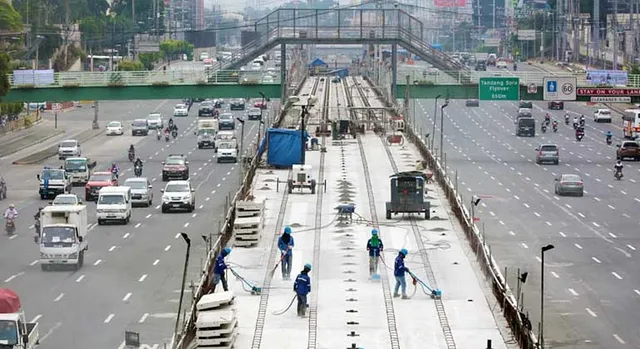
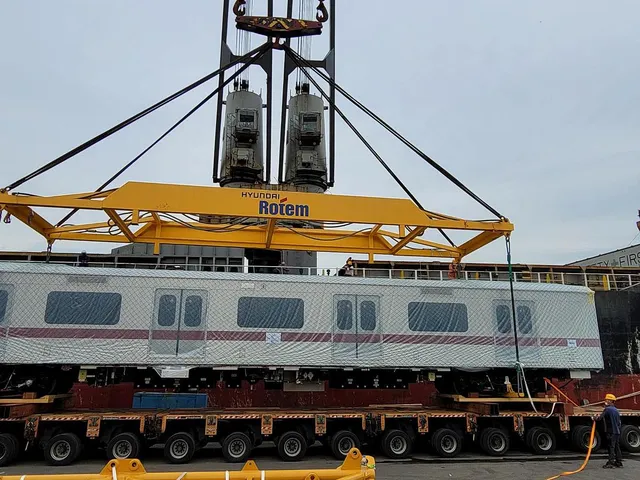
San Miguel Corporation has announced that the first batch of trains for its Metro Rail Transit (MRT)-7 project is set to arrive in the country from South Korea next week, even as work continues for the completion of the much-awaited mass rail project. 

The trains, which consist of six cars or two trainsets procured from South Korea’s Hyundai ROTEM, have cleared inspections and factory acceptance testing, with the country’s national rail manufacturer, Korea Railroad Corporation (KORAIL), serving as SMC’s adviser. 

Each trainset is 65.45 meters long -- or well over the entire length of an Olympic-size swimming pool, which is 50 meters.

“The timely arrival of these brand new, high-quality trains from South Korea --known as one of the world’s best train and rail systems builders -- is such a welcome development, and I believe holds a lot of significance. At a time when many are feeling uncertain about our country’s future because of the pandemic, this shows that the job of nation-building continues; that the work of improving our infrastructure, boosting our economic growth prospects, and investing in our country’s brighter future, also doesn’t stop -- especially for us in San Miguel,” SMC president Ramon S. Ang said in a statement Wednesday.

Ang said more trains are set to arrive in the following months, up to next year, until all 108 cars or 36 trainsets the company acquired are delivered. 

Despite continuing pandemic restrictions and pending right-of-way (ROW) issues, the project itself is now at over 54 percent completion, with installation of bored piles, girders, and other foundational works on a significant portion of the project, already completed. 

“Right now, construction activities on the guideway and the stations are ongoing. Electronic and mechanical works also continue. As we said before, the MRT-7 project is in many ways more difficult and complex than even our recently-competed Skyway Stage 3 -- which in itself is an engineering feat,” he said.

Ang said MRT-7 has added complexities such as electric power systems, computer and communications systems, signaling systems, and automatic fare systems, among others. 

“There are many causes of delay, from necessary pandemic restrictions, to ROW issues, but as with all SMC projects, we apply 110 percent effort to all the areas we can work on, so as to minimize delays. The most important thing is we don’t stop, we keep on progressing. We thank our national government, especially President (Rodrigo) Duterte, the DoTR (Department of Transportation), the DPWH (Department of Public Works and Highways), and the LGUs (local government units) of Quezon City and Bulacan, for their continuing support for this project,” Ang added. 

Earlier, SMC reported that manufacturing of other important equipment needed for the MRT-7 which were all sourced from various countries has also been completed. 

Various other railway operations equipment such those needed for automatic fare systems, communication systems, signaling systems, power supply systems, third rail, track works systems and rolling stock maintenance equipment --used for the maintenance of trains-- are also set to be delivered from various countries throughout the year. 

The first test run of the project is set for December 2022.

August 31, 2021

3 Key Trends Transforming the Industry in 2021


Changing the way we work: Measures across Asia-Pacific economies to slow the spread of the pandemic meant a rapid reduction in staff working on building sites and in contractor and consultant offices, resulting in an acceleration in the rate of digital transformation.

Smart sensors are being used in building systems and infrastructure assets to enable remote monitoring of performance. These, coupled with data integration platforms, give real-time insights 24/7 from anywhere.

Drones have been used for spatial surveys and asset mapping before the pandemic; last year saw a new emphasis on remote surveying for more detailed and specific applications, such as progress reporting and workplace safety monitoring.

People with skills to manage and operate telematics, drones, digital modelling, the streams of data generated by IoT, virtual inspection tools and digitised safety reporting, are now in demand. Without them, all that information will be next to useless as builders won’t be able to apply those insights to improve performance and productivity.

Automation and AI: In Asia, the uptake and installation of process robotics have reached record levels, with two-thirds installed in factories across Asia. On commercial and residential building sites, the impact of robotics and automation will be seen more immediately in supply chains, for example, automated equipment used for manufacturing materials and components. Such robots will soon be tackling jobs like materials handling, welding and small parts assembly.

Another type of robotic technology whose role in design, delivery, compliance and asset operation will become increasingly pervasive is AI. AI can assess plans at light-speed against the hundreds of standards and compliance requirements in the building code. The computational design generated by AI can be then analysed by more AI. The resulting analysis can help generate accurate costings, procurement plans, programming and more effective management of milestones, progress payments, safety reporting and quality verification.

Digital twins: A digital twin integrates multiple technologies, such as advanced Building Information Modelling, IoT, AI, machine learning, spatial technologies, virtual reality and augmented information management, all stored in the cloud.

One company that has adopted such a technology is Gammon Construction in Hong Kong, thus offering real-time visibility of pours, curing rates and productivity. This has enabled the company to strike its pours 38% faster, and saved over 110 tons of concrete waste.

Optimising construction outcomes in terms of quality, safety, and financials is the ultimate benefit of digital transformation. Paper forms, Excel spreadsheets, cluttered email inboxes, and voicemails won’t get us there. Change and progress start from the ground up, and what’s needed is a sound toolkit of digital productivity, project management and business management systems. What’s needed is a transformation in smarter construction.

Talk to Procore today about how we can help you face the changes ahead or visit: https://proco.re/3rQtgMl to find out more about how to build smarter.
August 25, 2021

Photo Credit: Department of Public Works and Highways

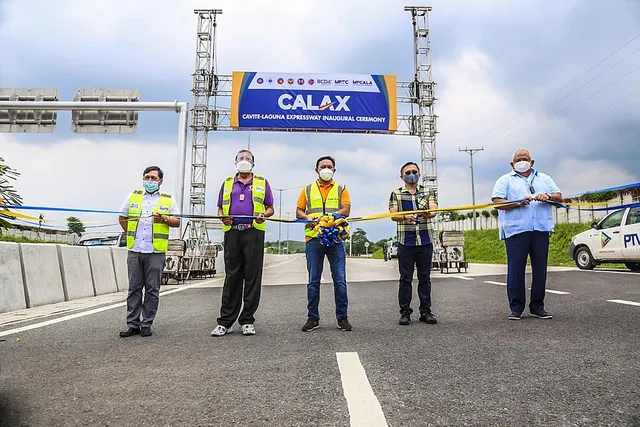
Public Works and Highways Secretary Mark Villar on Tuesday led the ceremonial opening of the Cavite-Laguna Expressway (CALAx) Sub-section 5 from Silang East Interchange to Sta Rosa-Tagaytay Interchange in Cavite.

“While this pandemic may have slowed down and disrupted the implementation of projects, the Sub-section 5 or 5.14 kilometers Silang East Interchange to Sta. Rosa-Tagaytay Interchange component of Cavite Laguna Expressway or CALAX Project was completed and will be now opened to public use,” said Secretary Villar during the event.

“The opening of Sub-section 5 will be able to cater to around 5,000 motorists daily, adding to the roughly 10,000 users of the already opened CALAx subsections 6, 7, and 8 from Sta. Rosa to Mamplasan,” said Secretary Villar.

According to Secretary Villar, ongoing subsections are also being fast-tracked by concessionaire MPCALA Holdings to be able to fully-open the entire 45-kilometer CALAx connecting CAVITEX in Kawit, Cavite and South Luzon Expressway-Mamplasan Interchange in Biñan, Laguna.

Once fully-completed, CALAx will significantly reduce travel time between CAVITEX and SLEX to only 45 minutes, reducing traffic congestion particularly in Governor’s Drive, Aguinaldo Highway and Sta. Rosa-Tagaytay Road which are heavily congested and supporting national development policy and provide efficient transport facilities for the Eco-zones in Cavite and Laguna Provinces.

“More than providing efficient transportation links, the CALAX project under public-private partnership arrangement with the MPCALA Holdings - a unit of the Metro Pacific Investments Corporation, will help hasten economic recovery by providing jobs and promote the Calabarzon as a preferred destination for investment and growth,” added Secretary Villar.

The P35.68 Billion Cavite-Laguna Expressway which began construction in July 2017 is part of a bigger Build, Build, Build Program of the government.


Article courtesy of the Department of Public Works and Highways

August 23, 2021

Photo Credit: Victor Roman

The rehabilitation of the San Juanico Bridge has further delayed its much-awaited lighting project, a Department of Tourism (DOT) official said on Friday.

In an interview, DOT Eastern Visayas regional director Karina Rosa Tiopes said the completion of the lighting project will be pushed to early 2022 to give way to the repair of the 50-year-old bridge.

Tiopes said officials of the Department of Public Works and Highways (DPWH), bridge rehab contractor, and lighting project contractor Amigo Entertainment Technologies Inc., and others concerned agencies will meet regularly to resolve issues causing the delay of the tourism project.

Citing discussions in a recent meeting, Tiopes told the Philippine News Agency (PNA) that the DPWH contractor, M. G. Lualhati Construction Corp., unintentionally removed some of the bulbs and its fiber optics in their attempt to replace bridge bolts and install scaffoldings.

“Each bulb is linked to an address. Imagine how many bulbs were installed and each of these is interconnected to each other. If one is removed, other bulbs are affected,” Tiopes added.

The DOT regional office is tasked to monitor the project funded by the Tourism Infrastructure and Enterprise Authority (TIEZA), an attached agency of the tourism department.

Toribio Odtuhan, head of the DPWH San Juanico Bridge Task Force, said Amigo was informed about the rehabilitation plan, but the latter failed to follow the recommendations on where to specifically install the bulbs.

“Our contractor is willing to pay the cost of damage. We will meet again with the DOT contractor and the Samar provincial government to resolve the problem,” Odtuhan told PNA.

The PHP96.25 million major bridge repair projects include structural steel painting, tightening and replacement of bolts, and general scaffolding.

This is the first initiative to tighten and replace bolts since the bridge was built in 1969.

The bridge repair will be done in December this year, moving the lighting project completion to the first quarter of 2022.

The PHP80-million San Juanico Aesthetic Lighting project was approved in 2018, with bidding that started in 2019, and groundworks that began in the same year.

It was initially targeted for completion in the second quarter of 2020 but was affected by the restriction due to the coronavirus disease 2019 (Covid-19) pandemic, pushing the revised completion date to December last year.

However, during the test run, it was found that the power supply from a substation supplying electricity to the bridge was unstable. Major issues were addressed and officials revised the full completion date to Aug. 11, 2021 in time for the 180th Samar Day celebration.

“The entire project was 95 percent done when the DPWH started the bridge repair works. With this problem, there’s more work to be done again,” Tiopes added.

Under Amigo’s initial plan, the lighting will be in the default position for 45 minutes per hour in white and strobe lights. There will be a 10-minute light show six times nightly.

The colors may also depend on the occasion, such as red for Valentine's, red and green for Christmas, and violet for Lent.

Officials assured that lights will not distract traffic flow at the bridge that forms part of the country’s longest highway that links Luzon to Mindanao.

Aesthetic lights are not visible to motorists passing the bridge, according to the contractor.

The bridge’s transformation would be a new attraction under the Spark Samar, a branding campaign of the local government that was launched in 2015.

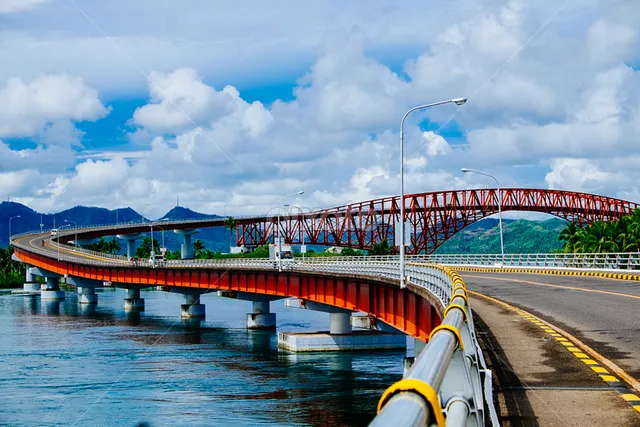
The San Juanico Bridge, which spans 2.162 kilometers, was built as part of the Pan-Philippine Highway now called the Maharlika Highway, a network of roads, bridges, and sea routes that connect the islands of Luzon, Samar, Leyte, and Mindanao. - By Sarwell Meniano


Article Courtesy of Philippine News Agency

August 18, 2021

Photo Credit: The Department of Public Works and Highways

The Department of Public Works and Highways (DPWH) is on track to deliver the Lawton Avenue to Global City viaduct section of the Bonifacio Global City (BGC)-Ortigas Center Road Link Project by end of 3rd Quarter this year.

Secretary Mark Villar said that construction of viaduct and approach 3 along BGC’s 8th Avenue is now at an accelerated pace to meet the September completion target.

This project will soon provide motorists a much different travel experience between Ortigas and BGC, added Secretary Villar.

Secretary Villar together with Undersecretary for Unified Project Management Office (UPMO) Operations Emil K. Sadain and UPMO-Roads Management Cluster 1 (Bilateral) Project Director Benjamin Bautista and Project Manager Ricarte S. Mañalac made an inspection of the project on Tuesday, August 17, 2021.

According to Undersecretary Sadain, DPWH has already completed the deck slab of main viaduct from pier 13 to pier 22 while installation of deck slab reinforcements at pier 22 to abutment 3 including median, sidewalk and parapet reinforcements are on-going.

Although community quarantine is in place, DPWH and contractor Persan Construction Inc. has continued the work along the stretch of 8th Avenue from the Kalayaan Avenue intersection taking into consideration the construction health and safety protocols, said Undersecretary Sadain.

Construction of retaining and MSE wall for the 155 meter approach 3 are also on-going with the underground utilities of Meralco along 8th Avenue already relocated.

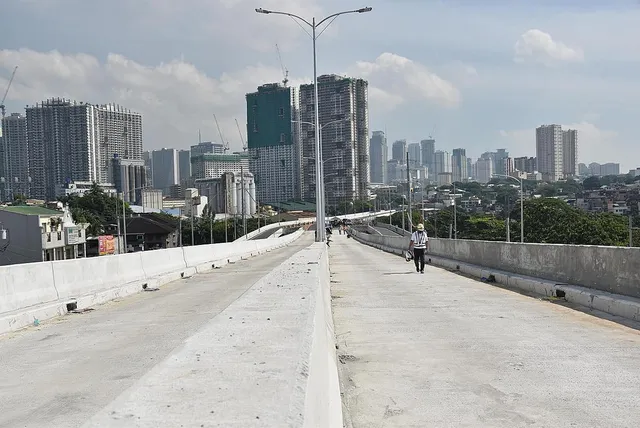
Once the Lawton Avenue to the Global City Viaduct section is fully completed, it will provide direct access from Ortigas Center heading towards the Kalayaan Bridge to Bonifacio Global City.

The entire 1.481-kilometer BGC-Ortigas Road Link Project, composed of the Kalayaan Bridge which was opened last June 12 and the improvements at Brixton and Fairlane Streets, and the Lawton Avenue – Global City Viaduct, is expected to reduce travel time between BGC and Ortigas Center from a one-hour trip to 12 minutes.


Article Courtesy of the Department of Public Works and Highways

August 09, 2021

Public Works and Highways Secretary Mark Villar announced that the on-going works for the Panguil Bay Bridge Project stays on track within the target completion of December 2023.

Secretary Villar said that progress of works for the Northern Mindanao’s mega inter-island connection is now at 22 percent as major equipment intensifies preparation of the bridge foundation.

In an inspection report to Secretary Villar, Undersecretary for Unified Project Management Office (UPMO) Operations Emil K. Sadain said that 15 bored piles out of 54 for Panguil Bay Bridge sub-structure were completed to date at a depth ranging 30 to 50 meters.

Undersecretary Sadain together with Project Director Sharif Madsmo Hasim of UPMO Roads Management Cluster 2 conducted work performance assessment on Thursday, August 5, 2021 of the off-shore construction activities by Korean joint venture contractor Namkwang-Kukdong-Gumwang.

Based on the extensive detailed engineering design, the 3.169 kilometer Panguil Bay Bridge will require 54 bored piles intended for the 32 piers, two (2) for abutments at Tangub City, Misamis Occidental and Tubod, Lanao Del Norte side, and two (2) for pylon of the main bridge.

Bored piles 3 meter diameter are completed using reverse circulation drilling machines on barges to prepare the bore holes followed by the launching of 23 millimeter thick permanent steel casing using revolving crane barges and vibro pile hammers, and until final pouring with two (2) land and sea-based batching plants each capable of supplying 120 cubic meter of ready-mixed concrete per hour.

With an average of six (6) to seven (7) holes prepared per month, 74 percent or 40 of the 54 bored holes is targetted for completion towards end of December 2021 with the remaining 26 percent or 14 bored holes to be finished by February 2022.

In order to ensure quality of works, the completed bored piles are subjected to checking using cross hole sonic logging test after 7 to 14 days of concrete placement in order to assess the integrity of concrete in the cast-in-site pile and will also undergo pile loading test to determine the safety factor, Undersecretary Sadain reported.

Considered as the biggest and boldest infrastructure project in Northern Mindanao, the P7.375 Billion project to connect Tangub City and Tubod across Panguil Bay in just seven (7) minutes is funded by a loan agreement between Government of the Philippines (GOP) and Korean Export-Import Bank (Korea Eximbank).

August 02, 2021

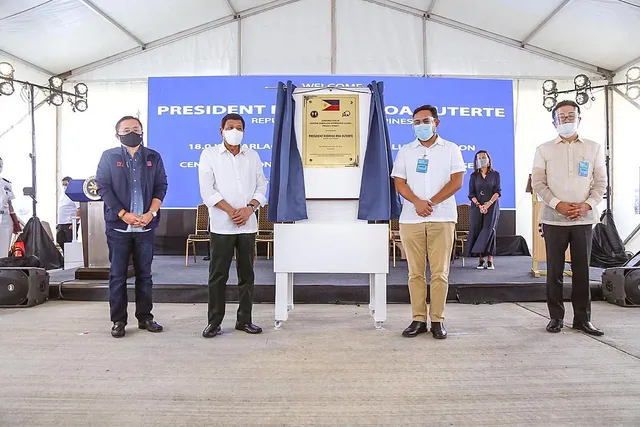
President Rodrigo Roa Duterte inaugurated on Thursday, July 29, 2021 the Estrella - Pantaleon Bridge, a modern bridge that will connect the cities of Mandaluyong and Makati within five (5) minutes.

The President was joined by Chinese Ambassador to the Philippines Huang Xilian, Department of Public Works and Highways (DPWH) Secretary Mark Villar, Senator Christopher Lawrence Bong Go, and Executive Secretary Salvador Medialdea in the symbolic unveiling of bridge marker at Rockwell, Makati City.

The event was also attended by Transportation Secretary Arthur Tugade, Finance Secretary Carlos Dominguez, MMDA Chairman Benhur Abalos, DPWH Undersecretary Emil K. Sadain, and Mandaluyong City Mayor Carmelita Abalos.

Built at a cost of P1.46 Billion, the Estrella - Pantaleon Bridge Project is one of the two (2) bridges funded by a grant of the People’s Republic of China — the other one is Binondo-Intramuros Bridge in Manila expected to be finished at the end of the year.

The President expressed his appreciation to the Chinese government’s generosity in funding the construction of this new bridge that has not only improved mobility and connectivity but also enhanced the resilience against natural disasters.

Secretary Villar said that this modern bridge across Pasig River is expected to accommodate about 50,000 vehicles daily and is among the projects under the Metro Manila Logistics Improvement Network to address traffic congestion including that of EDSA.

Construction of 506.46 meters bridge began on January 2019 under the implementation of DPWH Unified Project Management Office (UPMO) Operations headed by Undersecretary

Sadain, who together with Secretary Villar were at the forefront of ensuring the quality completion despite the challenges of this project under the Build Build Build program.

While this pandemic may slowed down and disrupted the implementation of this bridge project, the DPWH UPMO Roads Management Cluster 1 Team headed by Project Director Benjamin Bautista, former Project Director Virgilio Castillo and Project Manager Melchor Kabiling and with the contractor China Road and Bridge Corporation have worked double time, added Secretary Villar.

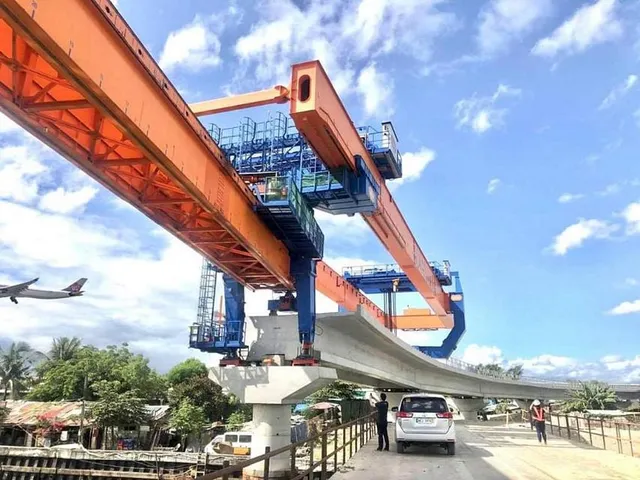
This new four (4)-lane bridge with added aesthetic value of V-shaped piers is made of pre-stressed concrete rigid frame with corrugated steel webs, replacing the temporary two-lane box truss bridge dismantled in 2019.

Compared to the old bridge made of temporary modular steel components, the new bridge has two (2) lanes on each direction and with wider sidewalk component.

Estrella - Pantaleon Bridge has a 50.5 meters approach road on Estrella Street, 66 meters Makati approach bridge made of pre-stressed continuous girder, 146 meters main bridge and 243.96 meters approach road at Barangka Drive connected to Pantaleon Street in Mandaluyong City.

Other miscellaneous works include thermoplastic pavement markings, protective barrier and railings along both sides of the bridge, pipes for the storm water, drainage structure, and lightings.
August 02, 2021

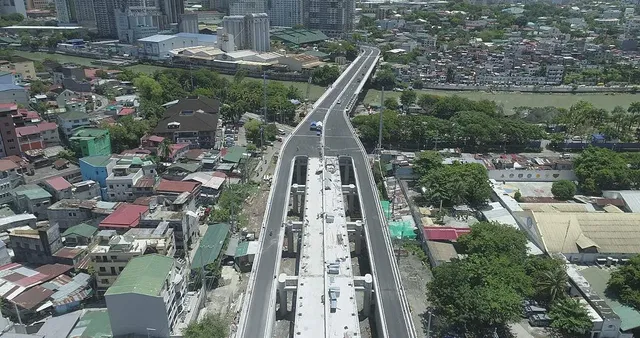
The Department of Public Works and Highways aims to complete and open the other half of the work for the BGC-Ortigas Center Link Road Project toward the end of this third quarter.

Secretary Mark Villar said that since the bridge component of new Sta Monica-Lawton Bridge now known as Kalayaan Bridge was opened on June 12 connecting the cities of Makati, Pasig, and Mandaluyong, DPWH has continued working the viaduct segment across Kalayaan Avenue, Makati City towards Bonifacio Global City’s 8th Avenue.

The DPWH Unified Project Management Office (UPMO) Operations have hastened work as we targets to fully complete the BGC-Ortigas Center Link Road Project in this third quarter of the year, added Secretary Villar.

In his report to Secretary Villar, Undersecretary for UPMO Operations Emil K. Sadain said that piers on bored piles for the elevated structure along 8th Avenue were already constructed.

Undersecretary Sadain together with UPMO Roads Management Cluster 1 Project Director Benjamin Bautista and Project Manager Ricarte Mañalac inspected the on-going works for the viaduct now in full swing with some of the pre-fabricated girders or the horizontal support structure of the slabs already installed on top of piers.

The contractor Persan Construction has also started with the construction of lean concrete retaining wall for the approach ramp at 8th Avenue, Undersecretary Sadain reported.

DPWH has been in close coordination with the service utility providers including Meralco for the necessary relocation activities to prepare the area that may get affected by the construction of ramp.

The P5.72 Billion BGC-Ortigas Center Link Road Project involves the construction of 440-meter 4-lane Kalayaan Bridge, rehabilitation and widening of 362 meter Brixton (corner Reliance St.) to Fairlane Street, and 565 meter viaduct structure traversing Lawton Avenue onwards to the entrance of Bonifacio Global City.

Once fully completed, travel time between Bonifacio Global City and Ortigas Central Business District will be reduced to 12 minutes.

July 26, 2021

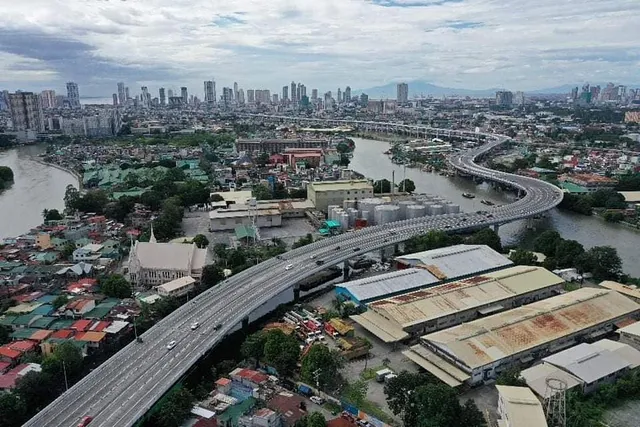
The government expects to complete 24 infrastructure flagship projects (IFPs) worth PHP194.78 billion before the end of President Rodrigo Duterte’s term in June 2022.

“The 24 projects are estimated to generate more than 300,000 jobs between 2017 to 2022,” the National Economic and Development Authority (NEDA) said in a reply to questions from the Philippine News Agency.

These are under the “Build, Build, Build” program of the Duterte administration which is an ambitious infrastructure development plan composed of thousands of projects being implemented all over the country.

A report furnished by the NEDA indicated that the construction of 12 of these projects amounting to PHP67.068 billion are ongoing and targeted to be finished by June next year.

Included on the revised list of 112 IFPs approved by the NEDA Board last May 12, some of these include the PHP23.3-billion North Luzon Expressway-South Luzon Expressway (NLEX-SLEX) connector road project, and the PHP12.64-billion C5 South Link Expressway project.

The target completion of the eight-kilometer all elevated four-lane toll expressway extending the NLEX southward from the end of Segment 10 in C3 Road Caloocan City to PUP Sta. Mesa, Manila and connecting to the Skyway Stage 3 and mostly traversing the Philippine National Railways (PNR) rail track is in March 2022.

Another of these IFPs are the PHP7.5-billion Flood Risk Management Project (FRIMP) in Cagayan, Tagoloan, and Imus Rivers; the PHP5.44-billion Malitubog-Maridagao irrigation project; and the PHP4.8-billion Bicol International Airport Development Project (New Legazpi), among others.

The NEDA said five other projects costing PHP87.77 billion also from a revised list of 112 IFPs were completed last month.

Among them were the PHP65.39-billion Metro Manila Skyway Stage 3, and the PHP9.76-billion Light Rail Transit (LRT) 2 East Extension, and the PHP5.72-billion Metro Manila Logistics Network: Bonifacio Global City-Ortigas Center Link Road Project.

The NEDA further said seven flagship projects amounting to PHP39.94 billion that were part of the IFP list and were approved in 2017, 2019, and 2020 have been completed.

Completed projects that were part of previous lists of IFPs include PHP18-billion New Clark City Phase 1, and the PHP14.97-billion Clark International Airport Expansion Project, among others.

All completed IFPs were no longer included in the updated version of the IFP list.

In addition to the flagship projects, Cabinet secretaries reported that 212 airport projects, 446 seaport projects, 10,376 flood mitigation structures, 26,494 kilometers of roads, and 5,555 bridges have already been completed under the “Build, Build, Build” program.

A total of 102 airport projects, 117 seaport projects, 1,090.30 kilometers of railway, 2,587 flood mitigation structures, 2,515 kilometers of roads, and 1,020 bridge projects are currently under construction.

Socioeconomic Planning Secretary Karl Kendrick Chua said in a past briefing that aside from providing the much-needed infrastructure for Filipinos, investment in the “Build, Build, Build” program would also generate more jobs.

“This has the biggest multiplier in terms of job. One job that you create in the infrastructure sector creates another 0.5 jobs. Every peso you spend in construction creates another peso because of the services around the construction. That’s why we are pursuing this,” said Chua, who is also NEDA chief. - Leslie Gatpolintan

July 26, 2021

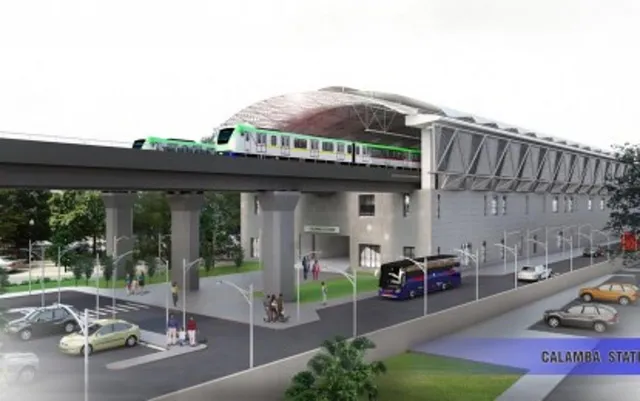
 The Philippine National Railways (PNR) Calamba project has received a “record number” of 34 bids from six local and 17 international companies to participate in the construction of the 40.5-kilometer rail project.

In a Facebook post, Department of Transportation (DOTr) Secretary Arthur Tugade said the record turnout is proof that the Duterte administration’s “Build, Build, Build” program “champions a transparent, fair, and efficient bidding process” through a joint implementation by the DOTr, PNR, and the Department of Budget and Management's Procurement Service.

“I believe that the impressive turnout of bidders for the PNR Calamba Project’s contract packages is proof of the infrastructure sector’s trust in the government’s ‘Build, Build, Build’ infrastructure program,” Tugade said.

During the bid submission and opening for various contract packages of the project on July 14 and 15, he said the international companies who offered bids are:

  • China Construction First Group Corporation Ltd. (China)
  • Chun Wo Construction (Hongkong)
  • Leighton Contractors (Asia) Limited (Hongkong)
  • DL Engineering & Construction Co. Ltd. (South Korea)
  • Dong-ah Geological Engineering Company Ltd. (South Korea)
  • GS Engineering & Construction Corp. (South Korea)
  • Hyundai Engineering & Construction Co. Ltd. (South Korea)
  • Lotte Engineering and Construction Co., Ltd. (South Korea)
  • POSCO Engineering & Construction (South Korea)
  • Samsung Construction & Trading Corporation (South Korea)
  • PT Adhi Karya (Persero) Tbk (Indonesia)
  • PT PP (Persero) Tbk (Indonesia)
  • PT Wijaya Karya (Persero) Tbk (Indonesia)
  • Gülermak Ağır Sanayi İnşaat ve Taahhüt A.Ş. (Turkey)
  • Acciona, S.A. (Spain)
  • Italian-Thai Development Public Company Ltd. (Thailand)
  • Sumitomo Mitsui Construction Co., Ltd. (Japan)

Meanwhile, the local companies who submitted bids are:

  • D.M. Consunji Inc.
  • EEI Corporation
  • First Balfour, Inc.
  • Megawide Construction Corporation
  • Prime Metro BMD Corporation
  • Santa Clara International Corporation

He said five more contract packages for the PNR Calamba project are set for opening bids later this year.

The project is part of the “massive” 147-km North-South Commuter Railway (NSCR) system that stretches from Calamba, Laguna in Luzon’s southern portion all the way north to the Clark International Airport in Pampanga.

“The NSCR System will have a fleet of 464 train cars or 58 trains sets, including seven Airport Express train sets,” Tugade said.

He said the construction of the NSCR system is supported and financed by the Official Development Assistance from the Asian Development Bank (ADB) and the Japan International Cooperation Agency (JICA).

“It is the single largest project being financed by the ADB in its history, and is the longest commuter railway being financed by JICA,” Tugade said.

To date, he said the northern segment of the NSCR System is in “full swing” and involves 90 km of rail line and 16 stations.