September 23, 2024

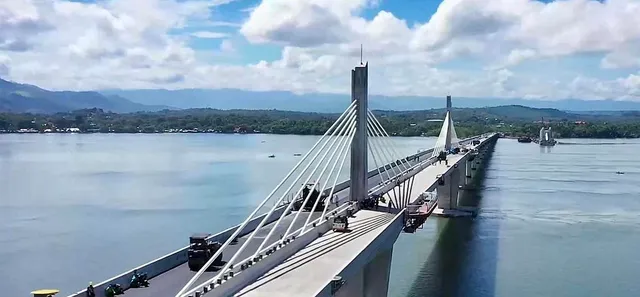
The national government has allotted PHP2.8 billion for the construction of the Tacloban causeway project that will provide a shorter route from the city’s downtown to the airport, the Department of Public Works and Highways (DPWH) said on Friday.

DPWH-Eastern Visayas Director Edgar Tabacon said the civil works have an accomplishment rate of 9.66 percent as of this month using the appropriations in 2022 and 2024.

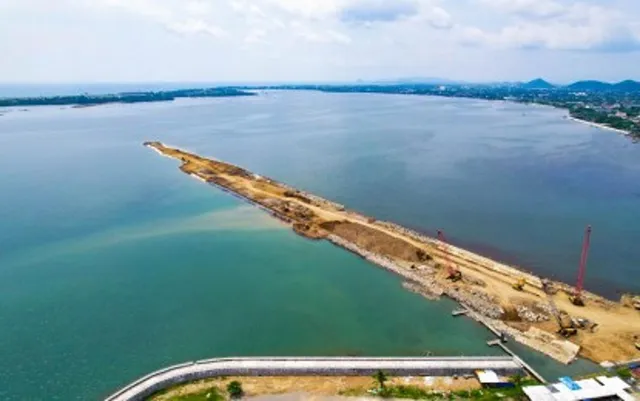
The budget will allow the DPWH to build a 1.43-kilometer portion of the 2.56-kilometer causeway from the city’s Magsaysay Boulevard to the airport complex, crossing the Cancabato Bay.

“The vision is not just to build infrastructure, but to build structures that will draw tourists and investments to the city,” Tabacon said.

The official is upbeat that the remaining PHP1.99 billion budget requirement will be allocated in 2025 and 2026, as committed by the House of Representatives.

The first of its kind in Eastern Visayas, the causeway will serve as an alternate route for motorists from the city’s commercial district going to the airport, reducing distance, travel time, and vehicle operating costs.

This project involves the construction of a four-lane road embankment that spans about 2.56 kilometers with a bridge at the center. It will also feature separate bike lanes, concrete canals, sidewalks, as well as wave deflectors on both sides.

The causeway will cross Cancabato Bay starting at the city hall complex on Magsaysay Boulevard up to the Kataisan point of the Tacloban Airport in the city’s San Jose District.

Travel time will be reduced to only 10 minutes from the current 45 minutes.

The structure will complement the future new airport terminal building designed to accommodate international flights.

Aside from being an alternative highway, the causeway will also shield communities from destructive waves.

September 16, 2024

Being a player in the mining industry, investing in a reliable benchtop ED-XRF analyzer that will deliver a precise, rapid, and non-destructive analysis of ore samples is crucial for laboratory operations, and the accuracy of assay results directly impacts the operational success.

The Spectro Ametek Xepos ED-XRF, distributed exclusively in the Philippines by QES Technology Philippines, Inc., is used by nearly 90% of assay laboratories in the nickel ore mining industry, so here is why it's worth examining how the Spectro Xepos is driving transformation across the sector:

Precision and Reliability: The Standard in Elemental Analysis

The Spectro Ametek Xepos 05 ED-XRF is not just another analytical instrument; it is the top-of-the-line model, incomparable with any other ED-XRF in the market, since it comes comparable with the WD-XRF performance. Even with sample preparation as a pressed powder pellet, the SPECTRO XEPOS offers an easy-to operate, robust and accurate analysis system. Based on the high stability of the instrument combined with sophisticated spectra handling, the analysis of Ni, Co, Fe2 O3 as well as of other components can be done with high precision and accuracy.

Efficiency and Cost-Effectiveness: Lower costs

One of the standout features of the Spectro Ametek Xepos 05 ED-XRF is its efficiency. Traditional methods of ore analysis can be time-consuming and labor-intensive, often requiring extensive sample preparation and long wait times for results. The Xepos 05 ED-XRF, however, offers rapid analysis with minimal sample preparation as pressed pellets, significantly reducing turnaround times and increasing productivity and higher throughput in assay laboratories.

After Sales Support: QES Technology Philippines, Inc.

The extensive installation base of the Spectro Xepos in the Philippine Mining Industry is a testament to the effective partnership between QES and the mining companies. As the exclusive distributor in the country, QES has played a pivotal role in assuring best support with its team of experts to the local mining industry with strategically positioned service centers and offices in Pampanga, Manila, Cebu, and Surigao City. QES is committed to delivering immediate comprehensive support services, including installation, training, calibration and maintenance to its valued clients.

In conclusion, the widespread use of the Spectro Xepos ED-XRF in the Philippine nickel ore mining industry highlights the high quality and reliability of the equipment, up to its after sales support. With the support of QES Technology Philippines, Inc., this equipment is setting benchmarks for accuracy and efficiency on ED-XRF. As mining operations continue to rely on such analytical technology, a Spectro Xepos in the laboratory will ensure consistent and accurate results that drive profitability and compliant with industry standards, making it a smart, essential investment for your mining operation.

For a hands-on experience with their equipment and other mining solutions, schedule a visit of the Spectro Xepos demo units at the head office located at Unit 507, Page 1 Building, Acacia Avenue, Madrigal Business Park, Ayala Alabang, Muntinlupa, 1780 Metro Manila, Philippines or at National Highway. KM. 4, Brgy, Luna, Surigao City. For consultations and quotation requests, you can contact them at +632 771 1248 or via email at qtpmarketing@qesnet.com, or explore their offerings on their website at www.qesnet.com.

September 16, 2024

by Rocky Dimaculangan VP and TSM National Coordinator Chamber of Mines of the Philippines

The Chamber of Mines of the Philippines (COMP) has, for over a dozen years now, been encouraging its members not only to comply with the law – which should be part of their organizational ethos in the first place – but also to undertake voluntary initiatives that demonstrate recognition of their responsibility to mitigate the impact of their activities on people and the environment, to strengthen stakeholder relationships, and to foster community growth and development.

This “Beyond Compliance” approach has gained more significance in recent years with mankind’s growing need to produce new technologies, including electric vehicles, wind turbines, solar panels and batteries, to address the long-term global shift in temperatures and weather patterns towards a greater energy transition. 

“Producing the minerals needed to assemble technologies in response to climate change comes with major sustainability issues,” COMP chairman Michael Toledo says.  “It uses a lot of water, leaves a lot of waste, and, if the Philippines goes further into mineral processing, consumes a lot of energy, generating more carbon emissions.  To reduce risks and maintain a social license to operate, mining companies must address these concerns. 

“Meanwhile, investors and consumers are increasingly demanding that companies take these issues seriously; failure to respond could undermine reputation and lead to difficulties in raising capital,” he adds.

The question thus begs to be answered: how can mining companies cope with these realities in a way that will help them not only survive, but also thrive alongside their stakeholders for many generations?

Global ESG standard for mining

In early 2016, COMP member Philex Mining Corp., through its president, Mr. Eulalio Austin, came across the Towards Sustainable Mining (TSM) initiative and recommended its adoption by the Chamber. TSM – established in 2004 by the Mining Association of Canada (MAC) – is increasingly becoming a global mining standard representing a set of best practices in mining within certain protocols.  The program is now being implemented in 14 mining jurisdictions, including Australia.

The Philippines, through COMP, is the first and remains the only Asian country that has adopted TSM.

TSM is a set of tools and indicators to drive ESG performance and ensure that key mining risks are managed responsibly at members’ facilities. Its main objective is to enable mining companies to meet society’s needs for minerals, metals, and energy products in the most socially, economically, and environmentally responsible way. 

TSM’s Core Strengths lie in the fact that it is Performance Driven, it fosters Accountability, it promotes Transparency, and it possesses Credibility -- with a nearly 20-year track record as a reliable ESG standard under the guidance of a Community of Interest Advisory Panel or COI.

Despite the fact that the Philippines already has among the strictest laws, rules and regulations in the world that impose on exploration and mining companies many social, economic, and environmental limitations and conditions, COMP members feel they have to do more.  Compliance with the law is no longer enough.  While TSM is yet another imposition on members, the Chamber made it mandatory to all those with operating mines.

“TSM aligns well with the existing regulatory framework of the Department of Environment and Natural Resources (DENR) and the Mines and Geosciences Bureau (MGB), such as the scorecards, checklists, and the Presidential Mineral Industry Environmental Award guidelines,” says Michael Cabalda, DENR Special Assistant to the DENR Secretary on Sustainability and a TSM Verification Service Provider (VSP).  “The program is designed to strengthen the commitment of COMP member-companies to responsible and sustainable mining practices while enhancing the standards we already have.

Dante Bravo, president of Platinum Group Metals Corporation (PGMC) and a member of the COI Panel, says, “TSM’s good governance measures -- the common thread linking the E, the S, and the G – will ensure broader stakeholder engagement and better returns for our members. 

“With TSM, they now have a proven good governance roadmap that will help guide them in incorporating ESG into their systems and processes, encourage them to continuously improve, and measure their performance against the world’s best mining operations – with the end in view of becoming among the world’s best themselves,” Bravo, also the president of the Philippine Nickel Industry Association, adds.”

6-Year Preparation

“After we adopted TSM  in December 2017, we embarked on a 6-year preparation period that saw our members actively participate in the ‘Filipinization’ of the TSM Protocols,” Toledo says.  “That period also saw the formation of our multi-sector Community of Interest (COI) Advisory Panel, the training and accreditation of our VSPs or External Verifiers, the development and cascading of an online self-rating application, a self-assessment dry run, and the ‘mock’ external verification of three volunteer mines: Rio Tuba Nickel, OceanaGold Didipio, and Philex Padcal.”

In 2024, all of COMP’s 19 member-companies with operating mines submitted their self-assessment reports on eight TSM Protocols for their January to December 2023 performance via the Mine Site Sustainability Audit app exclusively designed by Nickel Asia Corp., a group of COMP member-firms, for TSM’s implementation in the Philippines.  The mines conducted internal audits vis-à-vis the Protocols, and supported the self-ratings with proofs and evidences.

The 16 other COMP member-firms with operating mines are: Benguet Corp.; Cagdianao Mining Corp.; Carmen Copper Corp.; Carrascal Nickel Corp.; CTP Construction and Mining Corp.; Dinapigue Mining Corp.; Eramen Minerals, Inc.; FCF Minerals, Inc.; Filminera Resources Corp.; Hinatuan Mining Corp.; Lepanto Consolidated MiningCo.; LNL Archipelago Minerals, Inc., PGMC.; Taganito Mining Corp.; and TVI Resource Development Phils., Inc.

Climate Change

In 2021, COMP adopted the TSM Climate Change Protocol that brought to eight the number of measurement tools that its members will use to grade their environmental and social performance.  This adoption was approved by the COI Panel following the recommendation of COMP’s technical working group that was tasked to align TSM with the Global Industry Standard on Tailings Management (GISTM). 

GISTM was issued in 2020 by the United Nations Environment Programme, the International Council on Mining & Metals, and the Principles for Responsible Investment to operators of tailings facilities worldwide, enjoining them to strive for zero harm to people and the environment from the earliest phases of project conception.

“A refocusing of TSM towards climate change adaptation instead of just carbon emission mitigating strategies is an important and welcome development,” says Carlos Primo David, DENR undersecretary and a former COI Panel member. “The efforts must remain strong for reforestation efforts and carbon footprint reduction, but the impact of climate change warrants ensuring business continuity and, more importantly, resilience in our communities in the near future. 

“These are even more important owing to the fact the climate change impacts will be more prevalent in tropical island nations such as the Philippines,” David adds.  “Therefore, this Climate Change Protocol and its supporting Climate Change Guide will provide mining companies the required focus to attend to local impacts and, through this, enable them to contribute to the global effort to address climate change.”

The Climate Change Guide is the only mine-related reference that provides methods or procedures on incorporating climate change considerations in the mining operator’s decision-making process.”

Apart from approving the adoption of the “Filipinized” version of the Climate Change Protocol, the COI – composed of 14 highly respected individuals from different sectors of society – likewise approved the TWG’s recommendation to revise the Tailings Management Protocol and its three supporting documents.

The six other TSM Protocols – all Filipinized from the MAC version – are Water Stewardship, Preventing Child and Forced Labor, Biodiversity Conservation Management, Health & Safety, Indigenous Peoples and Community Outreach, and Crisis Management.

TSM Rating System

In two Protocols – Crisis Management, and Preventing Child and Forced Labor – a mining project could only Pass or Fail.  Either the mine achieves the Indicators and criteria under these Protocols or they do not.

Six Protocols, meanwhile are assessed on a 5-point scale – C, B, A, AA, AAA – where A represents good practice, and Triple A means excellence and leadership.

A member who receives a C-rating means that the company may have the procedures in place but they are not integrated into policies and management systems.  Since the TSM rating system presupposes that the member is compliant with the law, a C-rating is already above the word of the law.  It is a starting position of conformance with TSM, which asks more than what are required by the law.  It is the minimum global industry standard on which a facility can build and improve its performance.

The same goes with the Pass or Fail rating system.  A “fail” score means failure to meet global best mining practices in that Protocol, not a violation of the law.

“With TSM, our members are, in effect, upping the ante for themselves,” says Joan Adaci-Cattiling, OceanaGold Phils., Inc. Didipio Mine president and general manager for external affairs and social performance. 

“The idea is to see how they fare vis-à-vis the best mining practices in the world – the Triple A rating – and this rating system provides our members the roadmap that will guide them towards best practices based on the principle of continuous improvement,” adds Cattiling, also an ex-officio member of the TSM COI Panel.

First Impressions

Eight mines from COMP’s 19 operating members subjected themselves to external verification in 2024.  These mines are: Filminera Masbate Gold Project, FCF Runruno Gold Project, Taganito Mining Co., Cagdianao Mining Co., Atlas Carmen Copper Corp., PGMC Surigao Project, Philex Padcal, and TVI Balabag Gold-Silver Project.  The 11 other mines will have their self-ratings externally verified in 2025.

“It was fun and eye-opening, educational, and encouraging,” says VSP Fernando Sajona, a Geology expert and VSP, says of his validation experience. “Those companies that have fully engaged their time and human resources to the initiative clearly understand the importance of TSM. What was particularly revealing is that the companies we visited have, to some extent, been already adhering to the TSM Protocols, even at the very basic level of compliance. This is not at all surprising, considering the many standards and audits our local companies are required to undergo by regulators, particularly the DENR-MGB. Hurdling the “Level B” in most of the Protocols would not be a problem if the mines faithfully follow the provisions of their mining permits. Of course, there are Protocols that the local companies would need to improve on.”

For his part, VSP Joey Ayson, Geological Society of the Philippines chair and Philippine Mining and Exploration Association president, says “It wasn’t as easy as when we were undergoing desktop training.  Though the evidences required to support self-ratings have been clearly identified, there were instances when the right documents weren’t submitted, or the wrong ones were, or that the required documents were filed under another criteria or level.  But it’s part of the program’s growing pains.  This is our first year after all.  Interestingly, some companies have already been practicing some form of TSM – the Beyond Compliance method – long before COMP adopted it.  They just lacked proper documentation.”

“I realized that all of us VSPs are still on a learning curve.  We need to know a lot more, especially in areas within the Protocols that are not aligned with our professional backgrounds or experiences,” adds VSP Roland de Jesus, a retired MGB assistant director.  “Some companies have yet to embrace TSM fully but, happily, most have assimilated the initiative’s guiding principles into their organizational culture. This bodes well for the industry.”

Cabalda says he found the process “both challenging and insightful”. “It was detailed and thorough, ensuring each aspect of the TSM standards was carefully assessed and verified. The process was also collaborative, offering plenty of opportunities for learning and growth. Overall, it strengthened my confidence in the system and the value it brings to our minerals sector.”

Advice

“If given the opportunity to advise mines that have not yet undergone validation, I will highlight to them three key points,” stresses VSP Ramon Santos, chairman of the Mining Engineering Board, Professional Regulation Commission.  “First, the advantage of having their operations viewed from the outside. This provides a broader and an unbiased perspective.  Second, impartial and honest validation of their self-assessments, providing credibility to how they rate themselves.  Finally, the VSPs may be able to provide valuable recommendations that may not be apparent to internal auditors during the self-rating process.  This is essential to driving continuous improvement.”

“TSM should not be considered as another bureaucratic layer and additional expense, but as an investment in being a responsible and sustainable miner,” Ayson points out. “As TSM encourages a Beyond Compliance approach, a company will easily meet current regulatory requirements and prepare itself well for a green mining future.”

“Operating companies need not be anxious about TSM because it will help them become self-aware on where they stand vis-à-vis global mining standards,” adds Sajona. “Once they align themselves to these standards and continue to strive towards a higher level of performance (the TSM having a multi-tier performance ranking), the evidences will speak for themselves. These will only lead to improved ESG performance, favorable public perception and, ultimately, improved bottom line.”

Public Reporting

The externally verified results will be made public in late 2024.  Meanwhile, the highlights of the consolidated self-assessment reports and individual verified results will be discussed in one of the sessions of “Digging Deeper”, a conference to be hosted by COMP on October 17, 2024 at The Westin Manila.  The session will seek to determine avenues to further strengthen the members’ strong performance areas, to identify areas for improvement, as well as to find ways to contribute to the enhancement of the country’s policy environment.

“Transparency is essential to secure the trust of, and social acceptance by, host communities and stakeholders,” de Jesus emphasizes.  “The transparency feature that can be gleaned from COMP’s public disclosure of externally verified self-ratings demonstrate the industry’s sincerity to inform stakeholders of the status of a company’s operations vis-vis adherence to international standards.”

Cabalda concludes: “TSM isn’t an added burden on the industry. I’d dare say, it helps COMP members to keep pace with the growing importance of global ESG standards. As ESG becomes more central to securing financing for mining projects, TSM can help position our mining industry to meet these demands and stay competitive on the global stage.

“More importantly,  demonstrating a genuine commitment to ESG can go a long way in building trust with local communities and other stakeholders – a  ‘TSM license to operate’. As these values become more visible, they can help shift public perception, encouraging more balanced and constructive dialogue about the role of mining and mineral resource development in our country.”

September 16, 2024

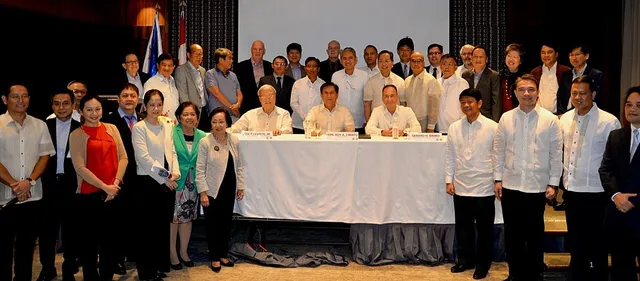
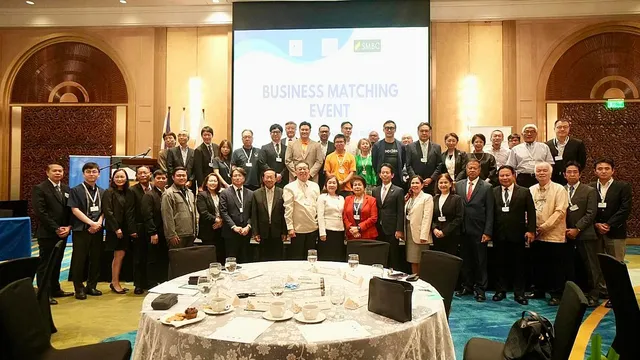
Department of Public Works and Highways (DPWH) Secretary Manuel M. Bonoan, together with Senior Undersecretary Emil K. Sadain, led the Philippine government delegation at the Business Matching Event organized by the Japan International Cooperation Agency (JICA) Philippines Office.

The event, held on September 13, 2024 at Dusit Thani Hotel, Makati City, brought together key Philippine government and JICA officials and representatives from Japanese companies to explore collaboration opportunities.

In his message, Secretary Bonoan convey deepest gratitude to JICA Philippines Office Chief Representative Takema Sakamoto for inviting in the event and for the invaluable support extended to finance several infrastructure flagship projects of DPWH that are aligned with the “Build Better More” agenda of the President Ferdinand R. Marcos, Jr. administration..

JICA-financed projects not only transform the country’s infrastructure landscape but also foster stronger bilateral relations between the Philippines and Japan, said Secretary Bonoan.

JICA remains a major partner in the Philippines’ infrastructure development, acting as the principal financier of several Official Development Assistance (ODA) projects.

During a media interview at the event with JICA Philippines Chief Representative Sakamoto, Senior Undersecretary Sadain, who heads the DPWH Unified Project Management Office (UPMO) operations overseeing large-scale infrastructure projects funded through ODA, highlighted the significant progress of several ongoing and recently completed JICA-financed initiatives such as road networks, bridges, and flood control facilities aimed at enhancing national infrastructure.

These include the Arterial Road Bypass Project in Bulacan, Flood Risk Management Project for the Cagayan de Oro River, Central Luzon Link Expressway, Pasig-Marikina River Channel Improvement Project (Phase IV), Cavite Industrial Area Flood Management Program, and Davao City Bypass Construction Project, among others.

Pre-construction projects include the Metro Manila Priority Bridges for Seismic Improvement (Guadalupe and Lambingan Bridges) and the Dalton Pass East Alignment Road Project. Meanwhile, the Parañaque Spillway/Tunnel Project, EDSA Transport Road Network Rehabilitation Project, Second San Juanico Bridge Project, and Davao City Flood Control and Drainage Project are under proposal stages.

Senior Undersecretary Sadain also highlighted two (2) additional flagship projects under the “Build Better More” Program, which are considered priorities in the current administration’s mega-bridge initiative. These include the Bataan-Cavite Interlink Bridge, now in the civil works procurement stage, and the Panay-Guimaras-Negros Island Bridges, currently undergoing detailed engineering design.

The event fostered opportunities for Japanese businesses to introduce their solutions and technologies to Filipino companies, government agencies, and other stakeholders, further enhancing the cooperation between the two nations.

The event was initiated in response to a request from Rizal Commercial Banking Corporation (RCBC) and Sumitomo Mitsui Banking Corporation (SMBC) for JICA to assist Japanese companies in expanding their presence in the Philippines.

Several Japanese companies showcased their expertise, presenting innovative solutions aimed at boosting infrastructure development in the Philippines and creating a win-win situation for both countries.
September 15, 2024

By Agapito S. Cuadra Jr.

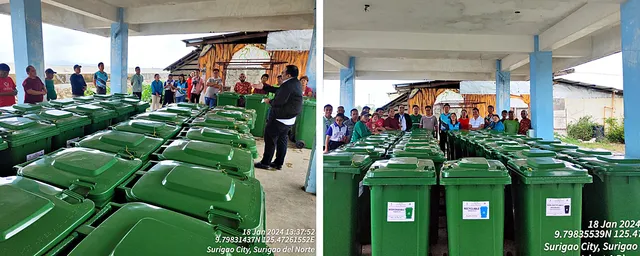
In a commendable display of environmental stewardship, Taganito Mining Corporation (TMC) has bestowed 44 waste bins upon Sabang River, the waterway it proudly adopted.

This philanthropic gesture marks a significant contribution to the Adopt A River Program, a collaborative effort spearheaded by the Department of Environment and Natural Resources–Provincial Environment and Natural Resources Office (DENR-PENRO)– Surigao Del Norte, aimed at revitalizing river health since its inception in 2020.

At its core, the Adopt A River Program seeks to mobilize communities and businesses in safeguarding the ecological integrity of our rivers.

Embracing this noble cause, TMC, an operating company of Nickel Asia Corporation (NAC) has emerged as a stalwart supporter, embracing sustainable practices and championing environmental protection through its adoption of the Sabang River.

The recent endowment of 44 waste bins stands as a tangible testament to TMC's unwavering commitment to preserving the pristine beauty of Sabang River.

Strategically positioned along the riverbank, these bins serve as beacons of cleanliness, promoting responsible waste disposal practices among community members and visitors alike.

By fostering a culture of environmental consciousness, the mining company is paving the way for a brighter, cleaner future for Sabang River and its surrounding ecosystem.

In essence, TMC's contribution transcends mere philanthropy; it embodies a profound dedication to the well-being of our natural environment.

Through collaborative efforts and steadfast resolve, TMC continues to set the standard for environmental leadership, inspiring others to follow suit in safeguarding our precious waterways for generations to come.

September 10, 2024

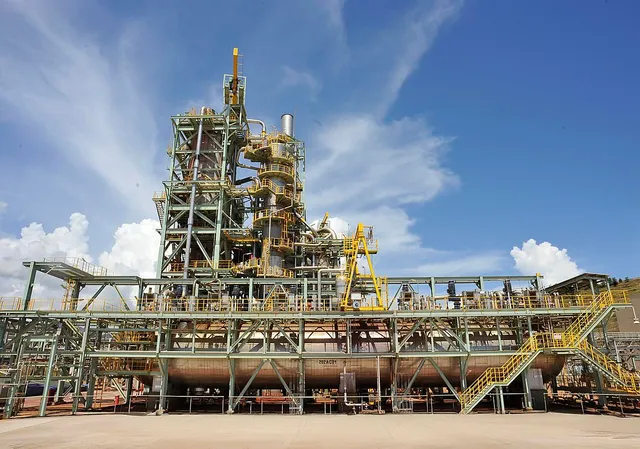
In the northeastern tip of Mindanao lies one of the most significant industrial undertakings in the country: the Taganito HPAL Nickel Corporation (THPAL). Nestled in the town of Claver, Surigao del Norte, THPAL stands as a beacon of industrial progress and a testament to the Philippines’ growing role in the global supply chain of critical metals, particularly nickel and cobalt. These materials are crucial not only for traditional industries like stainless steel manufacturing but also for the rapidly growing industries of electric vehicles and renewable energy technologies.

The establishment and completion of a High-Pressure Acid Leach (HPAL) facility in 2013 represented a pivotal advancement for the Philippine minerals sector, enhancing the nation's role in the international nickel supply chain, which was a superb strategic initiative. Conventional methods for nickel extraction faced challenges when dealing with low-grade lateritic ores, which are abundant in the Philippines yet contained minimal nickel concentrations. Despite its high capital requirements and technological intricacies, the HPAL process facilitates the effective recovery of nickel and cobalt from these ores and years following its initial operation, another by-products were produced by the company thus increasing the potential uses of minerals in numerous high-tech and industrial applications.

Scandium, a rare earth element, is becoming more important because of its special qualities that boost the performance of different materials. While, Chromite mineral, an oxide of chromium and iron, serves as the principal source of chromium, a vital component in the manufacturing of stainless steel.

The company isn’t just another mineral development project doing business in the country that contributes to both the local and national economy. THPAL is also a major trailblazer in social development, environmental protection, and work safety culture while, it plays a crucial role in related industries, like logistics, transportation, maintenance and food services, among others, creating various jobs for more than 4,000 locals.

As the world’s demand shifts towards sustainability, the need for nickel and its by-products is anticipated to increase remarkably though this scenario offers both challenges and opportunities for THPAL. However, the company has positioned itself to take advantage of this rising demand, especially from the electric vehicle and renewable energy industries. THPAL is poised to lead in this vital sector, adeptly managing the challenges while capitalizing on the forthcoming opportunities. It exemplifies how innovative technology optimizes the utilization of the minerals, as envisioned in the Philippine Mining Act, can enhance the viability of low-grade ores, thereby supporting the worldwide supply of these essential metals.

September 10, 2024

“A symbol of excellence, a source of motivation, of surpassing oneself and of ultimate achievement, medals are much more than objects: they represent the apotheosis in the career of elite athletes.” (Tony Estanguet, President of Paris 2024)

The Paris 2024 Olympics or 2024 Summer Olympics, which started from July 26 and ended in August 11, brought together around 10,714 athletes from 204 countries (including AIN and Refugee Team) who competed in 329 medal events.

As a measure of an athlete’s achievement, human spirit, and endurance, the Olympic medal has its historical and material value. 

An Olympic medal is traditionally representing an athlete’s victory and glory that reflects back to one’s home country. It is primarily a symbol of the Olympic spirit rooted on tradition and history from the first Olympic Games in 776 BC at Olympia in Greece, and more formally from Athens 1896 Olympics -- the first international Olympic games held in modern history.

But is there really gold in the Olympic gold medal? Moreover, what is the metallic composition of the silver and bronze medals? And overall, what is the monetary worth of these medals, particularly the gold medal?

On February 8, 2024, The Paris Organising Committee for the 2024 Olympic and Paralympic Games (POCOG) unveiled to the public the medal design for the 2024 Olympic and Paralympic Games.

In designing the medals, members of the Paris 2024 athletes’ commission worked with the renowned Parisian jewelers Chaumet. The manufacturing of the medals is undertaken by the Monnaie de Paris; the world's longest continuously running mint.

What makes the Paris 2024 Olympics medal unique is that a fragment of the Eiffel Tower is placed at the center of the medal.

“For the first time in the history of the Games, each Olympic and Paralympic medal is adorned with a highly symbolic and priceless piece of metal: the original iron from the Eiffel Tower,” according to the media release of the Paris 2024 Organising Committee.   

“Erected to amaze the world at the 1889 Universal Exhibition, the Eiffel Tower is made entirely of a special type of iron known as ‘puddle’ iron. Manufactured in the forges and blast furnaces of Pompey in Lorraine, the cast iron produced by reducing iron ore is refined by an operation called ‘puddling’. By removing the excess carbon still present in the cast iron, the resulting iron is almost pure and extremely strong.”

The structure of the Eiffel Tower had undergone renovation work during the twentieth century. During the renovation, metallic elements were removed from the Dame de fer and have been carefully preserved ever since.

During the construction of the Eiffel Tower for the 1889 Universal Exhibition, the material of choice for the structure is cast iron. However, as part of the tower’s upkeep, much of the cast iron used was replaced over the twentieth century. These materials were preserved by the operators; the Société d’Exploitation de la Tour Eiffel.

The Paris 2024 Olympic Games provided an opportunity to give the material a new purpose – to be incorporated in the design and composition of the Olympic medals.

“For the Olympic and Paralympic Games Paris 2024, the Société d’Exploitation de la Tour Eiffel is giving these veritable pieces of the history of Paris and France a second lease of life.”

The traditional Olympic medals do not contain iron. Therefore, the additional iron from the metal fragment of the Eiffel Tower for this year’s Olympic medals is a unique feature. The Eiffel Tower is a cultural icon of France, and one of the most recognised architectural marvels of the modern world.

Throughout history, France has been known for their innovation in science, technology, art, music, and more. Breaking away from the traditional Olympic medal, they wish the give the victorious athletes a special part of the French culture and history to bring home with them to their home country.

“By placing fragments of the Eiffel Tower at the center of its medals, Paris 2024 hopes to leave athletes with an unforgettable memory of the Games, of Paris and of France.”

According to the official Paris Olympic website, this addition (of iron) not only enhances the medals’ historical and cultural significance, but also connects them to the rich heritage of France and Paris. [2] 

The inclusion of this unique material adds an extra layer of prestige to the 2024 Olympic medals, the website said.

The medal for the Paris 2024 Olympics has a diameter of 86mm, thickness of 92mm, and 18g Eifel Tower Insert. In terms of weight, the gold medal weighs 529g, the silver medal is 525g, and the bronze medal is 455g.

To determine its material value of the gold medal, the 529g of metal is composed of more than 95% silver (505g), and just 6g of gold for plating, plus 18g of iron from the metal fragment of the Eiffel Tower.  Therefore, according to a report in Forbes, the gold medal for the Paris 2024 Olympics is worth approximately $950.

In summary, the gold medal is made of silver plus a thin plating of gold. A silver medal is made of silver, while the bronze medal contains copper, tin, and zinc.

These medals are made in accordance to the specifications of the International Olympic Committee (IOC) and in consultation with the National Olympic Committee of the host nation.

More on the medal’s craftsmanship, the iron retains the original shape of a hexagon as in the original Eiffel Tower. They have been encased on the observe side of the medals in the centre with six appendages. [2]

Looking at the medal’s front design, the cast iron is reforged in hexagonal ingots that sit at the center of the medal. The shape is a geometric representation of France; a country that also goes by the nickname, L'Hexagone. The hexagon is also embossed with the games' emblem.

French people often refer to Metropolitan France as L'Hexagone  or The "Hexagon", because of the geometric shape of its territory.

“At the six corners of the ingot sit hobnail-like embossing in the 'Clous de Paris' style, chosen for its resemblance to the rivets used in the Eiffel Tower. The hexagon is cut to appear as if it is held within the medal with a ‘claw setting’, a common method of setting gems in jewelry by Chaumet.” [1]

The reverse side of the Olympic medal: The Greek goddess of victory Athena Nike with the Panathenaic Stadium in Athens on the background. One feature unique to the Paris 2024 medal is the inclusion of the Eiffel Tower, opposite the Acropolis.


Looking at the artwork on the reverse side of the Olympic medal, it follows the standard for Summer Olympic Games medals with the Greek goddess of victory Athena Nike against the Panathenaic Stadium in Athens. This is a commemoration of the origin of the modern Olympic Games in 1896.

The design also includes the Olympic Rings and the text 'JEUX DE LA XXXIIIe OLYMPIADE - PARIS 2024' set in the Paris 2024 custom font. [3]

Another unique and non-traditional feature of this medal is the inclusion of the Eiffel Tower, opposite the Acropolis. [3]

In closing, Outlook Business website commented, “An Olympic medal can never be measured in purely monetary value. Though the amount of gold in an Olympic gold medal could be modest in terms of material value, the prestige they carry far outweigh their intrinsic worth. And like every Olympic Games, this year's medals will also remain a unique piece of heritage in the rich history of the Summer Olympic Games.”


References and Photo credits:

[1] medal’s design - https://logos.fandom.com/wiki/Paris_2024/Medals?file=Paris2024Oly_MedalsObverse.png Carlo Yulo’s photo - https://www.kollectivehustle.com/blog/10-key-moments-that-brought-carlos-yulo

[2] Outlook Money (Aug. 7, 2024). Outlook Business. "Paris Olympics 2024: How Much Is A Gold Medal Really Worth".  https://www.outlookbusiness.com/personal-finance-news/paris-olympics-2024-how-much-is-a-gold-medal-really-worth?fbclid=IwY2xjawEzs5xleHRuA2FlbQIxMAABHbatJF5Wct8fEhQo98EoW7O5NxMkKkoHUA7qv6qSY6KVO850MZsBbc1zQA_aem_oTRO1Ys18y2w9H04MwbzjA

[3] Paris 2024 Olympics - Press Area. “The Medals of the Olympic and Paralympic Games Paris 2024” https://press.paris2024.org/assets/paris-2024-press-kit-medals-of-the-paris-2024-games-02-2024-pdf-f8b1-7578a.html

September 10, 2024

By Noel B. Lazaro and Mary Louisse S. Inguillo

Elizabeth Fisher, a renowned legal scholar at the University of Oxford, reminds us that environmental law isn’t a “magic wand.” Laws alone do not guarantee “happy ever after” endings. On July 8 and 9, the Malcolm Theater at the UP College of Law became a hub for the BIICL Global Toolbox on Corporate Climate Litigation, stirring discussions on legal responses to environmental issues and the judiciary's vital role. However, the effectiveness of legal remedies, particularly the groundbreaking Writ of Kalikasan, received limited spotlight.

This article examines recent court actions on the territorial scope of ecological damage to justify the writ and its potential to redefine environmental justice.

Understanding the Writ of Kalikasan: Criteria and Implications

Introduced by the Supreme Court in 2010, the writ is a beacon in Philippine law, addressing major environmental concerns such as oil pipeline leaks, open dump sites, hazardous plastic use, and GMO experimentation. The foundational case of Paje v. Casiño (G.R. No. 207257, February 3, 2015) highlights its role in offering judicial relief where legislative and administrative actions have fallen short.

Under the Rules of Procedure on Environmental Cases, the writ can be sought by individuals, entities, or groups on behalf of those whose constitutional right to a balanced and healthful ecology is violated or threatened. It requires evidence of environmental harm to life, health, or property in "two or more cities or provinces."

Despite its significance, many remain perplexed about the writ's impact and why certain activities persist even after its issuance. This confusion stems from the two types of writ: The first is a preliminary or peremptory writ, issued immediately after filing a petition, which requires a respondent to answer under oath within ten days but does not halt perceived violations. To this category belong the successive writs issued by the Supreme Court in 2023 to mining companies in Romblon (Batan v. Mines and Geosciences Bureau, G.R. No. 265146) and Palawan (Indigenous Cultural Communities of BICAMM Ancestral Domain, Brooke’s Point, Palawan v. Office of the Secretary of the DENR, G.R. No. 268140) without stopping their operations. The second is a judgment on the privilege of writ, issued after pleadings or affidavits and a trial. If granted, this writ can mandate actions such as permanently stopping certain acts or directing government or private entities, or individuals, to preserve, rehabilitate, or restore the environment. Only the Supreme Court or the Court of Appeals issues the writs.

Territorial Environmental Damage: An Iron-clad Requirement?

On May 14, 2024, the Court of Appeals addressed a petition for a writ of kalikasan in Batan v. Mines and Geosciences Bureau (CA-G.R. SP No. 00037-WK) after the Supreme Court referred the case to it to hear evidence and render a decision. Following a widely reported clash between police and protesters, the Bantay Kalikasan ng Sibuyan sought to stop Altai Philippines Mining Corporation (APMC) from operating in San Fernando, Sibuyan Island, Romblon because of APMC's lack of environmental compliance certificate and community acceptance. However, the Office of the Solicitor General and APMC questioned whether the allegations met the required scale of damage.

After proceedings, the court deemed the privilege of the writ inappropriate because the harm if true was limited to a single municipality within an island province. The conclusion reflects the Supreme Court’s tendency to deny this type of writ without proof of widespread ecological damage.

Consider LNL Archipelago Minerals, Inc. v. Agham Party List (G.R. No. 209165, April 12, 2016), where the evidence failed to show how constructing an access road on a low ridge impacts the communities of Zambales and Pangasinan; Braga v. Abaya (G.R. No. 223076, September 13, 2016), where the bidding process for expanding Sasa Wharf in Davao City was not considered a threat to residents of multiple cities; Dela Cruz v. Meralco (G.R. No. 197878, November 10, 2020), where the installation of transmission lines at NAIA III in Pasay City involved only a narrow strip across two barangays; and Citizens for a Green and Peaceful Camiguin, Sulog Inc. v. King Energy, Inc. (G.R. No. 213426, June 29, 2021), where concerns over a diesel plant were confined to Camiguin island comprising municipalities.

The Reluctant Protector

In contrast, the Court of Appeals recently granted the privilege of writ to halt the propagation and sale of Golden Rice and Bt Eggplant (Magsasaka at Siyentipiko Para Sa Pag-unlad ng Agrikultura v. Secretary of Department of Agriculture, CA-G.R. SP No. 00038-Kalikasan, April 17, 2024), and to order the listing of non-environmentally friendly plastic products (Oceana Philippines International v. National Solid Waste Management, CA-G.R. SP No. 00035-WK, July 9, 2024), citing potential “national impact” in both petitions.

And there lies the rub. What about “localized” damage following the Sibuyan template? Much like solutions for the Anthropocene, the answer can be elusive or inadequate. Fortunately, legal innovation thrives. The absence of a writ should encourage exploring alternative avenues, recognizing that appellate courts may lack the time and expertise to resolve technical disputes thoroughly and that administrative agencies or lower courts with specialized training are better suited for such assessments.

In other words, reliance on the role of appellate courts in environmental protection assumes what environmental law experts like Fisher, Lange, and Scotford describe as “an almost paradoxical” exercise of simultaneously seeking the “importance and limits” of judicial involvement in environmental law. Thus, it is imperative to develop “specialist environmental tribunals” (Environmental Law: Text, Cases and Materials, 2nd Ed. [2019]) or revitalize “green benches” created under SC Administrative Circular No. 23-2008 to customize the writ for lower courts and bring it closer to the communities.

For example, marginalized groups and witnesses traveling from Luzon’s isolated areas to Manila for watershed destruction hearings face high costs, logistical hurdles, or personal risks, often discouraging the pursuit of the writ. Another troubling illustration is seen in Abogado v. DENR (G.R. No. 246209, September 3, 2019), where fisherfolk of Kalayaan Islands and Zambales either withdrew their petition or became unreachable after filing it at the Supreme Court.

Revisiting the writ’s stringent requirements, establishing evidentiary presumptions, reconsidering the burden of proof, and limiting appeals could address critical gaps. None of this is easy. But the lesson of the tragedy of the commons also demands collective disruptions of the rules. As Justice Marvic M.V.F Leonen admits, “[W]e cannot presume that only the Supreme Court can conscientiously fulfill the ecological duties required of the entire state.”

Meanwhile, advocates will continue pushing for single political subdivisions, like the treasure islands of Bohol and Palawan, to be included within the writ’s ambit. After all, environmental issues transcend boundaries. But until the eco-battlegrounds change, petitioners must navigate the un-fairy tale requirement of two or more cities or provinces.


Noel B. Lazaro is a director and general counsel at Global Ferronickel Holdings, Inc. His extensive practice spans diverse fields, including environmental litigation. He was an associate at SyCip Salazar Hernandez & Gatmaitan and a partner at Siguion Reyna, Montecillo & Ongsiako. A UP College of Law graduate, he teaches evidence, special proceedings, and special writs at law schools.

Mary Louisse S. Inguillo is a senior legal officer at Platinum Group Metals Corporation, specializing in corporate law and litigation. She acts as corporate secretary for various companies. A DLSU-Tañada-Diokno School of Law graduate, she lectures on special proceedings and criminal procedure at law schools.
September 10, 2024

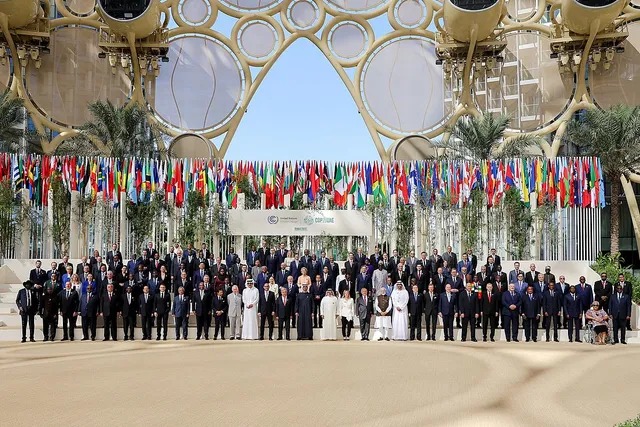
The Philippines has achieved a milestone in supporting the global response to the threat of climate change with its election last July as the host country of the Board of the Fund for Responding to Loss and Damage.

The country’s bid, which won over seven other contenders, was prepared through a whole-of government approach led by the Department of Environment and Natural Resources, supported by the Department of Foreign Affairs, Department of Finance, Department of Budget and Management, Climate Change Commission, Department of Justice and the National Economic Development Authority.

The Fund, which was operationalized at the COP 28 UN Climate Change Conference in 2023, was established to help vulnerable countries recover from climate impacts. It is mandated to assist developing countries that are particularly vulnerable to the adverse effects of climate change in responding to economic and non-economic loss and damage associated with the adverse effects of climate change, such as extreme weather events and slow onset events.

As a country beset by typhoons, floods and the resulting loss of lives and livelihoods, the Philippines needs to take an active role and be strong voice in the discussions on global climate action.

It is therefore significant that the Philippines also has a seat on the Board itself, which is composed of 26 members from Parties to the United Nations Framework Convention Climate Change (UNFCCC) and its Paris Agreement, with 12 members from developed country Parties and 14 members from developing country Parties.

The Board had its first meeting in May 2024, which provided the first opportunity it to engage with the World Bank on establishing the Fund as a World-Bank-hosted financial intermediary fund (FIF). The Board and the World Bank exchanged their views on the conditions for establishing an FIF, including ensuring that the most vulnerable people on the frontlines of climate impacts are able to access support from the fund, including through direct access to fund resources.

On 28 August 2024, President Ferdinand Marcos Jr. signed into law Republic Act No. 12019 which grants the Loss and Damage Fund Board juridical personality and legal capacity.  It allows the Board to contract, acquire and dispose of immovable and movable property, and start legal proceedings.  It can also negotiate, conclude and enter into a hosting agreement with the World Bank as an interim trustee and host of the Fund’s secretariat, and undertake activities needed to discharge its duties.

Developed countries that account for most of the world’s greenhouse gas emissions have pledged USD661.39 million to the fund, but this is far below the USD100 billion to USD580 billion global estimates for the annual loss and damage in developing countries.

By hosting the board, the Philippines has a huge challenge in attracting support from developed countries and development partners to provide financial contributions in addressing losses and damage due to climate change.

September 10, 2024

I applied for the position of Chairperson of the Professional Regulatory Board of Geology (the “Board”) in 2019. My ordeal started with the submission of my personal data sheets filed under oath, curriculum vitae outlining my academic and career history, and clearances from various government agencies to affirm the fact that I have had no past or existing criminal and administrative cases. I went through an interview process before two Members of the Professional Regulations Commission together with other aspirants for the position.

In 2022, I was asked to resubmit all the documents and I thought that since the pandemic was still ongoing, the documents just got misplaced along the bureaucratic lane. One fateful day, I received a call from the Office of the President and I was told to go to Malacanan Palace and was instructed to wear a Barong Tagalog for the occasion. Other than that, the person on the other end of the phone was curt and offered no further information when asked for the reason. So off I went to the Palace on a Sunday afternoon. My entry to the palace, however, met some hitch because security officers required a current COVID-19 swab test before I was allowed access. The person who I spoke to over the phone made no mention that I should get a test beforehand. Fortunately, the Palace has a testing facility. So after the swab sample taken from the far back of my nasal cavity turned out negative, I was finally allowed ingress. I was seated with other people wearing their finest Filipinianas when suddenly, out of the chamber came out two high-ranking government officials. Lo and behold, we were informed that our appointments for the government posts we applied for have been signed by then President Duterte. After the usual congratulatory speeches, pep talks, handshakes, and fist bumps, we were then instructed to go to our respective agencies for the mandatory oaths of office so we can commence our engagements.

Thus began my second career in government as I worked as a geologist before at the then Ministry of Energy before I became a lawyer. It has been more than two years now since I headed the Board that supervise and regulate the practice of the geology profession. There is no denying the importance of Geology, the science that deals with the earth, its structure, composition and history. Few fields of study can play such a profound role in protecting people's lives. Geology is so central to the lives of many Filipinos who are often threatened by natural hazards associated with earthquakes, volcanic eruptions, as well as landslides.  Geology is also essential to the understanding, conservation and management of our environment. Moreover, geologists are essential in the search for and development of energy and mineral resources whose products are important to all aspects of modern life. Thus, Republic Act No. 10166, also known as the “Geology Profession Act of 2012”, describes the practice of geology as “vital to national development”.
Professional regulation is particularly essential for the practice of geology. A geologist who meets the regulatory requirements is given a certification by the Professional Regulations Commission (PRC) to earn the title “Registered Geologist”. Once a geologist is registered and certified, only then can the individual legally provide professional geological services. Data from the PRC indicate that as of July 2024, there are 3,669 registered geologists and 2,082 with valid PRC Identification Cards.

The regulation of the geology profession is necessary to protect the public and maintain confidence in the profession. The Professional Regulatory Board of Geology, mandated by legislation as the regulatory authority, is tasked to ensure that all registered geologists are effectively regulated to strict professional standards. As part of most professional regulatory requirements, individuals applying to be professional geologists must be able to meet the educational, experience, and fitness required by law and administrative regulations. Violations of the provisions of the Geology Profession Law entail the imposition of penalties.

There are numerous levels of regulating the geology profession: licensure examinations; registration and certification; continuing professional development; and career progression and specialization. The Board also provides a defined roadmap for the practice of geology.

In addition to these responsibilities, the Board must also establish and maintain professional and occupational standards, enforce rules and regulations relative thereto, investigate violations of  ethical standards, and adjudicate administrative cases against erring professionals. Professional regulation protects the public by providing assurance that regulated professionals are competent and by providing means for imposing discipline and sanctions when necessary. In 2014, the Board adopted and promulgated the Code of Ethics for Geologists for the enhancement and maintenance of high professional, ethical, and technical standards for registered geologists. Through this code, the Board shall ensure that it recognizes its responsibility to the public that actions of registered geologists promote safety, integrity, and fairness, thereby encouraging public confidence in the profession.

Computer-based Licensure Examinations

A critical component of professional regulation involves the development, administration, and maintenance of the licensure examinations. The Board has the responsibility of ensuring the quality of the examinations, which cover the knowledge and skills necessary for competence in the profession. Test questions must meet established standards and are meticulously prepared in accordance with an approved Table of Specifications covering vital geoscience subjects. Questions are also peer reviewed and vetted by professional test consultants.

The Board was one of the first to implement the computer-based licensure examinations (CBLE) in the PRC-regulated professions having successfully conducted the first pilot testing of the CBLE for Geologists in December 2021. This was followed by a second and third CBLE in November 2022 and 2023.

The number of examinees has been increasing since the COVID-19 pandemic (Figure 1). In 2020, there were no licensure examinations but two examinations were given in 2021. The number of examinees since 2021 has been consistently increasing but it has not yet reached the over 400 examinees taking the exam during the three-year period before the pandemic.
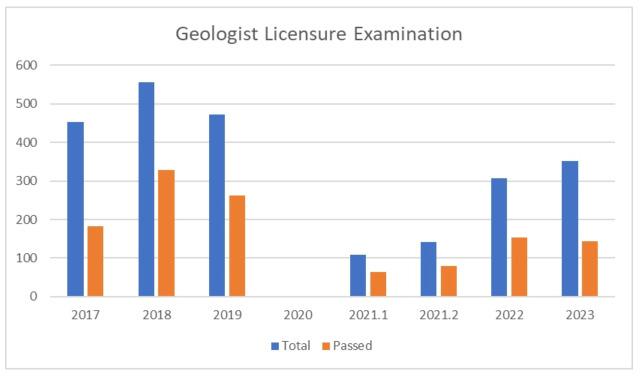
Figure 1. The number of examinees decreased drastically during the pandemic in 2020-21 but the number is steadily increasing albeit still below pre-pandemic levels.


The 47% passing rate for the 2023 CBLE is close to the middle of the band of passing rates, which has been between 40% and 60% in the last few years (Figure 2).  Also, first timers have had a passing rate of between 54% and 82%.  Repeaters have a passing rate of less than 40%.
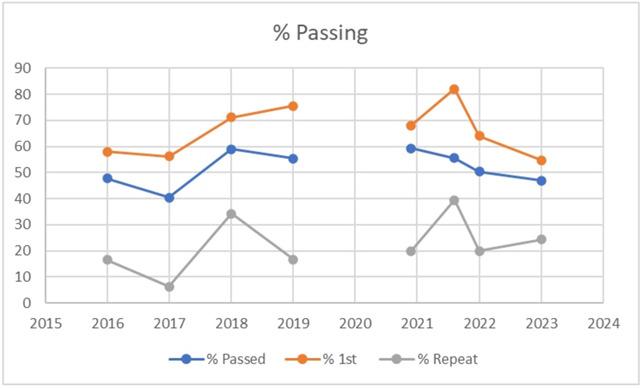
Figure 2.  The passing rate for the period 2016 – 2023.


Continuing Professional Development and Career Progression and Specialization Program

In addition to responsibilities related to the licensure examinations, the Board’s additional mandate includes assuring continued professional competence. Registered geologists need to undertake continuing training and development to ensure that they remain qualified, competent, and updated with the latest technological, environmental, and social responsibility developments.

Republic Act No. 10912 or the “Continuing Professional Development (CPD) Act of 2016” states that CPD Programs shall be formulated and implemented in the geology profession in order to enhance and upgrade the competencies and qualifications of registered geologists pursuant to the Philippine Qualifications Framework, the ASEAN Qualifications Reference Framework and the ASEAN Mutual Recognition Arrangements. The renewal of PRC professional license requires the registered geologist to earn CPD units or points through learning activities like training or learning seminars to develop and enhance their abilities, personal skills, and proficiency. The CPD points should be validated by the CPD Accreditation System.

Further, the CPD Law also mandates the PRC and the Board to formulate and implement a Career Progression and Specialization Program (CPSP) for the geology profession. The Board is mandated to issue guidelines for the formulation of the CPSP for inclusion in the Philippine Qualifications Register (PQR). The PQR is the national database of quality assured qualifications authorized under the Philippine Qualifications Framework (PQF). It provides information to employers, education and training providers and students. The information includes the Qualification Title, Qualification Descriptors, the PQF Level, the Authority-granting Agency, the Qualification Code, the Instrument and Date of Authorization.

The Board shall also formulate the CPSP for the profession to address the Pathways and Equivalencies of the PQF. Republic Act No. 10968 or the “Philippine Qualifications Framework Act” states that it is the policy of the State to institutionalize the PQF to encourage lifelong learning of individuals, provide employee specific training standards, and qualifications aligned with industry standards. A PQF shall be established which shall describe the levels of educational qualifications and set the standards for qualification outcomes. It is a quality-assured national system for development, recognition and award of qualifications based on standards of knowledge, skills and values acquired in different ways and methods by learners and workers of the country.

The Implementing Rules and Regulations (IRR) of the PQF Act provides for the aligning of domestic qualification standards with international qualifications framework. The IRRs aims to enhance recognition of the value and comparability of Philippine qualifications with global standards and support the mobility of Filipino students, workers and professionals. The PQF describes the levels of educational qualifications and official recognition of a person's learning achievements. It also sets the standards for the knowledge or skills gained by individuals after undergoing a certain learning or educational program.

Inspection and Monitoring

The Board is tasked under the Geology Profession Law to upgrade geology education and the quality of geologists whose standards of professional practice shall be excellent, world-class and globally competitive. Among the tasks in the Board’s regulatory and development functions are:

  • Visit/inspect facilities, faculty, and equipment of schools offering geology courses and establishments employing professional geologists; and
  • Recommend measures necessary for advancement of the geology profession through the preparation and implementation of professional competitiveness roadmap.

The inspection and monitoring of educational institutions and establishments are aimed to determine the compliance of educational institutions and establishments with the professional, ethical, and technical standards of practice set by the Board. Mandatory ocular inspection and monitoring activities are also conducted to keep track of the conditions affecting the practice of the geology profession. The Board conducts face-to-face and on-site inspection and monitoring to visit and observe the different physical facilities, laboratory, and equipment of educational institutions, government agencies, and private establishments employing geologists.

In the Board’s inspection and monitoring activities, it was noted that a substantial number of geologists employed in government agencies are engaged under contracts of services because of the lack of permanent plantilla positions. This has been attributed to difficulties in getting approval of proposed positions at the agency and Department of Budget and Management levels. Thus training of employees under contracts of service often times doesn't benefit the agency since these geologists ultimately leave government service to look for jobs with permanent tenures.

The Board also observed the lack of training and foreign scholarship opportunities for geologists employed in government regional offices due to the perceived unequal distribution and allocation of scholarships and trainings between the Central Office and the Regional Offices. In some instances, geologists from regional government offices lament the high costs associated with the renewal of PRC licenses, maintenance of active membership in the Geological Society of the Philippines (GSP), and participation in the Geological Convention (GeoCon), which is usually held in Manila especially if such activities are not subsidized by their agencies. The GSP is mandated under the Geology Profession Law to integrate all registered geologists into one national organization and where membership therein is automatic and mandatory.

Problems faced by geologists from regional government agencies also include working in limited office spaces, non-working geological equipment, and limited storage for rocks and minerals samples. However, government offices cannot request for assistance directly from private companies in procuring equipment and training programs because it may be violative of existing laws unless expressly allowed as assistance stipulated in government contracts like mining agreements and energy service contracts.

On the private sector side, the Board needs to strictly monitor expatriate geologists working in Philippine operations of foreign companies to make sure that they have all the mandatory requirements before being employed by their companies. Under the Geology Profession Law, only Filipino citizens can practice the geology profession in the Philippines. Foreigners are however, allowed if their country has official parity agreements with the Philippines. Under the “PRC Modernization Act of 2000”, the PRC shall upon recommendation of the Board, approve the registration of and authorize the issuance of a certificate of registration and license to a foreigner who is registered under the laws of his state or country. The foreign geologist shall secure a temporary/special permit from the Board prior to arrival in the country before he is allowed to practice in the Philippines.

Geologists employed in private companies have notably less foreign scholarship opportunities unlike those working in government. The Board recommends that private companies must provide scholarship opportunities to their employees similar to those offered in government agencies.  This companies were also advised to subsidize their employees’ membership in the GSP and participation in the GeoCon where they can earn CPD points. Private companies should also apply as accredited CPD Providers since they often provide in-house trainings and seminars to their employees and the participants can then earn CPD points.

The Board also conducted inspection and monitoring of educational institutions offering geology courses to evaluate their compliance with regulations and standards. The inspection and monitoring usually cover a review of school facilities, curriculum, practicum programs, licensure passing rates as well as faculty qualifications. In most instances, the Board observed the alarming lack of instructors and limited number of full-time faculty in regional educational institutions. Some of the faculty members were not licensed geologists but were teaching geology subjects. In one particular institution, even the Department Head is not a degree holder of Geology. Some faculty members were not updated with their PRC licenses despite the fact that teaching geology courses falls under the definition of the “practice of geology”.

The Board also noticed the absence of laboratory courses for earth resources subjects. Mineralogy, Petrology, Paleontology and Economic Geology/Metalliferous & Non-metalliferous Deposits lectures need laboratory counterparts to deepen the understanding of these subjects by the students.   urther, the rock and mineral collections need to be upgraded adequately to support these laboratory courses. One institution has no laboratory and inadequate rock and mineral samples. A substantial number of regional educational institutions need to upgrade microscopy, mineral, rock & fossil collections, science journals, and library facilities. Their graduates are only able to have exposures to a wide variety of mineral, rock, and fossil samples in Manila when they are already reviewing for the licensure examinations.

Regional institutions need to exert more effort to request assistance from mining and energy companies to augment their laboratory equipment and samples. Because of inadequate or limited graduate studies opportunities of their faculty, these institutions must formulate a comprehensive development plan for their department. They should encourage and support student and faculty participation in local and international trainings, internships, and conventions, through collaborations with foreign universities, government agencies, private companies, and development agencies. Also, they need to exert more effort to request assistance from government agencies such as the Department of Energy and Department of Environment and Natural Resources to augment their libraries and equipment. These agencies can channel training funds from petroleum service contracts and mining agreements to fund faculty development and scholarship programs. Geologists employed by government agencies and resources companies should also be encouraged and incentivized to serve as part-time lecturers for educational institutions to augment the need for qualified faculty members.

Based on the performance of the regional universities in the recent years’ licensure examinations, there is an urgent need to review and revise the geology curriculum and course descriptions. The Board in its inspection and monitoring realized that these institutions still adhere to the old curriculum thus leaving out important subjects covered in the licensure examinations. This puts their graduates at a disadvantage as shown by their low passing rates in the geology licensure exams. The Commission on Higher Education Technical Panel for Geology is tasked to revise the existing geology curriculum and address the lack of qualifications of some faculty members in these institutions.

Conclusion

The management of natural resources, protection of the environment, and mitigation of geohazard risks require skilled and experienced geologists. Population growth, energy and raw materials policy, de-carbonization, technological advances, and climate change have created more challenging responsibilities for geologists for the protection of the public. The regulation of geologists facilitate the codification of ethical practice, international mobility and comparisons of qualifications, and interchange of ideas and knowledge. The responsibility of the Professional Regulatory Board of Geology is to make certain of competent practice within the geology profession which starts at ensuring that educational institutions are able to produce world class and globally-competitive graduates. At the same time, licensure examinations remain critical as an entry to the profession and undoubtedly important for the Board since they must be maintained under high professional standards and transparency. The Board knows and understands its responsibilities and is well aware that it may suffer public censure and criticism if problems arise from the wrongful, negligent, and lax administration of its regulatory functions.


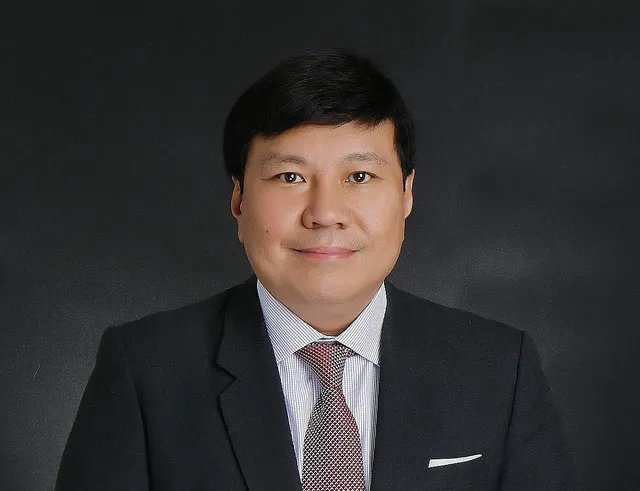
Fernando “Ronnie” S. Penarroyo specializes in Energy and Resources Law, Project Finance and Business Development. He is also currently the Chair of the Professional Regulatory Board of Geology, the government agency mandated under law to regulate and develop the geology profession. He may be contacted at fspenarroyo@penpalaw.com for any matters or inquiries in relation to the Philippine resources industry and suggested topics for commentaries. Atty. Penarroyo’s commentaries are also archived at his professional blogsite at www.penarroyo.com
September 09, 2024

Part 2

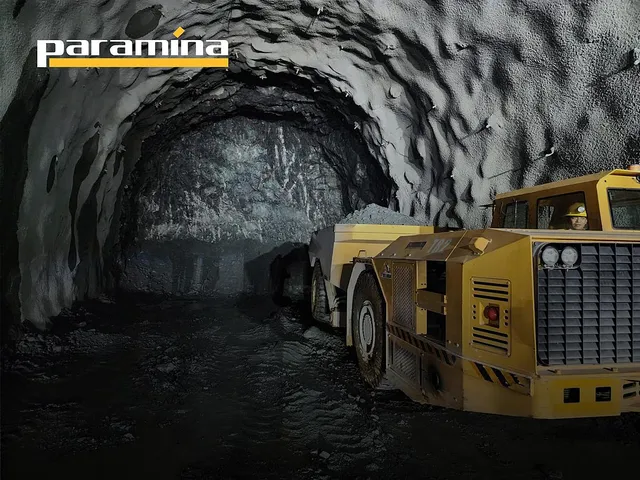
A group of all-Filipino mining engineers under the support of project subcontractor Paramina Earth Technologies, Inc. (PARAMINA) were greatly involved in the success of the Upper Wawa Pumping Station Water Access Tunnel project. These mining engineers developed and excavated an 8m wide x 7m high x 1,011m long tunnel with the highest considerations for safety, without a single lost time accident (LTA) accident and or rockfall incident. The project applied the New Austrian Tunneling Method following international tunnel design, plans and was remarkably ahead of the adjusted timeline upon its completion.

Part 1 of this article introduced the technical aspects and purpose of the project. In Part 2, we discuss the people involved, the challenges encountered, the innovations applied, and milestones achieved. Part 1 can be viewed here: https://www.philippine-resources.com/articles/2024/8/a-technical-overview-of-a-water-access-tunnel-construction-built-by-filipino-mining-engineers 

Project Owner and Consultant

The mega-infrastructure “Wawa Bulk Water Project” (herein referred in our article simply as the Wawa Dam Project) is owned by WAWAJvCo Inc, a joint venture initiative between Prime Infrastructure Capital Inc and the San Lorenzo Ruiz Builders and Developers Group, the owner of the water rights in the area. WAWAJvCO engaged the services of AFRY as its advisor, an international leader in engineering and design.

Project Main Contractor/Consultant

A crucial component of the Wawa Dam project namely, the “Upper Wawa Pumping Station (UWPS)” Project was awarded to Prime Metro BMD Corporation (PrimeBMD), a subsidiary of Prime Infra in joint venture with BMD, one of the biggest privately owned contractors based in Australia. To ensure its successful execution, Lombardi Engineering, a Swiss multidisciplinary engineering firm specializing in underground and water infrastructure was engaged as the project’s designer and advisor by the contractor.

Project Tunneling Subcontractor

Following a comprehensive review of several bid submissions and site visits to assess the various bidders’ facilities, shop, equipment and technical expertise, the contractor selected PARAMINA as the subcontractor for the tunnel excavation of the UWPS project. Additionally, Paramina was entrusted with the Slope Stabilization Works, done prior to the actual tunnel excavation, that established a durable, all weather slope protection for the East and West Portal and the main access road, designed to last for a century.

Project Management Team

The senior project management, headed by a team of dedicated mining engineers with previous experience in tunneling, was instrumental to the success and punctual completion of the UWPS Main Access Water Tunnel Project without any Lost Time Accident. [2G1] Their leadership and expertise were key to the project’s remarkable safety record.

Backing the senior management was another team of junior mining engineers who played a pivotal role in project initiation and completion. Additionally, mechanical and electrical engineers and technicians were integral to the equipment maintenance and operational support. They were at the heart of the tunnel operations, working round the clock to oversee shift activities. Work was 24/7, regardless of holidays and weekends. Their leadership ensured safe and efficient supervision of the skilled miners, mechanics, and electricians, and operations of a wide array of underground mining machinery and equipment.

First things First- UWPS East Slope Stabilization

Prior to the actual tunnel portal excavation, a team was formed to stabilize the slope above the east portal on March 14, 2022.  Another team was formed to erect the temporary facilities, offices, equipment workshop and the construction of explosives magazines in preparation for the blasting works in the Tunnel. The Notice of Award and Notice to Proceed on the Slope Protection Works at the East Slope was received the following day on March 15, 2022 with a target completion date of May 30, 2022. There was also a slight setback due to contractor’s delay in excavating original natural ground profile down to its designed slope batter and benching, thus resulting in late handover of the East Portal’s designed floor elevation of 144masl, to the Subcontractor for it to start the installation of the tunnel umbrella using SDAs.

Start of Portal Excavation

On September 27, 2022, the project reached a significant milestone with the commencement of drilling and setting up the portal umbrella. This involved the installation of Self Drilling Anchors (SDAs) measuring R38mm x 6m in length, arranged in two rows, each spaced 200 mm from the outer edge of the Tunnel Portal’s designed crown. The installation process entailed alternate drilling and grouting of the SDAs until all 131 units were securely in place. These SDAs were drilled directly into their positions and grouted to serve as forepole support, enhancing the stability of the rock mass at the tunnel’s crown during portal construction. Following the geologists’ assessment that the rock mass rating at the portal ranged from 0-20 RMR, Lombardi’s recommendation was to proceed with excavation but using the breaker tool of an excavator, advancing in increments of 0.6m prohibiting the use of drilling and blasting. This approach allowed for the installation of SRS completion of the full-face excavation; the application of 400-mm thick shotcrete on the crown and sides of the tunnel portal, along with a 50-mm thick layer of shotcrete on the tunnel face, providing a temporary protective layer of support for miners while working in proximity to the unsupported face.[2G2] 

Innovations to the design introduced by Paramina

The initial design for the east portal “umbrella” tunnel crown support by Lombardi included the driving of 150mm diameter micro piles and up to lengths of up to 12m, intended to be drilled around the tunnel crown’s perimeter. While this system was accessible in other regional markets, including the Philippines, the local micropiling contractors were only equipped for vertical micro pile equipment installations therefore lacking the capability for horizontal applications.

Consequently, PARAMINA proposed to the Main Contractor’s Project Manager, Technical Director and to Lombardi the substitution of the micro piles to self-drilling anchor rock bolts.  This switch to SDAs expedited the process and proved to be more cost-effective than the original micropile design. The SDAs were likewise recommended as the preferred rock bolts for support types 2, 3, and 4, more especially because of its simple and easy installation. The process of “drilling, pulling out the drill rod, and inserting a rock bolt” was eliminated and streamlined into a single step, thereby improving overall tunneling cycle time. In addition, the original plan included the installation of “Fiberglass Bolts” for temporary face support which was both costly and time consuming. PARAMINA suggested the application of quick-setting shotcrete to reinforce the tunnel face.

Tunneling Challenges

One significant hurdle in the project was the insufficient geological data along the entire length of the proposed tunnel, attributed to the limited diamond drilling done by the project owners. Only five drill holes were done throughout the whole 1,011m tunnel length which was conducted during the project’s pre-feasibility study. Consequently, Lombardi deemed had a low confidence in the quality of geological information. To manage this risk, PARAMINA adopted a timely approach of ordering tunnel supplies, particularly imported rock bolts, to avoid any surplus at the completion of the project.

Additional challenges included frequent hiccups in shotcrete mix deliveries by the contractor, impacting the shotcreting cycle. PARAMINA responded by deploying its own transit mixer trucks to expedite timely delivery and availability of the shotcrete mix. Another issue was the scarcity of clean drilling water leading to complications such as fouling of the jumbo drill’s rock drill, delays in drilling and shotcreting, and blockages of shotcrete machine slicklines which were addressed by sourcing water from nearby natural springs and groundwater inflow from drain pipes installed along the tunnel’s walls and crown.

The most daunting obstacle was the low availability of the Normet robotic shotcrete machine and the Sandvik Axera T08 Twin Boom Jumbo drill rig, which frequently paralyzed the tunnel work cycle. Faced with little alternatives, PARAMINA procured new machinery: a state-of-the-art XCMG Robotic Shotcrete Machine with a capacity of 30-50 cubic meters of shotcrete per hour and two units of the Furukawa FDR Twin Boom Jumbo Drill rig with man boom basket.

Tunnel Development, Milestone Break Through, and Handover

With the East Portal stabilized and fully installed with SRS, rock bolts and shotcrete, the real tunneling work began with drilling and full face blasting on the 22nd of December 2022. This marked the first day of the 290-day development timeline set for the tunnel to hole out the 1,011 meters with an average of 3.5m of tunnel advance per day. The anticipated breakthrough date was October 7, 2023, with an additional eleven days allocated for post-tunnel remediation works.

The much-awaited milestone, the tunnel breakthrough, occurred a month ahead of schedule on September 5, 2023. Finishing touches were applied, and the extended 1.011-km tunnel was officially handed over to the contractor on October 15, 2023, for final joint inspection.

Safety, Health, and Environment

PARAMINA recognized the importance of safety, health and the well-being of its employees and the protection of the environment, adhered to the strictest standards of Safety, Health, and Environment in the project.  Different degrees of job hazards were identified in the project’s scopes, such as slope stabilization works at the newly excavated road cuts to make way to the tunnel and excavation of the Upper Wawa Main Access Tunnel.

In recognition of the impressive feat that was the project completion with no loss time accident (LTA), the President of WawaJVCo acknowledged the contribution of PARAMINA and its dedication to safety and environmental stewardship last July 27, 2023 during the milestone celebration of the project’s “One Million Safe Manhours with incidents as attested by DOLE Regional Officials on the same occasion.

Some of the environmental initiatives contributed by PARAMINA to the project included the provision of complete Personnel Protective Equipment (PPE), daily toolbox meetings and the construction of settling ponds outside of the portal of the main access tunnel to ensure that solid or liquid pollutants are effectively separated and disposed of properly, to name a few. PARAMINA also championed the recycling of scrap metal, hoses, lumber, and the like and ensured that garbage was always properly disposed of at the designated disposal sites.

Moreover, to control noise and vibration from blasting works, the use of Long Period delay detonators ensured that the maximum instantaneous charge (MIC) firing at any one time were controlled below the industry accepted vibration and decibel limits.

Remediation and Hand Over of Tunnel Project

Guided by the main contractor, PARAMINA’s emphasis was on three key remediation tasks: addressing the “drummy” sections in the shotcrete lining, performing rock bolt “pull-out” tests and the execution of “in-fill” grouting within the Support Type P section of the tunnel. The first one was done by breaking open the shotcrete lining identified by the Contractor’s QA/QC team, with an Excavator fitted with a moil point and then reapplying shotcrete to the designed thickness. The second remediation task involved performing pull-out tests on 10% of all the installed Rockbolt anchor supports along the tunnel’s full length.  It is worth mentioning that each rock bolt tested passed the required standards successfully. Lastly, to address the inevitable voids left in-between the rock face and the SRS, in-fill grouting was carried out by the ChemGrout CG-542 Electro-Hydraulic grout pump, particularly along the section of the tunnel supported by Steel Rib Supports (SRS).

With the remediation tasks fully addressed and following another exhaustive and detailed joint inspection and review of the Subcontractor’s workmanship quality, the milestone final approval was formally acknowledged by the Contractor with the issuance of the Certificate of Project Completion.

Acknowledgments

The project’s success depended on the valuable cooperation among key stakeholders, especially the project owner, WawaJvCo and its project representative, Mr. Rey Bodano, the contractor’s project team, Prime Metro BMD, the Project Consultants and Designers, Lombardi and Afry, the Local Government Unit of Calawis and Sitio Apia, Antipolo, the Firearms and Explosives Office, Provincial and Regional Police Offices of Region 4A, Key Suppliers of Machinery, Equipment, Consumables, Explosives and the locals of Sitio Apia and affected Indigenous People of Antipolo City and finally the Paramina Management, Project Management Team, Supervisors and the men and women of the Paramina Project Team.
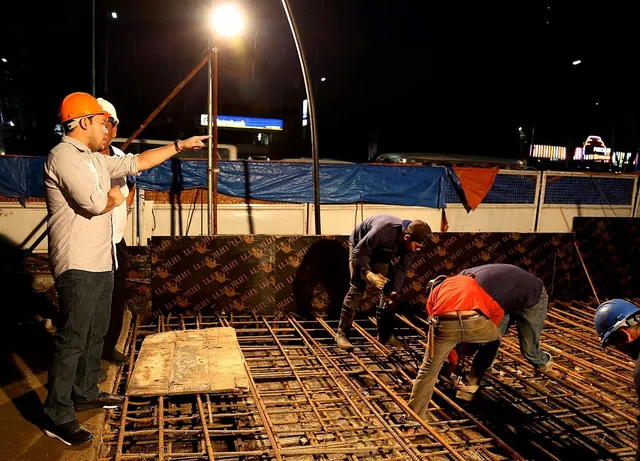
September 09, 2024

Arcadis, the leading global design and consultancy organization for natural and built assets, announced the release of its annual International Construction Cost index (ICC).

Compared to last year’s result, Manila has seen a slight improvement in its ranking among the most expensive cities to build in globally. But despite dropping two spots from 81st to 83rd, construction costs remain high.

This slight shift in ranking is likely due to even steeper cost increases in other cities. However, the construction sector in the Philippines continues to grapple with its own challenges.

Last year, inflation was at 6% and combined with supply chain disruptions, both factors pushed material prices up. High labor costs also contribute to the overall expense of construction projects. As a result, developers and contractors continue to adapt to the evolving market landscape to ensure project viability.

Ma. Monina Munsayac, Executive Director for Cost and Commercial Management at Arcadis Philippines, said: “Despite the challenges faced by the construction sector in 2023, we remain optimistic about its resilience this year and beyond.”

“The upcoming infrastructure initiatives are a promising prospect, as well as the continued demand for sustainable projects which aims to meet the country’s sustainability goals. Regardless of the year's trajectory brought about by this infrastructure push and other market factors, the Philippine construction industry is poised to adapt by implementing a range of strategies, including enhanced procurement strategies, the integration of digital tools and a continuous focus on cost optimization.”

The 2024 Arcadis International Construction Costs index covers 100 of the world’s large cities across six continents. The cost comparison was developed to span 20 different building types, including residential, commercial and public sector developments, and is based on a survey of construction costs, a review of market conditions and the professional judgement of Arcadis’ global team of experts.

The calculations are based in USD and indexed against the price range for each building type relative to Amsterdam.

The year 2023 was difficult across the world, with high borrowing costs undercutting the positive impact of infrastructure investment in many countries. However, with markets stabilizing and inflation beginning to ease, we are at a pivotal moment in the recovery of the global construction sector. Increasing demand for labor, materials and power means that productivity is now becoming an increasingly critical factor in investment decisions and project viability.

Arcadis notes the rapid acceleration of investment into the advanced manufacturing and technology sector, including data centers, pharmaceutical facilities, gigafactories and wafer fabs.

The sheer scale and complexity of these end date-critical projects inevitably results in more financial risk, meaning that clients need to evolve their design, procurement and construction capabilities even as these multibillion-dollar programs are being built.

Joycelyn Pagcatipunan, Sales Director at Arcadis Philippines, said: “The Philippine construction market is mirroring the global trend of stabilization and recovery. However, we need to continue being agile and proactive for any scenarios once infrastructure projects in the Philippines gain further traction.”

“These could include challenges in construction programs, timeline, and securing skilled construction engineers and operatives in a tighter market, among others. In this environment, embracing technology and data-driven decision-making will be crucial for effectively managing risks and ensuring project success.”

Arcadis sets out a practical five-point framework in its report, which outlines a comprehensive approach focused on delivering fast, complex programs. Applicable to all markets and sectors, the framework offers prompts to help build resilience to deal with setbacks, scale and manage risk, model program interdependencies and invest in data and live project controls to increase confidence and assurance.

September 09, 2024

London-based investment house Actis formalized its USD600 million investments in the Philippines for the development of the country’s largest single-site solar power project.

Manila Electric Corp. (Meralco) and SP New Energy Corp (SPNEC) signed an agreement with Actis at Meralco’s headquarters in Pasig City Friday for the Terra Solar project, the largest of its kind in the Philippines and in the world.

“From Actis' side, we're very honored and excited to invest USD600 million into that, which I believe is the largest FDI (foreign direct investment) into the greenfield infrastructure here in the Philippines,” Actis chair and senior partner Torbjorn Caesar said.

The Terra Solar is a 3,500-megawatt solar power project with a 4,500-MW (megawatt) hour battery energy storage system.

The project was recently awarded by the Board of Investments (BOI) with a certificate of green lane endorsement to expedite all permits and licenses related to the project.

Meralco PowerGen Corporation president and chief executive officer Emmanuel Rubio said Actis’ investments support the government’s aspiration for a more sustainable energy sector.

“We expect our strategic partnership will not only put Philippines in the global spotlight, it will also thrust one Meralco into the international stage as a leader in the renewable energy space to its ownership of the world's largest hybrid solar project, which is poised to power more than 2.4 million households in the Philippines, and displace 4 million tons of carbon dioxide every year,” Rubio said. 

September 09, 2024

Celsius Resources is pleased to announce that its Philippine affiliate, Makilala Mining Company, Inc, has been issued a Certification Precondition (“CP”) from the Philippine National Commission on Indigenous Peoples (“NCIP”) for its flagship Maalinao-Caigutan-Biyog Copper-Gold Project (“MCB”).

As the government agency mandated to protect the rights of indigenous peoples, the NCIP ascertains that the collective decision of the Balatoc Indigenous Cultural Community (“ICC”) has been obtained with respect to their right to self-determination over their ancestral lands. The NCIP En Banc also reviewed and evaluated the Free, Prior and Informed Consent (“FPIC”) process to ensure that it was observed in accordance with Republic Act No. 8371, or the Indigenous Peoples’ Rights Act (“IPRA”) of 19971.

The Certification Precondition (CP-CAR-2024-504, issued on 4 September 2024), is the culmination of a ~3-year process which entailed extensive stakeholder engagement resulting in a Memorandum of Agreement signed by and between MMCI, the Balatoc ICC, and NCIP stipulating the benefits, commitments, and obligations of all parties during the life of the MCB mine.2 

Celsius Executive Chairman Atty. Julito R. Sarmiento, said:

“This is arguably one of the most stringent approval milestones for a new project to achieve. It has always been the Company’s commitment to observance and respect for the customary laws and practices of the Balatoc ICC throughout the FPIC process as an integral part of obtaining and strengthening our social license.

We are grateful that the NCIP En Banc recognised the value and contribution of the MCB Project to improve the lives of the Balatoc ICC. The issuance of the Certification Precondition is not only an achievement for the Company, it is also a milestone for the Balatoc ICC as our partner in the development and operation of the MCB Project.”

Next steps

The Certification Precondition is one of the compliance requirements under the Mineral Production Sharing Agreement with the Philippine Government as prescribed under Republic Act 7942, or the Philippine Mining Act of 19953 and one of the outstanding commitments under the MPSA4.

With the issuance of the Certificate Precondition, the only remaining requirement is to submit additional proof of financial capability to carry out the necessary work programs. The CP now allows management to finalise arrangements with interested Philippine and international investors for funding the MCB Project. These discussions had been delayed, awaiting the issuance of the Certification Precondition. 


1 https://www.officialgazette.gov.ph/1997/10/29/republic-act-no-8371/
2 ASX/AIM Announcement 15 November 2022

August 26, 2024

As the Panguil Bay Bridge Project approaches its completion, Department of Public Works and Highways (DPWH) Senior Undersecretary Emil K. Sadain, along with key officials from the Unified Project Management Office (UPMO) Operations, conducted an on-site inspection on August 23, 2024, to ensure Mindanao’s longest bridge completion is on track for the target September inauguration.

The 3.17-kilometer bridge, which will connect Tangub City in Misamis Occidental and Tubod in Lanao del Norte, is a landmark infrastructure project set to significantly reduce travel time between these two (2) provinces in Northern Mindanao.

The current two-and-a-half-hour journey, which relies on roll-on/roll-off vessels, will be cut down to just seven (7) minutes by land once the bridge is operational.

In his report to Secretary Manuel M. Bonoan, Senior Undersecretary Sadain said that the detailed engineering design and civil works is more than 97.5 percent completed to date.

Panguil Bay Bridge project includes the following major components: a 360-meter approach road leading to a 1,020-meter approach bridge at Tangub City side; a 569-meter approach road connects to a 900-meter approach bridge on the Tubod side; and a Main Bridge with central span that stretches 320 meters, supported by two (2) pylons, each anchored by six (6) cable stays. Additionally, two (2) observatory bays are positioned on both the Tangub and Tubod sides of the pylons for facilitating regular maintenance and ensuring the structural integrity of the bridge.

During the inspection, Senior Undersecretary Sadain, along with UPMO Project Directors Teresita V. Bauzon, Soledad R. Florencio, Ramon A. Arriola III, Benjamin A. Bautista and Rodrigo I. Delos Reyes conducted a detailed assessment of key bridge elements, including the deck slab, approach roads, barrier and median strip concrete, metal guardrail, and ancillary structures.

Also present at the inspection are past UPMO Project Directors namely Sharif Madsmo H. Hasim and Virgilio C. Castillo, Stakeholders Relations Service Director Randy R. Del Rosario; Project Managers Shirley O. Castro, Evangeline L. Carabal, and Norman I. Puy; and Engineers Abdul Khalid C. Lumangcolob, Oliver Hernandez and Ken John B. Barcelona.

The team closely monitored the progress of crucial finishing activities, with a focus on the application of waterproofing and asphalt paving, expansion joint works, the implementation of aesthetic and electrical lighting systems, line markings and the installation of road signage.

In addition to reviewing the physical aspects of the project, the team engaged with the design and build contractor Namkwang Engineering & Construction Corporation along with the project consultant Yooshin Engineering Corporation to discuss the final phases of activities for the upcoming inauguration of the project and any necessary last-minute adjustments to ensure the bridge’s timely completion.

The Panguil Bay Bridge is anticipated to be a transformative project for local transportation and economic activities, said Senior Undersecretary Sadain during the inspection.

Upon completion, it is expected to spur development and improve the quality of life for residents in both provinces.

With the inauguration set for September, the DPWH is working tirelessly to ensure that the project is ready for public use.

The opening of the bridge will mark a significant milestone in the government’s Build Better More infrastructure program, aimed at enhancing connectivity and driving economic growth under Bagong Pilipinas.

The project implemented by DPWH UPMO Roads Management Cluster II (Multilateral), with a total cost of ₱7.375 billion, is financed through a loan agreement between the Government of the Philippines and the Republic of Korea, facilitated by the Korea Export-Import Bank under the Economic Development Cooperation Fund (EDCF) Loan Agreement No. PHL-18.

August 21, 2024

The first call-off order of £26m, which includes both ENDURON® large format High Pressure Grinding Rolls (HPGR) and wet screens, will be recognised in Q3 with the remaining orders booked later in 2024 and early 2025.

The Weir Group PLC (Weir), a global mining technology leader, has been awarded a £53m contract to provide industry-leading energy efficient, sustainable solutions to the Reko Diq copper-gold project, a 50% owned greenfield development by Barrick Gold Corporation (Barrick). The tier one copper project is located in the Chagai district of Balochistan and is targeting first production in 2028 with an estimated mine life of 40+ years.

During the first phase of the project, Weir will provide fine grinding, separation and tailings solutions. Featured equipment includes Weir’s market leading ENDURON® HPGRs, ENDURON® Elite wet and dry vibrating screens, WARMAN® slurry pumps, and CAVEX® hydrocyclones. Among the equipment to be provided are Weir’s large format HPGRs – the highest capacity design in the market.

The initial £53m contract award will be recognised in the order book in accordance with a phased call-off aligned with manufacturing lead times, with £26m recognised immediately and the remaining orders to be booked in Q4 2024 and Q1 2025. After commissioning of the equipment, aftermarket support will be provided via an on-site purpose-built service centre staffed with Weir technical personnel.

The receipt of orders associated with the contract award during 2024 does not result in a change to Weir’s full year 2024 financial guidance as of 30 July 2024.

Commenting on the contract award, Jon Stanton, Chief Executive Officer of Weir said:

“We are delighted to have secured this significant contract which represents further industry acceptance of Weir’s differentiated sustainable and cost-effective redefined flowsheet solution, with our market leading HPGR technology particularly suited for the water-scarce climate and geology of the Reko Diq copper-gold project. Our engineers have designed an innovative solution that comprehensively addresses the particular challenges of this project and is a great example of working in close partnership with an ambitious customer who shares in our purpose to sustainably and efficiently deliver the natural resources essential to create a better future for our world.”

“Barrick is pleased to be partnering with Weir in delivering sustainable mining and processing in the new mining frontier of Balochistan. The Reko Diq project will grow Barrick’s strategically significant copper and gold portfolios, benefiting all its Pakistan and Balochistan stakeholders.” said Mark Bristow, Barrick President and CEO.

August 21, 2024

Weir, a global leader in mining technology, has been awarded the contract to supply a large ø2.4m x 2.25m Enduron® HPGR (high-pressure grinding rolls) for De Grey Mining’s flagship Hemi Gold Project in the Pilbara region in Western Australia.

Hemi has a mineral estimate of 10.5Moz and at full capacity, the processing plant will have a nameplate throughput of 10Mtpa.

Peter Holmes, Project Director of De Grey Mining said: “De Grey Mining is pleased to partner with Weir on one of its key long lead items for its Hemi Gold Project and appreciates Weir having a local service facility to provide the required support to our site and the region.”

Bjorn Dierx, Global Product Manager for Enduron® HPGRs said:

“Our partnership with De Grey Mining further expands our footprint in sustainable comminution. Our proven track record of developing highly engineered solutions for the industry, together with our capability to partner with our customers to bring projects to life, ensures that De Grey Mining will be in good hands to achieve its productivity, sustainability and project execution targets.

“The Hemi Gold Project will benefit from Weir’s state-of-the-art Enduron HPGR technology, which delivers operational flexibility, grinding efficiency and equipment availability. Importantly, Enduron HPGRs also provide significant improvements versus traditional tumbling mill technology with energy savings of up to 40% and in turn, a lower carbon footprint. This will be the fifth, similar-sized Enduron HPGR in the Pilbara region alone, which is a testament to its credibility in high capacity, hard-rock grinding.”

Weir recently opened its Port Hedland Service Centre, strategically located to support its customers in the Pilbara region in Western Australia. The centre features facilities for Enduron® HPGR servicing, including tyre roller assembly, and will allow De Grey Mining to benefit from product training in close proximity to the mine site.

Kristen Walsh, Regional Managing Director of Weir’s Minerals Division said:

“This win further underscores Weir’s commitment to making mining more sustainable and demonstrates the substantial opportunity that can be made to CO2 emissions reduction when choosing an energy-efficient technology in a large greenfield project.”

August 19, 2024

The early design stages are the best time to fully explore ground risks and focus teams on mitigation and intervention, before a project gets too far down the track. Doing this formally and methodically through the Potential Failure Mode Analysis (PFMA) framework offers best-case potential for project success.

How PFMA works in Geotechnical Engineering

Potential Failure Mode Analyses (PFMA) offer a rigorous, transparent and defensible process to get quickly to the core of complex geotechnical problems, track mitigations and effectivity outcomes. 

Geotechnical problems are routinely complex due to the range of unseen unknowns in the ground.  The problem and potential consequences can be multiple and confusing and very difficult to resolve through informal process.

The most common result following that path is loss; either through time or cost due to poorly conceived investigation, improper or poorly conceived design, and contract over-runs due to unforeseen conditions.  In the worst case, failure of critical infrastructure or components can lead to project closure.

For Project Managers, it is critically important to not get lost in the confusion and to identify and resolve the crux issue as quickly as possible.  The PFMA is the way to save time and money in the most efficient and transparent manner possible.

RDCL’s Application / Using PFMA with RDCL

RDCL is skilled in the use of Failure Mode Analyses. In particular, for the assessment of dam structures where the consequence of failure can be very high, and for all significant ground investigation for infrastructure where unforeseen ground presents the greatest risk in terms of cost and time.

Projects (https://www.rdcl.co.nz/projects/) where we have applied PFMA include our work on the Harapaki Windfarm for foundation assessment including use of appropriate investigation techniques, regional flood stopbank (levee) upgrades and emergency works and design and construction of the Kereuru Water Storage structure, all in New Zealand.

In the Philippines we have assessed geotechnical implications for the Wawa Water Storage project investigations and for tailings dams on leading mine sites.

Identify Sources of Failure Before they Happen

Developed in the 1940’s, Failure Mode Analyses seeks to document the potential sources of failure, what the consequence of the failure may be and how to mitigate the consequence or remove the potential source of failure.

The method is used by leading design and design critical companies throughout the world as a powerful method to capture and communicate risk. An example of a part snapshot of a hypothetical Tailings storage facility is shown.
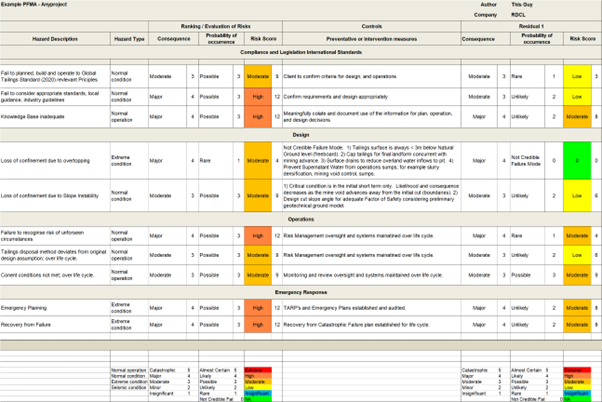
Failure mode analyses can therefore benefit all stakeholders in a significant (or even simple) project by developing a better understanding of design, construction or operational weaknesses.

This ties into our philosophy and drive at RDCL to help promote better decision-making and costing through proper and appropriate ground investigation as we discussed in our previous article (Philippine Resources Journal, March 2024).

Our approach of considering the geotechnical aspects of the project or piece of infrastructure over the whole life-cycle is explained here in our video: https://www.youtube.com/watch?v=1Mtoz0B-LYk&ab

Standard Risk Assessment

Standard Risk Assessment methodologies such as is ISO 31000, the international standard that sets out the principles and guidelines for effective risk management, guide the development of the PFMA.

This standardised approach ensures a commonality of language and consistency of approach allowing organisations to communicate their risk and risk mitigation strategies effectively and move quickly on resolution.

‍‍Guidelines for the use of Failure Mode Analyses are freely available from the World Bank (2021) and other leading jurisdictions and organisations.

How to make it work / Where the rubber hits the road

In all cases, the PFMA process includes collaborative, workshop based efforts by stakeholders, led by skilled practitioners in risk assessment backed by expert advisors.  To move quickly and accurately, it is important to bring everyone along for the ride from early in the process, keep the document alive and regularly return to check on assumptions and the effectivity of mitigations and solutions applied.

Without closing the loop on the action-checking process, much of the group’s efforts are wasted. By engaging an external party to help guide the process, you achieve an impartial, best for project approach and are supported in keeping critical actions on track.

Partner with us and take action at the time when it is most impactful to your project.

Cam Wylie, Director, RDCL

Cam Wylie is the Managing Director, CEO & Principal Engineer at RDCL Limited. With 30 years in the industry, Cam is a Chartered Professional Engineer with extensive overseas experience, working on major projects in the Philippines, Indonesia, Africa, Australia, and New Zealand. His expertise includes Project Management, Geotechnical/Dam Engineering, Mining, Roading, Infrastructure, large subdivisions, and Residential Dwellings, and he is a contributor to the Hawke’s Bay Cyclone Gabrielle Engineering Leadership Group.
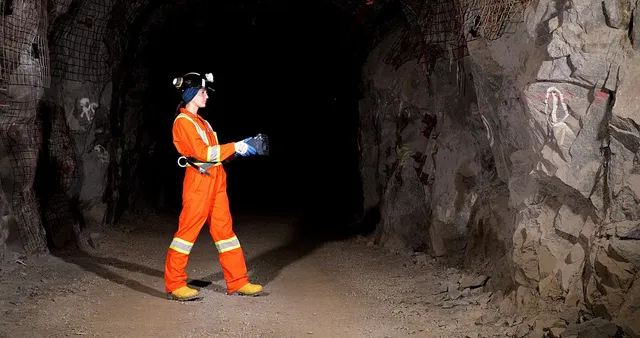
August 19, 2024

Integrating new digital workflows

New innovative technology used in mining is generating more detailed data than ever before. LiDAR scans of underground excavations create 3D, high resolution, georeferenced images of rockface. This information can be utilised to provide better grade control, cut costs, and increase productivity. However, mining organisations can extract even more value from this data if they manage it with the help of digital workflows.

A major challenge for the sector is the integration of new digital workflows across an organisation. Currently, companies are having to purchase technology from several vendors. Often, the different technologies are not compatible with each other, creating silos and disjointed time-consuming workflows.

The challenge is compounded by a lack of standardisation across the industry, making it difficult for mining companies to find and adopt a common digital workflow solution. Matt Blattman, Director of Technical Services, Hecla Mining, explains, “We’d like to standardise, but within our own company, with four different mines, four different types of deposits and four different mining methods, it’s hard to find something that fits every situation.”

Encouraging teams to use a new workflow can be a challenge too. There is frequently a degree of resistance to change, and people will look for a reason to revert to their old ways of working. Dr. Grant Kopec, VP of Global Field Operations for Intellisense.io, comments, “One of the things that kicks people out of a new workflow and back into the old one is a data quality or a data outage issue where they say, see it’s not working or it’s inaccurate.”

Mining executives need to ensure a high degree of personal interaction and comprehensive support to teams to ensure the new systems are smoothly integrated into the operations and used consistently.

Bringing together data, services and applications in real-time.

In many mining operations, the geologists are stuck with the workflows dictated by the systems they use. According to Seequent’s recently published Geoprofessionals Data Management Report, geoprofessionals in mining said they spend 27% of their time on data, and while this is a marked improvement from previous years, adoption of digital workflows will lead to better operational performance.

Alex Boucher, Technical Solutions Director, Seequent, explains, “Within an open cloud-based environment of solutions connected through seamless integrations, mining companies will be able to bring together data, services and applications in real time.” Adoption of these digital workflows will put the right information, from raw data capture to mine modelling, into the right hands at the right time.
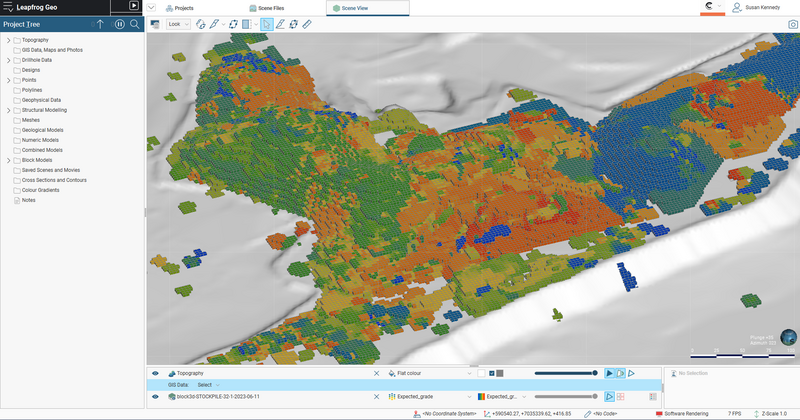
Industry-first 3D block models of real time ROM pad stockpiles generated by the IntelliSense.io Stockpile & Inventory Optimization Application, integrated into Leapfrog and Seequent’s ecosystem to give a full high-fidelity view of material inventories and variability across the mine.


Towards digital transformation

Industry thought leaders are advocating the integration of digital workflows as an essential step to improving performance. Mining needs to use new technology to work smarter and optimise operations.

“High-performing operations are enabled through partnerships – like-minded innovators working together to solve real-world mining challenges,” says Pieter Neethling, Segment Director, Mining Operations at Seequent.

Work with local knowledge and expertise in the Philippines

Infrasys is an authorised Seequent Channel Partner, bringing mining and geotechnical solutions to professionals across the Philippines. To learn more about Seequent solutions for mining operations, go to infrasys-mining  
August 19, 2024

Listed mining firm OceanaGold Philippines Inc. is expected to have higher gold and copper production in the second half of the year, its parent firm said.

"So we see quarter three will be stronger than quarter two and quarter four will be stronger than quarter three," OceanaGold Corporation chief operating officer for Asia-Pacific Peter Sharpe said in a briefing in Makati City.

OceanaGold Philippines Inc., which currently operates the Didipio gold-copper mine in Nueva Vizcaya, earlier reported that gold production reached 49.2 thousand ounces in the first half of the year.

Copper production, meanwhile, reached 5.8 thousand tons.

Both gold and copper production declined from last year's 65.2 thousand ounces and 6.9 thousand tons due to lower production in the second quarter of the year.

Sharpe atrributed the decline in production to the unplanned downtime in the processing plant.

"What that meant was that we were not able to mill as much ore as we originally planned. They were one-off events and they've effectively been addressed," he said.

"So we are seeing the capacity throughput be re-established. So we certainly expect Q3 (third quarter) and then Q4 (fourth quarter) to be stronger than Q2 (second quarter)," he added.

Sharpe said gold production is expected to increase to 70,000 ounces while copper production will also likely go up to 12,000 tons in the second half of the year.

He said OceanaGold also had a change in plan in its underground mine sequencing based on a geotechnical review that the company has undertaken.

"The review identified that there was a safer way to mine. You know, some of the what we call scopes, which is the ore from underground. And we've enacted that recommendation around applying a different mine design and sequence to underground ore," Sharpe said.

"What that will mean will be slightly less grade going forward over the next couple of years. But the years beyond that will be higher grade," he added.

Underground optimization

Sharpe said an underground optimization pre-feasibility study is underway to increase the contribution of higher-grade underground ore to the overall mill feed mix.

"One of the opportunities that we see at Didipio is the gold grade in the underground versus the stockpile. So, we've got about 20 million tons of ore underground and about the same on surface stockpile. And we actually blend at the moment 60 percent of our surface stockpile into the mill and 40 percent from the underground," he said.

Sharpe said the ore grade from underground is four times the grade from the surface stockpile.

"So there's four times as much gold per ton of ore from underground as there is on surface stockpile. So we're working on a plan to actually change that mix of 60 percent stockpile, 40 percent underground to 60 percent underground, 40 percent stockpile. And we can do that, you know, through additional equipment which we've actually already started to purchase and is already starting to turn up," he said.

Sharpe said the full result of the study is expected to be released in the first quarter of 2025. By Anna Leah Gonzales


Article courtesy of the Philippine News Agency 

August 19, 2024

The consolidated net income of Apex Mining group (Apex Mining plus its subsidiaries) for the first half of 2024 reached P1.89 billion — P492.3 million (35%) higher than the same period in 2023 (P1.40 billion). The growth drivers are the surge in realized gold price, gold ounces sold and the depreciation of the peso against the dollar.

Quarter on quarter, the consolidated net income in the 2nd quarter of 2024 reached P1.03 billion while the same period in 2023 was at P848.26 million.

The consolidated gross revenues from the sales by Apex Mining and Itogon-Suyoc Resources, Inc. (one of its subsidiaries) in 1H 2024 totaled P6.94 billion, up 22% (equivalent to P1.25 billion) over 2023’s P5.69 billion. The Apex Mining group derives its revenues from the sale gold and silver.

Apex Mining operating mines (Maco Mine in Maco, Davao de Oro and Sangilo Mine in Itogon, Benguet) produced and sold 52,993 oz of gold in 1H 2024, four percent more than 2023’s 50,796 oz.; silver production and sale totaled 176,838 oz, one percent more than 2023’s 175,569 oz. Realized price per ounce of gold in 1H 2024 was USD 2,264, up 16% from last year’s USD 1,953. Meanwhile, the realized price of silver in 1H 2024 was up 13% at USD26.86 from last year’s USD23.68.

The surge in realized gold price this year drove the revenues up in the first half of 2024. Apex Mining Co., Inc., the parent company, recorded a net income of P1.84 billion from January to June 2024 — 36% higher than its net income in the same period in 2023 which was P1.35 billion.

Following the landslide in February in Masara (Maco, Davao de Oro), Apex Mining went on limited operations and focused its resources on the search, rescue, retrieval and relief operations. Its Maco Mine milled 426,396 tonnes of ore in the first half of 2024. During this same period, the gold recovery rate dipped at 85.80% versus last year’s 87.34%.

The positive performance of Apex Mining despite the difficulties imposed by the landslide is a testament to the resilience of the company’s labor force. According to Luis R. Sarmiento, the company’s president and CEO, “The collective can do attitude and genuine spirit of malasakit have propelled us to rise up and successfully tackle the hurdles one by one.”

In terms of its contribution to its host communities’ social development, Apex Mining’s 1H spending under its Social Development Management Program reached P53.7 million (projected annual budget is at P87.6 million).

According to Sarmiento, “Our work with Regina Rica to help our kababayans affected by the Masara landslide continues with periodic medical missions, other psycho-social interventions and full scholarships for 40 children who were orphaned by the landslide.” Regina Rica Foundation is run by the Dominican Sisters of Regina Rosarii. Apex Mining and Regina Rica are implementing REACH Masara, a two-pronged assistance program comprising of educational assistance and wholistic recovery initiatives. Regina Rica is currently the sole active humanitarian organization present in the area affected by the landslide.

“On a longer-term scale, we are finalizing the donation of a parcel of land to the Masara Municipality for their permanent relocation program,” says Sarmiento.

Together with the Davao de Oro provincial government, the Maco LGU, and the MGB, Apex Mining has already stabilized the slopes surrounding the ground zero. A roster of engineering interventions is continuously being implemented to further shield the mine site from rock slides and the like.

Sarmiento is confident that Apex Mining can sustain its performance throughout the year, “barring any major obstacle that may come our way.”

“Our acquisition of the Asia Alliance Mining Resources Corporations gives us future gold resources as the extensions of existing mine veins spill over to the adjacent tenement, giving our exploration team new ground to drill and validate”.

The Mine Reserves and Resource Certifications of 2021 shows that Apex Mining’s Maco Mine has enough reserves and resources to continue at the targeted production rate of 3,000 tonnes per day until 2032.

August 19, 2024

Global Ferronickel Holdings, Inc. (PSE: FNI), a leading nickel ore producer in the Philippines, reported first half 2024 revenues of ₱3.079 billion, net income attributable to shareholders of ₱207.1 million, and earnings per share of ₱0.0404.

“We finished the first half of the year with strong operational and cost performance,” FNI President Dante R. Bravo said. “We delivered incremental improvements in our supply chain including equipment productivity and technology integration, which increased production flexibility and cost efficiency. This continued execution positions us to maximize performance in the second half of the year as well as meet our near-term priority of doubling our capacity in Palawan to 3 million WMT from 1.5 million WMT annually.”

Six-month mining revenues were relatively flat year-over-year at ₱3.071 billion, despite achieving record sales volumes as prices remained subdued due to supply surplus in the nickel ore and nickel pig iron markets.

Total sales volume was 2.109 million WMT, 44.6% higher than 1H 2023, setting new records in line with production volumes, and demonstrating reliability in performance amid various operational scenarios and weather events. Of the total sold volume, medium-grade ores comprised a greater share over lowgrade ores at 59% and 41%, respectively, compared to the corresponding share of 52% and 48% last year.

At Palawan, shipments reached 1.076 million WMT, 53.6% higher than 1H 2023, supported by recently expanded infrastructure, notably mine facilities and causeways, along with optimized processes in the areas of logistics and human resources. In the second quarter, it delivered 0.695 million WMT, the highest quarterly output since the project commenced operations in September 2022.

At Surigao, shipments rose to 1.033 million WMT, 36.2% higher than 1H 2023, as favorable weather conditions allowed production activities such as ore extraction and building of inventory to start in the first quarter, as planned. The improved availability of key inputs to production also contributed to volume growth, including chartered landing craft tanks for shipside loading of ores as well as transportation and handling equipment for mine operations and safety.

The average realized nickel ore price was US$25.35 per WMT, 33.9% lower than 1H 2023 and still well below the three-year historical average of US$32.25. Medium-grade ores had an average price of US$30.54 per WMT, down 40.5%, while low-grade ores sold at US$17.98 per WMT, down 25.5%.

On the cost front, cost of sales came in at ₱1.735 billion, 34.9% above 1H 2023, as a result of larger production and shipping volumes. This reflected a rise in contractor rates, particularly in Surigao, due to the change in sales mix and sources of nickel ore deposits, where the location affects the hauling distance and ultimately the mining cost. Additionally, operating expenses totaled ₱1.068 billion, up 16.1%. This increase mainly relates to revenue-based government excise taxes and royalties, as well as licenses, partially offset by lower stevedoring charges and shipping expenses. Overall, the total aggregate cash costs amounted to ₱2.512 billion. This translates to an average cash operating cost per volume sold of ₱1,191.2 per WMT, down 8.1%, benefiting from cost discipline, volume growth and mix, and operational efficiencies.

Net income attributable to FNI shareholders was ₱207.1 million, down 40.8%. On a per share basis, earnings were ₱0.0404 from ₱0.0676 the previous year.