

October 09, 2023

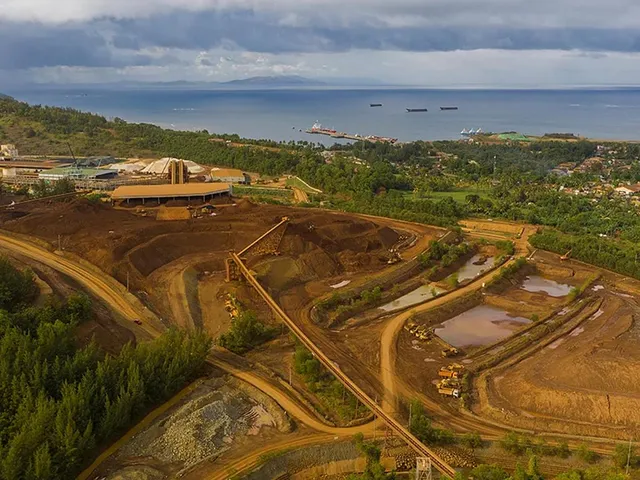
To boost the capacity and capability of its supported people’s organizations, Taganito Mining Corporation (TMC) partnered with the Department of Trade and Industry Provincial Office and the Claver Negosyo Center to hold a series of trainings on product development and value adding last June 2023 at the Taganito Mining Community Skills and Livelihood Development Enterprise Training Center in barangay Taganito, Claver, Surigao del Norte.

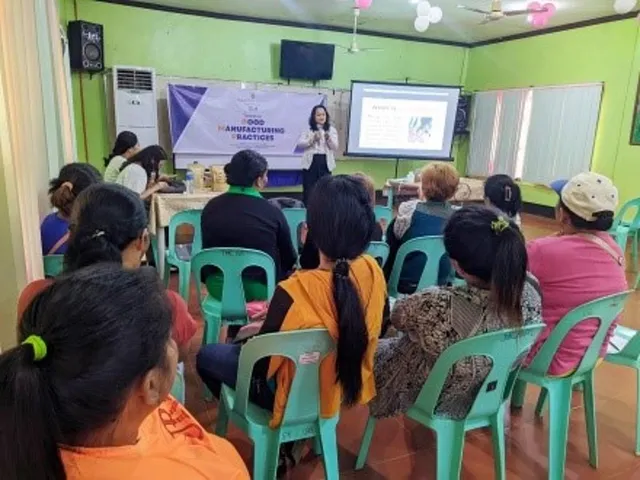
The first leg of the training series held on June 1-2 discussed the importance of adhering to Good Manufacturing Practices to guarantee food safety, maintain product quality, and enhance consumer confidence. A total of 34 participants acquired new knowledge and tools to ensure that their operations meet compliance requirements and safeguard consumer welfare.

The second leg conducted a three-day skills training on Pineapple Processing which was participated by 18 members from TMC-assisted POs, namely: CAFSPIA, SIFAS, DAPJA, and ALINDAHAW. The training aimed to assist the groups in producing high-quality processed pineapple products, considering that the fruit is locally grown in the community. Various pineapple-based products including jam, marmalade, concentrate, wine, candy, fermented fruit juice, and sweetened juice, were the outputs of the activity.

The last leg offered a training on Leather Working 101 which was participated by TMC POs engaged in tailoring and upholstery including HAT, TAWETA, URCAP, and CGUS. The session was facilitated by Mr. Harley Dave Beltran, owner of Handcrafted by Harl's located in Laguna. The primary objective of the training is to provide additional skills and product options to the participants. Attendees were able to create personalized keychains, coin purses, wallets, phone sleeves, bags, and card holders out of genuine leather.

We are thankful to TMC for the new learnings and knowledge on how to prepare food in a sanitary manner. - Roger Parpan, TACPECCO

We are happy to learn how to make additional products out of leather in addition to our existing skills on tailoring. - Beatriz Pegarro, HAT

We are excited and thankful to apply what we learned from the training as we look forward to the harvest from our pineapple plantation. - Cecilia Vidad, CASPIA

Taganito Mining Corporation is a subsidiary of Nickel Asia Corporation operating in Claver, Surigao del Norte.

October 09, 2023

The Department of Transportation (DOTr) is tapping multilateral lender Asian Development Bank (ADB) to fund more transport infrastructure projects.

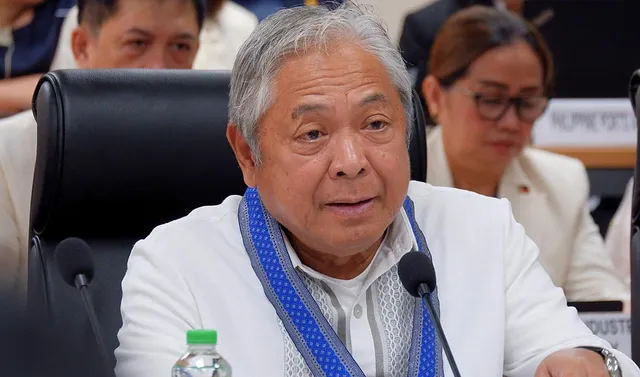
In a news release Friday, Transportation Secretary Jaime Bautista said the agency would continue to tap the ADB to open “opportunities for equitable progress and growth for business, investment, tourism and employment.”

“To achieve this program, we [must] undertake initiatives that address connectivity and efficient mobility,” Bautista said at the 3rd DOTr-ADB Coordination Meeting.

Data shows that there are nine agreements between the DOTr and the ADB amounting to PHP1.2 trillion that will fund transport infrastructure projects from aviation, railways and road sectors.

Among the ADB-funded projects are the North-South Commuter Railway (NSCR), the MRT-4, the Davao Public Transport Modernization Project, the EDSA Greenways Project, as well as the multi-sectoral Infrastructure Preparation and Innovation Facility - Output 3.

The South Commuter Railway Project, which is part of the NSCR network, is ADB’s largest infrastructure financing in the Asia and Pacific region.

Meanwhile, the ADB has a total of 17 upcoming and ongoing contract packages with at least PHP187 billion in cost estimate.

Apart from funding, the DOTr also seeks the ADB’s technical assistance in terms of developing an all sectors lifecycle monitoring and evaluation framework, local tax experts and development of right-of-way acquisition manual for ADB-financed projects.

Bautista said the ADB-funded projects would help position the Philippines as a dynamic investment hub and an emerging gateway country to Asia.

“We are optimistic that the ADB would appreciate the investment prospects in the Philippines towards boosting the country’s economic growth and addressing the social needs of Filipinos,” Bautista said. 

October 09, 2023

The Eastern Visayas Regional Development Council (RDC) is pushing for the second feasibility study of the Sorsogon-Samar bridge after the initial study in 2019 found the project “not economically viable.”

National Economic and Development Authority (NEDA) 8 (Eastern Visayas) Director Meylene Rosales, the RDC vice chairperson, said Thursday the region’s highest policy-making body passed a resolution urging the Department of Public Works and Highways (DPWH) to include in its 2024 budget the conduct of another study.

The resolution signed on Sept. 18, 2023, also asked the NEDA central office to include the project in the infrastructure flagship projects list.

“It has been five years since the pre-feasibility study was undertaken and new technologies have emerged, while the continuing issue on congestion in the port of Matnog with adverse social and economic impact in Visayas and Mindanao persists and requires long-term solution,” Rosales said in an interview.

In 2019, the study found that the best alignment option was not economically viable at only 4.77 percent economic internal rate of return, which was 10 percent less than what is required by NEDA.

The study also concluded that the project is not technically feasible at an average water depth of 300 meters.

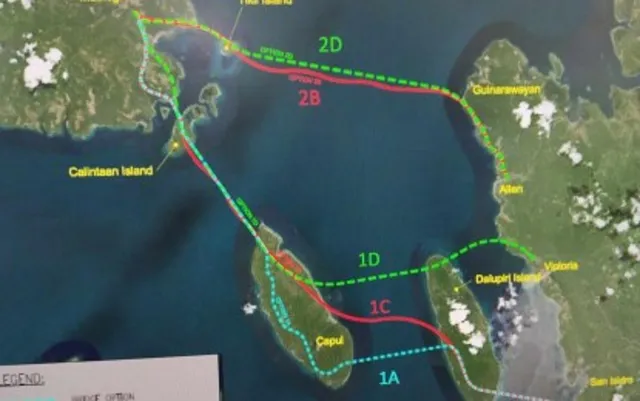
The Sorsogon-Samar project, with an estimated budget of PHP257 billion to PHP  PHP 766-billion, consists of three long-span bridges – Allen to San Antonio in Northern Samar, San Antonio to Capul in Northern Samar, and Capul, Northern Samar to Matnog, Sorsogon.

Other options include the construction of a submerged floating tunnel and a deep-sea tunnel.

For decades, roll-on roll-off (RoRo) ferries have crossed the San Bernardino Strait, carrying passengers and vehicles to and from Allen Port and Matnog Port in Sorsogon. With a distance of 28 km., the average travel time is one hour and 30 minutes.

Officials pushed for the long-span bridge link construction after members of the Philippine Chamber of Commerce and Industry raised the lingering issues of long queuing and congestion in Matnog port, delaying the transport of supplies from Luzon to Visayas and Mindanao.

October 09, 2023

The Department of Environment and Natural Resources (DENR) is undertaking a series of initiatives to formalize small-scale mining operations, recognizing their vital role in the industry. These initiatives are to be undertaken as the department undertakes a review of laws that cover small-scale mining, with the goal of modernizing industry standards and increased protection for small-scale miners.

DENR Undersecretary Carlos Primo David emphasized that these initiatives underscore the agency's dedication to responsible, inclusive, and globally competitive mining practices, all while ensuring the welfare and protection of small-scale miners. He stressed the importance of a progressive, step-by-step approach to formalization, with the ultimate goal of integrating small-scale miners into the broader mining sector.

“The small-scale miners are there. We have to bring them into the fold of the mining sector. The core of DENR's strategy lies in individually registering these small-scale miners, serving as the basis for a more organized structure,” said David.

“We’re looking to register small scale miners, individually, at first, followed by the establishment of a loose organization as the foundation for a more formal association. Sort of like a cooperative towards a Minahang Bayan registration.”

Legal recognition of small miners, according to David, will help ensure they get adequate support to operate within established standards and safety protocols.

“A properly regulated small-scale mining industry will benefit the community in terms of job creation and livelihood, and the country in terms of mining assets and taxes. More importantly, it will address the violation of environmental laws and mining regulations, and minimize environmental risks and promote mine safety,” David said.

He added that the Department’s newly-created Geospatial Database Office under his helm employs satellite imagery and Geographic Information System or GIS which can potentially monitor mining operations in the country and identify those which are illegally operating.

The DENR is looking to amend Republic Act 7076, also known as the People’s Small-Scale Mining Act of 1991, to provide social assistance, labor protection, and government-backed assistance programs for the benefit of small-scale miners. The DENR is also a staunch advocate of support for small miners, through a “big brother, small brother approach”—encouraging larger companies to help capacitate them to contribute to social and environmental protection efforts, protect small miners, and enhance the resilience of the mining community.

On top of capacity-building for small-scale mining ventures, the DENR is committed to modernizing standards for the mining industry—harnessing capabilities of cutting-edge technologies such as remote sensing and artificial intelligence to enhance industry regulation and law enforcement.

In a meeting with DENR officials last year, President Ferdinand R. Marcos Jr. issued directives to legalize small-scale mining operations. Many of these operations currently operate outside the legal framework, leaving miners without proper protection.

October 03, 2023

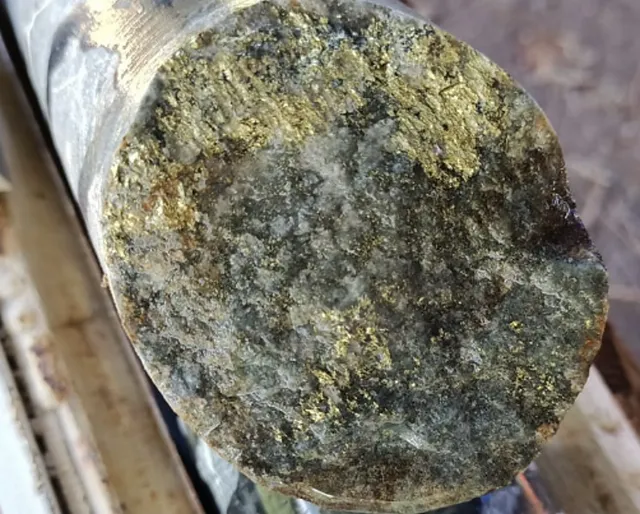
Bluebird Merchant Ventures Ltd, a gold company primarily focused on bringing historic mines back into production, is pleased to announce a fully funded 5,666m drill programme at the Lobo prospect of the Batangas Gold Project in the Philippines (‘Batangas’ or ‘the Project’).  The 34-hole three phase programme is aimed at further delineating the Project’s identified high-grade targets, upgrading the current mining inventory, and providing data to develop an underground mine plan.

Overview

  • Lobo is a high-grade gold mining opportunity within the Batangas project area being developed in tandem with a local highly experienced JV partner in the Philippines.
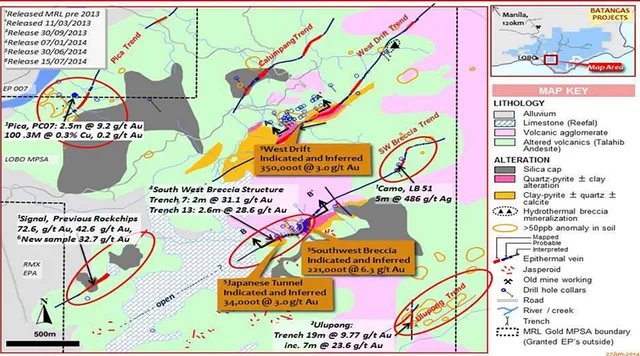
  • The three-phase drill programme will be initially focused on the South West Breccia (‘SWB’) target, which has not been tested at depth or along known extensions; this is just one of nine targets in the system, which has a current 15km strike.
  • SWB has only been drilled to 80-100m but produced the majority of the initial Probable JORC Compliant Ore Reserves of 171,000 tons at 6.6 g/t for 36,000 oz Au excluding silver credits that can be mined in the first 18 months of any operation – Indicated Resource of 82,000 oz Au.
  • Results at SWB extensions included:
    • 7m at 11.6 g/t Au from 9.3m.
    • 18m at 6.85 g/t Au from 31 m down hole.
    • 6m at 7.16 g/t Au from 43 m including 3m at 11.5 g/t Au.
  • SWB is likely to be the first area to be mined by the JV – drill data will be used for a mine plan and included in the Definitive Feasibility Study (‘DFS’).
  • Lobo licence area is highly prospective with results across the nine identified targets including:
    • 1m @14.4g/t Au and 3m at 12.1g/t at West Drift, which already has an Indicated and Inferred resource of 350,000t at 3 g/t Au.
    • 35m at 18.3 g/t Au and 6.0m at 31.2 g/t Au located immediately west of the SWB Extension.
    • 19m surface channel sample with intersections of 19m grading 9.8 g/t Au at Ulupong.
    • Limestone Target trenching yielded 3.5m at 25.9 g/t Au including 1.5m at 56.8 g/t Au.
  • Batangas is one of three gold projects being developed by Bluebird – the other two, Gubong and Kochang, are in South Korea where encouraging progress is being made regarding the grant of the Temporary Mountain Use Permits the final permit to allow production.

Bluebird CEO Colin Patterson said, “The Batangas Gold Project, one of three high grade gold projects in our portfolio, is being advanced to a production decision by our local JV partners in the Philippines.  The focus is on the development of the Lobo 1,160-hectare area where five parallel running high grade epithermal veins have been identified over a 15km strike. Previous shallow drilling over just 1km delineated a resource primarily at the South West Breccia prospect and included 150,000 tons at 6.4 g/t from just the upper 80m of the mineral resources. To put this into context, it is open at depth and there are nine other identified high-grade gold zones.

“The fully funded three-phase drill programme will test the most prospective and upper parts (below the current identified resource) first and then, if the results are as expected, progressively test deeper extensions and less well-known areas downdip of SWB. There is evidence that mineralisation grade may increase at depth and the aim is to dramatically expand the resource inventory and develop a mine plan for the submission of a DFS and final permitting. 

“Importantly, the wider project potential, which will be further tested in the future to expand mine inventory, is clear to see. Drilling at the SWB extension produced results including 2.1m @14.4g/t Au and 3m @12.1g/t.  At Ulupong, a high-grade epithermal vein was exposed in a 19m surface channel sample with intersections of 19m grading 9.8 g/t gold, while at the Pica Prospect, a series of epithermal quartz-barite veins including 1.5m at 8.5 g/t Au from 29.8m and 13.65m at 2.49 g/t Au from 110m have been identified.  Southwest of Japanese Tunnel, a 500m strike length zone produced 2m at 31.1 g/t Au and 3m at 22.2 g/t Au, while at the Limestone Target, trenching yielded 3.5m at 25.9 g/t Au including 1.5m at 56.8 g/t Au. These are exciting results.

“To provide some value context, Batangas was the original listing asset of the Company in 2016, and when we raised our interest to 25% it was valued at US$6.8 million.  We believe there is huge potential to expand the resource inventory across the wider project so are delighted with the progress being made by our local JV partner, which has extensive in country mining experience and is funding all work including permitting to a production decision in return for 60% of the Project.”

Details

Three-Phase Drill Programme at Lobo

The Lobo licence area covers 1,164-hectare. The mineral resources are associated with a linear, steeply dipping, epithermal lode with high grade ‘shoots’ of mineralisation.  Multiple high grade target areas have been identified and include the South West Breccia (‘SWB’), West Drift, Japanese Tunnel, historic Lobo copper mine, Camo, Acacia, Pica, Balisong and Ulupong prospects. The provisional Lobo underground mining plan is similar to the initial phase of Medusa Mining’s Philippine project.

The drilling programme is an iterative campaign that will commence with an initial 2,000m with further drilling to be determined based on the results.  It has been formulated utilising detailed surface geology mapping, aeromagnetic, radiometric, topographic data, drillhole lithology, and drilling primarily conducted by Mindoro Resources, Goldfields, and Red Mountain Resources. Currently, five major epithermal vein systems have been identified with a total strike length of over 15km. Drilling to date has only tested c.2km of strike and to relatively shallow depths.  It is evident from existing data that there are higher grade gold zones at lower elevations and the mineralisation is open at depth.

The main target is the SWB deposit where 38 holes identified five sub-parallel vein systems developed on northeast trending structures, spaced 500-1,000m apart and covering an area of approximately 3km by 1.5km. A preliminary resource statement based primarily on previous drilling at SWB, to a depth ranging from 80-100m, produced an initial Probable JORC Compliant Ore Reserves of 171,000 tons at 6.6 g/t for 36,000 oz Au excluding silver credits that can be mined in the first 18 months of any operation.  There is an Indicated Resource of 82,000 oz Au that is perceived as easily convertible.  The first 2,000m of the drilling will test the depth of SWB below the initial quantified area, being c.80m to c.200m, as well as the immediate high-grade extensions including West Drift.

The Board and its local JV partner, which has extensive mining experience in the Philippines, believe that there is enormous potential to expand the resource inventory at SWB as well as across the wider project area. For example, diamond drilling and trenching previously tested the northern extent and at depth below the previous SWB resource.  Eight drill holes for 530m were completed and results included 6.7m at 11.6 g/t Au from 9.3m and 18m at 6.85 g/t Au from 31m, and down hole 6m at 7.16 g/t Au from 43m including 3m at 11.5 g/t Au.

The extent of the mineralisation at Lobo has already been tested. 15 diamond drill holes at West Drift totalling 3,111m identified generally increasing gold grades with depth. The vertical extent of a shallow plunging high grade gold shoot, located between 100m and 150m, has been delineated over a 200m strike length within a 400m long target zone.

At Ulupong, a high-grade epithermal vein has been exposed by a continuous 19m surface channel with intersections of 19m grading 9.8 g/t Au. The vein is at the western end of an extensive zone of anomalous gold soil geochemistry at Ulupong-Sawahan, which extends for over 2km in a northeast-southwest direction sub parallel to the SWB and West Drift epithermal gold vein systems.

The Pica Prospect has a series of epithermal quartz-barite veins including 1.5m at 8.5 g/t Au from 29.8m and 13.65m at 2.49 g/t Au from 110m. Regional mapping has located extensions to this mineralised vein structure for more than 3km, again testing high grade extensions to the SWB lode system. Trenching of a 500m strike length zone of intermittently exposed epithermal lode material produced high grade gold mineralisation including 2m at 31.1 g/t Au and 3m at 22.2 g/t Au 100m southwest of Japanese Tunnel, 2.6m at 28.6 g/t Au to the southwestern most lode exposure before the structure passes under younger limestone and 8.35m at 18.3 g/t Au and 6.0m at 31.2 g/t Au located immediately west of the SWB Extension.

At the SWB corridor, an 837m extension to the surface mineralisation was identified and included 3.95m at 4.6 g/t Au from surface trenching and a drill intersection of 0.65m at 18 g/t Au from 10m downhole depth.  The mineralisation is also open to the southwest and Japanese Tunnel where drilling intersected 1.5m at 3.63 g/t Au from 38.7m downhole including 0.5m at 4.73 g/t Au.

Finally trenching at the Tamarind prospect reported 4.5m at 14.8 g/t Au including 1.0m at 44.9 g/t Au, 9m at 28.9 g/t Au and at Limestone Target, 3.5m at 25.9 g/t Au including 1.5m at 56.8 g/t Au.

With the appointment of drilling contractors being finalised, the planned drilling campaign is expected to be completed early Q1 2024.  Post assaying results will be reported as the Company receives them.  Once all results are received the JV will use them to formulate the mine plan for Lobo.

Corporate

The Company has issued 23,000,000 Shares to Momentum Resources in reference to a return of shares that were made from the Pledged Share Pool Agreement that was announced on 20 March 2023 (“Returned Shares”). Momentum Resources is a related party of Bluebird Directors Colin Patterson and Charles Barclay. The transaction was approved by the Non-Executive Chairman, Jonathan Morley-Kirk.  Application will be made for the Returned Shares, which will rank pari passu with the existing Ordinary Shares in issue, to be admitted to trading (“Admission”) on the Standard Listing Segment of the Main Market of the London Stock Exchange. Admission is expected on or around 2 October 2023.

The Company’s total issued and voting share capital upon Admission will be 712,865,042 Ordinary Shares. This figure may be used by shareholders as the denominator for the calculations by which they will determine if they are required to notify their interest in, or a change to their interest in, the securities of the Company.

October 02, 2023

Berong Nickel Corporation (BNC) has completed 88% of its annual land preparation target within just six months, successfully rehabilitating over 30 hectares of the Berong mine. The full-year target was set at 34 hectares.

In addition, BNC accelerated its erosion control and soil stabilization efforts by installing 672 coconets, nearly six times its annual target of 116. The company also laid down 1,721 meters of geo-textiles, significantly enhancing the ecological stability of the areas under rehabilitation.

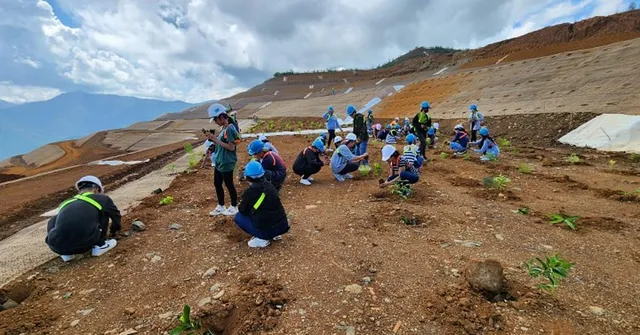
Land preparation, a critical component of the mine rehabilitation process, includes slope benching and soil matting to avoid landslides, promote vegetation growth and create a more hospitable environment for returning wildlife.

"We are fully committed to addressing our impacts on the environment and to our host communities. In our first year, we were able to exceed many of our rehabilitation targets,” said BNC president Tulsi Das C. Reyes.

“The progress we have made in such a short time is a testament to our team's hard work and dedication," he added.

In line with its goal to fast track the final mine rehabilitation of Berong, BNC topped its seedling production and transplantation targets for 2023.

The company produced 214,052 seedlings, 152% higher than its 85,000 target. From this, it was able to plant 81,709 during the first semester, which is already 96% of its annual target of 85,000 seedlings.

The Berong mine opened in October 2006 and was fully depleted by December 2021. Aside from generating 1,634 direct and indirect jobs, the mining operations yielded 10.3 million wet metric tons (WMT) of nickel ore and P2.6 billion-worth of mining duties, royalties and taxes.

To be conducted over a six-year period starting June 2022, the Berong final rehabilitation program covers 109 hectares of surface mine, 209 hectares of silt control structures and 25 hectares of stockpile area.

After rehabilitation, the disturbed areas could be used for eco-tourism, agro-forestry and inland fish farming by the Department of Environment and Natural Resources (DENR), local government units (LGUs) and host communities.


Article courtesy of BNC

October 02, 2023

Philippine Mines and Geosciences Bureau has issued the approval of the Declaration of Mining Project Feasibility as the last step in the permitting process towards the achievement of the MCB Project’s mining permit.

Celsius Resources is pleased to announce that its Philippine subsidiary, Makilala Mining Company, Inc., has received approval of the Declaration of Mining Project Feasibility (“DMPF”) for its flagship MCB Project.

The DMPF is the written notice submitted by MMCI to the Philippine Mines and Geosciences Bureau proclaiming the feasibility of commercial utilisation of the minerals in the tenement area by internationally accepted sound mining practices, socially acceptable, environmentally safe, and economically sound methods as specified in the Mining Project Feasibility Study and supported by other requirements as prescribed in the Implementing Rules and Regulations of the Philippine Mining Act1

In support of the DMPF application, Celsius has amongst other requirements, received the approval of the MCB Project’s Mining Project Feasibility Study, Environmental Compliance Certificate, Environmental Protection and Enhancement Program, Final Mine Rehabilitation Plan, Social Development and Management Program, and Care and Maintenance Program. (See CLA Announcements dated 3 January, 31 May, 18 July, and 15 August 2023).

The issuance of the DMPF enables the Company to move forward with obtaining a Mineral Production Sharing Agreement (“MPSA”) with the Philippine Government which would allow the Company to develop and operate the MCB Project. The MPSA application has been submitted and the Company envisages receiving the MPSA within the coming weeks.

Celsius Executive Chairman Atty. Julito R. Sarmiento, said: “This is one of the key final milestones in the MCB Project permitting process. Following the approval, we are anticipating the mining permit to be delivered within a short period of time. With investors now showing genuine interest, we are hopeful to move the MCB Project forward to development and operations so that we can create value for shareholders and provide positive impacts for our project stakeholders.”


Article courtesy of Celsius Resources

October 02, 2023

The Civil Aviation Authority of the Philippines (CAAP) has approved the catch-up plan to fast-track the PHP759 million Tacloban Airport passenger terminal building construction to ensure its completion by next year, an official of the Eastern Visayas Regional Development Council (RDC) said.

Meylene Rosales, regional director of the National Economic Development Authority (NEDA) and vice chairperson of the E. Visayas RDC, said the negative slippage has been reduced to only negative one percent as of September and they are upbeat to see the project completion by March 2024.

“There is already an approved catch-up plan by CAAP main office. The negative slippage went down since there are deducted scope of work. There are activities under Phase 1 that are not needed. They would be better be part of phase 2,” Rosales said in a press briefing on Thursday.

Earlier, the RDC project monitoring committee received reports of 38 percent negative slippage of the airport, prompting the body to make the project a top priority for monitoring.

In a July 2023 report obtained by the Philippine News Agency (PNA), the CAAP said the delay was caused by an insufficient quantity of construction materials prompting the contractor to reduce its manpower.

The increase in daily planned accomplishments has also contributed to the delay, according to CAAP, an attached agency of the Department of Transportation (DOTr).

CAAP proposed solutions that include maximizing the utilization of available materials to expedite concrete pourings and asking the contractor to deploy more workers.

The project which began on Dec. 5, 2020, was supposed to be completed on May 29, 2022.

Also attributing to the delay are the revisions in the passenger terminal building’s roofing, arch finishes and access ramp plans, which were only approved on September 19.

As of September 25, the terminal building is 57.13 percent complete, according to DOTr.

Meanwhile, RDC private sector representative for multimedia communication Buenaventura Go-Soco, expressed doubt that the project will be completed by March 2024.

“Now, the contractor must be wondering how he can meet the March 31 deadline. Based on his catch-up plan, he must do much more than he has done in the past. Maybe even triple. That's very difficult for him to do."

The government awarded the project to MAC Builders based in Ormoc City in a joint venture with ML Builders.

The Daniel Z. Romualdez Airport in Tacloban is one of the country’s busiest with 36 daily flights between Manila and Cebu.

The airport in the regional capital was ranked as the country’s 7th busiest in 2022 with 1,489,803 inbound and outbound passengers.

Named after Daniel Z. Romualdez, former speaker of the House of Representatives, the airport serves as the main gateway from Manila and Cebu to Eastern Visayas.

October 02, 2023

DMCI Mining Corp. on Monday said it is on track to surpass its 2022 nickel ore production and shipments, eyeing to open two new mines as part of the company's expansion plans.

In a statement, DMCI Mining said production already doubled to 1.12 million wet metric tons (WMT) in the first half of 2023 from 567,000 WMT during the same period last year.

The production also surpassed the recorded 2022 full-year output of 1.03 million WMT.

Total shipments in the first half of the year, meanwhile, reached 1.06 million WMT, which accounted for about 73 percent of the 1.45 million WMT total sales volume in 2022.

“We attribute our strong performance to improved operational efficiency and permit timing,” DMCI Mining president Tulsi Das Reyes said.

“Shortly after Zambales Diversified Metals Corporation (ZDMC) was granted an ECC (environmental compliance certificate) amendment, we worked on securing the auxiliary permits, local manpower and heavy equipment needed to boost our production capacity,” he said.

Earlier this year, ZDMC was granted an amended ECC which allowed the company to raise its annual production to a maximum of 2.7 million dry metric tons.

“To sustain our growth momentum and offset the impact of our Berong mine depletion, we are looking to open new mines in Zambales,” Reyes said.

Reyes said one mine will be operational by December this year and another is set to open by the second quarter of 2024.

In an interview in Baguio over the weekend, Reyes said they will spend roughly PHP250 million to develop the nickel mine which will be located inside its existing mine site in Zambales currently being operated by ZDMC.

The new mine, which is expected to produce 20 million metric tons, will be operated by its another unit, Zambales Chromite Mining Co. (ZCMC).

"[It's] Zambales Chromite, but it’s not a chromite mine, it’s a nickel mine. When we bought it from the UK (United Kingdom), that's already the name and we haven't really rebranded or reshaped the company yet because those are the companies we used to apply for the permit," Reyes said.

He said they are currently securing permits for the new mine.

"I strongly believe that we have a very good chance to get this permit before year-end, but please note we have to get a tree cutting permit afterwards. Once we get the tree cutting permit, we can now mine," he said.

"So we will possibly... I'm confident we'll get the permit, shovels in the ground, depending on the timeline of our suppliers, the way the regulators approve our permit. But I'm very confident it’ll happen within the proper time frame plus minus one month," he added.

While Reyes did not disclose the location of the second mine, he said it can produce about 70 million tons of high-grade ore. By Anna Leah Gonzales


Article courtesy of the Philippine News Agency

October 02, 2023

Stakeholders signed a memorandum of agreement (MOA) Wednesday in Surigao City for the establishment of a mining-tourism circuit in Surigao del Norte's three mineral-rich towns.

“This partnership will strengthen the advocacy for the development of mining sites in said municipalities into ecotourism destinations,” Department of Tourism-13 Director Ivonnie Dumadag said in a phone interview on Thursday.

Dumadag was referring to the MOA signed between DOT-13 together with gold miner Greenstone Resources Corporation (GRC), and the towns of Alegria, Mainit, and Tubod.

Dumadag said the development of mined-out and rehabilitated areas for ecotourism purposes will provide livelihood opportunities to towns’ residents.

It also reaffirms the government's stance that responsible mining and tourism can coexist to bring economic benefits for mineral-rich but economically underdeveloped areas, she noted.

She said mining and tourism are considered main economic drivers of Caraga, home to several large-scale miners and world-class tourism destinations such as Siargao Island.

As part of the MOA, she said a series of capacity-building development training and activities will be implemented by the last quarter of the year.

“During the Caraga Mining Resiliency Summit last month, where I was invited as a speaker, I challenged the mining companies in the region to include tourism initiatives in their priority programs in support of tourism development in mining communities,” Dumadag said.

She also noted the GRC is among the companies that have positively responded to the call through the creation of the mining tourism circuit in the three towns in neighboring Agusan del Norte.

September 25, 2023

​

By Thea Samantha C. Go

Project management is the process of leading our team to achieve specific goals and objectives within a certain timeframe and budget. We know of common project management methodologies, but how do we go about implementing and monitoring the stages in the project pipeline which our team is on in this age of big data and technology? Enter project management softwares. Most of you may be familiar with collaborative applications which were essential in the ‘new normal’ work set-up during the pandemic— suddenly calendars, files, meetings, and spreadsheets can be worked on by multiple people anywhere in real time.

In the huge mining industry, project management involves overseeing the planning, coordination, and execution of mining operations while ensuring compliance with safety regulations and environmental standards. All of these processes involve monitoring a lot of people and their outputs—the large amounts of data that a single mining company makes is sometimes hard to track when utilizing numerous softwares and applications from many users, this sometimes leads to the loss of crucial data and steers the organization away from a ‘single source of truth’. (i.e. multiple versions of a mine plan, important files stored locally by a single user with no backup, etc.)

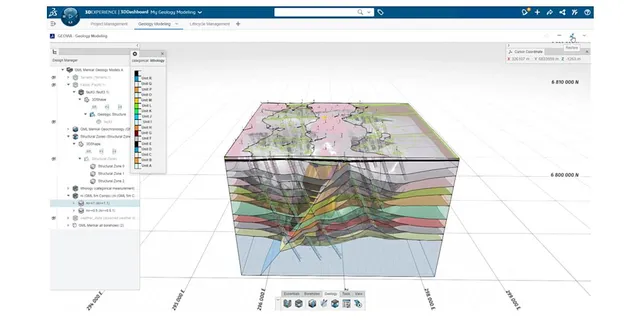
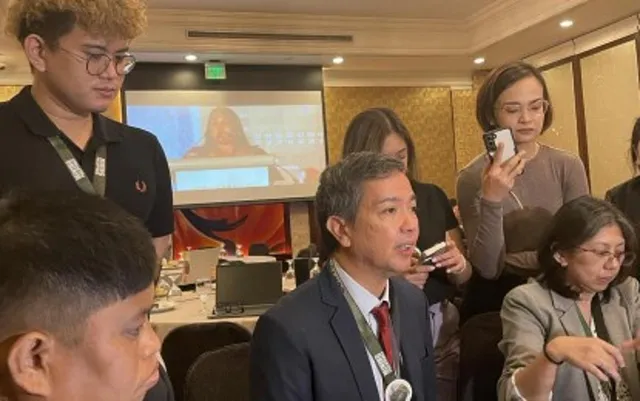
In that situation, a solution would be a project management application that allows users to work and collaborate from anywhere, at any time, that also allows for secure data storage and organization. Such a solution is the 3DEXPERIENCE platform, with its collection of applications and collaborative functions, including the Project Planner, 3DSwymer, and GEOVIA solutions.

Project Planner

The Project Planner is a cloud-based project management app within the 3DEXPERIENCE platform that provides users with simple and assisted team-based iterative planning, execution, and monitoring. Project Planner's features include defining the project scope, task durations, dependencies, and milestones, an intuitive planning engine, and a built-in Gantt chart software that keeps everyone in the team updated and on track with the project pipeline. The platform also provides personalized dashboards and real-time views of project status to always keep you and your team in track of everyone’s progress.

Another application on the 3DEXPERIENCE platform called 3DSwymer connects employees, partners, suppliers, customers, consumers, and regulators—3DSwymer functions like a social networking site that aims to boost collaboration beyond your organization to improve efficiency and overcome technical challenges and concerns through product review and discussion. 3DSwymer also streamlines efficiency by uniting users across the organization in a single source of truth— this unified approach saves valuable time and resources by avoiding late-stage corrections while transparency is maintained at an enterprise- wide level, mitigating unforeseen delays, rework, and errors.

3DSwymer

Improve efficiency and secure collaboration

3DSwymer offers a structured social environment that fosters collaboration among stakeholders. Real-time intelligence tools keep businesses informed, while data aggregation from various sources creates a comprehensive information platform. 3D visualization and real-time alerts ensure constant progress tracking. Features like group management, immersive drawing tools and digitize lean practices contribute to the collaborative ideation and innovation processes.

Overcome Challenges

3DSwymer connects individuals and information seamlessly through role-specific apps. This facilitates collaboration among collaborators, consumers, and customers, promoting sharing, innovation, and validating ideas early-stage. Meanwhile, capturing feedback across the value chain enhances decision-making, supported by comprehensive data.

These digital solutions are borne because we believe that better communication leads to better productivity and what better way to improve communication than seamless collaboration accessible from anywhere at anytime, with secured data and IP protection, that's easy to install, set-up and use. The 3DEXPERIENCE platform is not only limited to project management and collaboration apps such as Project Planner or 3DSwym—it can encompass or connect you to all digital solutions under the Dassault Systèmes portfolio for 3D modelling, simulation, optimization and analysis.

“By leveraging the power of the 3DEXPERIENCE platform, GEOVIA solutions enable seamless collaboration, data exchange, and workflow efficiency, empowering mining organizations to make informed decisions, enhance operational performance, and reach their sustainability and operational goals. We are driven by the vision to model a sustainable planet where technology, knowledge and know-how are crucial in promoting responsible natural resources management. We look forward to engaging with industry leaders, exchanging knowledge, and contributing to the future of mining.” — Mauro DelleMonache, CEO, GEOVIA, Dassault Systèmes.

The 3DEXPERIENCE platform innovates the design and planning cycles through real-time collaboration. In today’s business space, digital solutions by working in parallel put organizations a step ahead of the competition by making outputs efficient meaning that quality control during the design phase gives more valuable outputs throughout the entire project. Gone are the days of long meetings in one room going through design reviews when valuable commentary can be made during the planning process.

This means that 3DEXPERIENCE is not a platform where managers can micromanage the work of engineers. The platform does not require managers to have access to all data. Designers can store their data in private spaces on the 3DEXPERIENCE platform, free from managers or other collaborators, and move it to more collaborative spaces when they deem it necessary.

This user-focused collaborative platform helps your organization to better understand the real-world problems that directly impact business performance and agility. In today's rapidly evolving digital landscape, the convergence of technology and creativity has become a game-changer for businesses that strive to thrive. Dassault Systèmes' 3DEXPERIENCE solutions, 3DSwymer and Project Planner, ensures operational excellence in this age of mine digitalization.

Paramina Earth Technologies, Inc. is the value solutions partner of Dassault Systèmes, the developer of 3DEXPERIENCE platform and GEOVIA industry solutions portfolio (Surpac, MineSched, Whittle). Let us be your partner towards your mining journey!

Contact us at paramina_solutions@paramina.com or visit our website at www.paramina.com for more information.


REFERENCES:

Mining market insights using the Dassault Systèmes 3DEXPERIENCE platform

https://blog.3ds.com/brands/geovia/mining-market-insights-using-the-dassault-systemes-3dexperience-platform/

Dassault Systèmes is showcasing the latest portfolio advancements of its mining software brand GEOVIA during the 26th World Mining Congress

https://www.3ds.com/newsroom/press-releases/dassault-systemes-showcases-its-geovia-unique-collaborative-solutions-within-3dexperience-platform-26th-world-mining-c

​

September 25, 2023

The Department of Environment and Natural Resources (DENR) raised the need to have at least one more nickel processing plant in the Philippines to maximize the value of the country's mineral resources.

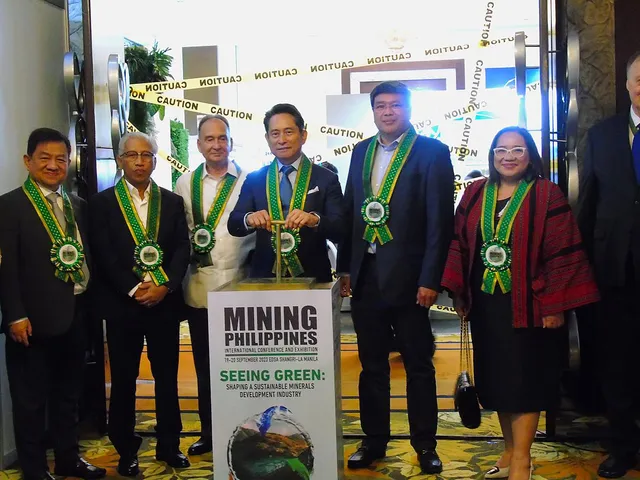
"Our benchmark is Indonesia, how much they can process. They are processing all their [nickel] laterite ores," said DENR Undersecretary for Integrated Environmental Science Carlos Primo David in an interview at the sidelines of Mining Philippines 2023 International Conference and Exhibition organized by the Chamber of Mines of the Philippines (COMP) at the Edsa Shangri-la in Mandaluyong City on Tuesday.

At present, the Philippines only has two nickel processing plants.

Raw nickel ore is a critical component of electric vehicle batteries. It is also processed to create stainless steel, which is used in the development of megacities and renewable energy technology.

According to David, the largest deposits of nickel in the country are found in Zambales, Caraga, and Palawan.

"We have a rough timeline. Definitely, within this administration, we should add more to the two that we have for nickel. There are two existing. We should add at least one hopefully in Zambales," he said.

David, however, said “I think, there should be one more in Caraga region as a whole. Then Zambales and another one in Palawan.”

Government-led exploration

He said DENR is also looking at embarking on more focused government-led exploration targeting critical minerals needed to transition to renewable energy.

David, who represented DENR Secretary Maria Antonia Yulo-Loyzaga during the event, expressed DENR’s support to the mining industry in terms of governance and regulation, citing the potential of the country’s minerals development sector to be an important player in the global renewable energy transition market.

“The government has a budget of PHP60 million for minerals exploration. But it’s like a shotgun exploration. What we want to do is to focus on certain areas,” he said.

“We wanted to focus that small budget and revive exploration by government. Hopefully, when we do the initial exploration, there is enough information for the private sector to get interested and continue the exploration,” he pointed out.

The DENR executive said the government-led exploration aims to identify minerals and declare more mineralized areas.

“We wanted to help the industry with this critical step. Before you develop, mining starts with exploration. It should be government-initiated,” he stressed.

Digitization

The DENR meanwhile said it is investing in the digitization of all mining-related information and the processing of applications and permits.

Yulo-Loyzaga, in the speech read by David, said the department has “substantially completed migrating all data onto a single platform, with the exception of data from one last division in the Mines and Geosciences Bureau (MGB).”

She said digitization will help make DENR procedures more efficient, leading to shorter and more transparent processing of permits and applications.

In his welcome remarks, COMP Chairman Michael Toledo said among the notable positive changes are the lifting of the moratorium on new mining projects and of the ban on open pit mining. By Anna Leah Gonzales


Article courtesy of the Philippine News Agency

September 25, 2023

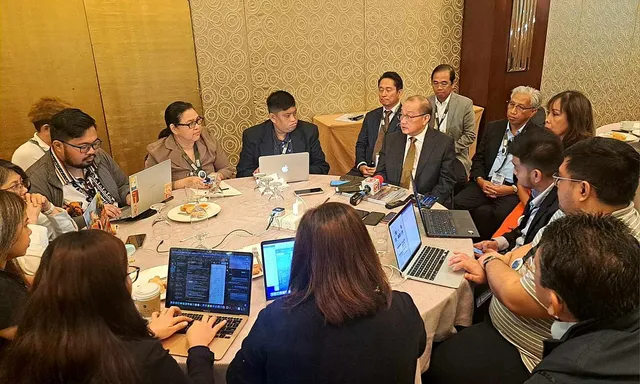
St. Augustine Gold and Copper Ltd. chief operating officer Michael Regino has said they are currently in talks with possible foreign investors to secure funding for the King-king Copper-Gold Project in Davao de Oro.

In an interview at the sidelines of the 2023 Mining Philippines International Conference and Exhibition at the Edsa Shangri-la in Mandaluyong City on Tuesday, Regino said the initial investment needed for the project was initially estimated at USD2 billion.

This is, however, based on the preliminary feasibility study (PFS) released, he said.

"What we're doing right now is we are having the 2013 PFS updated and hopefully it will be ready by early of next year. The ones we contracted to update the PFS said it might be ready by January so hopefully with that we will be able to see the revised figures and based on current prices, revenues, and cost," said Regino.

Regino said the foreign investors "are just waiting for the PFS to be completed."

"For projects of this size, you will definitely need big money so you will need a partner, you need a big investor," he said.

According to Regino, King-king's estimated production over its 23-year mine life is 3.1 billion pounds of copper, 5 million ounces of gold and most probably nearly 10 million ounces of silver.

He said the updated PFS will provide the company a better view of the updated prices, cost, and the viability of the entire project.

Regino added that he does not expect a huge increase in the needed investments.

"In the USD2 billion dollar project we were supposed to put up a USD300 million coal power plant. Because when we did a study back in 2013, there's a deficit of power in Mindanao," he said adding that local power providers could easily provide the requirement.

"So there's no need to put up one. But there might be increases in some other expenses. The project study will be more accurate," he said.

Regino said once investments are secured, it would take up to four years before commercial operations start.

September 25, 2023

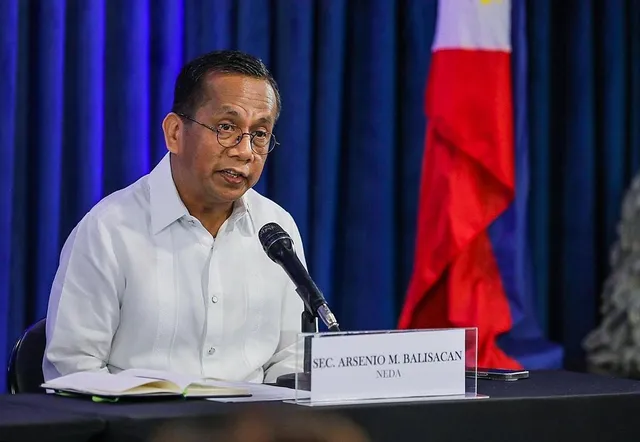
The National Economic and Development Authority (NEDA) on Thursday approved several high-impact initiatives, which include expediting the processing of infrastructure flagship projects (IFPs) and the reconstitution of the NEDA Board.

In a briefing, NEDA Secretary Arsenio Balisacan said the NEDA Board chaired by President Ferdinand R. Marcos Jr. confirmed the proposed Executive Order that will expedite the processing of licenses, clearances, permits, certifications and authorizations for the IFPs.

"The primary goal of this proposed EO is to minimize, if not eliminate, delays in the implementation of IFPs. This EO will require all government offices, agencies, and instrumentalities, including LGUs (local government units), to streamline the standard procedure and requirements for the IFPs," he said.

Balisacan said the simplified requirements will be applicable to both pending and new applications within the NEDA Board-approved list of IFPs, as well as any additions to the IFP list.

The EO will also facilitate the electronic application submissions to the concerned agencies and LGUs, including the payments and issuance of receipts.

It also directs national government agencies to automate and computerize their databases, and mandates LGUs to establish business one-stop shops and to coordinate with the Department of Information and Communications Technology to adopt interoperable information and communications technology platforms.

"In line with this, the Anti-Red Tape Authority, or ARTA, in coordination with NEDA, shall establish a reporting framework to track agencies’ compliance," Balisacan said.

Balisacan further said the NEDA Board also approved the reconstitution of the NEDA Board Committee on Infrastructure (INFRACOM) to include the Department of Environment and Natural Resources and the DICT as members of the committee.

The NEDA Board also confirmed the overall principles and general recommendations for the proposed national government-LGU cost-sharing schemes for financing infrastructure projects.

"This aims to delineate the roles of the national government and the LGUs, particularly in resource-poor areas, or where resources may be needed to carry out the devolved functions and shared between the national government and LGUs," Balisacan said.

He said the NEDA Board also endorsed the proposal to reduce tariffs on gypsum and anhydrite from 3 to zero percent.

These raw materials which are not produced locally are used in the production of plasterboard and cement.

"With the reduction in tariffs, we anticipate a decrease in production costs and an improvement in the industry’s competitiveness as we ramp up our infrastructure drive," Balisacan said.

Common Legislative Agenda (CLA)

In a separate statement late Thursday, the NEDA announced that the Legislative-Executive Development Advisory Council (LEDAC) included 11 additional bills to the CLA of the 19th Congress to further advance the attainment of the social and economic transformation agenda.

The LEDAC, chaired by President Marcos, met on Wednesday and adopted the 11 priority bills to help achieve the development targets for government efficiency, national defense and infrastructure development.

These include the amendments to Government Procurement Reform Act; Excise Tax on Single-Use Plastics; Amendments to the Cooperative Code; Amendments to the Fisheries Code; New Government Auditing Code; VAT (value-added tax) on Digital Services; Rationalization of the Mining Fiscal Regime; Philippine Defense Industry Development Act; Philippine Maritime Zones Act; Open Access in Data Transmission Act; and Amendments to the Right-of-Way Act.

“The timely passage of these priority bills will bring us closer to building a prosperous, inclusive, and resilient society for Filipinos,” Balisacan said. By Anna Leah Gonzales


Article courtesy of the Philippine News Agency

September 25, 2023

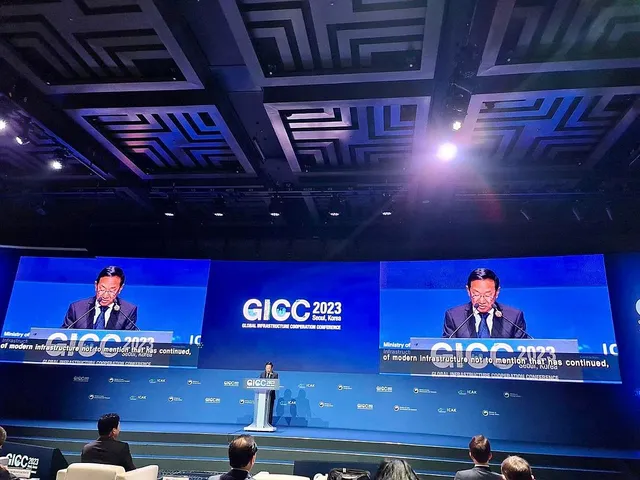
Top officials of the Department of Public Works and Highways (DPWH) participated at the Global Infrastructure Cooperation Conference (GICC) 2023 on September 19-20, 2023 at the Grand Inter Continental Seoul Parnas, Korea.

Hosted by the Ministry of Land, Infrastructure, and Transport of the Republic of Korea (MOLIT) and organized by the International Contractors Association of Korea, the 2023 GICC was attended by DPWH Secretary Manuel M. Bonoan, Senior Undersecretary Emil K. Sadain, and Project Directors Ramon A. Arriola III and Benjamin A. Bautista of DPWH Unified Project Management Office (UPMO) operations.

The DPWH officials also participated at the high-level bilateral meetings with MOLIT Minister Hee-ryong Won and other world leaders in the infrastructure industry, creating a venue for more bilateral relations to be forged.

In its 11th year, the GICC being one of the largest Korean international conferences has been renowned for bringing to the fore some of the pressing issues in the infrastructure industry that need immediate intervention.

GICC serves as an efficient and helpful platform for government agencies, private companies, and multilateral development banks (MDBs) to come together to discuss infrastructure projects, policies, and development plans across countries, hence building and strengthening project partnerships, relationships, and networks.

The DPWH has established a long-time partnership with Korea that has emerged over the years as a powerhouse in infrastructure development.

Some of the Philippines' infrastructure flagship projects are funded through Korea Economic Development Cooperation Fund (KEDCF) – Korea's representative aid fund for Official Development Assistance (ODA) to facilitate infrastructure projects to developing countries.

Among the projects of DPWH assisted by KEDCF include the Samar Pacific Coastal Road Project (SPCR) in Northern Samar, which was inaugurated last July 13, 2023 by President Ferdinand R. Marcos Jr. that is designed to improve travel time and boost the local economy in the province.

In addition, the 3.17-kilometer Panguil Bay Bridge Project (PBBP) that will connect the City of Tangub in Misamis Occidental to the Municipality of Tubod in Lanao del Norte is presently at more than 75% completion rate and targetted to open to vehicular traffic by first half of 2024.

The engineering services of the 32.47-kilometer Panay-Guimaras-Negros Island Bridges, a long-time dream project in the Western Visayas Region, is covered by loans from the Government of the Republic of Korea.

Currently under bidding with the Department, the scope of engineering services are preliminary design covering review of the feasibility study and preliminary and basic design; detailed engineering design including estimation of detailed construction cost; and procurement assistance.

Composed of two (2) sea-crossing bridges connecting Panay Island, Guimaras Island and Negros Island in Western Visayas Region, Panay-Guimaras-Negros Island Bridges Project will shorten travel time of commuters and motorists and transport of goods from Panay to Negros Islands through ferries/RORO of 3-4 hours to just less than 1 hour.

Meanwhile, a fact-finding mission from the national headquarters of Export–Import Bank of Korea (KEXIM) was in Manila last May 2023 and discussed with Senior Undersecretary Sadain pipeline projects for possible enhanced cooperation under Economic Development Promotion Facility (EDPF) which is a new ODA loan program of the Korean Government to cover financial gap for large-scale infrastructure.

The Korea Eximbank as an independent ODA agency has the mandate to operate and manage the EDPF including identifying pipeline projects, loan approval and signing loan agreements.

Pipeline projects initially selected for possible loan co-financing under EDPF and Korean Economic Development Cooperation Fund are the civil works of 28.82-kilometer Lubao-Guagua-Sasmuan-Minanlin-Santo Tomas Bypass Road in Pampanga; civil works for Pampanga Integrated Disaster Risk and Reduction and Climate Change Adaptation (IDRR CCA) – Stage II covering the Third River and Eastern Branch that traverses municipalities of Macabebe, Minalin, and Sto. Tomas; detailed engineering design and civil works of 10.6-kilometer Consolacion-Liloan Bypass Road with two (2) bridges and feasibility study of Lapu-Lapu Coastal Road in the Province of Cebu.

September 18, 2023

The modern mining industry faces a multitude of challenges, such as low productivity, price volatility, disrupted supply chains, increasingly remote, deeper, and lower-grade deposits, and rising social, legislative, and financial pressures on global players to show commitment to environmental, social, and governance.

Digital transformation offers new pathways for operational improvement across the mining sector, providing businesses with opportunities for value creation, capturing and maintaining resilience amidst existing challenges, and securing future competitiveness amidst new ones. Digital tools challenge traditional models from exploration to distribution, improving productivity, safety, decision-making, environmental impact, and social performance.

Despite all this glitter, several studies have shown that adopting digital technologies in the mining industry has not been widespread or consistently successful due to essential barriers present throughout their life cycle, particularly the gap between mining strategy and execution (BCG, 2021).

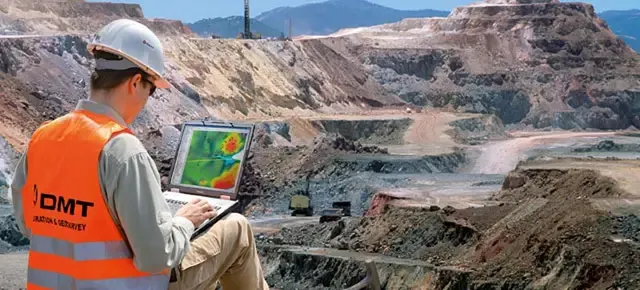
According to an internal DMT study, the challenges extend beyond technological complexity. Leadership, organizational structure, and company culture emerge as the primary barriers, suggesting that a successful transformation hinges on these factors.

Effective leadership, understanding of available technologies, and a forward-thinking vision are essential to overcoming these barriers. Leadership’s role in providing direction, mobilizing resources, and fostering an innovative culture cannot be overstated, the study adds.

DMT’s survey findings illuminate that organizational culture is pivotal in digital transformation. Therefore, successful digital transformation is not solely reliant on technology; it is deeply influenced by the culture that permeates mining companies.

As stated by Hanifa Indradjaya, the president director of PT Petrosea: “The main contributor to our success has been our ability to change people’s mindsets—effective change management and a solid focus on what needs to be achieved” (McKinsey, 2020).

DMT’s survey showed that a significant 70% percentage of respondents view culture as a barrier to achieving digital goals. Indeed, a culture resistant to change, lacking innovation, or hindered by siloed mindsets can create resistance to implementing digital transformation initiatives. 

However, another 25% of respondents view culture as an enabler of digital goals. This indicates that some mining companies have developed a culture that promotes innovation, encourages collaboration, and embraces change. Such a culture empowers employees to participate in digital initiatives actively and drives the achievement of digital goals.

The survey analysis reinforces the idea that organizational culture can act as a barrier or an enabler of digital transformation. Recognizing the importance of cultural factors and actively shaping the organizational culture can significantly enhance the chances of successful digital transformation.

DMT’s approach acknowledges that digital transformation is not just about technology; it is about reshaping processes, fostering a culture of innovation, and creating a foundation for growth.

DMT supports mining companies throughout their digital transformation journey, including current state assessment, strategy, technology valuation, and change management, emphasizing process reshaping, innovation culture, and sustainability.


References:

BCG (2021). Racing Toward A Digital Future in Metals and Mining, https://www.bcg.com/publications/2021/adopting-a-digital-strategy-in-the-metals-and-mining-industry

EY (2023). Top mining sector trends and challenges in 2023, https://www.ey.com/en_gl/mining-metals/top-mining-sector-trends-and-challenges-in-2023

McKinsey (2020). Buckets of innovation: How digital has transformed a mining company in Indonesia. https://www.mckinsey.com/industries/metals-and-mining/our-insights/buckets-of-innovation-how-digital-has-transformed-a-mining-company-in-indonesia
September 18, 2023

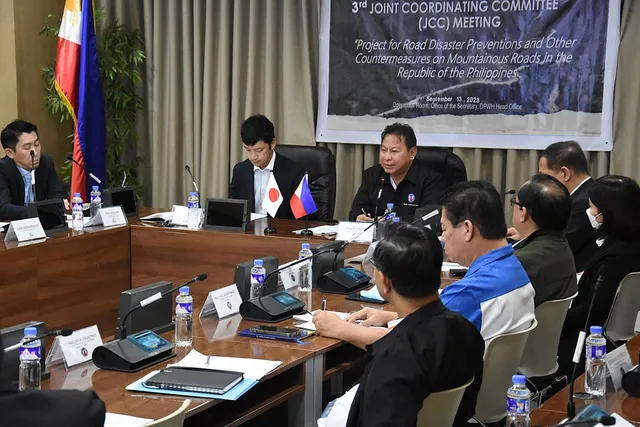
Top officials from the Department of Public Works and Highways (DPWH), the Embassy of Japan in the Philippines, as well as the Japan International Cooperation Agency (JICA), met on Wednesday, September 12, 2023 at the DPWH Central Office for the 3rd DPWH-JICA Joint Coordination Committee (JCC) Meeting on the ongoing Technical Cooperation Project (TCP) for Road Disaster Prevention and Other Countermeasures on Mountainous Road.

The meeting was led by DPWH Senior Undersecretary and JICA-TCP Chairman Emil K. Sadain; Embassy of Japan in the Philippines Second Secretary Kinoshita Akito; Fukui Keisuke; JICA Philippines Senior Representative Kinoshita Akito; DPWH Assistant Secretary and JICA-TCP Project Manager Constante A. Llanes, Jr.; DPWH OIC-Assistant Secretary Medmier G. Malig; DPWH Bureau and Service Directors; and Regional Directors in the pilot regions of the Cordillera Administrative Region, Region 7, and 11.

“Numerous roads in the mountainous areas of the Philippines become impassable each year as a result of large-scale road disasters and landslides caused by strong typhoons and earthquakes. This project is relevant and timely as this has given way for us to address the needs of the country in infrastructure management,” said Senior Undersecretary Sadain, who then thanked the Government of Japan for the assistance.

According to DPWH Senior Undersecretary Sadain, the third JCC meeting was held to discuss the project’s progress since the last meeting in February 2023 as well as the work plan moving forward. The third meeting specifically covered the capability enhancement on hazard mapping, which is the expected Output No. 3 of the TCP. Other outputs include capability enhancement for the Department’s permanent countermeasure works (Output 1), emergency response (Output 2), and road disaster information management (Output 4).

Based on the progress report covering the period of February 2023 to August 2023, a portion of Baguio-Bontoc Road in Benguet was selected as the pilot road section for hazard mapping in CAR; the existing evaluation sheet for hazard category was revised and simplified; and on-site trainings on selection, evaluation, and ranking of selected sites for hazard mapping, as well as preparation of hazard maps, were conducted for the DPWH Counterpart Working Group (CWG) and District Engineering Office (DEO) members in CAR and Region 7.

Moreover, several discussions among the Japan Expert Team were held that were integrated into Outputs 3 and 4. Seminars on hazard evaluation and mapping were also conducted in the DPWH Central Office, CAR, and Region 7.

In the next six (6) months, the TCP aims to carry out hazard mapping activities led by the DPWH CWG in CAR and Region 7, supported by the Japan Expert Team. It also targets to identify the pilot section in Region 11, followed by the conduct of seminars on hazard mapping, and finally hazard mapping activities led by the DPWH CWG in Region 11, with support from the Japan Expert Team.
September 18, 2023

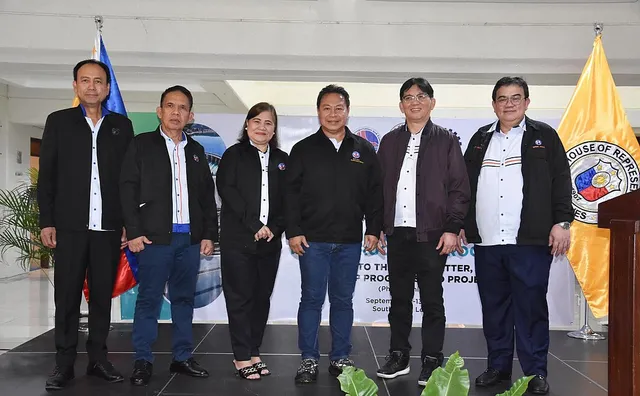
Several infrastructure flagship projects of the Department of Public Works and Highways (DPWH) under the “Build, Better, More” Program are on showcase at the South Wing Lobby of the House of Representatives in Quezon City.

A two-day photo exhibit entitled “Redefining the Country’s Infrastructure Program: A Look into the Build, Better, More Flagship Programs and Projects” organized by House Committee on Flagship Programs and Projects under Chairperson Claude P. Bautista and supported by the Public Works and Highways Committee under Chairperson Romeo S. Momo Sr. was launched Tuesday, September 12, 2023.

The opening of the exhibit was graced by Zamboanga Sibugay 1st District Representative Wilter Y. Palma, Bataan 2nd District Representative Albert S. Garcia, Deputy Speaker Vincent Franco D. Frasco, Bukidnon 2nd District Representative Jonathan Keith T. Flores, and DPWH Senior Undersecretary Emil K. Sadain representing Secretary Manuel M. Bonoan.

Senior Undersecretary Sadain, in-charge of DPWH flagship projects being implemented under the continuing Build Better More Program in his short message at the exhibit opening ceremony highlighted the Department’s priority projects, which are expected to further enhance physical connectivity, mitigate flooding, promote investments, and generate local employment all over the country.

Under the President Ferdinand R. Marcos Jr. administration’s Build Better More infrastructure development agenda, DPWH shall directly handle a total of 58 infrastructure flagship projects (IFPs), 40 of which are under the implementation of the Unified Project Management Office (UPMO) operations headed by Senior Undersecretary Sadain.

Among the DPWH IFPs that were included in the Congress’ Photo Exhibit are the following ongoing projects in Luzon: the Pasig-Marikina River Channel Improvement Project Phase IV which is now 23 percent completed and is targeted for completion by 2028; the Widening of 22.46-kilometer Arterial Road Bypass Project Phase III from Barangay Borol, Balagtas along NLEX to Barangay Maasim, San Rafael, Bulacan which is expected to be completed by March 2024; the 30-kilometer Central Luzon Link Expressway Phase 1 connecting Tarlac City and Cabanatuan City which is 97.4 percent completed; and the ongoing Integrated Disaster Risk Reduction and Climate Change Adaptation Measures in the Low-Lying Areas of Pampanga Bay which is now 96 percent completed.

Also featured are five (5) ongoing IFPs in Mindanao: the 3.17-kilometer Panguil Bay Bridge Project which connects Tangub City, Misamis Oriental and Tubod, Lanao del Norte is currently 77.41 percent completed and is expected to be opened by 2024; the Flood Risk Management Project for the 10-kilometer long Cagayan de Oro River which is currently 99.47 percent completed; the ongoing 45.5-kilometer Davao City Bypass Construction Project to be completed by 2027; the Road Network Development Project in Conflict-Affected Areas in Mindanao covering the construction and improvement of 174.58 kilometers of access roads connecting the Bangsamoro Autonomous Region in Muslim Mindanao (BARMM) and is expected to be completed by 2028; and the 151.96-kilometer Improving Growth Corridors in Mindanao Road Sector Project in Zamboanga Peninsula and Tawi-Tawi to be completed by 2026.

The exhibit also presented DPWH IFPs that are in various stages of pre-construction phase such as: the 50.8-kilometer Laguna Lakeshore Road Network Project Phase 1 along Laguna Lakeshore from Lower Bicutan, Taguig City to Calamba, Laguna to be constructed from 2024 to 2027; the 23-kilometer Dalton Pass East Alignment Project connecting Nueva Ecija and Nueva Vizcaya to be constructed from 2026 to 2033; the 32.15-kilometer Bataan-Cavite Interlink Bridge to be constructed from 2024 to 2029; the 32.47-kilometer sea-crossing Panay-Guimaras-Negros Island Bridges Project with civil works timeline from 2026 to 2030; the 3.34-kilometer Cebu-Mactan (4th Bridge) and 5.34-kilometer Coastal Road Construction Project in Cebu to be constructed from 2024 to 2028; the 4.85-kilometer 2nd San Juanico Bridge Project connecting Samar and Leyte Provinces to be implemented from 2023 to 2029; the 15.01-kilometer Samar Pacific Coastal Road Project Phase 2 to be implemented from 2024 to 2028; and the 65.5-kilometer Central Mindanao High Standard Highway Construction Project from Cagayan de Oro to Malaybalay to be constructed from 2026 to 2030.

The project exhibit is a very good opportunity for the people to be informed and updated about the infrastructure flagship programs and is essential in getting the support of the members of Congress for these big-ticket projects to accelerate infrastructure development and propel the country towards higher growth, added Senior Undersecretary Sadain.

Opening of the exhibit at the House of Representatives was also attended by DPWH UPMO Project Directors Ramon A. Arriola III, Benjamin A. Bautista, Sharif Madsmo H. Hasim, Rodrigo I. Delos Reyes, and Soledad R. Florencio.

Other participating agencies with flagship projects are the Department of Transportation (DoTr) and Department of Information and Communications Technology (DICT).

September 18, 2023

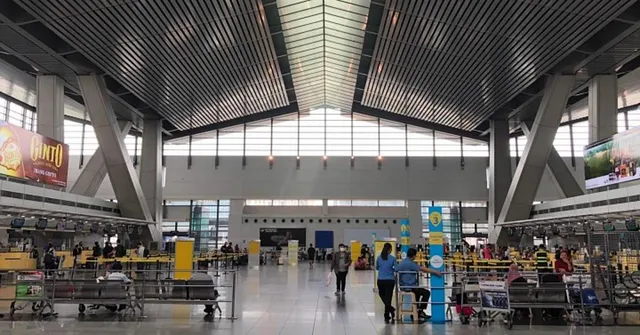
India’s GMR Group has expressed interest in investing in the Marcos administration’s ambitious “Build Better More” Infrastructure Program, particularly in airport, road and energy projects, Malacañang said Friday.

This developed after GMR Group’s top executives made a courtesy call on President Ferdinand R. Marcos Jr. on the sidelines of the 10th Asian Summit in Singapore, Presidential Communications Office (PCO) Secretary Cheloy Garafil said in a statement.

“GMR officials said they would provide long-term solutions to the Philippines, especially in infrastructure and energy,” Garafil said.

Marcos told GMR’s top executives that building major infrastructures is part of the administration’s economic agenda to advance the country’s development.

Impressed by GMR’s achievements, the President expressed hope that GMR could apply all its experiences and expertise if it pushes through with its plan to invest in the Philippines’ infrastructure development program.

“We’ve been trying, the reason, we go to this process, is that it is a major part of our economic program. Well, of course, Manila is the gateway, even regional airports we are starting to develop so that not everyone have to get to Sangley or Bulacan,” Marcos said, as quoted by the PCO. “Improve those airports, improve those facilities, roads, communication, then they can go directly there.”

He expressed optimism that GMR’s investment plan would materialize to assist his administration in the development of the Philippine airports, roads and energy infrastructure.

“And we want that, especially when it comes to travel, tourism, business travel, etc. We want it to increase as much as possible. I’m glad that you are looking at the Philippines,” he said.

GMR Airports chairperson Srinivas Bommidala told Marcos that he is responsible for the group’s international airports and energy, while his brother-in-law, Kiran Kumar Grandhi, heads the group in charge of strategy and finance.

“The group started in 1978 by Mr. GM Rao, my father-in-law, his father. And they have commendable businesses. In 1994, we went into highways. In 1999, when India privatized (the) airports, we build airport, six airports in India,” Bommidala told the President.

Leonides Virata, chief executive officer of Cavitex Holdings, said the Indian firm sees Sangley’s potential in resolving airport congestion issues in the Philippines.

Cavitex Holdings is GMR’s local partner and leads the consortium that bagged the Sangley Point International Airport Project.

The consortium is just awaiting government clearances before commencing ground works, Virata said, adding that the plan is to start the construction in Sangley, Cavite province next year and finish the runway in the next five years.

Other attendees during the courtesy call were GMR Group chairperson Kiran Kumar Grandhi, financial advisor to the Sangley Consortium for international investment in the Philippines Liu Chee Ming, Presidential Adviser on Investment and Economic Affairs Frederick Go and House of Representatives Speaker Martin Romualdez.

Aside from its interest in the Sangley airport project, GMR is one of the five potential bidders who bought bid documents as of Sept. 13 for the PHP170.6-billion Ninoy Aquino International Airport public-private partnership project.

GMR firm has spent 11 years in the Philippines, operating the Mactan-Cebu and Clark, Pampanga airports.

Founded in 1978 by Grandhi Mallikarjuna Rao, GMR Group is an Indian multinational conglomerate based in New Delhi.  It comprises several companies, including GMR Infrastructure, GMR Energy, GMR Airports and GMR Enterprises.

The group is a leading conglomerate in India, which also operates in Indonesia and Turkey.