
September 12, 2023

The Tampakan Copper Mine Project is one of the world’s largest underdeveloped copper and gold mining project located in the southernmost part of Mindanao. It is held under an FTAA agreement by Sagittarius Mines Inc. The project obtained an FTAA that expires in 2038, and renewable for another 25 years.

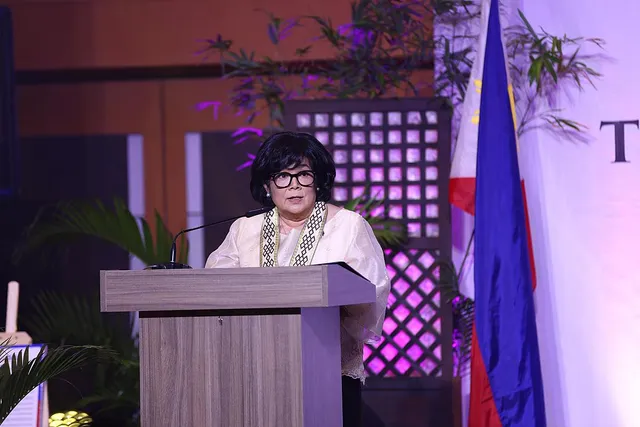
Mr Roy Deveraturda is a retired Lieutenant General in the Armed Forces of the Philippines (AFP) and is currently the President & CEO of Sagittarius Mines, Inc. – the FTAA holder of the Tampakan Copper-Gold Project.

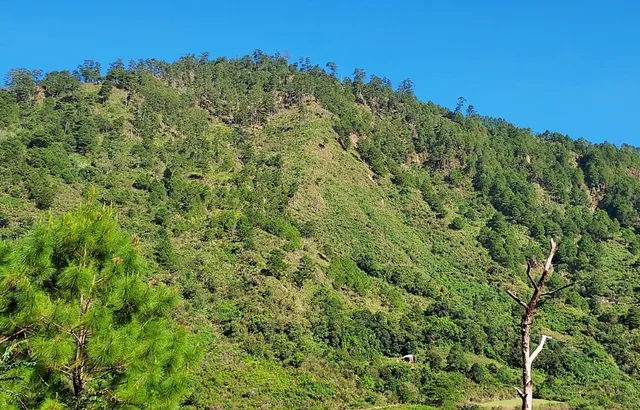
The Tampakan Copper-Gold Project covers about 10,000 hectares located between the towns of Tampakan in South Cotabato and Kiblawan in Davao del Sur. Commercial operations are expected to begin by 2026.

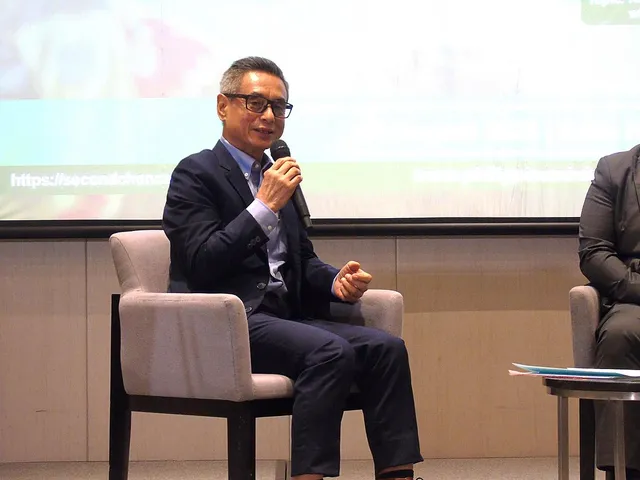
As keynote speaker at the Philippine Mining Club Luncheon last August 4, 2023, he discussed the factors affecting the project and a discourse on improving their way ahead in the mining industry.

“A project of this size has the potential to be a key driver in economic prosperity, industrial growth and social development not only in its host communities, but more so for the entire island of Mindanao, and the country as a whole,” he said.

“It will create thousands of jobs, build roads and other life sustaining infrastructures. It will also bring basic utilities like clean water and low-cost electricity to the communities. It could provide solutions to poverty, ignorance, hunger, and disease.”

Mr Deveraturda explained that a mining project can achieve these through Environmental, Social, and Governance (ESG). He further discussed this last November 2022 as keynote speaker at the Philippine Mining and Exploration Association meeting in Makati where he said, “The company is committed to responsible and sustainable development with ESG at the core of managing the project. The project is a national priority considering that the mining industry is acknowledged by the government's economic team as an indispensable contributor to Philippine economic growth -- the greatest potential to be the key driver in economic recovery and long-term goals. At the moment, all regulatory approvals have been completed.” [1]

The Tampakan project has been earlier opposed by several anti-mining groups due to their apprehension towards its effects on the environment. However, Mr Deveraturda assures that the company will apply modern technology to also protect the environment and the people in the communities covered by the project.

He also mentioned that in the near future, they will release a timeline of the project.

Many people often ask how is his military training is related or helpful in his current role in the mining industry. He explained that in the military, one is trained to become a leader and how to solve problems, and not to complain when things are difficult -- to develop a strong mind, resilience, and discipline when in a difficult mission.

Mr Deveraturda is one the most decorated officers of the AFP. During his career in the Philippine Air Force, he had more than 50 combat missions. He held the highest aircrew qualifications as Test Pilot, Flight Commander, Instructor Pilot, and Flight Examiner. 

In August 17, 2014, he retired as a Lieutenant General in Philippine Air Force after having commanded the AFP's entire Visayas area and then the Western Philippine Area, including the West Philippine Sea. He was in charge of the humanitarian assistance and disaster relief for the Bohol earthquake and Typhoon Yolanda in 2013. He was the Department of National Defense Assistant Secretary for the Plans and Programs in 2015.

He joined the mining industry in 2018 when he was recruited to be the President of Carmen Copper Corp. “My job was to ensure that the company will pass the extracting audit procedures being undertaken by the then Secretary of DENR, the late Gina Lopez.” [1]

From there he now moved and have been appointed in May 2022 as President of Sagittarius Mines Inc. to bring the Tampakan Copper-Gold Project towards construction and development at the soonest possible time.

[Seda Hotel BGC, Taguig City] Aug. 4, 2023 - Philippine Mining Club Luncheon with Mr. Jose Daniel Belgira (National Partnership Manager of Kacific Broadband Satellites Group)

On the second half of the industry forum, Jose Daniel “Gino” Belgira discussed “Accelerating Last Mile Digitalization with Innovative Satellite Technology”. As the National Partnership Manager of Kacific Broadband Satellites Group, Mr Gino oversees the distribution channel operations, cultivates local partnerships and resellers to connect communities across the country.

Kacific Broadband Satellite, Inc. (or Kacific) was founded in 2013. The company is next-generation satellite operator that aims to provide affordable, reliable, high-speed broadband services across Asia and the Pacific. What is special about Kacific’s technology is that they use advanced Ka-band space and ground communications technologies to provide innovative services to their clients, include mining companies.

Business Excellence Awards in Singapore named Kacific as “Satellite Company of the Year 2023”. Their product called “CommsBox” was also named “Achievement in Product Innovation” for effectively solving problems in disaster-prone locations.

Locally, in the International Finance 11th Annual Awards 2023, Kacific was also awarded as the Best Broadband Satellite Operator in the Philippines. Additionally, in the International Business Magazine Awards 2023, the company was honored as the “Best Satellite Company in the Philippines 2023”.  

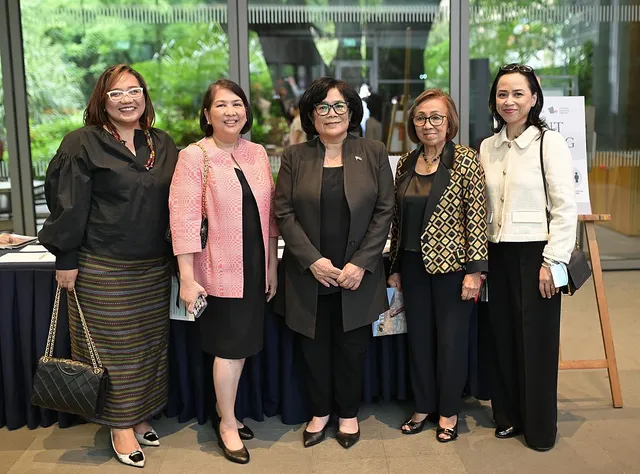
Later in the afternoon, a Panel Discussion was held, moderated by Atty Patricia A. O. Bunye who was also the emcee of the Luncheon. She is Senior Partner and Deputy Managing Partner of Cruz Marcelo & Tenefrancia Law Firm. The discussion featured Mr Roy Deveraturda and Mr Ferdinand Simbulan (Sales Director of Kacific Broadband Satellites Group).

Kacific Broadband Satellites Group and Satnet are the Event Partners for this month’s PMC Luncheon.

----------

The Philippine Mining Club (PMC) is a regular professional networking forum that brings industries together and creates opportunities. Their events aim to lift the profile of the Philippine minerals industry and highlight its contribution to growth and employment in the Philippine economy.

Philippine Mining Club is affiliated with the Melbourne Mining Club.

For more information on PMC’s future events, please visit their website at https://www.philippineminingclub.com/ .

----------

Reference:

[1] Villegas, Marcelle (March 14, 2023). “Gen. Deveraturda’s Update on the Tampakan Project”. Philippine Resources Journal. Retrieved from -

https://www.philippine-resources.com/articles/2023/3/general-deveraturda

----------

Photos: by Marcelle P. Villegas for Philippine Resources Journal

September 12, 2023

Major capital expenditure is often investors’ main concern when deciding whether to start a mining operation. Many questions need to be taken into consideration – especially those that have financial implications. These include: What roads need building? What fixed plant is needed? How many trucks are required to transport ore? Are rail tracks necessary to get the extracted minerals to port?

An essential piece of equipment for consideration is the crushing station. Big mining enterprises traditionally opt for fixed plant installations, especially if the forward planners and others can see that life-of-mine expectations are measured in decades, not years. Historically this made sense if a mine would be around for such a long time as the return on investment (ROI) would play out over this period.

However, there are many times when mobile plant is eminently a more suitable match. This could be for a variety of reasons. Possibly the lifespan of the mine might not warrant intensive initial capital spend without seeing any returns. It could be that the location of the mine is so remote that the infrastructure costs of setting up a permanent plant or transporting equipment would make the operation economically unviable. Maybe material processing needs to be conducted close to where the ore is being extracted, as the mine develops: fixed plant relocation or increasing haulage costs would prove cumbersome.

Finally, there could be the issue of a mine’s main deposits being at some distance from each other, thus requiring a mobile solution.

Thankfully, specialist mining plant companies like MMD have a range of mobile crushing/ sizing plant solutions, that offer reliable and efficient in a compact size.

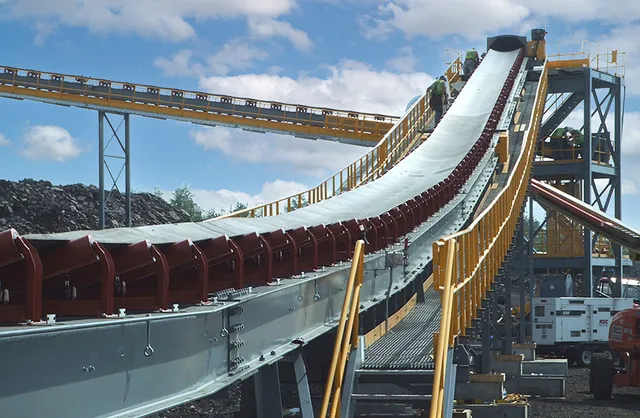
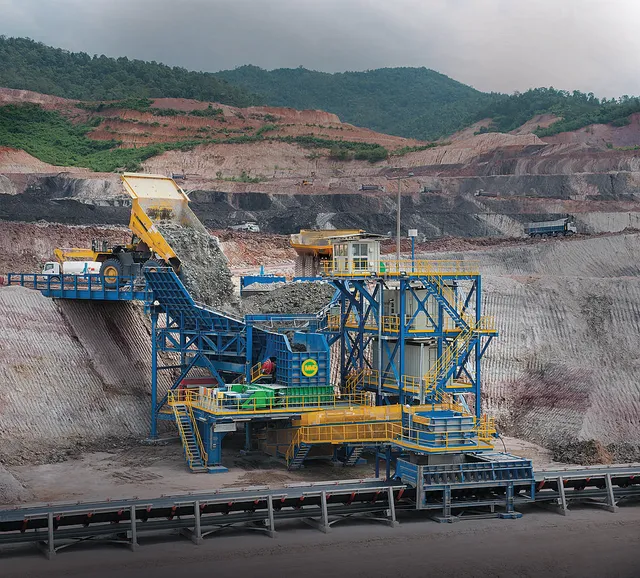
MMD has a distinct range of tailorable fully mobile and semi-mobile Sizer stations, capable of handling up to 10,000 TPH. These solutions can meet the expectations of most mining operations that don’t want a heavy capital spend or high OPEX costs, or are looking to mine in hard to access, remote areas.

At the smaller end of the scale, MMD offer a trailer-mounted sizing station. As the name suggests, this unit is transported easily to site by a tractor unit, with minimal setup time or relocation time, enabling sites to begin working almost immediately.

It offers all the functionality of fixed plant, including the ability to process a range of materials via a primary, secondary or tertiary installed Sizer. Various tooth designs and configurations are available to suit each application. A hydraulic folding conveyor and hydraulic dolly legs facilitate easier road network transportation. Controls can be located on board the station or wirelessly for remote control.

Another option is the company’s FMS 500 Sizer station: track or skid-mounted and modular in construction, the unit can be constructed to a client’s specifications. It is more robust than the trailer-mounted option, has a low-cost setup, and similar to the trailer-mounted options can be operated in remote locations.

Both these Sizer stations are specifically designed for lower tonnage applications, typically from 300 TPH to 2,000 TPH. In keeping with MMD’s commitment to greener mining, the stations have minimal environmental impact with virtually no ground preparation work required and utilise the latest motor technology for lower energy costs.

When feeding the Sizer, it is possible to use a loader, excavator or conveyor feed which means large volumes of ore can be processed where and when required.

MMD’s fully mobile and semi-mobile sizing units, as well as being the more cost-effective CAPEX option for investors, deliver better OPEX costs for mine operations whilst providing unparalleled flexibility. Unlike traditional fixed plant, which often takes extended time to set up correctly, MMD’s mobile equipment can start working as soon as it arrives on site.
September 11, 2023

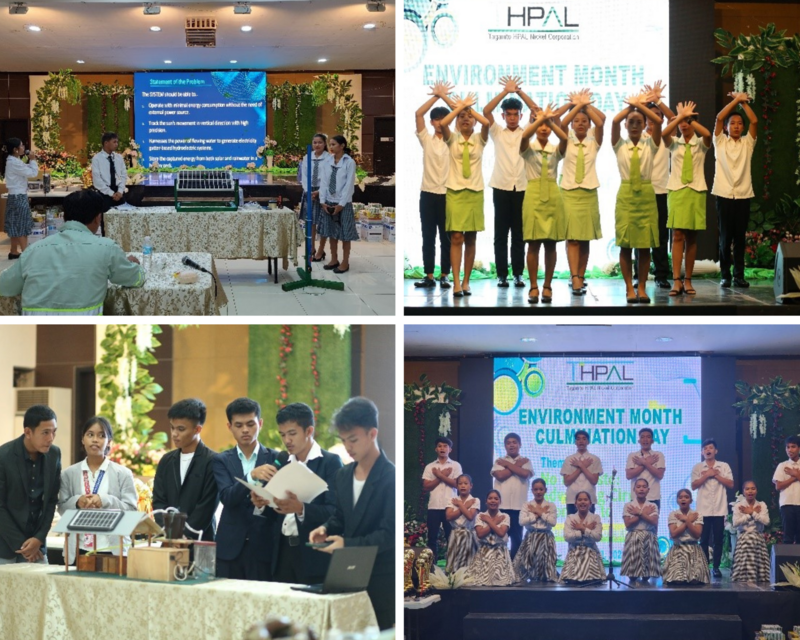
The mantra of Taganito HPAL Nickel Corporation (THPAL) in its pursuit to protect and manage the areas around it is "adding value to the environment," as evidenced by its strict implementation of air, noise, and water quality monitoring.

The company has successfully implemented an Integrated Farming System, which could be considered a best practice in the industry and can be replicated in assisted communities, thereby aiding the host municipality in addressing its food security concerns.

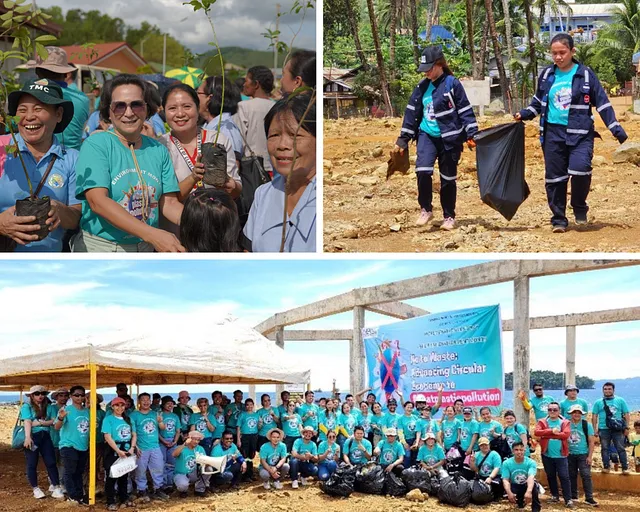
THPAL was able to plant 118,295 trees in 28.59 hectares within and outside the plant site from July 2022 to June 2023. Of these, 104,461 were donated to different agencies in support of their environmental initiatives, and 153,149 seedlings were produced from its own nursery and made available to all stakeholders, who are actively participating in the reforestation activities.

All these initiatives are supported by the company's approved Environmental Protection and Enhancement Program and are in accordance with the company's approved Final Plant Rehabilitation and/or Decommissioning Plan.

The company spent a total of Php 2,566,761,016.84, or 111% of its total allocated budget for the fiscal year July 2022 to June 2023.

Different environmental activities and initiatives are done through the MEPEO Section of Taganito HPAL Nickel Corporation to ensure and continuously uplift its mantra. 

Last June 2023, the MEPEO section, in partnership with the COMREL Department, had its simultaneous activities for the whole month of June in celebration of Environment Month.

The Kick-Off Ceremony was conducted last June 5, 2023, with a motorcade across the entire barangay in the municipality of Claver, and fruit-bearing trees were distributed during the parade to encourage the residents to take part in being the bearers of positive change. 

This was during the Environment culmination activity last June 30, 2023, when students from the CLABAGIPLA district presented their environmental discoveries and environmental jingle contest.

Taganito HPAL Nickel Corporation has demonstrated its commitment to environmental protection and preservation by adopting the National Greening Program and entering into an agreement with the Department of Environment and Natural Resources on Project TRANSFORM (Transdisciplinary Approach for Resilience and Environmental Sustainability through Multistakeholder Engagement).  

THPAL has 53 hectares of vegetation in Pili, Malimono, Surigao del Norte. The company provides seedlings to be planted in support of the government's priority program, which aims to reduce poverty and promote food security, and environmental stability. As a result, it is more than just a reforestation effort; it is part of a larger program aimed at achieving other important national goals as well.

The Environment Management Bureau (EMB), the Hayanggabon Local Government Unit, and Taganito HPAL Nickel Corporation came together and signed a Memorandum of Agreement for the Adopt Hayanggabon River project.

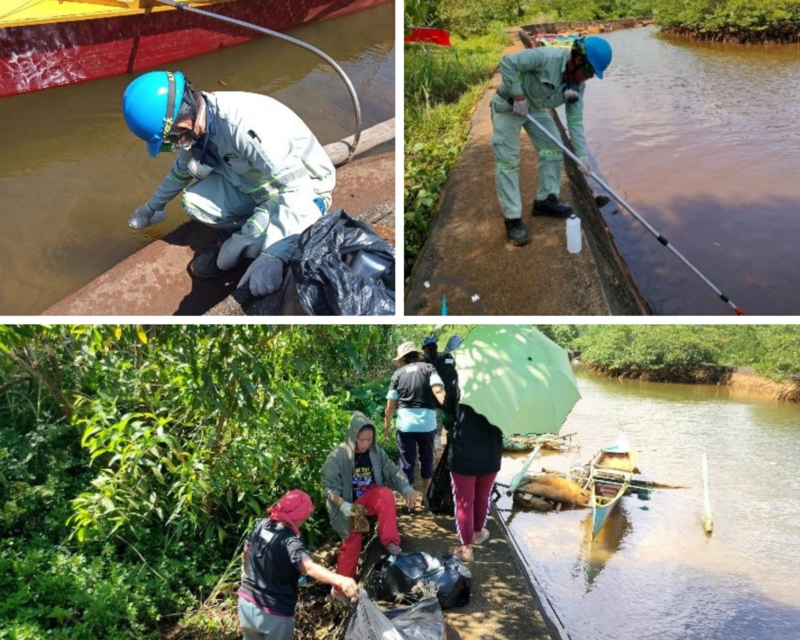
The primary goal of the project is to clean, restore, and protect the river, which includes programs and activities such as river clean-up and collecting, sorting, and disposing of solid waste along the river. The company purchased a Water Master designed specifically for mechanical dredging operations. The riparian vegetation was improved by planting endemic species along the riverbanks to stabilize and prevent further erosion.

The Adopt Hayanggabon River initiative does not end with the completion of its physical transformation. THPAL continuously and closely monitors this program through the MEPEO section. Furthermore, water quality is monitored on a regular basis to ensure that it meets DENR standards.

As we consume the earth's irreplaceable bounty for today's needs, we must also rehabilitate and preserve the environment in order to create a safe and sustainable community. THPAL has established integrated efforts and implemented programs to achieve all of these goals over the years.

September 11, 2023

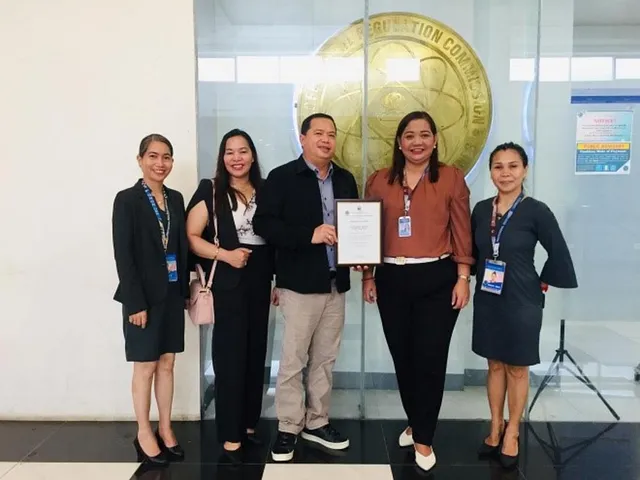
As proof of its investment in its employees, NAC-Taganito Mining Corporation (TMC) has obtained accreditation from the Professional Regulation Commission (PRC) as Continuing Professional Development (CPD) Provider allowing better access to training and development opportunities.

The certification from the CPD Council of Mining Engineering was granted on July 3 at the PRC Caraga Office in Butuan City and was received by Engr. Artemio E. Valeroso, TMC AVP-Resident Mine Manager, and Richel Macatual, TMC Training Section Head and TMC-PRC Focal Person.

“With this development, TMC can hold training for its employees and have these trainings creditable for CPD units as long as we file a request to the PRC within 30 working days before the conduct of the trainings,” shared Macatual.

Macatual added that employees do not need to travel far and spend much because subject matter experts, along with third party resource speakers, can fulfill the role of training facilitators.

In 2021, TMC’s in-house Training and Assessment Center was certified by the Technical Education and Skills Development Authority as Accredited Competency Assessment Center for Heavy Equipment Operation (Rigid On-Highway Dump Truck and Hydraulic Excavator) NC II.

In 2022, TMC earned four (4) additional approved qualifications for Heavy Equipment Operation (Wheel Loader NC II, Road Roller NC II, Motor Grader NC II, and Articulated Off-Highway Dump Truck NC II).

In June 2023, seven (7) TMC employees passed the National Assessment for Trainer's Methodology Assessment - Conducting Competency Assessment (TM1-COC2 Assessors Course) accrediting them as assessors for the following areas: 1) auto servicing and overhauling, 2) hydraulic excavator operation, 3) wheel loader operation, 4) light vehicle driving, and 5) computer systems servicing.

Taganito Mining Corporation is a subsidiary of Nickel Asia Corporation operating in Claver, Surigao del Norte.

September 11, 2023

In GHD, the transition to hybrid work presented a once-in-a-generation opportunity to rethink the design and role of its offices. The aim is to create a place where people want to come versus where they must come. Reverting to the status quo was never an option, especially because long commutes are typical in the Philippines.

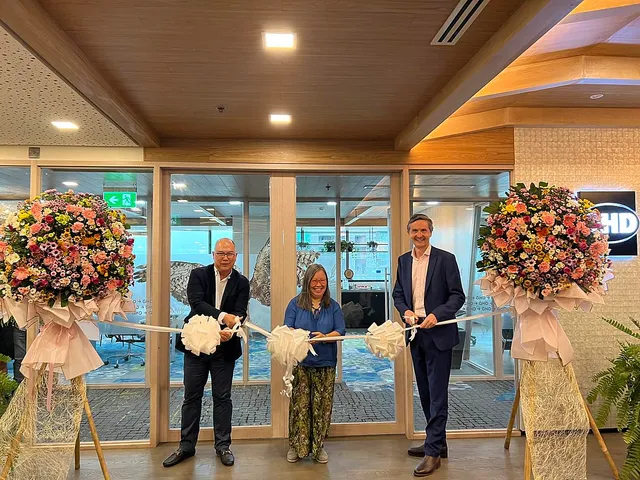
Given this, renovation works in two of three GHD offices in the Philippines commenced and were completed in the last twelve months. Together with its office in Quezon City (opened in 2019), GHD now boasts of more than 5,000 sqm of redesigned workspaces to accommodate its 1,000-strong workforce in the Philippines.

Facilitating collaboration and concentration

The new offices adopted floor plans that embrace more team-focused spaces that encourage a balance of individual and collaborative work. Further, they feature more areas for socializing, in a way that supports varying types of work preferences and expectations.

Incorporating local elements

Apart from promoting collaboration and learning, these three offices were designed to nurture a sense of belonging. The meeting rooms are named after local flora and fauna, and design elements incorporated indigenous materials, such as rattan and capiz shells (ubiquitous materials used for accessories and home décor).

Implementing sustainable practices

Aside from improving the offices’ appearance, GHD also implemented actions to make workspaces more energy-efficient and environmentally sustainable. These include switching to carbon neutral floor finishes made with a much lower carbon footprint and using indigenous materials like capiz shells (reduces the fossil fuels and associated pollutants required for shipping).

In addition, GHD reused and upcycled old furniture, switched to LED lights (reducing carbon emissions for the space by 56%), recycled cardboard and other materials, discarded plastic water bottles by shifting to direct tap filtered water, and replaced old refrigerators with inverter type, projecting a reduction in energy consumption.

Promoting safety and wellbeing

As the world moves forward from the threats of COVID-19, the new offices are also equipped to be ready—from providing adequate spacing between staff, reviewing air conditioning infrastructure, and implementing zero touch technologies (for entry/exit, printing).

By bringing to life functional designs and plans that do not simply make do with the new normal, but make it better, GHD created environments that work best for its employees and for its clients.

September 11, 2023

Obtaining the approval and trust of indigenous people (IPs)/indigenous cultural communities (ICCs) is one of the biggest challenges faced by mining companies operating in areas forming part of their ancestral domains. 

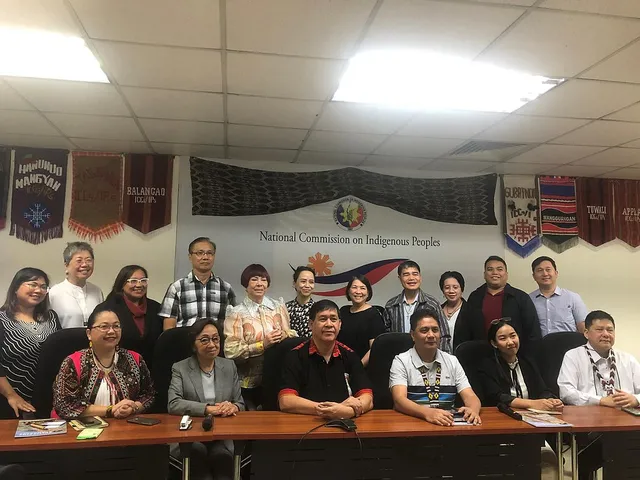
In line with the objective of Diwata-Women in Resource Development’s major advocacy of working with indigenous people, with a special emphasis on IP women and girls, we sought a meeting with the Chairman of the National Commission on Indigenous Peoples (NCIP) Chairman Allen Capuyan to better understand the NCIP’s national development agenda and how the mining industry and other resource development industries may better work with it.

Diwata, in turn, discussed its background, its achievements over the last 10 years (cf. Philippine Resources Journal Issue 2, 2023), and its Tanging Tanglaw: Turning IP Women Into Solar Engineers Project, now the recipient of a grant from the USAID – Energy Secure Philippines Activity.

Chairman Capuyan was joined by, among others, by Executive Director Mervyn Espadero; Commissioner Atty. Rhodex Valenciano, Region III (via Zoom); Commissioner Simplicia Hagada, Region II (via Zoom); Commissioner Gary Cayatt, CAR and Region I; Commissioner Jennifer Sibug-Las, Central Mindanao; Commissioner Atty. Pinky Grace Pareja, Northern and Western Mindanao; Glenda Pua, Division Head, Socio-Economic Development Services; Atty. Caesar Ortega, Director, Ancestral Domains Office; Engr. Kathy Gulunan, Division Chief, Technical Management Services, Ancestral Domains Office; Atty. Gillian Dunuan, Director, Legal Affairs Office; and Atty. Rizzabel Aguilar, Division Head, Legal Affairs Office.

IPs/ICCs, numbering 16 million, comprise 16% of our total population, yet they are among the most underserved and marginalized.  It is therefore important that their rights are upheld. 

Chairman Capuyan highlighted four (4) bundles of rights, namely: (1) right to ancestral domains/lands; (2) right to self-governance and empowerment; (3) right to social justice and human rights; and (4) right to cultural integrity, as well as thirty-six (36) ICC/IP rights (please refer to the table).

More significantly, Chairman Capuyan highlighted that with their great potential, our ICCs/IPS must be “capacitated as resilient, responsive, and relevant partners of both the public and private sector to contribute to the recovery of our national economy and the strengthening of local industries.”

He highlighted “13 Drivers for Nation Building”, which are key areas of cooperation to propel holistic, inclusive, and sustainable development:

  1. Improved food security through enhanced food production (DA, PCA, BFAR)
  2. Access to renewable energy projects such as geothermal, hydroelectric, and wind sources to support economic activities (DOE);
  3. Protection and promotion of arts and culture (DOT, NCCA);
  4. Development of ecotourism destinations through cultural tourism and the creation of cultural highways (DOT);
  5. Interventions for climate change mitigation through biodiversity and ecosystems preservation, protection, and adaptation programs (CCC, DENR);
  6. Opening of local economic zones for resource processing and manufacturing (PEZA);
  7. Improved logistical chains through development of infrastructure and road networks between provinces and regions (DPWH, DA);
  8. Enhanced and responsible mineral extraction industry (DENR);
  9. Sustainable and responsible plantation industries (banana, pineapple) and agro-industries to boost local agricultural economies (DA, DTI);
  10. Relocation sites for informal settlers in urban areas (HUDCC, NHA);
  11. Improved access to potable water for domestic, agricultural, and commercial usage (LWUA);
  12. Implementation of the national greening program and local reforestation projects (DENR); and
  13. Decreased cost for the maintenance and continuation of security operations in geographically isolated and disadvantaged areas (OPAPRU & AFP).

Items 2, 5, 8 and 12 are obvious areas of cooperation between the mining industry and the NCIP, particularly in linking critical minerals to a clean energy transition.

As we left the NCIP Central Office after an almost two and a half hour meeting, I was a struck by how much time and effort the Chairman and his staff had devoted to preparing for our meeting.  Each of the members of the Diwata team had left with multi-volume copies of NCIP’s publications.  Immediately after, we were sent copies of a video that they had begun presenting, but did not have the luxury of time completing, on all the ICCs/IPs in the Philippines, making me realize how much more I need to learn.  For the most part, my understanding of ICCs/IPs is from an academic or legal perspective and often from “compliance with legal requirements” point of view.

Hopefully, our recent engagement with the NCIP will not be the last and will just be the start of more fruitful conversations.


Patricia A. O. Bunye is a Senior Partner at Cruz Marcelo & Tenefrancia where she heads its Mining & Natural Resources Department and Energy practice group. She is also the Founding President of Diwata-Women in Resource Development, Inc., a non-government organization advocating the responsible development of the Philippines’ wealth in resources, principally through industries such as mining, oil and gas, quarrying, and other mineral resources from the earth for processing.

September 11, 2023

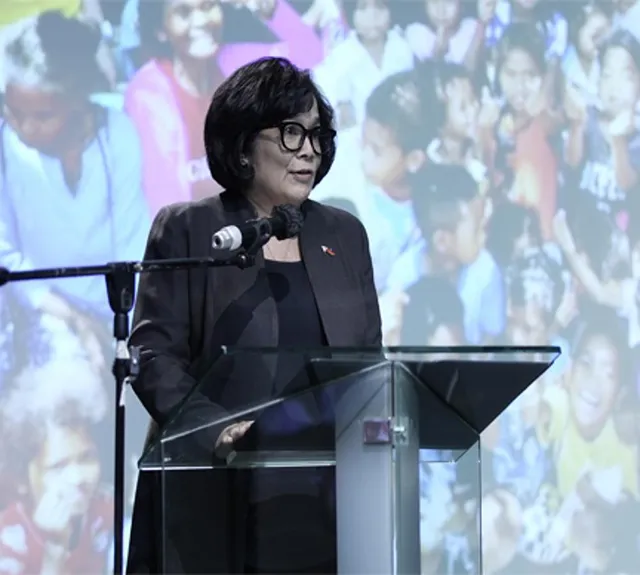
Environment Secretary Antonia Loyzaga urged mining companies to empower women to lead and provide a platform that can harness their unique perspectives, knowledge and skills. In her address before non-government organization Diwata (Women in Resource Development), Loyzaga said women are typically characterized as the most vulnerable to changes, and their multiple social roles can even lead to the intersectionality of their vulnerabilities.

“Mining companies are urged to enhance women participation in their conservation and restoration projects, acknowledging the indigenous women’s and other women’s invaluable knowledge of local ecosystems. The mining industry can mainstream gender-responsive policies in their corporate strategies, not only to ensure that practices do not inadvertently harm women, but that they also build corporate resilience,” Loyzaga said.

Diwata advocates for the responsible development of the Philippines’ natural resources, principally extractive industries such as mining, oil and gas quarrying.

Loyzaga said gender-responsive approaches to community assessments, consultation and benefit-sharing are all vital to increase the success of the mining industry’s climate mitigation and adaptation strategies.

“Let us harness our collective powers and unlock our potential and continue to chart the future of the Philippine mining industry where women stand shoulder to shoulder with men,” she added.

Loyzaga further stated that it is crucial to safeguard the rights of women in crafting environmental policies, social development and in decision-making through their inclusion in national and local level discourse on mining, climate, human security, and the environment.

The Department of Environment and Natural Resources, under the leadership of Loyzaga, has been working closely with stakeholders in the environment sector to advance the promotion of gender equality in the workplace.

September 04, 2023

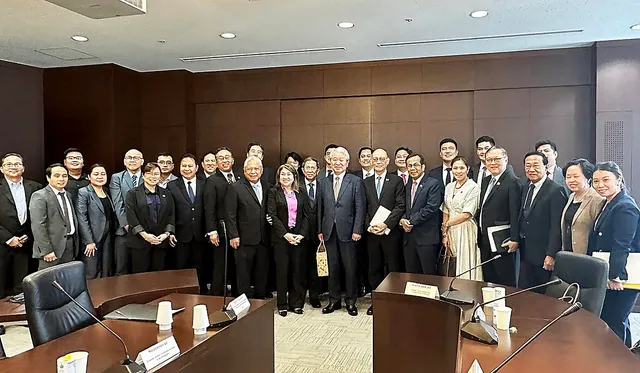
Department of Public Works and Highways (DPWH) Secretary Manuel M. Bonoan provided the updates of key infrastructure development projects in the Philippines under Official Development Assistance (ODA) of the Government of Japan in a bilateral discussion held at Meiji Kinenkan Chitose Hall in Tokyo, Japan.

Secretary Bonoan together with Senior Undersecretary Emil K. Sadain and Project Directors Ramon A. Arriola III and Benjamin A. Bautista of Unified Project Management Office (UPMO) operations represented the DPWH delegation during the 14th Philippines-Japan High-Level Joint Committee Meeting on Infrastructure Development and Economic Cooperation on August 28, 2023.

This is the first High-Level Meeting hosted by Japan since the lifting of COVID-19 restrictions.

A Joint Committee on Infrastructure Development and Economic Cooperation was established in 2017 in order to monitor the implementation of cooperation projects toward Philippines’ nation-building.

Other than the DPWH, the Philippine delegation consisted of agency heads and officials from the National Economic and Development Authority (NEDA), Department of Budget and Management (DBM), Department of Finance (DOF), Department of Transportation (DOTr), Department of Energy (DOE), Department of Information and Communications Technology (DICT), and Bases Conversion and Development Authority (BCDA).

Among the flagship infrastructure projects reviewed are the Feasibility Study for the Dalton Pass East Alignment Road and Central Mindanao Highway Construction Project; 2nd San Juanico Bridge Construction Project; EDSA Transport Road Network Rehabilitation Project; Metro Manila Interchange Construction Project; Metro Manila Priority Bridges Seismic Improvement Project; Other On-Going Projects including Road Network Development Project in Conflict-Affected Areas in Mindanao; Programme for the Support for Rehabilitation and Reconstruction of Marawi City and Its Surrounding Areas; Arterial Road Bypass Project Phase III; and Cebu-Mactan Bridge (4th Bridge) and Coastal Road Construction Project.

Also discussed with the Japanese officials headed by Special Advisor to the Prime Minister Dr. Mori Masafumi are updates for the tunnel operation and maintenance for the Davao Bypass and Dalton Road Projects; project for flood control and drainage in Davao City; and Paranaque Spillway Project.

Senior Undersecretary Sadain said that through the regular meetings, both the Philippine and Japanese government are prompted to deliver on commitments and are encouraged to think of more innovative measures to improve cooperation and facilitate project implementation.

Proposed for JICA ODA, the Dalton Pass East Alignment Road Project is a section of the proposed improvement and upgrading of the Philippine-Japan Friendship Highway, already named as (AH-26) a priority included under the Flagship Projects under the “Build Better More” infrastructure program of President Ferdinand R. Marcos Jr. administration.

The project which aims to ensure safe and seamless travel will involve the construction of 23.0 kilometers 4-lane (2 lanes each direction) bypass road, east of the existing highway.

Environmental Compliance Certificate (ECC) had already been secured for this project just recently this August 03, 2023.

JICA extended assistance extended in the conduct of the Feasibility Study/Preparatory Survey that was completed in July 2023 with the signing of the Loan Agreement targeted by December 2023 and the commencement of Detailed Engineering Design by early 2024.

Meanwhile, the Feasibility Study funded under JICA Grant assistance for Central Mindanao High Standard Highway Construction Project is ongoing, with the Preliminary Design expected to be completed by September 2023. The JICA Pre-Fact Finding Mission was deployed to the Philippines last August 7-9, 2023.

Per coordination with JICA last June 15, 2023, the procurement of Preparatory Survey Consultant for the project will proceed anytime soon.

The proposed 2nd San Juanico Bridge Project involves the construction of a two (2) – lane arch bridge with a total length of 4.88 km including approaches, which will connect Samar and Leyte Islands and will serve as alternative route to the existing San Juanico Bridge, along the Philippine- Japan Friendship Highway (AH-26) which is projected to be insufficient in carrying traffic in 10 years’ time.

Included under the “Build Better More” program, the proposed EDSA Rehabilitation Project is proposed to be included in the Technical Cooperation Project (TCP) for Large-Scale Bridge Replacement and Rehabilitation (LBRR), and was endorsed to NEDA in August 2023 for review and approval.

The massive rehabilitation of EDSA - considered the most important thoroughfare in Metro Manila, was proposed for JICA ODA.

The Japanese Government continuously provided assistance in the development of infrastructures that are integral in the recovery and peace-building within conflict-affected areas in Mindanao such as the Road Network Development Project in Conflict- Affected Areas in Mindanao which covers the development, construction, and improvement of 174.50 kilometers of road network within Bangsamoro Autonomous Region in Muslim Mindanao and other-conflict-affected areas in Mindanao.

Currently, construction of the 18.78 km Marawi Trans-Central Road Phase III is ongoing, while the remaining six (6) sub-projects are undergoing detailed engineering design. The project is to be completed by 2028.

Another key ongoing project is the Arterial Road Bypass Project Phase III which includes the widening of the 23.36-km Plaridel Bypass Road, and aims to reduce travel time between Balagtas and San Rafael in Bulacan from 1 hour and 9 minutes to 24 minutes.

The project is at 84.38% overall accomplishment, with two (2) contract packages already completed last July 2021 and April 2023. The remaining two (2) packages are to be completed by March 2024.

For the Davao City Bypass Construction Project that covers the construction of a 4-lane 45.98-km bypass road featuring two (2) 2.3 km mountain tunnels to reduce travel time between Davao City and Panabo City via the Pan-Philippine Highway from 1 hour and 44 minutes to just 49 minutes, civil works for Package I-1 is currently at 35.51% accomplishment while the procurement for civil works for Package I-2 and I-3 is also ongoing.

September 04, 2023

The Philippines has the capacity to supply over 40 million tons of nickel ore to the global market but changes must be made in the permitting process to accelerate growth of the mining industry, a top official of the Philippine Nickel Industry Association (PNIA) said on Tuesday.

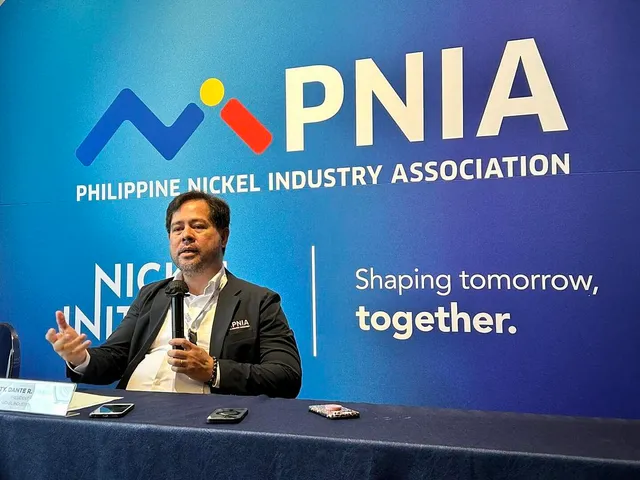
"We have a potential to supply beyond 40 million tons, probably even more because the take-up of nickel right now in the battery sector is increasing year in, year out," PNIA president Dante Bravo said during the Nickel Initiative at Makati Diamond Residences.

Bravo said nickel demand is expected to further increase as nickel ore is a critical component of electric vehicle (EV) batteries.

"We have a chance to grow the supply here in the Philippines. That opportunity will come as we see the price becoming more stable and becoming more viable to access these other areas which we will probably discover later in this country when we push for more nickel development in this country," he said.

Data from the PNIA earlier showed that the production in 2022 reached 29.2 million dry metric tons.

Bravo said production for this year is projected to be about the same as last year.

However, he cited the need to promote predictability in regulations and ease of doing business to help the mining industry grow.

Bravo said this is the common sentiment based on feedback from the Nickel Initiative stakeholder roundtable sessions and business conference of the PNIA.

To fast-track the approval of mining permits, PNIA is discussing with the government if a “one-stop shop” program, similar to what was provided to support growth sectors such as energy, can be implemented in the mining sector.

Bravo said streamlining the one-stop shop program would help cut the permitting process to six months to one year from the current five to 10 years.

“Mining is capital intensive in every stage of the operation’s life cycle from exploration to extraction, to value added processing. While there is a lot of interest in the Philippines as a mining investment destination, we need to convince investors that the business environment is ready and conducive for their entry to the Philippines,” he said.

Bravo said other areas for reform that were flagged in the Nickel Initiative consultations include streamlining of fiscal regime, harmonization of national and local mining regulations, and monitoring and evaluation of environmental protection laws.

Developing PH mining industry

Meanwhile, the government said a resilient and sustainable mining industry can support the country's economic and social development.

"The mining industry can advance multiple development pathways. President Ferdinand Marcos Jr. stated that those who extract our natural resources must follow the law. The DENR is guided by this directive, and we affirm our commitment towards responsible mining through the implementation of pro people, pro environment and science-based policies and programs," Department of Environment and Natural Resources (DENR) Secretary Maria Antonia Yulo-Loyzaga.

Loyzaga said that starting next year, the DENR will implement two priority programs to develop the mining industry.

She said the DENR-Mines and Geosciences Bureau (MGB) and the Office for Integrated Environmental Science will start an extensive government-led exploration of critical minerals.

"We are directing MGB to concentrate efforts on mineral exploration in the coming year. This effort will be augmented by technical support coming from our foreign development partners, including the Australian government and the US Geological Survey," she added.

Loyzaga said the DENR also intends to promote an enabled mineral processing.

"Both strategies aim to maximize the value of our mineral resources that the Philippines is endowed with and utilize these tools towards our own energy transition and economic development," she said.

August 28, 2023

The regulatory oversight of the mining sector is complex with multiple government administrative agencies and legislative bodies involved in the implementation and drafting of laws in relation to environmental, social, and governance matters. Through active monitoring and close coordination with the mine developer, government regulators can promote environmentally-safe, socially-acceptable operations and more transparent revenue collection. The Department of Environment and Natural Resources (“DENR”) plays a major role in the regulatory oversight of the mining industry but with the way the agency is structured it is also concerned with the other environment and natural resources sectors.

In mining alone, the DENR through the Mines and Geosciences Bureau (“MGB”) basically has its hand full in administering safety and environmental policies, enforcing compliance with its mineral license requirements, and tracking mine operators’ production and financial reporting. Little has been done to promote the mining industry to investors. This is one of the reasons why the country ranks so low in the Investment Attractiveness Index of the Fraser Institute’s Annual Survey of Mining Companies.

How can we expect the DENR to actively promote and regulate mining when it is busy fighting bush fires on many fronts? Generating headline news lately, the DENR has been doing damage control in numerous situations such as the Mindoro oil spill, Sibuyan mineral exploration operations, and lately the Manila Bay reclamation projects. The DENR also has suspended the acceptance, processing and approval of environmental compliance certificates (“ECC”) for offshore wind energy and floating solar energy projects pending the approval of new guidelines for these renewable energy projects.

What really caught the mining industry by surprise was the issuance of DENR Administrative Order (“DAO”) No. 2023-006, which mandates an ECC submission for Exploration Permits which clearly runs against Section 70 of the Mining Act of 1995. The said section states that: “Except during the exploration period of a mineral agreement or financial or technical assistance agreement or an exploration permit, an environmental clearance certificate shall be required.” The industry set forth position papers/comments to the DENR with the Chamber of Mines of the Philippines requesting to put the DAO on hold while a meeting with the DENR Secretary Antonia Yulo-Loyzaga, is being arranged.

Meanwhile, the Offshore Mining Chamber of the Philippines is urging the DENR to grant a certification of non-objection to the Memorandum of Cooperation between the Department of Trade and Industry and Japan’s Ministry of Economy, Trade and Industry. Despite being requested to sign off on the memo since February of the previous year, the DENR has not taken any action on the matter.

According to Sec. Loyzaga, the DENR will have a “reorganizational transformation”, moving away from its previous mandate of being a “regulatory” body towards an agency that is science-led and focusing more on the “protection, enhancement, preservation, rehabilitation and regeneration of the environment.” Under her administration, the DENR would be more “science-based with more emphasis on what we need to do to actually maintain from ridge to reef our ecosystems so that they can support community life, business, and all the other activities that are really dependent on the use of natural resources.”

Clearly, those are inspiring words from the former executive director of the Manila Observatory from 2007 to 2016, even if Sec. Loyzaga’s educational background is in political science with a graduate degree in government. Her management of institutions staffed by scientists in the past surely have given her the experience in administering a research institution but running a highly-technical, regulatory body like the MGB and promoting mining investments are altogether a different ballgame.

Also, many industry players lament the phase in which Exploration Permits (“EP”) are being granted by the DENR since the assumption of the new administration. The Philippine Mining and Exploration Association reported that so far, the DENR only managed to give clearances for the approval of five (5) EPs and one Operating Agreement in late July 2023 resulting in the issuance of three (3) EPs and one Operating Agreement. Greenfield exploration is the backbone of the industry since new mineralized areas are needed to be discovered to replace dwindling and depleting production from existing mine sites. At the same time, regional directors of the MGB are being moved and reshuffled to different regional offices with alarming regularity. While this movement may be administratively justifiable, it nevertheless creates the impression that there is no stability in the agency.

Negative news doesn’t help either as this only confirms the perception of the uninformed public that mining is a destructive activity whose environmental and social track record far outweighs its financial benefits. While there are tensions between the objectives of attracting investment into mining and protecting the environment and the local community, evidence shows that it is possible to have both strong environmental and social regulations and a favorable investment environment in mining. Fiscal revenues are one of the major reasons why the Philippine government seek to promote the growth of this industry, but the government is now obliged to make its strategies for managing its mineral resources consistent with its commitments to sustainable development.

No matter how much effort our government financial bureaucrats are harping about the role mining will play in national economic recovery, the ambiguous nature and function of the DENR prevent them from convincing investors to put in the needed risk capital to new exploration and mining ventures. Regulation of the mining sector requires highly technical professionals with skills that span the range of oversight subject matter e.g., environmental, social, occupational safety and revenue collection.

The present setup of the DENR, which mandates it to promote investments in the minerals industry through the MGB and at the same time, enforce national environmental laws through the Environmental Management Bureau, makes it difficult for the department to actively work for a robust industry. The DENR, with the way it is structured, has too much on its plate and the promotion of the mining industry is in many instances not on top of the list of the department’s priorities.

Establishing a National Geological Survey

We have seen how DENR regulators are often bogged down by the sheer volume of monitoring, inspections, and extension work required resulting in less time spent on assessing the mineral resource potential of the country, arguably the primary mandate of a department handling the mineral industry.

One method to attract investment is by providing modern geological information to investors and this can be adequately fulfilled by a national geological survey where our government can maximize the country’s mineral wealth by providing high quality and actionable mineral data to potential investors. The success of this undertaking will of course depend on how the government collects, analyzes, and shares the information. Usually, the practice followed by most major mining economies is to establish a geological survey either an independent agency or vest its functions in a bureau within a larger agency or department.

A national geological survey is a government institution that focuses on publishing geoscience research to make them accessible to public and private sector stakeholders. Historically, governments have established geological survey agencies to understand their natural resource potential and mitigate disaster risks arising from geologic hazards. These eventually evolved into the identification of resource potential and calculation of mineral and energy reserves. The agencies then became providers of information to promote prospecting and exploration activities. These helped to accelerate investment in all stages of the resource life cycle—from resource management through project development to production. In performing their geological record keeping function, geological surveys often draw on information submitted by developers, who sometimes provide these data pursuant to their obligations in the rights acquired from the government.

Database and information management is crucial in the collection, review, maintenance, and promotion of data from geological surveys and submissions by resource companies. The management system commences with a sound baseline geological information which includes results from systematic surface and subsurface geologic mapping and surveying particularly of basins and rock formations that have mineral and hydrocarbon potential. Data and information management also defines how, and in what format, data are created, collected, stored, and shared. Data taxonomy defines standards including national and international policies, to sort and organize data. Finally, data archival and disposal address the integrated data environment, which encompasses the physical and/or digital locations for data storage, usage, and disposal.

Mineral resource assessments identify specific mineral prospects and are used as tools to help quantify the potential of mineral deposits. Geological survey is a public resource that provides feedback to private investors on mineral data and resource potential. The data and information from the survey can be used to conduct resource assessments of the mineral potential of an area especially during the initial exploration stages. Down the line, it also helps in locating and estimating the size of a mineral deposit during early mine production.

The geological survey also advises the government on economic and environmental issues using expertise in areas such as resources and geo-hazards data and information. On the academic side, it helps advance education by working in conjunction with university geoscience departments to advance research, and may award grants, scholarships, and fellowships to conduct research or aid survey activities.

As I have emphatically written in my previous commentary, it is now high time for Philippine legislators to remove the mining regulation function from the DENR and attach it to a super regulatory body called the Department of Mines and Energy. This set-up is the norm in many jurisdictions where the administrative body regulating extractive industries is detached and totally independent from the environmental protection agency.

By having a unitized department solely focusing on the administration of extractive resources and backed by a national geological survey, the government can effectively regulate the mineral and energy industries and prudently manage fiscal revenues in a way that addresses the volatility of these revenues. This merged department can also advise the government on how to invest these revenues in long-term development – social, infrastructure investments, financial savings and economic diversification. The government can then invest the resource revenues in a way that increases or does not deplete the national wealth, into infrastructure, education, social services, diversified financial instruments and other alternative sources of growth.  Tools such as Strategic Environmental and Social Assessments and Cost-Benefit Analyses can assist in assessing the overall impacts of mining – not just financial.

The opportunities for growth around the green energy transition and digital transformation multiply and mineral-rich developing countries like the Philippines can play a crucial role in realizing a low-carbon, inclusive, and resilient future. To attract investors, the Philippines must embrace environmental, social, and governance standards that protect communities and the environment. The government must also have to plan and invest strategically to decarbonize resources production and ensure competitiveness in a low-carbon economy. Despite pressures to produce more minerals, the government can then decide to use the land and natural resources for alternative purposes that preserve the environment and promote sustainable economic activities using renewable resources.


Fernando “Ronnie” S. Penarroyo specializes in Energy and Resources Law, Project Finance and Business Development. He is also currently the Chair of the Professional Regulatory Board of Geology, the government agency mandated under law to regulate and develop the geology profession. He may be contacted at fspenarroyo@penpalaw.com for any matters or inquiries in relation to the Philippine resources industry and suggested topics for commentaries. Atty. Penarroyo’s commentaries are also archived at his professional blogsite at www.penarroyo.com

References

“Energy Resource Governance Initiative Toolkit”, https://ergi.tools

“Enhancing Well-being in Mining Regions: Key Issues and Lessons for Developing Indicators”, https://www.oecd.org/cfe/regionaldevelopment/Wellbeing_MiningRegions_3rdOECDMeeting_PreConference.pdf

Go, Marianne, “Science-led DENR”, The Philippine Star, 23 June 2023, https://www.philstar.com/business/2023/06/23/2275812/science-led-denr

August 28, 2023

Celebrating its 10th anniversary, the Philippine Extractive Industries Transparency Initiative (PH-EITI) epitomizes the nation's undying commitment to transparency and accountability within the realms of oil, gas, and mineral resource management. This beacon of transparency, adhering to the global standards set by the EITI, illuminates the Philippine government's dedication to refining governance in the extractive domain.

Despite initial hesitations regarding the international evaluation metrics of transparency, the resolve of the nation has been unwavering. Department of Finance Secretary Diokno reaffirmed the country's allegiance to the EITI guidelines last year. This affirmation aligns seamlessly with the Philippine Development Plan 2023-2028's aspirations of crafting a precise tax framework for the extractive arena. To cement the progress achieved, PH-EITI is striving to legislate the EITI implementation, promising the persistence of the transformative reforms it has pioneered.

Enhancing Public Perception

Through the years, PH-EITI has established itself as a trusted repository, providing open access to pivotal extractive data via platforms like the PH-EITI Contracts Portal and the PH-EITI Beneficial Ownership Registry. Their annual reports offer an exhaustive overview of the nation's extractive pulse, illuminating the revenue streams and their societal contributions. By democratizing this knowledge, PH-EITI aspires to enrich the public's grasp on the industry's intricacies and the stewardship of our invaluable natural assets. The eagerly anticipated 9th report, expected this year, will spotlight the sector’s resilience amidst pandemic aftershocks and its potential role in sustained economic growth, accentuated by the 2021's progressive mining policy overhauls.

Elevating the Business Landscape

PH-EITI is not just a data repository; it is a catalyst for change. By offering comprehensive revenue insights, it facilitates informed policymaking. The thematic analyses it conducts set the stage for insightful policy suggestions, legislative drafts, and optimal EITI execution. The very act of EITI implementation is a testament to the nation's allegiance to comprehensive, data-driven governance, fostering investor trust and enhancing the entrepreneurial climate.

Empowering Collaborative Governance

The EITI process establishes a harmonious triad, granting the government, the industry, and civil society equal say in steering the nation's extractive endeavors.

This year, PH-EITI is amplifying its commitment to nurturing collaborative spaces. It not only advocates for enhanced multi-stakeholder involvement but is also formulating a blueprint for subnational EITI rollouts. Simultaneously, an interactive feedback channel for extractive governance is on the horizon. Such inclusivity fosters mutual trust, creating a symbiotic environment where every stakeholder thrives and remains accountable.

August 28, 2023

It’s another productive day at Major Drilling. Rigs are humming both above and underground at projects in Canada, the United States, Mexico, South America, Asia, Africa, and Australia. It’s the sound of specialized drilling echoing the leadership of a management team who, with over 1,000 years of combined experience, ensures that quality, safety and results are delivered, every day.

Major Drilling has a reputation for success. With a strategy to be the world leader in specialized drilling, every branch delivers a modern fleet with innovation and ESG principles as a guide. Each quarter, investors are assured that the company maintains a strong balance sheet and serves the mining industry with best-in-class safety and human resources (TSX: MDI).

Recently lauded as a pick and shovel investment home run, fiscal year 2023 was an incredible year of growth and resilience. Revenue grew by 13%, overcoming past supply chain disruptions and market volatility. This strength is due to the dedication of a management team and highly trained staff who keep Major Drilling on top as the preferred industry specialized drilling operator and employer.

Specialized in Safety & Social Responsibility

In October 2021, Major Drilling Philippines marked more than 1.4 million hours LTI free with Filminera Resources Corporation yielding 15,819.40 meters that year. The milestone is part of a long list of safety records and contributes to a recent global achievement of 8 million hours lost time injury free in recent months. Known locally as MDGI Philippines, Inc., the branch is one of the leading diamond drilling contractors in the country.

“For more than 20 years, we’ve built a strong reputation for delivering the highest quality specialized drilling services in the region,” Daniel Paradis, Major Drilling Philippines Branch Manager, said. “Our expertise is unmatched.”

Tough work sites are met with expertise, extensive experience, focus on safety and commitment to meeting the local needs of every customer. Trust and dependability are hallmarks of the longstanding relationships with many Philippines clients including Manila Mining Corporation, Lepanto Consolidated Mining Company, Silangan Mindanao Mining Company, Inc., Philex Mining Corporation, Paraiso Consolidated Mining Corporation, Holcim, and Crescent Mining and Development Corporation.

Ongoing ISO certifications in quality management and environmental management show a commitment to operating at the highest standards.

At the Philippines office in Carmona, Paradis says his clients have come to expect excellence from his branch. “Our expertise is a reliable resource for miners here. They get a top-shelf commitment to operations and safety as well as the assurance that we do our part to be a good corporate citizen.”

Caring comes naturally to the Major Drilling Philippines staff as part of its culture of social responsibility. They recently donated construction materials to a local elementary school, finished a fun run for dialysis patients in need and learned how to strengthen employee mental health.

Children and leaders at the Lap-Angan Elementary School are happy to receive school supplies donated by Major Drilling.

Innovating for Today and Tomorrow

Major Drilling is an innovative company. A team based at company headquarters in Moncton, New Brunswick, Canada, regularly collaborates with branches, including the Philippines. Driving innovation are improvements for automated rod handling, water saving measures, inventive efficiency measures and ever-improving analytics for clients.

Innovation means addressing the needs of exploration now and for the future. Major Drilling is a key player in the supply chain for the battery metals and critical minerals that are driving the green energy transition. More than 3,500 skilled employees and over 600 modern drills are helping meet that demand.

A Problem-Solving Fleet

Major Drilling Philippines clients find surface and underground solutions with the branch’s DE-170, DE-740, UDR-650, LM-90, LF90D, GEOPROBE 8140LS and Mancore Portable rigs. This variety of equipment ensures that challenges of depths, sizing, difficult terrain and harsh conditions are met with the right tools. Specialized drilling services offered include:

  • Surface core
  • Underground core
  • Directional
  • Deep hole
  • Multi-purpose
  • RC
  • Geotechnical
  • Sonic


The hum of a productive day of Major Drilling is available for upcoming projects in the Philippines. Interested parties can join the long list of partners who receive expert specialized drilling services. Find Major Drilling at the 2023 Mining Philippines International Conference and Exhibit at booth 112. For more information, contact the Major Drilling Philippines Branch at +63-2-8-889-2312, email philippines@majordrilling.com or visit www.majordrilling.com.
August 21, 2023

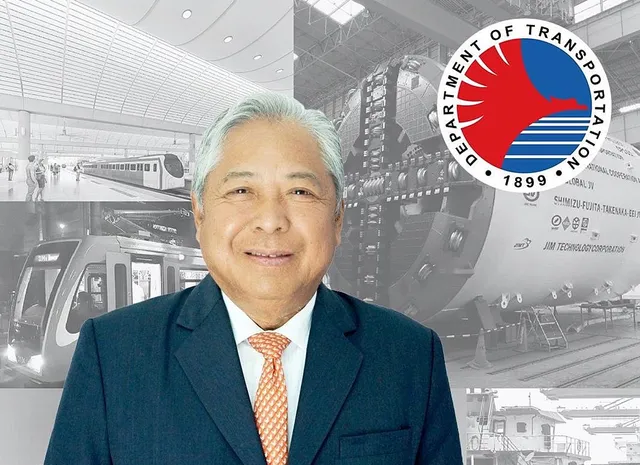
The Department of Transportation (DOTr) sees large-scale infrastructure projects thriving under the “efficiency and flexibility” of its partners in the private sector.

In his message during the contract signing of four of the DOTr’s Infrastructure Flagship Projects’ (IFP) consultancy services, DOTr Secretary Jaime Bautista said the private sector’s expertise in transportation planning, architecture, landscape architecture, civil engineering, and other aspects will be relied upon by the government.

“Pursuant to (President Ferdinand R. Marcos Jr.’s) directive, the DOTr is working full speed and is commencing the feasibility studies of four IFPs,” Bautista said.

The four contracts signed involve consultancy services with the Public-Private Partnership Center, Deloitte Touche Tohmatsu, Isla Lipana & Co (PwC Philippines), and SyCip Gorres Velayo & Company (SGV) for the Cebu Bus Rapid Transit (BRT) operations and maintenance, and feasibility studies for the NCR EDSA Busway, Manila Bay-Pasig River-Laguna Lake Ferry System (MAPALLA) and North Long Haul Inter-Regional Railway (North Railway).

The North Railway is a planned 800-kilometer railway that will revive the legacy railway to Ilocos and Cagayan Valley, linking the economic centers in Luzon's northern and northeastern parts.

The MAPALLA, meanwhile, is a ferry system that will rehabilitate and expand the Pasig River Ferry to allow for improved and higher frequency services that will serve the National Capital Region (NCR) and neighboring provinces including Bulacan, Cavite, Laguna, and Rizal.

“The ferry system will feature low-carbon ferries servicing tens of thousands of passengers daily,” Bautista said.

Meanwhile, the EDSA Busway plans to improve the existing EDSA Carousel by addressing the high demand for transportation through increasing capacity and service reliability.

“The project may also involve the introduction of electric buses, reducing the carbon emissions along heavily trafficked corridors of Metro Manila,”the DOTr chief said.

On the other hand, the Cebu BRT is a 13.18-kilometer bus lane in Cebu stretching from Mambaling to Cebu IT Park.

Once completed, it is expected to serve up to 160,000 passengers per day.

August 21, 2023

The consolidated gross revenues of Apex Mining Co., Inc. and its subsidiaries in the first half of 2023 reached P5.7 billion —19% higher than the P4.8 billion it reported for the same period in 2022. Meanwhile, the consolidated net income in 1H 2023 was P1.4 billion (P168 million lower versus 1H of 2022).

For 1H 2023, Apex Mining’s Maco Mine operations milled a total of 378,564 tonnes — 3.0% lower than the same period in 2022. Quarter on quarter, the tonnes milled in the second quarter of 2023 is 7% higher. The second quarter’s ounces of gold produced is also 11% higher than the first quarter. Moreover, 2Q Au and Ag ounces sold are 17% and 19% higher, respectively, versus Q1.

In Q1 2023, the company encountered many challenges, including an earthquake swarm as well as prolonged and heavy rainfall and landslides, that led to intermittent work stoppages for risk assessments and safety checks. All these disruptions totaled 5.74 workdays.

Despite these disruptions, gold recovery was at 87.34% — practically the same in the same period in 2022 (87.78%). Silver recovery rate was slightly lower at 72.14% against last year’s 75.77%. The higher average realized gold price of $1,953/oz during the year (versus $1,901/oz in 2022) pushed the revenues up by 19% in 1H of 2023. Ore gold grades averaged 1% lower at 3.93 grams per tonne compared to the 1H of 2022 at 3.95 grams of gold per tonne.

Based on the Mine Reserves and Resource Certifications of 2021, Apex Mining’s Maco Mine has enough reserves and resources to continue at the targeted production rate of 3,000 tonnes per day until 2032. The ongoing exploration program for MPSA 225 and the acquisition of the Asia-Alliance Mining Resources Corp. assures Apex Mining of future gold resources as the extensions of existing mining veins in Maco Mine spill over to the tenements of AAMRC.

Apex Mining continues to strategically manage its projects, both in the Philippines and abroad, to maximize the potential benefits that may be derived from them. A recent coordination with the partners and stakeholders of its joint venture project in Mongolia, coupled with the increasing metal prices and positive progress in the mining environment, resulted to the company deciding to revisit its exploration and development plans for the said project.

Meanwhile, Apex Mining’s fully owned subsidiary, Itogon-Suyoc Resources, Inc. (ISRI) milled a total of 71,275 tonnes in the 1H 2023 compared to 53,092 tonnes in the same period in 2022 — a big jump of 34%.

August 21, 2023

Celsius Resources is pleased to announce the approval of the Mining Project Feasibility Study (“MPFS”) for the Maalinao-Caigutan-Biyog (“MCB”) Project in the Cordillera Administrative Region under its Philippine subsidiary, Makilala Mining Company, Inc. (“MMCI or “the Company”).

After a thorough evaluation of the Technical Committee, the Philippine Mines and Geoscience Bureau deemed it technically and economically feasible after consideration of the environmental, social, and fiscal requirements prescribed under the Philippine Mining Act of 19951 and its revised Implementing Rules and Regulations2.

Celsius Chairman Atty. Julito Sarmiento said: “We are thankful to the Marcos, Jr.’s Administration, through the leadership of Secretary Maria Antonia Yulo-Loyzaga of the Department of Environment and Natural Resources and the Mines and Geosciences Bureau, in creating a supportive and favourable climate for the mining companies in the Philippines while ensuring that we adhere to the national standards on responsible mining. Rest assured that we remain committed as responsible stewards of our natural resources in our quest to provide value not only to our shareholders and stakeholders but to our country and host communities as well.”

MCB COPPER-GOLD PROJECT

The MCB Copper-Gold Project (MCB) is located in the Cordillera Administrative Region in the Philippines, approximately 320km north of Manila. It is the flagship project within the Makilala portfolio which also contains other key prospects in the pipeline for permit renewal/extension.

A maiden JORC Compliant Mineral Resource Estimate was declared for the MCB Project in January 2021, comprising 313.8 million tonnes @ 0.48% copper and 0.15g/t gold, for 1.5 million tonnes of contained copper and 1.47 million ounces of gold, of which 290.3 million tonnes @ 0.48% copper and 0.15 g/t gold is classified as Indicated and 23.5 million tonnes @ 0.48% copper and 0.10 g/t gold is classified as Inferred.

An updated JORC compliant Mineral Resource Estimate was announced for the MCB Project on 12 December 2022, comprising 338 million tonnes @ 0.47% copper and 0.12 g/t gold, for total of 1.6 million tonnes of contained copper and 1.3 million ounces of gold, reported to a preferred lower cut-off grade of 0.2% copper.

A Study for the MCB Project was announced by CLA on 1 December 2021, which identified the potential for the development of a copper-gold operation with a 25-year mine life. The Study was based on an underground mining operation and processing facility to produce a saleable copper-gold concentrate.

Highlights from the Study include a Post tax NPV (8%) of US$464m and IRR of 31%, assuming a copper price of US$4.00/lb and gold price of US$1,695/oz. Initial capital expenditure is estimated to be US$253m with a payback period of approximately 2.7 years. The designed mine production is matched to a 2.28Mtpa processing plant which will treat ore with an estimated average grade of 1.14% copper and 0.54g/t gold for the first 10 years of planned production with a C14 cash costs at just US$0.73/lb copper, net of gold credits.


To read the full announcement, please click here.
August 14, 2023

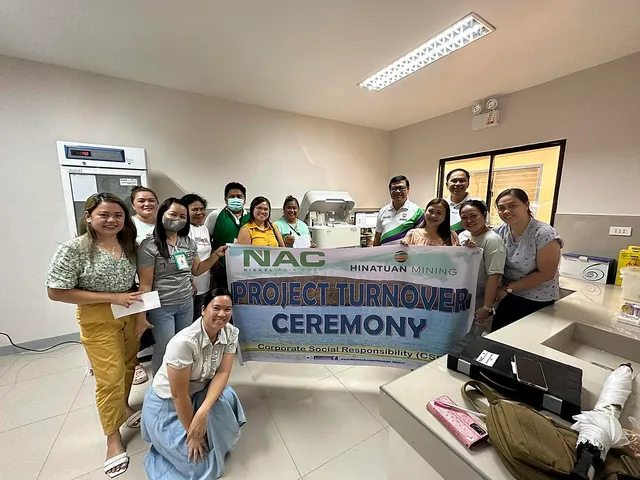
Hinatuan Mining Corp. (HMC), a subsidiary of Nickel Asia Corp. (NAC), spends P 11.4 million to support the health care services of the Municipality of Tagana-an. Budget used is part of the Corporate Social Responsibility (CSR) of HMC.

HMC spent 10M of its CSR for the construction of the Rural Health Unit (RHU) in the Municipality of Tagana-an. The construction is done in close coordination and partnership with the Municipal Local Government Unit (MLGU) of Tagana-an. The company has also spent 1.4M of its CSR budget to purchase medical instrument and equipment to help improve the health services of its Municipality.

The utilization of the CSR budget and not its Social Development and Management Program (SDMP) fund is proof that HMC goes above and beyond what is mandated by law. The commitment of HMC to support the development of the health care of its municipality is a testament not only to its excellent partnership with its stakeholders but also to the commitment of the company to contribute to the development of the municipality where it operates.

Infrastructure Development

“Having a new building for Tagana-an RHU donated by HMC with the counterpart of the MLGU is our first step in applying for a Primary Health Care Facility that provide easy access to a quality health care services to the community of Tagana-an, which is part of the Universal Health Care goal of the Department of Health (DOH)”, said Maria Teresa Teodora Eviota, RN PHN II, Tagana-an Municipal Health Office OIC.

“I am grateful that our dream was fulfilled, we jokingly labeled the building as a mini-hospital. Our dream was to have a facility that can cater more basic health services to our residents. And also to have the capacity to offer ultrasound, x-ray, and other laboratory tests so that Tagana-an residents do not need to go as far as Surigao City to avail of such health services, ” said Hon. Cesar B. Diaz, Jr., Municipal Mayor of Tagana-an.

“If they go to Surigao City, there are more patients in need of care; they need to fall in line with several other people to avail of health services. Moreover, they would also have to spend cash to cover their travel expense. Do we have the capacity to do it here in our municipality? After all, we have a supportive partner in HMC. It is then we asked HMC for assistance, HMC spent PhP 10M from its CSR and as a counterpart, Tagana-an MLGU spent PhP 5M, and now our new RHU building has become a reality. Thank you HMC for realizing our dream,” added Hon. Diaz.

“This is my second time to witness a partnership of the private and public organization in realizing of a project. The private being HMC and the public are the MLGU of Tagana-an and the DOH. My first time was in Barangay Talavera when I was also present during the blessing and turnover of the Birthing Clinic by HMC to the Barangay LGU, “said Erwin G. Pingal, RMT, DMO V of Provincial DOH Office Surigao Del Norte.

 “The support from HMC has increased, from a Birthing Clinic in Barangay Talavera and now into a Primary Health Care Facility in the Municipality of Tagana-an.  Support to social and health services can be provided by the mining industry. I hope that this facility will become an infirmary in the near future so that you can cater to more patients. Congratulations to Tagana-an, your dream has been realized,” added Mr. Pingal.

Medical Equipment and Supplies

“As a health care provider, the laboratory machines and equipment donated by the HMC are a big help to expedite the testing process especially urgent cases, leading to faster diagnosis and immediate intervention”, said Maria Teresa Teodora Eviota, RN PHN II, Tagana-an Municipal Health Office OIC.

HMC has donated an Analytical Chemistry Analyzer, pipette shaker, hemoglobin/hematocrit meter acon, serological pipette, Edta tube mixer TRO-1206D, Biosafety Cabinet Level II Biobase BBS SDC, and refrigerator with digital temperature monitor 260L BPR 5V260 - 511,355.00.

Dr. Bruce Bill Buo, Tagana-an RHU visiting doctor, is hopeful that more equipment will be received by the RHU building, “Hopefully we will receive more equipment. If we have more equipment, we can cater to more patients. This helps eliminate the need for the patients to travel to Surigao City since we will be capable of providing their health needs.”

Hon. Diaz was also grateful to DOH for their support, “this new RHU building will not be complete without equipment. We are thankful to the DOH for the assistance of providing 8M worth of medical equipment”.

“I also express my gratitude to HMC for the medical equipment they donated. I am hopeful that there will be more in the future. We all have a common goal - to provide quality health care services. We will have a partnership with HMC and the DOH to achieve this goal,” he added.

Maria Teresa Teodora Eviota, RN PHN II, Tagana-an Municipal Health Office OIC; is also thankful to the assistance provided by HMC to their municipality, “The RHU Tagana-an Team is very grateful to Hinatuan Mining Coorporation for the unwavering support in the delivery of Health care services in promoting and prioritizing the well-being of the community”.

August 14, 2023

August 9, 2023 – Global Ferronickel Holdings, Inc. (PSE: FNI) reported consolidated revenues of ₱3.1 billion for the first six months of 2023, up 41.2% from ₱2.2 billion in the prior-year period. Strong volumes and higher-grade ores at Palawan mine were the main drivers of growth, partially offset by weaker prices and lower-than-average volumes at Surigao mine.

Total sold volume was 1.459 million wet metric tons (WMT), 41.0% higher than in the first half of 2022, comprising 52% medium-grade and 48% low-grade nickel ore. The Palawan mine maintained solid momentum in the second quarter, while activities at Surigao mine reflected constraints in the operating environment stemming from heavy rains which prevented stronger production and shipment.

“There are risk factors which we cannot predict or control but could adversely affect our business. Weather events such as changes in rainfall patterns that we experienced in Surigao is one of them,” said Dante R. Bravo, President. “We continue to assess and monitor such factors. Additionally, our ongoing diversification aims to respond to such risk and ultimately improve FNI’s portfolio quality and performance. The Palawan mine benefits from milder weather and a wet season that is not very pronounced thereby allowing year-round operations. It also adds greater scale to our resources and reserves and points to long-term business volume. As we step up efforts to further diversify, the combined strength of the Surigao and Palawan mines enable us to better navigate the short-term challenges ahead.”

The average realized nickel ore price was US$38.37/WMT, down 2% compared to US$39.21/WMT a year ago, due to available product mix and lower selling prices in the second quarter, which were affected by expanded market supply from capacity additions in Indonesia and muted demand in China following a tepid postpandemic reopening.

The average realized exchange rate was ₱55.34 to the U.S. dollar as against ₱52.60 in the previous year.

Consolidated net income of ₱625.3 million grew 49.8% versus last year. After deducting net income attributable to non-controlling interests, net income attributable to FNI shareholders was ₱349.5 million, down 19.4% year-on-year, with the share in the net income of an associate of ₱54.0 million cushioning some of the impact. Earnings per share of ₱0.0676 decreased 18.9% following the lower net income, partially offset by an approximate 0.6% reduction in average shares outstanding resulting from the company’s share buyback program.

“Looking forward, we remain committed to our capital management strategy that is balanced between investing in growth initiatives, providing returns to shareholders, while maintaining a strong balance sheet,” Bravo added.

During the first half, capital expenditures amounted to₱145.0million or4.7% of revenues. Dividends paid were ₱524.2 million or ₱0.10 per share, representing 27% of the prior year’s net income attributable to equity holders which is higher than the dividend policy of 20%. FNI also returned ₱48.0 million to shareholders through share buyback. Overall, the company has repurchased shares worth ₱2.5 billion since the buyback program was launched in 2016, equivalent to 18% of outstanding shares.

August 14, 2023

Integrated energy company Semirara Mining and Power Corporation (SMPC) reported P10.2 billion in net income in the second quarter, a 5-percent downtick from its record high of P10.8 billion last year.

Despite significant corrections in global coal index prices and the impact of high base effect, SMPC delivered robust financial results because of higher coal shipments, improved plant availability and increased electricity sales at elevated prices.

Quarter-over-quarter (Q1 2023 vs Q2 2023), SMPC net income even grew by 13 percent from P9 billion.

For the first six months of the year, SMPC earnings dropped by 26 percent from P25.8 billion to P19.2 billion mainly due to high base effect and normalizing coal indices.

From January to June, average Newcastle price plunged by 54 percent from US$320.3 to US$148.9, while average ICI4 price dropped by 17 percent from US$85.7 to US$71.

“Even with lower coal prices, we delivered our second-best first half results because of China demand recovery and the improved performance of Sem-Calaca Power Corporation [SCPC] Unit 2,” said SMPC president and COO Maria Cristina C. Gotianun.

“The second half will be challenging because of the rainy season and planned shutdown of our three power plants but with our high starting inventory and strategic pivot to the spot market, we believe we can weather these headwinds,” she added.

Coal Operating Results

In the second quarter alone, total shipments increased by 22 percent from 3.7 million metric tons (MMT) to 4.5 MMT on higher deliveries to China and South Korea.

Shipments to China increased by 75 percent from 0.8 MMT to 1.4 MMT, while shipments to South Korea rose by 21 percent from 0.8 MMT to 1.0 MMT.

Domestic sales were flat at 1.9 MMT as lower demand from cement factories (-33%) and other industrial plants (-50%) offset the 14-percent increase in sale to SMPC-owned plants.

During the same period, Semirara coal average selling price (ASP) declined by 23 precent from its all-time high of P5,399 per metric ton (MT) to P4,151 per MT.

Total production declined by 12 percent from 3.4 MMT to 3.0 MMT due to the onset of rains and ongoing stripping activities in Molave South Block 6 and Narra North Block 1.

Total inventory grew by 12 percent from 2.5 MMT to 2.8 MMT on stable production and weaker domestic sales. Year-to-date, inventory rose by 40 percent from 2.0 MMT to 2.8 MMT.

Power Operating Results

Overall plant availability from April to June surged by 25 percent from 64% to 80% on the improved availability of SCPC Unit 2. Its commercial operation last October 9, 2022 boosted total average capacity by 35 percent from 509 megawatts (MW) to 685 MW.

In turn, total gross generation improved by 27 percent from 956 gigawatt hours (GWh) to 1,212 GWh, driving up total power sales by 22 percent from 900 GWh to 1,097 GWh. Bulk (66%) of total sales went to the spot market.

With higher uncontracted capacity and strong demand due to warm temperatures, spot sales accelerated by 42 percent from 507 GWh to 720 GWh. Meanwhile, bilateral contract sales slipped by 4 percent from 393 GWh to 377 GWh as SMPC maintained its pivot to the spot market.

Overall ASP jumped by 17 percent from P5.30/kilowatt hour (kWh) to P6.22/kWh mainly due to higher spot sales, 3-percent uptick in average spot prices and 40-percent uptrend in average bilateral contract prices.

At the end of the second quarter, only 27 percent of the 710MW dependable capacity of SCPC and SLPGC are contracted. Net of station service, which varies from time to time, the power segment has 462.6MW available for sale to the spot market. 

August 14, 2023

Around 76 high-impact infrastructure flagship projects amounting to PHP2.4 billion will be pursued in Mindanao to boost economic development in the region.

During the first Philippine Economic Briefing in Davao City on Wednesday, Finance Secretary Benjamin Diokno said some of the infrastructure projects aim to ease congestion and improve connectivity in Mindanao.

These include Davao Public Transport Modernization Project, Mindanao Railway Project, Davao City Expressway, Samal Island-Davao City Connector Bridge, and Panguil Bay Bridge.

Transportation Secretary Jaime Bautista said the 100-kilometer Mindanao Railway Project, with a total project cost of PHP81.67 billion, is currently in the process of design finalization and right-of-way acquisition.

Bautista also noted that the PHP73.9-billion Davao Public Transport Modernization Project will be funded with the assistance of the Asian Development Bank.

On digital infrastructure in Mindanao, Information and Communications Technology Secretary Ivan John Uy said over 1,500 free Wi-Fi sites have been deployed and about 1,200 digital transformation centers have been established in villages to assist locals.

‘Bright spots’

Philippine Chamber of Commerce and Industry, Inc. Area Vice President for Mindanao Arturo Milan cited several “bright spots” for Mindanao in sectors such as transportation, infrastructure, healthcare, agriculture, digitalization and energy.

Milan emphasized that energy security has to be “constantly present.”

“Otherwise, all these bright spots in our economy will not be possible,” he said.

Budget Secretary Amenah Pangandaman said the government has already come up with a budget plan for the priority sectors.

“The sectors he has mentioned, I am happy to note that they are all the same priorities on the expenditure side,” Pangandaman said.

Discussing the priority expenditures in the proposed 2024 national budget, Pangandaman said the government is promoting renewable energy alongside the country’s climate efforts, which will be allocated PHP543.45 billion for next year.

Inclusive development

Citing the importance of a whole-of-nation approach, Bangko Sentral ng Pilipinas Deputy Governor Francisco Dakila Jr. discussed opportunities in Islamic banking and finance that have sparked notable market interest from local and foreign investors.

National Economic and Development Authority Undersecretary Joseph Capuno highlighted key points in the Davao Regional Development Plan 2023-2028, including the creation of an enabling environment to promote investor interest through enhanced physical and digital connectivity infrastructure.

Davao City Chamber of Commerce and Industry, Inc. President John Carlo Tria said business organizations in Mindanao enjoy strong relations with local governments.

“We work together to bring investment to Davao, and this is a window to the rest of Mindanao,” Tria said.

Labor Secretary Bienvenido Laguesma commended the private sector for its valuable contribution to boosting the country’s employment level.

Laguesma said the private sector’s active participation, cooperation and commitment signify that they “continue to trust the government,” especially the Marcos administration.

Interior Undersecretary Marlo Iringan expressed his optimism for improved delivery of public services and better governance and accountability by the local government units, as evidenced by the Seal of Good Local Governance.

August 14, 2023

A substantial portion of the proposed PHP214.3 billion budget of the Department of Transportation (DOTr) for 2024 will be earmarked for the implementation of the Marcos administration’s “Build Better More” infrastructure program, the Department of Budget and Management (DBM) said Thursday.

In a statement, the DBM said a total of PHP176.4 billion of the DOTr’s proposed 2024 allocation would go to its Public Sector Infrastructure budget, fostering high-impact infrastructure flagship public transport projects approved by the National Economic and Development Authority (NEDA) Board.

The infrastructure projects include the North-South Commuter Railway System and the Metro Manila Subway Project Phase I under the Rail Transport Program; the Land Public Transportation Program; and the Aviation and Maritime Infrastructure Programs of the DOTr.

The DBM said the Rail Transport Program would receive more than 76.4 percent of the proposed budget for infrastructure development to facilitate the improvement and construction of modern railway systems.

“The investment will include projects, such as the North-South Commuter Railway System, the Metro Manila Subway Project Phase I, LRT (Light Rail Transit) Line 1 Cavite Extension Project, the Philippine National Railways South Long Haul Project, and the MRT (Metro Rail Transit) Line 3 Rehabilitation Project,” it said.

The DBM said about PHP76.3 billion would be allocated for the development of the North-South Commuter Railway System, which will connect New Clark City in Capas, Tarlac to Calamba, Laguna.

A total of PHP68.4 billion would be used for the Metro Manila Subway Project Phase I, which will consist of 15 stations from Valenzuela City to Pasay City.

The government will allot PHP4.7 billion for the LRT Line 1 Cavite Extension Project, which will add 11 km. to the existing railway system; PHP3.1 billion for the Philippine National Railways South Long Haul Project, which will reconstruct the PNR South Main Line; and PHP2.9 billion for the MRT 3 Rehabilitation Project.

The DBM said the Land Public Transportation Program would get some PHP6.4 billion for several infrastructure projects.

About PHP1 billion would be tapped for the Davao Public Transport Modernization Project; PHP909 million for EDSA Busway Project; PHP700 million for Cebu Bus Rapid Transit Project; PHP500 million for Active Transport Bike Share System and Safe Pathways Program in Metropolitan Areas; and PHP263 million for EDSA Greenways Project.

The DBM said the Aviation Program, which focuses on modernizing and developing airports nationwide, would be allocated PHP6.1 billion.

“Investments include projects the Ninoy Aquino International Airport (PHP1.6 billion); Kalibo International Airport (PHP581 million); Laoag International Airport (PHP500 million); Tacloban Airport (PHP500 million); Busuanga Airport (PHP405 million); New Zamboanga International Airport (PHP300 million); New Manila International Airport (PHP200 million); Bukidnon Airport (PHP120 million); New Dumaguete Airport Development Project (PHP500 million); and the New Bohol Airport Construction and Sustainable Environment Protection Projects (PHP97 million),” it said.

To improve air traffic management, the DBM said PHP1.3 billion would be allotted to the new Communications, Navigation, and Surveillance/Air Traffic Management (CNS/ATM) System Development Project.

The DBM said the DOTr’s Maritime Infrastructure Program would receive PHP988 million, inclusive of PHP625 million for the Maritime Safety Enhancement Project and PHP134 million for the Maritime Safety Capability Improvement Project Phase I.

It added that the budget for maritime infrastructure projects would be used to improve response to maritime incidents and enhance the conduct of maritime law enforcement and security operations.

“This push on infrastructure development is aligned with the Philippine Development Plan 2023-2028, and the country’s Medium-Term Fiscal Framework,” the DBM said.

In his Budget Message, President Ferdinand R. Marcos Jr. emphasized the significance of increasing the DOTr's funding in 2024, citing the vital role of transportation policy in driving sustainable economic growth.

“Transportation policy can have significant and lasting impacts on overall economic growth. Hence, with the urgent need to improve our country’s public mass transport system and reduce road congestion, we have doubled the budget for the DOTr from PHP106.0 billion in the FY (fiscal year) 2023 GAA (General Appropriations Act) to PHP214.3 billion for 2024," Marcos said.  By Ruth Abbey Gita-Carlos


Article courtesy of the Philippine News Agency